Tag: Green Chemical

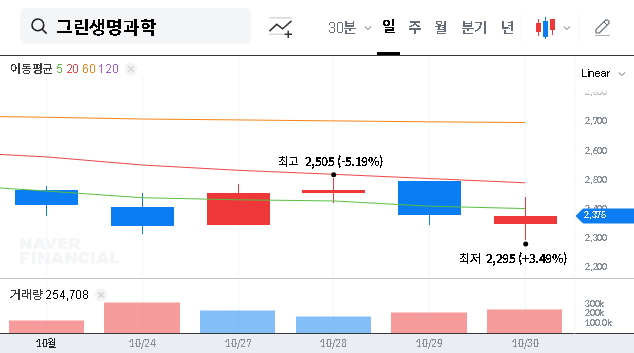
  • (114450) GREEN LIFESCIENCE Stock: Analysis of the ₩13.6B AI Semiconductor Material Deal

    (114450) GREEN LIFESCIENCE Stock: Analysis of the ₩13.6B AI Semiconductor Material Deal

    In a strategic pivot that has captured the market’s attention, GREEN LIFESCIENCE CO., LTD. has announced its formal entry into the booming AI semiconductor material sector. This move is substantiated by a massive supply contract, signaling a potential new era of growth beyond its traditional pharmaceutical business. This analysis will dissect the contract’s details, evaluate the company’s fundamentals, and explore the future trajectory for investors considering GREEN LIFESCIENCE stock.

    The Landmark ₩13.6 Billion Supply Contract

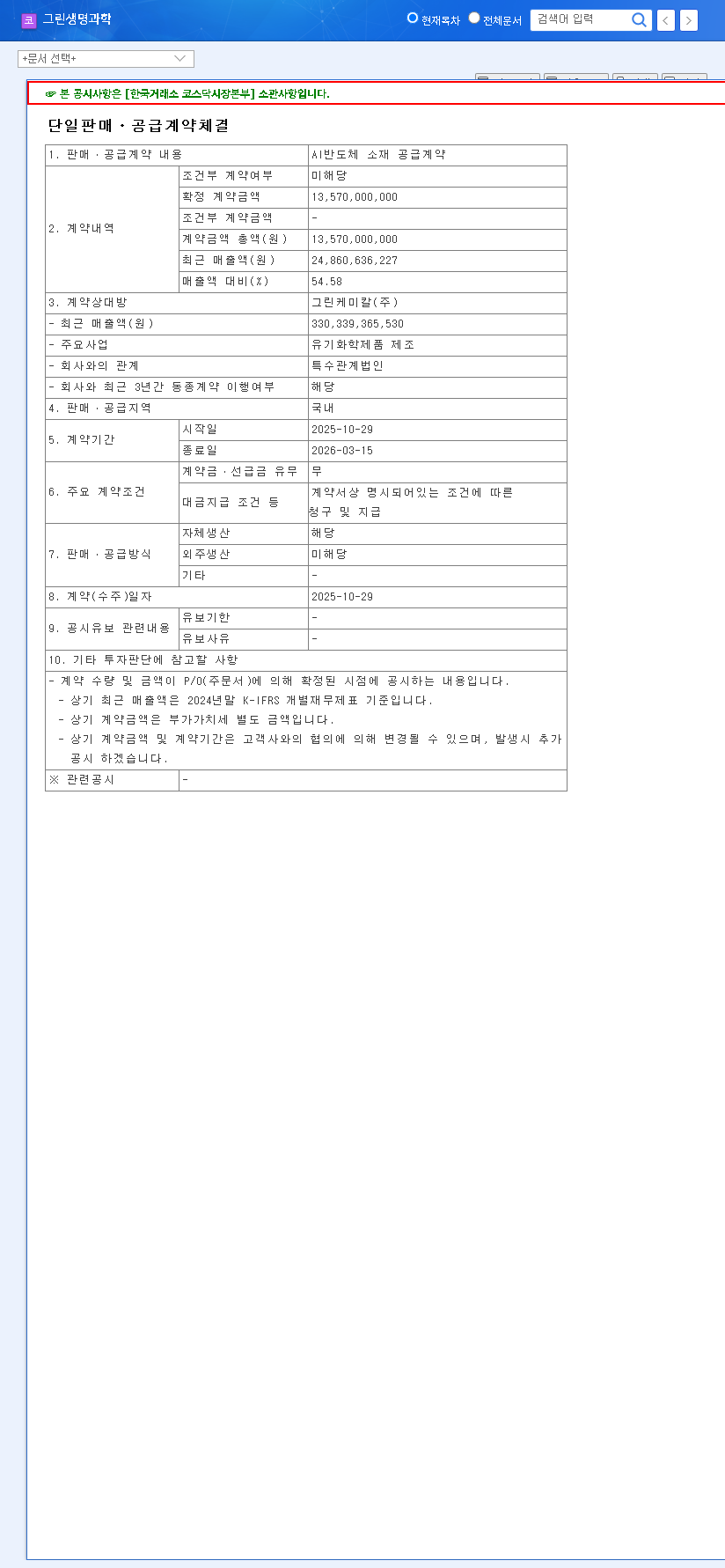
    On October 30, 2025, GREEN LIFESCIENCE disclosed a supply contract for AI semiconductor materials worth a staggering ₩13.6 billion with Green Chemical Co., Ltd. The contract, which represents a remarkable 54.58% of the company’s recent annual revenue, is scheduled for domestic supply over a four-month period, from October 29, 2025, to March 15, 2026. This isn’t just a large order; it’s a statement of intent, validating the company’s diversification strategy and technological capabilities. For official verification, you can view the Official Disclosure (DART Report).

    Fundamental Analysis: The State of GREEN LIFESCIENCE

    Before this transformative deal, GREEN LIFESCIENCE presented a mixed but promising financial picture. A thorough stock analysis reveals both solid strengths and notable risks.

    Core Strengths (Positive Factors)

    • Impressive Revenue Growth: The company’s half-year revenue for 2025 hit ₩16.351 billion, marking a 23.2% year-on-year increase.
    • Strategic Diversification: Proactive expansion into high-growth areas like electronic materials, secondary battery additives, and now AI semiconductor materials, showcases a forward-thinking growth strategy.
    • Technical Edge: Possession of unique technologies, including phosgene utilization, gives it a distinct competitive advantage within Korea.
    • CMO Competitiveness: With cGMP-compliant facilities, the company has strong potential for expanding its contract manufacturing organization (CMO) business.

    Challenges and Risks (Negative Factors)

    • Profitability Concerns: Despite revenue growth, an operating loss of ₩-1.122 billion was recorded due to rising costs.
    • Inventory Management: A 53.8% increase in inventory assets raises questions about operational efficiency and potential write-downs.
    • Macroeconomic Headwinds: The business is susceptible to external factors like exchange rate volatility, high interest rates, and fluctuating raw material costs.

    Impact of the AI Semiconductor Material Contract

    This contract is a pivotal event. The AI semiconductor market is projected to grow exponentially, driven by advancements in machine learning and data centers. According to industry experts at McKinsey, this sector represents one of the most significant growth opportunities of the decade. For GREEN LIFESCIENCE, successfully entering this market could redefine its future.

    This deal is more than just revenue; it’s a validation of GREEN LIFESCIENCE’s technological pivot. Success here could unlock access to a far larger, high-margin global supply chain.

    Potential Upsides

    • Revenue and Profit Surge: The immediate ₩13.6 billion revenue boost is clear. If margins are favorable, it could significantly reverse the recent operating loss.
    • Market Re-evaluation: The contract enhances brand value and proves its capabilities, potentially leading to a higher stock valuation and attracting new high-profile clients.
    • Future Growth Engine: Establishes a strong foothold in a rapidly expanding industry, reducing reliance on the traditional pharmaceutical market.

    Potential Downsides & Execution Risks

    • Margin Uncertainty: The profitability of this specific contract is unknown. High initial production costs for AI semiconductor material could squeeze margins.
    • Operational Risks: The semiconductor industry demands exceptionally high quality and supply chain stability. Any delays or quality issues could lead to severe penalties.
    • Short-Term Nature: The four-month contract duration provides a short-term boost, but long-term success hinges on securing follow-up orders and building lasting partnerships.

    Comprehensive Outlook and Investor Strategy

    The GREEN LIFESCIENCE AI semiconductor material deal is a powerfully positive catalyst. However, prudent investors should monitor several key performance indicators closely. Focus on the company’s ability to manage costs, maintain financial health amid rising interest rates, and demonstrate quality control. Future earnings reports will be critical for verifying the actual profit margins from this new venture.

    For sustained, long-term growth, GREEN LIFESCIENCE must prove this is not a one-off contract but the beginning of a successful business division. Continued investment in R&D and securing additional orders will be the ultimate determinants of the company’s re-evaluation. For more insights, you can review our complete guide to investing in specialty chemical companies.

    Disclaimer: This analysis is for informational purposes only and is based on publicly available data. It does not constitute investment advice. All investment decisions should be made with the consultation of a qualified financial advisor.
    (114450) GREEN LIFESCIENCE Stock: Analysis of the ₩13.6B AI Semiconductor Material Deal 관련 이미지
  • Green Chemical (083420) H1 2025 Earnings Analysis: Unveiling Opportunities Amidst Uncertainty

    1. Green Chemical’s H1 2025 Earnings: Declining Sales and Profitability

    Green Chemical reported revenue of KRW 71.7 billion, operating profit of KRW 1 billion, and net income of KRW 0.7 billion for H1 2025. Compared to the same period last year, revenue decreased by 16%, while operating profit and net income plummeted by 75% and 76.7%, respectively. The global economic slowdown and weakening demand in key export markets are considered primary factors.

    2. Drivers of Profitability Decline: Widening Sales Gap

    The decline in operating profit was steeper than the sales decrease, impacting profitability. Despite efforts to reduce selling, general, and administrative expenses, the company couldn’t offset the impact of falling sales. The base effect of a one-off gain in Q2 2024 may have also contributed to the decline.

    3. Positive Catalysts: Favorable Exchange Rate and New Business Potential

    The appreciating KRW/USD exchange rate is expected to positively affect Green Chemical’s revenue in KRW terms. Furthermore, the growth potential of new business segments, such as ETA (CO2 capture material) and DMC (eco-friendly substitute), is worth noting.

    4. Investor Action Plan: Short-Term Caution, Long-Term Potential

    Despite the potential benefits from the exchange rate, investors should exercise caution in the short term due to declining performance and market uncertainties. Closely monitoring sales and profitability recovery from Q2 2025 onwards is crucial. A long-term investment approach should consider the success of ETA, DMC, and AM businesses, and the company’s ability to maintain improved financial health.

    Green Chemical FAQ

    How did Green Chemical perform in H1 2025?

    Green Chemical reported decreased revenue, operating profit, and net income compared to the same period last year.

    What are Green Chemical’s main business activities?

    Green Chemical manufactures and sells various chemical products including EOA, ETA, DMC, and AM. Their main revenue source is surfactants.

    What should investors consider when evaluating Green Chemical?

    Investors should consider the current decline in performance and market uncertainty. Long-term investment decisions should depend on the success of new business ventures and the company’s financial health.

  • Green Chemical’s ₩30 Billion Investment: A Catalyst for Growth or a Risky Gamble?

    1. Why is Green Chemical Investing ₩30 Billion?

    On August 11, 2025, Green Chemical announced a ₩30 billion investment in new facilities. This strategic investment aims to expand production capacity and secure future growth engines, including additives for secondary battery electrolytes and greenhouse gas capture materials. The investment period is scheduled from August 12, 2025, to December 31, 2026.

    2. What is the Potential Impact of this Investment?

    Positive Impacts

    • ✅ Increased production capacity leading to higher sales
    • ✅ Economies of scale and enhanced cost competitiveness
    • ✅ Potential for increased market share

    Negative Impacts and Considerations

    • ❌ Increased short-term financial burden (funding and operating costs)
    • ❌ Time lag before realizing return on investment
    • ❌ Uncertainty due to market volatility (raw material prices, exchange rates)

    3. What Should Investors Consider?

    Long-term investors should focus on the potential for increased production capacity and synergies with new business ventures. However, short-term investors should closely monitor the funding plan, the timeline for profit realization, and facility utilization rates. It’s also crucial to be prepared for external factors like fluctuations in exchange rates and raw material prices. Further investigation into the funding plan, the impact of increased production capacity, and the growth potential of new businesses is recommended.

    4. Key Investment Takeaways

    • 👉 Aggressive investment aimed at securing future growth engines
    • 👉 Requires careful consideration of short-term financial burdens and market volatility
    • 👉 Essential to monitor company IR activities and public disclosures before making investment decisions

    Frequently Asked Questions

    What is Green Chemical’s main business?

    Green Chemical’s primary business is the manufacturing of chemicals and chemical products, which accounts for 92.9% of its revenue.

    What is the size of this investment?

    The investment is ₩30 billion, representing a significant 24.5% of Green Chemical’s capital.

    What is the investment period?

    The investment period is scheduled from August 12, 2025, to December 31, 2026, approximately 1 year and 4 months.