Tag: GI Innovation

  • GI Innovation: Clinical Trial Application Amendment & Investment Strategy

    GI-101 Clinical Trial Amendment: Decoding the Significance

    GI Innovation has applied for an amendment to its Phase 1/2 clinical trial plan for GI-101, evaluating its safety, tolerability, pharmacokinetics, and anti-tumor efficacy as a monotherapy and in combination with Pembrolizumab/Lenvatinib. This marks a significant step in the development of the GI-101 pipeline and, pending positive clinical outcomes, could bolster the company’s technological competitiveness and open doors for further partnerships.

    GI Innovation’s 2025 Semi-Annual Performance: Balancing Positives and Risks

    Positive Signals

    • ▶ Progress in key pipelines (GI-101, GI-102, GI-301, GI-108)
    • ▶ Global partnerships with MSD, Yuhan Corp., Maruho Co., Ltd., etc.
    • ▶ Decrease in debt-to-equity ratio (57.56% at the end of 2024 to 14.63% in the first half of 2025)
    • ▶ Active R&D investment

    Areas of Concern

    • ▶ Continued net loss (KRW 22.58 billion in the first half of 2025)
    • ▶ Low revenue (KRW 338 million in the first half of 2025)
    • ▶ Inherent uncertainties associated with drug development

    GI Innovation Investment Strategy: Hold and Monitor Closely

    Despite positive factors like the GI-101 clinical progress and global partnerships, the continued net loss and inherent risks of drug development necessitate a cautious investment approach. The current investment recommendation is ‘Hold,’ with continuous monitoring of the following key aspects:

    • ▶ Approval and results of the GI-101 clinical trial application amendment
    • ▶ Securing additional technology licensing agreements
    • ▶ R&D cost efficiency and strategies for achieving profitability

    Frequently Asked Questions

    When will the approval for the GI-101 clinical trial application amendment be announced?

    The exact announcement date is unknown, pending review by the Ministry of Food and Drug Safety. It’s crucial to stay updated on related announcements.

    What are GI Innovation’s main pipelines?

    GI Innovation’s key pipelines include GI-101 (immuno-oncology), GI-102, GI-301 (allergy treatment), and GI-108.

    What are the key considerations when investing in GI Innovation?

    Investors should carefully consider the uncertainties of drug development and the company’s ongoing net losses. Close monitoring of clinical trial results and technology licensing agreements is essential.
  • GI Innovation Stock Forecast: Special Relationship Shareholder Changes and Investment Strategies


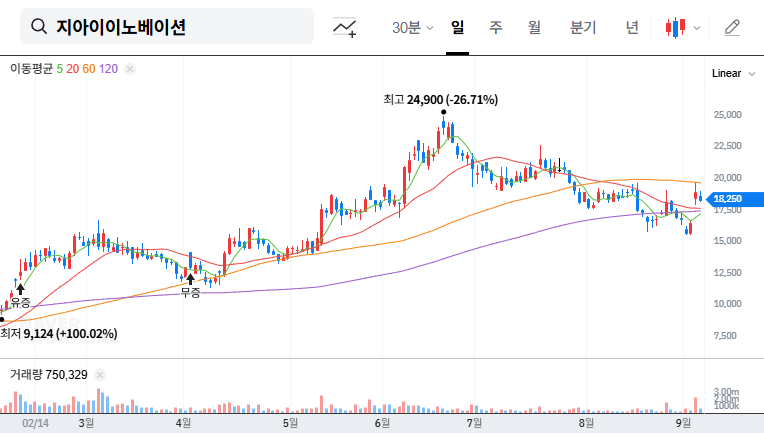
    GI Innovation Stock Forecast: Special Relationship Shareholder Changes and Investment Strategies 대표 차트 이미지


    What Happened? Changes in GI Innovation’s Special Relationship Shareholder Stakes

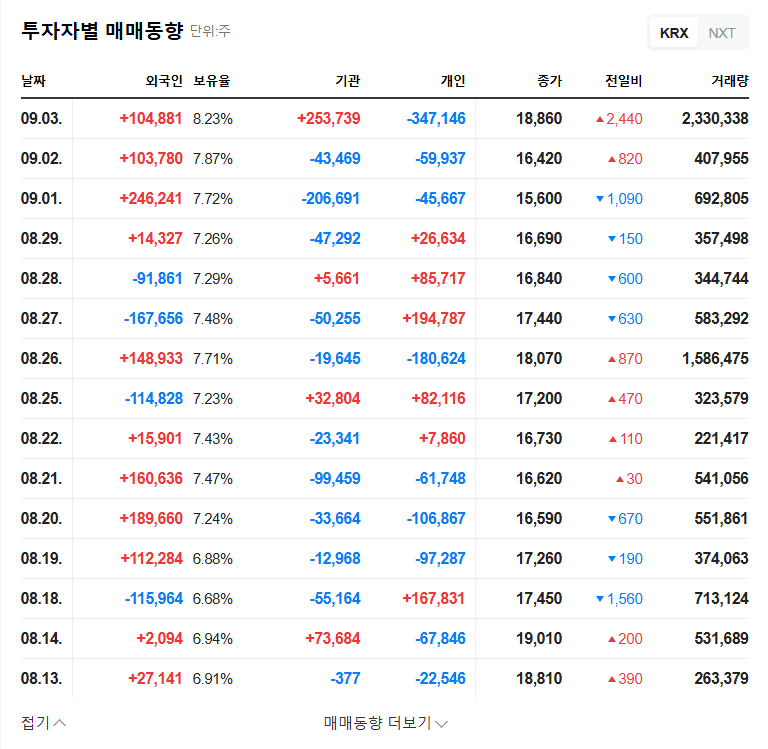
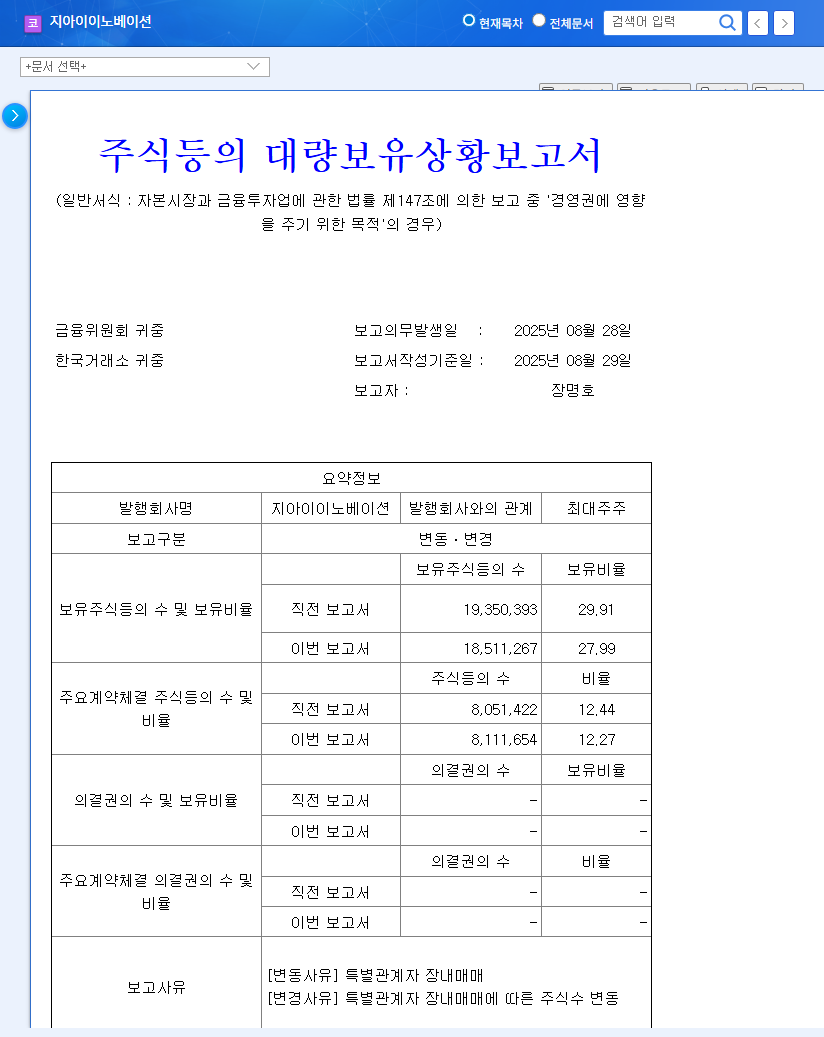
    According to the ‘Report on the Status of Large-volume Holdings of Stocks, etc.’ released on September 4, 2025, the stake held by CEO Myung-Ho Jang and other special relationship shareholders decreased from 29.91% to 27.99%. DS Asset Management, Anda Asset Management, and others reduced their stakes through market sales, while Brain Asset Management’s stake changed due to the dissolution of a special relationship related to convertible preferred stock.

    Why Are These Changes Important?

    Changes in special relationship shareholder stakes can impact market confidence in a company’s management stability and future direction. While this stake decrease may put short-term pressure on the stock price, the remaining stake is sufficient for maintaining management control.

    So, What Does the Future Hold for GI Innovation?

    Positive Factors: A robust R&D pipeline, successful technology transfers, and improved financial structure underpin GI Innovation’s long-term growth potential. Diverse pipelines, including immuno-oncology drugs (GI-101/GI-102), allergy treatments (GI-301), and metabolic immuno-oncology drugs (GI-108), will serve as future growth drivers.

    Negative Factors: The sale of shares by special relationship shareholders may cause short-term stock price volatility. The inherent high failure rate of new drug development, financial burden from continuous R&D investment, and intensifying market competition are also risk factors to consider.

    What Should Investors Do? Action Plan

    • Monitor Pipeline Clinical Trial Results: Clinical trial results significantly impact stock prices, requiring continuous attention.
    • Check for New Technology Transfer Agreements: Additional technology transfer agreements are a crucial indicator of the company’s growth potential.
    • Understand Funding Plans: Investors should assess the company’s funding plans and execution capabilities for R&D investments.
    • Observe Shareholder Movement Trends: Changes in major shareholder stakes can influence market sentiment.
    • Consider Macroeconomic Factors: Interest rates, exchange rates, and bio-industry trends should be factored into investment decisions.

    GI Innovation holds high growth potential, but investment always carries risk. Consider the action plan above to make informed investment decisions.


    FAQ

    What are GI Innovation’s main pipelines?

    GI Innovation has a diverse pipeline including immuno-oncology drugs (GI-101/GI-102), allergy treatments (GI-301), and metabolic immuno-oncology drugs (GI-108).

    How do special relationship shareholder changes affect the stock price?

    In the short term, it can act as selling pressure, leading to a decline in stock price. However, the long-term impact depends on the company’s fundamentals and future outlook.

    What should investors be aware of when investing in GI Innovation?

    Investors should consider the high failure rate of new drug development, the financial burden from continuous R&D investment, and intensifying market competition. It’s also crucial to monitor clinical trial results, technology transfer agreements, and funding plans.


    GI Innovation Stock Forecast: Special Relationship Shareholder Changes and Investment Strategies 관련 이미지
    GI Innovation Stock Forecast: Special Relationship Shareholder Changes and Investment Strategies 관련 이미지


  • GI Innovation 2025 Half-Year Report Analysis: Growth Potential and Investment Risks

    1. What Happened? Key Highlights of GI Innovation’s 2025 Half-Year Report

    GI Innovation recorded marginal revenue in the first half of 2025 but posted operating and net losses due to R&D investments. Its core business model, licensing out new drug candidates, is progressing smoothly with three global contracts signed to date. The clinical progress of key pipelines and licensing-out achievements are expected to determine the company’s future value. Capital increase through rights offerings and convertible bonds improved the debt ratio, securing financial soundness.

    2. Why Does it Matter? Growth Drivers and Potential Risks

    Growth Drivers:

    • ▶ Innovative new drug development based on the GI-SMART™ platform technology
    • ▶ Promising pipelines including GI-101/GI-102 (immuno-oncology), GI-301 (allergy treatment), and GI-108 (metabolic immuno-oncology)
    • ▶ Successful licensing-out track record to global pharmaceutical companies

    Potential Risks:

    • ▶ Continuous losses due to high R&D costs
    • ▶ Inherent risks of new drug development (uncertainty of clinical success)
    • ▶ Intensifying competition in the immuno-oncology and allergy treatment markets

    3. So What? Investment Strategy and Considerations

    GI Innovation has high growth potential, but the uncertainty of new drug development and intensifying competition are factors to consider when investing. Careful monitoring of the clinical success of the pipeline and licensing-out achievements from a long-term perspective is crucial. Attention should be paid to the results of the Phase 2 clinical trials for GI-101/GI-102, the progress of GI-108 licensing out, and the expansion of collaboration with global pharmaceutical companies.

    4. Key Action Plan for Investors

    • ▶ Check the timing and content of the announcement of GI-101/GI-102 Phase 2 clinical trial results.
    • ▶ Continuously monitor the progress of GI-108 licensing out.
    • ▶ Understand the development status of competitors’ pipelines and market trends.
    • ▶ Make investment decisions from a long-term perspective and consider diversified investments.
    What is GI Innovation’s core technology?

    GI Innovation is developing new drugs using dual fusion proteins based on its innovative platform technology, GI-SMART™.

    What are GI Innovation’s main pipelines?

    These include the immuno-oncology drugs GI-101/GI-102, the allergy treatment GI-301, and the metabolic immuno-oncology drug GI-108.

    What are the precautions for investing in GI Innovation?

    The uncertainty of new drug development and intensifying competition should be considered, and it is recommended to invest from a long-term perspective. Clinical trial results and technology transfer performance should be closely monitored.