In the world of stock market analysis, the actions of a company’s top leadership often speak louder than words. News that KoreaFurniture (한국가구) CEO Choi Hun-hak has increased his personal stake is a significant event that warrants a closer look from savvy investors. This isn’t just a simple transaction; it’s a powerful signal of confidence from the person at the helm. But what does this mean for the future of KoreaFurniture stock and its valuation?
This comprehensive analysis will dissect the fundamentals of KoreaFurniture, explore the implications of this leadership move, and provide a clear outlook on the opportunities and challenges ahead. We will delve into the company’s diverging business segments and the macroeconomic factors that could shape its trajectory.
The Details: CEO Choi Hun-hak’s Increased Stake in KoreaFurniture
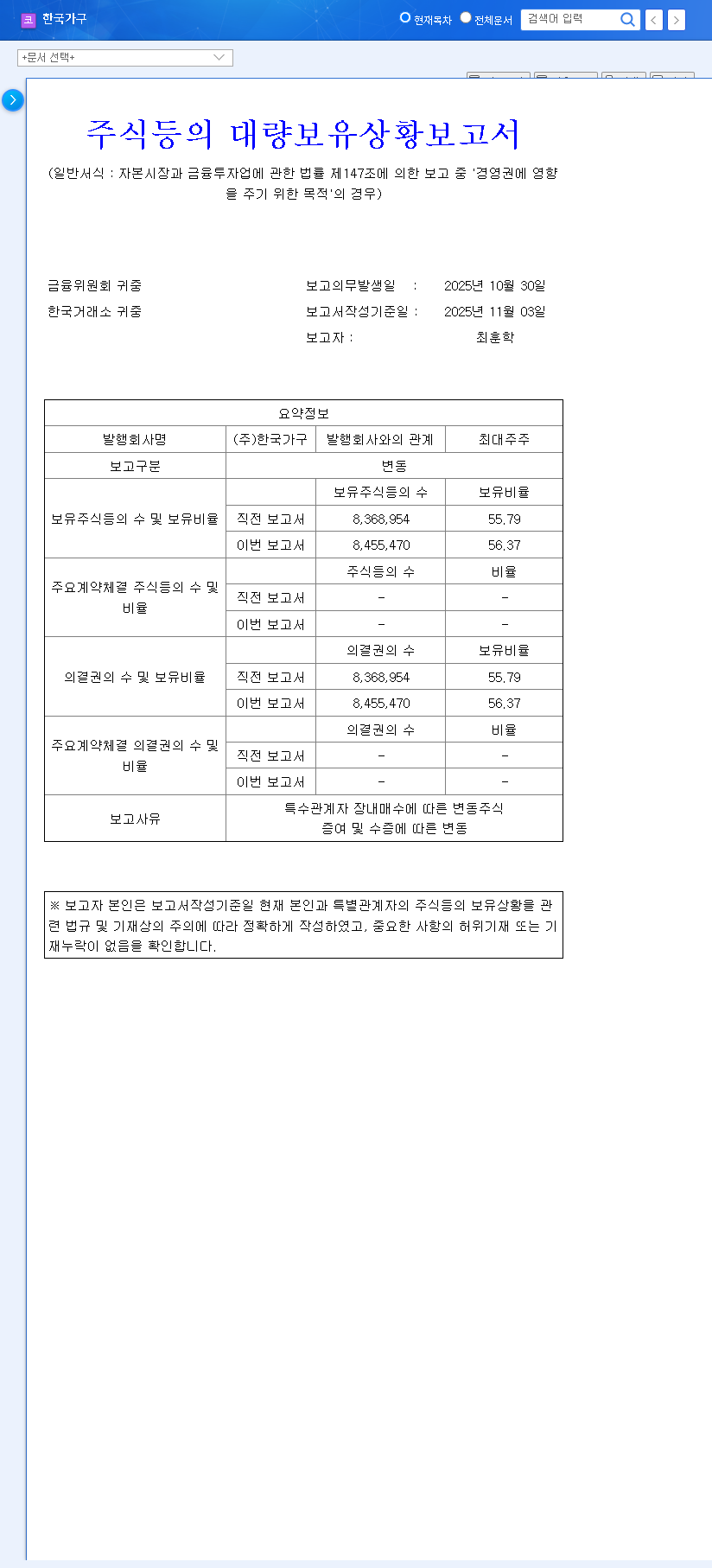
According to the Official Disclosure filed with DART, on November 3, 2025, KoreaFurniture announced that CEO Choi Hun-hak increased his ownership by 0.58 percentage points. This was achieved through the acquisition of 116,000 shares, elevating his total stake from 55.79% to 56.37%. The stated purpose was explicit: to strengthen influence over management control. For investors, this move is a clear indicator of the CEO’s commitment to the company’s long-term vision and stability.
A Tale of Two Businesses: Analyzing Company Fundamentals
A deep dive into KoreaFurniture’s semi-annual report reveals a company with two very different stories unfolding under one roof. Understanding this duality is critical to any KoreaFurniture analysis.
The Growth Engine: Jeonwon International
The star performer is undoubtedly the subsidiary, Jeonwon International. Specializing in the distribution of bakery raw materials, this division has been firing on all cylinders. It posted an impressive 26.68% year-on-year increase in sales. This exceptional growth propelled the group’s consolidated sales to 68.5 billion KRW (a 20.8% increase) and operating profit to a staggering 9.9 billion KRW (a 60.0% increase). Jeonwon International is not just a part of the business; it’s the primary driver of profitability and the core reason for the company’s strong consolidated performance.
The Core Challenge: The Furniture Division
In stark contrast, the parent company’s original furniture business is facing significant headwinds. Sales in this division declined by 8.84% to 8.7 billion KRW, resulting in an operating loss. This downturn is largely attributed to external pressures, including a slump in the domestic real estate market and weakening consumer confidence, which directly impact big-ticket purchases like high-end furniture. A key question for investors is whether the strengthened management control under CEO Choi can engineer a turnaround for this struggling core segment.
The CEO’s increased stake signals a commitment to navigating these challenges, enhancing stability and ensuring consistent, long-term strategic execution across both the high-growth subsidiary and the core furniture business.
Investment Outlook: What This Means for KoreaFurniture Stock
The increase in CEO Choi Hun-hak’s stake is a multifaceted event with both short-term and long-term implications for the stock price. While it’s a fundamentally positive signal, a comprehensive investment strategy must also account for the company’s financial health and the broader economic climate. For more on this, you can read our Guide to Analyzing Insider Buying.
Key Factors to Monitor
- •Financial Stability: The company’s financial health is robust. With a current ratio of 253.5%, short-term liquidity is not a concern. The consolidated debt-to-equity ratio is a very stable 27.53%, indicating low financial risk.
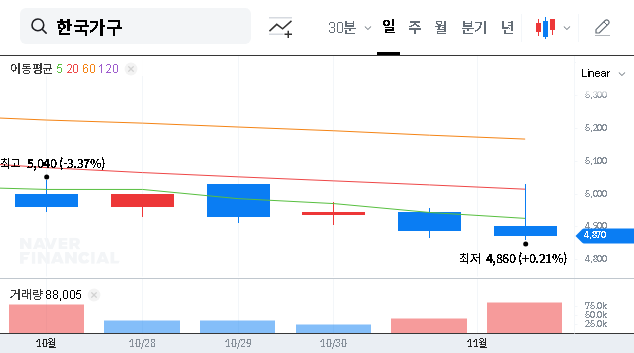
- •Stock Performance: In the six months prior to this news, KoreaFurniture stock has been trading in a narrow range between 3,500 KRW and 4,000 KRW. The key question is whether this catalyst, combined with strong earnings from Jeonwon, can provide the momentum needed for a breakout.
- •Macroeconomic Headwinds: Global economic factors cannot be ignored. Persistent high interest rates, currency volatility, and rising commodity prices could pressure import costs. As noted by sources like Bloomberg, these conditions can impact profitability for companies reliant on international supply chains.
Frequently Asked Questions (FAQ)
What is the primary significance of the CEO’s stake increase?
It signals strong confidence from leadership and a commitment to strengthening management control. This enhances corporate stability, builds shareholder trust, and provides a solid foundation for executing long-term strategy.
Which part of KoreaFurniture’s business is performing the best?
The subsidiary, Jeonwon International, which operates in the bakery raw materials distribution sector, is the main driver of growth and profitability for the entire group, showing exceptional year-on-year performance.
What are the main risks for KoreaFurniture investors?
The primary risks are the continued underperformance of the core furniture division and exposure to macroeconomic pressures like interest rates and currency fluctuations. The company’s future success depends on turning around the furniture business while maintaining momentum at Jeonwon International.