Tag: Food Industry

  • (097950) CJ CHEILJEDANG CORP. IR (Q3 2025): A Deep Dive for Investors

    (097950) CJ CHEILJEDANG CORP. IR (Q3 2025): A Deep Dive for Investors

    The upcoming CJ CHEILJEDANG CORP. IR for its third-quarter 2025 performance is more than just a financial report; it’s a critical look into the engine room of a global food and biotechnology powerhouse. As the company navigates ambitious K-Food globalization efforts and manages a complex portfolio, investors are keenly watching. This deep-dive analysis will unpack the key fundamentals, potential market-moving factors, and strategic considerations you need to understand ahead of this pivotal event.

    Can CJ CheilJedang maintain its growth trajectory amidst macroeconomic headwinds? How are its investments in next-generation food tech and sustainable materials paying off? We’ll explore these questions and provide a comprehensive framework for interpreting the results.

    Event Details: The CJ CHEILJEDANG CORP. Q3 2025 IR

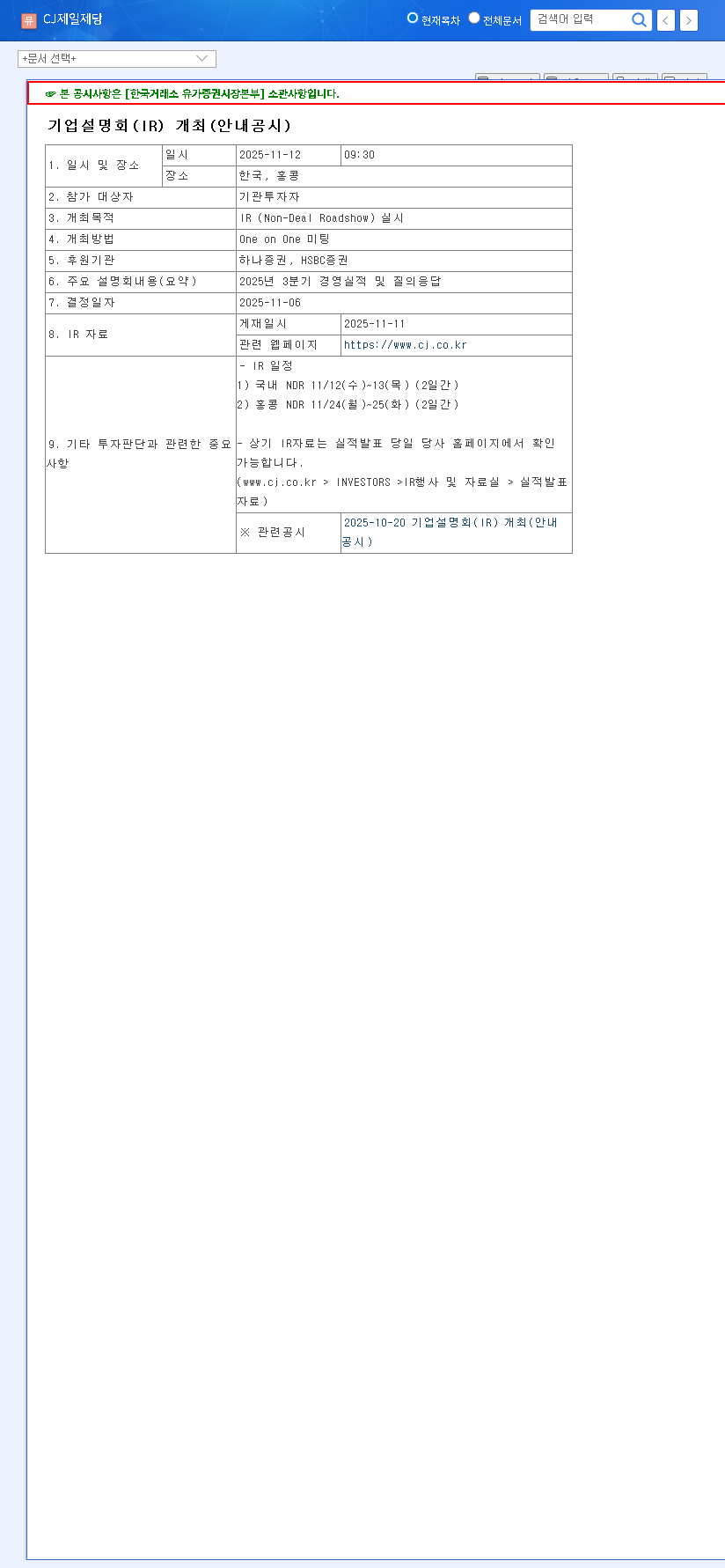
    CJ CHEILJEDANG CORP. has officially scheduled its Investor Relations (IR) event to announce its Q3 2025 management performance. This session, which includes a detailed presentation and a live Q&A, is a crucial communication channel for stakeholders.

    • Date: November 12, 2025
    • Time: 9:30 AM (KST)
    • Focus: Q3 2025 Financial Results, Business Segment Performance, and Future Outlook.
    • Source: View the Official Disclosure on DART.

    Fundamental Analysis: The Pillars and Pressures

    A thorough CJ CheilJedang stock analysis begins with its core strengths and potential vulnerabilities. The company’s diversified model is a key asset, but it also creates multiple fronts to manage.

    Core Strengths Driving Growth

    • Financial Stability: With a manageable debt-to-equity ratio, significant cash reserves, and a strong credit rating (AA/A1), the company is well-positioned to fund growth and weather economic downturns.
    • Aggressive Global Expansion: The landmark acquisition of Schwan’s Company in the U.S. was a game-changer, providing a powerful platform for its K-Food globalization strategy. Brands like Bibigo are now household names in many international markets.
    • Future-Proofing R&D: CJ CheilJedang is investing heavily in future growth engines. This includes the high-potential alternative meat sector, health functional foods, and the commercialization of PHA, a biodegradable plastic that meets rising consumer demand for sustainability.
    • Commitment to ESG: With clear targets for carbon neutrality and zero waste by 2050, the company is aligning with the values of modern investors and consumers, which can enhance long-term brand loyalty and investment appeal.

    Potential Risks on the Radar

    • Commodity Price Volatility: The processed food business is sensitive to fluctuations in international grain prices and currency exchange rates. While hedging strategies are in place, significant swings can still impact profit margins.
    • Intense Market Competition: The global food industry is fiercely competitive. CJ CheilJedang faces challenges from both established international giants and agile local players, especially as consumer tastes diversify.
    • Profitability in Logistics: The logistics arm of the business operates with high fixed costs, making it vulnerable to market slowdowns and economic downturns that affect shipping volumes and rates.

    The central theme of the CJ CHEILJEDANG CORP. IR will be balancing the exciting growth in its BIO and global food segments against the need to defend profitability in its more mature domestic and logistics markets.

    Market Expectations and Stock Price Impact

    The market will be scrutinizing the Q3 results for signs that the BIO business’s upward trend is sustainable and that the company is effectively managing costs in its food division. The CJ CheilJedang investor relations team’s commentary will be just as important as the numbers themselves.

    Short-Term Volatility (Post-IR)

    Expect increased stock volatility around the announcement. A bull case would be driven by better-than-expected margins in the food segment and continued double-digit growth in the BIO division. Conversely, a bear case could emerge if rising costs significantly erode profits or if global sales show signs of slowing. Management’s confidence and clarity during the Q&A will be critical in shaping immediate market sentiment.

    Medium to Long-Term Outlook

    Beyond the initial reaction, long-term value will be determined by the market’s belief in the company’s growth narrative. If the CJ CHEILJEDANG CORP. IR successfully conveys a clear and credible roadmap for continued K-Food expansion and profitability from new ventures, it could support a sustained positive re-rating of the stock. For more on this sector, you can read our Guide to Investing in Korean Food Stocks.

    Actionable Investment Strategies

    Investors should approach this event with a strategic mindset. Here are key areas to focus on:

    • Analyze Profit Margins: Look beyond top-line revenue. Dig into the operating profit margins for each business segment (Food, BIO, Logistics) to understand the true health of each division.
    • Listen for Forward Guidance: Pay close attention to management’s outlook for Q4 and the coming year. Any commentary on raw material costs, consumer demand, and new product launches will be invaluable. Check reputable sources like Reuters for broader market context.
    • Monitor Macroeconomic Factors: Keep an eye on currency trends (especially USD/KRW) and commodity prices, as these external factors will continue to influence performance.
    • Adopt a Long-Term View: While short-term price swings are likely, successful investing in a company like CJ CheilJedang requires focusing on its long-term strategic execution and intrinsic value.

    Frequently Asked Questions

    Q1: When is the CJ CHEILJEDANG CORP. Q3 2025 IR event?

    The IR event is scheduled for November 12, 2025, at 9:30 AM Korean Standard Time. It will cover the Q3 earnings and include a Q&A session with management.

    Q2: What are the company’s main strengths?

    Key strengths include a solid financial foundation, successful global expansion via its K-Food globalization strategy, investment in future growth areas like alternative proteins, and a strong commitment to ESG principles.

    Q3: What are the primary risks for investors?

    Investors should monitor risks such as raw material cost volatility, intense competition in the global food market, the logistics business’s sensitivity to economic cycles, and the initial costs associated with R&D investments.

    Disclaimer: This analysis is based on publicly available information and is intended for informational purposes only. It does not constitute investment advice. All investment decisions should be made by the investor after conducting their own due diligence.
    (097950) CJ CHEILJEDANG CORP. IR (Q3 2025): A Deep Dive for Investors 관련 이미지
  • (280360) LOTTE WELLFOOD IR Analysis (Nov 2025): A Deep Dive on Stock Performance & Investment Strategy

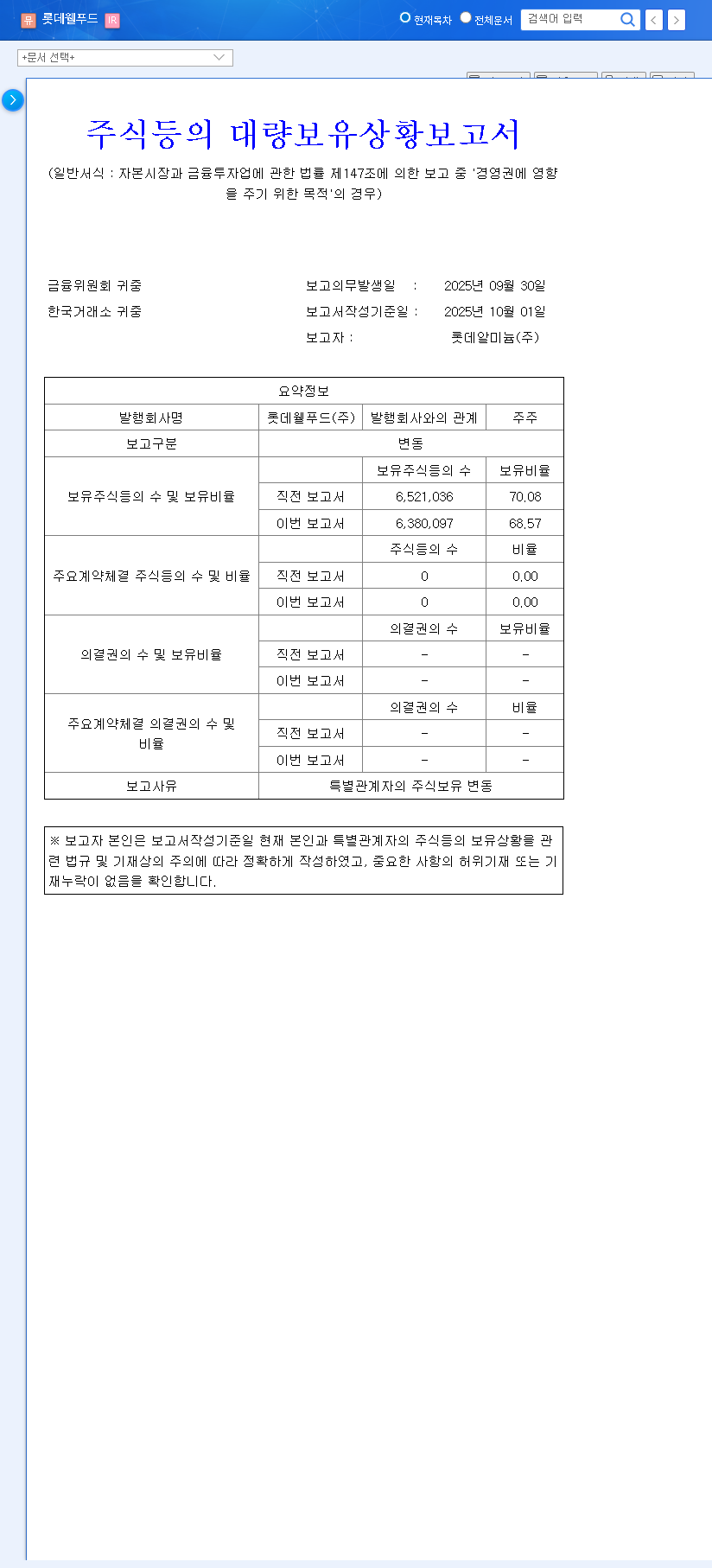
    (280360) LOTTE WELLFOOD IR Analysis (Nov 2025): A Deep Dive on Stock Performance & Investment Strategy

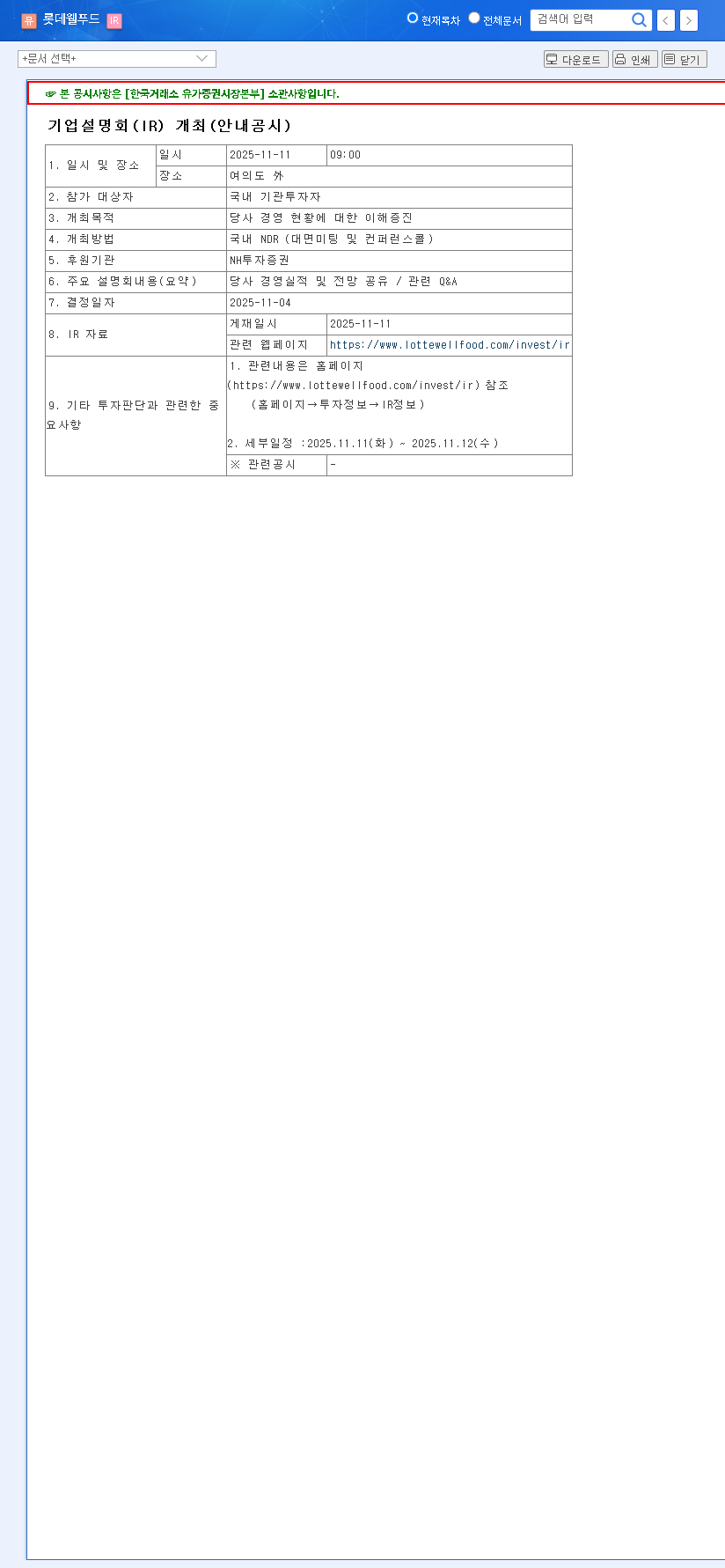
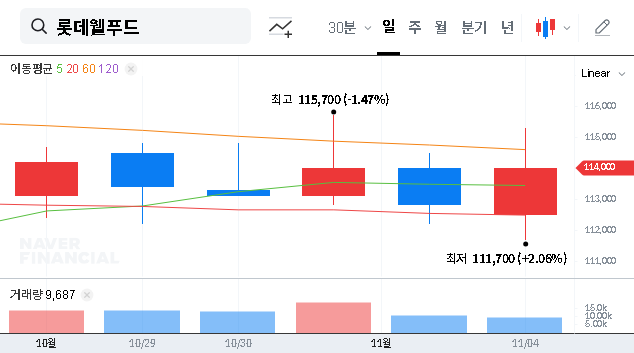
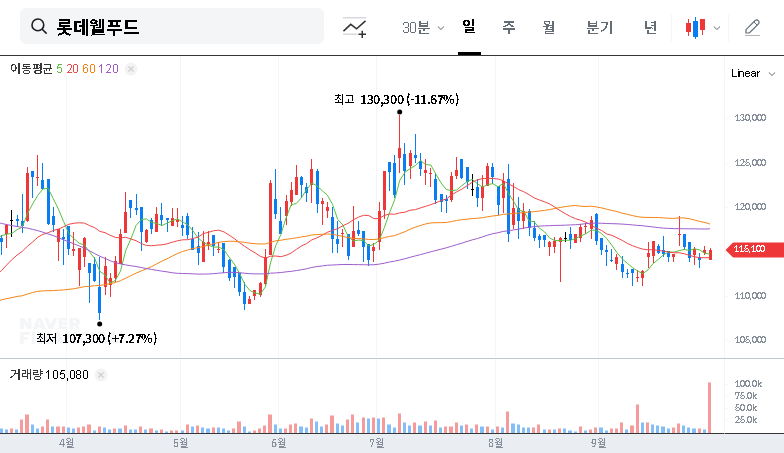
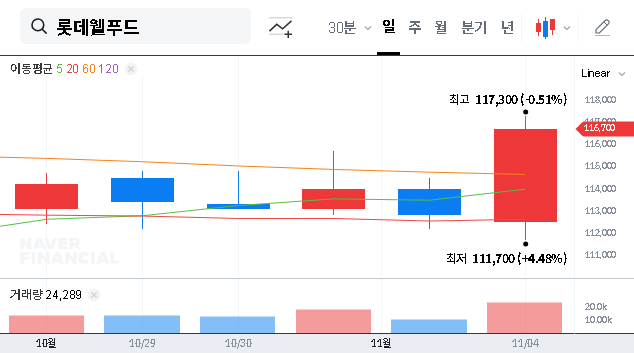
    This comprehensive LOTTE WELLFOOD IR analysis provides a critical look into the upcoming Investor Relations event scheduled for November 11, 2025. For current and prospective investors, this event represents a pivotal moment. The company, a titan in the food industry, stands at a crossroads, grappling with significant challenges like declining profitability and a substantial debt ratio. The key question is whether management can leverage this platform to restore investor confidence and unveil credible new growth engines for the future.

    This report unpacks the company’s fundamentals based on its H1 2025 performance, dissects the immense significance of the upcoming IR meeting, and models the potential impacts on LOTTE WELLFOOD stock under both successful and unsuccessful scenarios. Our goal is to equip you with the detailed insights necessary for making well-informed investment decisions.

    The Pivotal IR Event: What Investors Need to Know

    LOTTE WELLFOOD CO., LTD, with a market capitalization of 1.084 trillion KRW, has officially scheduled its Investor Relations (IR) event for November 11, 2025. The stated objective is to enhance the market’s understanding of the company’s current management status and future direction. This event will feature a detailed presentation on business performance and outlook, followed by an essential Q&A session where analysts and investors can probe deeper into the company’s strategies.

    This isn’t just a routine corporate briefing; it’s a high-stakes moment of truth. The company’s ability to communicate a clear, convincing turnaround strategy will directly influence its valuation and stock trajectory for the foreseeable future.

    Deep Dive: A Fundamental Analysis of LOTTE WELLFOOD

    The H1 2025 report presents a mixed but revealing picture of the company’s health. While certain strengths provide a solid foundation, several pressing concerns are casting a shadow over its prospects. For a detailed breakdown, you can review the Official Disclosure (DART). Here is a summary of the key factors at play:

    Positive Factors & Core Strengths

    • Diversified Business Portfolio: A robust foundation built on confectionery, ice cream, edible oils, and processed meats, with exports to over 60 countries providing resilience.
    • Health & Wellness (H&W) Trend Alignment: Proactive expansion of its ‘ZERO’ brand and other health-oriented products taps into a critical and growing consumer market segment.
    • Powerful Brand Recognition: Decades of market presence have built high brand loyalty and dominance in the domestic Korean market.
    • Commitment to R&D: Ongoing investment through the LOTTE Central Research Institute ensures a pipeline for innovation and new product development.

    Negative Factors & Urgent Considerations

    • Deteriorating Profitability: A major red flag. Despite rising sales, operating profit plummeted by nearly 50% year-over-year in H1 2025, signaling severe margin compression from rising costs and competition.
    • High Financial Leverage: The debt-to-equity ratio stands at 96.41%, with total borrowings of 1.34 trillion KRW. This is a significant risk in a high-interest-rate environment, as it increases interest expenses and reduces financial flexibility.
    • Low Production Utilization: An average utilization rate of just 47.7% is inefficient, leading to a higher fixed cost burden per unit and negatively impacting gross margins.
    • Macroeconomic Headwinds: The company is exposed to volatile raw material prices (cocoa, oils), foreign exchange fluctuations, and geopolitical risks related to its Russian subsidiary.

    Mapping the Future: Potential Scenarios & Stock Impact

    The outcome of this LOTTE WELLFOOD IR Analysis hinges on the quality and credibility of the information presented. The market reaction will likely be swift and decisive.

    Positive Scenario (Successful IR)

    If management delivers a masterful presentation, they will offer concrete, data-backed strategies for improving Lotte Wellfood profitability. This includes a clear roadmap for cost reduction, plans to improve factory utilization, and a convincing growth strategy for high-margin overseas markets. A confident Q&A session and a strengthened shareholder return policy would seal the deal, leading to restored investor confidence, positive analyst re-ratings, and a sustained upward trend in the stock price.

    Negative Scenario (Unsuccessful IR)

    Conversely, a disappointing IR would feature vague explanations, a lack of concrete action plans, and evasive answers during the Q&A. If the company fails to adequately address the core issues of profitability and debt, it will amplify investor concerns. The outcome would likely be a sharp loss of confidence, analyst downgrades, and significant downward pressure on the LOTTE WELLFOOD stock, potentially leading to a prolonged period of undervaluation.

    Strategic Investor Playbook for the LOTTE WELLFOOD IR

    For any investment analysis, a clear strategy is key. Investors should watch this event closely and be prepared to act based on the information revealed.

    • Focus on Specifics: Listen beyond the buzzwords. Demand specific, measurable plans for improving margins, reducing debt, and increasing operational efficiency.
    • Gauge Management’s Tone: The Q&A is crucial. Assess whether leadership is confident and transparent or defensive and vague. This reveals their grasp of the challenges.
    • Benchmark Against Competitors: Compare LOTTE WELLFOOD’s plans against the performance and strategies of its key competitors. For more on this, see our report on Global Food Industry Trends for 2026.
    • Consider the Macro Environment: Remember that external factors matter. Keep an eye on reports from authoritative sources like Bloomberg Economics regarding interest rate forecasts and commodity prices.

    In conclusion, the November 11, 2025, IR event is a watershed moment for LOTTE WELLFOOD. A convincing performance could mark the beginning of a turnaround, presenting a valuable investment opportunity. A failure to impress, however, could confirm the market’s worst fears. Prudent investors will watch, listen, and analyze before making their next move.

    (280360) LOTTE WELLFOOD IR Analysis (Nov 2025): A Deep Dive on Stock Performance & Investment Strategy 관련 이미지
  • (280360) LOTTE WELLFOOD Q3 Earnings: Revenue Up, Profit Dips – A 2025 Investment Analysis

    (280360) LOTTE WELLFOOD Q3 Earnings: Revenue Up, Profit Dips – A 2025 Investment Analysis

    The latest LOTTE WELLFOOD Q3 earnings report for 2025 presents a complex picture for investors. On one hand, the company demonstrated solid top-line growth, beating revenue expectations. On the other, a surprising dip in operating profit has raised questions about underlying profitability and cost pressures. This mixed result creates a critical moment for a thorough LOTTE WELLFOOD investment analysis.

    Is this a temporary setback on a long-term growth path, or a red flag signaling deeper issues? This article provides a comprehensive breakdown of the Q3 performance, explores the fundamental drivers and risks, and outlines a clear investment strategy for anyone monitoring LOTTE WELLFOOD stock.

    Unpacking the LOTTE WELLFOOD Q3 Earnings Report

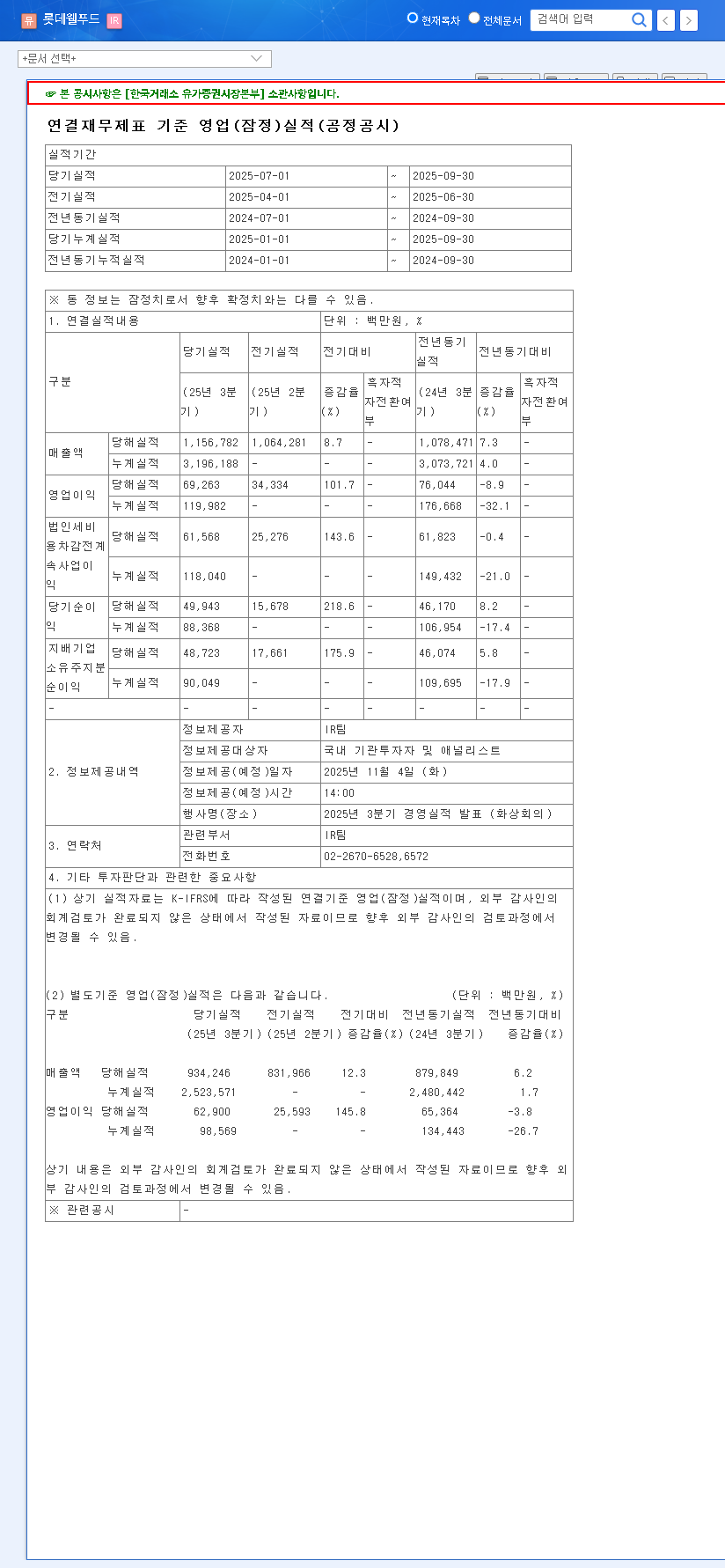
    On a consolidated basis, LOTTE WELLFOOD announced its preliminary Q3 2025 operating results, which revealed a diverging performance against market consensus. The official figures can be reviewed in the company’s disclosure. (Source: DART)

    Here are the key metrics from the report:

    • Revenue: KRW 1,156.8 billion, which was 3% above the market forecast of KRW 1,121.5 billion.
    • Operating Profit: KRW 69.3 billion, a notable 5% below the market forecast of KRW 72.9 billion.
    • Net Profit: KRW 48.7 billion, a surprising 9% above the market forecast of KRW 44.7 billion.

    While the strong revenue and net profit figures are encouraging, the shortfall in operating profit—the key indicator of a company’s core business profitability—is the central point of concern for analysts and investors. This suggests that while sales are growing, the cost of achieving those sales is rising faster than anticipated.

    The Core Challenge: Why Did Operating Profit Miss Expectations?

    The operating profit miss wasn’t an isolated event. It reflects several persistent headwinds that were already visible in the first half of the year. A detailed corporate earnings analysis points to a combination of external and internal pressures.

    Macroeconomic Headwinds

    The global economic environment has been challenging. For LOTTE WELLFOOD, three factors are particularly impactful:

    • Raw Material Volatility: Rising prices for key ingredients, influenced by global commodity markets and oil prices, directly compress profit margins. For more on this trend, see analysis from sources like Bloomberg.
    • Exchange Rate Pressure: As a major importer of raw materials, a strong dollar against the Korean Won increases the cost of goods, creating a significant burden on the company’s bottom line.
    • High Interest Rates: A sustained high-interest-rate environment increases borrowing costs and can dampen consumer spending, adding financial strain.

    Competitive and Operational Pressures

    Beyond the macro environment, the food industry itself is fiercely competitive. Increased selling, general, and administrative (SG&A) expenses, likely from marketing and promotional activities to fend off rivals, have eaten into profits. The rise of private-label brands and the growth of e-commerce channels further intensify price competition, making it difficult to pass on rising costs to consumers.

    The Q3 earnings report highlights a classic dilemma: pursue revenue growth at the expense of short-term profitability or protect margins and risk losing market share. LOTTE WELLFOOD appears to be navigating this challenging trade-off.

    Investment Thesis: A ‘Neutral’ Stance on LOTTE WELLFOOD Stock

    Given the conflicting signals from the LOTTE WELLFOOD Q3 earnings, a ‘Neutral’ investment opinion is maintained. The market will likely react cautiously, weighing the positive revenue momentum against the clear profitability concerns. While the better-than-expected net profit offers some relief, it may be influenced by non-operating factors rather than core business strength.

    The long-term bull case for the stock relies on the success of its strategic initiatives:

    • Health & Wellness (H&W) Focus: The continued expansion of its popular ‘ZERO’ and ‘0 Kcal’ product lines taps into a powerful consumer trend.
    • Global Market Expansion: Strong performance in key overseas markets like India and Kazakhstan can offset domestic sluggishness.
    • Brand Power: LOTTE’s strong brand recognition remains a formidable competitive advantage.

    However, the bear case is rooted in the immediate challenges highlighted in this report. Until there is clear evidence that the company can improve its operating profit margin, the stock may remain range-bound. For a broader perspective, you might read our guide to investing in food industry stocks.

    Future Monitoring Points for Investors

    For those conducting a LOTTE WELLFOOD investment analysis, the path forward requires diligent monitoring. The future trajectory of the stock will likely depend on the following factors:

    • Operating Profit Margin Recovery: Watch for any announcements or strategies aimed at cost reduction, SG&A rationalization, and a focus on higher-margin products in Q4 and beyond.
    • Growth Engine Performance: Confirm that the H&W and overseas business segments continue their strong growth trajectory to drive overall revenue.
    • Pricing Power: Assess the company’s ability to implement price adjustments to offset inflation without significantly impacting sales volume amidst heavy competition.

    (280360) LOTTE WELLFOOD Q3 Earnings: Revenue Up, Profit Dips – A 2025 Investment Analysis 관련 이미지
  • (280360) LOTTE WELLFOOD 2025 IR Analysis: A Deep Dive for Investors

    (280360) LOTTE WELLFOOD 2025 IR Analysis: A Deep Dive for Investors

    The upcoming LOTTE WELLFOOD IR (Investor Relations) conference, scheduled for November 4, 2025, represents a critical moment for current and prospective investors. This event is far more than a routine earnings call; it’s a strategic platform where the company will detail its half-year performance and, more importantly, outline its roadmap for future growth. As LOTTE WELLFOOD navigates a complex market landscape, this analysis will provide investors with a comprehensive guide to understanding the stakes, evaluating the fundamentals, and preparing a smart LOTTE WELLFOOD investment strategy.

    With a strategic pivot towards Health & Wellness (H&W) and aggressive global expansion, the company is at a crossroads. Will its vision resonate with the market and bolster investor confidence? We’ll delve into the key performance indicators, potential impacts of the IR, and what to watch for in the coming months.

    Dissecting the LOTTE WELLFOOD IR: Event Details

    The primary purpose of this IR conference is to provide a transparent and direct line of communication between LOTTE WELLFOOD’s management and the investment community. It’s an opportunity to address concerns, highlight achievements, and set expectations for the near future.

    • Event: LOTTE WELLFOOD CO.,LTD Investor Relations Conference
    • Date & Time: November 4, 2025, at 14:00 KST
    • Core Agenda: Presentation of 2025 half-year results, future business outlook, strategic initiatives, and an open Q&A session.
    • Official Disclosure: Click to view DART report

    Fundamental Analysis: Strengths and Headwinds

    A sound LOTTE WELLFOOD investment decision requires a balanced view of the company’s current standing. As of mid-2025, the company presents a compelling growth story tempered by significant financial and market challenges.

    Key Growth Drivers

    • Pioneering Health-Oriented Trends: The company’s focus on its H&W (Health & Wellness) product line is its most significant advantage. Brands like ‘ZERO’ (sugar-free), ‘0kcal’ (zero-calorie), and ‘JOEE’ (plant-based) directly cater to a powerful global consumer shift towards healthier lifestyles. This isn’t just a trend; it’s a foundational market change that LOTTE WELLFOOD is well-positioned to lead.
    • Aggressive Global Expansion: Recognizing the saturation of the domestic Korean market, the company is actively pushing into overseas territories, particularly India. Success in these high-growth markets is crucial for diversifying revenue streams and achieving long-term, sustainable growth. For more insights on global market trends, you can explore reports from sources like Reuters Business.
    • Enduring Brand Power: Decades of market presence have built significant brand equity and consumer trust. This established reputation is an invaluable asset when launching new products and defending market share against competitors.

    Challenges and Risks to Monitor

    • Profitability Pressures: The first half of 2025 saw a decline in operating profit margin and a worrying negative turn in operating cash flow. These are red flags that require a clear and convincing turnaround plan from management during the IR.
    • Macroeconomic Volatility: Fluctuations in raw material prices (e.g., sugar, cocoa, wheat) and adverse exchange rate movements (KRW/USD) pose direct threats to production costs and margins. Investors will need to see robust hedging and risk management strategies.
    • Financial Health Scrutiny: A high debt-to-equity ratio and a low production utilization rate are points of concern. These metrics suggest potential inefficiencies and financial strain that could limit flexibility and future investment. For context, you can compare this to our previous sector analysis.

    The 2025 IR is a litmus test. The market will be looking for concrete plans to address profitability issues and a compelling narrative that reaffirms the long-term growth potential of the H&W and global strategies.

    A Strategic Investment Blueprint for the IR

    Navigating the LOTTE WELLFOOD stock before and after the IR requires a strategic, not reactive, approach. A clear-eyed view of potential outcomes will help investors make informed decisions.

    What to Watch for During the IR Presentation

    The content and tone of the presentation will be critical. Pay close attention to:

    • Profitability Roadmap: Vague promises won’t suffice. Look for a detailed, actionable plan to improve operating margins and restore positive cash flow.
    • Global Performance Metrics: Ask for specific data on overseas market growth, particularly in India. What is the market share, and what are the revenue growth trends?
    • H&W Innovation Pipeline: What new products are coming? How are existing H&W brands performing against sales targets?
    • Risk Management Strategy: How is the company mitigating exposure to volatile commodity prices and currency fluctuations?

    Investment Stance: Cautious Optimism (Neutral)

    Given the mix of strong growth potential and significant financial headwinds, a ‘Neutral’ stance is recommended pending the outcome of the IR. The company’s long-term thesis remains attractive, but the short-term risks are undeniable. The IR will provide the clarity needed to adjust this position.

    Conclusion: A Time for Re-evaluation

    The LOTTE WELLFOOD IR on November 4, 2025, is more than a formality; it is a pivotal event that will shape investor perception for months to come. A successful conference will showcase a management team in full control, with clear strategies to enhance profitability and capitalize on powerful market trends. Conversely, a presentation that lacks specifics or fails to address key concerns could increase market anxiety and negatively impact the stock price.

    Investors should approach this event with a prepared mindset, focusing on long-term fundamentals rather than short-term market noise. The information revealed will be crucial for re-evaluating any LOTTE WELLFOOD investment thesis and making a well-informed decision for the future.

    (280360) LOTTE WELLFOOD 2025 IR Analysis: A Deep Dive for Investors 관련 이미지
  • (097950) CJ CheilJedang Stock Analysis: NPS Sells Stake – What Investors Need to Know

    (097950) CJ CheilJedang Stock Analysis: NPS Sells Stake – What Investors Need to Know

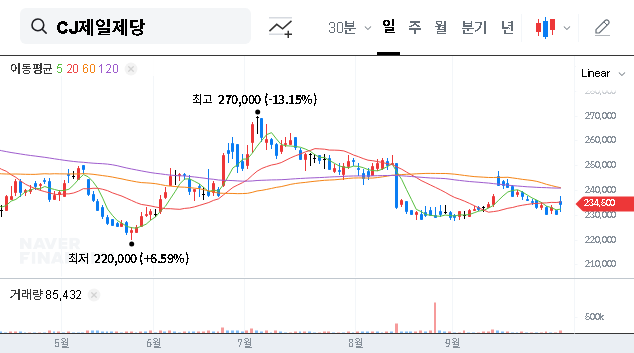
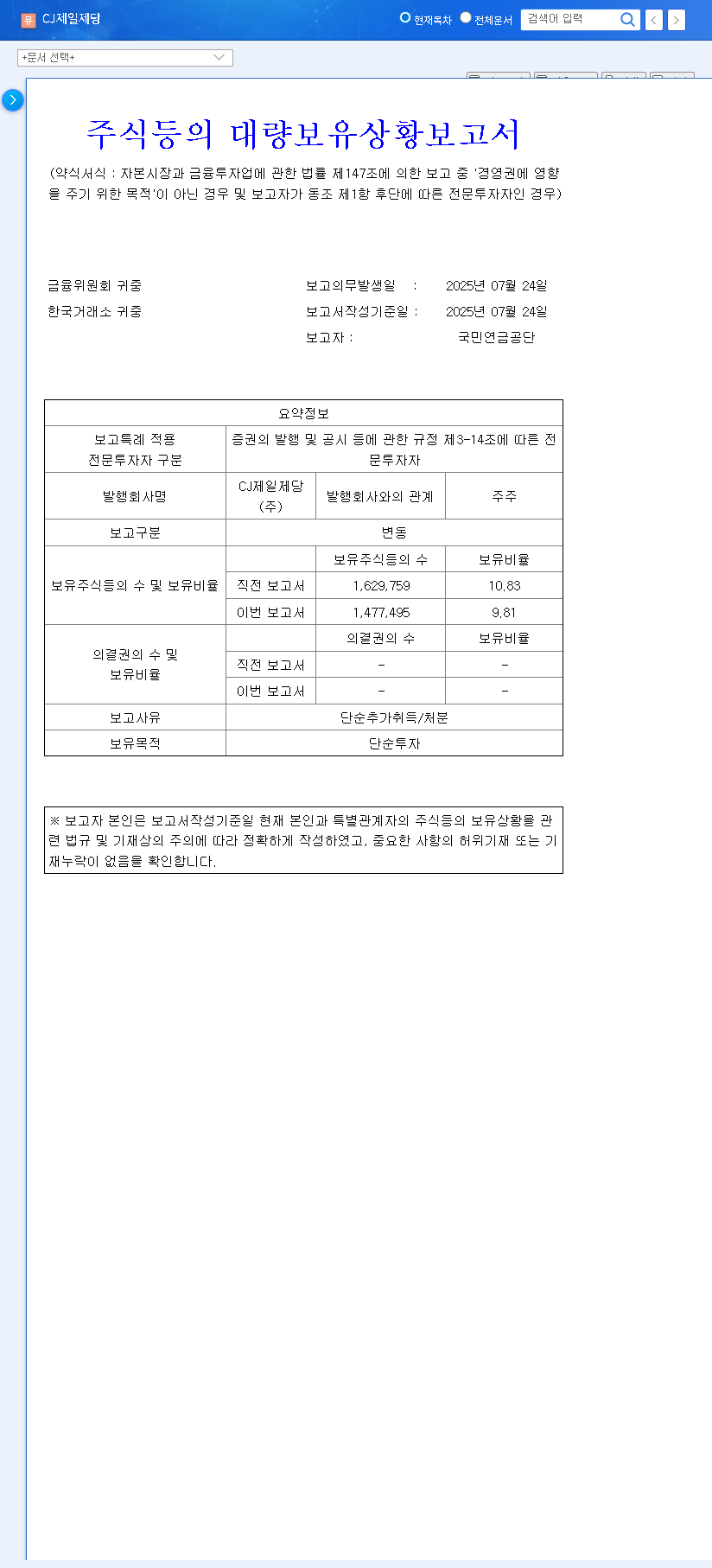
    An in-depth analysis of CJ CheilJedang stock is now more critical than ever for investors. The recent news that South Korea’s largest institutional investor, the National Pension Service (NPS), has reduced its holdings has sent ripples through the market. On October 1, 2025, an official disclosure confirmed the sale, sparking a crucial debate: Is this a bearish signal forewarning of underlying weakness, or merely a strategic portfolio rebalancing by a major player? This comprehensive CJ CheilJedang investment analysis will dissect the company’s fundamentals, evaluate the market environment, and provide a clear outlook to help you make informed decisions.

    The Catalyst: National Pension Service Reduces Its Stake

    The event that triggered this market-wide discussion was the announcement by the National Pension Service regarding a change in its shareholdings. The NPS’s stake in CJ CheilJedang decreased from 10.83% to 9.81%, a significant divestment of approximately 1.02 percentage points. While the NPS officially cited ‘simple investment’ as its holding purpose, such a large-scale sale from a leading institution inevitably invites speculation. The official filing provides the raw data for this transaction (Official Disclosure), but the story behind the numbers requires a deeper look into the company’s health.

    Deep Dive: A Fundamental Analysis of CJ CheilJedang’s Business

    To understand the true CJ CheilJedang outlook, we must look past the short-term market noise and focus on its core fundamentals. The company operates across diverse segments, each with its own set of strengths and weaknesses.

    The Bullish Case: Core Strengths and Growth Engines

    • Dominant Food Business & Global Reach: The ‘Bibigo’ brand continues its powerful global expansion, complemented by the successful integration of ‘Schwan’s Company’ in the US market. This overseas momentum provides a steady and growing revenue stream.
    • Innovation in the BIO Segment: CJ CheilJedang is not just a food company. Its BIO division is pushing into high-value areas like fermented proteins and specialty solutions. Future growth is anchored in promising ventures like biodegradable plastics (PHA) and microbiome-based pharmaceuticals.
    • Logistics Modernization: Through digital transformation, including automated technologies and the ‘LoIS Parcel’ system, the logistics arm is boosting efficiency and strengthening its competitive advantage in a demanding e-commerce landscape.
    • Financial Stability: A strong credit rating (AA- corporate bonds) provides a solid financial foundation, enabling the company to weather economic storms and fund future growth initiatives effectively.

    The Bearish Case: Headwinds and Inherent Risks

    • Macroeconomic Sensitivity: The company’s profitability is highly susceptible to fluctuations in currency exchange rates and international grain prices, which are significant cost drivers for its food business.
    • Margin Pressure: A combination of rising raw material costs, increased capital expenditures for growth, and higher interest rates poses a tangible threat to operating profit margins across all segments.
    • Segment Profitability Disparity: The F&C (Food & Culture) business unit exhibits a notably low operating profit margin (around 5%) and has a history of losses, indicating a persistent need for strategic improvement.
    • Competitive Landscape: CJ CheilJedang faces intense competition in every sector, from global food giants to specialized biotech firms and agile logistics startups, requiring constant innovation to maintain market share.

    Outlook & Investor Strategy for CJ CheilJedang Stock

    The sale by the National Pension Service could create short-term selling pressure and weaken investor sentiment, potentially causing a temporary dip in the CJ CheilJedang stock price. However, long-term investors should focus on whether the fundamental value of the company is changing. According to many global economic reports, volatility in commodity markets is expected to continue, a key factor for this stock.

    The key for investors is to differentiate between temporary market sentiment driven by a single large sale and a genuine shift in the company’s long-term growth trajectory and profitability.

    Actionable Investor Plan

    • For Short-Term Traders: Monitor trading volumes to see how the market absorbs the NPS’s sell-off. A significant price drop on high volume could be a sign of further weakness, while a quick recovery could signal resilience and a potential entry point.
    • For Long-Term Investors: Focus on the quarterly earnings reports. Look for continued growth in the global food and BIO segments and assess the company’s strategies for mitigating macroeconomic risks. This event could present a buying opportunity if you believe in the long-term CJ CheilJedang fundamentals. Consider this as part of a well-rounded portfolio; read our guide on portfolio diversification for more context.

    Frequently Asked Questions (FAQ)

    Q1: Why did the National Pension Service sell its stake in CJ CheilJedang?

    While the official reason was ‘simple investment’ purposes, the sale is likely due to strategic portfolio rebalancing, profit-taking, or a move to allocate capital to other opportunities. It may also reflect a cautious stance on the company’s exposure to commodity and currency volatility.

    Q2: How will this sale affect the CJ CheilJedang stock price?

    In the short term, it may lead to increased selling pressure and a potential stock price decline. However, the long-term impact will be dictated by the company’s actual performance and fundamentals, not by the actions of a single investor, even one as large as the NPS.

    Q3: What is the overall outlook for CJ CheilJedang?

    The CJ CheilJedang outlook is mixed but leans positive for the long term. The company has powerful growth drivers in its food and BIO businesses. However, investors must remain aware of the significant risks tied to macroeconomic factors and internal profitability challenges.

    Conclusion: A Balanced Perspective

    In conclusion, the National Pension Service’s decision to trim its stake in CJ CheilJedang stock is a significant event that warrants attention but not panic. It serves as a reminder of the inherent risks and external pressures facing the company. For investors, the path forward is clear: conduct a thorough CJ CheilJedang investment analysis based on its resilient core businesses and future growth prospects, while continuously monitoring its ability to navigate a challenging global economic environment.

    (097950) CJ CheilJedang Stock Analysis: NPS Sells Stake – What Investors Need to Know 관련 이미지
  • Samyang Foods IR Analysis: Will the Buldak Boom Continue? Investment Strategies and Risks


    Samyang Foods IR Analysis: Will the Buldak Boom Continue? Investment Strategies and Risks 대표 차트 이미지


    1. Samyang Foods IR Event: What Happened?

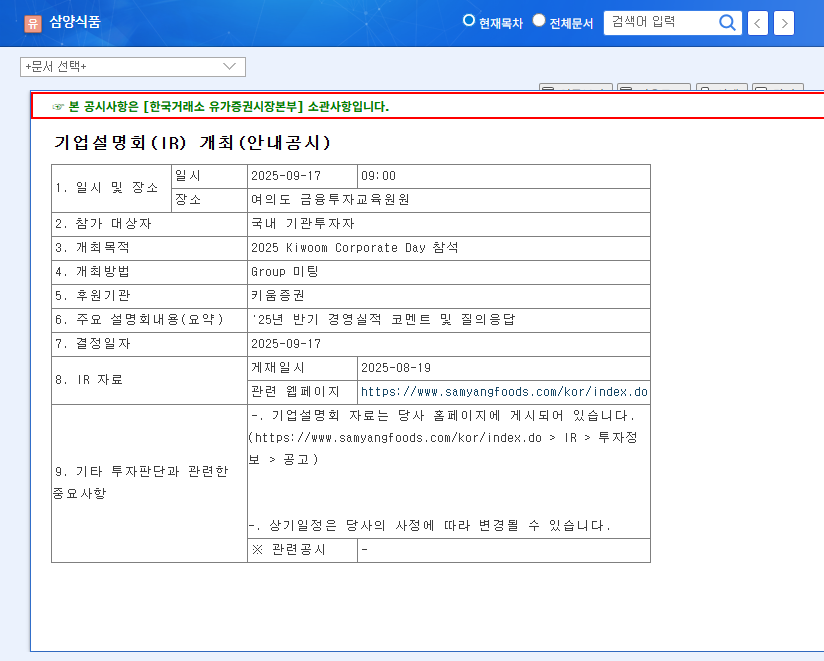
    On September 17, 2025, Samyang Foods held an Investor Relations (IR) meeting to participate in the 2025 Kiwoom Corporate Day. The core of this IR was the announcement of the first half of 2025 business performance and a Q&A session with investors.

    2. Why It Matters: The Sustainability of the Buldak Boom

    Samyang Foods’ growth is heavily reliant on the global popularity of the ‘Buldak’ brand. To establish a future investment strategy, it is essential to consider various factors such as the sustainability of the K-food trend, intensifying competition, fluctuations in raw material prices, as well as internal risks like inventory management and increasing debt.

    3. IR Analysis Results: Opportunities and Threats

    • Positive Factors: Robust sales growth, stability of the core business (noodles), strengthened production capacity, business diversification, excellent credit rating.
    • Potential Risk Factors: Increased inventory, increased short-term borrowings, uncertainties surrounding mergers and investment plans.

    4. Action Plan for Investors

    Investors should make investment decisions by comprehensively analyzing the information presented in the IR and the market situation. In particular, they should carefully examine the sustainability of the ‘Buldak’ brand’s growth, risk management capabilities, changes in the competitive landscape, and macroeconomic variables.


    Frequently Asked Questions (FAQ)

    What are Samyang Foods’ main businesses?

    Samyang Foods primarily focuses on the noodle business, with its flagship products ‘Samyang Ramen’ and ‘Buldak Bokkeum Myun’, but also produces and sells various food products such as snacks, oils, and sauces.

    Can the popularity of Buldak Bokkeum Myun be sustained?

    It may vary depending on various factors such as the continuation of the K-food trend, intensifying competition, and changes in consumer trends, but it is currently maintaining steady popularity in the global market.

    What are the precautions for investing in Samyang Foods?

    Investors should carefully consider potential risk factors such as inventory management, increasing short-term borrowings, exchange rate and interest rate volatility, and intensifying competition.


    Samyang Foods IR Analysis: Will the Buldak Boom Continue? Investment Strategies and Risks 관련 이미지
    Samyang Foods IR Analysis: Will the Buldak Boom Continue? Investment Strategies and Risks 관련 이미지


  • Wingip Food (900340) H1 2025 Earnings Analysis: Growth vs. Profitability Decline – What’s Next?

    1. Wingip Food H1 2025 Performance: What Happened?

    Wingip Food reported revenue of RMB 508.50 million in H1 2025, a 2.6% increase year-over-year. However, operating profit decreased by 30.4% to RMB 47.98 million, and gross profit margin also declined to 30.45%.

    2. Decoding the Profitability Decline: Why These Results?

    The primary drivers behind the profitability decline are rising raw material costs and increased selling, general, and administrative expenses (SG&A). While the traditional food segment performed steadily, declining sales in the convenience food segment hampered overall growth. External factors, such as rising international oil prices and a challenging macroeconomic environment, also contributed.

    3. Wingip Food’s Future: What Lies Ahead?

    Wingip Food possesses positive factors like stable traditional food sales, global market expansion, and new business ventures (Korean food distribution). However, profitability concerns and intensified competition in the Chinese domestic market pose significant risks. The future stock price trajectory hinges on the company’s ability to improve profitability and the successful establishment of its new ventures.

    4. Investor Action Plan: What Should You Do?

    In the short term, focus on the company’s cost management efforts, efficiency improvements, and the potential rebound of the convenience food segment. For the long term, closely monitor the success of its global expansion strategy and new business ventures. A thorough analysis of Wingip Food’s competitive landscape, growth drivers, and responsiveness to external factors is crucial before making any investment decisions.

    Q1. What was Wingip Food’s revenue growth rate in H1 2025?

    A1. It grew by 2.6%.

    Q2. What were the main reasons for Wingip Food’s declining profitability?

    A2. Rising raw material costs and increased SG&A expenses.

    Q3. What is the outlook for Wingip Food’s stock price?

    A3. It depends on the company’s ability to improve profitability and the success of its new business ventures.

  • Samyang Foods IR: Is the Global “Fire Noodle” Craze a Hot Investment?

    1. What Happened? Samyang Foods Holds IR Meeting

    Samyang Foods held an investor relations (IR) meeting on August 25, 2025, in conjunction with the UBS Korea Summit, announcing their H1 2025 earnings and future strategies.

    2. Why Does it Matter? A Look at Fundamentals and Growth Potential

    This IR meeting provided valuable insights into Samyang Foods’ strong fundamentals and future growth potential. The surge in overseas sales (37.4% YoY), driven primarily by Buldak Ramen, reaffirmed its role as a key growth driver. The company also announced plans for capacity expansion and improved cost competitiveness through aggressive investments, including the construction of a new Miryang plant and expansion of production lines in China.

    • Revenue Growth: KRW 1.0821 trillion in consolidated revenue (YoY +33.6%)
    • Surge in Overseas Sales: KRW 835 billion in overseas sales (YoY +37.4%)
    • Production Capacity Expansion: Construction of Miryang Plant, expansion of Chinese production lines

    3. What’s Next? Positive Outlook, Risk Management is Key

    The IR presentation was generally well-received. The global expansion of the Buldak brand and increased production capacity are seen as positive indicators for continued growth. However, careful management of potential risk factors such as raw material price fluctuations, exchange rate volatility, and intensifying competition remains crucial. The company emphasized its stable financial structure (debt ratio of approximately 94%) and proactive risk management strategies to address these uncertainties.

    4. What Should Investors Do? Focus on Growth Momentum and Risk Management

    Investors should focus on Samyang Foods’ continued growth momentum and its ability to manage risks. Future stock performance will likely be influenced by global market expansion, changes in the competitive landscape, and the company’s risk management capabilities. Monitoring the company’s strategies for navigating exchange rate and interest rate fluctuations will be particularly important.

    Frequently Asked Questions (FAQ)

    What is Samyang Foods’ main business?

    Samyang Foods primarily manufactures and sells food products such as ramen, snacks, and sauces. Their “Buldak Ramen” brand is particularly popular both domestically and internationally.

    How did Samyang Foods perform recently?

    In the first half of 2025, Samyang Foods achieved consolidated revenue of KRW 1.0821 trillion, a 33.6% increase year-over-year. Overseas sales surged by 37.4% to KRW 835 billion.

    What is Samyang Foods’ future growth strategy?

    Samyang Foods plans to achieve continued growth through overseas market expansion, production capacity enhancements, and new product development. They are actively pursuing marketing efforts in the US, China, and Southeast Asia.

  • Samyang Foods’ H1 2025 Earnings: Riding the Buldak Wave to KRW 1 Trillion in Revenue!

    1. Samyang Foods H1 2025 Earnings Analysis: Deconstructing the KRW 1 Trillion Milestone

    Samyang Foods recorded consolidated revenue of KRW 1.082 trillion (a 33.6% YoY increase), operating profit of KRW 254.1 billion, and net profit of KRW 183 billion in the first half of 2025. Overseas sales, which surged by 37.4%, were the primary growth driver. This success is attributed to Buldak’s global popularity, efficient cost management, and increased production capacity from the new Miryang plant.

    2. Growth Drivers: Buldak’s Global Power and Strategic Investments

    • Riding the K-Food Wave: Buldak is at the forefront of the global K-Food trend, solidifying its presence in international markets.
    • Expanded Production Capacity: The Miryang plant has significantly boosted production, enabling the company to meet growing global demand.
    • Business Diversification: Samyang Foods is strengthening its nutrition and frozen food businesses to diversify its portfolio.

    3. Investment Strategy: Positive Momentum and Potential Risks

    Samyang Foods’ strong fundamentals suggest continued positive growth. However, investors should monitor potential risks such as fluctuations in exchange rates and raw material prices, and intensified market competition. Careful analysis of the Q&A session from the Investor Relations presentation is crucial for informed investment decisions.

    4. Investor Action Plan: Analyzing IR Materials and Future Outlook

    Investors should review the IR materials to understand management’s future business strategies and risk management plans, and incorporate this information into their investment decisions. Pay close attention to the Q&A regarding new business initiatives, overseas market expansion strategies, and cost management measures.

    Q: What are Samyang Foods’ main growth drivers?

    A: The global popularity of Buldak noodles and increased production capacity due to the new Miryang plant are the key growth drivers.

    Q: What should investors be aware of when considering Samyang Foods?

    A: Potential risks include exchange rate fluctuations, raw material price volatility, and increased market competition.

    Q: What is the outlook for Samyang Foods?

    A: Continued positive growth is expected due to strong fundamentals, but ongoing monitoring of external factors is essential.

  • Dongwoo Farm to Table Returns to Profitability in Q2 2025: Is it a Good Investment?

    1. What Happened? Q2 Earnings Breakdown

    Dongwoo Farm to Table reported increased revenue and a return to profitability in both operating and net income for Q2 2025. Key drivers include strengthening the ‘Bareun Chicken’ brand, increased sales of processed and portioned chicken, and synergies with affiliated companies.

    • Revenue: KRW 156.6 billion (Slight increase YoY)
    • Operating Income: KRW 5.4 billion (Returned to profit)
    • Net Income: KRW 13.4 billion (Returned to profit)

    2. Why Did This Happen? Reasons for the Turnaround

    Despite a decrease in total domestic chicken slaughter volume, Dongwoo maintained a 15.8% market share. This can be attributed to a stronger ‘Bareun Chicken’ brand, expansion of high-value-added products (processed and portioned chicken), and effective cost management. Increased investment income from affiliated companies also contributed significantly to the improved net income.

    3. What’s Next? Outlook and Investment Considerations

    Despite the positive turnaround, uncertainties remain. Investors should consider potential risks to profitability stemming from fluctuations in raw material prices, rising logistics costs, and intensified competition. Continuous efforts to enhance competitiveness are crucial for long-term growth. Investors should closely monitor macroeconomic factors and changes in the competitive landscape.

    4. What Should Investors Do? Action Plan

    Dongwoo Farm to Table demonstrates positive growth momentum based on solid fundamentals. However, a cautious approach is warranted given potential risks associated with external factors. Before making any investment decisions, conducting further research and seeking professional advice is recommended.

    Q: What were Dongwoo Farm to Table’s key achievements in Q2 2025?

    A: They returned to profitability in both operating and net income while also increasing revenue.

    Q: What are the main factors contributing to this turnaround?

    A: Key factors include brand strengthening, increased sales of high-value-added products, cost management efforts, and gains from investments in affiliated companies.

    Q: What should investors consider when evaluating Dongwoo Farm to Table?

    A: Potential risks to profitability arising from fluctuating raw material prices, rising logistics costs, and intensified competition should be considered.