Tag: FinancialNews

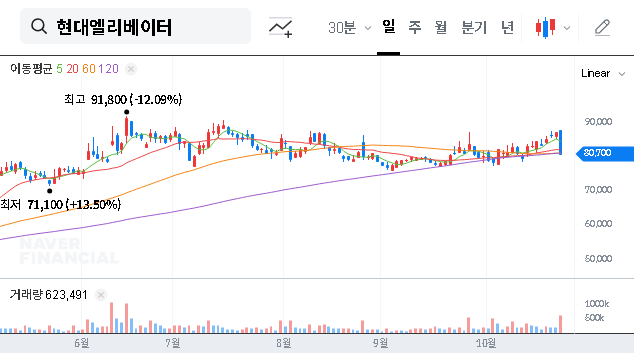
  • (017800) Hyundai Elevator Stock Analysis: Navigating Shareholder Changes & Investment Strategy

    (017800) Hyundai Elevator Stock Analysis: Navigating Shareholder Changes & Investment Strategy

    The outlook for Hyundai Elevator stock has become a focal point for investors following a significant disclosure about its ownership structure. A recent report detailing a major shift in shareholding by Hyundai Holdings Company has introduced a new layer of complexity and potential volatility. This isn’t a routine transaction; the stated purpose of ‘exercising management influence’ combined with intricate financial maneuvers like the exercise of exchangeable bonds signals potentially transformative changes ahead.

    This comprehensive analysis will dissect the official disclosure, explore the underlying reasons for the change, and project the short-term and long-term impacts on Hyundai Elevator’s stock price and corporate strategy. For investors seeking to navigate this uncertainty, we provide a clear action plan to make informed decisions about their Hyundai Elevator investment analysis.

    The Catalyst: Deconstructing the Shareholding Disclosure

    On October 29, 2025, Hyundai Elevator Co., Ltd. filed a regulatory report that immediately captured the market’s attention. The document, a ‘Report on Status of Large Shareholder’s Holding’, outlined a notable change in the stake held by Hyundai Holdings Company. You can view the complete filing here: Official Disclosure (DART).

    Key Details of the Filing:

    • Reporting Entity: Hyundai Holdings Company
    • Stated Purpose: To exercise management influence.
    • Stake Change: A decrease from 27.06% to 22.18%, marking a 4.88% reduction.
    • Primary Reasons: Exercise of exchangeable bonds, modifications to share-related contracts, and a significant share disposal by a related entity, Metropolitan Holdings (Yoo).

    This reduction in Hyundai Elevator shareholding by its major stakeholder is far from a simple sell-off. The combination of factors points to a strategic repositioning that could have lasting implications for the company’s governance and future direction, creating significant uncertainty around the Hyundai Elevator stock.

    Behind the Numbers: Why the Sudden Change?

    Understanding the ‘why’ is crucial for any investor. The disclosed reasons suggest a multi-faceted strategy rather than a single event. The exercise of exchangeable bonds, for instance, introduces new shareholders and can dilute the value of existing shares. Simultaneously, the ambiguity around ‘changes in contracts’ hints at evolving alliances or agreements that could reshape control dynamics. The large-scale share disposal by Metropolitan Holdings adds immediate selling pressure, contributing to the expected stock volatility.

    Despite reducing its stake, Hyundai Holdings Company’s explicit goal to ‘exercise management influence’ is a powerful signal. It suggests they are not relinquishing control but are instead adapting their strategy, possibly to consolidate power or fend off external pressures.

    Impact on Hyundai Elevator Stock: A Two-Fold Analysis

    Short-Term Outlook: Brace for Volatility

    In the immediate future, investors should anticipate heightened stock volatility. The large block of shares sold by Metropolitan Holdings could create a supply-demand imbalance, pushing the price down. Furthermore, the uncertainty surrounding the new shareholder landscape and contract changes will likely fuel speculation, leading to price swings as the market digests the news. For a broader view on market reactions, see analysis from leading sources like Bloomberg’s market coverage.

    Long-Term Perspective: Governance and Strategy at a Crossroads

    The long-term effects are more profound. A shift in the shareholder base could lead to a significant shakeup in the boardroom and, consequently, the company’s strategic priorities. This could manifest in several ways:

    • Strategic Alliances: New major shareholders may push for new partnerships or M&A activities.
    • Capital Allocation: Changes in R&D spending, dividend policies, or global expansion plans could be on the table.
    • Operational Focus: The company’s focus could shift, impacting its strong fundamental position in the vertical transportation industry.

    Ultimately, the stability of the Hyundai Elevator stock will hinge on the company’s ability to maintain its competitive edge amidst these internal changes. For more on this, you might read our Deep Dive into Elevator Industry Trends.

    Actionable Investor Strategy

    Given the circumstances, a cautious and informed approach is paramount. Here’s how investors should respond to the latest news about the Hyundai Elevator shareholding structure:

    • Monitor for Clarity: Watch for subsequent disclosures that provide more detail on the contract changes and the identities of new major shareholders from the bond conversion.
    • Focus on Fundamentals: Look past the short-term noise. Re-evaluate Hyundai Elevator’s core business strengths, market share, financial health, and technological pipeline. A strong underlying business can weather governance storms.
    • Enhance Risk Management: The increased potential for stock volatility means that risk management is key. Consider using stop-loss orders and ensure your portfolio is diversified to mitigate the impact of any sharp downturns in Hyundai Elevator stock.

    (017800) Hyundai Elevator Stock Analysis: Navigating Shareholder Changes & Investment Strategy 관련 이미지
  • (032960) DongilTechnology Share Buyback: A Deep Dive into the ₩4.7B Move to Boost Shareholder Value

    (032960) DongilTechnology Share Buyback: A Deep Dive into the ₩4.7B Move to Boost Shareholder Value

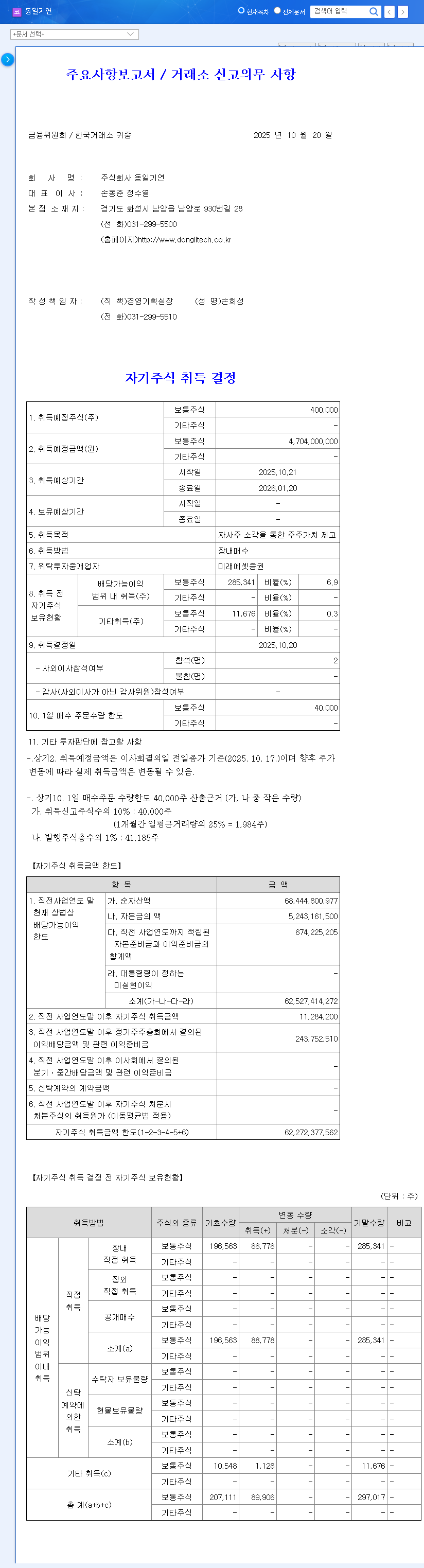
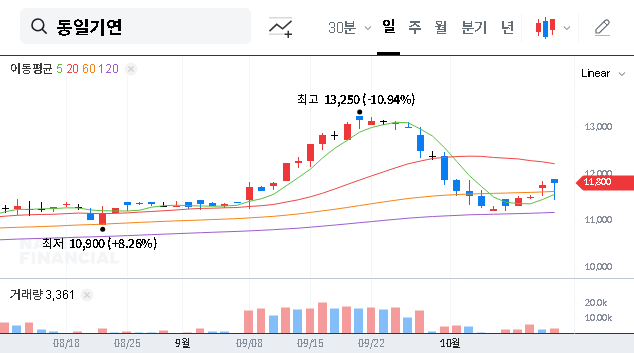
    In a significant move poised to capture investor attention, DongilTechnology has announced a substantial DongilTechnology share buyback program valued at approximately KRW 4.7 billion. This is not just a standard acquisition of treasury shares; the company has explicitly stated its intention for a complete share cancellation. This strategic decision signals a strong belief in the company’s intrinsic value and a direct commitment to enhancing shareholder value. This in-depth analysis will explore the mechanics of this buyback, dissect the potential stock price impact, and provide a clear action plan for current and prospective investors.

    The Landmark Decision: Key Details of the Buyback

    On October 20, 2025, DongilTechnology formally disclosed its plan to acquire a significant portion of its own shares from the open market. The announcement, filed as a ‘Report on Major Matters’, contains crucial details that investors need to understand. You can view the complete filing here: Official Disclosure (DART).

    Here are the core components of the plan:

    • Total Value: Approximately KRW 4.7 billion.
    • Number of Shares: 400,000 common shares.
    • Market Cap Ratio: A substantial 9.72% of the company’s total market capitalization.
    • Acquisition Method: Open market purchase, managed by Mirae Asset Securities for transparency.
    • Stated Purpose: Enhancing shareholder value through subsequent share cancellation.

    Why Cancellation is the Key to Shareholder Value

    The crucial element of this DongilTechnology share buyback is the explicit goal of cancellation. Many companies buy back shares and hold them as ‘treasury stock’, which can be reissued later. However, a share cancellation permanently removes the shares from existence. This has a direct and powerful effect on key financial metrics.

    By reducing the total number of outstanding shares, share cancellation mechanically increases vital per-share metrics like Earnings Per Share (EPS) and Book Value Per Share (BPS). This makes each remaining share more valuable, directly benefiting long-term investors.

    The scale of this buyback—nearly 10% of the company—is a powerful signal from management. It suggests they believe the market is currently undervaluing their stock and that investing in their own company offers a superior return compared to other uses of capital.

    Analyzing the Potential Stock Price Impact

    Short-Term Catalysts and Market Sentiment

    In the short term, the announcement itself is a positive catalyst. The news creates buying pressure from investors anticipating the price appreciation and signals confidence from the company. The open market purchases by Mirae Asset Securities will also create a consistent demand floor for the stock over the acquisition period, potentially reducing volatility and supporting a price increase. General market sentiment, as reported by sources like Bloomberg, will also play a role in the magnitude of the initial reaction.

    Mid-to-Long-Term Value Creation: The Cancellation Imperative

    The true long-term benefit hinges on one critical step: the execution of the share cancellation. If DongilTechnology follows through as promised, the enhanced EPS and BPS will solidify the stock’s fundamental value. This provides a sustainable basis for a higher valuation. However, investors must be cautious. If the company were to reverse course and not cancel the shares, it could lead to significant disappointment and erode the trust built by this announcement. Therefore, monitoring post-acquisition actions is paramount.

    An Actionable Guide for Astute Investors

    While this news is overwhelmingly positive, savvy investment decisions require diligence. Here’s a plan to navigate the situation:

    • Conduct Deep Fundamental Analysis: Look beyond the buyback. Analyze DongilTechnology’s core business, revenue growth, profitability, and cash flow. Is the company’s financial health robust enough to support this buyback without straining operations? Our guide on How to Analyze a Company’s Financial Health can help.
    • Monitor the Cancellation Process: The buyback period is just the first step. Keep a close watch on company announcements for confirmation and timing of the actual share cancellation. This is the event that will lock in the long-term value.
    • Observe Market Reaction Trends: Track the stock’s price and volume during the buyback period. A steady rise on moderate volume is a healthy sign, whereas extreme volatility might indicate speculative behavior.

    Frequently Asked Questions (FAQ)

    Q1: What is the primary goal of this DongilTechnology share buyback?

    The core purpose is to significantly enhance shareholder value. By acquiring KRW 4.7 billion worth of shares (9.72% of its market cap) with the specific intention of share cancellation, DongilTechnology aims to increase key financial metrics like Earnings Per Share (EPS), making each remaining share more valuable.

    Q2: How does share cancellation truly affect the stock price?

    In the short term, the announcement creates positive sentiment and demand, which can lift the stock price. In the long term, the actual cancellation improves the company’s fundamental valuation by increasing EPS. This provides a solid foundation for sustainable price appreciation, assuming the core business remains strong. The key is the follow-through on cancellation.

    Q3: What are the main risks for investors?

    The primary risk is a failure to execute the cancellation as planned, which would damage management’s credibility. Another consideration is the impact on the company’s cash reserves; investors should ensure the buyback doesn’t compromise the company’s ability to invest in future growth or manage its debt.

    Disclaimer: This analysis is based on publicly available information and is for informational purposes only. It does not constitute investment advice. All investment decisions should be made based on your own research and risk tolerance.

    (032960) DongilTechnology Share Buyback: A Deep Dive into the ₩4.7B Move to Boost Shareholder Value 관련 이미지
  • (096610) RFsemi Delisting Halted: A Deep Dive for Investors on RFsemi Stock’s Future

    (096610) RFsemi Delisting Halted: A Deep Dive for Investors on RFsemi Stock’s Future

    The recent news about the RFsemi delisting suspension has sent ripples through the investment community. For shareholders of RFsemi Co., Ltd., the halt of its scheduled delisting might feel like a lifeline in turbulent waters. But is this a genuine opportunity for recovery, or simply a delay of the inevitable? This comprehensive analysis cuts through the noise, examining the court’s decision, RFsemi’s precarious financial health, and the macroeconomic pressures at play. We will provide a clear, expert-driven strategy to help you navigate the uncertainty surrounding your RFsemi stock investment and protect your assets.

    What Happened? RFsemi Delisting Procedures Suspended

    On October 1, 2025, it was publicly disclosed that RFsemi had filed an ‘Application for Provisional Disposition to Suspend the Effect of Delisting Decision.’ As a direct result, the Korea Exchange has temporarily halted all delisting procedures, including the planned liquidation trading, until a final court decision is rendered. This action was taken to protect investors from immediate losses. You can view the Official Disclosure for complete details. While this provides a temporary reprieve, it is crucial to understand that the fundamental reasons for the delisting have not been resolved.

    This suspension is not a pardon; it is a pause. The underlying financial crisis plaguing RFsemi remains the central issue, and investors must proceed with extreme caution.

    Behind the Reprieve: RFsemi’s Critical Financial Flaws

    Despite the court’s intervention, the fundamental health of RFsemi is on life support. The 2025 half-year report paints a grim picture, highlighting deep-seated problems that led to the initial RFsemi delisting decision. Investors must be aware of these core issues:

    • Catastrophic Revenue Decline: Consolidated revenue plummeted by a staggering 45%, dropping from KRW 10.841 billion to just KRW 5.984 billion in six months. This collapse occurred across its primary business segments, ECM semiconductors and LED lighting, signaling a severe contraction.
    • Disclaimer of Audit Opinion: This is a massive red flag. The external auditor issued a ‘disclaimer of opinion,’ citing an inability to verify financial records and significant doubts about the company’s ability to continue as a ‘going concern.’ This points to a critical breakdown in financial transparency and management.
    • Unsustainable Financial Structure: For five straight reporting periods, the company’s interest coverage ratio was below 100%, meaning it wasn’t generating enough profit to cover its interest expenses. Coupled with negative operating cash flow, this raises serious questions about its solvency.
    • Uncertain Future Ventures: While the company has mentioned new ventures in foundry, SiC, and GaN technologies, the path from development to profitable commercialization is long and uncertain, especially for a company in a deep management crisis.

    Navigating the Volatility: RFsemi Stock Outlook

    Short-Term Impact: Heightened Volatility

    The suspension provides a temporary floor for the RFsemi stock price by removing the immediate threat of delisting. However, this relief is fragile. The stock is now highly susceptible to news and speculation surrounding the court case. Expect extreme volatility as traders react to every rumor and legal development. Any positive news could cause a sharp, speculative spike, while negative developments could lead to a rapid decline.

    Mid-to-Long-Term Crossroads

    The company’s long-term survival hinges entirely on two factors: the court’s final ruling and a miraculous operational turnaround. This legal battle buys time—time that management must use to implement drastic financial restructuring and demonstrate a viable path to profitability. Without a concrete plan for recovery, the risk of an eventual RFsemi delisting remains overwhelmingly high. For a deeper understanding of such situations, you can learn more about how to analyze a company’s financial health.

    Macroeconomic Headwinds

    RFsemi’s internal problems are compounded by a challenging external environment. As reported by leading financial news outlets like Bloomberg, sustained high interest rates globally increase the company’s borrowing costs, further straining its already weak finances. Exchange rate volatility also adds a layer of unpredictability for an export-focused business. These external pressures reduce the margin for error and make any potential turnaround even more difficult.

    Expert Verdict & Investment Strategy

    The suspension of the RFsemi delisting process is a temporary reprieve, not a solution. The company’s fundamental issues are severe, and investor trust has been shattered by the audit disclaimer. Our investment opinion is rated as ‘Very Neutral / Highly Speculative.’ Only investors with an extremely high tolerance for risk should consider holding or entering a position.

    Recommendations for Investors

    • Monitor Legal Proceedings: The court’s decision is the single most important near-term catalyst. Follow all updates on the provisional disposition application.
    • Scrutinize Financial Reports: Watch for any future financial disclosures or management plans. Look for concrete evidence of cost-cutting, debt reduction, and revenue stabilization—not just promises of new technology.
    • Acknowledge the Risk: Any investment in RFsemi stock at this stage is a high-stakes gamble. You must be prepared for the worst-case scenario, which remains a complete loss of investment if the company is ultimately delisted.

    (096610) RFsemi Delisting Halted: A Deep Dive for Investors on RFsemi Stock's Future 관련 이미지
  • (126340) Vinatech Stock Analysis: Decoding Mirae Asset’s Share Sale & What It Means for Investors

    (126340) Vinatech Stock Analysis: Decoding Mirae Asset’s Share Sale & What It Means for Investors

    The recent disclosure regarding Vinatech stock has sent ripples through the investment community. On October 1, 2025, a major institutional player, Mirae Asset Management, announced a reduction in its stake in Vinatech Co., Ltd. This isn’t just a routine transaction; it’s a critical piece of information that can significantly influence market sentiment and the future of Vinatech’s stock price.

    Is this move a bearish signal for Vinatech, or a simple portfolio rebalancing by a major fund? This comprehensive Vinatech investment analysis will dissect the event, explore the company’s underlying fundamentals, and evaluate the broader market environment to provide investors with the insights needed to make informed decisions.

    The Details: Mirae Asset’s Vinatech Share Sale

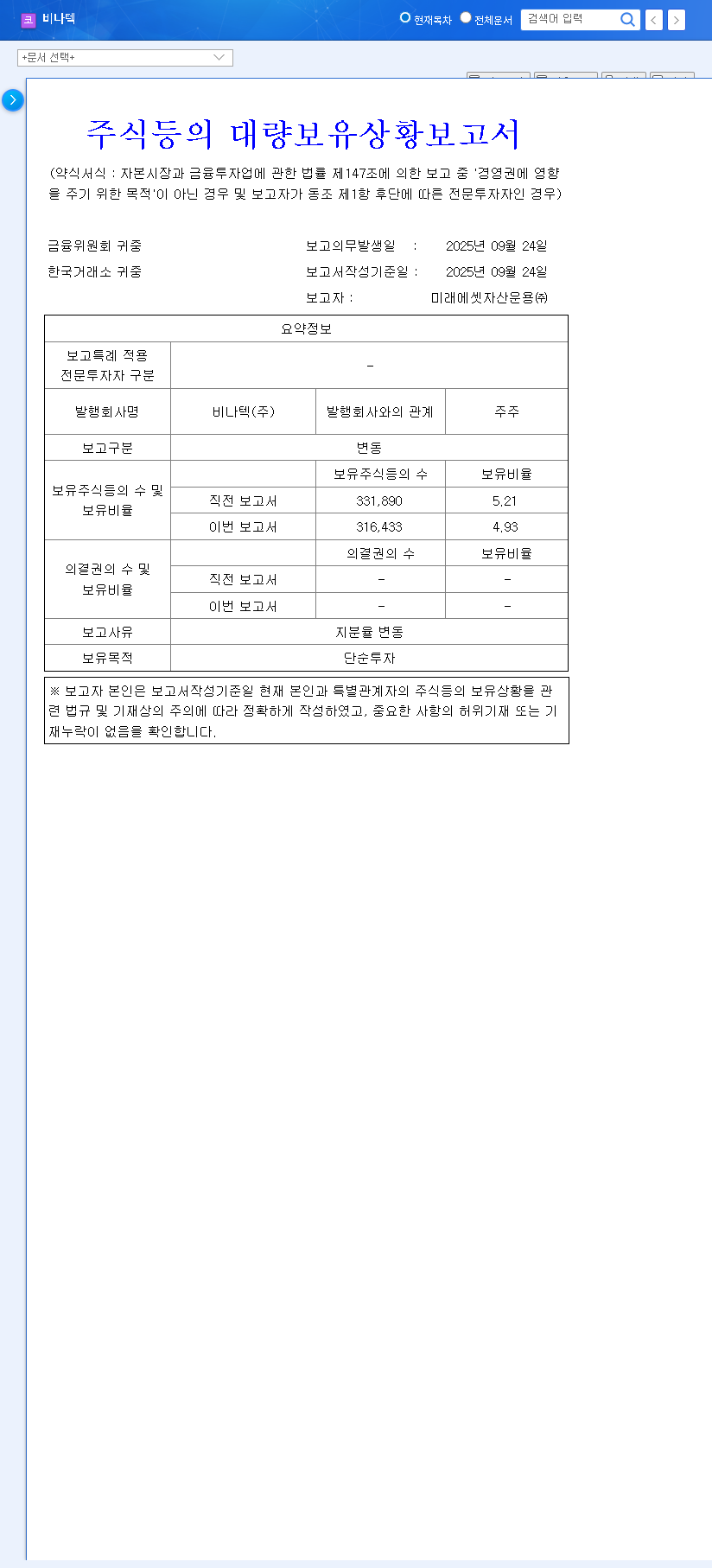
    According to the ‘Report on Major Shareholdings’ filed on October 1, 2025, Mirae Asset Management’s position in Vinatech has changed. This is a crucial development for anyone monitoring Vinatech stock.

    The report revealed that Mirae Asset Management’s stake decreased from 5.21% to 4.93%, a reduction of 0.28 percentage points. The stated reasons for the change included a mix of ‘on-market sales’ and ‘ETF redemptions’. You can view the Official Disclosure for complete details.

    What Does This Mean?

    The combination of direct market sales and ETF redemptions suggests a multi-faceted reason for the divestment. While the stated purpose was ‘simple investment,’ it signals that the fund is reducing its exposure. This could be interpreted in several ways: as standard profit-taking, a strategic reallocation of assets, or a response to perceived risks in the Vinatech outlook.

    Vinatech’s Fundamentals: A Tale of Two Halves

    To understand the context behind the Vinatech share sale, we must analyze the company’s core financial health and business prospects, based on its H1 2025 report.

    The Bull Case: Strengths and Opportunities

    • Dual Growth Engines: Vinatech is strongly positioned in two high-growth sectors: supercapacitors and hydrogen fuel cells. The global push for green energy provides a powerful tailwind for both segments.
    • Technological Moat: With over 70 patents and proprietary production technology for MEA, catalysts, and support materials, the company has a distinct competitive advantage.
    • Global Expansion: Strategic establishment of overseas branches in key markets like China, Germany, and the US is paving the way for increased global market share.

    The Bear Case: Risks and Headwinds

    • Deteriorating Profitability: The H1 2025 report showed a decrease in consolidated sales and a widening net loss, raising short-term profitability concerns.
    • Financial Strain: High debt reliance and increasing interest expenses from hybrid bonds are creating significant financial burdens, a major red flag in a rising-rate environment.
    • Operational Inefficiencies: Low utilization rates in key production segments (e.g., fuel cell MEA at 35.42%) may indicate challenges in scaling production or weaker-than-expected demand.
    • Macroeconomic Vulnerability: With nearly 85% of its business tied to exports, the company is highly susceptible to exchange rate volatility and global economic shifts. For more on this, see global market trend reports from authoritative sources.

    Strategic Considerations for Vinatech Stock Investors

    The Vinatech share sale by Mirae Asset Management is a short-term headwind that could weaken investor sentiment. However, a sound investment strategy requires looking beyond immediate market reactions.

    For the Short-Term Trader

    Expect increased volatility. The news may put downward pressure on the Vinatech stock price. Monitor trading volumes and watch for any follow-up moves by other institutional investors. A cautious approach is warranted until the market digests this information.

    For the Long-Term Growth Investor

    The long-term thesis for Vinatech hinges on its ability to capitalize on the supercapacitor and hydrogen fuel cell markets. The core question is whether the company can overcome its current financial and operational challenges. For a deeper understanding of evaluating such companies, consider reading our guide on How to Analyze Growth-Stage Tech Stocks.

    Key metrics to monitor in upcoming quarterly reports include:

    • Improvements in profit margins and a reduction in net loss.
    • Increases in factory utilization rates, signaling stronger demand.
    • Progress on debt reduction and management of financial costs.

    Conclusion: A Cautious but Watchful Outlook

    In conclusion, Mirae Asset Management’s decision to trim its holdings in Vinatech stock is a significant event that highlights the company’s current financial vulnerabilities. While the long-term growth story in green technology remains compelling, the immediate risks—profitability, debt, and operational efficiency—cannot be ignored. This is a moment for investors to exercise due diligence, weigh the substantial growth potential against the clear fundamental challenges, and make decisions based on a comprehensive Vinatech investment analysis rather than short-term market noise.

    (126340) Vinatech Stock Analysis: Decoding Mirae Asset's Share Sale & What It Means for Investors 관련 이미지
  • (046070) Kodaco Delisting Halted: A Complete 2025 Investor’s Guide to the Financial Crisis

    (046070) Kodaco Delisting Halted: A Complete 2025 Investor’s Guide to the Financial Crisis

    The sudden suspension of the Kodaco delisting procedure has sent shockwaves through the market, leaving Kodaco investors grappling with a mix of fragile hope and profound uncertainty. While the halt of liquidation trading offers a temporary reprieve, it fails to address the deep-seated financial crisis plaguing Kodaco Co., Ltd. Is this a genuine turning point, or merely a delay of the inevitable? This comprehensive analysis will dissect the situation, explore the severe underlying risks, and provide a clear strategy for investors navigating this volatile landscape.

    The Official Announcement: Kodaco Delisting Procedure Halted

    On October 1, 2025, Kodaco Co., Ltd. confirmed the suspension of its scheduled delisting and liquidation trading. This decision was triggered by a ‘request for an injunction to suspend the effect of the delisting decision’ filed with the courts. As detailed in the company’s Official Disclosure to the Financial Supervisory Service, all procedures are on hold pending a final court ruling. This legal maneuver has bought the company time, but it simultaneously magnifies the uncertainty for all stakeholders.

    Unpacking the Severe Kodaco Financial Crisis

    Despite the legal pause, the fundamental financial health of Kodaco remains in critical condition. A close examination of its 2025 half-year report reveals a company on the brink.

    Going Concern Uncertainty: The Core Risk

    The most glaring red flag is the auditor’s warning of ‘events that raise significant doubt about the company’s ability to continue as a going concern.’ This is not a standard business challenge; it’s an existential threat. The primary driver for this is the delayed payment of rehabilitation claims from 2024. While the company is scrambling to raise funds by selling assets, any failure in this revised plan could trigger a complete collapse.

    A Mountain of Debt and Anemic Profits

    Kodaco’s financial structure is exceptionally fragile. Key indicators of this weakness include:

    • Astronomical Debt Ratio: The consolidated debt-to-equity ratio sits at a staggering 1,643.46%. This makes the company hyper-sensitive to any changes in interest rates or currency exchange rates.
    • Weak Profitability: While operating profit edged into the positive at 1.4 billion KRW, the net profit remains firmly in the red. This indicates that even with operations running, the company cannot cover its massive financial burdens.
    • Disclaimer of Audit Opinion: This is a critical blow to investor trust. When an auditor issues a disclaimer, it means they were unable to obtain sufficient evidence to form an opinion on the financial statements. This effectively renders the company’s financial reporting unreliable.

    The combination of a disclaimer of audit opinion and extreme debt creates a high-risk environment where the fundamental value of the Kodaco stock is nearly impossible to ascertain, making any investment highly speculative.

    Impact on Kodaco Investors: Navigating the Uncertainty

    The suspension of the Kodaco delisting process has distinct short-term and long-term consequences for investors. The immediate relief from delisting is overshadowed by prolonged ambiguity.

    Short-Term: Heightened Volatility

    In the short term, investors should brace for extreme price swings. The legal limbo creates a vacuum of information, where rumors can drive erratic trading. While the immediate threat of total loss is paused, the unresolved fundamentals mean that investor sentiment will remain overwhelmingly negative. This is not a stable environment for investment; it is a speculator’s arena where understanding risk management is paramount.

    Mid-to-Long-Term: Eroding Trust and Fundraising Hurdles

    Looking ahead, the path for Kodaco is fraught with challenges. The injunction prolongs the rehabilitation process, making it harder for the company to execute its turnaround plan. Securing new funding will be nearly impossible with the threat of delisting still looming, which in turn jeopardizes the very business operations needed for recovery. This cycle of uncertainty further erodes the trust of both investors and financial markets.

    Macroeconomic Headwinds Adding to the Pressure

    Kodaco’s internal problems are amplified by external economic pressures. As a company with a high debt load, it is extremely vulnerable to macroeconomic shifts. Global interest rate policies, such as those analyzed by sources like Bloomberg’s economic forecasts, could significantly increase Kodaco’s debt servicing costs. Furthermore, a slowdown in the global automotive parts industry, fluctuating raw material costs, and volatile exchange rates all add layers of risk that the company is ill-equipped to handle in its current state.

    Investment Strategy: The Final Verdict on Kodaco Stock

    Given the overwhelming evidence, the investment opinion on Kodaco Co., Ltd. remains ‘Highly Negative’ and ‘Unsuitable for Investment.’ The temporary halt in the delisting process does not change the fact that fundamental questions about the company’s survival are unresolved. The risk of a sudden resumption of the delisting procedure, which could lead to a total loss of investment, is exceptionally high.

    Investors must vigilantly monitor the following key variables, as they will determine the company’s fate:

    • Court’s Injunction Decision: This is the most critical near-term catalyst. A rejection will likely mean an immediate resumption of delisting.
    • Rehabilitation Plan Progress: Watch for concrete news on asset sales and fundraising. Failure to meet targets is a major red flag.
    • Future Audit Opinions: A clean audit opinion is a non-negotiable prerequisite for restoring any semblance of trust.
    • Macroeconomic Changes: Keep an eye on interest rates and industry trends that directly impact Kodaco’s thin margins.

    In conclusion, the Kodaco delisting saga is far from over. This suspension is a legal pause, not a financial rescue. For investors, the message is clear: the level of risk is extreme, and extreme caution is advised.

    (046070) Kodaco Delisting Halted: A Complete 2025 Investor's Guide to the Financial Crisis 관련 이미지
  • (352910) Obigo Stock: Jang Young-jun’s Stake Increase Signals ‘Management Influence’ – What Investors Must Know

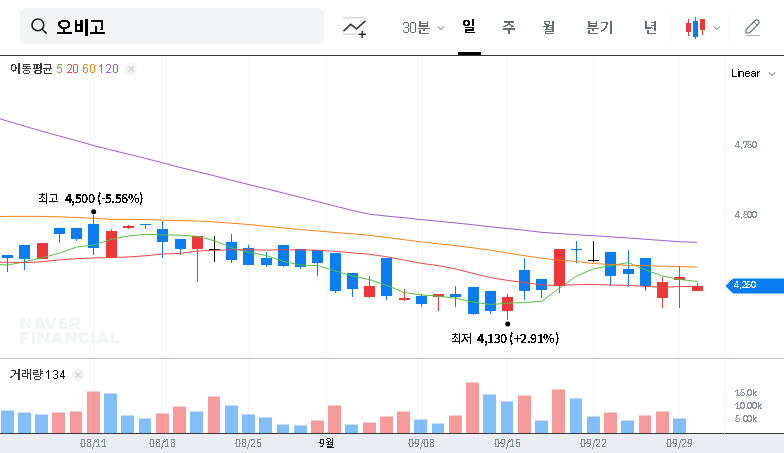
    (352910) Obigo Stock: Jang Young-jun's Stake Increase Signals 'Management Influence' – What Investors Must Know 대표 차트 이미지

    In the world of stock market analysis, even the smallest ripples can signify a coming tide. For investors watching Obigo stock, a recent filing has done just that. A seemingly minuscule 0.01% increase in stake by major shareholder Jang Young-jun has sparked significant interest, not because of its size, but because of its declared purpose: ‘influence over management.’ This strategic declaration transforms a routine transaction into a potential harbinger of change for the automotive software company.

    This article delves deep into this development, exploring what this move means for Obigo’s governance, the potential impact on its share price, and the strategic considerations for current and prospective investors. Is this the first step in a larger strategic play, or simply a reaffirmation of commitment? Let’s analyze the details.

    The Disclosure: A Closer Look at the Numbers

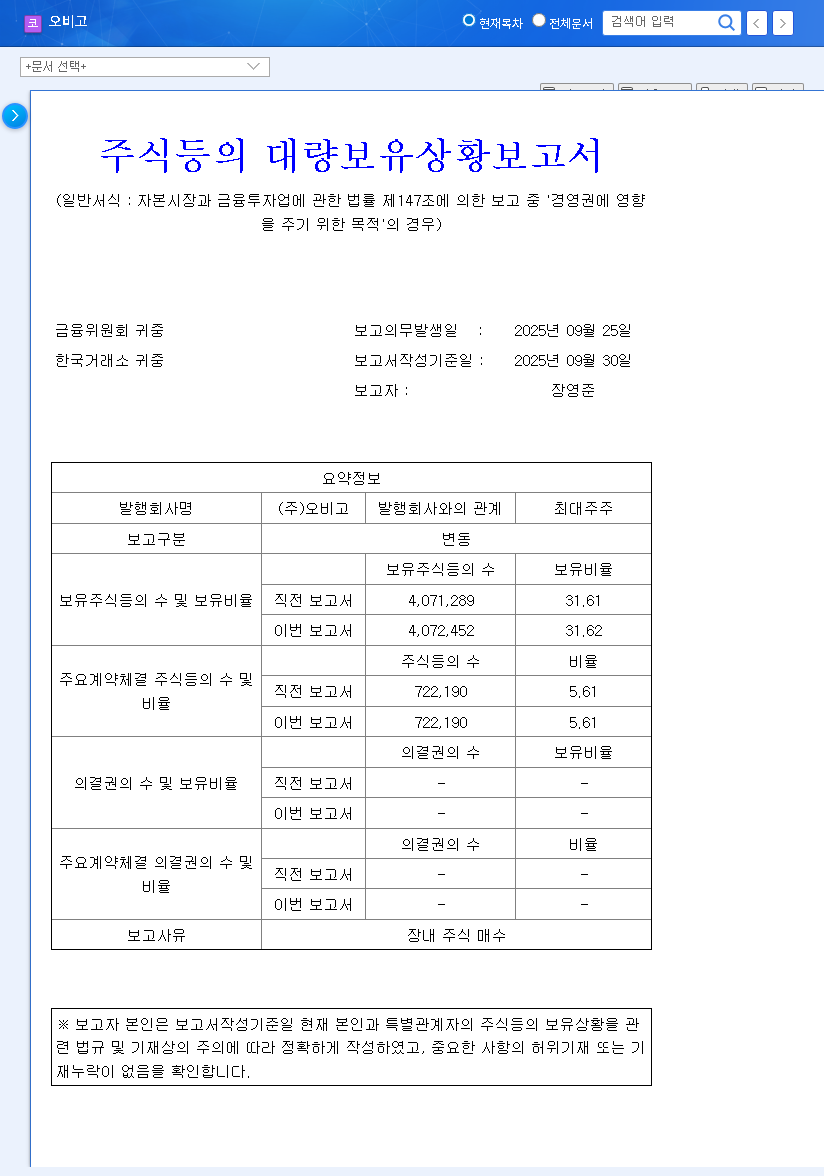
    On October 27, 2023, Obigo (KOSDAQ: 352910) filed a ‘Report on the Status of Large Shareholdings’ that detailed a change in ownership. The filing confirmed that major shareholder Jang Young-jun’s stake increased from 31.61% to 31.62%. This information was confirmed via the official disclosure filed with Korea’s Financial Supervisory Service (Source).

    • Reporting Party: Jang Young-jun
    • Transaction Date: September 25, 2023
    • Nature of Change: On-market purchase of 1,163 common shares by related party Hwang Do-yeon.
    • Stated Purpose: Influence over management.

    While the 0.01% change is financially negligible for a company with a market capitalization of over KRW 50 billion, the explicit mention of management influence is a critical signal that cannot be ignored.

    In corporate governance, intent is paramount. A public declaration of ‘management influence’ signals a shift from passive ownership to a potentially active role in shaping the company’s strategic direction. This is a clear message to the board and the market.

    Understanding Obigo and Its Market Position

    To grasp the implications of this Jang Young-jun stake increase, it’s essential to understand Obigo’s business. Obigo is a technology company specializing in smart car software platforms. They provide solutions like in-vehicle infotainment (IVI), web browsers for automotive systems, and application frameworks. The company operates at the intersection of the automotive and software industries, a sector poised for massive growth with the rise of electric vehicles (EVs) and autonomous driving technology. A clear strategy and strong leadership are vital to navigate this competitive landscape, which may be a motivating factor behind the desire for more direct management influence.

    Potential Impacts on Obigo Stock and Strategy

    How might this development affect the Obigo share price and market sentiment? The effects can be viewed through several lenses.

    Positive Signals for Investors

    The market often interprets a major shareholder’s increased investment as a vote of confidence. This move suggests that an insider with deep knowledge of the company believes in its long-term value. The ‘management influence’ clause further amplifies this, implying an intent to actively unlock that value, potentially through strategic pivots, improved operational efficiency, or better capital allocation. This can attract new investors and boost market sentiment, as seen in similar cases reported by financial outlets like Bloomberg.

    Points of Caution and Uncertainty

    Conversely, the change is extremely small. It’s not a hostile takeover bid or a dramatic power grab. A 0.01% increase doesn’t shift the balance of power in any meaningful way. Therefore, expecting an immediate, sharp rise in the Obigo stock price may be premature. The market will likely adopt a ‘wait-and-see’ approach, monitoring for follow-up actions, such as further share purchases or formal proposals at shareholder meetings. This move is part of a broader trend, which you can read about in our guide to shareholder activism.

    Investor Action Plan: Navigating the News

    For those holding or considering an investment in Obigo, this news warrants careful consideration rather than a knee-jerk reaction. A prudent strategy involves a multi-faceted approach:

    • Monitor Follow-Up Filings: Keep a close eye on DART and other financial news sources for any further changes in Jang Young-jun’s holdings or any official statements regarding his intentions.
    • Re-evaluate Obigo’s Fundamentals: Use this as a catalyst to review the company’s financial health. Analyze recent quarterly reports for revenue growth, profit margins, and cash flow. Is the underlying business strong enough to support a higher valuation?
    • Analyze the Competitive Landscape: Assess Obigo’s position relative to competitors in the automotive software space. What are its unique selling propositions and potential vulnerabilities?
    • Look for Strategic Announcements: The true impact will be revealed through action. Watch for announcements about new business strategies, board member nominations, or shareholder proposals leading up to the next general meeting.

    In conclusion, Jang Young-jun’s minor stake increase is a classic example of a signal that outweighs its substance. While the 0.01% figure itself is inconsequential, the declared intent for ‘management influence’ opens a new chapter of possibilities for Obigo. For investors, this is not a time for speculation, but for diligent research and heightened awareness. The next moves by Jang Young-jun and the company’s board will ultimately determine whether this small ripple grows into a wave of value creation.

    (352910) Obigo Stock: Jang Young-jun's Stake Increase Signals 'Management Influence' – What Investors Must Know 관련 이미지
    (352910) Obigo Stock: Jang Young-jun's Stake Increase Signals 'Management Influence' – What Investors Must Know 관련 이미지