Tag: FinancialInvestment

  • (272210) HANWHA SYSTEMS Q3 2025 IR: A Deep Dive into Earnings, Risks & Future Growth

    (272210) HANWHA SYSTEMS Q3 2025 IR: A Deep Dive into Earnings, Risks & Future Growth

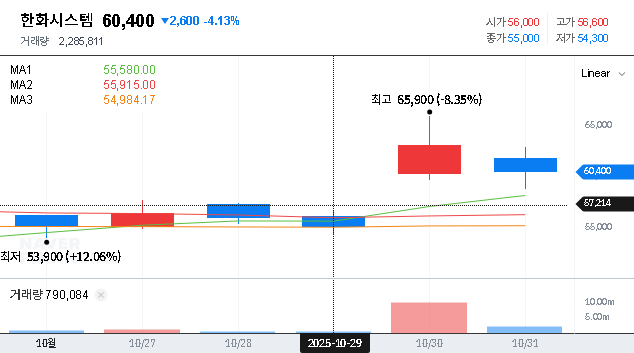
    As November 3, 2025, approaches, all eyes in the investment community are on the upcoming HANWHA SYSTEMS Q3 2025 IR (Investor Relations) conference. This event is more than just an earnings report; it’s a critical moment that will shape market perception and influence the company’s valuation. Hanwha Systems stands at a crossroads, with its formidable defense sector showing robust growth while its ICT division faces significant headwinds. This comprehensive Hanwha Systems analysis will delve into the company’s recent performance, dissect its segmental challenges, and outline the key factors investors must watch. By understanding the intricate balance of growth drivers and investment risks, you can gain the insights needed to make informed decisions regarding Hanwha Systems stock.

    The Q3 2025 IR is a pivotal event. Investors will be keenly listening for confirmation of sustained defense-sector momentum and, more importantly, a clear and credible turnaround strategy for the underperforming ICT segment.

    H1 2025 Performance Review: A Tale of Two Segments

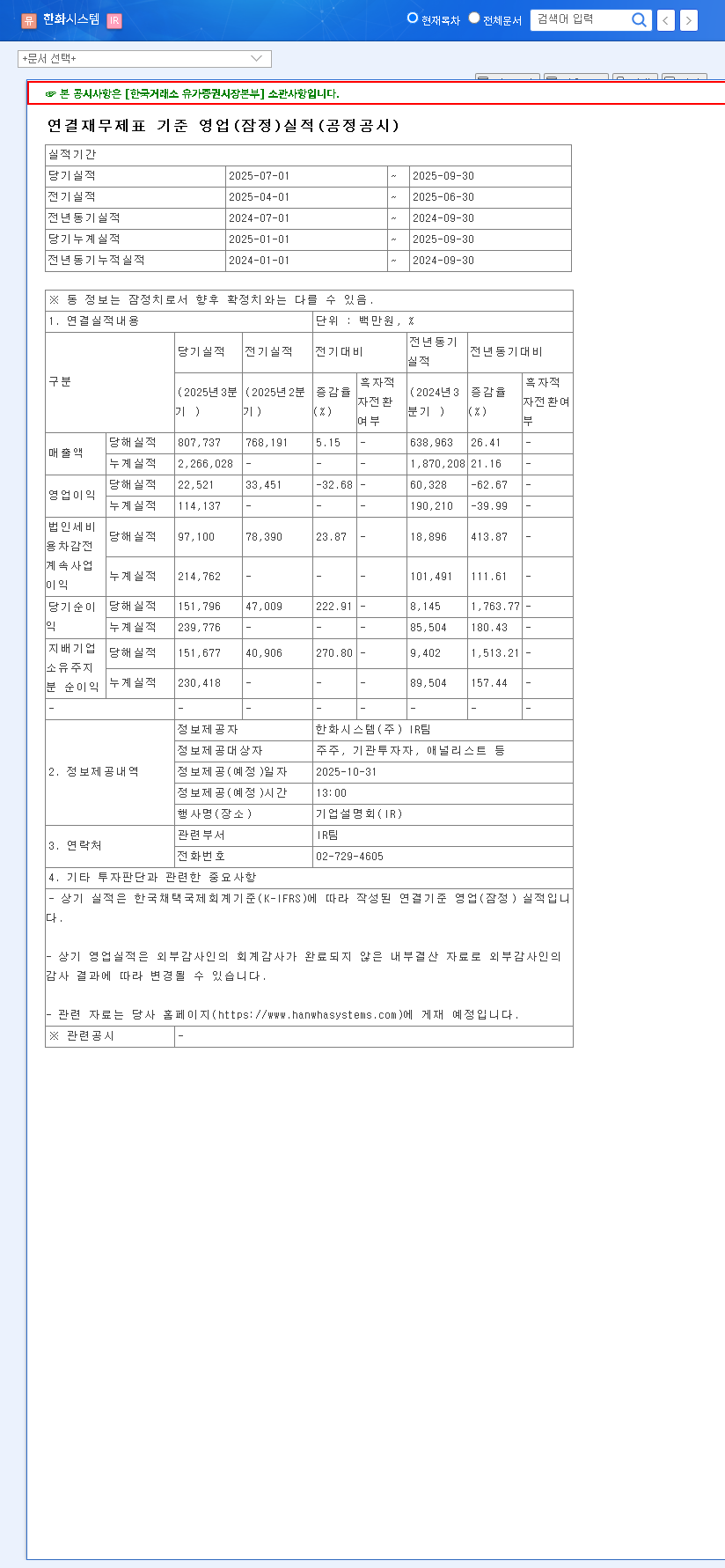
    The first half of 2025 painted a complex picture for Hanwha Systems. While the company achieved impressive top-line growth, profitability faced significant pressure. According to the company’s Official Disclosure, headline figures reveal a nuanced story.

    • Strong Revenue Growth: Consolidated revenue reached KRW 1.4583 trillion, an 18.4% increase year-on-year, fueled primarily by overseas subsidiaries and new business ventures.
    • Profitability Squeeze: Operating profit saw a sharp decline of 29.8% to KRW 91.6 billion. This was largely due to an expanded operating loss in the ICT sector, which overshadowed profit growth in the defense segment.
    • Surprising Net Income Rise: Despite the operating profit drop, net income grew by 13.7% to KRW 88.0 billion, bolstered by non-operating factors like valuation gains on overseas investment assets.
    • Improved Financial Health: The debt-to-equity ratio improved significantly to 111.33%, and the order backlog swelled by 15.3% to a massive KRW 11.82 trillion, securing a strong future revenue stream.

    In-Depth Segment Analysis

    The Defense Sector: A Pillar of Strength

    Hanwha Systems’ defense sector remains the bedrock of its stability and growth. With revenues of KRW 900.5 billion in H1, it continues to benefit from increasing global defense spending and geopolitical tensions. The company’s competitive edge is sharpened by its investment in next-generation technologies like advanced AESA radar systems and satellite communications. The robust order backlog suggests that this segment will continue to be a primary earnings driver. The key question for the HANWHA SYSTEMS Q3 2025 IR will be the scale and timeline of major overseas export contracts.

    The ICT Sector: Navigating a Turnaround

    In stark contrast, the ICT sector has become a point of concern, with revenue dropping 17.7% to KRW 288.5 billion. The decline is attributed to fierce competition in the legacy System Integration (SI) business and the financial burden of transitioning to cloud-based services. While investments in deep-tech areas like AI, blockchain, and urban air mobility (UAM) hold future promise, the market is anxious for signs of short-term profitability. Investors will demand a clear strategy from management on how they plan to stabilize this division and monetize their future-forward investments.

    Market Expectations & Macro-Economic Headwinds

    The macroeconomic environment presents both opportunities and threats. Persistently high interest rates increase financial costs, which can strain capital-intensive projects in the ICT and new business sectors. Furthermore, a strong US dollar against the Korean Won (KRW 1,431.30) poses a risk of foreign exchange losses. On the other hand, global instability indirectly bolsters the Hanwha Systems defense sector. During the upcoming Hanwha Systems earnings call, management’s commentary on navigating these external pressures will be critically important.

    Potential Scenarios from the Q3 IR Event

    Positive Scenario: A strong earnings beat, coupled with the announcement of a major new defense contract, would ignite investor confidence. If management presents a convincing turnaround plan for the ICT sector with tangible milestones, and provides a clear roadmap for its exciting new ventures like its burgeoning space division, the stock could see a significant re-rating.

    Negative Scenario: Conversely, if earnings miss expectations, the defense sector’s growth slows, or the ICT losses widen, investor sentiment could turn sour. Vague answers regarding future growth strategies or an inability to address macroeconomic risks could lead to increased uncertainty and a potential sell-off, especially if the current stock price already reflects high expectations.

    Key Questions for Investors

    Q1: What are the most critical announcements to listen for?

    Focus on the defense sector’s overseas export performance, the ICT sector’s profitability path, and concrete roadmaps for future growth engines like space and UAM. Updates on financial health and major litigation risks are also crucial.

    Q2: Why is the ICT sector struggling and can it recover?

    The sector is squeezed by competition in its traditional businesses and heavy investment in cloud transformation. Recovery hinges on successfully monetizing new deep-tech ventures (AI, blockchain). A presentation of tangible progress during the IR could signal a positive turnaround.

    Q3: What are Hanwha Systems’ main long-term growth drivers?

    The primary long-term drivers are the sustained global demand for its defense products and strategic investments in high-potential new areas like space exploration, urban air mobility (UAM), AI, and autonomous driving sensors.

    Conclusion: An Investment Strategy for the Q3 IR

    Hanwha Systems presents a compelling, if complex, investment case. The long-term growth story, underpinned by a world-class defense division and ambitious future-tech bets, is intact. The improved balance sheet and massive order backlog provide a significant buffer. However, the immediate drag from the ICT sector cannot be ignored. The HANWHA SYSTEMS Q3 2025 IR is the company’s chance to reassure the market. Investors should adopt a cautious but optimistic approach, carefully analyzing the IR content for evidence that the company is effectively managing its risks while executing its growth strategy. Positive communication and clear strategic vision could be the catalyst that unlocks the next phase of value for Hanwha Systems stock.

    Disclaimer: This analysis is for informational purposes only and is based on publicly available data. It does not constitute investment advice. Investors are responsible for their own investment decisions.
    (272210) HANWHA SYSTEMS Q3 2025 IR: A Deep Dive into Earnings, Risks & Future Growth 관련 이미지
  • (086280) HYUNDAI GLOVIS Non-Deal Roadshow 2025: An In-Depth Investment Analysis

    (086280) HYUNDAI GLOVIS Non-Deal Roadshow 2025: An In-Depth Investment Analysis

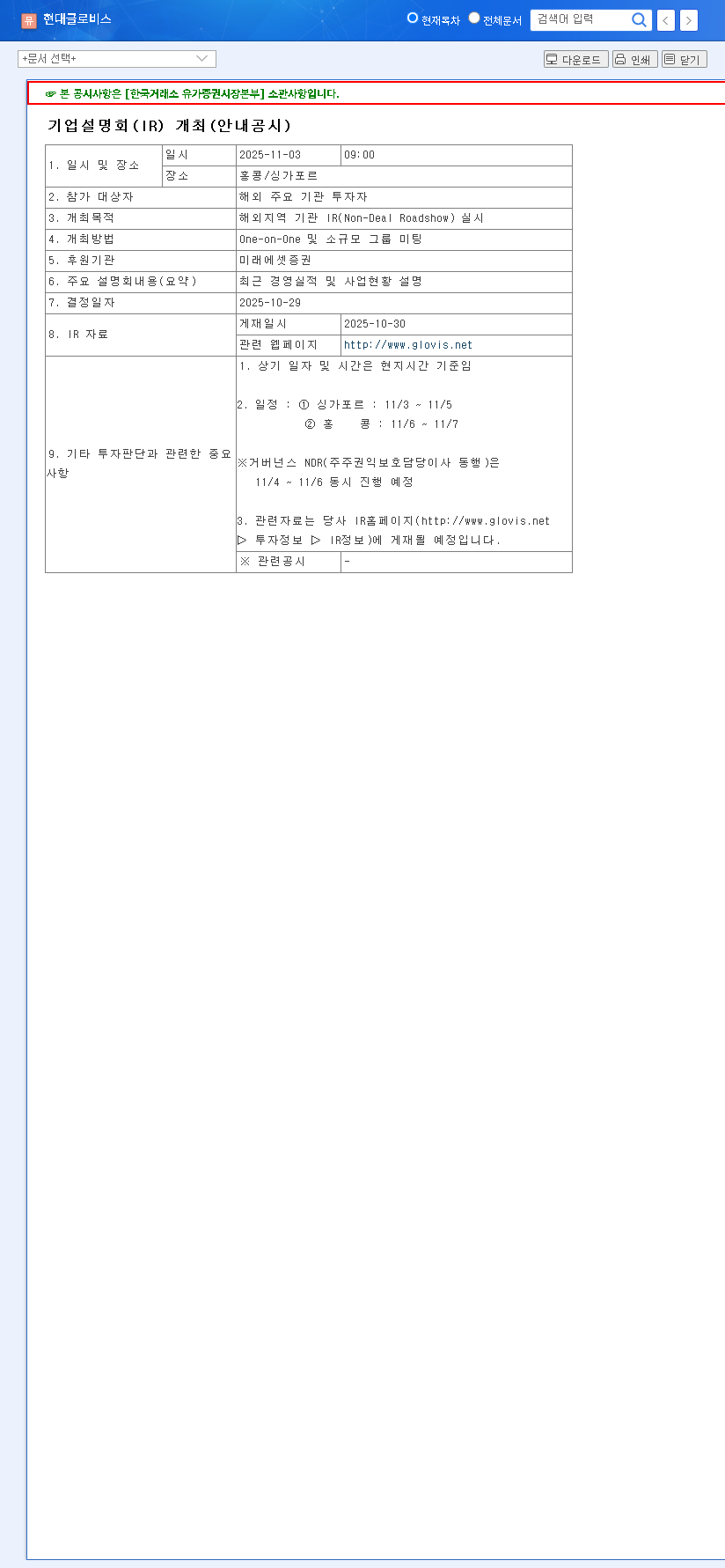
    Global investors are closely watching as HYUNDAI GLOVIS prepares for its pivotal HYUNDAI GLOVIS Non-Deal Roadshow (NDR) on November 3, 2025. This event is a critical opportunity for the integrated logistics giant to communicate its strategic vision and financial health to the international market. For those considering a HYUNDAI GLOVIS investment, this roadshow offers a transparent look into the company’s future, addressing both its immense growth potential and the macroeconomic challenges ahead. This comprehensive guide will break down the key factors investors need to monitor.

    This analysis will delve into the core discussion points of the HYUNDAI GLOVIS NDR, from its exciting new ventures in sustainable technology to its robust, established business lines, providing the insights necessary for informed decision-making.

    The Strategic Purpose of the NDR for Global Investors

    The primary goal of this Non-Deal Roadshow is to strengthen communication and build trust with overseas institutional investors. By elaborately explaining recent management performance and business strategy, HYUNDAI GLOVIS aims to enhance its investment appeal. Unlike a roadshow tied to a specific stock or bond offering, an NDR is about long-term relationship building and ensuring the market fully appreciates the company’s intrinsic value and future trajectory.

    Key Investment Pillars: A Fundamental Analysis

    HYUNDAI GLOVIS will showcase a multi-faceted business model that balances stability with high-growth innovation. Investors should pay close attention to the following areas:

    High-Growth New Business Ventures

    • EV Waste Battery Recycling: As the electric vehicle market explodes, the demand for sustainable battery lifecycle management is surging. HYUNDAI GLOVIS is uniquely positioned to capitalize on this, leveraging synergies with Hyundai Motor Group’s global electrification strategy.
    • Smart Logistics Solutions: The company is at the forefront of the Fourth Industrial Revolution, developing AI-driven and automated logistics solutions. These technologies are crucial for optimizing supply chains, reducing costs, and meeting the demands of modern e-commerce and manufacturing. For more on this trend, see this deep dive into smart logistics.
    • LNG Transportation: Aligning with the global shift towards cleaner energy, the expansion into LNG shipping represents a significant and timely diversification of their maritime business.

    Stable Foundation and Financial Health

    While new ventures are exciting, the company’s core businesses provide a solid foundation. Robust sales growth in integrated logistics, distribution, and shipping, anchored by a strong partnership with Hyundai Motor Company and Kia, ensures stable and predictable revenue streams. This stability is further underscored by a stellar AA+ credit rating, signaling strong financial stewardship to global logistics investors.

    A successful NDR hinges on transparently addressing risks while showcasing a compelling, data-backed vision for future growth. For HYUNDAI GLOVIS, the narrative must weave together its stable core business with the exciting potential of its new, sustainable ventures.

    Navigating Potential Risks and Headwinds

    No HYUNDAI GLOVIS stock analysis would be complete without examining potential risks. The company will need to proactively address investor concerns during the NDR:

    • Currency Volatility: As a global company, exposure to fluctuations in the USD and EUR is significant. Investors will expect a clear explanation of hedging strategies and their impact on net income.
    • Macroeconomic Pressures: Fears of a global recession and persistent high-interest rates could dampen vehicle demand and cargo volumes. The company must present credible countermeasures.
    • Market Fluctuations: The shipping and logistics sectors are sensitive to oil prices and freight market volatility. A robust risk management framework is essential.

    For official details, investors can refer to the company’s public filings. Source: Official Disclosure on DART.

    Conclusion: The Investor Action Plan

    The HYUNDAI GLOVIS Non-Deal Roadshow is a key event that could positively influence investor sentiment and, consequently, the company’s stock price. A successful presentation that clearly articulates growth roadmaps and risk mitigation could attract significant foreign investment.

    Investors should focus on the detail provided on new business profit models, the credibility of macroeconomic risk management, and the tangible results of their ESG strategy, such as their four-year inclusion in the prestigious Dow Jones Sustainability World Index (DJSI). While external market conditions remain a powerful factor, this NDR provides a valuable opportunity to assess the long-term corporate value and strategic direction of HYUNDAI GLOVIS.

    (086280) HYUNDAI GLOVIS Non-Deal Roadshow 2025: An In-Depth Investment Analysis 관련 이미지
  • (352910) Obigo Inc. IR Analysis (2025): New Strategies & Investment Outlook

    (352910) Obigo Inc. IR Analysis (2025): New Strategies & Investment Outlook

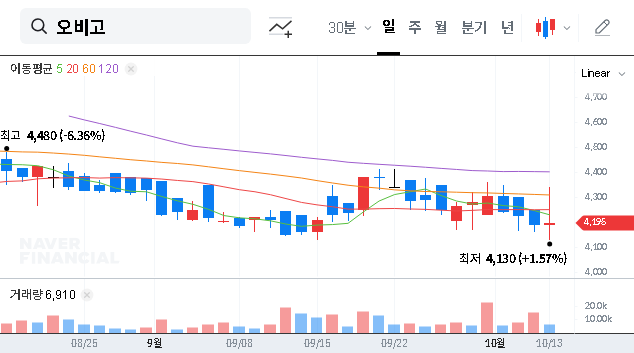
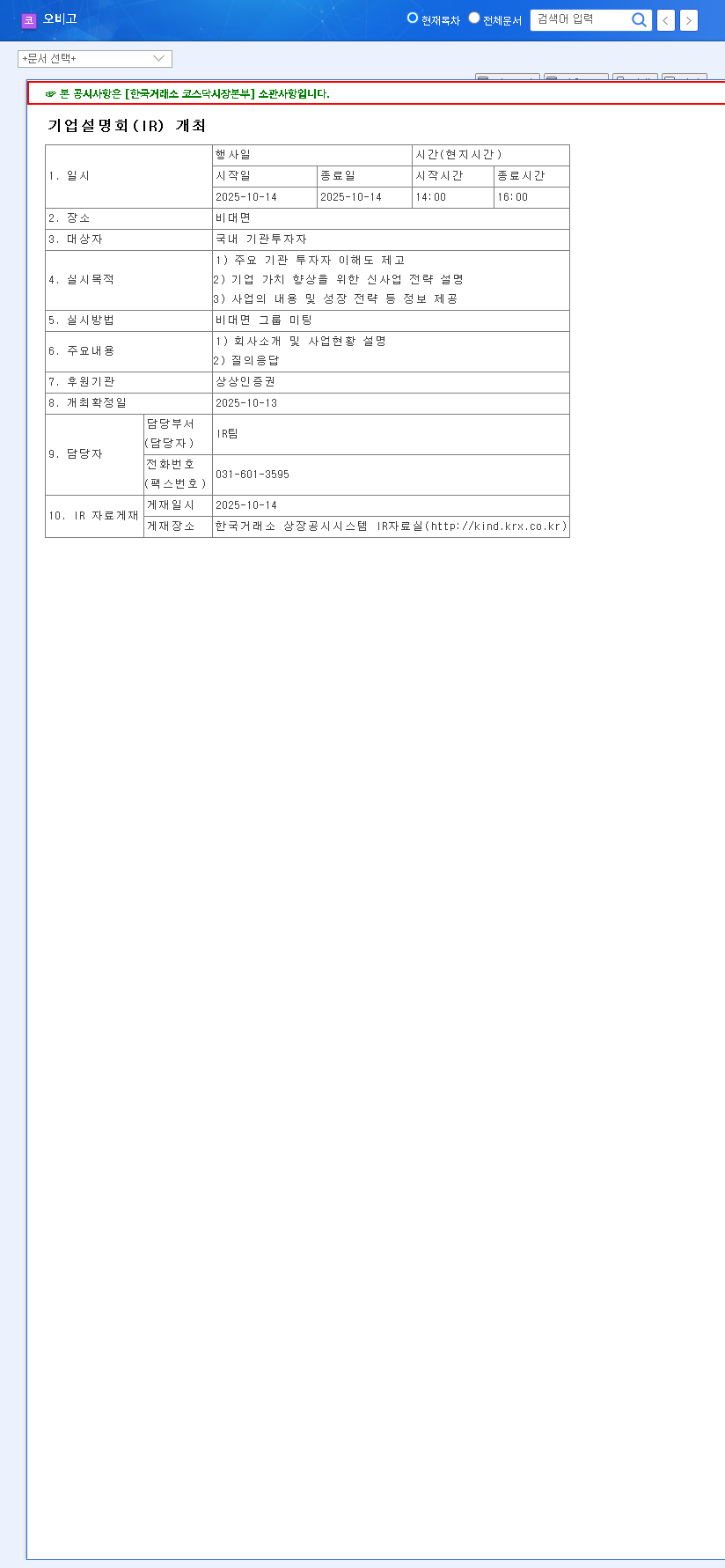
    Obigo Inc., a prominent player in the connected car service market, is approaching a pivotal moment. The upcoming Obigo Inc. IR (Investor Relations) conference, scheduled for October 14, 2025, is not just a routine update; it’s a critical event where the company will unveil its new business strategies to combat declining revenues and widening losses. For investors, this presents a crucial opportunity to assess whether Obigo can engineer a successful turnaround and unlock future growth. This comprehensive Obigo investment analysis will dissect the company’s financial state, explore its potential new ventures, and outline what stakeholders must watch for.

    The Financial Paradox: Obigo’s Current Landscape

    Understanding Obigo’s current situation requires looking at a tale of two conflicting stories: a remarkably strong balance sheet coupled with a deeply concerning income statement. This financial paradox is at the heart of the challenge the company faces.

    A Fortress Balance Sheet vs. A Struggling Operation

    On one hand, Obigo’s financial health is robust. As of late 2024, its debt-to-equity ratio was a mere 9.45%, and its current ratio stood at an astonishing 1,708.85%. These figures suggest excellent short-term liquidity and minimal solvency risk. However, this stability is overshadowed by severe profitability issues:

    • Persistent Revenue Decline: Sales have consistently fallen, from KRW 44.4 billion in 2022 to a projected KRW 27.3 billion in 2024.
    • Escalating Losses: The company has remained in the red, with operating losses ballooning to KRW 7.3 billion and net losses reaching KRW 15.0 billion in 2024.
    • Negative Operating Margin: A margin of -26.81% signals an urgent need for a fundamental strategic shift.

    A recent positive development, confirmed in an Official Disclosure, clarified the receipt of previously uncollected advance payments. This reduces financial uncertainty and improves transparency, a welcome sign for investors monitoring the Obigo stock.

    The Pivot: Can New Business Strategies Reignite Growth?

    The core focus of the Obigo Inc. IR will be the unveiling of its new business strategies. The traditional connected car service market is maturing and becoming fiercely competitive. To survive and thrive, Obigo must successfully expand into new, high-growth verticals. The market is watching closely to see if their plans are concrete and viable.

    The success of this IR hinges not on promises, but on a detailed, credible roadmap for profitability through new ventures. Investors will need to see more than just ideas; they’ll need to see a plan.

    Potential Growth Engine 1: Location-Based Services (LBS)

    Leveraging its automotive footprint, Obigo could pivot into sophisticated LBS. This could include fleet management solutions for commercial clients, usage-based insurance (UBI) partnerships, or hyper-local advertising and commerce platforms delivered directly to the car’s infotainment system. A clear strategy in this area could open up significant B2B and B2C revenue streams.

    Potential Growth Engine 2: Electronic Financial Services (FinTech)

    The concept of the ‘car as a wallet’ is gaining traction. Obigo could develop or integrate platforms for in-car payments for fuel, parking, tolls, and EV charging. This foray into FinTech would create valuable transaction-based revenue and position Obigo at the center of the evolving mobility ecosystem, a trend covered extensively by major outlets like TechCrunch.

    Investor Action Plan: What to Watch For

    Given the high stakes, a prudent ‘wait-and-see’ approach is advisable. The IR presentation will be the primary source of information to shift this outlook. Before making any investment decisions, it is wise to learn more about how to analyze tech company financials. Pay close attention to the following key points during the event:

    • Specificity of New Ventures: Are the plans detailed with target markets, revenue models, and competitive analysis, or are they vague concepts?
    • Path to Profitability: Does management present a credible and time-bound plan to reverse the losses and achieve sustainable profitability?
    • Capital Allocation: How will the company fund these new initiatives? Will it leverage its strong balance sheet or seek external funding?
    • Execution & Milestones: What are the key performance indicators (KPIs) and milestones that investors can use to track progress over the coming quarters?

    In conclusion, the upcoming Obigo Inc. IR is a watershed moment. While the company’s solid financial structure provides a safety net, its operational performance demands a radical change. If management presents a compelling, detailed, and executable strategy for its new businesses, Obigo’s investment attractiveness could increase dramatically. Until then, cautious observation is the most prudent course of action.

    (352910) Obigo Inc. IR Analysis (2025): New Strategies & Investment Outlook 관련 이미지
  • (066790) CCS (066790) Lawsuit Withdrawal: A Deep Dive Stock Analysis & Investor Guide

    (066790) CCS (066790) Lawsuit Withdrawal: A Deep Dive Stock Analysis & Investor Guide

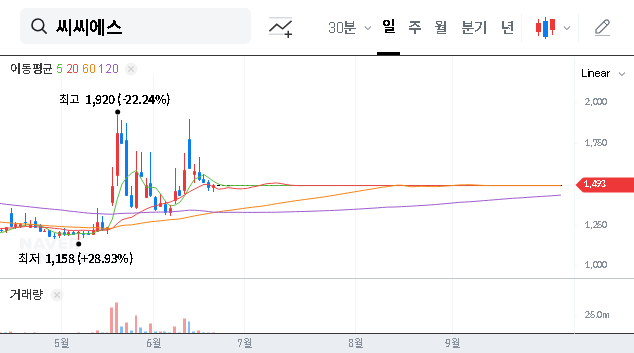
    The recent news of the CCS (066790) lawsuit withdrawal has sent ripples through the investment community, sparking a critical question: Is this a genuine turnaround signal or merely a fleeting moment of calm in a long and turbulent storm? While any resolution of legal conflict appears positive on the surface, a deeper CCS stock analysis reveals a far more complex reality. This comprehensive guide will dissect the event, weigh the short-term boosts against the formidable long-term challenges, and provide a clear strategic outlook for current and potential investors.

    We will move beyond the headlines to evaluate if this development truly alters the investment thesis for CCS stock (066790) or if the underlying risks remain firmly entrenched.

    Deconstructing the Lawsuit Withdrawal

    To understand the impact, we must first understand the event itself. On October 1, 2025, the plaintiffs, Quantumport Co., Ltd. and one other entity, formally withdrew their ‘Confirmation of Non-existence of Director Status’ lawsuit against CCS. This legal action, a key component of the ongoing CCS management dispute since March 20, 2025, challenged the legitimacy of the company’s board, creating significant operational uncertainty. The full withdrawal effectively closes this specific chapter of the company’s legal battles.

    The official filing provides concrete evidence of this development, which can be reviewed for verification. (Source: Official Disclosure). While this removes one headache for management, it’s crucial to assess it within the broader context of the company’s situation.

    Short-Term Positives: A Temporary Tailwind

    The market often reacts favorably to the resolution of uncertainty. The CCS (066790) lawsuit withdrawal is no exception and brings a few immediate, albeit limited, benefits.

    Reduced Management Dispute Risk

    With the director status challenge nullified, a layer of governance instability is removed. This can temporarily boost investor confidence, as it suggests a move towards a more stable leadership environment. The fear of an imminent, legally-forced management shakeup has subsided, which could lead to a short-term rally in the 066790 stock price driven by relief rather than fundamentals.

    Financial Relief from Legal Costs

    Litigation is expensive. The cessation of this lawsuit means CCS will no longer incur related expenses such as attorney fees and court costs. For a company already struggling with operating losses, every bit of cost savings is a positive, even if it doesn’t fundamentally alter its financial trajectory.

    While the market may react positively in the short term, this event is akin to fixing a leaky faucet on a sinking ship. The hull remains compromised by severe fundamental issues.

    Long-Term Reality: Fundamental Weaknesses Persist

    This is where a prudent CCS investment strategy must focus. The lawsuit was a symptom, not the disease. The underlying corporate health of CCS remains critical, and several major red flags continue to wave.

    1. Unresolved Regulatory & Governance Crises

    The withdrawn lawsuit is just one piece of a much larger puzzle of instability. The company still faces a minefield of critical issues:

    • Unapproved Major Shareholder Change: A severe governance issue that invites regulatory scrutiny and potential penalties.
    • Broadcasting Act Complications: Issues related to the largest shareholder change approval under this act remain a significant hurdle.
    • Administrative Injunctions: The company is still under administrative notice, a clear indicator of regulatory problems.

    2. Dire Financial Performance

    No amount of legal good news can paper over a failing business model. The 2025 half-year report paints a grim picture of declining sales, expanding operating losses, and a growing accumulated deficit. This financial erosion is the core problem and remains entirely unaddressed by the lawsuit’s withdrawal. Investors must analyze these financial statements, a key tenet of due diligence explored by authoritative sources like Bloomberg’s market analysis guides.

    3. Looming Delisting Risk

    Perhaps the most significant risk is CCS’s status as an administratively designated issue. This designation is a precursor to potential delisting if the company cannot resolve the underlying causes. The lawsuit withdrawal has a negligible effect on removing this existential threat. Until CCS can demonstrate a clear, sustainable path to profitability and regulatory compliance, the risk of delisting looms large. For more on this topic, review our guide on How to Analyze High-Risk Stocks.

    Conclusion: An Investment Strategy of Extreme Caution

    The CCS (066790) lawsuit withdrawal is a minor positive event in a sea of overwhelming negative factors. It does not alter the fundamental, high-risk profile of the company.

    For investors, the conclusion is clear: this news should not be mistaken for a foundational shift in the company’s prospects. The core managerial, financial, and regulatory issues remain unresolved and severe. An appropriate CCS investment strategy is one of extreme caution. Any investment decisions should be based not on this singular event, but on concrete evidence of a comprehensive business turnaround, resolution of all regulatory hurdles, and a sustained return to financial health. Until then, CCS remains a highly speculative play where the long-term risks far outweigh the short-term positive sentiment from this lawsuit’s conclusion.

    (066790) CCS (066790) Lawsuit Withdrawal: A Deep Dive Stock Analysis & Investor Guide 관련 이미지
  • KakaoBank’s $450 Billion Real Estate Investment: Opportunity or Risk? (Pangyo Tech One Analysis)

    KakaoBank's $450 Billion Real Estate Investment: Opportunity or Risk? (Pangyo Tech One Analysis) 대표 차트 이미지

    1. Why is KakaoBank Investing in Real Estate?

    KakaoBank has decided to invest $450 billion in a real estate fund to acquire the Pangyo Tech One building, aiming to diversify its portfolio and enhance operational returns. This investment represents 6.88% of its equity capital and 0.72% of its total assets.

    2. Opportunity Analysis: Stable Income and Portfolio Diversification

    Pangyo Tech One, located in a prime business district, is expected to generate stable rental income. This investment will also diversify KakaoBank’s asset portfolio, reducing its dependence on specific assets and mitigating risks. In the long term, securing its own office building could enhance operational stability.

    3. Risk Analysis: Market Volatility and Investment Size

    The substantial investment size of $450 billion carries the risk of principal loss if the real estate market declines. Current market uncertainties, high interest rates, and the possibility of an economic slowdown could negatively impact the investment. The large capital outlay might also affect short-term liquidity, and the investment’s classification as non-core business raises questions about resource allocation efficiency.

    4. Market Context and KakaoBank’s Track Record

    Considering the current interest rate environment and real estate market outlook, the Pangyo Tech One investment is expected to have relatively stable demand, but a general market correction cannot be ruled out. Examining KakaoBank’s past asset management performance and declining BIS capital adequacy ratio suggests the need for ongoing monitoring of its capital soundness.

    5. Action Plan for Investors

    While this investment is a strategic decision for long-term portfolio diversification and return enhancement, it requires a cautious approach given the investment size and market conditions. Investors should carefully monitor the fund’s performance, real estate market trends, KakaoBank’s capital adequacy indicators, and its efforts to strengthen its core business competitiveness before making investment decisions.

    What is the purpose of KakaoBank’s investment in Pangyo Tech One?

    To diversify its portfolio and enhance operational returns.

    What is the investment amount and its proportion to equity capital?

    $450 billion, representing approximately 6.88% of its equity capital.

    What are the main risks associated with this investment?

    Real estate market volatility, significant investment size, liquidity impact, and non-core business investment.

    KakaoBank's $450 Billion Real Estate Investment: Opportunity or Risk? (Pangyo Tech One Analysis) 관련 이미지
  • HD Hyundai Infrastructure’s Q2 Earnings IR: Investment Strategy & Market Outlook Analysis

    HD Hyundai Infrastructure’s Q2 Earnings Announcement IR: What Investors Need to Know

    HD Hyundai Infrastructure is set to hold an Investor Relations (IR) event on July 23, 2025, to announce its Q2 2025 business performance. This IR presents a crucial opportunity to understand the company’s current standing and assess its future growth potential.

    1. What’s at Stake for HD Hyundai Infrastructure’s Q2 Earnings Announcement?

    Company: HD Hyundai Infrastructure (Market Cap: KRW 2.2186 trillion)
    Key Event: Q2 2025 Earnings Announcement and IR Session
    Date & Time: July 23, 2025, 14:30
    Expected Content: Detailed explanation of Q2 financial results and Q&A session with investors

    2. Q1 Performance & Fundamental Analysis: A Mix of Hope and Concern

    HD Hyundai Infrastructure reported a somewhat disappointing performance in Q1 2025, with a 12% year-on-year decrease in revenue. This decline is attributed to external factors such as a slowdown in domestic and international construction markets and fluctuations in raw material prices, which have impacted the utilization rates in the construction machinery division.

    However, there are also positive aspects. The engine division maintained a steady growth trend, and securing supply contracts for tank engines in Poland and Turkey is noteworthy for establishing a long-term revenue base.

    The company’s financial health remains robust. A high interest coverage ratio of 5.55 supports its financial stability, and future strategies focused on expanding into emerging markets and enhancing technological competitiveness are expected to be key drivers for profitability improvement. Furthermore, active hedging strategies against exchange rate fluctuations add stability amidst an uncertain external environment.

    3. External Environment Analysis: Preparing for Volatility

    Exchange Rates: While USD/KRW and EUR/KRW exchange rates showed volatility compared to Q1 2025, they remained stable without a strong trend by mid-July. HD Hyundai Infrastructure’s hedging strategy can mitigate exchange rate risks, but continuous monitoring is crucial.

    Raw Material Prices: International crude oil prices have shown a downward trend compared to Q1, indicating some easing. However, the high volatility and long-term trend uncertainty of gold prices warrant caution. A sharp increase in raw material prices could negatively impact HD Hyundai Infrastructure’s profitability, necessitating close observation.

    Interest Rates: US and European benchmark interest rates are stable, while the Korean benchmark interest rate is showing a gradual downtrend. These interest rate changes can influence the company’s investment and financial strategies.

    Global Economy: The possibility of a global economic downturn persists, which, along with construction market uncertainty, remains a significant risk factor affecting HD Hyundai Infrastructure’s performance. The decline in the Baltic Dry Index and China Containerized Freight Index signals a weakening global demand.

    4. Impact of the IR Event on Stock Price

    This Q2 earnings announcement IR is expected to significantly influence HD Hyundai Infrastructure’s stock price. Considering the Q1 performance, if the Q2 results fail to meet market expectations or worsen, downward pressure on the stock price could intensify.

    Conversely, if the Q2 earnings show improvement or exceed market expectations, it could provide momentum for a stock price rally. Specifically, concrete details on future growth strategies presented at the IR, such as plans for market penetration in emerging economies or R&D investment direction, are likely to boost investor confidence and directly impact the stock price.

    5. Investment Strategy: Prudent Approach and Long-Term Perspective

    Investors should carefully analyze the Q2 earnings results and future outlook to be disclosed at the IR event. It is particularly important to pay attention to HD Hyundai Infrastructure’s strategies for responding to raw material price volatility and the potential for a global economic recession.

    Rather than reacting to short-term stock price fluctuations, it is crucial to evaluate the company’s fundamentals and sustainable growth potential from a long-term perspective when making investment decisions. Referencing various brokerage reports and expert opinions can also enhance the accuracy of investment decisions.

    6. Conclusion and Disclaimer

    This report is based on limited publicly available information and has the limitation of not accurately reflecting precise market expectations due to the absence of brokerage reports. Therefore, this analysis should be used solely as a reference for investment decisions, and all investment decisions must be made prudently under the responsibility of individual investors.

    It is necessary to update the analysis based on additional information released after the IR event.

    When is HD Hyundai Infrastructure’s Q2 Earnings Announcement IR?

    HD Hyundai Infrastructure will hold its Investor Relations (IR) session for the Q2 2025 business performance announcement on July 23, 2025, at 2:30 PM.

    What were the main reasons for the revenue decrease in Q1?

    The Q1 revenue decrease is analyzed as a result of external factors such as a slowdown in domestic and international construction markets and raw material price fluctuations impacting the utilization rates in the construction machinery division.

    How is HD Hyundai Infrastructure’s fundamental condition assessed?

    The engine division showed steady growth, and with a strong interest coverage ratio of 5.55, the company generally maintains a sound fundamental condition. Expansion into emerging markets and enhancement of technological competitiveness are expected to be key to future profitability improvements.

    What should investors focus on during the IR event?

    Investors should focus not only on the Q2 earnings results themselves but also on future growth strategies, risk management plans, and particularly, plans for market penetration in emerging economies and R&D investments. It is also important to closely examine the company’s strategies for responding to raw material price volatility and the potential for a global economic recession.

    What precautions should be taken when making investment decisions?

    This report is a reference based on limited information and may not accurately reflect market expectations. Therefore, investment decisions should be made prudently at the individual investor’s discretion. It is also recommended to update the analysis based on additional information released after the IR event.