Tag: Financial Stock

  • (055550) SHINHAN FINANCIAL GROUP (055550) Stock Analysis: Deep Dive into Q3 Earnings & Future Strategy

    (055550) SHINHAN FINANCIAL GROUP (055550) Stock Analysis: Deep Dive into Q3 Earnings & Future Strategy

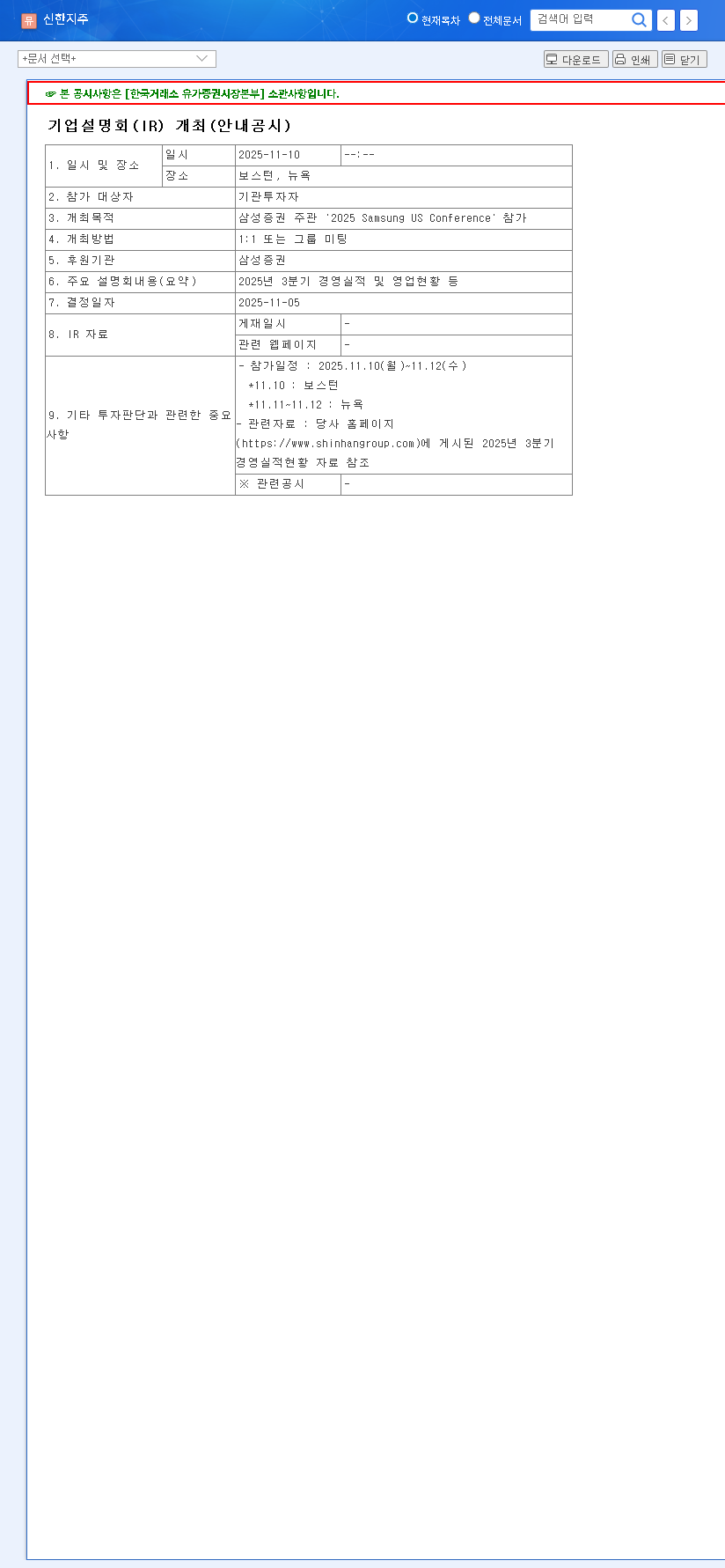
    Welcome, discerning investors. This in-depth SHINHAN FINANCIAL GROUP stock analysis delves into the critical upcoming ‘Citi’s 2025 Korea Corporate Day’ event. For a major financial institution like Shinhan Financial Group (KRX: 055550), these investor relations (IR) events are more than just presentations; they are pivotal moments that can significantly influence market perception and stock performance. We will dissect the expectations, potential catalysts, and underlying risks to provide a clear, actionable 055550 stock forecast.

    On November 17, 2025, Shinhan Financial Group will present its Q3 2025 earnings and outline its future business strategy to a global audience. This analysis will explore the fundamental impact of this event, drawing insights from recent performance and market trends to determine if Shinhan can truly meet and exceed investor expectations.

    The Core Message at Citi’s Corporate Day

    Participation in this high-profile event is a strategic move by Shinhan to transparently communicate its financial health and long-term vision. The core of the presentation will revolve around two key areas: the recently concluded Q3 2025 performance and the strategic roadmap for navigating future economic challenges and opportunities. For investors, this is a prime opportunity to look beyond the numbers and gauge the confidence and competence of the management team. The company’s official filing for this event can be found in their Official Disclosure on DART.

    This IR event is a critical test of Shinhan’s resilience. Investors will be scrutinizing not just the Q3 results, but the credibility of the group’s strategy for sustainable growth in a challenging macroeconomic environment.

    Fundamental Analysis: Bull Case & Bear Case

    Positive Catalysts and Expected Strengths

    Several factors suggest a positive outlook for the SHINHAN FINANCIAL GROUP earnings report. Building on a solid first half of the year, the group is poised to demonstrate continued strength.

    • Robust Earnings Momentum: Analysts anticipate the balanced growth seen in both interest and non-interest income will persist. The stability of its core banking operations, coupled with growth in wealth management and global business, provides a diversified earnings base.
    • Digital Transformation Success: The consistent growth in Monthly Active Users (MAU) on its digital platforms is a leading indicator of future operational efficiency and customer engagement, which can translate into higher, low-cost revenue streams. For more on this trend, you can explore our analysis of digital banking in Korea.
    • Commitment to Shareholder Value: Proactive shareholder return policies, such as the share buybacks and dividend resolutions from Q2, are crucial for boosting investor confidence and can provide a floor for the stock price.
    • Financial Soundness: Reaffirming a strong BIS capital adequacy ratio and a healthy liquidity coverage ratio will underscore the group’s stability and its capacity to weather market turbulence.

    Potential Risks and Investor Concerns

    Despite the positives, a thorough Shinhan Financial investment case must acknowledge the significant headwinds. Management’s ability to address these concerns will be paramount.

    • Credit Card Profitability Squeeze: The decline in Shinhan Card’s profitability, driven by rising funding costs and higher delinquency rates, remains a key concern. Investors will demand a clear strategy for margin improvement in this segment.
    • Real Estate PF Exposure: The Korean real estate market, particularly project financing (PF) loans, is a known vulnerability. Any sign of continued increases in loan loss provisions or asset quality deterioration in this area could trigger significant market anxiety.
    • Macroeconomic Uncertainty: Persistent high interest rates and the risk of a global economic slowdown, as reported by sources like Bloomberg Economics, create a challenging operating environment for the entire financial sector.

    Conclusion: Investment Strategy Moving Forward

    This Citi Corporate Day analysis shows that Shinhan Financial Group stands at a crossroads. The bull case is supported by strong fundamentals and digital growth, while the bear case hinges on macro risks and specific segment weaknesses. The key determinant of the stock’s trajectory will be management’s ability to present a convincing and transparent narrative that addresses risks head-on while showcasing a clear path to future growth. Investors should closely monitor the Q3 earnings call for specifics on net interest margins, cost controls, and provisions for bad loans. A confident outlook, backed by solid numbers and a credible shareholder return plan, could provide a significant catalyst for the 055550 stock.

    Frequently Asked Questions (FAQ)

    Q1: What is the primary focus of this SHINHAN FINANCIAL GROUP stock analysis?

    A1: This analysis focuses on the expected outcomes of Shinhan’s participation in ‘Citi’s 2025 Korea Corporate Day’, where it will reveal its Q3 2025 earnings and future strategy. We evaluate the potential impact on the company’s stock (055550) by examining both positive factors and key investment risks.

    Q2: What are the main risks for a Shinhan Financial investment?

    A2: The main risks include slowing profitability in its credit card division (Shinhan Card), potential loan losses from its real estate project financing (PF) portfolio, persistent macroeconomic headwinds like high interest rates, and intensifying competition from fintech companies.

    Q3: What positive factors could boost the 055550 stock forecast?

    A3: Positive factors include the potential for strong Q3 earnings, successful digital platform growth (measured by MAU), a firm commitment to shareholder return policies (dividends and buybacks), and the reaffirmation of its stable financial health and strong capital ratios.
    (055550) SHINHAN FINANCIAL GROUP (055550) Stock Analysis: Deep Dive into Q3 Earnings & Future Strategy 관련 이미지
  • (105560) KB Financial Group Dividend (Q3 2025): A Deep Dive for Investors (105560)

    (105560) KB Financial Group Dividend (Q3 2025): A Deep Dive for Investors (105560)

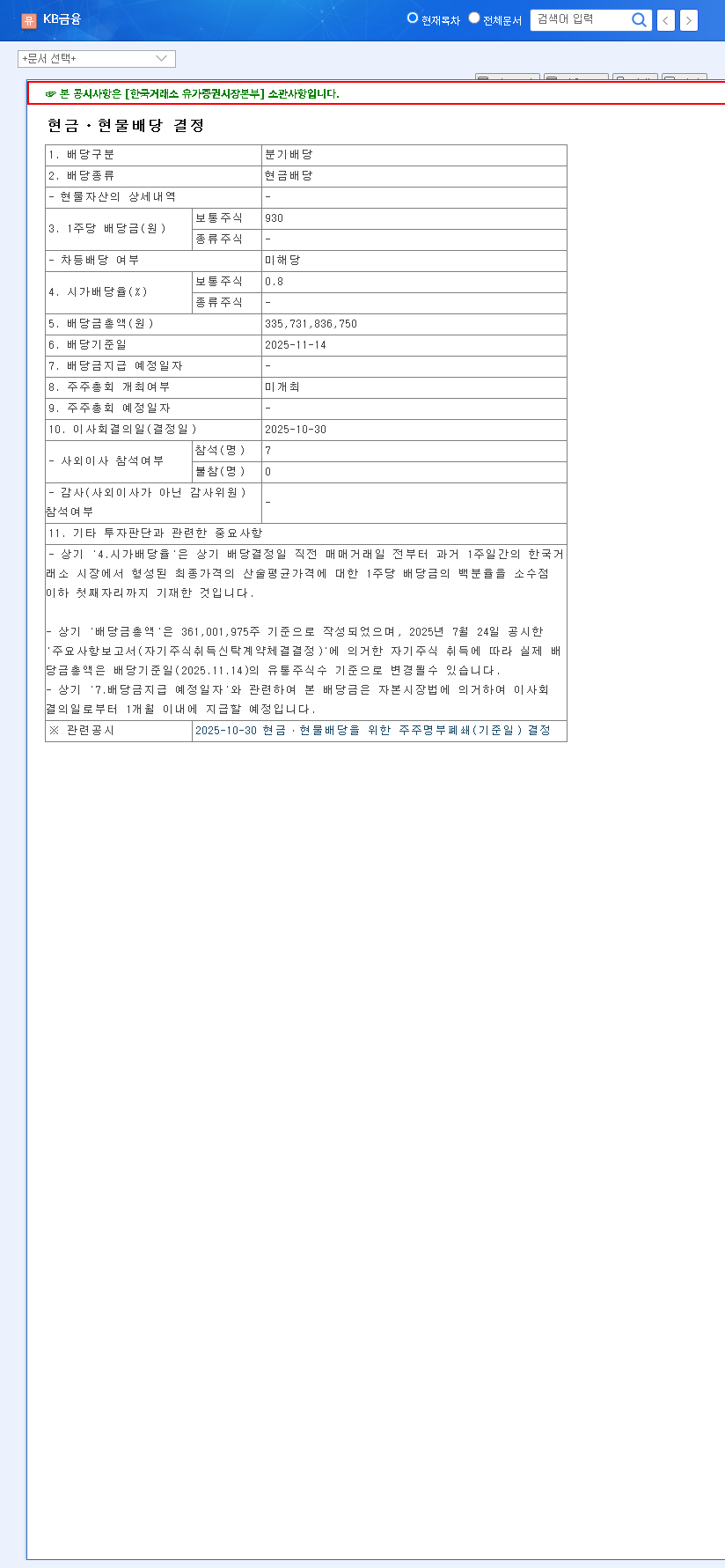
    The latest KB Financial Group dividend announcement for the third quarter of 2025 is a significant event for investors, signaling robust financial health and a continued commitment to shareholder returns. As South Korea’s leading financial institution, KB Financial Group Inc. (105560) has confirmed a quarterly dividend of KRW 930 per common share. This decision is more than a simple cash distribution; it’s a testament to the company’s stability and a key component of its strategy to enhance shareholder value.

    In this comprehensive analysis, we will explore the details of the Q3 2025 dividend, dissect its implications for the company’s fundamentals, and provide an expert perspective on how this move fits into the broader market context. Whether you are a current shareholder or considering an investment, this guide offers everything you need to know about the latest KB Financial Group dividend.

    Unpacking the Q3 2025 Dividend Announcement

    On October 30, 2025, KB Financial Group’s board formalized its decision for the Q3 2025 cash dividend. The key details for investors are as follows:

    • Dividend Amount: KRW 930 per common share.
    • Record Date: November 14, 2025. Shareholders on record by this date are eligible for the payout.
    • Approximate Yield: This translates to a dividend yield of approximately 0.8% based on the share price of KRW 99,752 at the time of the announcement.

    This decision was formally communicated as per regulatory requirements, which can be viewed in the Official Disclosure. The consistency of these quarterly payments reinforces the group’s shareholder-friendly policy, especially when contrasted with the prevailing uncertainties in the global financial markets.

    Consistent dividends are not just a payout; they are a powerful statement about a company’s financial discipline, stable profitability, and long-term vision for enhancing shareholder value.

    Why This Dividend Matters: Fundamentals and Strategy

    The Q3 105560 dividend is a direct outcome of the company’s ‘Corporate Value Enhancement Plan.’ This strategic initiative is designed to create a virtuous cycle of stable profits, robust shareholder returns, and ultimately, a higher corporate valuation. The implications are multi-faceted.

    A Testament to Financial Stability

    Distributing a regular dividend signals that the company has strong, predictable cash flow and solid net income. It demonstrates efficient cost management and a resilient business model capable of generating profits even in a volatile macroeconomic environment. This stability is a key factor that attracts risk-averse, long-term investors.

    Boosting Investor Confidence and Attractiveness

    A reliable dividend policy that meets or exceeds market expectations builds trust. Investors see it as proof that management is aligned with their interests. According to high-authority financial analysis, companies with consistent dividend histories are often viewed as less risky and can command a valuation premium over time. This increased attractiveness can lead to a more stable stock price and reduced volatility.

    Investor Action Plan: A Long-Term Perspective

    The KRW 930 dividend per share makes KB Financial Group an attractive holding for a specific type of investor. If your strategy aligns with the following points, this stock may be a strong candidate for your portfolio.

    • Focus on Stable Income: The quarterly payout provides a predictable cash flow stream, making it ideal for income-oriented investors, such as retirees or those looking to supplement their income.
    • Portfolio Diversification: As a defensive financial stock, KB Financial can add stability to a portfolio, particularly during periods of market turbulence. Its performance may not be as correlated with high-growth tech stocks.
    • Long-Term Value Investing: Investors should look beyond short-term price fluctuations and focus on the company’s strong fundamentals and commitment to increasing shareholder value. For more on this approach, you can read our guide to dividend investing strategies.

    Frequently Asked Questions (FAQ)

    What is KB Financial Group’s latest quarterly dividend?

    For Q3 2025, KB Financial Group has declared a cash dividend of KRW 930 per common share.

    How does this dividend impact the stock?

    It is a positive signal of financial health and a commitment to shareholder value. This can enhance investor confidence and potentially contribute to a stable or rising stock price over the long term.

    Why does KB Financial pay quarterly dividends?

    Paying dividends quarterly is part of the company’s ‘Corporate Value Enhancement Plan.’ It provides shareholders with a more frequent and predictable return, demonstrating a strong, shareholder-friendly management philosophy.

    (105560) KB Financial Group Dividend (Q3 2025): A Deep Dive for Investors (105560) 관련 이미지
  • (175330) JB FINANCIAL GROUP CO.,LTD H1 2025 Performance: In-Depth Analysis & Strategic Outlook

    (175330) JB FINANCIAL GROUP CO.,LTD H1 2025 Performance: In-Depth Analysis & Strategic Outlook

    In a landscape of increasing financial market uncertainty, the performance of JB FINANCIAL GROUP CO.,LTD for the first half of 2025 has emerged as a beacon of stability and growth. This detailed analysis unpacks the impressive H1 2025 results, exploring the core fundamentals that drive its success and the strategic initiatives positioning it for the future. We will delve into the group’s profitability, efficiency, and asset quality, while also examining the macroeconomic variables and competitive pressures that lie ahead.

    Can JB FINANCIAL GROUP CO.,LTD uphold its vision of being ‘a small but most profitable strong financial group’ amidst challenges like interest rate shifts and digital disruption? This report provides a comprehensive outlook for investors and market analysts alike.

    H1 2025 Performance: A Story of Resilience and Growth

    Demonstrating remarkable resilience, JB FINANCIAL GROUP CO.,LTD announced consolidated financial results for H1 2025 that significantly surpassed market consensus. The group reported an operating profit of KRW 281.1 billion and a net profit of KRW 208.3 billion. These figures represent a solid year-over-year increase of 5% in operating profit and 2% in net profit, underscoring a trajectory of steady growth. The full details can be reviewed in the Official Disclosure (Source).

    Despite a slight dip in Q2 compared to the preceding quarter—often attributed to seasonal factors—the overall H1 performance is viewed as a strong foundation for achieving the group’s annual targets.

    Analyzing the Core Fundamentals

    The strong JB Financial Group performance is not accidental; it is built on a solid foundation of profitability, efficiency, and prudent asset management. Let’s break down these key pillars.

    Impressive Profitability Metrics

    Profitability remains a standout feature for the group, placing it in the top tier of Korean financial holding companies and reinforcing its fundamental strength.

    • High ROE and ROA: With a Return on Equity (ROE) of 13.1% and Return on Assets (ROA) of 1.11%, the group demonstrates its superior ability to generate profit from shareholder equity and its asset base.
    • Diversified Revenue Streams: While interest income from the banking sector provides a stable core, improved results from subsidiaries like JB Woori Capital and a strategic push for non-interest income have created a more balanced and resilient revenue model.

    Exceptional Cost Management

    In today’s competitive financial landscape, efficiency is paramount. JB FINANCIAL GROUP CO.,LTD excels in this area, as evidenced by its industry-leading Cost-Income Ratio (CIR) of 35.8%. This low ratio indicates that the group manages its operational costs with extreme effectiveness, allowing a larger portion of its income to translate directly into profit.

    Proactive Asset Quality Management

    While overall financial indicators remain stable, the group is vigilantly monitoring potential risks. A notable point of attention is the increase in JB Woori Capital’s Non-Performing Loan (NPL) ratio from 2.00% to 2.71%. This uptick highlights a potential risk factor that necessitates enhanced asset quality management, including strategic NPL sales, to safeguard the balance sheet in the second half of the year.

    Securing Future Growth Drivers

    JB FINANCIAL GROUP’s strategy extends beyond managing current operations; it is actively building a diversified portfolio to secure long-term growth. To understand this better, you can review our comprehensive analysis of the Korean banking sector.

    • Overseas Expansion: The group’s international ventures are bearing significant fruit. Notably, Phnom Penh Commercial Bank in Cambodia saw its net profit surge by 50.4%, proving the success of its overseas expansion strategy.
    • Fintech Collaboration: By embracing the digital shift, the group is future-proofing its business. Strategic partnerships, such as joint loans with Toss Bank, allow it to tap into new customer segments and respond nimbly to the evolving digital finance ecosystem.

    Outlook: Key Variables and Response Strategies for H2

    The second half of 2025 presents both challenges and opportunities. Global macroeconomic trends, as reported by sources like Bloomberg, will play a critical role. Potential U.S. policy rate cuts could put downward pressure on domestic interest rates, squeezing the Net Interest Margin (NIM). This makes the push for non-interest income even more critical.

    Domestically, intensified household debt management and the potential for increased defaults among vulnerable borrowers are key risks. However, JB FINANCIAL GROUP’s history of agile response to market shifts and its strong digital foundation position it well to navigate these headwinds.

    Investor Action Plan: Key Factors to Monitor

    For investors tracking JB FINANCIAL GROUP CO.,LTD, the robust H1 2025 results are reassuring. Looking ahead, focus should be on the execution of its core strategies:

    • Enhanced Risk Management: Monitor the group’s handling of real estate project financing (PF) and its management of vulnerable loan segments. Sustaining high asset quality is non-negotiable.
    • Digital & Revenue Diversification: Watch for tangible results from efforts to grow non-interest income and enhance digital channel competitiveness. These are key to defending profitability in a potentially lower-interest-rate environment.
    • Sustained Growth Momentum: Keep an eye on the performance of overseas businesses and the synergies generated from fintech collaborations. These are the primary engines for future value creation.

    In conclusion, JB FINANCIAL GROUP CO.,LTD’s H1 2025 performance reaffirms its status as a highly efficient and profitable entity. If it continues to execute its strategic priorities with precision, the group is well-positioned for sustainable growth, making it a compelling name to watch in the Korean financial sector.

    Disclaimer: This report is for informational purposes only and is based on publicly available information. It is not intended as investment advice. All investment decisions should be made based on the investor’s own judgment and responsibility.

    (175330) JB FINANCIAL GROUP CO.,LTD H1 2025 Performance: In-Depth Analysis & Strategic Outlook 관련 이미지
  • (082640) Tongyang Life Insurance Q3 2025 Earnings Preview: A Deep Dive for Investors

    (082640) Tongyang Life Insurance Q3 2025 Earnings Preview: A Deep Dive for Investors

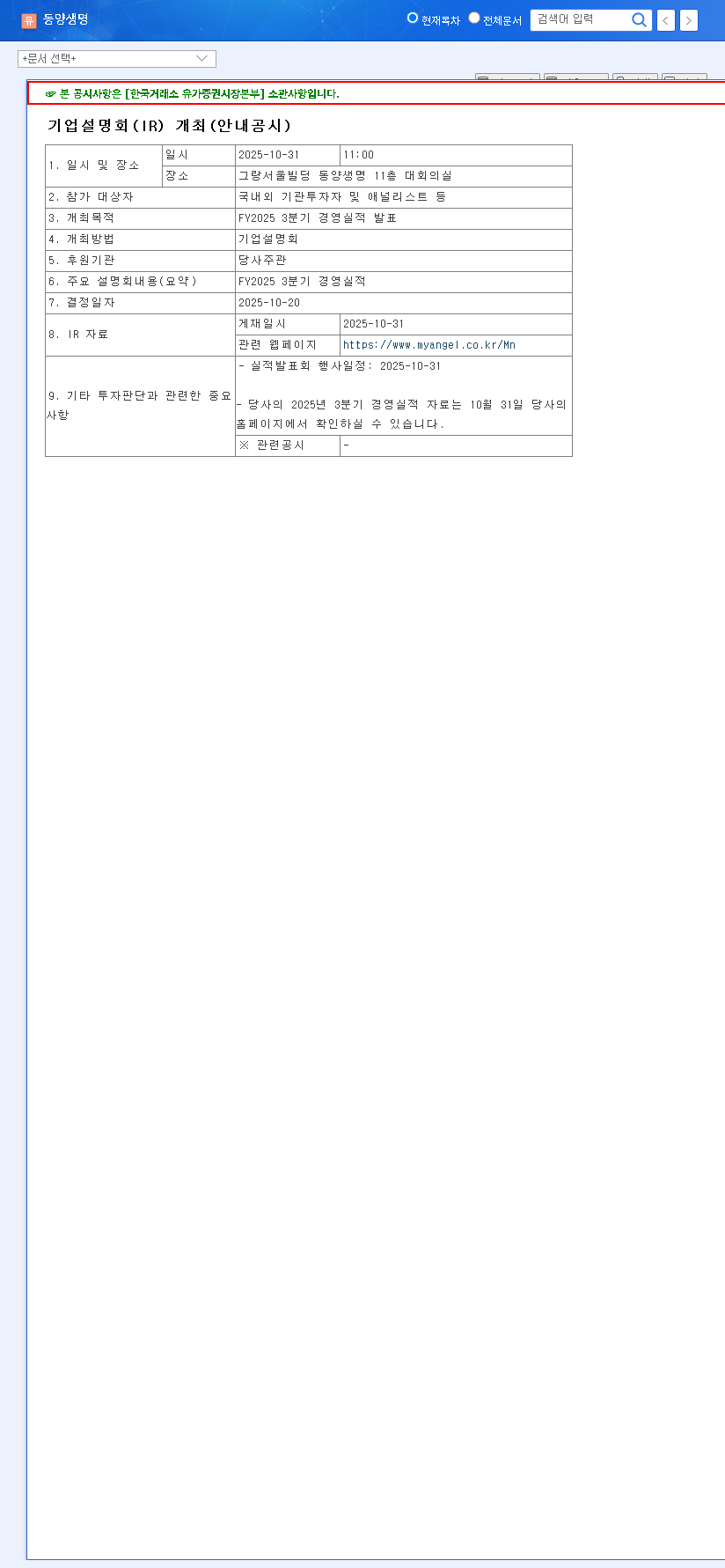
    On October 31, 2025, the investment community will turn its attention to the Tongyang Life Insurance Q3 2025 earnings announcement. This investor relations (IR) event, scheduled for 11:00 AM, is far more than a routine financial update. It represents a critical inflection point that could significantly influence the Tongyang Life Insurance stock trajectory and redefine market sentiment for the foreseeable future. For savvy investors, understanding the nuances of this report is paramount.

    This in-depth analysis will dissect the key factors to watch, explore potential market scenarios, and provide a strategic action plan to help you navigate the outcomes of this pivotal earnings call. We will delve into what the numbers could reveal about the company’s fundamental health and long-term strategy.

    Why This Q3 Earnings IR is a Defining Moment

    Quarterly earnings calls are the heartbeat of corporate transparency, offering a direct look into a company’s performance. For an insurer like Tongyang Life, this event is especially crucial as it provides insights into operational efficiency, profitability under new accounting standards like IFRS 17, and strategic resilience in a competitive landscape. The Tongyang Life Insurance IR session is not just about the past quarter’s results; it’s a forward-looking dialogue where management’s tone and guidance can be as impactful as the figures themselves.

    This isn’t merely a report card; it’s a strategic roadmap. Management’s commentary on future growth drivers, risk management, and capital adequacy will be scrutinized by institutional and retail investors alike.

    The Challenge: A Lack of Market Consensus

    A significant factor amplifying the importance of this announcement is the current absence of a clear market consensus or widespread analyst reports. This information vacuum means the official release holds even more weight. Any surprise—positive or negative—could trigger a more pronounced stock price reaction. The official figures will be the primary data source for recalibrating valuations and expectations. Investors can access the primary filing directly from the regulator’s DART system. Official Disclosure: Click to view DART report.

    Analyzing the Tongyang Life Insurance Q3 2025 Earnings: Potential Scenarios

    Given the limited pre-release information, we can model three primary scenarios for the Tongyang Life Insurance stock post-announcement.

    1. The Bullish Scenario: Exceeding Expectations

    A significant upside surprise could be triggered by stronger-than-anticipated net profit, robust growth in new business value (NBV), or an improved K-ICS (Korean Insurance Capital Standard) ratio. If management pairs these strong results with confident forward guidance—perhaps detailing successful new product launches or effective investment portfolio management—it could fuel a strong rally in the stock price and attract new long-term investors.

    2. The Bearish Scenario: A Disappointing Report

    Conversely, a miss on key metrics would likely exert immediate downward pressure on the stock. This could manifest as shrinking profit margins, a higher-than-expected loss ratio, or cautious, uncertain commentary from the leadership team. Any indication of struggles with adapting to the economic environment or competitive pressures could erode investor confidence, leading to a sell-off.

    3. The Neutral Scenario: In-Line with a Muted Outlook

    Should the Tongyang Life Insurance Q3 2025 earnings come in as expected (within a general, unstated range), the stock may see minimal short-term volatility. This could indicate stability but a lack of significant growth catalysts. In this case, the market will likely await future developments or broader industry trends, such as those discussed in analyses of the South Korean insurance market, before making major moves.

    Your Pre-IR Investor Action Plan

    Preparation is key. Here are the essential steps investors should take leading up to the announcement:

    • Conduct Fundamental Analysis: Go beyond the headlines. Review Tongyang Life’s previous quarterly reports to establish a performance baseline. For a deeper understanding, explore resources on how to analyze insurance company financials.
    • Identify Key Metrics: Know what to look for. Key performance indicators (KPIs) for an insurer include the K-ICS ratio (solvency), loss ratio, expense ratio, and net investment income. These numbers provide a clearer picture than revenue alone.
    • Monitor Pre-IR News: Keep an eye out for any last-minute analyst previews or industry news that could provide context for the upcoming investor relations event.
    • Prepare for Volatility: Regardless of the outcome, earnings announcements often lead to increased trading volume and price swings. Ensure your investment strategy accounts for this potential short-term volatility.

    The Tongyang Life Insurance Q3 2025 earnings call is a critical data point for all stakeholders. By conducting thorough due diligence and preparing for multiple scenarios, investors can make more informed, strategic decisions rather than reactive ones. Stay vigilant, stay informed, and be ready to act on the insights revealed.

    (082640) Tongyang Life Insurance Q3 2025 Earnings Preview: A Deep Dive for Investors 관련 이미지
  • (175330) JB Financial Group & Samyangsa Stake Sale: A 2025 Investor’s Deep Dive

    (175330) JB Financial Group & Samyangsa Stake Sale: A 2025 Investor’s Deep Dive

    A recent development concerning JB Financial Group has sent ripples through the investment community. On October 2, 2025, a significant ownership change was disclosed by major shareholder Samyangsa, sparking debate about its implications. This Samyangsa stake sale raises critical questions: Is this a sign of short-term turbulence for the JB Financial Group stock, or does it signal a fundamental shift requiring a new investor strategy? This article provides a comprehensive analysis, breaking down the event, its market impact, and the underlying strength of the company to guide your investment decisions.

    Key Takeaway: While Samyangsa’s stake sale introduces short-term market noise, the core investment thesis for JB Financial Group should remain anchored to its robust fundamentals and long-term growth prospects.

    Event Deconstructed: The Samyangsa Stake Sale

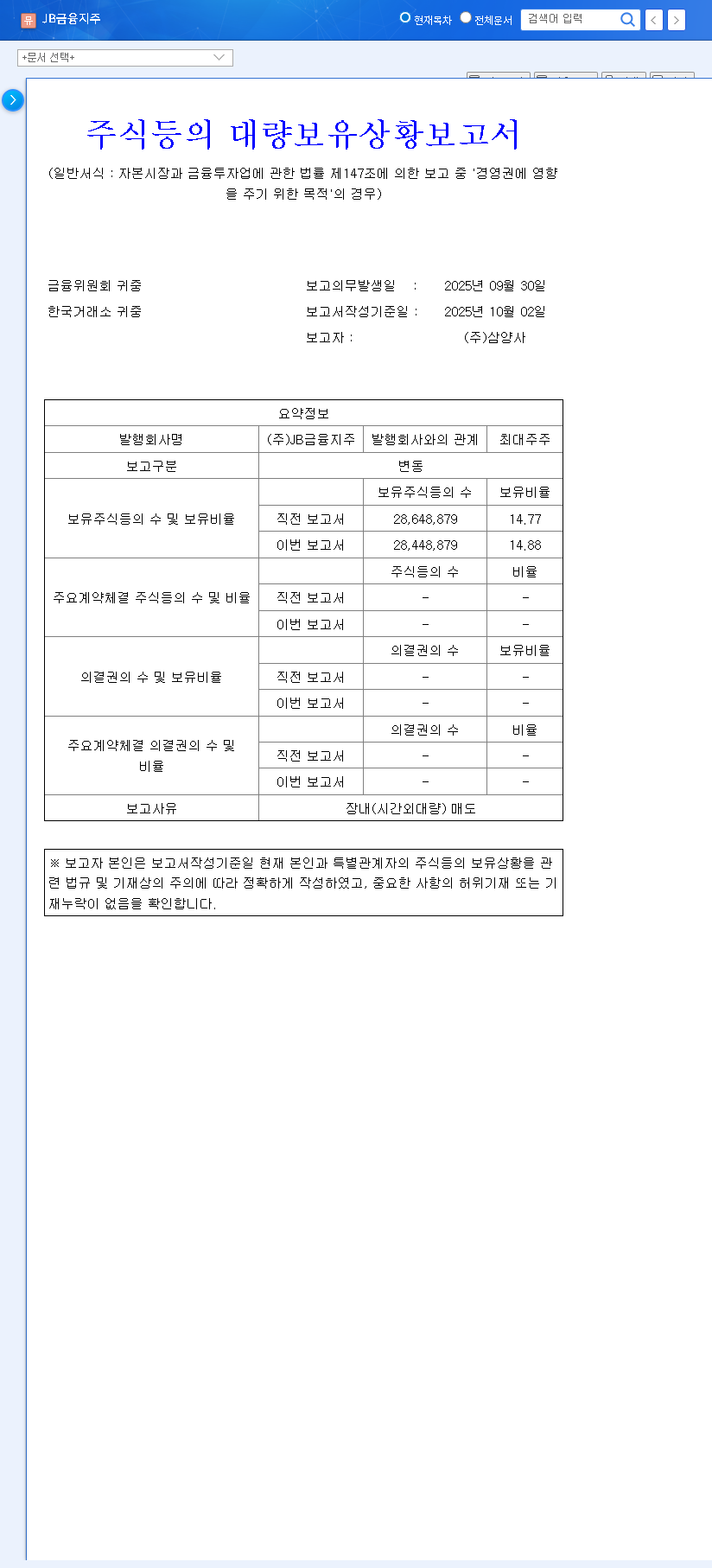
    On October 2, 2025, an official disclosure confirmed that Samyangsa, a major shareholder, adjusted its position in JB Financial Group. According to the Official Disclosure (DART), Samyangsa sold 200,000 shares via an off-exchange block trade. This method is often used to minimize immediate market price impact. Curiously, despite the sale, Samyangsa’s reported stake changed from 14.77% to 14.88%. Most importantly, the company explicitly maintained its holding purpose as ‘management influence,’ a detail that has captured significant market attention.

    Understanding the Market’s Reaction

    The market’s interpretation of such events is multifaceted. Here’s a breakdown of the immediate and potential impacts on the JB Financial Group stock:

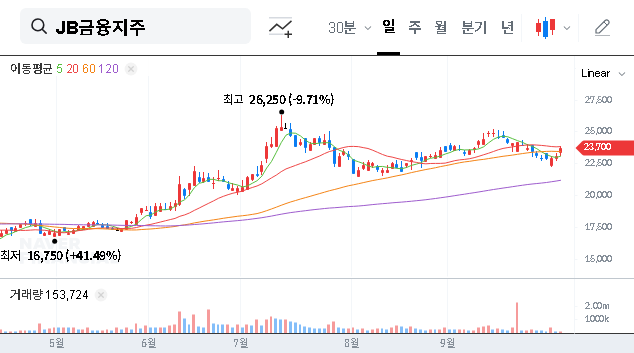
    • Short-Term Volatility: The news of a large shareholder selling can create a supply-demand imbalance, even with a block trade. This often leads to temporary downward pressure as some investors react to the headline without a deeper analysis.
    • Focus on ‘Management Influence’: This is the key puzzle piece. Selling shares while aiming to retain influence is not a simple profit-taking move. It could suggest strategic repositioning, a desire to free up capital for other ventures, or a prelude to introducing another strategic partner. For more context on shareholder activism, see this analysis from a leading financial publication like Bloomberg.
    • Awaiting Consensus: As of now, a clear market consensus has not formed. The lack of immediate brokerage reports means investors are currently navigating with limited guidance, heightening the need for a focus on fundamentals.

    Analyzing JB Financial Group Fundamentals

    Beyond the market noise, the long-term value of JB Financial Group is rooted in its solid operational foundation. As of the first half of 2025, the company’s fundamentals remain robust, providing a strong counter-narrative to any short-term stock pressure.

    • Diversified and Stable Portfolio: The group’s strength comes from its well-balanced structure, including core banking units (Jeonbuk Bank, Gwangju Bank), a robust specialized financing arm (JB Woori Capital), and an asset management division. This diversification ensures stable revenue streams across different economic cycles.
    • Impressive Profitability: With a controlling interest Return on Equity (ROE) of 13.1% and a Return on Assets (ROA) of 1.11%, JB Financial Group demonstrates industry-leading profitability. Its net profit of KRW 370.4 billion in H1 2025 underscores its consistent performance.
    • Strong Capital Adequacy: A Common Equity Tier 1 (CET1) ratio of 12.40% indicates a solid capital base, providing a crucial buffer against economic headwinds and supporting future growth initiatives.
    • Shareholder-Friendly Policies: The company’s commitment to shareholder returns, with targets like a 50% shareholder return ratio, signals a management team focused on delivering value.

    Crafting Your Investor Strategy

    Given the circumstances, a thoughtful investor strategy is essential. It’s crucial to separate the temporary event from the company’s long-term trajectory. For those looking to refine their approach, consider our guide on how to analyze financial stocks.

    Recommendations for Navigating the Situation

    1. Leverage Short-Term Dips: Any price decline resulting from this news could present a buying opportunity. If the stock drops without a corresponding change in its strong JB Financial Group fundamentals, it enhances its undervaluation appeal for long-term investors.

    2. Anchor Decisions in Fundamentals: Do not let short-term sentiment dictate your actions. The company’s consistent performance, high profitability, and stable capital base are the true indicators of its long-term potential.

    3. Monitor Ownership Dynamics: Keep a close eye on any further disclosures from Samyangsa or news about potential new strategic investors. The ongoing ‘management influence’ narrative will be a key factor in the company’s governance story.

    Frequently Asked Questions (FAQ)

    Q1: What is the core of the JB Financial Group Samyangsa stake sale event?
    A1: Samyangsa, a major shareholder, sold 200,000 shares of JB Financial Group on Oct 2, 2025. Critically, it maintained its holding purpose as ‘management influence,’ suggesting a strategic motive rather than a simple exit.

    Q2: How will this stake sale impact JB Financial Group’s stock price?
    A2: In the short term, it may cause price volatility and downward pressure due to market sentiment. However, this is expected to be temporary, as the underlying business performance has not changed.

    Q3: Have JB Financial Group’s fundamentals been affected by this sale?
    A3: No. The stake sale is an ownership event and does not directly alter the company’s strong fundamentals, which include a diversified portfolio, high profitability, and solid capital adequacy as of H1 2025.

    Q4: What should investors monitor going forward?
    A4: Investors should watch for further stake changes from Samyangsa, pay close attention to JB Financial Group’s full-year earnings reports and strategic updates, and consider the broader macroeconomic environment’s impact on financial stocks.

    (175330) JB Financial Group & Samyangsa Stake Sale: A 2025 Investor's Deep Dive 관련 이미지