Tag: Financial Information

  • (068270) Celltrion Investment Analysis: A Deep Dive into the KRW 712.5B New Drug Deal

    (068270) Celltrion Investment Analysis: A Deep Dive into the KRW 712.5B New Drug Deal

    For those considering a Celltrion investment, the landscape just shifted dramatically. Biopharmaceutical giant Celltrion, Inc. has announced a landmark co-development and licensing agreement with Mustbio, valued at up to KRW 712.5 billion (approx. USD 520 million). This move, hot on the heels of the successful U.S. launch of Zymfentra, signals a bold new chapter for the company. This comprehensive Celltrion Inc. investment analysis will dissect the crucial details of this new drug deal, evaluate its potential impact on Celltrion’s valuation, and outline practical strategies for current and prospective investors.

    Unpacking the Landmark KRW 712.5 Billion Deal

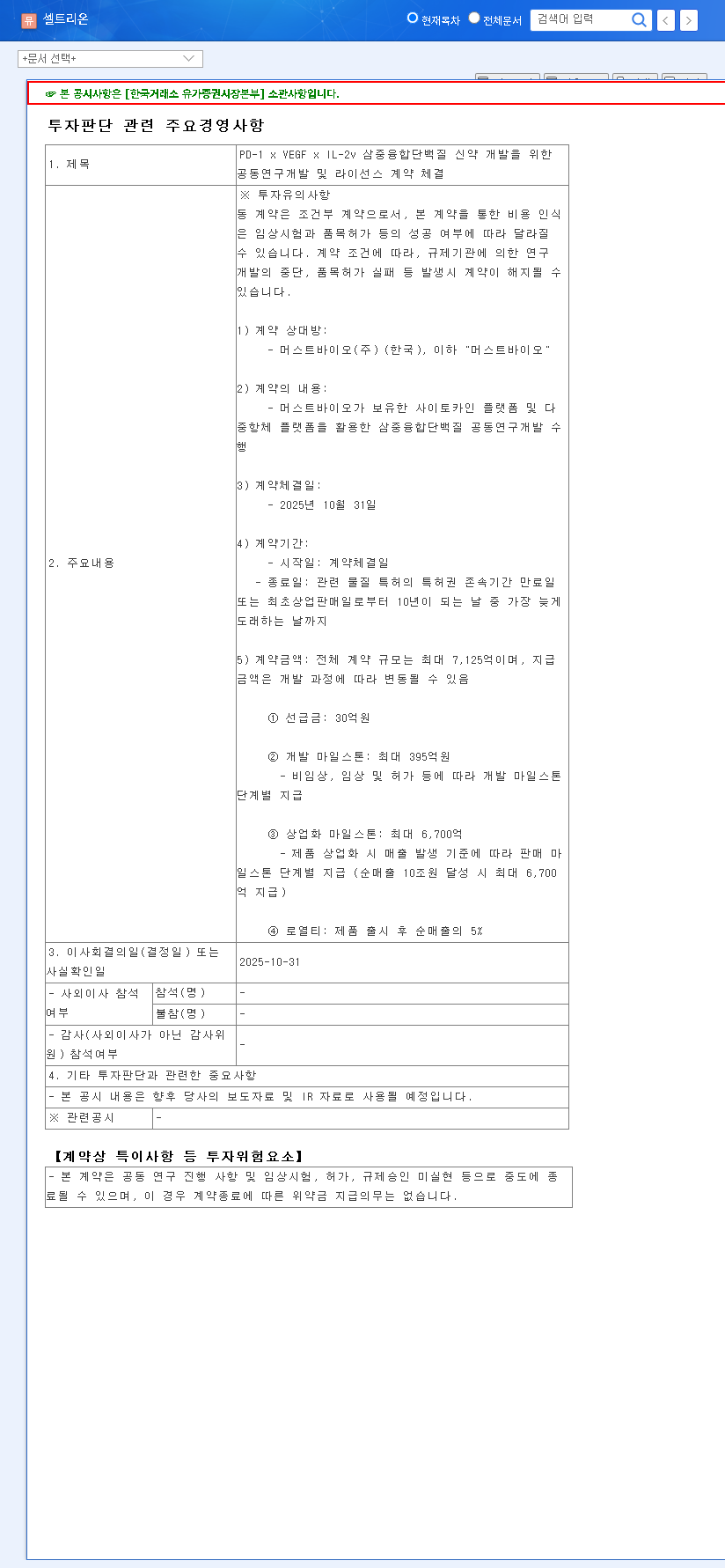
    On October 31, 2025, Celltrion formalized a joint research and licensing agreement with Mustbio Co., Ltd. for an innovative “PD-1 x VEGF x IL-2v Triple Fusion Protein New Drug.” This next-generation therapeutic is designed for the highly competitive oncology market. The agreement structure is significant: an upfront payment of KRW 3 billion, followed by milestone payments tied to development and commercialization, plus a 5% royalty on net sales. The sheer scale of the deal is underscored by a potential KRW 670 billion milestone payment upon reaching KRW 10 trillion in cumulative net sales, highlighting the monumental expectations for this new drug. For full transparency, you can review the Official Disclosure (DART).

    The Bull Case: Why This Deal Could Propel Celltrion Stock

    1. A Strong Foundation & Proven Execution

    Any sound Celltrion investment thesis must acknowledge its existing strengths. The company posted robust H1 2025 results with KRW 961.5 billion in sales and a healthy 25% operating margin. More importantly, the recent U.S. FDA approval and launch of Zymfentra (an injectable form of Remicade) serves as powerful validation of Celltrion’s drug development and commercialization capabilities. This success provides a solid financial and strategic launchpad for more ambitious projects like the Mustbio collaboration.

    2. Fortifying the Next-Generation Drug Pipeline

    This deal is a clear signal of Celltrion’s commitment to evolving beyond its biosimilar dominance. By partnering with Mustbio, Celltrion gains access to innovative cytokine and multi-antibody platform technology, which is crucial for creating next-generation cancer treatments. Key strategic benefits include:

    • Oncology Portfolio Diversification: Securing a high-potential asset in the lucrative oncology field.
    • Innovative Technology Access: Enhancing R&D efficiency for future drug discovery.
    • Future Revenue Streams: Successful commercialization opens doors for massive direct sales revenue or further out-licensing deals.

    Celltrion is leveraging its stable, cash-generating biosimilar business to fund high-risk, high-reward ventures in novel drug development. This balanced approach is a key component of a long-term growth strategy.

    A Prudent Investor’s Guide to Key Risks

    No investment is without risk, especially in the volatile biopharmaceutical sector. Investors must remain vigilant of the following factors:

    • Clinical Trial Uncertainty: The agreement is conditional. New drug development is a long and arduous process with a high rate of failure. A setback in clinical trials could terminate the agreement and negatively impact Celltrion stock.
    • Intense Market Competition: The global oncology market is crowded with pharmaceutical giants. As noted by industry reports from sources like Bloomberg Intelligence, successful market penetration will require superior clinical data and a robust commercial strategy.
    • Macroeconomic Volatility: As an international deal, fluctuations in currency exchange rates can impact the real value of milestone payments and royalties. Broader economic factors like interest rates can also affect funding costs.

    Investment Strategy & Overall Assessment

    Our overall investment opinion on Celltrion, Inc. is Positive, particularly for investors with a long-term horizon. The Celltrion new drug deal represents a significant step towards becoming a fully-integrated global biopharmaceutical company. For those considering a position, we recommend the following approach:

    • Adopt a Long-Term Perspective: View this as a multi-year growth story. Consider a phased buying strategy to average your cost basis rather than focusing on short-term price movements.
    • Practice Diligent Risk Management: Closely monitor company disclosures regarding clinical trial progress and milestone achievements. This is critical for managing the inherent risks of biopharmaceutical investment.
    • Monitor the Competitive Landscape: Stay informed about competitor advancements and market trends. For more context, you can read our guide to understanding the biosimilar market.

    Disclaimer: This report is for informational purposes only and does not constitute investment advice. All investment decisions are the sole responsibility of the investor.
    (068270) Celltrion Investment Analysis: A Deep Dive into the KRW 712.5B New Drug Deal 관련 이미지
  • (293940) Shinhan Alpha REIT Monthly Report (Sept 2025): A Deep Dive Analysis for Investors

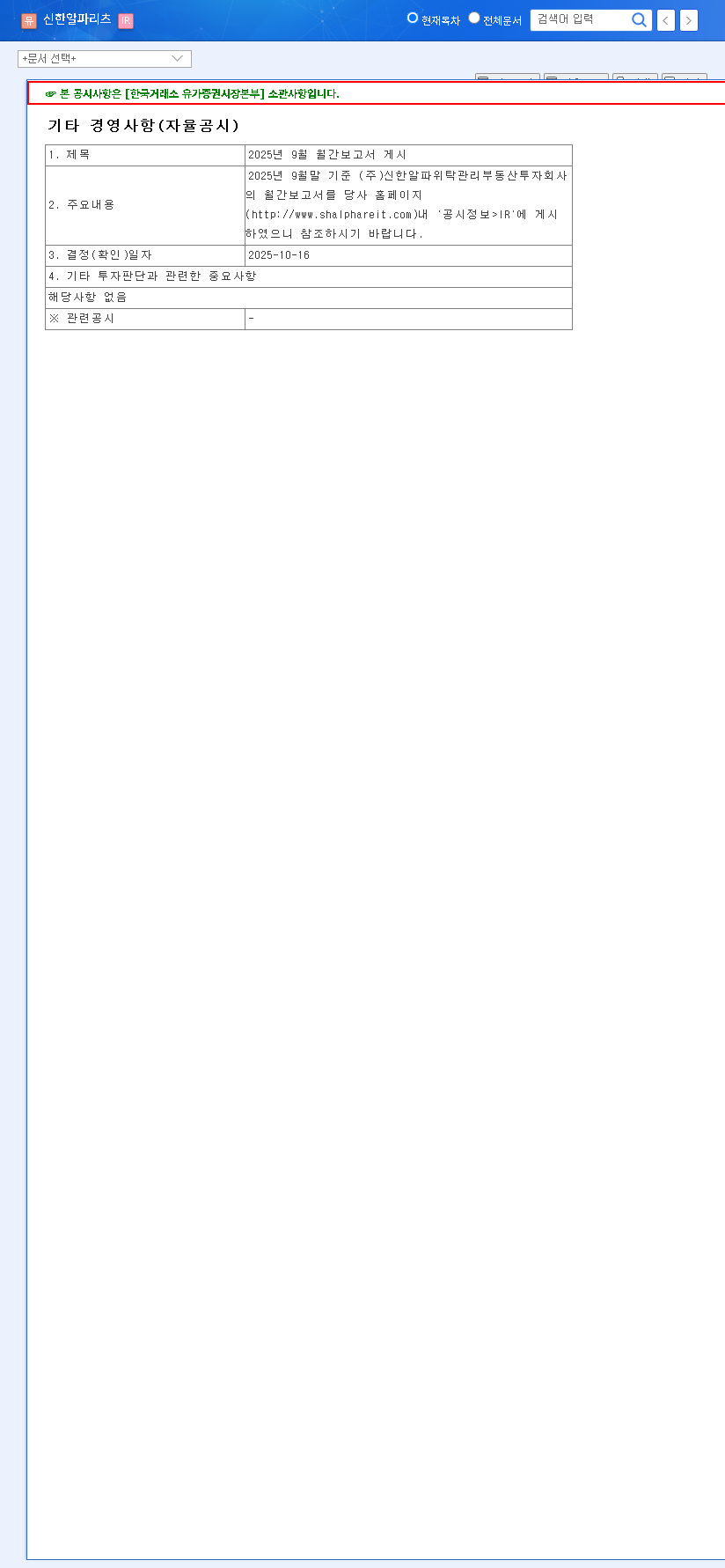
    (293940) Shinhan Alpha REIT Monthly Report (Sept 2025): A Deep Dive Analysis for Investors

    The latest Shinhan Alpha REIT monthly report for September 2025 has been released, providing a critical data snapshot for current and prospective investors. For those involved in REIT investing, these publications are far more than a regulatory formality; they are a direct line to understanding the asset’s performance, stability, and future potential. This deep-dive analysis provides a comprehensive investor checklist to help you dissect the report, identify crucial trends, and make informed decisions about your Shinhan Alpha REIT holdings.

    While the simple act of publication is a positive sign of transparency, the real value lies within the data. An unexpected change in vacancy rates, a shift in debt structure, or new asset valuation figures can significantly impact market perception and your investment returns. Understanding how to read between the lines is paramount.

    Why This Report is a Game-Changer for Your Investment

    A Real Estate Investment Trust (REIT) is a company that owns, and in most cases operates, income-producing real estate. For investors, the appeal lies in receiving a steady stream of income through dividends without the complexities of direct property management. The health of a REIT like Shinhan Alpha REIT is directly tied to the performance of its underlying assets. The monthly report is your most reliable window into that performance.

    The official disclosure for this period provides the foundational data for this analysis. Investors are encouraged to review the primary document for complete details. Official Disclosure: Click to view DART report.

    The Ultimate Investor Checklist: Decoding the Report

    To extract maximum value from the Shinhan Alpha REIT monthly report, focus your analysis on these five critical areas. Comparing the latest figures against previous reports will reveal important trends and potential red flags.

    1. Portfolio Health: Occupancy and Leasing Momentum

    This is the lifeblood of any real estate investment trust. High occupancy rates indicate strong demand for the REIT’s properties and lead to stable rental income. Scrutinize the following:

    • Occupancy & Vacancy Rates: Are they improving, declining, or stagnant? A rising vacancy rate could signal market weakness or issues with a specific property.
    • Lease Expiry Profile: Check for a concentration of leases expiring in the near term, as this could introduce renewal risk.
    • New Lease Terms: Are new leases being signed at higher or lower rates than expiring ones? This indicates rental growth trends.

    2. Financial Vital Signs: Debt and Profitability

    A REIT’s financial structure determines its resilience and ability to grow. Pay close attention to its debt levels and how efficiently it generates profit from its revenue. For more on this, consider our internal guide on How to Analyze REIT Financial Statements.

    • Debt-to-Asset Ratio: A key indicator of leverage. A high ratio can increase risk, especially in a rising interest rate environment.
    • Interest Coverage Ratio: This shows if the REIT’s earnings can comfortably cover its interest payments. A healthy ratio is crucial for stability.
    • Funds From Operations (FFO): A key REIT profitability metric. Consistent FFO growth is a strong positive signal. Learn more about FFO at a resource like Investopedia.

    3. Asset Valuation and Portfolio Changes

    The report should offer insights into the value of the underlying real estate. Look for information on recent appraisals or revaluations. Any acquisitions or dispositions of properties are also major events that will be detailed here, impacting the REIT’s strategy and future income potential.

    Conclusion: Your Action Plan for Prudent Investment

    The publication of the Shinhan Alpha REIT monthly report is a call to action for diligent investors. It is an opportunity to move beyond passive ownership and actively engage with your investment’s fundamentals. By systematically working through this investor checklist, you can verify the health of the trust, identify emerging trends, and build confidence in your investment strategy.

    Remember, the true impact of this report depends entirely on its contents. Use this analysis as your guide, review the official DART disclosure, and continue to monitor market reactions and subsequent brokerage reports to form a complete picture. Smart REIT investing is an ongoing process of research and verification, and this monthly report is your most important tool.

    (293940) Shinhan Alpha REIT Monthly Report (Sept 2025): A Deep Dive Analysis for Investors 관련 이미지
  • (272210) Hanwha Systems L-SAM Contract: A ₩357.3B Deep Dive for Investors

    (272210) Hanwha Systems L-SAM Contract: A ₩357.3B Deep Dive for Investors

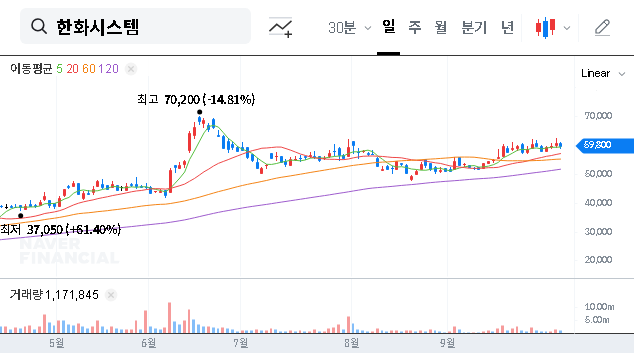
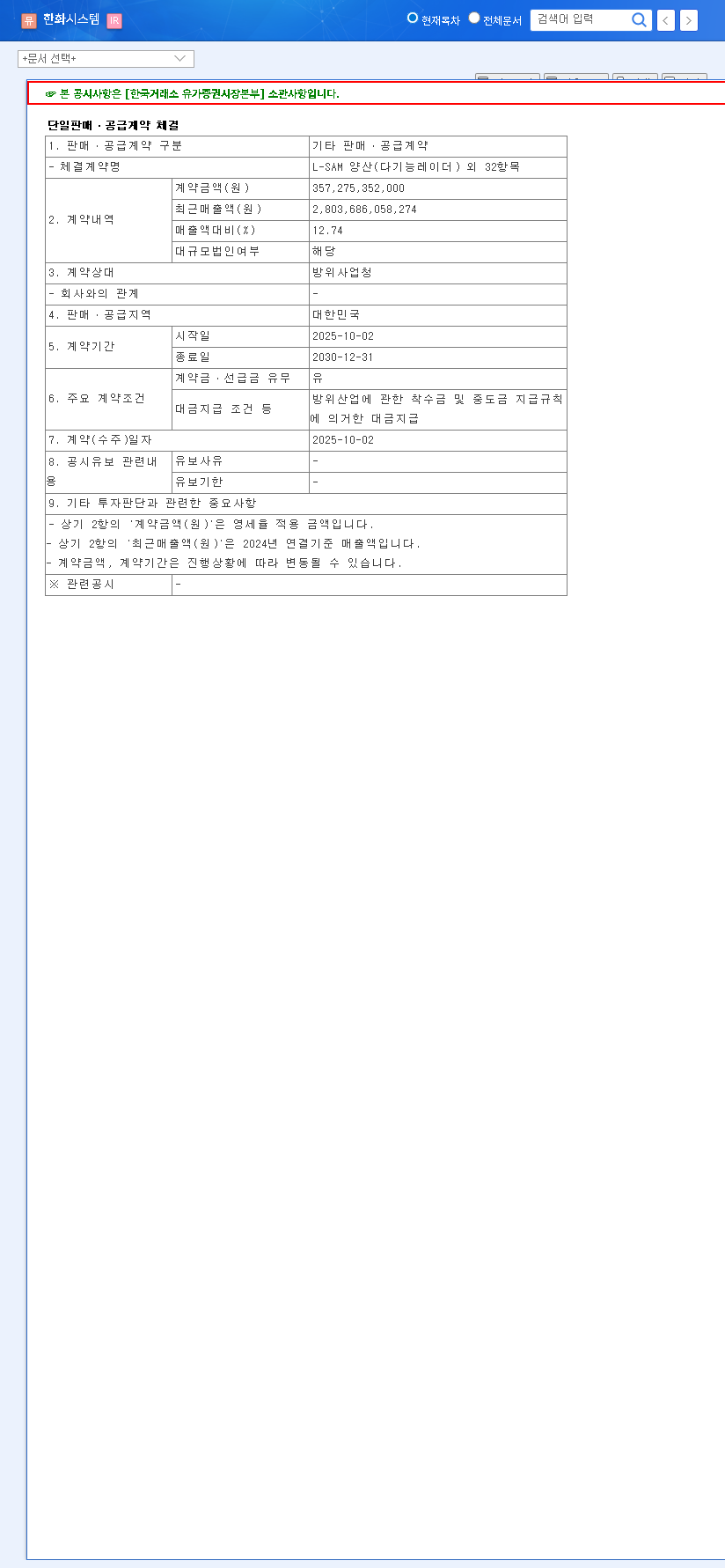
    On October 2, 2025, Hanwha Systems Co., Ltd. made a significant announcement that reverberated through the defense industry, securing a landmark ₩357.3 billion (approx. $263 million USD) Hanwha Systems L-SAM contract for mass production of its advanced multi-function radar. This agreement with South Korea’s Defense Acquisition Program Administration (DAPA) is not just another line item; it’s a strategic move that accounts for 12.74% of the company’s annual revenue and sets a course for stable growth over the next five years. While this solidifies Hanwha’s dominance in high-tech defense systems, it also raises critical questions. Can the success in the defense sector offset persistent underperformance elsewhere? We provide a comprehensive analysis of the deal’s implications, hidden risks, and what investors need to know.

    Breaking Down the ₩357.3 Billion DAPA Contract

    The core of this development is the ‘L-SAM Mass Production (Multi-function Radar)’ project. The contract, formally valued at ₩357.3 billion, spans a period of 5 years and 3 months, from October 2, 2025, to December 31, 2030. This long-term commitment provides a predictable and substantial revenue stream, a crucial factor for stability in the often-volatile defense market. The full details were made public in an Official Disclosure filed with DART, confirming the project’s scope and timeline.

    L-SAM (Long-range Surface-to-Air Missile) is a high-altitude interceptor system, representing the upper tier of the South Korea missile defense shield, often referred to as KAMD (Korean Air and Missile Defense). The multi-function radar, which is the subject of this contract, serves as the system’s “eyes,” capable of detecting, tracking, and targeting multiple ballistic missile threats simultaneously at extended ranges. Securing this mass production contract confirms Hanwha Systems’ unparalleled technological expertise in advanced radar systems.

    This contract is a powerful validation of Hanwha’s technological leadership and a cornerstone for its future growth in the global defense market. It provides long-term revenue stability while showcasing its most advanced capabilities.

    Why the Hanwha Systems L-SAM Contract is Crucial

    The importance of this deal extends far beyond its monetary value. It has profound implications for Hanwha Systems’ strategic positioning and technological validation on both domestic and international stages. The growing geopolitical tensions in the region underscore the critical need for robust missile defense capabilities, a reality that governments worldwide are acknowledging, as noted by security analysts at the International Institute for Strategic Studies.

    Key Positive Impacts for Hanwha Systems Defense

    • Cementing Market Leadership: Following major successes with the KF-21 AESA radar and exports of the M-SAM system, this L-SAM multi-function radar contract solidifies Hanwha’s status as a premier defense technology provider.
    • Ensuring Financial Stability: A five-year contract guarantees a stable revenue base, insulating the defense division from short-term market fluctuations and providing a strong foundation for future R&D investments.
    • Validating Future-Proof Technology: L-SAM is a highly complex, high-value system. Successfully moving to mass production validates Hanwha’s technological prowess, creating a strong potential for future upgrades and lucrative export opportunities to allied nations.

    A Balanced View: The Shadows of ICT Underperformance

    While the L-SAM contract paints a rosy picture for the defense division, a holistic view of Hanwha Systems requires acknowledging significant challenges in other business segments. These headwinds could potentially offset the gains from the defense sector and must be monitored closely.

    Identified Risks and Challenges

    • Struggles in the ICT Division: In the first half of 2025, the ICT division reported a 17.7% drop in revenue and a steep 37.4% decline in operating profit. This is attributed to fierce competition in core markets and the heavy costs associated with investing in new business ventures that have yet to yield returns.
    • Losses in Other Segments: The “Other” business division has seen its losses widen, largely due to the underperformance of its subsidiary, Hanwha Philly Shipyard Inc. The central question for overall profitability is whether the defense division’s growth can fully compensate for these persistent losses.
    • Macroeconomic Volatility: A long-term, multi-billion Won contract is inherently exposed to currency fluctuations. Shifts in the KRW/USD and KRW/EUR exchange rates could impact the cost of imported components and overall project profitability. Effective hedging strategies are paramount.

    Investor Action Plan: A Comprehensive Outlook

    The successful acquisition of the Hanwha Systems L-SAM contract is an undeniably positive catalyst. However, prudent investors should adopt a balanced and comprehensive perspective. Relying solely on one division’s success can be risky. For a deeper understanding of the market, consider our analysis of South Korea’s Defense Industry Outlook.

    Key Monitoring Points for Investors

    • Defense Sector Momentum: Look for continued order flow beyond L-SAM. Progress on existing projects and new export wins will be key indicators of sustained growth.
    • ICT Division Turnaround: Closely watch for signs of a turnaround in the ICT segment. Are new investments beginning to pay off? Is the company regaining market share? Tangible results here are essential for overall corporate value.
    • Financial Health and Risk Management: Monitor the company’s financial statements for improvements in profitability across all segments and assess its strategies for managing currency and supply chain risks.

    In conclusion, Hanwha Systems has secured a powerful growth engine with the L-SAM contract. True, resilient corporate value, however, will be unlocked when this defense-sector strength is complemented by balanced performance across its entire business portfolio. Investors should base decisions on a holistic evaluation of the company’s long-term strategy rather than on a single, albeit significant, event.

    (272210) Hanwha Systems L-SAM Contract: A ₩357.3B Deep Dive for Investors 관련 이미지
  • (310210) Boronoi Exchangeable Bond: A ₩36B Growth Catalyst or Risk? (In-Depth Analysis)

    (310210) Boronoi Exchangeable Bond: A ₩36B Growth Catalyst or Risk? (In-Depth Analysis)

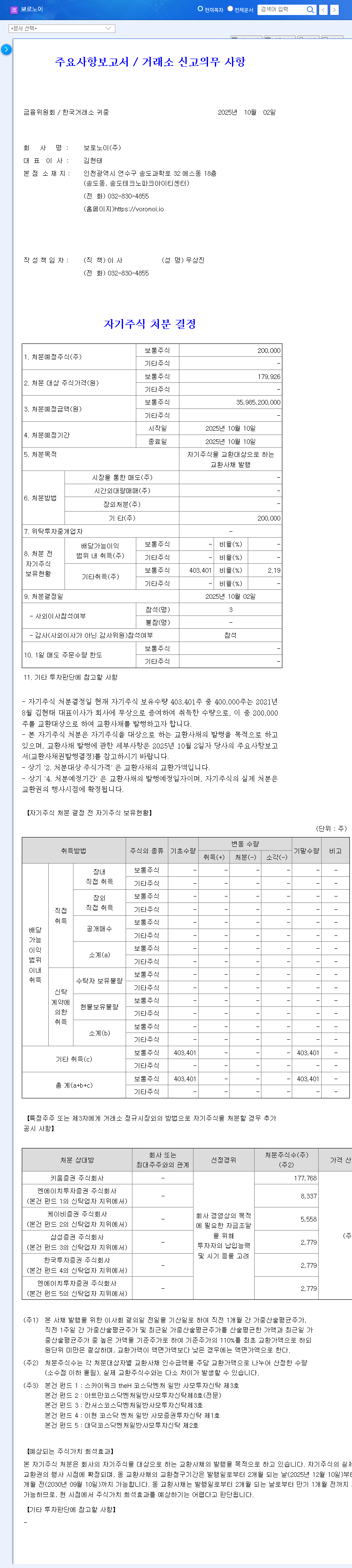
    Boronoi’s recent announcement of a ₩36 billion Boronoi exchangeable bond has sent ripples through the investment community. As a pioneering company leveraging an AI-powered drug discovery platform, this strategic financial maneuver is pivotal. For investors, it raises a critical question: Is this EB issuance a powerful catalyst for accelerated growth, or does it introduce significant risks, such as stock price volatility and share dilution?

    This comprehensive analysis will dissect the details of the Boronoi EB issuance, evaluate the company’s fundamental strengths and weaknesses, and provide a clear framework for making an informed investment decision. We’ll explore the opportunities this funding unlocks and the potential challenges that lie ahead.

    The ₩36 Billion Announcement: What Exactly Happened?

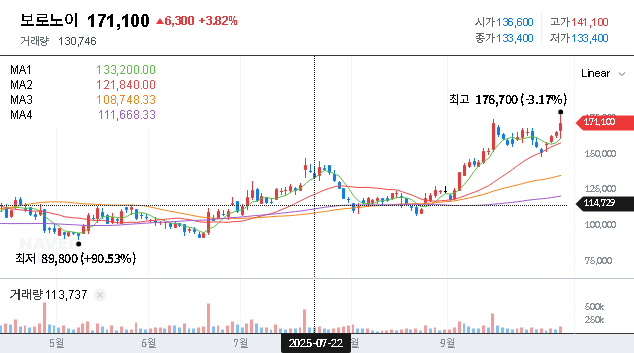
    On October 2, 2025, Boronoi officially confirmed its decision to issue ₩36 billion in private placement Exchangeable Bonds (EB). This move targets specific institutional investors, including Skywalk theH KOSDAQ Venture and Artman KOSDAQ Venture trusts. The full details can be reviewed in the Official Disclosure (Source: DART). A key detail is the exchange price, set at ₩179,926—notably higher than the current stock price of ₩171,100 at the time of the announcement. This premium suggests a vote of confidence from both the company and the investors in the future appreciation of Boronoi’s stock value.

    Behind the Capital Raise: Company Fundamentals and Market Context

    Boronoi’s Core Competencies & Potential Risks

    Boronoi’s investment appeal is anchored in its innovative technology. Its AI-powered drug discovery platform, ‘VORONOMICS®’, significantly accelerates the identification and development of new drug candidates, a crucial edge in the hyper-competitive pharmaceutical industry. This platform has yielded a promising pipeline of targeted therapies, including:

    • VRN11: A key asset in their targeted therapy portfolio.
    • VRN07: Showing highly encouraging clinical results, with significant potential for treating challenging brain metastases.
    • VRN10: Another promising candidate bolstering the company’s long-term outlook.

    However, the company isn’t without risks. The high R&D-to-sales ratio, while common for biotech firms, represents a continuous cash burn. The recent termination of the VRN02 technology transfer agreement serves as a reminder of the inherent uncertainties in drug development. This Boronoi exchangeable bond issuance is a direct strategy to mitigate these financial pressures and fuel the progression of its core pipeline.

    The core dilemma for investors is balancing the immense potential unlocked by this funding against the future risks of share dilution and market volatility. This Boronoi exchangeable bond is a pivotal moment for the company’s trajectory.

    Analyzing the Impact of the Boronoi Exchangeable Bond

    This financial instrument carries a dual nature, presenting both clear advantages and potential drawbacks for the company and its shareholders.

    The Upside: Fueling Future Growth

    • Capital for R&D: The ₩36 billion infusion provides a crucial runway to advance clinical trials and expand pipeline development, strengthening long-term growth prospects.
    • Enhanced Financial Stability: Securing capital through a private placement bolsters the balance sheet and reduces immediate fundraising pressures.
    • Investor Confidence Signal: The above-market exchange price signals that sophisticated investors see significant upside in Boronoi’s future stock performance.

    The Downside: Potential Headwinds

    • Stock Overhang and Volatility: The potential for these bonds to convert into stock can create an ‘overhang,’ where the market anticipates future supply, potentially capping upward price movement or increasing volatility.
    • Dilution of Shareholder Value: If and when the bonds are exchanged, the total number of outstanding shares increases. This dilutes the ownership stake and earnings per share (EPS) for existing shareholders.
    • Pressure to Perform: This capital raise heightens market expectations. A failure to deliver on clinical milestones or business objectives could lead to significant investor disappointment and sell-offs.

    Investor Playbook: Navigating Your Boronoi Investment

    A prudent Boronoi investment analysis requires a forward-looking, milestone-driven approach. The EB issuance is a positive strategic step, but investors must remain vigilant. Consider the following actions:

    • Track Clinical Progress: Closely monitor press releases and clinical trial updates for the key pipelines (VRN11, VRN07, VRN10). Positive data is the single most important catalyst for the stock.
    • Analyze Dilution Impact: Understand the conversion terms of the Boronoi exchangeable bond to model the potential impact on share count if the stock price rises above the exchange price. This is a key skill detailed in guides on how to analyze biotech stocks.
    • Monitor Macro-Economic Factors: Keep an eye on broad market trends. Factors like rising interest rates, as reported by high-authority sources like Bloomberg, can impact funding costs and investor sentiment towards growth-stage biotech companies.

    In conclusion, Boronoi’s ₩36 billion EB issuance is a calculated move to secure its future and accelerate its high-potential pipeline. For investors, it reinforces the high-risk, high-reward nature of the biotech sector. Success hinges on the company’s ability to translate this capital into tangible scientific and clinical achievements.

    (310210) Boronoi Exchangeable Bond: A ₩36B Growth Catalyst or Risk? (In-Depth Analysis) 관련 이미지
  • (071970) HD Hyundai Marine Engine Stock: Why NPS’s 8.26% Stake Is a Major Bull Signal

    (071970) HD Hyundai Marine Engine Stock: Why NPS’s 8.26% Stake Is a Major Bull Signal

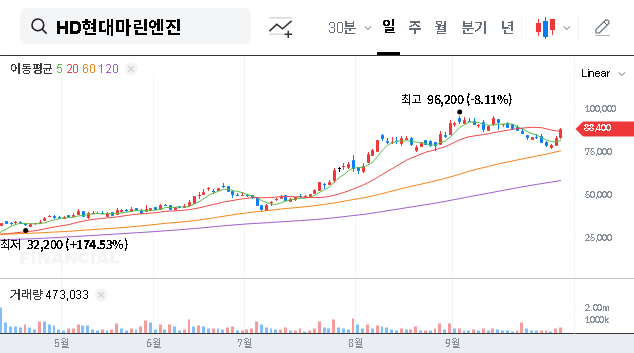
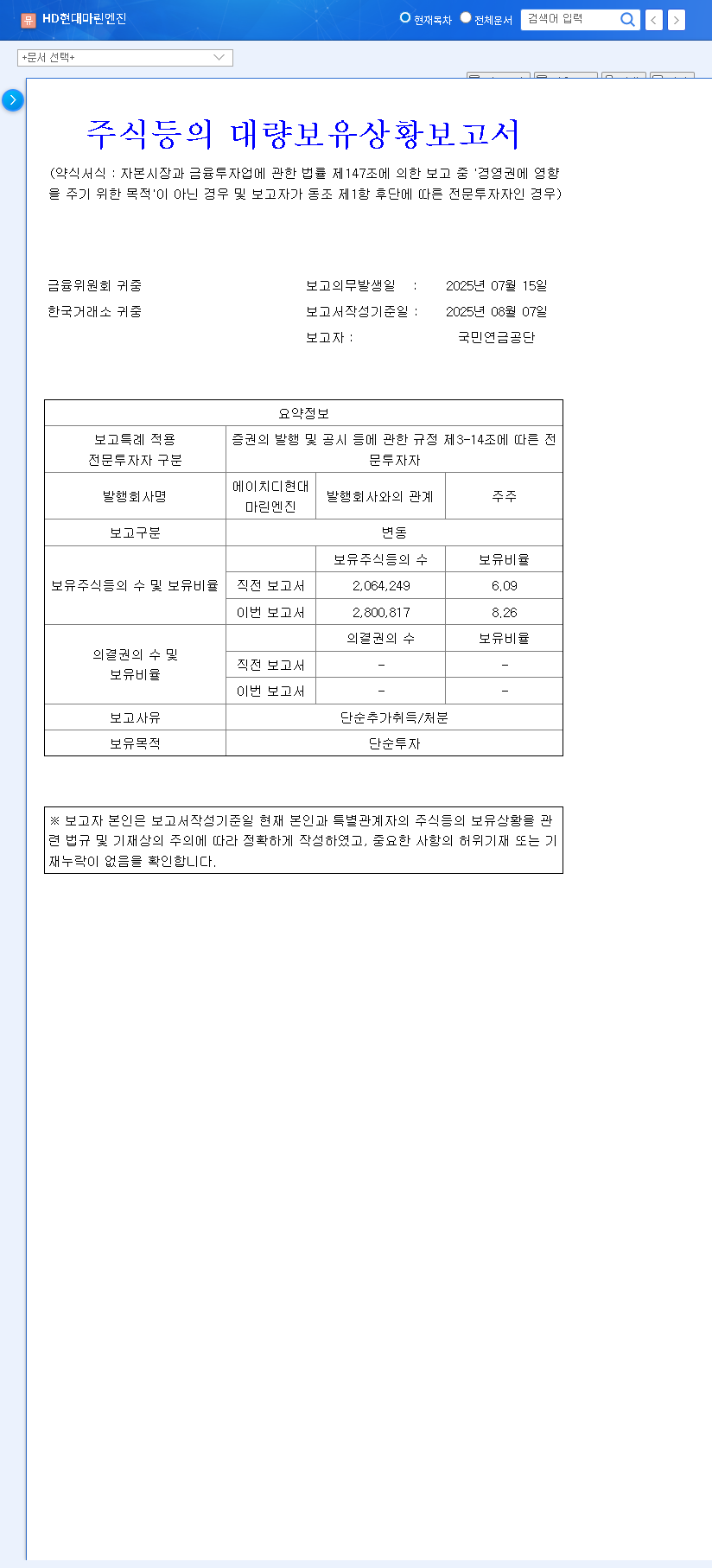
    In a significant market development, HD Hyundai Marine Engine has captured the spotlight as Korea’s largest institutional investor, the National Pension Service (NPS), substantially increased its ownership stake. This move, escalating from 6.09% to 8.26%, is more than a simple transaction; it’s a powerful vote of confidence in the company’s trajectory and a critical signal for current and potential investors. But what does this major NPS investment truly signify for the future of HD Hyundai Marine Engine’s stock and its underlying corporate value?

    This comprehensive analysis unpacks the implications of this event, delving into the company’s robust fundamentals, the favorable macroeconomic environment, and the potential risks on the horizon. We will provide an expert perspective on how investors can strategically navigate these changes and what to watch for in the coming quarters.

    The Event: NPS Deepens Its Commitment to HD Hyundai Marine Engine

    The National Pension Service of Korea officially disclosed its increased shareholding in HD Hyundai Marine Engine Co., Ltd., bringing its total stake to 8.26%. This information was confirmed via an Official Disclosure on the DART system. While the stated purpose is ‘simple investment,’ the market interprets this as a profound endorsement. When a sophisticated, long-term investor like the NPS significantly raises its position, it signals a strong belief in the company’s sustainable growth and long-term value proposition.

    This isn’t just a portfolio adjustment; it’s a strategic affirmation. The NPS’s move enhances credibility and can act as a powerful catalyst for re-evaluating the HD Hyundai Marine Engine stock, potentially igniting positive momentum.

    Analyzing the Bull Case: Solid Fundamentals & Market Tailwinds

    The NPS’s confidence is not unfounded. It’s built on a foundation of solid financial performance, strategic market positioning, and a favorable industry outlook. Let’s explore the core strengths driving this optimism.

    Exceptional Business Performance & Financial Health

    Based on the H1 2025 report, HD Hyundai Marine Engine is firing on all cylinders. The company’s financials paint a picture of impressive growth and stability:

    • Revenue Growth: A remarkable 24.44% year-on-year increase in revenue, primarily driven by a 24% surge in its core marine engine business, which accounts for over 80% of total sales.
    • Profitability Surge: Operating profit skyrocketed by an astonishing 81.84%, demonstrating significant gains in operational efficiency and margin improvement.
    • Fortress Balance Sheet: The company proudly maintains a ‘debt-free management’ status, evidenced by a negative net debt-to-equity ratio. With over KRW 130 billion in cash reserves, its financial soundness is impeccable, providing resilience and flexibility.

    Strategic Alignment with Global Decarbonization Trends

    A key driver of growth is the global shipping industry’s shift towards sustainability. Stricter regulations from the International Maritime Organization (IMO) are compelling fleet owners to invest in eco-friendly, dual-fuel engines that can run on cleaner alternatives like LNG, methanol, and ammonia. HD Hyundai Marine Engine is a leader in this high-demand sector, perfectly positioned to capitalize on the multi-decade fleet renewal cycle. This trend is not a fleeting one; it’s a structural shift that provides a long-term revenue pipeline for the company. To learn more, read our analysis of the eco-friendly shipbuilding market.

    Navigating Potential Risks & Challenges

    Despite the overwhelmingly positive outlook, prudent investors must remain aware of potential headwinds. Acknowledging these risks is key to making a well-rounded investment decision regarding HD Hyundai Marine Engine.

    • Foreign Exchange Volatility: With a significant portion of its assets denominated in USD, the company’s pre-tax profit is exposed to currency fluctuations. Robust hedging strategies are crucial to mitigate this financial risk.
    • Operational Efficiency: The low utilization rates in the turbocharger 2ST (48.00%) and 4ST (10.67%) divisions represent an area for improvement. Boosting efficiency in this segment could unlock further profitability.
    • Competitive Landscape: The marine engine market is intensely competitive and subject to rapid technological shifts. Sustained investment in R&D is non-negotiable to maintain a leading edge.

    Investor Action Plan & Final Takeaway

    The combination of strong institutional investor confidence, stellar financial health, and powerful market tailwinds makes a compelling case for a mid-to-long-term investment in HD Hyundai Marine Engine. The NPS’s increased stake serves as a powerful validation of the company’s strategy and future prospects.

    Investors should consider the robust fundamentals as a strong foundation but must continue to monitor the identified risks. Watching for improvements in turbocharger utilization and tracking the company’s FX management strategies will be key to ensuring the investment thesis remains intact. As the world’s shipping fleet continues its green transition, HD Hyundai Marine Engine is well-captained to navigate the seas of opportunity ahead.

    (071970) HD Hyundai Marine Engine Stock: Why NPS's 8.26% Stake Is a Major Bull Signal 관련 이미지
  • (023160) NPS Taekwang Stake: A 5% Game-Changer? Full Investment Analysis

    (023160) NPS Taekwang Stake: A 5% Game-Changer? Full Investment Analysis

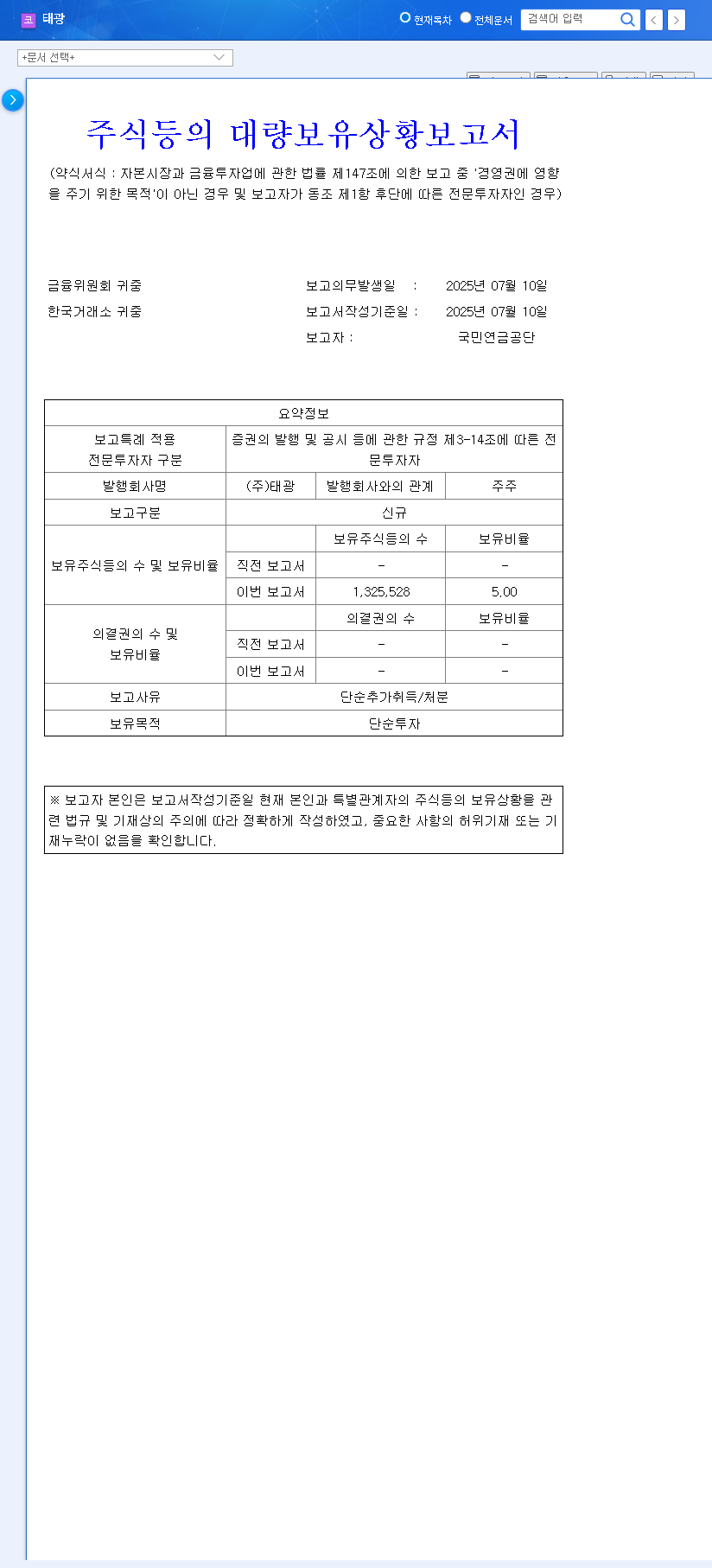
    In a significant market development, the National Pension Service (NPS) of South Korea has officially disclosed a 5.00% stake in Taekwang, a specialized plant equipment manufacturer. This move, executed for ‘simple investment’ purposes, has sent ripples through the financial community. For investors, the critical question is clear: Is the acquisition of the NPS Taekwang stake a powerful endorsement of the company’s future, or simply a routine portfolio diversification? This comprehensive Taekwang investment analysis will dissect the disclosure, evaluate the company’s fundamentals, and outline a strategic path forward for potential and current shareholders.

    The Official Disclosure: NPS Acquires 5% Stake in Taekwang

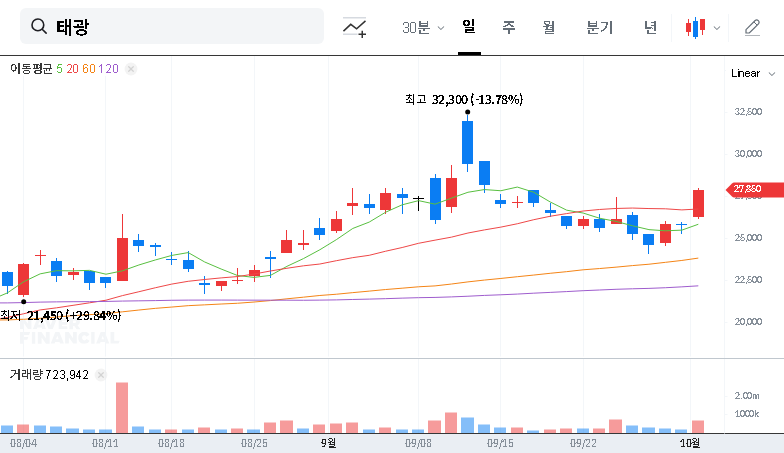
    On October 1, 2025, the National Pension Service formally announced its 5.00% ownership in Taekwang via a ‘Report on the Status of Large-Volume Holdings of Shares.’ This was filed as a ‘simple investment,’ which typically indicates the investor does not intend to influence company management directly. The news is particularly noteworthy given Taekwang’s market capitalization of 738 billion KRW at the time. The investment by the nation’s largest and most influential institutional investor is a powerful signal that warrants close examination. The full details can be reviewed in the Official Disclosure (DART Source).

    When an institution like the NPS makes a move, the market listens. Their acquisition is often seen as a seal of approval, signaling deep research and confidence in a company’s long-term value proposition.

    Analyzing the Impact of the NPS Taekwang Stake

    The involvement of the National Pension Service is more than just a large transaction; it’s a statement of institutional confidence. This can trigger what is known as the ‘NPS effect,’ where retail and other institutional investors follow suit, creating positive stock price momentum. Such an endorsement suggests that Taekwang’s projected financial improvements and strategic direction have passed the rigorous due diligence of a major market player. For more context on how markets react to such news, investors often consult analysis from high-authority sources like Bloomberg.

    Positive Catalyst: Strong Financial Projections for 2025

    A core reason for the NPS’s interest likely lies in Taekwang’s promising financial turnaround. Projections for 2025 paint a picture of robust recovery and growth, marking a significant shift from previous years.

    • Profitability Turnaround: Operating profit is projected to reach 23.7 billion KRW, a dramatic recovery from a loss of -9.9 billion KRW in 2022. The operating profit margin is expected to hit a healthy 10.11%.
    • Revenue Growth: Revenue is forecast to climb to 233.9 billion KRW, demonstrating steady top-line expansion.
    • Shareholder Value: Earnings Per Share (EPS) are anticipated to surge to 2,268 KRW, with a corresponding Return on Equity (ROE) of 8.49%.
    • Financial Stability: The company is expected to maintain a stable debt-to-equity ratio of just 25.82%, indicating a solid balance sheet.

    Key Concerns and Potential Risks

    Despite the positive outlook, a thorough Taekwang investment analysis must consider the challenges. The underperformance of key subsidiaries, particularly HYTC Co., Ltd. in the secondary battery equipment sector, is a significant drag. Despite a booming market, HYTC has seen its revenue and profits decline due to fierce competition and investment volatility from clients. Furthermore, the company’s negligible R&D spending over the past five years raises serious questions about its ability to innovate and secure long-term competitive advantages. Macroeconomic factors like interest rate fluctuations also remain a persistent threat.

    Actionable Investment Strategy for Taekwang Stock

    Given the mix of strong tailwinds and notable headwinds, investors should adopt a multi-faceted strategy. Understanding the nuances of large-scale purchases is key; for more on this, review our guide to interpreting institutional stock purchases.

    Short-Term (3-6 Months)

    In the short term, the NPS Taekwang stake is likely to provide positive momentum. Investors should monitor trading volumes and track whether other institutional investors begin to build positions. Any positive announcements in the next quarterly report could act as a further catalyst.

    Mid-to-Long-Term (1-3 Years)

    Long-term success hinges on Taekwang addressing its core weaknesses. Key areas to monitor include:

    • Subsidiary Turnaround: Watch for strategic shifts or performance improvements at HYTC Co., Ltd.
    • R&D Investment: Look for concrete plans and capital allocation towards research and development in corporate filings.
    • Profit Margin Sustainability: Verify if the company can sustain and grow its projected 10.11% operating margin in subsequent quarters.

    In conclusion, the National Pension Service’s investment is a significant vote of confidence in Taekwang’s recovery story. However, for this to translate into sustainable, long-term shareholder value, the company must resolve its subsidiary issues and commit to innovation. Cautious optimism, backed by diligent monitoring of fundamentals, is the recommended approach.

    (023160) NPS Taekwang Stake: A 5% Game-Changer? Full Investment Analysis 관련 이미지
  • FnGuide Stock Forecast: Is Box Holdings LP’s Increased Stake a Buying Opportunity?

    FnGuide Stock Forecast: Is Box Holdings LP's Increased Stake a Buying Opportunity? 대표 차트 이미지

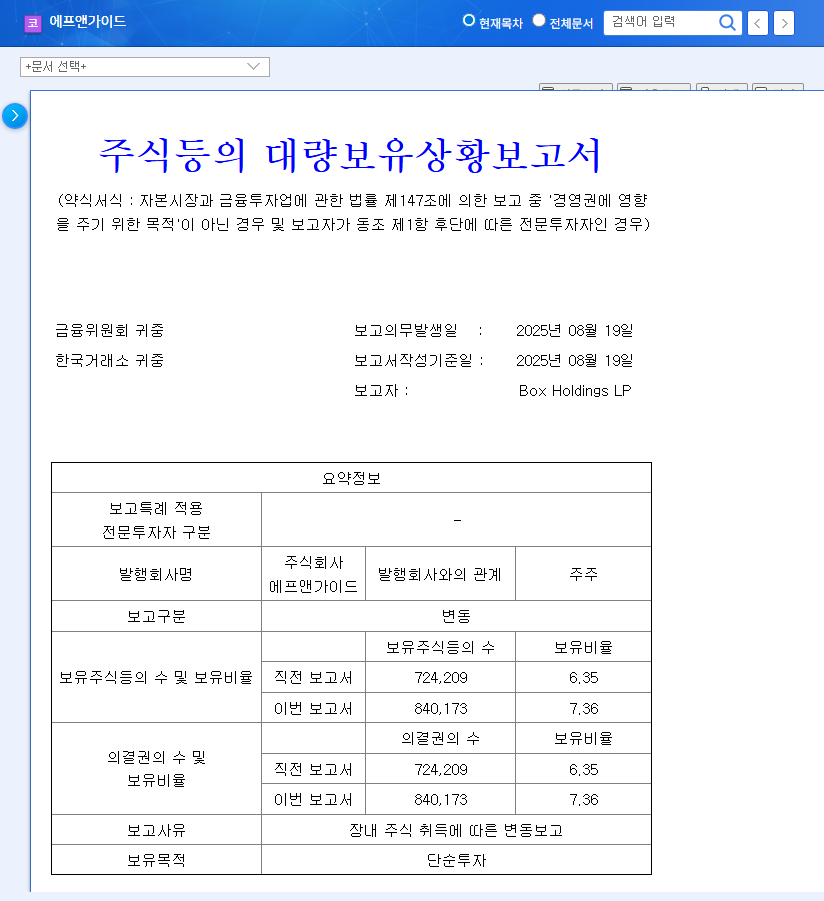
    1. Box Holdings LP Acquires 7.36% Stake in FnGuide

    Box Holdings LP has increased its stake in FnGuide from 6.35% to 7.36% through open market purchases between July 31st and August 19th, 2025. The stated purpose of this acquisition is ‘simple investment.’

    2. Why Does This Stake Increase Matter?

    A significant stake increase by a major shareholder often attracts market attention and can influence investor sentiment. The consistent buying activity can be interpreted as a positive signal, potentially leading to short-term stock price appreciation and increased trading volume. It can also enhance the company’s credibility with external investors, attracting further investment.

    3. How Strong Are FnGuide’s Fundamentals?

    FnGuide has demonstrated consistent revenue growth and maintains stable performance across its diverse business segments, including financial information services, index business, and solutions. The company is also actively pursuing new growth engines, such as the launch of FnMezzanine and the provision of its own overseas/bond indices. However, the decline in net income in 2024 warrants attention.

    4. Action Plan for Investors

    • Continuous Monitoring: Investors should closely monitor Box Holdings LP’s future stake changes and any related disclosures.
    • Fundamental Analysis: It’s crucial to thoroughly analyze FnGuide’s business competitiveness and fundamentals, rather than being swayed by short-term stock price fluctuations.
    • Risk Management: Investors should be prepared for potential risks, such as a change in Box Holdings LP’s investment objectives.

    Frequently Asked Questions

    Will Box Holdings LP’s increased stake positively affect FnGuide’s stock price?

    In the short term, it is likely to have a positive impact. However, the long-term effect will depend on Box Holdings LP’s investment strategy and future actions.

    What is FnGuide’s investment strategy?

    FnGuide aims for stable growth across its diverse business segments, including financial information services, index business, and solutions. The company is also focused on securing new growth engines, such as launching FnMezzanine and providing its own overseas/bond indices.

    What should investors be aware of?

    Investors should consider various factors, including future stake changes by Box Holdings LP, FnGuide’s earnings volatility, and changes in the macroeconomic environment.

    FnGuide Stock Forecast: Is Box Holdings LP's Increased Stake a Buying Opportunity? 관련 이미지
    FnGuide Stock Forecast: Is Box Holdings LP's Increased Stake a Buying Opportunity? 관련 이미지
  • Dong-A Socio Holdings’ 700 Won Cash Dividend: Analyzing Investment Appeal Amidst Performance Slump

    Dong-A Socio Holdings Declares 700 KRW Cash Dividend: What Investors Should Focus On

    Dong-A Socio Holdings announced on July 16, 2025, a cash dividend of 700 KRW per common share for its third-quarter business. This can be interpreted as a positive signal providing short-term returns to shareholders. However, the low dividend yield of 0.6% relative to the current stock price (551 KRW), the recently released sluggish Q1 performance, and a high debt ratio necessitate a cautious approach from investors.

    1. What Changes with the 700 KRW Cash Dividend Decision?

    Let’s review the key details of this dividend decision:

    • Dividend Amount: 700 KRW per common share
    • Dividend Yield: 0.6% based on the current stock price of 551 KRW
    • Record Date: July 31, 2025
    • Payment Date: August 14, 2025

    2. How Did Dong-A Socio Holdings Perform in Q1 2025?

    Dong-A Socio Holdings’ Q1 2025 financial performance was somewhat disappointing:

    • Consolidated Basis:
      • Revenue: 328.4 billion KRW (a 7.3% increase YoY)
      • Operating Profit: 20.3 billion KRW (a 12.9% decrease YoY)
    • Separate Basis:
      • Revenue: 36 billion KRW (a 3.9% decrease YoY)
      • Operating Profit: 28 billion KRW (a 7.2% decrease YoY)

    The decrease in operating profit is attributed to a combination of factors including rising raw material and labor costs in the Over-The-Counter (OTC) drug segment, increased selling, general, and administrative (SG&A) expenses, reduced dividend income from subsidiaries, and higher amortization of intangible assets. On the other hand, the biosimilar, contract manufacturing, and logistics divisions showed robust growth.

    3. Dividend Decision: Positive vs. Negative Impacts

    The potential impacts of this dividend decision on Dong-A Socio Holdings’ stock price and investor sentiment can be analyzed as follows:

    3.1 Positive Impacts

    • Enhanced Shareholder-Friendly Image: Consistent dividends signal the company’s commitment to enhancing shareholder value and can positively influence the stock price in the long run. Especially when the stock is relatively undervalued, dividends can increase its investment appeal.
    • Potential for Short-Term Stock Price Rise: The anticipation of dividends may lead investors to buy shares, potentially driving a short-term stock price increase before the ex-dividend date.
    • Indication of Financial Stability: The ability to pay a substantial dividend suggests the company has secured a certain level of cash flow, which can boost confidence in its financial stability. (However, the high debt ratio of 91.15% must be considered.)

    3.2 Negative Impacts

    • Low Dividend Yield: A dividend yield of 0.6% may not be attractive to investors, potentially leading to capital flows towards higher-yielding stocks.
    • Loss of Reinvestment Opportunities: Funds paid out as dividends could have been reinvested to fuel corporate growth, thus incurring an opportunity cost for growth.
    • Potential for Short-Term Stock Price Decline (Ex-Dividend): The stock price may fall by the amount of the dividend on the ex-dividend date due to the ex-dividend effect.

    3.3 Neutral Impacts

    • Uncertainty in Market Reaction: The market’s reaction to the dividend announcement is unpredictable. Negative factors such as sluggish Q1 performance and a high debt ratio could offset the positive effects of the dividend.

    4. Macroeconomic and Market Conditions: Key Variables

    Macroeconomic and market conditions both domestically and internationally are crucial variables in making investment decisions for Dong-A Socio Holdings.

    • Interest Rate and Exchange Rate Fluctuations: Rising US benchmark interest rates and Treasury yields, along with increased volatility in USD/KRW and EUR/KRW exchange rates, can lead to higher funding costs and exchange rate risks.
    • Oil and Gold Prices: Fluctuations in international oil and gold prices can impact raw material costs, negatively affecting profitability.
    • Intensifying Competition in the Biosimilar Market: Increased competition in the biosimilar market adds uncertainty to Dong-A Socio Holdings’ growth prospects.

    5. Investment Strategy: How Should It Be Formulated?

    Overall, while the 700 KRW dividend provides short-term benefits, the limited investment appeal for the long term is evident given the Q1 performance slump and high debt ratio. Making investment decisions solely based on the dividend amount is risky. Therefore, a strategic approach is necessary:

    • Regular Performance Monitoring: Continuously track information regarding Dong-A Socio Holdings’ Q2 performance and future business strategies. Pay close attention to the growth trajectory of the biosimilar and logistics divisions.
    • Assess Financial Health Improvement: Closely monitor the company’s specific plans and execution for reducing its high debt ratio.
    • Watch Macroeconomic Indicators: Analyze the impact of changes in macroeconomic indicators such as interest rates, exchange rates, and oil prices on the company’s performance.
    • Analyze Long-Term Growth Strategy: Evaluate the company’s future value by understanding its long-term growth strategy and risk management plans.

    This report is based on the provided information, and investment decisions should be made cautiously and at the investor’s own risk.

    Will Dong-A Socio Holdings’ stock price rise due to this dividend decision?

    There is a possibility of a short-term stock price increase before the ex-dividend date due to buying interest from investors anticipating the dividend. However, the extent of the rise may be limited, or the price could even fall due to negative factors like sluggish Q1 performance, a high debt ratio, and overall market conditions. Therefore, cautious observation is necessary.

    Is a 0.6% dividend yield worth investing in?

    A 0.6% dividend yield may not be attractive compared to current interest rates or other high-dividend stocks. Instead of investing solely based on the dividend yield, investors should make judgments by comprehensively considering the company’s long-term growth potential, financial health, and the sustainability of its dividend policy.

    Why was Dong-A Socio Holdings’ performance poor?

    The decrease in operating profit for Q1 resulted from a combination of factors, including rising raw material and labor costs in the OTC drug segment, increased SG&A expenses, reduced dividend income from subsidiaries, and higher amortization of intangible assets. However, the biosimilar and logistics divisions showed growth.

    What is the investment outlook for Dong-A Socio Holdings?

    Currently, factors such as sluggish Q1 performance, a high debt ratio, and uncertain macroeconomic environments limit its investment appeal. It is crucial to closely monitor the performance of its biosimilar business, efforts to improve its financial structure, and the earnings trend from Q2 onwards before making investment decisions.

    What should I check for in case of a stock price decline?

    To prepare for potential stock price declines, you should continuously monitor the earnings outlook beyond Q2, the competitiveness in the biosimilar market, plans for debt ratio improvement, and overall market conditions. Understanding the company’s business model and competitive advantages is also important.