Tag: Financial Impact

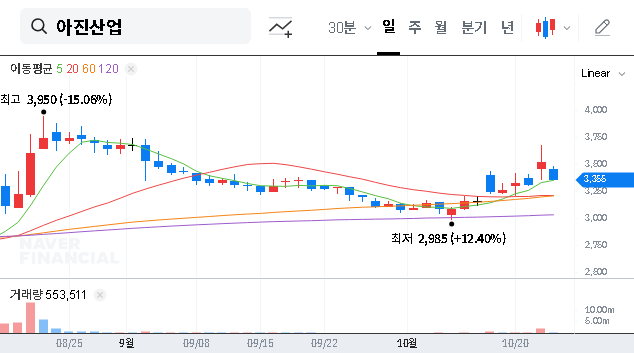
  • (013310) A-JIN INDUSTRY Acquisition: A $35.8M Deep Dive for Investors on the Joon Georgia Inc Deal

    (013310) A-JIN INDUSTRY Acquisition: A $35.8M Deep Dive for Investors on the Joon Georgia Inc Deal

    The recent A-JIN INDUSTRY acquisition of its U.S. subsidiary has sent ripples through the automotive parts sector. A-JIN INDUSTRY CO.,LTD, a prominent South Korean manufacturer, has announced a significant ₩35.8 billion (approximately $26.5 million USD) cash injection into Joon Georgia, Inc. This move is a clear signal of the company’s aggressive strategy for North American expansion. For stakeholders and potential investors, this development raises critical questions: What is the strategic rationale behind this investment? What are the financial implications, potential rewards, and inherent risks? This comprehensive investor analysis will deconstruct the deal, explore its long-term vision, and provide a clear roadmap for what to watch next.

    Breaking Down the $35.8M Deal

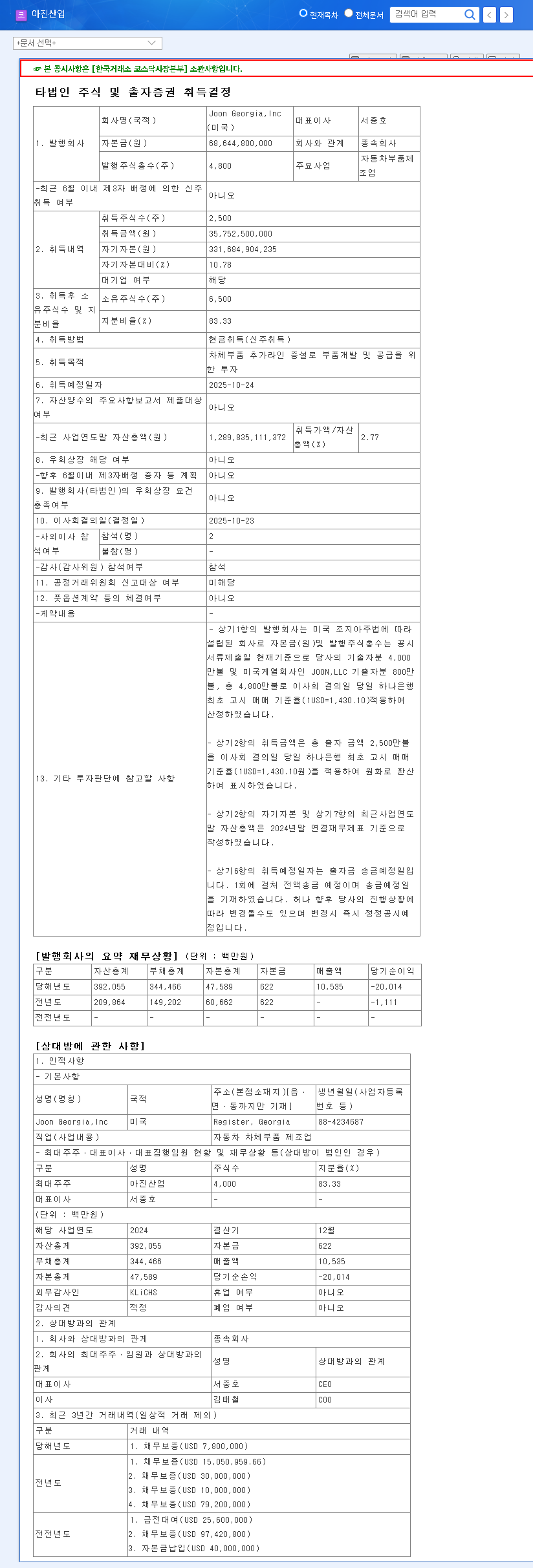
    On October 23, 2025, A-JIN INDUSTRY formalized its decision to acquire new shares in its U.S.-based subsidiary, a key player in the automotive parts manufacturing landscape. According to the Official Disclosure, this cash acquisition amounts to 10.78% of the company’s total capital. The transaction, scheduled for October 24, 2025, will increase A-JIN INDUSTRY’s ownership stake in Joon Georgia, Inc. to a commanding 83.33%. The stated purpose is explicit: to fund the expansion of body parts production lines and invest heavily in component development and supply chain fortification. This is not merely a financial transaction but a foundational pillar of the company’s future growth strategy in a pivotal market.

    This strategic move is less about short-term gains and more about establishing deep, resilient roots in the North American automotive ecosystem, positioning A-JIN to capitalize on the industry’s shift towards localized supply chains and electric vehicle components.

    The Strategic Pivot: Why North America Now?

    The timing of this A-JIN INDUSTRY acquisition is deliberate. The North American automotive market is undergoing a seismic transformation, driven by the aggressive push towards electrification and a renewed focus on supply chain resilience post-pandemic. By reinforcing its U.S. presence, A-JIN INDUSTRY aims to achieve several key objectives:

    • Enhance Customer Proximity: A stronger local base allows for faster response times, deeper collaboration with major automakers, and a more agile supply chain, reducing logistical complexities and costs.
    • Capture Market Growth: Expanding production capacity directly addresses the increasing demand for high-quality automotive body parts, including those designed for new electric vehicle platforms. This aligns with broader EV market trends.
    • Boost R&D and Innovation: The investment in parts development is crucial for staying competitive. It enables A-JIN to secure new technologies, refine manufacturing processes, and develop next-generation components that meet evolving industry standards.

    Analyzing the Financial & Business Ripple Effects

    Financial Projections and Considerations

    Financially, the ₩35.8 billion cash outflow is significant but appears manageable, representing just under 11% of the company’s capital. While it will impact short-term liquidity, it is unlikely to destabilize A-JIN’s financial foundation. The long-term upside is the key focus for investors. Success hinges on Joon Georgia, Inc.’s ability to leverage this capital into profitable growth. Positive outcomes would include a strong return on investment, increased dividend flow back to the parent company, and appreciation in the subsidiary’s equity value, ultimately bolstering A-JIN’s balance sheet.

    Strengthening Global Competitiveness

    On the business front, this investment dramatically enhances A-JIN’s global stature. Establishing a robust production and development hub in the U.S. opens doors for expanded partnerships with leading North American and international automakers. The line expansion is not just about volume; it’s an opportunity to implement cutting-edge manufacturing technologies, boosting efficiency and product quality. This move transforms A-JIN from a key supplier into a more integrated and indispensable partner in the global automotive value chain.

    Navigating Potential Headwinds: Key Risks for Investors

    No investment of this scale is without risks. A thorough investor analysis must account for potential challenges that could impede the expected returns from the A-JIN INDUSTRY acquisition.

    • Execution & Performance Risk: The success of the investment is directly tied to Joon Georgia, Inc.’s operational performance. Any failure to meet production targets or secure new contracts could delay or diminish returns.
    • Market & Competitive Pressures: The North American automotive parts market is intensely competitive. Joon Georgia must effectively compete on price, quality, and innovation to grow its market share.
    • Economic & Currency Volatility: As an international operation, earnings are subject to exchange rate fluctuations between the US Dollar and the South Korean Won, which can impact reported profits. Broader economic downturns could also dampen vehicle demand.
    • Integration Challenges: Ensuring seamless operational and cultural alignment between the South Korean parent and the U.S. subsidiary is crucial for maximizing efficiency and avoiding internal friction.

    Conclusion: A Calculated Move for Future Growth

    The A-JIN INDUSTRY acquisition of new shares in Joon Georgia, Inc. is a bold, forward-looking strategy. It is a calculated wager on the continued growth and technological evolution of the North American automotive market. While investors must remain vigilant of the associated risks, the move positions A-JIN INDUSTRY to become a more dominant and resilient global player. The key to success will be flawless execution, continuous innovation, and the ability to forge even stronger relationships with automakers in the region. Monitoring Joon Georgia’s progress in the coming quarters will be essential for gauging the long-term value of this pivotal investment. For more context, investors should stay updated on major automotive industry news and analysis to understand the broader market landscape.
    (013310) A-JIN INDUSTRY Acquisition: A $35.8M Deep Dive for Investors on the Joon Georgia Inc Deal 관련 이미지
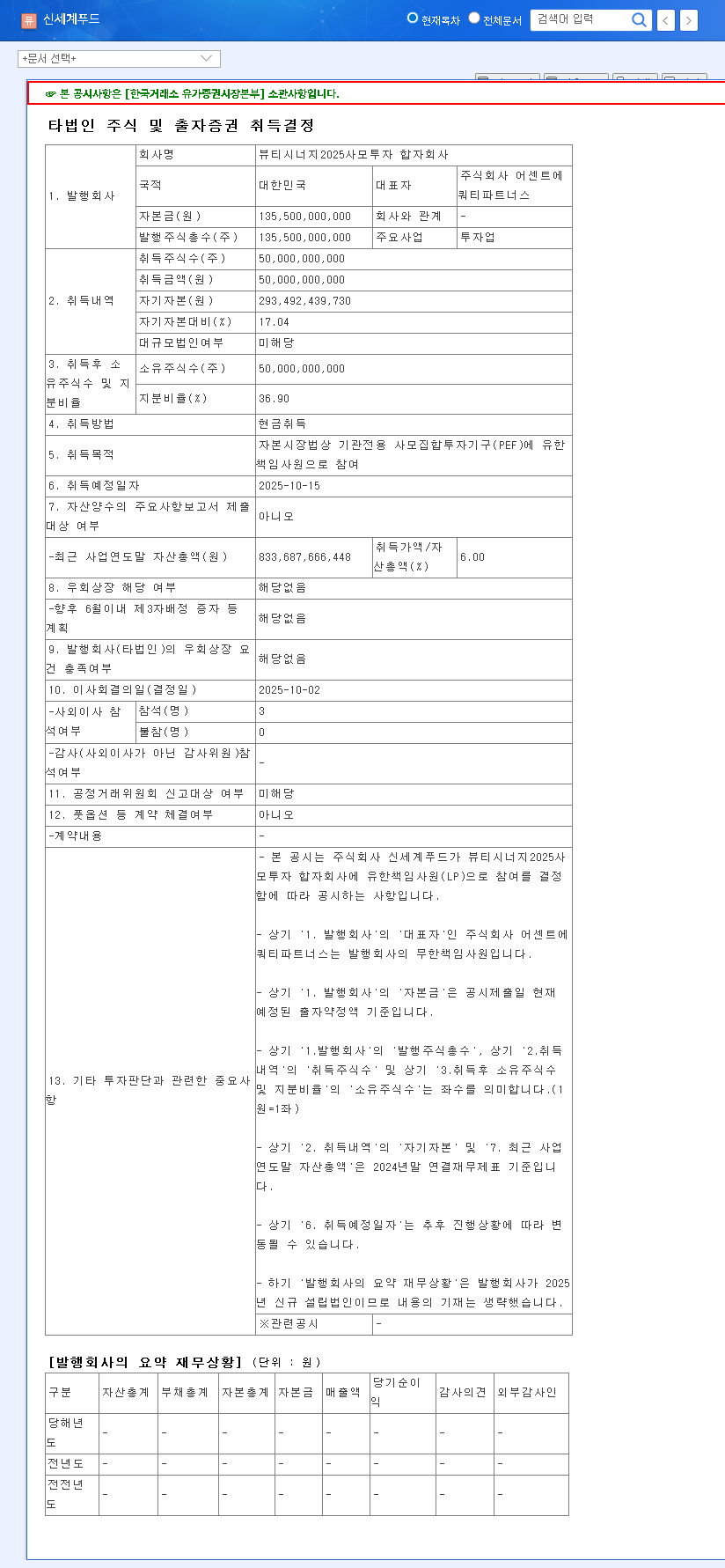
  • (031440) Shinsegae Food PEF Investment: A Deep Dive into the ₩50B ‘Beauty Synergy’ Strategy

    (031440) Shinsegae Food PEF Investment: A Deep Dive into the ₩50B ‘Beauty Synergy’ Strategy

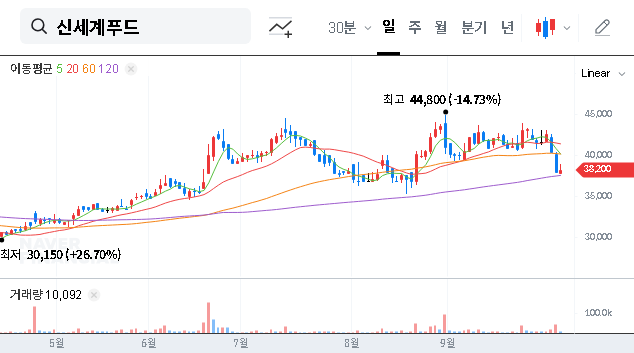
    Shinsegae Food (031440) has made a decisive move that has the market buzzing: a landmark Shinsegae Food PEF investment of ₩50 billion. This significant capital injection into the ‘Beauty Synergy 2025 Private Equity Partnership’ represents over 17% of the company’s equity, sparking a critical debate among investors. Is this a calculated masterstroke to unlock new avenues for growth, or a high-stakes gamble with uncertain returns? This deep-dive analysis unpacks the strategic rationale, financial implications, and potential risks associated with this pivotal investment, providing you with the insights needed to evaluate Shinsegae Food’s future trajectory.

    The ₩50 Billion Deal: What We Know

    Investment Details and Structure

    On October 2, 2025, Shinsegae Food formally announced its commitment to invest ₩50 billion into the ‘Beauty Synergy 2025 Private Equity Partnership.’ This transaction positions Shinsegae Food as a key Limited Partner (LP) with a substantial 36.90% stake in the fund. The official disclosure, filed with the regulatory authorities (Source), confirms this is a structured investment in an institutional private equity fund under the Capital Markets Act. As an LP, Shinsegae Food provides capital but entrusts the active investment management to the fund’s General Partner (GP), indicating a strategy focused on financial returns and strategic exposure rather than direct operational control.

    This investment is not just a financial transaction; it’s a strategic signal. Shinsegae Food is looking beyond its traditional food business, aiming to capture value in adjacent, high-growth industries through this PEF investment vehicle.

    Decoding the Strategic Rationale

    Pursuing New Growth Engines in a Stagnant Market

    The core motivation behind the Shinsegae Food PEF investment is the pressing need to secure new growth engines and diversify its business portfolio. The company’s H1 2025 financial report paints a picture of a mature business, with flat revenue in its core Sourcing & Distribution segment and declining sales in Manufacturing & Service. While the freight brokerage business shows promise, it’s not enough to drive significant corporate growth. This investment is a clear attempt to break out of this slow-growth cycle by tapping into the dynamic world of private equity, which offers access to innovative, unlisted companies and M&A opportunities that would otherwise be out of reach.

    What’s in a Name? The ‘Beauty Synergy’ Clue

    The fund’s name, ‘Beauty Synergy 2025,’ is highly suggestive. It strongly implies that the investment targets will be within the beauty, wellness, or health sectors. This opens up exciting possibilities for synergy with Shinsegae Food’s core competencies. The global trend towards “nutricosmetics” or “beauty foods”—products that offer beauty benefits from within—is a multi-billion dollar market. Shinsegae could leverage the PEF’s investments to:

    • Develop new health-functional food products.
    • Gain insights into consumer trends in the wellness space.
    • Potentially acquire innovative beauty or wellness brands discovered by the fund.

    Financial Impact and Risk Assessment

    A Significant Cash Outlay

    The ₩50 billion investment is a major financial commitment. It represents nearly all of the company’s H1 2025 cash and cash equivalents of ₩49.2 billion. This will undoubtedly place short-term pressure on the company’s liquidity. However, the balance sheet has shown recent strength, with a debt-to-equity ratio that improved to 145.10%. This suggests that while the cash position will be tight, the company is not over-leveraging itself to make the deal, mitigating the risk of a severe financial crisis. For more on how companies manage such investments, you can review guides on corporate capital allocation strategies.

    The High-Risk, High-Reward Nature of PEF Investments

    Private equity offers the potential for outsized returns but comes with significant risks. As a Limited Partner, Shinsegae Food’s success is tied to the expertise of the fund manager and the performance of the underlying portfolio companies. Key risks include:

    • Performance Uncertainty: There is no guarantee of returns, and the initial capital could be lost.
    • Illiquidity: PEF investments are typically locked up for several years, meaning the ₩50 billion is not accessible.
    • Information Asymmetry: Shinsegae Food may have limited visibility into the day-to-day operations of the portfolio companies.

    Furthermore, macroeconomic factors like interest rate changes and raw material costs, as tracked by sources like Bloomberg Markets, will influence the profitability of the companies the fund invests in, adding another layer of external risk.

    Investor Action Plan: Key Monitoring Points

    For current and potential investors, this Shinsegae Food growth strategy requires careful observation. While it presents a compelling long-term vision, its success is not guaranteed. Focus on the following key areas:

    • PEF Portfolio Disclosure: Watch for any announcements regarding the specific companies ‘Beauty Synergy 2025’ invests in. This will be the first concrete evidence of the fund’s direction.
    • Quarterly Financial Impact: Monitor Shinsegae Food’s financial statements for any reported gains or losses from the investment. This will indicate the fund’s performance.
    • Synergy Execution: Look for new product launches, partnerships, or business initiatives from Shinsegae Food that are explicitly linked to the PEF’s activities. This will be the true test of the ‘synergy’ aspect.

    Frequently Asked Questions (FAQ)

    Q1: What is the primary goal of Shinsegae Food’s PEF investment?

    The main objective is to secure new growth engines and expand its business portfolio. It is a strategic effort to find high-return opportunities outside its traditional food business to enhance long-term corporate value.

    Q2: How does this ₩50 billion investment impact Shinsegae Food’s finances?

    The large investment will cause a short-term cash outflow and pressure liquidity. However, the company’s recently improved debt-to-equity ratio suggests that a severe deterioration of its financial structure is unlikely.

    Q3: What kind of companies will ‘Beauty Synergy 2025’ invest in?

    While the specific portfolio is not yet public, the name strongly suggests a focus on the beauty industry and related wellness sectors. Shinsegae Food is participating as a Limited Partner, not a direct operator.

    Q4: What should investors watch most closely regarding this deal?

    Investors should monitor the specific investment targets of the PEF, its impact on Shinsegae Food’s financial statements, and any tangible business synergies that emerge between the fund’s portfolio and Shinsegae’s core operations.

    (031440) Shinsegae Food PEF Investment: A Deep Dive into the ₩50B 'Beauty Synergy' Strategy 관련 이미지