Tag: Financial Distress

  • (175250) Icure Pharmaceutical Improvement Period: A Deep Dive into Delisting Risk & Investor Strategy

    (175250) Icure Pharmaceutical Improvement Period: A Deep Dive into Delisting Risk & Investor Strategy

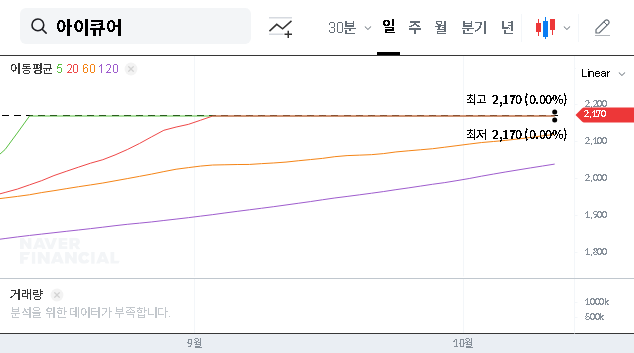
    The future of Icure Pharmaceutical Incorporation hangs in the balance following a critical decision by the Corporate Review Committee. On November 12, 2025, the company announced it had been granted an 8-month Icure Pharmaceutical improvement period, a formal warning that places its continued stock market listing in serious jeopardy. This development signals profound operational and financial distress, forcing investors to confront the very real possibility of a delisting event.

    This in-depth analysis unpacks the severe challenges facing Icure Pharmaceutical, explores the stringent requirements of the improvement period, and outlines what this means for the company, its stock, and its stakeholders. For investors, this is a crucial time for diligence and understanding the high-stakes road ahead.

    Understanding the Corporate Review Committee’s Mandate

    The decision, officially announced on November 12, 2025, grants Icure until July 12, 2026, to demonstrate significant and sustainable improvements. According to the Official Disclosure (DART Report), Icure must submit a comprehensive implementation report and an expert verification within 15 days of this deadline. Following submission, the committee will make a final ruling on whether to delist the company within 20 business days. This tight timeline places immense pressure on management to execute a dramatic turnaround.

    An improvement period is not a lifeline; it is a final warning. The risk of delisting is now the primary factor that should govern any investment decision related to Icure Pharmaceutical stock.

    In-Depth Analysis: The Roots of Icure’s Crisis

    The committee’s decision was not made in a vacuum. It is the culmination of prolonged financial deterioration and a failure to achieve commercial viability despite promising technology. Here’s a closer look at the core issues.

    1. Alarming Financial Deterioration

    The company’s financial statements paint a grim picture. As of December 2024, Icure reported revenues of only KRW 33.4 billion against a staggering operating loss of KRW -59.4 billion. This massive deficit, coupled with a net loss of KRW -55.5 billion, highlights a business model that is hemorrhaging cash. Further red flags include:

    • Capital Erosion: An extremely low equity ratio of 17.18% indicates that the company’s asset base is heavily financed by debt, and its shareholder equity has been severely depleted by persistent losses.
    • Negative Shareholder Value: The Earnings Per Share (EPS) of -1,094 KRW for 2024 confirms that the company is destroying value for its shareholders, not creating it.
    • Unsustainable Operations: Negative operating and net profit margins show that the core business is fundamentally unprofitable at its current scale and cost structure.

    2. The Promise vs. Reality of its Business

    Icure operates in the promising pharmaceutical and cosmetics sectors, built upon its proprietary Transdermal Drug Delivery System (TDDS) technology. This technology, which allows drugs to be administered through the skin via patches, has shown potential, particularly with its overseas licensing agreements for a Donepezil patch for Alzheimer’s treatment. However, the high costs of R&D, intense market competition, and regulatory hurdles have prevented this potential from translating into profitability. For more on market dynamics, expert analysis from sources like Bloomberg can provide wider industry context. The current financial crisis now overshadows any technological promise the company holds.

    What’s Next? Investor Strategy During the Improvement Period

    The Icure Pharmaceutical improvement period triggers extreme uncertainty. The stock price will likely experience severe volatility, driven by panic selling and speculative buying. For current and prospective investors, a cautious and informed approach is paramount.

    Key Actions Icure Must Take

    To survive, Icure’s management must implement a drastic and convincing turnaround plan. This will likely involve a combination of painful but necessary measures:

    • Capital Injection: Securing significant new funding through strategic investors or rights offerings is non-negotiable.
    • Aggressive Restructuring: This could include selling non-core assets, streamlining operations, and significant cost-cutting initiatives.
    • Enhanced Governance: Restoring market trust requires absolute transparency in communication and corporate governance.

    How Investors Should Respond

    Given the heightened Icure Pharmaceutical delisting risk, investors should exercise extreme caution. This situation is not suitable for those with a low risk tolerance. It is essential to monitor the company’s announcements and progress against its improvement plan. For a broader perspective on managing high-risk assets, consider reading articles on diversification strategies for volatile portfolios. The feasibility and execution of the company’s turnaround plan will be the sole determinant of its future. Until a clear, credible, and funded path to profitability is demonstrated, the investment case for Icure remains exceptionally speculative and high-risk.
    (175250) Icure Pharmaceutical Improvement Period: A Deep Dive into Delisting Risk & Investor Strategy 관련 이미지
  • (066790) CCS Investment Risk (066790): Court Ruling Sparks Deepening Management Disputes

    (066790) CCS Investment Risk (066790): Court Ruling Sparks Deepening Management Disputes

    A pivotal court decision has intensified the spotlight on the significant CCS investment risk associated with KOREA CABLE T.V CHUNG-BUK SYSTEM CO., LTD. (CCS), ticker 066790. For a company already designated as an ‘administrative issue stock’ and navigating severe financial headwinds, a ruling that grants access to its shareholder registry could be the catalyst for a new wave of corporate turmoil. This analysis delves into the court’s decision, examines the company’s precarious financial health, and outlines why extreme caution is warranted for any potential investor.

    The Catalyst: Book Inspection Ruling Against CCS

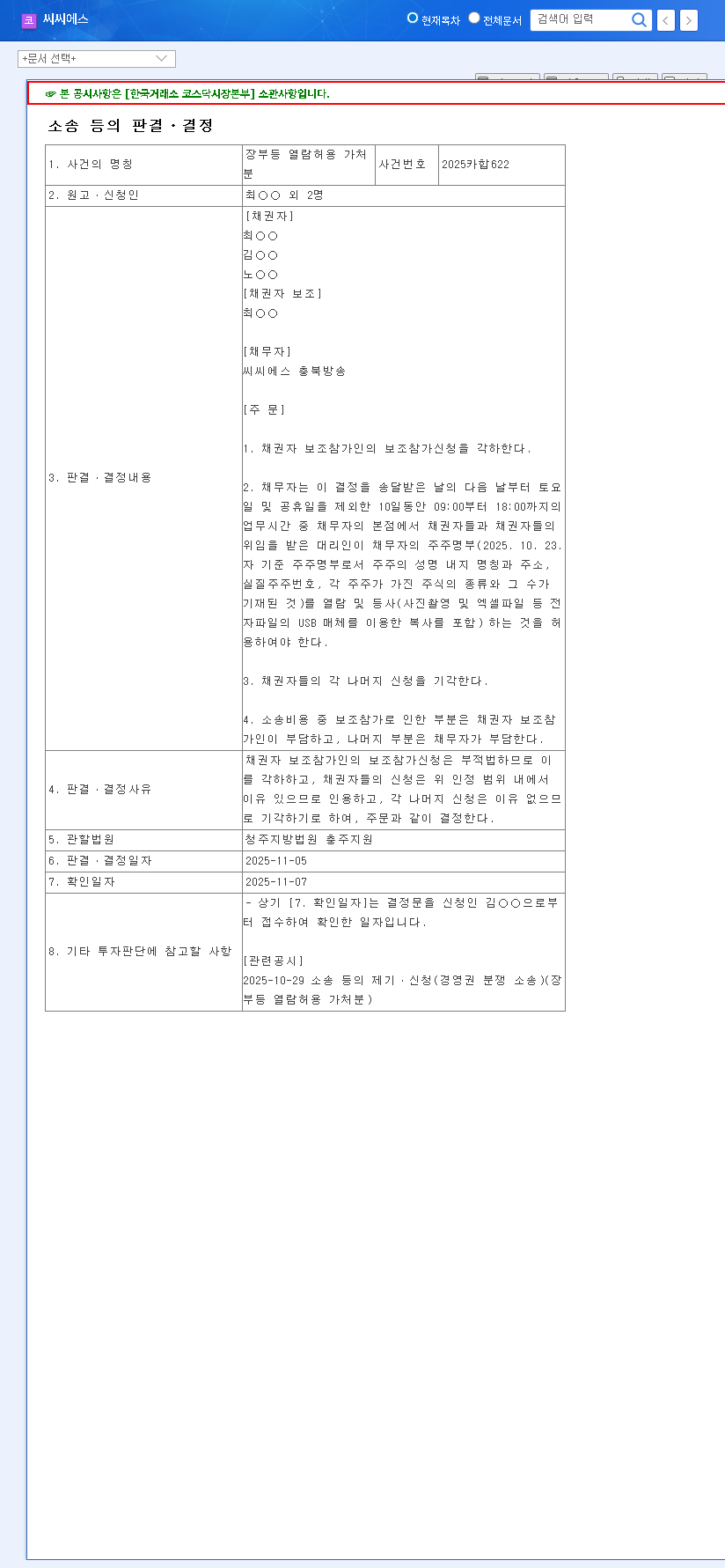
    On November 7, 2025, the Chungju Branch of the Cheongju District Court issued a ‘provisional disposition allowing inspection of books.’ This legal action permits creditors to access, copy, and photograph the complete shareholder registry of CCS Chungbuk Broadcasting. This is not a minor procedural event; it is a significant development that arms certain stakeholders with the precise information needed to challenge the current management structure. The court’s decision, detailed in the Official Disclosure (DART), effectively opens the door for more organized and aggressive shareholder activism, directly fueling the potential for an escalated CCS management dispute.

    This ruling provides shareholder factions with the strategic intelligence to potentially challenge board control, transforming underlying tensions into an open power struggle and magnifying the already high CCS investment risk.

    A Deep Dive into CCS’s Financial & Governance Crisis

    The court ruling does not happen in a vacuum. It lands upon a company already in a state of profound distress. Understanding the existing financial and structural weaknesses is crucial to grasping the full impact of this new development.

    Severe Revenue Decline and Deepening Deficits

    The financial statements paint a bleak picture. CCS is experiencing a sharp decline in its core broadcasting and advertising revenues, leading to a shift into an operating loss and an expanding net loss. This deterioration is not a temporary dip but a systemic problem driven by intense competition in the paid broadcasting market. The rise of global OTT giants, as documented by industry analysis from sources like high-authority media outlets, has fundamentally eroded the business model of traditional cable providers like CCS, making a financial turnaround incredibly challenging.

    Pervasive Governance Instability

    Corporate governance at CCS is alarmingly unstable. The company is entangled in ongoing administrative penalties and legal disputes concerning unapproved changes to its largest shareholder, a violation of broadcasting law. Its designation as an ‘administrative issue stock’—a clear red flag for investors—and a history of trading suspensions for unfair disclosure highlight a management environment fraught with risk and uncertainty. Investors unfamiliar with this designation can learn more about understanding ‘administrative issue’ stocks to grasp the severity of the situation.

    Weakened Momentum for New Business Ventures

    In an attempt to pivot, CCS has added ambitious new objectives to its articles of incorporation, including ventures in secondary batteries, real estate, and superconductors. However, these plans appear to be aspirational at best. With a crumbling core business and a chaotic governance structure, the company lacks the capital, focus, and stability to execute these new initiatives. The ongoing management disputes will only further divert resources and attention, making any meaningful progress highly unlikely.

    Impact of the Shareholder Registry Access

    The book inspection ruling will have several critical and complex impacts on the future of KOREA CABLE T.V CHUNG-BUK SYSTEM:

    • Escalation of Management Disputes: Armed with a detailed shareholder map, opposing factions can now strategize more effectively for proxy fights and influence voting at general meetings. This significantly increases the probability of an intensified CCS management dispute, creating further instability.
    • Forced Corporate Transparency: On a more positive note, greater access to information can enhance transparency. Shareholders may be empowered to demand more accountability regarding management decisions and audit results, which could theoretically lead to better governance in the long term, assuming the company survives the initial turmoil.
    • Influence on Other Legal Cases: The information gleaned from the shareholder registry could be used as leverage or evidence in other ongoing lawsuits and administrative proceedings. This could either expedite resolutions or, more likely, add new layers of complexity to the company’s legal battles.

    Comprehensive Investment Judgment & Final Recommendation

    Considering the confluence of severe financial decay, regulatory penalties, and the new threat of an escalated internal power struggle, market expectations for CCS are justifiably at rock bottom. The book inspection ruling acts as an accelerant on an already raging fire.

    Therefore, the comprehensive investment opinion for CCS (ticker 066790) is unequivocally ‘very negative.’ We maintain a ‘strong recommendation against investment.’ The path to normalization is fraught with obstacles, and this latest development only adds to the immense uncertainty. Investors should exercise extreme caution and recognize that the fundamental CCS investment risk is exceptionally high.

    Frequently Asked Questions (FAQ)

    Q1: What does the ‘book inspection’ ruling mean for CCS?

    It is a court order that allows specific creditors and shareholders to view and copy the company’s full shareholder list. This information is powerful, as it reveals who the key owners are, which can be used to organize opposition against the current management.

    Q2: How does this ruling affect the CCS stock and its management?

    It dramatically increases the risk of a public and messy management dispute. While it could lead to better transparency, the more immediate effect is likely to be increased volatility and uncertainty for the stock as power struggles play out.

    Q3: Is there any positive outlook for CCS?

    Currently, the outlook is overwhelmingly negative. The company faces a collapsing core business, significant losses, and severe governance issues. Any potential turnaround would require a complete overhaul of management and strategy, which is a highly uncertain and distant prospect.

    (066790) CCS Investment Risk (066790): Court Ruling Sparks Deepening Management Disputes 관련 이미지
  • (192410) ONEUL E&M Stock Crisis (192410): Major Share Sale Exposes Deep Financial Trouble

    (192410) ONEUL E&M Stock Crisis (192410): Major Share Sale Exposes Deep Financial Trouble

    Alarm bells are ringing for investors in ONEUL E&M co.,Ltd (192410). A recent disclosure revealing a significant share sale by major stakeholders has cast a harsh spotlight on the company’s already fragile financial state. This move is widely seen as a vote of no confidence, compounding concerns about liquidity, operational viability, and a high-stakes tax investigation.

    This in-depth analysis unpacks the critical events surrounding the ONEUL E&M crisis, examining the fundamental weaknesses plaguing the company and providing a clear-eyed outlook for its stock price. For current and potential investors, understanding these risk factors is not just prudent—it’s essential for survival.

    The Catalyst: A Major Shareholder Exodus

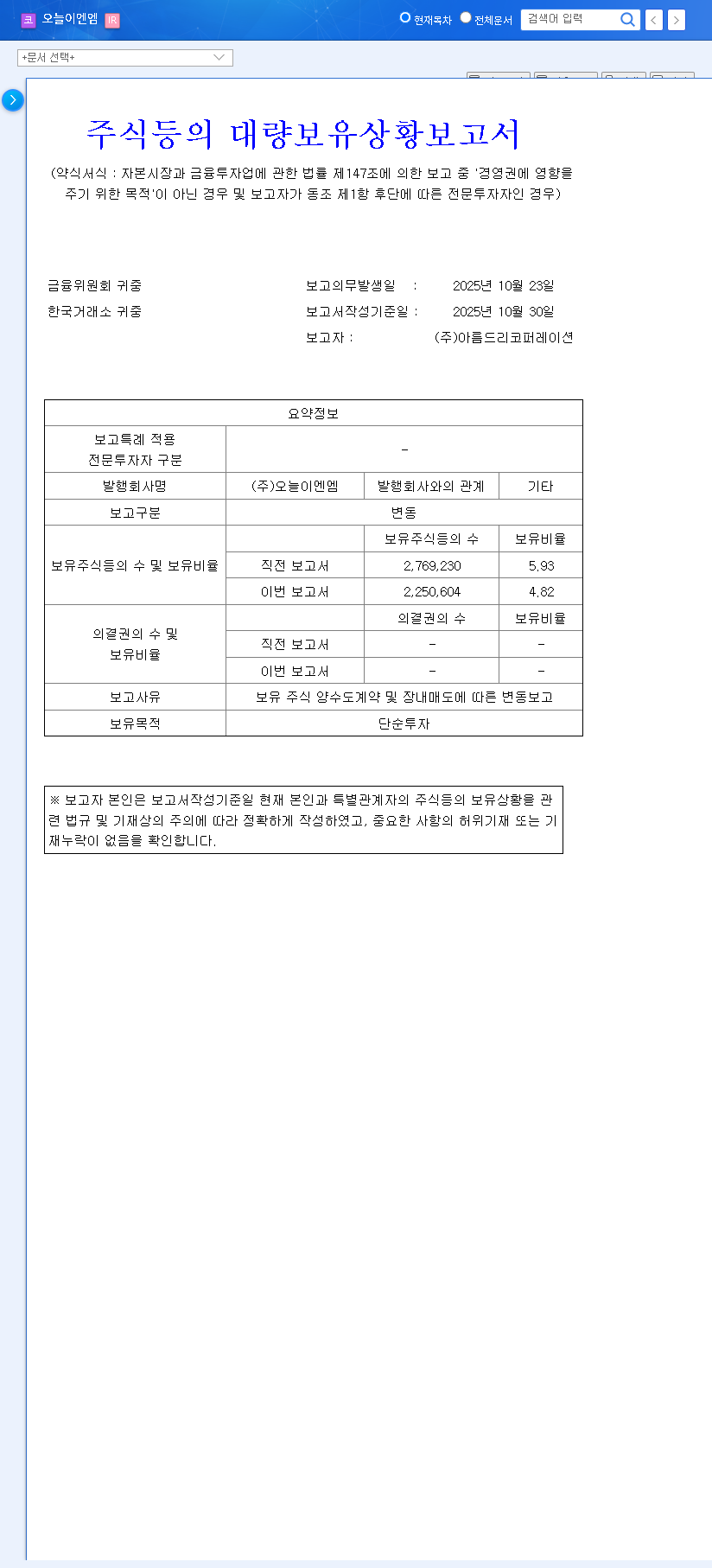
    On October 31, 2025, a mandatory disclosure sent shockwaves through the market. The report on Major Shareholdings for ONEUL E&M detailed a significant reduction in stakes by key corporate shareholders. The full details can be reviewed in the Official Disclosure from DART.

    Key Details of the Divestment

    • Primary Sellers: The sellers were identified as Areumdri Corporation and Wishbone Co., Ltd.
    • Stake Reduction: Areumdri Corporation’s stake was notably reduced from 5.93% to 4.82% through a combination of a share transfer agreement and direct open market sales.
    • Market Signal: This isn’t a simple portfolio rebalancing. When major, informed shareholders sell off significant portions of their holdings, it often signals a deeply negative outlook on the company’s future prospects, creating widespread market anxiety for ONEUL E&M stock.

    The divestment acts as a critical red flag, suggesting that those with insider knowledge may be losing faith in ONEUL E&M’s ability to navigate its severe fundamental crisis.

    Under the Hood: ONEUL E&M’s Deepening Financial Crisis

    The share sale is not happening in a vacuum. It’s a symptom of a much larger disease: the severe deterioration of ONEUL E&M’s financial and operational health, as highlighted in its 2025 semi-annual report.

    1. Collapsing Financial Soundness

    • Massive Losses: The company posted a staggering net loss of approximately KRW 55 billion in the first half of 2025 alone. This was primarily driven by setting aside massive provisions for an ongoing, large-scale tax investigation.
    • Extreme Liquidity Risk: With current liabilities (KRW 68.1 billion) dwarfing current assets (KRW 11.0 billion), the company faces an immediate and severe risk of being unable to meet its short-term obligations. This is a classic sign of a company on the brink of insolvency. For more information, investors can read about analyzing liquidity ratios.
    • Plummeting Credit Rating: Credit rating agencies have taken notice. The company’s rating from Korea Evaluation Data has steadily dropped from BB- to B, a clear external validation of its deteriorating financial health.

    2. High-Risk, Unrelated Business Expansion

    In an apparent attempt to pivot away from its declining core antenna business, ONEUL E&M has announced ambitious plans to enter highly competitive and capital-intensive sectors like AI semiconductors, data centers, and even nuclear energy. However, these ventures carry immense uncertainty and appear disconnected from the company’s core competencies.

    The proposed KRW 800 billion data center, in particular, represents an enormous financial burden on a company already struggling with liquidity. Sourcing funding for such a project without further compromising its financial structure seems highly improbable, raising questions about the feasibility of the entire strategy.

    3. Existential Operational Threats

    The most significant threat is the ongoing tax investigation. The potential for hundreds of billions of won in additional tax liabilities casts a dark shadow over the company’s ability to continue as a going concern. The outcome of related administrative lawsuits will be a pivotal, make-or-break moment for ONEUL E&M. This uncertainty alone is enough to deter most risk-averse investors, as noted by financial analysts at leading firms like Bloomberg.

    Stock Price Outlook and Investor Strategy

    Given the toxic cocktail of a major shareholder sell-off and dire fundamentals, the outlook for ONEUL E&M stock (192410) is decidedly bearish.

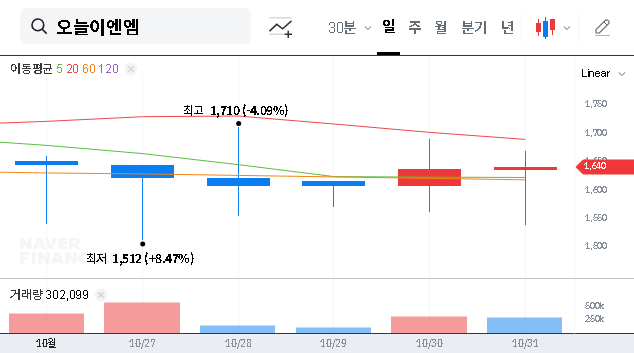
    • Short-Term (1 Month): Expect significant downward pressure and high volatility as the market digests this negative news. Worsening investor sentiment could trigger further panic selling.
    • Mid- to Long-Term (1 Month+): Any potential recovery is contingent on a series of near-miraculous turnarounds: a favorable resolution to the tax investigation, a drastic improvement in financial health, and tangible success from its high-risk new ventures. Currently, the probability of this positive scenario is extremely low.

    Conclusion: An Unacceptably High-Risk Investment

    At this juncture, an investment in ONEUL E&M is fraught with peril. The combination of a severe liquidity crisis, existential legal threats, and a vote of no confidence from major shareholders makes the stock highly unattractive.

    Our investment opinion is a firm ‘Sell’ for existing holders and ‘Avoid’ for potential investors. A conservative ‘wait-and-see’ approach is critical. Before even considering this stock, investors must see clear, undeniable evidence of progress on:

    • The final outcome of the tax investigation.
    • A concrete, viable plan to resolve the liquidity crisis.
    • Tangible revenue and profit from any new business ventures.

    Until these monumental hurdles are cleared, the risk of capital loss in ONEUL E&M stock remains exceptionally high.

    (192410) ONEUL E&M Stock Crisis (192410): Major Share Sale Exposes Deep Financial Trouble 관련 이미지
  • (222160) NPX Inc. Delisting Risk: Can a ₩6.3B Asset Sale Prevent KOSDAQ Expulsion?

    (222160) NPX Inc. Delisting Risk: Can a ₩6.3B Asset Sale Prevent KOSDAQ Expulsion?

    The NPX Inc. delisting risk has reached a critical juncture. Recently, the company (KOSDAQ: 222160) announced a significant asset sale, a move designed to secure liquidity amidst a deepening financial crisis. But for investors watching from the sidelines, the crucial question is whether this is a genuine lifeline or merely a stopgap measure delaying the inevitable. This analysis will dissect the recent ₩6.3 billion asset sale, diagnose the company’s severe financial health, and provide a clear verdict on the investment risks associated with NPX Inc.

    This move is not a sign of strength but a reaction to profound instability. Understanding the context behind this sale is paramount for anyone considering this highly volatile stock.

    The Breaking Point: A ₩6.3 Billion Asset Sale

    On October 31, 2025, NPX Inc. confirmed its decision to transfer tangible assets, specifically land and buildings in Yongin-si, Gyeonggi-do, to Three A C Inc. for ₩6.3 billion. According to the Official Disclosure, this figure represents a staggering 28.19% of the company’s total assets. The stated purpose was to ‘enhance management efficiency and secure asset liquidity.’ While seemingly proactive, selling off nearly a third of company assets is a drastic measure that signals deep-seated distress.

    Anatomy of an Unraveling Financial Crisis

    The NPX asset sale was not a strategic pivot but a desperate necessity. An examination of its semi-annual report reveals a company teetering on the edge of insolvency, plagued by multiple converging issues.

    Collapse of the Core BBT Business

    NPX Inc.’s primary business is manufacturing Bare Board Testers (BBT), equipment used to test printed circuit boards. Despite its position as the sole domestic manufacturer, the division is failing. Revenue in H1 2025 fell year-over-year, and the factory utilization rate hovered at an abysmal 13.26%. Intense market competition has rendered its unique position ineffective, leading to significant underperformance.

    The Crushing Weight of Failed Ventures

    Early-stage investments in new ventures, including new media and fashion, have become a financial black hole. These businesses have drained capital without generating returns, contributing heavily to the company’s current NPX financial crisis. The company is now reportedly trying to offload these segments, further underscoring their failure.

    A Balance Sheet in Tatters

    The financial metrics paint a grim picture:

    • Liquidity Crisis: Short-term borrowings have skyrocketed, causing current liabilities to increase fivefold and creating an acute cash crunch.
    • Capital Impairment: A growing retained earnings deficit has severely eroded the company’s capital base, a major red flag for KOSDAQ listing requirements.
    • Massive Losses: The operating loss for H1 2025 ballooned by 840% year-over-year to ₩5.06 billion, with the net loss expanding to ₩5.85 billion.

    The Unmistakable NPX Inc. Delisting Risk

    This brings us to the most critical threat: the ongoing KOSDAQ delisting procedures. A company can be delisted for several reasons, including severe capital impairment and sustained operating losses—conditions that NPX Inc. flagrantly meets. The asset sale, while providing a temporary cash infusion, does little to resolve these fundamental breaches of exchange rules. In fact, selling productive assets could be interpreted as a move that further weakens long-term viability, potentially complicating the review process with regulators.

    The ₩6.3 billion from the asset sale is a bandage on a mortal wound. It cannot fix the core business failures or reverse the catastrophic losses that are driving the company towards delisting.

    Investor Verdict: A High-Risk Gamble to Avoid

    Given the overwhelming evidence, investing in NPX Inc. at this time carries an exceptionally high degree of risk. The potential for total loss of capital in the event of a KOSDAQ delisting is a probable outcome. The asset sale is insufficient to address the scale of the company’s financial impairment and operational decay.

    The recommended strategy is unequivocal: maintain a strict wait-and-see approach. Any consideration of investment should be deferred until there is concrete evidence of a sustainable turnaround, a resolution of the delisting procedures, and a clear path to profitability. For now, prudent risk management is key. For more on evaluating such situations, investors can consult authoritative resources on analyzing distressed companies from financial experts. Monitor official disclosures, but avoid taking a position in what is currently a deeply troubled entity.

    (222160) NPX Inc. Delisting Risk: Can a ₩6.3B Asset Sale Prevent KOSDAQ Expulsion? 관련 이미지
  • (062970) KOREA ADVANCED MATERIALS (062970) Stock Analysis: Shareholder Sell-Off Signals Deepening Crisis

    (062970) KOREA ADVANCED MATERIALS (062970) Stock Analysis: Shareholder Sell-Off Signals Deepening Crisis

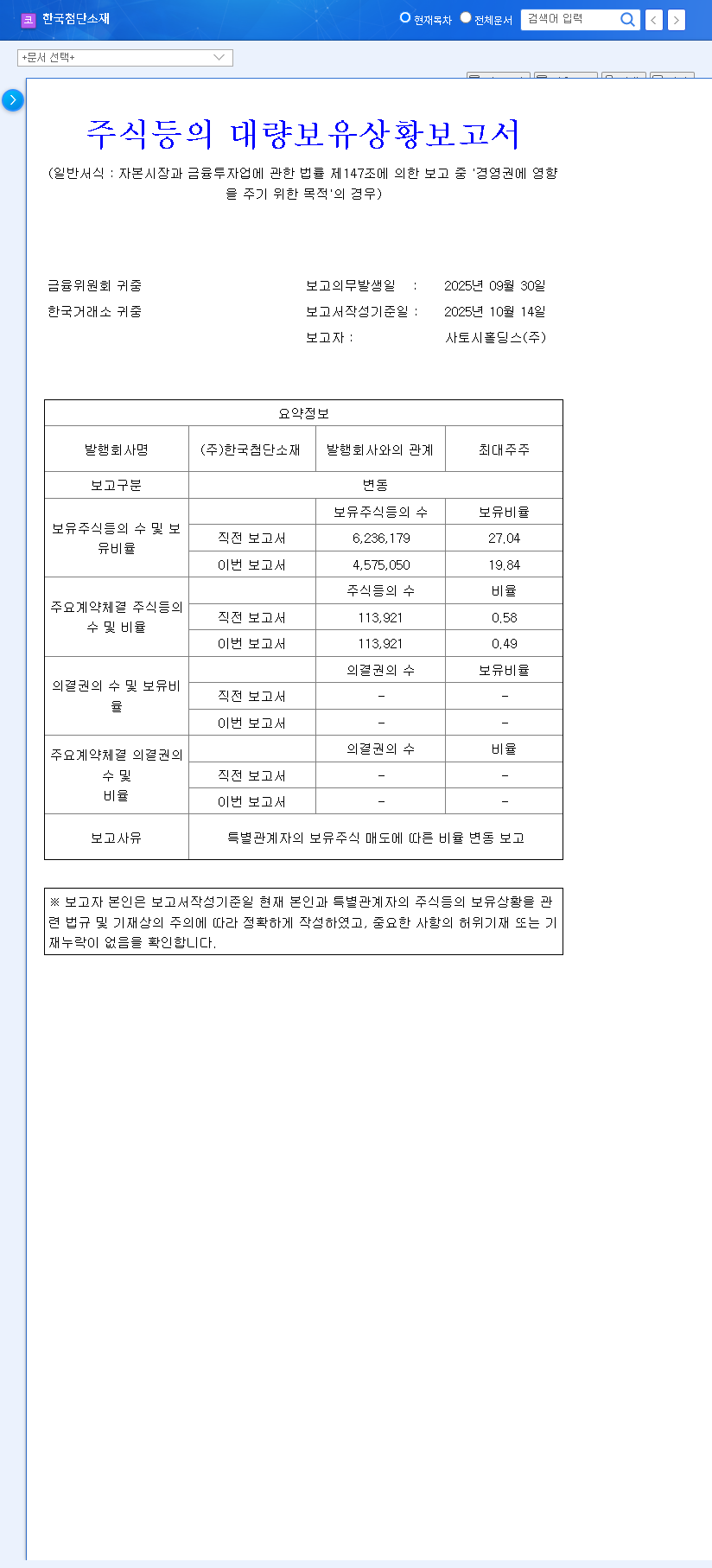
    Serious concerns are escalating around KOREA ADVANCED MATERIALS Co.,Ltd. (062970), a company now facing intense market scrutiny. The alarm was triggered on October 27, 2025, when major shareholder Satoshi Holdings announced a significant reduction in their stake. This move is far more than a routine portfolio adjustment; it’s a potential distress signal that questions the very foundation of the company’s financial health and management stability. This event has sent shockwaves through the investment community, prompting a closer look at what lies beneath the surface.

    Is this major shareholder sell-off a definitive indicator of an impending crisis for KOREA ADVANCED MATERIALS? This comprehensive stock analysis will delve into the company’s deteriorating fundamentals, the direct repercussions of this divestment, and the critical risk factors that every current and potential investor must understand to navigate these turbulent waters.

    The Catalyst: A Closer Look at the Shareholder Divestment

    The event that catalyzed the current wave of concern was a formal disclosure. On October 27, 2025, Satoshi Holdings and its special affiliates announced a substantial reduction of their stake in KOREA ADVANCED MATERIALS, slashing their ownership from 19.84% down to just 12.64%. This 7.2 percentage point decrease is a significant move from a shareholder whose stated purpose was to influence management. Such a large-scale sell-off is often interpreted by the market as a vote of no confidence, intensifying fears about the company’s future value and operational stability. You can view the Official Disclosure (DART) for precise details.

    When an insider with significant influence sells a large portion of their stake, it often signals a loss of faith in the company’s ability to overcome its challenges. This action speaks louder than any press release.

    Analysis of KOREA ADVANCED MATERIALS’ Financial Crisis

    The shareholder sell-off is not happening in a vacuum. It appears to be a reaction to the company’s deeply troubled financial and operational state. A detailed stock analysis reveals multiple red flags.

    1. Financial Health: On the Brink of Capital Impairment

    The company’s balance sheet is alarming. As of the first half of 2025, total equity was a mere KRW 13.8 billion, while the accumulated deficit had ballooned to approximately KRW 34.8 billion. This brings KOREA ADVANCED MATERIALS perilously close to full capital impairment, a state where a company’s total liabilities exceed its total assets. This is a direct result of persistent and significant operating losses.

    • Collapsing Revenue: Annual revenue plummeted from KRW 14.4 billion in 2023 to KRW 6.5 billion in 2024. The first half of 2025 shows no signs of recovery, with accumulated revenue at a dismal KRW 2 billion.
    • Worsening Profitability: Operating losses continue to expand, indicating severe and unresolved issues in its core management and business operations.
    • Heavy Debt Burden: The financial strain is compounded by a significant volume of convertible bonds, which create derivative liability valuation losses and further erode financial soundness.

    2. Business Outlook: Stagnation and Uncertainty

    The company’s business units offer little hope for a quick turnaround. The core business is struggling, and new ventures appear to be non-starters due to financial constraints.

    • Core Business (Optical Communication): While this sector is tied to high-growth areas like 5G and data centers, the company faces intense competition from low-cost international firms. Low production utilization rates suggest operational inefficiency and an inability to compete effectively.
    • New Ventures (Batteries, UAVs): While ambitious, plans to enter the secondary battery and UAV markets lack credibility. The company admits it has no concrete business plan for the next year, primarily due to its dire financial state and failure to secure necessary investment.

    Market Impact and Investment Risk

    The major shareholder sell-off has a powerful ripple effect. It directly impacts management stability and investor sentiment, creating a cascade of negative consequences.

    1. Destabilized Management and Governance

    With a significantly reduced stake, Satoshi Holdings’ ability to steer the company or maintain control is weakened. This governance vacuum could invite external intervention, a forced sale of management rights, or a hostile takeover, adding another layer of uncertainty for investors. To learn more about how market events shape stock prices, authoritative sources like Reuters Business provide excellent insights.

    2. Worsening Investor Sentiment and Price Pressure

    A major shareholder’s exit is a classic bearish signal. It almost invariably leads to negative selling pressure as retail and institutional investors follow the insider’s lead. Given the already fragile fundamentals of KOREA ADVANCED MATERIALS, this event is likely to accelerate an investor exodus and push the stock price further downward.

    Conclusion: An Unmistakable Warning for Investors

    The divestment by Satoshi Holdings is not just a symptom but an accelerant of the crisis at KOREA ADVANCED MATERIALS. The company is grappling with a severe liquidity crisis, a collapsing core business, and no viable path toward recovery. The investment risk associated with this stock is exceptionally high.

    Based on this analysis, the investment recommendation is clear: Strongly advise halting any new investment and maintaining a cautious, observational stance. The combination of profound fundamental weakness and management instability makes capital recovery highly improbable in the short to medium term. For those interested in risk assessment, our guide on How to Analyze High-Risk Stocks provides further context.

    Key Monitoring Points for the Future:

    • Any further changes in Satoshi Holdings’ remaining stake.
    • The announcement of any concrete, credible plans for financial restructuring.
    • Updates to the company’s credit rating (currently CCC+).
    • Movements or statements from other major shareholders.

    (062970) KOREA ADVANCED MATERIALS (062970) Stock Analysis: Shareholder Sell-Off Signals Deepening Crisis 관련 이미지
  • (033340) GOOD PEOPLE (033340) Stock Analysis: Shareholder Sale Signals Deepening Crisis

    (033340) GOOD PEOPLE (033340) Stock Analysis: Shareholder Sale Signals Deepening Crisis

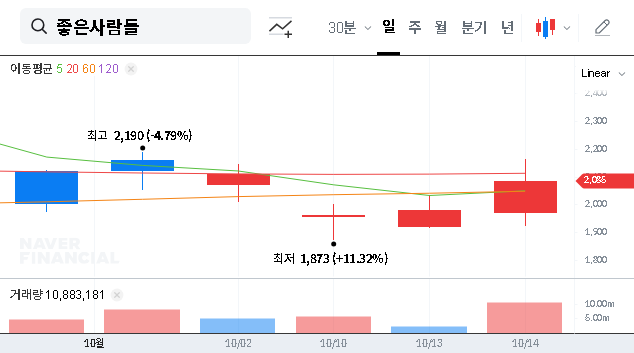
    The latest news surrounding GOOD PEOPLE CO., LTD. stock (033340) has sent a worrying signal to investors. A significant stake sale by a major related party raises critical questions about the company’s future, especially given its already precarious financial state. Is this a strategic exit or a red flag signaling an even deeper crisis? This comprehensive analysis will explore the implications for the GOOD PEOPLE CO., LTD. stock and provide a clear investment outlook.

    The Catalyst: A Major Shareholder Stake Sale

    On October 14, 2025, GOOD PEOPLE CO., LTD. disclosed a significant change in its ownership structure. This event, detailed in their official filing, is the primary catalyst for the current market anxiety. The key details are as follows:

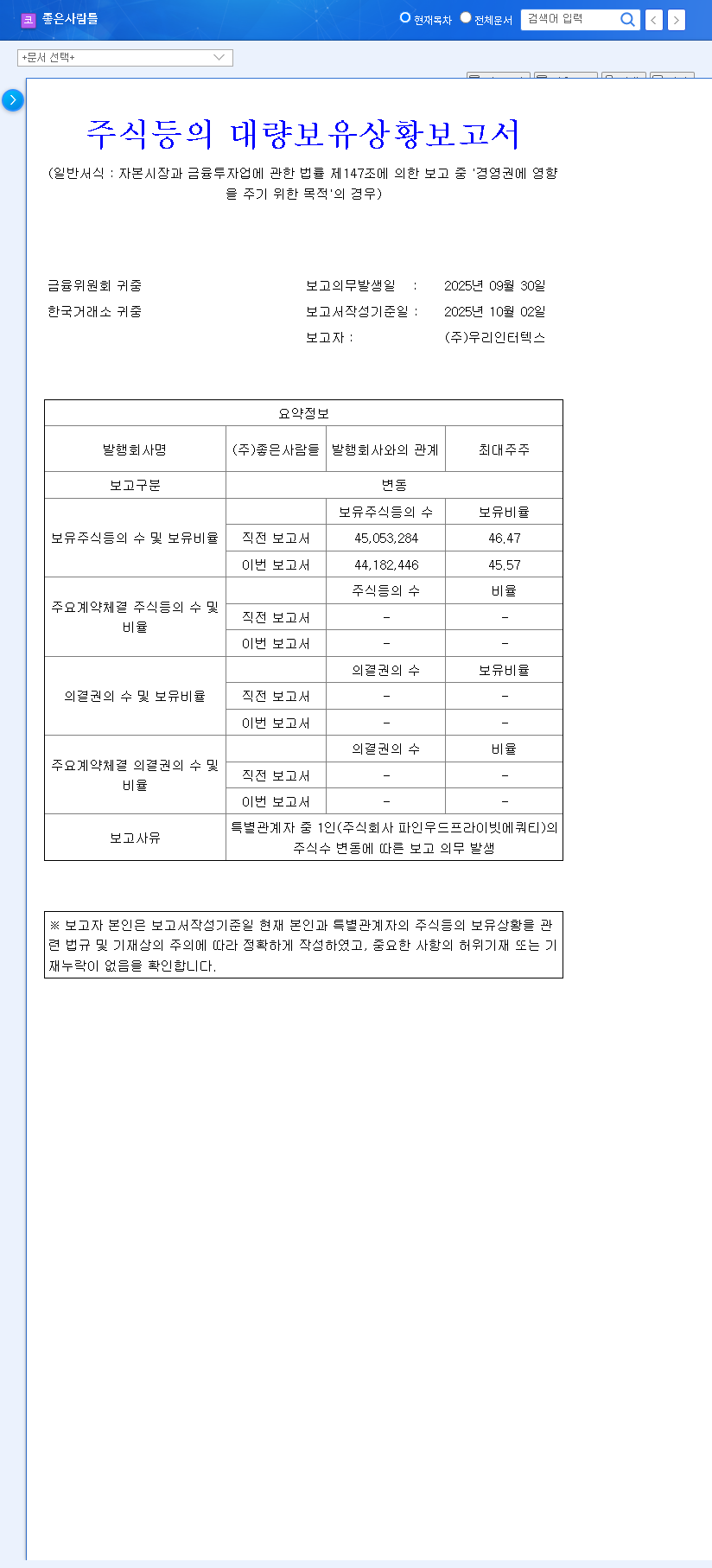
    • Reporting Entity: URI INTERTEX and its special related party, Pine Wood Private Equity Co., Ltd.
    • Change in Stake: The collective stake decreased from 46.47% to 45.57%, a reduction of 0.9%.
    • Transaction Details: A total of 870,838 shares were sold on the open market over three days.
    • Official Disclosure: The complete details can be verified in the Official DART Filing.

    While a 0.9% reduction may not seem catastrophic, the identity of the seller—a private equity firm—and the timing of the sale are what truly matter. It suggests that institutional insiders may be losing confidence in the company’s ability to navigate its current challenges, a highly negative signal for the market.

    Why This Matters: The Deepening Financial Crisis at GOOD PEOPLE

    This stake sale isn’t happening in a vacuum. It amplifies the severe fundamental issues plaguing GOOD PEOPLE CO., LTD., creating a perfect storm of negative sentiment. A detailed 033340 stock analysis reveals a company in distress.

    1. Rapidly Deteriorating Financial Health

    The company’s performance has been in a steep decline. The H1 2025 report painted a bleak picture:

    • Plummeting Revenue: Year-over-year revenue fell by a staggering 17.2%.
    • Operating Losses: The company swung from profit to a significant operating loss, indicating core business unprofitability.
    • Bloated Inventory: Inventory levels surged nearly 29%, a classic sign of slowing sales and potential future write-downs.
    • Weak Balance Sheet: A rising debt-to-equity ratio and low current ratio signal liquidity and solvency risks.

    2. Lingering Corporate Governance and Market Risks

    Beyond the numbers, the company is burdened by its past. Lingering legal issues from former management, including allegations of embezzlement, continue to damage investor trust. While new ventures like ‘smart innerwear’ are commendable, they have yet to make a meaningful impact on the bottom line. Compounding these issues is a difficult macroeconomic environment with a slowing innerwear market and rising interest rates, which further pressure the company’s finances.

    Given the combination of a major shareholder sale, deteriorating fundamentals, and external market pressures, the investment outlook for GOOD PEOPLE CO., LTD. stock requires extreme caution. The path to recovery appears long and uncertain.

    Investment Outlook & Strategic Recommendations

    Considering the confluence of negative factors, the investment appeal for GOOD PEOPLE CO., LTD. is significantly diminished. The stake sale acts as a confirmation of the severe risks present. Our current investment opinion is firmly in the “Sell” or “Strong Hold & Observe” category.

    For Potential Investors:

    Active investment is not recommended at this time. The risk of further stock price decline is high until there are clear, tangible signs of a fundamental turnaround. Attempting to catch a falling knife is a perilous strategy. To learn more, you can read about value trap indicators in stock analysis.

    For Existing Shareholders:

    A prudent approach is crucial. Closely monitor the company’s upcoming financial reports and management communications. The key catalysts for a potential re-evaluation would be:

    • A return to revenue growth and operating profitability.
    • A significant reduction in inventory levels.
    • Positive, revenue-generating results from new business ventures.
    • Resolution of outstanding legal and corporate governance issues.

    Without these improvements, the downward pressure on GOOD PEOPLE CO., LTD. stock is likely to persist. For a more detailed look at financial metrics, refer to resources like Investopedia for definitions and analysis techniques.

    Disclaimer: This analysis is for informational purposes only and is based on publicly available data. It does not constitute financial advice. All investment decisions should be made with the consultation of a qualified financial advisor.

    (033340) GOOD PEOPLE (033340) Stock Analysis: Shareholder Sale Signals Deepening Crisis 관련 이미지
  • (016790) HYUNDAI FEED Inc. Delisting Crisis: Shareholder Stock Attachment Signals Deeper Trouble

    (016790) HYUNDAI FEED Inc. Delisting Crisis: Shareholder Stock Attachment Signals Deeper Trouble

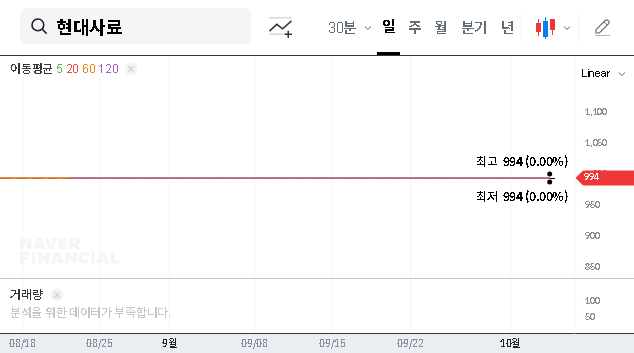
    The ongoing HYUNDAI FEED Inc. delisting crisis has taken a dramatic and alarming turn. Already teetering on the edge of removal from the KOSDAQ market, the company now faces a severe new challenge: a court-ordered provisional attachment on its largest shareholder’s stock. This development is far more than a simple financial hiccup; it strikes at the heart of the company’s governance, stability, and very existence. For investors, this moment is a critical juncture demanding a clear-eyed assessment of the mounting risks.

    This in-depth analysis will dissect the latest events surrounding the HYUNDAI FEED Inc. stock attachment, explore its profound implications, and provide a clear outlook for anyone with a stake in the company’s uncertain future. We will explore whether HYUNDAI FEED can navigate this perfect storm or if it’s on an irreversible path to collapse.

    The Event: A Shareholder’s Crisis Becomes the Company’s Nightmare

    The Seoul Central District Court recently delivered a significant blow by approving a provisional attachment order on a massive block of HYUNDAI FEED Inc. shares. This legal action freezes the assets of the company’s largest shareholder, Tteulan Chae Construction Co., Ltd., directly impacting HYUNDAI FEED’s operational stability.

    Details of the Stock Attachment

    According to the Official Disclosure filed with DART, the specifics of the court order are stark:

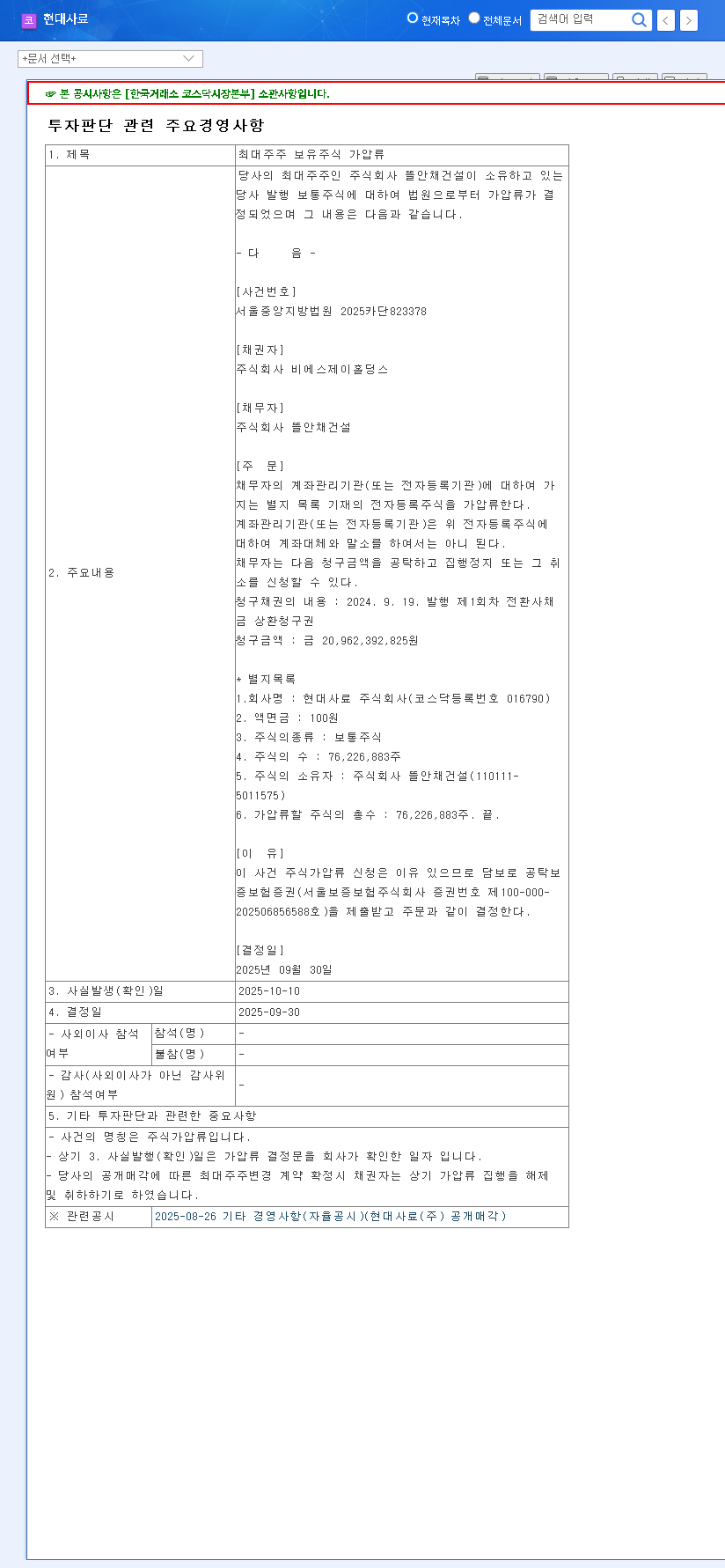
    • Attached Shares: 76,226,883 common stock shares of HYUNDAI FEED Inc.
    • Debtor (Shareholder): Tteulan Chae Construction Co., Ltd.
    • Creditor: BSJ Holdings Co., Ltd.
    • Underlying Cause: Failure to repay convertible bonds, with a claim amount of approximately KRW 20.96 billion.

    This action effectively prevents Tteulan Chae Construction from selling or transferring its shares, creating a leadership vacuum and casting a long shadow over the company’s decision-making capabilities.

    The Ripple Effect: Analyzing the Damage

    The attachment of a major shareholder’s stock is not an isolated event; it sends shockwaves through every facet of the company, compounding the already severe HYUNDAI FEED Inc. delisting crisis.

    This legal action moves beyond financial distress into a full-blown crisis of confidence, threatening the core stability and governance of HYUNDAI FEED Inc. and drastically increasing the probability of delisting.

    1. Severe Threat to Corporate Governance

    With the controlling shareholder’s voting power effectively paralyzed, HYUNDAI FEED’s management is left in limbo. This creates massive uncertainty around strategic direction, key appointments, and the ability to raise capital. Investor confidence, already fragile, is now likely shattered, making it nearly impossible to secure the funding needed for a turnaround. For more context on such market events, sources like Reuters Financial News provide extensive coverage of corporate governance challenges.

    2. Worsening Financial Health and Liquidity Crisis

    The root cause of the attachment—a KRW 20.9 billion debt default—paints a grim picture of HYUNDAI FEED Inc.’s financial health. This incident confirms deep-seated liquidity problems. The company will likely face a credit rating downgrade, soaring borrowing costs, and extreme difficulty in managing its cash flow for day-to-day operations. It raises fundamental questions about its ability to remain a going concern.

    3. Maximized Delisting Risk

    HYUNDAI FEED was already under intense scrutiny from market authorities due to an auditor’s opinion refusal and other compliance failures. This stock attachment adds fuel to the fire, providing regulators with another powerful reason to proceed with delisting. The company’s ability to present a credible recovery plan is now severely compromised. Investors interested in the mechanics of such situations can learn more about understanding corporate delisting procedures on our blog.

    Investor Playbook: Is There Any Hope?

    In light of these compounding crises, the investment outlook for HYUNDAI FEED Inc. is exceptionally bleak. The question is no longer about growth potential but about corporate survival.

    From an investment standpoint, HYUNDAI FEED Inc. is currently in the highest risk category, bordering on uninvestable. The combination of a pre-existing delisting threat and a paralyzed ownership structure creates a level of uncertainty that is difficult to justify for any portfolio.

    Key Factors to Monitor:

    • Delisting Committee Decisions: The final rulings from the KOSDAQ Market Committee will be the most critical near-term catalyst.
    • Resolution of the Attachment: Any news regarding the settlement of the KRW 20.96 billion debt could be a slight positive, but the damage to confidence is already done.
    • Further Disclosures: Watch for any announcements about asset sales, emergency funding, or management changes.

    For current shareholders, this is a time for proactive risk management to prevent further losses. For prospective investors, the red flags are too numerous and severe to ignore. Prudence and caution are paramount when dealing with a company facing an existential threat like the HYUNDAI FEED Inc. delisting crisis.

    (016790) HYUNDAI FEED Inc. Delisting Crisis: Shareholder Stock Attachment Signals Deeper Trouble 관련 이미지