Tag: Financial Costs

  • (448730) SamsungFN REIT (448730) Analysis: Stable Assets vs. High-Interest Headwinds

    (448730) SamsungFN REIT (448730) Analysis: Stable Assets vs. High-Interest Headwinds

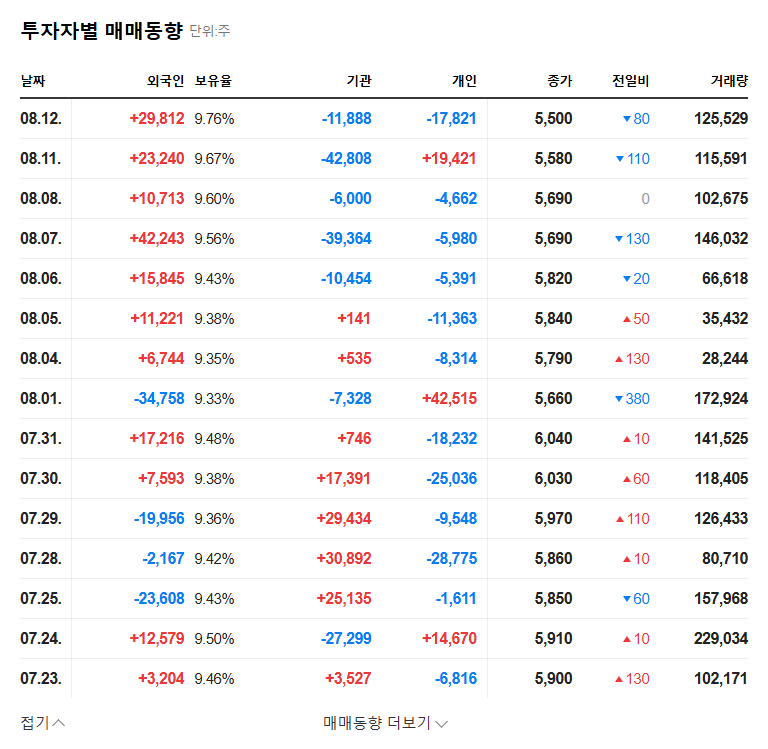
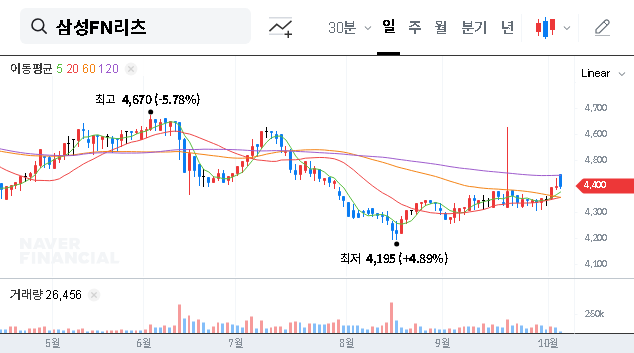
    For investors seeking steady dividend income from the property market, Real Estate Investment Trusts (REITs) are a cornerstone portfolio choice. A prime example is SamsungFN REIT Co., Ltd. (448730), a trust known for its portfolio of high-quality commercial assets. With the recent publication of its October 2025 monthly report, investors have a fresh opportunity to evaluate its performance. But what lies beneath the surface of this routine disclosure?

    This comprehensive SamsungFN REIT analysis will dissect the latest report, explore the company’s fundamental strengths and weaknesses, and place its performance within the challenging macroeconomic landscape. We will uncover the critical details that matter for your investment strategy, moving beyond the headlines to provide actionable insights.

    Deconstructing the October Monthly Report

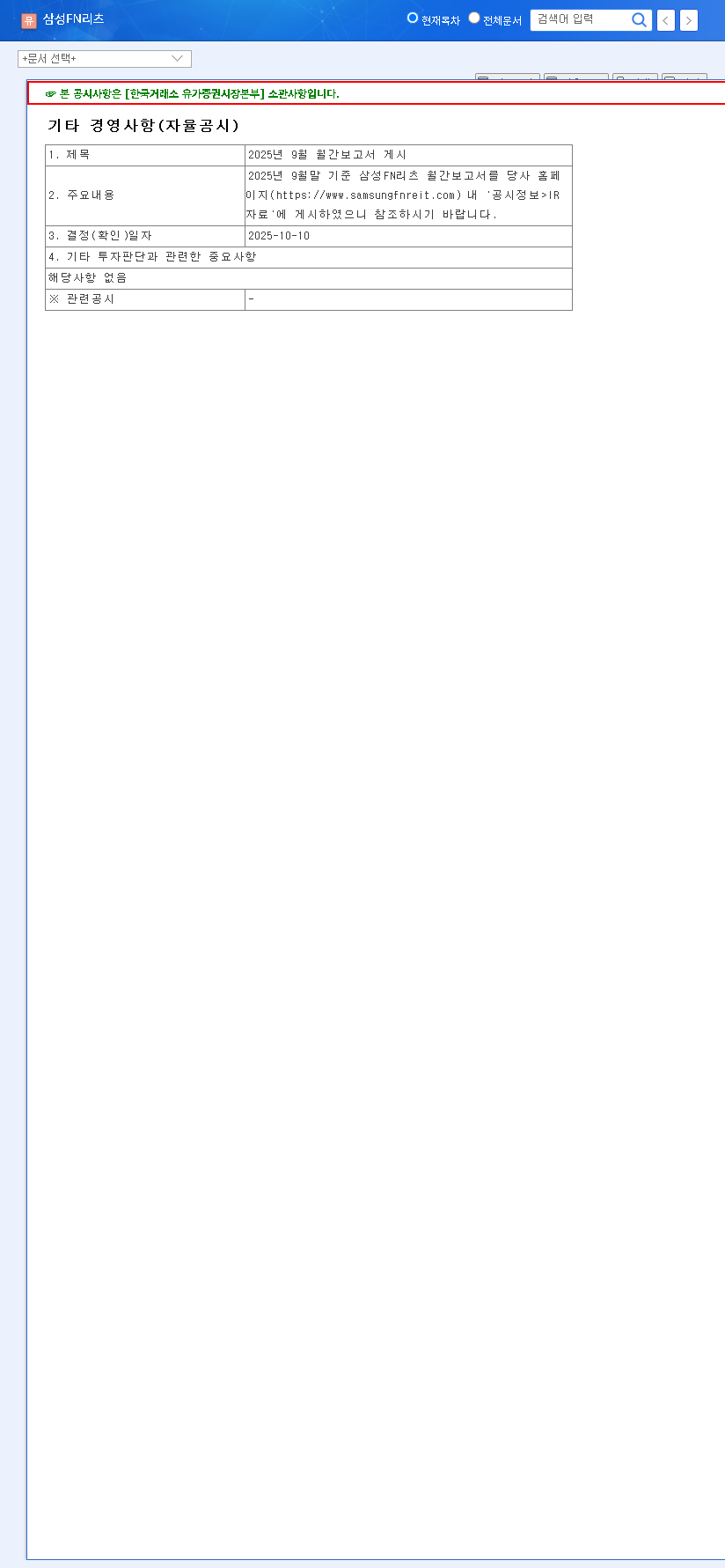
    On November 10, 2025, SamsungFN REIT released its October monthly report, a voluntary disclosure aimed at maintaining transparency with its investors. You can view the Official Disclosure on the DART system. While these reports rarely contain market-shaking news, they are vital for due diligence. They confirm operational continuity and provide the data points necessary to track the company’s health over time. The true value isn’t in the announcement itself, but in the details of rent collection, tenant stability, and financial shifts revealed within.

    The central challenge for SamsungFN REIT is a classic tug-of-war: the stability of its prime real estate assets versus the relentless pressure of a high-interest-rate environment.

    Fundamental Analysis: A Tale of Two Forces

    The financial health of SamsungFN REIT is a story of conflict between its rock-solid asset base and the harsh reality of rising financial costs. While its prime properties in Seoul—FNTower Daechi, FNTower Soonhwa, and FNTower Pangyo—boast a 100% occupancy rate with blue-chip tenants, the balance sheet reveals the strain.

    Key Financials (as of July 31, 2025)

    • Operating Revenue: KRW 12.15 billion (up 3.11% YoY), showing healthy rental income growth.
    • Operating & Net Income: Down 7.85% and 10.71% respectively. This is the red flag, directly caused by higher interest payments on its debt.
    • Debt-to-Equity Ratio: At 112.58%, this level warrants caution and demands a clear strategy for deleveraging or managing financial costs effectively.
    • Dividend Stability: Despite falling profits, the planned dividend of KRW 69 per share remains consistent, signaling a strong commitment to shareholder returns.

    The Power of a Premier Asset Portfolio

    The core strength of the SamsungFN REIT stock lies in its assets. Tenants like Samsung Life Insurance, Shinsegae International, and Hanwha Systems are not just names; they represent long-term, stable lease agreements that generate predictable cash flow. This 0% vacancy rate is the envy of the commercial real estate world and provides a significant buffer against economic downturns. For more on evaluating property portfolios, see our guide on How to Analyze a REIT’s Assets.

    Macroeconomic Headwinds: The Bigger Picture

    No company operates in a vacuum, and REIT investment is particularly sensitive to macroeconomic trends. The current environment presents several key challenges:

    • Persistent High-Interest Rates: Central banks in both the U.S. and Korea are maintaining a hawkish stance. As highlighted by market analysis from sources like Bloomberg, this directly increases the cost of borrowing for SamsungFN REIT, squeezing profit margins.
    • Bond Market Pressure: High yields on government bonds (like the U.S. 10-year Treasury) create a ‘risk-free’ alternative for income-seeking investors, making REIT dividends seem less attractive by comparison and potentially putting downward pressure on the stock price.
    • Inflation and Rent Negotiation: While inflation can justify future rent increases, this is not automatic. The ability to raise rents will depend heavily on the economic health of its tenants and the REIT’s negotiation power.

    Investor Strategy and Outlook

    For current and prospective investors in SamsungFN REIT (448730), the path forward requires careful monitoring of key performance indicators. The stability of its assets provides a strong foundation, but navigating the high-interest environment is paramount.

    What to Watch For:

    • Cost Management: Look for specific strategies from management on how they plan to reduce financial costs, whether through refinancing debt or other efficiency measures. This will be critical for restoring profit growth.
    • Debt Structure: Pay close attention to future financing plans. How the company manages its high debt-to-equity ratio will significantly impact its long-term financial health and risk profile.
    • Lease Renewals & Yields: While occupancy is perfect, the terms of future lease renewals are key. Investors should analyze upcoming reports for any changes in lease yields or tenant stability.

    In conclusion, the October report confirms that SamsungFN REIT is a high-quality operator facing significant external pressures. Its investment appeal hinges on its ability to leverage its premier asset base to weather the macroeconomic storm. Cautious optimism is warranted, but diligent monitoring of the factors outlined above is essential for making an informed investment decision.
    (448730) SamsungFN REIT (448730) Analysis: Stable Assets vs. High-Interest Headwinds 관련 이미지
  • (004710) Hansol Technics Q3 2025 Earnings: A Deep Dive Financial Analysis & Stock Outlook

    (004710) Hansol Technics Q3 2025 Earnings: A Deep Dive Financial Analysis & Stock Outlook

    This comprehensive breakdown of the Hansol Technics Q3 2025 earnings report offers investors a detailed financial analysis. With provisional results showing sustained sales growth but mixed profitability signals, we explore whether Hansol Technics is on the verge of a significant turnaround. Our analysis dives deep into corporate fundamentals, macroeconomic pressures, and future risks to provide a clear, balanced investment outlook.

    We’ll unpack the positive drivers, such as new business ventures, and weigh them against persistent challenges like high financial costs and exchange rate volatility. This report is designed to equip you with the essential information needed to understand the current state of Hansol Technics stock and formulate a prudent investment strategy for the coming quarters.

    Hansol Technics Q3 2025 Earnings Performance at a Glance

    In its third-quarter report for 2025, Hansol Technics Co., Ltd. announced a set of figures that paint a picture of steady top-line growth coupled with underlying profitability concerns. According to the Official Disclosure, the company posted:

    • Sales: KRW 331.6 billion, demonstrating sustained year-over-year growth.
    • Operating Profit: KRW 17.7 billion, an improvement from the KRW 12.8 billion reported in Q2 2025.
    • Net Profit: KRW 7.8 billion, a slight decrease from the previous quarter’s KRW 8.5 billion.

    While the dip in net profit is notable, it’s crucial to view these numbers in context. After experiencing net losses in Q4 2024 and Q1 2025, the recent quarters signal a positive, albeit fragile, trend towards restoring profitability. This performance underscores a company in transition, balancing growth initiatives with financial headwinds.

    In-Depth Financial Analysis: Strengths vs. Weaknesses

    A deeper fundamental analysis of the Hansol Technics Q3 2025 earnings reveals a classic tug-of-war between promising growth drivers and significant financial risks.

    Positive Factors: The Engines of Growth

    • Robust Core Business: The company’s electronic components and mobile phone EMS (Electronic Manufacturing Services) divisions continue to show strong competitiveness, fueling the year-over-year sales growth.
    • Strategic Diversification: Aggressive investments into new high-growth areas, including semiconductor equipment, components for ships and robots, and the acquisition of Orion Technology, are diversifying its business portfolio and creating future revenue streams.
    • Commitment to Innovation: Consistent R&D spending relative to sales reinforces its long-term technological edge and ability to compete in a rapidly evolving market. Explore our guide on evaluating tech company R&D for more context.

    Negative Factors: Persistent Financial Risks

    • Crushing Financial Costs: The semi-annual report highlighted staggering financial costs of KRW 75.2 billion and foreign exchange losses of KRW 70.3 billion. These figures dwarf the Q3 net profit and remain a primary threat to the bottom line.
    • Underperforming Segments: The low utilization rates at its subsidiary Hansol I-one’s semiconductor facilities (around 43-53%) and the discontinuation of its unprofitable LCM business highlight ongoing efficiency challenges that need urgent attention.
    • Inventory Management: With inventory assets at KRW 114 billion, there is a clear need for improved efficiency in managing stock to align with sales velocity and reduce carrying costs.

    Macroeconomic Headwinds and Stock Outlook

    Hansol Technics does not operate in a vacuum. Broader economic trends, as reported by sources like Reuters, significantly influence its performance. Key external variables include volatile EUR/KRW and USD/KRW exchange rates, which directly impact foreign currency translation losses. Furthermore, the global trend of rising interest rates will likely amplify the company’s already substantial financial cost burden. Fluctuations in raw material and logistics costs add another layer of uncertainty to its profitability margins.

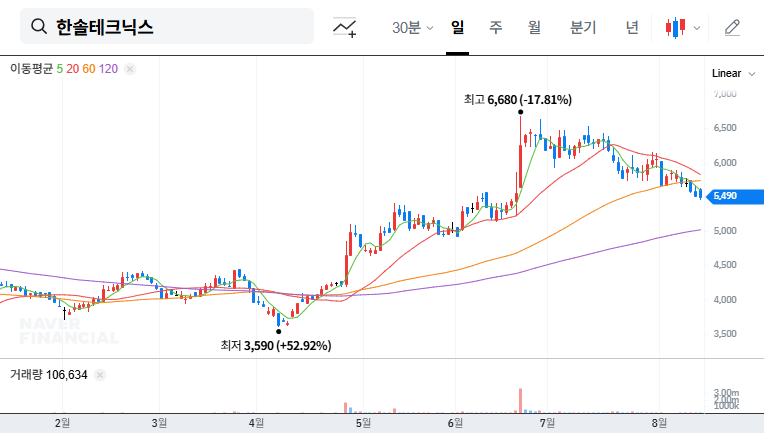
    The market’s reaction to the Hansol Technics investment outlook will depend on which narrative gains more traction: the positive story of growth and diversification, or the cautionary tale of financial risk and macroeconomic pressure. The Q4 results will be pivotal in determining the full-year earnings trajectory and shaping investor sentiment.

    Overall Investment Opinion: Neutral. While positive signals exist in sales growth and strategic investments, the significant financial burdens and macroeconomic risks prevent a bullish outlook. The company needs to demonstrate a more robust and sustained improvement in profitability before a positive rating can be justified.

    Key Questions for Investors

    What are the key takeaways from the Hansol Technics Q3 2025 earnings?

    The key takeaways are sustained sales growth driven by core businesses, improved quarter-over-quarter operating profit, but persistent pressure on net profit from high financial costs and foreign exchange losses. It’s a mixed report that signals a slow recovery in progress.

    What should investors monitor moving forward?

    Investors should closely watch the upcoming Q4 results for signs of a full-year profit turnaround. Additionally, monitor the company’s strategies for managing financial costs, the tangible results from its new business ventures, efforts to improve semiconductor business utilization, and overall inventory management efficiency.

    (004710) Hansol Technics Q3 2025 Earnings: A Deep Dive Financial Analysis & Stock Outlook 관련 이미지