Tag: Filler

  • (216080) JETEMA Stock Analysis: Why a Major Investor Sold Everything & What’s Next

    The outlook for JETEMA stock has been clouded by a significant development: the complete divestment by major institutional investor, Korea Investment Partners. This move, which saw the firm sell its entire stake and reduce its ownership to zero, has sent ripples through the market, leaving current and potential investors questioning the company’s future. This in-depth JETEMA stock analysis will unpack the reasons behind this sale, scrutinize the company’s current fundamentals, and provide a clear outlook on what to expect next.

    Understanding the context behind this major investor exit is crucial for anyone considering an investment in JETEMA Co.,Ltd., as it offers a glimpse into how sophisticated market players view the company’s prospects amidst its current challenges and opportunities.

    The Event: Korea Investment Partners Exits JETEMA Completely

    According to the Official Disclosure filed on November 10, 2025, Korea Investment Partners liquidated its entire holding in JETEMA Co.,Ltd. The sale included not only common shares but also a substantial amount of convertible bonds (CBs), totaling approximately 4,057,110. While the stated purpose of their past holding was ‘simple investment,’ a complete exit often signals a deeper strategic reassessment of the company’s value proposition and risk profile.

    Behind the Sale: A Deep Dive into JETEMA’s Fundamentals

    An institutional exit of this magnitude is rarely a rash decision. It is typically the culmination of a thorough analysis of a company’s financial health, market position, and future growth drivers. A closer look at JETEMA’s fundamentals reveals several key areas of concern that likely influenced this decision.

    Slowing Growth and Eroding Profitability

    Based on its 2025 semi-annual report, JETEMA’s financial performance is showing signs of strain. While revenue saw a modest 5.4% increase in the first half of the year, operating profit plummeted by a staggering 58.0%. This sharp decline in profitability points to slowing sales of its core hyaluronic acid filler products, coupled with significant upfront investment costs for its newer ventures.

    High-Stakes Bet on Botulinum Toxin

    JETEMA is pinning its future growth on its botulinum toxin business, actively pursuing overseas expansion with an export contract in Thailand and the establishment of a US subsidiary. However, entering the competitive global aesthetics market is a capital-intensive endeavor. In the short term, these necessary investments are weighing heavily on the company’s bottom line without yet delivering substantial returns.

    Worsening Financial Structure

    The company’s balance sheet has become increasingly leveraged. The issuance of convertible bonds to fund operations and R&D has pushed the debt-to-equity ratio to a high 264%. This level of debt increases financial risk, making the company more vulnerable to macroeconomic headwinds like interest rate hikes and economic slowdowns. Managing this financial burden is now a critical priority.

    The decision by Korea Investment Partners appears to be a calculated response to a combination of deteriorating profitability, a heavy financial burden from debt, and unresolved legal and regulatory risks.

    Impact on JETEMA Stock: Short & Long-Term Outlook

    The exit of Korea Investment Partners is expected to have distinct effects on the JETEMA stock price in both the immediate and distant future.

    Short-Term Impact: Heightened Pressure and Weak Sentiment

    The most immediate consequence is potential downward pressure on the stock price. The large-scale sale of convertible bonds, which can be converted into stock, creates an overhang of potential supply in the market. For more information, you can read our guide on how convertible bonds impact stock prices. Furthermore, this move is likely to weaken overall investor sentiment, as the exit of a major institution can be perceived as a vote of no confidence.

    Mid-to-Long-Term Outlook: A Focus on Fundamentals

    While the short term may be turbulent, the long-term trajectory of JETEMA stock will ultimately depend on the company’s operational performance, not its shareholder composition. The investor exit does not alter JETEMA’s core business. The key catalysts for future growth remain the successful commercialization of its toxin business in overseas markets, the performance of new products like EcCOLAR and PRAZUE, and a favorable resolution to its ongoing administrative lawsuit.

    Investment Thesis: A “Hold” Recommendation with Caution

    Given the current landscape, the investment opinion on JETEMA Co.,Ltd. is a “Hold.” The company holds genuine long-term growth potential, but this is counterbalanced by significant near-term uncertainties. A cautious approach is warranted until there is clear evidence of fundamental improvement.

    • Persistent Risks: A lack of visibility on profitability improvements, combined with ongoing financial and legal risks, makes it difficult to justify a new position at this time.
    • Negative Market Sentiment: The large-scale CB sale by Korea Investment Partners creates a short-term headwind for the stock that may depress its price and test investor patience.
    • Wait for Positive Catalysts: Investors should monitor for tangible signs of progress, such as improved margins, concrete results from overseas expansion, and a resolution of litigation risks, before considering a more bullish stance.

    In conclusion, investors in JETEMA stock should brace for potential short-term volatility while closely watching the company’s ability to execute on its long-term growth strategy and navigate its current challenges.

    Disclaimer: This analysis is based on publicly available information. All investment decisions carry the risk of principal loss and should be made with careful, independent judgment.
  • (145020) Hugel Q3 2025 Earnings Analysis: Deep Dive into a Major Miss & Investor Guide

    (145020) Hugel Q3 2025 Earnings Analysis: Deep Dive into a Major Miss & Investor Guide

    The recent preliminary Hugel Q3 2025 earnings report has sent a ripple of concern through the investment community. In a surprising turn, the aesthetic medicine leader delivered a performance that significantly missed market forecasts, fueling worries about its growth trajectory. For stakeholders and potential investors, this moment calls for a clear, in-depth analysis beyond the headlines.

    This comprehensive breakdown will meticulously examine Hugel’s Q3 data, explore the underlying causes for the shortfall, assess the potential impact on Hugel stock and its fundamentals, and provide strategic guidance for navigating the uncertainty. With the shadow of slowing growth deepening, now is the time for astute, data-driven decision-making.

    The Numbers: A Look at the Hugel Q3 2025 Earnings Miss

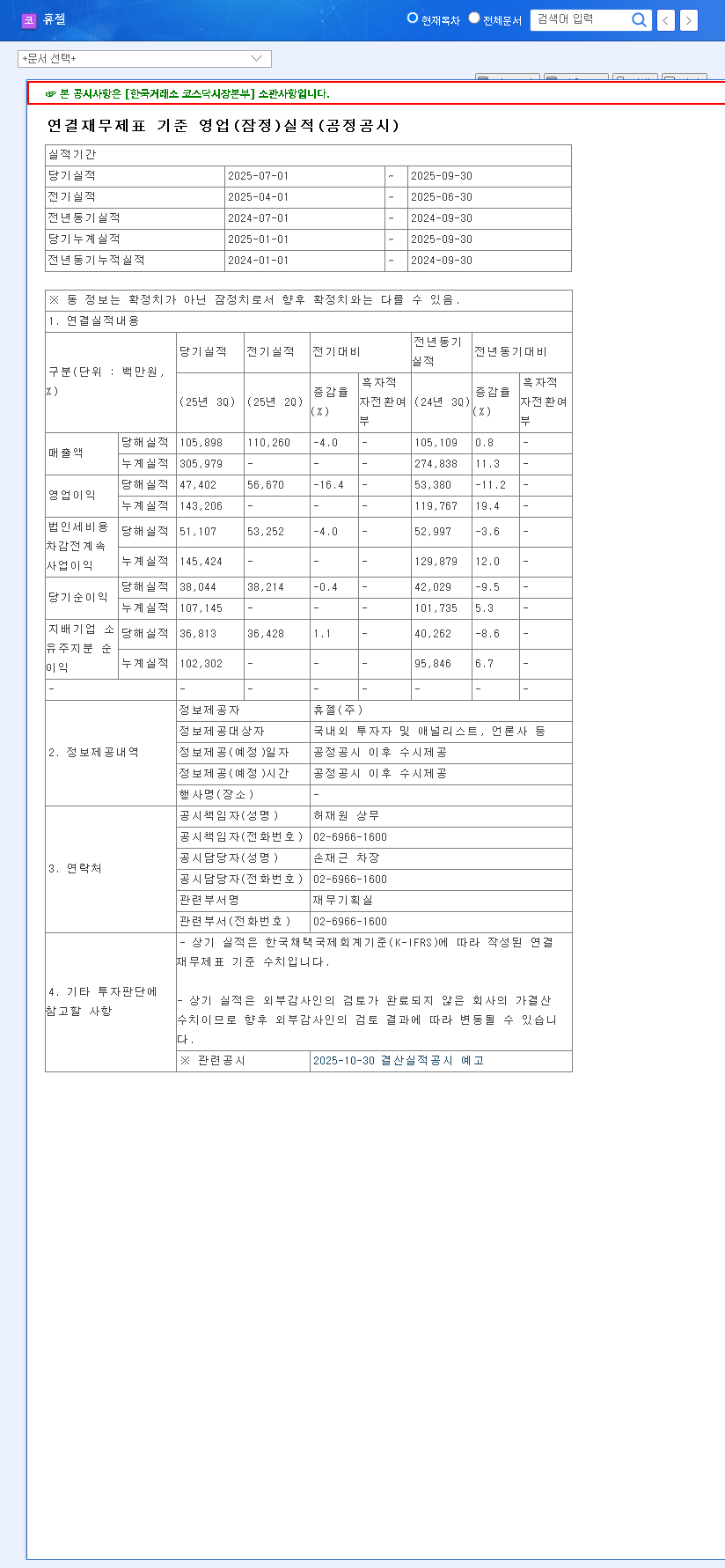
    Hugel, Inc. announced its preliminary Q3 2025 financial results, revealing figures that were starkly disappointing when measured against consensus market expectations. The official numbers reported were:

    • Revenue: KRW 105.9 billion
    • Operating Profit: KRW 47.4 billion
    • Net Income: KRW 36.8 billion

    Performance vs. Market Expectations

    The scale of the underperformance becomes clear when compared to the forecasts. Revenue missed by 11%, but the impact on profitability was even more severe, with operating profit and net income falling short by 19% and 25%, respectively. This significant gap raises immediate questions about the company’s profitability and operational efficiency.

    A Trend of Decelerating Growth

    Perhaps more concerning than a single quarterly miss is the emerging trend. A quarter-over-quarter comparison reveals a decline from Q2 2025’s revenue of KRW 110.3 billion and operating profit of KRW 56.7 billion. This shift from robust growth to negative sequential performance suggests that the weakening momentum may be more than a temporary blip, signaling potential systemic challenges to Hugel’s growth engine.

    The Q3 results indicate a potential inflection point for Hugel, where past growth drivers may be losing steam. The sharp decline in profitability, in particular, warrants a deep investigation into the company’s cost structure and market positioning.

    Unpacking the Shortfall: Why Did Hugel Underperform?

    Several interconnected factors likely contributed to this disappointing quarter. Our Hugel earnings analysis points to a combination of internal and external pressures:

    • Intensifying Market Competition: The global medical aesthetics market, particularly for botulinum toxin and dermal fillers, is increasingly crowded. New entrants and aggressive pricing from established competitors may be eroding Hugel’s market share and pressuring margins.
    • Macroeconomic Headwinds: Global economic uncertainty can impact consumer spending on elective procedures. Furthermore, currency fluctuations, such as a weaker Euro, can negatively affect the value of overseas sales when converted back to Korean Won.
    • Profitability Pressures: The disproportionate drop in net income suggests rising costs. This could stem from increased spending on marketing to combat competition, higher raw material costs, or inefficiencies in the supply chain.

    For a complete and unfiltered view of the preliminary results, investors can consult the Official Disclosure filed with DART, which serves as the primary source for this financial data.

    A Strategic Roadmap for Investors

    Given the challenges highlighted in the Hugel Q3 2025 earnings, investors should adopt a cautious and strategic approach. Hasty decisions are ill-advised; instead, focus on gathering more information and monitoring key developments.

    Key Actions and Considerations

    • Adopt a ‘Wait and See’ Stance: In the short term, Hugel stock is likely to face significant downward pressure. Avoid trying to ‘catch a falling knife’ and wait for the price to stabilize and for management to provide a clear recovery plan.
    • Scrutinize Upcoming Guidance: Pay close attention to the company’s official Q4 earnings call and its business outlook for 2026. Look for specific, credible strategies to address revenue decline, margin compression, and competitive threats.
    • Monitor Market and Economic Data: Stay informed about broader market trends. For expert insights into global economic conditions that affect companies like Hugel, consulting authoritative sources like Bloomberg’s economic analysis can provide valuable context.
    • Reassess Portfolio Allocation: Investors with a significant position in Hugel may want to review their portfolio concentration. Understanding how this single stock fits within your broader strategy, such as reading up on diversification principles in biotech investing, is a prudent step.

    Ultimately, while the Q3 results are a setback, the long-term viability of Hugel depends on its ability to innovate, adapt, and execute a clear strategy to regain its growth momentum. Cautious observation is the most prudent course of action for now.

    (145020) Hugel Q3 2025 Earnings Analysis: Deep Dive into a Major Miss & Investor Guide 관련 이미지
  • (086900) Medy-Tox Inc. Stock Analysis: Dispute Resolved, But Key Risks Remain for Investors

    (086900) Medy-Tox Inc. Stock Analysis: Dispute Resolved, But Key Risks Remain for Investors

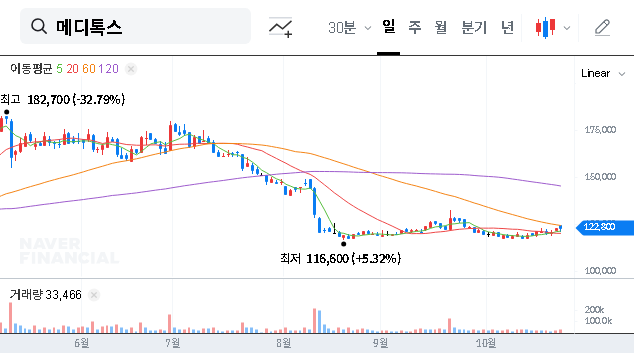
    For investors closely watching Medy-Tox Inc. stock, recent news of a major dispute resolution brings a sigh of relief, but a deeper dive is required. The company has officially concluded a long-standing legal battle with GENTIX LIMITED over a joint venture, a development that removes a significant layer of uncertainty. However, this positive news must be weighed against several persistent risks that continue to shape the Medy-Tox investment landscape.

    This comprehensive Medy-Tox analysis provides crucial insights for current and potential investors. We will explore the implications of the GENTIX LIMITED settlement, examine the company’s core fundamentals, evaluate ongoing risks, and offer a clear roadmap for making informed investment decisions regarding Medy-Tox Inc. stock.

    The Medy-Tox Dispute with GENTIX LIMITED: A Final Resolution

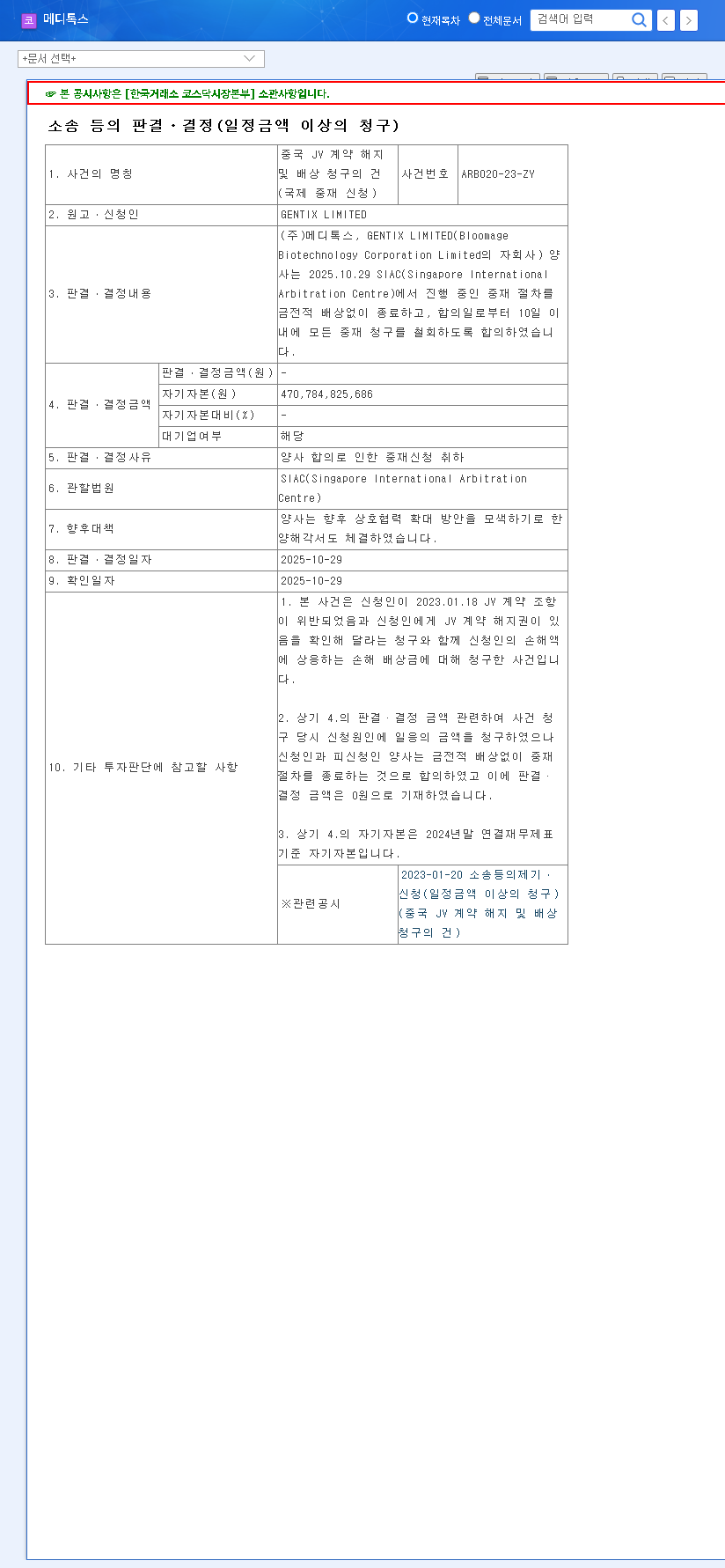
    Medy-Tox Inc. has formally ended its JV (Joint Venture) contract termination and damages claim case with GENTIX LIMITED, a subsidiary of Bloomage Biotechnology. The case, which was before the Singapore International Arbitration Centre (SIAC), concluded on October 29, 2025. Critically, the resolution involved a mutual agreement to withdraw all claims without any monetary compensation changing hands. This outcome is a significant victory, as it avoids a potentially costly financial penalty and closes a chapter of legal uncertainty that has clouded the company’s international operations. The official filing can be viewed here: Official Disclosure.

    While the resolution of the Medy-Tox dispute is a clear positive, the core investment thesis remains complex. Investors must balance the removal of this legal risk against more formidable challenges, particularly those related to U.S. market entry and intellectual property.

    Analyzing Medy-Tox’s Corporate Fundamentals

    A sound Medy-Tox investment strategy requires looking beyond single events to the company’s underlying financial and operational health. Medy-Tox demonstrates solid fundamentals but is not without its vulnerabilities.

    1. Core Business Growth and Pipeline

    The company’s primary revenue drivers remain its botulinum toxin and filler products, which constituted a commanding 86.9% of consolidated revenue in the first half of 2025. This strong foundation is complemented by promising new growth engines:

    • ‘Neurux®’: This next-generation botulinum toxin is steadily gaining market share, representing a key pillar for future growth.
    • ‘Neubee® (MT921)’: An application has been submitted for this fat-dissolving injectable, positioning Medy-Tox to enter the lucrative body contouring market.
    • ‘MT961’: Diversifying its portfolio, Medy-Tox is venturing into the health and wellness space with a body fat-reducing probiotic.
    • Global Expansion: The construction of a plant in the UAE is a strategic move to secure long-term manufacturing capacity and global reach.

    2. Financial Health and Macroeconomic Factors

    Medy-Tox has shored up its balance sheet, with its debt-to-equity ratio improving to a healthy 25.05% by mid-2025. This indicates lower financial risk and greater resilience. A rising KRW/USD exchange rate could boost the value of its exports, though it may also increase the cost of imported raw materials. Stable interest rates provide a predictable environment for financing R&D and expansion, a key factor for any growth-focused biotech company. For more information, investors can review our detailed guide to investing in biotech stocks.

    The Investor’s Dilemma: Critical Risks Facing Medy-Tox Stock

    Despite the positive resolution of the Medy-Tox dispute, the most significant hurdles impacting the stock price are unresolved. These headwinds represent the primary risks for any Medy-Tox investment and must be monitored closely.

    • U.S. FDA Rejection (MT10109L): The rejection of its liquid neurotoxin product by the U.S. Food and Drug Administration (FDA) is a major setback. The uncertainty surrounding the resubmission process and timeline for potential approval is the single largest overhang on the stock.
    • U.S. ITC Lawsuit Appeal: The outcome of the appellate trial for the U.S. International Trade Commission (ITC) lawsuit concerning the company’s botulinum strain is critical. An unfavorable ruling could have severe implications for its ability to compete in the U.S. market.
    • Ongoing Litigation: Various other domestic and international lawsuits and administrative issues continue to pose legal and financial risks.

    Investment Outlook: Neutral Stance with Key Catalysts to Watch

    Our overall investment opinion on Medy-Tox Inc. stock is Neutral. The positive impact of the GENTIX LIMITED dispute resolution is largely offset by the significant uncertainties mentioned above. The company’s value will ultimately be unlocked by progress on these key fronts.

    Future Points for Investors to Monitor:

    • Any updates on the U.S. FDA resubmission for MT10109L.
    • The final verdict of the U.S. ITC lawsuit appellate trial.
    • Commercialization progress and market adoption of new products like Neurux and Neubee.
    • Resolution of other outstanding domestic and international legal matters.

    In conclusion, while Medy-Tox has successfully cleared one legal hurdle, the path forward is still fraught with challenges. A successful Medy-Tox investment will require diligent monitoring of these key risk factors and catalysts. Long-term value appreciation hinges on successful U.S. market entry and continued innovation in its product pipeline.

    Frequently Asked Questions

    Q1: What was the Medy-Tox dispute with GENTIX LIMITED about?

    A1: The dispute involved a Joint Venture (JV) contract termination and a damages claim case filed at the Singapore International Arbitration Centre (SIAC). Medy-Tox resolved it by mutually agreeing to withdraw all claims without any financial payment.

    Q2: How does this resolution affect Medy-Tox Inc. stock?

    A2: Positively. It removes legal uncertainty and a potential financial burden, allowing management to focus on core business growth. However, its impact on the stock price is likely limited as larger risks, like the FDA and ITC issues, remain.

    Q3: What are the biggest risks for a Medy-Tox investment right now?

    A3: The three most critical risks are: the uncertainty surrounding the U.S. FDA resubmission for its MT10109L product, the outcome of the U.S. ITC lawsuit appeal, and various other ongoing legal and administrative challenges.

    Q4: What are Medy-Tox’s main growth drivers?

    A4: Growth is driven by its core botulinum toxin and filler businesses, along with the successful commercialization of new pipeline products like ‘Neurux®’, the fat-dissolving injectable ‘Neubee®’, and the probiotic ‘MT961’.

    (086900) Medy-Tox Inc. Stock Analysis: Dispute Resolved, But Key Risks Remain for Investors 관련 이미지
  • (086900) NPS Sells Medytox Stock: A 2025 Investor’s Guide to Fundamentals & Risks

    (086900) NPS Sells Medytox Stock: A 2025 Investor’s Guide to Fundamentals & Risks

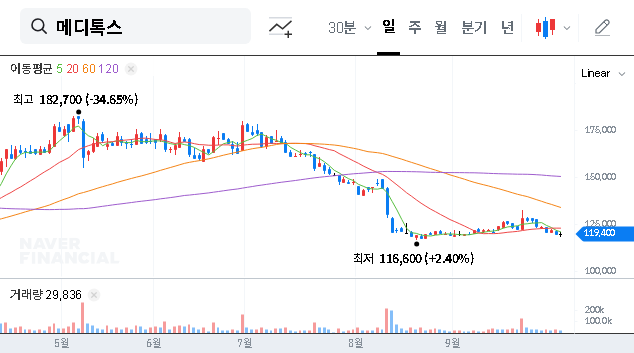
    Investing in Medytox stock has become a hot topic following a significant move by South Korea’s National Pension Service (NPS). As one of the largest and most influential institutional investors, any adjustment in the NPS’s portfolio sends ripples through the market. The recent disclosure shows the NPS has reduced its stake in Medytox, prompting many investors to question the company’s future and the stability of their investment. Is this a signal of underlying problems, or simply a strategic portfolio rebalance?

    This comprehensive analysis will dissect the NPS’s decision, conduct a deep dive into Medytox’s current fundamentals, evaluate its growth potential, and expose the critical risks that every shareholder should be aware of. We’ll provide a clear, actionable guide to help you navigate this uncertainty and make informed decisions about your Medytox investment.

    The NPS Stake Reduction: A Closer Look

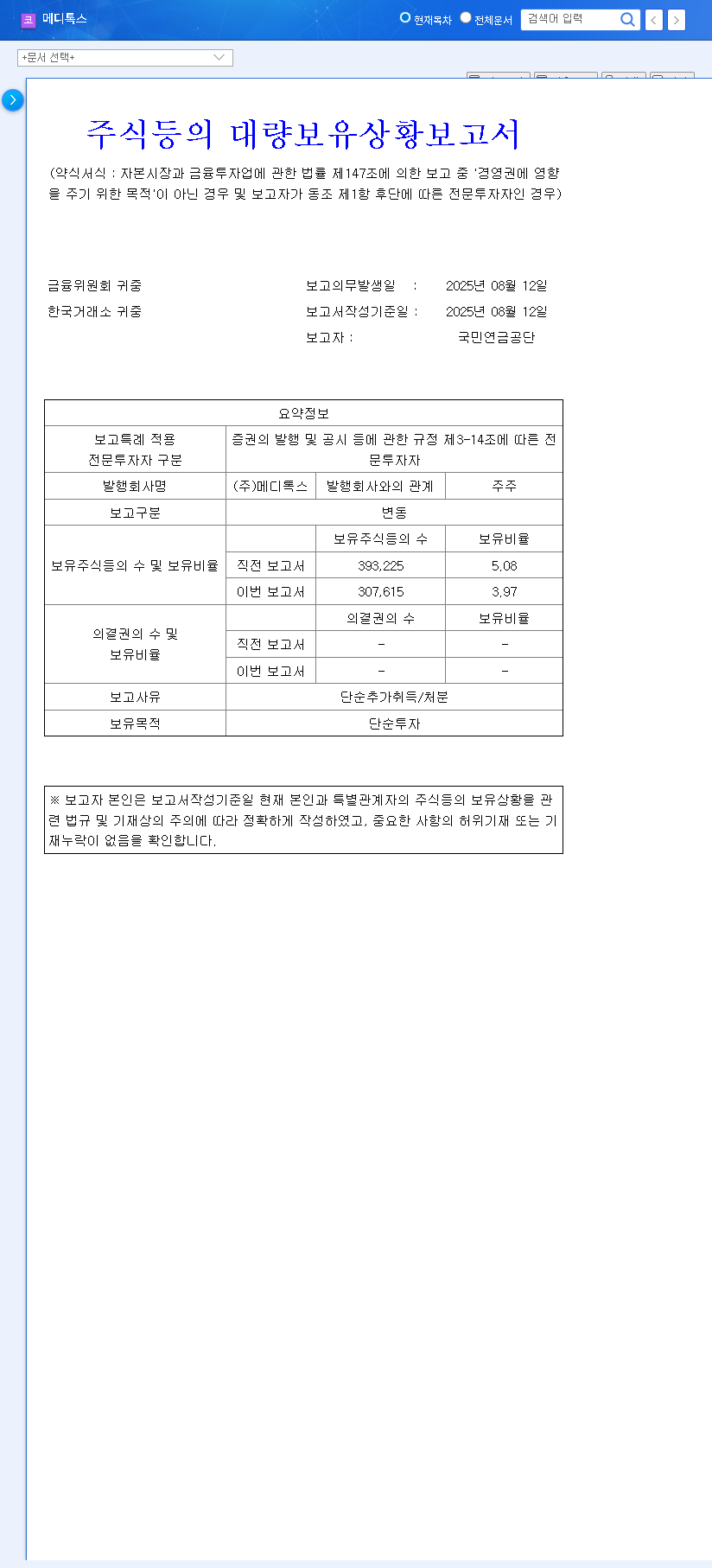
    On October 1, 2025, the investment community took notice as the National Pension Service filed a report detailing a change in its holdings of Medytox. According to the Official Disclosure, the NPS’s stake decreased from 5.08% to 3.97%—a reduction of 1.11 percentage points.

    Crucially, the NPS categorized the purpose as ‘simple investment’ and the reason as ‘simple additional acquisition/disposal.’ This language suggests the move is likely part of a broader portfolio rebalancing strategy rather than a bearish verdict on Medytox’s core business.

    While this may temper immediate fears, the sale by a major institution can still create short-term selling pressure and negative market sentiment. Therefore, a thorough Medytox analysis is essential to separate market noise from fundamental reality.

    Deep Dive: Medytox Fundamentals in 2025

    To understand the true value of Medytox stock, we must look beyond the latest headlines and into the company’s financial health, core business operations, and future growth drivers.

    Financial Stability and Performance

    Medytox has demonstrated a solid financial foundation. A look at the 2025 semi-annual report reveals key strengths:

    • Robust Revenue: H1 2025 revenue reached KRW 125.6 billion, with an operating profit of KRW 11.79 billion. The core business of botulinum toxin and fillers accounts for a commanding 86.9% of total sales.
    • Sound Financial Structure: A low debt-to-equity ratio of just 25.05% signals excellent financial stability and prudent management of liabilities.
    • Strong Cash Flow: Operating cash flow is healthy at KRW 26.589 billion. The company is actively reinvesting in its future, as shown by significant cash outflows for investing activities.

    However, investors should note the high R&D expense ratio of 17.60%. While essential for long-term growth and staying competitive in the global botulinum toxin market, it can exert pressure on short-term profitability.

    Growth Drivers and Pipeline Potential

    Medytox is not standing still. The company’s future growth hinges on both its established products and its innovative pipeline.

    • Core Business Strength: Medytox maintains a powerful market presence in its key segments. The international expansion of its new toxin, ‘NeuLux®’, is a particularly positive sign.
    • New Ventures: While the initial refusal of US FDA approval for its liquid botulinum toxin (MT10109L) was a setback, the company plans to resubmit. Furthermore, new projects like a fat-dissolving injection (MT921) and probiotics (MT961) offer diversification and new revenue streams.
    • Global Expansion: With exports to over 30 countries and a new factory in Dubai, Medytox is actively building a global footprint to reduce reliance on any single market.

    The Elephant in the Room: Critical Risk Factors

    No investment is without risk, and Medytox faces several significant challenges. The most prominent is the web of ongoing legal disputes. These litigations, ranging from administrative lawsuits to international arbitration over trade secret infringement, create a cloud of uncertainty. As noted in reports by authoritative sources like Reuters, the outcomes of these cases are unpredictable and could have a material impact on the company’s financials and market reputation.

    The outcome of the US FDA resubmission for MT10109L is another pivotal risk. A successful approval would unlock the lucrative US market, while another rejection could severely damage investor confidence and the Medytox stock price.

    Investor Action Plan & Conclusion

    So, how should you interpret the NPS Medytox stake reduction and position your portfolio?

    1. Look Beyond the Headline

    It is crucial not to overreact to the NPS’s sale. The ‘simple investment’ classification strongly suggests this was a portfolio management decision, not a vote of no confidence in Medytox’s long-term prospects. The company’s intrinsic value has not fundamentally changed because of this single transaction.

    2. Weigh the Opportunities Against the Risks

    Medytox presents a classic case of risk versus reward. The opportunity lies in its strong market position, solid financials, and promising pipeline. The risk is concentrated in its legal battles and regulatory hurdles. Investors should assess their own risk tolerance before committing capital.

    3. Monitor Key Catalysts

    The future of Medytox stock will be heavily influenced by several key events. Keep a close watch on:

    • The outcomes of major lawsuits and litigations.
    • Progress and announcements regarding the US FDA resubmission.
    • Quarterly earnings reports to track revenue growth and profitability.

    In conclusion, while the NPS’s stake reduction may cause short-term volatility, a long-term investment decision in Medytox should be based on a comprehensive evaluation of its solid fundamentals, growth pipeline, and the significant, yet manageable, legal risks. Cautious, informed investing based on diligent research will be the key to success.

    (086900) NPS Sells Medytox Stock: A 2025 Investor's Guide to Fundamentals & Risks 관련 이미지
  • Dongbang Medical (240550) Q2 Earnings Shock: An In-Depth Analysis for Investors

    1. What Happened?: Dongbang Medical’s Q2 Earnings Analysis

    Dongbang Medical reported disappointing Q2 results, with revenue of KRW 26.1 billion and operating profit of KRW 3.1 billion, falling short of market consensus by 14% and 31%, respectively. This downturn reflects a worsening trend of declining sales observed in the semi-annual report, primarily attributed to sluggish sales of fillers and needles in the aesthetic medical device segment.

    2. Why Did This Happen?: Reasons Behind the Underperformance

    The weak performance is attributed to a combination of factors, including an overall slowdown in demand within the aesthetic treatment market, intensified competition, and delays in obtaining regulatory approvals in certain countries. The significant decline in sales within the core aesthetic medical device segment is particularly concerning.

    3. What Should You Do?: Investment Strategy

    While short-term downward pressure on the stock price is anticipated, the funds secured through the KOSDAQ listing and continued R&D investment offer a silver lining. The success of new product development and overseas market penetration will be crucial in determining the future trajectory of the stock price.

    4. Investor Action Plan

    • Short-Term Investors: Exercise caution. Pay close attention to upcoming quarterly earnings releases and news regarding new product launches.
    • Mid- to Long-Term Investors: Continuously monitor R&D achievements and progress in overseas market entry.
    Q: What are the main reasons for Dongbang Medical’s disappointing Q2 results?

    A: A combination of factors contributed to the underperformance, including a slowdown in the aesthetic treatment market, increased competition, and regulatory approval delays in certain countries. Sluggish filler and needle sales were particularly notable.

    Q: Should I invest in Dongbang Medical?

    A: The current recommendation is “Neutral.” While short-term downward pressure on the stock is expected, continued R&D investment and improved financial health are positive factors. The success of new product launches and overseas expansion will be key.

    Q: What is the outlook for Dongbang Medical’s stock price?

    A: The future stock price trajectory hinges on the successful development and launch of new products, successful entry into overseas markets, and the recovery of existing business segments.

  • Korea BioNics Receives NMPA Approval for Hyaluronic Acid Fillers in China: Investment Outlook

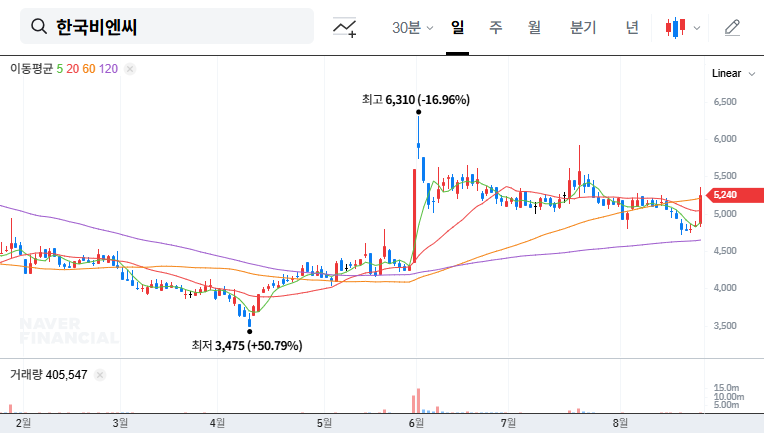
    Korea BioNics Receives NMPA Approval for Hyaluronic Acid Fillers in China: Investment Outlook 대표 차트 이미지

    What Happened?

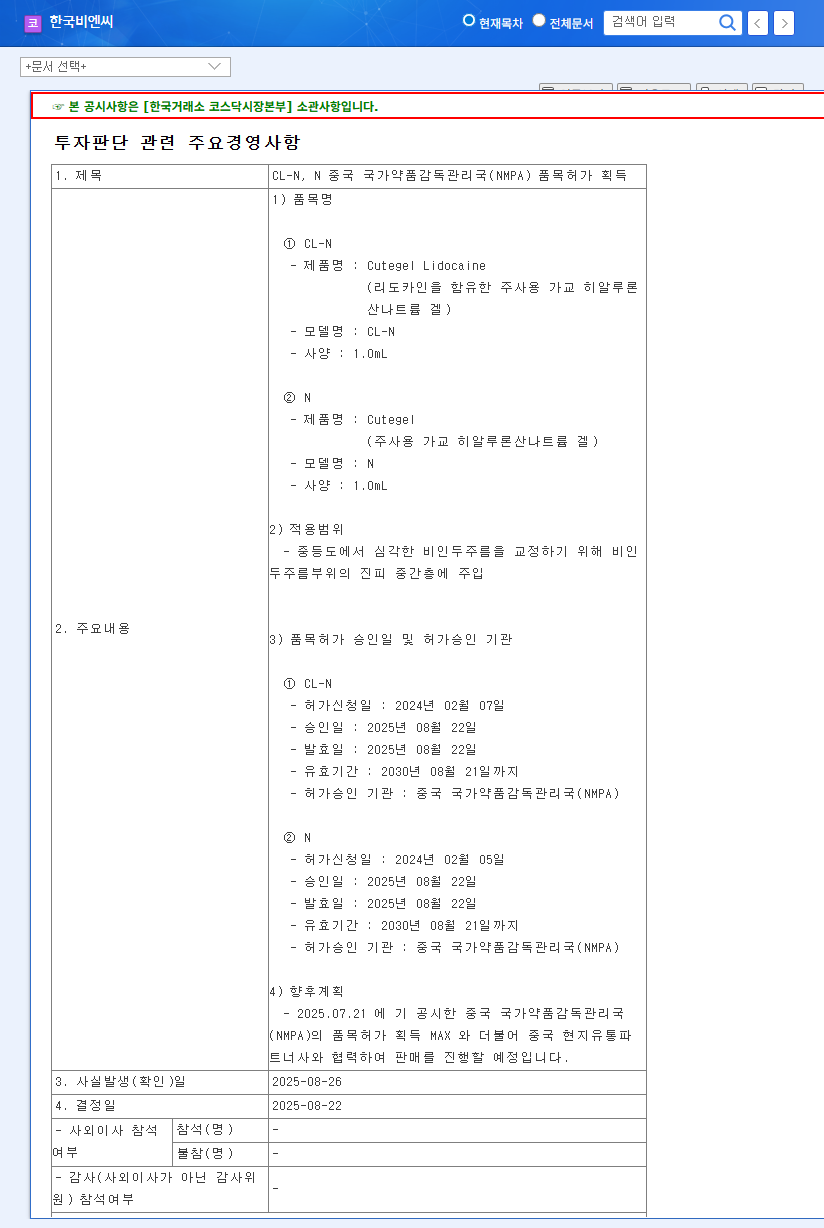
    Korea BioNics received NMPA approval for two hyaluronic acid filler products, ‘CL-N’ and ‘N.’ Valid until August 21, 2030, these fillers are intended for the correction of moderate to severe nasolabial folds. Korea BioNics plans to commence sales through local distribution partners in China, alongside its existing ‘MAX’ product.

    Why Does It Matter?

    China is one of the fastest-growing beauty markets globally. This NMPA approval presents a significant opportunity for Korea BioNics, potentially leading to increased sales, portfolio diversification, and enhanced brand recognition. This approval is particularly significant as it marks the fruition of past R&D investments and could serve as a stepping stone for a turnaround.

    What’s Next?

    This approval paves the way for Korea BioNics to significantly expand its sales within the Chinese market. Its current low debt ratio and ample cash reserves provide a stable foundation for business expansion. However, potential risks, including cooperation with local partners, intensifying competition, and foreign exchange volatility, must be considered.

    What Should Investors Do?

    The NMPA approval is a positive sign, enhancing Korea BioNics’ long-term growth potential. However, investors should continuously monitor the competitive landscape in China, the company’s collaboration with local partners, and actual sales performance before making investment decisions.

    Frequently Asked Questions

    What is NMPA approval?

    The NMPA (National Medical Products Administration) is China’s regulatory body for pharmaceuticals and medical devices. NMPA approval is mandatory for selling these products in China.

    Why is this approval important for Korea BioNics?

    China has a massive beauty market. This approval gives Korea BioNics a significant opportunity to enter the Chinese market, expand sales, and increase brand awareness.

    What should investors be aware of?

    Investors should monitor the competitive landscape in China, the relationship with local distribution partners, and actual sales performance. External factors like foreign exchange volatility should also be considered.

    Korea BioNics Receives NMPA Approval for Hyaluronic Acid Fillers in China: Investment Outlook 관련 이미지
    Korea BioNics Receives NMPA Approval for Hyaluronic Acid Fillers in China: Investment Outlook 관련 이미지
  • Hugel (145020) Q2 Earnings Shock: What Should Investors Do?

    1. What Happened? : Hugel’s Q2 Earnings Breakdown

    Hugel reported Q2 2025 revenue of ₩110.2 billion, operating profit of ₩56.6 billion, and net profit of ₩38.2 billion. These figures represent a 6%, 2.2%, and 21.4% miss against market consensus, respectively. The significant drop in net profit is particularly concerning for investors.

    2. Why Did This Happen? : Analyzing the Earnings Miss

    It’s difficult to pinpoint the exact cause of the sharp decline in net profit based solely on the preliminary earnings release. Several factors could be at play, including rising costs, increased SG&A expenses, one-time charges, and foreign exchange losses. We await further clarification from management. However, the earnings miss despite positive fundamentals raises concerns.

    3. What’s Next? : Outlook and Investment Strategies

    Downward pressure on the stock price is expected in the short term. A conservative investment strategy is recommended until uncertainties are resolved. In the medium to long term, investors should assess the reasons behind the earnings miss, the company’s response, global market growth potential, and the success of new pipelines.

    • Short-term Investment Opinion: Sell or Neutral (Conservative Approach)
    • Medium to Long-term Investment Strategy: Monitor further earnings releases and disclosures, legal risks, and new pipeline progress; assess global expansion and growth in the cosmetics sector.

    4. What Should Investors Do? : Action Plan

    Investors should take the following steps:

    • Carefully review Hugel’s subsequent announcements and IR materials for further insights into the earnings miss and future outlook.
    • Re-evaluate Hugel’s competitiveness through competitor analysis and industry trend research.
    • Adjust investment strategies based on individual investment goals and risk tolerance.
    Q: Why did Hugel’s Q2 earnings disappoint?

    A: The precise reasons are unclear based on the preliminary release. Potential factors include increased costs, higher SG&A expenses, one-time charges, and forex losses. Further clarification from the company is needed.

    Q: Should I invest in Hugel?

    A: A conservative approach is recommended in the short-term due to potential downward pressure on the stock price. Medium to long-term investment decisions should be based on a comprehensive assessment of the reasons for the earnings miss, the company’s response, and the success of new pipelines.

    Q: What is the future outlook for Hugel stock?

    A: The outlook depends on various factors, including global market growth potential, new pipelines, and the competitive landscape. If the company’s fundamentals remain strong and the reasons for the earnings miss are addressed, there is potential for a rebound.

  • Biobijou’s 2025 Half-Year Earnings Soar: Investment Analysis and Future Outlook

    1. What Happened at Biobijou?

    Biobijou achieved remarkable sales of KRW 17.845 billion in the first half of 2025, marking an astounding 32.5% year-on-year growth. Notably, the company’s preliminary Q2 earnings surpassed market expectations, generating excitement among investors.

    2. The Secret to Explosive Growth?

    This growth is attributed to two key drivers: OEM business expansion and successful entry into overseas markets. Following the completion of its own production plant, Biobijou saw a significant increase in B2B sales. The company’s strategic expansion beyond China into North America, Southeast Asia, and Europe has solidified its global presence. Furthermore, a diversified product portfolio, including HA-based skin boosters, fillers, and cosmetics, along with continuous R&D investment, further strengthens Biobijou’s competitive edge.

    3. What’s Next for Biobijou?

    Through a rights offering in May 2025, Biobijou improved its financial structure and achieved a positive operating cash flow, establishing a stable foundation for growth. Future plans include the establishment of a second plant to expand production capacity, securing overseas certifications, and launching new products, all of which are expected to create additional growth momentum. However, increasing sales and administrative expenses and low production capacity utilization remain areas for improvement.

    4. What Should Investors Do?

    Biobijou’s 2025 half-year performance is a positive indicator for investors. Considering the current growth trajectory and future potential, Biobijou presents an attractive investment opportunity. However, before making any investment decisions, careful consideration should be given to factors such as H2 earnings trends, improvement in production capacity utilization, the success of global market expansion strategies, new product launches and R&D achievements, and the company’s ability to control sales and administrative expenses.

    What is Biobijou’s core business?

    Biobijou is a global aesthetics company that researches, manufactures, and sells hyaluronic acid (HA)-based skin boosters and fillers.

    What was Biobijou’s sales growth rate for the first half of 2025?

    It grew by 32.5% year-on-year.

    What are Biobijou’s main growth drivers?

    The main growth drivers are OEM business expansion, overseas market entry, a diversified product portfolio, and continuous R&D investment.

    What should investors be aware of when considering investing in Biobijou?

    Investors should consider factors such as increasing sales and administrative expenses, low production capacity utilization, exchange rate volatility, and intensifying competition.

  • Humedics (200670) Q2 2025 Earnings Analysis: Missed Expectations, Future Growth Potential?

    1. What Happened? Humedics Q2 2025 Earnings Breakdown

    Humedics reported Q2 2025 revenue of ₩42.9B (down 4% YoY), operating profit of ₩10.7B (down 14%), and net income of ₩7.8B (down 7%), falling short of market expectations. The significant decline in operating profit raises concerns about deteriorating profitability. A slowdown from Q1 to Q2 2025 was also observed, and it’s crucial to monitor whether this trend continues.

    2. Why These Results? Analyzing the Earnings Miss

    This underperformance is attributed to a combination of factors, including intensifying competition in the aesthetics market, increasing R&D expenses, and rising raw material prices.

    • Intensifying Competition: The competitive landscape in the filler and botulinum toxin market is putting pressure on profitability.
    • Increased R&D Investment: Investments in future growth drivers, such as bio-printing and xenotransplantation, have impacted short-term profitability.
    • Macroeconomic Uncertainty: External factors, such as the global economic slowdown and rising raw material prices, also affected the results.

    3. What’s Next? Future Outlook and Investment Strategies

    Despite short-term concerns about the earnings slowdown, Humedics’ mid-to-long-term growth potential remains intact. Investors should focus on positive factors such as a diversified business portfolio, efforts to secure future growth drivers, and global market expansion. Careful monitoring of future earnings improvements, new business progress, and macroeconomic changes is crucial for making informed investment decisions.

    4. Investor Action Plan

    It’s important to develop an investment strategy based on a long-term perspective, avoiding being swayed by short-term stock price fluctuations. Investors should analyze the company’s fundamentals and growth potential, and make prudent investment decisions considering their investment objectives and risk tolerance.

    What are Humedics’ main businesses?

    Humedics is a biopharmaceutical company specializing in developing and manufacturing hyaluronic acid-based fillers, botulinum toxin, osteoarthritis treatments, eye drops, and pharmaceutical ingredients.

    What are the main reasons for this earnings miss?

    Several factors contributed, including intensifying competition in the aesthetics market, increasing R&D expenses, and rising raw material prices.

    What are Humedics’ future growth drivers?

    The company is actively investing and conducting R&D in future growth drivers such as bio-printing and xenotransplantation.

  • Medytox Q2 Earnings Shock: What Investors Need to Know

    1. What Happened? Medytox Q2 Earnings Breakdown

    Medytox reported Q2 2025 revenue of ₩61.6 billion and operating profit of ₩6.3 billion, significantly below market consensus. The operating profit, in particular, raised concerns about profitability, coming in at half the expected figure.

    • Revenue: ₩61.6 billion (vs. ₩70.2 billion expected, -12.0%)
    • Operating Profit: ₩6.3 billion (vs. ₩12.6 billion expected, -50.0%)
    • Net Profit: ₩8.1 billion (vs. ₩10.9 billion expected, -26.0%)

    2. Why the Underperformance? Analyzing the Causes

    While the revenue shortfall may be attributed to seasonal factors or temporary sales weakness, the sharp decline in operating profit is primarily due to increased selling, general, and administrative expenses (SG&A). The SG&A growth rate (7.0%) outpaced revenue growth (5.1%), leading to deteriorated profitability. Potential increases in litigation-related expenses also cannot be ruled out.

    3. What Now? Investment Strategies

    Short-term investors should remain cautious given the negative momentum and consider investing only after clear signs of a rebound. Long-term investors should evaluate the company’s core business competitiveness, pipeline potential, and resolution of litigation risks from a long-term perspective. Closely monitor the company’s efforts to improve earnings and cost efficiency. Pay particular attention to the following:

    • The company’s explanation for the Q2 underperformance
    • Q3 earnings outlook
    • Resubmission and outcome of MT10109L’s FDA application
    • Progress of ongoing litigation
    • Tangible results from the new pipeline

    4. Action Plan for Investors

    If you’re considering investing in Medytox, check out the FAQ below for information that can help you make informed decisions.

    Frequently Asked Questions

    Why did Medytox’s Q2 earnings fall short of expectations?

    Increased SG&A expenses are the primary reason. While revenue saw a slight increase, the growth rate of SG&A expenses outpaced revenue growth, leading to a significant decline in operating profit.

    What is the outlook for Medytox?

    While Medytox has long-term growth potential, there is significant short-term uncertainty. The performance of the new pipeline and the resolution of litigation risks are key factors.

    Should I buy Medytox stock now?

    Short-term investors should proceed with caution and consider waiting for clear signs of an earnings rebound. Long-term investors should consider the company’s growth potential and risks comprehensively before making investment decisions.