Tag: FDA Approval

  • (104540) Corentec Q3 2025 Earnings Analysis (104540): A Deep Dive into the 157% Profit Surge

    (104540) Corentec Q3 2025 Earnings Analysis (104540): A Deep Dive into the 157% Profit Surge

    This comprehensive Corentec Q3 2025 earnings analysis provides a deep dive into the company’s latest financial report. Corentec Co., Ltd. (KRX: 104540) has captured significant investor attention following its provisional Q3 2025 results, which showcased a dramatic turnaround in profitability. With a remarkable 157% surge in operating profit and a return to net positive income, the market is buzzing with questions. Does this signal a sustainable growth trajectory, or should investors remain cautious? We will dissect the numbers, explore the underlying growth drivers, and evaluate the potential risks to provide a clear outlook on the Corentec stock analysis.

    Corentec’s Q3 2025 Performance: A Stunning Turnaround

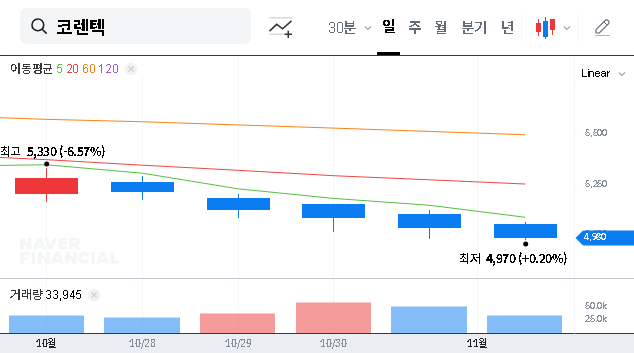
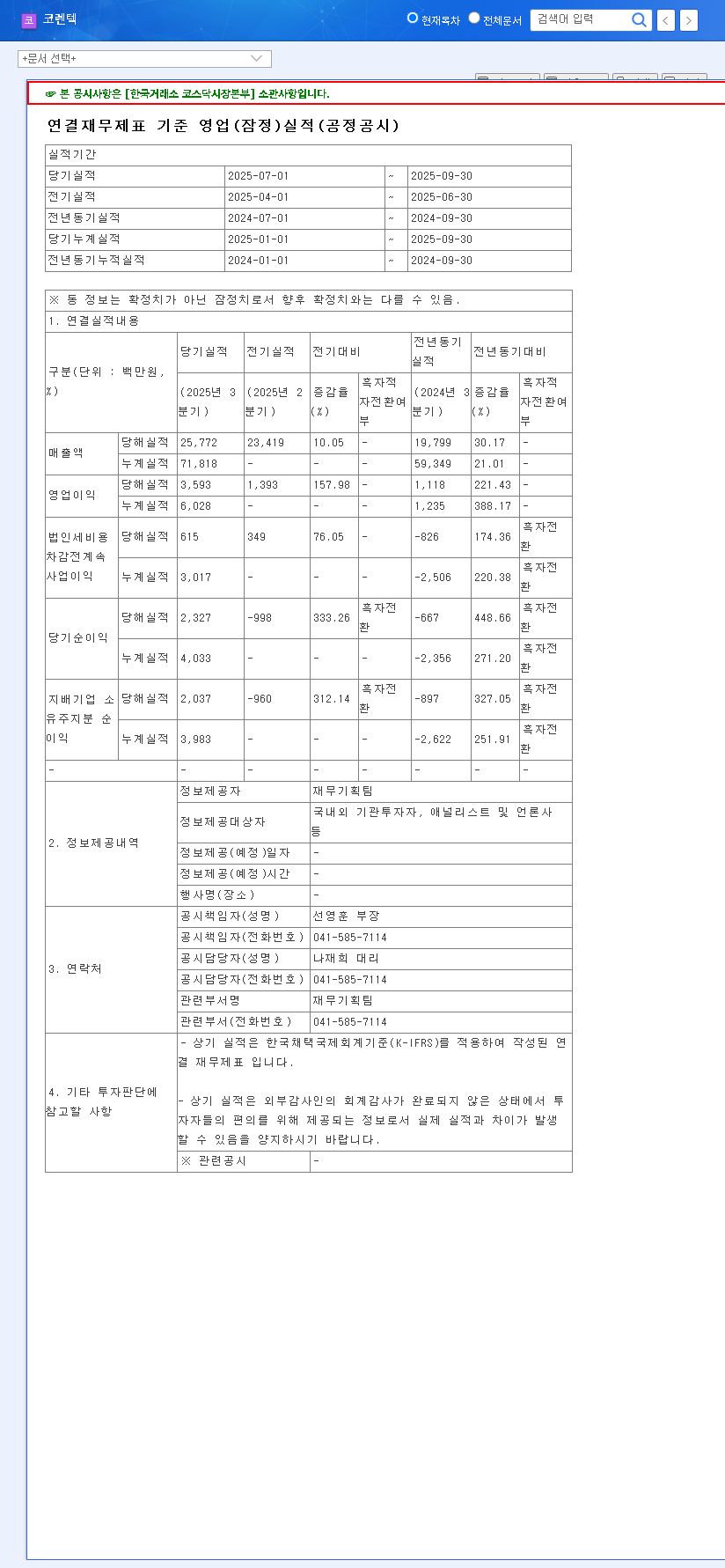
    On November 3, 2025, Corentec released its provisional consolidated Q3 earnings, sending a wave of optimism through the market. The Corentec financial report revealed significant improvements across all key metrics compared to the previous quarter. For more details, see the Official Disclosure (Source).

    • Revenue: KRW 25.8 billion (a 10% increase quarter-over-quarter)
    • Operating Profit: KRW 3.6 billion (a staggering 157% increase quarter-over-quarter)
    • Net Profit: KRW 2.0 billion (a significant reversal to black from Q2’s KRW 1.0 billion loss)

    This robust performance not only reverses the losses seen in previous quarters but also suggests a fundamental strengthening of the company’s operational efficiency and market position, raising expectations for sustained profitability.

    What’s Fueling Corentec’s Growth Engine?

    This impressive turnaround isn’t attributable to a single event but rather a combination of strategic initiatives and favorable market conditions. The Corentec earnings analysis points to three core pillars supporting this growth.

    1. Strengthened Financial Health and Efficiency

    Corentec has actively worked to streamline its financial structure. By strategically selling and liquidating non-core subsidiaries, the company has reduced overhead and sharpened its focus on its primary artificial joint business. This has enhanced operational efficiency and contributed directly to the improved bottom line.

    2. Aggressive Overseas Market Expansion

    A crucial milestone was achieved with the U.S. FDA approval for its UCR type tibial insert for artificial knee joints. This approval is more than just a regulatory hurdle; it’s a gateway to the lucrative North American market, one of the largest for orthopedic devices globally. This opens up a significant new revenue stream and is a key factor in any long-term Corentec stock analysis.

    3. Unique Technological Competitiveness

    Corentec’s market leadership is underpinned by its proprietary technologies. Innovations like 3D printing for custom implants and advanced Z-coating for enhanced biocompatibility give it a distinct edge. These technologies have solidified its #1 position in the domestic hip joint market and a strong 13.8% share in the knee joint market. The macro-trend of an aging global population ensures a steadily growing demand for these advanced artificial joints, as reported by industry analysts like Grand View Research.

    Despite the strong Q3 2025 results, a comprehensive Corentec earnings analysis must also weigh the significant financial risks. A ‘Neutral’ investment opinion remains prudent until sustained profitability and debt management are demonstrated.

    Navigating the Risks: What Investors Must Watch

    While the Corentec Q3 2025 earnings are promising, investors should not overlook several persistent risk factors that could impact future performance.

    • High Financial Burden: The company’s balance sheet still carries a high debt ratio, including variable interest rate borrowings, derivative liabilities, and convertible bonds. This makes Corentec vulnerable to interest rate hikes, which could significantly increase interest expenses and erode profitability.
    • Historical Profit Volatility: A single strong quarter does not erase a history of fluctuating profits, including recent net losses in Q3 2024 and Q2 2025. Consistent performance over several quarters is needed to build investor confidence.
    • Currency Exchange Rate Risk: As a company with growing international exposure, Corentec is susceptible to volatility in KRW/USD and KRW/EUR exchange rates, which can impact both revenue and cost of goods sold.

    Investment Outlook & Key Monitoring Points

    Corentec’s strong Q3 2025 earnings report clearly signals a potential turning point. The combination of FDA approval, technological leadership, and a growing market provides powerful long-term growth momentum. However, due to the financial risks and past volatility, a cautious ‘Neutral’ stance is advisable for now. Investors should closely monitor the following points in upcoming Corentec financial reports:

    • Overseas Sales Traction: Monitor the actual sales figures from the U.S. market and their contribution to overall revenue.
    • Debt Reduction Efforts: Look for concrete steps to improve the debt ratio and manage risks associated with variable interest borrowings.
    • Profitability Consistency: Check if the strong performance of Q3 can be maintained or improved upon in subsequent quarters.

    Continued diligence and a careful review of Corentec’s next quarterly earnings are essential for making an informed investment decision.
    (104540) Corentec Q3 2025 Earnings Analysis (104540): A Deep Dive into the 157% Profit Surge 관련 이미지
  • (214370) CAREGEN CG-P5: A Breakthrough in Age-related Macular Degeneration Treatment?

    (214370) CAREGEN CG-P5: A Breakthrough in Age-related Macular Degeneration Treatment?

    The biopharmaceutical landscape is buzzing with news from CAREGEN CO., LTD., which has achieved a significant milestone. The company recently announced it has secured U.S. Food and Drug Administration (FDA) Phase 1 Investigational New Drug (IND) approval for CAREGEN CG-P5, a pioneering peptide candidate designed as an innovative Age-related Macular Degeneration treatment. This approval marks a pivotal step forward for both the company and for patients suffering from this debilitating condition.

    This official FDA IND approval allows CAREGEN to initiate Phase 1 clinical trials in the United States, focusing on the safety and tolerability of its novel wAMD eye drops. But what does this mean for investors, patients, and the future of eye care? Let’s delve into a comprehensive analysis of this development. This milestone was officially confirmed in a public filing (Source: DART Official Disclosure).

    Understanding the Target: Wet Age-related Macular Degeneration (wAMD)

    Wet Age-related Macular Degeneration (wAMD) is a leading cause of severe, irreversible vision loss in people over age 60. It occurs when abnormal blood vessels grow under the macula—the part of the retina responsible for sharp, central vision. These vessels can leak blood and fluid, damaging the macula and leading to rapid vision decline. Current standard treatments often involve regular, invasive injections directly into the eye, which can be uncomfortable and burdensome for patients. You can learn more about this condition from authoritative sources like the National Eye Institute.

    The development of a non-invasive treatment like the CAREGEN CG-P5 eye drops could revolutionize the standard of care for millions, improving both treatment outcomes and quality of life.

    The Promise of CAREGEN CG-P5: A Clinical Deep Dive

    The FDA IND approval for CG-P5 is not just a procedural step; it’s a validation of CAREGEN’s robust preclinical data and its innovative peptide technology. The upcoming Phase 1 trial is designed to be a multi-center, randomized, double-blind, placebo/active comparator study—the gold standard for clinical research. Its primary goal is to meticulously evaluate the safety and tolerability of the wAMD eye drops in human subjects.

    Key Strengths and Opportunities

    • Market Disruption: Entering the multi-billion dollar macular degeneration market with a patient-friendly eye drop formulation offers a significant competitive advantage over painful injections.
    • Technological Validation: This approval reinforces CAREGEN’s leadership in peptide synthesis and development, a core strength that underpins its broader pipeline of peptide-based therapeutics.
    • Future Growth Engine: The progression of a core asset like CG-P5 into the clinical phase signals the maturation of CAREGEN’s biopharmaceutical business, promising a powerful new revenue stream upon successful commercialization.

    Potential Risks and Investor Considerations

    While the news is overwhelmingly positive, prudent investors must remain aware of the inherent risks in drug development.

    • Clinical Uncertainty: Phase 1 focuses on safety, not efficacy. The path through Phase 2 and 3 trials is long, expensive, and uncertain. The possibility of trial failure is a constant risk.
    • Competitive Landscape: The Age-related Macular Degeneration treatment market is dominated by established global pharmaceutical giants. CAREGEN will need a clear differentiation strategy to capture market share.
    • Financial & Market Factors: Substantial R&D funding will be required for subsequent phases. Additionally, as a company with significant international sales, CAREGEN is exposed to exchange rate volatility that can impact profitability.

    Strategic Outlook and Final Thoughts

    The IND approval for CAREGEN CG-P5 is a landmark achievement. It represents a tangible step toward launching a potentially transformative Age-related Macular Degeneration treatment. This development solidifies CAREGEN’s long-term growth narrative and highlights its potential as a key player in the peptide drug space.

    However, the journey from a Phase 1 trial to a commercial product is a marathon, not a sprint. Investors and industry watchers should closely monitor upcoming clinical data, the progress of other pipeline assets, and broader market conditions. The success of CG-P5 could indeed mark a new horizon for wAMD treatment, and this first step is a promising beacon of that future.

    Frequently Asked Questions (FAQ)

    Q1: What is CAREGEN CG-P5?
    A1: CG-P5 is an innovative peptide-based drug candidate developed by CAREGEN. It is formulated as an eye drop for the treatment of wet Age-related Macular Degeneration (wAMD), aiming to provide a non-invasive alternative to current injection-based therapies.

    Q2: What is the significance of the US FDA Phase 1 IND approval?
    A2: This approval is a critical regulatory milestone that allows CAREGEN to begin clinical trials in humans in the United States. It signifies that the FDA has reviewed preclinical data and deemed the drug candidate safe enough to proceed with testing in patients, marking the formal start of the clinical development journey.

    Q3: What should investors monitor moving forward?
    A3: Investors should pay close attention to the results of the Phase 1 safety and tolerability study. Beyond CG-P5, monitoring the progress of CAREGEN’s other pipelines, its global sales performance, and macroeconomic factors like exchange rates will provide a comprehensive view of the company’s health and potential.

  • (068270) Celltrion Eydenzelt FDA Approval: A 2025 Investor’s Guide & Stock Analysis

    (068270) Celltrion Eydenzelt FDA Approval: A 2025 Investor’s Guide & Stock Analysis

    A New Era in Ophthalmology: Celltrion’s Eydenzelt Secures Landmark FDA Approval

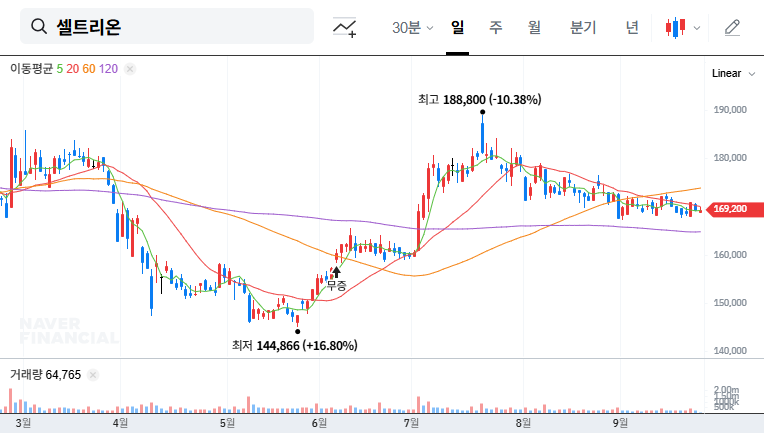
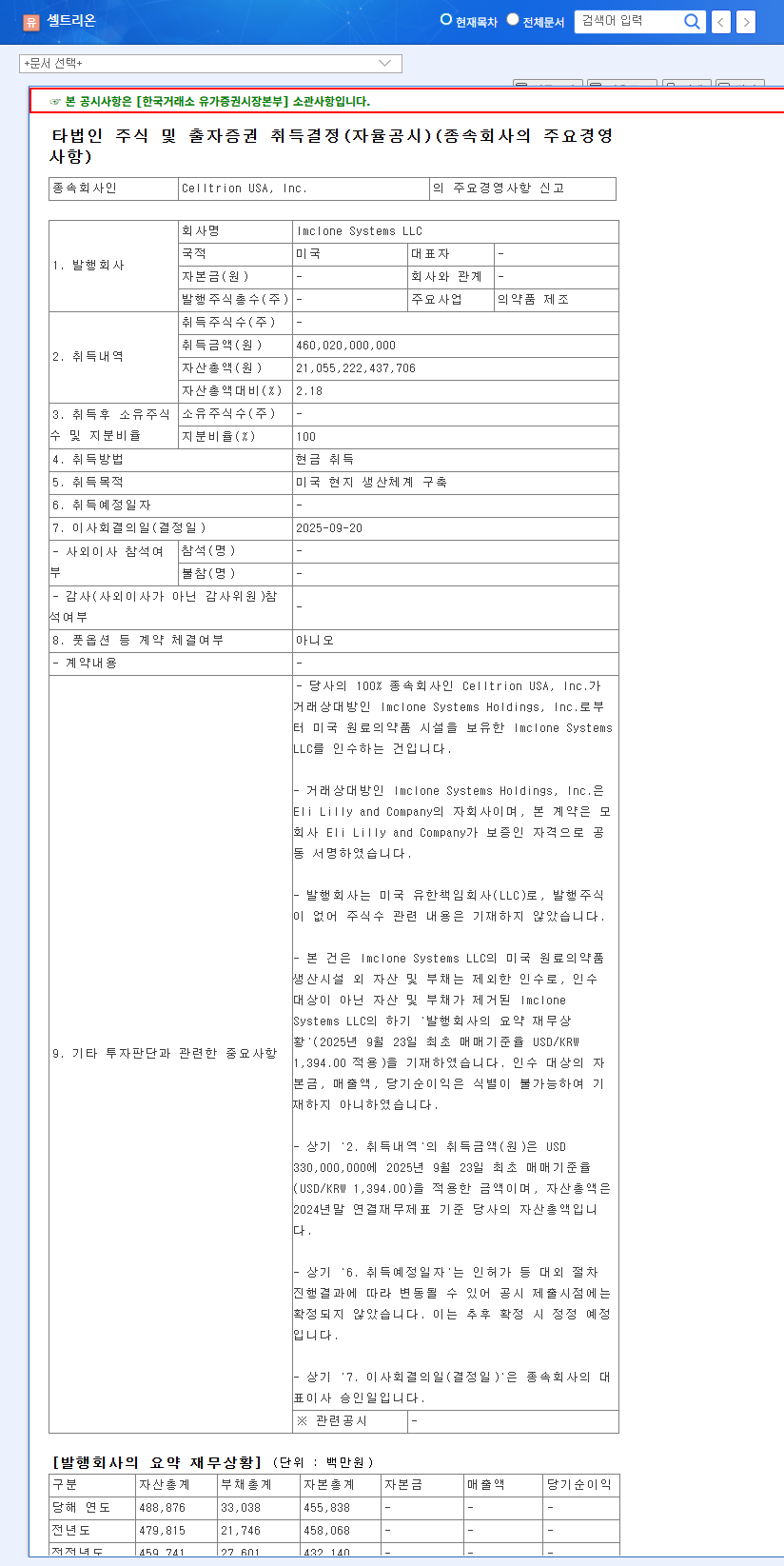
    The news of the Celltrion Eydenzelt FDA approval marks a pivotal moment for the global biopharmaceutical giant and its investors. On October 10, 2025, Celltrion officially announced that its Eylea biosimilar, Eydenzelt (CT-P42), has received final marketing authorization from the U.S. Food and Drug Administration. This development is far more than a simple product launch; it signifies a major strategic victory, unlocking access to a multi-billion dollar market and reinforcing Celltrion’s position as a leader in complex drug development. For investors, this raises critical questions: What does this mean for the Celltrion stock outlook, and what is the optimal investment strategy moving forward?

    The Approval Details: What is Eydenzelt (CT-P42)?

    Eydenzelt (CT-P42) is an Aflibercept biosimilar, designed to be bioequivalent to Regeneron’s blockbuster drug, Eylea. It targets a range of serious retinal diseases that are leading causes of vision loss. The FDA has approved Eydenzelt for several key indications, including Neovascular (Wet) Age-related Macular Degeneration (wAMD), Diabetic Macular Edema (DME), and Macular Edema following Retinal Vein Occlusion. This comprehensive approval allows Celltrion to compete directly with the original drug across its most common uses. The official announcement, filed on October 10, 2025, can be reviewed in the company’s public disclosure (Official Disclosure).

    This approval isn’t just another product on the shelf; it’s a powerful validation of Celltrion’s evolution into a global biopharmaceutical powerhouse, capable of competing in the most lucrative and complex markets.

    Why This Eylea Biosimilar is a Game-Changer for Celltrion Stock

    Tapping into the Multi-Billion Dollar Eylea Market

    The original drug, Eylea, is a global behemoth, generating annual revenues in the high single-digit billions. The market for its biosimilar, Eylea biosimilar CT-P42, is therefore immensely valuable. By introducing a cost-effective alternative, Celltrion is poised to capture a significant portion of this market, providing a massive new revenue stream. This entry into the high-value ophthalmology sector diversifies Celltrion’s portfolio and promises substantial long-term growth, directly impacting its financial performance and, consequently, its stock valuation.

    A Testament to Robust R&D and Financial Health

    This success builds on Celltrion’s already solid foundation. The company posted impressive financials in the first half of 2025, with sales reaching KRW 1.8 trillion and operating profit soaring to KRW 391.8 billion. The successful U.S. launch of the novel drug Zymfentra, combined with the merger synergies from absorbing Celltrion Healthcare, has already streamlined operations. The Eydenzelt approval further cements the company’s reputation for world-class R&D and its ability to navigate the rigorous FDA approval process for complex biologics.

    A Balanced View: Opportunities vs. Potential Headwinds

    Strategic Advantages & Positive Catalysts

    • Significant Revenue Diversification: Opens a major new front in the lucrative U.S. ophthalmology market, reducing reliance on existing product lines.
    • Strengthened Global Credibility: A successful FDA approval for a complex biosimilar enhances Celltrion’s reputation and global competitiveness.
    • Enhanced Profitability Profile: High-value biosimilars typically carry strong margins, which should contribute positively to the company’s bottom line once established.
    • Increased Shareholder Value: Positive market reception and strong sales performance are direct drivers for enhancing corporate and shareholder value.

    Risks and Investor Considerations

    Despite the overwhelmingly positive outlook, a prudent biopharmaceutical investment requires acknowledging potential risks. The Eylea biosimilar market is expected to become crowded, leading to intense price competition. Furthermore, the initial U.S. launch will require significant marketing and sales expenditure, which could temporarily weigh on profitability. Investors should also remain aware that understanding the competitive landscape of biosimilars and macroeconomic factors like currency fluctuations is crucial for a complete risk assessment.

    Investor Action Plan: Navigating Your Celltrion Strategy

    The Celltrion Eydenzelt FDA approval solidifies a ‘Buy’ case for long-term investors. The company’s trajectory from a biosimilar specialist to a comprehensive global biopharma with novel drug capabilities is clear. However, short-term volatility is possible as the market digests launch costs and competitive dynamics. Therefore, investors should focus on the following key performance indicators.

    Key Metrics to Monitor Post-Launch

    • Quarterly U.S. sales figures and prescription data for Eydenzelt.
    • Market share gains against both the original Eylea and competing biosimilars.
    • Progress updates on Celltrion’s other pipeline assets, such as CT-P44.
    • Impact on the company’s overall operating profit margins in upcoming quarters.

    In conclusion, the successful launch of Eydenzelt in the world’s largest pharmaceutical market will be a powerful catalyst, validating Celltrion’s long-term growth narrative and investment thesis. For more details on the company’s financial health leading up to this event, review our complete analysis of Celltrion’s H1 2025 earnings report.

    (068270) Celltrion Eydenzelt FDA Approval: A 2025 Investor's Guide & Stock Analysis 관련 이미지
  • (039860) NanoEnTek Investment Analysis 2025: Stock Outlook & H1 Performance Review

    (039860) NanoEnTek Investment Analysis 2025: Stock Outlook & H1 Performance Review

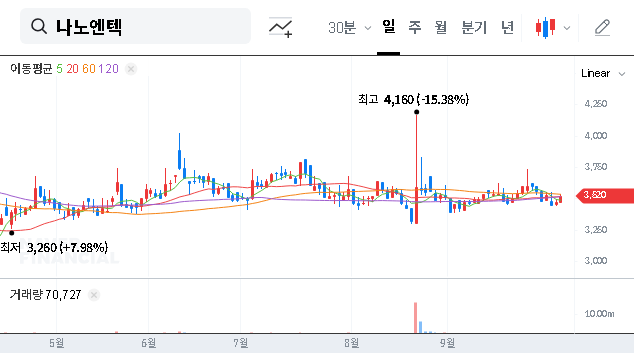
    A crucial NanoEnTek investment decision hinges on understanding the latest corporate maneuvers and fundamental performance. Recently, the company has captured market attention following a disclosure that its major shareholder, APLUS Asset Advisor, slightly increased its stake. While this may seem minor, it prompts a deeper dive into the company’s health and future prospects. This comprehensive NanoEnTek analysis will dissect the meaning behind this change, evaluate the H1 2025 financial results, explore promising growth engines, and weigh the significant risks investors must consider.

    NanoEnTek presents a classic growth-versus-profitability dilemma. While its global expansion and innovative pipeline are compelling, troubling declines in operating profit demand cautious and informed analysis from potential investors.

    The APLUS Asset Stake Increase: A Signal or Noise?

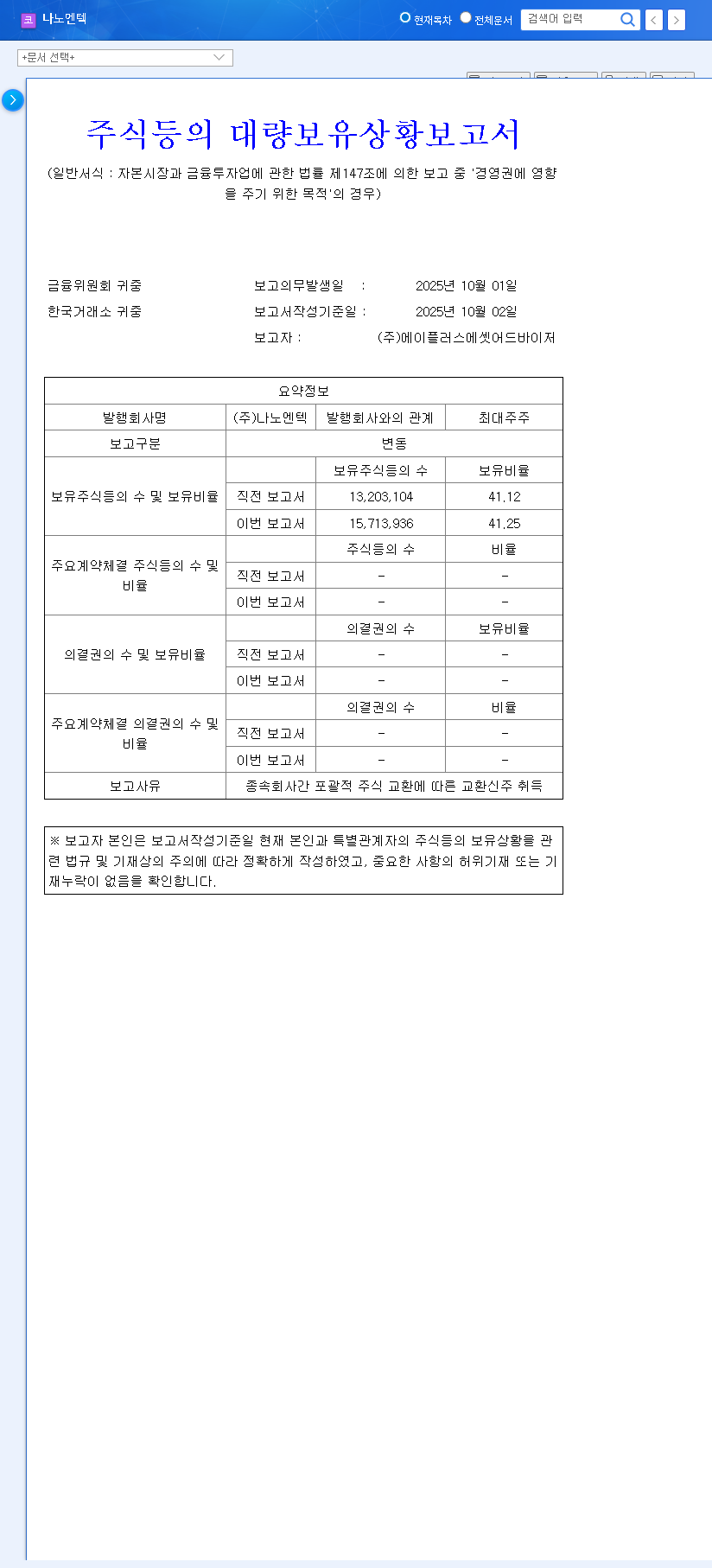
    On October 2, 2025, an official disclosure revealed that NanoEnTek’s primary shareholder, APLUS Asset Advisor, increased its holdings from 41.12% to 41.25%. This 0.13% increase occurred through a stock exchange with a subsidiary, AAI Healthcare Co., Ltd. You can view the Official Disclosure (DART) for specifics. In isolation, a 0.13% change is materially insignificant for control. However, it can be interpreted as a strategic move to reinforce management stability and signal a long-term commitment to integrating NanoEnTek into a broader healthcare value chain. This move is less about immediate control and more about setting the stage for future synergies.

    Dissecting NanoEnTek Performance in H1 2025

    To truly evaluate any NanoEnTek investment, we must look past headlines and into the financial core. The H1 2025 report paints a mixed, and somewhat concerning, picture.

    1. The Profitability Problem

    The most glaring issue is the sharp decline in profitability, which creates a significant headwind for the NanoEnTek stock price.

    • Revenue Growth: Revenue hit KRW 16.935 billion, a 27.2% increase year-on-year. While positive, this growth rate has decelerated from previous periods, signaling potential market saturation for existing products.
    • Operating Profit Collapse: Operating profit plummeted by a staggering 84.1% to just KRW 257 million. This was driven by a massive spike in Selling, General, and Administrative (SG&A) expenses, which rose to KRW 9.658 billion. This increase likely reflects investments in global marketing and R&D for new products, but it has decimated short-term profitability.
    • Net Loss: The company swung to a net loss of KRW 718 million, confirming that the current operational model is under severe margin pressure.

    2. Future Growth Engines: A Ray of Hope

    Despite the grim profitability figures, NanoEnTek is making aggressive strategic moves to secure long-term growth. These initiatives are the core of the bullish thesis for the company.

    • Bio-Printing Innovation: The ‘Cell Bio Print’ technology, unveiled at CES 2025 with partner L’Oréal, opens a door to the lucrative cosmetics and dermatological testing market. For more on this sector, explore our guide on How to Analyze Biotech Stocks.
    • US Market Penetration: FDA approval for the ‘ADAMⅡ-CD34’ hematopoietic stem cell counter is a major milestone, giving NanoEnTek access to the high-value US cord blood transplantation market.
    • European Foothold: The full acquisition of MTS Med-Tech Supplies GmbH in Germany provides an instant distribution and sales network, drastically accelerating entry into the European market.

    3. Financial Stability and External Risks

    The company’s balance sheet remains a source of strength. With a debt ratio of just 6.03%, financial health is excellent, providing a cushion to weather the current unprofitability. However, with 92.7% of revenue generated overseas, the company is highly exposed to currency fluctuations. A 10% change in the USD/KRW exchange rate could alter pre-tax profit by over KRW 1.2 billion. Investors should monitor global macroeconomic trends from sources like Reuters for insights into currency and interest rate forecasts.

    Investment Thesis: Weighing the Pros and Cons

    A sound NanoEnTek investment strategy requires balancing the long-term potential against short-term risks.

    The Bull Case (Positives)

    • Management Alignment: The APLUS Asset Advisor moves signal a stable, long-term vision.
    • Global Growth Catalysts: Concrete progress in the US and EU markets via FDA approval and strategic acquisition.
    • Strong Balance Sheet: Low debt provides resilience and the ability to fund growth initiatives.

    The Bear Case (Risks)

    • Profitability Crisis: The collapse in operating profit is the single biggest red flag. The market will need to see a clear path to controlling SG&A and improving margins.
    • Execution Risk: The success of new products and international expansion is not guaranteed. Delays or poor market adoption could further strain finances.
    • Macroeconomic Headwinds: High sensitivity to exchange rates makes the stock vulnerable to factors outside the company’s control.

    Conclusion: A Cautious Outlook

    In summary, NanoEnTek is a company at a crossroads. While the shareholder news provides a hint of long-term stability, it is overshadowed by the immediate and severe challenge of declining profitability. For short-term investors, the risks are high. The stock’s performance will likely be dictated by the next few quarterly reports and whether management can demonstrate control over spending.

    For long-term investors, the appeal lies in the company’s innovative pipeline and global expansion. The success of these ventures will ultimately determine the future of any NanoEnTek investment. Prudent investors should keep this stock on their watchlist, closely monitoring SG&A trends, revenue traction from new products in the US and EU, and signs of emerging profitability before committing significant capital.

    (039860) NanoEnTek Investment Analysis 2025: Stock Outlook & H1 Performance Review 관련 이미지
  • CMG Pharmaceutical (058820) Q2 2025 Earnings: FDA Approval Overshadowed by Disappointing Results

    1. CMG Pharmaceutical Q2 2025 Earnings: Key Highlights

    CMG Pharmaceutical reported KRW 22.6 billion in revenue (a 9.2% decrease YoY), an operating loss of KRW 4.6 billion, and a net loss of KRW 10.8 billion for Q2 2025. Total revenue for the first half of 2025 is less than half of the full-year revenue in 2024, indicating a concerning downward trend.

    2. Reasons for the Decline: What Went Wrong?

    The sluggish performance of its core pharmaceutical manufacturing and sales segment is the primary driver of the decline. Fixed costs remained high despite declining sales, leading to a wider operating loss. High R&D expenses (10.69% of revenue) are also contributing to the financial burden. While the FDA approval of Aripiprazole ODF is positive, it’s unlikely to translate into immediate financial improvements.

    3. Outlook and Investment Strategy: What Should Investors Do?

    Investors should exercise extreme caution with CMG Pharmaceutical. Downward pressure on the stock price is expected in the short term. The successful launch of Aripiprazole ODF in the US market will be a critical factor in the mid-to-long term. The high interest rate environment and exchange rate volatility also pose investment risks. Investors should closely monitor the company’s financial improvement plans and commercialization strategy for its new drug pipeline.

    4. Action Plan for Investors

    • Avoid short-term investments and maintain a wait-and-see approach.
    • Monitor the company’s financial improvement plans and new drug pipeline commercialization strategy.
    • Continuously track the US sales performance data of Aripiprazole ODF.

    Frequently Asked Questions

    Why did CMG Pharmaceutical perform poorly in Q2?

    A combination of declining sales in its main business segment, persistent fixed costs, and high R&D expenses contributed to the poor performance.

    What does the FDA approval of Aripiprazole ODF mean?

    It opens up possibilities for entering the US market, but it’s unlikely to translate into immediate financial gains.

    Should I invest in CMG Pharmaceutical?

    Extreme caution is advised. Closely monitor the company’s financial improvement plans and new drug pipeline commercialization strategy.

  • HLB Stock Forecast: 2025 Half-Year Report Analysis & Investment Strategy (RiboCerib FDA Approval Outlook)

    1. HLB 2025 Half-Year Performance Analysis: What Happened?

    HLB recorded revenue of ₩33.4 billion, an operating loss of ₩51.8 billion, and a net loss of ₩129.7 billion in the first half of 2025. Focusing on Q2, revenue was ₩15.7 billion, operating loss was ₩23 billion, and net loss was ₩60.7 billion. Compared to the same period last year, revenue decreased, but the operating loss narrowed. However, the net loss significantly increased due to losses from investments in affiliates.

    2. Reasons for Underperformance: Why These Results?

    The decline in revenue is primarily attributed to decreased demand for in-vitro diagnostic kits in the bio/healthcare sector. The expanded net loss was significantly influenced by valuation losses related to investments in affiliates. On the other hand, the composite materials sector achieved a turnaround with positive operating profit.

    3. Future Stock Outlook & Investment Strategy: What’s Next?

    In the short term, the increased net loss is expected to dampen investor sentiment. However, in the medium to long term, the FDA approval of new drug pipelines such as RiboCerib and Lirafugratinib will determine the stock’s direction. Investors should also carefully consider HLB’s financial soundness and fundraising capabilities. Currently, a ‘wait-and-see’ or ‘cautious investment’ approach is recommended.

    4. Key Checkpoints for Investors: Investor Action Plan

    • Monitor New Drug Pipeline Progress: Continuously check for updates on clinical trial results and FDA approval status for key pipelines like RiboCerib and Lirafugratinib.
    • Review Financial Health and Funding Plans: Carefully examine the ongoing net losses, operating capital procurement capabilities, and efforts to improve the financial structure.
    • Analyze Business Diversification Strategy: Assess the recovery of revenue in the bio/healthcare sector and the creation of new business achievements.

    Frequently Asked Questions

    What are HLB’s main drug pipelines?

    Key pipelines include RiboCerib (liver cancer treatment) and Lirafugratinib (bile duct cancer treatment).

    Why did HLB experience a large net loss in the first half of 2025?

    The significant net loss was primarily due to valuation losses related to investments in affiliates.

    Should I invest in HLB?

    A ‘wait-and-see’ or ‘cautious investment’ approach is currently recommended. Consult with a financial advisor and conduct further in-depth analysis before making any investment decisions.

  • L&K Bio Convertible Bond Exercise: Short & Long-Term Impact on Stock Price

    What happened?

    L&K Bio announced the exercise of 239,051 convertible bonds, representing approximately 1.19% of its market capitalization. The conversion price is 6,371 KRW, lower than the current stock price of 7,530 KRW.

    Why does it matter?

    This event, coupled with L&K Bio’s disappointing Q1 results, has captured investors’ attention. Losses from the liquidation of its Australian subsidiary and foreign exchange fluctuations could put downward pressure on the stock price. However, FDA approval for the ‘Pectus’ rib implant and the growth potential of the spinal implant market due to aging demographics are positive factors.

    How will the convertible bond exercise impact the stock price?

    Short-Term Impact

    • Share Dilution: The increased number of shares could dilute earnings per share (EPS), potentially leading to short-term downward pressure on the stock price.
    • Liquidity Change: While an increase in liquidity is expected, the impact is likely to be limited.
    • Investor Sentiment: Combined with the poor Q1 results, this event could negatively impact investor sentiment.

    Long-Term Impact

    • Capital Increase: The funds raised through the exercise can improve L&K Bio’s financial stability and fuel growth.
    • Growth Strategy: The long-term growth potential will depend on how effectively these funds are utilized.
    • Market Competition: FDA approval and market growth are positive, but increasing competition remains a risk.

    What should investors do?

    Investors should consider the company’s financial health, capital allocation plans, and the competitive landscape. External factors like exchange rates, interest rates, and commodity prices should also be monitored. Further analysis of financial data (‘주요재무.md’, ‘stock_chart_156100.md’) is crucial.

    What are convertible bonds?

    They are bonds that can be converted into a predetermined number of shares of common stock at a specified price within a particular time period.

    Why can the exercise of convertible bonds negatively impact the stock price?

    It can lead to share dilution, reducing the value of each existing share.

    What is the long-term growth outlook for L&K Bio?

    FDA approval and the aging market are positive, but increased competition and capital management strategy are key factors.