Tag: EV Battery

  • (131400) EV ADVANCED MATERIAL CO., LTD. Rights Offering Withdrawal: A Deep-Dive Financial Analysis & Stock Outlook

    (131400) EV ADVANCED MATERIAL CO., LTD. Rights Offering Withdrawal: A Deep-Dive Financial Analysis & Stock Outlook

    The sudden rights offering withdrawal by EV ADVANCED MATERIAL CO., LTD. (이브이첨단소재) on November 13, 2025, has sent shockwaves through the investment community. This move, far from a routine corporate decision, signals potential underlying financial distress and raises critical questions about the company’s stability and future prospects. Compounded by the looming threat of being designated an ‘unfaithful disclosure corporation,’ investors are left navigating a storm of uncertainty. This comprehensive financial analysis will dissect the reasons behind this decision, evaluate the company’s Q3 2025 performance, and provide a clear, data-driven investment outlook.

    The company formally announced this decision, citing prolonged reviews by the Financial Supervisory Service (FSS), which could disrupt funding timelines. You can view the Official Disclosure (Source: DART) for complete details.

    A Look Under the Hood: Q3 2025 Financial Red Flags

    While procedural delays were the official reason, a deep dive into the Q3 2025 quarterly report for EV ADVANCED MATERIAL CO., LTD. reveals a much more troubling picture. The company’s fundamentals are flashing several warning signs that likely contributed to the difficulty in securing capital.

    Deteriorating Core Financials

    • Revenue Decline & Profitability Collapse: Consolidated revenue fell year-over-year, while both operating profit and net income plunged into significant losses. This isn’t just a slowdown; it’s a severe erosion of the company’s core earning power.
    • Soaring Debt-to-Equity Ratio: Financial stability is a major concern. The company’s debt-to-equity ratio has climbed, indicating increased leverage and vulnerability to interest rate hikes and economic downturns. This high ratio makes securing new debt or equity financing significantly more challenging.
    • Underperformance in Key Segments: The FPCB (Flexible Printed Circuit Board) business, a primary revenue driver, experienced a notable decline in sales, suggesting a struggle to maintain market share or broader industry headwinds.
    • Costly Affiliate Investments: A substantial impairment loss related to its investment in Dynamic Design Co., Ltd. has placed an additional, heavy burden on the company’s already strained financial position.

    While potential growth in the EV battery and transparent display markets exists, these future opportunities seem insufficient to counterbalance the immediate financial crisis and the severe damage to corporate credibility.

    The Domino Effect: Repercussions of the Withdrawal

    The cancellation of the rights offering is not an isolated event. It triggers a cascade of negative consequences that will impact EV ADVANCED MATERIAL CO., LTD. in both the short and long term, creating a challenging environment for recovery.

    Funding Uncertainty and Eroding Trust

    The most immediate impact is a critical disruption to funding. The capital was earmarked for facility investments, strategic acquisitions, and operational needs—all vital for growth. The failure to secure these funds puts future projects in jeopardy. This, combined with the ‘unfaithful disclosure’ designation, severely damages credibility. Investor trust is paramount, and once lost, it is incredibly difficult to regain, leading to sustained downward pressure on the stock price. For more on this topic, see our guide on How to Analyze High-Risk Tech Stocks.

    Navigating Macroeconomic Headwinds

    The company’s internal struggles are amplified by a challenging external environment. Rising interest rates in key markets increase the cost of borrowing, making alternative financing more expensive. Furthermore, volatility in currency exchange rates (EUR/KRW, USD/KRW) can negatively affect overseas operations and the cost of imported materials, squeezing already thin profit margins.

    Investment Thesis: A Time for Extreme Caution

    Considering the totality of the circumstances—the abrupt rights offering withdrawal, alarming Q3 financials, loss of investor confidence, and macroeconomic pressures—the outlook for EV ADVANCED MATERIAL CO., LTD. is precarious.

    Investment Opinion: Highly Negative. Investment is not recommended at this time.

    The risks associated with investing in the company currently are exceptionally high. A prudent strategy would be to remain on the sidelines and observe. Before any investment can be considered, the company must demonstrate tangible improvements in its financial health, provide a transparent and viable plan for future funding, and take concrete steps to rebuild its credibility with the market. Until these fundamental issues are resolved, the potential for further downside in the stock price remains significant.

    Frequently Asked Questions

    Why did EV ADVANCED MATERIAL CO., LTD. withdraw its rights offering?

    The officially stated reason was potential disruptions in funding timelines due to a prolonged review process by the Financial Supervisory Service. However, our analysis suggests that the company’s poor Q3 2025 financial performance was a significant contributing factor.

    What is the likely impact on the company’s stock price?

    A rights offering withdrawal is a strong negative market signal. This, combined with the anticipated ‘unfaithful disclosure corporation’ designation, is highly likely to erode investor confidence and lead to sustained downward pressure on the stock price.

    Should I invest in EV ADVANCED MATERIAL CO., LTD. now?

    Our expert analysis concludes that investing at this time carries extremely high risk. It is advisable to refrain from new investments and observe the company’s progress in improving its financial health and restoring credibility before reassessing.
    (131400) EV ADVANCED MATERIAL CO., LTD. Rights Offering Withdrawal: A Deep-Dive Financial Analysis & Stock Outlook 관련 이미지
  • (419050) SAMKEE ENERGY SOLUTIONS Stock Analysis: A Deep Dive into Daishin’s Investment

    (419050) SAMKEE ENERGY SOLUTIONS Stock Analysis: A Deep Dive into Daishin’s Investment

    A significant financial maneuver has placed SAMKEE ENERGY SOLUTIONS in the spotlight. The recent announcement of Daishin Securities acquiring a major stake through Convertible Bonds (CBs) and Bonds with Warrants (BWs) has sent ripples through the market. For investors, this raises a critical question: Is this a powerful endorsement of the company’s future in the burgeoning EV battery components market, or does it conceal underlying financial risks and the threat of shareholder dilution? This comprehensive analysis will explore every facet of this development, from the company’s core fundamentals to the long-term market implications.

    The Landmark Deal: Daishin’s Strategic Stake

    On November 11, 2025, it was officially disclosed that Daishin Securities/Korea acquired a substantial 15.21% stake in SAMKEE ENERGY SOLUTIONS CO.,LTD through the purchase of CBs and BWs. Daishin has classified this as a ‘simple investment,’ a term that suggests confidence in the company’s intrinsic value and growth trajectory without seeking management control. You can view the Official Disclosure on DART for complete details. This move by a major financial institution is often seen as a bullish signal, but a deeper look into the company’s health is essential.

    Fundamental Analysis of SAMKEE ENERGY SOLUTIONS

    To understand the investment’s potential, we must weigh the company’s strengths against its weaknesses. This involves a clear-eyed view of its growth engines and financial vulnerabilities.

    The Bull Case: Powerful Growth Drivers

    • EV Market Leadership: With the global electric vehicle market recovering, especially in Europe, Samkee’s position as a key supplier of EV battery components like End-Plates is a major asset. Its solid relationship with industry giant LG Energy Solution provides a stable and growing revenue stream.
    • Diversification into New Tech: The company is not resting on its laurels. A significant contract to supply ESS BMS cables to LG Energy Solution marks a full-scale entry into automotive electronics, with revenues expected to ramp up in H2 2025. This diversifies its business and taps into another high-growth sector.
    • Technological Edge: A robust portfolio of patents, including advancements in FF-PCB technology and RTR methods, demonstrates a strong commitment to innovation. This technological moat helps protect its market share and pricing power.
    • Robust Order Backlog: A secured order backlog of KRW 257.2 billion provides excellent revenue visibility and stability, reassuring investors of a consistent operational runway for the near future.

    The Bear Case: Navigating Financial Headwinds

    • High Financial Leverage: A consolidated debt-to-equity ratio of 178.17% is a significant concern. This high level of debt increases financial risk, makes the company vulnerable to rising interest rates, and limits its flexibility for future investments.
    • Currency and Derivative Risks: With a high proportion of exports, the company’s profitability is directly exposed to fluctuations in the USD and EUR. Furthermore, the issued Convertible Bonds carry derivative liabilities, which can create balance sheet volatility.
    • Customer Concentration: Heavy reliance on a few key clients, such as LG Energy Solution and Hyundai Motor Group, poses a risk. Any downturn in their business could disproportionately affect Samkee’s revenues.

    The core challenge for investors is balancing Samkee’s undeniable growth potential in the EV sector against its significant financial leverage and the looming shareholder dilution from these new convertible bonds.

    Market Impact: Opportunity vs. Dilution

    The Daishin Securities investment can be viewed through two primary lenses. In the short term, it acts as a strong vote of confidence, likely boosting investor sentiment and potentially stabilizing the Samkee Energy Solutions stock price. The presence of a sophisticated institutional investor can enhance management stability and affirm the company’s long-term strategy.

    However, the long-term perspective requires caution. The primary risk is shareholder dilution. When these CBs and BWs are converted into common stock, the total number of outstanding shares increases. This can dilute the Earnings Per Share (EPS) for existing shareholders, potentially putting downward pressure on the stock price. The timing and volume of these conversions will be critical factors to monitor.

    Strategic Outlook for Investors

    For those considering an investment in SAMKEE ENERGY SOLUTIONS, a multi-faceted approach is required. While the recent news is broadly positive, due diligence is paramount. Investors should closely monitor the company’s progress in improving its financial health, specifically its plans to manage and reduce its high debt ratio. The real-world performance of its new BMS cable business will be a key indicator of its diversification strategy’s success.

    Furthermore, it is crucial for investors to understand the mechanics of the financial instruments at play. For a deeper understanding, one might research topics like how convertible securities impact stock prices. Staying informed on macroeconomic trends, such as interest rates and the latest EV market reports from high-authority sources, will provide the necessary context for making an informed decision. The story of Samkee is one of high potential tempered by notable risks, demanding a careful and continuous evaluation from investors.

    (419050) SAMKEE ENERGY SOLUTIONS Stock Analysis: A Deep Dive into Daishin's Investment 관련 이미지
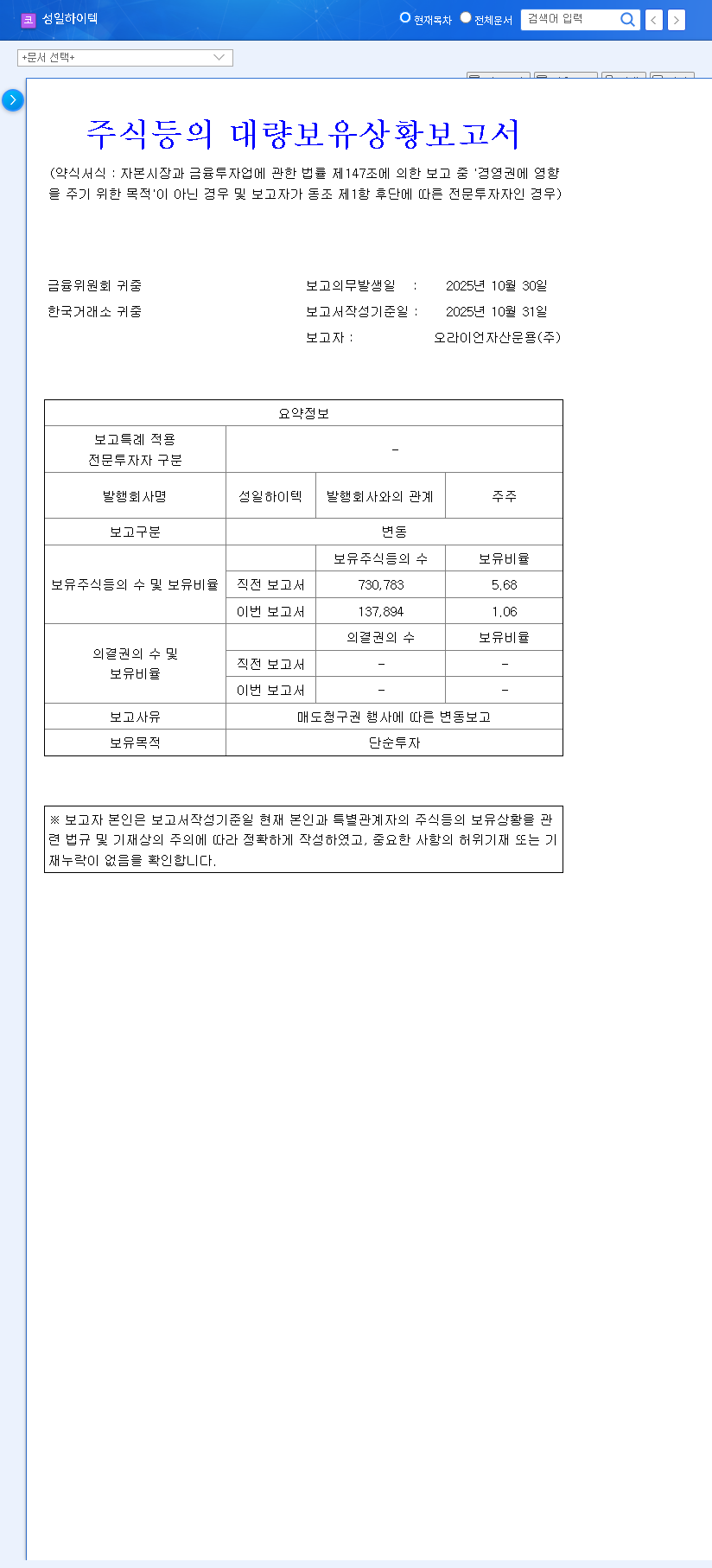
  • (365340) SungEel HiTech’s ₩50B Convertible Bond Burn: A Strategic Boost for Shareholder Value?

    (365340) SungEel HiTech’s ₩50B Convertible Bond Burn: A Strategic Boost for Shareholder Value?

    In a bold financial maneuver, battery recycling specialist SungEel HiTech Co., Ltd. has announced its decision to extinguish ₩50 billion in SungEel HiTech convertible bonds. This move, executed amidst a challenging secondary battery market and macroeconomic headwinds, is being positioned as a decisive step to bolster shareholder value and prevent share dilution. But is this bond burn a genuine turning point for the company’s struggling stock, or a temporary fix for deeper financial issues?

    This comprehensive analysis delves into the strategic rationale behind the decision, its potential impact on the SungEel HiTech stock price, and what investors should be watching for in the coming months. We’ll break down the company’s current financial health and provide a clear outlook on whether this move can truly pave the way for a sustainable recovery.

    The Landmark Decision: Extinguishing ₩50 Billion in Convertible Bonds

    On November 10, 2025, SungEel HiTech’s board of directors passed a resolution to extinguish the entire ₩50 billion worth of its third-tranche convertible bonds (CBs), a decision that was finalized on November 12, 2025. This action, officially documented in the company’s public filing (Official Disclosure), effectively removes these bonds from existence. By repurchasing and canceling its own bonds, the company eliminates the potential for them to be converted into new shares, an event that would dilute the ownership stake of existing shareholders.

    In corporate finance, extinguishing convertible bonds is a clear signal to the market. It demonstrates management’s confidence in the company’s future and a direct commitment to protecting and enhancing shareholder value.

    Why Now? The Context Behind the Bond Burn

    This decision wasn’t made in a vacuum. It comes at a critical juncture for SungEel HiTech, which has been grappling with significant financial and market-related challenges. Understanding this context is key to evaluating the move’s long-term effectiveness.

    Deteriorating Financial Health

    The company’s fundamentals have shown signs of strain, raising concerns among investors:

    • Revenue Decline: In the first half of 2025, revenue fell by 8.8% year-over-year to ₩64.01 billion, driven by a slowdown in the EV market which impacted secondary battery material sales.
    • Widening Losses: Operating losses grew to ₩32.9 billion due to a higher cost of goods sold and increased administrative expenses, highlighting profitability challenges.
    • Soaring Debt: The debt-to-equity ratio surged from 202.25% to an alarming 287.72%, signaling increased financial risk.
    • Negative Cash Flow: Operating cash flow turned negative at ₩-32.15 billion, raising questions about the company’s ability to generate cash from its core operations.

    Unfavorable Market Conditions

    External factors have further compounded SungEel HiTech’s problems. The sustained slowdown in the global battery recycling and EV industries has directly hurt performance. Additionally, currency volatility and high interest rates pose ongoing risks to profitability and increase the burden of debt servicing. While new EU regulations on waste battery recycling present a long-term opportunity, their immediate benefits are muted by low market utilization, a trend affecting the entire sector.

    Analyzing the Impact of the SungEel HiTech Convertible Bonds Extinguishment

    The decision to burn the bonds will have a multifaceted impact on the company.

    • Positive: The primary benefit is the immediate enhancement of shareholder value by eliminating dilution risk. It also directly improves the balance sheet by reducing total debt and lowering the debt-to-equity ratio, which can restore a degree of investor confidence and improve long-term financial stability.
    • Neutral: This is a financial engineering move, not an operational one. It does not inherently increase revenue or improve profit margins. Therefore, its direct contribution to solving the company’s core performance issues is limited. The ₩50 billion cash outflow was for maturing bonds, so it doesn’t create a new burden but rather settles an existing one.
    • Negative: The ₩50 billion cash outlay could temporarily strain liquidity. Given the company’s negative operating cash flow, careful management of remaining cash reserves will be absolutely critical to navigate the upcoming quarters without issue.

    Investor Outlook: Cautious Optimism Required

    For investors, the extinguishment of the SungEel HiTech convertible bonds is a welcome sign of proactive financial management. It demonstrates a commitment to shareholder interests and helps clean up the balance sheet. However, this action alone is not a silver bullet.

    The fundamental challenges of declining revenue and poor profitability remain. A sustained turnaround in the SungEel HiTech stock price will depend entirely on the company’s ability to strengthen its core business and improve its operational performance. Any stock price rally based solely on this news may be short-lived unless it is followed by tangible improvements in upcoming quarterly reports.

    Key Factors to Monitor:

    • Performance Improvement: Watch for any signs of revenue growth or margin improvement in the second half of 2025.
    • Cash Flow Management: Scrutinize the company’s ability to manage its cash reserves and return to positive operating cash flow.
    • Market Recovery: Keep an eye on the broader EV and battery recycling markets for signs of a rebound. More information on such instruments can be found from authoritative sources like Reuters Financial.

    The investment thesis is one of ‘cautious observation.’ While the bond extinguishment is a positive step, the fundamental recovery of SungEel HiTech’s business remains the most critical driver for long-term investment success.

    (365340) SungEel HiTech's ₩50B Convertible Bond Burn: A Strategic Boost for Shareholder Value? 관련 이미지
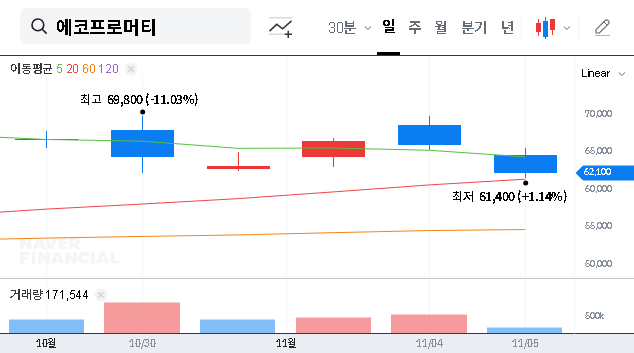
  • (450080) ECOPRO MATERIALS IR (Q3 2025): A Deep Dive for Investors on Performance & Strategy

    (450080) ECOPRO MATERIALS IR (Q3 2025): A Deep Dive for Investors on Performance & Strategy

    The upcoming ECOPRO MATERIALS IR for Q3 2025 represents a critical moment for investors. Scheduled for November 10, 2025, this investor relations conference is poised to address mounting concerns following a challenging first half of the year. For stakeholders in ECOPRO MATERIALS CO., LTD., a key player in the competitive secondary battery materials market, this event will be a pivotal indicator of the company’s future trajectory and its ability to navigate market headwinds.

    This comprehensive analysis will dissect the company’s recent performance, explore the key questions investors should be asking, and outline the potential outcomes of the Q3 2025 IR. We will provide a deep dive into the financial landscape, competitive pressures, and strategic initiatives that will define ECOPRO MATERIALS’ path forward.

    Will the Q3 2025 IR reveal a concrete path back to profitability and restore market confidence, or will it confirm deeper underlying challenges for ECOPRO MATERIALS CO., LTD.? This is the central question on every investor’s mind.

    The Current Landscape: H1 2025 Performance Review

    To understand the significance of the upcoming IR, we must first analyze the company’s performance in the first half of 2025. While top-line growth was impressive, profitability issues have cast a shadow over its prospects.

    Financial Health: A Mixed Picture

    • Impressive Revenue Growth: Revenue surged to KRW 214.15 billion, a 46.8% increase year-over-year, largely fueled by strong precursor material sales.
    • Profitability Under Pressure: Despite revenue growth, the company posted an operating loss of KRW 43.57 billion. This troubling shift was attributed to a higher cost of sales, increased SG&A expenses, and rising financial costs.
    • Capital Infusion: ECOPRO MATERIALS successfully raised approximately KRW 515 billion via preferred stock issuance to bolster its financial structure. However, increased borrowings mean that managing debt and financial stability remains a key priority.

    Key Focus Points for the ECOPRO MATERIALS IR

    Investors should scrutinize the details provided during the Q3 2025 IR. The management’s clarity and strategic vision on the following points will be crucial for rebuilding trust and outlining a sustainable growth model.

    1. The Path to Profitability

    The most pressing issue is the plan to reverse the operating losses. Investors will expect more than just assurances. Look for concrete, actionable strategies, including:

    • Cost Management: Detailed plans for reducing the cost of sales, which may involve more efficient raw material sourcing or process optimization.
    • Pricing Strategy: How the company plans to adjust its pricing in a competitive market to protect margins.
    • Operational Efficiency: Initiatives to streamline selling and administrative expenses without hampering growth.

    2. Strategic Growth and Competitive Positioning

    The global EV and secondary battery materials landscape is evolving rapidly, as documented by industry leaders like BloombergNEF. ECOPRO MATERIALS must articulate a clear strategy to maintain its edge. This includes updates on its core competencies such as high-nickel precursor technology and its internalized RMP process. For more information, you can read our guide on understanding precursor materials in EV batteries.

    3. Risk Mitigation and Financial Stability

    Volatility in raw material prices (nickel, cobalt) and currency exchange rates pose significant threats. The company’s presentation must address its hedging strategies and plans for managing its debt load. A clear roadmap to improving the debt-to-equity ratio will be a strong positive signal.

    Potential Outcomes and Investor Takeaways

    The market’s reaction to the ECOPRO MATERIALS IR will hinge on the quality and credibility of the information presented. A positive scenario involves a clear turnaround strategy that restores confidence, potentially leading to a stock price recovery. Conversely, a lack of concrete plans or results that miss expectations could lead to further selling pressure.

    Ultimately, the success of this investor relations event depends on transparency. Management’s ability to frankly address challenges while presenting a believable and robust strategy for future growth will determine whether this IR marks a positive turning point for ECOPRO MATERIALS CO., LTD. and its shareholders.

    Frequently Asked Questions (FAQ)

    When will the ECOPRO MATERIALS Q3 2025 IR take place?

    The investor relations conference is scheduled for November 10, 2025, at 4:00 PM KST. For official details, you can view the Official Disclosure on DART.

    What is the main concern for investors?

    The primary concern is the company’s profitability. After reporting an operating loss of KRW 43.57 billion in H1 2025 despite revenue growth, investors are looking for a clear strategy to improve margins and return to profitability.

    What are the key risk factors for ECOPRO MATERIALS?

    Key risks include continued profitability issues, high cost of sales, volatility in raw material prices like nickel and cobalt, currency exchange rate fluctuations, and intensifying competition within the secondary battery materials market.

    (450080) ECOPRO MATERIALS IR (Q3 2025): A Deep Dive for Investors on Performance & Strategy 관련 이미지
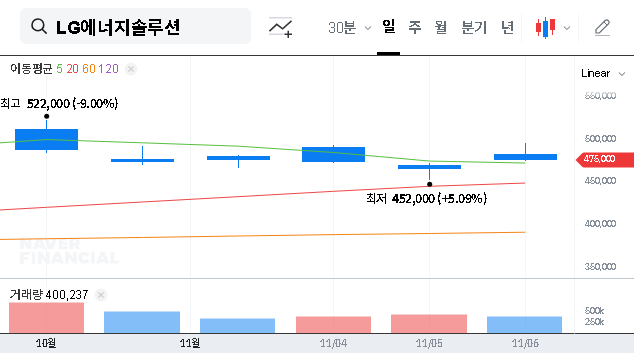
  • (373220) LG Energy Solution & Oracle ESS Rumor: A 2025 Investor’s Guide

    (373220) LG Energy Solution & Oracle ESS Rumor: A 2025 Investor’s Guide

    Recent market chatter surrounding LG ENERGY SOLUTION, LTD. and a rumored Energy Storage System (ESS) supply deal with tech giant Oracle created a stir among investors. While the news caused initial confusion, the company’s rapid and decisive denial brought clarity. But what does this incident reveal about LG Energy Solution’s position in the market, its financial health, and the broader investment landscape? This analysis dissects the rumor, examines the company’s fundamentals, and provides a clear action plan for investors navigating the volatile battery sector.

    Deconstructing the Oracle ESS Rumor

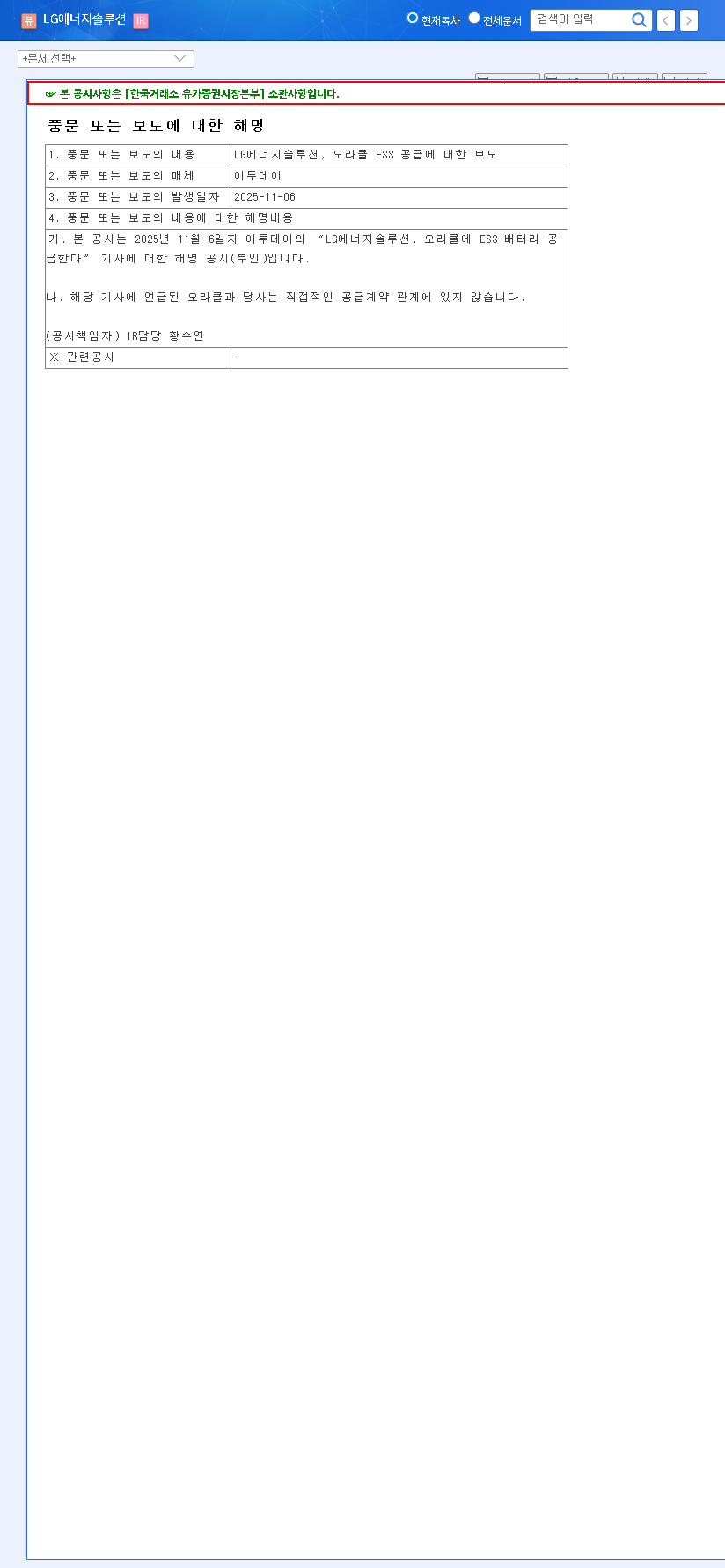
    On November 6, 2025, a report surfaced alleging that LG Energy Solution would be supplying ESS batteries to Oracle. The news was significant because a contract with a U.S. technology titan would signal a major strategic win. However, LG ENERGY SOLUTION acted swiftly to counter the misinformation. The company issued an immediate and explicit denial, stating that no direct supply contract with Oracle existed. This was confirmed in their Official Disclosure, a move that successfully quelled market uncertainty and reinforced corporate transparency.

    The company’s prompt clarification was a crucial step in preventing the spread of false expectations and protecting investor interests, showcasing responsible ESG management in a high-stakes environment.

    The Booming ESS Market: Why This Rumor Mattered

    The intense reaction to the rumor underscores the massive growth potential of the Energy Storage System (ESS) market. ESS solutions are critical for stabilizing power grids, integrating renewable energy sources like solar and wind, and supporting the global transition to clean energy. According to a report by the International Energy Agency, the demand for battery storage is projected to expand dramatically over the next decade. Securing large-scale contracts in this sector is a key growth driver for battery manufacturers like LG Energy Solution, making any news—true or false—highly impactful.

    LG ENERGY SOLUTION’s Financial Health: A Closer Look

    Beyond the rumor, investors must focus on the company’s core fundamentals. While LG Energy Solution continues to demonstrate revenue growth, it faces several key challenges and opportunities.

    Challenges and Headwinds

    • Profitability Slowdown: Intensifying competition, volatile raw material prices, and aggressive capital expenditures have put pressure on profit margins.
    • Market Share Fluctuation: A reported decline in EV battery market share highlights the fierce competitive landscape, with rivals like CATL and Panasonic vying for dominance.
    • Financial Risks: With total borrowings of KRW 20.8 trillion and a debt-to-equity ratio of 122.6%, the company carries a significant financial burden. Moreover, exposure to exchange rate volatility is a major risk, with a 10% change in the USD potentially impacting pre-tax profit by hundreds of billions of KRW.

    Positive Factors and Growth Drivers

    • U.S. IRA Benefits: The Inflation Reduction Act (IRA) provides substantial tax credits that can significantly boost profitability for batteries produced in North America, a major tailwind for LG Energy Solution.
    • Consistent R&D: An ongoing investment in Research & Development (5.2% of sales) is crucial for securing future technological advantages and maintaining a competitive edge.

    Strategic Investor Action Plan: What to Watch

    The Oracle ESS rumor serves as a reminder to maintain a neutral, data-driven stance. Rather than reacting to market noise, investors should focus on these key performance indicators:

    • Profitability Improvement: Look for specific corporate strategies and quarterly results that show a clear path to overcoming the current margin compression.
    • New Large-Scale Contracts: Any actual, confirmed large-scale ESS or EV battery supply contracts will be a significant catalyst for the LG Energy Solution stock price.
    • Macroeconomic Management: Monitor how effectively the company hedges against currency fluctuations and manages its debt in a high-interest-rate environment.
    • IRA Benefit Realization: Track financial reports for the timing and actual monetary impact of IRA tax credits on the bottom line.

    In conclusion, while the Oracle rumor was a fleeting event, it highlighted the market’s sensitivity and the importance of due diligence. LG ENERGY SOLUTION possesses strong long-term growth potential tied to the ESS and EV revolutions, but it must navigate significant short-term financial and competitive pressures. A wise investment strategy involves analyzing the company’s intrinsic value and market trends, not chasing unsubstantiated claims.

    (373220) LG Energy Solution & Oracle ESS Rumor: A 2025 Investor's Guide 관련 이미지
  • (373220) LG Energy Solution Stock: Analysis of LG Chem’s Stake Sale & Future Outlook

    (373220) LG Energy Solution Stock: Analysis of LG Chem’s Stake Sale & Future Outlook

    The recent news surrounding the LG Energy Solution stock has been dominated by a significant move from its parent company, LG Chem. The announcement of an off-market sale of a 2.46% stake has sent ripples through the investment community, raising critical questions. Why did LG Chem reduce its holding, and what does this mean for the future of LGES stock price and its long-term strategy? This comprehensive analysis unpacks the details behind the stake sale, evaluates the potential impact, and provides actionable insights for current and prospective investors.

    The Event: LG Chem Reduces Its Stake

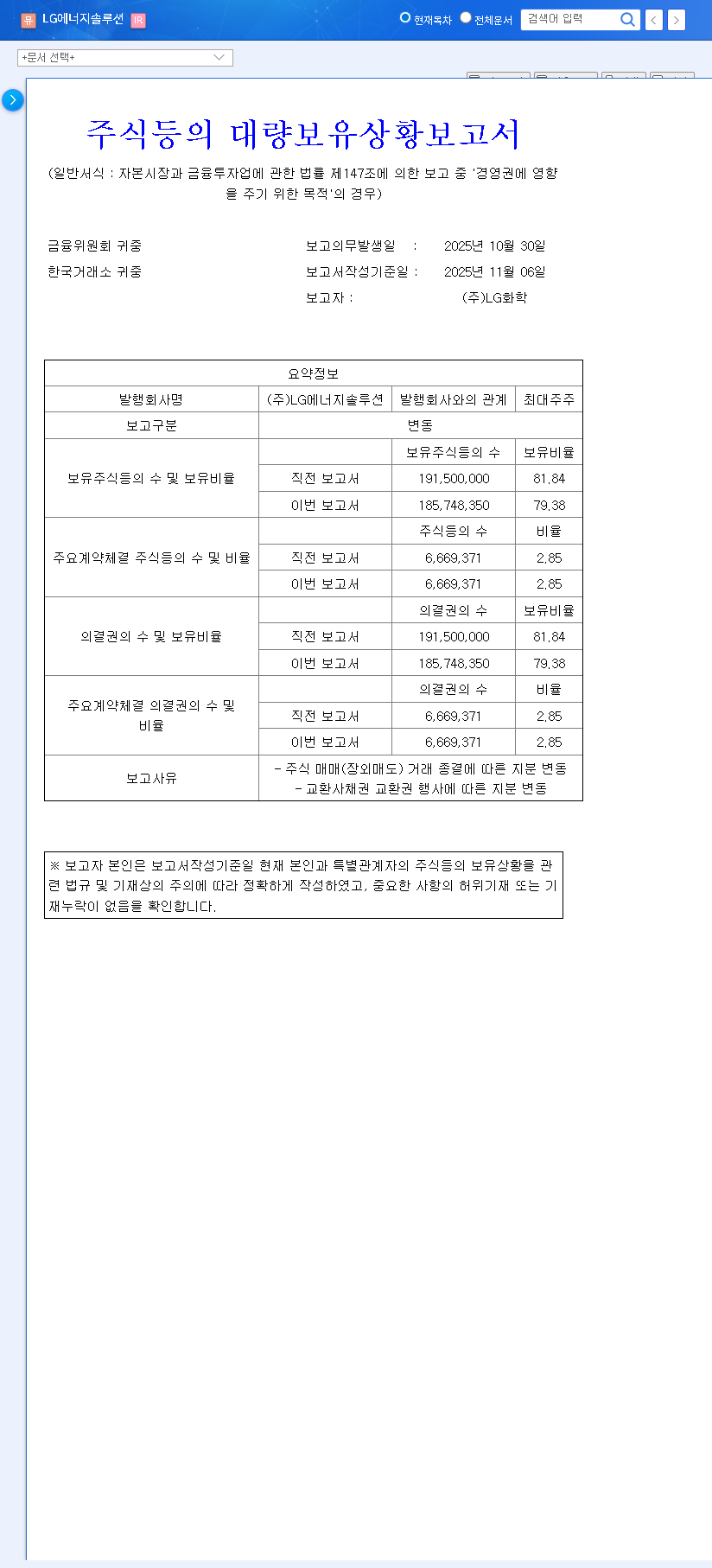
    On October 30, 2025, LG Chem executed an off-market sale of 5,750,000 common shares in LG Energy Solution. According to the Official Disclosure (Source: DART), this transaction reduced LG Chem’s ownership from 81.84% to 79.38%. While a 2.46% change may seem minor, a block sale of this magnitude is a significant event that warrants close examination. The stated reasons included general stock trading and the exercise of exchange rights for exchangeable bonds, but the underlying strategic motivations are what truly matter to investors.

    Despite the sale, LG Chem retains a commanding 79.38% stake, ensuring that management control over LG Energy Solution remains firmly intact and undisputed.

    Analyzing the ‘Why’: Potential Motives Behind the Sale

    While LG Chem’s official holding purpose remains ‘influence over management,’ such a large divestment is typically driven by strategic financial goals. Here are the most likely reasons behind the decision:

    • Capital for New Investments: The proceeds could be earmarked to fund LG Chem’s expansion into other high-growth sectors, such as advanced battery materials (e.g., cathodes, anodes), which are critical for the entire EV supply chain.
    • Strengthening Financial Health: The sale provides a significant cash infusion that can be used to pay down debt, improve the balance sheet, and enhance LG Chem’s overall financial resilience in a volatile economic climate.
    • Strategic Portfolio Realignment: This move might be part of a broader strategy by the LG Group to rebalance its portfolio, unlocking value from its mature assets to reinvest in next-generation technologies and businesses.

    It’s crucial to understand this was likely a strategic financial maneuver by the parent company rather than a signal of lost confidence in LG Energy Solution’s future.

    Impact Analysis for LG Energy Solution Investors

    Short-Term Market Reaction and Stock Volatility

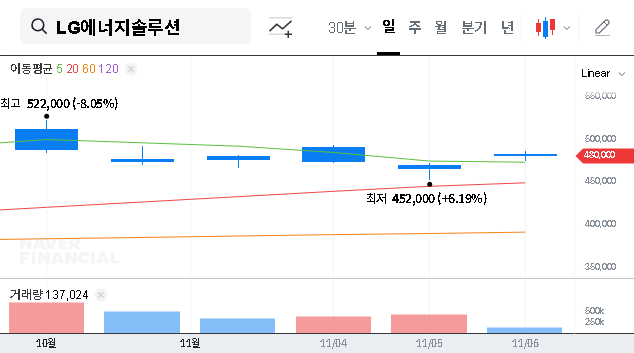
    In the short term, a large block sale like this can create what’s known as ‘stock overhang.’ This puts downward pressure on the LGES stock price as the market works to absorb the new supply of shares. Investor sentiment may temporarily weaken, leading to increased price volatility. However, such movements are often disconnected from the company’s underlying operational performance. For a detailed view of market trends, investors often consult authoritative sources like Bloomberg’s market analysis.

    Long-Term Outlook: Fundamentals Remain Strong

    Looking beyond the immediate market noise, the fundamental case for an LG Energy Solution investment remains compelling. The company is a global leader in the rapidly expanding electric vehicle (EV) battery market. Key strengths include:

    • Technological Leadership: LGES continues to innovate in battery chemistry and design, securing major contracts with leading automakers worldwide.
    • Aggressive Investment: With plans for KRW 5.8 trillion in new investments and a significant increase in R&D spending, the company is positioning itself for future dominance.
    • Market Growth: The global shift to electrification provides a powerful tailwind. You can learn more in our deep dive into the EV battery market.

    Therefore, this stake sale does not alter the company’s long-term growth trajectory or its competitive position in the industry.

    Actionable Investment Strategy & Outlook

    How should investors react to this development concerning their LG Energy Solution stock position?

    For the Cautious Short-Term Trader

    A prudent approach is to monitor the stock for signs of stabilization. Watch for the trading volume to normalize as the sold shares are absorbed by the market. Increased volatility presents risks, but also potential entry points for those with a high risk tolerance. A wait-and-see approach is advisable until the near-term selling pressure subsides.

    For the Fundamental Long-Term Investor

    For those focused on the company’s intrinsic value, any price dip resulting from this sale could represent a strategic buying opportunity. The long-term growth story of the EV and battery storage markets is unchanged. This event is external to LGES’s operations and, if it leads to a lower stock price, may offer a more attractive entry point for accumulating a long-term position.

    Conclusion: A Strategic Move, Not a Red Flag

    In conclusion, LG Chem’s sale of a minority stake in LG Energy Solution appears to be a calculated financial decision to unlock capital for its own strategic priorities. It does not compromise control over LGES or signal a lack of faith in its future. While the LG Energy Solution stock may experience short-term turbulence, the company’s robust fundamentals, market leadership, and the secular growth trend of electrification remain firmly in place. Investors should view this event through a strategic lens, separating short-term market sentiment from long-term business potential.

    (373220) LG Energy Solution Stock: Analysis of LG Chem's Stake Sale & Future Outlook 관련 이미지
  • (014820) Dongwon Systems Earnings (Q3 2025): Deep Dive on Stock Outlook & EV Battery Future

    (014820) Dongwon Systems Earnings (Q3 2025): Deep Dive on Stock Outlook & EV Battery Future

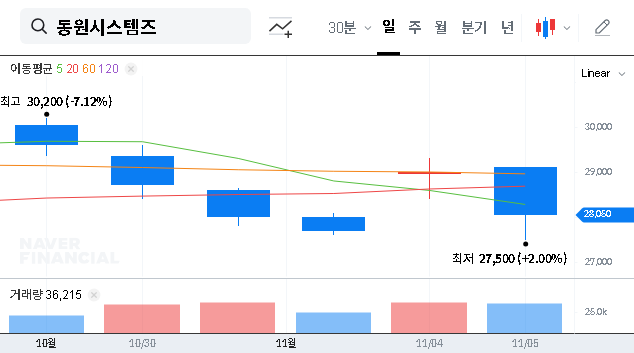
    The latest Dongwon Systems earnings report for Q3 2025, released on November 5, 2025, has presented a nuanced and complex narrative for investors. While the company showcased improved year-over-year profitability despite lower revenue, a sequential dip in performance has cast a shadow of short-term uncertainty. For those closely watching the Dongwon Systems stock, the central question remains: how much weight should be given to the immense promise of its burgeoning secondary battery materials business versus the immediate financial realities? This comprehensive analysis will dissect the Q3 results, evaluate the company’s core operations, and provide a strategic outlook to help investors navigate what comes next.

    Dongwon Systems’ Q3 2025 Earnings at a Glance

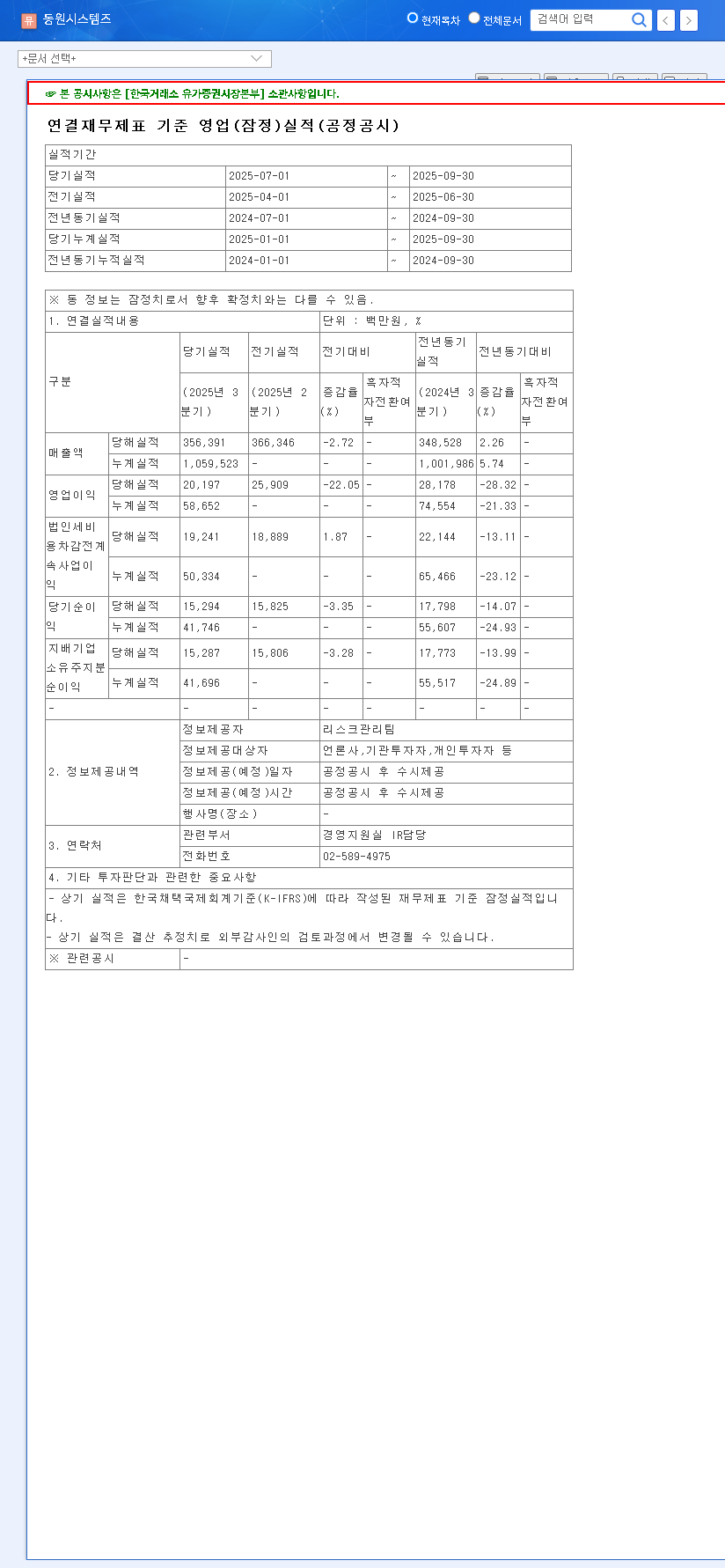
    Dongwon Systems reported its preliminary consolidated earnings for the third quarter, revealing a mixed bag of results. Here are the key figures from the official filing (Source: Official DART Disclosure):

    • Revenue: KRW 356.4 billion (a decrease year-over-year).
    • Operating Profit: KRW 20.2 billion (an increase year-over-year).
    • Net Profit: KRW 15.3 billion (an increase year-over-year).

    The key takeaway is a classic ‘good news, bad news’ scenario. The ‘good news’ is the improved profitability compared to the same quarter last year, which suggests better cost controls or a more favorable product mix. However, the ‘bad news’ is that all three metrics declined compared to the preceding quarter (Q2 2025), signaling a potential loss of short-term momentum. This sequential slowdown warrants a closer look at the underlying business segments.

    Analyzing the Core Business Drivers

    The Stable Foundation: Comprehensive Packaging

    Dongwon Systems’ traditional packaging business remains its bedrock. This division, covering everything from food cans and aluminum to resin and printing, provides a stable and predictable revenue stream. Its long-standing relationships with major corporate clients create a defensive moat. Critically, the company’s proactive pivot towards eco-friendly packaging materials aligns with global ESG (Environmental, Social, and Governance) trends, positioning this cash-cow division for sustainable, long-term relevance.

    The Growth Engine: Secondary Battery Materials

    The excitement surrounding the Dongwon Systems stock is almost entirely focused on its strategic expansion into EV battery materials. This venture, bolstered by the acquisition of MKC and significant capital investment in new facilities, represents the company’s primary future growth driver. Two areas are particularly crucial:

    • 4680 Battery Can Production: The company is gearing up for mass production of the next-generation 4680-format battery can. This cylindrical cell format is a game-changer, promising higher energy density and lower costs, and is central to the plans of EV leaders like Tesla. Successfully scaling production would make Dongwon a key player in a high-growth market segment.
    • Aluminum Cathode Foil: This component is vital for lithium-ion battery performance. Dongwon’s expansion of its aluminum foil business taps directly into the surging global demand for EVs and energy storage solutions. For more context, you can review our guide to investing in the EV supply chain.

    The core investment thesis for Dongwon Systems rests on its ability to successfully transition from a stable packaging company into a high-growth leader in the secondary battery materials space. The Q3 earnings reflect this pivotal moment of transition.

    Investment Outlook: Navigating Hope and Headwinds

    The latest Dongwon Systems earnings create a delicate balance for investors. On one hand, the promise of the EV battery business is immense. On the other, macroeconomic pressures and investment-related financial burdens are undeniable risks.

    Short-Term Caution Advised

    The sequential decline in performance could lead to short-term volatility for the stock. The market will be hungry for tangible proof points, such as major contract announcements for the 4680 battery can or clear signs of a performance rebound in Q4. Until then, a prudent, watchful approach is warranted.

    Long-Term Optimism with Caveats

    For long-term investors, the focus should remain squarely on the execution within the secondary battery materials division. If the company delivers on its production goals, the potential for significant value creation is high. However, risks such as rising raw material costs, fluctuating exchange rates, and intense competition from global players, as often covered by outlets like Reuters, must be continuously monitored.

    Actionable Investment Strategy

    Investors should adopt a strategy based on diligent monitoring rather than reactive trades:

    • Track Key Milestones: Pay close attention to announcements regarding factory ramp-ups, customer qualifications, and supply agreements for battery components.
    • Analyze Financial Health: Monitor the company’s debt levels and cash flow statements in subsequent quarters to ensure its investment phase remains manageable.
    • Adopt a Long-Term View: Base your investment decisions on the successful execution of the long-term growth strategy, not on the short-term noise of quarterly earnings fluctuations.

    Disclaimer: This analysis is for informational purposes only. The ultimate responsibility for investment decisions rests with the individual investor.

    (014820) Dongwon Systems Earnings (Q3 2025): Deep Dive on Stock Outlook & EV Battery Future 관련 이미지
  • (391710) Kornic Automation Stock Option Exercise: A Deep Dive into Dilution Risks & Growth Potential (2025 Analysis)

    (391710) Kornic Automation Stock Option Exercise: A Deep Dive into Dilution Risks & Growth Potential (2025 Analysis)

    The recent Kornic Automation stock option exercise has sent ripples through the investment community, raising critical questions about the company’s future. With the issuance of 560,000 new shares, investors are rightly concerned about potential stock dilution, especially against the backdrop of a significant revenue decline and deteriorating financial health reported in H1 2025. This comprehensive guide will dissect the implications of this corporate action, analyze the company’s fundamental strengths and weaknesses, and provide a clear investment strategy.

    Can Kornic Automation’s position in high-growth sectors like smart factories and robotics overcome its current financial headwinds? Or will the increased share count and debt burden confirm the market’s fears? Let’s delve into a detailed analysis to provide the clarity needed for informed decision-making.

    Understanding the Kornic Automation Stock Option Exercise

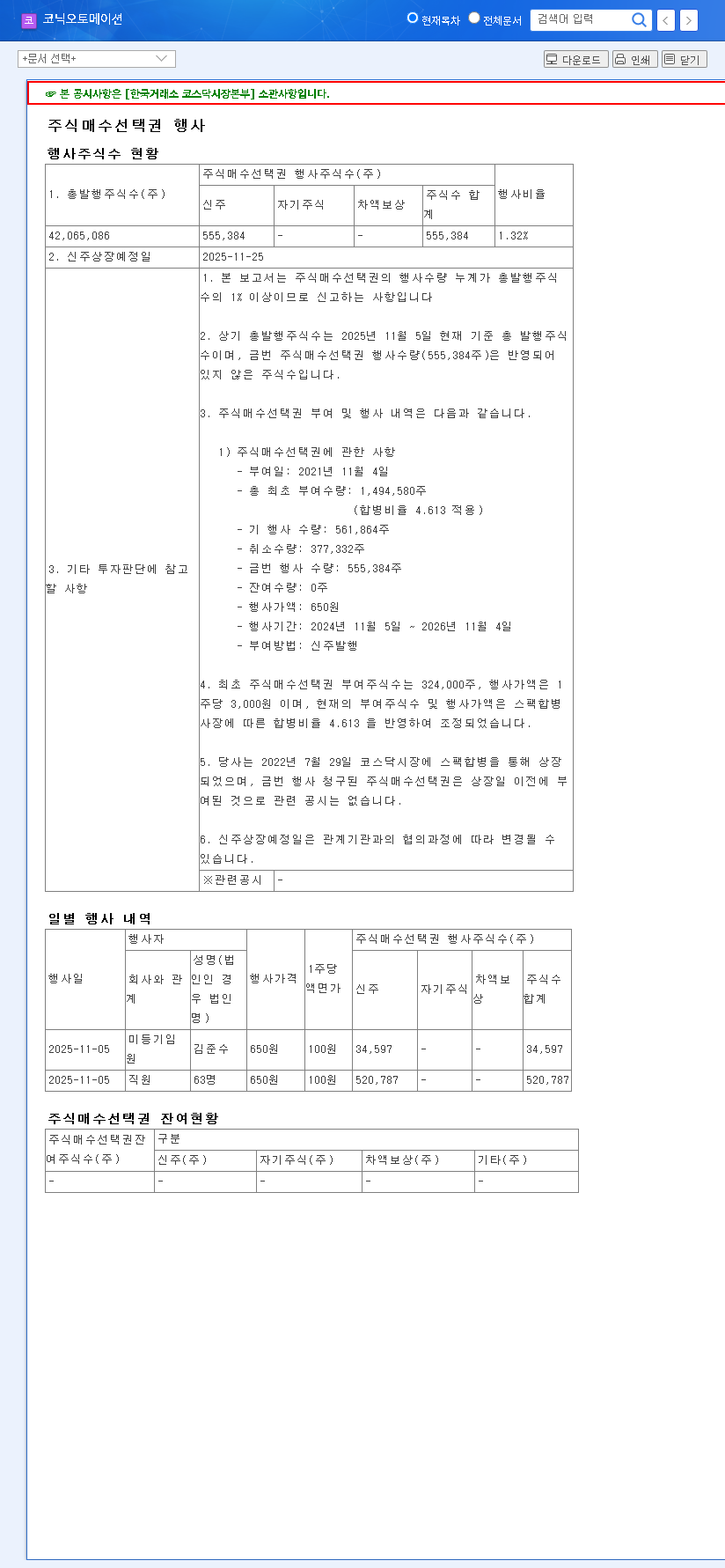
    On November 5, 2025, Kornic Automation Co.Ltd. officially announced the exercise of its stock options, a move detailed in their Official Disclosure. This event will introduce 560,000 new shares into the market, representing approximately 1.32% of the total outstanding shares. These new shares are scheduled for listing on November 25, 2025, at which point they will be tradable. This corporate action requires a careful look at its potential market impact.

    The Dual Impact: Dilution vs. Confidence

    A stock option exercise is a double-edged sword for investors. On one hand, it creates immediate concerns; on the other, it can be a sign of internal confidence.

    • Increased Supply and Dilution Risk: The primary concern is stock dilution, a concept where the value of existing shares is reduced by the issuance of new ones. An influx of 560,000 shares can create downward pressure on the stock price, particularly if the option exercise price is substantially lower than the market price, incentivizing immediate profit-taking by employees.
    • A Limited Signal of Confidence: Typically, employees exercising options can signal belief in a company’s long-term prospects. However, given Kornic Automation’s current financial struggles, this positive signal is heavily muted. The market is more likely to focus on the immediate financial implications rather than insider sentiment.

    A Deep Dive into Kornic Automation’s Financial Health

    To properly contextualize the Kornic Automation stock option exercise, a thorough review of the company’s fundamentals is essential. The picture is one of high potential overshadowed by alarming financial performance.

    Positive Factors: A Foothold in Future Industries

    Kornic Automation operates in several promising high-growth sectors:

    • Strategic Industry Presence: The company develops critical technology like ‘EasyCluster’ for semiconductor equipment and ‘K-LAS’ for secondary battery automation. These are not just buzzwords; they represent vital components in the global supply chain for AI, EVs, and consumer electronics.
    • Commitment to Innovation: Continued R&D investment in next-generation platforms like MetaFactory demonstrates a forward-looking strategy aimed at securing long-term growth.
    • Global Reach: Achieving the ‘5 Million Dollar Export Tower’ award is a tangible sign of progress in penetrating international markets.

    Negative Factors: Alarming Financial Red Flags

    Despite its promising technology, the recent financial reports paint a grim picture of the company’s health.

    The H1 2025 revenue of KRW 9.77 billion represents a staggering 68.1% decrease compared to the previous year. This is not a slight downturn; it is a collapse in sales that demands serious scrutiny.

    • Expanding Losses: As of H1 2025, operating losses widened to KRW 3.37 billion, signaling severe issues with operational efficiency and cost management.
    • Mounting Debt: The issuance of KRW 13 billion in convertible bonds introduces future dilution risk and increases the company’s debt burden. To learn more, see our guide on understanding convertible bonds and their impact.
    • Deteriorating Financial Stability: The net debt ratio surged from 7.47% to a concerning 48.30% in just six months. This rapid increase in leverage makes the company highly vulnerable to economic downturns and rising interest rates.

    Investment Strategy: A Cautious Path Forward

    Given the conflicting signals, a prudent investment strategy is paramount. The short-term outlook for Kornic Automation stock appears challenging, while the long-term view depends entirely on a fundamental turnaround.

    Actionable Steps for Investors

    Investment decisions regarding Kornic Automation should be approached with extreme caution. Consider the following actions:

    • Demand Proof of Recovery: Do not invest based on future promises. Wait for tangible evidence of revenue recovery and a clear path to profitability in upcoming quarterly reports.
    • Monitor for Insider Selling: Keep a close eye on trading activity following the November 25th listing of the new shares. Heavy selling would be a significant red flag.
    • Assess the Macro Environment: High interest rates and a global economic slowdown create a difficult operating environment. A conservative investment stance is wise until these macroeconomic headwinds subside.
    • Analyze Competitive Landscape: Re-evaluate Kornic’s market position. Are competitors faring better? Is the company losing market share?

    In conclusion, the Kornic Automation stock option exercise is more likely a short-term headwind than a long-term catalyst. The severe deterioration in the company’s financial health far outweighs the potential of its end markets. Until the company demonstrates a convincing and sustainable operational turnaround, investors are strongly advised to remain on the sidelines, meticulously monitoring financial reports and market conditions before committing capital.

    (391710) Kornic Automation Stock Option Exercise: A Deep Dive into Dilution Risks & Growth Potential (2025 Analysis) 관련 이미지
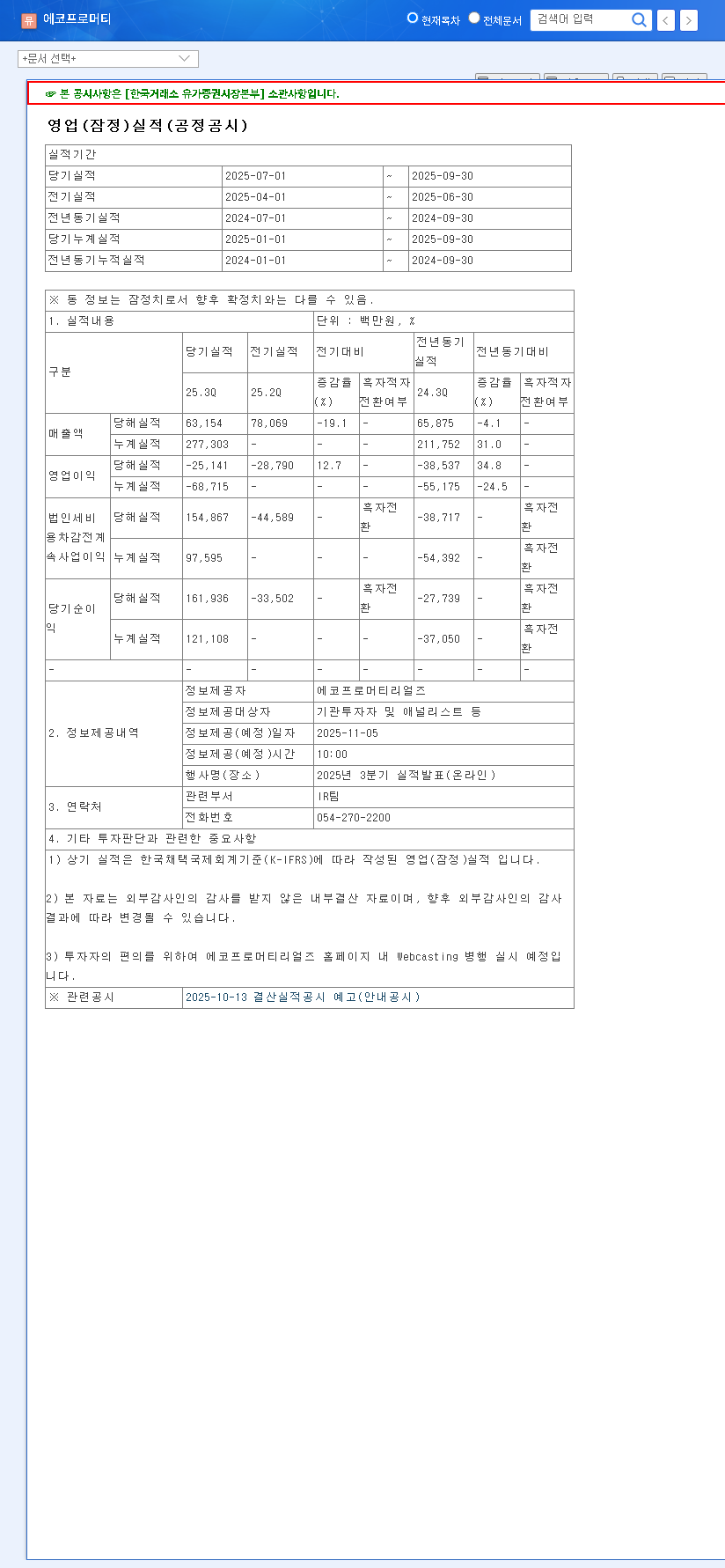
  • (086520) ECOPRO Q3 2025 Earnings: Full Analysis & Stock Outlook for Investors

    (086520) ECOPRO Q3 2025 Earnings: Full Analysis & Stock Outlook for Investors

    ECOPRO, a titan in the global secondary battery market, has sent a powerful signal to investors with its Q3 2025 earnings report. After a challenging period of operational losses, the company has officially achieved a ‘black turn,’ returning to profitability. This news has ignited discussions across trading floors, but a closer look reveals a more complex picture. While the return to profit is a significant milestone, a sequential decline in operating profit raises critical questions.

    This comprehensive analysis will dissect the ECOPRO earnings report for Q3 2025, exploring the catalysts behind the recovery, the persistent risks that investors must not ignore, and a strategic outlook for the ECOPRO stock. Is this the beginning of a sustained rally, or a momentary reprieve? Let’s find out.

    Analyzing ECOPRO’s Q3 2025 Financial Performance

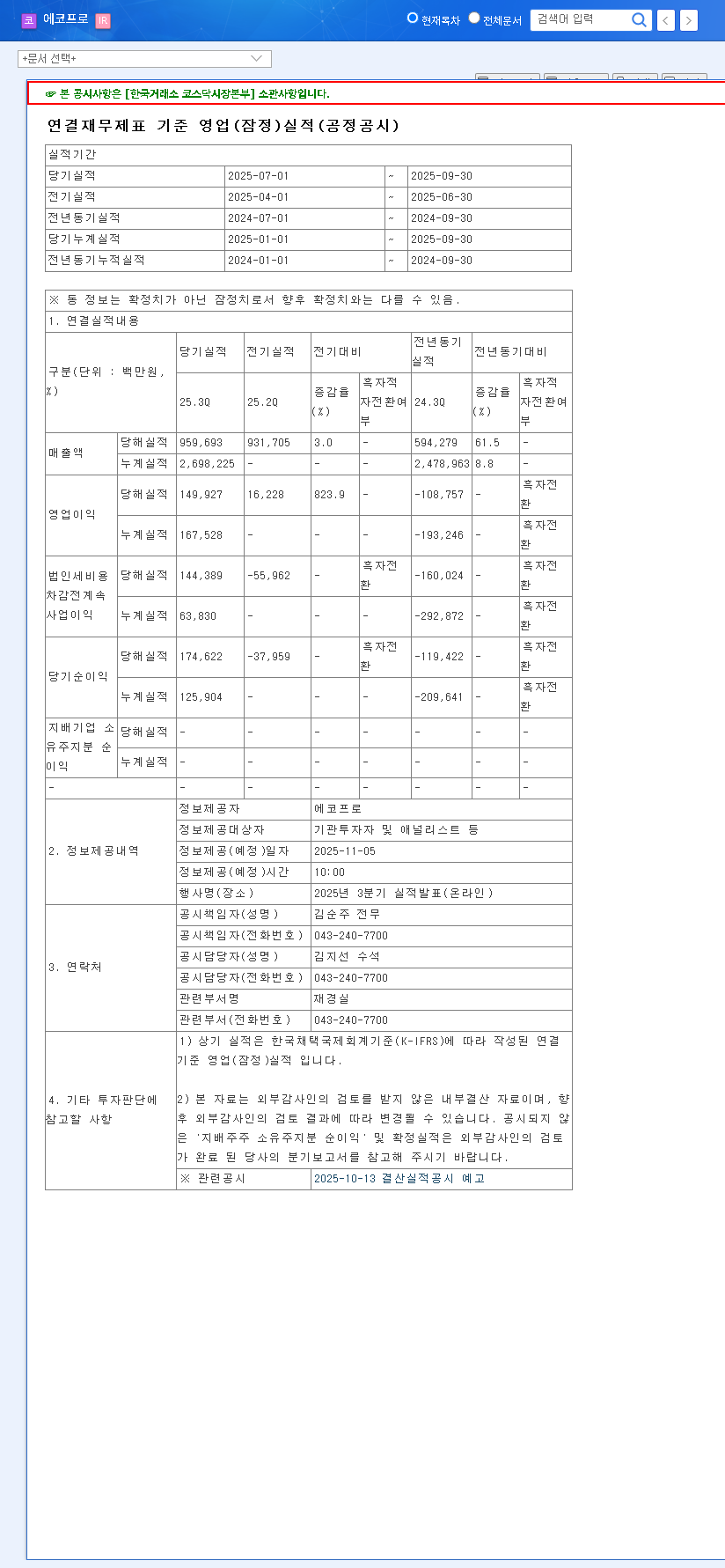
    On November 5, 2025, ECOPRO released its provisional consolidated earnings, confirming its long-awaited return to the black. The numbers, as detailed in their Official Disclosure, paint a picture of recovery. Key figures include:

    • Revenue: 959.7 billion KRW
    • Operating Profit: 149.9 billion KRW

    This performance successfully breaks the streak of operating losses that began in Q4 2024, demonstrating resilience and a potential rebound in demand for its core products. However, the nuance lies in the quarter-over-quarter (QoQ) comparison, which indicates a slight contraction in operating profit margin, a detail savvy investors are closely monitoring.

    The Q3 black turn is a testament to ECOPRO’s operational adjustments and the recovering demand in the EV sector. Yet, the road ahead requires careful navigation of market volatility and competitive pressures.

    Growth Catalysts: What’s Driving the Optimism?

    Several strategic initiatives are underpinning ECOPRO’s recovery and long-term growth potential. Understanding these is key for anyone considering investing in ECOPRO.

    Value Chain Fortification

    ECOPRO is proactively strengthening its supply chain. The recent acquisition of a stake in an Indonesian nickel refinery is a masterstroke, aiming to secure a stable supply of a critical raw material and hedge against price volatility. This vertical integration enhances cost competitiveness and reduces external dependencies, a crucial advantage in the turbulent commodities market.

    Commitment to R&D and Innovation

    The company has expanded its business objectives to include ‘technology research and service consignment.’ This signals a deeper commitment to innovation, likely focusing on next-generation cathode materials and battery recycling technologies. These R&D efforts are vital for maintaining a competitive edge and capturing future growth in the rapidly evolving global EV battery market.

    Risk Factors and Headwinds to Consider

    Despite the positive turn, a prudent investor must weigh the significant risks that could impact ECOPRO stock performance.

    • Raw Material & Currency Volatility: The prices of lithium, nickel, and cobalt are notoriously volatile. As seen in market analyses by sources like Bloomberg, these fluctuations can directly erode profit margins. Furthermore, a strengthening KRW against the USD can negatively impact export revenues.
    • Intense Market Competition: The secondary battery market is fiercely competitive, with major players constantly vying for market share. Increased competition can lead to price wars and pressure on profitability.
    • Macroeconomic Pressures: Lingering concerns of a global economic slowdown, coupled with high interest rates, can dampen consumer demand for electric vehicles and increase the financial burden on the company.
    • Annual Deficit Concerns: While Q3 was profitable, the company is still projected to post a net loss for the full 2024 fiscal year. A full annual turnaround is necessary to fully restore investor confidence.

    Investor Outlook & Strategic Action Plan

    ECOPRO is at a critical inflection point. The Q3 2025 results mark the early stages of a turnaround, but stability is not yet guaranteed.

    Short-Term Perspective

    The initial market reaction may be positive due to the headline profitability. However, the QoQ profit decline could cap immediate upside potential. Expect some volatility as the market digests the full report and awaits Q4 guidance.

    Mid-to-Long-Term Perspective

    Long-term success hinges on sustained profitability and the tangible results of its strategic investments in R&D and the supply chain. Investors should watch for consistent margin improvement and a clear path to annual profitability in 2026. The growth of the global EV market remains a powerful tailwind, but ECOPRO’s ability to execute its strategy will be the deciding factor.

    In conclusion, while ECOPRO’s return to profitability is a commendable achievement, a cautious but optimistic approach is warranted. A thorough analysis of the forthcoming Q4 results and the 2026 annual forecast will be crucial for making an informed investment decision. The company has the potential, but the execution and market conditions in the coming quarters will truly define its trajectory.

    (086520) ECOPRO Q3 2025 Earnings: Full Analysis & Stock Outlook for Investors 관련 이미지
  • (003670) POSCO FUTURE M (003670) Analysis: Investment Outlook & 2025 IR Event Preview

    (003670) POSCO FUTURE M (003670) Analysis: Investment Outlook & 2025 IR Event Preview

    As a global leader in battery materials, POSCO FUTURE M CO., LTD. (003670) is at a critical juncture. With the global secondary battery market experiencing explosive growth yet facing significant headwinds, the company’s upcoming Investor Relations (IR) event on November 5, 2025, is a pivotal moment. This event is more than a routine update; it’s a strategic unveiling that will shape investor perception and guide future POSCO investment decisions.

    This comprehensive analysis will delve into the core fundamentals of POSCO FUTURE M, examining its powerful growth drivers, the challenges it faces, and what to expect from the crucial 2025 IR briefing. We will provide the insights necessary for a well-informed investment perspective on this titan of EV battery materials.

    The Significance of the November 2025 IR Event

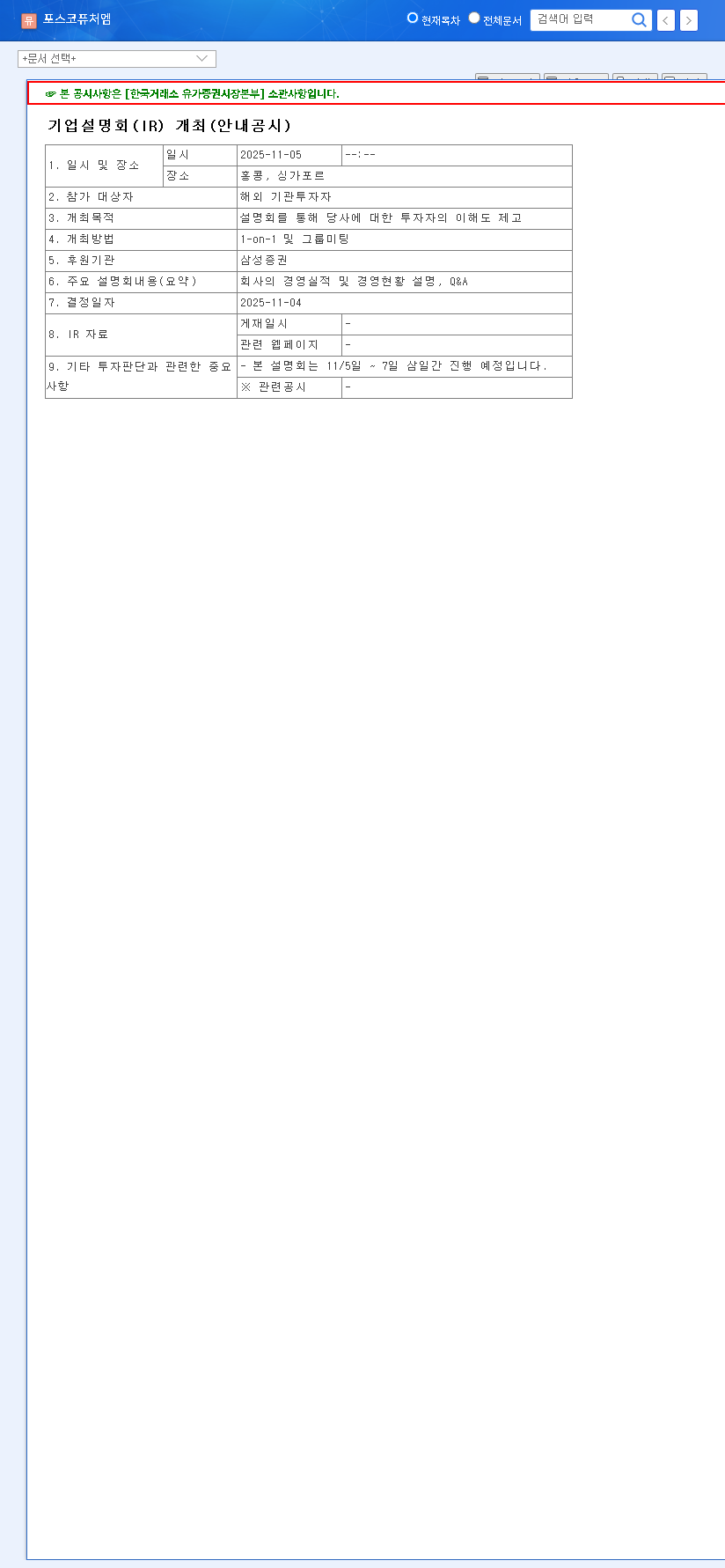
    On November 5, 2025, POSCO FUTURE M will host its IR event to clarify its strategic roadmap. For investors, this is a key opportunity to gain direct insight into the company’s performance, operational status, and long-term vision. The session will feature a detailed presentation followed by a Q&A, addressing pressing questions about market strategy and financial health.

    This IR event is expected to provide clear answers on how POSCO FUTURE M plans to navigate a rapidly evolving market, solidify its leadership in battery materials, and drive sustainable future growth.

    In-Depth Analysis: POSCO FUTURE M’s Fundamentals

    As of November 2025, POSCO FUTURE M boasts a market capitalization of approximately KRW 19.5 trillion, solidifying its position as a major player in the South Korean market and the global secondary battery market. The company’s core strength lies in its Energy Materials Business Unit, which accounts for over 54% of sales and is the primary engine of its ambitious growth strategy.

    Positive Catalysts: Key Growth Drivers

    Several powerful factors underpin the company’s long-term potential. Understanding these is crucial for any POSCO investment thesis.

    • Market Expansion: The secondary battery market continues its structural growth, driven by the global EV transition. Projections from authorities like the International Energy Agency (IEA) confirm a robust long-term demand trajectory.
    • POSCO Group Synergy: Unparalleled access to a stable supply of raw materials like lithium and nickel through the POSCO Group’s value chain creates a significant competitive advantage.
    • Technological Leadership: The company has proven mass-production capabilities for high-nickel NCMA and NCA cathode materials and is actively developing next-generation technologies, including LFP and single-crystal cathodes.
    • North American Foothold: A strategic joint venture with General Motors (GM) provides direct entry into the lucrative North American market, crucial for capitalizing on EV demand.
    • Geopolitical Advantage: The global “de-Sinicization” trend, aimed at diversifying supply chains away from China, presents a massive opportunity for non-Chinese anode material suppliers like POSCO FUTURE M.

    Headwinds & Risks: What Investors Must Watch

    Despite the bright outlook, investors must consider several challenges that could introduce short-term volatility.

    • Policy Uncertainty: Regulations in key markets, especially the U.S. Inflation Reduction Act (IRA), can change, impacting supply chain requirements and profitability. You can learn more in our guide to the IRA’s impact on EV batteries.
    • Market Slowdown: While the long-term trend is positive, short-term slowdowns in the EV market growth rate can affect demand and investor sentiment.
    • Raw Material Volatility: Prices for critical minerals like nickel, cobalt, and lithium are subject to sharp fluctuations, impacting production costs and margins.
    • High Capital Expenditure: Building out global production capacity requires enormous investment, which can strain short-term profitability and increase financial leverage.

    Key Questions for the IR Event

    The IR event’s success will hinge on its ability to address investor uncertainty. Key topics to watch for include:

    • Profitability Roadmap: Concrete plans to improve profitability in the Energy Materials unit amidst heavy investment.
    • Use of Capital: A detailed breakdown of how the recent KRW 1.1 trillion capital increase will be deployed for North American and domestic expansion.
    • Risk Mitigation: Specific strategies to counter risks from IRA policy shifts, interest rate hikes, and raw material price swings.
    • Next-Gen Tech Timeline: A clear timeline for the commercialization of new technologies like LFP and single-crystal cathodes.

    Investment Outlook: Balancing Long-Term Growth with Short-Term Risk

    POSCO FUTURE M presents a classic case of high long-term growth potential versus significant short-term volatility. The company is perfectly positioned to capitalize on the generational shift to electric mobility, backed by the industrial might of the POSCO Group and strong technological capabilities. However, the path will not be linear. High investment costs and external market pressures will likely impact short-term financial results and stock performance.

    For the mid-to-long term, the outlook remains highly promising. Investors with a longer time horizon may find the current environment an attractive entry point, provided the company executes its strategic plan effectively. In the short term, stock price will be highly sensitive to the content of the IR presentation. A clear, confident, and detailed strategic plan could significantly boost investor sentiment, while ambiguity could lead to further pressure.

    Official Company Disclosure (DART)

    For official information and filings related to the company’s financial status and corporate actions, investors can refer to the public disclosure system.
    Source: Click to view DART report

    (003670) POSCO FUTURE M (003670) Analysis: Investment Outlook & 2025 IR Event Preview 관련 이미지