Tag: Environmental Business

  • (010780) IS DONGSEO Q3 2025 Earnings Analysis: Unpacking Growth in Waste Battery & Environmental Sectors

    (010780) IS DONGSEO Q3 2025 Earnings Analysis: Unpacking Growth in Waste Battery & Environmental Sectors

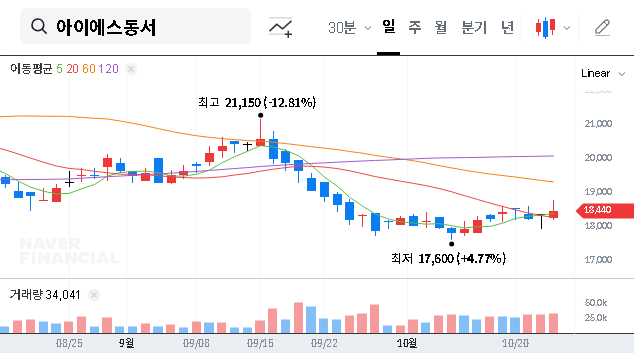
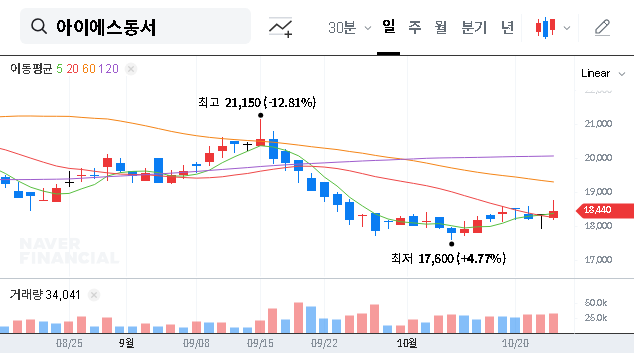
    This comprehensive IS DONGSEO analysis unpacks the upcoming Q3 2025 earnings investor relations (IR) call, scheduled for November 18, 2025. In a complex economic climate marked by a persistent construction market downturn, IS DONGSEO has managed a surprising feat: improving operating profit despite a dip in overall revenue. This performance has captured the attention of investors, who are keen to understand the underlying drivers.

    The key to this resilience appears to be the company’s strategic diversification, with robust growth in its concrete and environmental business segments, including the high-potential waste battery recycling division. This report provides an in-depth examination of the IS DONGSEO Q3 2025 earnings, offering critical insights into the opportunities and risks that will shape investor sentiment following the IR event.

    Unpacking the IS DONGSEO Q3 2025 Earnings Performance

    IS DONGSEO reported consolidated revenue of KRW 905.3 billion and an operating profit of KRW 95.2 billion for the third quarter of 2025. While the revenue figure marks a year-over-year decline, the improved operating profit signals effective cost management and successful performance in high-margin sectors. This divergence highlights the success of the company’s diversification strategy amidst significant headwinds in its traditional construction business.

    Construction Segment: Navigating a Market Slump

    The construction division faced predictable challenges, with its revenue decline attributed to a perfect storm of macroeconomic factors. Persistently high interest rates, rising material costs, and reduced public construction investments have created a challenging environment. Investors will be closely watching the upcoming IS DONGSEO investor relations call for detailed strategies on mitigating project financing (PF) risks and navigating this prolonged slump. Understanding their approach to project selection and cost control will be vital. For more context on these economic pressures, reports from institutions like the World Bank offer valuable macroeconomic analysis.

    Growth Engines: Concrete and Environmental Services

    In stark contrast to the construction slump, the concrete and environmental businesses have emerged as powerful growth drivers. The concrete segment’s revenue growth was fueled by increased orders for specialized, high-margin products. However, the company must still navigate intense market competition.

    The environmental division, which includes waste treatment and the burgeoning IS DONGSEO waste battery recycling business, shows immense potential. As the global transition to electric vehicles (EVs) accelerates, the demand for sustainable battery recycling solutions is set to skyrocket. This positions IS DONGSEO to capitalize on a major secular trend. Nonetheless, this segment is not without its challenges, as operating profit can be sensitive to fluctuations in the prices of core recycled minerals like lithium and cobalt.

    The pivotal question for investors is whether the high-growth environmental and waste battery segments can scale quickly enough to not only offset the cyclical downturn in construction but also redefine the company’s long-term value proposition.

    Financial Health and Investor Outlook

    From a financial standpoint, IS DONGSEO maintains a solid foundation. With total assets of KRW 3,520.3 billion against liabilities of KRW 1,988.5 billion, the company’s debt-to-equity ratio stands at a very stable 44.48%. While operating cash flow has improved, a decrease in cash reserves reflects strategic investments and debt repayments—a healthy sign of capital allocation for future growth. The full details can be reviewed in the Official Disclosure from DART.

    Key Questions for the IR Call

    The upcoming IR event is a critical moment for management to build investor confidence. The market will be looking for clear, detailed answers to several key points. This IS DONGSEO analysis suggests focusing on the following areas:

    • Construction Risk Management: What specific strategies are in place to manage project financing exposure and improve profitability in the construction sector? Explore our guide on understanding real estate PF risks for deeper insight.
    • Waste Battery Vision: What is the long-term roadmap for the waste battery recycling business? How does the company plan to hedge against mineral price volatility and secure its position in the EV value chain?
    • Sustainable Growth & ESG: How will the growth of the environmental business contribute to the company’s ESG (Environmental, Social, and Governance) profile and long-term shareholder value?
    • Shareholder Returns: What are the company’s mid-to-long-term plans for dividends and other forms of shareholder returns, reflecting confidence in its future cash flow?

    Conclusion: A Pivotal Moment for IS DONGSEO Growth

    The IS DONGSEO Q3 2025 earnings demonstrate a successful strategic pivot towards new growth drivers. The company has proven its ability to generate profit even when its legacy business faces severe headwinds. The upcoming IR is management’s opportunity to articulate a clear and compelling vision for how its environmental and waste battery businesses will power future growth and create sustainable, long-term value for shareholders. A transparent and confident presentation could significantly bolster investor confidence, while any ambiguity could leave lingering doubts about the company’s ability to navigate the uncertain road ahead.

    (010780) IS DONGSEO Q3 2025 Earnings Analysis: Unpacking Growth in Waste Battery & Environmental Sectors 관련 이미지
  • (010780) IS DONGSEO’s ₩341.3B Redevelopment Deal: A 2025 Financial Analysis for Investors

    (010780) IS DONGSEO’s ₩341.3B Redevelopment Deal: A 2025 Financial Analysis for Investors

    This comprehensive IS DONGSEO financial analysis dives into the company’s recent landmark contract win. In a market fraught with uncertainty, high interest rates, and sluggish construction activity, IS DONGSEO has secured a major ₩341.3 billion redevelopment deal. This pivotal move sparks critical questions: Can this contract reverse recent financial declines and become a true catalyst for growth? What are the underlying risks and rewards for potential investors?

    We will dissect the core details of the Wondae 2-ga Redevelopment Project, evaluate the company’s fundamental health, analyze market expectations, and outline a strategic approach for a medium to long-term IS DONGSEO investment. This analysis provides the clarity needed to make informed decisions in today’s complex economic landscape.

    The ₩341.3 Billion Redevelopment Contract: A Detailed Breakdown

    Key Contract Details: Wondae 2-ga Redevelopment Project

    IS DONGSEO has officially announced the signing of a massive single sales and supply contract for the Wondae 2-ga Redevelopment Project, located in Seo-gu, Daegu Metropolitan City. This project is poised to become a significant pillar for the company’s future revenue streams and growth momentum. The details, as per the official disclosure, are as follows:

    • Contracting Party: Wondae 2-ga Redevelopment Project Association
    • Contract Scope: Full construction order for the redevelopment project.
    • Supply Area: 98, Wondae-dong 2-ga, Seo-gu, Daegu, South Korea
    • Contract Amount: A substantial ₩341.3 billion
    • Percentage of Revenue: Represents an impressive 22.54% of recent annual revenue.
    • Contract Period: June 1, 2029 – June 1, 2032 (3-year duration)

    This contract is scheduled to make a material contribution to IS DONGSEO’s revenue starting in 2029, reinforcing its construction portfolio and setting the stage for improved performance in the coming decade.

    IS DONGSEO Financial Analysis: Fundamentals & Growth Impact

    Current Corporate Health: Strengths and Weaknesses

    Based on recent financial reports, IS DONGSEO presents a mixed but intriguing picture for investors:

    Positive Aspects:

    • Environmental Business Growth: The company’s push into future-proof sectors, particularly battery recycling, is a key growth driver that diversifies it beyond traditional construction.
    • Effective Cost Management: Despite falling sales, an improved operating profit margin signals strong internal controls and enhanced business efficiency.
    • Stable Financial Structure: A healthy and well-managed debt-to-equity ratio indicates sound financial discipline.

    Factors to Consider:

    • Construction Sector Headwinds: The broader construction market remains challenged by high costs and interest rates, which could delay a full recovery. For more on market trends, see reports from sources like Reuters Business.
    • Declining Financial Metrics: Key indicators like sales, operating profit, and net profit have trended downwards since 2022, raising valid concerns about short-term profitability.
    • Macroeconomic Risks: Global variables such as exchange rate volatility and raw material price inflation could place pressure on overall operations.

    For investors, the key takeaway is not just the deal itself, but the company’s ability to execute flawlessly and manage costs effectively amidst market volatility over the next five years. This contract provides a visible long-term revenue stream, acting as a crucial bridge to future growth.

    Market Expectations & Key Risks for Investors

    The Investor Perspective on the IS DONGSEO Redevelopment Deal

    While this large-scale contract is a clear positive, its impact is nuanced. Because revenue recognition does not begin until 2029, the immediate effect on the stock price may be limited. The market will likely focus more on near-term construction market recovery and progress in the company’s diversified business portfolio, such as its environmental ventures. To learn more about diversification strategies, you can read our guide on evaluating corporate fundamentals.

    The redevelopment sector is fiercely competitive. Success for IS DONGSEO hinges on demonstrating superior technology, cost competitiveness, and project management capabilities to outperform rivals and protect margins.

    Conclusion: A Strategic Long-Term Investment Outlook

    Final Assessment and Investment Strategy

    The IS DONGSEO redevelopment deal is a vital strategic win that secures a significant future growth engine. In a challenging climate, this ₩341.3 billion contract is a powerful positive signal. However, investors should adopt a patient, long-term perspective. The key risk factors—market uncertainty until 2029, potential cost inflation, and recent financial performance—necessitate careful monitoring.

    This contract should not be viewed as a trigger for a short-term price surge, but as a foundational piece of the company’s long-term value proposition. When combined with IS DONGSEO’s ESG initiatives and its promising environmental business, the successful execution of this project could mark a major turning point. The most rational approach is to evaluate this IS DONGSEO investment opportunity by tracking its strategic execution and financial improvements over the medium-to-long term. Full details of the contract can be found in the Official Disclosure (DART Source).

    (010780) IS DONGSEO's ₩341.3B Redevelopment Deal: A 2025 Financial Analysis for Investors 관련 이미지
  • COMMAX (015710) H1 2025 Earnings Analysis: Exploring New Business Ventures and Profitability

    1. COMMAX H1 2025 Performance: Key Highlights

    COMMAX reported revenue of KRW 52.89 billion and operating profit of KRW 3.168 billion for H1 2025. Both revenue and operating profit increased year-over-year, with a notable improvement in operating margin in Q2. However, profitability remains below historical highs, likely due to investments in new businesses and R&D expenses.

    2. New Business Ventures: Driving Future Growth

    Beyond its core home network business, COMMAX is actively investing in new ventures, including environmental businesses, EV charging services, and software/platform businesses. These expansions are expected to drive future growth, but high initial investment costs and market competition pose potential risks.

    3. Solid Financial Position: A Stable Foundation

    COMMAX maintains a healthy financial position with a debt-to-equity ratio of 20.13% as of H1 2025, providing a stable foundation for new business investments and growth.

    4. Investment Perspective: Opportunities and Risks

    COMMAX, a leading company in the home network market, shows steady growth and is enhancing future growth potential through new business ventures. However, investors should consider risks such as securing profitability in new businesses and macroeconomic uncertainties.

    5. Action Plan for Investors

    • Monitor the revenue contribution and profitability of new businesses.
    • Review R&D achievements and commercialization plans.
    • Analyze the impact of raw material prices and exchange rate fluctuations.
    • Keep track of global economic and interest rate trends.
    Q: What are COMMAX’s main businesses?

    A: COMMAX specializes in electronic communication devices, focusing on home network systems, video door phones, and CCTVs. They are also expanding into new areas like environmental businesses, EV charging services, and software/platform businesses.

    Q: How did COMMAX perform in H1 2025?

    A: COMMAX reported revenue of KRW 52.89 billion and operating profit of KRW 3.168 billion in H1 2025, showing year-over-year growth but remaining below historical peak profitability.

    Q: What should investors consider when evaluating COMMAX?

    A: Key considerations include the profitability of new ventures, macroeconomic uncertainties, and the impact of raw material prices and exchange rate fluctuations.

  • GemVax & KAEL (082270) H1 2025 Earnings Report Analysis: High Risk, High Return?

    1. GemVax & KAEL H1 2025 Performance: A Mixed Bag

    GemVax & KAEL’s H1 2025 revenue significantly exceeded expectations, reaching 25 billion KRW, yet operating and net income remained negative. While steady demand in the environmental business and the potential of the bio business drove revenue growth, high debt and capital impairment remain key challenges.

    2. Business Segment Analysis: Growth Drivers and Risks

    • Environmental Business: While possessing a stable revenue base, this segment is vulnerable to fluctuations in raw material prices. Increased competition in the new plastic recycling business is also a concern.
    • Bio Business (GV1001): High expectations surround the development of GV1001 as an Alzheimer’s treatment. However, ongoing operating losses due to R&D investment and the inherent uncertainties of drug development pose significant risks.

    3. Financial Analysis: Precarious Financial Structure and the Importance of Funding

    High debt-to-equity ratio (256.84%) and continued operating losses raise concerns about GemVax & KAEL’s financial stability. Raising capital through bond issuance offers only a short-term solution; securing long-term financial health is crucial.

    4. Investment Strategy: Balancing Risk Management and Growth Potential

    Investing in GemVax & KAEL requires careful consideration of both its high growth potential and substantial financial risks. Closely monitoring GV1001 clinical trial results, financial restructuring plans, strategies for securing competitiveness in new businesses, and macroeconomic changes are essential.

    Frequently Asked Questions

    What are GemVax & KAEL’s main businesses?

    GemVax & KAEL focuses on environmental pollution control (Chemical Air Filter, etc.) and bio business (GV1001 drug development).

    What is GV1001?

    GV1001 is a drug candidate being developed for the treatment of Alzheimer’s disease, Progressive Supranuclear Palsy (PSP), and other conditions.

    What should investors be aware of when considering GemVax & KAEL?

    Investors should consider the financial risks, including high debt-to-equity ratio, capital impairment, and the uncertainties of the bio business. Close attention should be paid to GV1001 clinical trial results and financial restructuring efforts.

  • Seoul Food Industry’s H1 2025 Earnings: Sales Growth But Profits Remain Elusive

    1. Seoul Food Industry’s H1 2025 Performance: What Happened?

    Seoul Food Industry reported KRW 18.3 billion in revenue for H1 2025, demonstrating year-over-year growth. However, both operating and net income remained negative, at KRW 0 and -KRW 3 billion, respectively.

    2. The Root of the Problem: Why the Losses?

    The primary driver of these losses is the declining profitability of the bakery business. Rising raw material costs, including flour, oils, and eggs, coupled with fierce market competition, are squeezing margins. High debt ratios and accumulated losses also raise concerns about the company’s financial health.

    3. The Road Ahead: What’s Next?

    While the environmental business segment shows steady growth, it’s not enough to offset the bakery segment’s struggles. Seoul Food Industry needs to implement strategies to improve profitability and strengthen its financial structure. Cost reduction initiatives, development of high-value-added products, and debt reduction are crucial steps.

    4. Investor Action Plan: What Should Investors Do?

    The current investment recommendation is to hold. Investors should wait for clearer signals regarding sustained sales growth, profitability improvements, and strengthened financial health before making any investment decisions.

    What was Seoul Food Industry’s revenue in H1 2025?

    KRW 18.3 Billion.

    What are Seoul Food Industry’s main business segments?

    Bakery and Environmental businesses.

    What is the current investment recommendation for Seoul Food Industry?

    Hold.

  • DYPNF’s Surprising H1 2025 Earnings: A Turnaround Success? Investment Strategy Analysis

    1. What Happened in H1 2025?

    DYPNF recorded KRW 107.6 billion in revenue, KRW 14.9 billion in operating profit, and KRW 11.8 billion in net profit for the first half of 2025. These figures represent significant growth compared to the same period last year.

    2. What’s Behind the Surprising Earnings?

    This positive performance is attributed to growth in the E&R and environmental businesses, as well as new contracts with major domestic companies. The numerous contracts secured in 2024, in particular, have significantly contributed to a stable revenue base. The company’s successful turnaround after overcoming the negative impact of previous contract cancellations is also noteworthy.

    3. So, What’s the Investment Strategy?

    Considering DYPNF’s current stock price trend and market conditions, the investment appeal appears high. However, potential risk factors such as increasing accounts receivable and inventories, as well as a growing trend in current liabilities, should be carefully monitored. Investors should also consider the company’s strategy for addressing macroeconomic volatility, including the possibility of a global economic downturn.

    • Investment Opinion: Buy (Preliminary)

    4. Key Checkpoints for Investors

    Before making an investment decision, carefully review the following:

    • Recent quarterly earnings trends
    • Growth prospects for E&R and environmental businesses
    • Status of accounts receivable and inventory management
    • The company’s strategy for dealing with macroeconomic volatility

    What was DYPNF’s preliminary revenue for H1 2025?

    DYPNF’s preliminary revenue for the first half of 2025 was KRW 107.6 billion.

    What are DYPNF’s main business segments?

    DYPNF’s main business segments are E&R and environmental businesses.

    What are the key investment considerations for DYPNF?

    Investors should be mindful of increasing accounts receivable and inventories, growing current liabilities, and macroeconomic volatility.

  • 3S (060310) Q2 2025 Earnings Analysis: A Turnaround Driven by Environmental Business Growth?

    1. What Happened at 3S?

    3S recorded KRW 9.8 billion in revenue (up 84.2% YoY), KRW 200 million in operating profit (turning to profit), and KRW 0 in net income (turning to profit) in Q2 2025. The growth in the environmental business segment was particularly noteworthy, positively influenced by growth in the global HVAC market, strengthening environmental regulations, and entry into the secondary battery testing equipment market.

    2. Why These Results?

    • Environmental Business Strength: Explosive growth fueled by the expanding global HVAC market and eco-friendly trends. The entry into the secondary battery testing equipment market also proved successful.
    • Wafer Carrier Business Weakness: Directly impacted by the semiconductor market downturn, this segment saw declining revenue and operating losses.
    • FA Business Potential: Entering the logistics automation market provides a new growth engine, though it’s still in its early stages with minimal financial impact.

    3. What’s Next for 3S?

    3S can anticipate a positive future based on the continued growth of its environmental business and the potential of its FA business. However, uncertainties surrounding the wafer carrier business, ongoing litigation, and low production capacity utilization pose risks.

    4. What Should Investors Do?

    A conservative approach is recommended in the short term, closely monitoring developments in the wafer carrier business. However, long-term investors may consider 3S based on the growth potential of the environmental business and the FA segment. Careful consideration of the company’s earnings announcements and disclosures is crucial for informed investment decisions.

    What were 3S’s key financial results for Q2 2025?

    3S reported KRW 9.8 billion in revenue (up 84.2% YoY), KRW 200 million in operating profit (turning to profit), and KRW 0 in net income (turning to profit).

    What are 3S’s main business segments?

    3S operates in three main segments: Environmental, Wafer Carrier, and Factory Automation (FA).

    What is the outlook for 3S?

    While the growth of the environmental business and the potential of the FA segment are positive, investors should consider the uncertainties in the wafer carrier business and the ongoing litigation risks.
