Tag: Energy

  • (000210) DL Holdings Q3 2025 Earnings: In-Depth Investor Analysis of the 59% Profit Miss

    (000210) DL Holdings Q3 2025 Earnings: In-Depth Investor Analysis of the 59% Profit Miss

    The latest DL Holdings Q3 2025 earnings announcement has sent ripples through the investment community, revealing a provisional net profit that dramatically undershot market consensus. This report provides a comprehensive DL Holdings investor analysis, breaking down the financial results, exploring the underlying causes for the underperformance, and outlining a strategic outlook for current and potential shareholders. As market volatility persists, understanding the intricacies of DL’s diverse business portfolio—from petrochemicals to construction—is more critical than ever for making informed decisions about DL Holdings stock.

    Dissecting the DL Holdings Q3 2025 Earnings Report

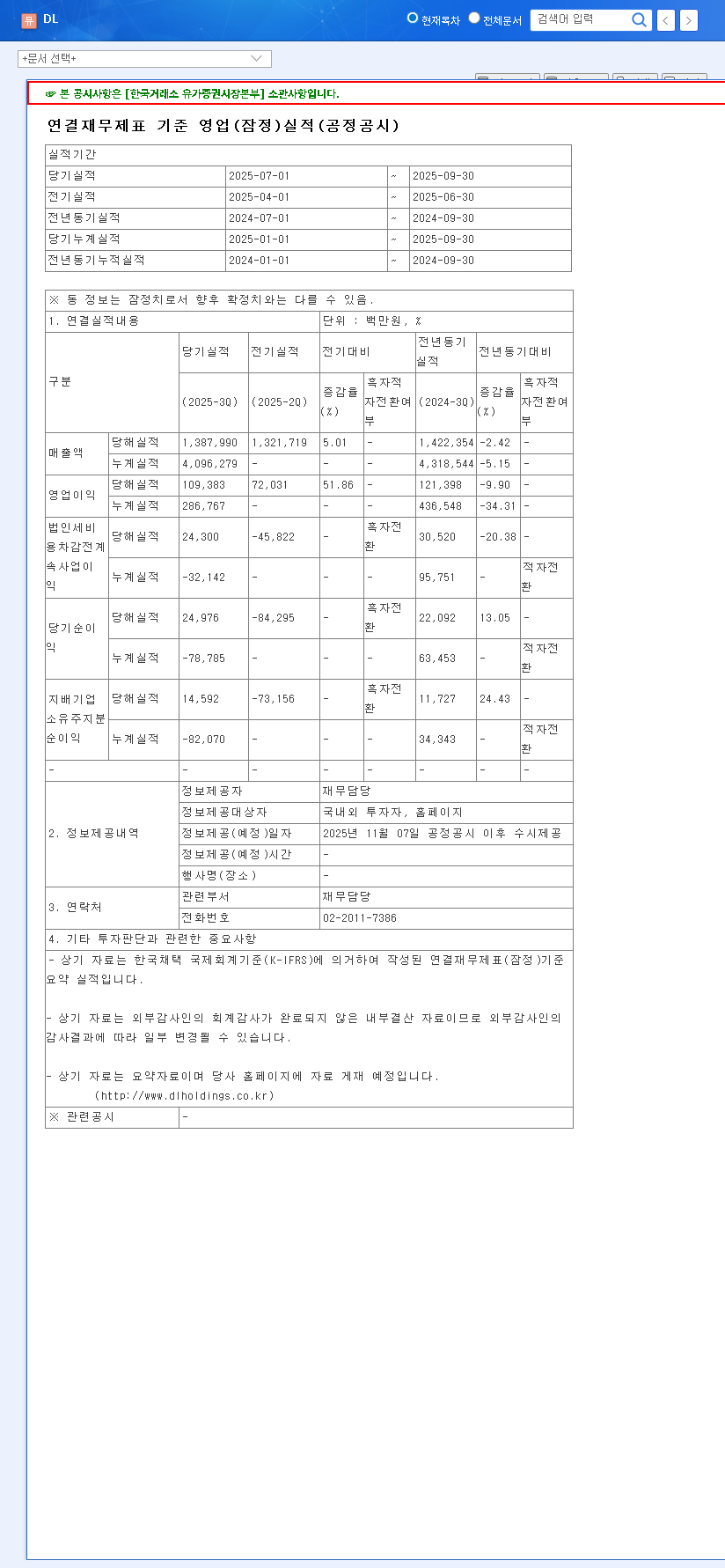
    On November 7, 2025, DL Holdings CO.,LTD released its consolidated provisional operating results, which immediately drew market scrutiny. While top-line numbers were close to estimates, the bottom line told a very different story. The official figures can be reviewed in the company’s Official Disclosure on DART.

    Key Financials vs. Market Expectations

    Here’s a clear breakdown of the performance against market forecasts:

    • Revenue: KRW 1,388 billion, falling just 1.3% below the market estimate of KRW 1,407.4 billion.
    • Operating Profit: KRW 109.4 billion, a marginal 2.3% below the estimate of KRW 112 billion.
    • Net Profit: KRW 14.6 billion, a staggering 59.1% below the market estimate of KRW 35.7 billion.

    The severe 59.1% miss on net profit is the central concern for investors, signaling potential margin pressures and increased financial costs that are eroding the company’s profitability more than anticipated.

    Behind the Numbers: A Sector-by-Sector Breakdown

    The underperformance wasn’t uniform across the conglomerate. A deeper dive reveals a story of resilience in some areas being overshadowed by significant headwinds in others.

    Manufacturing (Petrochemicals, Automotive Parts): Facing Headwinds

    The manufacturing division continues to struggle amidst a global economic slowdown. The persistent slump in global demand, exacerbated by China’s aggressive petrochemical capacity expansion, has squeezed margins. Furthermore, a cooling in the electric vehicle (EV) market growth has put pressure on the automotive parts segment. While DL is strategically pivoting towards high-value-added products, these macro trends, as analyzed by sources like Bloomberg Economics, present a formidable challenge.

    Energy Sector: A Period of Transition

    The energy sector is in a phase of strategic transition. Efforts to build future growth engines through the expansion of its renewable energy portfolio are underway. However, this quarter’s revenue saw a year-on-year decrease, largely due to base effects from the sale of certain power generation assets in the previous year. The long-term success of this segment hinges on the global pace of green energy adoption and evolving regulatory landscapes.

    Construction (DL E&C): The Group’s Resilient Backbone

    The standout performer is the construction sector, anchored by DL E&C performance. This division demonstrated robust results across its civil engineering, plant, and housing segments, reaffirming its status as the core growth engine for the group. Its strong order backlog and consistent execution provide a crucial buffer against the volatility in other sectors, contributing significantly to the group’s overall stability. Investors can learn more about its projects on our page covering DL E&C’s project portfolio.

    Future Outlook and Investor Strategy

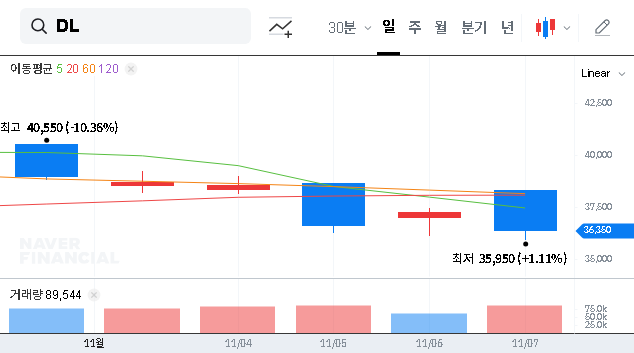
    The significant DL Holdings net profit shortfall will likely trigger negative investor sentiment and could place short-term downward pressure on the stock price. Investors should brace for volatility. However, a purely bearish outlook may be premature.

    What to Watch Moving Forward

    A prudent mid-to-long-term investment strategy for DL Holdings stock requires monitoring several key indicators:

    • Manufacturing Recovery: Watch for signs of a global economic rebound and stabilization in the petrochemical market.
    • Renewable Energy Milestones: Look for tangible progress and profitability in the company’s green energy ventures.
    • Construction Sector Momentum: Continued strong order intake and execution by DL E&C are vital for group stability.
    • Cost Management: Scrutinize future earnings reports for effective control over financial costs and improvements in operating margins.

    In conclusion, while the DL Holdings Q3 2025 earnings are disappointing, the company’s fate is not sealed. The resilience of its construction arm provides a foundation for recovery, but a turnaround in the manufacturing sector is essential for a meaningful rebound in profitability and stock performance.
    (000210) DL Holdings Q3 2025 Earnings: In-Depth Investor Analysis of the 59% Profit Miss 관련 이미지
  • (071320) KOREA DISTRICT HEATING CORPORATION Investment Analysis (2026): Stock, Risks & Capital Rumor

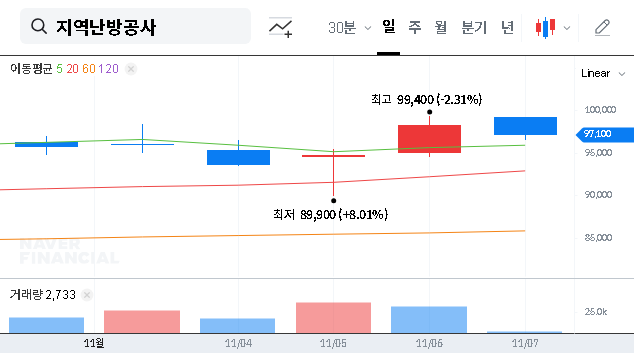
    (071320) KOREA DISTRICT HEATING CORPORATION Investment Analysis (2026): Stock, Risks & Capital Rumor

    A successful KOREA DISTRICT HEATING CORPORATION investment strategy requires looking beyond headlines. A recent disclosure has resurfaced a nearly decade-old rumor about a capital increase, prompting many investors to question its relevance today. This analysis will delve into the specifics of this re-disclosure, conduct a thorough review of KDHC’s current fundamentals, and provide a clear framework for evaluating the company’s stock value and potential risks moving into 2026.

    We’ll move past the noise of the old rumor to focus on what truly matters: financial health, growth drivers, and strategic challenges. This will equip you with the knowledge to make an informed decision about KDHC as a potential addition to your portfolio.

    Deconstructing the 2016 Capital Increase Rumor

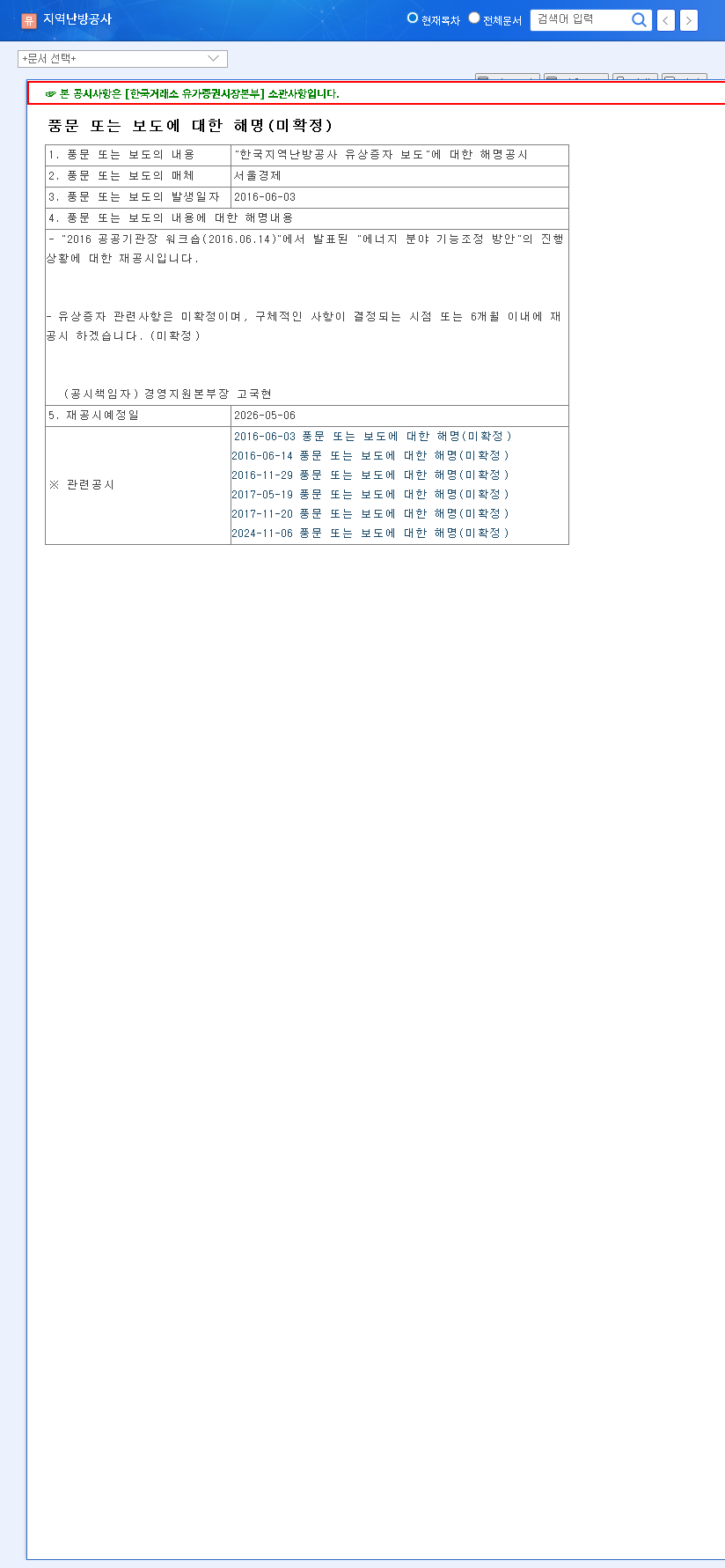
    On November 7, 2025, KOREA DISTRICT HEATING CORPORATION (KDHC) issued a notice regarding a ‘re-disclosure’ scheduled for May 6, 2026. This pertains to a clarification of a capital increase rumor first reported by the Seoul Economic Daily back on June 3, 2016. The core of the matter is not the rumor itself, but the regulatory requirement to officially address and close the book on such long-standing, unconfirmed reports. The Official Disclosure provides the procedural details.

    While this re-disclosure may create short-term market chatter, its direct impact on KDHC’s current valuation is expected to be minimal. The market is far more sensitive to present financial performance and future guidance than to the ghost of a nine-year-old rumor. The real value for investors is using this event as a catalyst to re-evaluate the company’s core financial health.

    KDHC Stock Analysis: A Tale of Strengths and Weaknesses

    To understand any potential KOREA DISTRICT HEATING CORPORATION investment, we must weigh the positive catalysts against the significant structural risks. Based on recent financial reports, a clear picture emerges.

    Positive Fundamentals & Growth Drivers

    • Favorable Energy Prices: The stabilization and decline of global Liquefied Natural Gas (LNG) prices is a major boon for KDHC. As a cogeneration power provider, LNG is a primary input cost, and lower prices directly translate to wider profit margins and improved bottom-line performance.
    • ESG and New Business Ventures: KDHC is actively pursuing future growth. The establishment of an ESG committee signals a commitment to sustainability, which is crucial for attracting modern institutional capital. Tangible projects, like the Goyang Changneung district heating initiative, represent new revenue streams essential for long-term expansion. You can learn more about ESG investment trends here.
    • Shareholder-Friendly Policies: By implementing electronic voting and maintaining a stable dividend policy, KDHC is enhancing corporate governance and building trust with investors. These measures can lead to a more stable shareholder base and potentially reduced stock price volatility.

    Significant Risks and Headwinds

    • High Debt Ratio (236.5%): This is the most significant risk factor. A high debt-to-equity ratio, as explained by financial authorities like Investopedia, makes a company highly vulnerable to rising interest rates. Increased borrowing costs can severely erode profitability. The need to refinance maturing bonds in 2025 and beyond will be a critical test of KDHC’s financial stability.
    • Revenue & R&D Concerns: A noticeable decline in revenue from the electricity segment puts pressure on overall profitability. Compounding this, a reduction in R&D spending as a percentage of revenue raises questions about the company’s ability to innovate and maintain a competitive edge in the evolving energy sector.
    • External Volatility: As an energy company, KDHC is exposed to macroeconomic forces beyond its control. Fluctuations in international oil prices, currency exchange rates, and ongoing litigation risks create a layer of uncertainty that investors must price in.

    A Strategic Checklist for KDHC Investors

    Prudent investors should treat the KDHC capital increase rumor as background noise. The focus should remain squarely on the company’s fundamental performance and strategic execution. Here are the key areas to monitor:

    • Debt Management Strategy: Pay close attention to quarterly reports for any changes in interest expenses and management’s plans for refinancing upcoming debt obligations. Their ability to manage this in the current rate environment is paramount.
    • New Project Execution: Track the progress and profitability of new initiatives like the Goyang Changneung project. Are these projects meeting deadlines and contributing positively to revenue?
    • Energy Policy and Market Adaptation: The energy market is in constant flux. Monitor how KDHC adapts to government policy shifts and competitive pressures within the broader Korean energy sector.
    • The May 2026 Disclosure: While the direct impact may be low, observe the specific language of the re-disclosure and the market’s reaction. It will be the final chapter in this long-running story and could reflect on management’s transparency.

    Disclaimer: This article is for informational purposes only and does not constitute investment advice. All investment decisions should be made based on personal research and judgment.

    (071320) KOREA DISTRICT HEATING CORPORATION Investment Analysis (2026): Stock, Risks & Capital Rumor 관련 이미지
  • (336260) Doosan Fuel Cell Stock: 2025 IR Event Analysis & SOFC Outlook

    (336260) Doosan Fuel Cell Stock: 2025 IR Event Analysis & SOFC Outlook

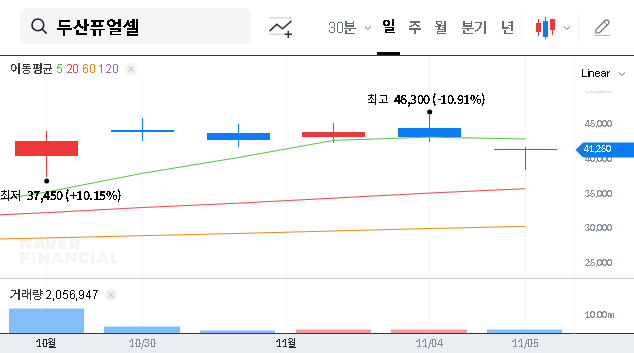
    The future of Doosan Fuel Cell hangs in the balance as it prepares for its critical Q3 2025 Investor Relations (IR) event. For investors and market analysts, this event is more than a routine earnings call; it’s a pivotal moment that will reveal the company’s strategy for navigating recent financial headwinds and its roadmap for capitalizing on next-generation SOFC technology. This comprehensive analysis unpacks the company’s current state, the opportunities and risks tied to the IR, and the key metrics every stakeholder should be watching.

    Amid declining revenues and operational losses, Doosan Fuel Cell is betting on future growth engines, including Solid Oxide Fuel Cell (SOFC) development and a strategic entry into the eco-friendly vehicle market. The question remains: can the company’s leadership present a convincing case for a turnaround and sustainable growth, thereby restoring market confidence in the Doosan Fuel Cell stock?

    The Upcoming Doosan Fuel Cell IR Event: What to Expect

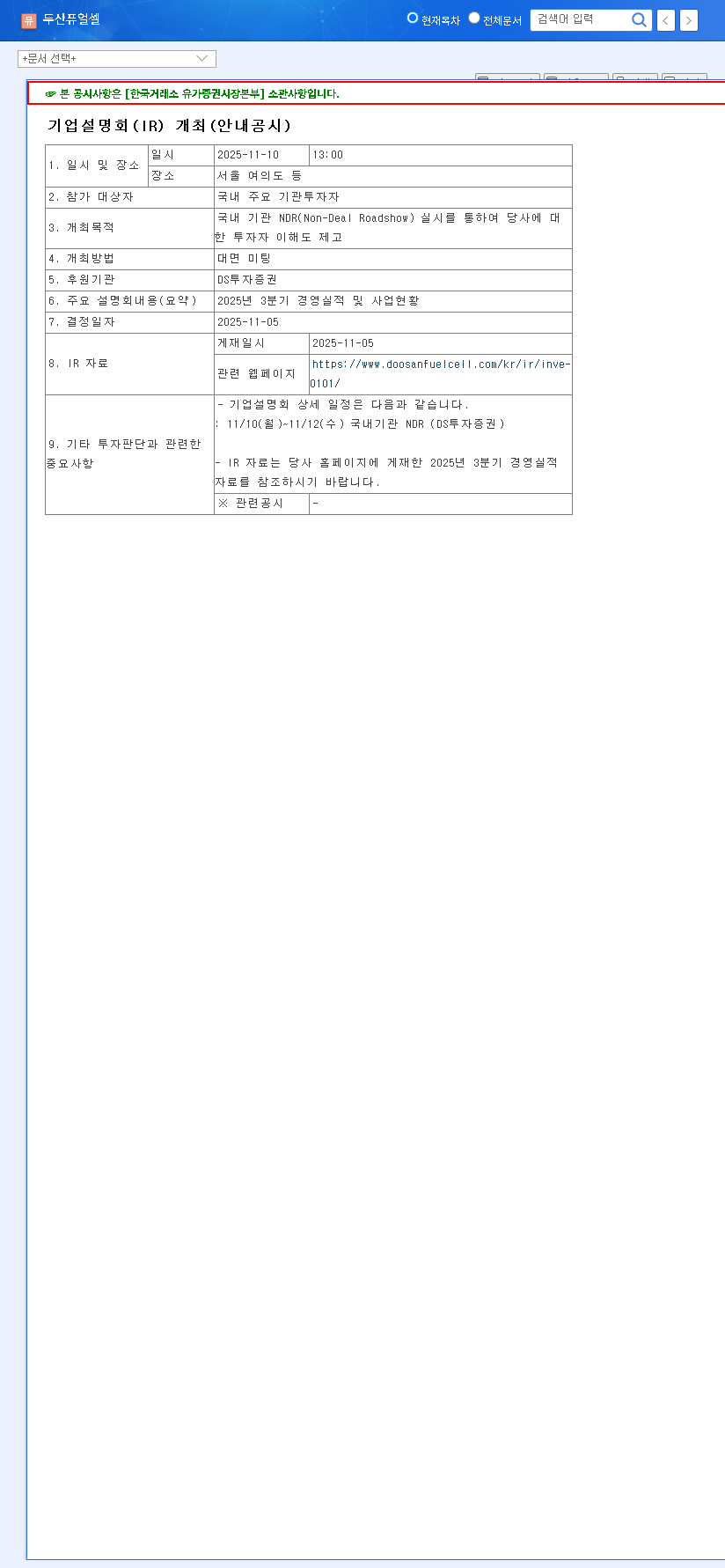
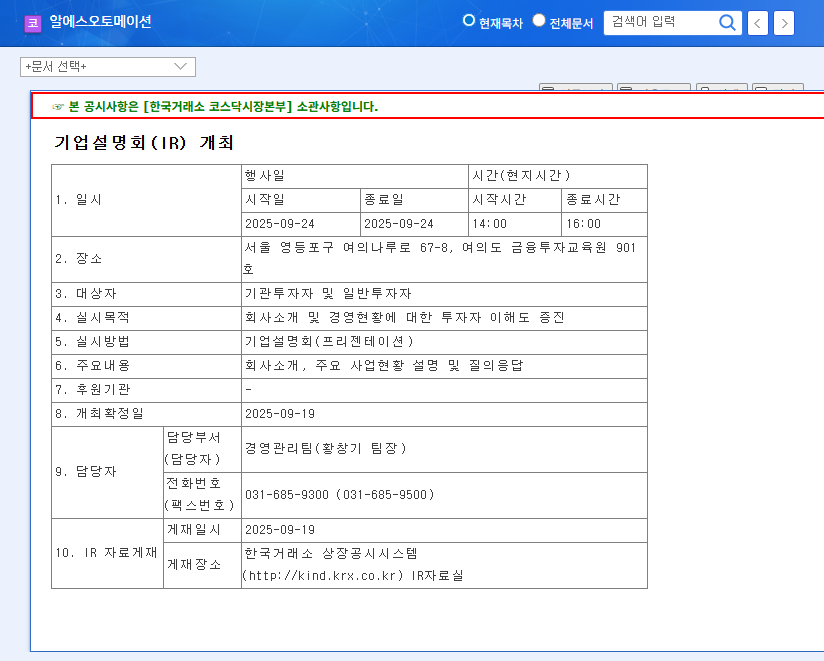
    Doosan Fuel Cell Co., Ltd. has officially scheduled its Doosan Fuel Cell IR event for domestic institutional investors on November 10, 2025, at 1:00 PM. The primary agenda is to present the Q3 2025 management performance and provide a detailed business status update. This event is a crucial platform for the company to address the underperformance seen in the first half of the year and to articulate a clear, actionable plan for recovery and future expansion. The official announcement can be reviewed in the company’s disclosure. (Source: Official Disclosure).

    A Deep Dive into Doosan Fuel Cell’s Current State

    Business Model & Competitive Edge

    Doosan Fuel Cell has long been a leader in the Korean power generation hydrogen fuel cell market, specializing in Phosphoric Acid Fuel Cell (PAFC) technology. This established technology provides stability and versatile fuel utilization, giving the company a strong foothold. However, recognizing the market’s evolution, the company is making strategic pivots:

    • Portfolio Diversification: An equity investment in HyAxios Motors signals a serious commitment to entering the burgeoning eco-friendly commercial vehicle market, reducing reliance on stationary power generation.
    • Future-Proofing with SOFC Technology: The acquisition of next-generation Solid Oxide Fuel Cell (SOFC) technology and the construction of a 50MW production facility are critical for long-term growth and competing on a global scale. You can learn more about this technology in our guide, A Deep Dive into SOFC vs. PAFC Technology.

    Financial Health Under Scrutiny

    The H1 2025 financial report painted a challenging picture. Revenue plummeted to 228.2 billion KRW (a 44.7% decrease YoY), while the operating loss widened to -13.5 billion KRW. This performance raises significant questions about inventory management (358.7 billion KRW in assets) and debt, with the debt-to-equity ratio climbing to 153.8%. A clear strategy to improve financial discipline will be non-negotiable for investors at the IR event.

    Investors will be looking past the promises of future technology and scrutinizing the balance sheet. A credible plan to manage debt and improve operational efficiency is just as important as the roadmap for SOFC technology.

    Macro-Environment and Policy Tailwinds

    It’s not all headwinds. The broader market offers several opportunities. Government policies like the Clean Hydrogen Portfolio Standard (CHPS) are creating a favorable domestic market. Globally, the push towards a hydrogen economy, as outlined by organizations like the International Energy Agency (IEA), provides a long-term tailwind. Furthermore, stabilizing interest rates could ease borrowing costs, providing some financial relief.

    Potential IR Impact on Doosan Fuel Cell Stock

    The upcoming Doosan Fuel Cell IR event is a double-edged sword, presenting both significant opportunities and risks.

    Opportunities (Potential Upside)

    • Restoring Investor Confidence: A transparent explanation for recent struggles coupled with a robust improvement plan could significantly boost sentiment.
    • Highlighting Future Value: A detailed roadmap for the commercialization of SOFC technology and the new vehicle venture can shift the narrative from current losses to future potential.
    • Synergy with Policy: Demonstrating alignment with national and global hydrogen policies can unlock perceived value and de-risk the business model.

    Risks (Potential Downside)

    • Magnifying Poor Performance: If Q3 results show a continuation of the negative trend without a clear path to profitability, investor concerns will intensify.
    • Vague Strategic Vision: A lack of concrete details on financial management or competitive strategy could be interpreted as a lack of direction, further damaging the stock.

    Investor Checklist: Key Watch Points

    Investors should meticulously evaluate the information presented at the IR, focusing on these five critical areas:

    1. 1.Q3 Performance & Outlook: Are there tangible signs of a turnaround in the core business?
    2. 2.Financial Improvement Plan: What are the specific steps and timelines for reducing inventory and improving the debt ratio?
    3. 3.SOFC Commercialization Roadmap: What is the realistic timeline for revenue generation from the new SOFC technology?
    4. 4.Competitive Strategy: How will Doosan differentiate itself as global competition in the hydrogen fuel cell space heats up?
    5. 5.Capital Allocation: How will the company balance investment in future growth with the need for current financial stability?

    In conclusion, the Doosan Fuel Cell IR event is a watershed moment. The company’s ability to deliver a clear, credible, and convincing message that addresses its current challenges while painting a compelling vision for the future will be paramount in determining the trajectory of its stock and its place in the rapidly evolving energy landscape.

    (336260) Doosan Fuel Cell Stock: 2025 IR Event Analysis & SOFC Outlook 관련 이미지
  • (005090) SGC Energy Co Ltd Q3 2025 IR Analysis: Stock Outlook & Growth Potential

    (005090) SGC Energy Co Ltd Q3 2025 IR Analysis: Stock Outlook & Growth Potential

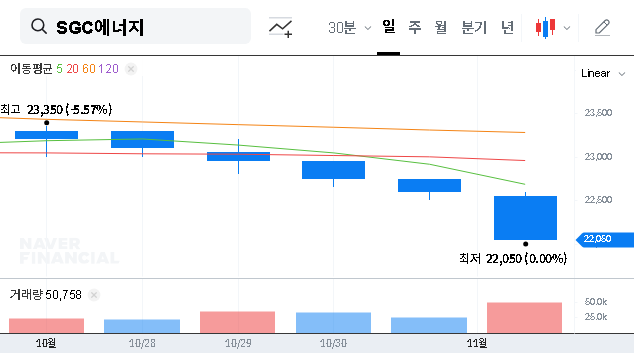
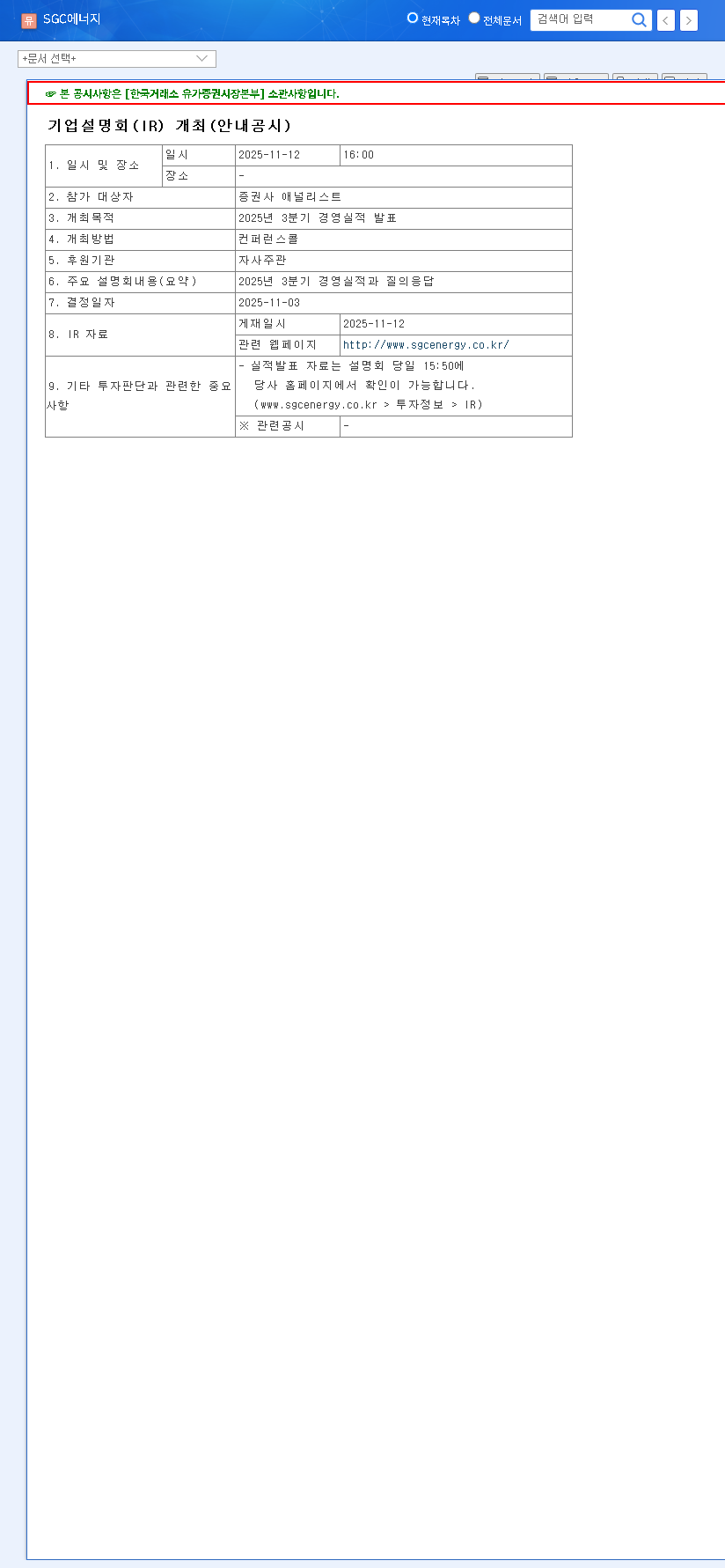
    As the financial community turns its attention to the upcoming Q3 2025 Investor Relations (IR) event for SGC Energy Co Ltd, investors find themselves at a critical juncture. The company’s first-half performance painted a complex picture: while revenue showed encouraging growth, a steep decline in operating profit and a shift to a net loss have raised significant concerns. Scheduled for November 12, 2025, this IR event is more than a routine update; it’s a pivotal moment for management to address these challenges and articulate a clear path toward sustainable growth.

    This comprehensive SGC Energy analysis delves into the financial headwinds, segment-specific performance, and the strategic initiatives that will define the company’s future. For anyone holding or considering an investment in SGC Energy stock, understanding these dynamics is paramount.

    H1 2025 Financial Recap: A Tale of Two Trends

    The first half of 2025 for SGC Energy Co Ltd was a story of contrasts. While top-line growth was positive, profitability faced significant pressure. This dichotomy is central to the current investor uncertainty.

    Key Performance Indicators (YoY)

    • Revenue: Increased by a respectable 6.1% to KRW 1,236.9 billion, largely fueled by strong performance in the construction segment and higher Renewable Energy Certificate (REC) sales.
    • Operating Profit: Plunged by 56.7% to KRW 51.5 billion. This sharp decline was attributed to rising costs in the energy division, thinning margins in construction, and higher overall expenses.
    • Net Income: Swung from a prior-year profit to a net loss of KRW 7.4 billion, impacted by increased financial costs and equity method losses.

    Macroeconomic Headwinds

    SGC Energy’s diverse portfolio makes it highly sensitive to the global economic climate. Key external factors include volatile commodity prices, which directly impact fuel costs, and fluctuating currency exchange rates (EUR/KRW and USD/KRW) that affect import costs and debt servicing. For a broader view on global economic indicators, resources like Reuters Business News provide essential context.

    Performance Across Business Segments

    A closer look at each business unit reveals a mixed bag of results, highlighting both areas of strength and segments requiring strategic intervention.

    • Power & Energy: Increased REC sales provided a boost, but the heavy capital expenditure for biomass conversion and new Carbon Capture & Utilization (CCU) facilities poses a near-term financial burden. Learn more about how CCU technology works in our related guide.
    • Construction & Real Estate: While overseas projects bolstered revenue, the domestic market’s contraction and rising costs are squeezing profitability, a key concern for the SGC Energy stock price.
    • Glass & Logistics: The glass bottle business remains a stable performer, but the household goods division is lagging. The logistics center continues to be a reliable source of rental income.

    The core challenge for SGC Energy Co Ltd is to prove that its long-term growth investments in green technology can outweigh the short-term profitability pressures and high financial leverage.

    Financial Health and Key Risk Factors

    One of the most significant red flags for investors is the company’s financial structure. With a consolidated debt ratio standing at a high 144.3%, the management of liquidity and cash flow is under intense scrutiny. This high leverage amplifies other risks, including interest rate sensitivity and potential credit rating downgrades. For a detailed breakdown of the company’s financial position, refer to the Official Disclosure (DART Report).

    Investor Checklist for the Q3 2025 IR Event

    The upcoming SGC Energy investor relations call will be a litmus test. Here are the key points analysts and investors will be watching to gauge the company’s trajectory and its impact on the SGC Energy stock.

    Potential Positive Catalysts

    • Signs of Profit Recovery: Any indication that operating profit and net income are improving in Q3 would be a strong positive signal.
    • Concrete Progress on Growth Drivers: Tangible results or a clear timeline for the CCUS facilities and other green projects could significantly boost long-term confidence.
    • Effective Cost Management: A clear strategy for controlling costs, especially in the energy and construction segments, would be well-received.

    Potential Negative Concerns

    • Continued Performance Decline: If Q3 results show a continuation of the H1 trend (declining profit, net loss), it could trigger a further stock price downturn.
    • Vague Financial Strategy: A lack of clear, actionable plans to address the high debt ratio and improve cash flow would likely be viewed negatively.

    Conclusion: At a Strategic Crossroads

    SGC Energy Co Ltd is undeniably at a crossroads. The company is balancing the immediate pain of macroeconomic pressures and internal cost issues against the long-term promise of its investment in sustainable energy and new technologies. The Q3 2025 IR is management’s opportunity to restore confidence by demonstrating that they have a firm grip on current challenges and a viable, profitable strategy for the future. For investors, the event will provide the critical data points needed to decide whether the current challenges are temporary hurdles or signs of deeper structural issues.

    (005090) SGC Energy Co Ltd Q3 2025 IR Analysis: Stock Outlook & Growth Potential 관련 이미지
  • (018670) SK GAS LTD Stock Analysis: Navigating the Q3 2025 IR & Future Growth

    (018670) SK GAS LTD Stock Analysis: Navigating the Q3 2025 IR & Future Growth

    This comprehensive SK GAS LTD stock analysis offers a crucial look into the company’s performance as it approaches a pivotal moment: the Q3 2025 Investor Relations (IR) conference. In a dynamic global energy market, SK GAS is navigating a significant transition, balancing its legacy Liquefied Petroleum Gas (LPG) business with bold investments in new growth engines like power generation and LNG terminals. For investors, this upcoming IR is more than a quarterly update; it’s a window into the company’s strategic direction and long-term value proposition.

    We will dissect the company’s fundamentals, evaluate the performance of its new ventures, and outline the key factors that will influence its stock price. Whether you’re a current shareholder or considering an SK GAS investment, this deep dive provides the essential insights needed to make informed decisions.

    SK GAS LTD is at a crossroads, where the stability of its traditional LPG business meets the high-growth potential of its new energy ventures. The upcoming SK GAS Q3 2025 IR will be a critical litmus test for this evolving strategy.

    The Upcoming Q3 2025 Investor Relations Event

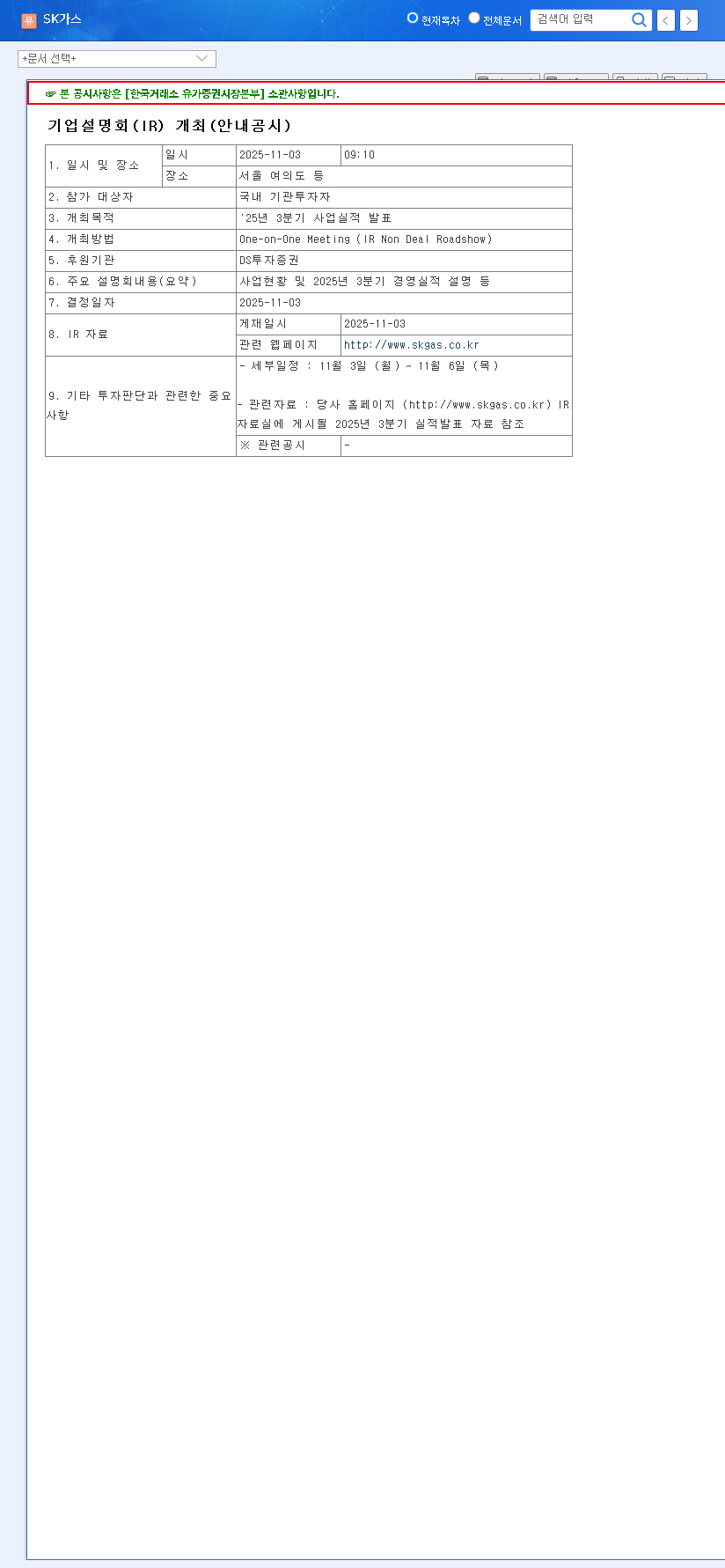
    SK GAS LTD has officially scheduled its Investor Relations (IR) conference to announce its Q3 2025 financial results. The event will take place on November 3, 2025, at 9:10 AM. This conference is highly anticipated by the market, serving as a transparent forum for management to communicate recent performance, address challenges, and outline future strategies. For detailed official information, investors can refer to the Official Disclosure (DART). The key focus will be on the financial contribution and operational stability of its new business segments.

    Fundamental Deep Dive: A Two-Pillar Strategy

    Pillar 1: The Core LPG Business – Stability and Adaptation

    The traditional LPG business remains the bedrock of SK GAS LTD’s operations. In the first half of 2025, it generated consolidated sales of KRW 3.7 trillion. While this figure marks a 12.7% decrease year-on-year, largely due to softer demand from petrochemical clients, the company demonstrated resilience. A notable 6% increase in overseas export volumes signals a strengthening of its international trading capabilities, a strategic pivot to counteract domestic market softness. This ability to adapt to global market dynamics is a key strength, providing a stable cash flow to fund new ventures.

    Pillar 2: New Growth Engines – Powering the Future

    The most exciting part of the SK GAS LTD stock analysis lies in its new ventures, which are already making a significant financial impact:

    • Power Generation (UlsanGPS): The Ulsan Gas Power Station (UlsanGPS) began commercial operations in December 2024 and has quickly become a major revenue contributor. By H1 2025, it had already generated KRW 327.2 billion, proving its potential as a powerful new growth engine.
    • LNG Terminal Business: Launched in November 2024, the LNG terminal is diversifying the company’s portfolio and integrating it further into the global natural gas value chain. This provides strategic advantages in sourcing and trading.
    • Future-Forward Ventures: SK GAS is not stopping there. Active development in the US Energy Storage Systems (ESS) market and hydrogen projects highlights a clear commitment to securing long-term, sustainable growth momentum. For more on this sector, see our Guide to Investing in Future Energy.

    Financial Health and Market Risks

    Analyzing the Balance Sheet

    Despite heavy capital expenditure for its new businesses, SK GAS has shown prudent financial management. Total assets grew to KRW 7.6 trillion, and the debt-to-equity ratio improved to 334.83% from 385.76% at the end of the previous year. While still relatively high, this downward trend is a positive signal. Most impressively, operating cash flow saw a dramatic improvement to KRW 259.6 billion, demonstrating the core business’s ability to generate cash even while funding major growth projects.

    Navigating Market Headwinds

    No SK GAS investment is without risk. The company is exposed to significant market volatility, as noted by sources like Reuters on global energy markets. Key risk factors to monitor include:

    • Fluctuations in global LPG prices and foreign exchange rates.
    • Rising interest rates impacting debt servicing costs.
    • Intensifying competition in both domestic and international markets.
    • Broader macroeconomic and geopolitical uncertainties affecting energy demand.

    Investment Outlook and Final Recommendation

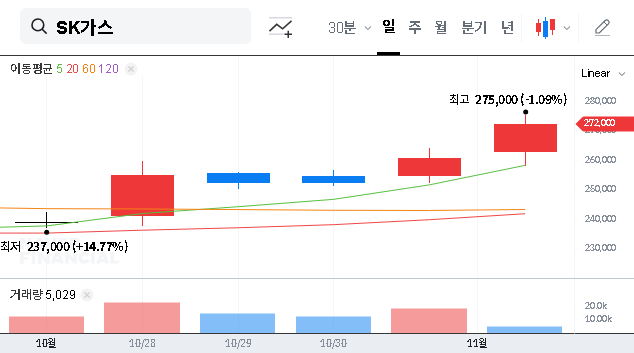
    The SK GAS Q3 2025 IR will be a crucial data point. Positive results that exceed market expectations, particularly strong performance from UlsanGPS and a clear path to continued deleveraging, could significantly boost investor sentiment and drive the stock price higher. Conversely, any sign of weakness in the new ventures or a deterioration in financial health could lead to downward pressure.

    Investment Opinion: Hold. Our current stance is to wait for the details from the IR conference. It is prudent to thoroughly analyze the Q3 results, management’s outlook, and specific strategies for improving financial soundness before making a new or additional investment. The long-term success of SK GAS hinges on its ability to execute its diversification strategy while managing its debt effectively.

    Disclaimer: This analysis is for informational purposes only and does not constitute investment advice. All investment decisions should be made based on your own research and judgment.

    Frequently Asked Questions (FAQ)

    When is SK GAS LTD’s Q3 2025 IR conference?

    SK GAS LTD will hold its Investor Relations (IR) conference on November 3, 2025, at 9:10 AM, to announce its Q3 2025 business results and provide updates on its current business status.

    What are SK GAS LTD’s key new businesses?

    The company’s key new growth drivers are the power generation business (UlsanGPS) and the LNG terminal business. It is also actively pursuing future-oriented ventures like the US ESS business and hydrogen projects.

    What is the main takeaway from this SK GAS LTD stock analysis?

    SK GAS is successfully transitioning into a diversified energy company. While its high debt-to-equity ratio requires monitoring, the strong performance of new businesses and improved operating cash flow are positive signs. The upcoming Q3 IR will be critical for assessing its future trajectory.

    (018670) SK GAS LTD Stock Analysis: Navigating the Q3 2025 IR & Future Growth 관련 이미지
  • POSCO International’s $1.6B Investment: A Hydrogen-Fueled Leap into the Future of Energy (and What it Means for Investors)


    POSCO International's $1.6B Investment:  A Hydrogen-Fueled Leap into the Future of Energy (and What it Means for Investors) 대표 차트 이미지


    1. POSCO International’s $1.6B Investment – What Happened?

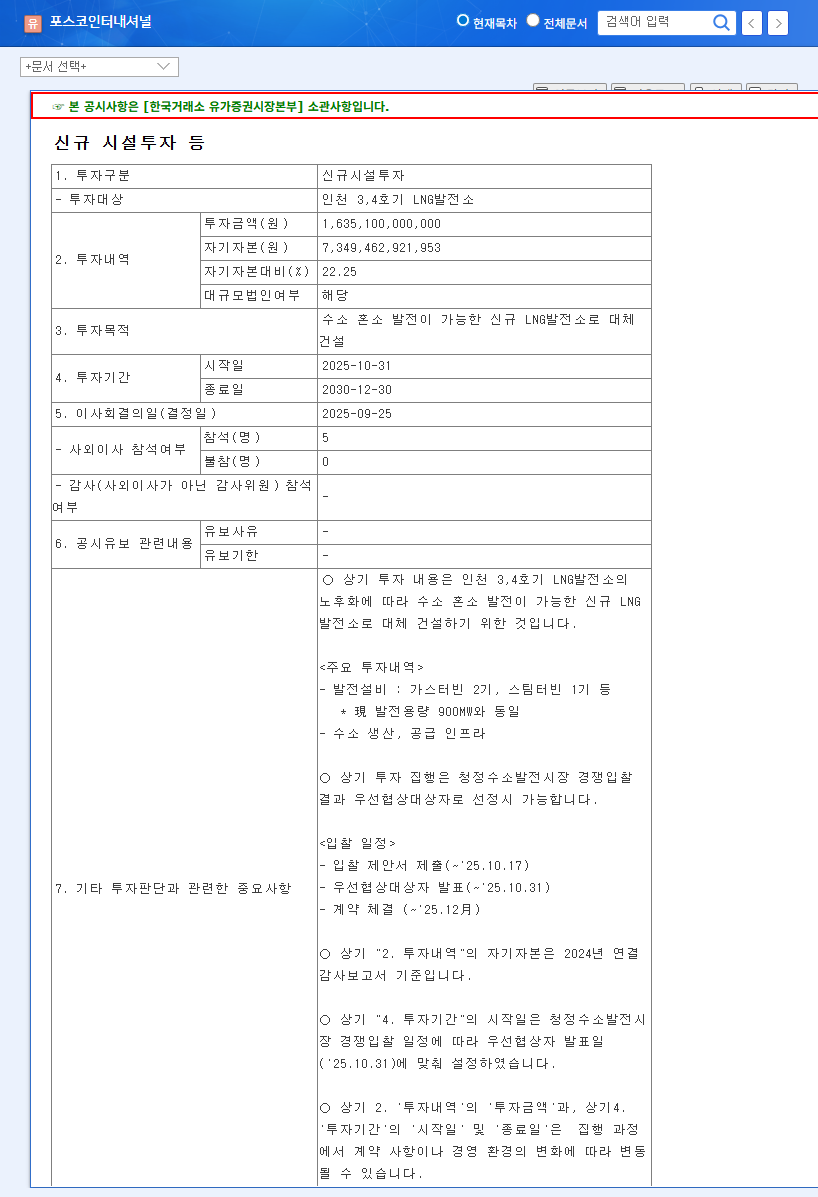
    POSCO International has committed $1.635 billion to replace its Incheon LNG power plants 3 and 4 with new, hydrogen co-firing enabled facilities. With construction slated to begin in October 2025 and completion by the end of 2030, this project is expected to play a crucial role in expanding POSCO International’s energy portfolio and strengthening its competitiveness in the future energy market.

    2. Why This Investment?

    This investment goes beyond simply replacing aging infrastructure. It addresses key strategic goals, including:

    • Leading the Green Energy Transition: Implementing hydrogen co-firing technology to reduce carbon emissions and reinforce ESG commitments
    • Securing Future Growth Engines: Establishing a foothold in the hydrogen energy market and securing a long-term revenue stream
    • Strengthening the LNG Value Chain: Enhancing LNG business competitiveness in conjunction with LNG terminal expansions

    3. The Impact – Opportunities and Risks

    Opportunities

    • Strengthened ESG profile and enhanced corporate image
    • Stable revenue generation through hydrogen co-firing and securing future growth drivers
    • Expansion and synergy creation within the LNG value chain

    Risks

    • Increased financial burden due to substantial investment costs
    • Global economic slowdown and heightened energy market volatility
    • Investment uncertainty stemming from interest rate and exchange rate fluctuations
    • Operational risks associated with hydrogen co-firing technology

    4. Action Plan for Investors

    Investors should focus on the long-term growth potential rather than short-term stock price fluctuations.

    • Establish a long-term investment strategy: Consider the growth of the green energy market and the company’s long-term vision.
    • Continuously monitor risk factors: Pay attention to macroeconomic variables, energy market volatility, and investment progress.
    • Review company disclosures and IR materials: Gain insights into detailed investment information and management’s future strategies.


    FAQ

    What is hydrogen co-firing power generation?

    Hydrogen co-firing is a power generation method that uses a mixture of hydrogen and LNG as fuel. It is an eco-friendly technology that reduces carbon emissions.

    How will this investment impact POSCO International’s stock price?

    In the short term, stock price volatility may increase due to concerns about the investment burden. However, in the long term, it is expected to have a positive impact as expectations for the expansion of eco-friendly energy businesses are reflected.

    What are POSCO International’s other business areas?

    POSCO International engages in various businesses such as steel, energy, food, and chemicals. It excels particularly in the energy sector, including the Myanmar gas field development project and LNG terminal business.


    POSCO International's $1.6B Investment:  A Hydrogen-Fueled Leap into the Future of Energy (and What it Means for Investors) 관련 이미지
    POSCO International's $1.6B Investment:  A Hydrogen-Fueled Leap into the Future of Energy (and What it Means for Investors) 관련 이미지


  • POSCO International Hosts Overseas NDR: Investment Strategy and Outlook Analysis

    POSCO International Hosts Overseas NDR: Investment Strategy and Outlook Analysis 대표 차트 이미지

    1. What’s Happening? POSCO International Hosts Overseas NDR

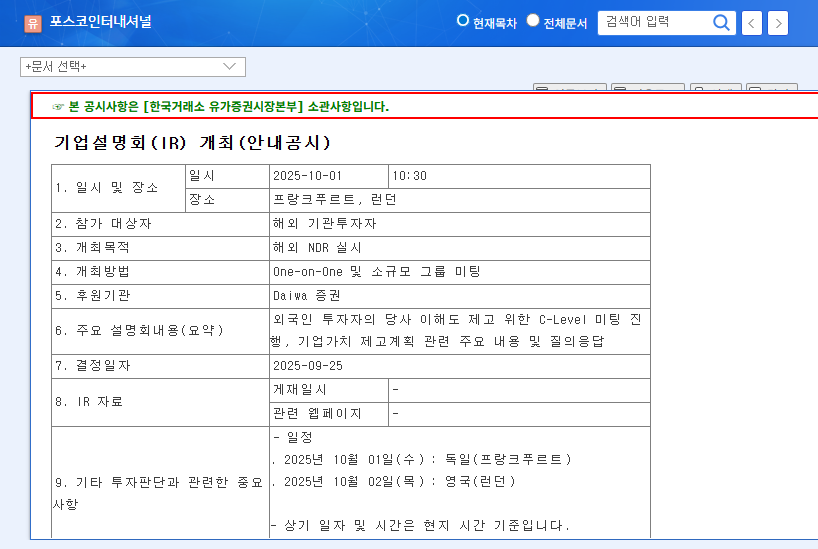
    POSCO International will hold an overseas Investor Relations (IR) session on October 1, 2025, to enhance understanding among foreign investors through C-Level meetings and present key details regarding their corporate value enhancement plan.

    2. Why is it Important? Expectations for Global Investment Attraction and Corporate Value Enhancement

    This NDR is a critical opportunity to directly communicate POSCO International’s growth potential and investment value to overseas investors. A successful IR can lead to attracting foreign capital, enhancing corporate image, and creating momentum for stock price increases. Specifically, presenting concrete plans and visions for new growth engines, such as CCUS, hydrogen business, and secondary battery materials, can heighten investors’ long-term growth expectations.

    3. So, What’s the Impact? Analysis of Positive Impacts and Potential Risk Factors

    • Positive Impacts: Attracting foreign investment, enhancing corporate value, strengthening confidence in future growth drivers, improving transparency
    • Potential Risk Factors: Volatility depending on the Q&A session of the IR, short-term stock price fluctuation possibilities, global economic slowdown, energy market volatility

    4. What Should Investors Do? Thoroughly Analyze IR Content, Make Investment Decisions with a Long-Term Perspective

    It is crucial for investors to closely monitor the IR announcements and make investment decisions based on a comprehensive assessment of the company’s long-term growth strategy and risk management capabilities. In particular, they should carefully review the company’s response strategies to potential risk factors and their R&D investment plans to secure future growth engines.

    What are POSCO International’s main businesses?

    POSCO International focuses on trading (89.1%) and energy (10.9%) businesses and is also striving to secure new growth engines such as CCUS and hydrogen businesses.

    What is the main purpose of this NDR?

    The main purpose is to hold C-Level meetings to enhance understanding among foreign investors and present key details regarding the corporate value enhancement plan.

    What are the key points to consider when investing in POSCO International?

    Continuous monitoring of potential risk factors such as global economic uncertainty, energy market volatility, and the need for increased R&D investment is necessary.

    POSCO International Hosts Overseas NDR: Investment Strategy and Outlook Analysis 관련 이미지
    POSCO International Hosts Overseas NDR: Investment Strategy and Outlook Analysis 관련 이미지
  • Doosan Enerbility’s SMR Deal: Investment Opportunity or Risk? In-depth Analysis


    Doosan Enerbility's SMR Deal: Investment Opportunity or Risk? In-depth Analysis 대표 차트 이미지


    1. What Happened? Earnings Decline and SMR News

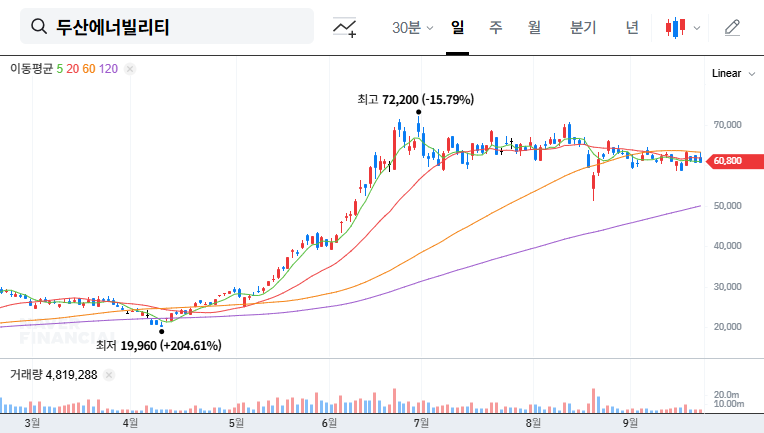
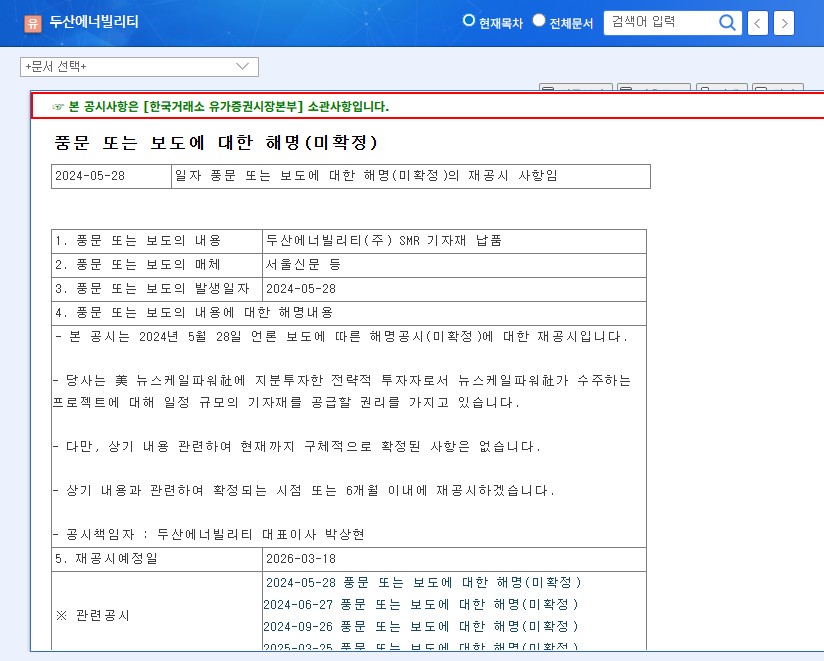
    Doosan Enerbility’s H1 2025 earnings saw a sharp decline in both revenue and operating profit compared to the same period last year. The main culprits are a weakening global economy and intensifying competition in the construction and power plant equipment market. However, reports (unconfirmed) of a potential SMR component supply contract with NuScale Power offer a glimmer of hope for future growth.

    2. Why Did This Happen? Reasons for Decline and SMR Significance

    Increasing global economic uncertainty, including a slowing global economy, fluctuating exchange rates and interest rates, and geopolitical risks, negatively impacted Doosan Enerbility’s performance. However, the SMR market, driven by global decarbonization efforts, holds significant growth potential. An SMR supply contract could be a crucial catalyst for Doosan Enerbility’s future growth.

    3. What’s Next? Future Outlook for Doosan Enerbility

    Beyond SMRs, Doosan Enerbility is investing in various sectors, including nuclear power, hydrogen/wind energy, and aircraft engine manufacturing, to diversify its business. If these efforts bear fruit, mid-to-long-term growth is anticipated. However, uncertainties surrounding the SMR project, high initial investment costs, and intensifying competition pose significant risks.

    4. What Should Investors Do? Key Investment Points

    • SMR Project Progress: Closely monitor any updates regarding the project until the re-disclosure date (March 18, 2026).
    • Order Recovery: Pay close attention to Doosan Enerbility’s ability to secure new orders and expand its high-profit service business.
    • Subsidiary Performance (Doosan Bobcat, Doosan Fuel Cell): Monitor the performance and potential for earnings improvement of its subsidiaries.
    • Financial Health: Assess the company’s ability to manage its high debt-to-equity ratio and improve operating cash flow.
    • Macroeconomic Environment: Continuously monitor the impact of macroeconomic factors such as exchange rates, interest rates, and oil prices.


    Frequently Asked Questions (FAQ)

    Is Doosan Enerbility’s participation in the SMR project confirmed?

    No, it’s not confirmed yet. The component supply contract with NuScale Power is currently under discussion, and the finalization of the contract remains uncertain.

    What are Doosan Enerbility’s main business areas?

    Its core businesses include energy solutions like nuclear power plants, gas turbines, and offshore wind power, as well as construction equipment and fuel cells.

    Why did Doosan Enerbility’s H1 2025 earnings decline?

    The decline is primarily attributed to a weakening global economy, fluctuating exchange rates and interest rates, geopolitical risks, and intensifying competition in the construction and power plant equipment market.


    Doosan Enerbility's SMR Deal: Investment Opportunity or Risk? In-depth Analysis 관련 이미지


  • RS Automation IR Analysis: Potential Turnaround in 2025 and Investment Points


    RS Automation IR Analysis: Potential Turnaround in 2025 and Investment Points 대표 차트 이미지


    1. RS Automation IR: What to Expect?

    RS Automation will announce its company introduction, current business status, and future outlook at its IR session on September 24th. The company is expected to address the reasons behind its poor performance in 2024 and provide the basis for its projected turnaround in 2025.

    2. Why Focus on RS Automation Now?

    Despite declining sales and operating losses in 2024, RS Automation projects a return to profitability in 2025, driven by the growth potential of its robot motion control and energy control business segments. Positive factors include increased investment in semiconductor equipment, growth in the service robot market, and government support for renewable energy policies.

    3. How Will the 2025 Turnaround be Achieved?

    • Robot Motion Control: Benefits from increased semiconductor equipment investment and service robot market growth.
    • Energy Control: Driven by renewable energy transition and government policy support.
    • Sales Recovery and Cost Efficiency: Projected sales of KRW 690.1 billion and operating profit of KRW 67 billion in 2025.

    4. Action Plan for Investors

    • Check key IR details: Focus on performance improvement plans and financial soundness reinforcement measures.
    • Consider the macroeconomic environment: Analyze the impact of high exchange rates and interest rates.
    • Analyze the competitive landscape: Consider the intensifying competition in the energy control sector.
    • Comprehensive assessment: Make investment decisions based on a comprehensive evaluation of business competitiveness, growth potential, and risk factors.


    Frequently Asked Questions (FAQ)

    What are RS Automation’s main businesses?

    RS Automation’s main businesses are robot motion control and energy control.

    What is the earnings outlook for RS Automation in 2025?

    RS Automation is projected to achieve a turnaround in 2025 with sales of KRW 690.1 billion and operating profit of KRW 67 billion.

    What are the key points to consider when investing in RS Automation?

    Investors should consider uncertainties in the macroeconomic environment and intensifying competition in the energy control sector.


    RS Automation IR Analysis: Potential Turnaround in 2025 and Investment Points 관련 이미지
    RS Automation IR Analysis: Potential Turnaround in 2025 and Investment Points 관련 이미지


  • SNT Energy Secures $25.7M Air Cooler Supply Contract: Stock Analysis & Outlook


    SNT Energy Secures $25.7M Air Cooler Supply Contract: Stock Analysis & Outlook 대표 차트 이미지


    SNT Energy Inks $25.7M Air Cooler Supply Contract

    SNT Energy has secured a $25.7 million Air Cooler supply contract with BECHTEL ENERGY INC. The contract spans from September 11, 2025, to December 3, 2026, and covers supply to overseas locations.

    Contract Backdrop: Robust Performance and Growth Momentum

    SNT Energy demonstrated strong performance growth in the first half of 2025, with revenue increasing by 81.85% year-on-year to KRW 255.937 billion and operating profit surging by 180% to KRW 40.244 billion. This impressive growth is attributed to robust Air Cooler exports, global energy market recovery, and increased large-scale plant orders. The resumption of LNG plant construction in the Middle East and Americas is particularly beneficial for SNT Energy’s Air Cooler business, and their localization strategy through subsidiaries in Saudi Arabia and the UAE provides a competitive edge.

    Future Outlook: Positive Impact and Investment Points

    This contract will directly contribute to SNT Energy’s revenue growth and order backlog expansion. Furthermore, securing a contract with a global EPC firm validates SNT Energy’s technological capabilities and delivery competence, creating positive momentum for future contract acquisitions. Their substantial order backlog of KRW 786.098 billion ensures a stable revenue stream. The growth potential of their HRSG business amidst the global push for carbon neutrality, increased power plant orders from Saudi Arabia, and the technological partnership with HAMON DELTAK INC. further contribute to a positive outlook.

    Investment Considerations: Potential Risk Factors

    Investment always carries inherent risks. Potential unforeseen issues during contract execution, fluctuations in raw material prices and exchange rates, and the possibility of a global economic slowdown are important factors to consider. However, SNT Energy’s stable financial structure (debt-to-equity ratio of 67.02%) suggests their capacity to navigate these risks effectively.


    Frequently Asked Questions

    What are SNT Energy’s main businesses?

    SNT Energy specializes in manufacturing energy equipment such as Air Coolers and Heat Recovery Steam Generators (HRSGs).

    What is the value of this new contract?

    $25.7 million, which represents 11.44% of their estimated 2025 annual revenue.

    Who is the counterparty to this contract?

    BECHTEL ENERGY INC.

    What are the key investment risks for SNT Energy?

    Fluctuations in raw material prices and exchange rates, as well as the potential for a global economic slowdown, are key risk factors.


    SNT Energy Secures $25.7M Air Cooler Supply Contract: Stock Analysis & Outlook 관련 이미지
    SNT Energy Secures $25.7M Air Cooler Supply Contract: Stock Analysis & Outlook 관련 이미지