The global electric vehicle (EV) market is accelerating at an unprecedented rate, creating immense demand for more powerful, longer-lasting, and faster-charging batteries. At the heart of this revolution are secondary battery materials. In a bold strategic move, HS HYOSUNG ADVANCED MATERIALS has announced its entry into this dynamic sector, targeting the development of next-generation silicon carbon composite anode materials. This initiative, marked by a significant acquisition, is not just a business expansion—it’s a calculated leap into the future of energy storage and a pivotal moment for investors to watch.
This in-depth analysis will explore the strategic rationale behind this venture, the technological promise of silicon carbon composite anodes, the financial implications of the deal with Umicore, and the potential impact on HS HYOSUNG ADVANCED MATERIALS’ long-term growth trajectory.
The Strategic Acquisition: A Partnership for Innovation
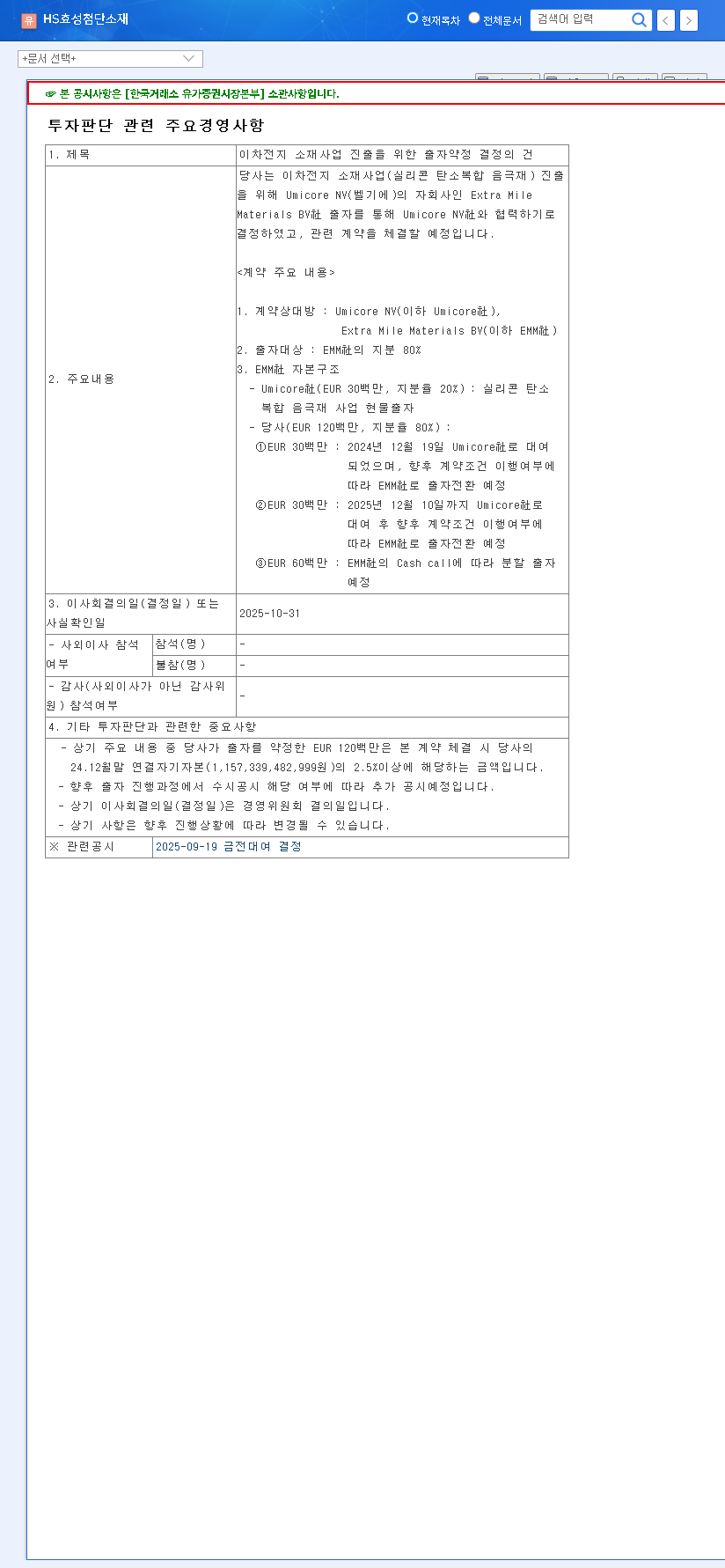
On November 3, 2025, HS HYOSUNG ADVANCED MATERIALS confirmed its commitment to the EV battery materials market by acquiring an 80% stake in Extra Mile Materials BV (EMM), a subsidiary of the Belgian global materials technology leader, Umicore NV. This transaction, valued at approximately €120 million (KRW 177 billion), is more than a simple purchase; it’s the formation of a powerful strategic alliance.
According to the Official Disclosure, Umicore will retain a 20% stake, ensuring ongoing collaboration. This structure combines Umicore’s cutting-edge technological expertise in battery materials with HS HYOSUNG’s proven manufacturing prowess and global supply chain capabilities, creating a synergy poised to accelerate market penetration and innovation.
Why Silicon Carbon Composite Anode Materials are a Game-Changer
For years, graphite has been the standard anode material in lithium-ion batteries. However, it is reaching its theoretical limits for energy density. To power the next generation of EVs with longer ranges and faster charging, a breakthrough is needed. Enter silicon carbon composite anode materials.
The Power of Silicon
Silicon has a theoretical capacity nearly ten times that of graphite, making it the most promising candidate for high-capacity anodes. However, it has a critical flaw: it swells and shrinks dramatically during charging and discharging, causing the material to crack and degrade quickly. The ‘composite’ solution involves embedding silicon nanoparticles within a stable, conductive carbon matrix. This structure accommodates the volume expansion, enhances electrical conductivity, and dramatically improves the battery’s lifespan and stability, offering the best of both worlds.
This strategic pivot positions HS HYOSUNG ADVANCED MATERIALS not as a follower, but as a potential leader in a technology that will define the future performance of electric vehicles worldwide.
Financial Analysis: Opportunities and Inherent Risks
This ambitious move into secondary battery materials presents both immense opportunities and significant challenges that investors must carefully weigh.
Positive Catalysts for Growth
- •New Growth Engine: Tapping into the multi-billion dollar EV battery market provides a powerful new revenue stream, diversifying the company away from its traditional industrial materials focus.
- •Technological Leadership: Pioneering silicon carbon composite anode materials establishes a strong technological moat and competitive advantage in a high-value sector.
- •Global Synergy: The partnership with Umicore de-risks market entry and technology development, leveraging a proven leader’s expertise. For more on market trends, see this analysis from leading industry reports.
Potential Headwinds and Risks
- •Financial Burden: The substantial capital outlay of €120 million could strain short-term liquidity and increase the company’s debt ratio, requiring prudent financial management.
- •Profitability Timeline: New ventures require significant R&D and scaling costs. A clear path to profitability may take several years and is subject to market competition and technology adoption rates.
- •Resource Allocation: The company must balance this new focus with its core industrial materials business, such as its leading aramid and carbon fiber divisions, to ensure overall corporate health.
Conclusion: An Investor’s Outlook
HS HYOSUNG ADVANCED MATERIALS’ entry into the EV battery materials market is a visionary and strategically sound decision that unlocks significant long-term growth potential. While short-term financial pressures and execution risks are undeniable, the collaboration with Umicore and the focus on a critical next-generation technology place the company in a formidable position.
For investors, the key will be to monitor the successful integration of the new subsidiary, the timeline for production stabilization, and the company’s ability to manage its financial health while continuing to innovate. This move is a long-term play, but one that could fundamentally reshape the company’s valuation and role in the global high-tech materials landscape.
Frequently Asked Questions (FAQ)
What specific business is HS HYOSUNG ADVANCED MATERIALS entering?
HS HYOSUNG ADVANCED MATERIALS is entering the secondary battery materials business, with a specific focus on producing silicon carbon composite anode materials, which are critical for enhancing the energy density of next-generation EV batteries.
Why is this move significant?
It’s a strategic diversification into a high-growth market, securing a new engine for future revenue. The partnership with Umicore provides immediate access to advanced technology and market expertise, reducing entry barriers and accelerating development.
What are the main financial risks?
The primary risks include the short-term financial burden from the ~€120 million investment, an uncertain timeline to achieve profitability due to initial R&D and scaling costs, and the potential for currency exchange rate fluctuations on the Euro-denominated deal.
What should investors monitor going forward?
Investors should watch for milestones related to technology transfer and production stabilization, announcements on customer contracts, quarterly financial reports to assess the impact on debt and cash flow, and the company’s ability to create synergy between its new and existing business lines.