Tag: Electrification Components

  • (011210) HYUNDAI WIA Q3 2025 Earnings Analysis: Record Revenue, Shocking Net Loss Explained

    (011210) HYUNDAI WIA Q3 2025 Earnings Analysis: Record Revenue, Shocking Net Loss Explained

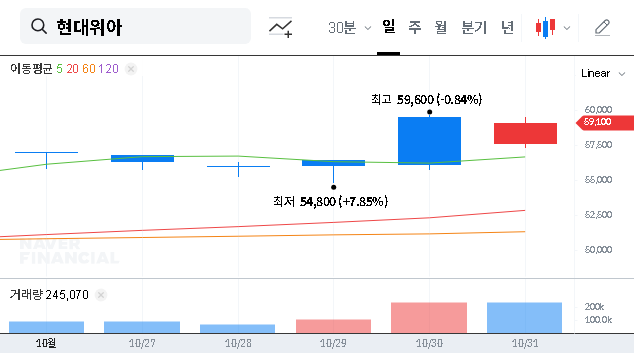
    The latest HYUNDAI WIA Q3 2025 earnings report presents a complex and contradictory picture for investors. While the company delivered impressive top-line growth, with both revenue and operating profit handily beating market expectations, a significant and unexpected plunge into a net income loss has sent shockwaves through the investment community. This stark contrast between operational strength and bottom-line weakness demands a thorough investigation.

    What caused this financial paradox? Are the underlying fundamentals of Hyundai WIA strong, or does the net loss signal deeper, more systemic risks? This comprehensive Hyundai WIA earnings analysis will break down the Q3 2025 results, explore the contributing factors, and provide a strategic outlook for investors navigating this uncertainty.

    Deconstructing the HYUNDAI WIA Q3 2025 Earnings Report

    On the surface, Hyundai WIA demonstrated robust business activity. The official consolidated financial statements, which can be viewed in the company’s Official Disclosure, revealed figures that initially appeared positive. Let’s examine the key metrics against market consensus:

    • Revenue: KRW 2,151.9 billion, a solid 3.87% above analyst estimates.
    • Operating Profit: KRW 51.8 billion, a remarkable 25.42% above estimates, signaling strong operational efficiency.
    • Net Income: KRW -16.3 billion, a shocking reversal from an expected profit of KRW 86.2 billion, resulting in a -118.91% miss and a transition to loss.

    The core challenge of the HYUNDAI WIA Q3 2025 earnings is deciphering how a company with surging revenue and excellent operational control could end up with a substantial net loss. The answer lies beyond the core business operations.

    Analyzing the Discrepancy: The Good, The Bad, and The Ugly

    The Good: Factors Driving Revenue & Operating Profit

    The positive performance was not accidental. It was fueled by strong execution in key divisions. The Mobility segment, which includes core automotive components, performed well. More notably, the Special Business segment, heavily focused on defense products, saw a significant boost from increased global defense spending and successful export contracts. This diversification helped drive Hyundai WIA revenue beyond forecasts. Furthermore, the impressive operating profit margin suggests that the company’s internal cost management and efficiency initiatives are paying off, allowing it to translate higher sales into greater operational earnings.

    The Bad: Pinpointing the Net Income Loss

    The Hyundai WIA net income loss is the central mystery. Since operating profit was strong, the cause must be found in non-operating items—expenses and losses that occur outside the primary business activities. The most likely culprits include:

    • One-Off Costs: The company may have incurred significant, non-recurring charges such as asset write-downs, restructuring costs, or legal settlements.
    • Financial Expenses: Higher interest rates or losses from foreign currency exchange fluctuations could have heavily impacted the bottom line.
    • Losses from Subsidiaries: Poor performance or impairment charges related to affiliated companies, particularly the ongoing uncertainty in Russian operations, could have led to significant equity-method losses.

    Future Outlook & Investor Strategy

    The Hyundai WIA stock outlook is now at a crossroads. The market’s reaction will depend heavily on the company’s ability to clarify the nature of the net loss. If it is truly a one-time event, the strong underlying business performance could pave the way for a recovery. However, if it signals persistent issues, investor confidence may erode.

    Long-Term Growth Drivers Remain Intact

    Despite the quarterly setback, Hyundai WIA’s long-term strategy is focused on high-growth areas. The company is making significant investments in the future of mobility. Key initiatives include:

    • Electrification Components: Development and mass production of integrated coolant modules and e-axles for electric vehicles (EVs). The EV market continues to expand globally, as noted by industry experts at leading market research firms.
    • Advanced Manufacturing: Entering the market for EV component manufacturing equipment, positioning itself as a key supplier in the electrification supply chain.
    • Urban Air Mobility (UAM): Expanding into the nascent but potentially lucrative air mobility sector, showcasing a forward-thinking approach to transportation. More on this can be found in our article on Investing in Future Mobility Trends.

    Key Considerations for Investors

    Moving forward, investors should demand clarity. The company must transparently explain the specific causes of the Q3 net loss and outline concrete measures to prevent recurrence. A clear roadmap for improving profitability in the core mobility segment and managing geopolitical risks associated with its Russian operations is essential. While the long-term vision is promising, consistent execution and profitability in the present are non-negotiable for rebuilding market trust. The full HYUNDAI WIA Q3 2025 earnings report, though jarring, serves as a critical reminder that operational success must always be validated by a healthy bottom line.

    (011210) HYUNDAI WIA Q3 2025 Earnings Analysis: Record Revenue, Shocking Net Loss Explained 관련 이미지
  • (204320) HL Mando Q3 2025 Earnings Call: A Deep Dive Analysis for Investors

    (204320) HL Mando Q3 2025 Earnings Call: A Deep Dive Analysis for Investors

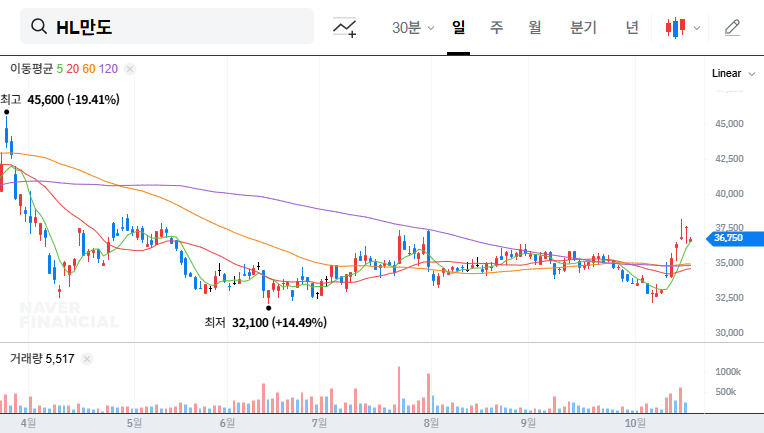
    The upcoming HL Mando Q3 2025 earnings call, scheduled for October 31, 2025, is poised to be a pivotal event for investors. HL Mando CO.,LTD (HL만도) will host a Corporate Investor Relations (IR) conference to unveil its third-quarter management performance and provide crucial business updates. This isn’t just a routine financial report; it’s a critical look into the health and strategic direction of a key innovator in the future mobility sector. Amid recent concerns over a slowdown in H1 performance and a rising debt ratio, this conference will be a litmus test for the company’s resilience and long-term vision.

    This comprehensive analysis will dissect the key factors surrounding the HL Mando investor relations event, offering a strategic roadmap for potential and current shareholders. We will explore the company’s growth engines, financial stability, and the market forces shaping its future.

    Event Snapshot: The HL Mando Q3 2025 Earnings Call

    On October 31, 2025, HL Mando will present its Q3 results to domestic institutional investors. This is a vital moment for transparency, where the company will address its business progress and financial soundness directly. The official details of the event are available via the company’s disclosure. (Official Disclosure). For investors, this is the prime opportunity to evaluate the company’s narrative against hard data.

    Beyond the numbers, this IR event is about confidence. Can HL Mando articulate a compelling vision that overshadows recent financial headwinds and solidifies its role as a leader in autonomous and electric vehicle technology?

    Deep Dive: Present Strengths & Future Challenges

    Business & Market Environment: The Road to Future Mobility

    HL Mando has successfully evolved from a traditional automotive chassis component manufacturer (brakes, steering) to a high-tech powerhouse in ADAS, autonomous driving, and electrification parts. The performance of its subsidiary, HL Klemove, is a testament to its commitment to the electronics side of the industry. However, its significant reliance on Hyundai Motor Group (44%) and North American OEMs (27%) exposes it to concentrated client risk.

    • Core Focus: Securing leadership in core electrification technologies like Electromechanical Brakes (EMB) and Steer-by-Wire (SbW) is paramount as the industry shifts towards Software-Defined Vehicles (SDVs).
    • Global Markets: While the Chinese and Indian markets present robust growth opportunities, particularly in New Energy Vehicles (NEVs), economic headwinds in the US and Europe could temper growth. For more on market trends, see this global automotive market analysis.
    • Competitive Edge: A global R&D network and strong partnerships with major OEMs give HL Mando a technological advantage.

    Financial Health: Navigating Debt and Performance

    The H1 2025 results showed a year-over-year decline, a concerning trend attributed to a high base effect from 2024 and rising administrative expenses. The debt ratio climbed to 182.48%, largely due to borrowing for operating funds and refinancing. Investors will be laser-focused on management’s plan to address this. A key point of interest in the HL Mando Q3 2025 earnings report will be the company’s strategy for deleveraging while funding critical R&D. On a positive note, a strengthening Korean Won could provide a favorable tailwind for translated earnings from its significant export business.

    Investor Action Plan & Key Takeaways

    HL Mando stands at a crossroads, balancing immense long-term growth potential in future mobility investment with short-term financial pressures. This IR is the perfect opportunity to gauge management’s ability to navigate this complex landscape. For more information on this sector, you can review our deep dive into the autonomous driving market.

    • Analyze IR Content: Scrutinize the detailed Q3 performance, new order status for ADAS/AD, and concrete plans for improving financial soundness.
    • Benchmark Against Consensus: How do the announced results and forward-looking statements compare to market expectations? A significant beat or miss could trigger volatility.
    • Adopt a Long-Term View: Avoid knee-jerk reactions. The true value lies in HL Mando’s ability to execute its long-term strategy in electrification and autonomous systems.
    • Monitor Macro Factors: Keep an eye on currency exchange rates and global economic indicators, as these will continue to influence performance.

    Frequently Asked Questions (FAQ)

    When is HL Mando’s IR scheduled?

    HL Mando’s Corporate Investor Relations (IR) conference is scheduled for October 31, 2025, and is targeted at domestic institutional investors.

    What are HL Mando’s primary growth drivers?

    The company’s key growth drivers are centered on the expansion into ADAS, autonomous driving, and electrification components. The success of its subsidiary, HL Klemove, and securing new orders in these high-tech segments are critical for future growth.

    What are the main risks for investors to consider?

    Investors should carefully consider the company’s high dependency on a few major automakers, the recent increase in its debt ratio, intense market competition, and volatility in global economic conditions and raw material prices.