Tag: Electric Vehicles

  • (277880) TSI Stock Outlook: ₩28.4B Contract Boosts 2nd Battery Mixing System Giant

    (277880) TSI Stock Outlook: ₩28.4B Contract Boosts 2nd Battery Mixing System Giant

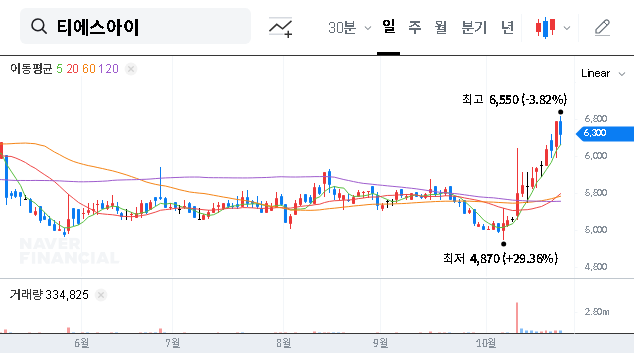
    The TSI stock outlook has become a major point of interest for investors after TSI Co., Ltd. (티에스아이), a pivotal player in the secondary battery equipment industry, announced a landmark supply contract. The deal, valued at an impressive ₩28.4 billion, centers on their core technology: the 2nd battery mixing system. This development not only underscores the company’s strong market position but also raises critical questions about its future growth trajectory and valuation. In this comprehensive analysis, we will dissect the implications of this contract, evaluate the company’s fundamentals, and provide a detailed forecast for investors considering TSI.

    Deconstructing the Landmark ₩28.4 Billion Deal

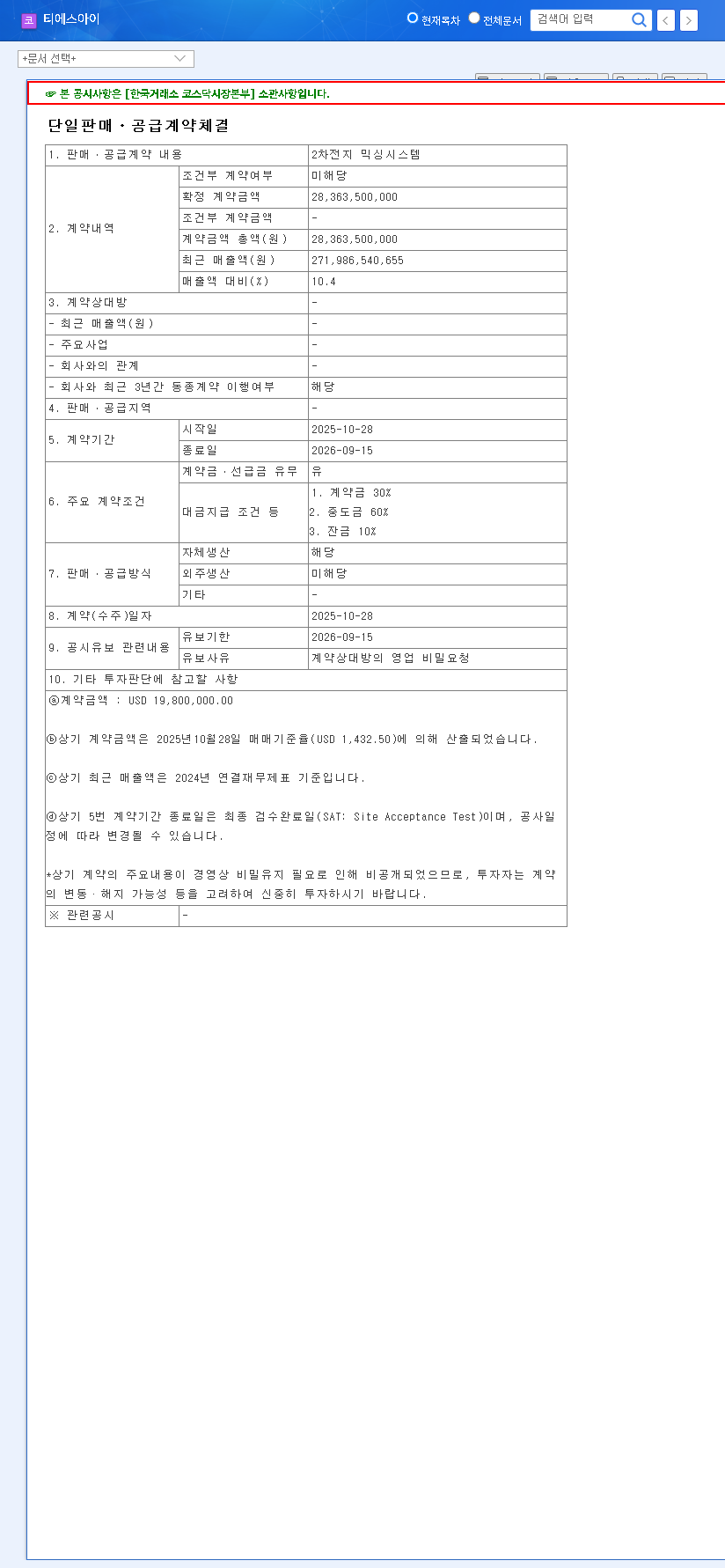
    On October 29, 2025, TSI Co., Ltd. formally disclosed the signing of a single sales and supply contract that immediately captured the market’s attention. Let’s break down the key figures and what they mean for the company’s financials.

    • Contract Value: An substantial ₩28.4 billion KRW.
    • Revenue Impact: This single deal represents 10.4% of TSI’s entire revenue from the preceding business year.
    • Product: State-of-the-art 2nd battery mixing system technology.
    • Contract Period: A 10-month timeline from October 28, 2025, to September 15, 2026.
    • Source: The details were confirmed via an Official Disclosure filed with DART.

    This contract is more than just a number; it is a powerful validation of TSI’s technological prowess and a clear indicator of secured revenue streams for the upcoming fiscal year. It significantly de-risks future earnings projections and strengthens the overall TSI investment analysis.

    Core Growth Catalysts for TSI Co., Ltd.

    Beyond this single announcement, several converging factors create a compelling growth story for TSI. Understanding these is key to evaluating the long-term stock outlook.

    1. The Critical Role of the 2nd Battery Mixing System

    The mixing process is one of the most crucial initial stages in lithium-ion battery production. A 2nd battery mixing system is responsible for creating a homogenous slurry by blending active materials, binders, and solvents. The quality of this slurry directly impacts the battery’s performance, capacity, and lifespan. TSI’s specialization in this niche but vital equipment positions them as an indispensable partner for major battery manufacturers. For more detail on battery components, you can explore resources from authorities like Stanford University’s energy research.

    2. Riding the Wave of Global EV and ESS Expansion

    The global shift towards electrification is unstoppable. The explosive growth in the Electric Vehicle (EV) and Energy Storage System (ESS) markets provides a powerful tailwind for the entire secondary battery equipment industry. Government policies like the U.S. Inflation Reduction Act (IRA) are further accelerating this trend by incentivizing domestic battery production. As gigafactories are built and expanded worldwide, the demand for core manufacturing equipment, such as TSI’s mixing systems, is set to soar. This secular growth trend is a core pillar of a positive TSI stock outlook. You can read more about this in our analysis of long-term EV market trends.

    TSI’s successful turnaround to profitability in 2024, after a net loss in 2023, marks a significant financial inflection point. This new ₩28.4 billion contract is expected to cement this positive trajectory and drive strong earnings growth into 2025 and 2026.

    3. Improved Financial Health and Transparency

    Recent corporate actions by TSI Co., Ltd. have enhanced investor confidence. By amending business report disclosures to include greater detail on operations and financials, the company has increased its transparency. This, combined with a confirmed return to profitability, signals strengthening fundamentals and a management team focused on sustainable growth and shareholder value.

    Comprehensive Risk Assessment

    Despite the overwhelmingly positive news, a prudent TSI investment analysis must also consider potential risks. Investors should remain aware of the following factors:

    • Financial Leverage: The company has historically maintained a high debt-to-equity ratio. While manageable during growth phases, this reliance on borrowing could pose a risk if interest rates rise or if revenue growth unexpectedly slows.
    • Intensifying Competition: The lucrative secondary battery equipment market is attracting fierce competition from domestic and international players. TSI must continue to innovate to maintain its technological edge and pricing power.
    • Macroeconomic Headwinds: As an export-oriented company, fluctuations in currency exchange rates can impact profitability. While a high won/dollar rate is currently favorable, a sudden reversal could affect margins. Global economic slowdowns could also delay capital expenditures from battery manufacturers.

    Final Verdict: A ‘Buy’ Opinion on TSI Stock Outlook

    Considering the powerful combination of a secured, large-scale contract, strong industry tailwinds, and improving financial fundamentals, the TSI stock outlook is decidedly positive. The ₩28.4 billion order for its 2nd battery mixing system provides excellent revenue visibility and reinforces its competitive position.

    While investors must monitor the identified risks, particularly financial leverage and market competition, the company’s growth potential appears to significantly outweigh these concerns. We therefore issue a ‘Buy’ opinion for TSI Co., Ltd. This is a compelling opportunity for investors seeking exposure to the core infrastructure of the global electrification revolution.
    (277880) TSI Stock Outlook: ₩28.4B Contract Boosts 2nd Battery Mixing System Giant 관련 이미지
  • (000270) KIA Q3 2025 Earnings: A Complete Investor’s Analysis & Stock Strategy

    (000270) KIA Q3 2025 Earnings: A Complete Investor’s Analysis & Stock Strategy

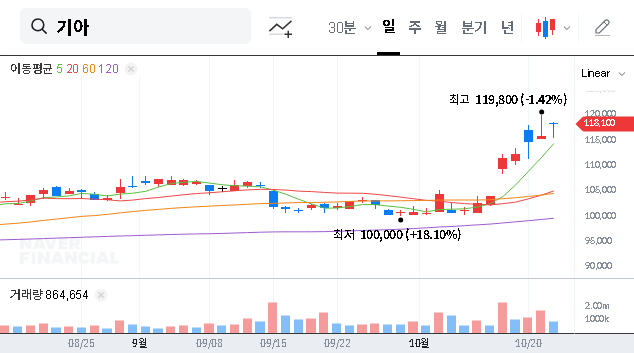
    The upcoming KIA Q3 2025 earnings announcement, scheduled for October 31, 2025, is a pivotal moment for investors. This isn’t just a routine financial update; it’s a critical look into KIA Corporation’s ability to navigate a fiercely competitive automotive landscape defined by electrification, geopolitical shifts, and economic headwinds. This in-depth KIA stock analysis will unpack the company’s recent performance, explore its future strategies, and provide a clear investment framework to help you make informed decisions following the investor relations (IR) call.

    We will dissect the key metrics from the first half of 2025, evaluate the market’s expectations, and outline potential stock price scenarios. For those looking for a clear KIA investment strategy, this guide offers actionable insights both before and after the official announcement.

    Recap: KIA’s Financial Performance in H1 2025

    To understand the context for the KIA Q3 2025 earnings report, we must first examine the company’s performance in the first half of the year. The results present a mixed but insightful picture of KIA’s operational strengths and vulnerabilities.

    Revenue Growth Amidst Profitability Pressures

    KIA demonstrated robust top-line growth, a testament to its strong product lineup and brand appeal.

    • Revenue Growth: Sales reached KRW 57.3671 trillion, a healthy 6.7% increase year-over-year. This was primarily fueled by the rising Average Selling Price (ASP) and a successful sales mix favoring higher-margin electrified and hybrid models.
    • Operating Profit Decline: Despite revenue growth, operating profit fell by 18.3% to KRW 5.773354 trillion. This squeeze on profitability was largely attributed to external pressures, including tariffs impacting the crucial U.S. market and rising raw material costs.
    • Financial Health: On a positive note, KIA improved its balance sheet, with its debt-to-equity ratio decreasing to 64.58%, indicating a more stable financial foundation.

    Future Growth vs. Market Challenges

    KIA’s path forward is paved with both significant opportunities and formidable risks. The Q3 IR call will be crucial for investors to gauge how management plans to capitalize on the former while mitigating the latter.

    Key Growth Catalysts to Watch

    • Electrification Roadmap: The accelerated launch of new models like the EV3, EV4, and EV9 is central to KIA’s strategy to capture a larger share of the global EV market.
    • New Mobility Ventures: The push into Purpose-Built Vehicles (PBVs) represents a new, potentially lucrative revenue stream beyond traditional consumer sales.
    • Shareholder Returns: Enhanced policies, including increased dividends and share buybacks, could improve investor sentiment and support the stock price.

    Significant Risks on the Horizon

    • Macroeconomic Headwinds: A potential global economic slowdown and persistent geopolitical risks in Europe and the U.S. could dampen consumer demand.
    • Intensifying Competition: The EV market is becoming increasingly crowded, putting pressure on market share and margins, especially in competitive arenas like China.
    • Cost and Currency Volatility: Fluctuations in raw material prices and foreign exchange rates (particularly a strong U.S. dollar) pose a continuous threat to profitability.

    For the upcoming KIA Q3 2025 earnings call, savvy investors will look beyond headline revenue. The key is to assess the quality of earnings, the sustainability of EV momentum, and the clarity of management’s strategy for navigating a challenging global market.

    Actionable KIA Investment Strategy

    A proactive approach is essential. Here’s how to prepare for, analyze, and react to the KIA investor relations event. For official data, investors should always consult primary sources. See the Official Disclosure (DART) for direct information.

    Phase 1: Before the Announcement

    Review analyst consensus estimates for revenue, operating profit, and net income. Understanding the market’s baseline expectation is critical to interpreting the actual results as a ‘beat,’ ‘miss,’ or ‘in-line.’ Explore recent industry trends by reading reports from authoritative sources like major automotive news outlets.

    Phase 2: During the IR Call

    Listen for both positive and negative signals. Positive indicators include strong EV sales figures, margin expansion, and a confident outlook on managing costs. Negative signals would be slowing sales in key markets like the U.S., downward revisions to full-year guidance, or vague answers about competitive pressures. For more on this, read our guide on analyzing corporate earnings reports.

    Phase 3: After the Announcement

    • Positive Scenario: If KIA reports strong earnings, provides an optimistic outlook, and showcases a clear strategy for growth and profitability, it could reinforce a buy-and-hold approach for medium to long-term investors.
    • Negative Scenario: If the results disappoint and the future outlook is clouded with uncertainty, a more cautious stance is warranted. This might involve holding off on new investments or even trimming positions to manage risk until there is greater clarity.

    Ultimately, the KIA Q3 2025 earnings release is more than just numbers; it’s a narrative about the company’s future. By carefully analyzing the details, investors can position themselves strategically for what lies ahead.

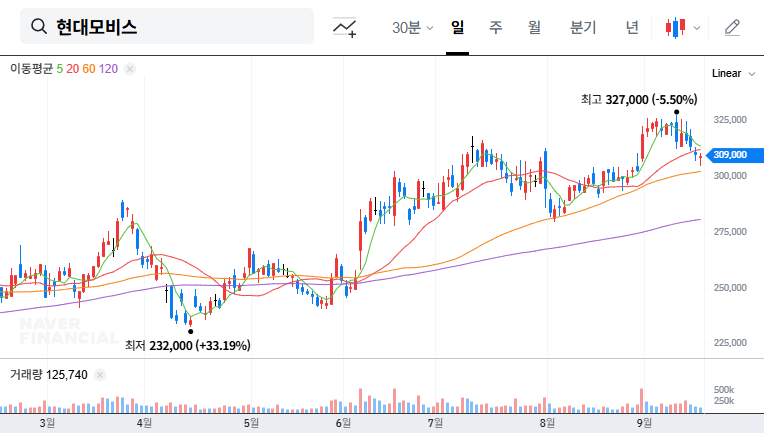
  • Hyundai Mobis IR Analysis: Future Mobility Growth Strategies and Investment Opportunities


    Hyundai Mobis IR Analysis: Future Mobility Growth Strategies and Investment Opportunities 대표 차트 이미지


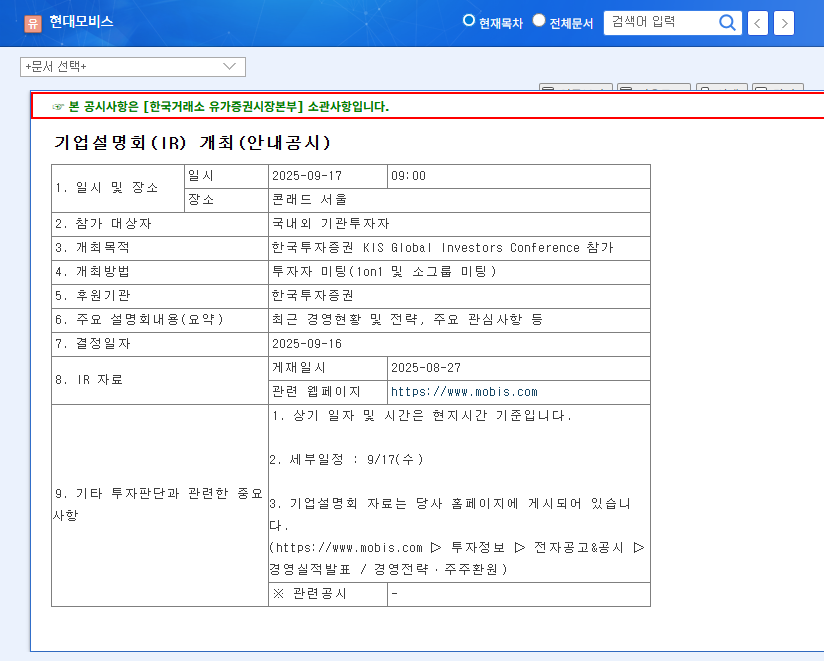
    1. Hyundai Mobis IR: What was discussed?

    Hyundai Mobis held its IR session on September 17, 2025, as part of its participation in the Korea Investment & Securities KIS Global Investors Conference. The company provided updates on recent business performance, future strategies, and addressed key investor concerns.

    2. Why it matters: Growth of the Future Mobility Market

    The global automotive market is rapidly transforming, centering around electrification, autonomous driving, and connectivity. Hyundai Mobis leads this transformation by developing core technologies and forming strategic partnerships within the future mobility market. This IR session provided a valuable opportunity to assess Hyundai Mobis’ competitiveness and growth potential amidst the changing market landscape.

    3. How will Hyundai Mobis grow?: Analysis of Key Business Strategies

    • Strong Performance: Achieved sales of KRW 30.6883 trillion (+7.6%) and operating profit of KRW 1.6467 trillion (+39.7%) in the first half of 2025.
    • Increased Investment in Future Mobility: Active R&D investments in core future technologies such as electrification, autonomous driving, and IVI.
    • Strengthened Global Partnerships: Expanded collaborations with global automakers such as Volkswagen and Stellantis.
    • Stable Financial Structure: Maintained a low debt-to-equity ratio of 44.92%.

    4. Action Plan for Investors

    Key Investment Points:

    • Accelerated electrification transition
    • Future mobility solutions
    • Global business expansion
    • Stable shareholder return policy

    Risk Factors:

    • Volatility in the global automobile and electric vehicle markets
    • Fluctuations in exchange rates and raw material prices
    • Geopolitical and macroeconomic uncertainties

    It is crucial to continuously monitor IR outcomes, competitor analysis, and long-term growth strategies to establish effective investment strategies.


    Frequently Asked Questions (FAQ)

    What are Hyundai Mobis’ main businesses?

    Hyundai Mobis focuses on automotive module and parts manufacturing and the A/S parts business. They are expanding investments in future mobility areas such as electrification, autonomous driving, and UAM.

    What were the key takeaways from this IR session?

    The company shared its recent performance and future growth strategies, particularly focusing on technological developments and business plans in electrification and autonomous driving.

    What are the key investment points for Hyundai Mobis?

    Key investment points include the acceleration of electrification transition, future mobility solutions, global business expansion, and a stable shareholder return policy.

    What risks should investors be aware of?

    Investors should consider risks such as volatility in the global automobile and electric vehicle markets, fluctuations in exchange rates and raw material prices, and geopolitical and macroeconomic uncertainties.


    Hyundai Mobis IR Analysis: Future Mobility Growth Strategies and Investment Opportunities 관련 이미지


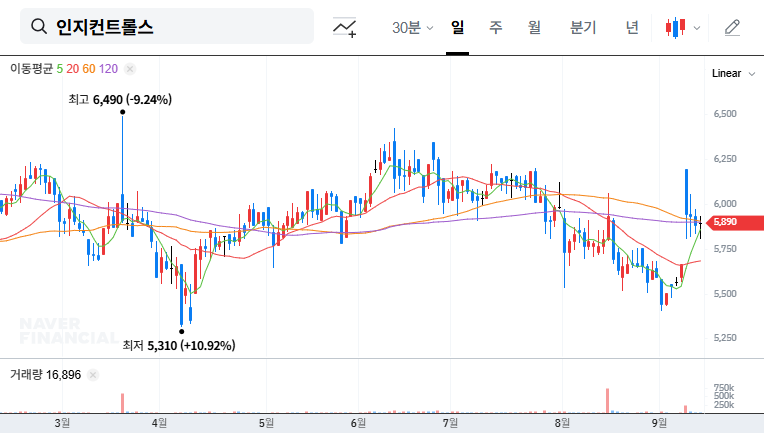
  • Inji Controls Board Changes: Impact on Stock Price (September 2025 Analysis)


    Inji Controls Board Changes: Impact on Stock Price (September 2025 Analysis) 대표 차트 이미지


    1. What’s Happening with Inji Controls’ Board?

    Due to the passing of a director, Inji Controls’ board no longer meets the quorum requirements. The company has applied to the court for the appointment of a temporary director and plans to appoint a new director through a temporary shareholders’ meeting. Inji Controls stated that this matter will not affect management changes or major business activities.

    2. Why Are Board Changes Important?

    The board of directors is responsible for making crucial decisions for a company. Changes to the board’s composition can impact management strategies, investment plans, and financial structure. Sudden changes like this can amplify investor anxiety and cause stock price volatility.

    3. Impact on Stock Price and Investment Strategy

    In the short term, concerns about the board vacancy could increase stock price volatility. However, the company’s proactive response and statement about limited impact on business activities can stabilize investor sentiment. In the long term, the new director’s expertise and synergy with management strategies will likely influence the stock price. While the growth potential of the eco-friendly vehicle parts business is promising, high debt ratios and exchange rate volatility remain ongoing risk factors.

    4. Investor Action Plan

    • Short-term investors: It is advisable to remain cautious and wait-and-see, noting the potential for increased stock price volatility.
    • Long-term investors: Closely monitor the board normalization process, the new director’s capabilities, and the performance of the eco-friendly vehicle parts business.


    Frequently Asked Questions (FAQ)

    How will the board changes affect Inji Controls’ management?

    While there are short-term concerns about management stability, the company has stated there will be no impact on major business activities. The new director’s expertise and management strategy will be key variables in the long term.

    What should investors pay attention to?

    Investors should monitor the appointment of the temporary and new director, the company’s financial health management, the performance of its eco-friendly vehicle parts business, and its strategies for dealing with exchange rate fluctuations.

    Should I invest in Inji Controls stock now?

    We currently maintain a ‘Hold’ rating and recommend observing the board normalization process and future business performance. Investment decisions should be made carefully based on individual judgment.


    Inji Controls Board Changes: Impact on Stock Price (September 2025 Analysis) 관련 이미지
    Inji Controls Board Changes: Impact on Stock Price (September 2025 Analysis) 관련 이미지


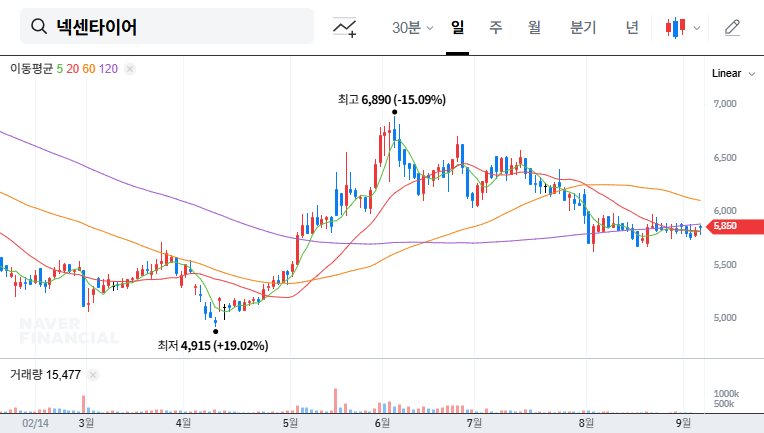
  • Nexen Tire Investor Relations (IR) Analysis: What’s the Outlook for H2 2025?


    Nexen Tire Investor Relations (IR) Analysis: What's the Outlook for H2 2025? 대표 차트 이미지


    1. What’s Happening with Nexen Tire?

    Nexen Tire achieved consolidated revenue of KRW 1.5759 trillion in the first half of 2025, a 9.3% increase year-on-year. Strengthened global sales networks and expanded premium OE supply have contributed to continued sales growth, with operating profit also improving to KRW 83.3 billion. However, the operating profit margin remains low at 5.29%.

    2. Why is Nexen Tire Important?

    The global tire market is expected to grow steadily due to emerging market growth and the expansion of the electric vehicle market, but competition is also intensifying. Uncertainties in the external environment, such as rising raw material prices, increasing logistics costs, exchange rate fluctuations, and US market risks, could continue to weigh on Nexen Tire’s profitability. In this context, Nexen Tire is focusing on securing future growth engines, such as electric vehicle tires, through expanded R&D investment while maintaining a solid financial structure.

    3. Key Takeaways from the September 11th IR

    This IR will provide insights into Nexen Tire’s growth strategies and future vision. Key areas of interest include profitability improvement strategies, electric vehicle tire development status, global market strategies, exchange rate and interest rate volatility response strategies, and US market risk mitigation strategies. The information presented at the IR can significantly impact investor sentiment and stock prices.

    4. What Should Investors Do?

    • Carefully analyze the IR content: Evaluate management’s vision and risk management capabilities through the presentation and Q&A session.
    • Maintain a long-term perspective: Consider Nexen Tire’s long-term growth potential without being swayed by short-term stock price fluctuations.
    • Consult expert opinions: Refer to expert analysis and advice before making investment decisions.


    FAQ

    When is the Nexen Tire IR meeting?

    It is scheduled for September 11, 2025, at 2:20 PM.

    What will be presented at the IR?

    The first half of 2025 business performance, future growth strategies, and key risk management plans will be presented.

    How can I participate in the IR?

    You can find participation details on the Nexen Tire IR website or through public disclosures.


    Nexen Tire Investor Relations (IR) Analysis: What's the Outlook for H2 2025? 관련 이미지
    Nexen Tire Investor Relations (IR) Analysis: What's the Outlook for H2 2025? 관련 이미지


  • DaeSung Hi-Tech’s 59.4 Billion Won Rights Offering: Crisis or Opportunity?

    DaeSung Hi-Tech's 59.4 Billion Won Rights Offering: Crisis or Opportunity? 대표 차트 이미지

    1. What Happened? DaeSung Hi-Tech’s 59.4 Billion Won Rights Offering

    DaeSung Hi-Tech has announced a rights offering to raise 59.4 billion won. They will issue 1,354,707 common shares at 4,429 won per share, representing a 10% increase in outstanding shares. The payment date is September 8, 2025, and the main investor is Pulp Project No. 1 Private Equity Fund.

    2. Why the Rights Offering? Analyzing the Background and Objectives

    While the official purpose hasn’t been disclosed, considering DaeSung Hi-Tech’s current situation, the most likely reasons are investments in new businesses (defense, medical devices, electric vehicle components), strengthening R&D, securing operating funds, and repaying debt. Given the company’s weak first-half performance and high debt-to-equity ratio, improving financial stability is likely a top priority.

    3. What’s Next? Stock Price Outlook and Investment Strategies

    In the short term, there’s a possibility of a stock price decline due to concerns about share dilution from the new issuance. However, the offering price is lower than the market price, which could partially offset the dilution effect. In the medium to long term, if the funds are used effectively for new business investments and financial restructuring, it could lead to increased corporate value and a rebound in the stock price. The key is the success of the new businesses. The visibility of results from high-growth sectors like defense, medical devices, and electric vehicle components will be crucial for driving stock price appreciation.

    • Positive Factors: Private equity investment, growth potential of new businesses
    • Negative Factors: Short-term stock dilution concerns, weak performance and financial instability

    4. What Should Investors Do? Key Checkpoints

    Investors should closely monitor the following:

    • Concrete sales and profit generation from new businesses
    • How the funds are utilized and the improvement in financial health indicators (debt-to-equity ratio, cash flow, etc.)
    • The impact of the economy and industry trends on key business segments, and global macroeconomic variables (interest rates, exchange rates, raw material prices)

    Frequently Asked Questions

    What is the purpose of this rights offering?

    While not officially stated, it is likely for new business investment, R&D, operating funds, and debt repayment.

    How will the rights offering affect the stock price?

    Short-term decline is possible, but long-term growth depends on the success of new ventures.

    What are the key investment considerations?

    Monitor new business performance, financial health improvements, and macroeconomic trends.

    DaeSung Hi-Tech's 59.4 Billion Won Rights Offering: Crisis or Opportunity? 관련 이미지
    DaeSung Hi-Tech's 59.4 Billion Won Rights Offering: Crisis or Opportunity? 관련 이미지
  • LG Q2 2025 Earnings: Driving Growth in the Age of AI and EVs

    LG Q2 2025 Earnings: Driving Growth in the Age of AI and EVs 대표 차트 이미지

    LG Q2 Earnings: Key Takeaways

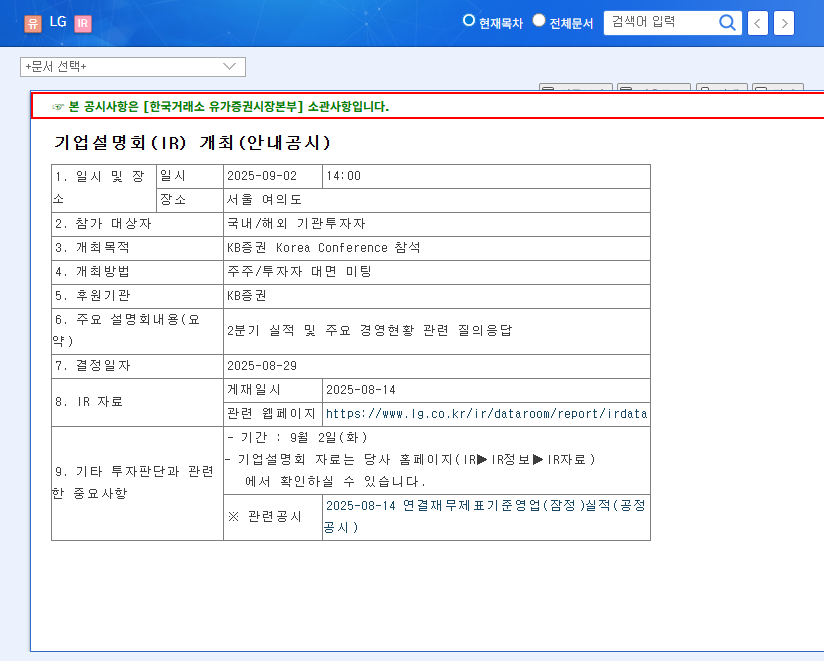
    LG maintains a stable holding company structure, securing diverse revenue streams through its subsidiaries’ growth, dividends, trademarks, and rental income. The growth of key subsidiaries such as LG Electronics (vehicle components, robotics), LG Chem (battery materials, new drugs), and LG Uplus (AI, IDC, EV charging) is particularly notable.

    Future Growth Drivers: AI, EVs, and Batteries

    LG is expanding its investments in promising future sectors like AI, electric vehicle components, and battery materials. This strategic move aims to secure sustainable growth momentum and enhance market competitiveness. LG Electronics’ vehicle component business and LG Chem’s battery materials business are expected to be key growth engines for LG in the coming years.

    Key Information for Investors

    LG maintains a robust financial position. With debt reduction, capital increase, and growth in cash assets, the company has established a stable financial structure and is also committed to enhancing shareholder value through treasury stock cancellation. However, potential risks stemming from changes in the macroeconomic environment, such as a global economic slowdown, warrant continuous monitoring.

    Investment Strategy: Focus on Subsidiary Growth and Market Conditions

    LG presents an attractive investment opportunity with its long-term growth potential and stable revenue structure. A thorough analysis of the growth strategies and investment plans of its key subsidiaries, along with adjustments to investment proportions based on market conditions, is crucial for an effective investment strategy.

    Frequently Asked Questions

    What are LG’s main subsidiaries?

    LG Electronics, LG Chem, and LG Uplus are its major subsidiaries, playing key roles in the electronics, chemical, and telecommunications sectors, respectively.

    What are LG’s future growth drivers?

    LG is focusing its investments on promising future sectors like AI, electric vehicle components, and battery materials to drive sustainable growth.

    What should investors consider when investing in LG?

    Investors should consider the potential risks from changes in the macroeconomic environment, such as a global economic slowdown and geopolitical risks. Analyzing the growth strategies and investment plans of its key subsidiaries and adjusting investment proportions according to market conditions are also essential.

    LG Q2 2025 Earnings: Driving Growth in the Age of AI and EVs 관련 이미지
  • Hyundai’s $7 Trillion US Investment: Analyzing the Rumor and Investment Strategy

    Hyundai's $7 Trillion US Investment: Analyzing the Rumor and Investment Strategy 대표 차트 이미지

    1. The $7 Trillion Question: What’s Happening?

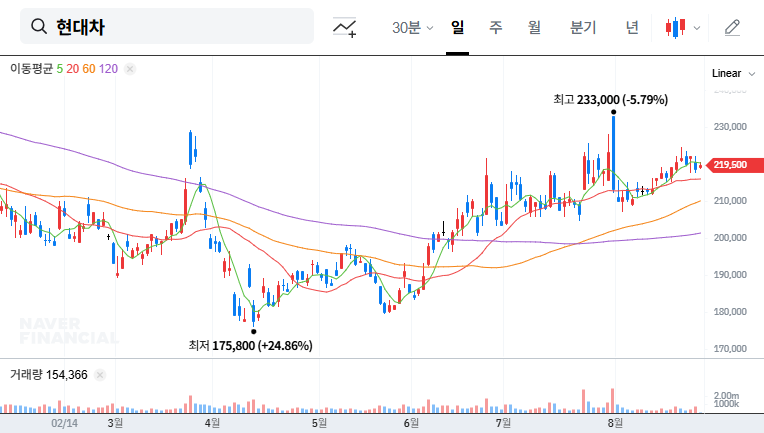
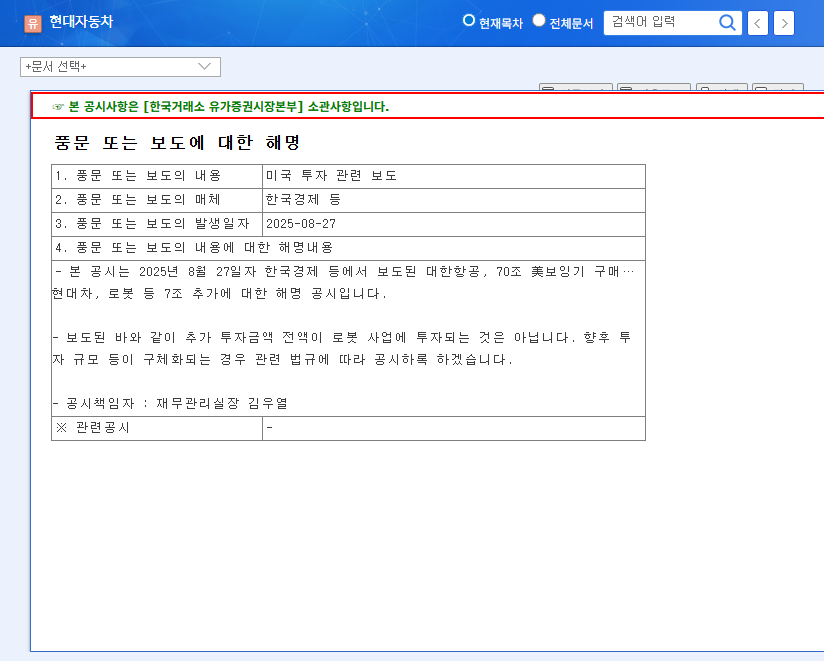
    Reports surfaced on August 27, 2025, suggesting Hyundai is planning a massive $7 trillion investment in the US, with a significant portion potentially directed towards robotics. However, Hyundai clarified that the investment amount, especially regarding robotics, isn’t finalized and details will be disclosed later.

    2. Why is Hyundai Investing in the US?

    This investment aligns with Hyundai’s transition into a ‘Smart Mobility Solution Provider’. The US is a key market for EVs, robotics, and future mobility solutions, and Hyundai likely aims to secure a leading position. Furthermore, US government policies promoting green technologies and the Inflation Reduction Act (IRA) are likely influencing factors.

    3. Hyundai’s Core Business and Investment Strategy

    • Electric Vehicles (EVs): Building on the success of the Ioniq series, Hyundai is strengthening its EV lineup to expand its US market share.
    • Robotics: Hyundai is fostering its robotics venture as a future growth engine and this investment could accelerate its technology development and market entry.
    • Hydrogen: As a leader in hydrogen fuel cell technology, Hyundai continues to invest in building a hydrogen ecosystem and related technologies.

    4. Action Plan for Investors

    Hyundai’s US investment signals long-term growth potential. However, with the specifics yet to be confirmed, a cautious approach is advised. Monitor official announcements and market conditions closely to inform your investment strategy.

    Frequently Asked Questions

    Is Hyundai’s $7 trillion US investment confirmed?

    No, the exact amount and details are yet to be officially confirmed by Hyundai.

    Why is Hyundai investing in robotics?

    Robotics is a crucial part of the future mobility landscape, and Hyundai sees it as a key growth area.

    Should I invest in Hyundai now?

    Hyundai has strong growth potential, but uncertainties remain regarding the investment. Carefully analyze official disclosures and market conditions before making any investment decisions.

    Hyundai's $7 Trillion US Investment: Analyzing the Rumor and Investment Strategy 관련 이미지
    Hyundai's $7 Trillion US Investment: Analyzing the Rumor and Investment Strategy 관련 이미지
  • Hyundai Motors Q2 2025 Earnings: Strong EV Sales Drive Growth. What’s Next?

    1. Hyundai’s Q2 2025 Performance: Driven by EV Sales

    Hyundai Motors reported impressive Q2 2025 results, with revenue reaching ₩482.87 trillion and operating profit at ₩36.02 trillion, both surpassing market forecasts. Strong sales of new electric vehicle (EV) models and success in the US market were key drivers. The launch of models like the Ioniq 5 N and Ioniq 9, along with the company’s transition to a ‘Smart Mobility Solution Provider,’ are paying off.

    2. Key Strengths and Potential Risks

    • Strengths:
      • Robust sales and global market expansion
      • Strengthened EV lineup and technological competitiveness
      • Investments in future growth drivers, including hydrogen technology
      • Solid financial position (total equity of ₩121 trillion)
    • Risks:
      • Net profit slightly below market expectations (requires further analysis)
      • Intensifying competition in the EV market and global economic uncertainty

    3. Investment Outlook: Positive Long-Term View

    Hyundai’s strong performance and future growth potential make it an attractive long-term investment. However, investors should closely monitor factors such as the reasons for the slightly lower net profit, increasing EV market competition, and global economic headwinds. Careful analysis of new EV model sales performance, new business investments, and shareholder return policies is crucial for adjusting investment strategies.

    Frequently Asked Questions

    What were the key drivers of Hyundai’s Q2 2025 results?

    Strong sales of new electric vehicle (EV) models, particularly the Ioniq 5 N and Ioniq 9, and a successful performance in the US market drove the positive results. The company’s ‘Smart Mobility Solution Provider’ strategy also contributed.

    What are the potential risks for investors?

    Investors should consider the slightly lower than expected net profit, intensifying competition in the EV market, and global economic uncertainties.

    What’s the outlook for investing in Hyundai?

    The long-term outlook is positive. However, continuous monitoring of the reasons for the lower net profit, EV market competition, and the performance of new business investments is essential for informed investment decisions.

  • Korea Terminal Industry’s H1 2025 Earnings: Missing Estimates, but Future Growth Potential?

    1. What Happened? : KTI’s H1 2025 Earnings Breakdown

    KTI’s H1 2025 earnings missed market estimates. Revenue and operating profit decreased year-over-year to ₩380.3 billion and ₩36.8 billion, respectively. Net income saw a significant drop to ₩17.5 billion, primarily due to unexpected costs, including foreign exchange losses.

    2. Why Did This Happen? : Analyzing the Earnings Miss

    The weaker performance can be attributed to a combination of external factors, including the global economic slowdown, geopolitical risks, and rising raw material prices, as well as domestic instability in the automotive market. The automotive segment faced challenges due to slowing demand and political uncertainty amidst the accelerating transition to electric vehicles. The electronics segment also experienced delayed recovery due to the global economic downturn and tariff uncertainties.

    3. How is KTI Responding? : Future Growth Strategies

    Despite the challenging environment, KTI is actively pursuing future growth opportunities. The company is focusing on developing electric vehicle component technologies and strengthening its supply chain in the automotive segment. In the electronics segment, KTI is expanding into new business areas, such as AI, IoT, and renewable energy, to secure growth momentum. The company maintains its commitment to R&D investment (3.78% of sales) and facility expansion.

    4. What Should Investors Do? : Investment Strategy and Outlook

    While short-term challenges are anticipated, KTI holds long-term growth potential driven by advancements in electric vehicles and new business ventures. Investors should carefully consider macroeconomic indicators, the pace of recovery in related industries, and the company’s progress in new businesses and profitability improvements when making investment decisions.

    Frequently Asked Questions

    Q: How did Korea Terminal Industry perform in H1 2025?

    A: KTI reported weaker-than-expected earnings, with declines in revenue, operating profit, and net income compared to the same period last year.

    Q: What were the main reasons for the earnings miss?

    A: The primary factors contributing to the decline include the global economic slowdown, rising raw material prices, and foreign exchange losses.

    Q: What is the outlook for Korea Terminal Industry?

    A: While short-term headwinds are expected, KTI has long-term growth potential driven by its focus on electric vehicles and new business ventures.