Tag: Economic Outlook

  • (001740) SKNetworks Q3 2025 Earnings Analysis: A Deep Dive into its AI Future & Stock Potential

    (001740) SKNetworks Q3 2025 Earnings Analysis: A Deep Dive into its AI Future & Stock Potential

    In a significant development for investors, SKNetworks (KRX: 001740) has released its SKNetworks Q3 2025 earnings, which have surpassed market consensus. This isn’t just a story about numbers; it’s a critical signal that the company’s ambitious transformation into a leading SKNetworks AI company is gaining tangible momentum. For those following the SKNetworks stock analysis, this report provides crucial insights into the effectiveness of its strategic pivot and portfolio restructuring.

    This comprehensive analysis will dissect the latest financial report, evaluate the company’s fundamental health, and explore the potential trajectory for its stock price. We aim to provide a clear, data-driven perspective to help you make informed investment decisions.

    SKNetworks Q3 2025 Earnings: The Official Numbers

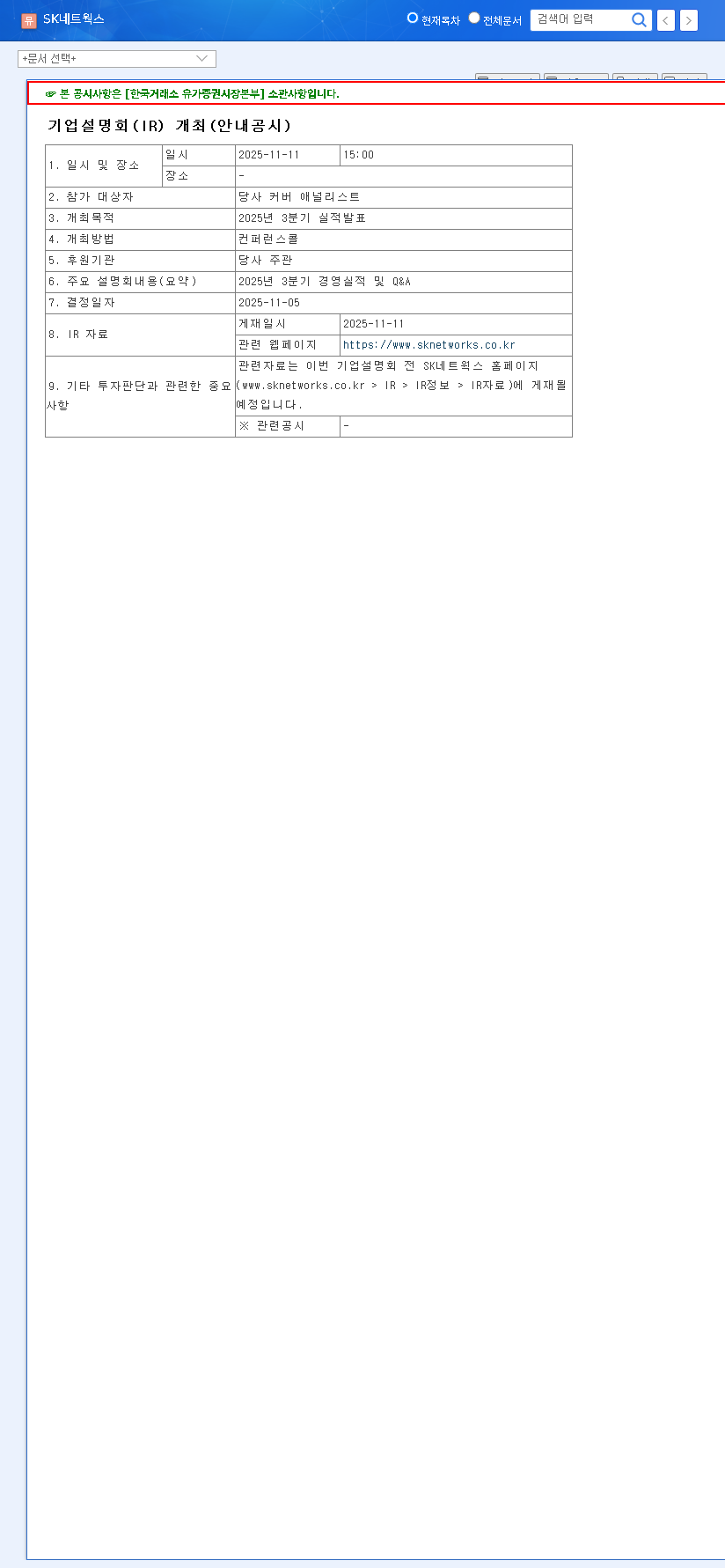
    On November 11, 2025, SKNetworks announced its preliminary operating results, sending a wave of optimism through the market. The key figures, as detailed in the Official Disclosure (DART), reveal a solid performance:

    • Revenue: KRW 1,972.6 billion (Exceeding estimate of KRW 1,891.0 billion)
    • Operating Profit: KRW 22.4 billion (Exceeding estimate of KRW 21.5 billion)
    • Net Profit: KRW 19.2 billion (Swung to profit from the previous quarter)

    While both revenue and operating profit modestly beat expectations, the most significant highlight is the robust 30% quarter-over-quarter (QoQ) revenue increase and the return to net profitability. This signals a strong recovery and potentially validates the company’s recent strategic shifts.

    Deep Dive: Why These Results Matter

    The Pivot to an AI-Powered Future

    SKNetworks is aggressively restructuring its portfolio to establish itself as a formidable SKNetworks AI company. The growth engine appears to be the Information and Communication segment, which saw a 16.4% year-over-year (YoY) increase. This division is no longer just about mobile device distribution; it’s about integrating AI into logistics, customer service, and supply chain management to create a smarter, more efficient ecosystem. Meanwhile, other segments like Trading and SK Intellix are undergoing profitability-focused restructuring, trimming inefficiencies to contribute more effectively to the bottom line.

    Financial Health and Segment Performance

    A closer look at the key business units reveals a mixed but promising picture:

    • Information & Communication: The clear star performer, driving growth and showing strong potential for AI integration.
    • Walkerhill Hotel & Resort: Demonstrating a gradual but steady post-pandemic recovery, contributing positively to revenue.
    • SK Intellix (formerly SK magic): Undergoing a strategic shift to focus on profitable segments within the home appliance rental market.
    • Financial Stability: The company’s debt-to-equity ratio remains stable at 153.3%, indicating a solid financial foundation to support its strategic investments and transformation.

    The Q3 earnings beat is more than a short-term win; it’s the first major data point suggesting that SKNetworks’ strategic bet on AI and portfolio optimization is beginning to pay off, potentially unlocking significant long-term value.

    Analyzing the Broader Market Context

    No company operates in a vacuum. Several macroeconomic factors could influence SKNetworks’ path forward. The ongoing weakness of the Korean Won (KRW) against the USD and EUR presents a double-edged sword: it can increase import costs for the trading business but also boost the value of foreign earnings. SKNetworks mitigates this through a robust hedging strategy. Furthermore, global interest rate stability and declining shipping costs could provide a more predictable environment for its trading and logistics operations. Investors should continue to monitor these trends, as discussed in broader reports about global macroeconomic conditions on sites like Bloomberg.

    Impact Analysis & Investor Outlook

    Short-Term Stock Price Momentum

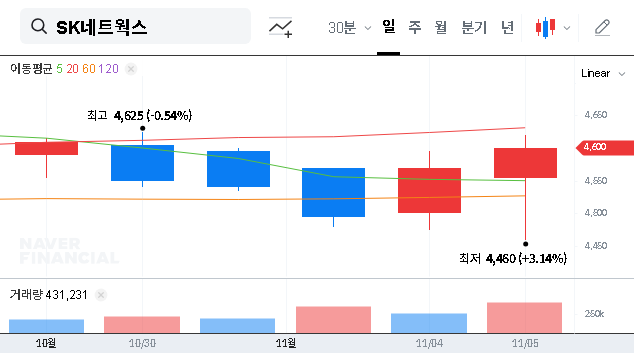
    In the short term, this positive SKNetworks Q3 2025 earnings report is likely to boost investor sentiment and drive the stock price upward. Beating expectations is a powerful catalyst that attracts market attention and builds confidence.

    Mid- to Long-Term Value Creation

    The long-term value of the 001740 stock hinges on sustained execution. The market will be watching for several key indicators:

    • Consistent Profitability: Can the company improve its operating profit margin, which has seen some pressure?
    • Tangible AI Results: Will the AI investments translate into concrete efficiency gains and new revenue streams?
    • Successful Restructuring: Will the turnaround at SK Intellix and other divisions be completed successfully?

    For those looking to deepen their understanding, our comprehensive guide to investing in AI-driven companies provides a valuable framework for evaluating businesses like SKNetworks.

    In conclusion, SKNetworks has delivered a reassuring quarter that adds credibility to its transformation story. While macroeconomic risks and the challenge of execution remain, the positive momentum is undeniable. Investors should view this as a promising sign, but maintain a watchful eye on the company’s ability to turn its AI vision into sustained financial performance.

    Disclaimer: This article is for informational purposes only and is based on publicly available data. It does not constitute investment advice. All investment decisions should be made at the investor’s own discretion and risk.
    (001740) SKNetworks Q3 2025 Earnings Analysis: A Deep Dive into its AI Future & Stock Potential 관련 이미지
  • (377300) Kakaopay Q3 2025 Earnings Analysis: Profit Surprise & Hidden Risks for Investors

    (377300) Kakaopay Q3 2025 Earnings Analysis: Profit Surprise & Hidden Risks for Investors

    The latest kakaopay Q3 2025 earnings report presents a complex but intriguing picture for investors. While the fintech giant delivered an impressive operating profit that surpassed market consensus by a wide margin, a miss on both revenue and net profit raises critical questions. Coupled with persistent macroeconomic headwinds like high interest rates and looming economic slowdowns, this performance demands a closer look. Is this profit surprise a sign of resilient operational efficiency, or does it mask underlying vulnerabilities? This in-depth analysis will dissect Kakaopay’s financial performance, explore its fundamental strengths and risks, and provide a strategic outlook for investors navigating the volatile fintech landscape.

    Deep Dive into Kakaopay’s Q3 2025 Financial Performance

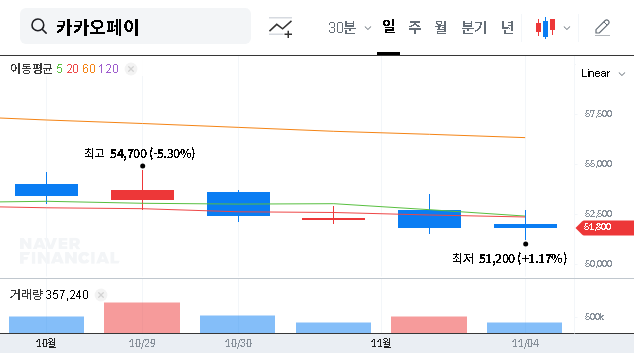
    Kakaopay Corp. released its preliminary Q3 2025 earnings with a mix of celebratory highs and cautionary lows. The headline figure was the operating profit of KRW 15.8 billion, a stunning 63% higher than the market’s expectation of KRW 9.7 billion. This demonstrates a remarkable capability for enhancing profitability, likely stemming from disciplined cost management and the maturation of its core revenue models. However, the top-line revenue of KRW 238.4 billion fell 3% short of projections, and the net profit of KRW 15.2 billion was 11% below the consensus. These figures paint a nuanced picture: Kakaopay is becoming more efficient but is still susceptible to broader market pressures affecting overall growth. You can view the full details in the Official Disclosure on DART.

    Despite a challenging economic environment, Kakaopay’s ability to significantly outperform on operating profit highlights the underlying strength and efficiency of its platform ecosystem.

    Fundamental Analysis: Growth Drivers vs. Potential Risks

    A thorough kakaopay stock analysis requires balancing the company’s strong foundational pillars against the significant external and internal risks it faces. The outcome of this delicate balance will likely determine its trajectory in the coming quarters.

    Key Strengths Fueling Growth

    • Exceptional Profitability Management: The standout kakaopay operating profit demonstrates a mastery of cost control and revenue optimization, a critical skill in the cash-intensive fintech sector.
    • Robust Securities Arm: Kakaopay Securities has not only turned profitable but also boasts an exceptionally high capital adequacy ratio of 949.02%. This financial stability is a powerful asset for expanding further into investment and wealth management services.
    • Strategic Diversification: The planned expansion into new areas like telecommunication billing, location-based services, and online brokerage indicates a forward-thinking strategy to create new, synergistic revenue streams and reduce reliance on core payment fees. For more context, you can explore our analysis on the broader Korean fintech market trends.
    • Sticky and Growing User Base: With an average daily active user count of 6.35 million (up 3% YoY) and a remarkable 37% surge in transactions per user, the platform’s engagement is deepening, creating a solid foundation for future monetization.

    Significant Risks on the Horizon

    Investors must carefully consider the fintech investment risks associated with Kakaopay, particularly those stemming from the global economy. Understanding these factors, as explained by authoritative sources like Investopedia, is crucial for risk management.

    • Macroeconomic Headwinds: The global economic climate is the primary threat. Persistent high interest rates can increase funding costs and dampen consumer spending. Exchange rate volatility directly impacts foreign transaction revenue, and signs of a broader economic slowdown could reduce overall payment volume.
    • New Business Execution Risk: While diversification is a strength, new ventures come with their own challenges. The telecommunication billing service, for example, carries advance payment risks, and all new data-driven services face scrutiny under evolving personal information protection laws.
    • Intense Competition: The South Korean fintech market is fiercely competitive. Rivals like Toss (Viva Republica) and Naver Pay are constantly innovating, putting pressure on Kakaopay to maintain its market share and user engagement through continuous service improvement and strategic marketing.

    Strategic Outlook & Investor Action Plan

    The kakaopay Q3 2025 earnings confirm that the company possesses strong operational discipline and a loyal user base, which are excellent long-term assets. However, short-to-medium-term performance will be heavily influenced by its ability to navigate macroeconomic storms and successfully launch new business ventures.

    For current and prospective investors, a prudent approach involves continuous monitoring of key performance indicators beyond just headline profit and revenue. The following checklist can serve as a guide:

    • Track Macro Indicators: Keep a close watch on central bank interest rate decisions, KRW/USD exchange rate trends, and leading economic indicators that signal consumer sentiment.
    • Monitor New Service Adoption: Look for company reports on the user uptake and revenue contribution of new services, particularly the telecom billing and brokerage businesses.
    • Assess Regulatory Landscape: Stay informed about any proposed changes to data privacy laws or financial regulations in South Korea that could impact Kakaopay’s operations.
    • Evaluate User Engagement Metrics: Continue to analyze DAU, transaction volume, and transactions per user to ensure the platform’s core ecosystem remains healthy and growing.

    Ultimately, Kakaopay’s agility in responding to a dynamic environment will be the key determinant of its success. While profitability improvements are encouraging, sustained growth will depend on a combination of operational excellence, strategic innovation, and effective risk management.

    (377300) Kakaopay Q3 2025 Earnings Analysis: Profit Surprise & Hidden Risks for Investors 관련 이미지
  • (039490) KIWOOM Securities Q3 2025 IR: A Deep Dive Analysis for Investors

    (039490) KIWOOM Securities Q3 2025 IR: A Deep Dive Analysis for Investors

    The upcoming KIWOOM Securities Q3 2025 IR is a critical event for investors. As a dominant force in South Korea’s brokerage market, the company’s performance is a key indicator of market health and investor sentiment. The central question on everyone’s mind is whether KIWOOM can sustain its impressive growth trajectory amidst a complex macroeconomic landscape. This event is far more than a simple earnings release; it’s a crucial window into the company’s strategic vision, operational resilience, and plans for navigating future challenges. This comprehensive KIWOOM Securities analysis will delve into market expectations, the company’s solid fundamentals, and the potential risks that investors must monitor closely.

    We will provide detailed KIWOOM investment insights to help you accurately assess the company’s value proposition and make well-informed decisions following the release of their Q3 earnings.

    What to Expect from the KIWOOM Securities Q3 2025 IR

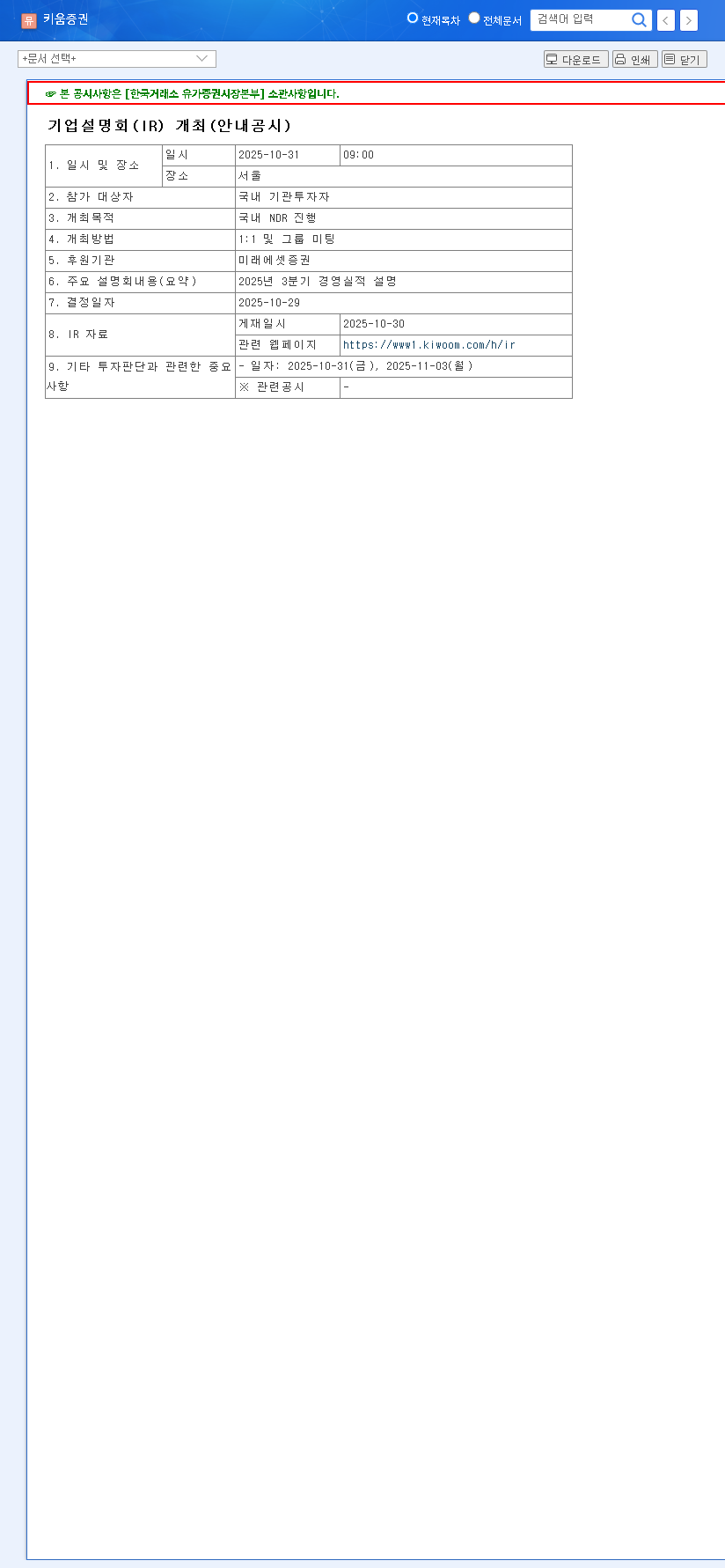
    KIWOOM Securities has officially scheduled its Investor Relations (IR) event to discuss Q3 2025 management performance. According to the Official Disclosure on DART, the event will take place on October 31, 2025, at 9:00 AM KST. Conducted as a domestic Non-Deal Roadshow (NDR), this format is designed to foster open communication with investors without the pressure of an immediate securities offering. As a market leader with a capitalization of KRW 7.849 trillion, its earnings announcements are always a focal point for the financial community.

    The market will be scrutinizing not just the top-line numbers, but management’s commentary on risk management and future growth initiatives. The clarity provided on issues like the Gentwo Partners fund will be a major factor in the post-IR stock performance.

    A Deep Dive into KIWOOM’s Solid Fundamentals

    An analysis of KIWOOM Securities’ 2025 semi-annual report reveals a company built on a solid foundation. These core strengths are what investors will hope to see reaffirmed in the Q3 report. For those new to financial stock analysis, you can learn more about how to evaluate brokerage firms in our related guide.

    Key Strengths Driving Consistent Growth

    • Impressive Earnings Growth: The company showed a 12.9% rise in consolidated operating profit and a 14.4% increase in net income, signaling strong overall profitability.
    • Unshakable Market Dominance: KIWOOM maintains its #1 position with a 19.3% market share in domestic stock brokerage, bolstered by rising overseas stock trading volumes.
    • Successful Business Diversification: Growth was observed across all segments, including S&T, investment operations, and IB, where participation in sound PF projects expanded revenue.
    • Exceptional Financial Health: An incredibly high net capital ratio (1,344.47% consolidated) and a healthy liquidity ratio (113%) demonstrate robust financial stability, far exceeding regulatory minimums.

    Navigating Headwinds: Potential Risk Factors

    Despite its strengths, no investment is without risk. A thorough KIWOOM Securities analysis must account for potential challenges. Investors should pay close attention to how management addresses the following points during the KIWOOM Securities Q3 2025 IR.

    Gentwo Partners Fund & Real Estate PF

    • Gentwo Partners Fund Halt: A significant uncertainty revolves around investment assets of approximately KRW 233.9 billion. A clear, transparent explanation and mitigation strategy is expected.
    • Real Estate PF Exposure: Through KIWOOM Savings Bank, the company has exposure to real estate project financing. Increased provisioning requirements could impact future profitability.
    • Macroeconomic Volatility: The broader economic environment, including interest rate fluctuations and regulatory changes, remains a persistent risk. For more on this, see the latest global economic outlook from authoritative sources like the IMF.

    Stock Price Forecast: How the IR Could Move the Needle

    The outcome of the KIWOOM Securities Q3 2025 IR will likely be a significant catalyst for its stock price. A positive report that confirms continued earnings growth and provides confident resolutions to the risk factors could bolster investor confidence and lead to a price increase. Conversely, if Q3 earnings miss expectations or if management appears uncertain about the risks, it could trigger a short-term sell-off. The projected 2024 operating profit turnaround is a positive sign, and if Q3 2025 continues this trend, it will strongly support a bullish KIWOOM stock forecast.

    Final Checklist for Investors

    As you prepare for the IR event, keep these key points in mind:

    • Q3 Earnings Data: Does it confirm the robust growth seen in the first half of the year?
    • Management’s Risk Commentary: How transparent and confident is their plan for the Gentwo Partners fund and PF risks?
    • Future Outlook: What is their guidance on navigating macroeconomic factors like interest rates and currency fluctuations?

    In conclusion, this IR event will be a pivotal moment. While our fundamental KIWOOM Securities analysis is highly positive, the company’s ability to communicate effectively and manage expectations will ultimately determine the market’s reaction. Please note that this report is for informational purposes, and final investment decisions should be based on your own judgment.

    (039490) KIWOOM Securities Q3 2025 IR: A Deep Dive Analysis for Investors 관련 이미지
  • (069960) Hyundai Department Store Stock Analysis: Will a Major Shareholder Stake Increase Boost its Outlook?

    (069960) Hyundai Department Store Stock Analysis: Will a Major Shareholder Stake Increase Boost its Outlook?

    The market is buzzing with the latest news surrounding the Hyundai Department Store stock, as its largest shareholder, Hyundai GF Holdings, has increased its stake. This move has investors asking a critical question: Is this a signal of renewed confidence and a precursor to a stock price surge, or a minor adjustment with little long-term impact? This comprehensive Hyundai Department Store analysis will dissect the event, evaluate the company’s core fundamentals, and explore the macroeconomic landscape to provide a clear investor outlook.

    We will delve into the strategic intent behind this decision, the health of its diverse business segments, and the external pressures that could shape its future. For anyone considering an investment, understanding these interconnected factors is paramount.

    The Shareholder Move: A Closer Look

    What Exactly Happened?

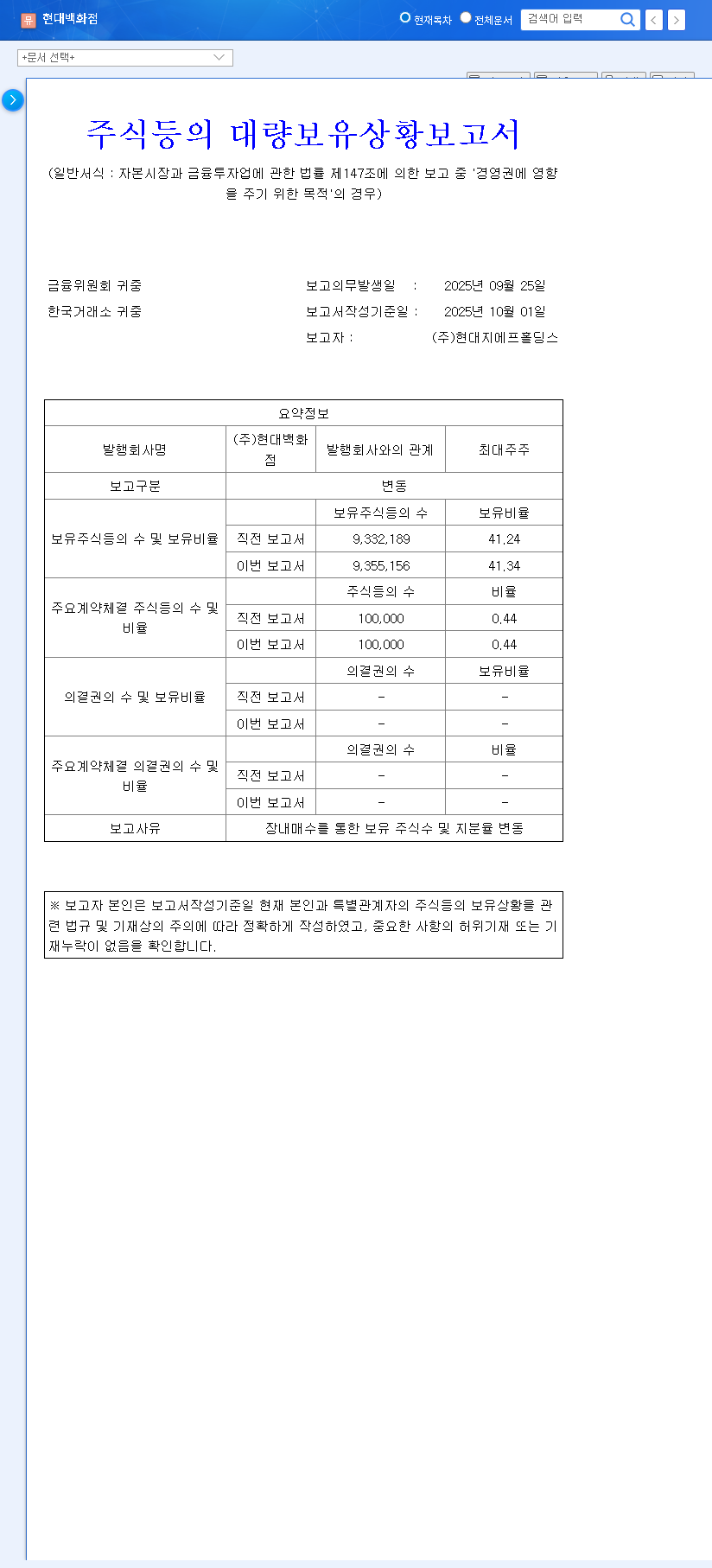
    Hyundai GF Holdings Co., Ltd. formally announced an acquisition of additional shares in Hyundai Department Store. According to the public filing, this transaction increased their total ownership by 0.1 percentage points, from 41.24% to 41.34%. While seemingly small, the stated purpose of ‘Influence over Management Rights’ is a clear declaration of intent. You can view the Official Disclosure on DART for complete details.

    The Strategic Rationale: Why Increase the Stake Now?

    This move is widely interpreted as a strategic maneuver by Hyundai GF Holdings to reinforce its control and signal a long-term commitment to the company’s value. In a competitive retail environment, a stable and decisive management structure is crucial for executing ambitious growth plans, such as new store openings or digital transformations. This act serves to reassure the market that leadership is consolidated and focused on sustainable growth rather than short-term financial gains.

    This stake increase, though minor in percentage, is a significant symbolic vote of confidence from the parent company, aiming to stabilize management and steer the company towards long-term value creation.

    Fundamental Analysis of Hyundai Department Store

    To truly understand the investor outlook, we must look beyond a single event and analyze the company’s operational health. Hyundai Department Store is a multi-faceted business with distinct strengths and challenges across its segments.

    Strengths and Weaknesses

    • Robust Core Business: The department store division remains the company’s anchor, contributing over 52% of consolidated revenue. It has demonstrated resilience and continues to be a powerful engine for profitability.
    • Successful Turnaround (Zinus): The furniture subsidiary, Zinus, has successfully transitioned back to profitability, demonstrating effective business restructuring and operational improvements. This diversification provides a healthy buffer for the overall portfolio.
    • Duty-Free Segment Struggles: A significant headwind is the underperforming duty-free segment. It faces intense competition and high operating costs, which have been a drag on overall profitability. A clear strategy for improving this division is essential for future growth.
    • Solid Financial Health: The company maintains a healthy debt-to-equity ratio of 78.94%. However, increased investment has slightly raised the net borrowing ratio, and exposure to foreign exchange risk requires careful management.

    Market Impact and Hyundai Department Store Stock Outlook

    The key question for investors is how this news translates into stock performance. The impact can be viewed from both a short-term and long-term perspective.

    Short-Term Sentiment vs. Long-Term Value

    In the short term, the stake increase is a positive signal that could boost investor confidence. However, given the marginal 0.1% change, it is unlikely to be a catalyst for a major, immediate rally in the Hyundai Department Store stock price. The long-term trajectory will depend entirely on the company’s ability to capitalize on its stable management. If this leads to better strategies—especially in turning around the duty-free business—the positive impact on fundamental value will eventually be reflected in the stock price. For a broader view on market trends, investors often consult sources like Bloomberg’s market analysis.

    Navigating Macroeconomic Headwinds

    No company operates in a vacuum. Several macroeconomic variables present both risks and opportunities for Hyundai Department Store.

    • Interest Rates: With benchmark rates holding steady in both the U.S. and South Korea, borrowing costs are stable. However, any future hikes could dampen consumer spending on discretionary and luxury goods, impacting department store sales.
    • Exchange Rates: A volatile KRW/USD exchange rate can be a double-edged sword. A weaker won makes imported goods more expensive but could attract more foreign tourists to its duty-free shops, potentially boosting that segment.
    • Logistics Costs: Rising global freight indices signal increasing pressure on supply chain costs. This could squeeze margins on imported products sold across its retail platforms. For more on this, see our analysis of the Korean retail sector.

    Investor Strategy and Final Recommendations

    Considering all factors, the recent stake increase by Hyundai GF Holdings is a net positive, but it is not a standalone reason to invest. The long-term success of the Hyundai Department Store stock hinges on sustained fundamental improvements.

    Short-Term Approach

    The immediate impact is limited. A wait-and-see or phased buying strategy is advisable. Aggressively buying based on this news alone carries unnecessary risk.

    Long-Term Perspective

    Investors should focus on key performance indicators: sustained growth in the core department store segment, a clear path to profitability for the duty-free business, and the continued success of Zinus. The company’s ability to manage macroeconomic risks will also be critical. The stabilized management should, in theory, provide the foundation to tackle these challenges effectively.

    (069960) Hyundai Department Store Stock Analysis: Will a Major Shareholder Stake Increase Boost its Outlook? 관련 이미지
  • TP Corporation (007980) In-Depth Analysis: Navigating Risks and Opportunities


    What’s Happening with TP Corporation?

    TP Corporation reported a 51.5% year-over-year decrease in consolidated revenue to 515.3 billion KRW in the first half of 2025. Operating profit also declined by 45.6%, marking the second consecutive year of deteriorating profitability. The company’s core apparel business (88.7% of revenue) has been directly impacted by the global economic slowdown, and the downturn in the down clothing business has worsened.

    What are the Underlying Causes?

    TP Corporation’s challenges are not solely attributed to the temporary economic downturn. Structural issues, including high dependence on overseas markets (83.35% export ratio), increasing debt (total debt of 549.7 billion KRW, up 7.7% from the end of last year), low R&D investment (0.23% of sales), and reliance on major customers (top 2 customers account for 21.4% of sales), are compounding the difficulties. External factors, such as the rising KRW/USD exchange rate, can also negatively impact profitability.

    So, What Should Investors Do?

    TP Corporation needs to proactively address profitability improvement, financial stability, and securing new growth engines. In the short term, the focus should be on cost reduction and debt management. In the long term, increasing R&D investment, exploring new business opportunities, and diversifying the customer base are crucial for sustainable growth. Decisions regarding treasury stock buybacks or cancellations can positively influence the stock price.

    Investor Action Plan

    • Short-term investors: Closely monitor changes in financial indicators and management’s response strategies, while being mindful of short-term stock price volatility.
    • Long-term investors: Evaluate the company’s efforts to improve its business structure and assess its long-term growth potential before making investment decisions.


    Frequently Asked Questions (FAQ)

    What is TP Corporation’s main business?

    TP Corporation’s primary business is manufacturing and selling apparel, with a high dependence on overseas markets.

    What are the biggest risk factors for TP Corporation currently?

    The global economic slowdown, increasing exchange rate volatility, and high debt ratio are identified as the main risk factors.

    How do you assess TP Corporation’s future growth potential?

    With active R&D investments, new business development, and financial restructuring efforts, TP Corporation can establish a foundation for long-term growth. However, management’s ability to execute its strategies will be key.

    What should investors be aware of when investing?

    Investors should continuously monitor global economic conditions, exchange rate fluctuations, and changes in the company’s financial status before making investment decisions.


  • Hyundai Department Store IR Analysis: A Turning Point for the Second Half of 2025?

    Hyundai Department Store IR Analysis: A Turning Point for the Second Half of 2025? 대표 차트 이미지

    1. What’s Happening with Hyundai Department Store?

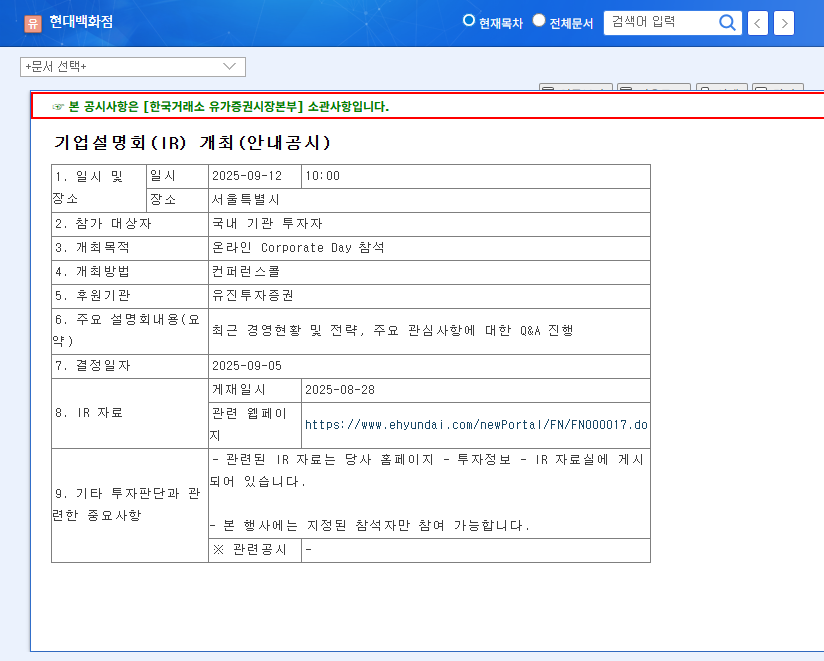
    Hyundai Department Store experienced mixed results in the first half of 2025. While the turnaround and robust profitability of the furniture manufacturing division (Zinus) were positive, the sluggish performance of the department store and duty-free divisions remains a challenge. Weakening consumer sentiment and intensified competition are cited as the main causes, with the duty-free division particularly struggling due to changes in inbound tourist spending patterns and increased competition.

    2. Why Does it Matter? – Future Strategies Revealed at the IR

    This IR presents a crucial opportunity for Hyundai to outline its strategies for overcoming current challenges and achieving future growth. Investors will focus on innovation strategies for the department store and duty-free divisions, the potential application of Zinus’s success to other business segments, and strategies to address the uncertain macroeconomic environment. The new store opening plan and online channel strengthening strategy will be particularly important indicators of future growth momentum.

    3. What Should Investors Do? – Action Plan

    Investors should carefully analyze the information presented at the IR and objectively assess the company’s future growth potential. It’s crucial to seek answers to the following questions:

    • • What are the specific plans to improve profitability in the department store and duty-free sectors?
    • • How will Hyundai apply the Zinus success model to other business segments?
    • • What are the strategies to address the volatile macroeconomic environment?

    Monitor stock price movements after the IR and gather additional information to continuously adjust your investment strategy.

    Frequently Asked Questions (FAQ)

    What are Hyundai Department Store’s main business segments?

    Hyundai Department Store’s main business segments are department stores, duty-free shops, and furniture manufacturing (Zinus).

    What are the key points investors should focus on in this IR?

    Key points include innovation strategies for department stores and duty-free shops, applying Zinus’s success to other segments, and strategies to address the macroeconomic environment.

    What precautions should investors take when investing in Hyundai Department Store?

    Investors should analyze IR information, monitor stock price movements, and gather additional information to adjust their investment strategies accordingly.

    Hyundai Department Store IR Analysis: A Turning Point for the Second Half of 2025? 관련 이미지
  • Hana Financial Group IR Analysis: September 2025, A Turning Point?

    Hana Financial Group IR Analysis: September 2025, A Turning Point? 대표 차트 이미지

    1. Hana Financial Group IR: What’s it about?

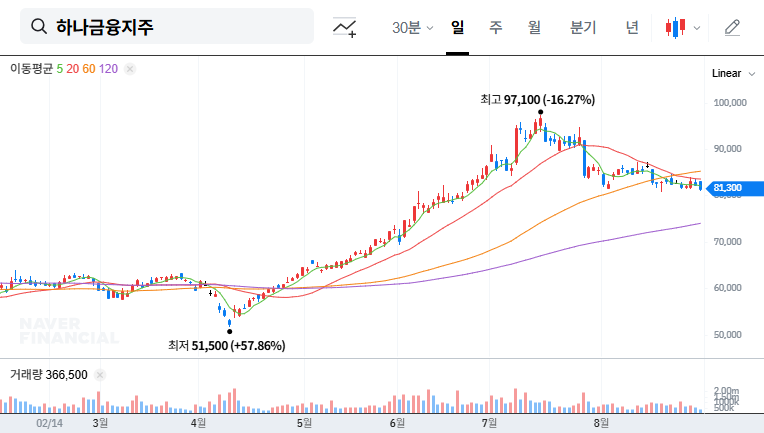
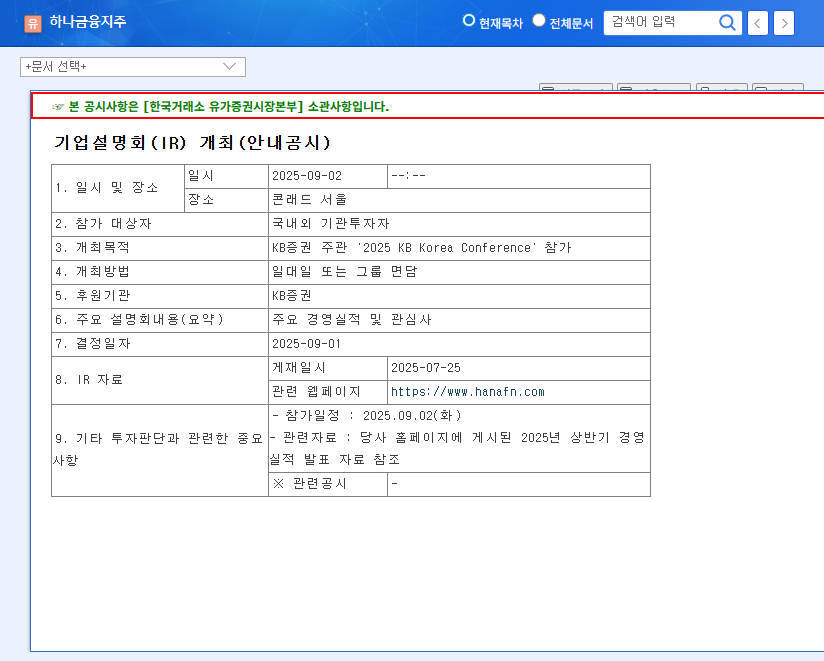
    On September 2nd, 2025, Hana Financial Group will participate in the ‘2025 KB Korea Conference’ to present its business performance and future plans. Addressing the recent slump and presenting future growth strategies are key tasks.

    2. Why is it important?

    Hana Financial Group has been struggling with losses for the past two years. Increasing debt ratio and deteriorating profitability are raising concerns among investors. This IR is a crucial opportunity to alleviate these concerns and restore investor confidence.

    3. Hana Financial Group’s Current Status and Outlook

    • Financial Status: Continued losses in 2024 with revenue of KRW 928 billion, operating loss of KRW 131 billion, and net loss of KRW 125 billion. Worsening debt ratio and declining profitability.
    • Market Environment: Continuing volatility in interest rates and exchange rates, and increasing global economic uncertainty are expected to create a challenging business environment.
    • Key IR Objectives: Needs to clearly present strategies for improving performance, strengthening financial soundness, and shareholder return policy.

    4. What should investors do?

    Investors should carefully analyze the IR presentation to assess the company’s future growth potential. In particular, they should focus on the concreteness of the performance improvement strategy, the effectiveness of the financial soundness strengthening plan, and the sustainability of the shareholder return policy.

    Frequently Asked Questions

    When is Hana Financial Group’s IR scheduled?

    It is scheduled for September 2nd, 2025.

    How has Hana Financial Group’s recent performance been?

    The company has been recording losses since 2023, and the losses widened in 2024.

    What should investors pay attention to during the IR?

    Investors should closely examine the strategies for performance improvement, strengthening financial soundness, and shareholder return policy.

    Hana Financial Group IR Analysis: September 2025, A Turning Point? 관련 이미지
  • Hyundai Motor IR: Investment Opportunity? Fact Check and Future Outlook Analysis

    Hyundai Motor IR: Investment Opportunity? Fact Check and Future Outlook Analysis 대표 차트 이미지

    1. The IR Event: What’s on the Agenda?

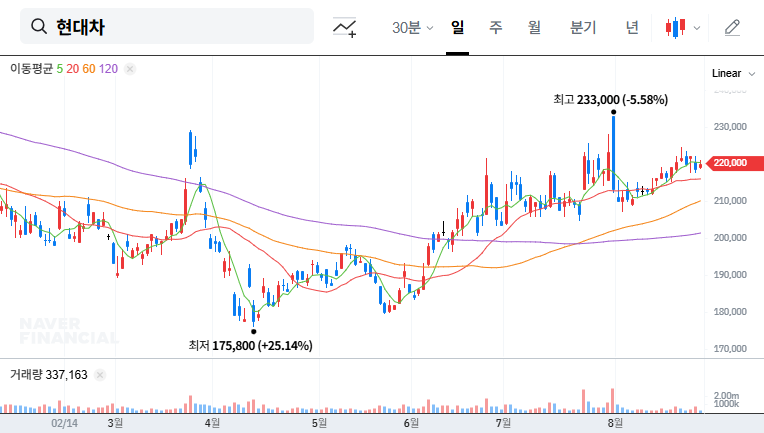
    Hyundai Motor will share its vision and strategies with investors at its IR on September 3, 2025. Key areas of interest include its future mobility strategy, focusing on electrification, hydrogen business, SDV transition, and its response to the global economic slowdown.

    2. Positive vs. Negative: The Two Sides of the IR Coin

    • Positive Impacts: Increased investor understanding, clear future strategies, and reduced uncertainty can improve investor sentiment and potentially boost the stock price.
    • Potential Risks: Failing to meet expectations, worsening macroeconomic conditions, and intensifying competition could negatively impact the stock price.

    3. Key Analysis: What Does Hyundai’s Future Hold?

    Hyundai Motor demonstrates positive fundamentals, including robust global sales and increased investment in future mobility. However, the global economic slowdown and intensifying competition pose risks. The key factor will be how convincingly Hyundai presents its strategies for addressing these challenges at the IR.

    4. Action Plan for Investors

    Investors should carefully analyze the IR announcements and continuously monitor changes in the market environment. It’s crucial to make investment decisions based on a long-term perspective rather than short-term market reactions. Maintain a ‘wait-and-see positive’ stance and make investment decisions based on a comprehensive consideration of the IR announcements and market response.

    Frequently Asked Questions

    How will Hyundai’s stock price react after the IR?

    The stock price may fluctuate depending on the IR announcements and market reaction. Positive news and favorable market sentiment could lead to a price increase, while the opposite scenario could result in a price decline.

    Is it a good time to invest in Hyundai now?

    Investment decisions should always be made carefully. Consider the IR announcements, market conditions, and other relevant factors before making a decision. Refer to the ‘Action Plan for Investors’ section in the article.

    What are Hyundai’s future growth drivers?

    Hyundai’s key growth drivers are future mobility areas such as electrification, hydrogen business, and SDV transition. Concrete strategies and investment plans for these sectors are expected to be announced at the IR.

    Hyundai Motor IR: Investment Opportunity? Fact Check and Future Outlook Analysis 관련 이미지
    Hyundai Motor IR: Investment Opportunity? Fact Check and Future Outlook Analysis 관련 이미지
  • Hyundai Home Shopping H1 2025 Earnings: Surprise Net Profit, But What’s Next?

    1. What Happened?

    Hyundai Home Shopping reported revenue of KRW 923.7 billion (down 4% YoY), operating profit of KRW 30.1 billion (up 3% YoY), and a net profit of KRW 28.7 billion for H1 2025. Despite the revenue decline, operating and net income figures presented a positive surprise, exceeding market forecasts.

    2. Why These Results?

    The company’s efforts to diversify its business portfolio (Hansae, Hyundai L&C, etc.) following its transition to a holding company structure contributed positively to the results. The growth of Hansae and Hyundai L&C was particularly noteworthy. However, the overall economic slowdown and weakened consumer sentiment led to the decline in revenue. Investment activities, such as the construction of a new annex building, also contributed to a decrease in operating cash flow.

    3. What’s Next?

    Hyundai Home Shopping plans to focus on securing future growth engines by strengthening its mobile shopping platform, enhancing its media commerce competitiveness, and developing eco-friendly materials. The growth potential of its subsidiaries, including Hansae and Hyundai Bioland, is also anticipated. However, macroeconomic uncertainties, such as high interest rates, a strong won, and the economic downturn, remain persistent risk factors.

    4. What Should Investors Do?

    In the short term, the positive earnings surprise may have a positive impact on the stock price. However, the declining revenue trend and macroeconomic uncertainties warrant careful consideration. For the long term, investors should closely monitor the growth of subsidiaries, the company’s ability to enhance its mobile and media commerce competitiveness, and its efforts to improve operating cash flow. A comprehensive evaluation is crucial for making informed investment decisions.

    What was Hyundai Home Shopping’s revenue for H1 2025?

    KRW 923.7 billion, which was a decrease year-over-year and 4% below market expectations.

    Why was the net profit better than expected?

    The company’s business diversification and the growth of its subsidiaries following its transition to a holding company structure had a positive impact.

    What are Hyundai Home Shopping’s key investment strategies?

    The company is focusing on securing future growth engines by strengthening its mobile shopping platform, enhancing its media commerce competitiveness, and developing eco-friendly materials.

  • KCC Glass Reports Losses in H1 2025: Analyzing the Crisis and Investment Strategies

    1. What Happened? : KCC Glass H1 2025 Performance Analysis

    KCC Glass reported a loss in the first half of 2025, with consolidated revenue of KRW 512.9 billion (a 0.2% decrease year-on-year), an operating loss of KRW 35.4 billion, and a net loss of KRW 35.3 billion. The widening operating and net losses are particularly concerning.

    • Glass Segment: Struggled due to the construction downturn and rising raw material prices. Automotive safety glass performed well but couldn’t offset the overall decline.
    • Interior and Distribution Segment: Profitability declined due to intensifying market competition and increased investment.
    • Pile Business Segment: Operating losses widened due to the construction downturn.

    2. Why Did This Happen? : Analyzing the Causes of the Downturn

    The main causes of KCC Glass’s decline are a combination of macroeconomic factors like the construction downturn, rising raw material prices, and interest rate hikes, alongside internal factors such as declining profitability in the glass segment and low factory utilization rates.

    3. What’s Next? : Outlook and Investment Strategies

    The short-term outlook is challenging due to the potential for continued delays in the construction recovery and ongoing pressure from rising raw material prices. In the medium to long term, the key factors for KCC Glass’s recovery will be the normalization of profitability in the glass segment and the successful operation of the Indonesian plant.

    • Positive Factors: Growth in automotive safety glass, new product launches, and strengthened ESG management.
    • Negative Factors: Struggles in core businesses, deteriorating financial health, high fixed costs, and a worsening macroeconomic environment.

    Investors should closely monitor KCC Glass’s potential for earnings improvement, changes in financial health, and management’s ability to respond to the crisis.

    4. Investor Action Plan

    Investors considering KCC Glass should monitor macroeconomic indicators such as the construction market, raw material prices, and interest rate movements. They should also continuously track the company’s restructuring and profitability improvement efforts, as well as new business development progress. A long-term investment approach is recommended rather than short-term speculation.

    What are the main reasons for KCC Glass’s poor performance in the first half of 2025?

    A combination of external factors, including the construction downturn, rising raw material prices, and interest rate hikes, as well as internal factors such as declining profitability in the glass segment and low factory utilization rates.

    What is the outlook for KCC Glass?

    The short-term outlook is challenging, but the recovery of profitability in the glass segment and the successful operation of the Indonesian plant are key variables in the medium to long term.

    What should investors be aware of when investing in KCC Glass?

    Investors should closely monitor macroeconomic indicators, the company’s restructuring efforts and new business developments, and consider a long-term investment approach.