Tag: Earnings

  • JaeYoung SoluTech: Kim Dae-yong Increases Stake, But Can It Lift the Stock Amid Weak Fundamentals?

    JaeYoung SoluTech: Kim Dae-yong Increases Stake, But Can It Lift the Stock Amid Weak Fundamentals? 대표 차트 이미지

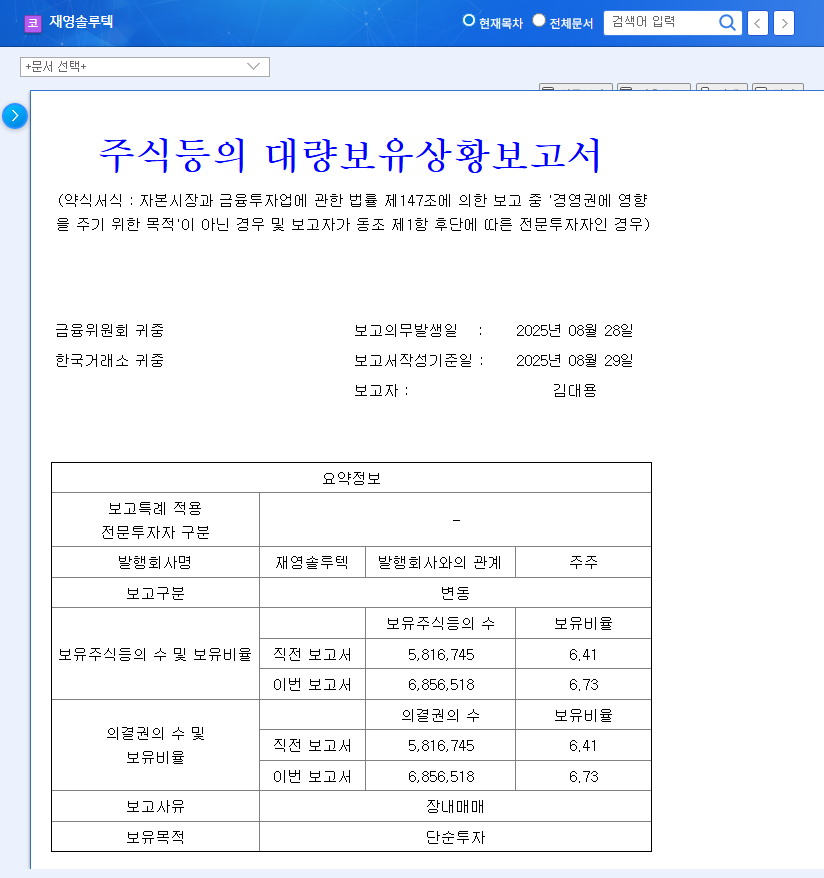
    Kim Dae-yong Acquires 6.73% Stake in JaeYoung SoluTech – What’s Happening?

    Kim Dae-yong actively traded JaeYoung SoluTech shares between August 22nd and 28th, increasing his stake from 6.41% to 6.73%. Despite alternating between buying and selling, he ultimately increased his holdings.

    Stake Increase Amid Weak Earnings – Why?

    JaeYoung SoluTech’s performance in the first half of 2025 has been underwhelming. Sales decreased by 35.6% year-over-year, and net income turned negative. The downturn in the nano-optics division is cited as the primary cause. In this context, it’s unclear whether Kim’s stake increase is driven by short-term gains or a belief in the company’s long-term value.

    • Positive efforts like the sale of mold business assets and the establishment of a Seoul research center aim to improve financial structure and strengthen R&D, but their impact on fundamental improvement remains to be seen.

    Should You Invest Now?

    In the short term, the news of Kim’s stake increase alone is unlikely to significantly impact the stock price. The recent poor earnings may even dampen investor sentiment. However, a large investor increasing their stake can be a positive long-term signal, provided it’s accompanied by fundamental improvements within the company.

    Investor Action Plan

    Investors should carefully monitor the following factors before making any investment decisions:

    • Analysis of the reasons behind the weak Q2 earnings
    • Visibility of R&D achievements
    • Status of relationships with major clients and new order intake
    • Kim Dae-yong’s future stake changes
    • Macroeconomic environment (exchange rates, interest rates, oil prices, etc.)

    The key to investing in JaeYoung SoluTech lies in observing the company’s fundamental improvements. Focus on earnings recovery, strengthening competitiveness, and securing new growth drivers.

    Frequently Asked Questions

    Who is Kim Dae-yong?

    Specific information about Kim Dae-yong isn’t publicly available, but the details of his stake changes are disclosed in the large shareholding report.

    What is JaeYoung SoluTech’s main business?

    JaeYoung SoluTech is engaged in nano-optics, mold business, etc. They recently sold their mold business assets and are focusing on the nano-optics sector.

    Should I invest in JaeYoung SoluTech?

    The decision to invest is ultimately your own. Consider the information provided here along with the company’s financial data, market conditions, and your risk tolerance before making a decision.
    JaeYoung SoluTech: Kim Dae-yong Increases Stake, But Can It Lift the Stock Amid Weak Fundamentals? 관련 이미지
    JaeYoung SoluTech: Kim Dae-yong Increases Stake, But Can It Lift the Stock Amid Weak Fundamentals? 관련 이미지
  • SK Hynix: Foreign Investors Net Buy KRW 206.5 Billion, Riding the AI Wave?

    1. What Happened?

    A significant transaction of 712,000 shares, totaling KRW 190.8 billion, took place in SK Hynix after-hours trading on August 28, 2025. Foreign investors were the primary buyers, with a net purchase of KRW 206.5 billion.

    2. Why Did This Happen?

    SK Hynix achieved excellent results in the first half of 2025, driven by the growth of the AI market and its leading position in the HBM market. The company achieved remarkable performance with sales of KRW 22.2 trillion and operating profit of KRW 9.2 trillion in Q2. Positive factors include its technological leadership in next-generation memory with mass production of 12-layer HBM3E and HBM4 sample shipments, and stable financial soundness. However, potential risk factors such as declining NAND ASP and global economic uncertainty exist.

    3. What’s Next?

    This large purchase by foreign investors is interpreted as a positive signal for SK Hynix’s growth potential. Considering the growth of the AI market and SK Hynix’s HBM technology competitiveness, the company has high long-term growth potential. Although short-term stock price volatility may occur, the outlook is positive from a medium- to long-term perspective. Continuous monitoring of macroeconomic indicators such as the won/dollar exchange rate, interest rates, and raw material prices, as well as the NAND market situation and intensifying competition, is necessary.

    4. What Should Investors Do?

    SK Hynix is a key beneficiary of the AI era, with high long-term growth potential. However, investment should always be approached with caution. It is crucial to monitor macroeconomic conditions and market volatility and develop an investment strategy that aligns with your investment style and goals.

    What is SK Hynix’s main business?

    SK Hynix primarily manufactures memory semiconductors, specifically DRAM and NAND flash. Recently, the company has been focusing on high-performance memory businesses, such as HBM (High Bandwidth Memory), in response to the growth of the AI market.

    What is HBM?

    HBM (High Bandwidth Memory) is a high-performance memory semiconductor used in AI, supercomputers, and other applications that require high-speed processing of large amounts of data.

    What are the key factors to consider when investing in SK Hynix?

    Investors should consider the volatility of the semiconductor market, intensifying competition, and changes in the macroeconomic environment. In particular, NAND flash price fluctuations and global economic uncertainty are factors to watch closely.

  • IBK Posts Strong H1 2025 Earnings: Key Takeaways from the Upcoming September 4th IR

    IBK Posts Strong H1 2025 Earnings: Key Takeaways from the Upcoming September 4th IR 대표 차트 이미지

    1. IBK Delivers Solid H1 2025 Results

    IBK reported strong H1 2025 earnings, with consolidated net income reaching KRW 1.5086 trillion (up 8.2% YoY) and standalone net income at KRW 1.3272 trillion (up 5.4% YoY). The bank’s stable earnings are driven by its dominant 24.43% market share in SME financing, fueled by loan asset growth and increased non-interest income.

    2. Strong Fundamentals and Future Growth Drivers

    IBK maintains a healthy financial position with a low NPL ratio of 0.91% and a NPL coverage ratio of 1.37%. Beyond its core SME financing business, IBK is expanding its non-financial services and pursuing global growth with the establishment of a Polish subsidiary. Investments in digital transformation and ESG management further solidify its commitment to sustainable growth.

    3. Key IR Insights for Investors

    The September 4th online IR will provide detailed information on H1 2025 results, as well as insights into H2 2025 and mid-to-long-term business outlook, profitability improvement plans, and digital transformation and ESG management strategies. This will give investors a clearer picture of IBK’s future value.

    4. Investment Highlights to Watch For

    With solid fundamentals and a consistent growth trajectory, IBK’s upcoming IR offers investors a valuable opportunity to assess the bank’s vision and growth potential. Pay close attention to the specifics regarding H2 2025 strategies and future growth drivers.

    Frequently Asked Questions

    When is the IBK IR event?

    The online IR session will take place on September 4, 2025, at 2:00 PM KST.

    What will be discussed during the IR?

    The IR will cover H1 2025 earnings, H2 2025 and mid-to-long-term business outlook, profitability improvement plans, and digital transformation and ESG strategies.

    What is the investment outlook for IBK?

    The investment outlook for IBK remains positive, driven by strong earnings and future growth strategies.

    IBK Posts Strong H1 2025 Earnings: Key Takeaways from the Upcoming September 4th IR 관련 이미지
  • LTC Stock Forecast: Analyzing Major Shareholder Stake Changes and Future Investment Strategies

    LTC Stock Forecast: Analyzing Major Shareholder Stake Changes and Future Investment Strategies 대표 차트 이미지

    1. What Happened? LTC Special Relationship Holder Stake Change Announcement

    The stake held by Choi Ho-seong and other special relationship holders in LTC has decreased from 30.65% to 30.18%. This decrease is due to various reasons, including on-market transactions, executive retirements, and changes in stock collateral loan agreements. Choi Ho-seong himself disposed of 18,967 shares through the exercise of CB call options.

    2. Why? LTC Fundamental Analysis and Market Conditions

    LTC experienced sluggish performance in the first half of 2025. Both operating profit and net income decreased due to declining sales in the semiconductor and FPD materials/equipment sectors and increased SG&A expenses. Currently, uncertainties such as a slowdown in the IT industry, exchange rate volatility, and rising raw material prices persist.

    3. So What? LTC Stock Forecast and Investment Strategies

    While there is a possibility of investor sentiment contracting in the short term due to the stake decrease, the mid- to long-term stock price trend depends on LTC’s fundamental recovery and the performance of its new businesses. Securing new growth engines such as QD-OLED, semiconductor equipment, OLED PR, and SOFC will be key variables. Ensuring management stability can also affect the stock price.

    4. Investor Action Plan

    • Closely monitor LTC’s earnings improvement trend and the progress of its new businesses.
    • Risk management is necessary in response to changes in macroeconomic variables and industry conditions.
    • Be mindful of the possibility of further stake changes and management changes.

    Frequently Asked Questions

    Q. Does a decrease in major shareholder stake always lead to a stock price decline?

    A. Not necessarily. Various factors, such as the reason for the stake decrease, the company’s fundamentals, and market conditions, affect the stock price. As in the case of LTC, reasons such as exercising CB call options can act as negative factors, but in the long run, the company’s growth potential and management stability have a more significant impact.

    Q. What is the expected outlook for LTC’s stock price?

    A. While there is high uncertainty in the short term, there is a possibility of mid- to long-term growth depending on the performance of new businesses such as QD-OLED and semiconductor equipment, and whether fundamentals improve. Risk management is crucial when investing.

    Q. What should investors be aware of when investing in LTC?

    A. It’s essential to consider various factors comprehensively, including the trend of earnings improvement, the progress of new businesses, the possibility of management changes, and macroeconomic variables. Consulting with an expert before investing is also a good approach.

    LTC Stock Forecast: Analyzing Major Shareholder Stake Changes and Future Investment Strategies 관련 이미지
    LTC Stock Forecast: Analyzing Major Shareholder Stake Changes and Future Investment Strategies 관련 이미지
  • Doosan Fuel Cell IR Analysis: Overcoming Challenges and Investment Strategies

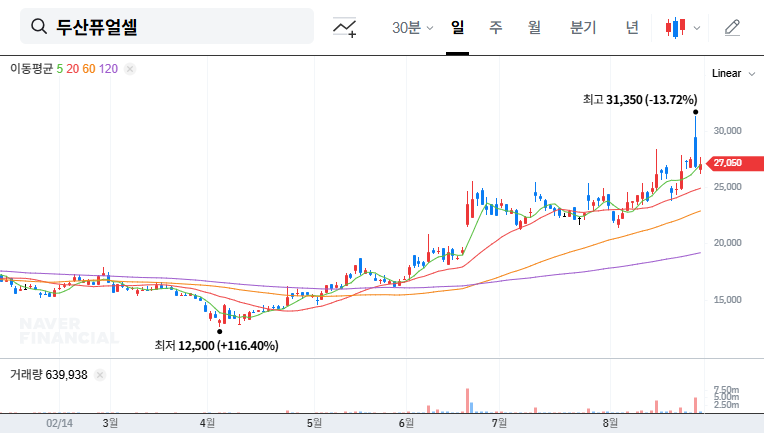
    Doosan Fuel Cell IR Analysis: Overcoming Challenges and Investment Strategies 대표 차트 이미지

    1. What Happened? H1 2025 Performance Review

    Doosan Fuel Cell reported a decline in revenue for the first half of 2025, down 44.6% year-on-year to 228.2 billion KRW, with an operating loss of 13.5 billion KRW. This is attributed to a combination of factors, including rising raw material prices and increased production costs. Concerns about financial stability are also rising, as the debt-to-equity ratio increased to 153.8%.

    2. Why Did This Happen? Reasons for Underperformance

    The decline in revenue is primarily due to sluggish sales of fuel cell main units and long-term maintenance services. The operating loss is a result of decreased revenue coupled with rising raw material prices and increased production costs. Furthermore, the company’s high dependence on its top four clients (64.9% of total sales) makes it vulnerable to changes in demand from specific customers.

    3. What’s the Plan? Key IR Focus and Expected Outcomes

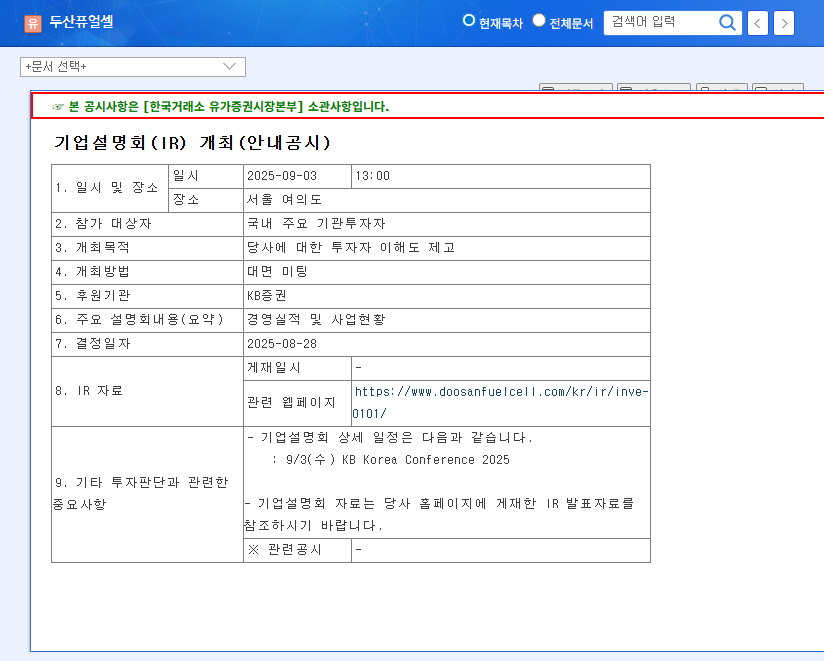
    Doosan Fuel Cell intends to use this IR to provide a clear explanation of its recent underperformance, highlighting its new business initiatives and future vision, including its entry into the eco-friendly commercial vehicle market (HyAxiom Motors acquisition) and securing SOFC technology. They are also expected to announce financial restructuring plans and risk management strategies. A successful IR could lead to stabilized investor sentiment, create momentum for a stock rebound, and attract potential investors.

    4. What Should Investors Do? Investment Strategies

    Investors should carefully review the information presented at the IR and assess the company’s future growth potential based on management’s explanations and responses during the Q&A session. Pay close attention to the progress of new businesses, profitability projections, and the feasibility of financial restructuring plans. It’s crucial to make investment decisions based on a comprehensive evaluation of both positive external factors, such as the growth potential of the hydrogen industry and government policy support, and the company’s fundamentals and future strategies.

    What is Doosan Fuel Cell’s main business?

    Doosan Fuel Cell manufactures and sells power generation fuel cell systems based on PAFC (Phosphoric Acid Fuel Cell) technology. They hold the largest market share in the domestic power generation fuel cell market. Recently, they have been diversifying their business by investing in eco-friendly commercial vehicles and SOFC (Solid Oxide Fuel Cell) technology development.

    How did Doosan Fuel Cell perform in the first half of 2025?

    Doosan Fuel Cell recorded revenue of 228.2 billion KRW (down 44.6% year-on-year) and an operating loss of 13.5 billion KRW in the first half of 2025.

    What are the key things to watch for in this IR?

    Key points of interest include the analysis of the reasons for underperformance, the presentation of new business initiatives and future vision, and the proposed financial restructuring plan. It’s especially important to look for information regarding the specific roadmap and profitability outlook for new businesses, such as the eco-friendly commercial vehicle venture and SOFC technology development.

    Doosan Fuel Cell IR Analysis: Overcoming Challenges and Investment Strategies 관련 이미지
  • VMware (089970) Shock: Q2 Revenue Hits Zero, Urgent Investor Check Required

    1. What Happened to VMware (089970)?

    VMware reported zero revenue for Q2 2025 in its semi-annual report released on August 28, 2025. This is an unbelievable figure compared to the KRW 103.9 billion revenue recorded in the first quarter.

    2. Why Zero Revenue?

    The report doesn’t specify the exact reason for the zero revenue. Several possibilities exist, such as suspension of business operations, revenue recognition errors, customer order cancellations, production disruptions, or massive delivery delays. Further information disclosure is needed to determine the precise cause.

    3. What are the Implications of Zero Revenue?

    • Deteriorating Fundamentals: Zero revenue translates directly into massive operating losses, which can worsen financial soundness and lead to a liquidity crisis.
    • Weakening Investor Sentiment: Loss of market confidence will negatively impact not only the stock price but also the long-term corporate value.
    • Uncertain Future Outlook: The Q2 earnings shock is likely to negatively affect the outlook for the second half of the year.

    4. What Should Investors Do?

    • Sell or Hold: Investors should exercise caution until further information is disclosed. Selling or holding is recommended.
    • Check for Updates: Closely review the company’s official announcements and IR materials to assess the possibility of future business normalization.
    Why did VMware’s Q2 revenue hit zero?

    While there’s no official announcement, possibilities include suspension of operations, revenue recognition errors, order cancellations, or production issues.

    What actions should investors take?

    Maintain a sell or hold position and pay close attention to the company’s official announcements until further details emerge.

    What is the outlook for VMware?

    The Q2 results paint a bleak picture for VMware’s future. The outlook remains highly uncertain and depends on further information and the company’s response.

  • YoungLimWon SoftLab IR Analysis: A Leap with AI & Cloud ERP? Seizing Investment Opportunities?

    YoungLimWon SoftLab IR Analysis: A Leap with AI & Cloud ERP? Seizing Investment Opportunities? 대표 차트 이미지

    Key Takeaways from the IR: What Happened?

    YoungLimWon SoftLab presented its Q2 2025 financial results and key achievements, engaging with shareholders. Accumulated revenue for Q2 reached 35.7 billion KRW, a slight increase year-over-year, but showing a downward trend compared to the full-year 2024 revenue. Operating profit reached 1.34 billion KRW, turning to profit, but also decreased compared to the full-year 2024 operating profit.

    Reasons for Performance Fluctuations: Why These Results?

    The main reasons for the decline in revenue and operating profit are analyzed as increased investment in new technologies and intensified market competition. However, their efforts to secure future growth engines through the launch of new AI and cloud-based solutions are positive.

    Investment Perspective: What Should Investors Do?

    YoungLimWon SoftLab is focusing on the growth potential of the ERP market, growing at an average annual rate of 7.1%, and particularly the cloud SaaS ERP market, growing at 17.1%. The successful market entry of new solutions and the growth of the cloud SaaS business will be key factors determining future stock price movements. Their financial soundness is generally good, and the signing of a treasury stock acquisition trust contract is positively evaluated as an effort to enhance shareholder value.

    Action Plan for Investors

    Investors should carefully review IR materials and future disclosures before making investment decisions. It is crucial to check the market competitiveness of new solutions, the growth strategy of the cloud SaaS business, and the roadmap for earnings improvement. The uncertainty of the macroeconomic environment and intensifying competition are also factors to consider.

    Frequently Asked Questions

    What is YoungLimWon SoftLab’s main business?

    YoungLimWon SoftLab develops and supplies enterprise software solutions, specializing in ERP (Enterprise Resource Planning) systems.

    What were the key takeaways from this IR?

    The key takeaways were the announcement of Q2 2025 financial results and the sharing of their future growth strategy based on the launch of new AI and cloud-based solutions.

    What are the key investment points for YoungLimWon SoftLab?

    Key investment points include securing competitiveness in the growing cloud SaaS ERP market, the successful market entry of new solutions, and sound financial health.

    YoungLimWon SoftLab IR Analysis: A Leap with AI & Cloud ERP? Seizing Investment Opportunities? 관련 이미지
    YoungLimWon SoftLab IR Analysis: A Leap with AI & Cloud ERP? Seizing Investment Opportunities? 관련 이미지
  • Yusoo Holdings Q2 2025 Earnings: Deciphering the Results and Future Outlook

    Yusoo Holdings Q2 2025 Earnings: Deciphering the Results and Future Outlook 대표 차트 이미지

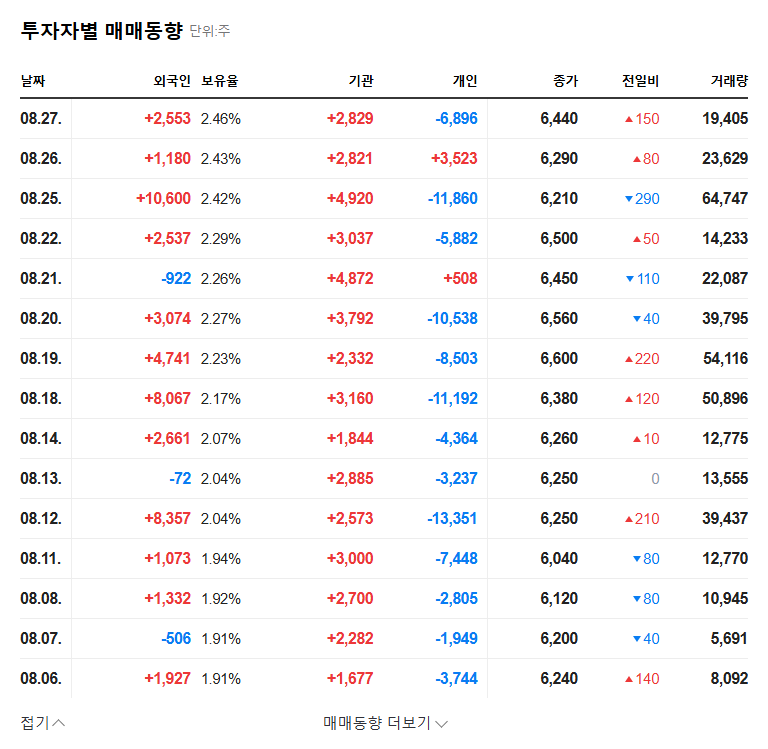
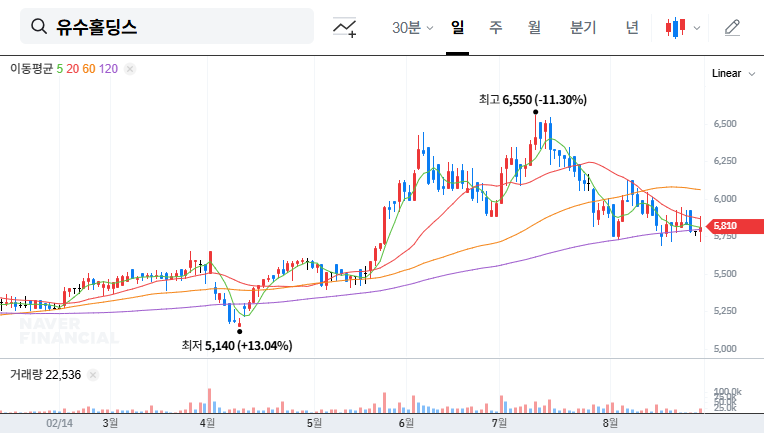
    1. Yusoo Holdings Q2 Performance: A Mixed Bag

    Yusoo Holdings’ Q2 2025 revenue decreased by 51.6% year-over-year to KRW 210.131 billion. This decline is primarily attributed to the global economic slowdown and decreased cargo volume, impacting the integrated logistics business. However, the IT sector (CyberLogitec) demonstrated robust growth and high operating profit margins, partially offsetting the sluggish performance of the logistics segment.

    2. IT Sector Growth: A Key Driver for Future Performance

    CyberLogitec, specializing in shipping, port, and logistics software, is experiencing steady growth, driven by the expansion of the global IT market and new overseas contracts. This sector is poised to become a significant growth engine for Yusoo Holdings in the coming years.

    3. Strong Financial Position: A Source of Stability for Investors

    The company’s low debt-to-equity ratio of 3.87% underscores its robust financial health. The positive operating cash flow and the commitment to return over 30% of consolidated net income to shareholders further enhance investor confidence.

    4. Key Takeaways for Investors and Actionable Insights

    Investors should focus on the company’s strategies for improving the performance of its integrated logistics business and the sustainability of growth in the IT sector. Careful analysis of the information presented in the IR event is crucial for assessing the company’s long-term growth potential and formulating investment strategies. Furthermore, it is important to closely examine the information related to the Price Return Swap (PRS) agreement.

    Why did Yusoo Holdings’ Q2 revenue decline?

    The decline was primarily due to the underperformance of the integrated logistics business caused by the global economic slowdown and reduced cargo volumes.

    What is the outlook for Yusoo Holdings?

    While the IT sector shows promise, the recovery of the integrated logistics business remains a key factor in the company’s overall outlook.

    What should investors consider when evaluating Yusoo Holdings?

    Investors should pay close attention to the company’s turnaround strategy for the logistics segment and the details surrounding the Price Return Swap (PRS) agreement.

    Yusoo Holdings Q2 2025 Earnings: Deciphering the Results and Future Outlook 관련 이미지
    Yusoo Holdings Q2 2025 Earnings: Deciphering the Results and Future Outlook 관련 이미지
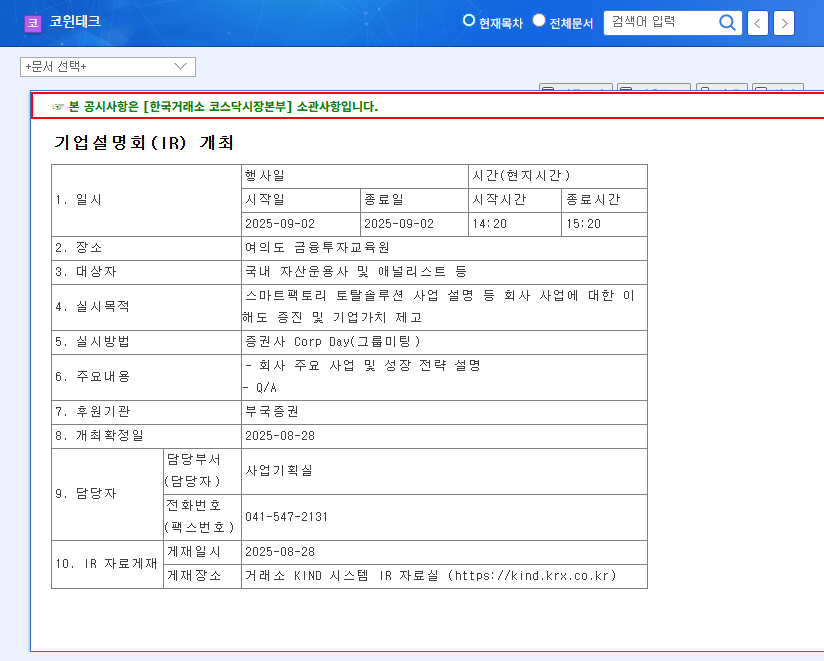
  • CowinTech IR Analysis: Future of Smart Factory and Secondary Battery Business (September 2, 2025)

    CowinTech IR Analysis: Future of Smart Factory and Secondary Battery Business (September 2, 2025) 대표 차트 이미지

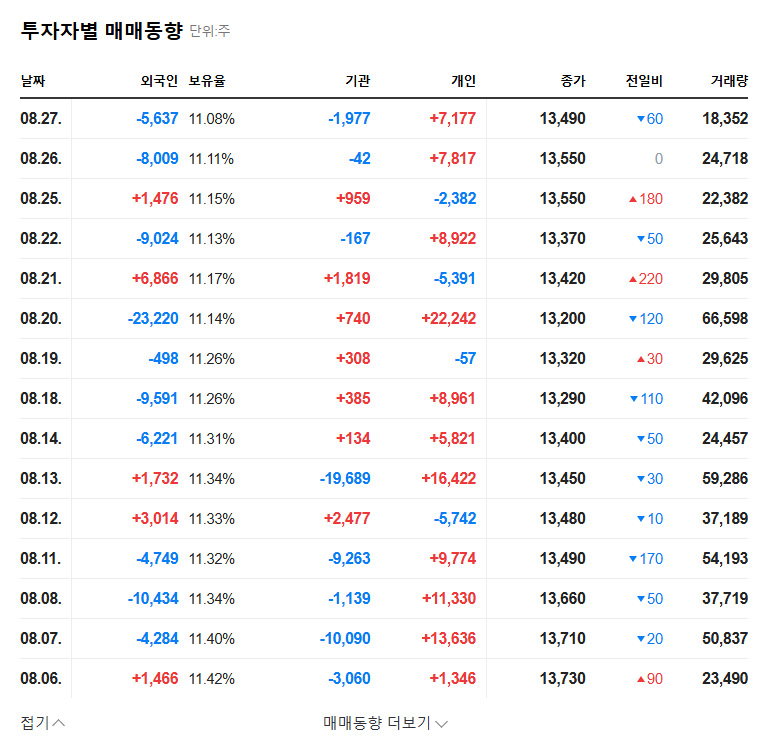
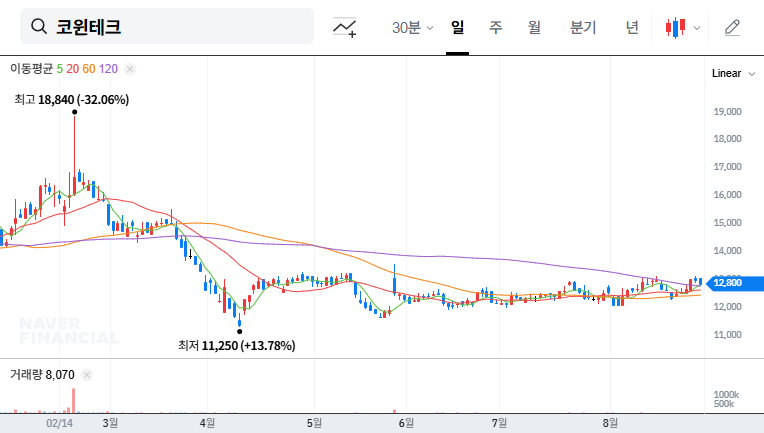
    Key Takeaways from the IR: What Happened?

    CowinTech operates in the smart factory automation systems and secondary battery materials/engineering businesses. However, the company faced difficulties in the first half of 2025, recording a 39.4% year-on-year decrease in sales to KRW 74.484 billion and an operating loss of KRW 2.73 billion.

    Reasons for Sluggish Performance and Future Growth Strategies: Why and How?

    The sharp decline in sales in the secondary battery segment and the decrease in sales in the automation system segment are the main causes of the sluggish performance. However, CowinTech is seeking growth through the expansion of the AMR (Autonomous Mobile Robot) market and the development of next-generation cathode materials for secondary batteries. In particular, they emphasized their technological capabilities in LFP/manganese-rich cathode materials, demonstrating their commitment to the recovery of the secondary battery business. They also shared their growth strategy for the smart factory sector, especially the AMR business, in an effort to enhance investor understanding and foster expectations for future growth.

    Action Plan for Investors: What Should You Do?

    CowinTech’s future presents opportunities despite uncertainties. Investors should carefully examine the feasibility of the growth strategies presented at the IR, the financial risk management measures, and the strategies for responding to the competitive landscape. It’s especially crucial to verify the concrete implementation plans for overcoming the earnings shock and the turnaround strategy for the secondary battery materials business. Investors should consider investments from a long-term perspective, avoiding being swayed by short-term stock price volatility.

    What are CowinTech’s main businesses?

    CowinTech operates in smart factory automation systems and secondary battery materials/engineering.

    How was CowinTech’s performance in the first half of 2025?

    Sales decreased by 39.4% to KRW 74.484 billion, and they recorded an operating loss of KRW 2.73 billion.

    What are CowinTech’s future growth drivers?

    They expect growth through the expansion of the AMR (Autonomous Mobile Robot) market and the development of next-generation cathode materials (LFP/Manganese-rich) for secondary batteries.

    CowinTech IR Analysis: Future of Smart Factory and Secondary Battery Business (September 2, 2025) 관련 이미지
    CowinTech IR Analysis: Future of Smart Factory and Secondary Battery Business (September 2, 2025) 관련 이미지
  • Phacell Bio (323990) Q2 2025 Earnings Surprise: KRW 1.7 Billion in Revenue, Investment Analysis

    1. What Happened: Phacell Bio’s Q2 2025 Earnings Release

    Phacell Bio announced its Q2 2025 earnings on August 28, 2025. The key highlights are:

    • Revenue: KRW 1.7 Billion (Expected: KRW 0)
    • Operating Income: KRW -4.3 Billion (Expected: KRW 0)
    • Net Income: KRW -2.6 Billion (Expected: KRW 0)

    2. Why It Matters: Exceeding Expectations, Potential for Successful Diversification

    This performance significantly surpasses market expectations. Notably, it suggests growth potential in Phacell Bio’s companion animal healthcare business (‘Paxleukin-15’) and pharmaceutical distribution business, indicating that the company’s diversification strategy is yielding tangible results.

    3. What’s Next: Outlook and Investment Considerations

    Despite the positive revenue growth, the continued operating loss remains a challenge. Investors should focus on the following:

    • Continued performance of the companion animal healthcare business
    • Clinical progress of key anti-cancer immunotherapy pipelines
    • Securing financial soundness and managing regulatory risks

    4. Investor Action Plan: Focus on Key Metrics for Long-Term Growth

    When considering investing in Phacell Bio, focus on the long-term growth potential rather than short-term stock price fluctuations. Continuously monitoring clinical trial results of key pipelines, the performance of business diversification, and financial soundness indicators is crucial for developing a robust investment strategy.

    Frequently Asked Questions (FAQ)

    Why did Phacell Bio’s Q2 earnings outperform expectations?

    Strong sales of the companion animal anticancer drug ‘Paxleukin-15’ and growth in the pharmaceutical distribution business are considered the main drivers.

    Is it safe to invest despite the continued operating loss?

    Investment decisions should be made by comprehensively considering revenue growth trends, clinical progress of key pipelines, and financial soundness indicators.

    What are Phacell Bio’s main pipelines?

    ‘Vax-NK,’ targeting hepatocellular carcinoma and small cell lung cancer, and ‘Vax-CAR,’ targeting hematologic and solid cancers, are among the key pipelines.