Tag: Earnings Analysis

  • (039490) Kiwoom Securities Stock: A Buy Opportunity After NPS Stake Reduction? (2025 Analysis)

    (039490) Kiwoom Securities Stock: A Buy Opportunity After NPS Stake Reduction? (2025 Analysis)

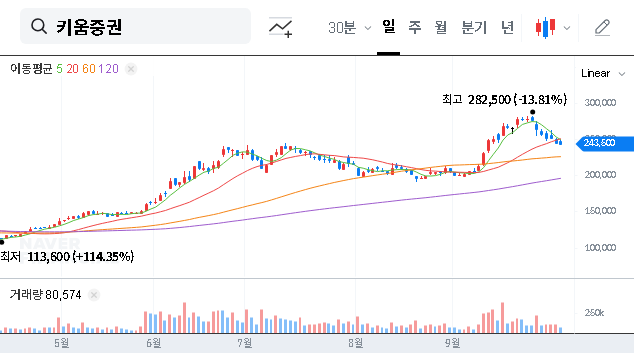
    When a major institutional investor like the National Pension Service (NPS) adjusts its holdings in a prominent company, the market takes notice. The recent news of the NPS reducing its stake in Kiwoom Securities has sent ripples through the investment community, leaving many to wonder: is this a warning sign, or a golden opportunity? This analysis delves deep into the situation, evaluating the strength of Kiwoom Securities’ fundamentals against the backdrop of this significant portfolio shift.

    Instead of a knee-jerk reaction, savvy investors should see this as a moment to assess the company’s intrinsic value. We will dissect the short-term noise from the long-term potential, providing a clear perspective on whether the current market volatility presents a strategic entry point for buying Kiwoom Securities stock.

    The NPS Announcement: What Exactly Happened?

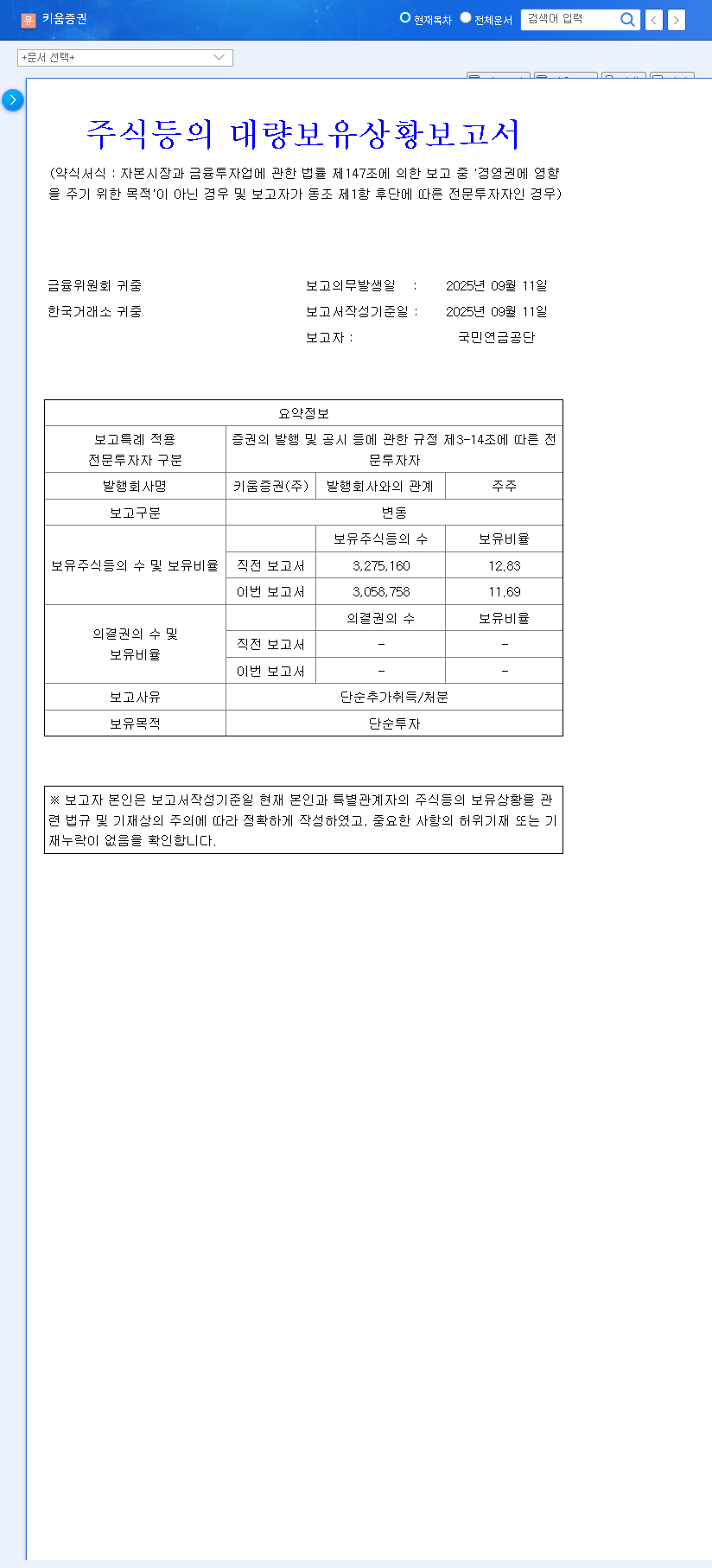
    On September 29, 2025, the National Pension Service officially disclosed a reduction in its ownership of Kiwoom Securities Co., Ltd. (KRX: 039490). The pension fund’s stake decreased from 12.83% to 11.69%, a net reduction of 1.14 percentage points. The reason cited in the filing was a ‘simple additional acquisition/disposal’, suggesting the move is part of a broader portfolio rebalancing strategy rather than a targeted verdict on the company’s future. You can view the Official Disclosure on the DART system for full details. While any sale by a major holder can create short-term selling pressure, it is crucial to look beyond the headline and analyze the underlying health of the business.

    Fundamental Analysis: Kiwoom Securities’ Robust H1 2025 Performance

    Regardless of the NPS Kiwoom Securities news, the company’s performance in the first half of 2025 paints a picture of exceptional financial health and market leadership. The fundamentals suggest that its intrinsic value is stronger than ever.

    1. Impressive Earnings Growth

    Kiwoom Securities reported outstanding financial results, with a consolidated operating profit of KRW 733.8 billion (a 12.9% year-over-year increase) and a net profit of KRW 545.7 billion (a 14.4% YoY increase). This growth was fueled by a vibrant domestic stock market, the company’s dominant retail investor base, and well-balanced expansion in its Investment Banking (IB) and Sales & Trading (S&T) divisions.

    2. Unshakeable Market Leadership

    The company solidified its number one position in the domestic stock brokerage market, holding a 19.3% overall share and an impressive 29.5% share among retail investors. This demonstrates a deep competitive moat. Furthermore, Kiwoom has successfully diversified its revenue streams beyond brokerage, reducing its dependency on trading volumes alone.

    3. Rock-Solid Financial Stability

    With a consolidated net capital ratio of 1,344.47%, Kiwoom Securities boasts top-tier financial stability, far exceeding regulatory requirements. This massive capital buffer allows it to navigate market volatility with ease and provides a strong foundation for future growth. Its healthy liquidity ratio of 113% further underscores its excellent risk management.

    Decoding the Market Impact: Short-Term Jitters vs. Long-Term Outlook

    The short-term reaction to the NPS sale may cause temporary weakness in Kiwoom Securities stock due to negative investor sentiment. However, this is likely to be a transient effect, as the sale is not linked to any fundamental flaw in the company’s operations.

    In the long term, this event could even be beneficial. The increase in the free float of shares can lead to higher trading liquidity, making the stock more attractive to a wider range of investors. As the market absorbs these shares, the focus will inevitably return to the company’s strong performance and growth trajectory. To better understand these concepts, you can learn more in our guide on fundamental analysis for stocks.

    The Macro Environment and Investment Thesis

    Kiwoom Securities operates within a global macroeconomic context. Current interest rate policies from central banks like the U.S. Federal Reserve provide a relatively stable environment for interest income. While currency fluctuations and shifts in global trade can present challenges, Kiwoom’s diversified business model and strong domestic footing provide significant insulation. The core driver of its value remains its ability to serve its massive client base and capitalize on capital market activities.

    Based on stellar H1 2025 earnings, dominant market position, and robust financial health, the investment opinion on Kiwoom Securities remains a confident ‘Buy’. The NPS stake reduction should be viewed as short-term market noise, not a red flag.

    Recommended Investment Strategy

    • Utilize any price dips caused by the NPS disclosure as a strategic opportunity for staggered, long-term accumulation of Kiwoom Securities stock.
    • Focus on the company’s powerful fundamentals and long-term growth prospects rather than short-term market sentiment.
    • Continuously monitor Kiwoom’s commitment to its shareholder return policies, such as share buybacks, which further enhance investor value.

    Frequently Asked Questions

    Why did the NPS sell its shares in Kiwoom Securities?

    The official disclosure states the reason as ‘simple investment purposes.’ This strongly implies the sale was part of a routine portfolio rebalancing or profit-taking strategy, not a negative assessment of Kiwoom’s future.

    What is the likely impact on Kiwoom Securities’ stock price?

    In the short term, the price may experience some volatility or weakness. However, because the company’s fundamentals are exceptionally strong, this effect is not expected to last. Over the long term, the increased share liquidity could be a net positive.

    Is Kiwoom Securities still considered a good investment?

    Yes. Based on its powerful earnings growth, market leadership, and solid financial health demonstrated in H1 2025, the investment outlook for Kiwoom Securities remains highly positive. The current situation may represent a valuable buying opportunity for long-term investors.
    (039490) Kiwoom Securities Stock: A Buy Opportunity After NPS Stake Reduction? (2025 Analysis) 관련 이미지
  • (004490) Sebang Global Battery Stock: Deep Dive on EV Growth & NPS Stake Sale (2025 Analysis)

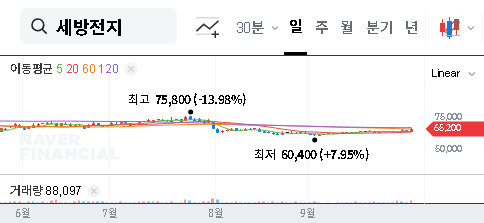
    (004490) Sebang Global Battery Stock: Deep Dive on EV Growth & NPS Stake Sale (2025 Analysis)

    In the rapidly evolving electric vehicle (EV) market, Sebang Global Battery stands as a pivotal player, but recent developments have cast a shadow of uncertainty for investors. While the company’s push into the EV battery sector signals robust future growth, the unexpected news of a stake reduction by South Korea’s influential National Pension Service (NPS) has raised critical questions. Is this a routine portfolio adjustment or a red flag for the company’s outlook?

    This comprehensive analysis unpacks the situation, dissecting the H1 2025 financial performance of Sebang Global Battery, evaluating the true implications of the NPS stake change, and providing a clear, actionable perspective for investors navigating this complex landscape. We will explore whether the company’s strong fundamentals and EV ambitions can outweigh the short-term market turbulence.

    The Catalyst: Understanding the NPS Stake Reduction

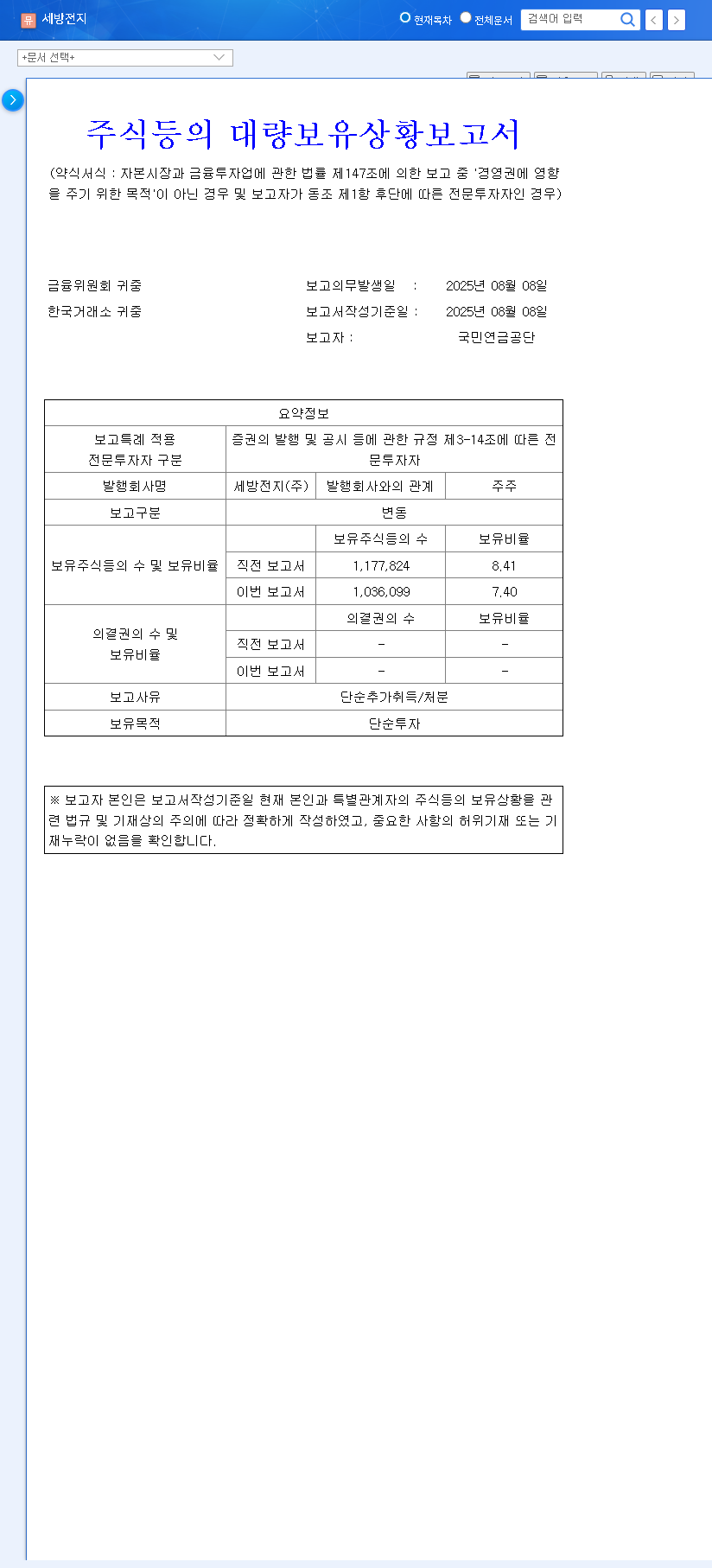
    On October 1, 2025, the market took note when the National Pension Service, a major institutional investor, officially disclosed a reduction in its holdings of Sebang Global Battery stock. The NPS decreased its stake from 8.41% to 7.40%, a notable 1.01 percentage point drop. The stated purpose of the holding was ‘simple investment’, which often implies that the decision was not driven by a desire for management control but rather by financial strategy.

    This move can create significant short-term selling pressure as other market participants may interpret it as a lack of confidence from a well-informed entity. You can view the Official Disclosure on the DART system. However, to truly understand its impact, we must look beyond the headline and analyze the company’s underlying financial health and strategic direction.

    While an institutional sell-off can spook the market, the long-term value of a company like Sebang Global Battery is ultimately determined by its fundamental performance and growth trajectory, not a single stakeholder’s portfolio adjustment.

    Financial Deep Dive: H1 2025 Performance

    A closer look at Sebang Global Battery’s H1 2025 financials reveals a mixed but promising picture. The data suggests a company in transition, managing legacy business challenges while aggressively investing in its future.

    Revenue Growth vs. Profitability Squeeze

    The company reported strong top-line growth, with revenue reaching KRW 1.0787 trillion, a 9.4% increase year-over-year. This was driven by solid sales in its traditional automotive lead-acid battery division and, more importantly, surging demand for new EV battery modules. However, operating profit saw a decline of 17.4% to KRW 86.762 billion. This compression in profitability can be attributed to several external factors, including US tariff impacts, unfavorable foreign exchange rates, and temporary cost hikes associated with scaling up new production lines.

    The Core Story: Sebang EV Battery Growth

    The most compelling part of the Sebang Global Battery narrative is its strategic pivot to electric vehicles. While the legacy lead-acid battery business still constitutes about 85% of revenue and provides stable cash flow, the Sebang EV battery segment is the undeniable engine for future growth. Accounting for the remaining 15%, this division is expanding rapidly with significant investments in production capacity and technology. This proactive stance positions the company to capitalize on the global transition to electric mobility, a trend forecasted to accelerate by market analysts like BloombergNEF.

    Investment Outlook: The Bull vs. Bear Case

    For investors considering Sebang Global Battery stock, the decision hinges on weighing the short-term headwinds against the long-term potential. Here is a balanced view of the factors at play.

    The Bull Case (Positive Factors)

    • High-Growth EV Segment: The company’s primary growth driver is firmly aligned with the global shift to electrification, offering massive upside potential.
    • Improving Financial Health: Despite lower operating cash flow, the balance sheet is strengthening with increased assets and equity, enhancing financial stability.
    • Proactive Investment: Aggressive facility investments are laying the groundwork for increased production capacity to meet future demand. For more information, you can review our analysis of the broader battery stock market.

    The Bear Case (Risk Factors)

    • NPS Selling Pressure: The stake reduction could lead to short-term stock price volatility and negative market sentiment.
    • Margin Volatility: Profitability is currently susceptible to external factors like raw material prices (lead), exchange rates, and geopolitical trade policies.
    • Intense Competition: The EV battery market is highly competitive, and Sebang will face pressure from established global giants and emerging players.

    Conclusion: Maintain Hold and Observe

    Our investment opinion for Sebang Global Battery is a cautious but optimistic ‘Hold and Observe’. The company’s solid revenue growth and significant potential in the Sebang EV battery segment are compelling long-term positives. The improving financial health further strengthens this case. However, the short-term headwinds from the NPS sale and margin pressures warrant caution. Investors should closely monitor upcoming quarterly reports for signs of improving profitability and track milestones in the EV division’s expansion before committing new capital.

    Disclaimer: This article provides an analysis based on publicly available information and should not be considered direct financial advice. All investment decisions should be made at the investor’s own discretion and responsibility.

    (004490) Sebang Global Battery Stock: Deep Dive on EV Growth & NPS Stake Sale (2025 Analysis) 관련 이미지
  • (004020) Hyundai Steel Stock Forecast (004020): Deep Dive into NPS Stake Cut & 2025 Outlook

    (004020) Hyundai Steel Stock Forecast (004020): Deep Dive into NPS Stake Cut & 2025 Outlook

    The latest developments surrounding Hyundai Steel (004020) have investors asking critical questions. A significant stake reduction by the National Pension Service (NPS) has sent ripples through the market, casting a shadow over the company’s immediate prospects. This detailed Hyundai Steel stock forecast will dissect the implications of the NPS’s move, perform a comprehensive analysis of the company’s fundamentals from H1 2025, and explore the long-term strategic initiatives that could redefine its future. We’ll provide a clear-eyed view on whether this is a temporary setback or a sign of deeper issues, offering a data-driven investment strategy for 2025 and beyond.

    The Catalyst: National Pension Service Reduces Its Stake

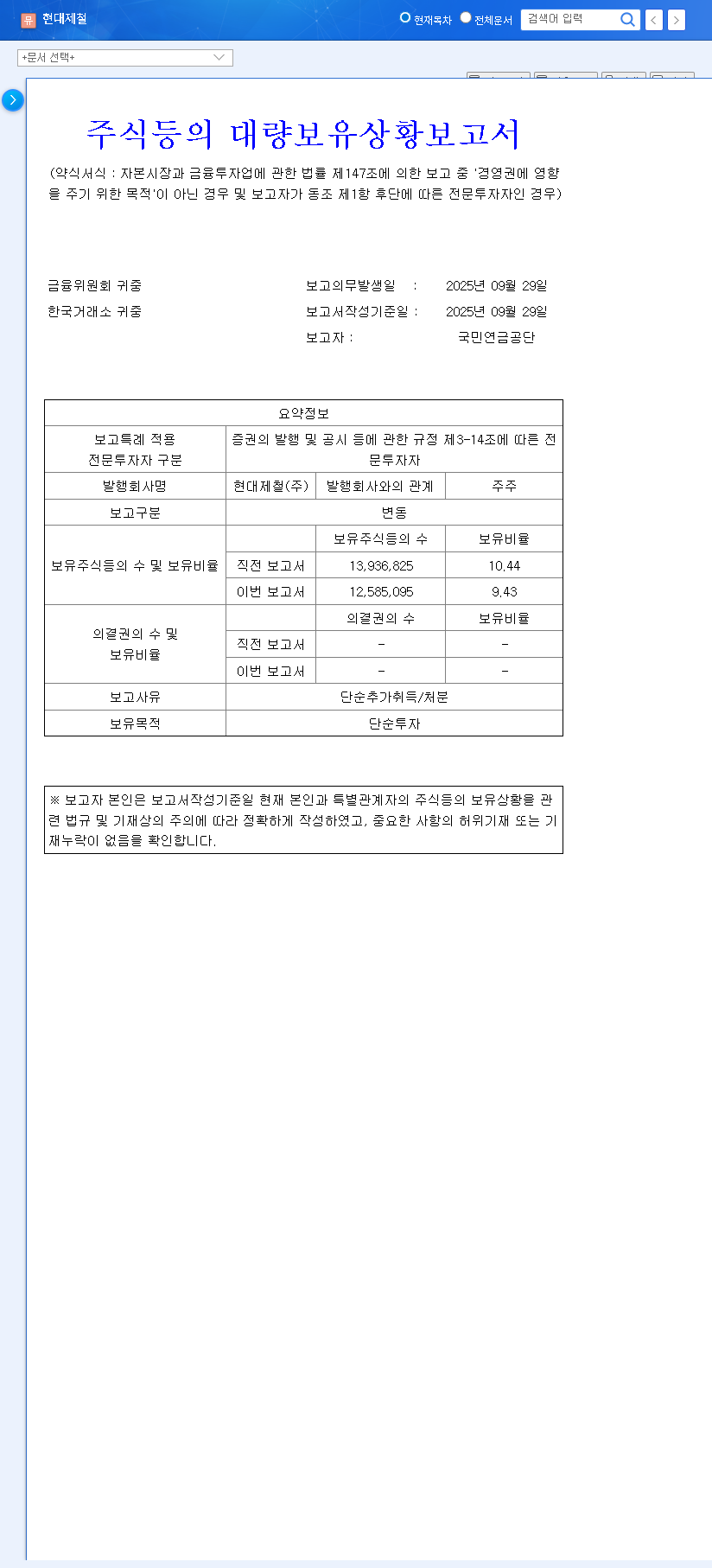
    The primary trigger for recent market volatility was the disclosure that the National Pension Service (NPS), South Korea’s largest institutional investor, has trimmed its holdings in Hyundai Steel. The ownership stake was reduced from 10.44% to 9.43%, a decrease of just over one percentage point. According to the Official Disclosure (DART), the stated reason was for simple investment purposes, which is often interpreted as portfolio rebalancing or partial profit-taking.

    While labeled a routine adjustment, any sell-off by a major institutional holder like the NPS can create short-term downward pressure on a stock. It often prompts other market participants to re-evaluate their own positions, potentially leading to increased trading volume and heightened price volatility.

    Financial Deep Dive: Analyzing H1 2025 Performance

    To understand the context behind the NPS Hyundai Steel stake reduction, we must scrutinize the company’s recent financial health. The first half of 2025 painted a challenging picture, marked by declining profitability amid a sluggish global steel market.

    Profitability Under Pressure

    • Revenue Dip: Consolidated revenue for H1 2025 fell to KRW 11.509 trillion, a slight year-over-year decrease.
    • Operating Profit Slump: More concerningly, operating profit plummeted to KRW 82.7 billion.
    • Net Loss: The company swung to a net loss of KRW 16.9 billion for the period.

    These figures were primarily driven by lower sales prices for core flat and long steel products, coupled with weakened demand from key downstream industries. However, despite these headwinds, Hyundai Steel maintains a solid financial foundation with a debt-to-asset ratio of approximately 42.3%, indicating a stable balance sheet capable of weathering market cycles.

    Future Growth Engine: The U.S. EAF Investment

    The most significant positive catalyst for any long-term Hyundai Steel investment thesis is its ambitious expansion into the North American market. The company has announced a landmark USD 5.8 billion investment to build a state-of-the-art electric arc furnace (EAF) steel mill in Louisiana, USA. This facility will specialize in high-quality automotive steel sheets.

    Why This Move is a Game-Changer

    • Tapping into the EV Market: The plant is strategically positioned to supply the burgeoning electric vehicle (EV) manufacturing hub in the U.S. Southeast.
    • Eco-Friendly Production: EAF technology has a significantly lower carbon footprint than traditional blast furnaces, aligning with global ESG trends and attracting environmentally conscious partners.
    • Long-Term Profitability: By producing high-value-added products in a high-demand market, this investment is designed to secure a new, powerful revenue stream for decades to come.

    Investment Thesis & Strategic Outlook

    Considering all factors, our current Hyundai Steel stock forecast points to a ‘Neutral’ rating. The short-term sentiment is dampened by weak H1 earnings and the NPS sell-off. However, the long-term potential anchored by the U.S. EAF project is undeniable. Investors must weigh the current headwinds against future growth opportunities. For more on the global market, reports from the World Steel Association provide excellent context.

    Key Risks to Monitor

    • Continued stake sales from NPS or other institutions.
    • A prolonged global economic slowdown further depressing steel demand.
    • Volatility in raw material prices and currency exchange rates.
    • Potential delays or cost overruns in the new U.S. investment project.

    Key Opportunity Factors

    • Successful execution of the U.S. EAF mill, securing a major foothold in the North American auto market.
    • Recovery in downstream industries (construction, shipbuilding) leading to increased demand.
    • Expansion of high-margin, eco-friendly steel products.

    Investors should monitor corporate guidance for H2 2025 and track the progress of the North American project. For a broader perspective, see our comprehensive guide to investing in the industrial sector.

    Disclaimer: This analysis is for informational purposes only. Investment decisions carry risk and should be made based on individual research and financial advice.

    (004020) Hyundai Steel Stock Forecast (004020): Deep Dive into NPS Stake Cut & 2025 Outlook 관련 이미지
  • (265520) AP Systems (265520) Investment Outlook: NPS Stake & Future Growth Analysis

    (265520) AP Systems (265520) Investment Outlook: NPS Stake & Future Growth Analysis

    Evaluating the AP Systems investment outlook requires a careful balance of current challenges against future potential. The company (KOSDAQ: 265520) recently reported a significant downturn in its H1 2025 performance, raising concerns among investors. Yet, in a surprising move, South Korea’s influential National Pension Service (NPS) increased its holdings. This analysis dissects the conflicting signals, exploring AP Systems’ financial health, the implications of the NPS investment, and the viability of its new growth ventures to provide a comprehensive investment perspective.

    A Vote of Confidence? NPS Increases Stake in AP Systems

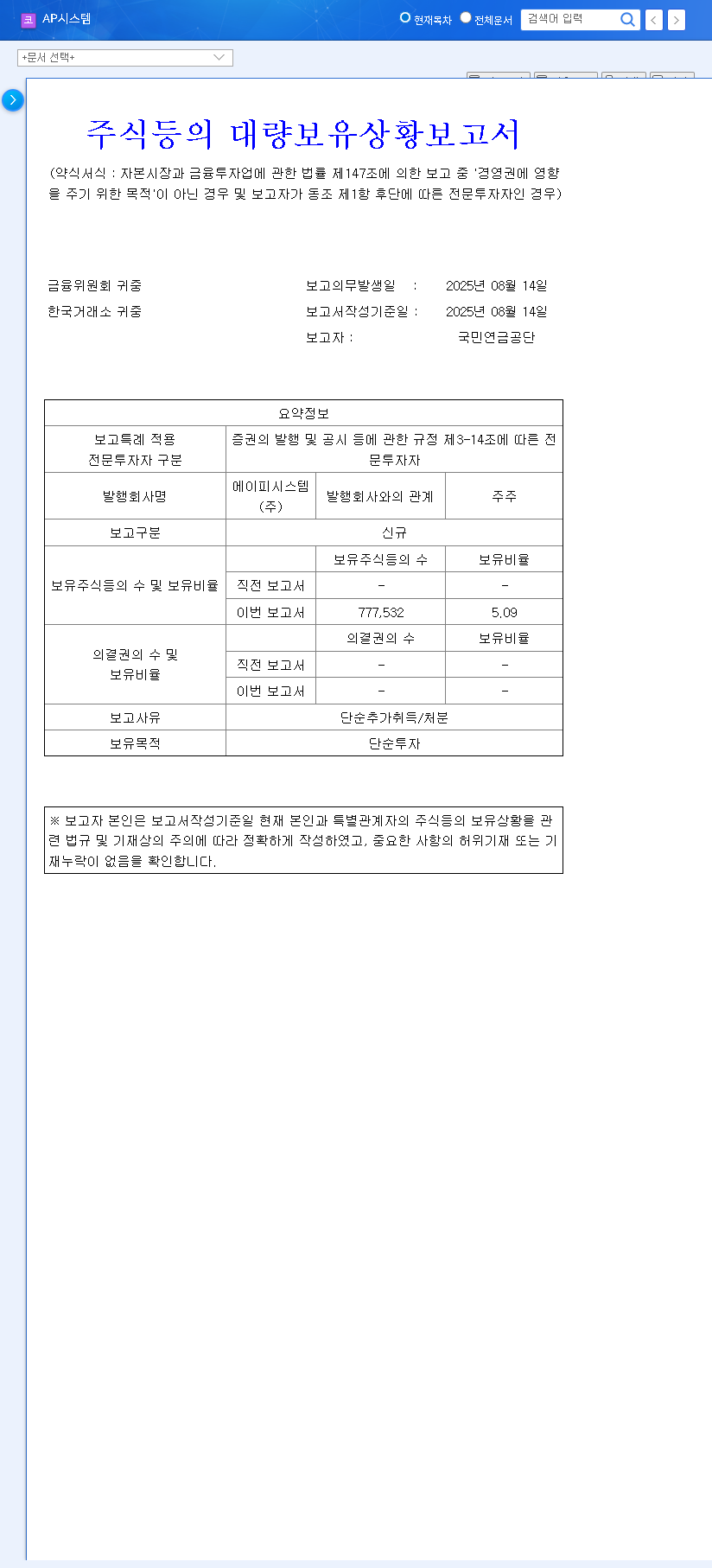
    On October 1, 2025, the National Pension Service, South Korea’s largest institutional investor, disclosed it had increased its stake in AP Systems to 5.09%. According to the Official Disclosure filed with DART, the acquisition was for ‘simple investment purposes’. While not a move to influence management, this action by a major institution signals a potential belief in the company’s long-term value, despite the current turbulence in its core business of semiconductor and display equipment manufacturing.

    Financial Deep Dive: Unpacking the H1 2025 Slump

    AP Systems’ performance in the first half of 2025 was undeniably weak, driven primarily by a sharp decline in the OLED equipment market. The numbers paint a clear picture of the headwinds the company is facing.

    Key Performance Indicators

    • Revenue: Plummeted by 52% year-over-year to KRW 110.26 billion.
    • Operating Profit: Declined a staggering 74% to just KRW 2.79 billion.
    • Net Income: Swung from a profit to a net loss of KRW 4.51 billion.

    These figures highlight a significant contraction in the company’s core operations. While total liabilities decreased, this was offset by a reduction in assets and equity, signaling a challenging operational period.

    While the NPS stake provides a psychological boost, the long-term AP Systems stock performance will be dictated by its ability to successfully pivot to new high-growth sectors and navigate the cyclical nature of the display industry.

    Pivoting to Growth: HBM and Secondary Batteries

    The most compelling part of the AP Systems investment outlook lies in its strategic shift towards new growth engines. The company is actively developing technology for markets poised for explosive growth, moving beyond its reliance on the volatile OLED sector.

    1. Semiconductor Equipment for HBM & Advanced Packaging

    AP Systems is developing semiconductor laser processing equipment. This technology is critical for manufacturing High-Bandwidth Memory (HBM) and advanced chip packaging, which are essential components for AI accelerators and high-performance computing. As the AI revolution continues, demand for HBM is projected to surge, placing AP Systems in a potentially lucrative position if its technology proves successful.

    2. Entry into the Secondary Battery Market

    The company is also venturing into the secondary battery (rechargeable battery) equipment business. This aligns with the global boom in electric vehicles (EVs) and energy storage solutions. Success in this area would provide a significant new revenue stream and diversify its business away from the cyclical semiconductor and display industries.

    Investment Outlook: Navigating Risk and Opportunity

    Investors considering the AP Systems stock must weigh the severe current downturn against the promise of these future growth drivers. The NPS investment provides a degree of stability and institutional validation, which could attract further interest and cushion the stock price.

    Short-Term Perspective

    In the short term, the stock may experience a rebound driven by the positive sentiment from the NPS news. However, this is likely to be temporary unless accompanied by concrete signs of a turnaround in earnings or major contract wins in its new business segments. A cautious approach is warranted.

    Mid-to-Long-Term Perspective

    The long-term outlook depends entirely on execution. Investors should monitor for tangible progress: successful development and commercialization of its HBM equipment, securing clients in the secondary battery space, and a recovery in its core OLED business. The company’s strong cash position (KRW 173.6 billion) and manageable debt-to-equity ratio (63.76%) provide a solid foundation to pursue these initiatives.

    Frequently Asked Questions

    Q1: Why did the National Pension Service invest in AP Systems now?

    The NPS filed its acquisition for ‘simple investment purposes’. This implies that despite poor recent results, they may see long-term value, potentially viewing the current stock price as an attractive entry point given the company’s financial stability and strategic pivots to high-growth areas like HBM and battery technology.

    Q2: What are the main risks facing AP Systems?

    The primary risks include continued weakness in the OLED equipment market, failure to successfully commercialize its new HBM and battery equipment, intense competition, and macroeconomic factors like interest rate volatility that could increase funding costs and dampen investment sentiment.

    Q3: What are AP Systems’ new growth engines?

    AP Systems is focusing on two key areas: 1) Developing semiconductor laser processing equipment for the high-demand HBM and advanced packaging markets, and 2) Entering the secondary battery equipment business to capitalize on the growth of EVs and energy storage.

    Disclaimer: This report is an analysis based on publicly available information and should not be considered investment advice or a financial recommendation. All investment decisions must be made based on your own judgment and responsibility.

    (265520) AP Systems (265520) Investment Outlook: NPS Stake & Future Growth Analysis 관련 이미지
  • (029530) Sindoh Share Buyback (029530): KRW 10B Investment Analysis

    (029530) Sindoh Share Buyback (029530): KRW 10B Investment Analysis

    In a significant move capturing investor attention, Sindoh (029530) has announced a substantial KRW 10 billion Sindoh share buyback program. This decision comes at a pivotal moment, as the company navigates a period of financial underperformance against a backdrop of global economic uncertainty. For investors, the key question is clear: Is this stock repurchase a strategic masterstroke to unlock shareholder value and signal a confident future, or is it a short-term measure to placate the market? This comprehensive investment analysis will dissect the buyback’s context, potential impacts, and crucial considerations for anyone monitoring Sindoh 029530.

    The Announcement: A KRW 10 Billion Commitment to Shareholders

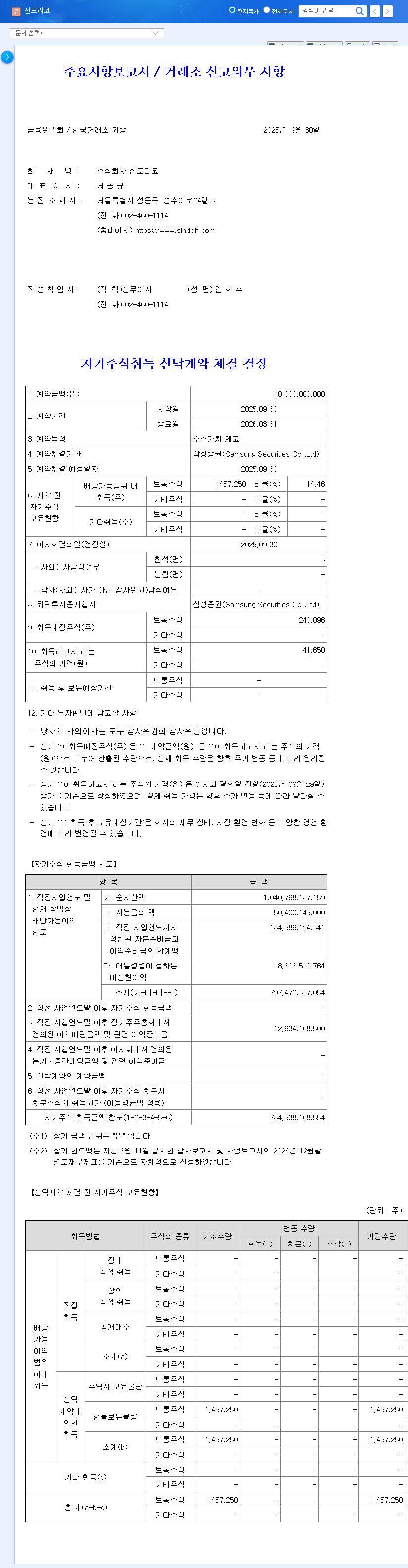
    On September 30, 2025, Sindoh, a stalwart in the office equipment sector, formally disclosed its plan to acquire its own shares through a trust agreement. The company has allocated KRW 10 billion for this purpose, contracting with Samsung Securities to execute the buyback. The program is set to run for six months, from September 30, 2025, to March 31, 2026. This move is explicitly aimed at enhancing shareholder value and stabilizing the stock price. You can view the complete filing in the Official Disclosure (DART).

    Analyzing the ‘Why’: Strategy Amidst a Downturn

    Confronting Recent Financial Headwinds

    The timing of the Sindoh share buyback is critical. The company’s H1 2025 report revealed challenging results: sales fell 16.13% year-on-year to KRW 150.28 billion, and operating profit saw a steep 91.88% decline to just KRW 1.63 billion. A significant 27.27% drop in exports highlighted the impact of a global slowdown, ultimately pushing the company to a net loss of KRW 1.51 billion. These figures paint a picture of a company facing intense competition and volatile raw material prices, making the commitment of KRW 10 billion to a buyback a bold statement of confidence.

    A Fortress Balance Sheet and Tech Foundation

    Despite the operational struggles, Sindoh’s financial foundation is exceptionally strong. A staggering current ratio of 1,752.43% and a minuscule debt-to-equity ratio of 7.90% indicate immense liquidity and low financial risk. This robust balance sheet is precisely what enables the company to fund a significant stock repurchase without jeopardizing its operational stability. Furthermore, consistent R&D investment and a portfolio of 673 industrial property rights underscore a commitment to long-term technological competitiveness, a crucial asset in the rapidly evolving office equipment industry. For more information on what these metrics mean, you can read this guide on Understanding Financial Ratios for Tech Companies.

    The core of this decision lies in the tension between recent poor performance and an incredibly strong financial structure. Management is signaling that they believe the company’s intrinsic value is far greater than its current market price reflects.

    Potential Impacts of the Sindoh Share Buyback

    A share buyback, also known as a stock repurchase, can have several positive effects. By reducing the number of shares outstanding, it mechanically increases key per-share metrics. A detailed explanation of this mechanism can be found on high-authority sites like Investopedia.

    The Bull Case: Enhanced Value and Confidence

    • Increased EPS and ROE: With fewer shares in circulation, Earnings Per Share (EPS) and Return on Equity (ROE) are likely to increase, assuming profits stabilize or grow. This makes the stock appear more attractive on a fundamental basis.
    • Stock Price Support: The buyback creates a consistent source of demand for the stock, which can act as a floor, preventing sharp price declines and contributing to overall stability during volatile periods.
    • Positive Management Signal: A buyback is often interpreted as a sign that the company’s management believes its stock is undervalued. This can significantly boost investor confidence and sentiment.

    The Bear Case: A Band-Aid on a Deeper Wound

    • Dependency on Performance: The positive effects of the buyback will be short-lived if not supported by a genuine turnaround in operational performance. A stock repurchase cannot indefinitely prop up a stock price if revenues and profits continue to decline.
    • Opportunity Cost: The KRW 10 billion could have been used for other strategic initiatives, such as acquisitions, aggressive R&D into new technologies, or marketing pushes to reclaim market share.
    • Market Headwinds: Broader macroeconomic factors, such as rising interest rates, currency fluctuations, and a sustained global slowdown, could overwhelm the positive impact of the buyback.

    Investor Action Plan & Final Verdict

    Our overall investment opinion for Sindoh 029530 remains Neutral. The Sindoh share buyback is an undeniably positive signal of commitment to shareholder value, made possible by an exemplary balance sheet. It provides a strong reason for existing shareholders to hold and a point of interest for potential investors.

    However, this action must be viewed as a single piece of a larger puzzle. A sustainable rally in the stock price will depend entirely on the company’s ability to navigate the tough market, innovate, and restore its profitability. Investors should not rely on the buyback alone but should instead monitor the following key points closely.

    Key Monitoring Points for Investors:

    • Buyback Execution: Track the progress and pace of the share repurchase over the next six months.
    • Quarterly Earnings Reports: Scrutinize the upcoming financial reports for any signs of a turnaround in sales and operating profit.
    • Strategic Initiatives: Look for announcements regarding new products, market expansion, or efficiency improvements that address the core performance issues.
    • Macroeconomic Indicators: Keep an eye on global trade data, currency exchange rates (especially USD/KRW), and raw material costs.

    Disclaimer: This article is for informational purposes only and does not constitute investment advice. All investment decisions should be made based on your own research and risk tolerance.

    (029530) Sindoh Share Buyback (029530): KRW 10B Investment Analysis 관련 이미지
    (029530) Sindoh Share Buyback (029530): KRW 10B Investment Analysis 관련 이미지
  • CR Holdings (000480) Stock Forecast: Major Shareholder Sells Stake – What’s Your Investment Strategy?

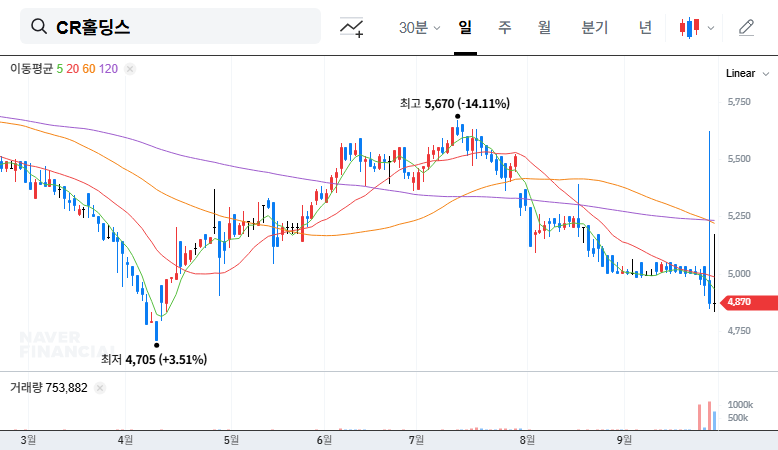
    CR Holdings (000480) Stock Forecast: Major Shareholder Sells Stake - What's Your Investment Strategy? 대표 차트 이미지

    1. What Happened? Analysis of the Stake Sale Event

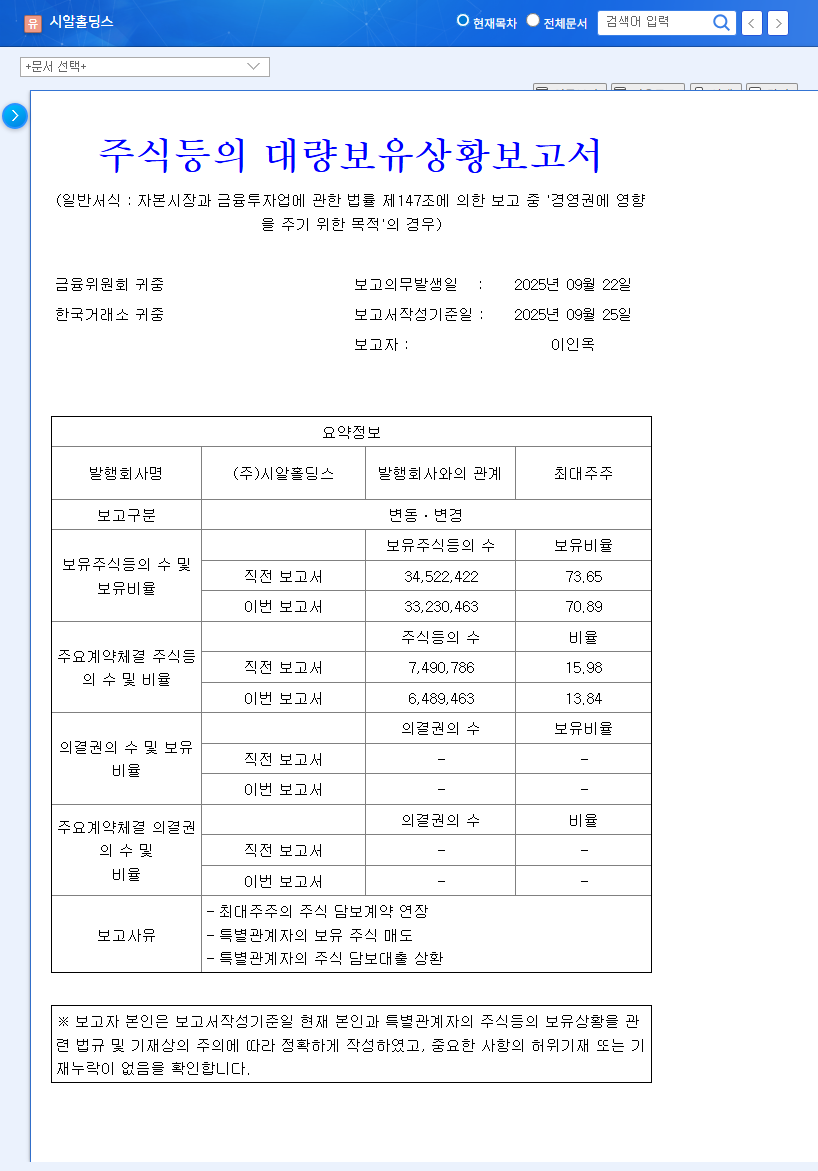
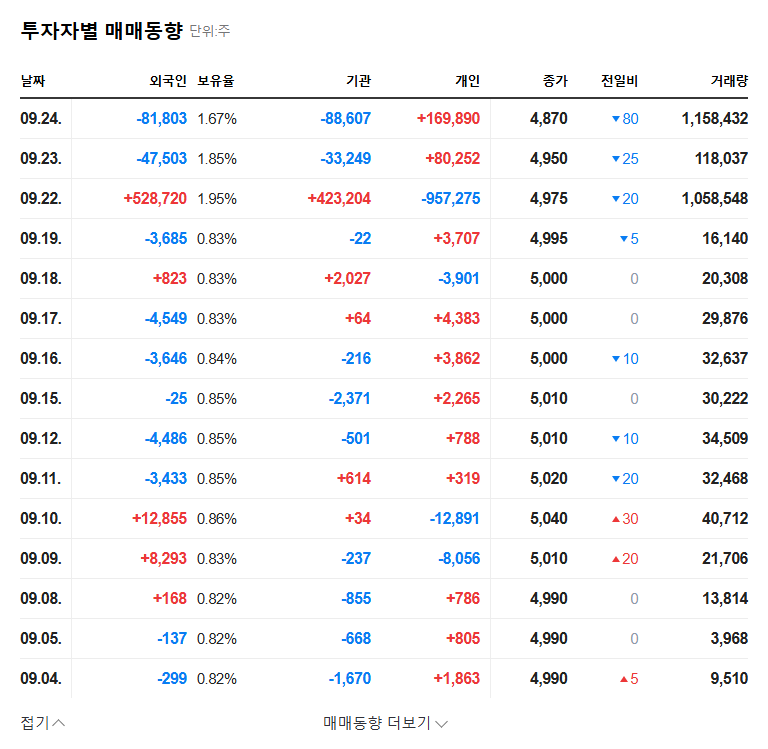
    The largest shareholder of CR Holdings, Lee In-ok, and other related parties sold 2.76% of their stake. The main reasons were revealed to be the extension of a share pledge agreement and repayment of loans by related parties. This raises concerns about short-term downward pressure on the stock price and supply-demand imbalance.

    2. Why Does it Matter? CR Holdings Fundamental Analysis (2025 Half-Year)

    CR Holdings is a holding company with a diversified business portfolio. In the first half of 2025, while sales slightly increased, operating profit and net income decreased. Rising raw material prices, exchange rate fluctuations, and losses from equity method investments are analyzed as the main causes.

    • Refractory Manufacturing: Maintaining industry leadership, but dependence on overseas raw materials and China’s environmental regulations are risk factors.
    • Machinery Parts Manufacturing: Increased sales of Hyundai/Kia Motors are positive, but declining performance of specific subsidiaries.
    • Golf Course, Real Estate: Sluggish performance.

    The worsening macroeconomic environment, such as rising interest rates and increasing exchange rate volatility, is also a burden on CR Holdings.

    3. What Should You Do? Investment Strategy Suggestions

    Short-term Investment Strategy: Sell or wait and see. Due to the high possibility of a stock price decline caused by the stake sale event, it is recommended to wait and see in the short term.

    Mid- to Long-term Investment Strategy: Consider purchasing in installments when the stock price falls. Considering the improvement in CR Holdings’ fundamentals and the development of new businesses, you can consider a strategy of purchasing in installments when the stock price falls. However, risk factors such as earnings volatility and changes in the macroeconomic environment should be continuously monitored.

    4. Investor Action Plan: Key Checkpoints

    • Further stake sales by related parties
    • 2025 annual earnings (especially improvement in net income)
    • Interest rate and exchange rate trends
    • Performance changes by business segment
    • Development of new growth engines

    FAQ

    Why is CR Holdings’ major shareholder’s stake sale a problem?

    The sale of a major shareholder’s stake raises concerns about management stability and can lead to short-term downward pressure on the stock price. Large-scale selling, in particular, can have a negative impact on market supply and demand.

    What is CR Holdings’ core business?

    CR Holdings operates a diversified business portfolio centered around refractory manufacturing, including machinery parts, golf courses, and real estate.

    What should I be aware of when investing in CR Holdings?

    In the short term, you should carefully monitor the impact of the stake sale event. In the mid to long term, monitor the improvement in fundamentals and changes in the macroeconomic environment.

    CR Holdings (000480) Stock Forecast: Major Shareholder Sells Stake - What's Your Investment Strategy? 관련 이미지
    CR Holdings (000480) Stock Forecast: Major Shareholder Sells Stake - What's Your Investment Strategy? 관련 이미지
  • TP Corporation (007980) Stock Analysis: H1 2025 Earnings, Future Outlook, and Investment Strategy


    1. TP Corporation H1 2025 Earnings Analysis: What Happened?

    TP Corporation reported consolidated revenue of KRW 515.32 billion (down 51.6% YoY), operating profit of KRW 26.62 billion (down 45.6% YoY), and net income of KRW 18.56 billion (down 16.9% YoY) for H1 2025. While the apparel business segment experienced significant growth of 114.8% YoY, overall performance was sluggish.

    2. Analysis of Sluggish Performance: Why These Results?

    • Decreased demand due to the global economic slowdown
    • Profitability decline due to rising raw material and labor costs
    • Recognition of KRW 747.37 billion in investment property valuation losses
    • Deterioration of financial soundness with a debt-to-equity ratio of 133%

    3. Future Outlook and Investment Strategy: What’s Next?

    Positive Factors

    • Continued robust growth in the apparel business segment
    • Shareholder value enhancement through the introduction of the RSU system and treasury stock disposal plan

    Negative Factors

    • High debt-to-equity ratio and increasing financial burden
    • Risk of profit fluctuation due to increased exchange rate volatility

    Investor Action Plan

    A cautious approach is necessary in the short term, considering financial risk factors. In the medium to long term, investment decisions should be made by comprehensively considering the growth potential of the apparel business, improvements in financial structure, and changes in the macroeconomic environment.


    FAQ

    What is TP Corporation’s main business?

    TP Corporation’s main business is apparel. They manufacture and export clothing through orders from globally renowned buyers, with production facilities in Vietnam, Indonesia, and Myanmar.

    What are the main reasons for the sluggish performance in H1 2025?

    The main reasons are analyzed to be the global economic slowdown, rising raw material and labor costs, and valuation losses on investment properties.

    What is the future outlook for TP Corporation?

    The growth potential of the apparel business is positive, but the increasing financial burden and exchange rate volatility are risk factors. Investors should consider these factors comprehensively.


  • Yangjisa 2025 Financial Report Analysis: Earnings Shock and Investment Strategies


    1. What Happened? : Yangjisa’s Earnings Shock

    Yangjisa’s 2025 financial report revealed ₩8.9 billion in revenue, accompanied by an operating loss of ₩4 billion and a net loss of ₩2.4 billion. This marks a return to negative territory after a brief period of profitability in Q4 2024, significantly underperforming market projections.

    2. Why Did This Happen? : Analyzing the Decline

    • Struggling Core Business: Sales in the printing and manufacturing sector declined by 3.9%, with overseas markets performing particularly poorly.
    • Surging COGS and Financial Expenses: Rising raw material prices, increased interest burdens due to rising interest rates, and amplified foreign exchange losses.
    • Burden of New Business Investments: Investments in new ventures led to an increase in tangible assets and a surge in short-term borrowings (₩10.4 billion), negatively impacting debt-to-equity and debt-to-asset ratios.

    3. What’s Next? : Future Outlook and Investment Strategies

    Yangjisa currently faces a triple threat: short-term performance woes, increasing financial burdens, and uncertainty surrounding new business ventures. The investment recommendation is ‘Neutral,’ suggesting a cautious approach.

    • Earnings Turnaround: Requires improvement in core business profitability, cost reduction, and tangible results from new businesses.
    • Improving Financial Health: Debt management, asset sales, or capital raising to reduce debt ratios.
    • Enhanced Communication with the Market: Increasing management transparency and outlining future growth strategies.

    4. What Should Investors Do? : Action Plan

    Investors should focus on the company’s mid-to-long-term turnaround potential and financial health recovery, rather than short-term stock price fluctuations. Making investment decisions after observing concrete results from new businesses and improvements in financial indicators is recommended.


    FAQ

    What were Yangjisa’s financial results in 2025?

    Yangjisa reported revenue of ₩8.9 billion, an operating loss of ₩4 billion, and a net loss of ₩2.4 billion in 2025.

    Why did Yangjisa’s performance decline?

    A combination of factors contributed to the decline, including a struggling core business, rising COGS and financial expenses, and the burden of new business investments.

    What are Yangjisa’s future investment strategies?

    The company is expected to focus on achieving an earnings turnaround, improving its financial structure, and enhancing communication with the market to enhance corporate value.

    What should investors do?

    Investors should carefully monitor the company’s mid-to-long-term growth potential and financial health recovery, making informed investment decisions based on concrete results from new ventures and improvement in financial indicators.


  • FiberPro Stock Option Exercise: A Red Flag for Investors?


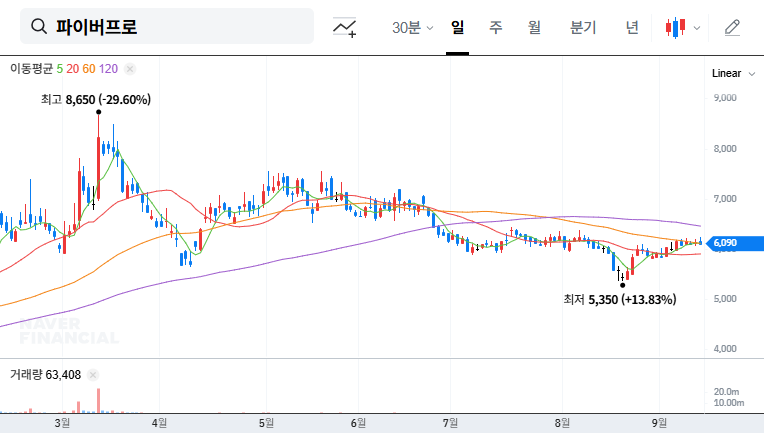
    FiberPro Stock Option Exercise: A Red Flag for Investors? 대표 차트 이미지


    What Happened? FiberPro’s Stock Option Exercise

    FiberPro announced on September 10, 2025, that 360,000 shares (1.1% of total outstanding shares) could enter the market through a stock option exercise.

    Why Does it Matter? Negative News Amidst Poor Performance

    FiberPro’s first-half 2025 results were disappointing. Revenue decreased by 46.9% year-over-year, and operating profit fell by 53.9%. The optical measuring instrument segment saw a particularly sharp decline in sales of 87.4%. The stock option exercise could negatively impact investor sentiment in this context.

    What’s Next? Downward Pressure on Stock Price

    • Overhang Concerns: The influx of shares from the stock option exercise could put downward pressure on the stock price.
    • Worsening Market Sentiment: Combined with poor financial performance, this could amplify investor anxiety.
    • Stock Dilution Effect: The increased number of outstanding shares could dilute earnings per share (EPS).

    What Should Investors Do? Proceed with Caution

    Investors should exercise caution with FiberPro. It’s crucial to closely monitor the selling trend of the exercised stock options, future earnings announcements, and make informed investment decisions. Pay particular attention to the performance recovery of the optical measuring instrument segment and the growth potential of the integrated navigation system segment. Macroeconomic conditions are also important factors in investment decisions.


    Frequently Asked Questions

    Why is the stock option exercise negative for the stock price?

    When shares are released into the market through a stock option exercise, it increases the supply of shares, which can lead to downward pressure on the stock price. This effect can be more pronounced for companies with poor financial performance.

    What is the outlook for FiberPro?

    The recovery of the optical measuring instruments segment is crucial. The growth potential of the integrated navigation systems segment and changes in the macroeconomic environment can also affect the stock price.

    What should investors pay attention to?

    Investors should carefully monitor the actual selling timing and volume of the exercised stock options, future earnings announcements, and competitor trends. It is important to avoid hasty investment decisions and proceed with caution.


    FiberPro Stock Option Exercise: A Red Flag for Investors? 관련 이미지
    FiberPro Stock Option Exercise: A Red Flag for Investors? 관련 이미지


  • SK Square’s After-Hours Block Trade: Unpacking the Implications and Investment Strategies (September 2025)


    1. What Happened with SK Square?

    After the market closed on September 10, 2025, a large block of 44,625 SK Square shares was traded for ₩7.8 billion. The substantial foreign buying and selling activity on the same day is also noteworthy.

    2. Why Did This Happen?

    Positive Factors: SK Square reported impressive growth in Q2 2025, with consolidated operating profit reaching ₩305.3 billion, a 177.8% year-on-year increase. This strong performance was fueled by the profit from its stake in SK Hynix (₩1.46 trillion) and the robust performance of its investment business segment. Additionally, a low debt-to-equity ratio of 9.84% demonstrates a stable financial structure.

    Negative Factors: The operating losses of some subsidiaries, such as 11st and SK Planet, remain a concern. Furthermore, macroeconomic uncertainties, including high interest rates and exchange rate volatility, could weigh on investor sentiment.

    3. What’s Next for SK Square?

    The after-hours block trade may increase short-term price volatility. However, SK Square’s fundamentals remain strong, and its long-term growth potential is still high. Future stock performance is likely to depend on SK Hynix’s earnings, the improvement in subsidiary profitability, and the overall macroeconomic environment.

    4. What Should Investors Do?

    Instead of reacting to short-term market fluctuations, investors should focus on SK Square’s fundamentals and long-term growth potential. Before making any investment decisions, it’s crucial to thoroughly research relevant information and consider your own risk tolerance. Reviewing analyst reports and market consensus can also be helpful in making informed investment decisions.


    FAQ

    What are SK Square’s main businesses?

    SK Square operates in Investment, Commerce (11st), Platform (SK Planet, One Store, Dreamus Company), Mobility (Tmap Mobility, FSK L&S), and Other (Incross) businesses.

    What does an after-hours block trade mean?

    An after-hours block trade refers to a large volume of shares traded outside of regular trading hours and can indicate the intentions of specific investors.

    Should I invest in SK Square?

    Investment decisions are ultimately personal, but SK Square’s strong fundamentals and growth potential are worth considering. However, macroeconomic uncertainties and the underperformance of some subsidiaries pose risks. Thorough research and consulting with a financial advisor are recommended before investing.