Tag: Earnings Analysis

  • Hyosung ONB Q3 2025 Earnings Analysis: Sharp Decline in Net Profit Due to Financial Asset Valuation Losses, What’s the Investment Strategy?


    Hyosung ONB Q3 2025 Earnings Analysis: Sharp Decline in Net Profit Due to Financial Asset Valuation Losses, What's the Investment Strategy? 대표 차트 이미지


    1. What Happened?: Q2 Earnings Shock, What’s the Cause?

    Hyosung ONB’s Q2 2025 earnings recorded a significant decline year-on-year, with sales of KRW 2.9 billion, operating profit of KRW 200 million, and a net loss of KRW 600 million. The main cause of the sharp drop in earnings, especially compared to Q1, was the valuation loss on financial assets.

    2. Why Did This Happen?: Double Whammy of Financial Asset Valuation Losses and Business Slump

    • Financial Asset Valuation Losses: The decline in the value of the investment portfolio directly impacted earnings.
    • Business Slump: The sharp drop in sales at subsidiary HYOSUNG ONB (PVT) LTD (-39.5%) and the decline in domestic composted organic fertilizer sales (-13.4%) also contributed to the earnings deterioration.

    3. What’s Next?: Positive Factors and Risks Amidst Uncertainty

    Hyosung ONB has positive factors such as the eco-friendly agricultural trend and government policy support, but whether the financial asset valuation losses will recover and whether operating profit will improve after Q3 will be key variables in future stock price movements. Volatility in raw material prices and exchange rates can also act as risk factors.

    4. What Should Investors Do?: Focus on Risk Management and Fundamental Analysis

    • Risk Management: Closely monitor the valuation trend of financial assets and strengthen risk management measures such as investment portfolio diversification.
    • Fundamental Analysis: Continuously analyze changes in fundamentals, such as strengthening core business competitiveness and improving the performance of overseas subsidiaries.
    • Information Acquisition: Consistently acquire information necessary for investment decisions through corporate disclosures and market analysis data.


    Hyosung ONB Investment, Solve Your Questions with FAQs!

    Q: What caused the sharp decline in Hyosung ONB’s Q2 earnings?

    A: The main cause was the valuation loss on financial assets. The decline in the value of the investment portfolio directly impacted earnings.

    Q: What is Hyosung ONB’s main business?

    A: Their main business is manufacturing and selling organic and byproduct fertilizers. They operate 5 domestic factories and a subsidiary in Sri Lanka. ‘Mixed oil cake (pellet)’ accounts for the largest portion of sales.

    Q: What should investors be aware of when investing in Hyosung ONB?

    A: Investors should pay close attention to the recovery of financial asset valuation losses, improvement in operating profit after Q3, and volatility in raw material prices and exchange rates. Risk management, such as investment portfolio diversification, is also important.




    Hyosung ONB Q3 2025 Earnings Analysis: Sharp Decline in Net Profit Due to Financial Asset Valuation Losses, What's the Investment Strategy? 관련 이미지
    Hyosung ONB Q3 2025 Earnings Analysis: Sharp Decline in Net Profit Due to Financial Asset Valuation Losses, What's the Investment Strategy? 관련 이미지


  • SK Securities: Trinity Asset Management Acquisition Rumors & H1 2025 Earnings Analysis


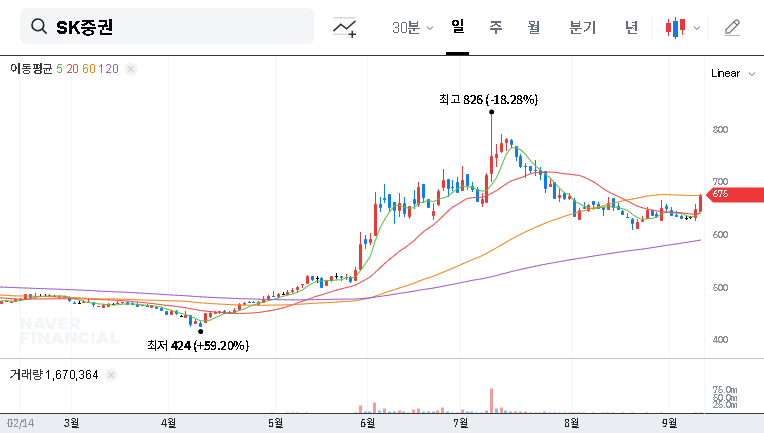
    SK Securities: Trinity Asset Management Acquisition Rumors & H1 2025 Earnings Analysis 대표 차트 이미지


    1. What Happened? SK Securities and Trinity Asset Management Acquisition Rumors

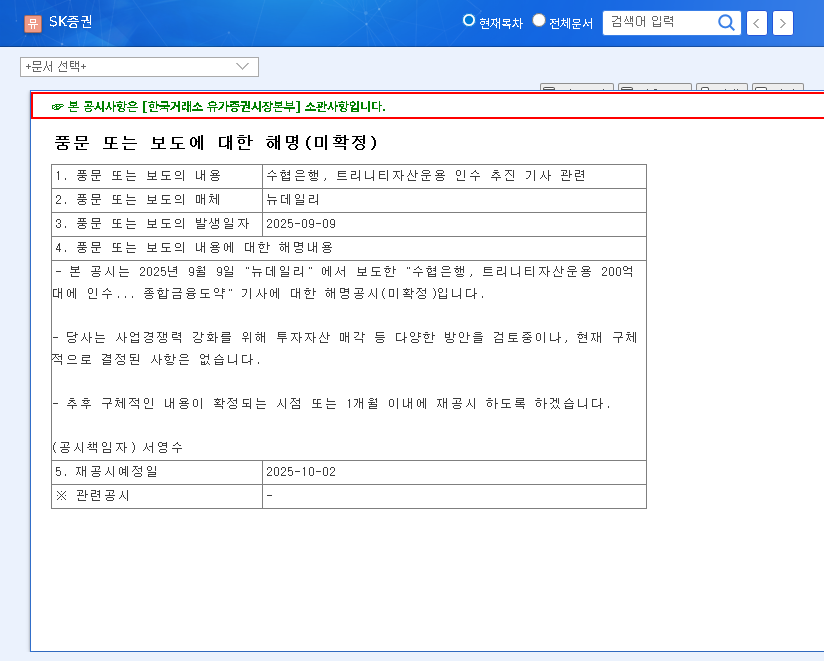
    On September 9, 2025, news broke of Suhyup Bank pursuing the acquisition of Trinity Asset Management, leading to rumors of SK Securities also participating in the bid. SK Securities issued a statement clarifying that while they are exploring various options to enhance competitiveness, nothing has been finalized. A further announcement is expected on October 2nd.

    2. Why Does It Matter? Mixed Outlook Despite Return to Profitability

    While SK Securities returned to profit in H1 2025, underperformance in proprietary trading and brokerage, along with significant losses in other segments, remain concerning. The potential acquisition of Trinity Asset Management presents both opportunities and risks – diversification and new growth engines versus increased financial burden if the acquisition fails.

    3. What’s Next? Acquisition Confirmation and H2 2025 Earnings are Key

    The confirmation of the acquisition will come on October 2nd. If the acquisition is successful, the focus will shift to the potential synergy and expansion of SK Securities’ portfolio. The company’s ability to maintain profitability in the second half of 2025 and improve performance in struggling segments will also be crucial.

    4. What Should Investors Do? A Cautious ‘Wait-and-See’ Approach

    A ‘wait-and-see’ approach is recommended at this time. Investors should wait for the October 2nd announcement to clarify the acquisition uncertainty and assess the H2 2025 earnings before making investment decisions.


    FAQ

    How did SK Securities perform in H1 2025?

    SK Securities returned to profitability in H1 2025, reporting operating revenue of KRW 615.4 billion and net income of KRW 15.5 billion.

    Is SK Securities acquiring Trinity Asset Management?

    While there have been reports, SK Securities has stated that they are exploring various options and nothing has been finalized. A further announcement is expected on October 2nd, 2025.

    Should I invest in SK Securities?

    A ‘wait-and-see’ approach is recommended. Investors should monitor the acquisition developments and H2 2025 earnings before making any investment decisions.


    SK Securities: Trinity Asset Management Acquisition Rumors & H1 2025 Earnings Analysis 관련 이미지
    SK Securities: Trinity Asset Management Acquisition Rumors & H1 2025 Earnings Analysis 관련 이미지


  • TP Corporation (007980) Analysis: Unveiling Hidden Opportunities Amidst Crisis


    What’s Happening with TP Corporation?

    TP Corporation’s sales plummeted by approximately half in the first half of 2025 compared to the same period last year. The global economic slowdown, intensified competition in the apparel market, and weakened consumer sentiment are the main culprits. The company’s high dependence on the apparel business, coupled with the economic downturn in its main market, the US, and rising costs at its Southeast Asian production bases, dealt a significant blow. This has impacted the company’s financial stability, increasing debt ratios and the risk of credit rating downgrades.

    Are There Hidden Opportunities?

    Despite the challenging situation, TP Corporation shows positive aspects. Its long-standing expertise in the apparel OEM business and its global buyer network provide a solid foundation. Furthermore, the company is exploring new growth engines by diversifying its business portfolio, including entering the golf equipment market. The company’s treasury stock holdings and the implementation of an RSU system signal its commitment to enhancing shareholder value and responsible management. Above all, the current stock price appears undervalued, potentially offering an attractive investment opportunity from a long-term perspective.

    Developing an Investment Strategy

    Investing in TP Corporation requires careful consideration of several factors. First, monitor the success of the company’s profitability improvement and cost management strategies. Second, managing risks related to exchange rate and interest rate fluctuations is crucial. Third, continuous monitoring of the performance of new businesses is essential. Lastly, ongoing assessment of the management’s shareholder-friendly policies and their ability to adapt to changing market conditions is vital.

    Action Plan for Investors

    • Short-term investors: Exercise caution regarding short-term stock price volatility and make investment decisions after confirming improvements in financial indicators and the performance of new businesses.
    • Long-term investors: The current stock price may be undervalued, so consider a dollar-cost averaging strategy based on the company’s long-term growth potential. Continuously monitor changes in corporate value and maintain a long-term investment perspective.


    What is TP Corporation’s main business?

    TP Corporation primarily manufactures and sells apparel, while also maintaining a diversified business portfolio including down processing, rice flour processing, bedding manufacturing, and real estate leasing.

    Why did TP Corporation’s performance decline in the first half of 2025?

    The main causes are analyzed to be the global economic slowdown, weakened consumer sentiment, intensified competition in the apparel market, and increased price pressure.

    What is the future outlook for TP Corporation?

    Despite facing current challenges, TP Corporation possesses positive factors such as a stable business foundation, pursuit of new businesses, and efforts to enhance shareholder value. It is expected that the company can enter a growth trajectory through improvements in profitability and cost management, strengthened risk management against exchange rate and interest rate fluctuations, and successful establishment of new businesses.


  • Hyundai Glovis Stock Forecast: September 2025 IR Event Analysis and Investment Strategy

    Hyundai Glovis Stock Forecast: September 2025 IR Event Analysis and Investment Strategy 대표 차트 이미지

    1. What Happened? – Hyundai Glovis Q2 Earnings and IR Event

    Hyundai Glovis announced stable earnings in Q2 2025 and will present its future growth strategies at an IR event on September 11th.

    2. Why Does it Matter? – Positive Fundamentals and Growth Momentum

    Q2 earnings showed stable growth across all sectors: integrated logistics, distribution & sales, and shipping. The strong overseas sales of Hyundai Motor and Kia positively impacted Hyundai Glovis’s CKD parts supply and finished vehicle transport business. Furthermore, investments in new businesses such as EV battery recycling and hydrogen/ammonia transport are expected to be future growth drivers. This IR is anticipated to provide a clearer picture of this growth momentum.

    3. What’s Next? – Stock Forecast After the IR Event

    • Positive Scenario: If the IR reveals new business achievements and future strategies that exceed market expectations, the stock price is likely to experience upward momentum.
    • Negative Scenario: There is a possibility of a stock price decline if the announcements fall short of market expectations or if unforeseen negative information is disclosed, particularly considering macroeconomic uncertainties such as the global economic slowdown and geopolitical risks.

    4. What Should Investors Do? – Carefully Review IR Information Before Making Investment Decisions

    Investors should thoroughly analyze the information presented at the IR event and make investment decisions based on a comprehensive consideration of macroeconomic factors and the company’s fundamentals. Pay close attention to new business performance, ESG management, and risk management strategies.

    Frequently Asked Questions

    What are Hyundai Glovis’s main businesses?

    Hyundai Glovis’s core businesses are integrated logistics, distribution & sales, and shipping. It plays a key role in the logistics of the Hyundai Motor Group, ensuring a stable business foundation.

    What are Hyundai Glovis’s future growth drivers?

    Hyundai Glovis is securing future growth engines through investments in new businesses such as EV battery recycling and hydrogen/ammonia transport. These new ventures are expected to contribute to sales growth through strengthened ESG management and entry into new markets.

    What precautions should be taken when investing?

    Consider potential risk factors arising from changes in the external environment, such as the global economic slowdown, geopolitical risks, and raw material price volatility. It is also important to make prudent investment decisions by comparing and analyzing the IR presentation content with market expectations.

    Hyundai Glovis Stock Forecast: September 2025 IR Event Analysis and Investment Strategy 관련 이미지
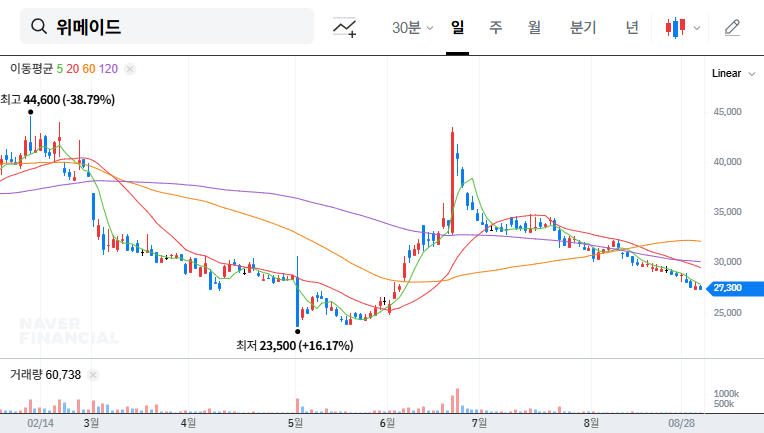
  • WeMade’s Treasury Stock Disposal: What Investors Should Know (September 2025 Analysis)


    WeMade's Treasury Stock Disposal: What Investors Should Know (September 2025 Analysis) 대표 차트 이미지


    1. WeMade’s Treasury Stock Disposal: What Happened?

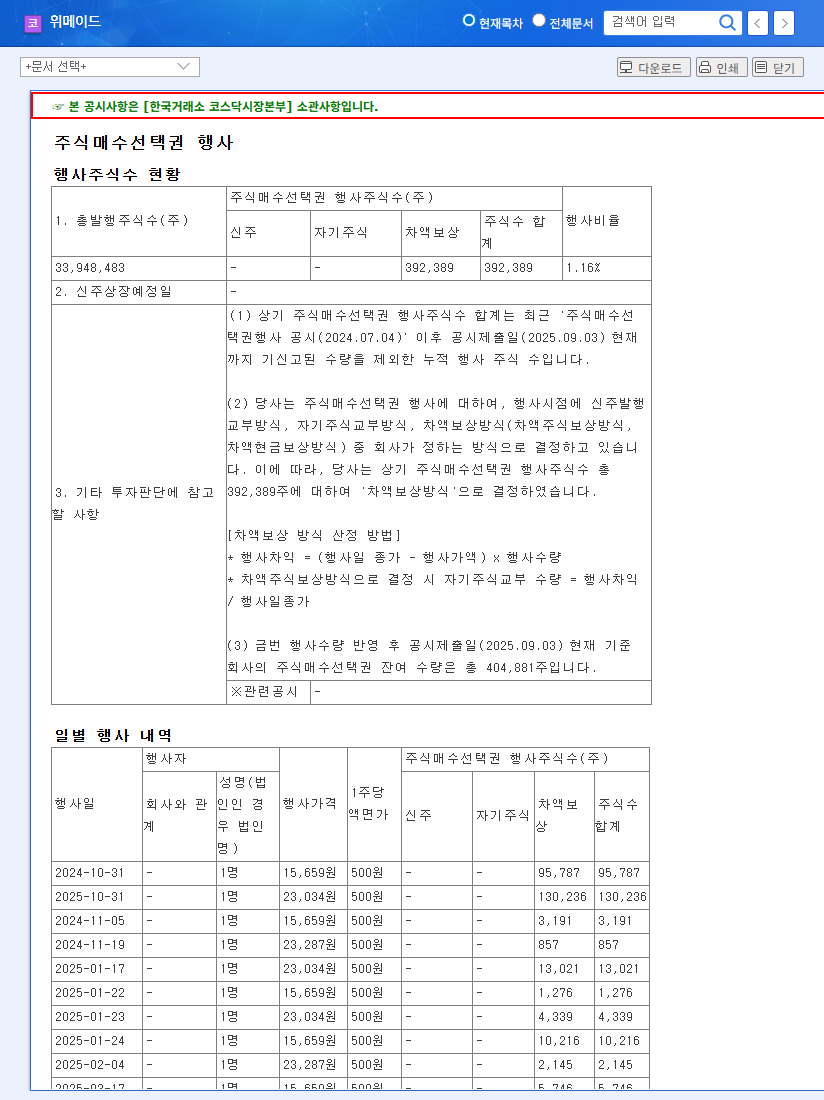
    WeMade has decided to dispose of 21,666 common shares (approximately KRW 400 million) to facilitate the exercise of stock options. This represents a negligible portion (0.00%) of the total outstanding shares.

    2. Why the Disposal?

    The disposal is a procedural measure related to the exercise of stock options granted to employees. It’s a pre-planned event, distinct from raising new capital or a treasury stock buyback.

    3. What Does This Mean for Investors?

    The direct impact on fundamentals is expected to be minimal in the short term. The small scale of the disposal can be interpreted as a shareholder-friendly policy and a move to motivate employees.

    4. WeMade’s Present and Future: Investor Action Plan

    • Weak H1 2025 Performance: Decline in revenue, operating and net loss. Impacted by intensified competition in the gaming market and increased investment in blockchain business.
    • Positive Factors: Efforts to improve financial soundness, competitive strength of the ‘Legend of Mir’ IP, growth potential of the blockchain gaming market.
    • Key Variables: Utilization of ‘Legend of Mir’ IP, performance of the blockchain business, outcome of the lawsuit with Actoz Soft.
    • Investment Strategy: Focus on long-term growth strategy and earnings improvement rather than short-term volatility. Consider business competitiveness, new game launches, blockchain business performance, and legal risk management capabilities comprehensively.

    Investors should focus on WeMade’s business competitiveness and growth potential rather than the treasury stock disposal itself. Continuous monitoring is crucial to identify investment opportunities.


    FAQ

    Will WeMade’s treasury stock disposal negatively impact the stock price?

    No. The disposal is related to the exercise of stock options and is too small to significantly impact the stock price.

    What is the outlook for WeMade’s blockchain business?

    While the blockchain gaming market has high growth potential, it is still in its early stages. It remains to be seen whether WeMade’s blockchain ventures will translate into substantial profits.

    What should investors consider when investing in WeMade?

    Factors to consider include intensifying competition in the gaming market, uncertainty surrounding the blockchain business, and the ongoing lawsuit with Actoz Soft. A long-term perspective focused on business competitiveness and growth potential is crucial.


    WeMade's Treasury Stock Disposal: What Investors Should Know (September 2025 Analysis) 관련 이미지
    WeMade's Treasury Stock Disposal: What Investors Should Know (September 2025 Analysis) 관련 이미지


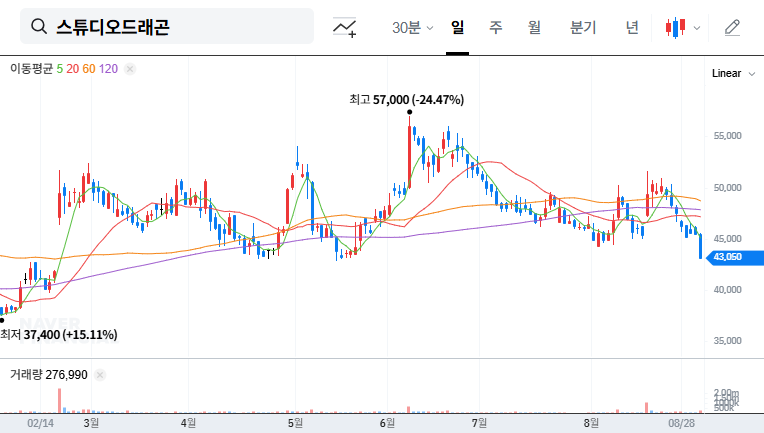
  • Studio Dragon’s September IR: Can They Turn Things Around?


    Studio Dragon's September IR: Can They Turn Things Around? 대표 차트 이미지


    What Happened at Studio Dragon?

    In the first half of 2025, Studio Dragon recorded revenue of KRW 248.3 billion (a 24.6% decrease year-on-year), operating profit of KRW 1.4 billion, and a net loss of KRW 1.36 billion. Declining drama broadcasting revenue and a reduced new lineup were identified as primary factors. External influences such as the global economic slowdown, intensified competition, and the declining influence of traditional broadcasting channels also contributed.

    Why the Decline?

    • Global economic slowdown and weakened content consumption
    • Increased competition in the OTT market
    • Declining influence of traditional broadcasting channels
    • Continued fixed cost burden

    What’s Next?

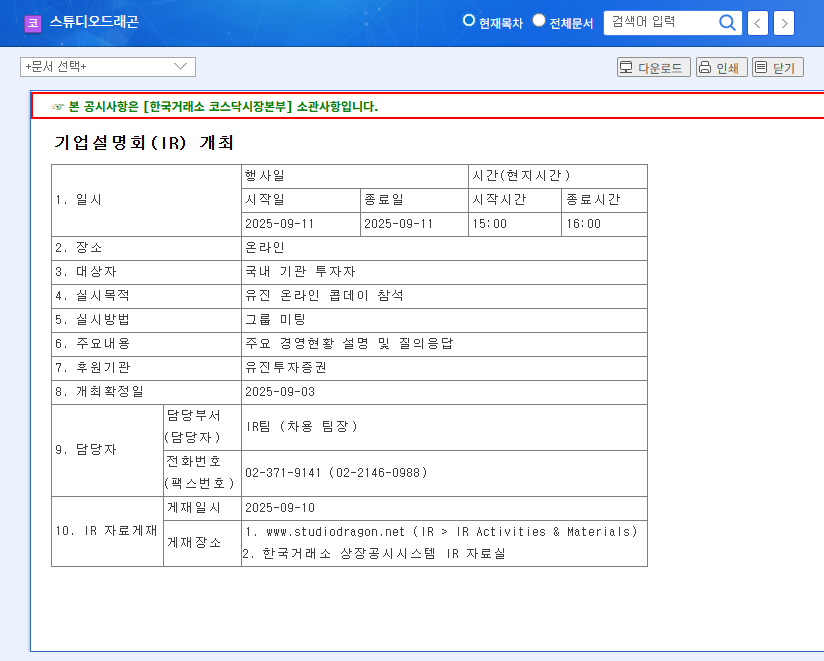
    Studio Dragon will announce their business strategies for the second half of 2025 and beyond at the IR meeting on September 11th. Investors should pay attention to the following:

    • Competitiveness and potential success of the new lineup: Reveal of anticipated titles and expected performance
    • Strengthened partnerships with global OTT platforms: Plans for expanding collaborations with major OTT players like Netflix and Amazon
    • Global market expansion strategy: Plans for further international expansion, building on the success of “Marry My Husband: Japan Edition”
    • Concrete plans for new business models: Progress and future plans for new businesses utilizing their IP
    • Financial soundness measures: Plans for improving profitability and managing debt ratios

    What Should Investors Do?

    Investors should carefully review the announcements made during the IR meeting and make informed investment decisions based on a comprehensive assessment of the company’s potential and risk factors.

    • Analyze the IR announcements: Evaluate management’s vision and strategies, market analysis, and competitiveness against rivals
    • Monitor macroeconomic indicators: Consider external factors such as interest rates, exchange rate fluctuations, and the possibility of an economic recession
    • Understand content market trends: Analyze competition in the OTT market and changes in content consumption trends


    Frequently Asked Questions (FAQ)

    What is Studio Dragon’s main business?

    Studio Dragon plans, produces, and distributes drama content and engages in related businesses.

    How was Studio Dragon’s performance in the first half of 2025?

    They experienced a decline in revenue and profitability. Refer to the article for details.

    What is the outlook for Studio Dragon?

    While they have growth potential based on global OTT partnerships and IP competitiveness, there are uncertainties due to market conditions and changes in the competitive landscape.

    How can I invest in Studio Dragon?

    You can purchase Studio Dragon stock on the stock market. Be sure to thoroughly review IR materials and related information before making any investment decisions.


    Studio Dragon's September IR: Can They Turn Things Around? 관련 이미지


  • Korea Electric Power Corporation’s (KEPCO) Q2 2025 Earnings Analysis: A Deep Dive


    Korea Electric Power Corporation's (KEPCO) Q2 2025 Earnings Analysis: A Deep Dive 대표 차트 이미지


    KEPCO Q2 2025 Earnings: Key Highlights

    KEPCO held its Q2 2025 earnings call on September 5, 2025. Despite growth in the nuclear and pumped storage power segment, overall revenue and operating profit declined year-over-year. The underperformance of the thermal power segment and uncertainty surrounding overseas projects were cited as primary factors.

    What Happened? Q2 Earnings Breakdown

    • Revenue: KRW 741.993 billion (Slight decrease YoY)
    • Operating Profit and Net Income: Decreased YoY (Growth maintained compared to FY2024)
    • Nuclear/Pumped Storage Power: KRW 253.224 billion (Significant increase YoY)
    • Thermal Power: KRW 300.003 billion (Decrease)
    • Transmission & Distribution: KRW 54.584 billion (Slight decrease)
    • Overseas Projects: Decrease in revenue

    Why Did This Happen? Drivers of Performance

    • Nuclear/Pumped Storage Growth: Driven by pro-nuclear energy policies outlined in the 11th Basic Plan for Long-Term Electricity Supply and Demand
    • Thermal Power Decline: Attributed to aging facilities and reduced investment
    • Overseas Project Challenges: Increased competition in the private power plant maintenance market and project volatility

    What’s Next? Outlook and Investment Strategy

    The government’s pro-nuclear policies are expected to be a tailwind for KEPCO. However, the slowdown in thermal power and intensifying competition in overseas markets require careful monitoring. Securing future growth engines, such as renewable energy projects, is crucial.

    What Should Investors Do? Action Plan

    Investors should thoroughly analyze the information presented in the earnings call and continuously monitor macroeconomic indicators and competitor activity. Closely examining the growth potential of the nuclear/pumped storage segment and the company’s plans for renewable energy projects is essential.


    Frequently Asked Questions (FAQ)

    What are KEPCO’s main business segments?

    KEPCO primarily focuses on power plant maintenance, providing services for various types of power generation facilities, including nuclear, hydro, thermal, pumped storage, and transmission & distribution. The company also participates in overseas power plant construction and operation projects.

    Why were Q2 results weaker than expected?

    Despite growth in the nuclear/pumped storage segment, the overall decline in performance was attributed to the underperformance of the thermal power segment and uncertainty surrounding overseas projects.

    What is the outlook for KEPCO?

    Supportive government policies for nuclear power are anticipated to benefit KEPCO. However, the decline in thermal power and increasing competition in overseas markets need ongoing attention. The development of new growth engines, such as renewable energy, is critical.


    Korea Electric Power Corporation's (KEPCO) Q2 2025 Earnings Analysis: A Deep Dive 관련 이미지
    Korea Electric Power Corporation's (KEPCO) Q2 2025 Earnings Analysis: A Deep Dive 관련 이미지


  • POSCO Holdings Q2 2025 Earnings Disappoint: Can IR Presentation Spark a Turnaround?

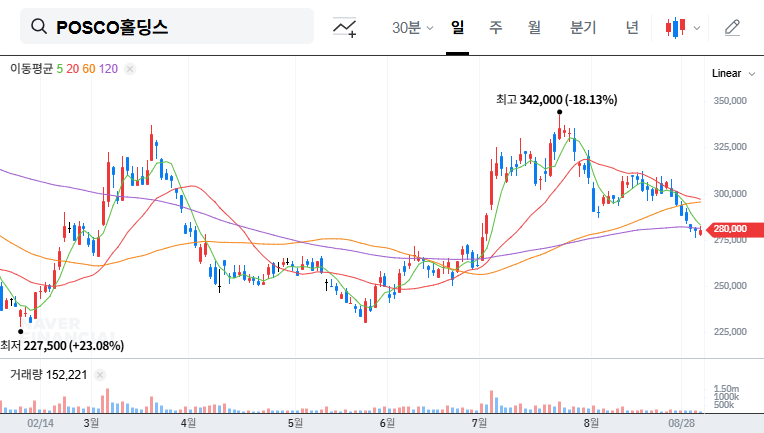
    POSCO Holdings Q2 2025 Earnings Disappoint: Can IR Presentation Spark a Turnaround? 대표 차트 이미지

    1. POSCO Holdings Q2 2025 Earnings Analysis: What Happened?

    POSCO Holdings reported a 51.8% year-over-year decline in consolidated revenue to KRW 349.924 trillion and a 45.9% drop in operating profit to KRW 1.175 trillion for the first half of 2025. Net income also experienced a substantial decrease.

    1.1. Performance by Segment: Why These Results?

    • Steel Division: Weak performance driven by global economic slowdown, declining demand, and rising protectionism.
    • Infrastructure Division: Lower LNG prices and trading volumes impacted revenue, alongside a weak construction sector.
    • Secondary Battery Materials Division: Slowing EV market growth, volatile raw material prices, and initial investment costs led to increased losses.
    • Other Businesses: Minimal revenue contribution due to ongoing investments in new growth areas.

    2. Fundamental Impact and Market Environment Analysis: What’s the Outlook?

    2.1. Macroeconomic Environment:

    A volatile macroeconomic environment persists, marked by a rising KRW/USD exchange rate, frozen interest rates, fluctuating oil prices, and increasing bond yields.

    2.2. Impact on POSCO Holdings Fundamentals:

    • Steel Division Challenges: Investment in low-carbon technologies and high-value-added products is crucial.
    • Secondary Battery Materials Business: Long-term growth potential remains, but securing key mineral supplies and building a robust value chain are essential.
    • New Business Investments and Financial Management: Efficient cash flow management and capital allocation are critical.
    • Shareholder Return Policy: Share buybacks and dividends are positive but must be balanced against investment needs.

    3. IR Presentation and Investment Strategy: What Should Investors Do?

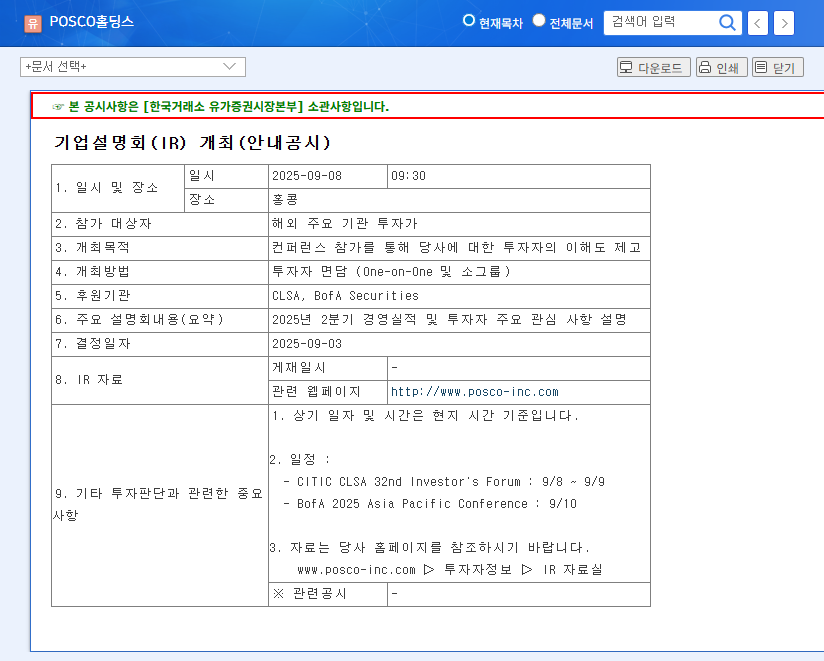
    The September 8th IR presentation is key for outlining the second-half outlook and future growth strategies. Clear explanations of the growth potential of the secondary battery materials business and the restructuring efforts in the steel division are crucial.

    3.1. Investment Considerations

    • Clarity and feasibility of the earnings improvement strategies and investment roadmap presented in the IR.
    • Correlation between POSCO Holdings’ businesses and the timing of global economic recovery and interest rate cuts.
    • Competitive landscape of the secondary battery market and raw material price volatility.
    • Impact of geopolitical risks, such as US tariffs, and the company’s mitigation strategies.

    4. Conclusion

    POSCO Holdings faces a challenging environment. The IR presentation represents an opportunity to restore investor confidence by clearly articulating future growth strategies. Investors should carefully consider the information presented in the IR and the broader market conditions before making investment decisions.

    Frequently Asked Questions

    What are POSCO Holdings’ main businesses?

    POSCO Holdings operates in steel, infrastructure, secondary battery materials, and new growth businesses.

    What are the reasons for the weak performance in the first half of 2025?

    Key factors include the global economic slowdown, declining steel demand, and increased initial investment costs in the secondary battery materials business.

    What is the outlook for POSCO Holdings’ stock price?

    Stock price volatility is expected, depending on the future strategies presented in the IR presentation and the overall market conditions. The growth potential of the secondary battery materials business and the restructuring of the steel division are crucial factors.

    POSCO Holdings Q2 2025 Earnings Disappoint: Can IR Presentation Spark a Turnaround? 관련 이미지
    POSCO Holdings Q2 2025 Earnings Disappoint: Can IR Presentation Spark a Turnaround? 관련 이미지
  • Sindoh’s $2.2 Billion Bet on Seongsu-dong Real Estate: Opportunity or Risk?

    Sindoh's $2.2 Billion Bet on Seongsu-dong Real Estate: Opportunity or Risk? 대표 차트 이미지

    1. What Happened?

    On September 1, 2025, Sindoh announced the acquisition of land and buildings in Seongsu-dong, Seoul, for ₩220.21 billion (approximately $2.2 billion USD) through a public auction. This represents about 19% of Sindoh’s total assets and is intended as an ‘investment property’ acquisition.

    2. Why This Investment?

    Sindoh is currently experiencing declining sales and deteriorating profitability. This investment is interpreted as an attempt to secure long-term growth momentum and strengthen its financial structure through property value appreciation and rental income. Seongsu-dong is an emerging hotspot in Seoul, with high future value expectations.

    3. What’s the Outlook?

    While this investment could have positive effects in the long run, it may pose financial burdens and liquidity issues in the short term. The current high interest rates and exchange rate volatility are likely to add pressure on Sindoh. The lack of direct synergy with its core business should also be considered.

    4. Investor Action Plan

    • Funding and Liquidity Management: Carefully review Sindoh’s funding plan and liquidity management strategy.
    • Monetization Strategy: Evaluate the expected rental income and return on investment plan to assess the investment’s effectiveness.
    • Exchange Rate Risk Management: Review their strategy for managing exchange rate risk, considering the potential for foreign currency transactions.
    • Synergy with Core Business: Analyze potential synergies with new business ventures or diversification plans.
    • Monitoring Performance Improvement: Continuously monitor Sindoh’s efforts to improve profitability and strengthen its core business competitiveness.

    Frequently Asked Questions

    Q1. What is the purpose of Sindoh’s investment in Seongsu-dong real estate?

    A1. The aim is to secure long-term growth momentum and strengthen the financial structure through property value appreciation and rental income.

    Q2. What are the positive and negative impacts of this investment?

    A2. Positively, long-term asset value appreciation and rental income are expected. Negatively, there are concerns about short-term liquidity burdens and increased exchange rate volatility.

    Q3. What should investors pay attention to?

    A3. Investors should carefully consider the funding plan, monetization strategy, exchange rate risk management, synergy with the core business, and efforts to improve performance.

    Sindoh's $2.2 Billion Bet on Seongsu-dong Real Estate: Opportunity or Risk? 관련 이미지
    Sindoh's $2.2 Billion Bet on Seongsu-dong Real Estate: Opportunity or Risk? 관련 이미지
  • Hanwha Aerospace H1 2025 Earnings Analysis: Marine Expansion, Defense Strength, and Investment Strategy

    1. What Happened at Hanwha Aerospace?

    Hanwha Aerospace experienced significant growth in its marine sector and continued strength in its defense sector in H1 2025. The acquisition of Hanwha Ocean substantially boosted marine revenue, while strong exports of the K9 self-propelled howitzer and Chunmoo multiple rocket launcher propelled the defense sector. Although aviation sector profitability dipped due to engine development investments, these investments are considered strategically important for long-term growth. The successful launch of the SpaceEye-T satellite opens exciting possibilities for the aerospace division.

    2. Analyzing the Positives and Negatives

    Positive Factors

    • • Significant expansion and diversification of the marine business
    • • Consistent and robust performance of the defense sector
    • • Strategic investments in aviation and aerospace for future growth
    • • Improved financial structure and increased investment capacity through capital increase

    Negative Factors and Considerations

    • • Short-term decline in aviation profitability
    • • High dependence on debt financing
    • • Sensitivity to exchange rate fluctuations
    • • Unreported information from the August 29th disclosure

    3. Investment Strategy: Maintaining a Neutral to Positive Outlook

    Hanwha Aerospace’s diversified portfolio and forward-looking investments suggest a strong foundation for continued growth. Based on current performance and market conditions, the investment outlook remains Neutral to Positive. However, investors should closely monitor the August 29th disclosure, manage exchange rate risks, assess the effectiveness of aviation investments, and monitor debt levels.

    4. Action Plan for Investors

    Investors should carefully analyze Hanwha Aerospace’s performance across all sectors, consider the potential risks, and incorporate the information from the August 29th disclosure into their investment decisions. Furthermore, developing investment strategies that account for sensitivity to macroeconomic indicators is crucial.

    Frequently Asked Questions

    What are Hanwha Aerospace’s main business segments?

    Hanwha Aerospace operates in the marine, defense, aviation, and aerospace sectors. As of H1 2025, the marine sector contributes the largest portion of revenue, followed by a strong and growing defense business.

    What are the key takeaways from the H1 2025 earnings report?

    The inclusion of Hanwha Ocean resulted in significant growth in the marine sector, while the defense sector showed a strong performance driven by exports. The aviation sector’s profitability decreased due to investments for future growth.

    What should investors be aware of?

    Key considerations include high debt levels, exchange rate sensitivity, the effectiveness of aviation investments, and the pending information from the August 29th disclosure.