Tag: Earnings Analysis

  • (248070) SOLUM Q3 2025 IR Preview: A Deep-Dive Stock Analysis for Investors

    (248070) SOLUM Q3 2025 IR Preview: A Deep-Dive Stock Analysis for Investors

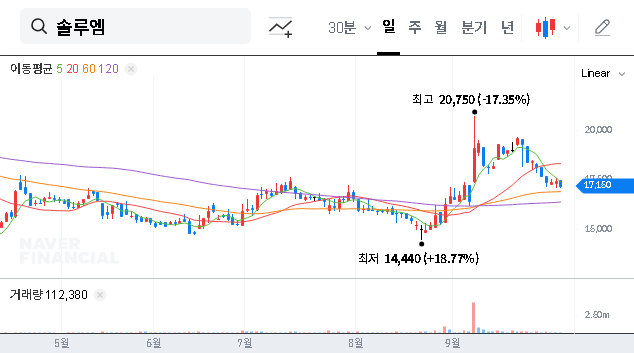
    The upcoming SOLUM Q3 2025 IR event on November 17th is a critical moment for shareholders and potential investors. With SOLUM CO., LTD. (KRX: 248070) facing headwinds of declining revenue and shrinking profitability, the market is watching intently. This event is a crucial opportunity for the company to address pressing concerns and outline a clear path toward renewed growth.

    This comprehensive SOLUM stock analysis delves into the fundamental challenges revealed in recent financial reports. We will identify the key questions investors must have answered during the investor relations call and explore potential scenarios that could shape the company’s trajectory and stock performance for years to come.

    The upcoming SOLUM Q3 2025 IR is more than a financial report; it’s a referendum on the company’s future strategy and its ability to navigate a challenging market. Investors are looking for clarity, confidence, and a credible turnaround plan.

    A Deep Dive into SOLUM’s Financial Outlook

    A thorough review of SOLUM’s Q3 2025 quarterly report paints a picture of a company at a crossroads. The data, available in the Official Disclosure (DART), reveals several significant trends that are central to the current investment thesis.

    1. The Challenge of Declining Revenue and Profitability

    The top-line numbers are concerning. Consolidated revenue has steadily decreased from KRW 1.95 trillion in 2023 to KRW 1.27 trillion year-to-date. This isn’t a minor dip; it’s a significant trend that demands explanation. The primary driver is a pronounced slump in the ICT business segment, specifically its Electronic Shelf Labels (ESL). Compounding this, operating profit has plummeted from KRW 154.5 billion to just KRW 38.4 billion over the same period, signaling severe margin compression within that same ICT division.

    2. Strained Cash Flow and Rising Debt

    Financial health is under scrutiny. The combination of lower profits and ballooning inventory has led to a deterioration in operating cash flow. Simultaneously, investment cash outflow has surged due to strategic acquisitions in new ventures like healthcare and 2nd-use batteries. To fund this, SOLUM issued 7 million convertible redeemable preferred shares, increasing its total debt. The debt-to-equity ratio has ticked up to 128.43%, a level that, while not catastrophic, adds a layer of financial risk that the SOLUM investor relations team must address.

    3. A Mixed Picture Across Business Segments

    SOLUM’s story is not uniformly negative; it’s a tale of contrasting performances:

    • Electronic Components: This segment shows resilience. The power module business remains strong, and the emerging EV charger power module division is a significant growth catalyst, tapping into the global shift towards electric mobility.
    • ICT Business (ESL): This is the core problem area. The SOLUM ESL business is losing ground in a growing market. This suggests deep-seated issues, likely a combination of fierce competition from rivals like SES-imagotag and a potential failure to innovate quickly enough.
    • New Ventures: Healthcare and 2nd-use battery recycling are exciting, high-potential markets. However, they are also capital-intensive and fraught with risk, requiring heavy R&D and facing established competitors.

    Potential Scenarios from the Investor Relations Event

    The market’s reaction will hinge entirely on the narrative and evidence presented by SOLUM’s management. Here are the potential bull and bear case scenarios that could unfold.

    The Bull Case: Charting a Course for Recovery

    Investor sentiment could turn positive if management presents a credible and detailed strategy. This includes a clear plan to regain market share in the ESL business, perhaps through new technology or a revised pricing strategy. Announcements of major new contracts, particularly for the EV charger modules, or a strategic partnership could provide a significant catalyst. Finally, a concrete plan to deleverage the balance sheet and improve the company’s financial structure would go a long way in restoring confidence, building on trends we saw in our Q2 analysis.

    The Bear Case: A Lack of Clear Answers

    Conversely, the stock could face significant pressure if the IR event is disappointing. If management offers vague platitudes instead of concrete solutions for the struggling SOLUM ESL business, investor frustration will mount. A failure to provide clear timelines and expected returns on the new business ventures would amplify concerns about capital allocation. If the high debt ratio is not addressed with a clear management plan, the market may price in a higher financial risk, especially in a volatile interest rate environment, as noted by analysts at Reuters.

    Investor Checklist: Key Questions for the SOLUM IR

    To make an informed decision, investors should seek definitive answers to the following critical questions. The quality of management’s responses will be a key indicator of the company’s future value.

    • ICT Turnaround: What is the specific, actionable strategy to reverse declining revenue and improve profitability in the ICT/ESL segment?
    • Competitive Strategy: How will you counter intensified competition in the ESL market? What technological or commercial advantages will you leverage to defend and expand market share?
    • New Business ROI: What are the concrete commercialization timelines and expected returns on investment for the new healthcare and 2nd-use battery ventures?
    • Financial Health: What is the roadmap for strengthening the balance sheet and managing debt, especially given the current interest rate environment?

    The SOLUM Q3 2025 IR will be a pivotal event. It is an opportunity for management to restore faith and demonstrate a command of the challenges ahead. Investors are advised to listen carefully and analyze the information presented before making any investment decisions.
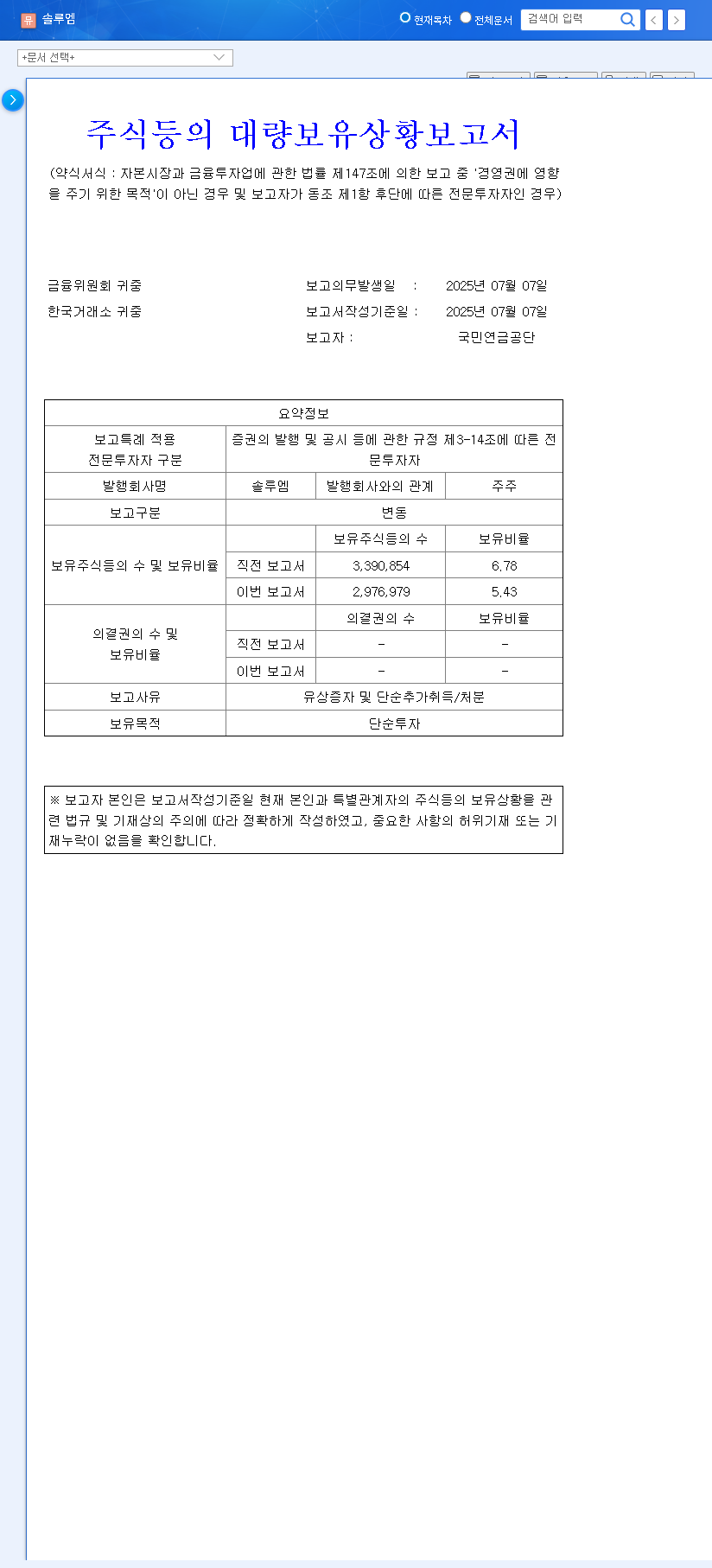
    (248070) SOLUM Q3 2025 IR Preview: A Deep-Dive Stock Analysis for Investors 관련 이미지
  • (214450) PharmaResearch Q3 2025 Earnings: In-Depth Stock Analysis & Investment Outlook

    (214450) PharmaResearch Q3 2025 Earnings: In-Depth Stock Analysis & Investment Outlook

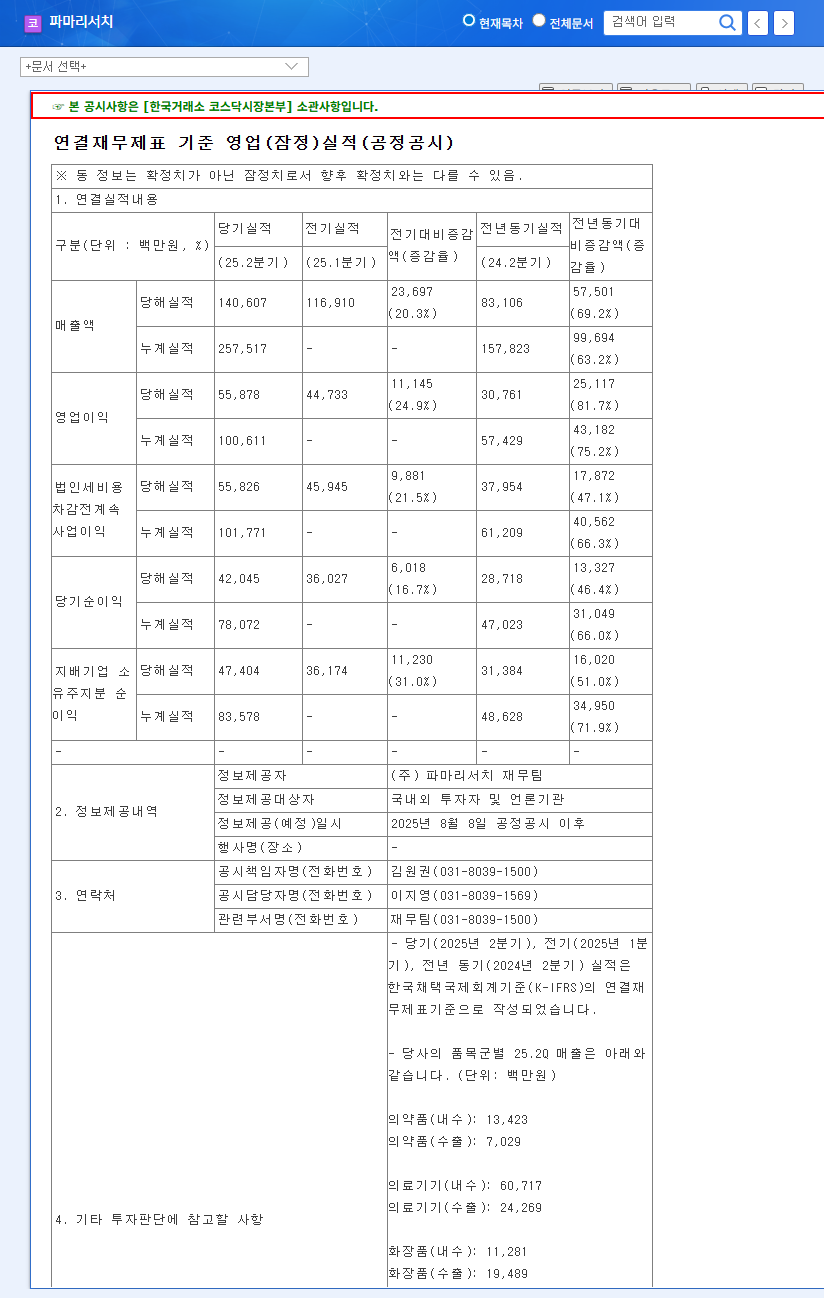
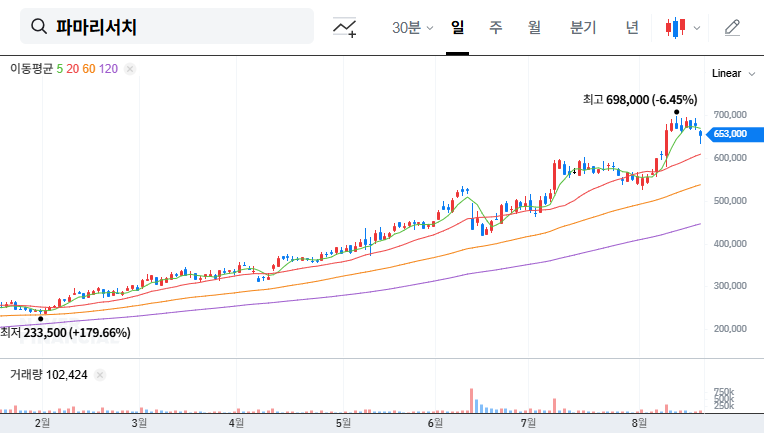
    The latest PharmaResearch Q3 2025 earnings report has captured significant attention across the market, and for good reason. With an upcoming Investor Relations (IR) event scheduled for November 17, 2025, investors are keen to understand if the company’s remarkable growth trajectory is sustainable. Spearheaded by the powerhouse medical device ‘Rejuran’ and a rapidly expanding global cosmetics arm, PharmaResearch (KRX: 214450) appears to be firing on all cylinders. This in-depth PharmaResearch stock analysis will dissect the Q3 results, explore the underlying growth drivers, evaluate potential risks, and provide a clear investment outlook.

    Deep Dive: PharmaResearch Q3 2025 Earnings Breakdown

    PharmaResearch delivered a stellar financial performance in the third quarter of 2025, demonstrating robust top-line growth and a significant improvement in profitability. The results underscore the company’s strong market position and operational efficiency. The official figures, as detailed in the company’s disclosure, paint a very positive picture. (Official Disclosure: DART Report)

    Explosive Growth in Core Divisions

    The primary engine of this growth was the Medical Device division, which is the cornerstone of the PharmaResearch investment thesis. Let’s examine the key segments:

    • Medical Device Division: This segment posted an incredible 231,188 million KRW in sales, marking a 58.8% increase year-over-year. This surge was led by exceptional demand for its flagship products, ‘Rejuran’ and ‘ConjuRan’, solidifying their market leadership.
    • Cosmetics Division: Not to be outdone, the cosmetics arm achieved 93,867 million KRW in sales, a healthy 23.9% year-over-year growth. A key factor here was the successful expansion into overseas markets, increasing the proportion of international exports.
    • Pharmaceutical Division: While this division saw a decrease of 15.2%, the company anticipates a rebound following new domestic and international approvals for ‘LienToc inj. 100 units’.

    Stunning Profitability and R&D Commitment

    PharmaResearch’s consolidated operating profit soared to 162,482 million KRW, with a net profit of 128,925 million KRW. This represents a staggering growth of over 30% year-over-year, showcasing a powerful combination of external growth and disciplined internal cost management. Furthermore, the company continues to invest in its future, dedicating approximately 6.44% of total revenue to R&D for promising new pipelines like IRC_M126 and IRC_D105.

    The ‘Why’ Behind the Growth: Market Trends & Product Strength

    This robust performance isn’t accidental. It’s the result of strategic positioning within a favorable market and the unique strength of its core products.

    PharmaResearch is perfectly positioned to capitalize on two powerful forces: a rapidly growing global anti-aging market and the unique clinical efficacy of its proprietary PN-based products like Rejuran.

    The medical device market for aesthetics is booming. As the global population ages and societal emphasis on appearance management increases, the demand for skin boosters and anti-aging treatments is projected to see continued high growth. According to the World Health Organization, the proportion of the world’s population over 60 years will nearly double by 2050, providing a long-term tailwind for this sector. At the heart of this trend is ‘Rejuran’, which utilizes an exclusive regenerative material, PN (Polynucleotide), to establish a dominant position in the skin booster market. To learn more about this sector, see our guide to investing in the aesthetics industry.

    Navigating Potential Risks for Investors

    Despite the overwhelmingly positive results, prudent investors must not overlook potential risk factors that could impact PharmaResearch’s stock performance.

    • High Financial Debt: The company carries a significant amount of financial debt, including convertible redeemable preferred shares. This requires careful monitoring of interest burdens and overall financial health management, especially in a fluctuating rate environment.
    • Exchange Rate Volatility: With a growing share of international sales, currency fluctuations pose a tangible risk. As of Q3 2025, a 10% change in the exchange rate is estimated to impact net income by approximately 9.24 billion KRW.
    • Interest Rate Sensitivity: Macroeconomic factors, such as the US and European benchmark interest rates, directly affect borrowing costs. Any future rate hikes could increase pressure on the company’s bottom line.

    Investor Takeaway & Action Plan

    The PharmaResearch Q3 2025 earnings report solidifies the company’s status as a high-growth leader in the aesthetics and medical device space. The explosive growth of Rejuran and the successful overseas expansion of its cosmetics line are set to drive sustained revenue for the foreseeable future. Coupled with consistent R&D investment, the company’s long-term outlook appears bright.

    Based on these strong fundamentals, our overall opinion remains a ‘Buy’. The upcoming IR event is a critical catalyst that could re-affirm the company’s value and further boost investor confidence. However, investors should pay close attention to management’s commentary on the key risks. A clear and convincing strategy for managing debt and mitigating currency exposure could significantly influence the stock’s short-term trajectory. Failure to adequately address these concerns could introduce volatility. Ultimately, investment decisions should be based on individual risk tolerance and a thorough review of the IR proceedings.

    (214450) PharmaResearch Q3 2025 Earnings: In-Depth Stock Analysis & Investment Outlook 관련 이미지
    (214450) PharmaResearch Q3 2025 Earnings: In-Depth Stock Analysis & Investment Outlook 관련 이미지
  • (085620) MIRAE ASSET Life Insurance Financial Performance: Q3 2025 Analysis

    (085620) MIRAE ASSET Life Insurance Financial Performance: Q3 2025 Analysis

    The latest review of MIRAE ASSET Life Insurance financial performance for Q3 2025 reveals a fascinating and complex picture for investors. On one hand, the company has demonstrated remarkable strength in its financial stability, boasting an impressive solvency ratio. On the other, its provisional operating performance shows a concerning dip in profitability. This duality presents a critical question: is MIRAE ASSET Life Insurance a stable ship navigating rough waters, or are there underlying currents that investors should be wary of? This deep-dive analysis will dissect these contrasting signals, explore the external market forces at play, and provide a comprehensive outlook on the company’s future.

    While short-term profitability has faced headwinds, MIRAE ASSET Life Insurance’s fortified solvency ratio provides a powerful buffer against market volatility, signaling robust long-term risk management.

    The Pillar of Strength: A Soaring Solvency Ratio

    One of the most positive takeaways from the recent data is the significant improvement in MIRAE ASSET’s financial health. As of the end of June 2025, the company’s solvency ratio, measured by the stringent K-ICS (Korean Insurance Capital Standard), climbed from 183.5% to an impressive 192.4%. This isn’t just a number; it’s a critical indicator of an insurer’s ability to meet all its long-term obligations to policyholders. The increase was driven by a dual achievement: the total solvency amount grew while the required capital actually decreased, showcasing highly efficient capital and risk management. You can view the official numbers in the Official Disclosure.

    Why the K-ICS Ratio Matters More Than Ever

    The introduction of K-ICS has been a game-changer for the Korean insurance industry, demanding a more rigorous, market-value-based assessment of assets and liabilities. For MIRAE ASSET Life Insurance to not only adapt but to thrive under this new standard speaks volumes about its strategic foresight. For more information on how these standards work, you can review guidelines from a regulatory body like the Financial Supervisory Service.

    • Enhanced Policyholder Trust: A high solvency ratio directly translates to a greater capacity to pay claims, even in adverse economic scenarios, building confidence among customers.
    • Regulatory Compliance: It demonstrates proactive alignment with a tightened regulatory environment, reducing the risk of regulatory intervention.
    • Competitive Advantage: In a mature market, superior financial stability is a key differentiator that can attract more discerning customers and business partners.

    The Other Side of the Coin: Analyzing the Dip in Operating Performance

    While the solvency figures are reassuring, the provisional operating results for Q3 2025 paint a less rosy picture. The company reported a decline in key profitability metrics, with revenue at KRW 1.254 trillion, operating profit at KRW 61.8 billion, and net profit at KRW 49.8 billion—all showing a decrease from the previous quarter. This downturn isn’t unique to MIRAE ASSET but reflects a complex mix of industry-wide challenges and short-term market turbulence.

    Key Factors Behind the Profitability Squeeze

    • Macroeconomic Pressures: Volatility in global financial markets, including fluctuations in interest rates and the USD/KRW exchange rate, directly impacts investment returns, which are a core part of an insurer’s income.
    • Industry Saturation: The Korean insurance market is mature, leading to intensified competition and pressure on profit margins as companies vie for a limited pool of new customers.
    • Shifting Business Mix: While the strategic focus on protection-type insurance and fee-based business (Fee-Biz) is sound for long-term stability, it may lead to different revenue recognition patterns compared to traditional savings-type products. For those interested, our guide on analyzing insurance company financials provides more context.

    Strategic Outlook and Investor Takeaways

    In summary, the MIRAE ASSET Life Insurance financial performance presents a classic case of stability versus short-term profitability. The robust solvency ratio is a testament to the company’s strong risk management foundation. However, the dip in operating profit highlights the urgent need for strategic adaptation in a challenging environment.

    What should investors monitor moving forward?

    1. Profitability Improvement Initiatives: Watch for clear strategies aimed at boosting profitability. This includes the successful expansion of their Fee-Biz model, innovations in digital customer engagement, and the development of new, high-margin revenue streams. The company’s ability to execute these plans will be key to its future valuation.

    2. Macroeconomic Response: Pay close attention to how the company’s investment portfolio performs amidst changing interest rate and currency environments. A proactive and flexible asset management strategy will be crucial to navigating this volatility and protecting investment gains.

    3. Sustained Financial Soundness: While the solvency ratio is currently strong, it’s important to ensure this trend continues. Continued stability provides the foundation from which the company can pursue growth without taking on excessive risk.

    Ultimately, MIRAE ASSET Life Insurance has a solid base of financial health but faces the undeniable challenge of improving its operating performance. For long-term investors, the focus should be on the company’s strategic responses to these market pressures and its ability to turn its foundational stability into sustainable growth.

    (085620) MIRAE ASSET Life Insurance Financial Performance: Q3 2025 Analysis 관련 이미지
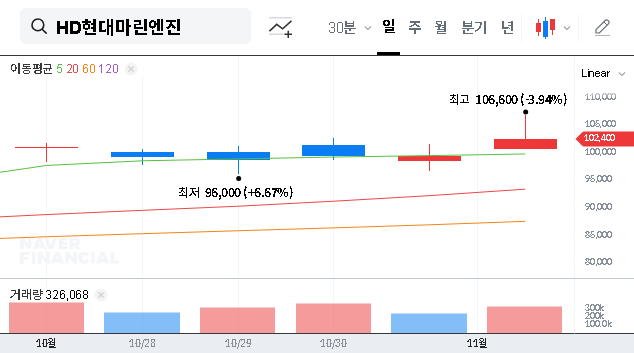
  • (071970) HD-Hyundai Marine Engine Stock Analysis: KRW 64.6B Contract & Future Outlook

    (071970) HD-Hyundai Marine Engine Stock Analysis: KRW 64.6B Contract & Future Outlook

    In a significant development for the global shipping sector, investors are closely watching HD-Hyundai Marine Engine stock following the announcement of a massive new supply contract. The company has secured a KRW 64.6 billion deal with major Korean shipbuilder K-조선, a move that signals robust health and future growth potential. This article provides a comprehensive analysis of the contract, its implications for the company’s financial performance, and a strategic outlook for current and potential investors.

    We will explore the ripple effects of this deal on the broader marine engine market, evaluate potential risks, and outline a detailed investment strategy to navigate the opportunities presented by this pivotal event.

    Deconstructing the Landmark K-조선 Contract

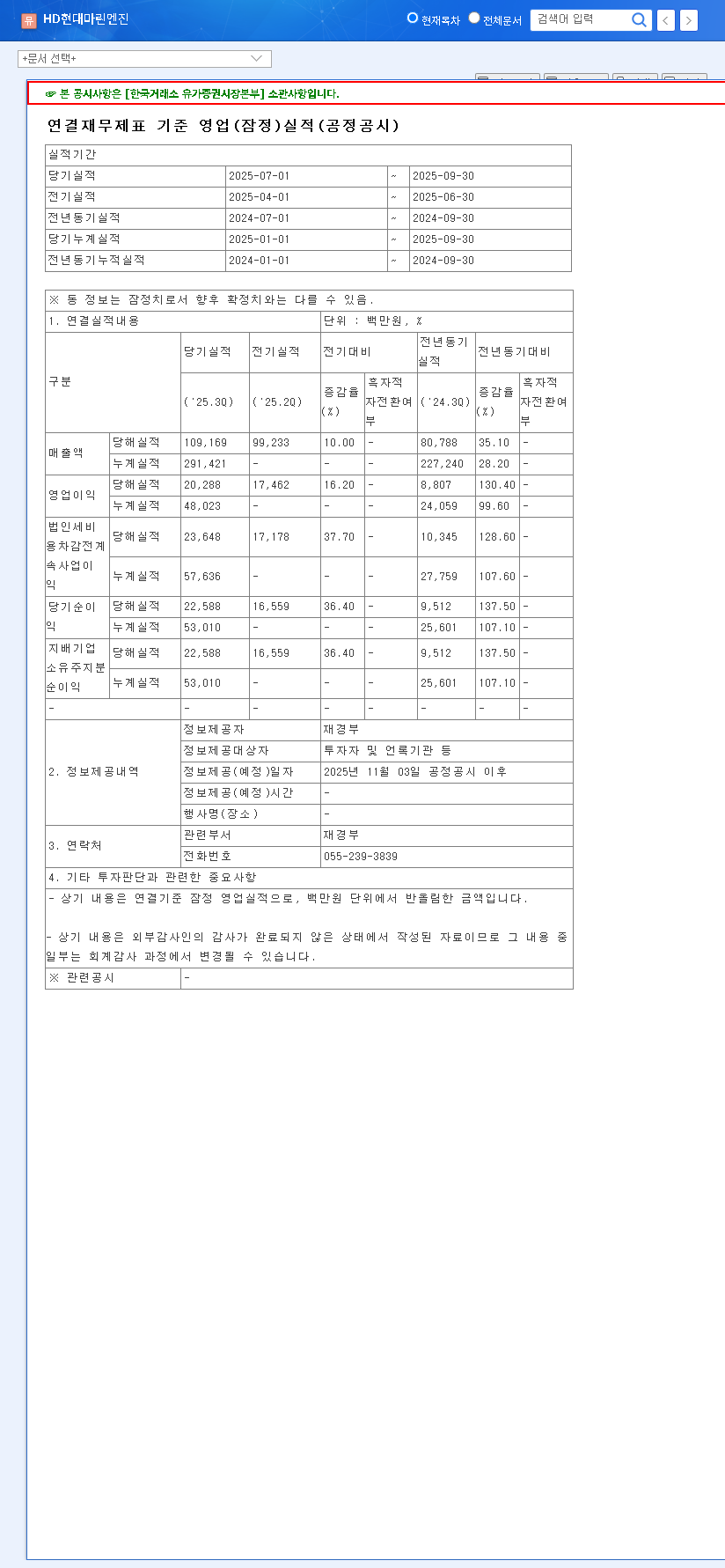
    On November 14, 2025, HD-Hyundai Marine Engine Co., Ltd. formalized a marine engine supply agreement valued at KRW 64.6 billion. According to the Official Disclosure on DART, this domestic supply contract with K-조선 is scheduled to run for nearly two years, from November 13, 2025, to July 26, 2027. The sheer scale of this agreement cannot be overstated, as the contract value represents a staggering 20.5% of the company’s recent annual revenue. This influx of capital and secured work provides a powerful foundation for future stability and growth.

    This contract is more than just a large order; it’s a testament to HD-Hyundai Marine Engine’s technological leadership and a critical indicator of its strengthening position within the highly competitive global marine engine market.

    Analyzing the Impact on HD-Hyundai Marine Engine Stock

    This deal is a multi-faceted win for the company, poised to deliver both immediate and long-term benefits that should positively influence its stock performance.

    Strengthening Revenue Streams and Order Backlog

    The most direct impact is the significant boost to revenue. This KRW 64.6 billion contract substantially strengthens an already impressive order backlog, which stood at KRW 1.0454 trillion. For investors, a robust backlog translates to predictable revenue streams, reducing uncertainty and providing a stable base for financial forecasting. It demonstrates the company’s ability to secure long-term, high-value projects, a key metric for evaluating industrial manufacturing firms.

    Solidifying Market Leadership & Eco-Friendly Tech

    The maritime industry is undergoing a massive transformation driven by stringent environmental regulations. Mandates from the International Maritime Organization (IMO) are pushing shipbuilders to adopt cleaner, more efficient engines. This K-조선 contract reinforces HD-Hyundai Marine Engine’s role as a key supplier of next-generation power systems. The ability to meet demand for eco-friendly engines (such as dual-fuel LNG or methanol-ready models) positions the company at the forefront of this green transition, a critical factor for long-term competitiveness and a compelling narrative for investors.

    Investment Strategy: Risks and Considerations

    While the outlook is overwhelmingly positive, a prudent investment strategy requires a clear-eyed view of potential headwinds. Investors should remain vigilant and monitor several key external factors.

    • Macroeconomic Volatility: The profitability of engine manufacturing is sensitive to raw material costs and currency fluctuations. The recent volatility in the KRW/USD exchange rate can impact the cost of imported components and the value of export revenues. A global economic slowdown could also temper the pace of new vessel orders.
    • Intense Competition: The marine engine market is dominated by a few major players. HD-Hyundai Marine Engine must continue to innovate and maintain its technological edge and price competitiveness to defend its market share against powerful global rivals.
    • Supply Chain Dynamics: Like all global manufacturers, the company is subject to supply chain risks. Monitoring logistics and component availability is crucial for ensuring that production timelines for this and other contracts are met without costly delays. For more context, you can read our analysis on shipbuilding industry trends.

    Final Recommendation and Outlook

    The KRW 64.6 billion contract is a powerful catalyst for HD-Hyundai Marine Engine. It provides immediate short-term positive momentum by boosting investor confidence and offers a concrete foundation for long-term fundamental strength. The company’s alignment with the crucial trend toward eco-friendly shipping further solidifies its growth trajectory.

    Investors should maintain a positive outlook while actively monitoring the macroeconomic risks outlined above. This contract significantly de-risks the company’s medium-term revenue forecast and enhances the investment thesis for those bullish on the future of the global shipping and marine engine market.

    (071970) HD-Hyundai Marine Engine Stock Analysis: KRW 64.6B Contract & Future Outlook 관련 이미지
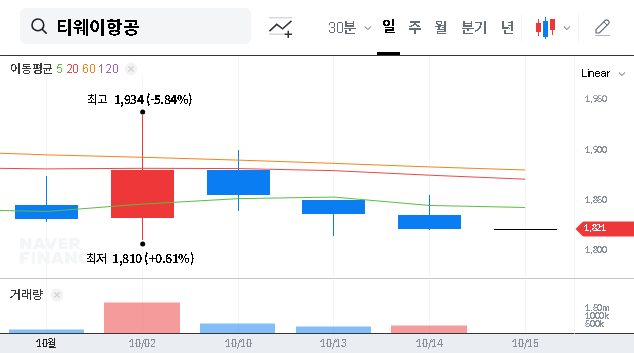
  • (091810) T’way Air Stock Analysis (Q3 2025): Earnings Collapse & Critical Investor Warning

    (091810) T’way Air Stock Analysis (Q3 2025): Earnings Collapse & Critical Investor Warning

    The latest financial report for T’way Air stock has sent shockwaves through the market, revealing a severe downturn that demands immediate attention from current and prospective investors. The preliminary Q3 2025 earnings are not merely a disappointment; they represent a significant financial crisis for the low-cost carrier, with massive operating and net losses that raise fundamental questions about its stability and future viability. This detailed T’way Air financial analysis will dissect the alarming figures, explore the underlying causes, and provide a clear-eyed investor outlook to help you navigate this turbulence and protect your assets.

    The Alarming Numbers: T’way Air’s Q3 2025 Earnings Shock

    T’way Air Co., Ltd. announced preliminary T’way Air earnings for Q3 2025 that dramatically underperformed all market expectations. The results paint a grim picture of the airline’s current operational state. The full details can be reviewed in the Official Disclosure (DART).

    Key Financial Indicators (Preliminary)

    • Revenue: KRW 449.8 billion (5% below market expectation of KRW 471.0 billion)
    • Operating Profit: KRW -95.5 billion (A staggering 338% below market expectation of KRW -21.8 billion)
    • Net Profit: KRW -124.7 billion

    The most alarming figure is the operating loss, which missed consensus estimates by a jaw-dropping 338%. This indicates that the company’s profitability issues are not minor but have reached a critical and accelerating point. This trend of continuous losses since Q3 2024 shows a deepening financial wound that cannot be ignored.

    Why It Happened: A Deep Dive into the Causes

    The sharp decline in the T’way Air Q3 2025 performance is not due to a single factor but a perfect storm of internal inefficiencies and external pressures. Understanding these root causes is crucial for any T’way Air stock analysis.

    1. Soaring Costs & Weak Revenue

    Revenue falling short suggests either a failure to attract passengers or a need to slash fares amid fierce competition. More critically, the massive operating loss points to an inability to control costs. Key culprits include:

    • Sustained High Fuel Prices: Jet fuel remains a primary expense for airlines. Global volatility, as tracked by authorities like IATA, continues to compress margins across the industry.
    • Rising Labor and Maintenance Costs: Inflationary pressures are increasing operational expenses across the board, from salaries to aircraft maintenance.
    • Inefficient Cost Management: The scale of the loss suggests that internal cost control measures have been insufficient to counter these external pressures.

    2. Financial Burdens and Currency Woes

    Beyond operational issues, T’way Air’s bottom line was further eroded by increased financial costs in a high-interest-rate environment and significant foreign exchange losses due to a volatile currency market. These factors turned a large operating loss into an even larger net loss, compounding the damage to the company’s balance sheet.

    “This isn’t just a bad quarter; it’s a structural crisis. The widening losses point to a severe liquidity risk and raise serious concerns about the company’s ability to fund its operations and growth without immediate and substantial capital intervention.”

    The Critical Impact on T’way Air’s Future

    This earnings report will have profound and lasting negative impacts on T’way Air’s fundamentals and, consequently, its stock price.

    • Deepening Capital Impairment: The company was already facing a capital impairment of KRW -42.2 billion as of mid-2025. This quarter’s massive net loss will significantly worsen that position, threatening financial sustainability and risking credit rating downgrades.
    • Skyrocketing Debt-to-Equity Ratio: As capital erodes, the debt-to-equity ratio will climb sharply, signaling increased financial risk to creditors and investors.
    • Weakened Competitiveness: Financial distress makes it incredibly difficult to invest in new aircraft, expand routes, or compete on price. This could lead to a loss of market share in the hyper-competitive LCC sector.

    Investor Outlook: A Cautious Flight Plan is Essential

    Given the severity of the T’way Air earnings report, an extremely cautious and defensive investment approach is paramount. The short-term outlook for T’way Air stock is overwhelmingly negative, with continued downward pressure highly likely. A recovery in investor confidence is improbable until the company demonstrates a clear and credible path out of its financial distress. For more general advice, you can review our guide to investing in airline stocks.

    Key Variables to Monitor Closely:

    • Capital Injection Plans: The success or failure of planned capital injections (new shares, bonds) is the single most important factor. Any delay could be catastrophic.
    • Profitability Initiatives: Look for concrete evidence of effective cost-cutting, route optimization, and revenue diversification efforts.
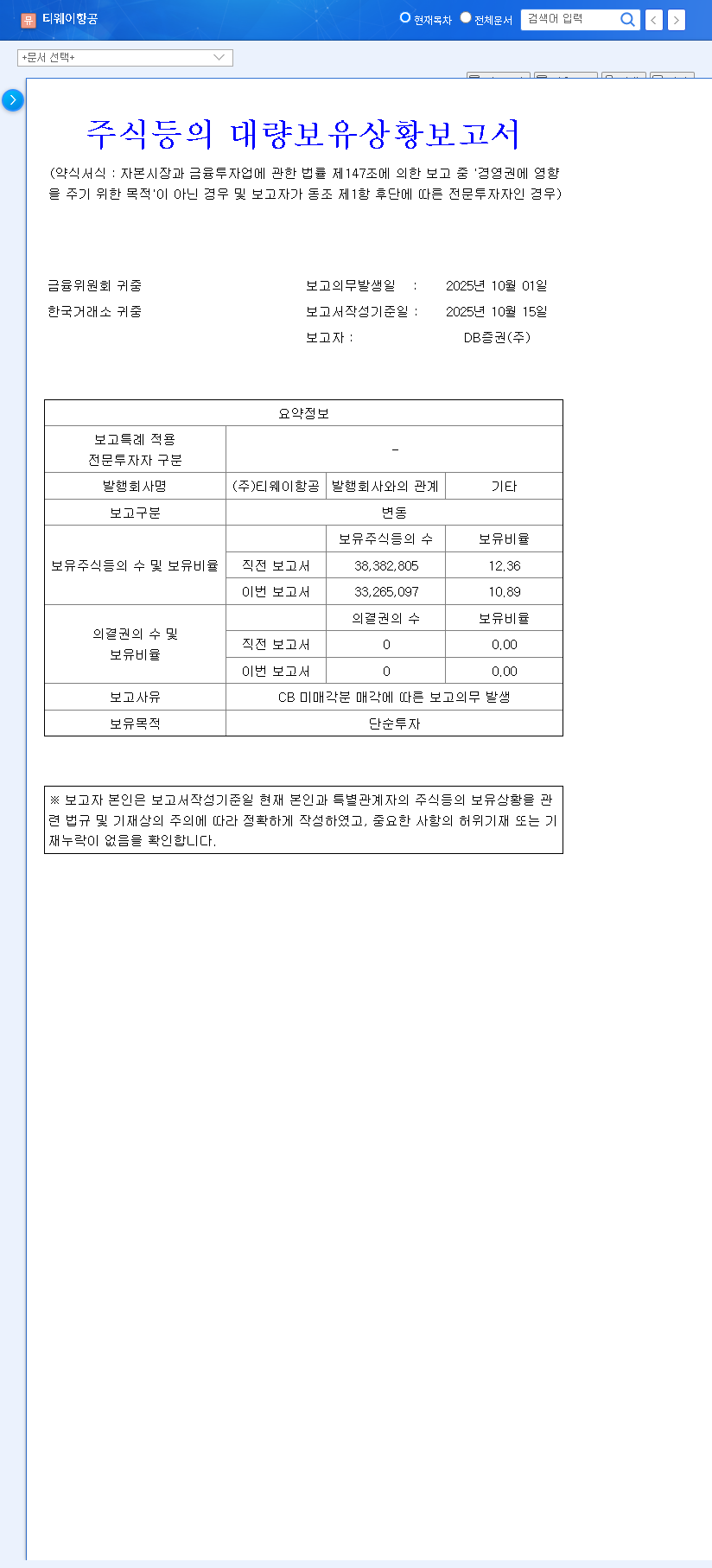
    • Major Shareholder Impact: Monitor how the new largest shareholder, Sono International, influences management and financial stabilization efforts.

    In conclusion, investors should remain on the sidelines, meticulously monitoring the upcoming Q4 results and the tangible progress of recovery plans before making any decisions regarding T’way Air stock.

    (091810) T'way Air Stock Analysis (Q3 2025): Earnings Collapse & Critical Investor Warning 관련 이미지
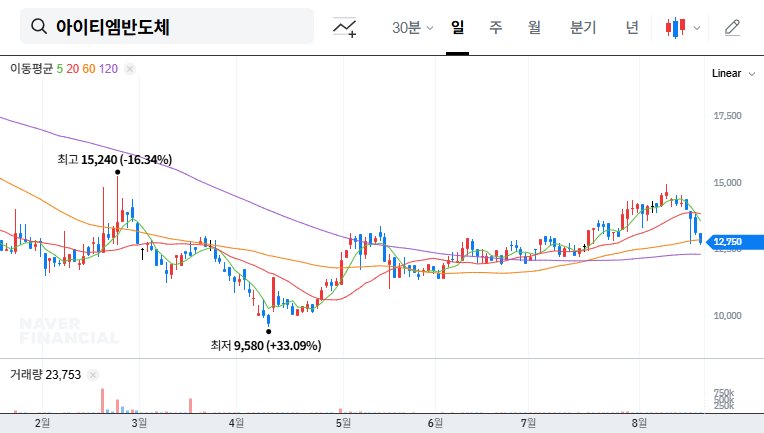
  • (084850) ITM Semiconductor Stock: Full IR Analysis & Investment Outlook for Q3 2025

    (084850) ITM Semiconductor Stock: Full IR Analysis & Investment Outlook for Q3 2025

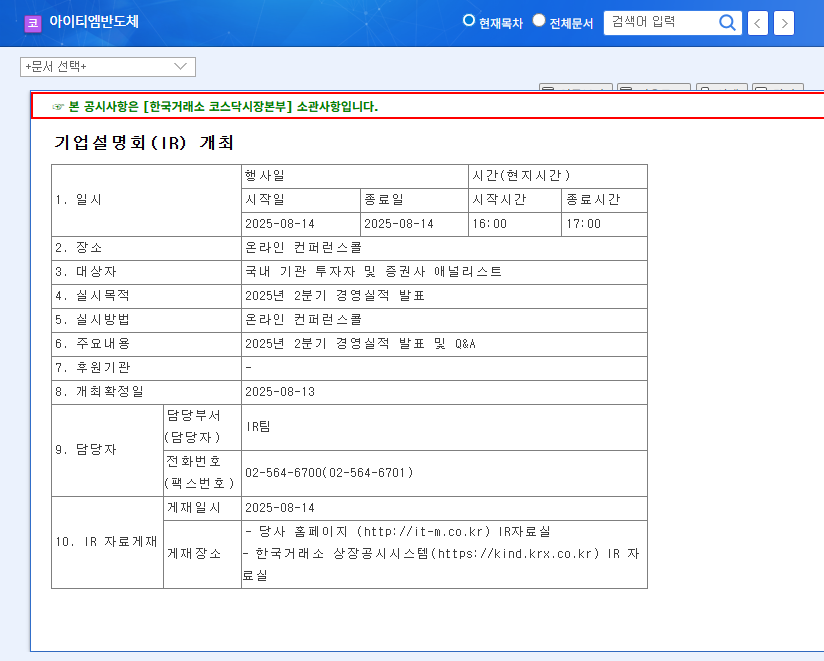
    This comprehensive ITM Semiconductor IR analysis provides a crucial look into the company’s upcoming Q3 2025 earnings call. With revenue in decline but a surprising pivot to operating profit, investors are at a crossroads. The upcoming Investor Relations (IR) event on November 14, 2025, is a pivotal moment that could either signal a genuine turnaround or flash a warning sign for the future of ITM Semiconductor stock. We will dissect the company’s fundamentals, market position, and the critical factors investors must watch during the presentation.

    ITM Semiconductor has scheduled this key event to present its Q3 2025 earnings and host a Q&A session, as detailed in their Official Disclosure. For a company specializing in high-tech components like secondary battery protection circuits (PMP, POC), battery PACKs, and e-cigarettes, this IR call will be a vital source of information for the investment community.

    Analyzing ITM Semiconductor’s Financial Health

    Q2 2025 Performance: A Profitable Contradiction

    In the first half of 2025, ITM Semiconductor’s financial report presented a mixed picture. The company recorded sales of KRW 272.7 billion, a stark 57.9% decrease compared to the previous year. This significant drop was primarily driven by falling sales in its core PMP (-61.4%) and e-cigarette (-48.4%) divisions. However, the most compelling part of the story is the bottom line. Despite the revenue collapse, the company achieved an operating profit of KRW 496 million and a net profit of KRW 12.2 billion. This remarkable turnaround from loss to profit is credited to aggressive and effective cost-saving measures, suggesting a disciplined operational strategy. While the debt-to-equity ratio improved, the company is not without risks; exposure to currency fluctuations and interest rate volatility remains a concern due to its financial structure.

    Market Environment and Future Growth Levers

    Our investment analysis must consider both the company’s internal strengths and external market forces. The outlook for its core business sectors presents both opportunities and challenges.

    • Secondary Battery Protection Circuits: This segment is poised for growth, fueled by the expansion of wearable devices, IoT, electric vehicles (EVs), and Energy Storage Systems (ESS). ITM Semiconductor’s advanced PMP technology gives it a competitive advantage in a booming market. For more on this technology, you can read our guide to understanding secondary battery components.
    • E-cigarettes: The global market for heated tobacco products continues to grow, offering a path for expansion. However, this sector is also marked by intense competition and the ever-present risk of stricter government regulations, which could impact future profitability.
    • New Business Ventures: The company’s strategic diversification into automotive electronics, defense, and robotics is a promising move to secure long-term growth and reduce reliance on its traditional markets. Success in these areas could redefine the company’s future.

    Stock Performance & Macroeconomic Headwinds

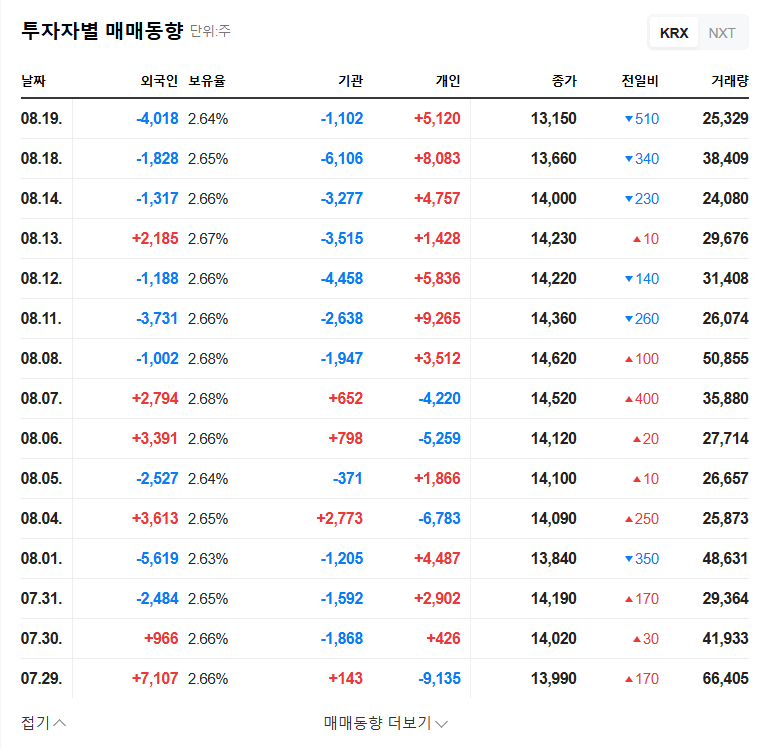
    The journey of ITM Semiconductor stock has been turbulent. After peaking in the KRW 60,000 range in mid-2021, the stock has been in a prolonged downtrend, currently trading in the low KRW 20,000s. Concurrently, foreign ownership has dwindled from a high of 6% to around 3%. This IR event is a critical test to see if management can present a compelling enough narrative to reverse this negative sentiment.

    Furthermore, global macroeconomic conditions, as reported by sources like Reuters, present significant risks. The KRW/USD exchange rate directly impacts foreign exchange gains, while high corporate borrowing levels make the company vulnerable to rising interest rates. Volatile oil prices and shipping costs can also compress margins by increasing raw material and logistics expenses.

    Investment Strategy: A Cautious ‘Hold’

    Given the conflicting signals of declining revenue and newfound profitability, a prudent approach is necessary. The successful cost-cutting demonstrates operational strength, but the stagnation in top-line growth cannot be ignored. The upcoming ITM Semiconductor earnings report and the subsequent management commentary will be the deciding factors.

    We recommend a ‘Hold’ rating on ITM Semiconductor stock pending the IR event. Investors should focus on the sustainability of the profit turnaround and look for concrete evidence of a strategy to reignite revenue growth before committing new capital.

    Key Questions for the IR Event

    Investors should meticulously analyze the following points from the presentation and Q&A session:

    • Revenue Recovery Plan: What are the concrete steps to reverse the decline in PMP and e-cigarette sales?
    • Profit Sustainability: Are the cost savings sustainable, or were they one-time measures? What are the projected margins for the coming quarters?
    • New Business Progress: What are the tangible achievements and revenue outlook for the automotive, defense, and robotics ventures?
    • Macroeconomic Mitigation: How is the company planning to hedge against currency and interest rate risks?

    In conclusion, this ITM Semiconductor IR analysis highlights a company at a critical inflection point. While positive signs of a turnaround are visible, the path forward is clouded by significant challenges. The clarity and confidence conveyed by management during the IR event will ultimately determine the future trajectory of its stock price.

    (084850) ITM Semiconductor Stock: Full IR Analysis & Investment Outlook for Q3 2025 관련 이미지
    (084850) ITM Semiconductor Stock: Full IR Analysis & Investment Outlook for Q3 2025 관련 이미지
  • (357230) In-Depth H.PIO Earnings Analysis (357230): Q3 2025 Profit Surge Signals Turnaround?

    (357230) In-Depth H.PIO Earnings Analysis (357230): Q3 2025 Profit Surge Signals Turnaround?

    This comprehensive H.PIO earnings analysis delves into the recently announced preliminary operating results for Q3 2025. H.PIO Co., Ltd. (357230) has presented a complex picture for investors: a notable decline in revenue juxtaposed with a significant, and perhaps surprising, improvement in profitability. Is this the start of a sustainable corporate turnaround, or a temporary blip driven by short-term factors? This report provides a deep dive into the company’s performance trends, financial health, and the broader macroeconomic environment to offer clear, actionable insights for your investment strategy regarding H.PIO stock.

    H.PIO’s Q3 2025 Earnings at a Glance

    H.PIO Co., Ltd. announced its preliminary consolidated operating results for the third quarter of 2025, with the full details available in their Official Disclosure. The key figures reveal a fascinating story:

    • Revenue: KRW 64.3 billion, a decrease of 14.1% from the previous quarter.
    • Operating Profit: KRW 2.1 billion, marking a significant improvement year-over-year.
    • Net Income: KRW 1.5 billion, also showing a strong positive trend compared to the same period last year.

    While the top-line revenue figure may cause initial concern, the bottom-line profitability metrics suggest that operational efficiencies or strategic shifts may be taking hold. The year-over-year improvement is the most compelling aspect of this report, signaling a potential recovery from previous challenges.

    Despite a contraction in sales, H.PIO’s ability to boost operating profit year-over-year is a critical data point that demands a closer look. It points towards improved cost controls, a favorable product mix, or both.

    Decoding the Numbers: A Deep Dive into H.PIO’s Performance

    The Revenue vs. Profitability Paradox

    The decline in revenue for H.PIO in Q3 2025 could be attributed to several factors, including market seasonality, intensified competition in the health functional food sector, or a deliberate strategic pivot away from lower-margin products. However, the simultaneous rise in profitability is the key narrative. This suggests successful cost structure optimization, favorable raw material pricing, or a strategic focus on high-margin products that are resonating with consumers. The improvement over Q3 2024’s operating profit of KRW 1.8 billion is a clear positive indicator.

    Assessing H.PIO’s Financial Foundation

    A thorough 357230 financial analysis requires looking beyond a single quarter. Based on data from December 2023, the company’s financial health presents a mixed but improving picture:

    • Improved Stability: The debt-to-equity ratio improved to 116.18%, indicating a stronger balance sheet and reduced financial risk.
    • Stable Retained Earnings: A ratio of 89.43% suggests the company is retaining profits for future growth and investment.
    • Efficiency Challenge: A negative Return on Equity (ROE) of -3.69% highlights a need to improve capital utilization and generate more profit from shareholder equity. The latest earnings could be the first step in reversing this trend.

    The Macroeconomic Landscape: External Factors at Play

    No company operates in a vacuum. Broader economic trends could significantly impact H.PIO’s future performance. According to analysis from sources like Bloomberg, several factors are key:

    • Currency Volatility: A weaker Korean Won (KRW) against the USD and EUR can be a double-edged sword. It boosts the value of export sales but increases the cost of imported raw materials.
    • Interest Rate Environment: A global trend towards interest rate cuts, particularly in the US, could lower borrowing costs for H.PIO, making it cheaper to finance new projects or manage existing debt.
    • Commodity & Shipping Costs: While shipping indices have stabilized, potentially easing logistics burdens, rising gold prices could indirectly affect the cost of certain premium health ingredients. Monitoring these trends is crucial.

    Investor Outlook: Is H.PIO Stock a Buy After This Earnings Analysis?

    This H.PIO earnings analysis indicates a potential inflection point. The positive profitability signals are encouraging, but investors must weigh them against the risks.

    The Bull Case: Signs of a Turnaround

    Investors with a positive outlook will focus on the clear year-over-year profit growth as evidence of a successful operational restructuring. If the company can stabilize its revenue while maintaining these improved margins, the stock could be undervalued. The improving financial stability and favorable interest rate environment provide further support for a growth narrative.

    The Bear Case: Headwinds to Consider

    Cautious investors will point to the 14.1% quarterly revenue decline as a major red flag. Is the company losing market share in a competitive industry? Furthermore, macroeconomic risks like exchange rate volatility and rising commodity costs could erode the newly gained profit margins. A deeper look into our health functional food industry report may provide more context.

    Frequently Asked Questions (FAQ)

    What are the key takeaways from H.PIO’s Q3 2025 earnings?

    The main story is the divergence between falling revenue (KRW 64.3 billion) and rising profitability. The operating profit of KRW 2.1 billion showed a strong improvement year-over-year, suggesting enhanced operational efficiency or a better product mix.

    Does this H.PIO earnings analysis suggest a genuine turnaround?

    It’s a strong signal, but not a confirmation. The improved profitability is a very positive sign of a potential turnaround. However, sustained recovery will depend on the company’s ability to return to revenue growth while maintaining these new margins.

    What is the future investment outlook for H.PIO stock (357230)?

    The outlook is cautiously optimistic. While the improving profitability is a buy signal for some, others will want to see revenue stabilize. Investors should closely monitor market competition, new business ventures, and macroeconomic factors before making a decision.

    (357230) In-Depth H.PIO Earnings Analysis (357230): Q3 2025 Profit Surge Signals Turnaround? 관련 이미지
    (357230) In-Depth H.PIO Earnings Analysis (357230): Q3 2025 Profit Surge Signals Turnaround? 관련 이미지
  • (192080) DoubleUGames IR: Deep Dive into Q3 2025 Earnings & Stock Impact

    (192080) DoubleUGames IR: Deep Dive into Q3 2025 Earnings & Stock Impact

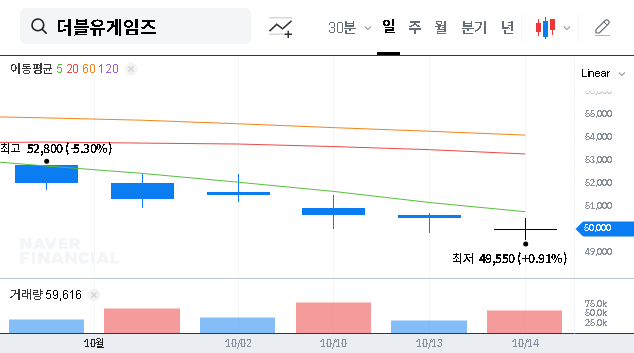
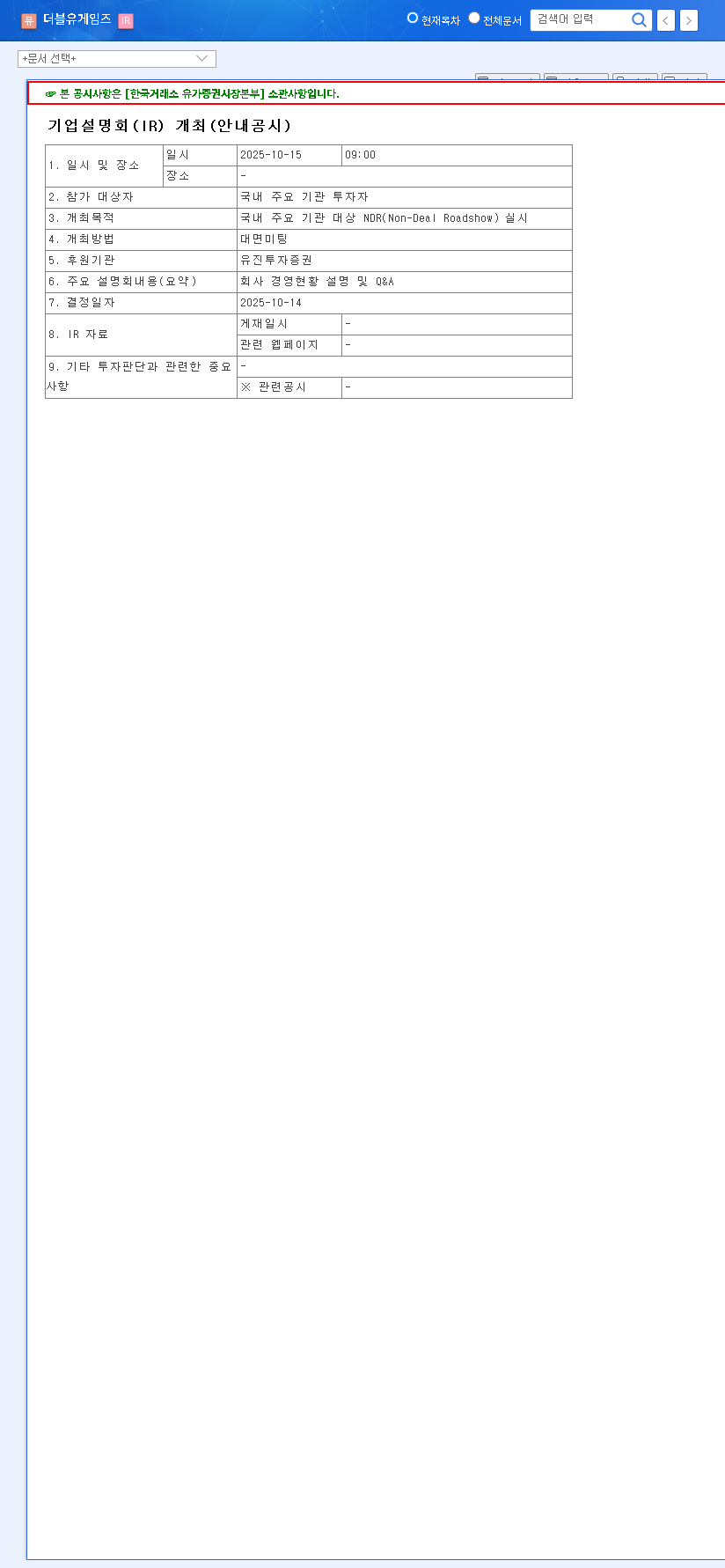
    The upcoming DoubleUGames IR (Investor Relations) briefing is a pivotal event for investors tracking DoubleUGames Co., Ltd.. Scheduled for November 19, 2025, at 9:00 AM KST, this session will provide crucial insights into the Q3 2025 business results, shaping the narrative around the company’s future and the trajectory of DoubleUGames stock. This analysis offers a comprehensive guide for investors, dissecting the company’s fundamentals, growth drivers like its burgeoning iGaming segment, and the key factors to watch during the presentation.

    The Q3 2025 Investor Relations Briefing: What’s at Stake?

    This official Investor Relations event is more than just a financial report; it’s a platform for transparent communication with major domestic institutional investors. The company will unveil its Q3 2025 performance and field questions regarding its current status and strategic vision. This is a critical moment for re-evaluating the company’s intrinsic value and understanding its direction. The briefing is based on the company’s official filing. Source: Official Disclosure (DART).

    For investors, the DoubleUGames IR is the primary opportunity to gauge management’s confidence and to scrutinize the strategies that will drive future shareholder value.

    Analyzing DoubleUGames’ Fundamentals and Growth Engines

    To understand the context of the Q3 report, we must first look at the company’s performance in the first half of 2025. While revenue saw a slight dip, the significant rise in operating profit tells a story of enhanced efficiency and strategic success.

    H1 2025 Performance Snapshot

    • Revenue: KRW 333.9 billion (a decrease of 3.2% YoY).
    • Operating Profit: KRW 109.1 billion (a significant increase of 15.0% YoY).

    This profitability improvement is not accidental. It is the direct result of strategic pillars that are expected to be key topics at the DoubleUGames IR event.

    Key Growth Drivers to Watch

    • iGaming Segment Expansion: The acquisitions of SuprNation AB and Paxie Games have supercharged the company’s iGaming growth. This high-margin segment now constitutes 12.3% of total revenue and is the primary engine for profit expansion.
    • Strategic Portfolio Diversification: Beyond its core offerings, the company is actively developing new casual games and pursuing M&A to build a resilient, long-term growth foundation.
    • Robust Financial Health: With KRW 104.2 billion in operating cash flow and a low debt-to-equity ratio of 38.67%, the company’s financial stability is a major asset.
    • Commitment to Shareholder Returns: A planned KRW 35 billion treasury share buyback and cancellation is a clear, positive signal to the market about the management’s confidence in DoubleUGames stock value. For more, see our detailed guide on understanding shareholder return policies.

    Market Risks and Potential Headwinds

    Despite its strong position, DoubleUGames operates in a dynamic environment with inherent risks that investors must consider.

    • Intense Market Competition: The social casino market is fiercely competitive. While DoubleUGames holds a solid 5th place with a 6.1% market share, continuous innovation is necessary to defend and grow this position.
    • Macroeconomic Uncertainty: A global economic slowdown could reduce consumers’ disposable income, which may negatively impact spending on online gaming and entertainment.
    • Currency Fluctuations: As a global operator, the company is exposed to US dollar exchange rate volatility, which can impact reported financial results.

    Investor Action Plan: Key Questions for the IR

    Informed investors should listen closely during the Q&A for answers to several key questions that will determine the future of DoubleUGames stock.

    Critical Focus Points for Investors

    • Deep Dive on Q3 Earnings: What specific factors drove revenue and profit changes? What was the precise growth contribution from the iGaming segment?
    • Future M&A and Expansion: What are the integration updates for Paxie Games? What are the company’s future M&A plans and long-term growth targets for iGaming and casual games?
    • Competitive Strategy: How does DoubleUGames plan to differentiate itself and gain market share in the crowded social casino space?
    • Shareholder Return Execution: What is the exact timeline for the announced treasury stock buyback and cancellation?

    Ultimately, this DoubleUGames IR is a critical inflection point. The information presented and the clarity of management’s vision will directly influence investor confidence and could set the tone for the stock’s performance in the months to come. Careful analysis is paramount for making well-informed investment decisions.
    (192080) DoubleUGames IR: Deep Dive into Q3 2025 Earnings & Stock Impact 관련 이미지
  • (092200) DAE-IL Corporation Stock (092200): Shareholder Sale & Q3 Slump Analysis

    (092200) DAE-IL Corporation Stock (092200): Shareholder Sale & Q3 Slump Analysis

    Investor sentiment surrounding DAE-IL Corporation stock (ticker: 092200) has turned cautious. The company finds itself at a challenging crossroads, grappling with a significant drop in profitability despite rising revenues in its Q3 2025 report. Compounding this concern, a major shareholder has reduced their stake, sending a potentially worrying signal to the market. This detailed DAE-IL Corporation analysis will dissect these events, examine the underlying fundamentals, and provide a clear investment strategy for current and potential investors.

    The Catalyst: A Major Shareholder Stake Reduction

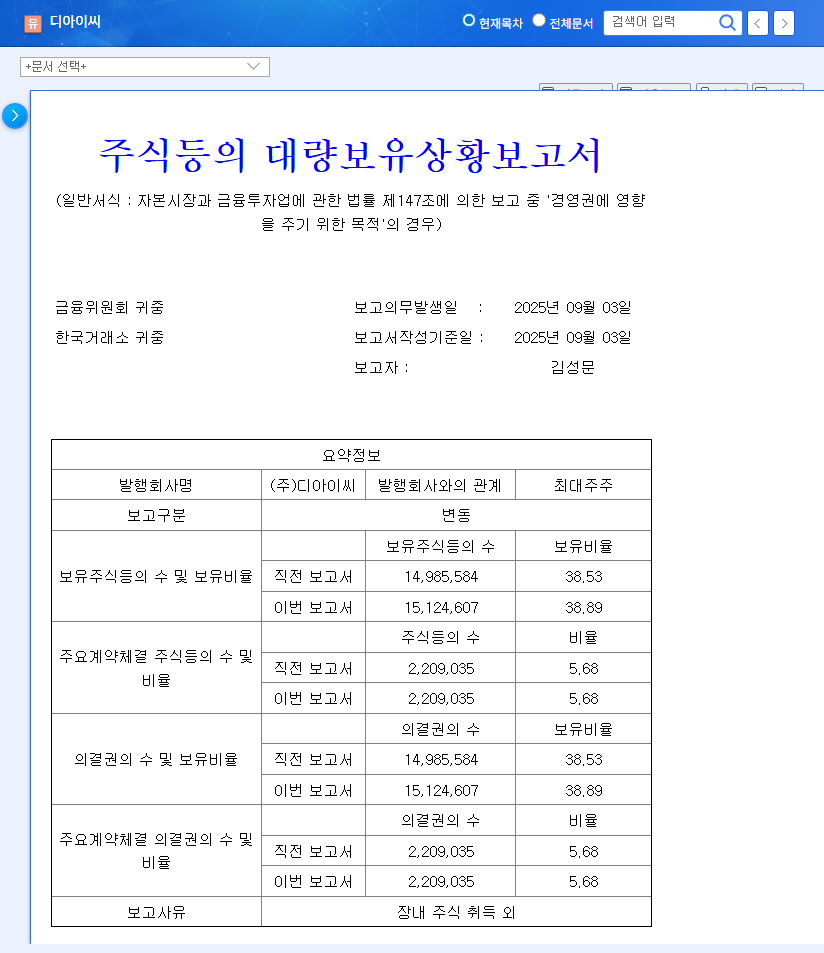
    On November 12, 2025, a significant disclosure captured the market’s attention. According to the Official Disclosure filed with DART, major shareholder Kim Seong-moon’s ownership stake in DAE-IL Corporation decreased from 38.89% to 35.68%. While the stated purpose for holding the shares remains ‘management influence,’ the sale itself raises questions. A reduction in stake by a key insider, especially when timed with poor financial performance, is often interpreted by investors as a lack of confidence in the company’s near-term prospects. This major shareholder sale, involving related parties like DAE-IL Innovate Co., Ltd., has understandably created downward pressure on the stock.

    Decoding the Q3 2025 Performance Slump

    The shareholder sale appears to be directly linked to the company’s deteriorating fundamentals in the third quarter of 2025. While top-line growth seems healthy, the bottom line tells a different, more concerning story.

    The Paradox: Revenue Growth vs. Profitability Collapse

    DAE-IL Corporation reported a consolidated revenue of KRW 588.5 billion, a respectable 10.3% increase year-on-year, driven primarily by its automotive components sector. However, this growth was overshadowed by a severe decline in profitability.

    Operating profit plummeted to KRW 21.3 billion, a staggering 36.1% decrease compared to the same period last year. This resulted in the operating profit margin shrinking to just 3.62%, a drop of 2.25 percentage points.

    This profitability crisis is attributed to a combination of external and internal pressures, including rising raw material prices, unfavorable exchange rate fluctuations, and increased capital expenditures for new vehicle models and the crucial transition to eco-friendly vehicle components.

    Key Financial Health Indicators

    • Assets & Liabilities: Both total assets (KRW 728.9 billion) and liabilities (KRW 551.8 billion) saw a slight increase, mainly due to a rise in inventory and borrowings, suggesting potential financial strain.
    • Cash Flow: Operating cash flow decreased to KRW 36.7 billion, with significant cash being used for investments in tangible assets, highlighting the heavy cost of future-proofing the business.
    • Risk Exposure: The company faces notable foreign exchange risk (USD, JPY, EUR) and interest rate risk from its variable-rate borrowings. You can learn more about managing such risks from authoritative sources like leading financial publications.

    Future Outlook: The EV Promise vs. Market Headwinds

    The long-term investment strategy for DAE-IL Corporation hinges on its ability to navigate the transition to electric vehicles (EVs) while surviving current macroeconomic pressures. The company is heavily investing in future growth drivers like reducers, Shift-by-Wire (SBW) systems, and e-Axles. This forward-looking approach is essential for long-term survival in the automotive industry. However, these investments are costly and are currently weighing down profitability.

    The global trend toward eco-friendly vehicles is a massive tailwind, but it’s countered by the headwinds of a potential global economic slowdown, volatile raw material costs, and currency fluctuations. For investors, this creates a classic battle between short-term pain and long-term gain. For more on this sector, check out our complete guide to automotive components stocks.

    Conclusion: An Investment Strategy for DAE-IL Corporation Stock

    Given the confluence of declining profitability and a major insider sale, a conservative and cautious approach to DAE-IL Corporation stock is warranted. The negative signals are likely to suppress investor sentiment and exert downward pressure on the share price in the short to medium term. The uncertainty around management’s confidence further clouds the outlook.

    Investment Opinion: Sell / Against Holding.

    Before considering an investment, it is crucial to wait for tangible signs of a turnaround. This includes seeing a clear recovery in profit margins and concrete results from the company’s investments in the eco-friendly vehicle business.

    Key Investor Precautions

    • Monitor Profitability: Watch future earnings reports closely for any signs of margin improvement.
    • Track Shareholder Activity: Keep an eye out for any further changes in the stakes of major shareholders.
    • Analyze Macro Trends: Pay attention to exchange rates and commodity prices, as they have a direct impact on the company’s performance.

    (092200) DAE-IL Corporation Stock (092200): Shareholder Sale & Q3 Slump Analysis 관련 이미지
    (092200) DAE-IL Corporation Stock (092200): Shareholder Sale & Q3 Slump Analysis 관련 이미지
  • (016250) SGC E&C Earnings Analysis (Q3 2025): A Deep Dive into Financial Health & Stock Outlook

    (016250) SGC E&C Earnings Analysis (Q3 2025): A Deep Dive into Financial Health & Stock Outlook

    This comprehensive SGC E&C earnings analysis provides a deep dive into the company’s provisional third-quarter 2025 results, which have sent mixed signals to the market. While the year-over-year improvement offers a glimmer of hope, it’s crucial to look beyond the headline numbers. Significant underlying challenges, including valuation pressures and macroeconomic headwinds, demand a cautious approach from investors.

    What is the true financial state of SGC E&C, and what story do the numbers tell about its future? This report examines the company’s fundamentals, recent workforce adjustments, and the broader economic landscape to formulate a clear-eyed investment strategy for the current environment. Let’s explore the critical data needed to accurately assess the SGC E&C stock outlook.

    Unpacking the SGC E&C Q3 2025 Earnings Report

    On November 12, 2025, SGC E&C Co., Ltd. released its provisional consolidated financial results for the third quarter. The official disclosure can be viewed directly from the source: Official Disclosure (DART).

    Q3 2025 Provisional Results:
    – Sales: 325.8 billion KRW
    – Operating Profit: 11.6 billion KRW

    While the operating profit shows a marked improvement from the 1.1 billion KRW reported in Q3 2024, this positive momentum is overshadowed by the massive losses incurred in the fourth quarter of 2024. The market’s reaction is likely to remain muted, as this single quarter of recovery is insufficient to erase concerns about full-year performance and the sky-high Price-to-Earnings (PER) ratio.

    A Deep Dive into SGC E&C’s Financial Health

    To understand the context behind the latest numbers, we must analyze the company’s recent performance trends and key financial indicators. The data reveals a story of volatility and a challenging road to recovery.

    Quarterly Performance Trends

    • Q3 2025: Sales 325.8B KRW, Operating Profit 11.6B KRW
    • Q2 2025: Sales 336.0B KRW, Operating Profit 14.9B KRW
    • Q4 2024: Sales 378.3B KRW, Net Income -31.3B KRW

    Key Financial Observations

    • Earnings Volatility: A pattern of recovery in 2025 is evident, but it follows a period of significant financial distress in late 2024. The sustainability of this recovery is the key question for any SGC E&C investment thesis.
    • Profitability Under Pressure: Key metrics like operating profit margin and Return on Equity (ROE) were severely damaged in 2024. While improving, they remain far below historical levels, indicating ongoing efficiency challenges.
    • Improved Financial Soundness: On a positive note, the debt-to-equity ratio has steadily declined, suggesting successful efforts to deleverage and strengthen the balance sheet.
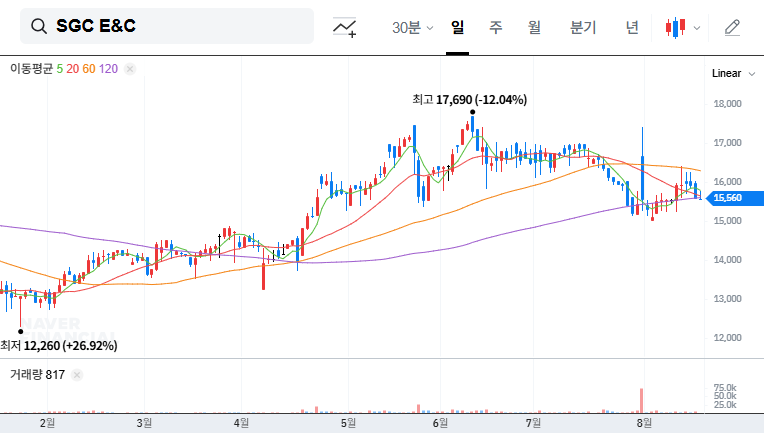
    • Extreme Valuation: The estimated PER for 2025 stands at an exceptionally high 1,565.04x. This indicates that the current stock price is far ahead of its earnings, posing a significant risk of correction. For more on valuation metrics, investors can review resources from authoritative sites like Bloomberg.

    Workforce and Macroeconomic Headwinds

    Strategic Workforce Adjustments

    Data from June 2025 shows a net decrease of 44 employees, primarily concentrated in the construction division. This could signal a strategic pivot or a response to a weaker order book in that sector. Positively, an increase in average service length and salary suggests the company is successfully retaining its experienced, high-value personnel, which is crucial for long-term stability.

    Challenging Macro Environment

    SGC E&C does not operate in a vacuum. Several external factors create significant headwinds:

    • High Exchange Rate: The strong USD against the KRW (around 1,466) increases the cost of imported raw materials and equipment, directly squeezing profit margins.
    • Interest Rate Uncertainty: While rates have shown a downward trend, any future freeze or hike could elevate borrowing costs and impact the financing of large-scale projects.

    Investment Thesis: A Cautious Outlook

    Considering the lingering financial burden from 2024, uncertainty around Q4 2025 performance, and extreme valuation pressure, a conservative and cautious approach is warranted for SGC E&C stock at this time. The positive earnings trend is a good sign, but it is not yet strong enough to justify the high stock price.

    Action Plan for Astute Investors

    Before committing capital, investors should seek clarity on the following points. For those new to this type of analysis, our guide on how to analyze construction company stocks provides a helpful framework.

    • Confirm the final, audited Q4 2025 earnings and management’s strategy for sustained profitability.
    • Monitor the order pipeline for the construction and plant divisions to gauge future revenue streams.
    • Assess the performance of new business ventures (e.g., logistics) as potential growth drivers.
    • Ensure the company continues to manage its debt and maintain healthy cash flow.

    Frequently Asked Questions (FAQ)

    What were SGC E&C’s provisional earnings for Q3 2025?

    For the third quarter of 2025, SGC E&C Co., Ltd. reported consolidated sales of 325.8 billion KRW and an operating profit of 11.6 billion KRW, which is an improvement over the same period in the previous year.

    How is SGC E&C’s current financial health?

    The company’s financial soundness has improved, as evidenced by a consistently decreasing debt-to-equity ratio. However, concerns about overall profitability remain due to significant losses recorded in 2024.

    What is the recommended investment approach for SGC E&C stock now?

    Given the high valuation, past losses, and macroeconomic uncertainties, a cautious or conservative approach is recommended. Investors should wait for more clarity on sustained earnings recovery before making significant investment decisions.
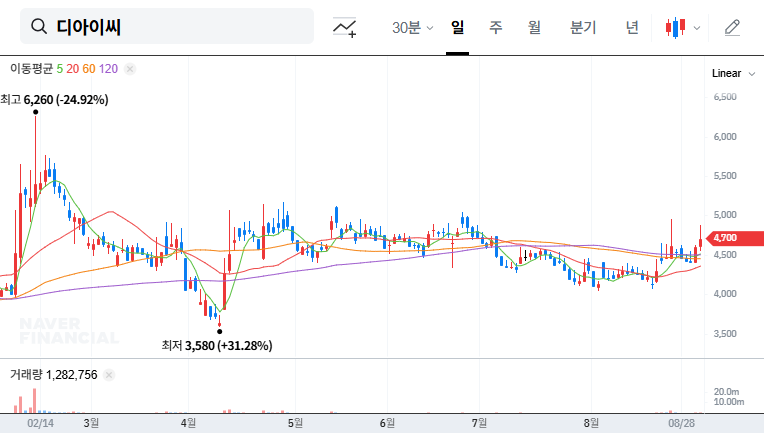
    (016250) SGC E&C Earnings Analysis (Q3 2025): A Deep Dive into Financial Health & Stock Outlook 관련 이미지
    (016250) SGC E&C Earnings Analysis (Q3 2025): A Deep Dive into Financial Health & Stock Outlook 관련 이미지