Tag: DS Danseok

  • DS Danseok Secures Patent for Used Cooking Oil Recycling: A Boost for Bioenergy Business?


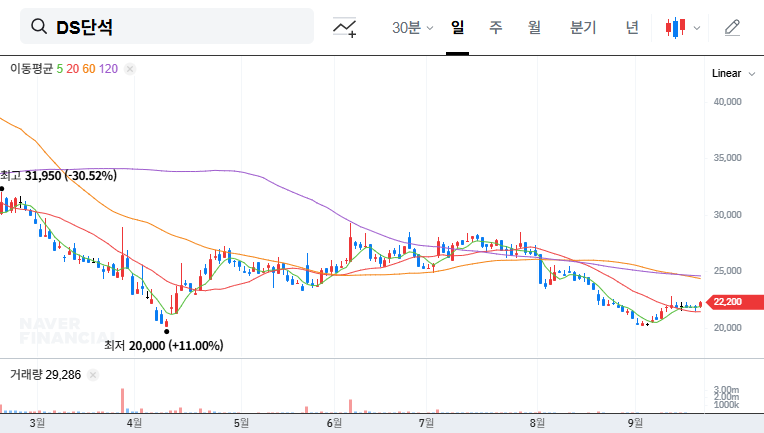
    DS Danseok Secures Patent for Used Cooking Oil Recycling: A Boost for Bioenergy Business? 대표 차트 이미지


    DS Danseok’s New Patent: Revolutionizing Used Cooking Oil Recycling?

    On September 18, 2025, DS Danseok secured a patent for an ‘Automated System for High-Purity Used Oil Recovery and Continuous Separation of Scrap Iron and Impurities from Used Oil Cans’. This robotic system automates the separation of used oil, iron, and impurities, featuring a hot oil spraying and hot air supply system to prevent oil solidification in winter, maximizing recovery efficiency.

    Why This Patent Matters

    This patent is expected to significantly impact DS Danseok’s bioenergy business, particularly biodiesel and Sustainable Aviation Fuel (SAF) production. Used cooking oil (UCO) is a key feedstock for both, making high-quality UCO acquisition crucial for competitive advantage.

    What Does This Mean for DS Danseok’s Future?

    • Cost Reduction and Efficiency Gains: The automated system promises increased UCO recovery rates, streamlined processes, and reduced costs.
    • Enhanced Bioenergy Competitiveness: Securing high-quality UCO strengthens competitiveness in biodiesel and SAF production.
    • Strengthened ESG Initiatives: The patent reinforces DS Danseok’s image as an eco-conscious company committed to waste recycling.
    • Business Expansion Potential: The standardized modular system facilitates expansion of production facilities domestically and internationally.

    What Should Investors Consider?

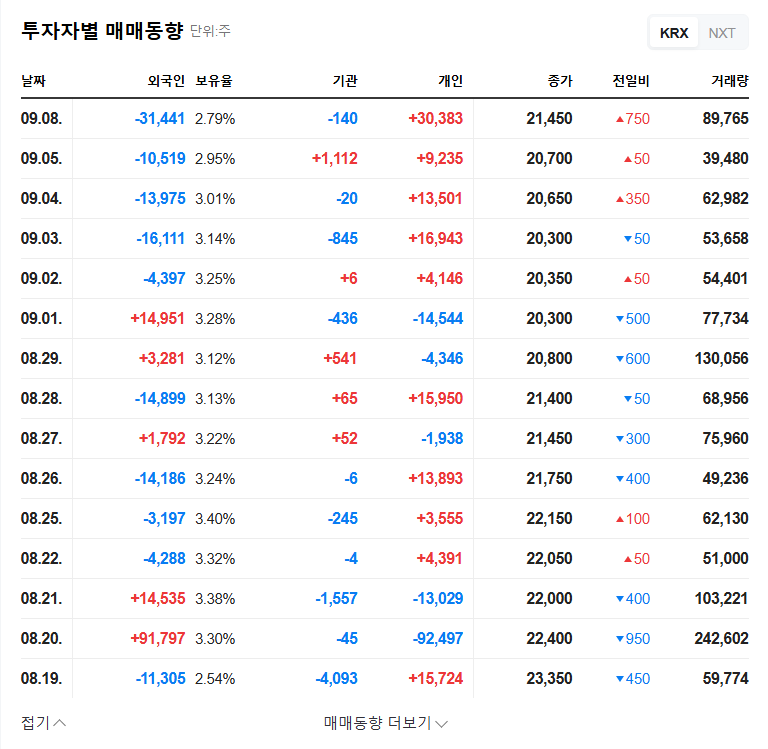
    The patent acquisition may positively influence stock prices in the short term. However, long-term investment decisions should consider the overall business performance, particularly improvements in the bioenergy sector, continued growth in battery recycling, and improvements in financial soundness. This report does not constitute investment advice, and all investment decisions should be made at the investor’s own discretion.


    Frequently Asked Questions

    What is DS Danseok’s new patent about?

    It’s a patent for a system that recycles used cooking oil to recover high-purity oil and automatically separates scrap iron and impurities.

    Why is this patent significant?

    It’s expected to enhance DS Danseok’s bioenergy business competitiveness by enabling efficient recycling of used cooking oil, a key feedstock for biodiesel and SAF.

    What should investors consider?

    Focus on long-term business performance and financial health rather than short-term stock fluctuations.
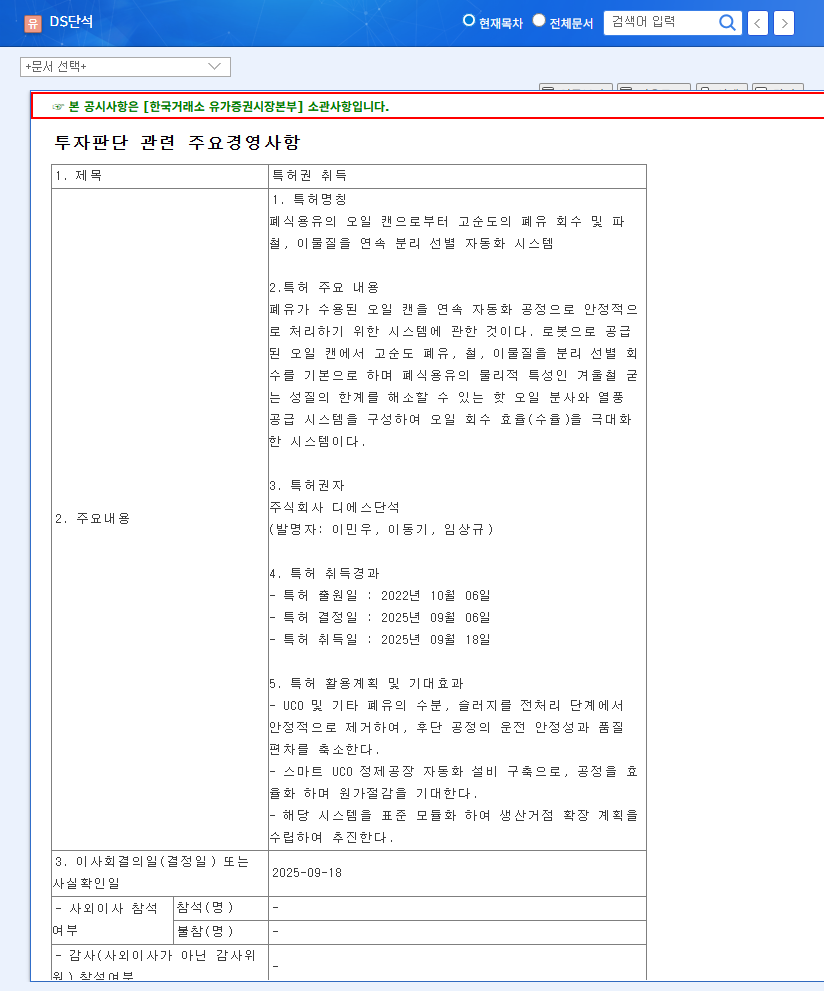
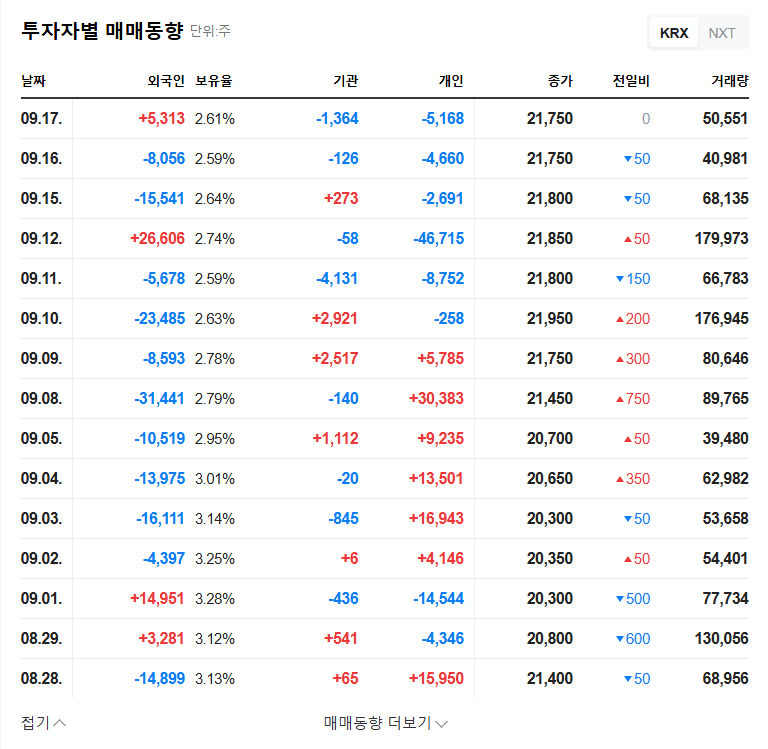



    DS Danseok Secures Patent for Used Cooking Oil Recycling: A Boost for Bioenergy Business? 관련 이미지
    DS Danseok Secures Patent for Used Cooking Oil Recycling: A Boost for Bioenergy Business? 관련 이미지


  • DS Danseok Stock Buyback Analysis: A Bullish Signal? Key Issues and Investment Strategies

    DS Danseok Stock Buyback Analysis: A Bullish Signal? Key Issues and Investment Strategies 대표 차트 이미지

    1. DS Danseok’s Stock Buyback: What Happened?

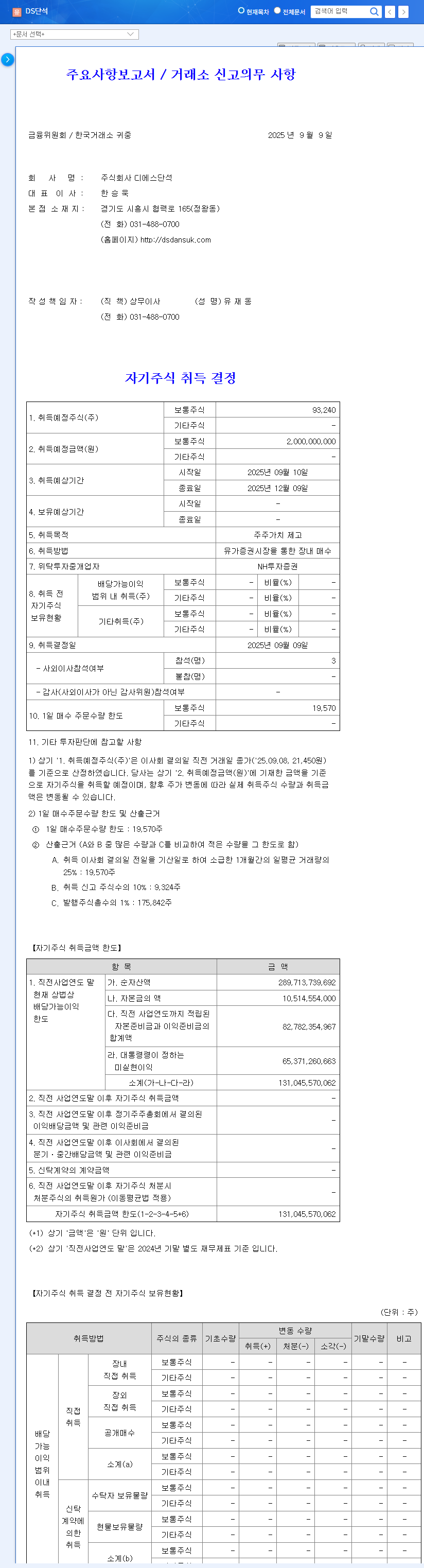
    On September 9, 2025, DS Danseok announced a KRW 2 billion stock buyback program. The stated objective is ‘enhancing shareholder value,’ and the company plans to repurchase 93,240 shares through open market purchases on the stock exchange.

    2. Why the Buyback?

    Stock buybacks are typically conducted to stabilize stock prices and enhance shareholder value. In DS Danseok’s case, recent underperformance in the bioenergy sector has weakened its stock price. This buyback can be interpreted as a strategic move to alleviate investor concerns and create momentum for a rebound.

    3. Impact on Stock Price?

    • Short-term impact: Buybacks reduce the number of outstanding shares, which can increase earnings per share (EPS). They can also signal the company’s commitment to defending its stock price, potentially improving investor sentiment.
    • Long-term impact: If shares are retired after repurchase, it can contribute to long-term shareholder value. However, the effectiveness of the buyback may be limited without improvements in the bioenergy sector’s performance.

    4. What Should Investors Do?

    DS Danseok has a business portfolio aligned with ESG trends and significant growth potential, including expansion into the SAF market and strengthening its battery recycling business. However, uncertainties remain, including the recovery of the bioenergy sector, raw material prices, and exchange rate fluctuations. Investors should carefully consider these factors before making investment decisions.

    Frequently Asked Questions

    Do stock prices always go up after a buyback?

    While buybacks are generally seen as a positive signal, they don’t guarantee a stock price increase. Various factors like company performance and market conditions influence stock prices.

    What is the outlook for DS Danseok?

    Both positive factors (ESG management, SAF market growth) and negative factors (weak bioenergy sector performance) exist. A balanced perspective is crucial for investment considerations.

    DS Danseok Stock Buyback Analysis: A Bullish Signal? Key Issues and Investment Strategies 관련 이미지
    DS Danseok Stock Buyback Analysis: A Bullish Signal? Key Issues and Investment Strategies 관련 이미지
  • DS Danseok Q2 2025 Earnings Analysis: Bioenergy Struggles Continue, What’s the Investment Strategy?

    DS Danseok Q2 2025 Earnings Analysis: Key Takeaways

    DS Danseok reported KRW 221.7 billion in revenue for Q2 2025, a 16.7% decrease year-over-year. The company also posted an operating loss of KRW 1.3 billion and a net loss of KRW 5.3 billion, painting a bleak picture of its current performance.

    1. Bioenergy Segment: Ongoing Challenges

    The bioenergy segment continued to struggle in Q2. Rising raw material costs, coupled with weak selling price increases and lower production capacity utilization, contributed to worsening profitability. Increased volatility in global vegetable oil prices and intensifying competition for waste resources further exacerbated the situation.

    2. Battery Recycling Segment: A Silver Lining

    The battery recycling segment demonstrated robust growth, helping to mitigate the overall negative impact on earnings. Continued growth in recycled material prices could be a positive catalyst for future performance.

    3. Fundamental Analysis and Investment Outlook: Proceed with Caution

    DS Danseok’s Q2 results highlight deepening structural issues within the bioenergy segment. A near-term turnaround seems unlikely, leading to a ‘Sell’ recommendation. While the battery recycling segment holds promise, it’s currently insufficient to counterbalance the bioenergy segment’s weakness. Investors should closely monitor the company’s strategies for improving bioenergy profitability and the growth trajectory of the battery recycling business.

    Action Plan for Investors: Key Metrics to Watch

    • Bioenergy segment’s raw material sourcing strategy and pricing power
    • Performance and profitability improvements in HVO and SAF businesses
    • Earnings and growth outlook for the battery recycling segment
    • Impact of interest rate hikes and currency fluctuations

    Frequently Asked Questions (FAQ)

    How did DS Danseok perform in Q2 2025?

    DS Danseok reported revenue of KRW 221.7 billion, an operating loss of KRW 1.3 billion, and a net loss of KRW 5.3 billion in Q2 2025. This represents a year-over-year decline in revenue and a shift to an operating loss.

    What are the main reasons for the poor performance?

    The primary driver is the declining profitability of the bioenergy segment. This is due to a combination of rising raw material costs, weak selling price increases, and lower production capacity utilization.

    What is the outlook for investing in DS Danseok?

    The current recommendation is to ‘Sell’. The continued struggles in the bioenergy segment make a near-term turnaround unlikely. While the battery recycling segment has potential, it’s not currently enough to offset the weakness in bioenergy.

  • DS Danseok Q2 Earnings Shock: Crisis or Opportunity? Analysis and Outlook for Investors

    1. DS Danseok Q2 Earnings: The Story Behind the Shock

    DS Danseok reported disappointing Q2 2025 results, with revenue at ₩221.7 billion, operating loss at ₩1.3 billion, and net loss at ₩5.4 billion. This significant decline year-over-year vastly underperformed market expectations. The primary drivers are attributed to rising raw material prices, particularly surging crude oil prices, and overall weak demand.

    2. Business Segment Analysis: Navigating Risks and Opportunities

    • Bioenergy: Despite the positive development of commencing SAF pre-treatment material production, rising crude oil prices and sluggish sales have negatively impacted profitability. The expansion of the RFS system offers long-term growth momentum.
    • Battery Recycling: While the growth potential remains high due to the expanding EV market, short-term profitability remains uncertain.
    • Plastic Recycling: Continued poor performance due to the construction market slowdown and intensified price competition. Expansion into PCR plastics offers future growth potential.

    3. External Factors: Investment Strategies in a Volatile Landscape

    External factors such as rising crude oil prices, high interest rates, and the slowdown of the Chinese economy negatively impact DS Danseok. The bioenergy business, in particular, is highly susceptible to crude oil price fluctuations, impacting its profitability. Close monitoring of future crude oil price trends is crucial.

    4. Action Plan for Investors: Gathering Information and Analysis

    While DS Danseok faces short-term challenges in improving profitability, its portfolio of eco-friendly businesses holds long-term growth potential. Investors should closely monitor future earnings releases and market developments, continuously adjusting their investment strategies based on additional information and analysis.

    Frequently Asked Questions

    Q: What are the main reasons for DS Danseok’s poor Q2 performance?

    A: Rising crude oil prices and weak demand are the primary factors. The surge in crude oil prices significantly impacted the profitability of the bioenergy business.

    Q: What is the outlook for DS Danseok’s future growth?

    A: The company’s portfolio of eco-friendly businesses, including bioenergy, battery recycling, and plastic recycling, offers significant long-term growth potential.

    Q: What should investors keep in mind?

    A: Investors should continuously monitor future earnings releases, crude oil price trends, and changes in the competitive landscape to adjust their investment strategies accordingly.