Tag: Drug Pipeline

  • (068270) Celltrion’s $1B Gambit: A Deep Dive into the Rare Autoimmune Disease Drug Deal

    (068270) Celltrion’s $1B Gambit: A Deep Dive into the Rare Autoimmune Disease Drug Deal

    In a landmark move signaling a strategic pivot, global biopharmaceutical giant Celltrion, Inc. has made a significant investment into the future of innovative medicine. The company recently announced a major licensing agreement for a promising new rare autoimmune disease drug, solidifying its commitment to evolving beyond its biosimilar stronghold. This deal, valued at up to $744 million, involves novel drug candidates from Kaigene Inc. and is poised to become a new growth engine, capturing the attention of investors and the pharmaceutical industry alike.

    This comprehensive analysis will dissect the agreement, explore the science behind the technology, weigh the potential rewards against the inherent risks, and provide a clear roadmap for stakeholders monitoring Celltrion’s ambitious journey.

    Dissecting the Landmark Agreement

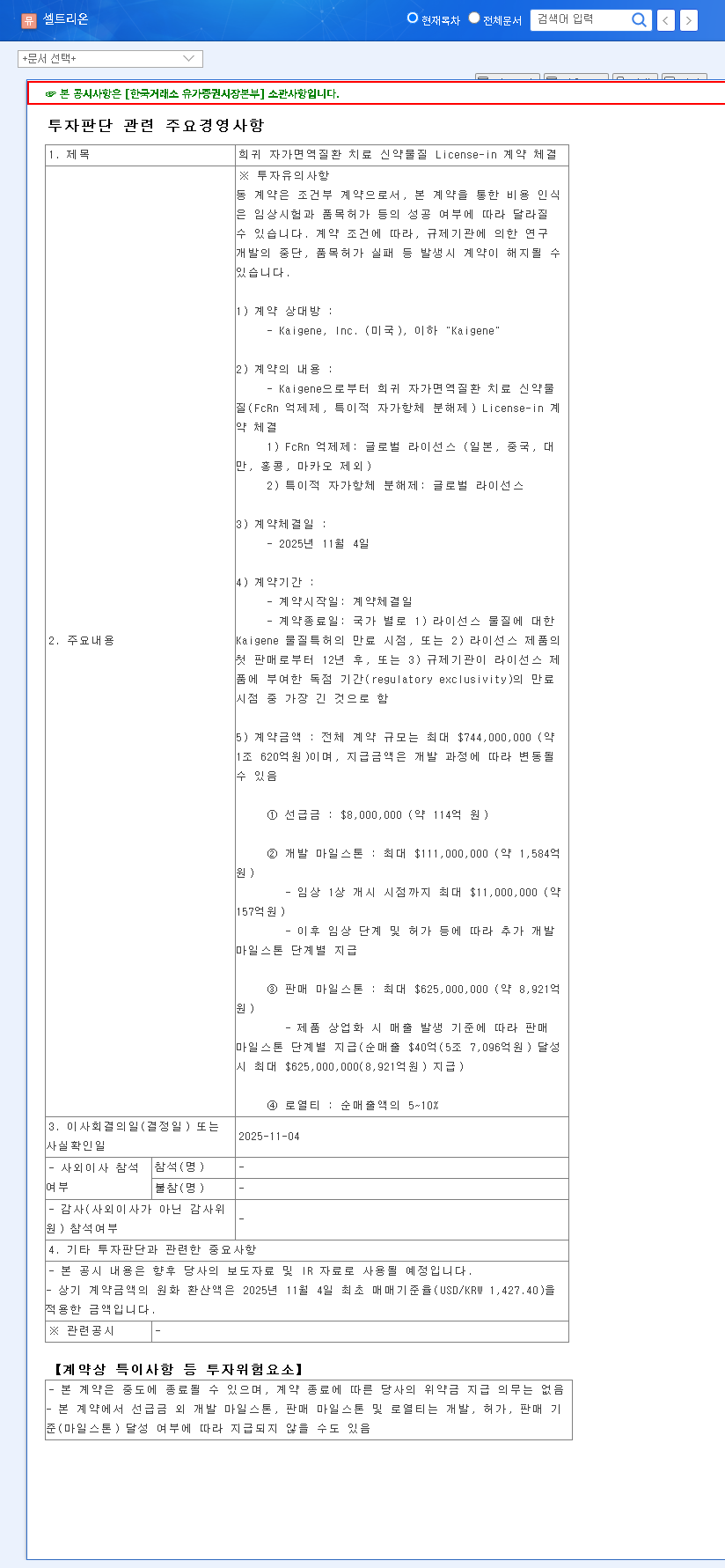
    On November 4, 2025, Celltrion formalized a global license-in agreement with Kaigene Inc., securing the rights to two pioneering drug candidates targeting rare autoimmune diseases. As detailed in the Official Disclosure, this strategic acquisition focuses on an FcRn inhibitor and a specific autoantibody degrader. This move is a cornerstone of Celltrion’s ‘Vision 2030’, aiming to generate 40% of its sales from innovative new drugs.

    The Financial Framework

    • Total Deal Value: Up to $744 million (approximately KRW 1.062 trillion).
    • Upfront Payment: An initial investment of $8 million to secure the license.
    • Milestone Payments: Up to $111 million tied to specific development and regulatory achievements.
    • Royalties & Sales Milestones: A tiered royalty structure of 5-10% on net sales, plus additional payments based on commercial success.

    The Strategic Rationale: Targeting the High-Value Rare Disease Market

    Celltrion’s decision to acquire this rare autoimmune disease drug candidate is a calculated move to diversify away from its highly successful, yet increasingly competitive, biosimilar portfolio. The rare disease market, often referred to as the orphan drug market, offers unique advantages, including higher pricing power, extended market exclusivity, and often a more streamlined regulatory pathway. For more context, you can explore our guide on Understanding Biosimilars vs. Innovative Drugs.

    “This is more than just a pipeline expansion; it’s a statement of intent. Celltrion is leveraging its robust cash flow from biosimilars to become a fully-integrated, innovative pharmaceutical powerhouse. The FcRn inhibitor space is hot, and this deal places them squarely in the game.”

    What is an FcRn Inhibitor?

    FcRn inhibitors represent a cutting-edge class of drugs. In many autoimmune diseases, the body mistakenly produces antibodies (IgG) that attack its own tissues. The neonatal Fc receptor (FcRn) is a protein that normally protects these antibodies from being broken down, extending their lifespan. An FcRn inhibitor works by blocking this receptor, which causes the harmful autoantibodies to be cleared from the body more rapidly. This mechanism has shown significant promise in treating conditions like myasthenia gravis, chronic inflammatory demyelinating polyneuropathy (CIDP), and others. For a deeper scientific perspective, the National Institutes of Health (NIH) provides extensive research on this topic.

    Weighing the Opportunity Against the Risk

    While the long-term potential is immense, this venture into innovative new drug development comes with a distinct set of challenges that investors must carefully consider.

    Positive Catalysts for Growth

    • Enhanced Corporate Value: Successful development would transition Celltrion’s valuation model from a stable biosimilar manufacturer to a high-growth innovative pharma company.
    • Portfolio Diversification: Reduces reliance on any single market segment and opens up substantial new revenue streams.
    • Strengthened R&D Credibility: A successful clinical program would significantly boost market confidence in Celltrion’s R&D capabilities.

    Potential Risks and Headwinds

    • Clinical Trial Uncertainty: The path from pre-clinical to commercialization is long and fraught with risk. The majority of drug candidates fail during Phase II or Phase III trials.
    • Fierce Competition: The FcRn inhibitor market is competitive, with established players like argenx (Vyvgart) and UCB. Celltrion must demonstrate a clear clinical or commercial advantage.
    • Financial Burden: The upfront and milestone payments are just the beginning. The costs of running global clinical trials are substantial and could impact short-term profitability.
    • Macroeconomic Factors: As a USD-denominated deal, fluctuations in the KRW/USD exchange rate could significantly alter the final cost.

    Investor Action Plan: What to Monitor

    For investors, this high-stakes venture requires careful and continuous monitoring. Key inflection points will determine the success of this Celltrion rare autoimmune disease drug project.

    • Clinical Trial Data Readouts: Pay close attention to announcements regarding the outcomes of Phase I (safety), Phase II (efficacy), and Phase III (pivotal) trials. Positive data will be a major stock catalyst.
    • Regulatory Filings and Approvals: Monitor filings with major regulatory bodies like the FDA and EMA. Approval in these key markets is critical for commercial success.
    • Quarterly Financials: Track the company’s R&D spend and cash flow to ensure the development costs are being managed effectively without unduly straining the core business.
    • Competitive Landscape: Keep an eye on the progress of competitors in the FcRn inhibitor and broader autoimmune disease space.

    In conclusion, Celltrion’s deal with Kaigene Inc. is a bold and potentially transformative step. While it introduces new risks, it also unlocks a new frontier of growth that could redefine the company’s future for decades to come.
    (068270) Celltrion's $1B Gambit: A Deep Dive into the Rare Autoimmune Disease Drug Deal 관련 이미지
  • (001060) JW Pharmaceutical Q3 2025 Earnings: Deep Dive on Net Profit Turnaround & Stock Outlook

    (001060) JW Pharmaceutical Q3 2025 Earnings: Deep Dive on Net Profit Turnaround & Stock Outlook

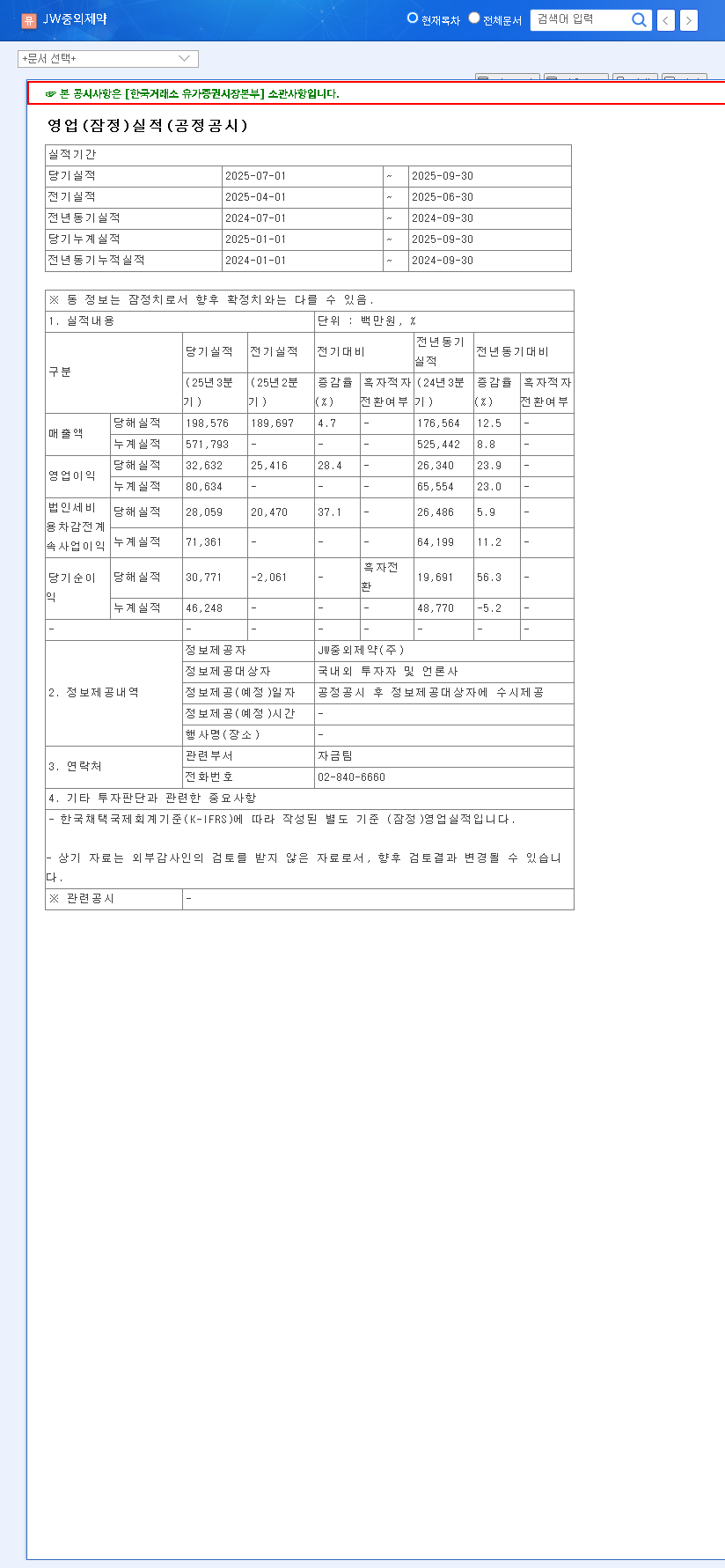
    The latest JW PHARMACEUTICAL Q3 2025 Earnings report has sent a clear and powerful signal to the market. With a remarkable turnaround to net profitability and sustained revenue growth, investors are closely examining the company’s fundamentals and future trajectory. This comprehensive analysis will break down the provisional Q3 results, explore the core drivers of this success, and evaluate the opportunities and risks that lie ahead for JW Pharmaceutical’s stock.

    JW PHARMACEUTICAL Q3 2025 Earnings: The Key Figures

    On November 3, 2025, JW Pharmaceutical released its provisional Q3 operating results, which painted a picture of robust health and strategic execution. These figures, sourced from the company’s Official Disclosure, exceeded many market expectations.

    • Revenue: ₩198.6 billion, a 3.92% increase compared to the previous quarter.
    • Operating Profit: ₩32.6 billion, marking an impressive 30.4% jump from Q2 2025.
    • Net Profit: ₩30.8 billion, a pivotal achievement representing a net profit turnaround from previous periods.

    This surge in profitability, especially the shift to a positive net income, is the standout metric. It suggests that the company’s efficiency measures and high-margin product sales are not just sustaining the business but are actively driving significant bottom-line growth.

    The Q3 net profit turnaround is more than just a number; it’s a testament to JW Pharmaceutical’s strengthening fundamentals and a potential catalyst for renewed investor confidence.

    Deep Dive: The Pillars of JW Pharmaceutical’s Success

    Understanding what’s behind these numbers is crucial for any potential investor. The company’s performance is not accidental; it’s built on a foundation of solid financial management and forward-looking R&D strategy.

    Strengthening Financial Health

    A stable financial base is essential for weathering market storms and funding future growth. JW Pharmaceutical has demonstrated remarkable fiscal discipline. The company’s debt-to-equity ratio has seen a significant improvement, falling to 82.54% from 115.10% at the end of last year. This reduction in leverage lowers financial risk and provides greater operational flexibility. Coupled with a healthy current ratio and consistently growing retained earnings, the balance sheet signals a company that is both profitable and prudently managed.

    Aggressive and Strategic R&D Investment

    The lifeblood of any pharmaceutical leader is its research and development pipeline. JW Pharmaceutical is investing heavily to secure its future, dedicating 13.1% of its revenue to R&D. This investment is not just about spending more; it’s about spending smarter. The development of ‘JWAVE’, an AI-based new drug development platform, is a prime example of this, promising to accelerate discovery and reduce costs.

    The pipeline itself is promising, with several key candidates making progress:

    • URC102: A flagship candidate for a new gout treatment, URC102 is currently advancing smoothly through Phase 3 clinical trials. Success in this final stage before regulatory review could unlock a multi-billion dollar market. To learn more about this process, you can review the FDA’s drug development guidelines.
    • JW0061 & JW2286: These innovative drug candidates represent the company’s commitment to tackling unmet medical needs and diversifying its future revenue streams.

    Investor Playbook: Outlook & Potential Risks

    The positive JW PHARMACEUTICAL Q3 2025 Earnings report provides a strong basis for optimism, but a balanced investment thesis requires acknowledging potential headwinds.

    Short-Term & Long-Term Outlook

    In the short term, the market will focus on whether the company can sustain this level of profitability into Q4 and beyond. Continued strong performance and positive news flow from the R&D pipeline could provide further upward momentum for the stock.

    From a long-term perspective, the ultimate value of JW Pharmaceutical will be determined by the successful commercialization of its innovative drug pipeline. The progress of URC102 and other key assets will be the primary driver of shareholder value over the next several years. For more details on our long-term views, you might want to read our annual pharmaceutical sector forecast.

    Key Risks to Monitor

    • Market Competition: The pharmaceutical industry is intensely competitive. The success of JW’s products depends on their ability to stand out against established and emerging rivals.
    • Clinical Trial Outcomes: Drug development is inherently risky. Any setbacks in clinical trials, particularly for a late-stage asset like URC102, could significantly impact the stock price.
    • Economic Factors: As a global player, JW Pharmaceutical is exposed to exchange rate volatility, which can affect the cost of raw materials and the value of overseas sales.

    Conclusion: A Cautiously Optimistic Verdict

    The JW PHARMACEUTICAL Q3 2025 Earnings report is undoubtedly a positive development. The company has demonstrated its ability to generate strong profits while investing strategically for the future. While risks inherent in the pharmaceutical sector remain, the current trajectory suggests that JW Pharmaceutical is well-positioned to build on its recent successes. Investors should continue to monitor pipeline progress and financial performance closely.

    Disclaimer: This article is for informational purposes only and does not constitute investment advice. All investment decisions should be made based on your own research and financial situation.

    (001060) JW Pharmaceutical Q3 2025 Earnings: Deep Dive on Net Profit Turnaround & Stock Outlook 관련 이미지
  • (000100) YUHAN CORPORATION Prostate Cancer Drug Deal Terminated: Full Investor Analysis

    (000100) YUHAN CORPORATION Prostate Cancer Drug Deal Terminated: Full Investor Analysis

    In a significant development for investors, YUHAN CORPORATION has announced the termination of its promising technology license agreement with Ubix Therapeutics for a new YUHAN CORPORATION prostate cancer drug candidate. The decision, revealed just 15 months into the partnership, has sent ripples through the investment community, raising critical questions about the company’s long-term R&D strategy, pipeline stability, and future growth drivers. This detailed analysis will dissect the termination, evaluate its financial and strategic implications, and provide a comprehensive outlook for current and potential investors.

    While the termination brings immediate R&D cost savings, it creates a notable gap in Yuhan’s oncology pipeline and raises questions about its strategy for securing future blockbuster drugs.

    The Details: An Abrupt End to a Promising Partnership

    On October 27, 2025, YUHAN CORPORATION officially terminated its technology license agreement with Ubix Therapeutics. The deal, originally signed on July 1, 2024, was focused on developing a novel treatment targeting prostate cancer, a field with significant market potential. The official disclosure (Source) confirms the termination. While Yuhan is freed from future milestone and royalty payments, the initial upfront payment of 5 billion KRW (approximately $3.6 million USD) is non-refundable, representing a direct financial loss from the venture. This move requires a deeper look into both the immediate benefits and the long-term drawbacks for the company.

    Analyzing the Fallout: Financial & Strategic Implications

    Every strategic decision has two sides. For Yuhan, terminating the prostate cancer drug program is a classic case of short-term financial prudence versus long-term strategic uncertainty. Let’s break down the key factors investors should consider.

    The Silver Lining: Cost Savings & Strategic Agility

    • Immediate R&D Cost Reduction: The most apparent benefit is the elimination of future financial obligations. Developing an oncology drug through clinical trials is incredibly expensive, often costing hundreds of millions of dollars. By cutting the cord now, Yuhan avoids potentially massive future expenditures on a pipeline asset that may have shown red flags in early data.
    • Resource Reallocation: The capital and human resources once earmarked for this project can now be channeled into more promising areas. This could mean accelerating development of other pipeline candidates, like those discussed in their latest R&D investor report, or acquiring new, more viable assets. This flexibility is crucial in the fast-moving biotech industry.

    The Investor’s Concern: Pipeline Gaps & Sunk Costs

    • A Widening Pipeline Gap: The termination of the YUHAN CORPORATION prostate cancer drug candidate is not an isolated incident. It follows the previously reported discontinuation of the ‘YH25724’ MASH treatment license-out. A pattern of pipeline pruning can erode investor confidence in the company’s ability to bring new drugs to market and secure its post-Leclaza future.
    • Irrecoverable Investment Loss: The 5 billion KRW upfront payment is a sunk cost that will be reflected as a loss on the company’s financial statements. While not catastrophic for a company of Yuhan’s size, it directly impacts short-term profitability and highlights the inherent risks of early-stage biotech investments.

    Market Reaction and YUHAN CORPORATION Stock Outlook

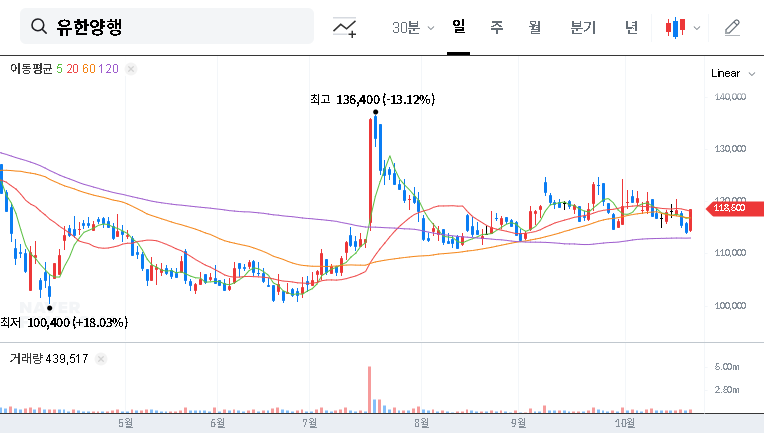
    The pharmaceutical sector is notoriously sensitive to pipeline news. A termination like this often triggers short-term negative sentiment, as it casts doubt on future revenue streams. We can expect potential downward pressure on the YUHAN CORPORATION stock price as the market digests this information. Foreign investor sentiment may also be impacted, especially when viewed against a challenging macroeconomic backdrop.

    The broader economic environment, characterized by high interest rates and currency volatility, adds another layer of complexity. High borrowing costs make financing capital-intensive R&D more difficult, and a strong US dollar can affect the profitability of overseas sales. Investors must weigh this pipeline setback against the company’s solid fundamentals, including the ongoing global success of its flagship drug, Leclaza. For context on market dynamics, sources like Bloomberg’s pharmaceutical index can provide valuable insights.

    Investment Thesis: A Neutral Stance with Cautious Optimism

    Our overall assessment leads to a Neutral investment opinion at this time. The positive impact of R&D cost savings is offset by the tangible financial loss and the more significant strategic questions this termination raises about Yuhan’s pipeline management.

    The key determinant for the future of the YUHAN CORPORATION stock will be the management’s next steps. The company must transparently communicate a clear and convincing strategy for how it will fill this pipeline gap, whether through internal development, strategic acquisitions, or new licensing deals. The continued performance of Leclaza provides a strong financial cushion, but the market will be looking for the next engine of growth.

    Actionable Recommendations for Investors:

    • Monitor Corporate Communications: Pay close attention to upcoming earnings calls and investor presentations for announcements regarding pipeline reorganization and new business development initiatives.
    • Assess Core Business Performance: Keep a close eye on the sales figures and global market penetration of Leclaza, as its success remains the primary pillar of the company’s current valuation.
    • Evaluate Macroeconomic Factors: Continue to analyze how interest rates and currency exchange rates may impact Yuhan’s profitability and investment capacity.

    (000100) YUHAN CORPORATION Prostate Cancer Drug Deal Terminated: Full Investor Analysis 관련 이미지