Tag: distribution

  • Ilwol GML: Major Shareholder Increases Stake – Opportunity or Trap?


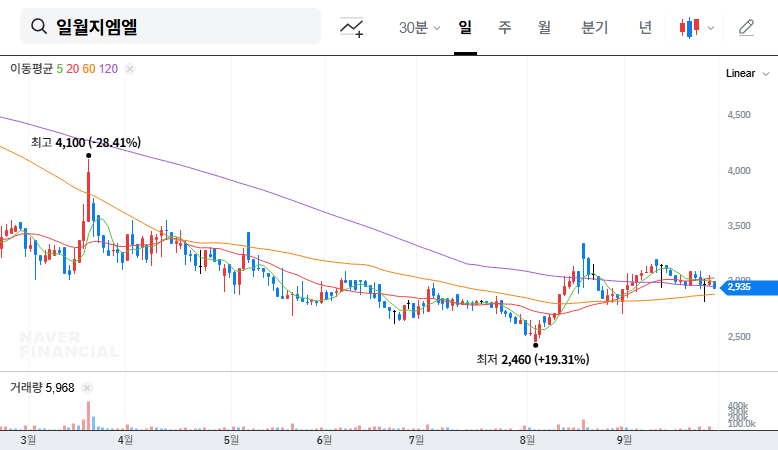
    Ilwol GML: Major Shareholder Increases Stake - Opportunity or Trap? 대표 차트 이미지


    What Happened?

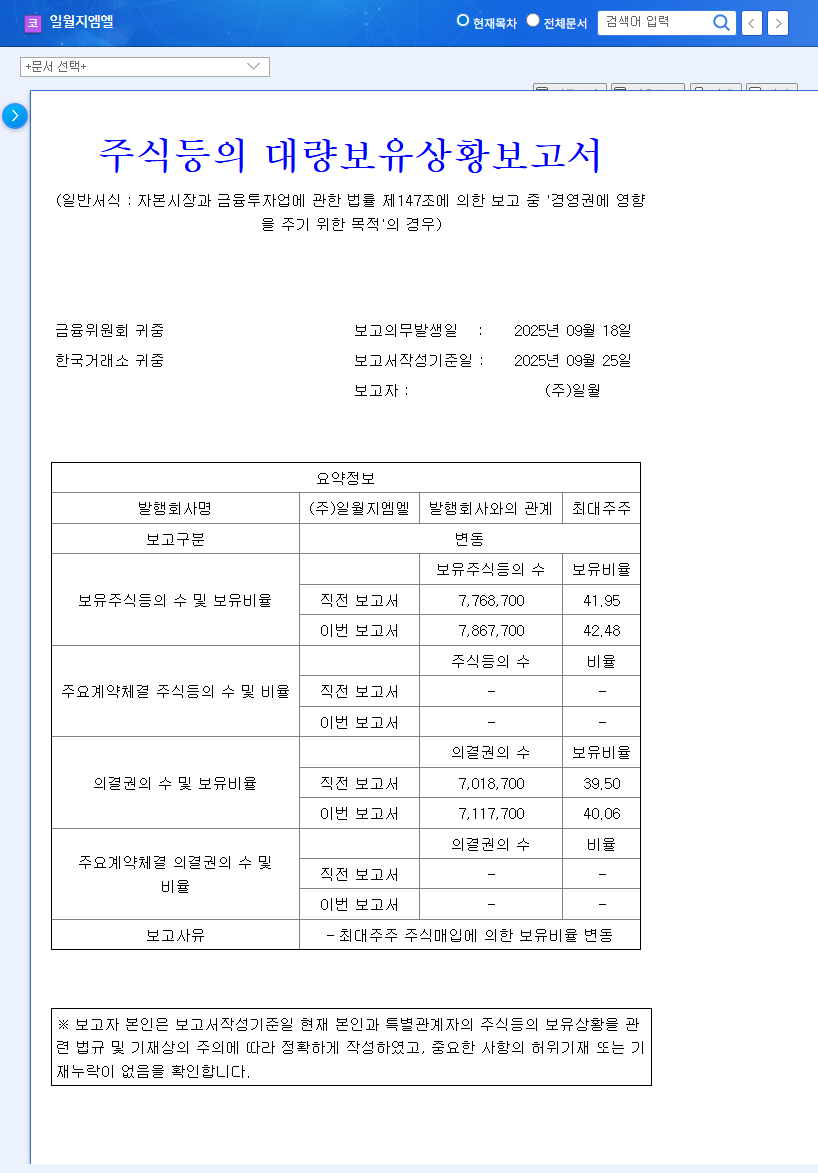
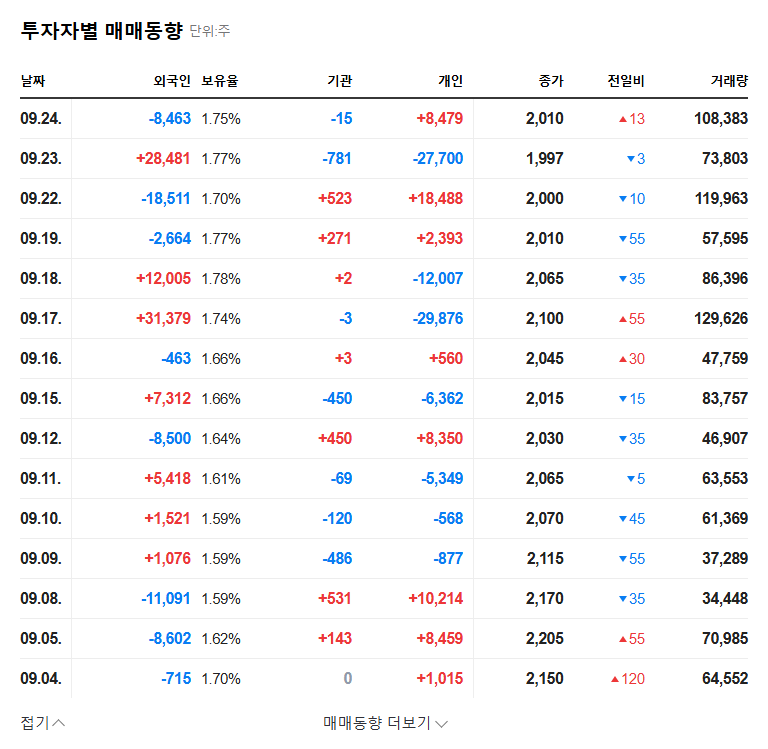
    Ilwol GML’s largest shareholder, Ilwol Co., purchased a total of 99,000 shares through on-market transactions on September 18th, 22nd, and 24th, increasing its stake from 41.95% to 42.48%, a 0.53%p increase.

    Why the Increased Stake?

    This stake increase can be interpreted as a positive sign, demonstrating the major shareholder’s commitment to strengthening management control and confidence in the company’s business vision. The major shareholder is currently restructuring the business, focusing on seasonal appliance distribution and a new food and beverage venture, and appears to be expressing its intent to drive the company’s growth through these initiatives.

    What’s Next?

    On the positive side, the major shareholder’s proactive involvement in management could enhance investor confidence. However, the significant operating loss and weakened financial health in the first half of 2025 remain challenges. Increased competition in the distribution business, uncertainties surrounding the new food and beverage venture, and high interest rates and exchange rate volatility also pose risks.

    What Should Investors Do?

    • Proceed with Caution: Given the coexistence of positive events and negative fundamentals, investment decisions should be made carefully.
    • Closely Analyze: Investors should monitor upcoming quarterly earnings announcements, new business plans, and further actions by the major shareholder.
    • Manage Risk: Investment always entails risk. Carefully consider the potential for losses before investing, and invest only within your risk tolerance.


    FAQ

    What is Ilwol GML’s main business?

    Ilwol GML currently focuses on seasonal appliance distribution and plans to enter the food and beverage business.

    Why is the major shareholder’s stake increase important?

    The increase in stake can be seen as a signal of management stability and commitment to the business, which can influence investor confidence.

    Should I invest in Ilwol GML?

    Given the current situation with both positive events and negative fundamentals, investment decisions should be made with caution. Careful analysis of future earnings and business plans, along with risk management, is crucial.

    Ilwol GML: Major Shareholder Increases Stake - Opportunity or Trap? 관련 이미지
    Ilwol GML: Major Shareholder Increases Stake - Opportunity or Trap? 관련 이미지


  • Hyundai Glovis Unveils Future Growth Strategy at UBS Korea Summit 2025

    UBS Korea Summit 2025: What Did Hyundai Glovis Announce?

    Hyundai Glovis held an investor relations (IR) session at the UBS Korea Summit 2025 on August 25, 2025, presenting its recent business performance and current status.

    Innovation Strategies for Securing Future Growth Engines

    • Logistics: AI and big data-based logistics optimization, advanced smart logistics solutions
    • Distribution & Sales: Expansion of CKD business following the growth of the EV market, strengthening of the online platform ‘Autobell’, growth of non-ferrous metal trading business
    • Shipping: Securing LNG dual-fuel propulsion vessels, expansion of low-carbon energy transportation business

    Unwavering Financial Stability and Investment Plans

    Based on a stable financial structure and sufficient liquidity, Hyundai Glovis continues to invest domestically and internationally to secure future growth engines and increase operational efficiency. The company actively invests in eco-friendly new businesses, such as EV battery recycling and hydrogen/ammonia transportation, pursuing sustainable growth.

    ESG Management and Shareholder-Friendly Policies

    Hyundai Glovis is committed to strengthening ESG management and fulfilling its social responsibilities. At the same time, the company is focused on enhancing shareholder value through its medium- to long-term dividend policy.

    Market Environment and Investment Strategy

    Amidst challenges such as a global economic slowdown and a weak shipping/logistics market, Hyundai Glovis is actively responding to the shortage of car carriers and expanding its low-carbon energy transportation business, creating new opportunities. The rise in the won/dollar exchange rate is positive for exports but has two sides: an increase in import raw material prices and an increase in the interest burden on foreign currency borrowings. Interest rate volatility is also a factor that can affect interest expenses and investment plans.

    Action Plan for Investors

    Investors should develop their investment strategies by continuously monitoring the results of IR events and market reactions, changes in the macroeconomic environment, and the progress of new businesses.

    FAQ

    What are Hyundai Glovis’ main businesses?

    Hyundai Glovis operates logistics, distribution & sales, and shipping businesses. They are also focusing on securing future growth engines such as AI-based logistics optimization, electric vehicle-related businesses, and eco-friendly energy transportation.

    What are Hyundai Glovis’ investment plans?

    Hyundai Glovis focuses on securing future growth engines and enhancing operational efficiency through investments in domestic and international corporations. In particular, they are actively investing in eco-friendly new businesses such as EV battery recycling and hydrogen/ammonia transportation.

    What is Hyundai Glovis’ shareholder return policy?

    Hyundai Glovis has established and announced a medium- to long-term dividend policy to return profits to shareholders.

  • Hyundai Green Food IR Analysis: Growth Momentum and Investment Strategy (August 2025)

    1. IR Event: Hyundai Green Food’s Present and Future

    Hyundai Green Food held an IR on August 28, 2025, during Hyundai Department Store Group’s Corporate Day, announcing its current management status and future strategies. The company expressed its commitment to securing future growth engines through the continuous growth of its food service business and investments in new businesses.

    2. Core Business Analysis: Stable Growth and Future Potential

    Hyundai Green Food’s main businesses are food service, food ingredients, and distribution, and it is actively investing in new businesses such as health functional foods and HMR. The food service business continues to grow based on stable sales, and new businesses are key drivers for enhancing future growth potential. However, factors such as raw material prices, intensifying competition, and exchange rate/interest rate volatility should be considered.

    • Sales Ratio: Food Service (47.8%), Food Ingredients (25.4%), Distribution (13.6%), Other (13.2%)
    • New Businesses: Health functional foods, HMR, care foods, overseas infrastructure investment

    3. Financial Status: Solid Foundation and Shareholder Value Enhancement

    The company’s financial structure has improved due to an increase in total capital, and it continues its efforts to enhance shareholder value through operating profit growth, treasury stock acquisition/cancellation, and interim dividends. However, it is necessary to prepare for external factors such as interest rate fluctuations.

    4. Key IR Takeaways and Investment Strategy

    This IR provided investors with a transparent disclosure of Hyundai Green Food’s growth potential and risks. Investors should establish investment strategies based on the information disclosed in the IR.

    • Positive Factors: Direct explanation from management, disclosure of growth drivers and financial soundness
    • Negative Factors: Possibility of falling short of market expectations, possibility of unexpected risks
    • Investment Strategy: Closely monitor information disclosed in the IR, consider buying if the announcement is positive, and wait and see if the announcement is negative

    Frequently Asked Questions

    Q: What are Hyundai Green Food’s main businesses?

    A: Hyundai Green Food’s main businesses are food service, food ingredients, and distribution. They are also actively investing in new businesses such as health functional foods and HMR.

    Q: What were the key takeaways from this IR?

    A: This IR disclosed Hyundai Green Food’s current management status, future growth strategies, financial soundness, and risk management plans.

    Q: What should investors be aware of when investing in Hyundai Green Food?

    A: Investors should consider external factors such as raw material price volatility, intensifying competition, and exchange rate/interest rate fluctuations, as well as market expectations.

  • Human Technology Q2 2025 Earnings Analysis: Revenue Growth Overshadowed by Widening Losses

    1. What Happened? Q2 Earnings Summary

    Human Technology reported KRW 11.4 billion in revenue for Q2 2025, a 23.9% increase year-over-year. However, operating and net losses widened to KRW -6.1 billion and KRW -6.8 billion, respectively.

    2. Why These Results? Earnings Analysis

    While revenue growth is positive, the widening losses indicate challenges in cost management. The communication device segment faces intensifying competition and pricing pressure from Chinese companies. The video content segment continues to struggle with weak sales and operating losses. On the other hand, the defense business segment shows growth potential as a new venture.

    3. What’s Next? Investment Strategies

    Human Technology is currently facing financial difficulties. Investors should closely monitor the company’s efforts to improve profitability, the performance of its defense business, and its management of exchange rate and macroeconomic variables. A very cautious investment approach is warranted, with continuous monitoring of future earnings releases and segment performance.

    4. Investor Action Plan

    • Approach short-term investments with extreme caution.
    • For long-term investments, monitor the performance of the defense business and profitability improvements.
    • Seek professional advice before making investment decisions.

    Frequently Asked Questions

    How was Human Technology’s Q2 revenue?

    Q2 2025 revenue reached KRW 11.4 billion, a 23.9% increase year-over-year.

    Why did Human Technology report an operating loss in Q2?

    Despite revenue growth, the company faced challenges in cost management, particularly in the communication device segment due to increased competition and in the video content segment due to poor performance.

    What are Human Technology’s main business segments?

    The main business segments include communication devices, defense, distribution, and video content.

    Should I invest in Human Technology?

    A very cautious approach is recommended at this time. Investors should carefully monitor future earnings releases and segment performance before making any investment decisions.

  • Kolon Q2 2025 Earnings Analysis: A Closer Look at the Return to Profitability

    1. Kolon’s Q2 2025 Performance: Beneath the Surface of Profitability

    Kolon recorded consolidated revenue of KRW 1.5038 trillion and operating profit of KRW 43.5 billion in Q2 2025. While achieving a turnaround from the Q1 loss, the net loss widened to KRW 73.9 billion. Strong performance in construction and distribution sectors drove the return to profitability, but investment losses from affiliates and increased financial costs contributed to the larger net loss.

    2. Drivers of Improvement and Potential Risks

    The robust performance of the construction and distribution sectors is a positive sign. However, the high debt-to-equity ratio (197.40%) could pose significant challenges if interest rates rise. The bio business (Kolon TissueGene’s TG-C pipeline), while promising for future growth, presents investment risks due to uncertainties surrounding clinical trial results and commercialization.

    3. Market Environment and Kolon’s Future Outlook

    Macroeconomic uncertainties, such as the recent rise in the KRW/USD exchange rate, potential interest rate hikes, and volatility in international oil prices, could impact Kolon’s profitability. These external factors, along with internal efforts to improve financial soundness, will shape Kolon’s future.

    4. Key Takeaways for Investors: A Cautious Approach

    While Kolon has a stable business foundation, the high debt ratio and continued net losses are investment risks. Even considering the growth potential of its bio business, investors should carefully monitor Kolon’s efforts to improve its financial health and address the uncertainties surrounding its bio business before making investment decisions.

    Q: How should we evaluate Kolon’s Q2 2025 earnings?

    A: While Kolon returned to profitability compared to Q1, the continued net loss raises concerns about its financial health. The strong performance in construction and distribution is positive, but the uncertainties surrounding the bio business and the high debt ratio require ongoing monitoring.

    Q: What should investors be aware of when considering investing in Kolon?

    A: Key risk factors include the high debt-to-equity ratio, continued net losses, and uncertainties surrounding the bio business. Investors should carefully consider these factors and monitor Kolon’s efforts to improve its financial soundness and the progress of its bio business.

  • Harim Holdings Q2 2025 Earnings Analysis: Solid Growth, But Hidden Risks?

    1. Harim Holdings H1 2025 Performance: What Happened?

    Harim Holdings achieved consolidated revenue of KRW 6.5144 trillion and operating profit of KRW 458.8 billion in the first half of 2025, showing robust growth of 12.97% and 22.37% year-on-year, respectively. Net profit also significantly improved to KRW 370.2 billion.

    2. Drivers of Growth: Why the Strong Performance?

    • Shipping (Pan Ocean): Maintained stable performance through securing long-term and new contracts and increasing operational efficiency despite volatility in international shipping rates.
    • Food & Food Service: Drove revenue growth with a strong market presence in the chicken business, launching new HMR products, and strengthening online channels.
    • Yangjae Advanced Logistics Complex Development: The logistics complex development project, expected to be a future growth engine, is progressing smoothly.

    3. Hidden Risks: What are the Potential Dangers?

    • Exchange Rate Volatility: A rise in the KRW/USD exchange rate could lead to increased import costs and decreased overseas sales.
    • Feed & Livestock: Volatility in international grain prices and livestock disease risks could negatively impact profitability.
    • Financial Burden of Some Subsidiaries: Managing the financial soundness of subsidiaries with high debt ratios is necessary.
    • Intensifying Competition in Distribution: Responding to the slowdown in the home shopping market and intensifying online competition is crucial.

    4. Investor Action Plan: How Should You Invest?

    While Harim Holdings’ growth potential is evident, investors should keep an eye on external environmental changes and potential risks. Careful investment decisions should be made by thoroughly analyzing key variables such as exchange rates, raw material prices, and the competitive landscape, and evaluating the company’s risk management capabilities.

    Frequently Asked Questions

    What are Harim Holdings’ main businesses?

    Harim Holdings operates various business segments including shipping (Pan Ocean), feed & livestock, food & food service, and distribution.

    What were the main growth drivers for Harim Holdings’ Q2 earnings?

    The stable performance of the shipping division and the growth of the food division, particularly the chicken business and the launch of new HMR products, were the main growth drivers.

    What should investors be aware of when investing in Harim Holdings?

    Investors should consider factors such as exchange rate volatility, fluctuations in raw material prices, livestock disease risks, and the financial burden of some subsidiaries.

  • T3 Entertainment Declares Dividend: Is it a Good Investment Opportunity? Earnings Analysis and Future Outlook

    T3 Entertainment Dividend Decision Analysis

    T3 Entertainment has declared a dividend of 50 KRW, representing a dividend yield of approximately 2.2% based on the current stock price. This is part of the shareholder return policy following improved Q1 earnings and enhanced financial health. However, the lack of market expectation information and economic uncertainties are factors to consider when investing.

    1. Surprise Earnings Announcement: Q1 Growth Analysis

    T3 Entertainment showed robust growth in Q1 with total sales of 16.03 billion KRW (up 37.7% year-on-year) and operating profit of 3.44 billion KRW (up 35.2% year-on-year). The growth in the game service and distribution business was particularly notable. This could contribute to the sustainability of future dividend payments.

    2. Financial Soundness: The Foundation of a Stable Dividend Policy

    The decrease in total debt and improvement in financial soundness have contributed to securing T3’s capacity for dividend payments. A solid financial status provides a strong foundation for a stable dividend policy.

    3. Market Conditions and Investment Perspective

    Expectations for a global interest rate freeze and weak international oil prices can be positive factors, but exchange rate volatility and rising freight rates are variables to consider when investing. The stock price, which has been on a gradual upward trend since February 2024, is likely to continue its positive momentum with this dividend announcement. However, the lack of market expectation information and the possibility of increased competition should be noted.

    T3 Entertainment Investment Strategy: Short-term vs. Long-term

    1. Short-Term Investment Strategy

    In the short term, attention should be paid to continuous performance and business-related momentum rather than the dividend itself. Close monitoring is required to see whether the company can maintain steady growth and secure new business opportunities.

    2. Long-Term Investment Strategy

    In the long term, it is necessary to observe the performance of business diversification and securing profitability while flexibly responding to macroeconomic changes. In particular, the improvement in the profitability of the distribution business and strategies for low distribution volume should be examined.

    What were T3 Entertainment’s Q1 earnings?

    T3 Entertainment recorded total sales of 16.03 billion KRW (up 37.7% year-on-year) and operating profit of 3.44 billion KRW (up 35.2% year-on-year) in Q1.

    What are T3 Entertainment’s main businesses?

    T3 Entertainment’s main businesses are game services and distribution.

    What is the T3 Entertainment dividend amount?

    T3 Entertainment has declared a dividend of 50 KRW per share this quarter.

  • SGA Solutions Stock Plunge: Analysis, Outlook, and Investment Strategies

    SGA Solutions Stock Plunge: What Happened?

    SGA Solutions’ stock price has recently experienced a sharp decline. The primary cause is the divestment of shares by major investment groups. Their stake, which was approximately 18.43%, has decreased to 6.38%, sending shockwaves through the market. This was a result of a combination of over-the-counter sales of convertible bonds, sales of common stock after exercising conversion rights, and on-market sales of common stock.

    Analyzing the Plunge: How Are the Fundamentals?

    SGA Solutions’ Q1 2025 earnings show declining revenue and continued operating losses. The sluggish performance of the distribution segment led the overall revenue decrease, although efforts to reduce selling, general, and administrative expenses (SG&A) narrowed the operating loss. The solutions segment continues to invest in R&D, while the investment segment is showing positive momentum driven by the growth of its subsidiaries.

    SGA Solutions Stock Outlook: What’s Next?

    Increased stock volatility is expected in the short term. The dampened investor sentiment following the divestment could negatively impact the stock price. However, efforts to improve profitability and investments in new businesses could act as positive factors. External factors such as the macroeconomic environment and competitive landscape are also expected to influence the stock price.

    Action Plan for Investors

    Investors should look beyond short-term price fluctuations and carefully analyze the company’s fundamentals and long-term growth potential. It’s crucial to closely monitor the trend of major shareholder stake changes, future earnings announcements, and the performance of new businesses to make informed investment decisions.

    What is the main reason for the SGA Solutions stock plunge?

    The primary cause is the large-scale divestment of shares by major investment groups. This involved a combination of over-the-counter sales of convertible bonds, sales of common stock after exercising conversion rights, and on-market sales of common stock.

    What is the current state of SGA Solutions’ fundamentals?

    As of Q1 2025, revenue has decreased, but the operating loss has narrowed. The solutions segment is continuing its R&D investments, and the investment segment is showing growth.

    What is the outlook for SGA Solutions’ stock price?

    Volatility may increase in the short term, but long-term growth potential should be considered. A comprehensive assessment should be made considering both positive factors like improving profitability and new business investments, and negative factors like the macroeconomic environment.

  • Aroute (096690) Stock Forecast: Q1 Earnings Shock and the Significance of Jeongim Choi’s Stake Increase

    1. Aroute Q1 Earnings Analysis: Losses Across All Business Segments

    Aroute’s Q1 2025 earnings were underwhelming, with declining revenue and operating losses across all segments, including mini-printers, distribution, heavy electrical equipment, semiconductors, and others. The mini-printer segment, a core business for Aroute, saw revenue plummet by 54.8% year-over-year to 7.386 billion KRW, with an operating loss of 1.035 billion KRW. This decline is attributed to intensified market competition and decreased demand.

    • Mini-printers: Revenue 7.386B KRW (YoY -54.8%), Operating Loss 1.035B KRW
    • Distribution: Revenue 1.943B KRW (YoY -80.5%), Operating Loss 1.109B KRW
    • Heavy Electrical Equipment: Revenue 1.376B KRW (YoY -68.5%), Operating Loss 0.577B KRW
    • Semiconductors: Revenue 0.249B KRW (YoY +50.1%), Operating Loss 0.646B KRW
    • Other: Revenue 0.185B KRW (YoY -65.0%), Operating Loss 0.601B KRW

    2. Jeongim Choi’s Stake Increase: A Signal of Recovery?

    Amidst the gloomy earnings report, there is a glimmer of hope. CEO Jeongim Choi increased her stake in Aroute from July 29th to August 4th, 2025, acquiring a total of 31,127 shares and bringing her ownership to 17.07%. This move can be interpreted as a demonstration of commitment and raises expectations for future management normalization and shareholder value enhancement.

    3. Aroute Investment Strategy: A Cautious Approach

    Aroute faces significant challenges with its current performance slump. Investors should carefully consider the potential for recovery in core businesses and growth prospects in new ventures. While Choi’s increased stake is a positive sign, tangible improvements in management and a rebound in earnings are crucial for increasing investment value. A cautious approach focusing on long-term fundamental changes rather than short-term stock fluctuations is recommended. Closely monitoring future quarterly earnings announcements and management actions is essential.

    What are Aroute’s main businesses?

    Aroute operates in various sectors, including mini-printers, distribution, heavy electrical equipment, semiconductors, and other businesses. Currently, all segments are facing difficulties.

    What factors are currently affecting Aroute’s stock price?

    The Q1 earnings disappointment negatively impacted the stock price, while CEO Jeongim Choi’s stake increase is seen as a positive factor. The future direction of the stock price depends on management improvements and earnings recovery.

    Should I invest in Aroute?

    Investing in Aroute requires a cautious approach. Focus on the long-term fundamental changes within the company rather than short-term stock price fluctuations when making investment decisions.