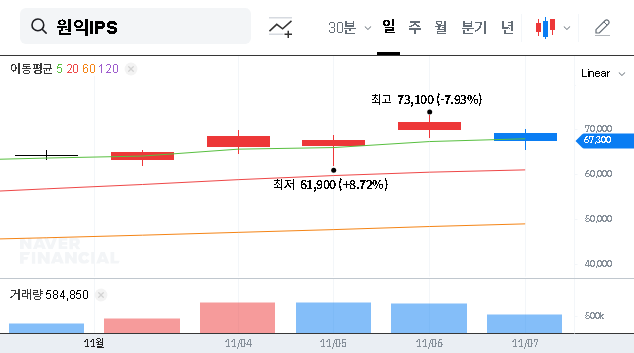
Tag: Display Equipment

  • (240810) WONIK IPS Q3 2025 Earnings: A Deep Dive Investment Analysis for Investors

    (240810) WONIK IPS Q3 2025 Earnings: A Deep Dive Investment Analysis for Investors

    In a challenging global market, WONIK IPS CO., LTD. has delivered a remarkable performance in its preliminary Q3 2025 earnings report, creating a significant buzz within the investment community. The semiconductor equipment manufacturer didn’t just meet expectations; it shattered them, particularly with a substantial ‘earnings surprise’ in net income. This report has solidified investor confidence and highlighted the company’s resilient growth trajectory.

    This in-depth WONIK IPS investment analysis will dissect the key figures from the Q3 2025 report, explore the fundamental drivers behind this success, evaluate potential risks, and provide a clear outlook for investors considering WONIK IPS stock.

    Deconstructing the Q3 2025 Earnings Surprise

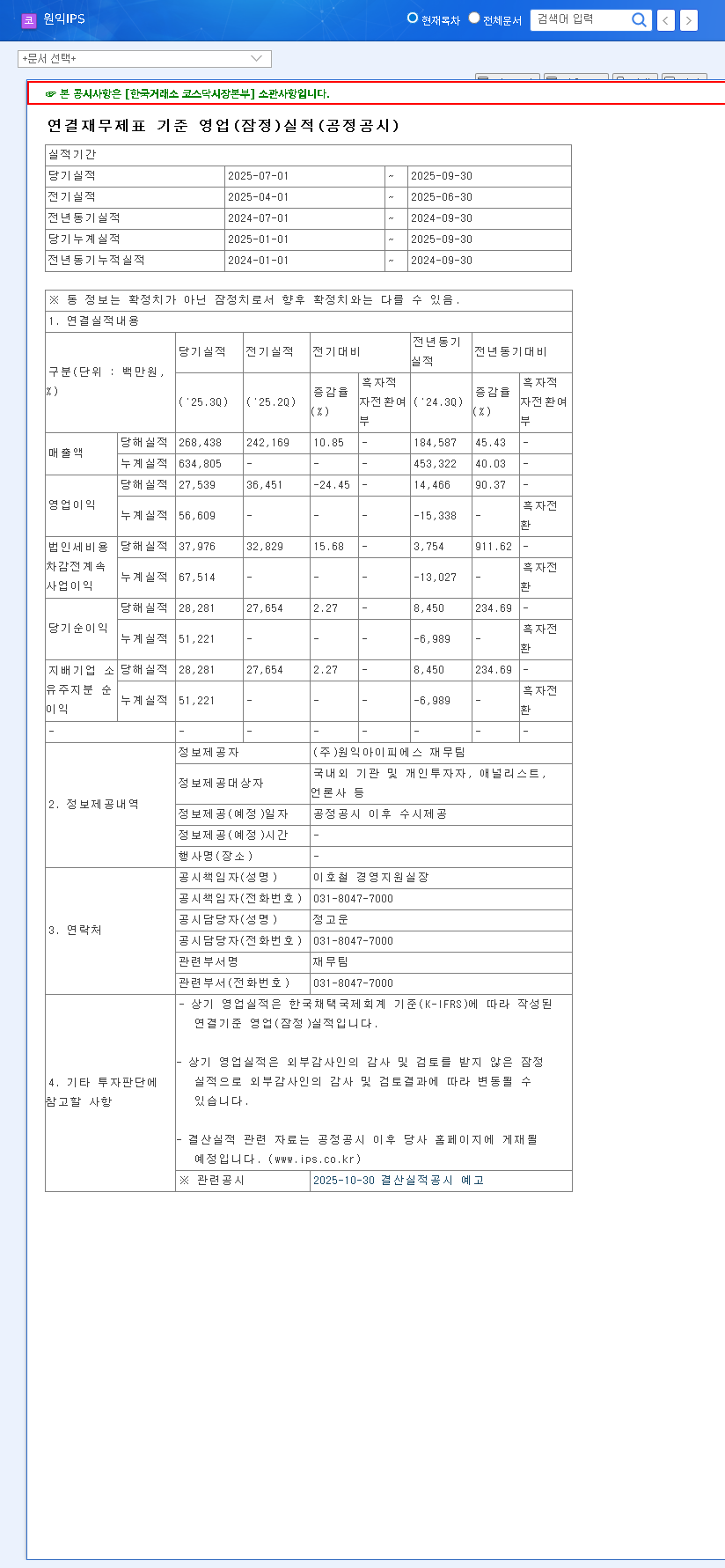
    The preliminary results, announced on November 7, 2025, painted a picture of robust health and operational excellence. The figures, sourced from the company’s Official Disclosure, reveal a company firing on all cylinders.

    • Revenue: KRW 268.4 billion, a solid 6.9% above the consensus estimate of KRW 251.0 billion.
    • Operating Profit: KRW 27.5 billion, beating the estimated KRW 26.3 billion by 4.6%.
    • Net Income: KRW 28.3 billion, a staggering 47.4% above the market’s expectation of KRW 19.2 billion.

    While top-line revenue growth is impressive, the dramatic outperformance in net income is the key takeaway. It signals exceptional cost management, high-margin product sales, and a powerful profit generation engine at WONIK IPS.

    Core Strengths: The Pillars of Growth for WONIK IPS

    This stellar quarter isn’t a fluke. It’s built upon a foundation of strong fundamentals and strategic positioning within a dynamic market. The broader semiconductor industry continues to see tailwinds from AI and Big Data, a trend analyzed by major outlets like Bloomberg.

    Strategic R&D and Technological Leadership

    With an R&D expense ratio of nearly 21% of revenue (as of H1 2025), WONIK IPS demonstrates an aggressive commitment to innovation. This investment is crucial for developing next-generation deposition and etching technologies required for advanced 3D NAND, DRAM, and foundry processes. This focus on technology ensures the company remains a preferred supplier for major chipmakers.

    Diversified Revenue Streams

    The company’s revenue growth is directly tied to expanded capital expenditures in both the semiconductor and display markets. The increasing demand for OLED panels in smartphones, TVs, and automotive displays provides a complementary and robust revenue stream, mitigating some of the cyclicality inherent in the semiconductor sector alone.

    Impeccable Financial Health

    A low debt-to-equity ratio of just 38.02% provides significant operational flexibility and reduces financial risk for investors. This strong balance sheet allows WONIK IPS to navigate economic downturns and fund its ambitious R&D agenda without being overly reliant on debt financing.

    Investor Alert: Potential Risks and Considerations

    Despite the overwhelmingly positive WONIK IPS earnings report, prudent investors must remain aware of potential headwinds.

    • Factory Utilization Rates: Persistently low utilization rates (19% for semiconductor, 15% for display in H1) are a point of concern. While these numbers can be lumpy, they indicate a need for a more consistent flow of large-scale orders to improve production efficiency and absorb fixed costs.
    • Macroeconomic Volatility: The semiconductor industry is sensitive to global economic health. Geopolitical tensions, trade disputes, or a broad economic slowdown could dampen capital spending from chipmakers, impacting the order book for WONIK IPS.
    • Currency and Interest Rate Fluctuations: With a high dependency on exports, the company’s profitability can be affected by adverse movements in foreign exchange rates and rising global interest rates.

    Final Verdict: Investment Outlook for WONIK IPS Stock

    The Q3 2025 results serve as powerful validation of the company’s strategy and operational capabilities. The massive beat on net income, coupled with a solid growth foundation and a stable financial structure, paints a very bullish picture for the future of WONIK IPS.

    Our investment outlook remains firmly Positive with a BUY recommendation. Investors should consider this a core holding within a technology-focused portfolio. For more information on this sector, you can read our Guide to Investing in Semiconductor Stocks. Moving forward, key metrics to monitor will be improvements in factory utilization and the size of the forward order book in the upcoming Q4 and subsequent reports.

    Disclaimer: This analysis is for informational purposes only and is based on publicly available data. It does not constitute financial advice or a direct recommendation for any investment decision. All investment decisions should be made based on an individual’s own judgment and risk tolerance.
    (240810) WONIK IPS Q3 2025 Earnings: A Deep Dive Investment Analysis for Investors 관련 이미지
  • (068790) DMS Co.,Ltd. Financial Analysis: LG Contract vs. Critical Auditor’s Disclaimer of Opinion

    (068790) DMS Co.,Ltd. Financial Analysis: LG Contract vs. Critical Auditor’s Disclaimer of Opinion

    The recent news surrounding DMS Co.,Ltd. (DMS) presents a classic case of conflicting signals for investors. While a newly announced supply contract with industry giant LG Display seems positive on the surface, a much more sinister issue lurks within its financial reporting: a critical auditor’s disclaimer of opinion. This analysis unpacks the details of the contract, the severe implications of the audit issue, and DMS’s deteriorating financial health to provide a clear perspective on the inherent investment risks.

    This comprehensive breakdown is essential for any investor looking to understand whether the recent contract is a sign of recovery or merely a distraction from fundamental, potentially catastrophic, problems at DMS Co.,Ltd.

    The LG Display Contract: A Glimmer of Hope?

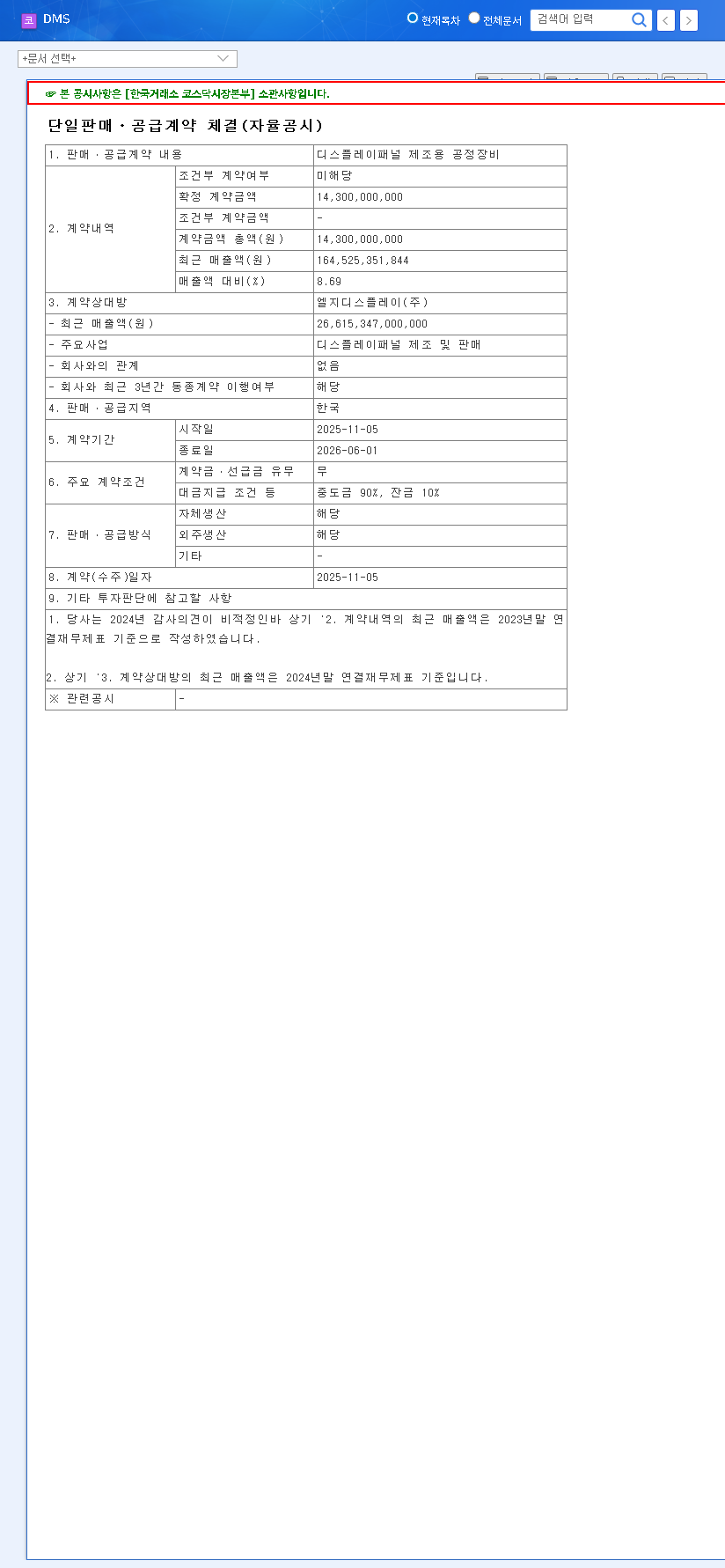
    On November 6, 2025, DMS Co.,Ltd. disclosed a significant supply agreement for display panel manufacturing equipment with LG Display Co., Ltd. This deal, valued at 14.3 billion KRW, represents approximately 8.69% of the company’s projected annual revenue. The contract period extends from November 5, 2025, to June 1, 2026. You can view the Official Disclosure on DART for more details.

    Ordinarily, securing a contract with a key client like LG Display would be a bullish signal, suggesting continued operational relevance and potential for short-term revenue stability. However, this positive news is overwhelmingly overshadowed by a profound issue that strikes at the very heart of the company’s credibility.

    The Critical Red Flag: DMS’s Auditor’s Disclaimer of Opinion

    The most significant factor in any DMS financial analysis is the ‘auditor’s disclaimer of opinion’ issued for its financial statements as of December 31, 2024. This is not a minor concern; it is one of the most severe findings an auditor can issue and serves as a major warning to the market.

    What Does a ‘Disclaimer of Opinion’ Actually Mean?

    In simple terms, a disclaimer of opinion means the independent auditor was unable to gather sufficient evidence to form an opinion on the accuracy and fairness of the company’s financial statements. It’s like a doctor telling you they couldn’t complete an examination because the patient wouldn’t cooperate or the equipment was broken—you simply cannot trust any conclusions about their health. For a publicly-traded company, this is a catastrophic failure in transparency and governance.

    An auditor’s disclaimer of opinion fundamentally undermines investor confidence, as it renders the company’s reported financial position and performance unreliable. This can be a direct precursor to a stock being delisted from an exchange.

    In the case of DMS Co.,Ltd., the disclaimer was reportedly due to limitations regarding related-party transactions and other major audit procedures. This raises serious questions about internal controls and potential conflicts of interest. For a detailed explanation of this audit finding, you can reference this external resource on understanding audit reports from Investopedia.

    Financial Health Under the Microscope

    Even without the disclaimer, the financial trajectory for DMS Co.,Ltd. is alarming. The 14.3 billion KRW contract is simply not enough to reverse the significant and persistent negative trends.

    • Plummeting Revenue: Projections show a steep and continuous decline in revenue, falling from KRW 1,147.7 billion in 2022 to a forecast of just KRW 469.4 billion in 2025.
    • Profitability Collapse: The company is on track to swing from an operating profit of KRW 175.8 billion in 2022 to a projected operating loss of KRW -30.8 billion in 2025.
    • Worsening Debt Load: The debt-to-equity ratio has climbed from 92.27% to 114.65% in two years, signaling increased financial leverage and risk.
    • Negative Margins: Key metrics like net profit margin and Return on Equity (ROE) show consistently negative trends, indicating an inability to generate value for shareholders.

    These metrics paint a picture of a company in severe distress, a situation that the auditor’s disclaimer of opinion only exacerbates.

    Investment Recommendation: Extreme Caution Required

    Considering the evidence, the DMS investment risk is exceptionally high. The positive sentiment from the LG Display contract is completely negated by the fundamental lack of financial transparency and the company’s rapid financial decline.

    Key Actions for Investors:

    • Await Audit Resolution: No investment should be considered until DMS Co.,Ltd. fully resolves the issues that led to the disclaimer and receives a clean audit opinion. The company must demonstrate a commitment to transparent financial reporting.
    • Monitor Financial Turnaround: Look for multiple consecutive quarters of revenue stabilization, a return to profitability, and an improving balance sheet before re-evaluating.
    • Consider Reducing Exposure: For current investors, the risk of delisting or further value erosion is substantial. It is prudent to consider reducing or eliminating positions until there is concrete proof of a fundamental resolution. For more information, read our guide on how to analyze high-risk stocks.

    In conclusion, the ‘disclaimer of opinion’ is the only story that matters for DMS Co.,Ltd. right now. Until this foundational issue of trust and transparency is rectified, any positive operational news should be viewed with extreme skepticism. A highly cautious, watch-and-wait approach is the only logical strategy.

    (068790) DMS Co.,Ltd. Financial Analysis: LG Contract vs. Critical Auditor's Disclaimer of Opinion 관련 이미지
  • (240810) WONIK IPS Dividend Policy (2025-2027): A Deep-Dive Stock Analysis

    (240810) WONIK IPS Dividend Policy (2025-2027): A Deep-Dive Stock Analysis

    WONIK IPS CO., LTD., a key manufacturer in the global semiconductor and display equipment sector, has officially detailed a new WONIK IPS dividend policy for the 2025-2027 fiscal period. This strategic move is designed to bolster WONIK IPS shareholder returns and enhance the company’s appeal to long-term investors. But what does this policy truly mean for the stock’s future?

    This comprehensive analysis delves into the core components of the new dividend plan, scrutinizes the company’s underlying financial health, and evaluates the broader macroeconomic landscape. We’ll provide the insights necessary to determine if this policy makes WONIK IPS a compelling investment in the competitive semiconductor market.

    Unpacking the New WONIK IPS Dividend Policy (2025-2027)

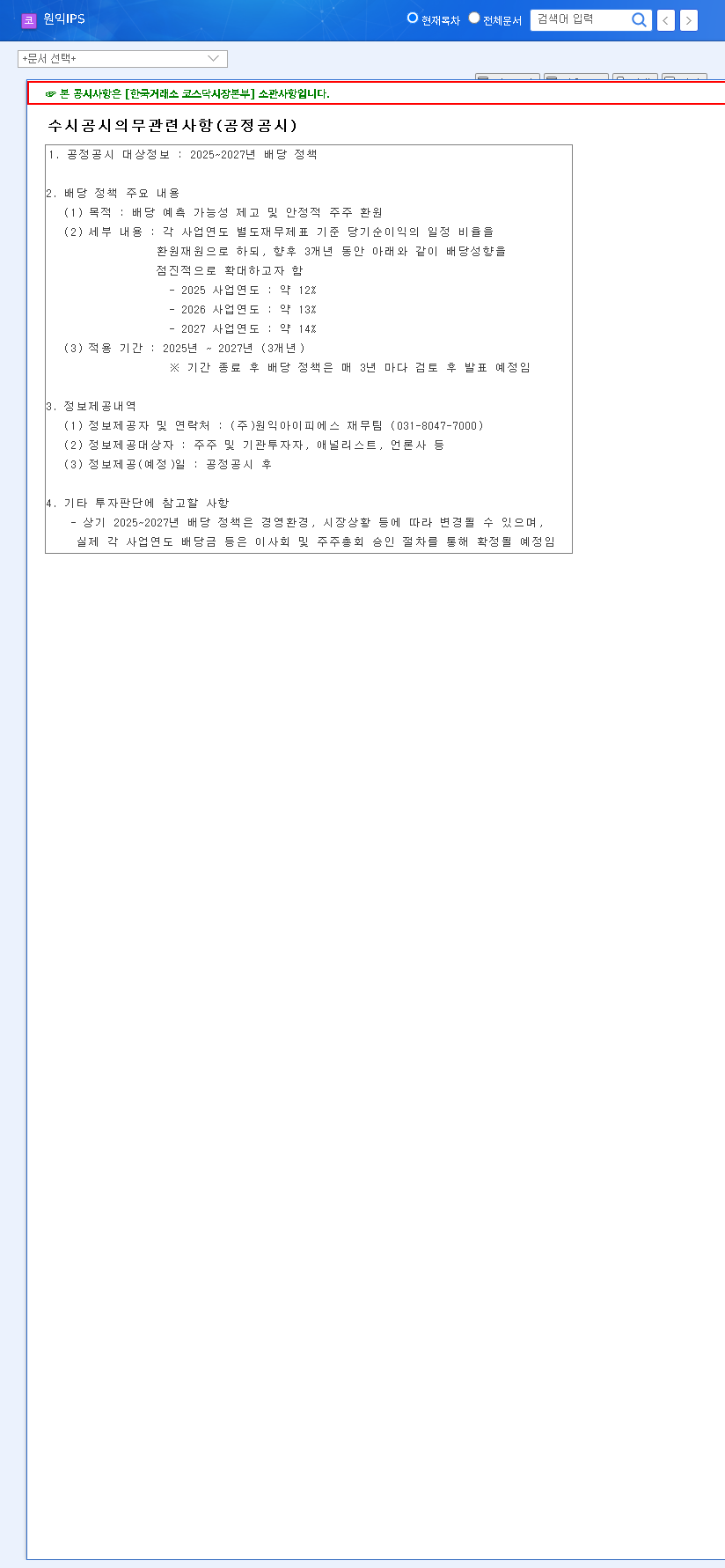
    The company has laid out a clear, three-year roadmap aimed at providing predictable and stable returns to its investors. The primary goal is to foster long-term confidence and reward shareholders for their commitment. The details were confirmed via an Official Disclosure on the DART system.

    • Objective: To significantly improve dividend predictability and deliver consistent shareholder returns.
    • Return Source: A designated percentage of net profit, based on separate financial statements, will be allocated for dividends.
    • Payout Ratio Schedule: The dividend payout ratio will see a gradual increase over the three years:
      • 2025 Fiscal Year: Approximately 12%
      • 2026 Fiscal Year: Approximately 13%
      • 2027 Fiscal Year: Approximately 14%
    • Future Outlook: The policy will be reassessed and re-announced every three years, establishing a sustainable, long-term framework for shareholder returns.

    Note: The final dividend amounts are contingent upon approval from the Board of Directors and the annual shareholders’ meeting. They may be adjusted based on prevailing business performance and market conditions.

    A Deep Dive into WONIK IPS’s Financial Health

    A dividend policy is only as reliable as the company’s ability to generate profit. A closer look at WONIK IPS’s fundamentals reveals a picture of both promising growth and notable challenges that investors must consider.

    Positive Catalysts: Growth and Innovation

    • Impressive Revenue Growth: H1 2025 revenue reached 366.4 billion KRW, a 36.33% increase year-on-year, fueled by a recovery in the semiconductor and display sectors.
    • Commitment to R&D: An R&D investment ratio of 20.96% of revenue is a powerful indicator of the company’s focus on future-proofing its technology and maintaining a competitive edge.
    • Solid Financial Structure: The company maintains a healthy balance sheet with 904.5 billion KRW in equity and a manageable debt-to-equity ratio of 38.02%. For context on this metric, see this guide from Investopedia.

    Risk Factors and Headwinds

    • Low Factory Utilization: A key concern is the low production utilization rates for semiconductor (19%) and display (15%) equipment. This inefficiency can compress margins and hinder profitability.
    • Rising Debt Levels: Total debt saw a 45.3% increase from the previous period. While manageable now, this trend requires monitoring to avoid excessive financial leverage.
    • Customer Concentration: A high dependency on two major clients (Company A at 58.3% and Company B at 14.7% of revenue) presents a significant risk if their capital expenditure plans shift.

    Market Impact and Stock Analysis: What This Means for Investors

    The announcement is a clear positive for investor sentiment. However, the true impact on the WONIK IPS stock analysis is nuanced. In the short term, the modest payout ratio may not trigger a dramatic price surge. Instead, it will likely be seen as a foundational step toward building long-term, stable value.

    The long-term success of the WONIK IPS dividend policy hinges entirely on fundamental business improvement. If the company can boost factory utilization, diversify its customer base, and continue to innovate, this policy will become a powerful catalyst for stock appreciation. For those interested in this sector, our guide on Investing in Semiconductor Equipment Stocks provides broader context.

    Strategic Investment Checklist for WONIK IPS Stock

    Prudent investors should look beyond the headline dividend announcement. Use this checklist to inform your decisions:

    • Monitor Fundamentals: Track quarterly reports for tangible improvements in utilization rates and news of new client acquisitions.
    • Analyze Financial Health: Keep a close eye on the debt-to-equity ratio and cash flow statements to ensure the dividend is sustainable.
    • Watch Macro Trends: Pay attention to semiconductor industry cycles, global interest rates, and currency exchange rates (especially USD/KRW) that affect profitability.
    • Adopt a Long-Term View: This policy is a marathon, not a sprint. Focus on the company’s intrinsic value growth rather than short-term market noise.

    Frequently Asked Questions (FAQ)

    Q1: What is the core of WONIK IPS’s new dividend policy?

    The policy sets a clear path for a gradually increasing dividend payout ratio from 2025 to 2027, starting at ~12% and rising to ~14%, based on net profit from its separate financial statements.

    Q2: How will this affect WONIK IPS’s stock price immediately?

    The short-term impact is expected to be moderately positive on investor sentiment. However, a significant price surge is less likely given the modest payout levels and existing fundamental challenges like low factory utilization.

    Q3: Is the new dividend policy sustainable?

    Its sustainability depends directly on the company’s ability to improve its core business operations. Key factors to watch are improvements in production efficiency, customer diversification, and continued profitability.

    (240810) WONIK IPS Dividend Policy (2025-2027): A Deep-Dive Stock Analysis 관련 이미지
  • (306620) Neontech Merger with GIS: A Deep Dive Analysis for Investors (306620)

    (306620) Neontech Merger with GIS: A Deep Dive Analysis for Investors (306620)

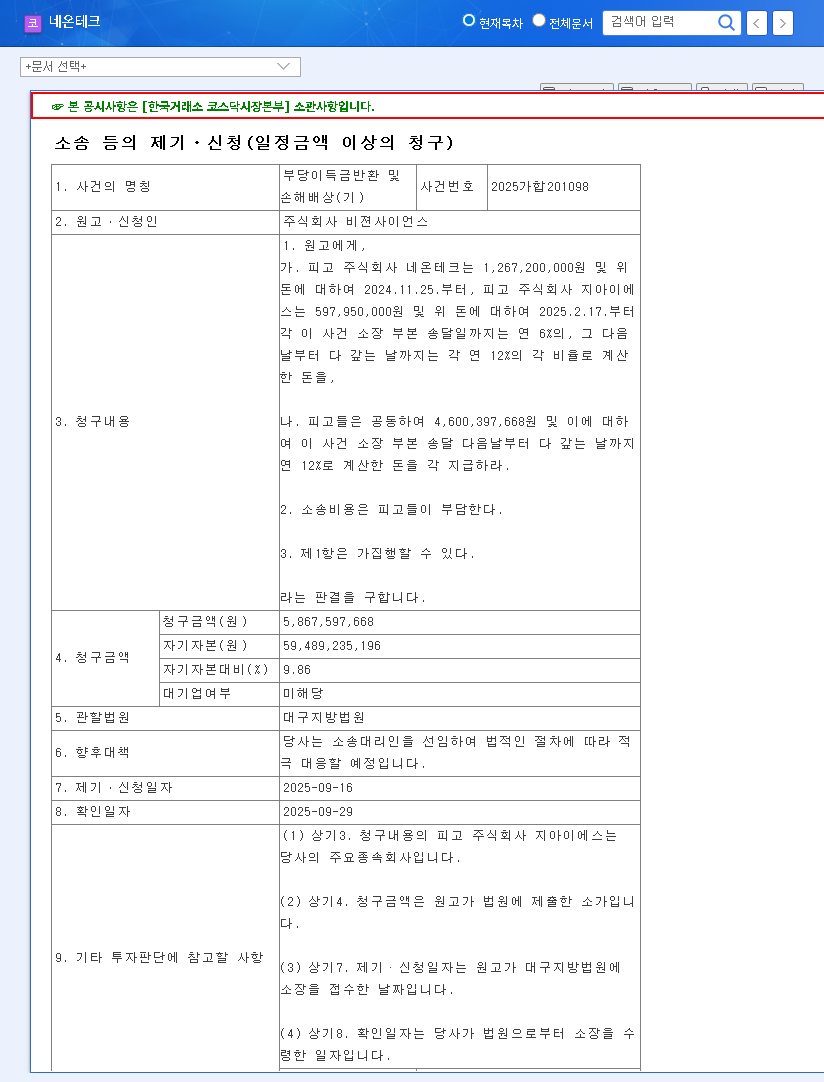
    In a significant strategic move, KOSDAQ-listed Neontech Co., Ltd. (306620) has announced an absorption merger with GIS, a specialized display equipment manufacturer. This Neontech merger is a pivotal event that could reshape the company’s future trajectory. For investors, understanding the nuances of this deal is critical. This in-depth analysis will explore the rationale behind the merger, its potential impact on financials and operations, and provide a comprehensive investment strategy to navigate this corporate milestone.

    Breaking Down the Neontech Merger with GIS

    On October 28, 2025, Neontech’s board formally decided to absorb GIS, with Neontech remaining as the surviving entity and GIS being dissolved post-merger. This move aims to consolidate strengths and streamline operations. The trading of Neontech (306620) was suspended following the announcement to ensure a fair and orderly market. Here are the essential details of the transaction:

    • Surviving Company: Neontech Co., Ltd. (306620)
    • Dissolving Company: GIS (Global Industrial System)
    • GIS’s Core Business: Manufacturing machinery for advanced display production.
    • GIS’s Financials (H1 2024 est.): Sales of KRW 73.8 billion / Net Income of KRW 6.2 billion.
    • Scheduled Merger Date: January 1, 2026.

    For a complete and verified breakdown of the transaction, investors are encouraged to review the Official Disclosure filed on the DART system.

    The Strategic Rationale: Why This Merger Now?

    Neontech’s decision is not arbitrary; it’s a calculated response to its current financial and market position. As of its H1 2025 report, the company reported an operating loss of KRW 2.216 billion on sales of KRW 31.579 billion. This underperformance, marked by a 49.66% year-over-year drop in consolidated sales, highlights significant challenges. Compounding these issues is a rising debt-to-equity ratio of 166.09%, creating concerns about financial stability.

    In stark contrast, GIS demonstrates robust health, boasting impressive sales and a healthy net income of KRW 6.2 billion. The Neontech merger is therefore a strategic move to absorb GIS’s profitability, technology, and market position to counteract its own struggles, enhance management efficiency, and build a more resilient and competitive business entity.

    By integrating GIS’s profitable display equipment business, Neontech aims to immediately bolster its financial statements and create powerful synergies with its existing electronics and automation divisions.

    Impact Analysis for the Neontech (306620) Investor

    The Upside: Potential Positive Impacts

    The primary benefits of the GIS merger center on synergy and financial fortification.

    • Financial Structure Improvement: GIS’s substantial net income is expected to immediately improve Neontech’s consolidated profitability, helping to offset recent losses and stabilize the balance sheet.
    • Strengthened Competitiveness: Combining GIS’s leadership in display manufacturing equipment with Neontech’s automation division creates a more powerful, vertically integrated player in the electronics sector.
    • Operational & R&D Synergy: The integration of technologies, sales networks, and production facilities can reduce redundant costs, streamline decision-making, and accelerate innovation for new business ventures.

    The Downside: Potential Risks and Headwinds

    Despite the potential benefits, investors must remain aware of the inherent risks. Merger integrations are complex and can face significant headwinds.

    • Integration Challenges & Costs: Merging corporate cultures, systems, and processes can lead to short-term inefficiencies and disruption. There will also be direct costs related to legal, accounting, and advisory fees.
    • Market Perception: Neontech’s existing underperformance may lead the market to remain skeptical until tangible positive results are demonstrated post-merger.
    • External Economic Factors: The combined entity will still be subject to macroeconomic risks, such as interest rate fluctuations and supply chain volatility, which could impact performance as detailed in many expert economic forecasts.

    A Prudent Investment Strategy for Neontech

    A successful stock analysis requires a dual-focus approach: cautious observation in the short term and diligent monitoring in the long term.

    Short-Term Strategy: Observe and Analyze

    During the trading suspension and immediately after resumption, information gathering is key. Investors should carefully analyze the merger ratio and any new share issuance details. It is crucial to monitor the market’s reaction once trading resumes, as initial volatility is common. A wait-and-see approach is advisable until the post-merger landscape becomes clearer. For more on this, consider reading our guide to navigating M&A announcements.

    Mid- to Long-Term Strategy: Monitor Key Performance Indicators

    Long-term value will depend entirely on execution. Investors should track whether the promised synergies materialize into improved profitability and market share. Key financial health metrics to watch include the debt-to-equity ratio, operating cash flow, and gross margins. Furthermore, the performance of Neontech’s other ventures in smart farming, AI, and big data will be a critical indicator of its ability to innovate and diversify beyond the scope of this merger. The success of this Neontech merger will ultimately be written in these future financial reports.

    (306620) Neontech Merger with GIS: A Deep Dive Analysis for Investors (306620) 관련 이미지
    (306620) Neontech Merger with GIS: A Deep Dive Analysis for Investors (306620) 관련 이미지
  • (079810) DE&TCo.,Ltd. (079810) IR Analysis: Stock Outlook & Future Growth Potential

    (079810) DE&TCo.,Ltd. (079810) IR Analysis: Stock Outlook & Future Growth Potential

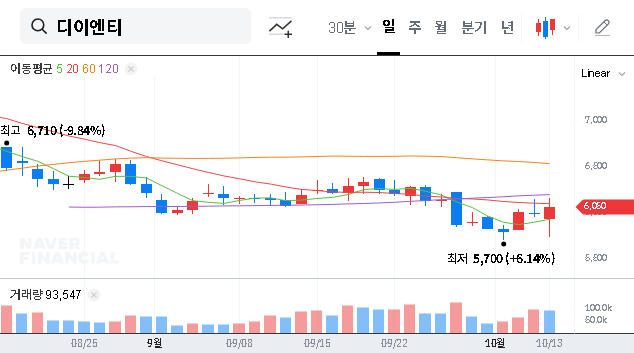
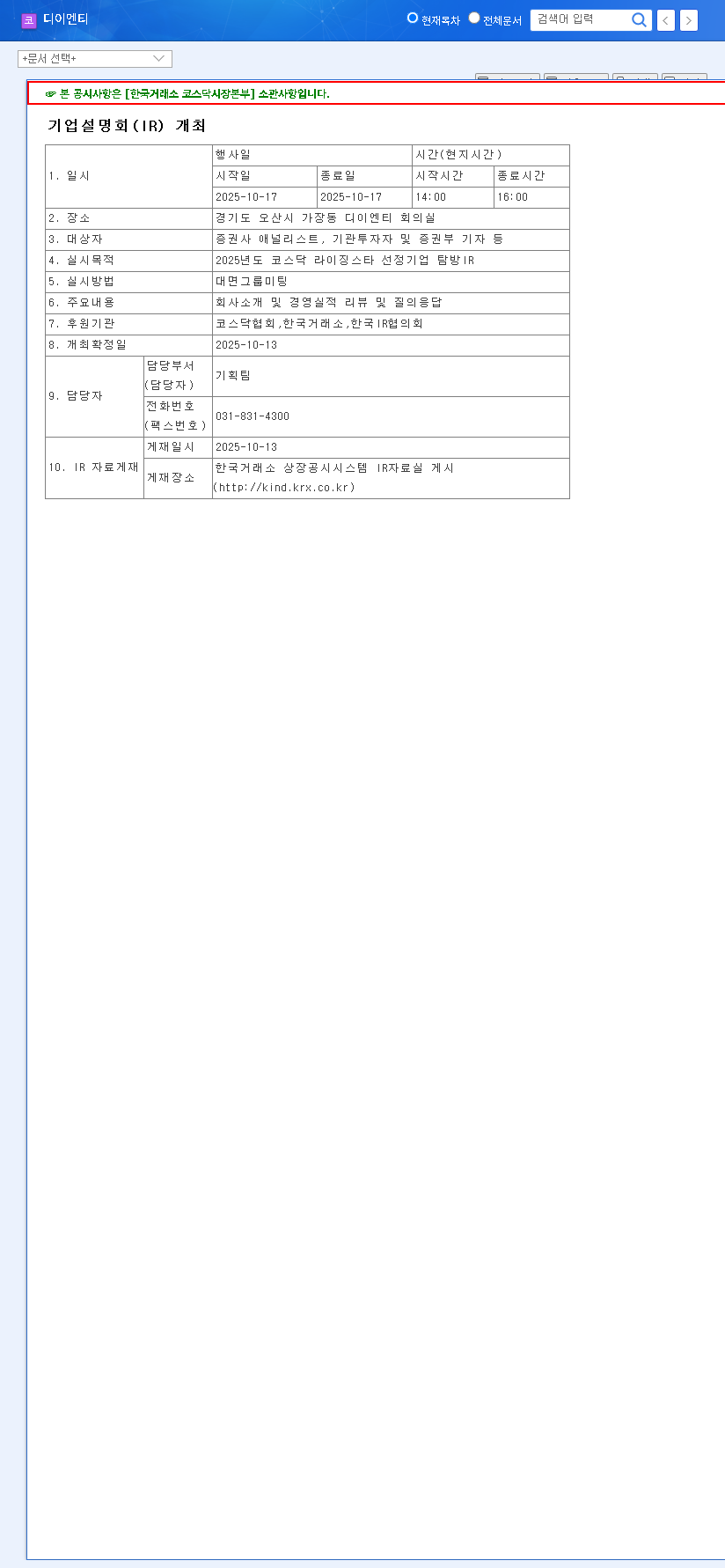
    This comprehensive DE&TCo.,Ltd. (079810) IR analysis provides a crucial look into the company’s future as it prepares for a pivotal Investor Relations (IR) event on October 17, 2025. Following a challenging first half of 2025, investors are keenly watching to see if management can present a compelling turnaround strategy. This report delves into the company’s fundamentals, the significant potential of its secondary battery equipment division, and the risks that could impact the 079810 stock outlook, helping you make a more informed investment decision.

    With a market capitalization of 133.3 billion KRW and a position in the high-growth secondary battery sector, DE&TCo.,Ltd. stands at a crossroads. Will this IR event restore confidence, or will it highlight deeper issues? Let’s explore the key factors.

    The Upcoming IR Event: A Bid to Restore Confidence

    Scheduled as part of the ‘2025 KOSDAQ Rising Star Discovery IR’ program, this event is more than a standard corporate presentation. It’s a critical platform for DE&TCo.,Ltd. to address the market’s concerns head-on. The agenda includes a company introduction, a thorough review of management performance, and an interactive Q&A session. For investors, this is the prime opportunity to gauge the leadership’s vision and assess the credibility of their future plans, which have been detailed in their Official Disclosure on DART.

    Fundamental Analysis: Strengths vs. Headwinds

    A balanced DE&T stock analysis requires looking at both the underlying strengths and the immediate challenges the company faces.

    Core Strengths and Positive Factors

    • Secondary Battery Growth Engine: The company’s primary strength lies in its secondary battery equipment business. The global shift to electric vehicles (EVs) creates a massive, long-term demand tailwind. As major clients like LG Energy Solution and Ultium Cells expand production, DE&T is well-positioned to secure significant orders. The growth of the EV market is a well-documented trend, as reported by sources like Reuters.
    • Solid Financial Health: With a low debt-to-equity ratio of just 41% and improving operating cash flow, the company maintains a stable financial foundation. This resilience is crucial for navigating market volatility and funding future growth without excessive leverage.
    • Commitment to Innovation: An increased R&D expenditure, now at 2.62% of sales, signals a strong focus on next-generation technologies. This investment is vital for maintaining a competitive edge in both the secondary battery and display equipment markets.

    Negative Factors and Current Risks

    • Recent Earnings Slump: The operating loss of 1.78 billion KRW in the first half of 2025 is the primary concern. This was driven by a 36.6% sales decrease in the secondary battery segment, compounded by exchange rate volatility and higher interest expenses.
    • Order-Based Volatility: The company’s revenue is inherently lumpy, depending on the capital expenditure cycles of its major clients. This makes forecasting difficult and exposes the business to economic downturns that may delay large-scale projects.
    • Macroeconomic Headwinds: A global economic slowdown, persistent high-interest rates, and currency fluctuations pose ongoing threats to profitability and the investment appetite of its clients.

    The core dilemma for investors: Can the powerful long-term growth trend of the secondary battery market overshadow the significant short-term earnings weakness and macroeconomic uncertainty? The upcoming IR is the key to unlocking this answer.

    Investment Strategy & Outlook Post-IR

    Our current investment opinion is Neutral pending the outcome of the IR. The event could trigger significant stock price movement in either direction.

    Potential for a Positive Re-rating

    If management successfully communicates a clear vision for recovery, a stock rebound is likely. Key catalysts would include providing specific details on its 81.5 billion KRW order backlog, confirming a timeline for new large-scale orders, and showcasing advancements in high-capacity battery manufacturing technology. This would be a crucial part of any bullish KOSDAQ investment thesis for DE&T.

    Downside Risks to Consider

    Conversely, if the outlook presented is vague or fails to meet market expectations, investor concerns could deepen, leading to further downside. Any unexpected negative disclosures during the Q&A session regarding financial health or competitive pressures would also be detrimental to the stock price.

    Actionable Advice for Investors

    • Monitor the IR Closely: The details matter. Pay attention to specific figures on order pipelines, client commitments, and margin improvement strategies.
    • Observe Post-Event Reaction: It is wise to wait and see how the market digests the information before making a significant move.
    • Adopt a Long-Term View: For those with a high conviction in the EV and battery storage megatrends, the current weakness could present a buying opportunity, provided the IR confirms the company’s strategic positioning. For more on this, see our guide to long-term tech investing.

    Disclaimer: This article is for informational purposes only and does not constitute investment advice. The ultimate responsibility for investment decisions rests with the individual investor.

    (079810) DE&TCo.,Ltd. (079810) IR Analysis: Stock Outlook & Future Growth Potential 관련 이미지
  • (170920) LTC Stock Forecast: Institutional Sell-Off & In-Depth Investment Analysis

    (170920) LTC Stock Forecast: Institutional Sell-Off & In-Depth Investment Analysis

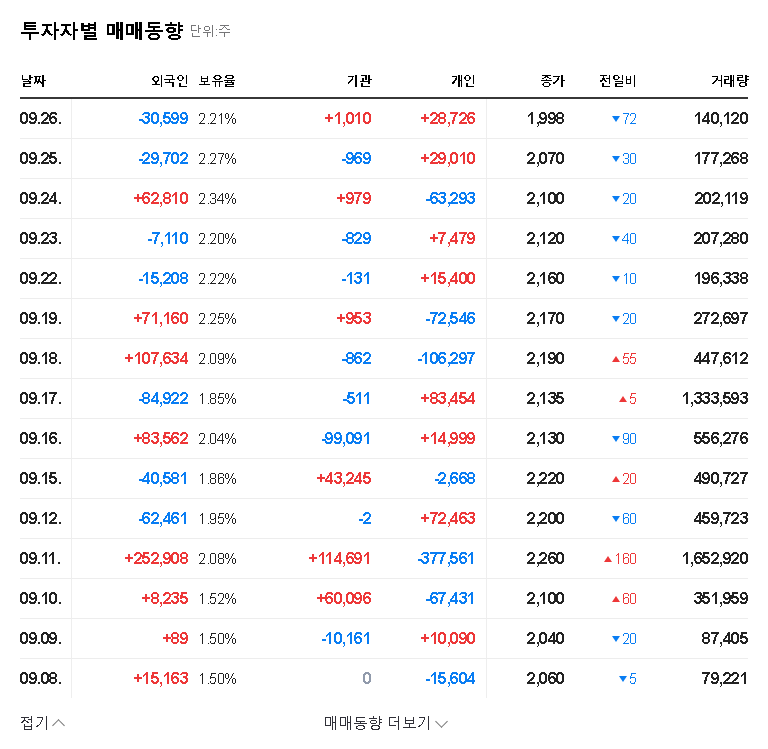
    The latest news surrounding LTC stock (170920) has sent ripples through the investment community. Soosung Asset Management, a significant institutional player, has officially reduced its holdings, a move that demands careful consideration from every current and prospective investor. This action can influence short-term market sentiment and raises critical questions about the company’s long-term trajectory. Is this a red flag signaling underlying issues, or a fleeting market event that creates a prime buying opportunity?

    This comprehensive LTC investment analysis will dissect the situation, exploring the immediate impacts, the company’s core fundamentals, and what this means for your investment strategy. We’ll provide the clarity you need to navigate the uncertainty and make an informed decision about the future of your LTC stock position.

    Understanding the News: Soosung’s Stake Reduction

    The Official Disclosure: What Changed?

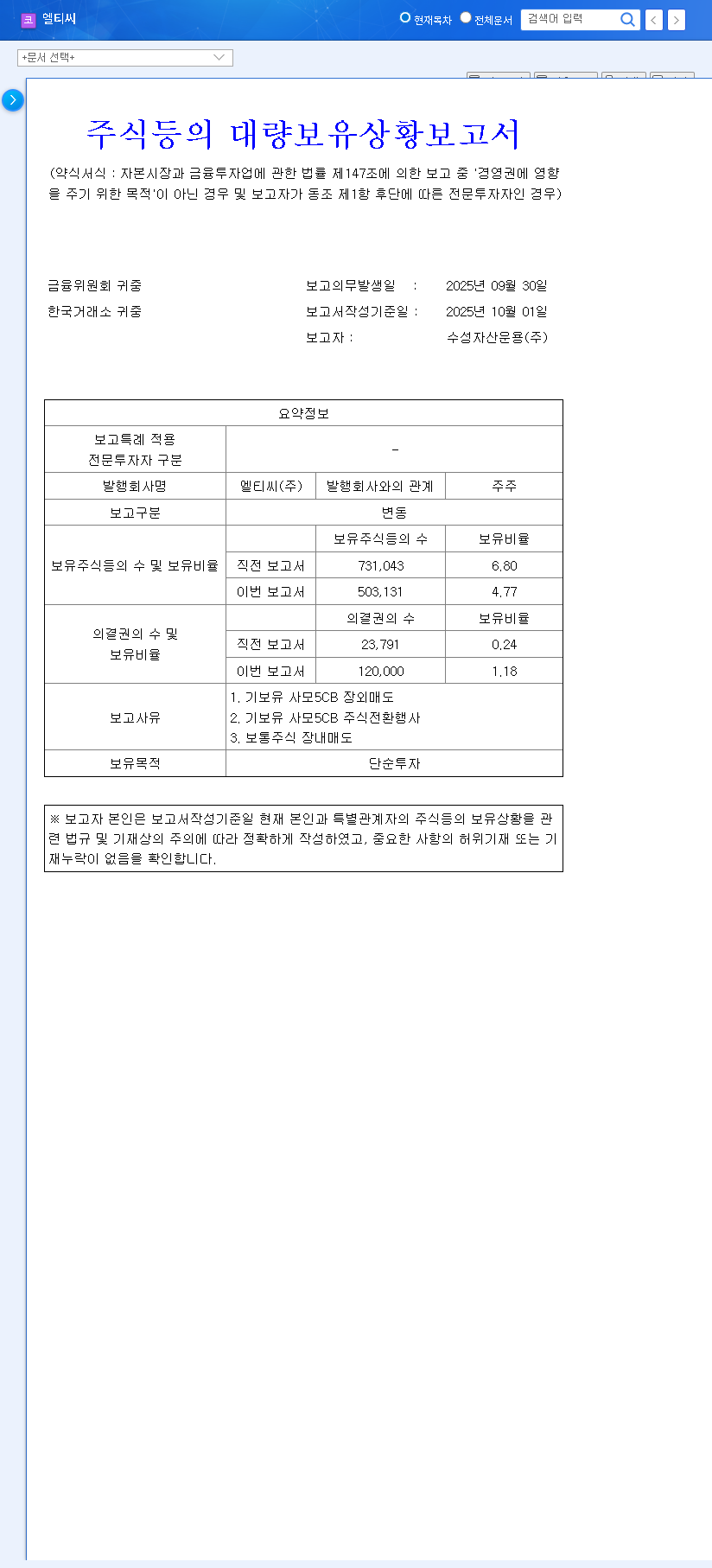
    On October 2, 2025, a significant disclosure was made. Soosung Asset Management announced a decrease in its holdings of LTC shares from 6.80% down to 4.77%. This 2.03 percentage point reduction is not a trivial adjustment and represents a substantial transaction that the market is bound to notice. You can view the Official Disclosure (DART Source) for complete transparency.

    Potential Reasons for the Sale

    An institutional sell-off is rarely driven by a single factor. The analysis points to a combination of strategic financial maneuvers:

    • Convertible Bond (CB) Strategy: Soosung executed a multi-part strategy involving its privately placed Convertible Bonds. A portion was sold off-market, while another was converted into shares, directly impacting the overall holding percentage as part of a standard CB investment cycle.
    • Profit Realization & Rebalancing: Over 200,000 common shares were sold directly on the open market. This could be a classic case of realizing profits after a period of growth or a strategic rebalancing of their portfolio to manage risk and allocate capital to other opportunities.

    It’s crucial to distinguish between a strategic portfolio adjustment by an institution and a flight from a company with failing fundamentals. Often, the former creates opportunity for retail investors.

    Analyzing the Impact on the LTC Share Price

    Immediate Market Reaction: The Supply Pressure Effect

    In the short term, news of a major investor reducing their stake can weaken investor sentiment. The on-market sale of over 200,000 shares introduces significant selling pressure. This sudden increase in supply, without an equivalent increase in demand, could lead to a temporary dip in the LTC share price. Traders should be prepared for heightened volatility.

    The Bigger Picture: Is This a Fundamental Shift for LTC Stock?

    While the short-term noise is important, long-term investors must look deeper. The 2% stake reduction is significant but may not signal a complete loss of faith in LTC’s core business. The crucial factor is whether the company’s fundamentals remain intact. While the converted CBs create a potential for future share supply (an ‘overhang’), this is a technical market factor, not necessarily a reflection of poor business performance. The real determinants of long-term value will be LTC’s operational results and broader market trends, such as those covered by financial authorities like Bloomberg’s market analysis.

    A Deep Dive into LTC’s Core Fundamentals (H1 2025)

    To truly gauge the LTC stock forecast, we must look past this single event and examine the company’s health. The H1 2025 report provides a solid foundation:

    • Resilient Revenue: Consolidated revenue reached 137.2 billion KRW, maintaining year-on-year growth. While the pace has slowed, indicating potential headwinds in the semiconductor and display sectors, the top line remains robust.
    • Improved Profitability: Operating profit showed positive improvement. This suggests strong cost management and a successful focus on higher-margin products, a sign of operational efficiency.
    • Future-Focused Investment: LTC maintains a stable capital structure while actively investing in R&D and new business ventures to secure future growth engines.

    These fundamentals suggest that the company’s intrinsic value proposition has not been fundamentally altered by Soosung’s recent sale. For more on evaluating company health, you can read our guide to fundamental analysis.

    Strategic LTC Investment Analysis: Your Action Plan

    So, how should you position yourself? Your approach to this LTC stock news depends heavily on your investment horizon.

    For the Short-Term Trader

    Caution is the word of the day. The selling pressure from Soosung could lead to price drops and volatility. Consider a wait-and-see approach or be prepared to implement strict stop-loss orders to manage downside risk if you decide to enter a position.

    For the Mid-to-Long-Term Investor

    This is where the opportunity may lie. If you believe in LTC’s solid fundamentals and its long-term strategy, a temporary price dip caused by this market event could be an attractive entry point. A patient investor who is not swayed by short-term noise may find this an ideal moment to initiate or add to a position, focusing on the recovery of the semiconductor industry and the performance of LTC’s new business ventures.

    (170920) LTC Stock Forecast: Institutional Sell-Off & In-Depth Investment Analysis 관련 이미지
  • (281820) KC Tech Stock (281820) Analysis: Why Korea’s Largest Investor Just Increased Its Stake

    (281820) KC Tech Stock (281820) Analysis: Why Korea’s Largest Investor Just Increased Its Stake

    The recent move by the National Pension Service (NPS) to increase its stake in the KC Tech stock (281820) has sent a significant signal across the market. As Korea’s largest and most influential institutional investor, the NPS’s actions are scrutinized for deeper meaning. While officially labeled a ‘simple investment,’ such a move from an entity managing the nation’s retirement funds often foreshadows a strong belief in a company’s long-term value. This analysis will dissect this pivotal event, explore KC Tech’s underlying fundamentals, and provide a strategic outlook for current and potential investors.

    The Catalyst: NPS Boosts KC Tech Stake

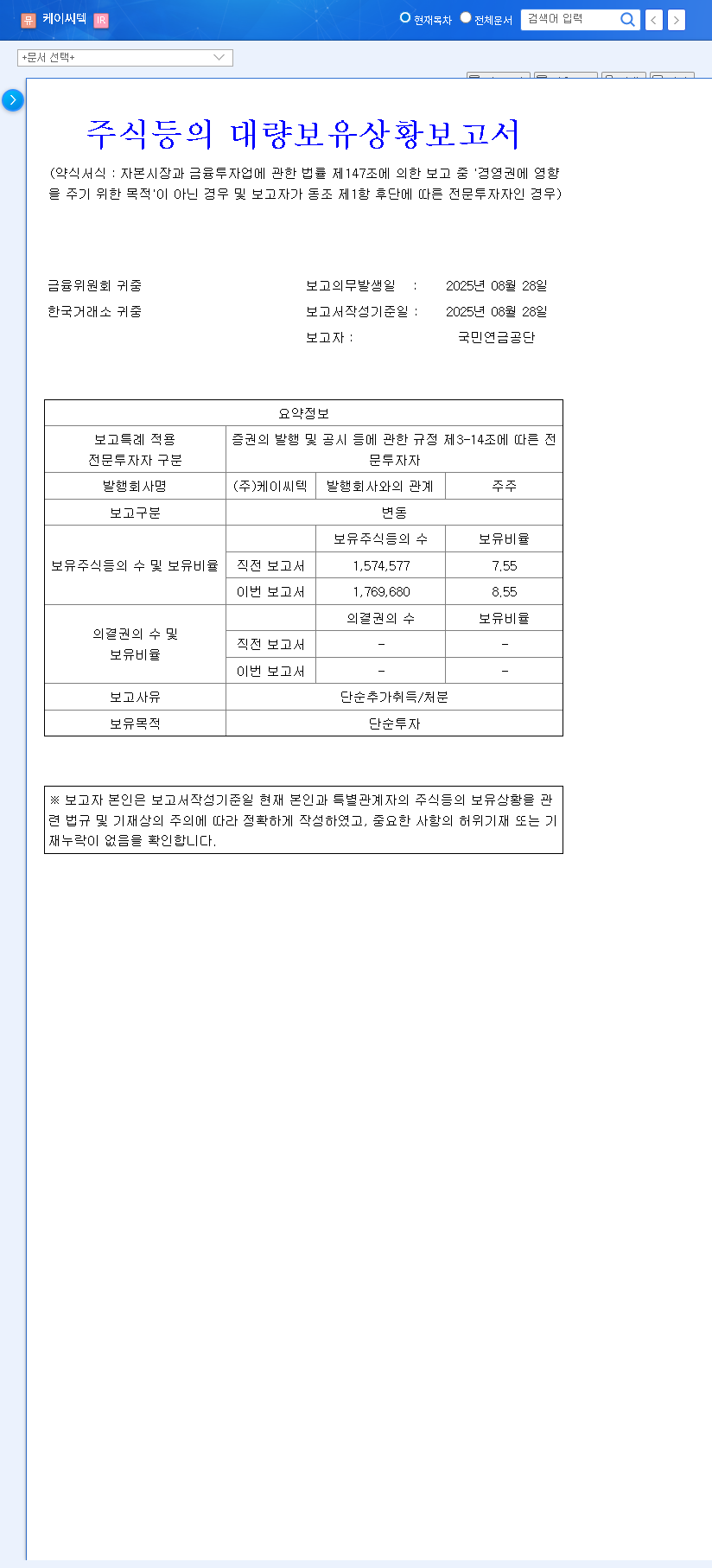
    On October 1, 2025, KC Tech, a key player in the semiconductor and display equipment sector, disclosed that the National Pension Service had increased its ownership from 7.55% to 8.55%. This 1%p increase, detailed in an Official Disclosure with the Financial Supervisory Service, represents a multi-million dollar vote of confidence. For investors analyzing the KC Tech stock, understanding the ‘why’ behind this investment is crucial for forecasting its future trajectory.

    Deep Dive Analysis: The Fundamentals Driving the Investment

    The NPS’s decision wasn’t made in a vacuum. It’s rooted in a thorough analysis of KC Tech’s core business strengths and financial health, weighed against its challenges.

    The Growth Engine: A Booming Semiconductor Segment

    The primary driver for optimism is KC Tech’s semiconductor business. The insatiable global demand for chips, fueled by the expansion of AI, cloud computing, and big data infrastructure, has created a super-cycle for equipment and materials suppliers. KC Tech is well-positioned to capitalize on this trend. Its continuous R&D investment into next-generation technologies ensures its relevance as chipmakers push the boundaries of fabrication. This robust growth in its core segment likely forms the bedrock of the NPS’s positive long-term outlook on the KC Tech stock.

    Rock-Solid Financials: A Foundation of Stability

    In a volatile market, stability is a premium. KC Tech boasts an exceptionally strong balance sheet, highlighted by a very low debt-to-equity ratio of just 11%. This financial prudence means the company is not heavily burdened by interest payments and has significant flexibility to navigate economic downturns or invest strategically in growth opportunities. Its substantial liquid assets provide a further cushion, making it a resilient choice for a risk-conscious institutional investor like the NPS.

    The Headwind: Navigating the Display Sector Slump

    However, the picture is not entirely rosy. The company’s display equipment segment has faced significant headwinds. Intense competition, particularly from Chinese manufacturers, and a cyclical reduction in capital expenditures by major panel makers have led to a noticeable decline in sales. This underperformance has been a drag on the company’s overall net profit and is a key risk factor that investors must monitor closely.

    While the semiconductor segment soars, the sluggish display business remains a critical variable. A strategic turnaround or stabilization in this area could unlock significant upside for KC Tech stock.

    The Bull vs. Bear Case: What’s Next for KC Tech Stock?

    The NPS investment sharpens the debate between the bullish and bearish outlooks for KC Tech.

    • The Bull Case: The ‘smart money’ has spoken. The NPS stake increase provides powerful institutional validation, which can attract other investors and lead to a positive re-rating of the stock. Bulls argue that the market is undervaluing the high-growth semiconductor business by focusing too heavily on the struggling display segment. The long-term secular trends in AI and data firmly support KC Tech’s core competency.
    • The Bear Case: Bears caution that the display segment’s continued weakness could cap profit growth and offset gains from the semiconductor side. Furthermore, the semiconductor industry itself is notoriously cyclical. A global economic slowdown or geopolitical tensions could disrupt demand. Therefore, the stock’s performance is tied not only to company execution but also to broader macroeconomic conditions.

    Action Plan: Key Metrics for Investors to Watch

    For those considering an investment in KC Tech stock, a proactive monitoring approach is essential. Here are the key points to focus on:

    • Display Segment Strategy: Watch for any company announcements regarding restructuring, new technology, or market share gains in the display business. A turnaround here is a major bullish catalyst.
    • Semiconductor Industry Health: Follow reports from authoritative bodies like SEMI (Semiconductor Equipment and Materials International) on global chip demand and capital expenditure forecasts.
    • Quarterly Earnings Reports: Scrutinize margin performance in both business segments. Strong and sustained profitability in the semiconductor division is crucial to the investment thesis.
    • Broader Market Context: To make a fully informed decision, it’s helpful to understand how to analyze semiconductor stocks within the wider industry landscape.

    In conclusion, the National Pension Service’s increased investment in KC Tech stock is a compelling, positive signal backed by the company’s strong semiconductor business and solid financials. While the challenges in the display sector should not be ignored, the long-term growth trajectory appears promising. Careful monitoring of the key metrics outlined above will be essential for navigating this investment opportunity successfully.

    Disclaimer: This article is for informational purposes only and does not constitute financial advice. All investment decisions should be made based on your own research and risk tolerance.

    (281820) KC Tech Stock (281820) Analysis: Why Korea's Largest Investor Just Increased Its Stake 관련 이미지