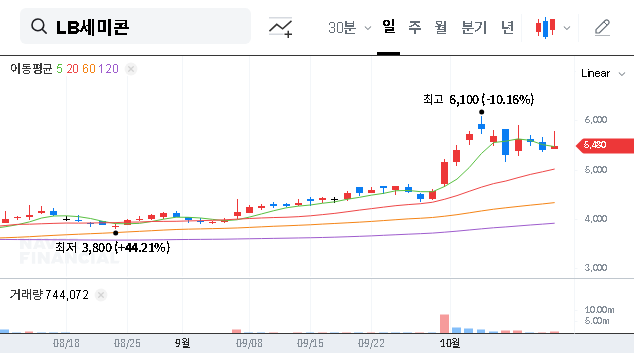
The recent announcement of LB SEMICON, INC.‘s decision to issue a ₩60 billion (approx. $45 million USD) LB SEMICON convertible bond (CB) has sent ripples through the investment community. This significant capital injection is a classic double-edged sword: while it provides vital fuel for innovation and expansion, it simultaneously raises critical questions about shareholder dilution and the long-term impact on LB SEMICON stock. For investors, understanding the mechanics and potential outcomes of this corporate financing move is paramount.
This comprehensive analysis will decode the issuance, explore the potential upside for growth, and critically examine the risks. We will provide a clear, actionable framework for investors to navigate the uncertainty and make informed decisions about their stake in LB SEMICON’s future.
Understanding the LB SEMICON Convertible Bond Issuance
On October 20, 2025, LB SEMICON formally disclosed its decision to raise ₩60 billion through a private placement of convertible bonds. This sum represents a substantial 15.88% of the company’s market capitalization at the time of the announcement. For full transparency, you can view the Official Disclosure on the DART system. The key terms of this crucial financing event are as follows:
- •Issuance Amount: ₩60 Billion
- •Method: Private Placement
- •Conversion Price: ₩5,473 per share
- •Coupon Rate (Interest): 2.0%
- •Yield to Maturity: 5.0%
- •Key Investors: A consortium of KB-affiliated private equity funds
The bondholders can begin converting these bonds into common stock from October 30, 2026. The participation of sophisticated institutional investors like KB’s private equity arms is a significant detail, often interpreted as a vote of confidence in the company’s long-term strategy and growth prospects.
For investors, the LB SEMICON convertible bond represents a pivotal moment: a trade-off between funding tomorrow’s potential growth and accepting the risk of today’s equity dilution. The key is to determine if the future value created will outweigh the cost of this new capital.
Analyzing the Impact on LB SEMICON Stock
This corporate financing move creates two distinct potential pathways for the company and its stock price. Understanding both the bullish and bearish cases is essential for a balanced investment thesis.
The Bull Case: Fueling Future Growth
The primary positive impact is the immediate access to ₩60 billion in capital. This funding can be a powerful catalyst for growth, potentially used for:
- •Strategic R&D Investment: Developing next-generation semiconductor packaging and testing technologies to stay ahead of the competition.
- •Capacity Expansion: Investing in new facilities and equipment to meet rising demand from key clients in the tech sector.
- •Financial Fortification: Improving the company’s balance sheet. While initially debt, a convertible bond can become equity upon conversion, potentially lowering the debt-to-equity ratio in the long run.
The Bear Case: The Inevitable Risk of Shareholder Dilution
The most significant risk associated with any LB SEMICON convertible bond is the potential for shareholder dilution. Since the conversion price (₩5,473) is set close to the current stock price, any significant rise in LB SEMICON stock will incentivize bondholders to convert their debt into equity. When this happens, the total number of outstanding shares increases, which can dilute the ownership percentage and earnings per share (EPS) for existing shareholders, often placing downward pressure on the stock price.
Furthermore, the 5.0% yield to maturity represents an interest expense that the company must service. If the returns generated from the new capital do not sufficiently exceed this cost, it could negatively impact profitability.
Investor Action Plan: What to Watch Next
Given the limited information, a wait-and-see approach backed by diligent monitoring is prudent. Investors should focus on the following key areas to assess the long-term impact of this financing:
- •Fund Utilization Roadmap: Watch for official company announcements detailing the specific allocation of the ₩60 billion. Are the funds earmarked for high-growth projects or simply to cover operational shortfalls?
- •Performance Metrics: Track key performance indicators (KPIs) like revenue growth, profit margins, and return on invested capital (ROIC) to see if the new funds are generating tangible results that outweigh the interest costs.
- •Market & Analyst Commentary: Follow reports from financial analysts and market experts. Their view on this corporate financing decision can provide valuable context.
- •Fundamental Analysis: Continue to perform deep fundamental analysis. For more on this topic, see our guide to semiconductor investing and stock analysis.
Frequently Asked Questions
What exactly is a Convertible Bond (CB)?
A Convertible Bond is a hybrid financial instrument that starts as debt but has an option for the bondholder to convert it into a predetermined number of the issuing company’s shares. LB SEMICON used this method to raise capital while offering investors potential upside if the stock performs well.
How does this CB issuance affect the LB SEMICON stock price directly?
The most direct potential impact is from shareholder dilution. If the bonds are converted, the supply of shares increases, which can lower the stock price, all else being equal. However, if the funds are used effectively to grow profits, the positive business performance could offset or even overcome this dilution effect over the long term.
Is the involvement of KB-affiliated funds a guaranteed positive sign?
While the participation of a reputable institutional investor like KB is a strong vote of confidence, it is not a guarantee of success. These funds have their own risk tolerance and investment horizons. Individual investors must still perform their own due diligence on the LB SEMICON convertible bond and its implications.
