Tag: Delisting Review

  • (455180) KGA Delisting Risk: A Complete Investor’s Guide to the KOSDAQ Review

    (455180) KGA Delisting Risk: A Complete Investor’s Guide to the KOSDAQ Review

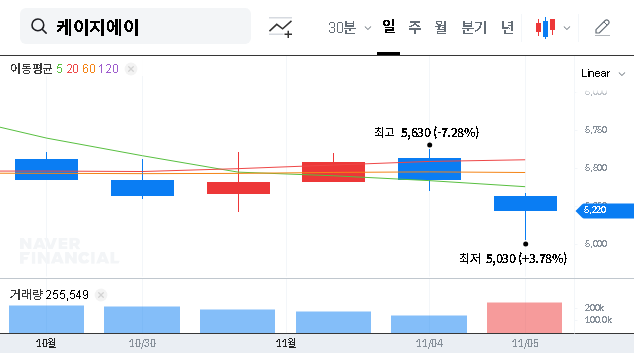
    The recent news surrounding the KGA delisting review has sent shockwaves through the investment community, leaving shareholders concerned and potential investors wary. On November 14, 2025, KGA CO., LTD announced that its Q3 revenue had fallen below the critical threshold of KRW 300 million, automatically triggering a substantive eligibility review for delisting from the KOSDAQ market. This guide provides a comprehensive analysis of the situation, breaking down the financial crisis, market implications, and strategic actions for investors facing this high-stakes scenario.

    Anatomy of a Crisis: The KGA Delisting Trigger

    The catalyst for this crisis was a formal disclosure in KGA’s Q3 2025 quarterly report. The company confirmed its revenue fell short of the minimum requirement, placing it under the ‘cessation of major business operations’ clause as defined by KOSDAQ Market Listing Regulations (Article 56, Paragraph 1, Subparagraph 6). This is not a minor infraction; it is a severe event that questions the company’s operational viability and very existence. The official confirmation can be found in the company’s Official Disclosure on the DART system.

    Dissecting the Financial Collapse: A Look at the Numbers

    This delisting review was not a sudden event but the culmination of continuously deteriorating financial fundamentals. A closer look reveals a company in significant distress.

    Key Financial Red Flags (Q3 2025 Cumulative)

    • Massive Revenue Decline: Cumulative revenue plunged to KRW 16.83 billion, a staggering 56% decrease year-over-year. The Q3-specific revenue of less than KRW 300 million signifies a near-total halt in core operations.
    • Deepening Losses: The company swung to an operating deficit of KRW 700 million and posted a substantial net loss of KRW 7.07 billion, exacerbated by IPO-related merger costs.
    • Precarious Financial Health: Despite an IPO-driven capital increase, accumulated losses have wiped out retained earnings. A high debt-to-equity ratio of 134% and significant cash outflow from investments raise serious doubts about its ability to fund ongoing operations.

    Core Business Under Siege

    The company’s primary business segments face immense challenges. The slowdown in the global electric vehicle (EV) market has directly impacted its secondary battery electrode process equipment division, as major Korean battery manufacturers have slashed investments. While stable, its duct automation and engineering businesses are too small to offset this catastrophic decline, highlighting a critical failure in business diversification and risk management.

    The trigger of a ‘cessation of major business operations’ review is one of the most severe flags for an investor, as it directly challenges the company’s ability to continue as a going concern.

    The Ripple Effect: Widespread Consequences

    The KOSDAQ delisting review process initiates a cascade of negative impacts that will be felt by the company and its investors for a long time.

    • Trading Suspension & Stock Collapse: An immediate trading halt is highly probable, trapping existing shareholders. If and when trading resumes, a catastrophic price drop is expected.
    • Erosion of Trust: Corporate image and trust among investors, partners, and financial institutions will be severely damaged, making any recovery effort incredibly difficult.
    • Funding Freeze: Raising new capital through debt or equity will become virtually impossible, strangling the company of the funds needed for operations and debt repayment. For more on this, you can read about how market confidence affects corporate financing.
    • Brain Drain: The uncertainty will likely lead to an exodus of skilled employees, further weakening the company’s ability to innovate and execute a turnaround plan. Understanding the basics of stock market delisting is crucial for investors, as explained by authoritative sources like Investopedia.

    Investor Guide: A Strategic Action Plan for KGA Stock

    Given the high probability of a negative outcome from the delisting review, a prudent and cautious approach is paramount.

    For New Investors

    Avoid New Positions. Until all uncertainties surrounding the KGA delisting risk are fully resolved, initiating a new investment is an extremely high-risk gamble. The potential for total loss of capital is significant.

    For Existing Shareholders

    Evaluate Your Risk Tolerance. Investors should seriously consider reducing their position or setting a firm stop-loss for when trading resumes. While a speculative rebound is always possible, the fundamental case points towards further downside. During the trading suspension, closely monitor all company communications, press releases, and regulatory filings regarding its improvement plan and the status of the review.

    Conclusion: A Time for Extreme Prudence

    KGA CO., LTD is at a critical juncture, facing a crisis that threatens its survival. The delisting review is a direct result of a severe operational and financial breakdown. At this moment, the KGA delisting risk is exceptionally high. Unless the company can present a rapid, transparent, and highly credible turnaround plan, the outlook remains bleak. Investors must prioritize capital preservation and make decisions based on the stark reality of the company’s current situation. All investment decisions are the sole responsibility of the investor.
    (455180) KGA Delisting Risk: A Complete Investor's Guide to the KOSDAQ Review 관련 이미지
  • (006380) CAPRO Delisting Review (006380): A Complete Investor Analysis & Outlook

    (006380) CAPRO Delisting Review (006380): A Complete Investor Analysis & Outlook

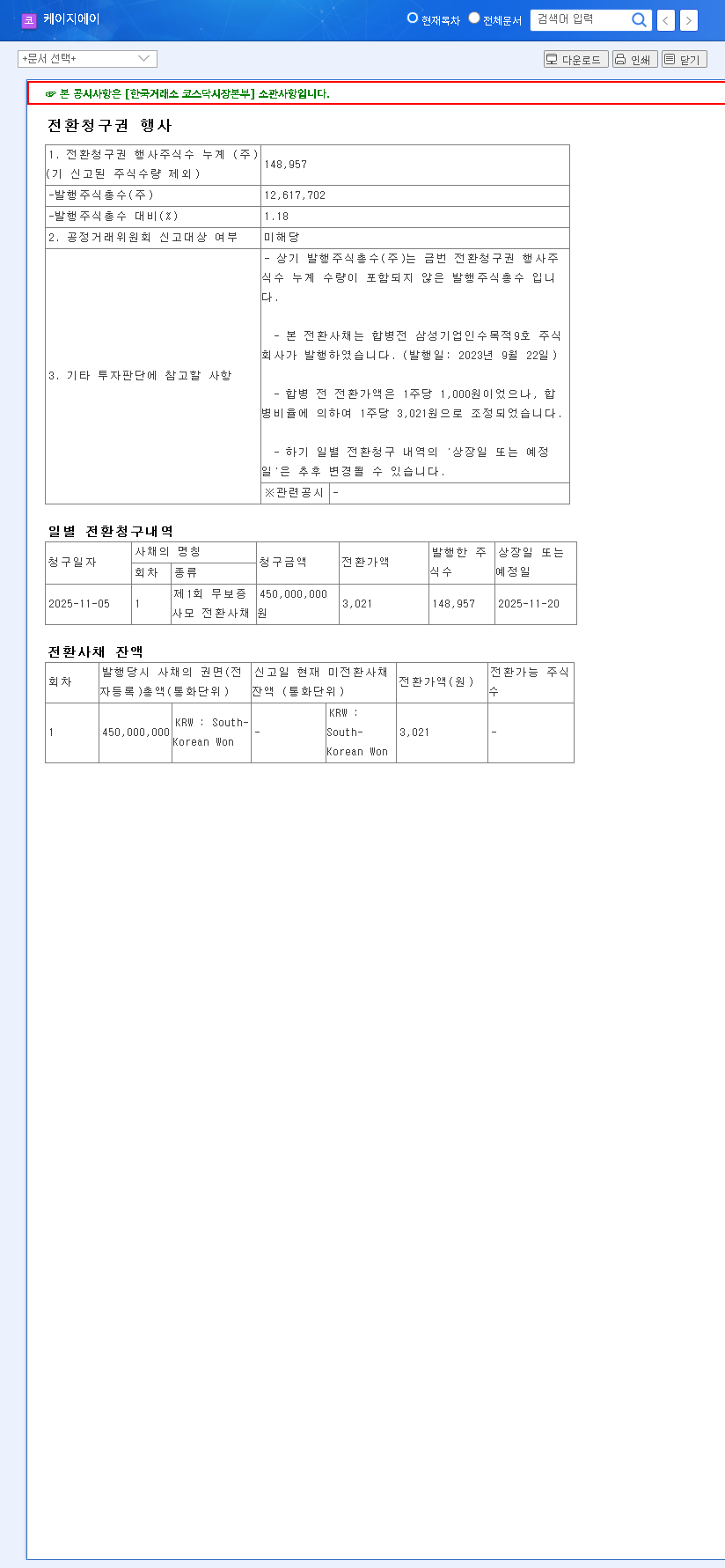
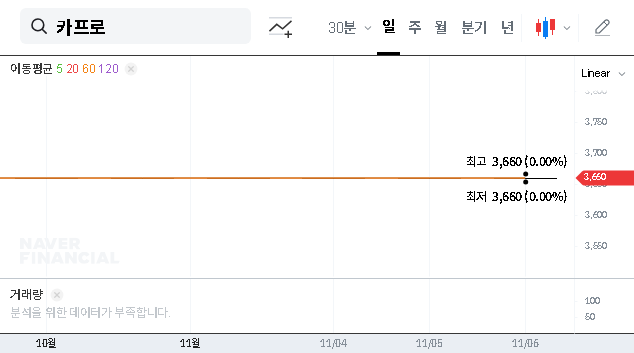
    The ongoing CAPRO delisting review has placed investors in CAPRO CORPORATION (006380) on high alert. With a final decision from the Korea Exchange expected by November 27, 2025, the company stands at a critical crossroads. This comprehensive analysis will dissect the factors leading to this review, evaluate the company’s dire financial state, and provide a clear outlook on the potential scenarios for shareholders. For anyone holding or considering an investment in CAPRO, understanding these details is not just important—it’s essential for capital preservation.

    With severe financial deterioration and the looming threat of delisting, CAPRO CORPORATION represents one of the highest-risk investments on the market today. Investors must exercise extreme caution.

    The Catalyst: Why a CAPRO Delisting Review Was Initiated

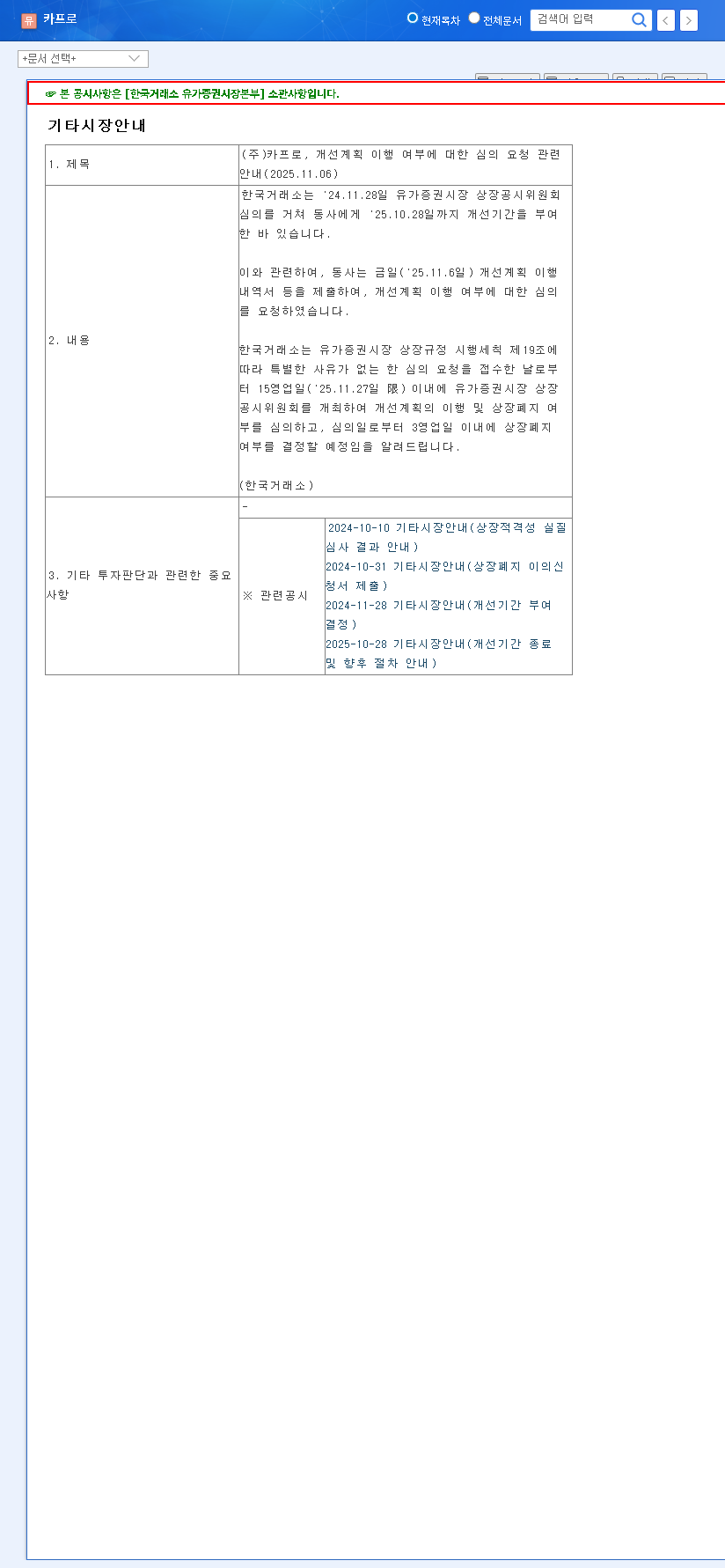
    The situation escalated on November 6, 2025, when CAPRO CORPORATION formally submitted its improvement plan performance report to the Korea Exchange. This action triggered the official review process to determine if the company has sufficiently addressed the issues that led to its probationary status, which was granted back on November 28, 2024. The exchange now has until November 27, 2025, to convene its Listing Disclosure Committee and render a final verdict. The outcome of this CAPRO delisting review will decide whether the company’s stock continues to trade or is removed from the market entirely. You can view the Official Disclosure on the DART system for primary source information.

    Financial Collapse: A Look at the Numbers

    The primary driver behind the delisting concern is CAPRO’s catastrophic financial performance. The numbers paint a grim picture of a company struggling for survival. A deep dive into its financial statements reveals multiple red flags that cannot be ignored.

    Plummeting Revenue and Deepening Losses

    The company’s top line has been in freefall. Revenue collapsed from KRW 1,147.7 billion in 2022 to just KRW 627.2 billion in 2024, with projections for 2025 showing a further slide to KRW 469.4 billion. More alarming is the shift from an operating profit of KRW 175.8 billion in 2022 to a projected operating loss of KRW -30.8 billion in 2025. This indicates a fundamental breakdown in the company’s core business profitability, a key metric for any sustainable enterprise. For more context on evaluating company health, you can learn about analyzing financial statements in our internal guide.

    Worsening Balance Sheet and Debt Burden

    CAPRO’s financial foundation is eroding. The debt-to-equity ratio, a critical measure of financial leverage, has surged from 92.27% in 2022 to a worrying 114.65% in 2024. This signals that the company is increasingly reliant on borrowing to stay afloat, a risky strategy in a high-interest-rate environment. The continuous decline in retained earnings further highlights a lack of internal financial capacity to weather this storm.

    A Desperate Pivot: Business Restructuring Efforts

    In a bid for survival, CAPRO is undertaking a radical business transformation. The company is shuttering its legacy core operations in caprolactam and ammonium sulfate fertilizer. It is attempting to pivot to new, potentially high-growth sectors:

    • Hydrogen: Tapping into the global push for clean energy.
    • Sulfuric Acid: A key industrial chemical with diverse applications.
    • Scrap Metal: A play on the circular economy and raw material markets.

    While ambitious, the success of these new ventures is highly uncertain and will require significant capital investment—something the company desperately lacks. Efforts to attract new investment and change the largest shareholder are underway, but the profitability and timeline for these new businesses remain speculative at best.

    Impact Analysis: Potential Outcomes for Investors

    Investors face two starkly different futures depending on the Korea Exchange’s decision. The uncertainty leading up to the announcement will fuel extreme volatility.

    Scenario 1: Listing is Maintained

    If CAPRO passes the review, a significant relief rally is possible. Investor focus would shift to the viability of its new hydrogen and sulfuric acid ventures. However, the path to recovery would be long and fraught with challenges. The company’s heavy debt load and ongoing losses would continue to weigh on the stock price. Sustainable recovery would depend entirely on the tangible, profitable success of its business pivot, not just on promises.

    Scenario 2: Company is Delisted

    A delisting decision would be catastrophic for current shareholders. Trading of stock 006380 would be immediately suspended, trapping investors and making it nearly impossible to liquidate their positions. Shareholder value would likely be wiped out, with investors facing the real possibility of a total loss of their investment capital. The company’s future would become uncertain, likely leading to restructuring or bankruptcy proceedings. For a broader understanding of market risks, authoritative sources like Bloomberg provide extensive financial analysis.

    Conclusion: A Strong ‘Highly Not Recommended’ Rating

    Given the overwhelming evidence of financial instability, the uncertainty of its business transition, and the existential threat posed by the CAPRO delisting review, investing in CAPRO CORPORATION at this moment involves an unacceptable level of risk. The potential for a complete loss of principal far outweighs any speculative upside.

    Our investment opinion is unequivocally Highly Not Recommended. We strongly advise existing shareholders to re-evaluate their positions and potential investors to avoid this stock until there is concrete, undeniable evidence of a sustainable turnaround. Prudent decision-making is paramount when facing such a high-stakes event.

    (006380) CAPRO Delisting Review (006380): A Complete Investor Analysis & Outlook 관련 이미지
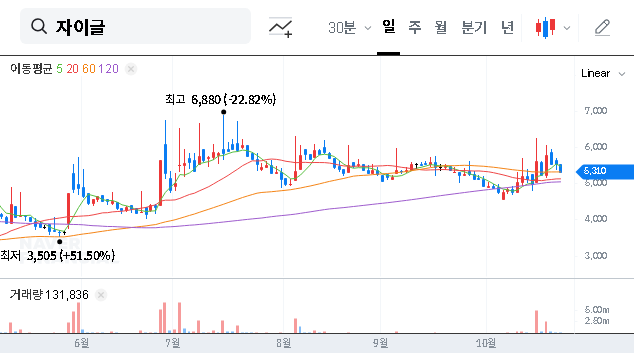
  • (234920) Zaigle Delisting Review (2025): Full Analysis, Stock Risks & Investor Guide

    (234920) Zaigle Delisting Review (2025): Full Analysis, Stock Risks & Investor Guide

    Investors in Zaigle Co., Ltd. (KOSDAQ) are facing a period of critical uncertainty. The recent announcement of a pending Zaigle delisting review has sent shockwaves through the investment community, raising serious questions about the company’s future and the safety of shareholder capital. This comprehensive analysis will break down the situation, from the initial disclosure to the underlying financial weaknesses, helping you understand the immense risks and formulate a rational strategy in these turbulent times.

    We will explore the company’s precarious fundamentals, the external market pressures, and the potential scenarios that could unfold, providing you with the insights needed to navigate this high-stakes event.

    What Happened? The Official Zaigle Delisting Review Announcement

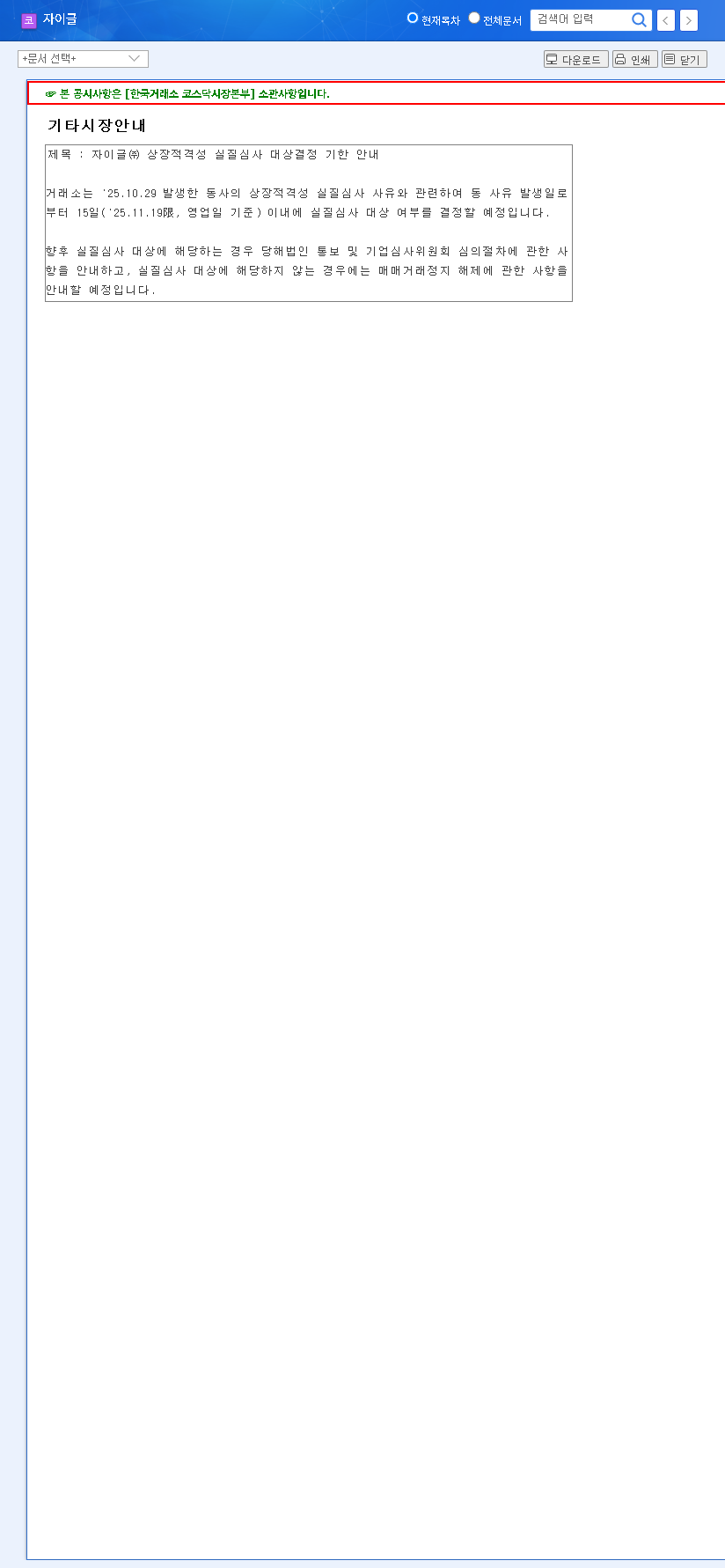
    On October 29, 2025, Zaigle Co., Ltd. filed a disclosure that triggered an alarm for every shareholder. The company officially announced the occurrence of a reason for a delisting eligibility substantial review. According to the filing, a decision on whether the company is subject to this formal review will be made by November 19, 2025. You can view the complete report directly from the source: Official Disclosure (DART).

    If the Korea Exchange (KRX) determines a formal review is unnecessary, the currently suspended trading of Zaigle stock will be lifted. However, if Zaigle is deemed subject to the review, it enters a high-risk deliberation process that could lead to severe consequences, including designation as an administrative issue or, in the worst-case scenario, complete delisting from the exchange.

    Why Is Zaigle Facing a Delisting Review? A Look at the Cracks

    This critical situation did not arise overnight. It is the culmination of deteriorating business fundamentals, questionable financial health, and a history of compliance issues that have eroded investor trust.

    Struggling Core Business & Uncertain New Ventures

    • Existing Business Slump: Sales of its flagship ‘Zaigle Grill’ and other well-being appliances have remained sluggish. The healthcare segment has also failed to gain traction, showing a decline in sales year-over-year.
    • Unproven New Ventures: While the company is pinning its hopes on new ventures like the ‘Zaigle On Simple’ medical device, their contribution to revenue is still negligible. More concerning is the collapse of its highly anticipated US secondary battery joint venture, which has amplified uncertainty. Plans for domestic LFP battery development remain on paper, with no clear path to production. For more information on market challenges, you can read about global supply chain disruptions.

    Alarming Financial Health Indicators

    • Deteriorating Profitability: With falling revenue and operating losses for two consecutive quarters in the first half of 2025, the company’s core profitability is in question.
    • Solvency Concerns: The debt-to-equity ratio climbed to a concerning 135.03% as of Q1 2025. This indicates the company is relying more on debt to finance its assets, which is a major red flag for financial stability.
    • Negative Cash Flow: Negative operating cash flow reveals that the company’s core business activities are not generating enough cash to sustain operations, forcing it to rely on financing or asset sales.
    • History of Sanctions: A past record of fines for dishonest disclosures has damaged corporate credibility, making investors wary of management’s transparency. If you want to learn more, check out our guide on how to analyze high-risk stocks.

    The combination of a failing core business, unproven ventures, and weak financials creates a perfect storm. The Zaigle delisting review is a direct consequence of these deep-seated issues.

    The Ripple Effect: Potential Impacts on Zaigle Stock and Business

    The outcome of this review will have profound and far-reaching consequences. Investors must prepare for significant volatility and potential downside.

    Direct Consequences

    • Stock Price Volatility: The uncertainty alone will likely lead to severe downward pressure on Zaigle’s stock price.
    • Trading Suspension: If subjected to the full review, a prolonged trading suspension is highly probable, locking up investor capital and creating immense liquidity risk.
    • Total Loss of Investment: In the worst-case scenario of delisting, the stock could become worthless, leading to a total loss for shareholders.

    Indirect Consequences

    • Credit Rating Downgrade: The situation could trigger a downgrade, making it harder and more expensive for Zaigle to raise capital.
    • Business Contraction: Partners, suppliers, and clients may become hesitant to do business with a company on the verge of being delisted, impacting contracts and revenue streams.

    Investor Playbook: Navigating the Uncertainty

    Given the high degree of investment risk, a cautious and defensive strategy is paramount.

    Potential Scenarios by November 19

    • Positive Scenario (Not Subject to Review): This would resolve immediate uncertainty and could cause a short-term relief rally. However, without a fundamental business turnaround, any gains may be short-lived.
    • Negative Scenario (Subject to Review): This is the worst outcome. It would trigger the formal Zaigle delisting review process, almost certainly leading to a trading suspension and a sharp drop in value if and when trading resumes.

    Recommendations for Investors

    For Potential Investors: Initiating a new position in Zaigle at this time carries an extremely high level of risk. It is strongly advised to stay on the sidelines until there is absolute clarity on the company’s listed status.

    For Existing Shareholders: The decision is more complex. You must assess your risk tolerance and be prepared for the possibility of a total loss. Monitoring the situation closely until the November 19 deadline is crucial. Any decision to sell or hold should be based on the understanding that the stock’s value is highly precarious.

    (234920) Zaigle Delisting Review (2025): Full Analysis, Stock Risks & Investor Guide 관련 이미지
  • (066790) CCS Management Dispute: Your Guide to the EGM & Trading Resumption Potential

    (066790) CCS Management Dispute: Your Guide to the EGM & Trading Resumption Potential

    The ongoing CCS management dispute has reached a critical flashpoint. A recent court decision has greenlit an Extraordinary General Meeting (EGM) for KOREA CABLE T.V CHUNG-BUK SYSTEM CO., LTD. (CCS), thrusting the company into a period of significant uncertainty and opportunity. For investors, this isn’t just corporate drama; it’s a pivotal event that could unlock the path to trading resumption or deepen existing challenges. This comprehensive guide will analyze the situation, break down the EGM agenda, and provide a strategic outlook for shareholders.

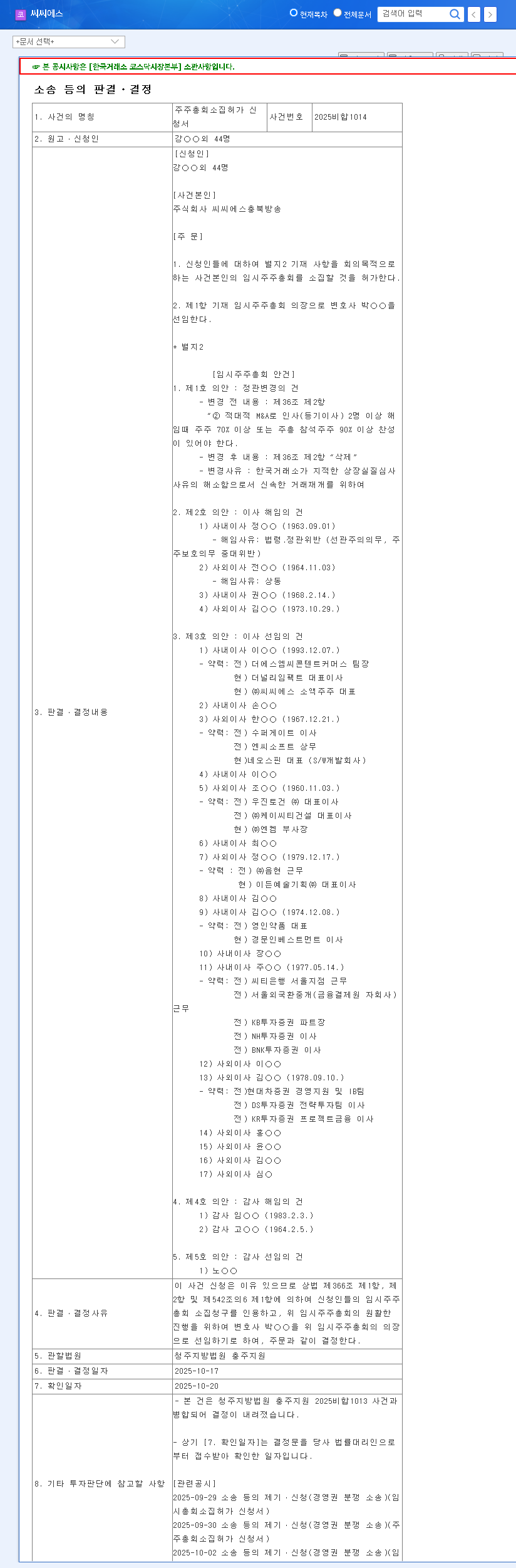
    On May 16, 2024, the Cheongju District Court sided with a group of 45 shareholders, authorizing their request to convene the EGM. This legal victory provides a formal platform for shareholders to challenge the current leadership and directly influence the company’s future. The decision underscores the growing dissatisfaction with the current board’s performance and strategy, particularly concerning the delisting review issues raised by the Korea Exchange. You can view the Official Disclosure (DART) for complete details.

    Deconstructing the EGM Agenda: What’s at Stake?

    The upcoming CCS EGM is centered around a few crucial proposals that will dictate the company’s trajectory. Understanding each item is key to grasping the potential outcomes.

    1. Amending the Articles of Association

    This is arguably the most critical agenda item. The proposal seeks to remove a ‘poison pill’ clause that requires a supermajority vote to dismiss multiple directors. The current management is protected by this clause, making a leadership change difficult. By removing it, shareholders aim to clear a major hurdle identified by the Korea Exchange, which is a vital step toward achieving CCS trading resumption.

    2. A Complete Leadership Overhaul

    The shareholder group is proposing a clean slate. The agenda calls for the dismissal of several current internal and external directors, as well as auditors, citing alleged violations of laws and negligence of their duties to protect shareholder value. This move signals a profound lack of confidence in the current board’s ability to navigate the company out of its difficulties.

    3. Appointment of a New Board

    In place of the outgoing members, a slate of 17 new directors (10 internal, 7 external) and a new auditor is proposed. Notably, these candidates include representatives from minority shareholders and individuals with expertise in content and software development. This suggests a strategic pivot towards new business ventures and a more inclusive governance model, moving beyond the traditional cable TV business.

    The core of the CCS management dispute is a battle for control, with shareholders pushing for a new vision focused on resolving exchange compliance issues and unlocking future growth.

    Market Impact and Investor Strategy

    The EGM introduces both significant risks and potential rewards. Navigating this period requires a clear understanding of the short-term and long-term implications.

    Short-Term Outlook: Volatility and Speculation

    In the short term, investors should brace for heightened stock price volatility. As seen in similar corporate battles covered by outlets like The Wall Street Journal, news flow and speculation surrounding the EGM’s outcome will likely drive sharp price movements. Key factors to watch include:

    • Increased Trading Volume: Speculative interest will likely fuel higher-than-average trading activity.
    • Uncertainty: The unpredictability of the shareholder vote creates a high-risk environment until the results are finalized.

    Mid-to-Long-Term Potential: A Path to Recovery?

    The long-term picture depends entirely on the EGM’s success and the new leadership’s execution. A positive outcome could lead to:

    • Improved Governance: A new, transparent management team could restore investor confidence.
    • Trading Resumption: Successfully addressing the delisting concerns is the primary goal and would be a major positive catalyst.
    • New Business Initiatives: The expertise of the proposed new directors could open doors to growth in new sectors.

    Investor Action Plan & Key Risks

    Investors should adopt a cautious yet informed approach. The risks are real: the EGM agenda could fail, the management dispute could become more protracted, or a new board may fail to improve fundamentals. For more on the mechanics of such situations, you can read our Guide to Shareholder Activism.

    Your focus should be on the following points:

    • Monitor EGM Results: The outcome of the vote is the most immediate and critical piece of information.
    • Evaluate New Leadership: If appointed, assess the new board’s strategic plan and their initial actions.
    • Track Exchange Communications: Keep a close eye on any updates from the Korea Exchange regarding the delisting review and trading status.
    • Focus on Fundamentals: Ultimately, long-term value will be driven by improvements in revenue, profitability, and balance sheet health, not just changes in management.

    Disclaimer: This analysis is for informational purposes only and is based on publicly available information. Investment decisions carry risk and should be made based on your own judgment and due diligence.

    (066790) CCS Management Dispute: Your Guide to the EGM & Trading Resumption Potential 관련 이미지
  • (071200) INFINITT Healthcare Delisting Review: A Complete Investor’s Guide for 2025

    (071200) INFINITT Healthcare Delisting Review: A Complete Investor’s Guide for 2025

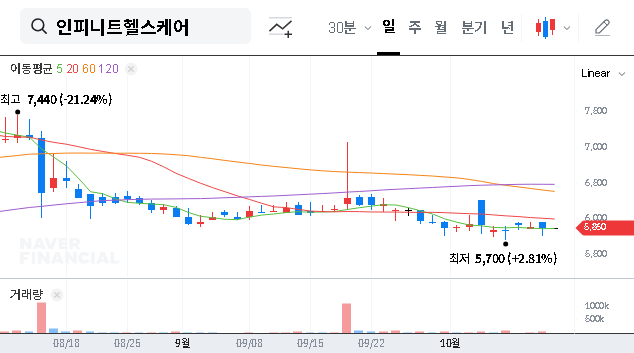
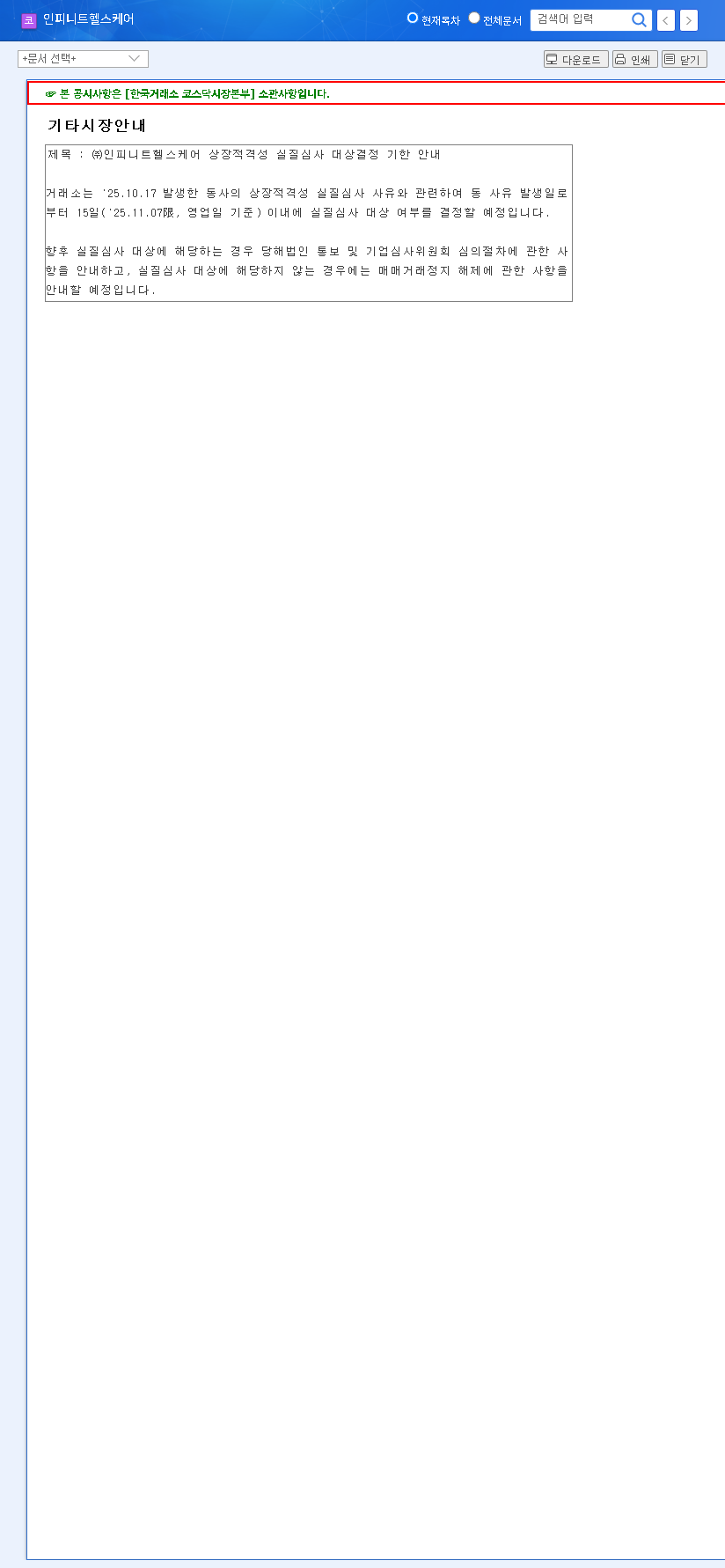
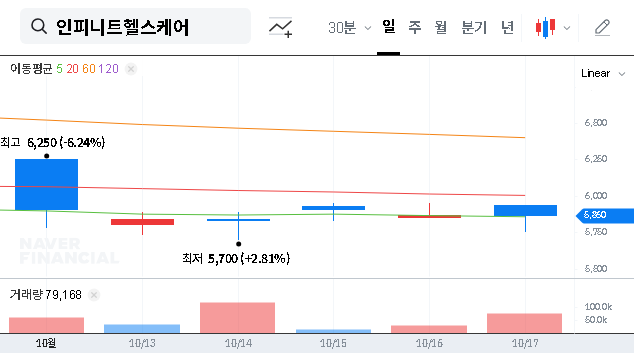
    Investors in INFINITT Healthcare Co., Ltd. are facing a period of significant uncertainty following a critical announcement from the Korea Exchange. The ongoing INFINITT Healthcare delisting review process, initiated by a notice on October 20, 2025, has placed the company’s future on the stock market under a microscope. With a decision deadline looming on November 7, 2025, stakeholders must navigate a complex situation marked by potential stock volatility and information gaps. This comprehensive guide provides a detailed analysis of the situation, explores the potential impacts, and offers a strategic action plan for making informed decisions.

    Understanding the nuances of this development is paramount. Whether you are a current shareholder or considering a position, this analysis will equip you with the essential knowledge needed to interpret events as they unfold and protect your investment interests.

    Deconstructing the Korea Exchange Notice

    On October 20, 2025, INFINITT Healthcare received a ‘Notice of Deadline for Decision on Delisting Eligibility Review’. This formal communication from the Korea Exchange signifies that a specific event, which occurred on October 17, has triggered a regulatory review. The Exchange now has until November 7, 2025 (15 business days), to determine if INFINITT Healthcare should be subjected to a full-scale, substantial delisting review. This is not a final delisting order, but a critical preliminary step that could set in motion a chain of events with profound consequences for the INFINITT Healthcare stock price and the company’s public status.

    “When a company faces a delisting eligibility review, the market’s primary reaction is driven by uncertainty. The lack of immediate, clear information about the root cause creates a vacuum that is often filled with speculation, leading to heightened stock volatility.”

    Potential Scenarios and Market Impact

    The outcome of the November 7th decision will create a fork in the road for INFINITT Healthcare. Investors should be prepared for two primary scenarios, each with distinct implications for the company’s valuation and market sentiment.

    Positive Scenario: Not Subject to Review

    If the Korea Exchange determines that the issue does not warrant a substantial review, it will be a significant relief for the company and its shareholders. This outcome would likely lift any trading suspension, quell immediate fears, and could lead to a stabilization or recovery of the stock price as the cloud of uncertainty dissipates. It would signal that the underlying issue was manageable or has been sufficiently addressed.

    Negative Scenario: Subject to Review

    Conversely, if the Exchange decides to proceed with a full delisting review, investor concerns will escalate dramatically. This would initiate a more prolonged period of deliberation, often accompanied by a continued trading halt. The stock would face immense downward pressure. The company would then enter a formal process to defend its listing status, which could involve submitting improvement plans. For a deeper understanding of this process, investors can consult external resources like Investopedia’s guide on delisting procedures. The worst-case outcome of this path is, of course, the eventual delisting from the exchange.

    Investor Action Plan: Navigating the INFINITT Healthcare Delisting Review

    In times of high uncertainty, a passive ‘wait and see’ approach can be risky. A proactive, research-driven strategy is essential. Here are the crucial steps investors should take to navigate this period effectively.

    • Scrutinize Official Disclosures: Your primary source of truth is the official regulatory filings. The exact reasons for the review—be they related to financial performance, auditing issues, or governance—must be verified. The Official Disclosure (DART Report) is the foundational document for your research.
    • Analyze Company Fundamentals: Look beyond the immediate crisis. Assess INFINITT Healthcare’s financial health, including revenue trends, profitability, and debt ratios from recent financial statements. Understanding their core business in the medical IT and PACS (Picture Archiving and Communication System) industry provides context for their long-term viability.
    • Review Past Precedents: Research similar cases of companies on the Korea Exchange that have faced a delisting eligibility review. Analyzing their outcomes—whether they successfully defended their listing or were ultimately delisted—can provide valuable insight into potential timelines and results.
    • Monitor Management’s Response: Pay close attention to official statements and press releases from INFINITT Healthcare’s management. A transparent, competent, and proactive response can build confidence, while silence or evasiveness can be a major red flag. Their strategy for addressing the Exchange’s concerns is a key factor in the long-term outlook. This may be related to broader topics like understanding corporate governance issues.

    Conclusion: Prudence and Diligence are Key

    INFINITT Healthcare stands at a critical juncture, and the path forward will be dictated by the Korea Exchange’s decision on November 7, 2025. For investors, this is a time for calm, meticulous research, not panicked reactions. By focusing on official information, understanding the procedural steps, and evaluating the company’s fundamental strength and response, you can make a reasoned judgment. Until the uncertainty is resolved, a cautious and informed approach is the most prudent strategy to protect your capital and navigate the potential stock volatility.

    (071200) INFINITT Healthcare Delisting Review: A Complete Investor's Guide for 2025 관련 이미지
  • (071200) INFINITT Healthcare Embezzlement Scandal: A Guide to Delisting Risk & Investor Action Plan

    (071200) INFINITT Healthcare Embezzlement Scandal: A Guide to Delisting Risk & Investor Action Plan

    The recent news surrounding the INFINITT Healthcare embezzlement allegations has justifiably alarmed the market and its investors. When a company faces accusations of this magnitude, it triggers a cascade of events that can threaten its very existence on a public exchange. This comprehensive analysis will break down the situation, explore the potential consequences of the INFINITT Healthcare delisting review, and provide a detailed investor action plan to navigate this period of high uncertainty.

    What Happened? The Core Allegations

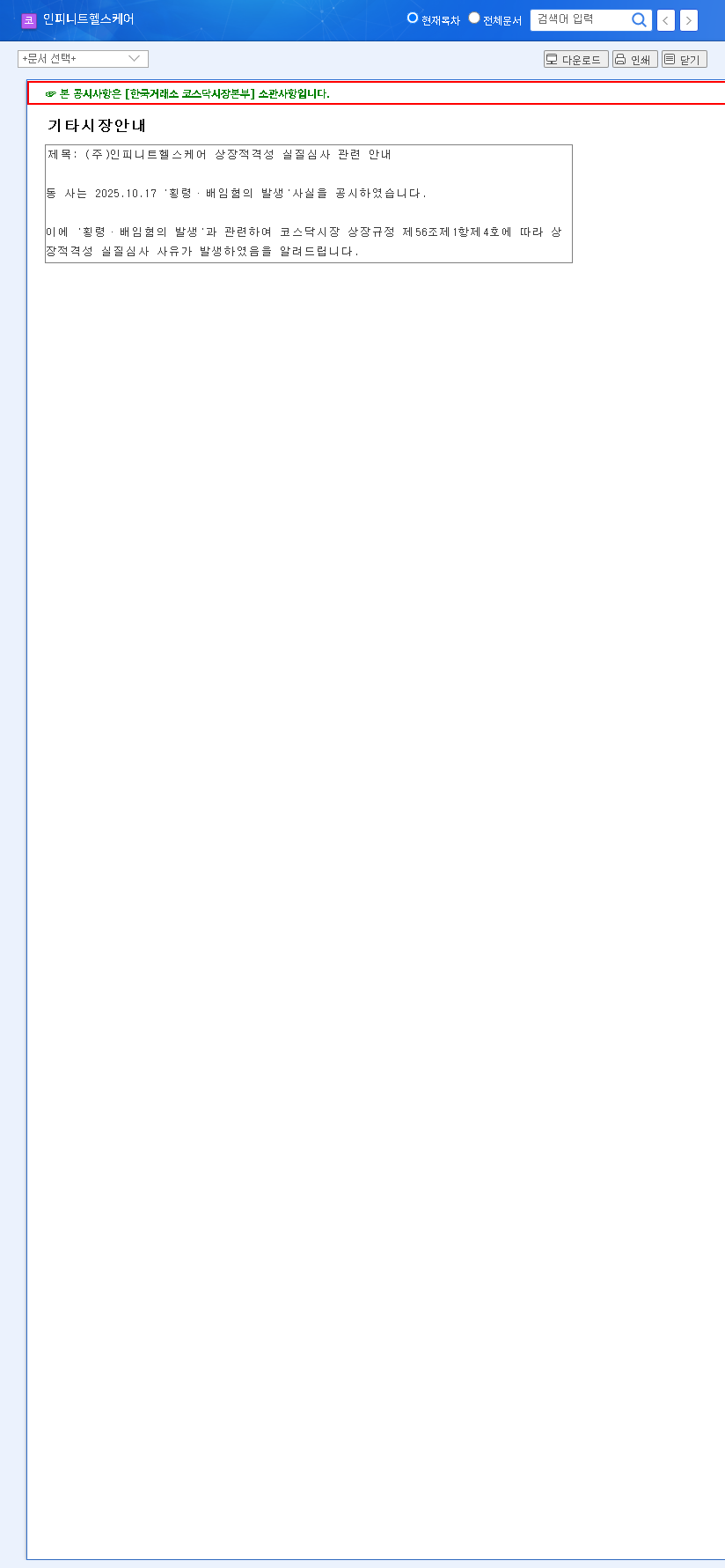
    On October 17, 2025, INFINITT Healthcare Co., Ltd. made a public disclosure confirming allegations of embezzlement and breach of trust by company insiders. This wasn’t a minor infraction; the scale of the alleged misconduct was significant enough to automatically trigger a delisting eligibility review by the KOSDAQ market authorities. The formal notice, filed as an Official Disclosure on the DART system, initiated a period of intense scrutiny and uncertainty for the company and its shareholders.

    Why This Matters: The Ripple Effect on Trust and Value

    Allegations of this nature strike at the heart of corporate integrity. They go far beyond the immediate financial loss. The market operates on trust—trust in a company’s financial reporting, its management’s ethics, and its internal controls. When these are compromised, the fundamental value of the company is called into question. Such KOSDAQ allegations can lead to a severe and lasting loss of confidence from institutional and retail investors alike, making it difficult for the market to maintain any positive expectations.

    When management transparency is questioned, the very foundation of investor confidence begins to crumble, leading to severe and unpredictable market reactions. Protecting shareholder value becomes paramount.

    Potential Consequences: A Breakdown of the Risks

    Investors must be aware of both the immediate and long-term risks stemming from the INFINITT Healthcare embezzlement probe.

    Direct Impacts

    • Delisting Review & Trading Suspension: The most immediate effect is the formal review, which can lead to a temporary suspension of stock trading, locking in investor positions.
    • Extreme Stock Volatility: The stock price is likely to experience significant downward pressure as investor confidence evaporates.
    • Erosion of Investor Trust: Concerns about management ethics can cause a mass exodus of long-term investors.

    Potential Long-Term Impacts

    • Damaged Creditworthiness: Securing future funding and loans becomes more difficult and expensive, hindering growth.
    • Business Disruption: Reputational damage can affect contracts with clients and partners, leading to a decline in revenue.
    • Worst-Case Scenario – Delisting: If the review concludes negatively, the company could be delisted, resulting in catastrophic losses for shareholders.

    A Strategic Investor Action Plan

    Navigating this situation requires a calm, strategic approach. Panic-selling is rarely the right answer, but inaction can be equally damaging. Here is a recommended investor action plan.

    1. Halt and Assess

    Immediately suspend any new or additional investments in INFINITT Healthcare. The current level of uncertainty introduces an unacceptable risk-to-reward ratio for new capital. The priority is to manage your existing exposure.

    2. Gather Intelligence

    Actively monitor all official communications from the company, KOSDAQ, and regulatory bodies. Supplement this with reporting from reputable financial news sources like Bloomberg or Reuters. Pay close attention to the details of the investigation, the amounts involved, and the company’s official response.

    3. Implement Risk Management

    This is the time for defensive positioning. Review your portfolio’s allocation to this stock. You must consider a worst-case scenario (delisting) and decide on a stop-loss strategy that aligns with your risk tolerance. It’s better to realize a planned loss than to risk a total loss. For more general strategies, you can learn about managing portfolio risk here.

    4. Monitor for Recovery Signals

    Even if the company avoids delisting, the road to recovery will be long. Look for positive signals such as a complete overhaul of management, the implementation of stringent new internal controls, and a transparent plan to restore shareholder value. These actions, not just words, will be necessary to rebuild trust.

    In conclusion, the INFINITT Healthcare embezzlement case is a serious development with potentially severe consequences. Investors must remain vigilant, prioritize risk management, and make decisions based on factual information rather than speculation. Your financial future depends on a cautious and well-informed strategy.

    Disclaimer: This analysis is for informational purposes only and is based on publicly available information. It does not constitute financial advice. All investment decisions carry risk and are the sole responsibility of the investor.
    (071200) INFINITT Healthcare Embezzlement Scandal: A Guide to Delisting Risk & Investor Action Plan 관련 이미지
  • Winia Aid: Escaped Delisting, But Faces Delisting Review

    1. What Happened?

    On August 14, 2025, Winia Aid announced through a revised audit report that the re-audit opinion for the 2024 fiscal year had changed to ‘qualified.’ This resolved the formal reason for delisting, but simultaneously placed the company under a delisting review.

    2. Why Does It Matter?

    The ‘qualified’ audit opinion is a positive sign, increasing the likelihood of Winia Aid’s survival. The conclusion of the rehabilitation proceedings and the M&A also raise expectations for normalization of management. However, investors need to pay attention to the review results, as they will determine whether trading will resume.

    3. What’s Next?

    • Positive Scenario: If the review is passed, trading may resume and the stock price could rise.
    • Negative Scenario: If the review is failed, delisting is possible.

    The review will comprehensively assess Winia Aid’s business sustainability, financial soundness, etc. Recent financial improvement trends and the ability to generate operating cash flow will be key evaluation factors.

    4. What Should Investors Do?

    Investors should approach with caution until the results of the delisting review are announced. Careful monitoring of the resumption of trading, financial performance improvement trends, and future operating cash flow generation capabilities is crucial.

    When will the results of the Winia Aid delisting review be released?

    The review period varies depending on the company’s situation, but generally, it can take several months. We need to wait for an official announcement from the Korea Exchange.

    What factors are evaluated in the delisting review?

    The review comprehensively assesses the company’s sustainability as a going concern, financial soundness, and management transparency.

    Should I invest in Winia Aid stock now?

    Caution is advised until the delisting review results are released. Only investors who can tolerate high risk should consider investing.

  • Iljin Power: Delisting Crisis Averted? Investment Strategies After Avoiding Delisting Review

    1. What Happened? Delisting Review Exemption

    On July 22, 2025, Iljin Power announced the positive news of its exemption from the delisting review. This means the worst-case scenario of delisting has been avoided, and trading is expected to resume on July 23rd.

    2. Why Does It Matter? Reduced Uncertainty, Improved Investor Sentiment

    This decision removes the uncertainty surrounding Iljin Power’s listing status, which has been weighing down the stock price. It’s expected to improve investor sentiment and potentially create upward momentum for the stock.

    3. What’s the Company’s Situation? Q1 Earnings Slump and New Business Ventures

    Despite the positive news, the Q1 earnings were disappointing. The decline in sales and profitability raises concerns for investors. However, the active investment in renewable energy could offer long-term growth potential.

    • Strengths: Diversification into renewable energy, healthy short-term liquidity
    • Weaknesses: Weak Q1 earnings, pending lawsuits
    • Opportunities: Government support for renewable energy policies
    • Threats: Volatility of raw material prices, increased competition

    4. What’s the Outlook? Short-Term Gains, Long-Term Uncertainty

    In the short term, the stock price is expected to rise following the delisting exemption. However, the long-term trend will depend heavily on the success of the renewable energy business and macroeconomic conditions.

    5. What Should Investors Do? Proceed with Caution

    Investors should not be swayed by short-term price fluctuations and should carefully analyze the progress of the renewable energy business and future earnings prospects. It’s also crucial to monitor the outcome of the pending lawsuits and macroeconomic variables.

    Frequently Asked Questions

    Is Iljin Power completely safe from delisting?

    Yes, with the exemption from the delisting review, the possibility of delisting is currently very low. However, future management issues or legal problems could trigger another review, so ongoing monitoring is necessary.

    What is the outlook for the renewable energy business?

    While there is long-term growth potential, the business has yet to achieve profitability. Success will depend on various factors such as government policies, technological advancements, and market competition.

    What should investors be cautious about?

    Be mindful of short-term price volatility and carefully analyze the reasons for the weak Q1 earnings and the potential for improvement. It’s important to monitor the progress of the renewable energy business and the outcome of pending lawsuits.