Tag: Defense Industry

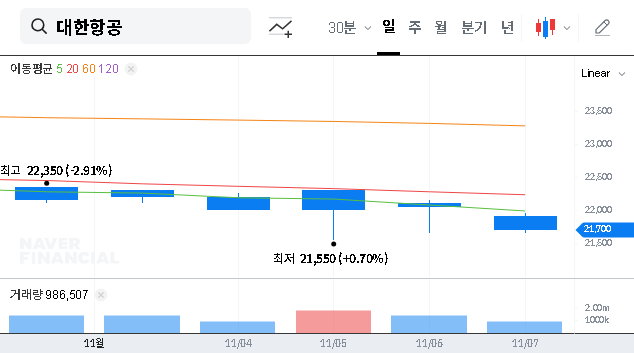
  • (003490) Korean Air Lines L3Harris Contract: Deep Dive into the ₩631.9B Aerospace Deal

    (003490) Korean Air Lines L3Harris Contract: Deep Dive into the ₩631.9B Aerospace Deal

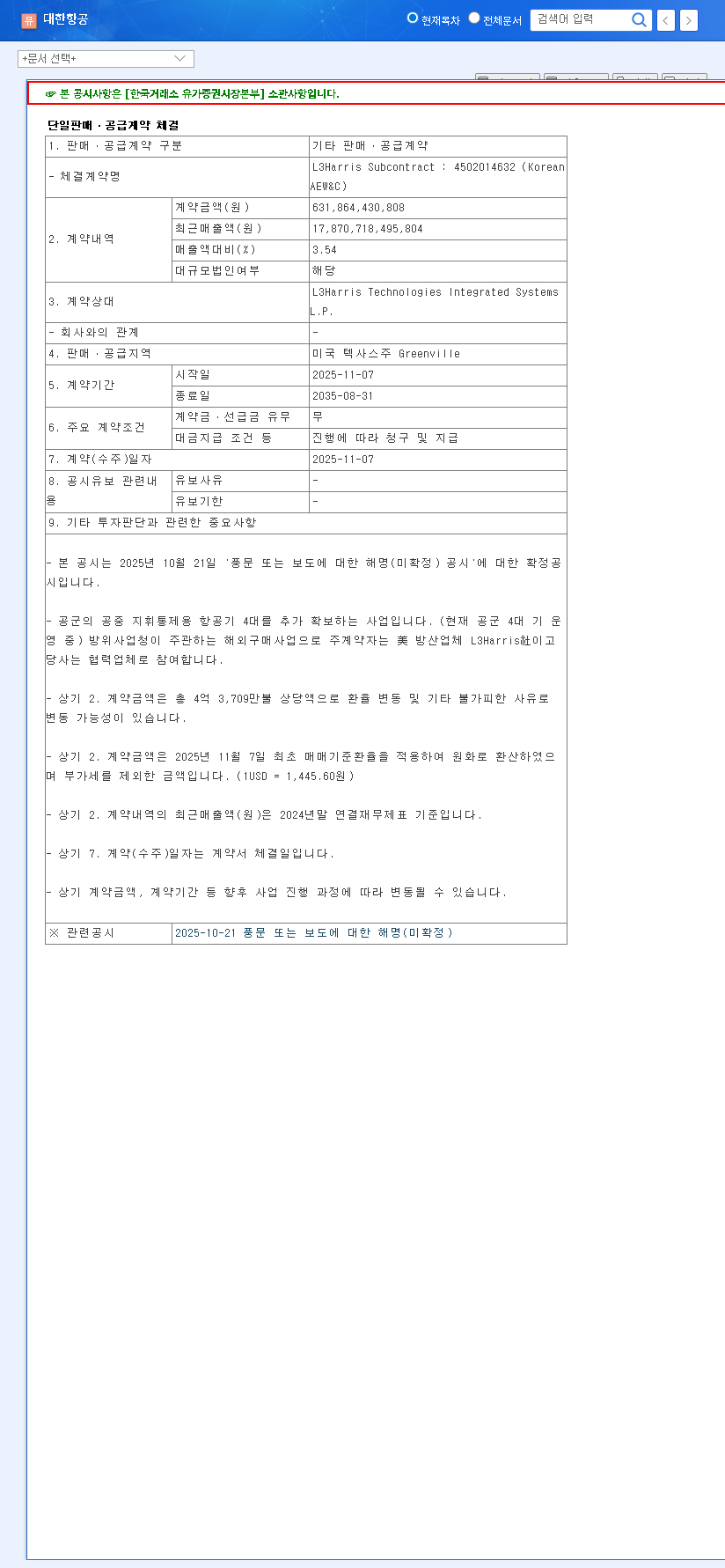
    The recent Korean Air Lines L3Harris contract marks a pivotal moment for the airline’s burgeoning aerospace division. In a landmark deal, Korean Air secured a long-term supply agreement worth ₩631.9 billion (approximately $460 million USD) with L3Harris Technologies, a global aerospace and defense titan. This agreement, centered on crucial Korean Airborne Early Warning & Control (AEW&C) components, is far more than a simple revenue entry; it signals a strategic deepening of Korean Air’s role in the high-stakes global defense supply chain. This analysis will dissect the contract’s details, explore its profound impact on Korean Air’s fundamentals, and provide a clear-eyed outlook for investors.

    Deconstructing the Landmark Agreement

    Announced on November 7, 2025, this significant supply contract formalizes a long-term partnership with L3Harris Technologies Integrated Systems L.P., a key player in the U.S. defense sector. The scale and duration of this deal underscore its strategic importance for the Korean Air aerospace division.

    Key Contract Specifics

    • Total Value: ₩631.9 billion, representing 3.54% of Korean Air’s recent total revenue.
    • Contract Duration: A nearly decade-long term from November 7, 2025, to August 31, 2035.
    • Scope of Work: Supply of critical components for Korea’s advanced AEW&C aircraft, a vital national security asset.
    • Counterparty: L3Harris Technologies, a top-tier U.S. defense contractor known for its advanced technology solutions.

    Strategic Impact on Korean Air’s Aerospace Ambitions

    This long-term agreement is a powerful catalyst, expected to deliver several fundamental benefits that extend well beyond the balance sheet. It solidifies the aerospace division’s position as a core pillar of future growth for the company.

    This contract is not just about revenue; it’s a vote of confidence in our technological prowess and a gateway to deeper integration within the global aerospace and defense market.

    Securing Predictable, Long-Term Revenue

    In an industry often marked by cyclicality, a ten-year contract provides an invaluable stream of predictable revenue. This stability enhances financial planning, de-risks future investments in the aerospace division, and provides a buffer against volatility in the passenger airline market.

    Expanding Presence in the U.S. Defense Market

    The deal, centered in Greenville, Texas, provides Korean Air with a crucial foothold in the highly competitive U.S. market. Successfully executing this AEW&C components supply contract will bolster the company’s reputation and strengthen its relationships with the U.S. government and other defense contractors, potentially unlocking future large-scale opportunities.

    Market Outlook and Investor Considerations

    While the long-term strategic benefits are clear, investors should analyze the Korean Air Lines L3Harris contract within a broader market context. Large-scale agreements like this typically boost investor sentiment, which can positively influence Korean Air stock performance. However, macroeconomic variables will play a significant role over the contract’s lifespan.

    • Exchange Rate Fluctuations: As a USD-denominated contract, swings in the KRW/USD exchange rate will directly affect the revenue and profitability when converted back to Korean Won.
    • Profitability Margins: While defense contracts are often stable, the specific profit margins are not public. Investors must monitor company reports for insights into the project’s overall profitability.
    • External Factors: The ongoing progress of the Asiana Airlines merger, geopolitical stability, and global economic trends will continue to influence Korean Air’s overall business environment.

    Final Analysis & Investor Takeaway

    The ₩631.9 billion agreement with L3Harris Technologies is an undeniable strategic win for Korean Air. It validates the capabilities of its aerospace division, ensures a decade of stable revenue, and opens doors for future growth. This development provides a strong tailwind for the company’s long-term fundamental health.

    For investors, this news supports a positive, long-term outlook. However, a cautious ‘Neutral’ stance is advisable in the short term. Key variables, including undisclosed contract profitability and macroeconomic volatility, require continuous monitoring. Investment decisions should be made after considering these factors alongside the broader aviation industry landscape. For complete transparency, the original filing can be reviewed in the Official Disclosure.

    Frequently Asked Questions

    What is the core of the Korean Air Lines L3Harris contract?

    It is a long-term supply contract valued at ₩631.9 billion, where Korean Air will provide key components for Korean AEW&C (Airborne Early Warning & Control) aircraft to U.S. defense company L3Harris Technologies over nearly 10 years.

    How does this contract affect Korean Air’s revenue?

    While representing 3.54% of total revenue, its primary benefit is not a massive short-term boost but rather the establishment of a stable, predictable revenue stream for the aerospace division over the next decade, which enhances financial stability.

    What does this mean for the future of Korean Air’s aerospace business?

    This deal significantly elevates the profile of Korean Air aerospace, confirming its technical expertise. It acts as a springboard for securing more high-value contracts and expanding its footprint in the lucrative U.S. defense market.
    (003490) Korean Air Lines L3Harris Contract: Deep Dive into the ₩631.9B Aerospace Deal 관련 이미지
  • (065450) VICTEK (065450) Q3 2025 Earnings Analysis: A Deep Dive for Investors

    (065450) VICTEK (065450) Q3 2025 Earnings Analysis: A Deep Dive for Investors

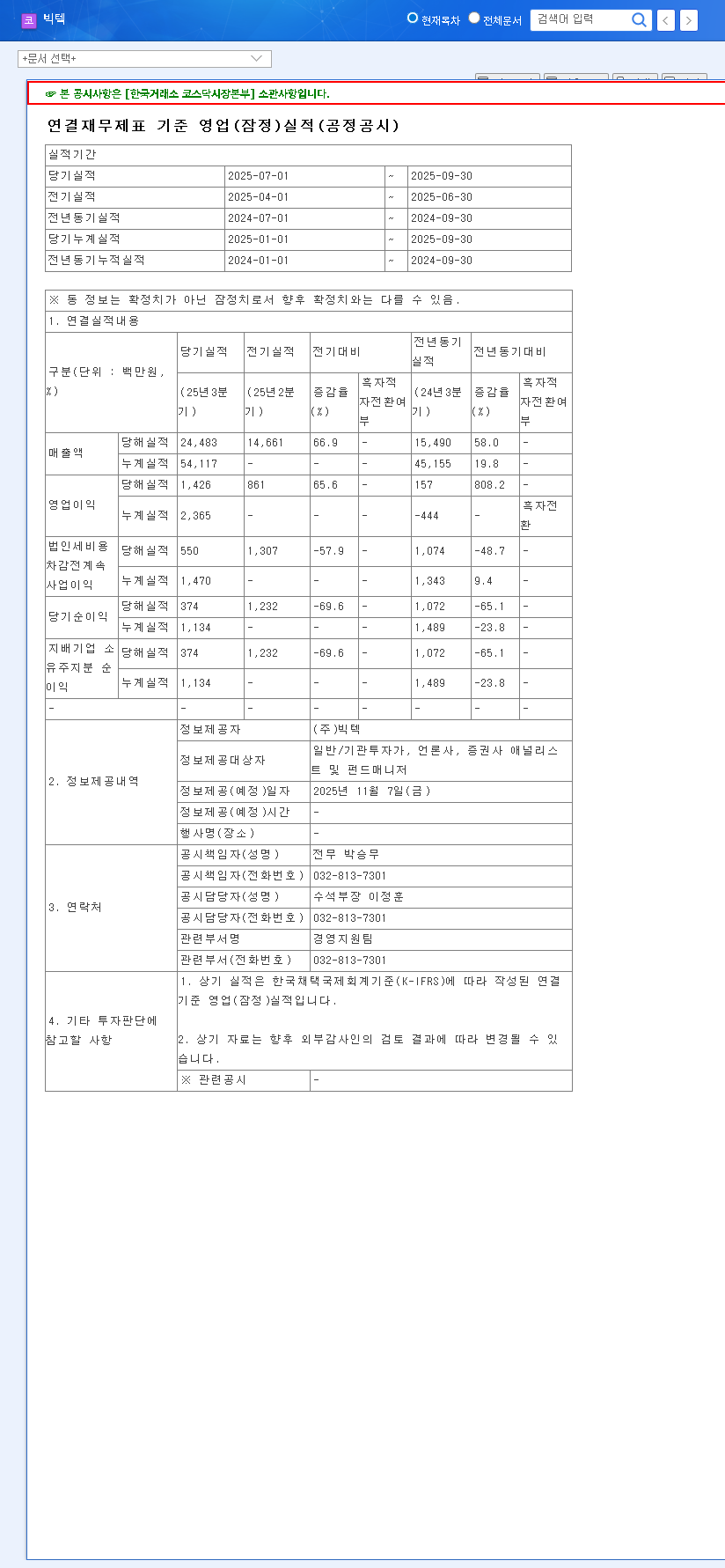
    The latest VICTEK 065450 earnings report for Q3 2025 has presented investors with a complex picture. On the surface, VICTEK. Co., Ltd., a prominent player in the defense sector, showcased impressive growth in revenue and operating profit. However, a significant drop in net income has raised questions and created uncertainty. This comprehensive VICTEK earnings analysis will dissect the provisional results, explore the underlying causes of the financial divergence, and provide a strategic outlook for current and potential investors in VICTEK stock.

    VICTEK Q3 2025 Earnings: The Key Figures

    VICTEK announced its provisional consolidated financial results for the third quarter of 2025, revealing a mixed but revealing performance. According to the Official Disclosure on DART, the numbers paint two different stories: one of operational strength and another of underlying challenges.

    • Revenue: Reached KRW 24.5 billion, a powerful increase of 66.7% quarter-on-quarter (QoQ) and 58.1% year-on-year (YoY). This signals strong demand and successful execution on its order backlog.
    • Operating Profit: Surged to KRW 1.4 billion, reflecting a 55.6% QoQ improvement and an astounding 600% YoY leap. This points to enhanced operational efficiency and effective cost management within its core business.
    • Net Income: Declined sharply to KRW 0.4 billion, a 66.7% decrease QoQ. This is the central concern for investors and the main focus of this analysis.

    The Paradox Explained: Why Did Net Income Fall?

    The stark contrast between a soaring operating profit and a falling net income points directly to non-operating factors. The primary culprit appears to be the persistent financial drag from VICTEK’s consolidated subsidiary, VICTEK MHD Rockland. In consolidated financial statements, the parent company must include the financial results of subsidiaries it controls. While VICTEK’s core defense operations are profitable, the subsidiary’s losses are subtracted further down the income statement, ultimately eroding the consolidated net income that is reported to shareholders.

    The core challenge for VICTEK is not its primary business, which is performing exceptionally well, but the financial burden of its underperforming subsidiary. Resolving this issue is paramount for unlocking the true value of VICTEK stock.

    Fundamental Strengths & Growth Catalysts

    Despite the subsidiary issue, the VICTEK 065450 earnings report highlights several fundamental strengths that provide a foundation for long-term growth.

    Positive Factors Driving VICTEK Forward:

    • Favorable Industry Outlook: Increased government defense spending, both domestically and internationally, creates a fertile ground for VICTEK’s main business segments.
    • Robust Order Backlog: With a substantial backlog of approximately KRW 226.5 billion, the company has secured a stable and predictable revenue stream for the near future.
    • Commitment to R&D: Ongoing investments in research and development are crucial for maintaining a technological edge and securing next-generation contracts.

    Identifying the Headwinds: Key Risks for Investors

    A thorough VICTEK earnings analysis requires a clear-eyed view of the risks. Investors should monitor these challenges closely as they could impact future performance.

    Challenges and Macroeconomic Pressures:

    • Subsidiary Losses: The most significant and immediate risk. Continued losses from VICTEK MHD Rockland will continue to suppress consolidated net income.
    • Financial Health Indicators: A rising debt ratio and increased current liabilities could constrain the company’s ability to invest in future growth or return capital to shareholders.
    • Macroeconomic Volatility: As noted by leading financial analysts at sites like Reuters, global interest rate hikes increase borrowing costs, while adverse exchange rate fluctuations can raise the price of imported components, squeezing profit margins.

    Investor Takeaway & Strategic Outlook

    The VICTEK Q3 2025 earnings report is a call for discerning analysis. The company’s core operational health is strong and improving, buoyed by a positive industry environment. However, the path to enhancing shareholder value is unequivocally tied to resolving the subsidiary’s profitability issues. For investors, the long-term potential is significant, but it hinges on management’s ability to execute a successful turnaround strategy for VICTEK MHD Rockland.

    Future announcements and the final, audited earnings report should be scrutinized for details on management’s plan to address this key issue. Understanding these dynamics is crucial, much like understanding key financial ratios for defense stocks. The key actions for VICTEK moving forward are clear: normalize the subsidiary’s operations, diversify revenue streams, and maintain transparent communication with the investor community.

    (065450) VICTEK (065450) Q3 2025 Earnings Analysis: A Deep Dive for Investors 관련 이미지
  • (079550) LIG Nex1 Earnings Q3 2025: Deep Dive Analysis for Investors (079550 Stock)

    (079550) LIG Nex1 Earnings Q3 2025: Deep Dive Analysis for Investors (079550 Stock)

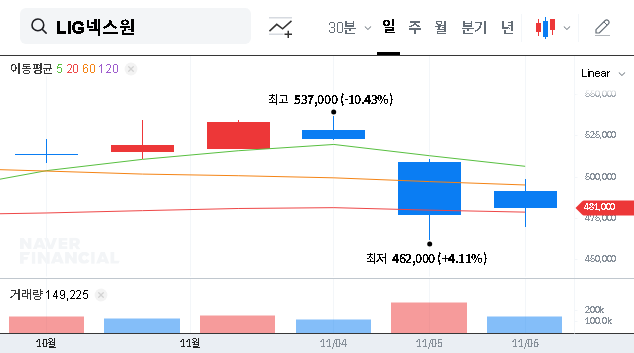
    This comprehensive LIG Nex1 investment analysis delves into the recently released Q3 2025 earnings report for LIG Nex1 Co., Ltd. (079550). In a global defense industry marked by heightened demand, the company posted impressive top-line growth that beat market expectations. However, a significant miss on net income has left investors seeking clarity. This report breaks down the performance, examines the underlying financial pressures, and provides a forward-looking perspective on the value of LIG Nex1 stock for your portfolio.

    Dissecting the Q3 2025 LIG Nex1 Earnings Report

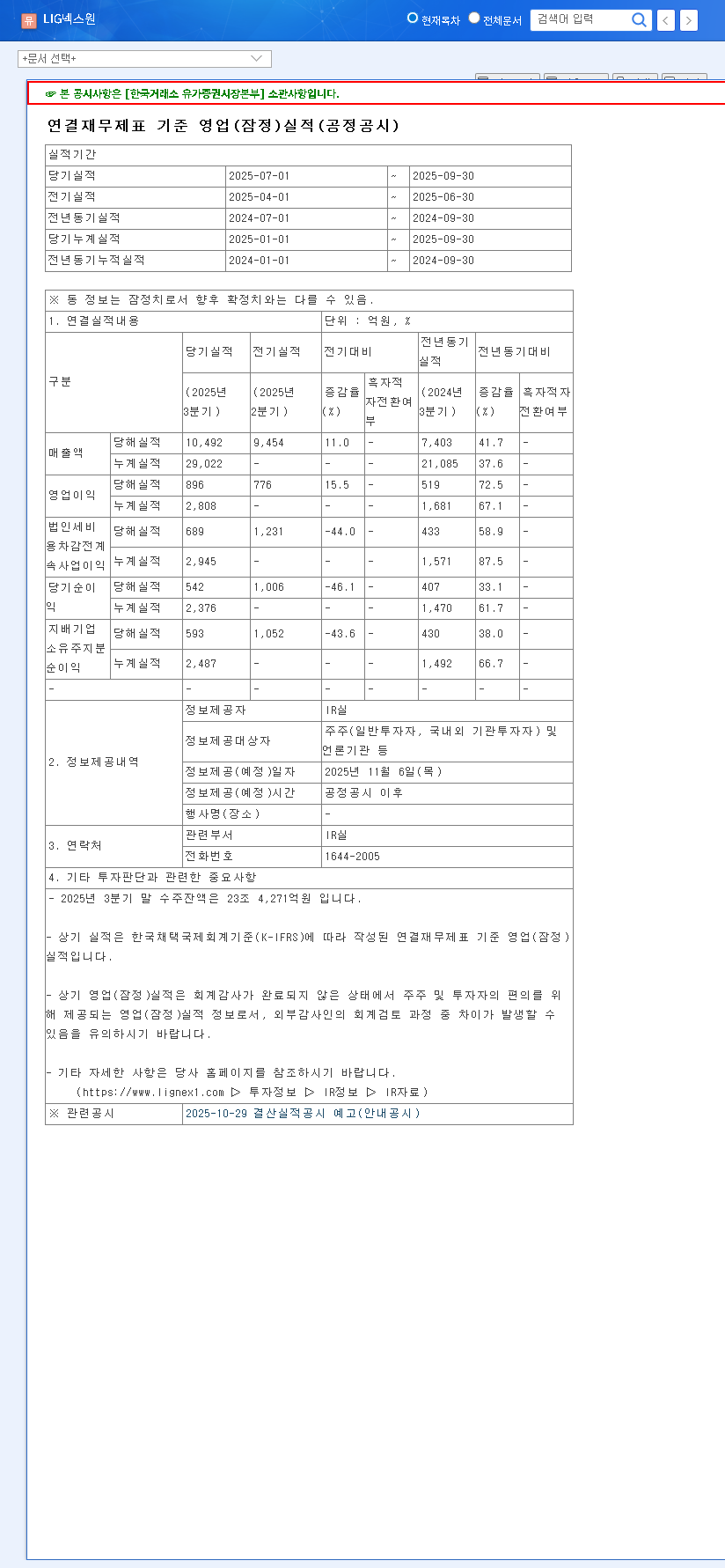
    LIG Nex1 announced robust revenue of KRW 1.0492 trillion for Q3 2025, a figure that came in 7% above the market consensus of KRW 984.9 billion. This strong performance was largely fueled by sustained growth in its core business segments, particularly Precision Guided Munitions (PGM) and Command, Control, Communications, Computers, and Intelligence (C4I), alongside a successful expansion of overseas exports. The operating profit of KRW 89.6 billion also surpassed forecasts by a healthy 16%, signaling effective cost management and operational excellence.

    Despite the impressive operational performance, the bottom line tells a different story. The reported net income of KRW 59.3 billion fell 32% short of market expectations, a discrepancy primarily caused by external financial pressures rather than internal business weakness. This highlights a critical challenge for the company moving forward.

    The divergence between operational success and net income is a key theme in the latest LIG Nex1 earnings release. The shortfall was officially attributed to increased financial costs, driven by adverse exchange rate fluctuations and a significant interest burden from the company’s debt load, as detailed in the official disclosure (Source).

    Core Business Strength and Future Investments

    Growth Drivers: PGM and C4I Segments

    LIG Nex1’s core competitiveness is undeniable. The PGM segment, contributing nearly 48% of total revenue, continues to lead growth with its highly competitive guided missile systems like the Cheongung-II. Simultaneously, the C4I segment (around 24.5% of revenue) is capitalizing on the global trend towards military modernization and network-centric warfare. Other divisions, including Intelligence, Surveillance, and Reconnaissance (ISR), provide stable, technology-driven revenue streams that complement the main growth engines.

    Investing for Long-Term Dominance

    Management is actively securing future growth by investing heavily in infrastructure and technology. Key projects include the construction of the Gimcheon Plant 2 for satellite and laser systems and the strategic acquisition of overseas firms like Ghost Robotics Corporation. Consistent R&D investment, maintained at over 2% of revenue, ensures that the company remains at the cutting edge, strengthening its long-term competitive moat. For more on this trend, you can read our complete guide to investing in defense stocks.

    Analyzing the Financial Headwinds

    The primary risks for investors in LIG Nex1 stock (079550) are financial, not operational. Understanding these challenges is crucial for a complete LIG Nex1 investment analysis.

    • High Debt Ratio: As of H1 2025, the company’s debt-to-equity ratio stood at a high 396.18%. While common in the capital-intensive defense sector, this leverage makes the company vulnerable to rising interest rates, directly pressuring net income.
    • Exchange Rate Volatility: With exports accounting for over 17% of sales, fluctuations in the USD/KRW exchange rate can significantly impact profitability. A strong dollar can boost export revenue but also increase the cost of imported raw materials and foreign currency-denominated debt.
    • Cash Flow Management: Operating cash flow was negative in the first half of 2025 due to working capital changes. This points to a need for more efficient management of inventory and contract execution cycles to improve liquidity.

    Investment Outlook & Recommendations

    Despite the short-term financial pressures, the long-term outlook for LIG Nex1 remains positive. The company operates in a favorable geopolitical environment where global defense spending is on the rise, as reported by leading financial news outlets (Bloomberg). Its technological superiority and strategic investments provide a solid foundation for future growth.

    Investors should view the current situation as a test of the company’s financial management. The core business is strong, but the ability to navigate macroeconomic challenges will determine the trajectory of the 079550 stock price. A key takeaway from the LIG Nex1 Q3 2025 report is the urgent need for the company to bolster its financial resilience.

    Key Recommendations for LIG Nex1:

    • Strengthen the Balance Sheet: Proactively manage the high debt ratio through potential capital increases or other financial restructuring to reduce interest burdens.
    • Enhance Risk Management: Implement more sophisticated hedging strategies to mitigate the impact of foreign exchange and interest rate volatility on the bottom line.
    • Continue Strategic Execution: Maintain focus on R&D and strategic M&A to secure new technologies and expand its global footprint, ensuring a long-term competitive advantage.

    Disclaimer: This report is for informational purposes only and is based on publicly available data. It does not constitute investment advice. All investment decisions should be made at the investor’s own discretion and responsibility.

    (079550) LIG Nex1 Earnings Q3 2025: Deep Dive Analysis for Investors (079550 Stock) 관련 이미지
  • (214430) i3system Inc. Stock Analysis (Q3 2025): Revenue Up, Profits Down – A Buy?

    (214430) i3system Inc. Stock Analysis (Q3 2025): Revenue Up, Profits Down – A Buy?

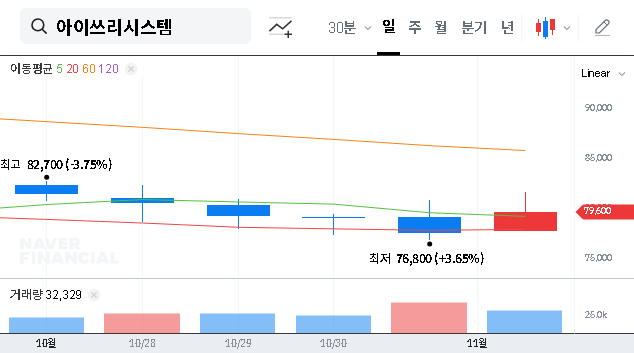
    Investors are closely watching i3system Inc. after its recent earnings announcements have painted a complex picture of its financial health. This i3system Inc. stock analysis provides a deep dive into the preliminary Q3 2025 results and the amended half-year report, offering crucial insights for anyone considering an investment. While a strong revenue recovery is a positive signal, lingering questions about profitability create a challenging environment for predicting future stock price movements.

    Our goal is to dissect the numbers, explore the underlying fundamentals, and provide a clear, actionable perspective. We’ll examine the company’s core strengths in the defense sector, its potential for civilian market expansion, and the macroeconomic factors at play. Use this comprehensive report to understand the dual nature of i3system Inc.’s current standing and to formulate a more informed investment strategy.

    Q3 2025 Earnings: A Story of Revenue Recovery and Profit Squeeze

    According to the company’s preliminary Q3 2025 results, i3system Inc. reported a significant revenue rebound. However, a closer look at the profitability metrics reveals a more nuanced and concerning trend. The official data for these results can be verified in the company’s Official Disclosure on DART.

    Key Financial Figures for Q3

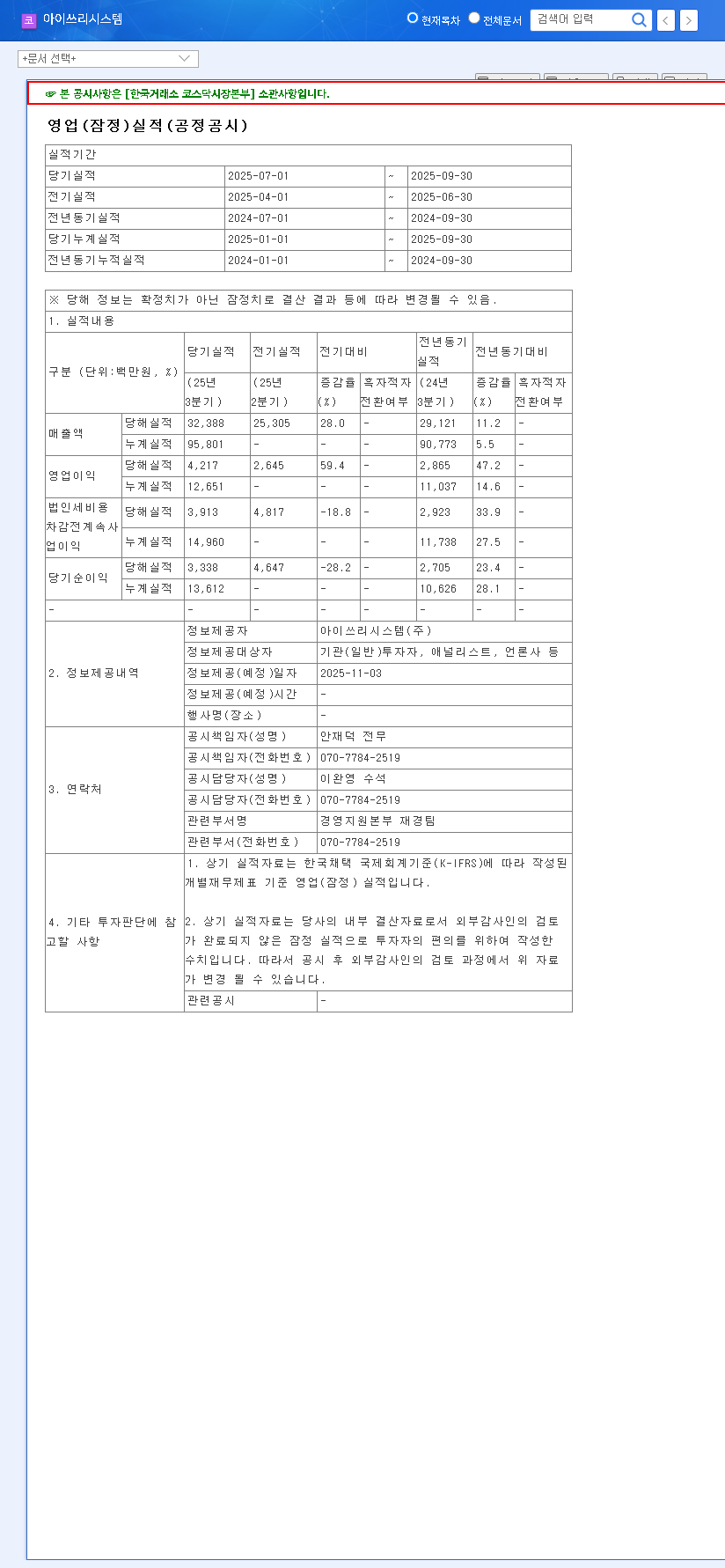
    • Revenue: KRW 32.4 billion, a healthy 28% increase quarter-over-quarter (QoQ).
    • Operating Profit: KRW 4.2 billion, up 61.5% QoQ but down a notable 27.6% from the Q1 high.
    • Net Income: KRW 3.3 billion, representing a decline of 28.3% QoQ and 34% from Q1.
    • Net Profit Margin: Shrunk to 10.2%, a significant drop from 13.1% in Q1 and 18.2% in Q2.

    While the top-line revenue growth is encouraging, the sharp decline in net profit margin compared to previous quarters is a red flag that warrants close scrutiny. This suggests rising costs or pricing pressures could be eroding the company’s profitability.

    Detailed i3system Inc. Stock Analysis & Fundamentals

    To truly understand the i3system stock price potential, we must look beyond a single quarter. The company’s unique market position, macroeconomic influences, and historical performance metrics provide a more complete picture.

    Defense Stability and Civilian Growth Engine

    i3system Inc. has built a formidable moat with its unique technology in infrared and X-ray imaging sensors. Its exclusive role as a supplier for the defense sector ensures a stable and predictable revenue stream, underpinned by rising global security concerns and domestic defense budgets. However, the real long-term growth story may lie in the civilian sector. The expansion of its sensor technology into high-growth areas like autonomous vehicles (ADAS and night vision), industrial drones, and Internet of Things (IoT) devices could unlock significant new revenue channels and drive the next phase of growth.

    Macroeconomic Tailwinds and Headwinds

    The broader economic climate presents both opportunities and risks for i3system Inc. A key positive factor is the rising KRW/USD exchange rate. As the company holds net foreign currency assets, a stronger dollar translates directly into foreign exchange gains, potentially boosting the bottom line. Conversely, rising interest rates globally could increase borrowing costs, although the impact is expected to be limited given the company’s current financial structure. For more on how these factors affect valuations, see our guide to Analyzing Tech Stocks in a Volatile Market.

    The Concerning Decline in ROE

    One of the most critical metrics for evaluating a company’s efficiency is Return on Equity (ROE). As explained by authoritative sources like Investopedia, ROE measures how effectively management is using investors’ equity to generate profits. For i3system, the historical trend is worrying. After peaking at 19.11% in 2022, ROE has fallen dramatically to 5.46% in 2024, with projections suggesting a further drop. This decline indicates a significant weakening in profitability and capital efficiency, a trend that investors cannot ignore.

    Investment Outlook: Balancing Positives and Negatives

    Considering all factors, the outlook for investing in i3system is mixed. The stock has seen a significant rally in 2025, but the recent profitability slowdown could cap further appreciation in the short term.

    Positive Factors

    • Stable Defense Foundation: Predictable revenue from a growing defense industry.
    • Favorable Exchange Rates: Potential for foreign exchange gains.
    • Civilian Market Potential: Significant long-term growth opportunities.

    Cautionary Factors

    • Q3 Profitability Slowdown: Declining profit margins are a major concern.
    • Declining ROE Trend: Weakening capital efficiency over the past few years.
    • High Market Expectations: The stock could correct if Q4 results don’t show a strong profit recovery.

    The upcoming Q4 earnings report will be a critical catalyst. Investors should maintain a long-term perspective but closely monitor profitability metrics for signs of improvement. Tangible progress in the civilian sector will be key to justifying the stock’s recent valuation gains.

    (214430) i3system Inc. Stock Analysis (Q3 2025): Revenue Up, Profits Down – A Buy? 관련 이미지
  • (484870) MNC Solution Investment Analysis: Is This K-Defense Stock a Buy Before the 2025 IR?

    (484870) MNC Solution Investment Analysis: Is This K-Defense Stock a Buy Before the 2025 IR?

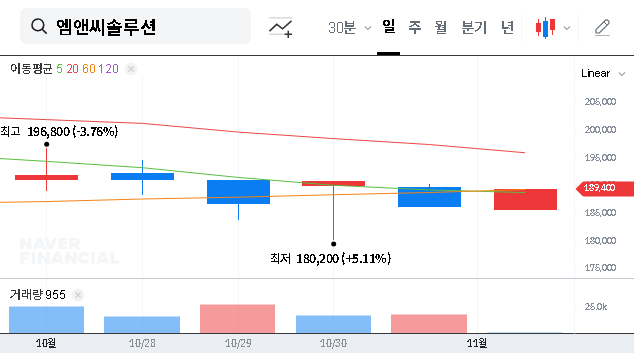
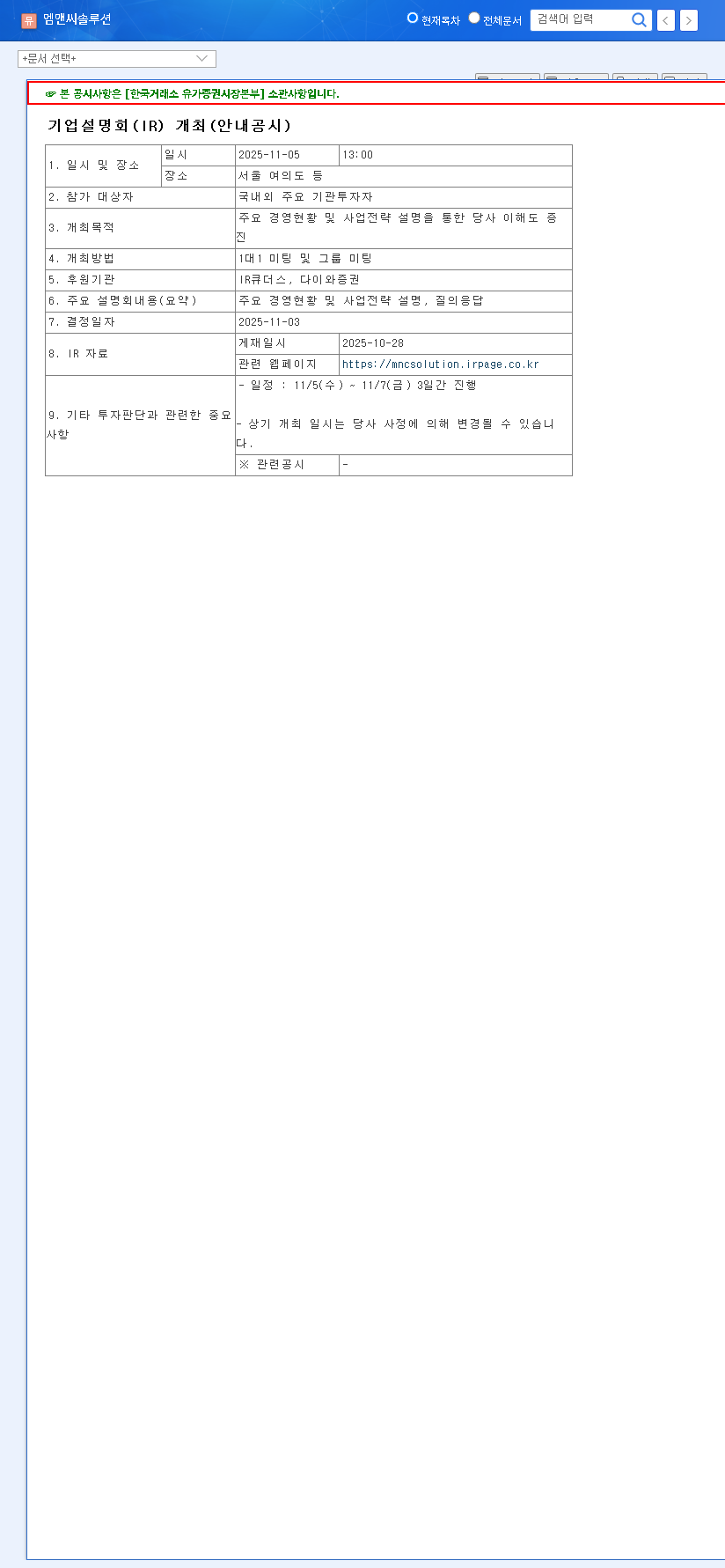
    This comprehensive MNC Solution investment analysis explores a key player in the booming K-Defense industry. As global geopolitical tensions rise, South Korea’s defense sector is gaining unprecedented attention, and MNC Solution Co., Ltd stands out with its robust technology and substantial order backlog. The company is set to host a pivotal Investor Relations (IR) presentation on November 5, 2025, a critical event for current and potential investors. This article provides an in-depth look at MNC Solution’s fundamentals, the market environment, potential post-IR scenarios, and a strategic approach for evaluating this promising Korean defense stock.

    With a market capitalization of KRW 1.7337 trillion and significant growth drivers, the upcoming MNC Solution IR is a must-watch event for anyone invested in the defense sector. The presentation aims to clarify the company’s strategic direction and enhance investor confidence.

    Analyzing MNC Solution’s Core Strengths

    To understand the potential of the MNC Solution stock, it’s crucial to examine its fundamental strengths. The company isn’t just riding the wave of the K-Defense industry; it’s powered by tangible assets and strategic investments that provide a solid foundation for future growth.

    Robust Order Backlog & Revenue Visibility

    One of the most compelling aspects of MNC Solution is its massive order backlog, which stands at an impressive KRW 879.7 billion. This isn’t just a number; it represents secured future revenue, providing exceptional earnings visibility and stability in a project-based industry. Key contracts like the ‘K9A1 Outsourced Maintenance’ and ‘230mm Multiple Rocket Launcher 3rd Mass Production’ are cornerstones of this backlog, demonstrating the company’s critical role in national defense infrastructure. This stability is reflected in its H1 2025 revenue of KRW 172.5 billion, showing consistent year-over-year growth.

    Commitment to Technological Advancement

    The defense sector is driven by innovation. MNC Solution’s consistent investment in Research & Development, with an expenditure ratio of 2.62% against revenue, signals a clear commitment to maintaining a technological edge. This R&D focus is vital for developing next-generation defense systems and securing high-value contracts in the competitive global market. For investors, this is a key indicator of long-term competitiveness and a core part of any thorough MNC Solution investment analysis.

    Key Risks and Headwinds to Consider

    No investment is without risk. While the growth story is strong, potential investors must be aware of the challenges MNC Solution faces. Acknowledging these headwinds is crucial for a balanced perspective.

    • Exchange Rate Volatility: With a significant portion of its financial liabilities denominated in foreign currencies, the company is highly sensitive to exchange rate fluctuations. A 10% adverse change could materially impact pre-tax net income, introducing a layer of financial uncertainty that is tied to global currency markets.
    • Declining Operating Profit Margin: A notable trend is the compression of the operating profit margin, which has decreased from 8.20% in 2022 to an estimated 5.22% in 2025. Investors will be keenly listening during the MNC Solution IR for management’s explanation and strategy to reverse this trend.
    • Increased Debt Ratio: While the company’s cash position is healthy, the debt-to-equity ratio has risen to 137.11%. Though likely tied to investments for expansion, it’s a metric that warrants monitoring to ensure it remains at a manageable level.

    The November 5th IR: Potential Scenarios

    The upcoming IR presentation is a pivotal moment that could significantly influence the MNC Solution stock price. Here are the potential positive and negative outcomes investors should prepare for.

    The Bull Case: A Catalyst for Growth

    If management delivers a confident and detailed presentation, it could act as a major positive catalyst. Key wins would include announcing new large-scale orders, unveiling a clear strategy to improve profit margins, and presenting a sophisticated plan for mitigating exchange rate risks. A strong Q&A session that addresses investor concerns head-on could significantly boost sentiment and drive the stock price upward.

    The Bear Case: A Disappointing Outlook

    Conversely, if the presentation is vague or fails to adequately address the known risks, investor confidence could falter. A lack of new contract announcements, unconvincing margin improvement plans, or the disclosure of unforeseen operational challenges could lead to a sell-off. The market’s high expectations for the K-Defense industry mean that any perceived weakness could be punished.

    A Strategic Approach for Investors

    Investors should approach the MNC Solution IR with a clear strategy. The key is to look beyond the immediate stock price reaction and focus on the long-term fundamentals. Pay close attention to the details of the business plan, financial projections, and management’s responses during the Q&A session. For complete, verified data, investors should always consult the primary source documents. The company’s latest Official Disclosure (Source: DART) provides comprehensive financial statements and management discussions.

    While this event may cause short-term volatility, a long-term perspective is vital. The underlying growth of the K-Defense industry is a powerful tailwind. Compare the company’s presentation with broader market trends discussed on authoritative platforms like Bloomberg’s aerospace and defense section. Furthermore, contextualize this opportunity by reviewing our complete guide to investing in Korean defense stocks. In conclusion, MNC Solution’s upcoming IR is a valuable opportunity for due diligence. A positive outcome could reaffirm its position as a leader, while a cautious presentation could signal a time for reassessment.

    (484870) MNC Solution Investment Analysis: Is This K-Defense Stock a Buy Before the 2025 IR? 관련 이미지
  • (011210) HYUNDAI WIA Q3 2025 Earnings Analysis: Record Revenue, Shocking Net Loss Explained

    (011210) HYUNDAI WIA Q3 2025 Earnings Analysis: Record Revenue, Shocking Net Loss Explained

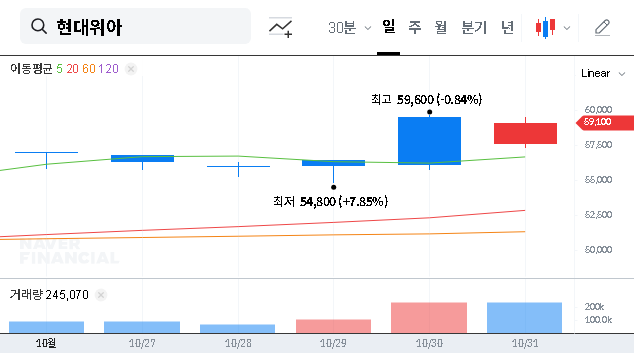
    The latest HYUNDAI WIA Q3 2025 earnings report presents a complex and contradictory picture for investors. While the company delivered impressive top-line growth, with both revenue and operating profit handily beating market expectations, a significant and unexpected plunge into a net income loss has sent shockwaves through the investment community. This stark contrast between operational strength and bottom-line weakness demands a thorough investigation.

    What caused this financial paradox? Are the underlying fundamentals of Hyundai WIA strong, or does the net loss signal deeper, more systemic risks? This comprehensive Hyundai WIA earnings analysis will break down the Q3 2025 results, explore the contributing factors, and provide a strategic outlook for investors navigating this uncertainty.

    Deconstructing the HYUNDAI WIA Q3 2025 Earnings Report

    On the surface, Hyundai WIA demonstrated robust business activity. The official consolidated financial statements, which can be viewed in the company’s Official Disclosure, revealed figures that initially appeared positive. Let’s examine the key metrics against market consensus:

    • Revenue: KRW 2,151.9 billion, a solid 3.87% above analyst estimates.
    • Operating Profit: KRW 51.8 billion, a remarkable 25.42% above estimates, signaling strong operational efficiency.
    • Net Income: KRW -16.3 billion, a shocking reversal from an expected profit of KRW 86.2 billion, resulting in a -118.91% miss and a transition to loss.

    The core challenge of the HYUNDAI WIA Q3 2025 earnings is deciphering how a company with surging revenue and excellent operational control could end up with a substantial net loss. The answer lies beyond the core business operations.

    Analyzing the Discrepancy: The Good, The Bad, and The Ugly

    The Good: Factors Driving Revenue & Operating Profit

    The positive performance was not accidental. It was fueled by strong execution in key divisions. The Mobility segment, which includes core automotive components, performed well. More notably, the Special Business segment, heavily focused on defense products, saw a significant boost from increased global defense spending and successful export contracts. This diversification helped drive Hyundai WIA revenue beyond forecasts. Furthermore, the impressive operating profit margin suggests that the company’s internal cost management and efficiency initiatives are paying off, allowing it to translate higher sales into greater operational earnings.

    The Bad: Pinpointing the Net Income Loss

    The Hyundai WIA net income loss is the central mystery. Since operating profit was strong, the cause must be found in non-operating items—expenses and losses that occur outside the primary business activities. The most likely culprits include:

    • One-Off Costs: The company may have incurred significant, non-recurring charges such as asset write-downs, restructuring costs, or legal settlements.
    • Financial Expenses: Higher interest rates or losses from foreign currency exchange fluctuations could have heavily impacted the bottom line.
    • Losses from Subsidiaries: Poor performance or impairment charges related to affiliated companies, particularly the ongoing uncertainty in Russian operations, could have led to significant equity-method losses.

    Future Outlook & Investor Strategy

    The Hyundai WIA stock outlook is now at a crossroads. The market’s reaction will depend heavily on the company’s ability to clarify the nature of the net loss. If it is truly a one-time event, the strong underlying business performance could pave the way for a recovery. However, if it signals persistent issues, investor confidence may erode.

    Long-Term Growth Drivers Remain Intact

    Despite the quarterly setback, Hyundai WIA’s long-term strategy is focused on high-growth areas. The company is making significant investments in the future of mobility. Key initiatives include:

    • Electrification Components: Development and mass production of integrated coolant modules and e-axles for electric vehicles (EVs). The EV market continues to expand globally, as noted by industry experts at leading market research firms.
    • Advanced Manufacturing: Entering the market for EV component manufacturing equipment, positioning itself as a key supplier in the electrification supply chain.
    • Urban Air Mobility (UAM): Expanding into the nascent but potentially lucrative air mobility sector, showcasing a forward-thinking approach to transportation. More on this can be found in our article on Investing in Future Mobility Trends.

    Key Considerations for Investors

    Moving forward, investors should demand clarity. The company must transparently explain the specific causes of the Q3 net loss and outline concrete measures to prevent recurrence. A clear roadmap for improving profitability in the core mobility segment and managing geopolitical risks associated with its Russian operations is essential. While the long-term vision is promising, consistent execution and profitability in the present are non-negotiable for rebuilding market trust. The full HYUNDAI WIA Q3 2025 earnings report, though jarring, serves as a critical reminder that operational success must always be validated by a healthy bottom line.

    (011210) HYUNDAI WIA Q3 2025 Earnings Analysis: Record Revenue, Shocking Net Loss Explained 관련 이미지
  • (010820) FIRSTEC Treasury Share Disposal: A Deep Dive for Investors (2025 Analysis)

    (010820) FIRSTEC Treasury Share Disposal: A Deep Dive for Investors (2025 Analysis)

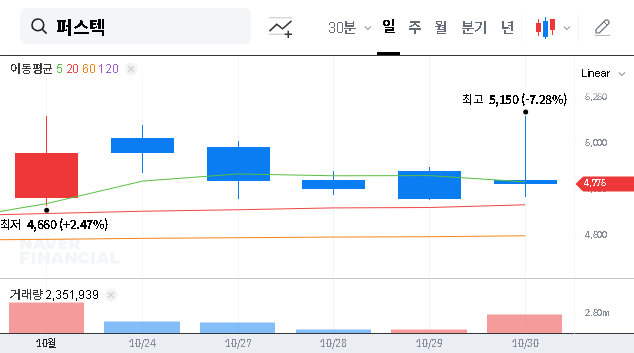
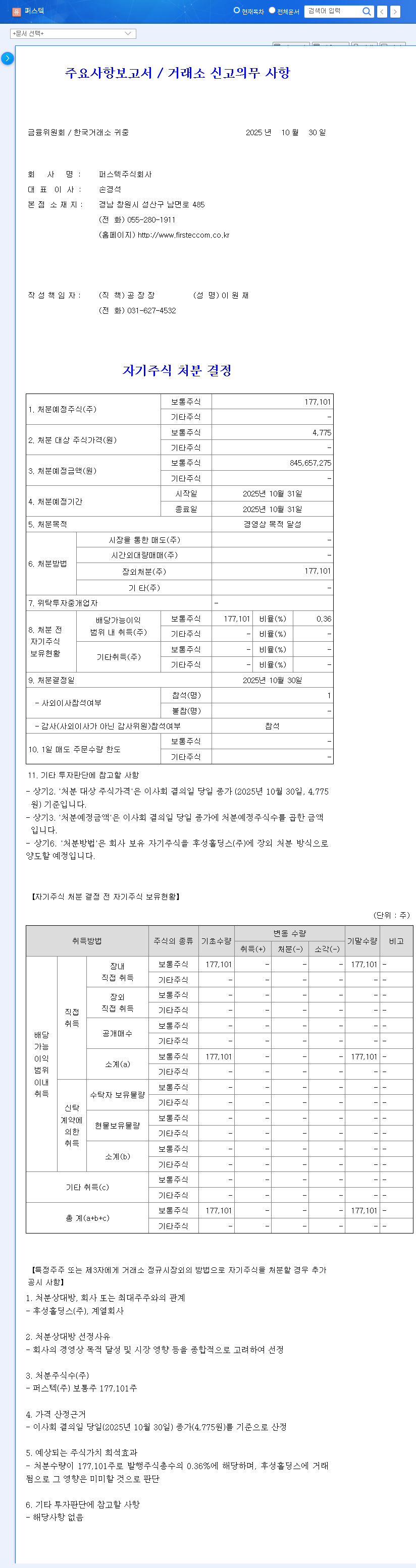
    The recent FIRSTEC treasury share disposal has sent ripples through the investment community. On October 30, 2025, the prominent defense company announced its decision to sell 177,101 treasury shares, valued at approximately ₩800 million, for stated “management objectives.” While the amount seems modest, this move warrants a much deeper look. Is this a strategic maneuver to fuel future growth, or a warning sign of underlying financial strain?

    This comprehensive analysis goes beyond the headlines to dissect the opportunities and risks facing FIRSTEC investors. We will evaluate the company’s robust position in the booming defense sector against a backdrop of concerning financial indicators and volatile macroeconomic conditions. For anyone considering an investment in FIRSTEC stock, this breakdown is essential reading.

    Deconstructing the Treasury Share Disposal Announcement

    According to the Official Disclosure filed with DART, FIRSTEC’s disposal represents approximately 0.36% of its total market capitalization of ₩232.9 billion. In isolation, a sale of this size is unlikely to cause significant short-term stock price dilution. However, seasoned investors know that the true story lies not in the amount, but in the motivation. The vague purpose of “achieving management objectives” requires us to analyze the company’s current financial health to infer the likely use of these funds.

    The Bull Case: Growth Fueled by a Booming Defense Sector

    Record-Breaking Order Backlog

    FIRSTEC’s primary strength is its dominant position within the global defense industry. The company reported a staggering order backlog of ₩1.0346 trillion, providing a clear and positive roadmap for future revenue. With sales in the second quarter of its 51st fiscal year already up 24.2% year-over-year to ₩115.4 billion, the growth trajectory is undeniable. Rising geopolitical tensions globally continue to drive defense spending, creating a favorable tailwind for the entire sector, as reported by leading financial outlets like Reuters.

    Strategic Use of Capital

    From an optimistic perspective, the funds from the treasury share disposal could be a strategic investment in the future. The capital could be allocated towards M&A activities, securing new technologies, or acquiring top-tier talent. If deployed effectively, this ₩800 million could act as a catalyst for securing next-generation growth drivers, ultimately enhancing long-term shareholder value.

    The Bear Case: Unpacking FIRSTEC’s Financial Risks

    Despite the impressive top-line growth, a closer look at FIRSTEC’s financials reveals several potential red flags that could make the FIRSTEC treasury share disposal seem less strategic and more necessary.

    The most alarming metric is the operating cash flow, which registered a negative ₩6.6 billion. This indicates that despite growing sales, the company’s core operations are currently consuming more cash than they generate.

    Key Financial Pressures to Monitor:

    • Deteriorating Cash Flow: As noted, the operating cash flow was -₩6.6 billion in the second quarter, a significant deterioration caused by changes in working capital. This can signal issues with collecting receivables or managing payables effectively.
    • Bloating Inventory: Inventory assets surged from ₩71.5 billion to ₩99.7 billion. While some increase is expected with higher sales, a rapid rise can tie up capital and increase the risk of future write-downs, further straining cash flow.
    • Exchange Rate Sensitivity: With significant international business, FIRSTEC is exposed to currency fluctuations. A 10% change in the KRW/USD exchange rate could impact pre-tax profit by approximately ₩1.53 billion, a material risk in a volatile forex market.
    • Profitability Squeeze: Despite higher sales, operating profit fell year-over-year to ₩2.9 billion. This suggests that rising costs, including a 52% increase in R&D spending, are pressuring profit margins.

    Investor Action Plan: Navigating Your FIRSTEC Strategy

    The FIRSTEC stock analysis presents a duality: a high-growth company in a strong sector facing significant internal financial pressures. The treasury share disposal sits at the crossroads of these two narratives. Prudent investors should take a wait-and-see approach, focusing on the following key areas:

    • Demand Clarity on Fund Usage: Watch for subsequent announcements that specify how the ₩800 million will be used. Transparency is paramount. A clear, strategic plan is a bullish signal; silence or vague justifications are bearish.
    • Monitor Key Financial Metrics: Pay close attention to the next quarterly report. Look for improvements in operating cash flow, a stabilization of inventory levels, and margin recovery.
    • Analyze Broader Sector Trends: Continue to evaluate the health of the global defense market. For more on this, see our complete guide to investing in defense stocks. As long as the sector remains strong, FIRSTEC has a powerful current to swim with.
    • Observe Market Sentiment: Track how institutional investors and analysts react. Their response can provide clues about how the ‘smart money’ is interpreting this disposal.

    Frequently Asked Questions (FAQ)

    Q1: What is the primary reason for the FIRSTEC treasury share disposal?

    A: The company officially stated the reason is to achieve ‘management objectives.’ However, given the negative operating cash flow and rising inventory, it could also be interpreted as a way to bolster its cash position to fund operations and R&D.

    Q2: How will this disposal impact FIRSTEC’s stock price?

    A: The direct impact from dilution should be minimal due to the small size (0.36% of market cap). The long-term impact depends entirely on how effectively the capital is used and whether the company can resolve its underlying financial challenges.

    Q3: What are the biggest financial risks for FIRSTEC right now?

    A: The key risks are the negative operating cash flow (-₩6.6 billion), a sharp increase in inventory assets, pressure on operating profit margins, and sensitivity to foreign exchange rate fluctuations.

    (010820) FIRSTEC Treasury Share Disposal: A Deep Dive for Investors (2025 Analysis) 관련 이미지
  • (079550) LIG Nex1 Stock Analysis: Deep Dive into the ₩274.6B Satellite Contract & Future Growth

    (079550) LIG Nex1 Stock Analysis: Deep Dive into the ₩274.6B Satellite Contract & Future Growth

    The South Korean aerospace and defense giant, LIG Nex1, has captured significant market attention by securing a landmark contract that solidifies its position as a key player in advanced satellite technology. This pivotal deal not only promises substantial revenue but also signals a strategic leap into new growth frontiers. For investors and industry watchers, understanding the full scope of this development is crucial for assessing the future trajectory of LIG Nex1 stock and its standing in the competitive global market.

    This comprehensive analysis will dissect the far-reaching effects of the ‘Geostationary Meteorological and Space Weather Satellite Payload Development’ contract, providing a clear roadmap of what this means for the company’s financial health, technological prowess, and long-term investment potential.

    The Landmark Deal: A ₩274.6 Billion Contract

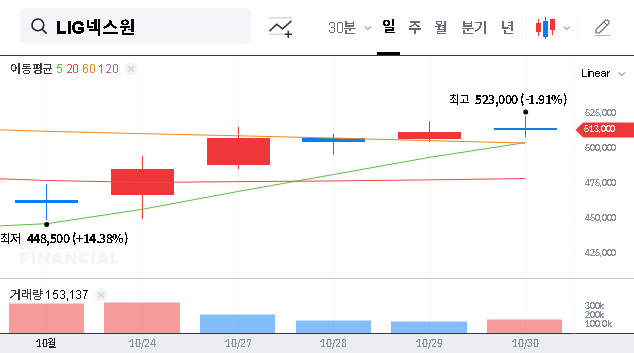
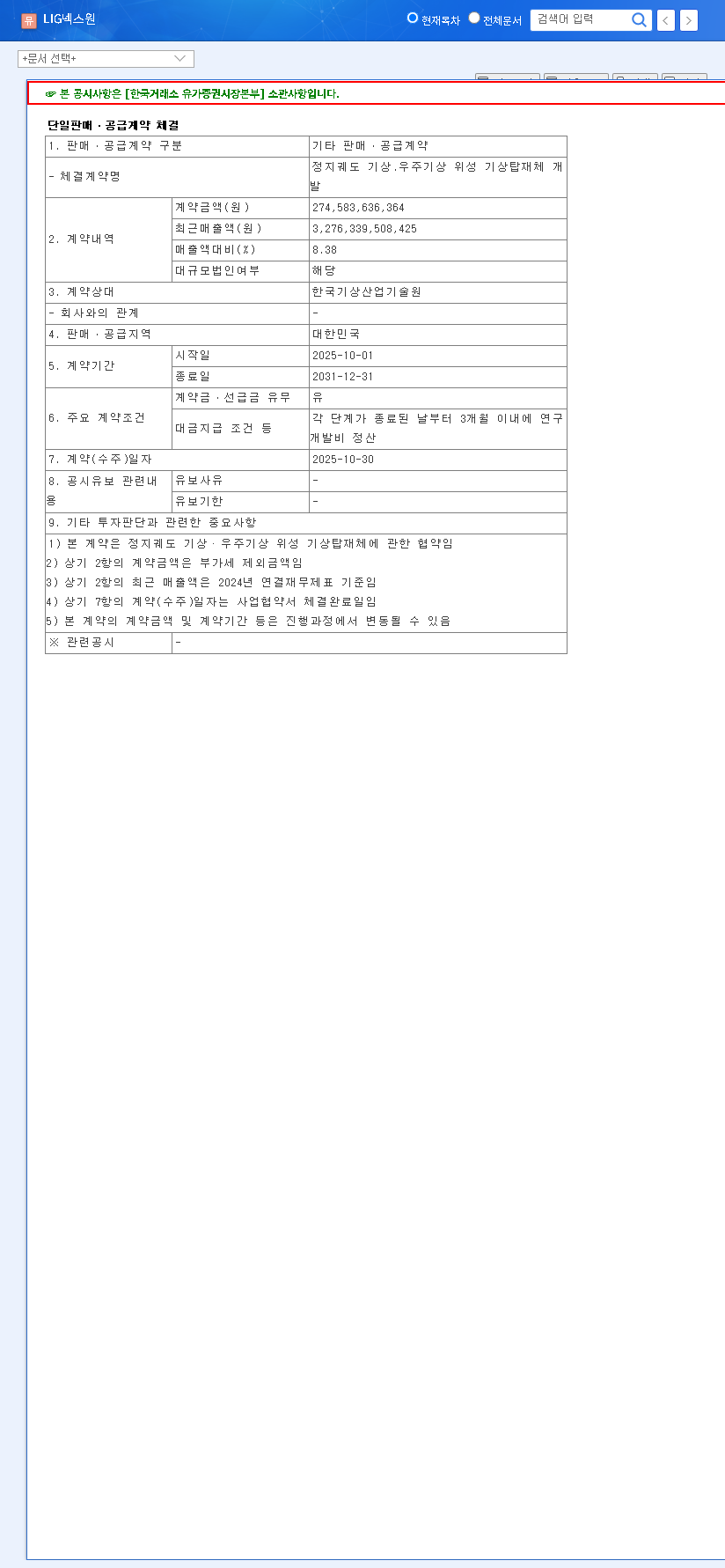
    LIG Nex1 officially announced a contract with the Korea Meteorological Institute valued at approximately KRW 274.6 billion. This agreement is for the highly specialized development of geostationary satellite payloads designed for meteorology and space weather monitoring. The contract period spans over six years, from October 2025 to December 2031, guaranteeing a stable, long-term revenue stream. This deal represents a significant 8.38% of the company’s 2024 consolidated revenue, underscoring its immediate financial importance. You can view the Official Disclosure on the DART system for verification.

    Why This Contract is a Game-Changer for LIG Nex1

    Beyond the impressive headline number, this satellite contract is poised to fundamentally enhance LIG Nex1’s corporate value and strategic positioning. The implications are multi-faceted, impacting everything from profitability to market perception.

    1. Fortifying Financial Performance

    A long-term contract of this magnitude provides exceptional financial stability. With an order backlog already exceeding KRW 23 trillion, this deal further de-risks future revenue forecasts and improves cash flow predictability. The high-tech nature of satellite payload development often carries higher profit margins than traditional defense hardware, potentially boosting LIG Nex1’s operating profit margin, which has already shown a positive trend.

    2. Spearheading the Aerospace Frontier

    This is more than just a win; it’s a powerful validation of LIG Nex1’s technological capabilities in the demanding aerospace industry. Successfully developing and delivering these sophisticated payloads will cement the company’s reputation and open doors to further opportunities in both domestic and international space programs. It demonstrates that the company’s significant investments in R&D facilities are bearing fruit, transitioning from a primarily defense-focused firm to a diversified technology leader.

    This contract is a pivotal event that not only brightens LIG Nex1’s mid-to-long-term growth prospects but also firmly establishes its credentials as a major force in the global space technology sector.

    3. Enhancing Strategic & Competitive Edge

    In an era of escalating geopolitical tensions and a renewed global space race, capabilities in satellite technology are a significant national asset. This contract enhances LIG Nex1’s competitive moat, leveraging favorable market conditions in both the Korean defense industry and civilian space markets. Key strategic benefits include:

    • Technology Diversification: Expands core competencies beyond traditional defense systems into high-value space applications.
    • Public & Civil Application: This project serves critical public functions like disaster prediction and climate monitoring, aligning with ESG (Environmental, Social, and Governance) principles.
    • Market Leadership: Secures a leadership position in South Korea’s burgeoning space ecosystem.

    Investor Outlook & Key Considerations

    The market has already reacted positively, and this large-scale satellite contract is expected to be a powerful catalyst for the LIG Nex1 stock price. However, investors should maintain a balanced perspective by considering both the immense potential and the external risks. While the company’s increased export ratio and long-term contract structure offer a buffer, global macroeconomic volatility, including interest rate hikes and currency fluctuations, remains a factor to monitor. The high-value nature of this business, however, makes it less susceptible to raw material price swings than traditional manufacturing.

    In conclusion, the convergence of a strong order backlog, proven technological prowess, and strategic expansion into the high-growth aerospace sector positions LIG Nex1 for sustained value appreciation. This contract is a clear indicator of a company on a strong upward trajectory.

    Disclaimer: This analysis is for informational purposes only and is based on publicly available data. Investment decisions should be made at the investor’s own discretion and responsibility.

    (079550) LIG Nex1 Stock Analysis: Deep Dive into the ₩274.6B Satellite Contract & Future Growth 관련 이미지
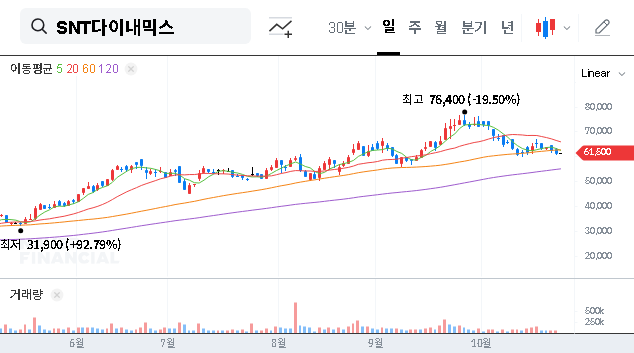
  • (003570) SNT DYNAMICS Q3 2025 Earnings: In-Depth Financial Analysis & Stock Outlook

    (003570) SNT DYNAMICS Q3 2025 Earnings: In-Depth Financial Analysis & Stock Outlook

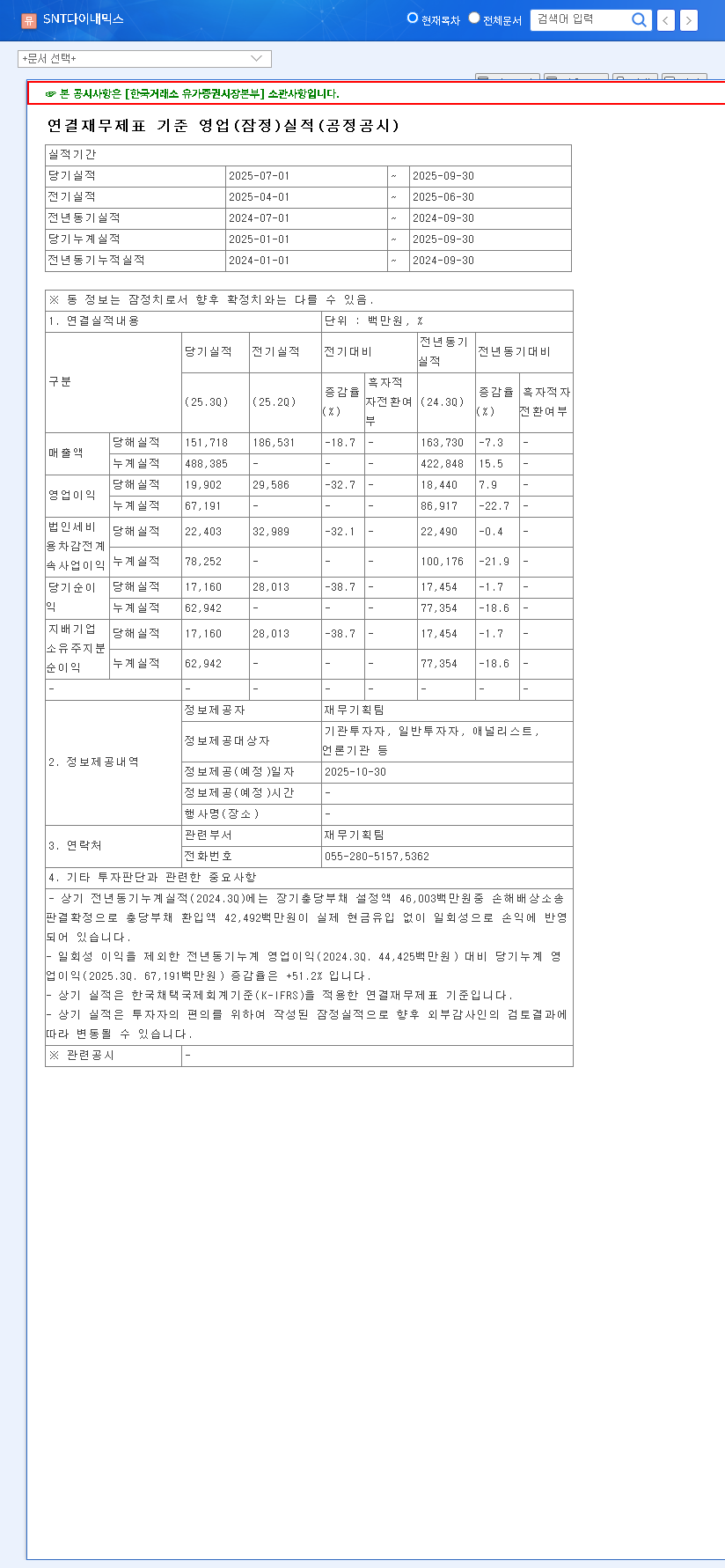
    Our expert deep dive into the SNT DYNAMICS Q3 2025 earnings report reveals a complex financial landscape. The company announced preliminary results on October 30, 2025, painting a picture of strategic resilience mixed with short-term headwinds. While revenue experienced a notable year-on-year decline, operating profit surprisingly improved, suggesting effective cost management and a shifting product mix. This comprehensive SNT DYNAMICS financial analysis will dissect these figures, evaluate the health of its core business segments, and provide a forward-looking SNT DYNAMICS investment outlook. For investors tracking SNT DYNAMICS stock, understanding these nuances is critical for navigating the path ahead.

    SNT DYNAMICS Q3 2025 Earnings: The Key Figures

    The preliminary consolidated results for the third quarter present a multi-faceted story. Here are the headline numbers based on the company’s official filing. Source: Official DART Disclosure.

    • Revenue: KRW 151.7 billion (a 20.8% decrease year-on-year).
    • Operating Profit: KRW 19.9 billion (an 8.2% increase year-on-year).
    • Net Profit: KRW 17.2 billion (an 8.5% decrease year-on-year).
    • Operating Profit Margin: Approximately 13.12%, showcasing solid profitability despite lower sales.

    The revenue slowdown is significant, likely stemming from the timing of large defense contract deliveries or a temporary softening in the vehicle components market. However, the improved operating profit YoY is a testament to the company’s ability to manage costs and potentially focus on higher-margin products within its portfolio.

    The core challenge for investors is to look past the headline revenue decline and assess the underlying strength in profitability and the long-term viability of SNT DYNAMICS’ strategic investments in next-generation technology.

    Fundamental Strength: Analyzing the Core Business

    To understand the SNT DYNAMICS Q3 2025 results, we must look at the fundamentals established earlier in the year. The H1 2025 report showed robust revenue growth of 29.9% YoY and a stable debt-to-equity ratio of just 38.13%, indicating a strong balance sheet. This financial stability provides a cushion against short-term volatility.

    Defense Sector: The Stable Growth Engine

    The defense division remains the company’s bedrock, with consistent performance driven by a healthy backlog of orders. Strategic investments into next-generation weapon systems and key electrification components for military vehicles are positioning SNT DYNAMICS to capture future growth in an evolving global security landscape. For more on this, see our in-depth analysis of the Korean defense sector.

    Vehicle Components & Global Reach

    The vehicle components division is actively mitigating risks by diversifying its client base globally. This expansion into new overseas markets is crucial for reducing dependency on any single economy and tapping into new growth streams, reflecting broader global automotive supply chain trends reported by Reuters. Favorable USD/KRW and EUR/KRW exchange rates also provided a potential tailwind in Q3, which can boost the value of international sales when converted back to Won.

    Investment Outlook: Navigating the Path Forward

    While the long-term growth story for SNT DYNAMICS appears intact, the short-term picture requires careful consideration. The absence of market consensus figures makes it difficult to gauge how Wall Street will react to these earnings. A cautious but observant approach is recommended.

    The Bull Case (Positive Factors)

    • Profitability Over Revenue: The ability to grow operating profit despite falling sales points to strong operational efficiency.
    • Defense Sector Security: A robust order backlog provides revenue visibility and stability.
    • Strategic R&D: Continued investment in future technologies positions the company for long-term market leadership.
    • Favorable Macro Winds: A weaker Korean Won can significantly boost earnings from its substantial export operations.

    The Bear Case (Potential Risks)

    • Revenue Momentum: The sharp quarter-on-quarter and year-on-year revenue drop raises valid concerns about near-term growth.
    • Market Uncertainty: Without analyst expectations, the market’s reaction to the SNT DYNAMICS stock could be volatile.
    • Economic Headwinds: Global economic slowdowns could impact the vehicle components and machinery segments.

    In conclusion, while short-term volatility is a risk, the foundational strengths of SNT DYNAMICS—particularly in the defense sector and its solid financial health—provide a compelling long-term thesis. Investors should monitor upcoming brokerage reports for revised price targets and closely track segment-specific order trends in the Q4 report to make fully informed decisions.

    (003570) SNT DYNAMICS Q3 2025 Earnings: In-Depth Financial Analysis & Stock Outlook 관련 이미지
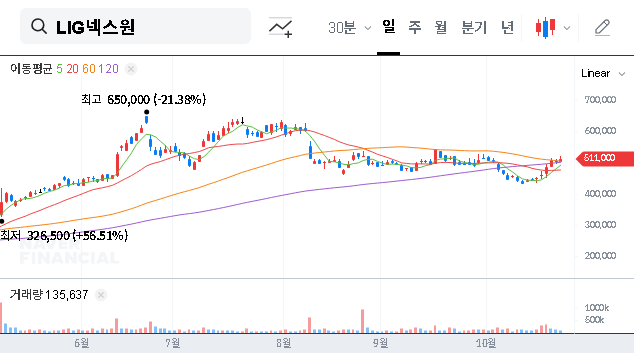
  • (079550) LIG Nex1 IR Analysis (Q3 2025): A Deep Dive for Investors

    (079550) LIG Nex1 IR Analysis (Q3 2025): A Deep Dive for Investors

    This comprehensive LIG Nex1 IR analysis provides investors with a critical look at the upcoming Q3 2025 earnings announcement. As a major force in the global defense industry, LIG Nex1 Co., Ltd. is at a pivotal moment. The investor relations (IR) conference, scheduled for November 6, 2025, will offer crucial insights into its performance, financial health, and future growth trajectory. For anyone considering a LIG Nex1 investment strategy, understanding the nuances of their recent successes and future plans is paramount.

    We will dissect the company’s strong fundamentals, analyze the potential market impact of the upcoming IR event, and outline key considerations for making an informed investment decision in this dynamic sector.

    Deconstructing LIG Nex1’s Solid Fundamentals

    Ahead of the Q3 call, a review of LIG Nex1’s recent performance reveals a company on a powerful growth path. The first half of 2025 set a high bar, driven by both domestic projects and burgeoning international demand. This strong foundation is a key component of any LIG Nex1 IR analysis.

    Exceptional Financial Performance

    The Q2 2025 results were particularly impressive, showcasing the company’s operational excellence and market leadership. Key financial highlights include:

    • Surging Revenue & Profit: Consolidated revenue in Q2 soared to KRW 1,852.97 billion, a remarkable 60% year-over-year increase. This was led by the Precision Guided Munitions (PGM) segment, particularly the M-SAM (Cheongung-II) missile system exports. Operating profit followed suit, reaching KRW 191.17 billion, signaling significant improvements in profitability.
    • Massive Order Backlog: With an order backlog of KRW 23,466.5 billion, LIG Nex1 has secured a stable and predictable revenue stream for years to come. Major contracts with Saudi Arabia and Iraq for the Cheongung-II system are cornerstones of this backlog.
    • Financial Structure Note: While the debt-to-equity ratio of 396.18% may seem high, it is characteristic of the capital-intensive defense industry. However, investors should monitor this metric, especially concerning the investment burden from the Ghost Robotics acquisition. For an official breakdown, please review the Official Disclosure (Source: DART).

    Strategic Investments in Future Growth

    LIG Nex1 is not just relying on current successes. The company is actively investing in next-generation defense technologies to secure future market share. The acquisition of Ghost Robotics Corporation is a landmark move, positioning LIG Nex1 at the forefront of military robotics and AI. This strategic pivot into unmanned and autonomous systems is a critical part of their long-term LIG Nex1 investment strategy and a hedge against shifts in conventional warfare.

    The Q3 2025 IR call on November 6th is a must-attend event for shareholders. It will clarify not only the recent LIG Nex1 earnings but also provide a detailed roadmap for integrating new technologies and expanding its global footprint.

    Investor Outlook: Opportunities & Risks

    The upcoming IR conference carries significant weight for the LIG Nex1 stock price. A positive report that meets or exceeds expectations could build on current momentum. Conversely, any unexpected weaknesses could introduce volatility.

    The Bull Case: What Could Drive the Stock Higher?

    • Continued Earnings Beat: If Q3 earnings demonstrate sustained growth, it will reinforce investor confidence in the company’s execution and market position.
    • Positive Growth Outlook: Clear, confident guidance on new export contracts and a detailed strategy for the Ghost Robotics integration could excite the market.
    • Favorable Market Conditions: With rising geopolitical tensions, global defense spending is on the rise. As noted by defense analysts at leading industry publications, the market for advanced defense systems is expected to grow significantly.

    The Bear Case: Potential Headwinds to Monitor

    • Earnings Miss: Any failure to meet market expectations for the Q3 LIG Nex1 earnings could trigger a sell-off.
    • Integration Costs: If the costs associated with the Ghost Robotics acquisition prove higher than anticipated, it could temporarily weigh on profitability and investor sentiment.
    • Macroeconomic Factors: Unfavorable currency exchange rate fluctuations or changes in global interest rates could pose indirect risks to international contracts and overall financial performance.

    Actionable Investment Strategy & Recommendations

    For investors, the key is to listen carefully during the IR conference. Pay close attention to management’s tone and the details provided during the Q&A session. A sound LIG Nex1 investment strategy involves looking beyond the headline numbers to understand the long-term vision. Consider exploring related topics like our analysis of the defense robotics market to gain broader context.

    Ultimately, LIG Nex1 presents a compelling case as a leader in the defense industry, bolstered by a strong order book and strategic investments in future technologies. The upcoming Q3 2025 earnings report and IR call will be the definitive event to either reaffirm this bullish thesis or introduce a note of caution.

    Disclaimer: This analysis is for informational purposes only and does not constitute financial advice. Investment decisions should be made based on your own research and risk tolerance.

    (079550) LIG Nex1 IR Analysis (Q3 2025): A Deep Dive for Investors 관련 이미지