Tag: Daewoong Pharmaceutical

  • (003090) Fexuclue for H. pylori Eradication: A Deep Dive into Daewoong’s New Growth Catalyst

    (003090) Fexuclue for H. pylori Eradication: A Deep Dive into Daewoong’s New Growth Catalyst

    In a significant development for the pharmaceutical industry, Daewoong Pharmaceutical, a key subsidiary of DAEWOONG CO.,LTD, has announced a major milestone for its flagship drug. The company is seeking a new indication for Fexuclue 40mg, targeting H. pylori eradication. This strategic move is not just a clinical update; it’s a potential game-changer that could redefine the company’s growth trajectory and solidify its position in the competitive gastrointestinal treatment market.

    This comprehensive analysis will unpack the implications of this development, exploring the science behind Fexuclue, the significance of the clinical trial results, and the profound potential impact on DAEWOONG CO.,LTD‘s financial health and investor outlook.

    The Breakthrough: Fexuclue’s New Frontier in H. pylori Treatment

    On October 27, 2025, Daewoong Pharmaceutical submitted a New Drug Application (NDA) to the Ministry of Food and Drug Safety (MFDS) for a new indication: ‘Helicobacter pylori eradication combined with antibiotics therapy.’ This is a pivotal step to expand the use of Fexuclue, a Potassium-Competitive Acid Blocker (P-CAB), beyond its current approval for GERD.

    Helicobacter pylori is a type of bacteria that infects the stomach and is a primary cause of peptic ulcers and even stomach cancer, affecting a significant portion of the global population. According to the World Health Organization, effective eradication is crucial for public health. The market for H. pylori eradication therapies is therefore substantial and has consistent demand, making this a lucrative new arena for DAEWOONG CO.,LTD.

    Decoding the Clinical Trial Success

    The foundation of this application lies in robust domestic Phase 3 clinical trials. The results were highly encouraging:

    • Non-Inferior Eradication Rate: The Fexuclue-based triple therapy achieved an impressive eradication rate of 83.64%, proving it to be non-inferior to existing standard-of-care treatments.
    • Safety Profile: The trials confirmed a safety profile similar to that of conventional therapies, a critical factor for physician adoption and patient trust.

    This successful trial data, submitted to regulators, can be reviewed in the company’s Official Disclosure. This evidence strongly supports the potential approval and subsequent market launch.

    Expanding Fexuclue’s indication into H. pylori eradication isn’t just an addition to the product line; it’s a strategic move that enhances Daewoong’s portfolio, strengthens its market competitiveness, and unlocks a significant new revenue stream.

    Analyzing the Financial and Market Impact for DAEWOONG CO.,LTD

    The approval of the Fexuclue H. pylori indication is expected to be a powerful growth engine, strengthening the company’s fundamentals in several key areas. While the competitive landscape is robust, Daewoong Pharmaceutical’s track record with successful drugs like Nabota and Envlo builds confidence in its ability to execute a powerful market entry strategy.

    Key Factors Strengthening Corporate Fundamentals

    • Revenue Diversification: A new, high-demand indication diversifies revenue streams, reducing reliance on existing products and creating a more resilient business model.
    • Profitability Boost: Entering the high-margin H. pylori market is projected to directly enhance operating profit and net income, thereby improving key metrics like Return on Equity (ROE).
    • Strengthened Portfolio: This expansion strengthens Daewoong’s gastroenterology portfolio, creating synergistic marketing opportunities and reinforcing its market leadership.
    • Increased Pipeline Value: Each successful commercialization raises the perceived value of the company’s entire drug pipeline, signaling strong R&D capabilities to investors. For more on their pipeline, see our overview of Daewoong’s R&D strategy.

    Investor Outlook and Strategic Considerations

    For investors, this development presents a compelling growth story. However, a prudent approach requires monitoring several key milestones and potential risks. The path from application to market dominance involves regulatory hurdles, competitive pressures, and successful marketing execution.

    Key Monitorables for Investors:

    • MFDS Approval Timeline: The most critical upcoming event is the final approval from the Ministry of Food and Drug Safety.
    • Post-Launch Market Penetration: After approval, tracking initial sales figures and market share capture will be vital to assess the real-world success of Fexuclue H. pylori therapy.
    • Macroeconomic Factors: While strong sales can offset some pressures, factors like interest rates and currency exchange rates can still impact overall profitability, especially in international markets.

    In conclusion, the pursuit of an H. pylori indication for Fexuclue represents a calculated and potent strategic move by DAEWOONG CO.,LTD. It leverages a proven asset to tap into a stable, high-value market, promising significant upside for the company’s financial performance and long-term enterprise value.
    (003090) Fexuclue for H. pylori Eradication: A Deep Dive into Daewoong's New Growth Catalyst 관련 이미지
  • (069620) NPS Reduces Daewoong Pharmaceutical Stock Stake: Threat or Buying Opportunity?

    (069620) NPS Reduces Daewoong Pharmaceutical Stock Stake: Threat or Buying Opportunity?

    The outlook for Daewoong Pharmaceutical stock (069620) has entered a period of uncertainty following a significant announcement. The National Pension Service (NPS), one of South Korea’s most influential institutional investors, has officially reduced its stake in the company. This news often sends ripples through the market, leaving investors to question the short-term stability and long-term potential of their holdings. Is this a signal to sell, or does it present a strategic buying opportunity for discerning investors?

    This comprehensive analysis will dissect the NPS’s decision, evaluate the immediate impact on the Daewoong Pharmaceutical stock price, and weigh it against the company’s robust fundamentals and the broader macroeconomic environment. We will provide a clear, actionable investment strategy for both short-term traders and long-term value investors.

    The Disclosure: Unpacking the NPS Stake Reduction

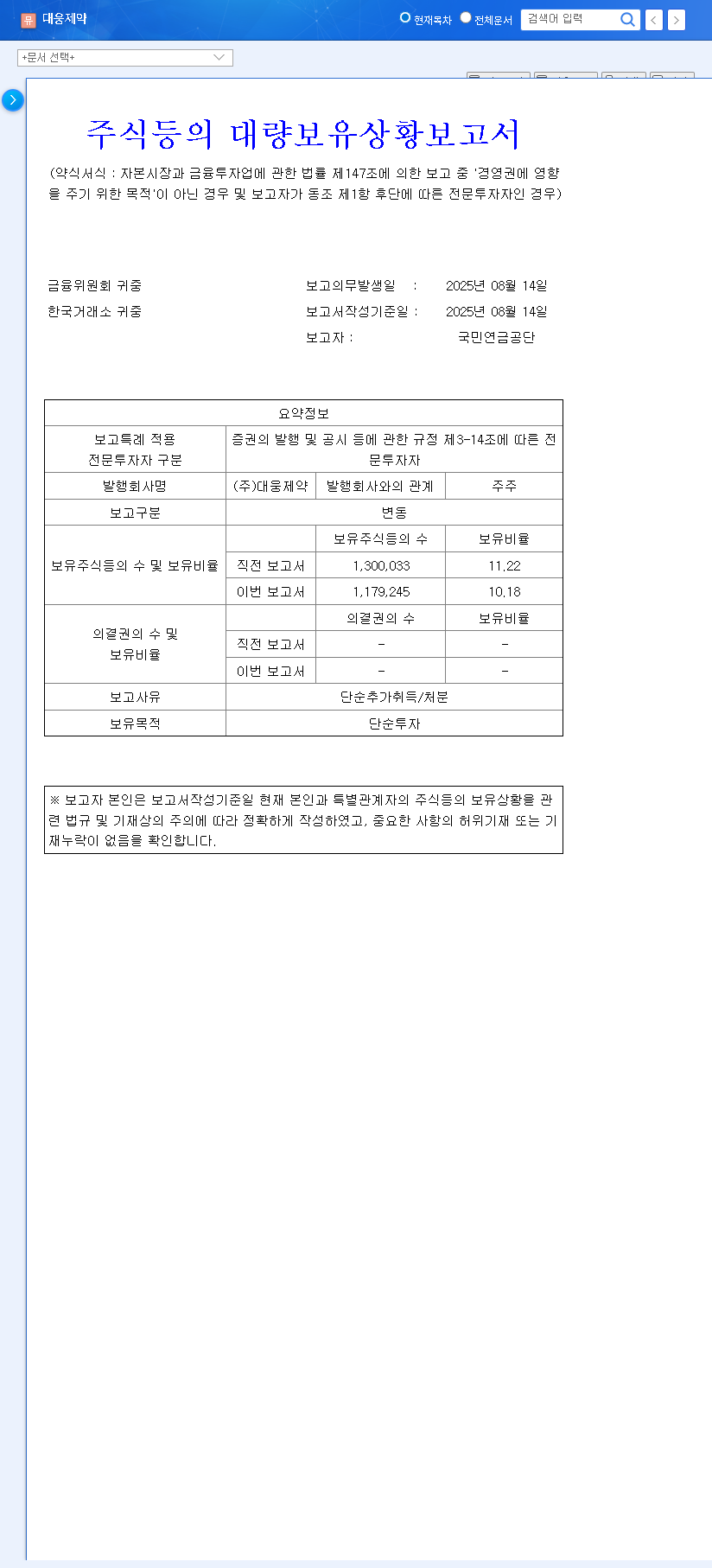
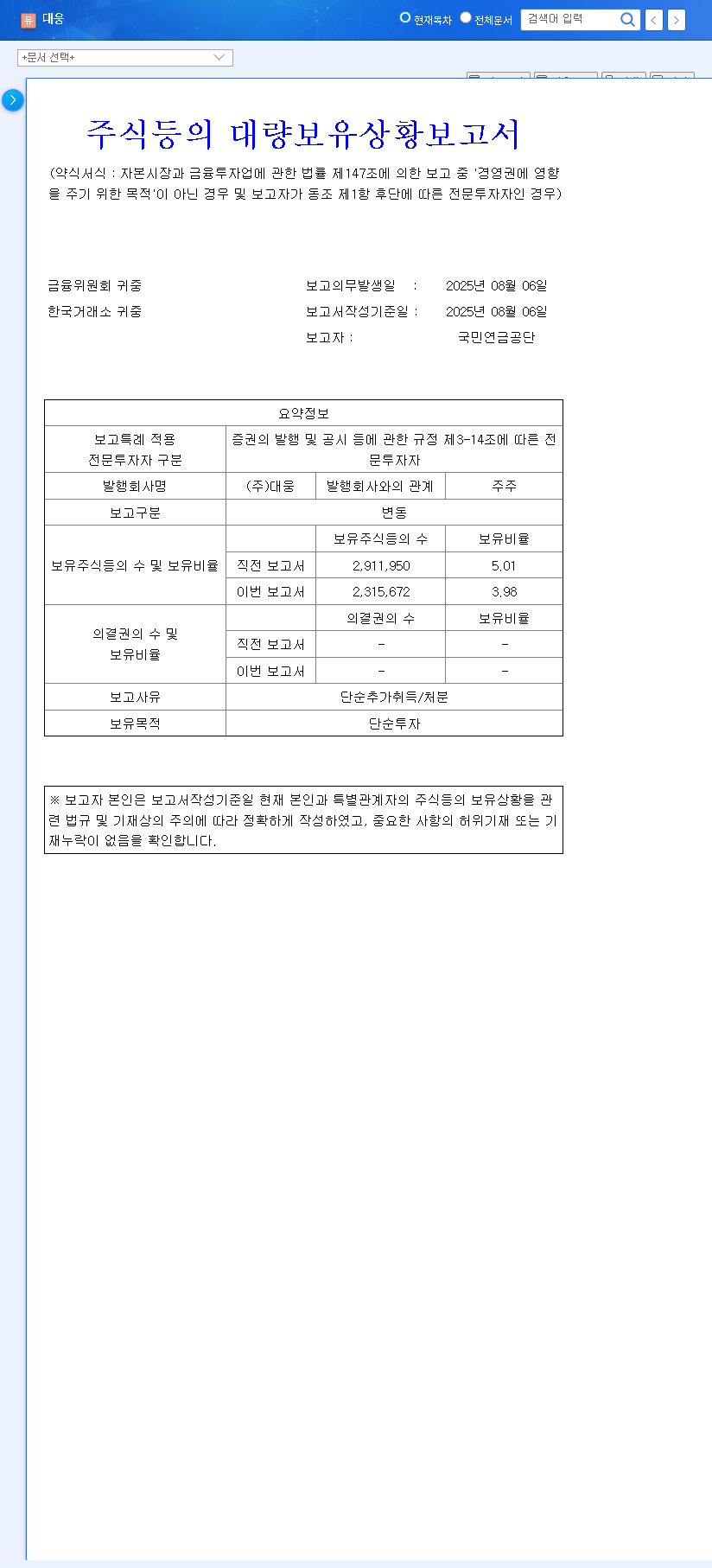
    On October 1, 2025, the National Pension Service filed a mandatory ‘Abbreviated Report on Large Shareholding Status’ regarding its position in Daewoong Pharmaceutical. This filing is a crucial piece of information for the market, offering transparency into the trading activities of major shareholders.

    Key Details of the NPS Filing:
    Previous Holding: 11.22%
    Current Holding: 10.18%
    Net Change: -1.04%p Reduction
    Stated Purpose: Simple Investment

    The core takeaway is a 1.04 percentage point decrease in the Daewoong Pharmaceutical stake held by the NPS. While the stated purpose remains ‘simple investment’—implying the change is part of a broader portfolio rebalancing strategy rather than a negative verdict on the company’s management—the market often reacts to the action itself. You can view the complete report via the official disclosure: Source.

    Short-Term Volatility vs. Long-Term Fundamentals

    Immediate Pressure on Daewoong Pharmaceutical Stock

    When a massive institutional player like the NPS sells a significant block of shares, it creates immediate supply-side pressure. This can lead to a short-term dip in the stock price as the market absorbs the new volume. The psychological effect is also notable; some retail investors may interpret the sale as a bearish signal, leading to panic selling and further weakening investor sentiment. In the short term, traders should anticipate increased volatility and potential downward pressure on the Daewoong Pharmaceutical stock price.

    The Bedrock: Daewoong’s Strong Fundamentals

    It is critical to separate shareholder movements from a company’s intrinsic value. The NPS’s portfolio adjustment does not alter Daewoong Pharmaceutical’s core business. The company’s fundamentals remain robust, driven by a powerful pipeline of new drugs and aggressive global expansion.

    • Key Products: Flagship drugs like ‘Fexuclue’ (a novel GERD treatment), ‘Enblo’ (a SGLT2 inhibitor for diabetes), and ‘Nabota’ (a botulinum toxin) are gaining significant traction in international markets.
    • Record Performance: The company posted its highest-ever performance in 2024, with revenue hitting KRW 1.265 trillion and operating profit reaching KRW 163.8 billion on a separate basis, showcasing strong, sustainable growth. For more details on their product lineup, consider reading our in-depth analysis of Daewoong’s drug pipeline.
    • Global Expansion: Continued efforts to penetrate major markets like the US and Europe are expected to be a primary long-term value driver.

    Macroeconomic Tailwinds for Your Investment

    Beyond the company’s internal strength, several macroeconomic factors provide a favorable backdrop for Daewoong Pharmaceutical. While the NPS news may create short-term headwinds, these larger trends could offer significant long-term support.

    • Favorable Exchange Rates: With the USD/KRW exchange rate projected to remain high, Daewoong’s export profitability stands to benefit significantly. A weaker Won translates overseas revenue into more Won on the balance sheet, a direct boost to earnings, as explained by financial experts.
    • Accommodative Monetary Policy: A global trend towards interest rate cuts can lower corporate financing costs and increase market liquidity, creating a more attractive environment for growth-oriented companies like Daewoong.
    • Decreasing Costs: Lower international oil prices and stabilizing shipping freight rates help reduce production and logistics expenses, potentially improving profit margins.

    Investment Strategy: Navigating the Current Climate

    Given the conflicting signals—short-term selling pressure versus strong long-term fundamentals—investors should tailor their strategy to their individual time horizons and risk tolerance.

    For the Short-Term Trader

    Caution is the key. The NPS news introduces significant near-term volatility. It may be prudent to wait on the sidelines until the stock price finds a new support level. Monitor trading volumes closely; a stabilization or reduction in selling pressure could signal that the market has absorbed the news.

    For the Mid-to-Long-Term Investor

    For those with a longer investment horizon, this short-term dip could represent an attractive entry point. The fundamental growth story of Daewoong Pharmaceutical remains intact. Consider a staggered buying strategy (dollar-cost averaging) to mitigate risk during this volatile period. Focus on the company’s intrinsic value, which is ultimately driven by its business performance, not the trading decisions of a single shareholder. The future of the Daewoong Pharmaceutical investment case rests on its ability to execute its global strategy and continue delivering strong earnings.

    (069620) NPS Reduces Daewoong Pharmaceutical Stock Stake: Threat or Buying Opportunity? 관련 이미지
  • (003090) Daewoong Treasury Stock Disclosure: Investment Analysis & 2025 Outlook

    (003090) Daewoong Treasury Stock Disclosure: Investment Analysis & 2025 Outlook

    Daewoong Co., Ltd. recently filed a correction regarding its treasury stock holdings, a move that initially appears to be a simple administrative update. However, for astute investors, such disclosures can offer deeper insights into a company’s financial health and strategic direction. This comprehensive analysis will explore the specifics of the Daewoong treasury stock adjustment, its potential impact on corporate fundamentals, and how it fits within the broader macroeconomic landscape to help you formulate a sound investment strategy.

    While the disclosure is a correction of past data, it raises the total treasury stock to over 31% of issued shares, a significant figure that warrants a closer look at the company’s capital strategy and shareholder value initiatives.

    Deconstructing the Daewoong Treasury Stock Correction

    On October 1, 2025, Daewoong Co., Ltd. filed a corrective report to amend its treasury stock status as of December 31, 2024. The primary goal was to enhance informational accuracy. The full details can be reviewed in the Official Disclosure (Source: DART). The key changes are as follows:

    • Direct Acquisitions: An increase of 32,774 common shares, primarily due to employee stock option exercises.
    • Other Acquisitions: An increase of 1,060,055 shares, reflecting the incorporation of merger-related treasury stock and dispositions from the employee stock ownership association.
    • Total Change: The total number of treasury shares rose by 1,092,829, bringing the new total to 18,344,099 shares.

    This adjustment increases the company’s treasury stock ratio from 29.67% to approximately 31.55% of total issued shares. This is a significant holding and understanding its implications is key to a proper Daewoong Co., Ltd. investment analysis.

    Beyond the Numbers: Fundamental and Strategic Implications

    Contrary to what a ‘correction’ might imply, this update is not a negative signal for Daewoong fundamentals. In fact, it can be interpreted positively from several angles. The use of treasury stock is a common corporate finance strategy used to return capital to shareholders or manage stock price volatility.

    Boosting Transparency and Shareholder Value

    By promptly correcting reporting errors, Daewoong enhances its corporate transparency and reliability, which builds investor trust. Furthermore, the components of the increase—employee stock options and association dispositions—are tied to shareholder-friendly policies. Aligning employee incentives with stock performance often leads to better long-term corporate value.

    The High Ratio: A Double-Edged Sword

    A treasury stock ratio of over 31% is notable. On one hand, it significantly reduces the number of shares available for public trading (the ‘float’), which can increase stock price volatility. On the other, it gives management a powerful tool. These shares can be re-issued for future M&A activities, used for employee compensation, or retired to boost earnings per share (EPS), all of which can be beneficial for long-term investors.

    Macroeconomic Context and Investor Strategy

    No stock exists in a vacuum. The current macroeconomic environment presents both challenges and opportunities for Daewoong. Rising interest rates increase borrowing costs, while exchange rate volatility (especially USD/KRW) can impact profitability for a global player. Conversely, falling commodity prices could lower production costs. Investors must weigh these external factors against the company’s internal strategy for managing its Daewoong treasury stock.

    An Action Plan for Investors

    • Focus on Core Business: The ultimate driver of the Daewoong stock price is the performance of its key pharmaceutical products like Nabota and Fexuclue. Monitor their global sales and the progress of the R&D pipeline. Our internal report on Daewoong’s Pharmaceutical Pipeline provides further details.
    • Monitor Treasury Stock Policy: Keep an eye out for future announcements regarding the use of these treasury shares. Any large-scale disposal or retirement will be a significant market event.
    • Maintain a Balanced View: This disclosure is not a direct catalyst for immediate price action. Given the macroeconomic uncertainties, a ‘Hold’ or ‘Observe’ stance is prudent. Base long-term investment decisions on sustained improvements in earnings and business fundamentals.

    In conclusion, the Daewoong treasury stock correction is more than an accounting formality; it’s a reaffirmation of the company’s commitment to transparency and provides a window into its capital management strategy. While not an immediate buy signal, it reinforces the need for investors to monitor core business performance and future strategic uses of this substantial treasury shareholding.

    (003090) Daewoong Treasury Stock Disclosure: Investment Analysis & 2025 Outlook 관련 이미지
  • Daewoong Pharmaceutical Applies for Nabota Approval in China: Investment Opportunity?


    Daewoong Pharmaceutical Applies for Nabota Approval in China: Investment Opportunity? 대표 차트 이미지


    1. Nabota Applies for Approval in China: What’s Happening?

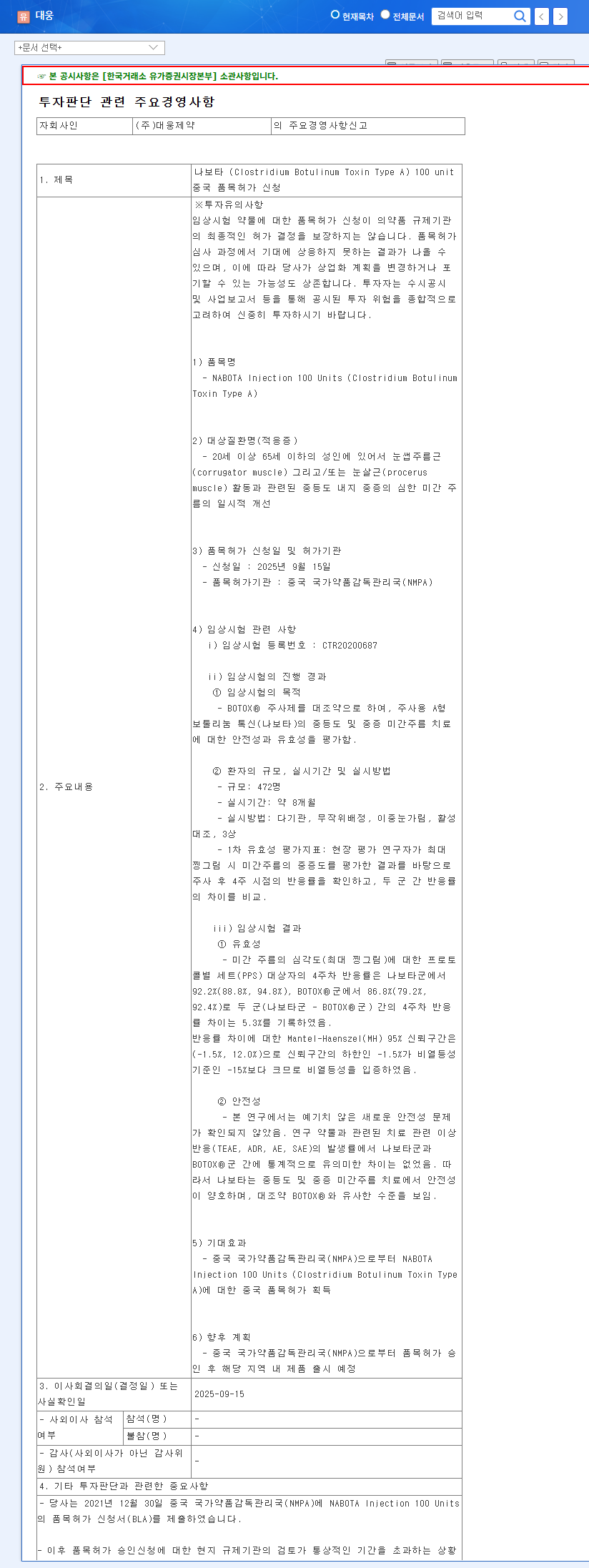
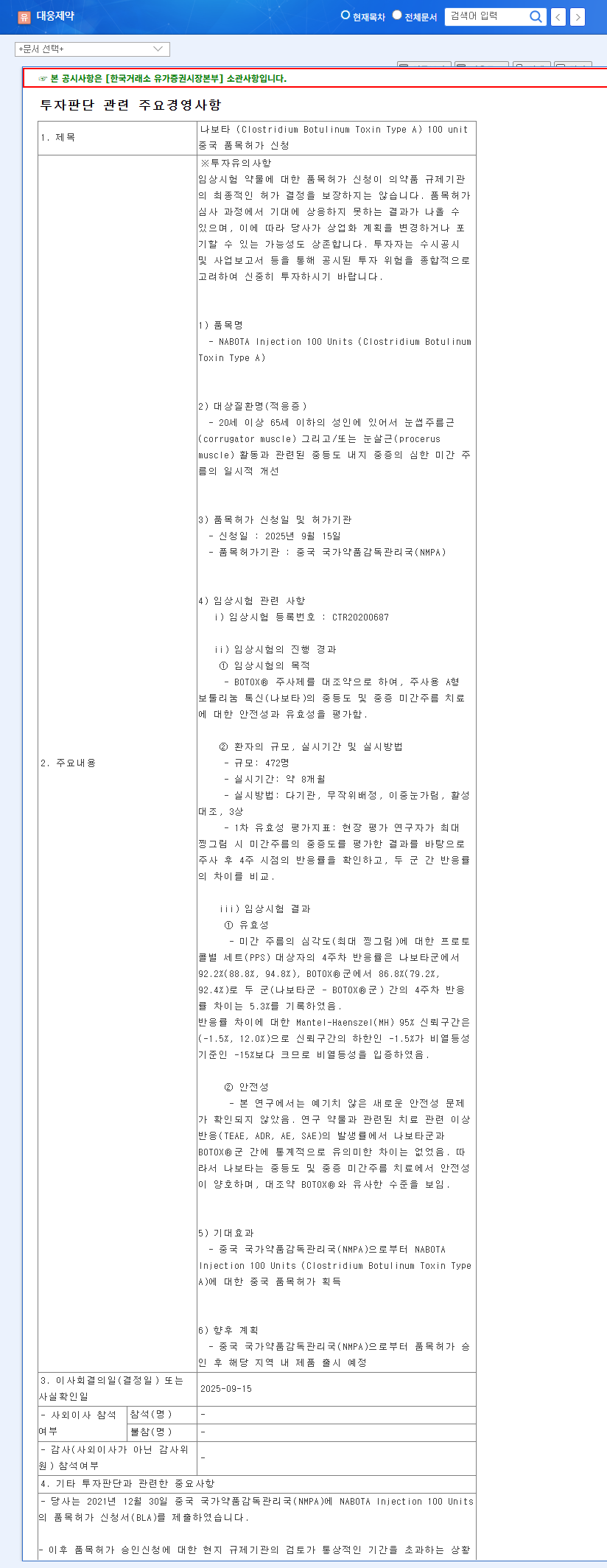
    On September 15, 2025, Daewoong Pharmaceutical applied for product approval for Nabota, its botulinum toxin product for glabellar lines, in China. In a Phase 3 clinical trial involving 472 patients, Nabota demonstrated non-inferiority and safety compared to Botox.

    2. Why is Entering China Important?

    China is the epicenter of the rapidly growing beauty market. Nabota’s entry into China could be a significant turning point for Daewoong’s global growth. Successful market entry will lead to a surge in sales and increased brand awareness.

    3. What is Daewoong’s Current Situation?

    • Solid growth: Sales, operating profit, and net income all increased significantly in 2023 compared to 2022.
    • Robust financial structure: Decreasing debt ratio and increasing retained earnings indicate sound financial health.
    • Positive investment indicators: Expected EPS growth and attractive PER levels.

    4. What About Market Conditions and Daewoong’s Future?

    The current global financial market maintains a high interest rate trend. However, Daewoong’s robust financial structure can act as a buffer against these external challenges. While KRW/USD exchange rate volatility exists, the potential for settlement in CNY is expected to limit the direct impact. Fluctuations in international gold prices and oil prices also have low direct relevance to Daewoong’s business. The domestic financial market is showing stable trends.

    5. Action Plan for Investors

    • Continuous Monitoring: Closely monitor the progress of the NMPA’s product approval process and related announcements.
    • Market Reaction Analysis: It is essential to analyze market reactions and competitor strategies after Nabota’s launch.
    • Portfolio Management: Consider Daewoong’s overall business portfolio and financial soundness.
    • Macroeconomic Variable Check: Continuously observe the impact of macroeconomic variables such as interest rates, exchange rates, and oil prices.


    FAQ

    When can we expect Nabota’s approval in China?

    While the exact approval timing is difficult to predict, considering the NMPA’s review period, it is generally expected to take one to two years.

    Will Nabota’s entry into the Chinese market positively affect Daewoong’s stock price?

    Entering the Chinese market is a significant opportunity that can contribute to Daewoong’s sales growth and increase in corporate value. However, the uncertainties of the approval process and the potential for increased competition should also be considered.

    What are the key considerations for investment decisions?

    Investment decisions should be made by comprehensively considering the NMPA’s approval progress, market reactions after Nabota’s launch, Daewoong’s financial soundness, and macroeconomic variables.


    Daewoong Pharmaceutical Applies for Nabota Approval in China: Investment Opportunity? 관련 이미지
    Daewoong Pharmaceutical Applies for Nabota Approval in China: Investment Opportunity? 관련 이미지


  • Daewoong Pharmaceutical Applies for Nabota Approval in China: Investment Strategy Analysis

    Daewoong Pharmaceutical Applies for Nabota Approval in China: Investment Strategy Analysis 대표 차트 이미지

    1. What Happened?: Nabota’s Application for Approval in China

    Daewoong Pharmaceutical announced on September 15, 2025, that it had completed the application process for approval of ‘Nabota Injection 100 Units’ in China. This application is for the treatment of glabellar lines (frown lines between the eyebrows) in adults aged 20 to 65.

    2. Why Is It Important?: China Market Entry, A Growth Driver for Daewoong?

    China represents one of the world’s largest pharmaceutical markets. Successful entry with Nabota could lead to significant sales growth and a subsequent increase in Daewoong’s corporate value. It’s also an opportunity to further validate Nabota’s competitiveness, already recognized in major markets like the US and Europe.

    3. What’s Next?: Expectations and Concerns

    • Positive Aspects:
      • Entry into the Chinese market and securing new revenue streams
      • Strengthening global competitiveness and enhancing brand recognition
      • Building product reliability based on clinical data
      • Potential synergy with other pipelines such as Fexuprazan and Enavogliflozin
    • Negative Aspects:
      • Uncertainty surrounding approval and potential delays in the review process
      • Intensifying competition within the Chinese market
      • Risks associated with exchange rate fluctuations and changes in the macroeconomic environment

    4. What Should Investors Do?: 4 Key Checkpoints

    Investors should carefully monitor the following factors and formulate their investment strategies accordingly:

    • Progress and results of the NMPA approval process in China
    • Competitive landscape in the Chinese market and Daewoong’s marketing strategies
    • Fluctuations in exchange rates and changes in macroeconomic indicators
    • Synergy with the progress of other pipelines, such as Fexuprazan and Enavogliflozin

    Frequently Asked Questions

    When was Nabota’s application for approval in China completed?

    The application was completed on September 15, 2025.

    What are the benefits for Daewoong Pharmaceutical if Nabota is approved in China?

    Approval would allow Daewoong to enter the large Chinese market, leading to increased sales and enhanced global competitiveness.

    What should investors be aware of?

    Investors should monitor the approval outcome, the competitive environment in the Chinese market, and changes in exchange rates and macroeconomic conditions.

    Daewoong Pharmaceutical Applies for Nabota Approval in China: Investment Strategy Analysis 관련 이미지
  • Daewoong’s Fexuclue Approved in China: Investment Analysis and Future Outlook


    Daewoong's Fexuclue Approved in China: Investment Analysis and Future Outlook 대표 차트 이미지


    What Happened?

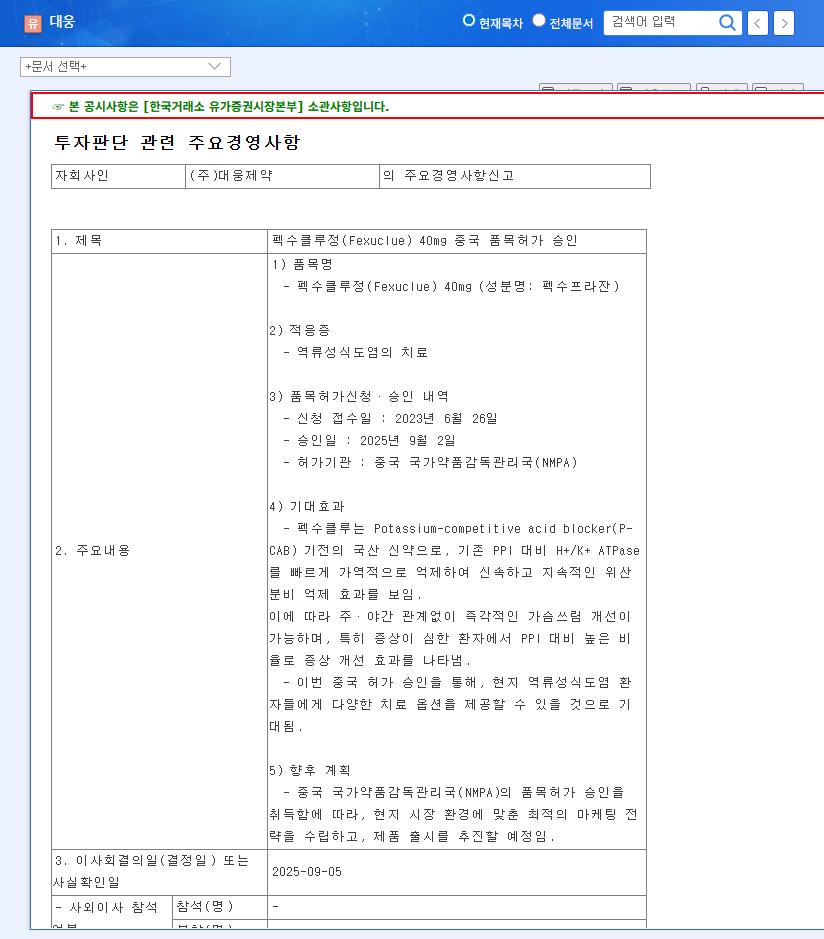
    Daewoong Pharmaceutical’s ‘Fexuclue 40mg’, a treatment for gastroesophageal reflux disease (GERD), has received marketing authorization from China’s NMPA. This marks the first case of a Korean P-CAB-based new drug entering the Chinese market.

    Why is it Important?

    China is one of the largest pharmaceutical markets in the world. Fexuclue’s entry into China is expected to significantly contribute to Daewoong’s sales growth and profitability improvement. It will also demonstrate Daewoong’s new drug development capabilities and positively impact the company’s image.

    • Sales Growth and Profitability Improvement: Expected explosive sales growth due to entry into a huge market.
    • Strengthened New Drug Development Capabilities and Increased Pipeline Value: Demonstrates global competitiveness, positively impacting future drug development.
    • Enhanced Corporate Image and Brand Value: Improves brand image as a successful overseas case of a domestic new drug.

    What’s Next?

    Daewoong is expected to focus on building local partnerships and establishing marketing strategies for successful market entry in China. A customized strategy considering the unique characteristics of the Chinese market is necessary, and efforts should be focused on securing market share through differentiation from competing products.

    What Should Investors Do?

    This marketing authorization is a positive signal, demonstrating Daewoong’s long-term growth potential. However, it may take time for actual sales to materialize, and there are risk factors such as market competition and regulatory changes. Therefore, it’s crucial for investors to closely monitor Daewoong’s China market entry strategy and performance trends before making investment decisions.


    Frequently Asked Questions

    What is Fexuclue?

    Fexuclue is a new P-CAB-based drug used to treat gastroesophageal reflux disease (GERD). It shows faster onset of action and superior efficacy compared to existing PPI drugs.

    What is the significance of obtaining marketing authorization in China?

    China has a huge pharmaceutical market. Obtaining marketing authorization for Fexuclue in China is a significant step for Daewoong in increasing sales and expanding its global market.

    What should investors be aware of?

    It may take time for actual sales to materialize. It’s important to consider China’s competitive landscape and regulatory changes when making investment decisions.


    Daewoong's Fexuclue Approved in China: Investment Analysis and Future Outlook 관련 이미지
    Daewoong's Fexuclue Approved in China: Investment Analysis and Future Outlook 관련 이미지


  • Daewoong Pharmaceutical’s Fexuclue Approved in China: Investment Outlook (September 2025)

    Daewoong Pharmaceutical's Fexuclue Approved in China: Investment Outlook (September 2025) 대표 차트 이미지

    1. What Happened?

    Daewoong Pharmaceutical’s Fexuclue has been granted marketing authorization by the National Medical Products Administration (NMPA) of China. While the company also released its 2024 business report (amended), the amendments primarily clarified existing information, with minimal direct impact on fundamentals.

    2. Why Does It Matter?

    China represents the second largest pharmaceutical market globally. Fexuclue’s entry into China presents a significant opportunity for Daewoong to boost sales and expand its global presence. As a P-CAB inhibitor with superior efficacy compared to existing PPIs, Fexuclue is expected to offer a new treatment option for Chinese patients suffering from gastroesophageal reflux disease. This also validates Daewoong’s R&D capabilities and could pave the way for further expansion into other global markets.

    3. What’s Next?

    Positive Scenario: If Fexuclue successfully establishes itself in the Chinese market, Daewoong’s sales and operating profit are likely to experience substantial growth. This could serve as a powerful catalyst for a rise in stock price.

    • Short-term: Positive investor sentiment and stock price appreciation are anticipated.
    • Long-term: Transformation into a global pharmaceutical company and increased corporate value are expected.

    Considerations: Potential risk factors include intensified competition within the Chinese market, changes in local regulations, and the effectiveness of Daewoong’s marketing strategies. Fluctuations in exchange rates and rising interest rates are also factors to consider.

    4. What Should Investors Do?

    While Fexuclue’s entry into China is positive, investors should carefully consider the following factors before making investment decisions:

    • Fexuclue’s sales performance and market share trends in China
    • Competitive landscape and Daewoong’s marketing strategies
    • Global market expansion strategy and the progress of R&D pipelines
    • Impact of changes in the macroeconomic environment

    Thorough analysis is crucial for identifying investment opportunities and managing risks.

    Frequently Asked Questions

    When will Fexuclue be launched in China?

    The exact launch date has not yet been announced. Investors should monitor relevant news and official announcements from Daewoong Pharmaceutical.

    How much is Fexuclue expected to sell in China?

    Considering the market size and Fexuclue’s efficacy, substantial sales are expected. However, precise predictions are difficult due to various factors such as competition and marketing strategies.

    How will Fexuclue’s entry into China affect the stock price?

    While a positive short-term impact is likely, the long-term stock price trend will depend on Fexuclue’s actual sales performance, the success of the global market expansion strategy, and changes in the macroeconomic environment.

    Daewoong Pharmaceutical's Fexuclue Approved in China: Investment Outlook (September 2025) 관련 이미지
  • Daewoong Pharmaceutical (069620): Q2 2025 Earnings Beat Expectations – Key Analysis & Investment Strategy

    1. Daewoong Pharmaceutical’s Q2 2025 Performance: What Happened?

    On August 14, 2025, Daewoong Pharmaceutical announced its Q2 2025 preliminary earnings. Revenue reached ₩405.4 billion, operating profit ₩57.8 billion, and net income ₩40.1 billion. This represents a year-on-year increase of 5%, 12%, and 7% respectively, surpassing market forecasts.

    2. Behind the Strong Performance: Key Growth Drivers

    This strong performance is attributed to robust domestic and international sales of key products and efficient cost management. The high export ratio of specific products demonstrates Daewoong’s global competitiveness. Furthermore, the company has secured future growth drivers, including new overseas export contracts and a joint development agreement for depot injections. The rise in the KRW/USD exchange rate also positively impacted Daewoong’s export business.

    3. Investment Strategy: What’s Next?

    While Daewoong’s future looks promising, investors should remain aware of certain factors. The success of new drug pipeline development and external factors like exchange rate fluctuations require continuous monitoring. Key considerations for investors include:

    • Monitoring new drug pipeline and export contracts
    • Managing exchange rate and interest rate volatility
    • Analyzing market share and competitive landscape for key products
    • Assessing improvements in financial health (debt ratio, ROE)

    Frequently Asked Questions

    Q: What were Daewoong Pharmaceutical’s key achievements in Q2 2025?

    A: The company exceeded market expectations with revenue of ₩405.4B and operating profit of ₩57.8B. Strong sales of key products and efficient cost management were major contributors.

    Q: What are Daewoong Pharmaceutical’s main growth drivers?

    A: Key growth drivers include robust domestic and international sales, new overseas export contracts, and a joint development agreement for depot injections. The favorable KRW/USD exchange rate also contributed.

    Q: What should investors be aware of?

    A: Investors should monitor the success of new drug pipeline development, exchange rate volatility, and changes in the competitive landscape.

  • Daewoong Pharmaceutical Soars: H1 2025 Earnings Exceed Expectations

    1. Daewoong Pharmaceutical’s H1 2025 Performance Highlights

    Daewoong Pharmaceutical reported revenue of KRW 405.4 billion, operating profit of KRW 57.8 billion, and net profit of KRW 40.1 billion for H1 2025, exceeding market expectations by 13%, 49%, and a remarkable 103%, respectively.

    2. Key Drivers of Growth

    • Strong Performance of Core Products: Products like Nabota, Fexuprazan, and Envlo contributed significantly to revenue growth, demonstrating consistent performance in domestic and international markets.
    • Enhanced Operational Efficiency: Effective cost management and improved product margins contributed to a significant increase in profitability.
    • R&D Investments Paying Off: Continued investment in R&D has led to successful new drug development, securing future growth drivers.
    • Favorable External Environment: A weaker Korean Won, stable interest rates, and relatively stable raw material prices also contributed positively to the company’s performance.

    3. Future Outlook and Investment Strategies

    Building on this strong performance, Daewoong Pharmaceutical is expected to maintain its growth trajectory. The continued success of its core products, promising new pipelines, and global expansion strategy create a positive outlook. However, potential risks such as exchange rate fluctuations, increased competition, and changes in overseas regulations should also be considered.

    4. Investor Action Plan

    Given the company’s current fundamentals and growth prospects, investors might consider a buy or hold strategy. Continuous monitoring of global business contracts, new drug development progress, and regulatory changes is crucial for informed investment decisions.

    Frequently Asked Questions

    Q: What were Daewoong Pharmaceutical’s key financial results for H1 2025?

    A: The company achieved revenue of KRW 405.4 billion, operating profit of KRW 57.8 billion, and net profit of KRW 40.1 billion, significantly exceeding market expectations.

    Q: What are the main factors that contributed to these strong results?

    A: Key drivers include the robust performance of core products like Nabota and Fexuprazan, efficient cost management, successful R&D investments, and a favorable external environment.

    Q: What is the outlook for Daewoong Pharmaceutical’s future performance?

    A: The outlook is positive, driven by continued growth of core products, promising new pipelines, and global expansion. However, investors should consider potential risks like exchange rate fluctuations and increased competition.

  • Daewoong Pharmaceutical Posts Record Q2 2025 Earnings: A Deep Dive

    1. Daewoong’s Q2 2025 Performance: An Earnings Surprise

    Daewoong Pharmaceutical announced its Q2 2025 earnings on August 14, 2025, reporting revenue of ₩528.4 billion, operating profit of ₩85.3 billion, and net income of ₩61.3 billion. These figures significantly exceeded market expectations, marking a substantial earnings surprise. The operating profit, in particular, reflects a remarkable 41% year-over-year increase, highlighting the company’s accelerating profitability.

    2. Drivers of Growth: Innovative Drugs and Core Business Strength

    This exceptional performance is attributed to the continued growth of innovative drugs like Nabota, Fexuprazan, and Envlo, along with increased R&D investments and accelerated expansion into global markets, strengthening Daewoong’s core business competitiveness.

    3. Investor Action Plan: A BUY Recommendation

    Considering the outstanding earnings, accelerating profitability, and high growth potential of key products, we recommend a BUY rating for Daewoong Pharmaceutical. The Q2 results are expected to be a significant catalyst, raising expectations for the company’s full-year performance.

    4. Risk Factors and Outlook

    • Exchange Rate Fluctuations: Continued weakening of the Korean Won could increase import costs.
    • Interest Rate Hikes: Sustained high interest rates may lead to increased borrowing costs.
    • Intensified Competition: The pharmaceutical and biotech industry faces ongoing competitive pressures.

    However, Daewoong Pharmaceutical is expected to pursue sustainable growth through strengthening its drug development pipeline, expanding into global markets, and enhancing production efficiency. Investors should carefully monitor these risk factors.

    Q: What was Daewoong Pharmaceutical’s operating profit for Q2 2025?

    A: ₩85.3 billion, significantly exceeding the market consensus of ₩60.4 billion.

    Q: What are the main drivers of Daewoong’s strong performance?

    A: The continued growth of innovative drugs like Nabota, Fexuprazan, and Envlo, coupled with a strengthened core business.

    Q: What are the key risk factors for investing in Daewoong Pharmaceutical?

    A: Exchange rate fluctuations, interest rate hikes, and intensified competition are key risks to consider.