Tag: Credit Rating

  • (001430) SeAH Besteel Holdings: A Deep Dive into the 2025 Corporate Value Enhancement Plan

    (001430) SeAH Besteel Holdings: A Deep Dive into the 2025 Corporate Value Enhancement Plan

    SeAH Besteel Holdings Corporation has captured the market’s attention with the recent progress report on its ambitious 2025 Corporate Value Enhancement Plan. This isn’t just a routine corporate update; it’s a strategic roadmap designed to bolster profitability, significantly increase shareholder returns, and elevate the company’s overall market valuation. For investors, this plan presents both a compelling opportunity and a series of critical questions.

    This comprehensive investor analysis will dissect the core components of the plan, evaluate the fundamental strengths and weaknesses of SeAH Besteel Holdings, and provide a clear, strategic outlook. We will explore whether this roadmap is a guaranteed path to growth or if a more cautious approach is warranted in the current economic climate.

    Core Pillars of the Value Enhancement Plan

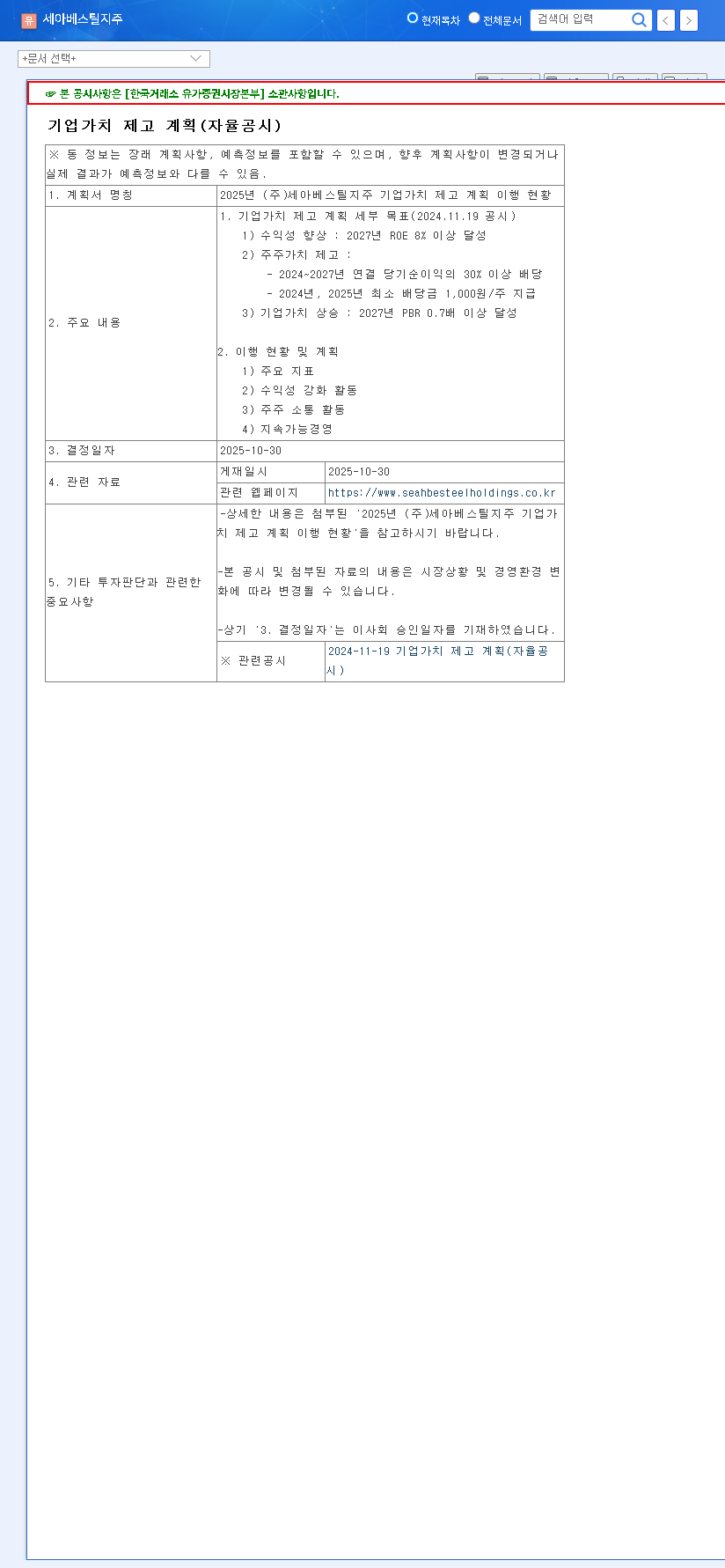
    The 2025 Corporate Value Enhancement Plan is built on three specific, measurable objectives that signal a profound commitment to sustainable growth and shareholder-friendly policies. Understanding these goals is the first step in a thorough investor analysis.

    • Enhanced Profitability: The primary financial target is to achieve a Return on Equity (ROE) of 8% or higher by the year 2027. This represents a significant leap from current levels, indicating a focus on operational efficiency and margin improvement.
    • Superior Shareholder Value: A commitment to distribute over 30% of consolidated net profit as dividends between 2024 and 2027. Crucially, the plan guarantees a minimum dividend of KRW 1,000 per share for 2024-2025, providing a reliable income floor for investors.
    • Corporate Value Growth: The goal is to reach a Price-to-Book Ratio (PBR) of 0.7x or more by 2027. This metric is key to addressing the ‘Korea discount’ and bringing the company’s market valuation more in line with its intrinsic asset value.

    Fundamental Diagnosis of SeAH Besteel Holdings

    As a pure holding company, the financial health of SeAH Besteel Holdings is intrinsically linked to the performance of its subsidiaries. A balanced view requires examining both its foundational strengths and the potential risks on the horizon.

    Positive Fundamental Factors

    • Reliable Dividend Stream: With over 91% of its operating revenue coming from subsidiary dividends (notably from SeAH Besteel and SeAH Changwon Specialty Steel), the company has a stable income base.
    • Strong Creditworthiness: An A+ (Stable) corporate bond rating and A2+ commercial paper rating underscore its financial stability and access to capital markets, reducing financing risks.
    • Commitment to Innovation: Ongoing R&D investments by its subsidiaries in new materials and technologies are crucial for maintaining a competitive edge and long-term value creation.

    Negative and Cautionary Factors

    • Subsidiary Performance Volatility: The specialty steel and aluminum industries are highly cyclical. A global economic slowdown or a downturn in key sectors like construction and automotive could directly impact profitability.
    • Rising Debt Levels: An increased consolidated debt-to-equity ratio heightens the company’s sensitivity to fluctuations in interest rates and foreign exchange, potentially pressuring margins.
    • Macroeconomic Headwinds: External risks, including volatile raw material prices, currency fluctuations, and rising protectionist trade policies, remain significant threats to business stability. For more on this, see analysis from leading financial experts at authoritative sources like Bloomberg.

    By transparently outlining its mid-to-long-term growth objectives, SeAH Besteel Holdings is making a clear promise to investors. The key will be translating these ambitious targets into tangible financial results.

    Impact Analysis and Investor Strategy

    The announcement of the plan is a positive signal, but savvy investors must look beyond the headlines. The successful execution of this plan is contingent on both internal discipline and favorable market conditions. The company’s own projections, as detailed in its Official Disclosure (Source), show a path to improvement but highlight the significant effort required.

    Achieving an ROE of 8% from its current low base will demand substantial operational improvements. While the enhanced dividend policy provides a strong incentive, its sustainability hinges on generating consistent net profit. For those unfamiliar with these metrics, our guide on understanding key financial ratios can provide more context.

    Recommended Investment Approach

    Given the current ‘initial phase’ of the plan, a ‘wait and see’ strategy followed by a cautious approach is prudent.

    • Short-Term (3-6 Months): The announcement may create some positive price momentum. However, this is likely to be speculative. Substantial appreciation in the SeAH Besteel stock price will require concrete proof of execution in upcoming quarterly reports.
    • Mid-to-Long-Term (1-3 Years): The key is to monitor the execution. Investors should closely track quarterly earnings, management commentary on profitability initiatives, and shareholder communication. The interim review scheduled for the end of 2025 will be a pivotal moment to reassess the plan’s viability and the company’s commitment.

    In conclusion, while the Corporate Value Enhancement Plan from SeAH Besteel Holdings is a commendable and positive step, it is a statement of intent, not a guarantee of results. The path forward involves navigating significant industry and macroeconomic challenges. Diligent monitoring of the plan’s progress is essential before committing significant capital.
    (001430) SeAH Besteel Holdings: A Deep Dive into the 2025 Corporate Value Enhancement Plan 관련 이미지
  • (004100) Taeyang Metal Industrial Shareholder Change: 2025 Investor Analysis & Stock Outlook

    (004100) Taeyang Metal Industrial Shareholder Change: 2025 Investor Analysis & Stock Outlook

    News of a Taeyang Metal Industrial major shareholder change has caught the attention of the market. While such announcements can often signal a major shift in corporate strategy, this specific event warrants a closer, more nuanced look. The change is not a dramatic takeover, but rather a procedural transfer within a family.

    However, this headline news distracts from the more pressing issues facing the company. A deep dive into its fundamentals reveals significant challenges, from deteriorating performance to a concerning credit rating. This comprehensive analysis will unpack the true meaning of the shareholder update for Taeyang Metal Industrial, assess its current financial health, and provide a clear-eyed investment outlook for 2025 and beyond.

    Deconstructing the Major Shareholder Change

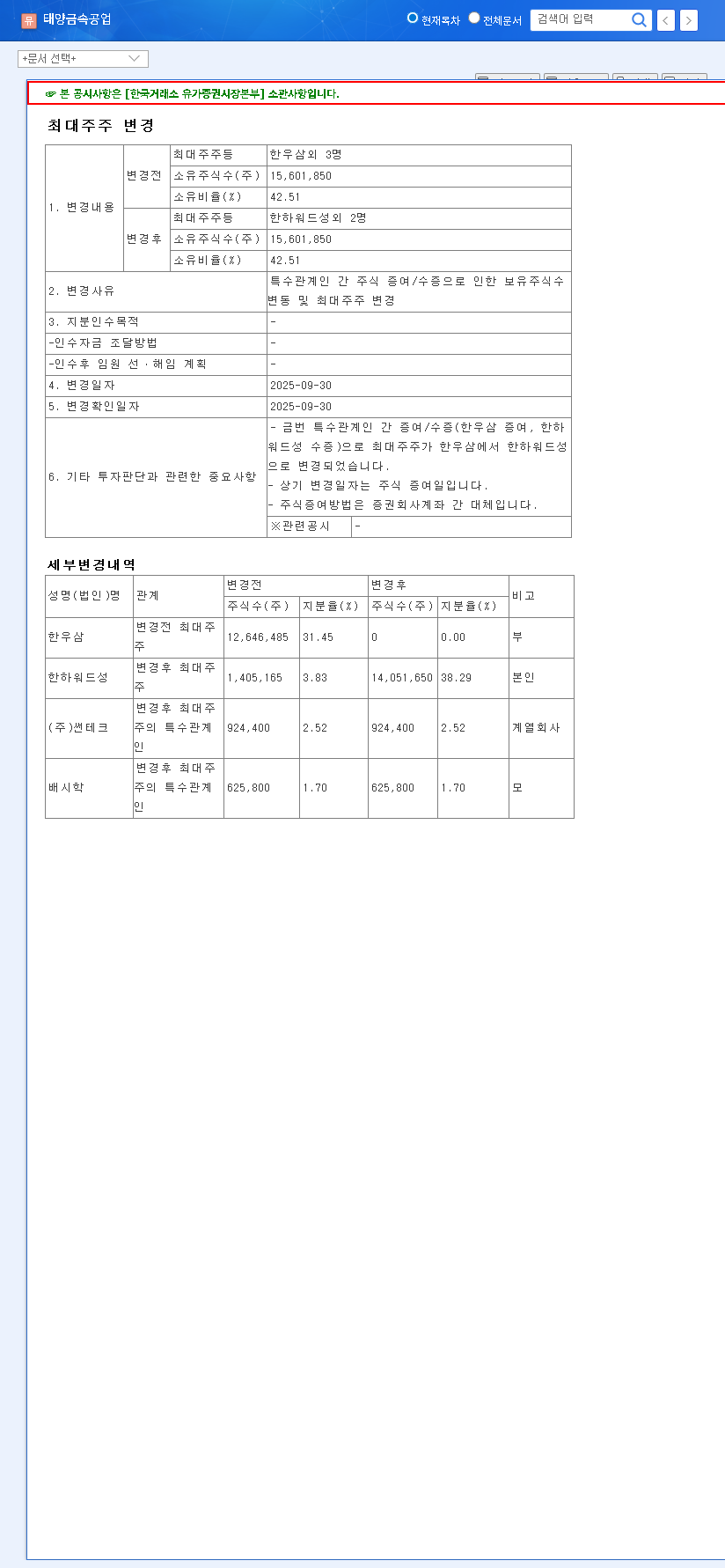
    On September 30, 2025, Taeyang Metal Industrial officially reported that its largest shareholder changed from ‘Han Woo-sam et al.’ to ‘Han Howard Seong et al.’ The crucial detail here is the nature of the transaction: a gift and transfer of shares between related parties. This is more akin to internal succession planning than a corporate shakeup.

    Most importantly, the total equity stake held by the largest shareholder group remains completely unchanged at 42.51%. This continuity suggests that a shift in management control or a hostile M&A attempt is highly improbable. Therefore, investors should expect management stability and little to no deviation from the current business strategy as a direct result of this change. The official disclosure can be viewed on the DART system (Source).

    The shareholder change provides management stability, but the company’s real story lies within its weakening fundamentals and challenging market position.

    The Real Concern: Taeyang Metal’s Financial Health

    Beyond the headlines, a thorough investment analysis must focus on the company’s operational and financial condition, which currently presents several red flags.

    1. Deteriorating Performance in a Tough Market

    The first half of 2025 painted a bleak picture. Taeyang Metal Industrial saw a 4.5% decrease in sales and a 14.0% drop in operating profit. Most alarmingly, the company swung to a significant net loss, a 180.4% negative reversal. This isn’t just a minor dip; it signals a severe profitability crisis. The core of this issue lies in the company’s heavy reliance on the automotive sector for its cold-forged products. It’s facing a perfect storm of:

    • Macroeconomic Headwinds: Slowing global auto demand, high US tariffs, and exchange rate volatility are eroding margins.
    • Industry Downturn: The automotive industry is in flux, with sluggish EV sales, high interest rates depressing new car purchases, and intense competition. For an in-depth look at these challenges, you can explore detailed reports on current automotive industry trends.

    2. Precarious Financials and Credit Downgrade

    The company’s balance sheet adds to the concern. As of H1 2025, the consolidated debt-to-equity ratio was an alarmingly high 399.04%. This level of debt creates significant financial risk, as interest payments can consume a large portion of earnings, especially in a high-interest-rate environment. Compounding this, operating cash flow has worsened considerably.

    The market has taken note. On April 25, 2025, Korea Ratings downgraded Taeyang Metal Industrial’s corporate bond rating to BB-, a speculative or ‘junk’ grade. This downgrade reflects deep concerns about its financial stability and makes it more expensive for the company to borrow money in the future. For more on what this means, see this helpful guide to corporate credit ratings.

    Stock Outlook: Why Fundamentals Trump Headlines

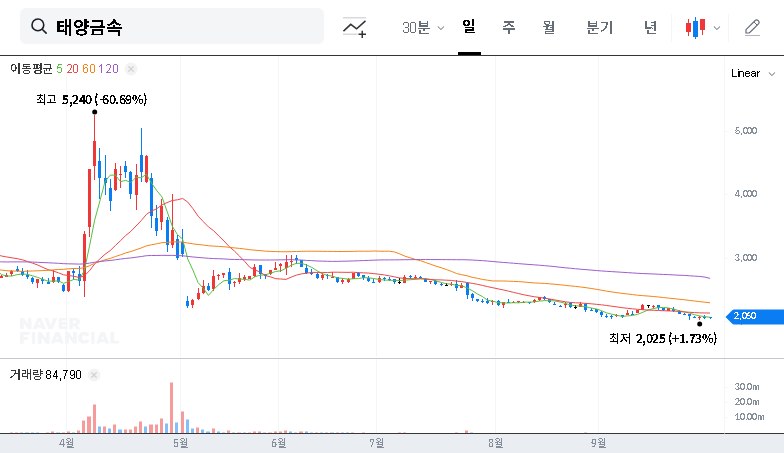
    While the major shareholder change secures management continuity, it’s unlikely to provide any positive momentum for the Taeyang Metal stock price. Investors are more likely to focus on the tangible, negative data points: poor earnings, high debt, and the recent credit downgrade. The lack of brokerage reports or significant market buzz further suggests that this event will be a non-factor for the stock’s trajectory.

    Investment Thesis: A Cautious Approach is Warranted

    Our investment opinion is a Cautious Hold/Monitor. The shareholder change is a neutral event overshadowed by significant fundamental risks. Any potential investment should be contingent on clear signs of operational improvement and a more favorable macroeconomic environment.

    • Key Risks to Watch: Continued weakness in the auto industry, volatility in raw material prices, rising interest expenses, and the potential for further credit downgrades.
    • Potential Catalysts: A strong recovery in auto demand, successful cost-cutting measures that improve profitability, or securing major new client orders.
    • Monitoring Points: Pay close attention to the next quarterly earnings report for any signs of a turnaround. Also, monitor key interest rate decisions and global auto sales data.

    Frequently Asked Questions (FAQ)

    Who is the new major shareholder of Taeyang Metal Industrial?

    As of September 30, 2025, the major shareholder changed from ‘Han Woo-sam et al.’ to ‘Han Howard Seong et al.’ due to a gift/transfer between family members.

    Does this change affect company management?

    No. Because the total equity stake of the controlling party remains unchanged at 42.51%, management control is considered stable and no strategic shifts are expected from this event.

    What is the biggest challenge for Taeyang Metal Industrial right now?

    The company’s primary challenge is its poor financial health, marked by a significant net loss in H1 2025, a very high debt ratio, and a recent credit rating downgrade to BB-.

    Is the stock a ‘buy’ after this news?

    Given the weak fundamentals, the shareholder change alone is not a catalyst for an upgrade. The stock’s performance will depend on a fundamental business turnaround, not this administrative change.

    Disclaimer: This article is for informational purposes only and does not constitute financial advice. Investors are solely responsible for their own investment decisions.

    (004100) Taeyang Metal Industrial Shareholder Change: 2025 Investor Analysis & Stock Outlook 관련 이미지
    (004100) Taeyang Metal Industrial Shareholder Change: 2025 Investor Analysis & Stock Outlook 관련 이미지
  • UTI’s H1 2025 Earnings: A Mixed Bag with Focus on New Businesses

    1. What Happened? UTI’s H1 2025 Performance

    UTI reported revenue of 5.5 billion KRW, exceeding expectations. However, operating and net losses continued, reaching -9.6 billion KRW and -9.3 billion KRW, respectively.

    2. Why These Results? Analyzing the Underlying Issues

    Intensifying competition in the smartphone market and sluggish performance in existing businesses are key factors contributing to UTI’s struggles. Declining current assets and rising current liabilities are exacerbating short-term liquidity pressures, and the credit rating downgrade to CCC further amplifies financial risks.

    3. What’s Next? UTI’s Future Outlook

    UTI’s future hinges on the success of its new ventures, including Flexible Glass and TGV substrates. Achieving the 2026 target for Flexible Glass mass production will be a critical inflection point. While the prospect of interest rate cuts offers a glimmer of hope, fundamental improvements in the company’s financial structure are urgently needed.

    4. What Should Investors Do? Developing an Investment Strategy

    Investors should closely monitor the progress of new businesses, the visibility of earnings improvement, and the recovery of financial soundness. Caution is advised due to potential short-term stock price volatility, and a long-term perspective is essential for developing a sound investment strategy.

    Frequently Asked Questions

    What is UTI’s main business?

    UTI’s primary business is manufacturing and selling camera window cover glass for smartphones. They are also pursuing new businesses in areas like Flexible Glass and TGV substrates.

    How did UTI perform in H1 2025?

    While revenue exceeded expectations, continued operating and net losses have raised concerns about the company’s financial health.

    What is the outlook for UTI?

    The success of new business ventures is crucial for a turnaround. Investors should proceed with caution.

  • Korea Ratings Surprises with Strong H1 2025 Earnings: Investment Strategies?

    1. Korea Ratings H1 2025 Earnings Analysis: What Drove the Earnings Beat?

    Korea Ratings reported impressive H1 2025 earnings, with revenue of KRW 42.6 billion, operating profit of KRW 20.7 billion, and net income of KRW 16.8 billion, significantly exceeding the ‘expected: KRW 0 billion’. This represents a year-on-year increase of 9.5% in revenue, 10.1% in operating profit, and 9.1% in net income. The robust growth was driven by an 8.1% increase in its core credit rating business and investments in new ESG evaluation services.

    2. Key Growth Drivers: What’s Fueling Korea Ratings’ Growth?

    Korea Ratings’ consistent growth is rooted in its solid business structure and market dominance. Maintaining a stable market share of approximately 34.3% within the oligopolistic credit rating market, the company leverages its excellent reputation and expert analysts to secure a competitive edge. Furthermore, investments in new businesses, such as ESG evaluations, hold significant potential for future growth.

    3. Investment Strategies: Is Korea Ratings a Good Investment?

    Korea Ratings boasts a stable financial structure, with ample liquidity and a low debt-to-equity ratio of 33.42%. This earnings surprise provides not only short-term momentum for stock price appreciation but also enhances long-term investment value. However, investors should carefully consider potential risks, such as interest rate volatility and the possibility of an economic slowdown. Prudent investment strategies require continuous monitoring of macroeconomic indicators and industry trends.

    Q: What were Korea Ratings’ key financial results for H1 2025?

    A: Revenue reached KRW 42.6 billion, operating profit was KRW 20.7 billion, and net income was KRW 16.8 billion.

    Q: What are Korea Ratings’ main business activities?

    A: Their core businesses are credit rating and investment evaluation, and they are currently investing in ESG evaluation services.

    Q: What should investors consider when evaluating Korea Ratings?

    A: Investors should be mindful of potential macroeconomic changes, including interest rate volatility and possible economic slowdowns.

  • eCredible’s Q2 2025 Earnings: A Positive Surprise Driven by Core Business Growth and New Ventures

    1. eCredible Exceeds Expectations in Q2 2025

    eCredible reported strong Q2 2025 earnings, with revenue of KRW 29.753 billion, operating profit of KRW 12.614 billion, and net income of KRW 10.202 billion, significantly exceeding market forecasts. Notably, revenue surpassed expectations by a remarkable 35.2%.

    2. Strong Core Business Growth and Strategic Expansion

    This positive performance is attributed to consistent growth in its core credit reporting and technology assessment services. Furthermore, eCredible is expanding into new ventures, including ESG analysis and consulting, and business improvement consulting, securing future growth drivers. The company maintains robust financials with a high operating margin (42.4%) and a stable debt-to-equity ratio (35.97%).

    3. Key Takeaways for Investors

    While eCredible’s growth trajectory is positive, investors should consider several factors. Balancing high dividend payouts with reinvestment for growth, the successful commercialization of new ventures, and navigating macroeconomic changes are crucial aspects to monitor.

    4. Future Investment Strategies

    Investors interested in eCredible’s future growth potential should closely monitor the revenue and profit contribution of new business segments, future earnings announcements and guidance, competitive landscape shifts, and the impact of macroeconomic indicators.

    What was eCredible’s revenue in Q2 2025?

    eCredible’s revenue in Q2 2025 was KRW 29.753 billion, a 9.6% increase year-over-year.

    What are eCredible’s core businesses?

    eCredible’s core businesses are credit reporting and technology assessment services. They are currently expanding into new ventures, including ESG analysis and consulting, and business improvement consulting.

    What are the key considerations for investing in eCredible?

    Key considerations for investing in eCredible include the balance between dividend policy and reinvestment for growth, the successful commercialization of new ventures, and the company’s response to changing macroeconomic conditions.

  • Wisebirds (273060) Q1 2025 Earnings Analysis: Growth and Risk, What’s the Investment Strategy?

    1. Wisebirds Q1 2025 Performance: What Happened?

    Wisebirds achieved remarkable results in Q1 2025, with a 66.5% increase in consolidated revenue and a shift to operating profit. The recovery of the digital advertising market and strengthened partnerships with major platforms drove this growth. However, the consolidated net loss continued, and the high debt-to-equity ratio remains a challenge to overcome.

    2. Analysis of Performance Fluctuations: Why These Results?

    Revenue growth is attributed to the growth of the digital advertising market and Wisebirds’ strengthening of its technology-based solution competitiveness. The shift to operating profit is a result of increased revenue and cost efficiency efforts. On the other hand, the continued net loss is analyzed to be due to increased financial expenses and losses related to derivatives, as well as interest burdens from the high debt-to-equity ratio.

    3. Impact on Investors: So What Should We Do?

    While positive revenue growth and the shift to operating profit can positively influence investor sentiment, the continued net loss and high debt-to-equity ratio raise concerns. In particular, the credit rating downgrade can act as a potential risk factor for fundraising and financial soundness. Therefore, investors should be mindful of short-term stock price volatility and consider business competitiveness and financial stability comprehensively from a long-term perspective.

    4. Investor Action Plan: What Should We Do Next?

    • Short-term investors: Be aware of the possibility of increased short-term stock price volatility and closely monitor performance improvement trends and market conditions.
    • Long-term investors: Focus on the potential benefits from the growth of the digital advertising market and the company’s technological competitiveness, and continuously monitor improvements in its financial structure.
    What are Wisebirds’ key financial results for Q1 2025?

    Consolidated revenue increased by 66.5%, and operating profit turned to black, but the net loss continued.

    What should investors be aware of when investing in Wisebirds?

    Investors should be aware of financial risk factors such as the high debt-to-equity ratio and credit rating downgrade.

    What is the future outlook for Wisebirds?

    While benefits from the growth of the digital advertising market are expected, improving the financial structure and responding to intensifying competition are key variables.

  • Citi-R Mobility Faces Financial Crisis Despite EV Market Growth: A Red Flag for Investors

    1. What Happened to Citi-R Mobility?

    Citi-R Mobility reported KRW 123.4 billion in revenue in its Q2 2025 preliminary earnings, a 13% increase year-over-year. This is thanks to the positive news of entering the EV parts business and the solid growth of its existing business. However, the joy was short-lived. Operating profit remained low at KRW 2.1 billion, and the company recorded a net loss of KRW 0.6 billion, failing to escape the mire of deficit.

    2. Why These Results?

    The main reason for the deteriorating profitability despite revenue growth is the high debt ratio and credit rating downgrade. The worsening financial soundness increases interest expense burdens and dampens investor sentiment, creating a vicious cycle. Moreover, rising international oil prices and sea freight rates added to cost pressures. Increased expenses related to new business investments also contributed to the decline in profitability.

    3. What’s Next for Citi-R Mobility?

    The future of Citi-R Mobility is full of uncertainty. While there is an opportunity for growth in the EV market, the financial risks are very high. The future stock price of Citi-R Mobility will largely depend on whether it can improve profitability, stabilize its financial structure, navigate macroeconomic variables, and adapt to changes in the competitive landscape.

    4. What Action Should Investors Take?

    Investors should be fully aware of Citi-R Mobility’s financial risks and make investment decisions cautiously. Don’t be fooled by short-term stock price fluctuations, and carefully review the company’s long-term growth potential and financial stability. In particular, the following points should be closely monitored:

    • – Whether the EV parts business can secure profitability
    • – Whether the company can reduce its debt ratio and improve its credit rating
    • – The impact of macroeconomic variables
    • – Changes in the competitive landscape

    Currently, investment is considered to be in a very risky zone, so caution is advised.

    How was Citi-R Mobility’s Q2 2025 performance?

    While revenue increased by 13% year-on-year to KRW 123.4 billion, operating profit was low at KRW 2.1 billion, and a net loss of KRW 0.6 billion was recorded.

    What is the outlook for Citi-R Mobility’s stock price?

    Despite the growth opportunities in the EV market, high debt ratio and credit rating downgrade pose significant financial risks, requiring investment caution.

    What should investors be aware of when investing in Citi-R Mobility?

    Investors should closely monitor profitability improvement, financial soundness, macroeconomic variables, and changes in the competitive landscape.

  • Intops Interim Dividend: Positive Signal or a Red Flag Amidst Financial Concerns?

    1. What Happened? Intops Announces Interim Dividend

    Intops has announced an interim dividend of 50 KRW per share. The dividend yield, based on the current share price, is a relatively low 0.3%. The record date is June 30th, and the payment date is August 26th.

    2. Why the Dividend? Background and Implications

    While the company hasn’t provided specific reasons, interim dividends are generally seen as part of a shareholder return policy. This can be interpreted as a positive signal, demonstrating Intops’ commitment to enhancing shareholder value.

    3. How Will This Impact the Stock Price? Positive/Negative Impacts

    • Positive Impacts:
      • Shareholder return policy could positively influence investor sentiment.
    • Negative Impacts:
      • Low dividend yield (0.3%)
      • Weak Q1 2025 performance (revenue down 9.4%, operating profit significantly decreased)
      • Credit rating downgrade (BBB+)
      • Concerns about dividend sustainability

    4. What Should Investors Do? Investment Strategy

    The interim dividend announcement alone isn’t enough to make investment decisions. Instead of focusing on short-term price fluctuations, investors should consider the company’s long-term fundamentals and growth potential. The recovery of the IT device segment’s profitability and the continued growth of the automotive parts segment are key factors to watch. Careful monitoring of Intops’ financial health and performance improvement is essential.

    Frequently Asked Questions

    What is Intops’ interim dividend amount?

    The dividend is 50 KRW per share.

    What are the record and payment dates for the dividend?

    The record date is June 30, 2025, and the payment date is August 26, 2025.

    How has Intops been performing recently?

    Intops’ Q1 2025 performance was weak, with revenue decreasing by 9.4% year-on-year and operating profit significantly declining.

    What is Intops’ current credit rating?

    The credit rating has been downgraded to BBB+.

    Should I invest in Intops?

    The dividend announcement alone shouldn’t dictate your investment decision. Consider Intops’ fundamentals, growth prospects, and financial health before making an investment.

  • Seoul Ratings Information’s Q2 Earnings: A Surprising Turnaround

    Q2 Performance: A Significant Improvement

    SRI reported revenue of KRW 15.5 billion, operating profit of KRW 6.5 billion, and net income of KRW 5.1 billion in Q2 2025. This represents a substantial increase compared to Q1’s KRW 8.6 billion in revenue, KRW 0.2 billion in operating profit, and KRW 0.03 billion in net income.

    What Drove the Turnaround?

    The Q1 report attributed the poor performance to seasonal factors, economic downturn, increased market competition, a fine imposed by the Financial Services Commission, and a change in CEO. However, these factors alone cannot explain the dramatic turnaround in Q2. Several possibilities warrant consideration:

    • Seasonal Factors: Increased demand for credit ratings during the corporate reporting season may have exceeded expectations.
    • One-off Gains: The possibility of unexpected one-time gains cannot be ruled out.
    • New or Large Contracts: New large-scale contracts or extensions of existing agreements could have significantly boosted revenue.
    • Cost Reductions: Improved profitability may have been achieved through effective cost management.
    • Management Strategy Changes: The new management team’s strategies may be starting to yield positive results.

    Action Plan for Investors

    While the Q2 preliminary results are encouraging, a thorough analysis of the detailed report is crucial to assess the sustainability of this growth. Investors should carefully consider the potential for one-off gains, the sustainability of new contracts, and the management team’s strategic direction before making investment decisions.

    Frequently Asked Questions

    Is the Q2 earnings improvement sustainable?

    It’s difficult to say at this point. A detailed analysis of the earnings report is needed to understand the drivers of the improvement and assess their sustainability.

    What should investors consider before investing?

    Investors should carefully evaluate the possibility of one-off gains, the sustainability of new contracts, and the management’s strategic direction. Monitoring macroeconomic indicators and market conditions is also essential.

  • Seoul Guarantee Insurance System Outage Recovery: Impact Analysis for Investors

    Seoul Guarantee Insurance System Outage: What Was the Issue?

    On July 17, 2025, Seoul Guarantee Insurance announced an outage affecting its core IT systems (bond issuance, insurance claim payments, and subrogation recovery). This led to a temporary suspension of customer-facing services. Internal business support systems are currently undergoing recovery.

    Analysis of the Impact of This Event on Seoul Guarantee Insurance’s Fundamentals

    The recent system outage is expected to have had a negative short-term impact on Seoul Guarantee Insurance’s operational efficiency. However, the long-term impact on its fundamentals is judged to be limited.

    Short-Term Impact: Concerns Over Revenue Decline and Customer Dissatisfaction

    During the system outage period, the suspension of core operations such as bond issuance, insurance claim payments, and subrogation recovery inevitably led to short-term negative impacts, including potential revenue decline and customer dissatisfaction. The precise scale of the impact requires additional information, such as the duration of the outage, the number of affected customers, and the actual revenue loss.

    The stock price likely experienced short-term negative effects. Indeed, it fell from a closing price of KRW 44,900 on July 14th to KRW 42,750 on July 15th. However, a recovery is anticipated following the system restoration announcement.

    Long-Term Impact: Robust Financial Structure and Credit Rating Strength

    Positively, the system recovery has been completed. Seoul Guarantee Insurance already possesses a robust financial structure. As of March 2025, it maintains a high solvency ratio of 414.4%, which serves as a strong foundation to ensure stability even amidst current external shocks.

    Furthermore, the maintenance of an AAA credit rating and stable profitability further supports this positive outlook. However, the thorough analysis of the causes of this system outage and the establishment of measures to prevent recurrence are paramount. Transparent disclosure of these actions will play a decisive role in restoring investor confidence.

    Investments aimed at strengthening system stability may lead to increased costs in the short term, but they are expected to significantly contribute to enhanced risk management and sustained competitiveness in the long run.

    External Environmental Factors Analysis: What is the Impact of Macroeconomic Indicators?

    Macroeconomic indicators such as US interest rates, treasury yields, and exchange rates can influence overall market sentiment towards Seoul Guarantee Insurance’s fundamentals. In particular, US interest rate hikes and rising treasury yields may affect the investment environment, but Seoul Guarantee Insurance’s high capital adequacy is expected to act as a significant buffer against such external shocks.

    Fluctuations in the KRW/USD and KRW/EUR exchange rates could impact overseas operations and foreign currency assets, but current exchange rate movements do not appear to be severe. Oil price fluctuations have a limited direct correlation with Seoul Guarantee Insurance’s business.

    Conclusion and Implications for Investors

    While Seoul Guarantee Insurance’s major system outage had negative short-term impacts, given the completion of system recovery and the company’s robust fundamentals, the long-term impact is expected to be limited.

    Investors should make investment decisions by comprehensively considering the following points:

    • The specificity of the root cause analysis of the system outage and the measures for recurrence prevention.
    • The company’s long-term growth prospects and core business competitiveness.
    • Whether further information disclosure regarding future system stability enhancements will be provided.

    In particular, obtaining more information about the quantitative losses incurred during the outage and the company’s efforts to mitigate these losses would further enhance the accuracy of the analysis. Transparent and timely information disclosure will be a key to gaining investor trust.

    Can I incur investment losses due to Seoul Guarantee Insurance’s system outage?

    The major system outage at Seoul Guarantee Insurance may have negatively impacted its stock price in the short term. However, considering the completion of system recovery and its robust financial structure with a high solvency ratio of 414.4% and an AAA credit rating, the long-term impact on its fundamentals is expected to be limited. Investment decisions should comprehensively consider the company’s long-term growth prospects and recurrence prevention measures.

    What are the causes of the system outage and the recurrence prevention measures?

    The original report does not contain detailed information on the specific causes of the system outage. However, investors should pay attention to the results of the system outage cause analysis and the recurrence prevention measures that Seoul Guarantee Insurance will announce in the future. Transparent and specific information disclosure will play a crucial role in restoring investor confidence.

    How is Seoul Guarantee Insurance’s financial health?

    Seoul Guarantee Insurance maintains a very high solvency ratio of 414.4% as of March 2025. Furthermore, it holds an AAA credit rating, indicating excellent financial health. This robust financial structure plays a vital role in maintaining stability against external shocks.

    Are there any impacts from the macroeconomic environment on Seoul Guarantee Insurance?

    Macroeconomic factors such as US interest rate hikes and rising treasury yields can affect the market as a whole. However, Seoul Guarantee Insurance’s solid capital adequacy is expected to act as a buffer against such external shocks. While exchange rate or oil price fluctuations may have some impact on business, they do not appear to be at severe levels currently.