Tag: Corporate Fundamentals

  • (001450) Hyundai Marine & Fire Insurance Q3 2025 Earnings: Deep Dive & Stock Analysis

    (001450) Hyundai Marine & Fire Insurance Q3 2025 Earnings: Deep Dive & Stock Analysis

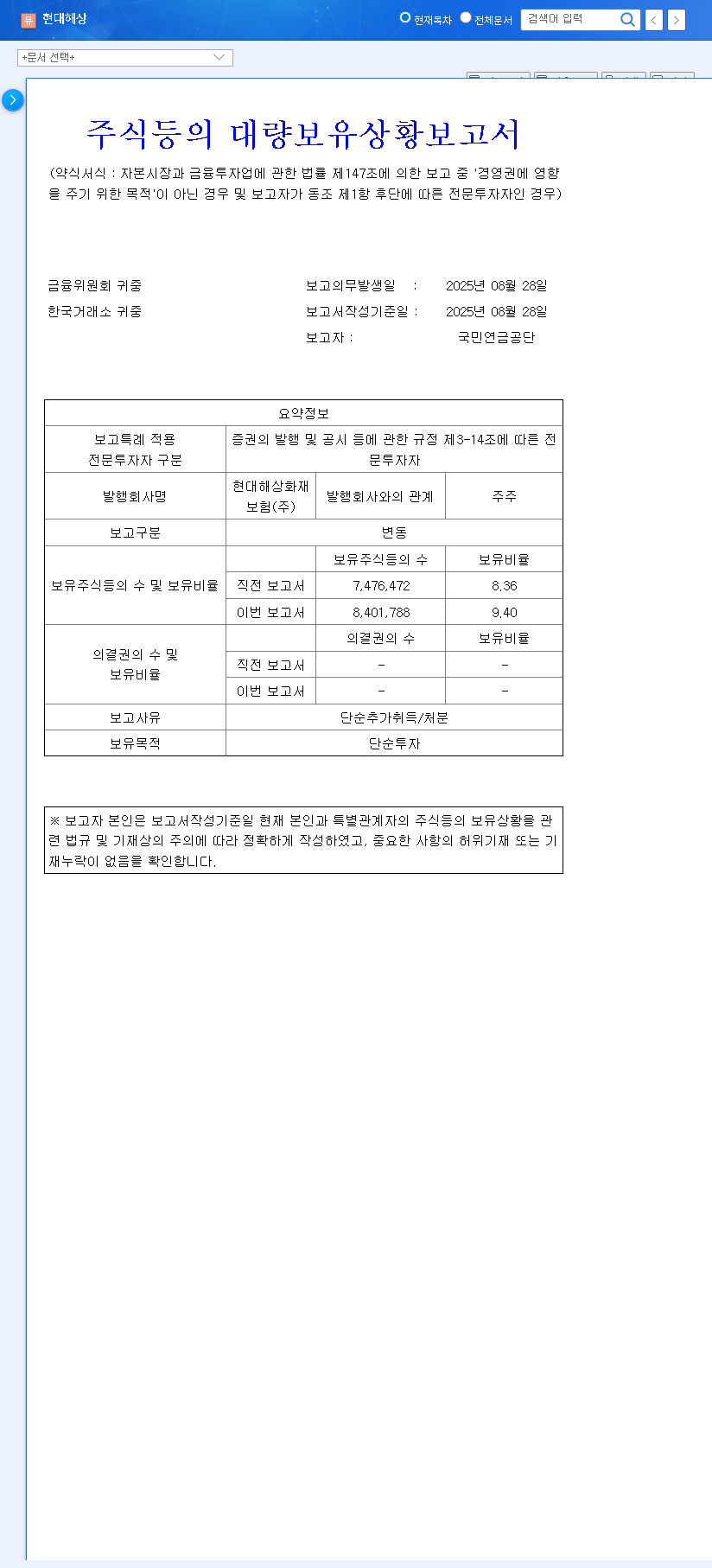
    This comprehensive Hyundai Marine & Fire Insurance Q3 2025 earnings analysis provides a detailed look into the company’s latest financial performance. As one of the key players in the South Korean insurance market, its results offer valuable insights for investors. We will dissect the key figures, explore the underlying fundamentals driving these numbers, and provide a forward-looking perspective on the Hyundai Marine stock in a dynamic economic environment.

    On November 14, 2025, Hyundai Marine & Fire Insurance Co., Ltd. released its preliminary operating results, painting a picture of resilient year-over-year growth. This report aims to equip investors with the critical insights needed to understand the company’s current position and future potential.

    Q3 2025 Earnings at a Glance

    The company announced strong year-over-year growth, signaling a positive turnaround from the losses recorded in Q4 2024. Here are the headline figures from the official disclosure:

    • Revenue: ₩4,279.5 billion
    • Operating Profit: ₩245.4 billion
    • Net Profit: ₩183.2 billion

    While these numbers are impressive on an annual basis, they reflect a slight decrease compared to the previous quarter (Q2 2025). This sequential slowdown warrants a closer look, possibly stemming from seasonal factors common in the insurance industry, specific one-time expenses, or shifts in the competitive landscape.

    The data in this analysis is based on the company’s preliminary report. Official Disclosure: View the Q3 2025 DART Report

    Unpacking the Results: Hyundai Marine’s Robust Fundamentals

    The positive Q3 performance is not an anomaly but a reflection of the company’s strong foundational pillars. Our Hyundai Marine financial analysis reveals several key strengths that contribute to its stability and growth potential.

    Exceptional Financial Health and Stability

    Financial resilience is paramount for an insurer. Hyundai Marine demonstrates this through a stable K-ICS (Korean Insurance Capital Standard) solvency ratio of 170.0%. This figure is well above the regulatory minimum, indicating a strong capital buffer to absorb unexpected losses. For a deeper understanding of this crucial metric, you can read our guide on How to Interpret Insurer Solvency Ratios. Furthermore, high policy retention rates (86.5% for 13th-month and 73.3% for 25th-month policies) underscore strong customer loyalty and product competitiveness, ensuring a stable premium base.

    Strategic Business Competitiveness and Digital Edge

    Hyundai Marine continues to lead with its focus on long-term insurance products, a key growth driver. The company has successfully enhanced its market position by strengthening its General Agency (GA) and online (CM) sales channels. Critically, its proactive digital transformation is setting it apart. Initiatives like data-driven claims processing and AI-powered underwriting not only improve efficiency but also enhance the customer experience. By developing targeted strategies for Millennial and Gen Z customers, the company is actively securing its future growth pipeline.

    Despite market volatility, Hyundai Marine’s Q3 2025 earnings report reaffirms the company’s solid fundamentals, driven by a stable capital position, strong customer retention, and a forward-thinking digital strategy.

    Market Outlook and Investment Considerations

    While the company’s internal health is strong, external factors play a significant role. Prudent investors should consider the broader economic environment and its impact on insurance industry trends.

    Navigating Macroeconomic Headwinds

    Global interest rate trends and currency fluctuations are critical variables for insurers. Rising interest rates can boost investment income from bond portfolios, but they can also create valuation pressures. According to recent analysis from authoritative sources like Bloomberg, the macroeconomic climate remains uncertain. Hyundai Marine utilizes derivatives to manage currency risks, but investors should continuously monitor the company’s ability to navigate these external pressures effectively.

    Investment Strategy for Hyundai Marine Stock

    Based on the Hyundai Marine & Fire Insurance Q3 2025 earnings, a cautious yet optimistic approach is warranted. For the short term, investors should monitor the market’s reaction to the earnings release and seek clarity on the reasons for the sequential slowdown. In the long term, the focus should be on the successful execution of its digital strategy, sustained growth in its core long-term insurance segment, and a shareholder-friendly dividend policy. The company’s resilience and strategic initiatives present a compelling case, but thorough due diligence remains essential.

    Frequently Asked Questions (FAQ)

    Q1: What were the key takeaways from Hyundai Marine’s Q3 2025 earnings?
    The key takeaway is the strong year-over-year growth in revenue (₩4.3T), operating profit (₩245.4B), and net profit (₩183.2B), which highlights a solid operational turnaround and robust core business fundamentals.

    Q2: Should I be concerned about the profit decrease from Q2 to Q3 2025?
    A sequential decrease can be due to normal seasonal patterns, investment income volatility, or specific operational expenses. While it requires monitoring, the strong annual growth and solid fundamentals suggest it may not be a long-term concern.

    Q3: How does Hyundai Marine’s financial health look?
    The company’s financial health appears very strong. A K-ICS solvency ratio of 170%, high policy retention rates, and stable asset growth all point to a well-capitalized and resilient business.

    Disclaimer: This article is for informational purposes only and is based on publicly available data. It does not constitute financial or investment advice. Investors should conduct their own research and consult with a professional financial advisor before making any investment decisions. The responsibility for investment decisions lies solely with the investor.
    (001450) Hyundai Marine & Fire Insurance Q3 2025 Earnings: Deep Dive & Stock Analysis 관련 이미지
  • (003610) PANGRIM Asset Acquisition: Analysis of the KRW 8.8B Investment & Logistics Strategy

    (003610) PANGRIM Asset Acquisition: Analysis of the KRW 8.8B Investment & Logistics Strategy

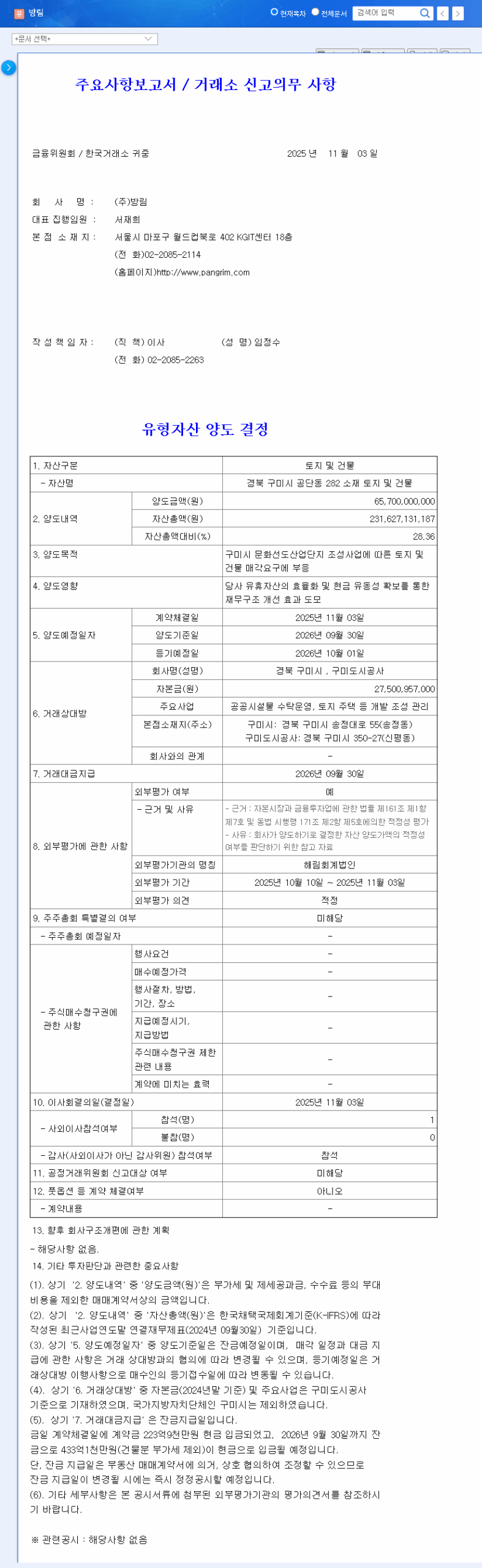
    The recent PANGRIM asset acquisition has captured the attention of the market, signaling a pivotal moment for the company. PANGRIM CO.,LTD (003610) announced a significant investment of KRW 8.8 billion to acquire new tangible assets, a move strategically timed with the sale of its Gumi factory. This decision is far more than a simple real estate transaction; it represents a fundamental overhaul of its logistics network aimed at driving long-term efficiency and growth. This comprehensive analysis will dissect the investment’s details, explore its strategic importance, evaluate the financial implications, and provide a clear outlook for investors monitoring PANGRIM’s trajectory.

    Dissecting the PANGRIM Asset Acquisition Deal

    On November 12, 2025, PANGRIM CO.,LTD formally disclosed its decision to acquire land and buildings in Gongdan-dong, Gumi-si, Gyeongsangbuk-do. The total acquisition price is KRW 8.8 billion, a figure that constitutes approximately 3.82% of the company’s total assets. The transaction is scheduled to be finalized by January 30, 2026. This move is officially documented and can be verified via the official disclosure. (Source: DART). The primary driver for this substantial investment is the need to relocate its logistics warehouse following the divestment of the Gumi factory site.

    This isn’t merely an asset swap; it’s a calculated strategy to re-engineer the company’s entire supply chain for enhanced operational efficiency and future scalability.

    Strategic Overhaul: Boosting Logistics and Supply Chain Efficiency

    The core objective of this PANGRIM asset acquisition is to build a state-of-the-art logistics hub. By centralizing and modernizing its warehousing operations, PANGRIM aims to achieve several key benefits. A new, purpose-built facility will enable more sophisticated inventory management, reduce handling times, and optimize the flow of goods from raw material import to final product distribution. This enhancement in logistics efficiency is expected to yield significant long-term operational cost reductions and a marked improvement in overall productivity, strengthening the company’s competitive edge in a volatile global market.

    Financial Analysis: A Calculated Risk?

    While the strategic vision is clear, any investment of this magnitude carries both opportunities and risks. A balanced view is crucial for a complete understanding.

    The Upside: Building on a Financial Recovery

    This investment comes at a time of positive momentum for PANGRIM. After posting losses through 2023, the company successfully returned to profitability in the third quarter of 2024 (cumulative), with sales growing by 9% year-over-year. This turnaround provides a solid foundation for the KRW 8.8 billion investment, suggesting it is a move made from a position of growing strength, not desperation. The market has reacted favorably to this recovery, with the stock price showing a consistent upward trend. An efficient logistics network can further bolster the bottom line by reducing operational expenses and improving margins.

    Potential Headwinds and Risks to Monitor

    Despite the positive outlook, several risk factors must be considered. The success of the logistics integration is not guaranteed and could face unforeseen costs or delays. Furthermore, as a company that relies entirely on imported raw materials, PANGRIM remains exposed to external economic pressures like currency volatility and fluctuating commodity prices. Finally, the funding mechanism for the acquisition is a critical detail. If financed through significant debt, the increased interest payments could strain the company’s financial structure. Investors can learn more about analyzing corporate financial health through our internal guide.

    Investor Outlook: Key Points to Watch

    PANGRIM’s decision is a forward-looking move designed to strengthen its long-term competitiveness. Given the 2026 completion date, the immediate impact on stock price may be limited. However, diligent investors should keep a close watch on the following key areas:

    • Funding Source: Monitor announcements to see if the acquisition is self-funded or financed through debt, which will impact the balance sheet.
    • Project Milestones: Track the progress of the warehouse relocation and integration for any signs of delays or budget overruns.
    • Quarterly Earnings: Scrutinize future earnings reports to confirm that the financial recovery is sustained and to see the initial impact of efficiency gains.
    • Macroeconomic Indicators: Pay attention to exchange rates and raw material price trends, as these directly affect PANGRIM’s profitability. For broader market trends, sources like Reuters Business are invaluable.

    In conclusion, the PANGRIM asset acquisition is a bold, strategic investment in its future. By proactively addressing the logistical challenges posed by the Gumi factory sale, the company is positioning itself for more resilient and profitable operations. While risks are present, the potential for enhanced long-term value makes this a development worth watching closely.

    (003610) PANGRIM Asset Acquisition: Analysis of the KRW 8.8B Investment & Logistics Strategy 관련 이미지
  • (029780) Samsung Card (029780) Q3 2025 Earnings Analysis: Profit Beats Forecasts – Is the Stock a Buy?

    (029780) Samsung Card (029780) Q3 2025 Earnings Analysis: Profit Beats Forecasts – Is the Stock a Buy?

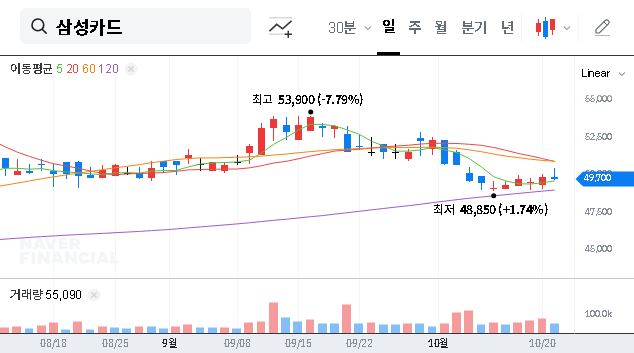
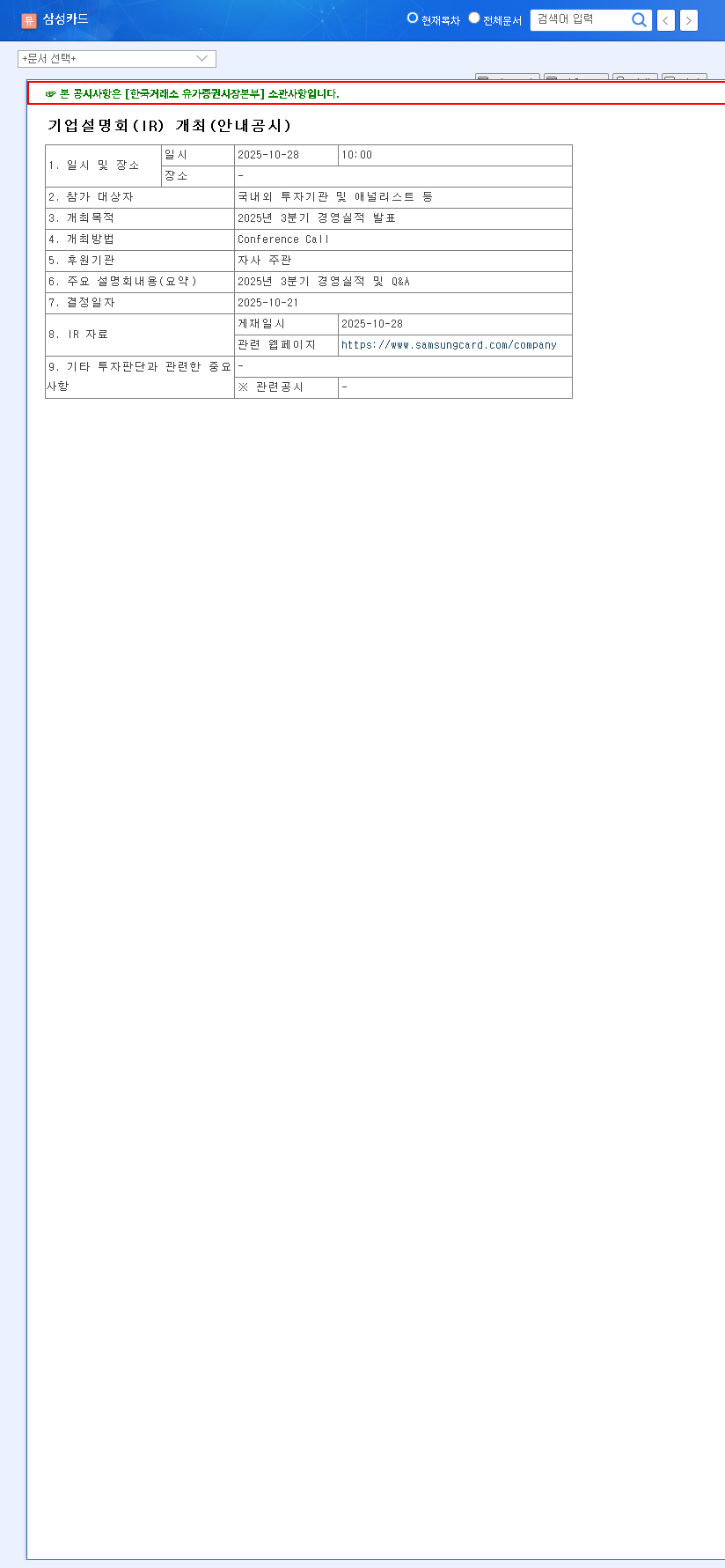
    The latest SAMSUNG CARD CO.,LTD Q3 2025 earnings report has presented investors with a complex but intriguing picture. Amidst a challenging global economic climate, the company reported a surprising profit beat despite falling short on revenue forecasts. This mix of results raises a critical question for holders of Samsung Card stock (ticker: 029780): Does this performance signal underlying strength and resilience, or is it a temporary anomaly in a volatile market? This comprehensive Samsung Card analysis will dissect the numbers, explore the strategies behind the results, and provide a clear outlook on what investors should consider next.

    📈 Dissecting the SAMSUNG CARD CO.,LTD Q3 2025 Earnings Report

    To truly understand the story, we need to look beyond the headlines and examine the figures in detail. Samsung Card’s performance reveals a strategic focus on profitability over pure top-line growth. The official figures, as reported in the company’s disclosure, paint a clear picture. You can view the complete filing here: Official Disclosure (DART).

    Here’s a breakdown of the actual results versus the market consensus:

    • Revenue: KRW 1,007.8 billion, missing the forecast of KRW 1,077.7 billion by a notable -6.5%.
    • Operating Profit: KRW 213.6 billion, beating the forecast of KRW 207.1 billion by +3.1%.
    • Net Income: KRW 161.7 billion, comfortably exceeding the forecast of KRW 153.9 billion by +5.1%.

    The key takeaway is the impressive ‘earnings surprise’ in both operating profit and net income. This suggests that while revenue generation faced headwinds—potentially from softening consumer sentiment or seasonal factors—the company’s core operations are highly efficient and its management has excelled at controlling costs and optimizing its asset portfolio.

    🔍 The Pillars of Samsung Card’s Profitability

    How did Samsung Card achieve this robust profitability in a tough environment? The answer lies in a combination of strong fundamentals, strategic initiatives, and prudent financial management.

    Robust Fundamentals and Financial Health

    At its core, Samsung Card is built on a stable foundation. A massive base of 13.36 million members and 3.03 million merchants provides a consistent revenue stream. This is supported by exceptional financial soundness, as evidenced by its H1 2025 report: an adjusted equity ratio of 30.55% (well above the 8% minimum), low delinquency rates, and a strong liquidity ratio of 602.77%. This financial stability is affirmed by its ‘AA+’ credit rating, which ensures access to favorable funding.

    Strategic Digital Transformation

    Samsung Card isn’t standing still. The company is actively enhancing its competitive edge through digital transformation. The introduction of ‘Sam’, an AI-powered chatbot, and a 24-hour automated card issuance system are not just buzzworthy projects; they are concrete steps to improve customer satisfaction and operational efficiency, directly impacting the bottom line.

    Samsung Card’s Q3 2025 performance is a textbook example of operational excellence, demonstrating that in a challenging market, superior profitability management can be more impactful than headline revenue growth.

    Investment Outlook for Samsung Card Stock (029780)

    Given the 029780 earnings results, investors need to weigh the positive signals against potential risks on the horizon.

    Positive Factors to Consider

    • Proven Profitability: The ability to deliver an earnings surprise demonstrates strong management and cost control, which can boost investor confidence in the short term.
    • Solid Financials: Exceptional financial health provides a buffer against economic shocks and supports sustained corporate value.
    • Stable Returns: A half-year 2025 Return on Equity (ROE) of 6.79% is a healthy figure, showcasing stable profit generation relative to shareholder equity.

    Potential Risk Factors

    • Revenue Concerns: If the revenue sluggishness persists, it could raise long-term questions about growth potential in an increasingly competitive market.
    • Macroeconomic Volatility: Persistent high interest rates and currency fluctuations can impact funding costs and derivative valuations, introducing potential earnings volatility.
    • Intensifying Competition: The rise of agile FinTech players continues to exert pressure on traditional card issuers. For more on this, see our deep dive into the Korean FinTech market.

    💡 Investor Action Plan: Our ‘Neutral’ Recommendation

    While the SAMSUNG CARD CO.,LTD Q3 2025 earnings report contains significant positive elements, the revenue miss and macroeconomic uncertainties warrant a cautious approach. We recommend a ‘Neutral’ stance on Samsung Card stock.

    Investors should closely monitor the upcoming Q4 2025 results for signs of a revenue rebound and continued margin strength. The key will be whether Samsung Card can translate its operational efficiency into sustainable, long-term growth. For now, its demonstrated resilience makes it a stock to watch closely, but exercising prudence is the wisest course of action.

    (029780) Samsung Card (029780) Q3 2025 Earnings Analysis: Profit Beats Forecasts – Is the Stock a Buy? 관련 이미지
  • (032790) Mzen Solution Convertible Bond Sell-Off: A Deep Dive Financial Analysis (032790)

    (032790) Mzen Solution Convertible Bond Sell-Off: A Deep Dive Financial Analysis (032790)

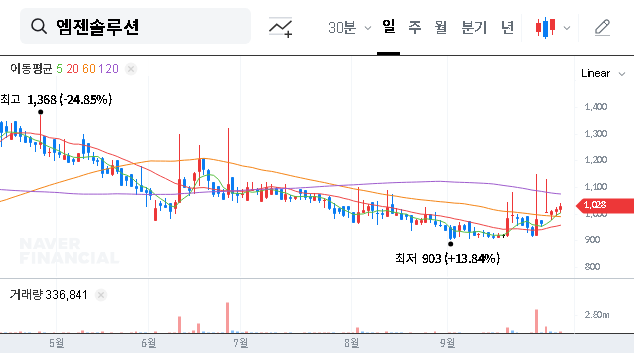
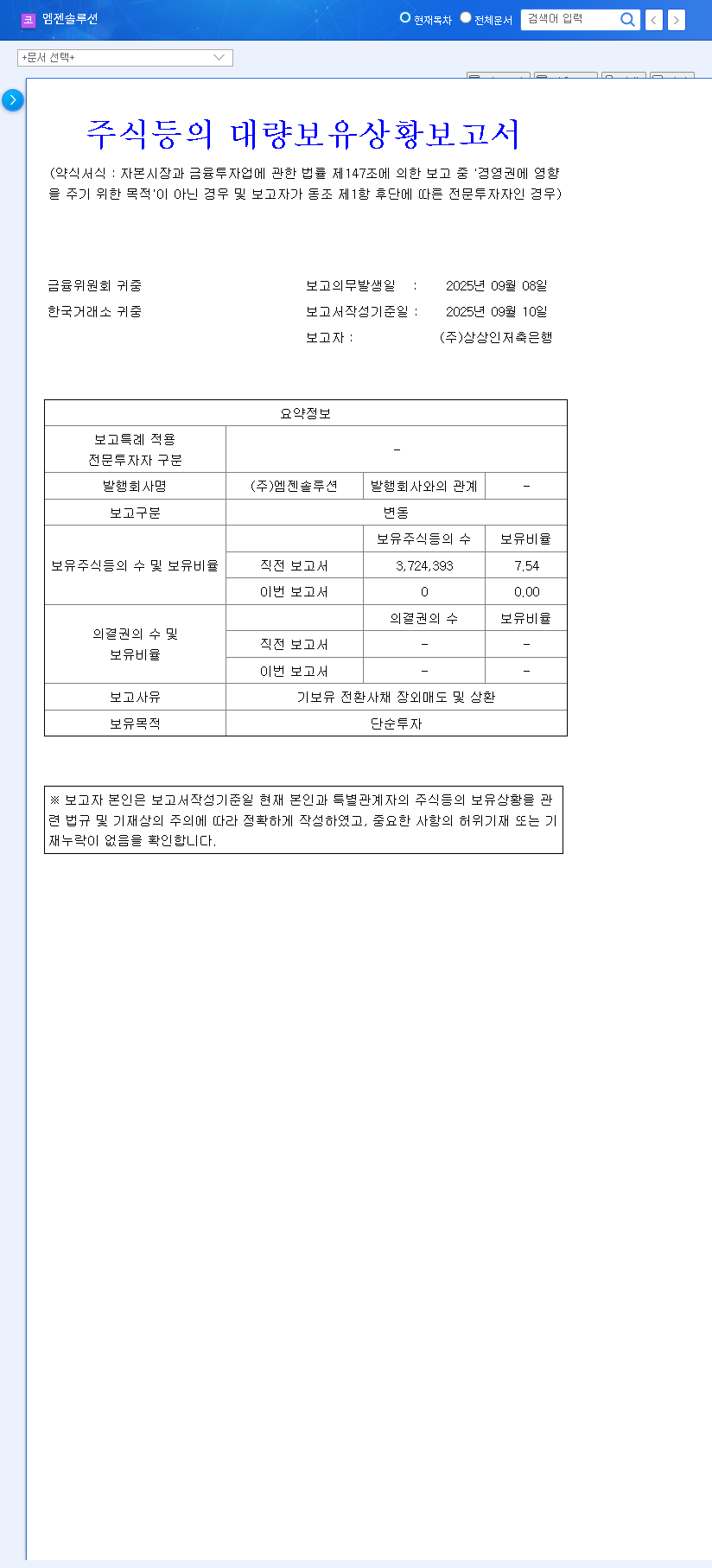
    The recent Mzen Solution convertible bond sell-off has sent ripples through the investment community, raising critical questions about the company’s future. On October 2, 2025, a significant disclosure revealed that Sangsangin Savings Bank and its affiliate had completely divested their 7.54% stake, held as convertible bonds. This move, especially given Mzen Solution’s (KRX: 032790) pre-existing financial struggles, could be a major red flag.

    Is this a sign of an impending crisis, or could there be a hidden opportunity for savvy investors? This comprehensive financial analysis will deconstruct the event, examine Mzen Solution’s fundamentals, and provide a clear outlook to help you make informed decisions about your investment strategy.

    The Catalyst: A Massive Convertible Bond Divestment

    Sangsangin Savings Bank Exits Completely

    The event was formally announced through a regulatory filing. According to the Official Disclosure available on DART (view report here), Sangsangin Savings Bank and Sangsangin Plus Savings Bank sold or redeemed their entire holding of Mzen Solution’s convertible bonds. This action reduced their substantial 7.54% stake to zero.

    While the stated purpose for holding these bonds was ‘simple investment,’ the complete liquidation by an institutional investor is rarely a simple matter. It often signals a loss of confidence in the company’s ability to generate returns or, more worrisomely, concerns about its underlying financial stability. For a detailed explanation of how these instruments work, Investopedia offers excellent resources on convertible bonds.

    When an institutional investor quietly exits through a large-scale bond sell-off, the market pays close attention. It’s often a louder signal than any press release.

    Financial Health Under the Microscope: A Troubling Picture

    The significance of the Mzen Solution convertible bond event is amplified by the company’s precarious financial state. The Q1 2025 semi-annual report paints a picture of a company facing severe headwinds across multiple fronts.

    Deepening Losses and High Debt

    The core financials reveal significant weaknesses that can no longer be ignored. Understanding these metrics is key to grasping the full scope of the company’s challenges. If you’re new to these terms, you might find our guide on understanding key financial ratios helpful.

    • Widening Losses: The company recorded significant operating and net losses. The crucial ICT division, a primary revenue driver, saw its performance decline, dragging down the entire consolidated result.
    • High Leverage: Total equity has decreased while debt has mounted. The debt-to-equity ratio stands at a concerning 68.98%, with a net debt ratio of 36.89%, largely due to previous convertible bond issuances and operational borrowing.
    • Negative Cash Flow: Operating cash flow was negative, a critical warning sign that the company is spending more to run its business than it is bringing in, potentially leading to liquidity problems.
    • Struggling Business Units: Beyond ICT, the printer and electronics businesses face intense competition and slowing markets. Meanwhile, the much-anticipated Bio business has yet to generate any significant revenue, remaining a cost center.

    Investor Impact: Decoding the Sell-Off Signal

    The large-scale sale of convertible bonds is not a neutral event. It creates a complex set of consequences for Mzen Solution’s stock and its perceived corporate value, with the negatives far outweighing any potential positives.

    Primary Negative Implications

    • Erosion of Market Trust: The exit of a major institutional investor is a powerful vote of no confidence. It will likely amplify existing investor anxiety about Mzen’s future, making it harder to attract new capital.
    • Increased Stock Volatility: The sale introduces uncertainty about who now holds these bonds and when they might be converted into stock. This overhang can lead to fears of share dilution and cause erratic swings in the Mzen Solution stock price.
    • Spotlight on Financial Burden: This event serves as a stark reminder of the financial obligations tied to the company’s debt instruments. It highlights ongoing risks related to conversion price adjustments and derivative liability valuations, which can further impact the balance sheet.

    Comprehensive Assessment and Investor Outlook

    Path Forward: A Prudent Approach is Essential

    Given the combination of poor fundamentals and the negative signal from the Mzen Solution convertible bond sale, the short-term outlook is likely to be negative. The event has illuminated the company’s financial vulnerabilities, which could continue to dampen investor sentiment and exert downward pressure on the stock price.

    For Mzen Solution, the path forward requires decisive action. The company must prioritize transparent communication about its debt, accelerate efforts to improve profitability in its core ICT business, and establish a clear, viable plan for financial stabilization.

    Recommendations for Investors

    For current and potential investors, caution is paramount. A prudent and highly selective investment approach is required. It is crucial to:

    • Monitor Closely: Keep a watchful eye on upcoming financial reports, business progress updates, and any further disclosures related to its debt structure.
    • Analyze Market Reactions: Pay attention to how the broader market digests this news and any subsequent announcements.
    • Seek Professional Advice: This analysis is for informational purposes only. Given the high-risk profile, consulting with a qualified financial advisor before making any investment decisions is strongly recommended.

    (032790) Mzen Solution Convertible Bond Sell-Off: A Deep Dive Financial Analysis (032790) 관련 이미지
  • (357780) Solbrain Stock Analysis: NPS Acquires 5% Stake – Full Breakdown for Investors

    (357780) Solbrain Stock Analysis: NPS Acquires 5% Stake – Full Breakdown for Investors

    This comprehensive Solbrain stock analysis delves into the recent major development where South Korea’s National Pension Service (NPS) acquired a significant 5.02% stake in the company. The news has ignited interest among investors, raising crucial questions about the future of Solbrain’s stock price and its long-term value. Is this a signal of strong future growth, or are there underlying risks to consider? This article provides a detailed breakdown of Solbrain’s fundamentals, the macroeconomic landscape, and what this pivotal investment means for you.

    We’ll explore the rationale behind the NPS investment, analyze Solbrain’s financial health, and provide a strategic outlook to help you make informed decisions about this key semiconductor materials company.

    The Landmark Investment: NPS Secures 5.02% of Solbrain

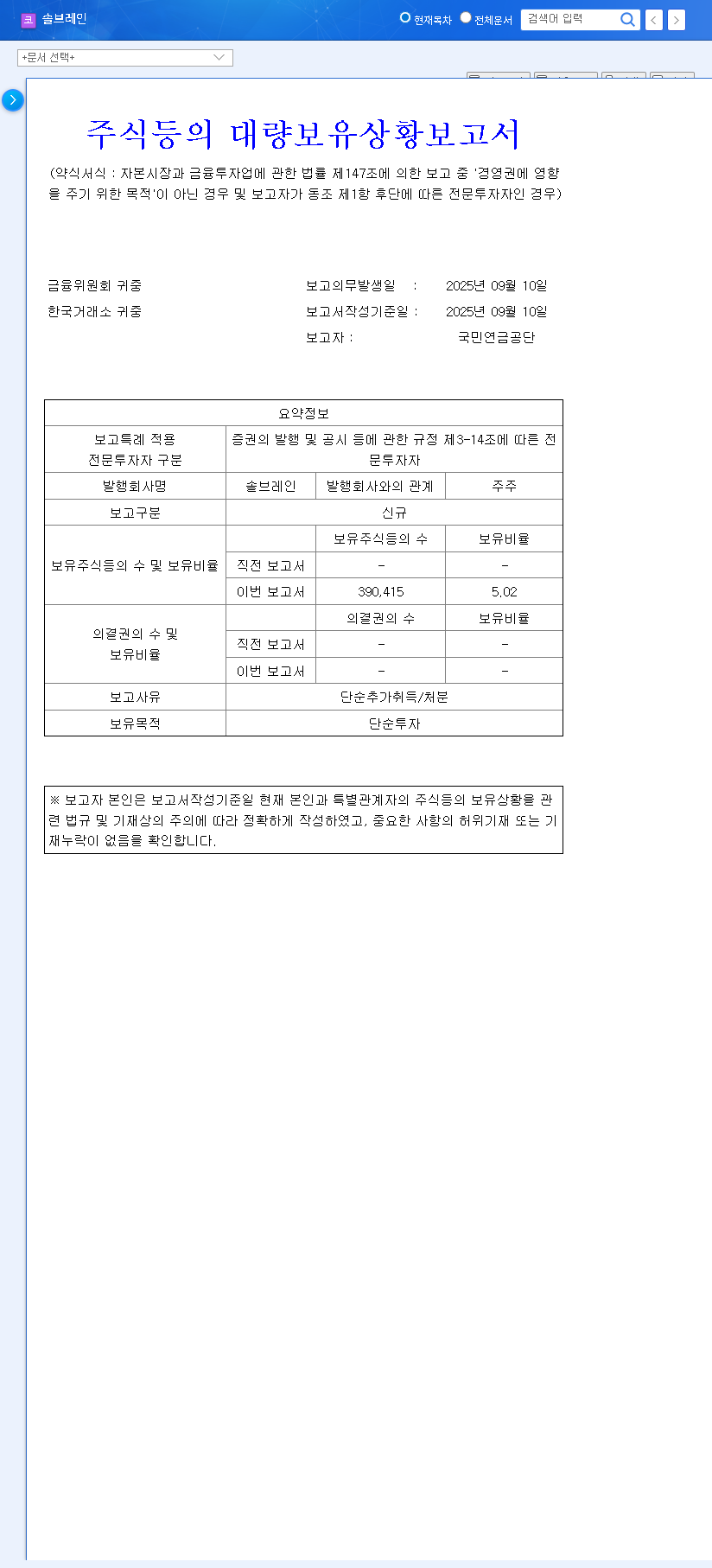
    On October 1, 2025, a significant event reshaped the shareholder landscape of Solbraine Co., Ltd. The National Pension Service (NPS), one of the world’s largest pension funds, disclosed its acquisition of a 5.02% stake. The stated purpose is for “simple investment,” meaning the fund does not intend to influence company management directly but sees strong potential for financial returns. This move by a major institutional investor serves as a powerful signal to the market, often interpreted as a vote of confidence in a company’s long-term trajectory.

    The details of this major shareholding report are publicly available. You can view the Official Disclosure on the DART system for complete transparency.

    Deep Dive: A Complete Solbrain Stock Analysis for H1 2025

    To understand the NPS’s decision, we must conduct a thorough Solbrain stock analysis, starting with its core fundamentals. Solbrain is a pivotal player in the high-tech supply chain, manufacturing critical chemical materials for semiconductors, displays, and next-generation secondary batteries. The semiconductor division is its powerhouse, contributing over 81% of total revenue.

    Financial Health: Growth & Red Flags

    Solbrain’s financial statements present a mixed picture of robust growth alongside emerging risks that investors must monitor closely.

    • Asset Growth: Total assets grew by a healthy 14.85% year-over-year, reaching KRW 1.34 trillion, a clear indicator of expansion.
    • Liability Concerns: Total liabilities surged by a significant 109.78% to KRW 275.5 billion. This sharp increase, particularly in non-current liabilities, is a critical risk factor requiring diligent oversight.
    • Profitability Squeeze: Both operating profit margin (12.83%) and net profit margin (10.40%) have seen a decline, suggesting potential pressure on pricing or rising operational costs.

    While the NPS investment is a positive signal, the rising debt and shrinking margins are fundamental weaknesses that cannot be ignored. A truly smart investment strategy involves weighing both sides of the coin.

    Growth Drivers and Competitive Moat

    Solbrain’s future success hinges on its ability to innovate and outpace competitors in a fast-moving industry. The company’s investment in Research & Development (R&D) is a promising sign, with 4.46% of revenue dedicated to securing future growth engines. This is vital in the semiconductor materials sector, where technological preemption is key. However, the low utilization rates in its display (26%) and secondary battery (15%) segments represent both a challenge and an opportunity for future growth if they can be improved. Learn more about market trends by reviewing reports from high-authority sources like the Semiconductor Industry Association.

    The Broader Economic Picture: Macro Factors at Play

    No company operates in a vacuum. Broader macroeconomic trends significantly influence the Solbrain stock performance. For H1 2025, a stable KRW/USD exchange rate has been a double-edged sword, potentially boosting foreign exchange gains while increasing the cost of imported raw materials. Meanwhile, stable-to-falling interest rates in the US and Korea offer a positive tailwind, reducing the burden of interest expenses tied to the company’s increased liabilities.

    Investor Strategy: How to Approach Solbrain Stock Now

    The NPS Solbrain investment is a major catalyst, but a disciplined investment approach is paramount. Here are key considerations for your strategy:

    • Look Beyond the Headlines: The NPS stake is an event, not a fundamental change. Your focus should remain on quarterly earnings reports, especially concerning liability management and profitability trends.
    • Monitor Industry Health: The performance of the broader semiconductor and display industries will have a more substantial long-term impact on Solbraine Co Ltd than this single investment. For context, you might explore our guide on how to analyze semiconductor stocks.
    • Adopt a Cautious Stance: While the news may create short-term positive momentum, a prudent approach is to observe the market’s reaction and wait for further data from Solbrain’s upcoming financial reports before making a significant move.

    Conclusion

    In conclusion, the National Pension Service’s acquisition is a significant endorsement of Solbrain’s potential. However, this positive signal must be balanced against the clear fundamental risks of rising debt and declining profitability. Investors should use this event as a catalyst for a deeper Solbrain stock analysis, not as a standalone buy signal. A cautious, data-driven approach will be key to navigating the opportunities and risks ahead.

    Frequently Asked Questions (FAQ)

    Why did the National Pension Service acquire shares in Solbrain?

    The NPS stated its purpose as “simple investment.” This suggests their analysis points to Solbrain’s strong long-term growth potential and an opportunity for portfolio appreciation, rather than an intent to influence corporate governance.

    What is the expected impact on Solbrain’s stock price?

    Short-term, the news can boost market confidence and create positive price momentum. However, long-term performance will depend more heavily on Solbrain’s actual earnings, industry trends, and overall macroeconomic conditions.

    What are the main risks for Solbrain investors?

    The primary risks highlighted in the H1 2025 report are the dramatic increase in total liabilities and the decline in operating and net profit margins. Investors should also monitor the low utilization rates in the display and secondary battery segments.

    (357780) Solbrain Stock Analysis: NPS Acquires 5% Stake – Full Breakdown for Investors 관련 이미지