Tag: Corporate Earnings

  • (317400) Xi S&D Inc. Revenue Forecast: ₩1.4 Trillion Target for 2025 | In-Depth Stock Analysis

    (317400) Xi S&D Inc. Revenue Forecast: ₩1.4 Trillion Target for 2025 | In-Depth Stock Analysis

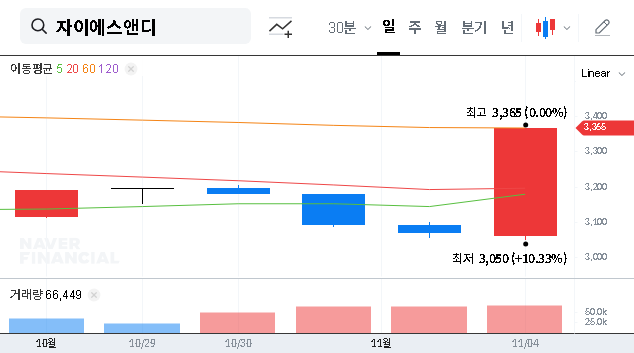
    Xi S&D Inc. (자이에스앤디), a key player in specialized construction and services, has made a bold move, capturing the market’s attention with its latest announcement. The company has publicized an ambitious Xi S&D Inc. revenue forecast aiming for ₩1.4 trillion in 2025. Coming at a time of declining revenues and a recent shift to operating loss, this projection raises a critical question for investors: Is this a credible signal of a powerful rebound or an overly optimistic goal amidst a challenging economic landscape?

    This comprehensive analysis will dissect the layers behind this forecast. We will explore the company’s current financial health, break down its core business segments, and weigh the potential catalysts and risks that could define its path forward. This deep dive aims to provide investors with the critical insights needed to navigate the outlook for the Xi S&D Inc. stock.

    The ₩1.4 Trillion Announcement: A Declaration of Intent

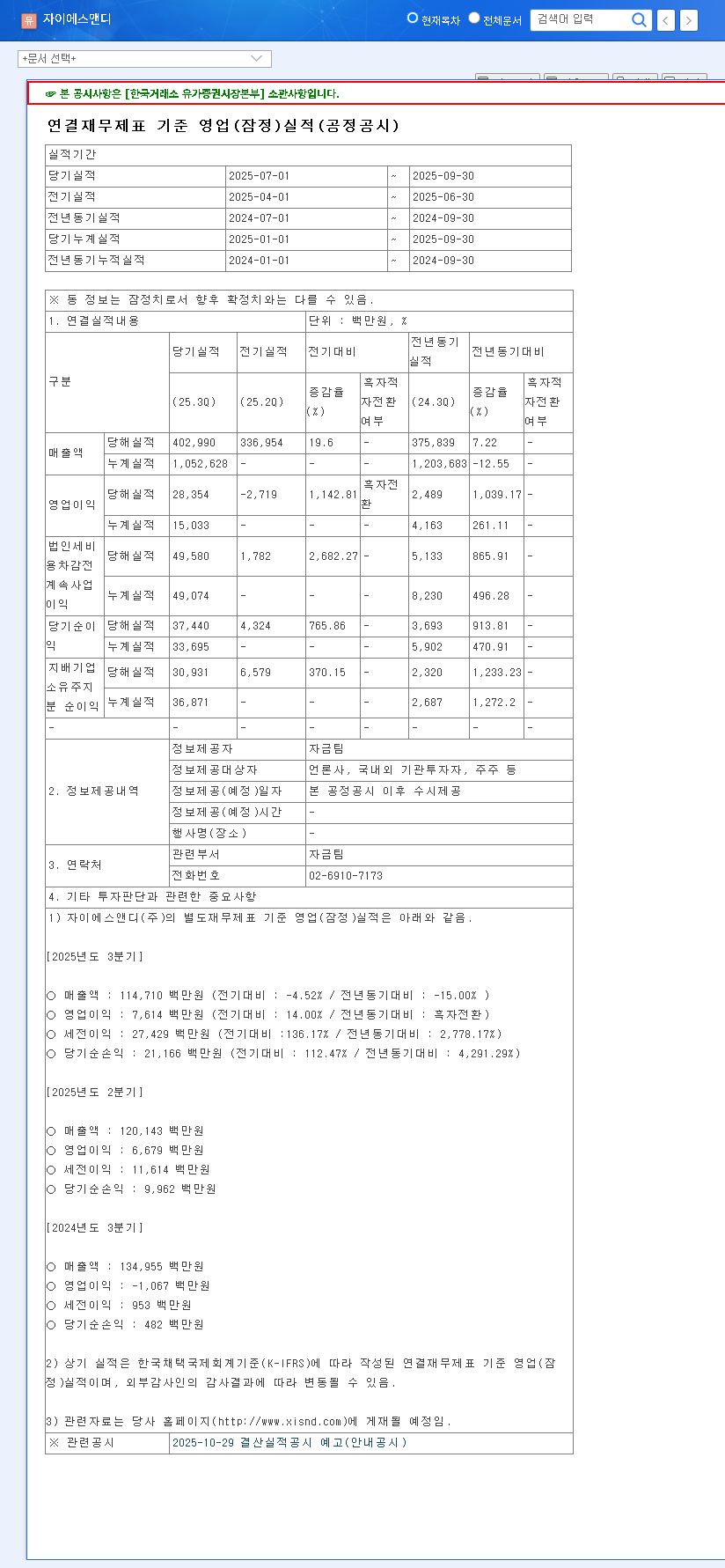
    On November 11, 2025, Xi S&D Inc. formally disclosed its consolidated annual revenue forecast, setting a 2025 revenue target of ₩1.4 trillion for the fiscal year. This announcement, detailed in the company’s official filing (Official Disclosure), is a clear statement of its commitment to reversing recent sluggish performance. However, the company notably omitted forecasts for operating profit and net income, an element that adds a layer of uncertainty for the market.

    Current Financial Landscape: A Mix of Strength and Concern

    A Challenging First Half

    The backdrop for this ambitious forecast is a difficult recent performance. The company’s 26th semi-annual report revealed a revenue of ₩649.6 billion, a year-over-year decrease, and more concerningly, a shift to an operating loss of ₩13.3 billion. This downturn is primarily driven by deteriorating profitability in the core construction business and mounting losses in the housing segment, reflecting broader pressures in the construction industry analysis.

    While the consolidated debt-to-equity ratio of 81.38% appears financially sound and manageable, a negative shift in operating cash flow is a significant red flag that warrants close monitoring. It suggests that the company’s core operations are currently consuming more cash than they are generating.

    For investors, the central tension is clear: a forward-looking, growth-oriented forecast set against a backdrop of current operational and financial headwinds. Execution will be the ultimate arbiter of success.

    Deep Dive into Business Segments

    Understanding Xi S&D Inc. requires looking at its three distinct business pillars:

    • Construction (63% of revenue): The company’s strength lies in high-tech industrial construction, including data centers and clean rooms. However, this segment is highly sensitive to corporate investment cycles and faces stiff competition.
    • Housing (11% of revenue): Leveraging the prestigious ‘Xi’ brand, this division focuses on small-scale urban regeneration. It is, however, extremely vulnerable to real estate market fluctuations, high interest rates, and the risk of unsold inventory.
    • Home Solution (26% of revenue): This diversified and growing segment includes smart home systems, property management, and leasing services. It offers a more stable and consistent source of revenue with significant growth potential.

    Investor Guidance: Navigating the Path Forward

    The Xi S&D Inc. revenue forecast is a bold statement, but the stock’s future trajectory hinges entirely on the company’s ability to execute and improve profitability. Investors should adopt a cautious yet watchful approach.

    Key Factors to Monitor

    • Profitability Metrics: Look beyond the revenue target. Scrutinize upcoming quarterly reports for improvements in gross profit margins and a return to positive operating income.
    • New Orders and Backlog: The health of the construction business depends on a steady stream of new, high-value orders. A growing backlog provides future revenue visibility.
    • Macroeconomic Conditions: Keep an eye on interest rate trends, raw material costs, and overall economic health, as these external factors will heavily influence all business segments. For a deeper understanding, review our guide on key metrics for evaluating construction stocks.
    • Market Communication: Proactive and transparent communication from management, including future profit forecasts, will be essential to rebuilding market confidence.

    In conclusion, while the ₩1.4 trillion revenue target provides a beacon of hope, it does not by itself guarantee a fundamental turnaround. A prudent investment strategy involves meticulous monitoring of the company’s operational performance and its ability to translate top-line growth into bottom-line profitability. The coming quarters will be pivotal in determining whether Xi S&D Inc. can successfully build a new foundation for sustainable growth. As noted by industry experts at sources like the Korea Research Institute for Construction Policy, the path ahead remains complex.
    (317400) Xi S&D Inc. Revenue Forecast: ₩1.4 Trillion Target for 2025 | In-Depth Stock Analysis 관련 이미지
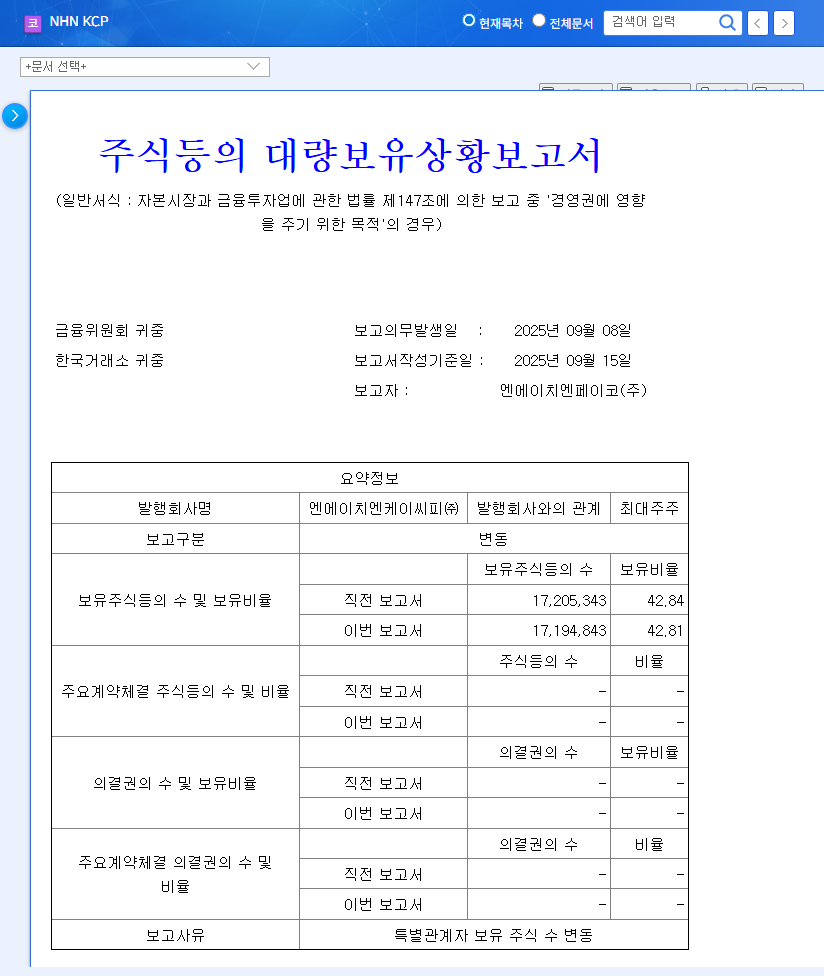
  • (060250) NHN KCP Q3 2025 Earnings Analysis: Profit Soars Despite Revenue Miss

    (060250) NHN KCP Q3 2025 Earnings Analysis: Profit Soars Despite Revenue Miss

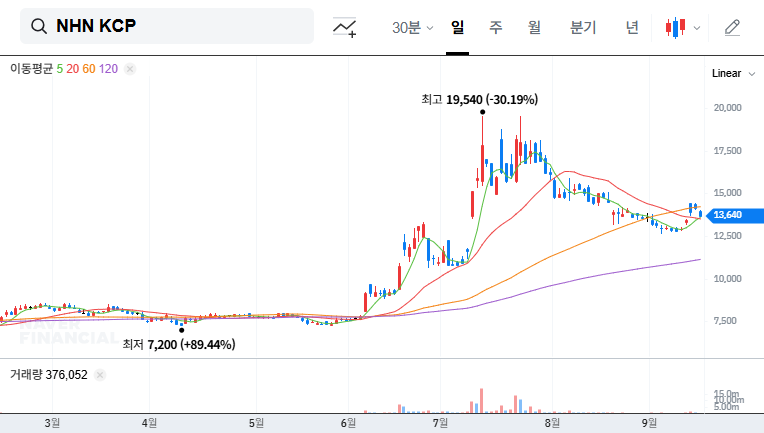
    The initial results from the NHN KCP Q3 2025 earnings announcement have sent a complex but ultimately positive signal to the market. For investors tracking leading fintech player NHN KCP Corp., the headline was a classic ‘revenue miss, profit beat’ scenario. While top-line growth slightly trailed market consensus, the company delivered a powerful demonstration of operational excellence, with profitability metrics that significantly surpassed expectations. This in-depth analysis unpacks the preliminary figures, explores the drivers behind this robust performance, and outlines what it means for the company’s future trajectory and investment outlook.

    Understanding the nuances of this report is critical. It reveals a company adept at navigating a challenging macroeconomic environment through superior cost control and a focus on high-margin operations. We’ll explore how NHN KCP Corp. analysis points towards a resilient core business and promising new growth ventures that could redefine its long-term value proposition.

    Deconstructing the NHN KCP Q3 2025 Preliminary Results

    The key takeaway from the latest NHN KCP earnings report is the divergence between revenue and profit. This suggests that while external factors may have tempered sales growth, the company’s internal management and strategic execution are stronger than ever.

    The Headline Figures vs. Market Expectations

    • Revenue: KRW 300.4 billion, which was 3.6% below the market consensus of KRW 311.7 billion.
    • Operating Profit: KRW 15.6 billion, a remarkable 25.8% above the market expectation of KRW 12.4 billion.
    • Net Income: KRW 13.9 billion, an equally impressive 24.1% above the market expectation of KRW 11.2 billion.

    This ‘earnings surprise’ on the profit side is a powerful indicator of successful profitability defense. It demonstrates that NHN KCP Corp. possesses exceptional control over its cost structure and can efficiently convert its revenue into actual profit, a crucial skill in the competitive fintech payment gateway space.

    While the market often fixates on top-line growth, savvy investors recognize that superior profitability and operational efficiency are the true hallmarks of a durable, well-managed enterprise. NHN KCP’s Q3 results are a testament to this principle.

    The Pillars of Profitability: Strategy in Action

    How did NHN KCP achieve this stellar result? The performance wasn’t accidental; it was the outcome of deliberate strategic initiatives focused on strengthening the core business while prudently managing expenses.

    Mastering Operational Efficiency

    The primary driver behind the profit beat was a concerted effort to manage costs and reduce selling, general, and administrative (SG&A) expenses. This goes beyond simple budget cuts; it involves optimizing every facet of the operation. This is critical for improving metrics like understanding operating profit margins. While the revenue miss can be linked to heightened competition and softer consumer sentiment, the company’s ability to improve its bottom line in this environment showcases a resilient and adaptable business model.

    Future-Proofing with Business Diversification

    Beyond its core payment services, NHN KCP is actively cultivating future growth engines. This diversification strategy is key to long-term success and reduces dependency on a single revenue stream. Key areas of expansion include:

    • Innovative Services: Ventures into rental services and the issuance and management of prepaid electronic payment methods are set to tap into new consumer and B2B markets.
    • Infrastructure Plays: The development of data center-related businesses provides a foundational service that can support both internal needs and external clients, creating a stable, recurring revenue source.

    Investor Outlook and Strategic Considerations

    For investors, the NHN KCP Q3 2025 report presents a compelling case for a long-term perspective. While short-term stock price volatility is possible due to the revenue figure, the underlying fundamentals appear stronger than ever. The company’s cumulative performance for 2025 remains on a solid growth trajectory, increasing the likelihood of meeting its annual guidance.

    The company’s robust profitability instills confidence, and its sound financial health—evidenced by an improving debt-to-equity ratio and shareholder-friendly actions like treasury stock acquisition—adds another layer of security. For those wishing to review the primary data, the company has made the filing public. You can view the Official Disclosure on the DART system.

    Conclusion: A Story of Resilience and Future Growth

    Ultimately, the NHN KCP Q3 2025 preliminary results paint a picture of a company with robust fundamentals and astute management. The slight revenue dip is more than offset by outstanding profitability, confirming the company’s strong position in the online payment market. Investors should monitor the progress of its new business ventures closely, as their successful monetization will be the key to unlocking the next phase of growth. A medium-to-long-term investment perspective, focused on operational excellence and strategic diversification, appears to be the most prudent approach.

    (060250) NHN KCP Q3 2025 Earnings Analysis: Profit Soars Despite Revenue Miss 관련 이미지
    (060250) NHN KCP Q3 2025 Earnings Analysis: Profit Soars Despite Revenue Miss 관련 이미지
  • (000670) YOUNGPOONG Seokpo Smelter Halt: A ₩1 Trillion Stock Analysis for Investors

    (000670) YOUNGPOONG Seokpo Smelter Halt: A ₩1 Trillion Stock Analysis for Investors

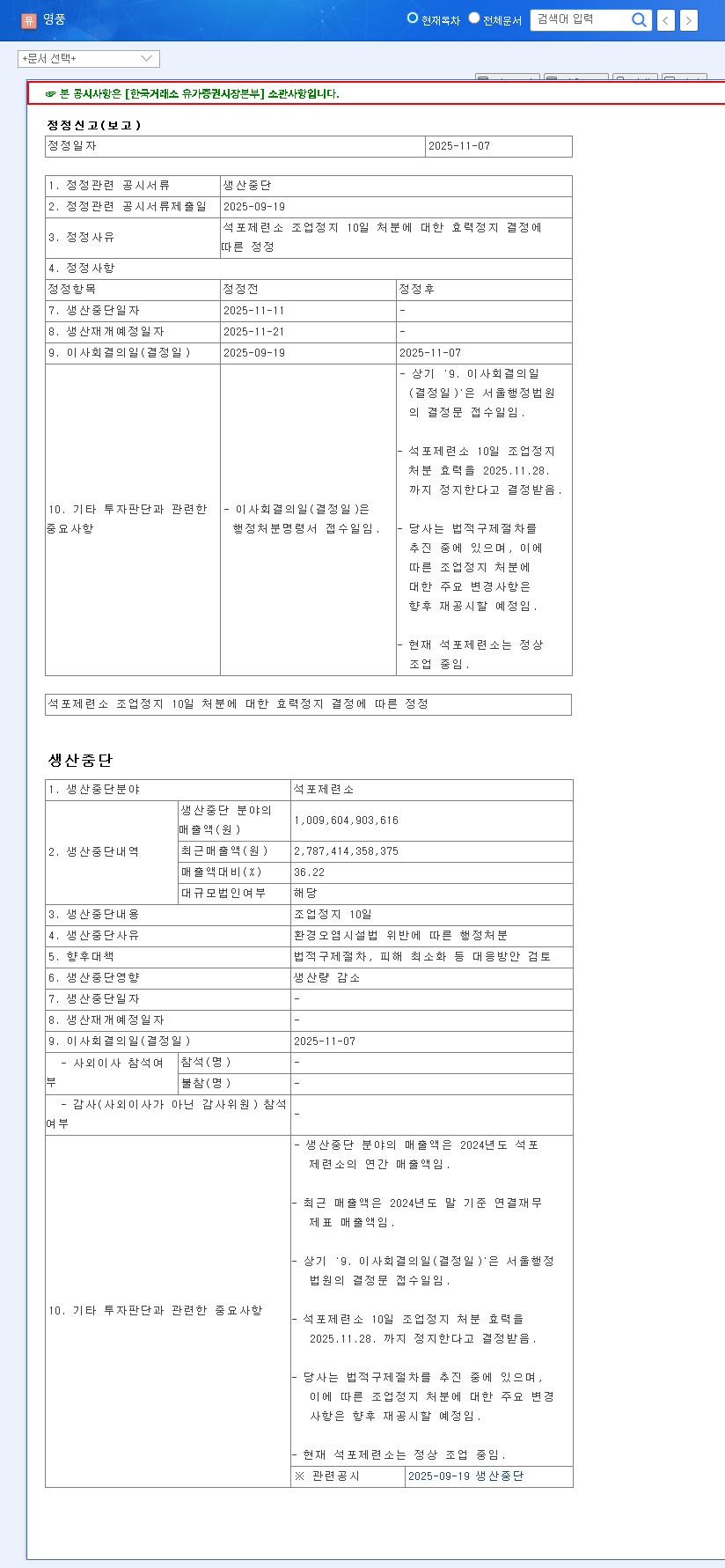
    The recent announcement regarding the YOUNGPOONG Seokpo Smelter has sent ripples through the investment community. For anyone holding or considering shares in YOUNGPOONG CORPORATION (영풍), the 10-day suspension of operations is a critical development. This is not merely a logistical pause; it’s a significant event with a projected revenue disruption of nearly 1 trillion Korean Won, striking at the heart of the company’s financial stability. This comprehensive analysis will dissect the situation, evaluate the impact on YOUNGPOONG’s stock and fundamentals, and provide a clear action plan for investors navigating this uncertainty.

    We will move beyond the headlines to offer a deep, data-driven perspective on what this operations halt means for both the short-term stock price and the long-term viability of one of Korea’s major industrial players.

    The Core Issue: A Staggering Production Halt

    On November 7, 2025, YOUNGPOONG CORPORATION formally announced a 10-day suspension of all production at its core Seokpo Smelter facility. According to the company’s public filing, this halt is projected to slash revenues by an estimated ₩1,009.6 billion. To put this in perspective, this figure represents a massive 36.22% of the company’s total revenue from the previous reporting period. The direct and severe impact on the company’s top line cannot be overstated. Investors can view the Official Disclosure (DART) for primary source information.

    This is a pivotal moment for YOUNGPOONG. While the company has other thriving divisions, the sheer scale of the Seokpo Smelter’s revenue contribution makes this operational halt a significant threat to its immediate financial performance and investor confidence.

    Dissecting YOUNGPOONG’s Financial Health (Pre-Incident Analysis)

    To understand the true impact of this shutdown, we must first have a clear picture of YOUNGPOONG’s fundamentals based on its 2025 H1 report. The company presents a mixed but intriguing financial landscape.

    Key Financial Metrics

    • Revenue Decline: Consolidated revenue stood at ₩1.17 trillion, a notable decrease year-on-year, primarily dragged down by poor performance in the smelting division.
    • Operating Loss: An operating loss of ₩150.48 billion was recorded, a slight improvement but still indicative of significant operational challenges and rising environmental compliance costs.
    • Net Profit Turnaround: Surprisingly, the company posted a net profit of ₩264.27 billion, driven by returns from financial instruments and equity investments, not core operations.
    • Strong Financial Health: The debt-to-equity ratio improved to a very healthy 31.38%, suggesting a solid balance sheet that can weather short-term storms.

    Performance by Business Division

    YOUNGPOONG is not a monolith. Its diversified business model is a key factor in this analysis.

    • Smelting Division: This division has been the primary concern. Even with a 4% rise in international zinc prices, the production utilization rate was a dismal 34.94% due to ongoing operational issues. The current halt will drive this figure even lower.
    • Electronic Components: The star performer, this division recorded revenue of ₩871.2 billion, showcasing robust growth and technological leadership with exports making up over 64% of its sales.
    • Semiconductor Division: Led by its subsidiary Signetics, this segment is a growing force, with revenues of ₩51.59 billion and strong potential.

    The Financial Impact of the YOUNGPOONG Seokpo Smelter Shutdown

    The 10-day operations halt will have immediate and severe negative consequences on YOUNGPOONG’s fundamentals. The loss of over a third of its revenue in a short period will directly translate into a sharp decline in Q4 performance, likely wiping out any gains and deepening the operating loss. This creates a cascade of potential issues:

    • Profitability Crisis: The smelting division’s woes will be significantly amplified, making it nearly impossible for the profitable electronics and semiconductor divisions to offset the losses.
    • Cash Flow Strain: While the company’s strong balance sheet provides a cushion, a sudden revenue stop of this magnitude will strain short-term cash flow and could impact planned capital expenditures.
    • Reputational and Regulatory Risk: This halt, likely linked to the company’s history of environmental issues and pending lawsuits, damages corporate credibility. It signals deeper operational problems that could lead to further regulatory scrutiny and fines, as noted by market analysts at sources like Bloomberg.

    Strategic Outlook and Investor Action Plan

    The short-term outlook is undoubtedly negative. The market is likely to price in the revenue loss, leading to downward pressure on YOUNGPOONG’s stock. However, savvy investors should look at the mid-to-long-term picture.

    Key Questions for the Future

    The company’s recovery hinges on several factors:

    • Speed of Resolution: How quickly can management resolve the underlying cause and resume operations safely and in full compliance?
    • Growth of Other Divisions: Can the high-performing electronics and semiconductor divisions continue their growth trajectory to eventually lessen the reliance on the volatile smelting business? For more on this, see our Analysis of Korea’s Tech Sector.
    • Commitment to ESG: Will this crisis force a genuine, long-term investment in environmental, social, and governance (ESG) standards to prevent future incidents?

    Recommendations for Investors

    For Current Shareholders: Avoid panic selling. The company’s strong balance sheet provides a safety net. Monitor company communications closely for clarity on the resumption of operations and plans to address the root cause.

    For Potential Investors: This situation may present a long-term value opportunity if the stock price overcorrects. However, entry should only be considered after the company provides a transparent and credible plan for stabilizing the Seokpo Smelter and strengthening its environmental compliance. The performance of the non-smelting divisions remains a significant long-term bull case.

    In conclusion, the YOUNGPOONG Seokpo Smelter operations halt is a major setback that will dominate the company’s performance in the coming months. The key to its future value lies in management’s ability to turn this crisis into a catalyst for fundamental operational and environmental reform.

    (000670) YOUNGPOONG Seokpo Smelter Halt: A ₩1 Trillion Stock Analysis for Investors 관련 이미지
  • (069260) TKG Huchems Co.,Ltd. Investment Analysis [2025]: Navigating the H1 Slowdown & IR Event

    (069260) TKG Huchems Co.,Ltd. Investment Analysis [2025]: Navigating the H1 Slowdown & IR Event

    For investors tracking the chemical sector, TKG Huchems Co.,Ltd. presents a complex but compelling case. Amidst challenging global economic currents, the company has reported a short-term performance dip. However, strategic investments in future growth and an upcoming Investor Relations (IR) event signal a potentially pivotal moment. This comprehensive analysis will explore the factors behind the H1 2025 slowdown, evaluate the company’s long-term strategy, and provide a framework for making an informed TKG Huchems investment decision.

    We will dissect the financials, unpack the market pressures, and look ahead to what the critical Q3 IR event could reveal about the trajectory of the TKG Huchems stock.

    Deconstructing the H1 2025 Performance Slowdown

    The first half of 2025 proved to be a challenging period for TKG Huchems Co.,Ltd., reversing the positive recovery trend seen in the previous year. The company, a key manufacturer of polyurethane intermediates (NT series) and nitric acid-based chemical products (NA series), reported a noticeable downturn in key financial metrics.

    Specifically, revenue fell by 3.6% year-on-year to KRW 559.5 billion, while operating profit experienced a more significant decline of 32.6%, settling at KRW 34.6 billion. This performance data is corroborated by the company’s official filing with the Financial Supervisory Service (Source: Official Disclosure). These figures have understandably raised questions among investors about the company’s immediate prospects.

    Core Factors Driving the Downturn

    The performance of TKG Huchems Co.,Ltd. was not impacted by a single issue, but rather a confluence of macroeconomic headwinds and market volatility.

    1. Global Economic Pressures

    A widespread slowdown in global economic activity, as highlighted in recent reports from leading financial institutions, directly led to diminished demand from key industrial customers in sectors like automotive and construction, which are major consumers of polyurethane products. This was compounded by:

    • Cost Volatility: Sharp fluctuations in international oil prices, raw material costs, and shipping logistics placed significant upward pressure on the cost of goods sold, eroding profit margins.
    • Currency Fluctuations: An unstable exchange rate environment (with KRW/USD near 1,300) introduced complexity into pricing for both exports and imports, making profit forecasting more difficult.

    2. A Silver Lining: Financial Stability & Future Investments

    Despite the short-term profit headwinds, the company’s balance sheet remains a source of strength. TKG Huchems Co.,Ltd. has demonstrated prudent financial management, successfully reducing total liabilities while steadily growing its total equity. This foundation of financial health is crucial for navigating market turbulence. Furthermore, a consistent commitment to shareholder-friendly policies, including dividends and treasury stock holdings, continues to appeal to long-term value investors.

    Even in a downturn, the company’s focus has not wavered from securing future growth. Strategic capital expenditures are proceeding as planned, signaling confidence in a long-term recovery and market leadership.

    Key initiatives include capacity expansions for nitric acid and MNB plants, alongside the acquisition of new technology certification for P-PDA manufacturing—a material used in high-strength fibers—positioning the company to capture future demand in advanced materials. These are the kinds of forward-looking moves that underpin a positive long-term TKG Huchems investment thesis.

    The Upcoming IR Event: A Turning Point for TKG Huchems Stock?

    The scheduled TKG Huchems IR event for institutional investors is more than a standard earnings call; it’s a critical opportunity for management to reshape the narrative. The event’s success will hinge on its ability to restore confidence and provide a clear, credible vision for the future.

    Key Questions the IR Event Must Address:

    • Q3 Performance & Outlook: What are the initial signals for Q3, and what is the forecast for the remainder of the fiscal year?
    • Risk Management Strategy: What specific measures are being implemented to mitigate the impact of raw material price and currency volatility?
    • CapEx ROI Timeline: When can investors expect to see tangible financial contributions from the nitric acid, MNB, and P-PDA investments?
    • Path to Profitability Recovery: What is the strategic plan to return the core business to its previous levels of profitability?

    A confident and transparent presentation could lead to a re-evaluation of the company’s value and attract new institutional buying interest. Conversely, an evasive or uncertain tone could exacerbate investor concerns.

    Investment Strategy & Outlook

    A prudent approach to a TKG Huchems investment requires a dual focus on short-term catalysts and long-term fundamentals. For those looking for broader market context, you can learn more about investing in the chemical sector on our blog.

    Short-Term Strategy (3-6 Months)

    The IR event is the primary catalyst. If management provides a positive outlook with credible strategies, a short-term rebound in the stock price is plausible. If the outlook remains cautious, a wait-and-see approach may be warranted until macroeconomic indicators improve.

    Mid-to-Long-Term Strategy (1-3 Years)

    The focus here shifts to the execution of growth projects. Investors should monitor the progress of plant expansions and the successful commercialization of new technologies. The recovery of profitability in the core NT and NA series businesses is paramount for a sustained upward trend in the TKG Huchems stock price. The company’s ability to manage its balance sheet and continue shareholder-friendly policies will also be key indicators of long-term value creation.

    Conclusion: A Balanced View

    TKG Huchems Co.,Ltd. is at a crossroads. While current performance is impacted by cyclical and macroeconomic factors, its strong financial health and strategic investments in future growth drivers provide a solid foundation for recovery. The upcoming IR event will be a critical litmus test for management’s ability to navigate these challenges and articulate a compelling vision. For discerning investors, this period of uncertainty could represent an opportunity, provided they carefully analyze the forthcoming information and maintain a long-term perspective.

    (069260) TKG Huchems Co.,Ltd. Investment Analysis [2025]: Navigating the H1 Slowdown & IR Event 관련 이미지
  • (136480) HARIM Q3 2025 Earnings Analysis: Deep Dive into Stock Performance (136480)

    (136480) HARIM Q3 2025 Earnings Analysis: Deep Dive into Stock Performance (136480)

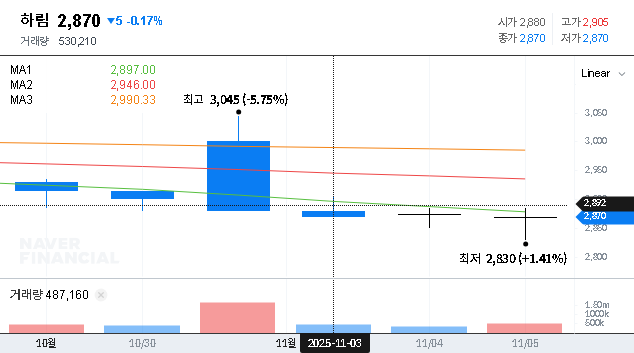
    The HARIM Q3 2025 earnings report has sent ripples through the investment community, presenting a stark contrast to the company’s triumphant performance in the first half of the year. After celebrating a remarkable 12% revenue growth and an explosive 238% surge in operating profit, investors are now faced with preliminary Q3 figures that suggest a significant slowdown. This has sparked a critical question: Is this a temporary hiccup or the beginning of a new, more challenging chapter for HARIM Co., Ltd. (136480)?

    This comprehensive HARIM stock analysis will dissect the latest financial results, explore the underlying factors driving this shift, and evaluate the internal and external risks that could shape the company’s future. We will provide a clear outlook for investors, highlighting the key metrics to watch as HARIM navigates this pivotal moment.

    Deconstructing the HARIM Q3 2025 Earnings Report

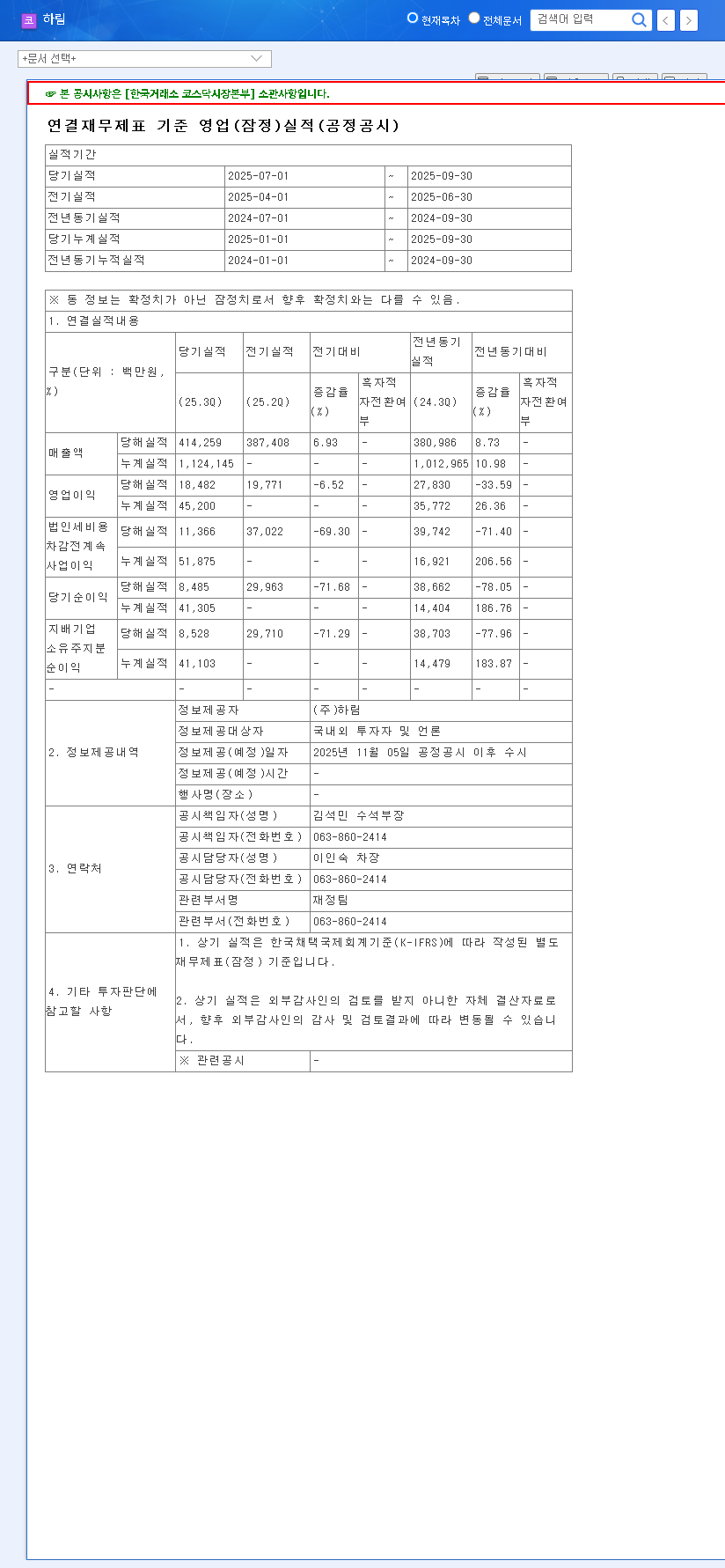
    On November 5, 2025, HARIM released its preliminary operating results for the third quarter, revealing a noticeable deceleration. The official filing provides the granular details for investors. For a complete breakdown, investors can consult the company’s official filing on DART. Source: Official Disclosure. The key figures are:

    • Revenue: KRW 402.4 billion (a marginal increase from Q2).
    • Operating Profit: KRW 18.6 billion (a significant decrease from Q2).
    • Net Profit: KRW 9 billion (also a marked decrease from Q2).

    These numbers confirm that the powerful growth engine seen in H1 has throttled back, prompting a deeper investigation into the causes.

    From a ‘Sunny’ H1 to a ‘Cloudy’ Q3: What Changed?

    H1 2025: A Foundation of Solid Growth

    The first half of 2025 was a period of robust recovery for HARIM. The company successfully turned a profit, driven by key fundamental strengths. A major contributor was a significant improvement in the cost structure, achieved through stabilizing feed raw material prices, optimizing chicken slaughter yields, and minimizing packaging losses. This, combined with its unshakable No. 1 position in the domestic chicken market, created a powerful combination for profitability.

    Key Factors Behind the Q3 Earnings Slowdown

    The Q3 downturn appears to be a result of several converging headwinds:

    • Commodity Price Volatility: While H1 saw favorable feed prices, the market is inherently volatile. Any subsequent rise in core ingredients directly squeezes profit margins. According to a recent market report from Bloomberg, global grain markets remain sensitive to geopolitical and climate factors, posing an ongoing risk.
    • Intensified Market Competition: As the market leader, HARIM is a prime target for competitors. Aggressive pricing strategies from rivals can erode market share and put downward pressure on prices, impacting revenue and profitability.
    • Macroeconomic Pressures: External factors like currency fluctuations are critical. With the KRW/USD exchange rate hovering around 1,444.00, a weaker Won increases the cost of imported raw materials. Furthermore, persistent high interest rates amplify the burden of HARIM’s debt, which, despite improving to a 101.66% ratio, remains a significant financial consideration.
    • Operational Risks: The poultry industry is perpetually exposed to the risk of disease outbreaks like avian influenza (AI), which can devastate supply chains and lead to substantial financial losses.

    Market Impact and Investor Outlook

    The market had priced in continued momentum after a stellar H1. The Q3 results have introduced a dose of realism, shifting investor sentiment from bullish optimism to cautious observation. The next two quarters will be crucial in determining the stock’s trajectory.

    The unexpected slowdown is likely to increase short-term stock price volatility as the market recalibrates its expectations for the 136480 stock analysis. Investors who rode the wave of H1’s success may look to secure profits, while new investors will be looking for clarity on the company’s strategy to counter these new challenges.

    Future Challenges and Strategic Imperatives

    Moving forward, investors should closely monitor HARIM’s strategic responses. Key areas to watch include:

    • Profitability of Core Divisions: Scrutinize management’s plans to address any losses or margin compression in the meat processing division.
    • Growth Initiatives: The success of expanding online sales channels and launching innovative new products will be vital to offsetting traditional market pressures. For more on industry trends, see our complete guide to the food processing sector.
    • Financial Discipline: Continued efforts to manage the high debt ratio and mitigate interest cost burdens are non-negotiable for long-term stability.
    • ESG and Governance: Addressing legal risks from Fair Trade Act violations and strengthening ESG management, such as animal welfare systems, are crucial for building long-term corporate value and maintaining investor trust.

    Conclusion: A Balanced View on HARIM’s Future

    While the HARIM Q3 2025 earnings signal a period of caution, it’s important to weigh this against the company’s fundamental strengths. HARIM’s dominant market position and vertically integrated cost structure provide a resilient foundation. However, the path forward will depend on its ability to navigate commodity volatility, fend off competition, and manage its financial liabilities effectively. For investors, this is a time for diligent monitoring rather than hasty decisions. The company’s long-term growth potential remains intact, but its short-term performance now hinges on strategic execution in a more demanding environment.

    Frequently Asked Questions

    Q1: What were the key takeaways from HARIM’s Q3 2025 earnings?

    A1: HARIM’s Q3 2025 earnings showed a significant growth slowdown. While revenue saw a slight increase to KRW 402.4 billion, both operating profit (KRW 18.6 billion) and net profit (KRW 9 billion) decreased considerably compared to the first half of the year.

    Q2: Why was HARIM’s performance so strong in H1 2025?

    A2: In H1 2025, HARIM’s revenue grew by 12.31% and operating profit surged by 238.09%. This was driven by effective cost reduction, stable raw material prices, and leveraging its #1 market share in South Korea.

    Q3: What caused the slowdown in HARIM’s Q3 performance?

    A3: The slowdown is attributed to a mix of factors, including rising raw material costs, increased competition in the domestic market, macroeconomic pressures like exchange rate volatility, and persistent operational risks like potential disease outbreaks.

    Q4: What should investors watch for regarding HARIM’s stock?

    A4: Investors should monitor the company’s strategy for improving margins, the performance of its new products and online channels, its progress in managing debt, and any updates on external factors like interest rates and commodity prices. This HARIM stock analysis suggests a period of heightened vigilance.

    (136480) HARIM Q3 2025 Earnings Analysis: Deep Dive into Stock Performance (136480) 관련 이미지
  • (286940) LOTTE INNOVATE Q3 2025 Earnings Analysis (286940): Stock Risks & Investment Strategy

    (286940) LOTTE INNOVATE Q3 2025 Earnings Analysis (286940): Stock Risks & Investment Strategy

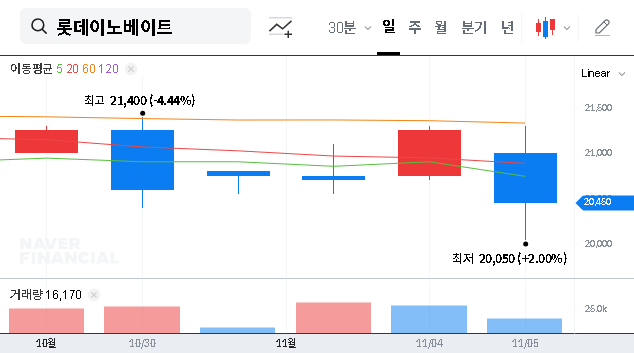
    This comprehensive LOTTE INNOVATE stock analysis unpacks the Q3 2025 provisional earnings report (stock code: 286940), which has sent ripples through the investment community. The company’s performance fell significantly short of market consensus, raising critical questions about its core business profitability and future growth trajectory. We will dissect the numbers, explore the underlying causes for the downturn, and provide a clear investment strategy for navigating the current uncertainty.

    All financial data discussed is based on the company’s official filing. For verification, you can review the Official Disclosure on DART.

    The Q3 2025 Earnings Shock: A Numbers Breakdown

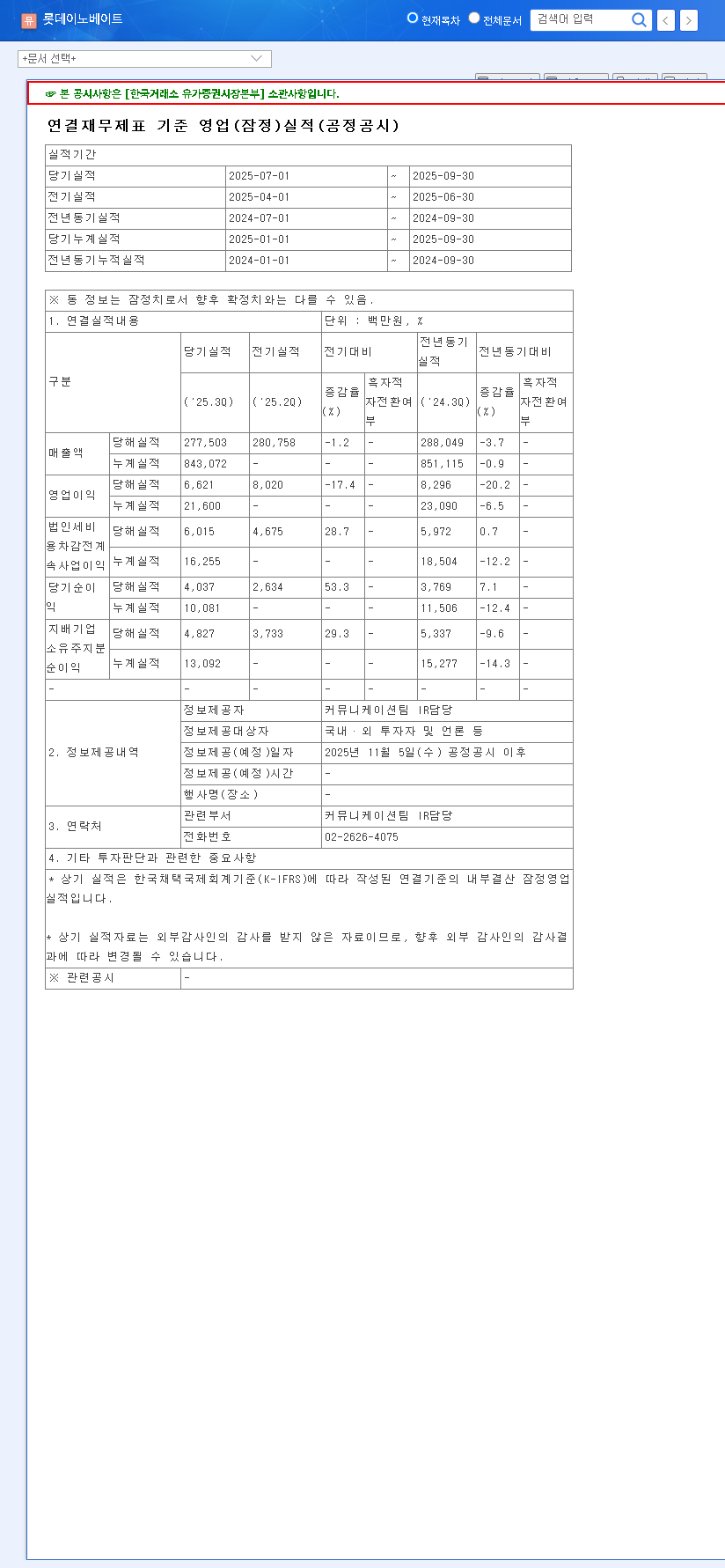
    LOTTE INNOVATE Co., Ltd. announced provisional earnings for the third quarter of 2025 that missed analyst expectations by a wide margin. This underperformance points to significant operational headwinds and has justifiably concerned shareholders.

    Q3 2025 Provisional Results:
    Revenue: KRW 277.5 billion (8% below consensus of KRW 301.3 billion)
    Operating Profit: KRW 6.6 billion (32% below consensus of KRW 9.7 billion)
    Net Profit: KRW 4.8 billion

    The 32% miss on operating profit is particularly alarming, indicating a severe deterioration in profitability. These figures not only reflect a sequential decline from the previous quarter but also a significant drop compared to the same period last year, confirming a negative performance trend that requires immediate attention from both management and investors.

    Why the Underperformance? Key Factors Behind the Miss

    The disappointing LOTTE INNOVATE earnings were not the result of a single issue, but rather a convergence of challenges across its key business segments and the broader market.

    1. System Integration (SI) Profitability Collapse

    The SI business, a cornerstone of the company’s revenue, experienced a dramatic decline in profitability. The gross profit margin plummeted by 7.3 percentage points to a mere 4.8%. This collapse can be attributed to increased costs associated with developing new business lines and heightened competition in the system integration space, which forces companies to bid aggressively on projects, thereby squeezing margins.

    2. EV Charging Business Hits a Speed Bump

    The once-promising Electric Vehicle (EV) charging business has run into significant headwinds. A broader slowdown in the global EV market, coupled with fierce competition, led to an 8.9% decrease in revenue. More concerning is the 5.9 percentage point drop in its gross profit margin to 10.6%. This indicates that the company is struggling to maintain pricing power in a crowded market, a major risk for a segment touted as a future growth engine.

    3. Sluggish IT Service Market Recovery

    Underpinning these company-specific issues is a general sluggishness in the IT service market. As corporations globally tighten their belts amid economic uncertainty, large-scale IT projects are being delayed or scaled back. This macro trend directly impacts LOTTE INNOVATE’s ability to secure new, high-margin contracts, affecting both its SI and SM (System Management) divisions.

    Investment Strategy and Key Risk Factors

    Given the sharp earnings miss and underlying profitability concerns, a cautious approach is warranted. The negative report will likely pressure the 286940 stock price in the short term. Investors must weigh the company’s long-term potential in new ventures like AI and Metaverse against these immediate operational challenges.

    Major Risks to Monitor

    • Protracted SI Margin Erosion: If the SI business cannot restore its profit margins, it could permanently impair the company’s overall valuation and earnings power.
    • EV Business Stagnation: Failure to achieve profitability in the EV charging segment could turn a potential growth catalyst into a long-term cash drain.
    • Cost of Innovation: Heavy investments in Metaverse (Caliverse) and AI are necessary for future growth but continue to weigh on short-term profits. A delay in monetizing these ventures is a significant risk.
    • Macroeconomic Volatility: As an international player, the company is exposed to currency fluctuations and global economic trends. For more on this, you can review market data from sources like Bloomberg.

    Investor Action Plan: A ‘Neutral’ Stance

    We are issuing a ‘Neutral’ investment opinion on LOTTE INNOVATE. The stability of its core SM business provides a solid foundation, but this is offset by the severe profitability issues in its other key segments. Before considering a more bullish stance, investors should look for tangible signs of a turnaround.

    Key indicators to watch in upcoming quarters include the recovery of the SI gross profit margin, a return to growth in the EV charging business, and any updates on the monetization of its Metaverse and AI initiatives. For those new to this type of analysis, our guide on how to analyze tech company earnings may be a helpful resource.

    Frequently Asked Questions (FAQ)

    Q1: What were the main reasons LOTTE INNOVATE’s Q3 2025 earnings missed expectations?

    The underperformance was primarily due to a slow IT service market, a severe drop in profitability in the System Integration (SI) business, and decreased revenue and margins in the EV charging business amid intense competition.

    Q2: How are LOTTE INNOVATE’s new business investments in Metaverse and AI progressing?

    LOTTE INNOVATE continues to invest heavily in future growth engines like Metaverse (Caliverse) and AI. While these hold long-term potential, they are currently a drain on resources and have not yet reached a stage of significant profitability or market stabilization.

    Q3: What is the current investment opinion for LOTTE INNOVATE (286940)?

    The current investment opinion is ‘Neutral’. The stability of the SM business is a positive, but it is counterbalanced by the significant earnings miss and deep-seated profitability challenges. Investors should remain on the sidelines pending clear evidence of a strategic turnaround.

    (286940) LOTTE INNOVATE Q3 2025 Earnings Analysis (286940): Stock Risks & Investment Strategy 관련 이미지
  • (018670) SK GAS LTD Q3 2025 Earnings: In-Depth Investment Analysis & UlsanGPS Impact

    (018670) SK GAS LTD Q3 2025 Earnings: In-Depth Investment Analysis & UlsanGPS Impact

    In a significant market event, SK GAS LTD has unveiled preliminary Q3 2025 earnings that have not just met, but decisively surpassed analyst consensus. The stellar performance, driven by a resilient core business and the successful commissioning of its new UlsanGPS power generation venture, signals a pivotal moment for the company. This comprehensive analysis will delve into the key drivers behind this success, evaluate the financial health of SK GAS LTD, and provide a forward-looking perspective for potential investors considering SK GAS stock.

    We will unpack the numbers, explore the strategic importance of the UlsanGPS project, and assess the opportunities and risks that lie ahead. This report is designed to equip you with a clear understanding of the company’s current valuation and future growth trajectory, guiding informed SK GAS investment decisions.

    Stellar Q3 2025 Preliminary Earnings Report

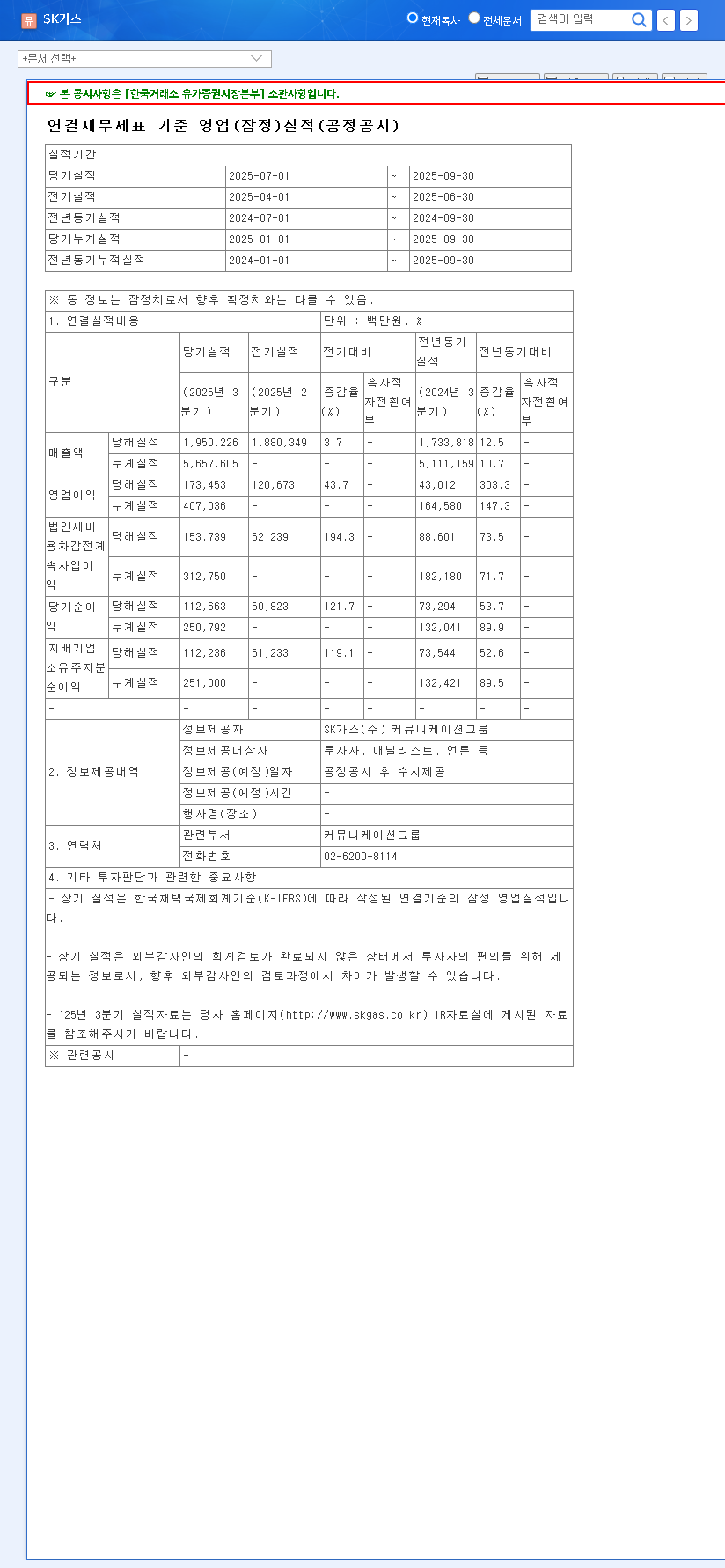
    SK GAS LTD reported outstanding preliminary results for the third quarter of 2025, significantly outperforming market expectations and demonstrating robust financial strength. The official numbers, as filed in the company’s disclosure (Official Disclosure), paint a picture of profitability and growth.

    The key figures are as follows:

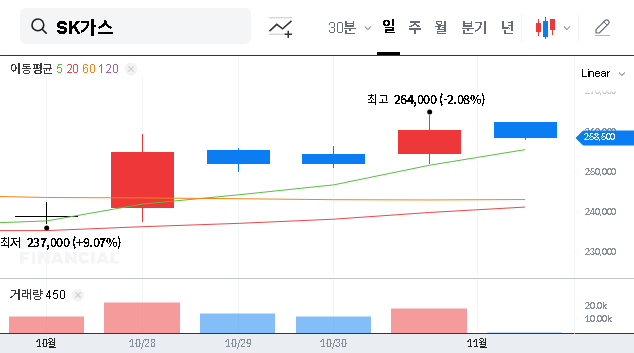
    • Revenue: KRW 1,950.2 billion, which is 1.0% above the market estimate of KRW 1,932.1 billion.
    • Operating Profit: KRW 173.5 billion, a remarkable 40.3% higher than the consensus of KRW 123.7 billion.
    • Net Profit: KRW 112.2 billion, soaring an impressive 52.8% above the estimate of KRW 73.4 billion.

    This ‘earnings surprise’ is a testament to the resilience of SK GAS LTD’s core operations and the successful execution of its long-term growth strategy, particularly the integration of new energy ventures.

    Unpacking the Drivers of SK GAS LTD’s Success

    The company’s exceptional performance is not accidental; it is built on a dual foundation of a stable, market-leading traditional business and a visionary expansion into next-generation energy production.

    1. The LPG Business: A Stable Cash Cow

    The Liquefied Petroleum Gas (LPG) division continues to be the bedrock of SK GAS’s profitability. As the number one player in South Korea, it commands significant market share and benefits from extensive infrastructure. Key strengths include a diversified overseas sourcing strategy, which led to a 6% year-over-year increase in overseas sales, and sophisticated risk management. By utilizing derivative instruments like Paper Swap contracts, the company effectively mitigates the inherent volatility of commodity prices. While domestic demand has seen some fluctuation, LPG’s role as a cleaner bridge fuel for transportation ensures its continued relevance.

    2. UlsanGPS: The Future Growth Engine Takes Flight

    The centerpiece of the company’s future is the UlsanGPS project. This state-of-the-art LNG/LPG dual-fuel power generation plant, which commenced commercial operations in late 2024, is already making a substantial impact. By the first half of 2025, it had already recorded KRW 327.2 billion in revenue, proving its ability to contribute meaningfully to the top line from day one. This massive KRW 1.4 trillion investment is more than just a power plant; it represents a strategic diversification away from pure LPG trading into stable, long-term power generation, reshaping the entire SK GAS investment thesis.

    The successful launch and early revenue from UlsanGPS validates SK GAS LTD’s strategic pivot, transforming it from a traditional energy trader into a diversified energy powerhouse with a more predictable and robust earnings profile.

    Financial Health and Future Ventures

    While the large-scale investment in UlsanGPS has temporarily elevated the debt-to-equity ratio, the company’s financial foundation remains solid. Shareholder equity has increased, and SK GAS LTD maintains a strong AA- corporate bond rating. This high creditworthiness is crucial, as it ensures access to stable, low-cost financing for future projects. Speaking of the future, the company is not resting on its laurels. It is actively expanding its portfolio by entering the US Energy Storage System (ESS) market and developing hydrogen-related businesses, positioning itself to capitalize on global energy transition trends as detailed by agencies like the International Energy Agency (IEA).

    Investor Outlook: Opportunities and Risks for SK GAS Stock

    For those evaluating SK GAS stock, the Q3 2025 earnings report offers compelling reasons for optimism, balanced by necessary considerations.

    Key Investment Positives

    • Proven Growth Engine: The immediate success of UlsanGPS provides a clear, long-term driver for corporate value and earnings stability.
    • Strong Earnings Momentum: The significant earnings beat creates positive short-term momentum and highlights operational excellence.
    • Stable Cash Flow: The foundational LPG business continues to generate reliable cash flow, funding new growth initiatives.
    • Financial Credibility: A high credit rating supports the company’s ambitious expansion plans.

    Potential Risks to Monitor

    Investors should remain aware of external variables. The profitability of the LPG segment is inherently tied to international oil prices and currency exchange rates, which can be volatile. Furthermore, the energy industry is subject to intense competition and evolving government regulations. While the initial investment in UlsanGPS has been substantial, ensuring its long-term operational efficiency and profitability will be a key management focus.

    In conclusion, the Q3 2025 preliminary results for SK GAS LTD are unequivocally positive. They showcase a company successfully navigating a complex market, with its strategic investments beginning to pay significant dividends. The combination of a stable legacy business and a powerful new growth engine in UlsanGPS positions SK GAS for sustained, positive growth in the mid-to-long term, making it a compelling story for investors.

    Disclaimer: This analysis is based on publicly available information. Investment decisions should be made at the investor’s own discretion and responsibility.

    (018670) SK GAS LTD Q3 2025 Earnings: In-Depth Investment Analysis & UlsanGPS Impact 관련 이미지
  • (005940) NH Investment & Securities Q3 2025 Earnings: A Deep Dive into a 32% Profit Surprise

    (005940) NH Investment & Securities Q3 2025 Earnings: A Deep Dive into a 32% Profit Surprise

    The financial markets are buzzing after the latest NH Investment & Securities Q3 2025 earnings report revealed a significant performance beat, posting an operating profit that soared 32% above market consensus. With robust contributions from its core divisions, the company has solidified its position as a market leader and raised important questions for investors: What specific factors powered this remarkable growth, and is now the time to invest?

    This comprehensive analysis delves into the official Q3 2025 results, dissecting the key drivers behind the NH earnings surprise. We will explore the unparalleled strength of its Investment Banking (IB) unit, the impressive global expansion of its Retail segment, and the company’s solid financial footing. By understanding these components, investors can gain a clearer perspective on the future outlook for NH Investment & Securities stock.

    Unpacking the Q3 2025 Earnings Surprise

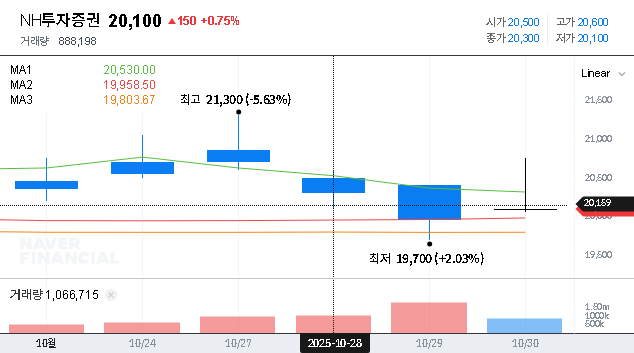
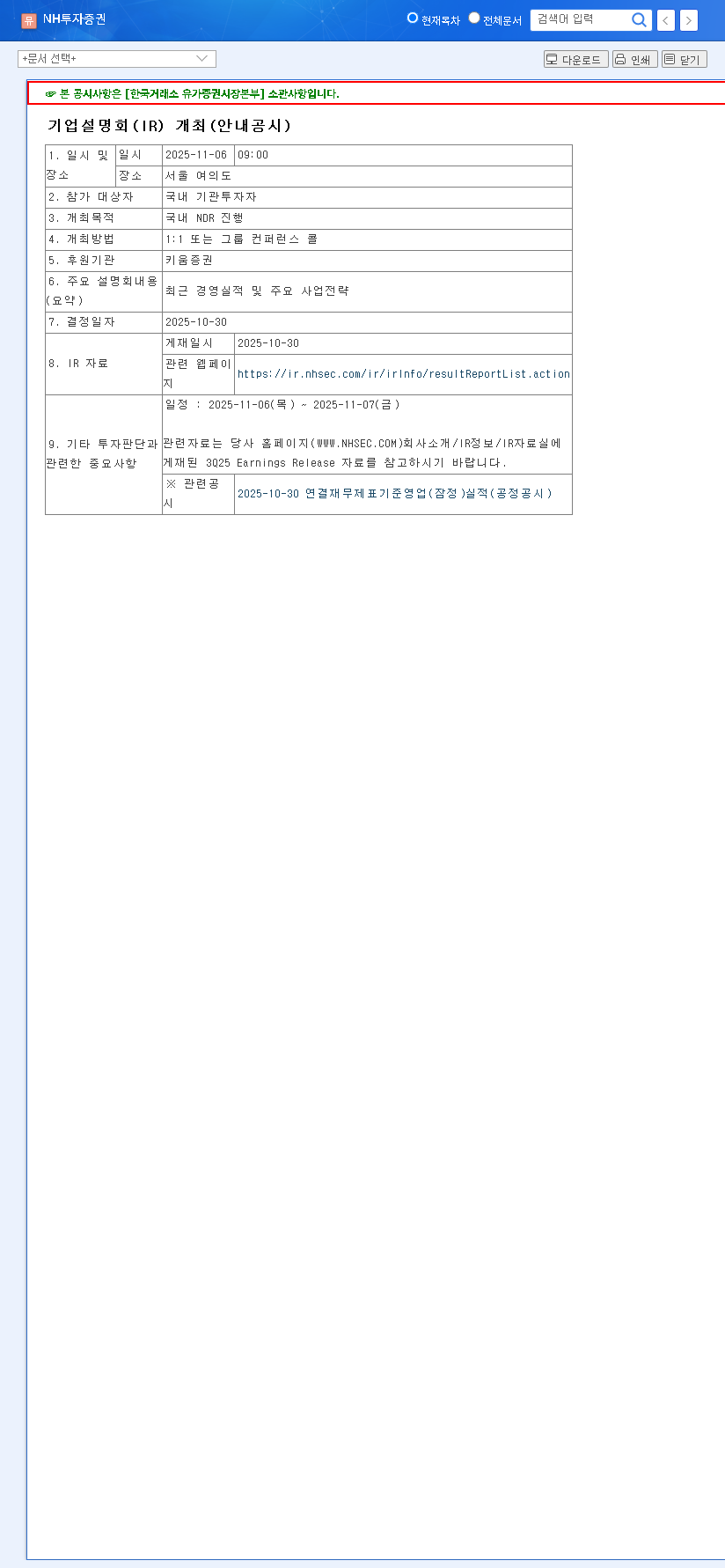
    NH Investment & Securities officially announced its provisional consolidated financial results for the third quarter of 2025, significantly outperforming expectations. The company reported a revenue of KRW 2.72 trillion, an operating profit of KRW 391.3 billion, and a net profit of KRW 283.1 billion. These figures represent a substantial beat, with operating profit exceeding forecasts by 32% and net profit by 19%. This strong performance continues an upward trend established since the beginning of the year, signaling powerful operational momentum. The full details can be reviewed in the Official Disclosure (DART).

    The Q3 results not only surpassed market expectations but also showcased the firm’s resilient and diversified business model, capable of generating exceptional profits even in a volatile economic climate.

    Core Growth Engines: A Two-Pillar Success Story

    The exceptional NH Investment & Securities Q3 2025 earnings were not a matter of luck; they were driven by strategic excellence in two key divisions.

    1. Dominance of the Investment Banking (IB) Division

    The standout performer this quarter was the Investment Banking (IB) division. IB fee income surged by an impressive 38.3% year-over-year, acting as the primary catalyst for overall profit growth. This success was cemented by the masterful execution of high-profile deals, including the SK Specialty and Parkwon Refinancing PF. These transactions underscore the company’s leading capabilities in debt capital markets (DCM) and structured finance, reaffirming its status as a go-to partner for major corporate actions. This consistent deal flow solidifies the IB division’s performance as a reliable engine for high-profit generation moving forward.

    2. Dynamic Growth in the Retail Division

    Complementing the IB division’s success, the Retail segment demonstrated robust and strategic growth. Overall brokerage fee income increased by 8.4% year-over-year. More significantly, revenue from overseas stock brokerage fees skyrocketed by 66.0%. This explosive growth is a direct result of successful digital transformation initiatives—such as enhancing their mobile trading platform and offering sophisticated analytical tools—which have expanded the customer base and captured the growing retail interest in global markets. This trend positions NH to capitalize on the increasing globalization of retail investing, a key long-term growth driver. For more on this trend, you can explore market analysis from leading sources like Bloomberg.

    Financial Health and Future Outlook

    Beyond the impressive quarterly numbers, NH Investment & Securities maintains exceptional financial stability. As of H1 2025, its consolidated Capital Adequacy Ratio (CAR) stood at a formidable 1,726.0%, indicating a powerful buffer against market shocks. Furthermore, the company is actively pursuing future growth by applying for an Investment Management Account (IMA) business license. This move could unlock significant new revenue streams and differentiate it from competitors. These strategic initiatives, combined with a commitment to shareholder value via treasury stock programs, paint a positive picture for long-term corporate value.

    Potential Risks to Monitor

    While the outlook is strong, prudent investors should remain aware of potential headwinds. For a balanced financial analysis, it’s crucial to consider these factors:

    • Intensifying Competition: The entry of agile FinTech firms and the consolidation of major securities firms could pressure margins and market share.
    • Market Volatility: Global economic uncertainty, geopolitical risks, and currency fluctuations remain persistent threats to the earnings of all financial institutions.
    • Litigation Headwinds: Ongoing lawsuits related to past financial products could introduce unforeseen financial liabilities.

    Investment Thesis: Reaffirming a ‘BUY’ Position

    In light of the powerful NH Investment & Securities Q3 2025 earnings, our investment opinion remains positive. The firm has demonstrated exceptional execution and fundamental strength. The combination of a dominant IB division and a rapidly growing, globally-focused Retail arm provides a clear and sustainable path to future profitability. We therefore maintain a ‘BUY’ recommendation and suggest an upward revision of the target price is warranted. Investors seeking to understand valuation metrics better may find value in our guide to analyzing financial stocks.

    The key takeaway is that this earnings surprise is not an anomaly but rather a confirmation of the company’s superior business strategy and market position, suggesting strong potential for near-term stock price appreciation.

    (005940) NH Investment & Securities Q3 2025 Earnings: A Deep Dive into a 32% Profit Surprise 관련 이미지
  • (064400) LG CNS Q3 2025 Earnings Analysis: Deep Dive Into Cloud Growth & Stock Outlook

    (064400) LG CNS Q3 2025 Earnings Analysis: Deep Dive Into Cloud Growth & Stock Outlook

    This comprehensive LG CNS Q3 2025 earnings analysis reveals a classic investor dilemma: a headline miss on short-term profits against a backdrop of powerful, long-term growth drivers. While preliminary results showed sales and profits slightly missing market consensus, a deeper look into the company’s fundamentals is essential before making any investment decisions. The performance of the company’s Cloud & AI growth engine, in particular, tells a story of strategic success that the top-line numbers might obscure.

    This report provides an in-depth review of LG CNS’s latest financial performance, dissects the factors behind the profitability concerns, and evaluates the future outlook for the LG CNS stock based on its strategic initiatives and the prevailing market conditions.

    LG CNS Q3 2025 Earnings: The Numbers and the Market Reaction

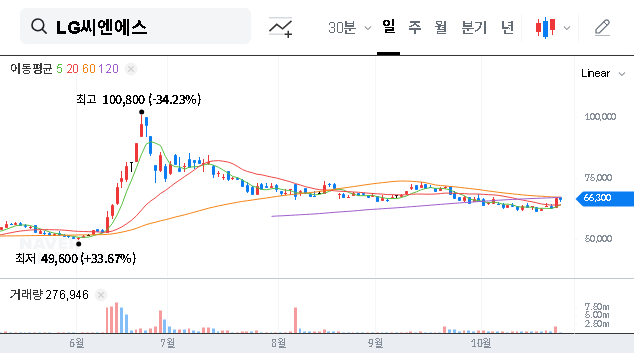
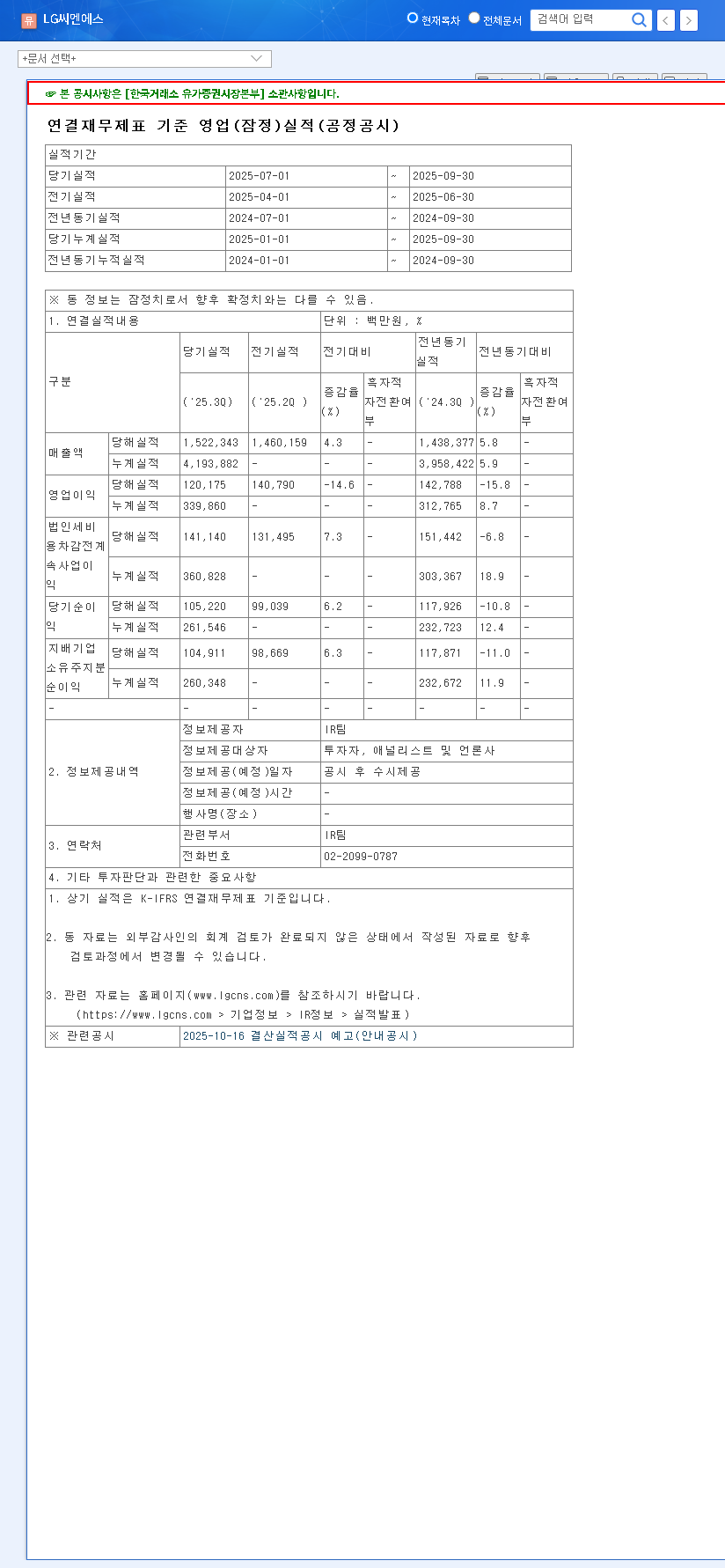
    LG CNS Co., Ltd. announced its preliminary Q3 2025 financial results, which presented a mixed picture. The company reported sales of KRW 1,522.3 billion, an operating profit of KRW 120.2 billion, and a net income of KRW 104.9 billion. These figures fell short of market expectations by -1.47%, -8.38%, and -0.38%, respectively.

    The most significant point of concern for investors was the 8.38% miss in operating profit. This deviation sparked immediate questions about short-term profitability and operational efficiency, especially following a strong recovery in the previous quarter. Understanding the root cause of this dip is crucial for any LG CNS investor strategy.

    Quarterly Performance at a Glance

    • Sales: After a Q4 2024 peak, sales stabilized in the subsequent quarters, suggesting a potential growth plateau that requires new catalysts.
    • Operating Profit: The Q3 dip to KRW 120.2 billion, after a strong Q2, is the primary source of market apprehension and underscores the need for vigilant cost management.
    • Net Income: Remained relatively stable and close to forecasts, indicating that non-operating factors helped cushion the blow from the operating profit miss.

    The Core Growth Engine: Thriving in Cloud & AI

    Despite the Q3 headwinds, the fundamental growth story for LG CNS remains compelling, anchored by its outstanding performance in high-demand sectors. The interim report for the first half of 2025 showed that the Cloud & AI business segment is not just growing; it’s accelerating. This segment now accounts for a staggering 60% of total sales, cementing its role as the company’s primary value creator.

    The company’s proactive AI Transformation (AX) strategy is at the heart of this success. By internalizing key AI technologies and forging strategic partnerships, LG CNS is positioning itself as a leader in the digital transformation market. This focus on high-margin services is the key to unlocking long-term shareholder value and a critical component of our ongoing LG CNS earnings analysis. For more background, you can review our analysis of the previous quarter’s earnings.

    While quarterly earnings can fluctuate, a company’s leadership in a secular growth trend like AI transformation is a more reliable indicator of future potential. The strength of the Cloud & AI division is the most important takeaway for long-term investors.

    Strengthened Financial Health

    The company’s balance sheet has seen a significant upgrade. Thanks to its successful listing on the KOSPI market in February 2025, cash and cash equivalents surged to KRW 1,300.7 billion. This liquidity provides a robust buffer against market volatility and fuels further investment in R&D and strategic initiatives to maintain its competitive edge in the AI landscape, a factor noted by major financial analysts at reputable news sources.

    Future Strategy and Investor Considerations

    Looking ahead, the investment thesis for LG CNS hinges on its ability to translate its AI leadership into sustained, profitable growth. While the prospects are bright, investors must also monitor potential risks, including macroeconomic pressures like foreign exchange fluctuations and interest rate volatility.

    For a complete and transparent view of the financial data discussed in this analysis, investors are encouraged to consult the company’s official filing. Official Disclosure: Click to view DART report.

    Key Recommendations for a Prudent Investor Strategy

    • Focus on Fundamentals: Look beyond the short-term profit miss and focus on the consistent, high-margin growth of the Cloud & AI division.
    • Monitor Profitability: Watch for management’s plans to address the Q3 operating profit decline and improve cost efficiencies in the upcoming quarters.
    • Watch Macro Indicators: Keep an eye on currency exchange rates and interest rate trends, as these can impact international earnings and overall market sentiment.
    • Long-Term Perspective: Base investment decisions on the company’s long-term strategic direction, market leadership, and financial stability rather than a single quarter’s results.

    Frequently Asked Questions

    What were the key takeaways from LG CNS’s Q3 2025 earnings?

    LG CNS reported sales of KRW 1,522.3 billion and operating profit of KRW 120.2 billion, missing market forecasts, particularly on profit. This has raised short-term profitability concerns among investors.

    Are there positive signs despite the earnings miss?

    Yes. The Cloud & AI business segment demonstrated robust growth, accounting for 60% of total sales. Furthermore, the company’s financial health is strong, with significantly increased cash reserves following its KOSPI listing.

    What is LG CNS’s core growth strategy?

    The company is focused on its AI Transformation (AX) strategy, expanding AI services and solidifying its leadership in the digital transformation market. This is viewed as the primary long-term growth driver for the LG CNS stock.

    (064400) LG CNS Q3 2025 Earnings Analysis: Deep Dive Into Cloud Growth & Stock Outlook 관련 이미지
  • (005490) POSCO Holdings Inc. Q3 2025 Earnings: A Deep Dive Analysis for Investors

    (005490) POSCO Holdings Inc. Q3 2025 Earnings: A Deep Dive Analysis for Investors

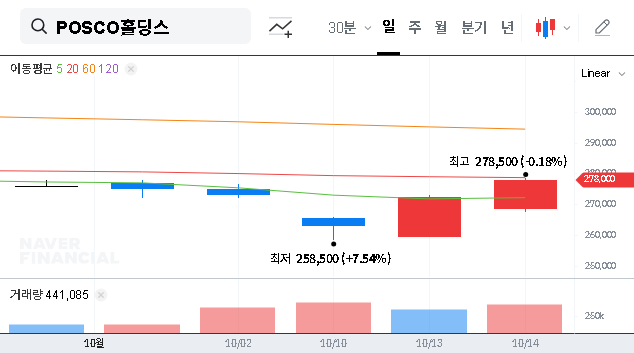
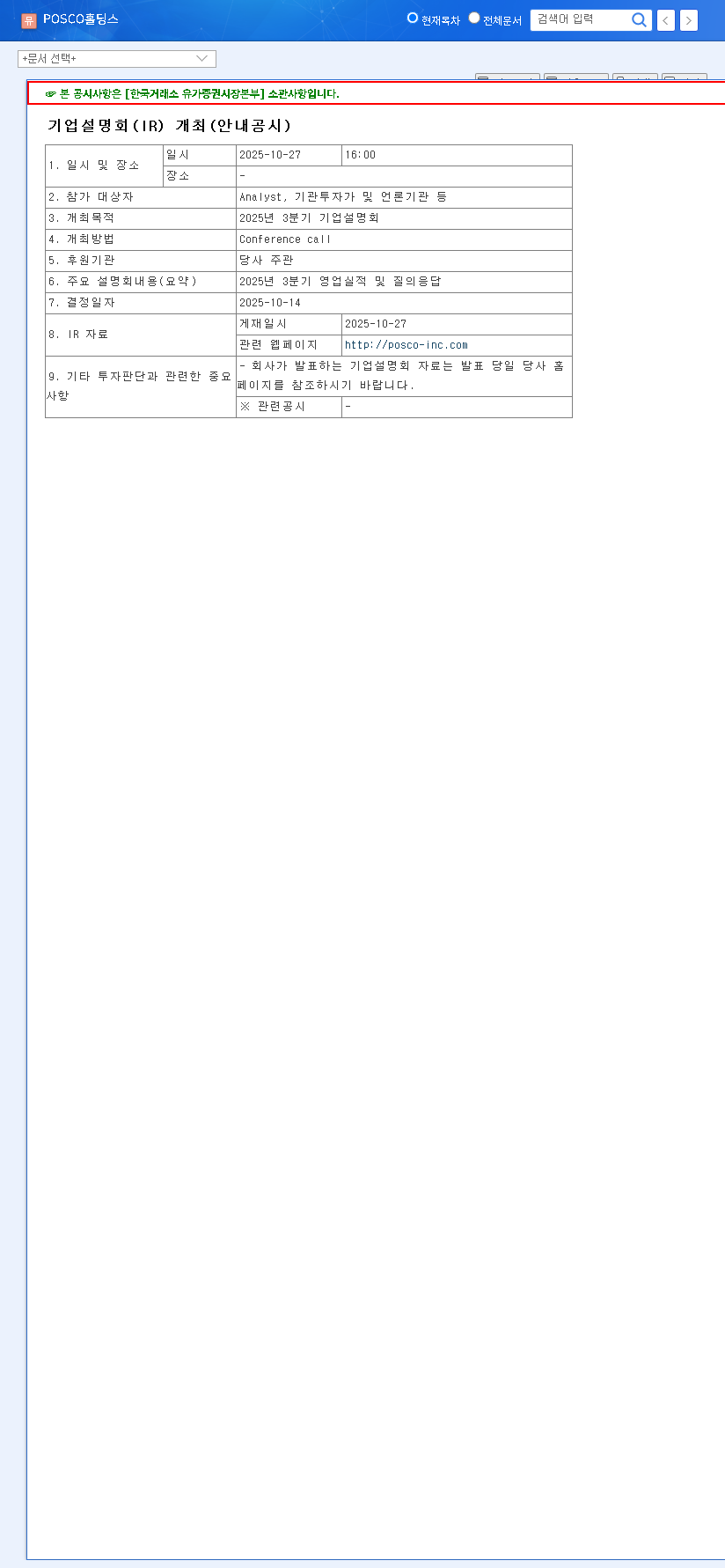
    The latest POSCO Holdings Inc. Q3 2025 earnings report offers a compelling narrative of resilience and strategic strength in a volatile global economy. On October 27, 2025, the South Korean industrial giant released its provisional results, revealing a performance that has captured the market’s attention. While revenue saw a minor dip, the company’s ability to significantly outperform on operating and net profit forecasts signals a robust underlying business structure. This in-depth analysis unpacks the key figures, explores the drivers behind this success, and provides a forward-looking perspective for investors evaluating POSCO stock.

    Despite macroeconomic headwinds and a slight revenue miss, POSCO’s Q3 results demonstrate exceptional cost management and powerful growth from its battery materials division, highlighting a successful pivot towards future-proof industries.

    Deep Dive: POSCO Holdings Inc. Q3 2025 Earnings by the Numbers

    The official Q3 2025 announcement painted a picture of strategic success. While top-line revenue was impacted by a global economic slowdown, profitability metrics told a much more positive story. You can view the complete filing here: Official Disclosure (DART).

    • Revenue: KRW 17.26 trillion, missing the forecast of KRW 17.79 trillion by 3.0%.
    • Operating Profit: KRW 640 billion, beating the forecast of KRW 621.9 billion by 3.0%.
    • Net Profit: KRW 420 billion, soaring an impressive 28.0% above the forecast of KRW 328.2 billion.

    This significant outperformance in net profit is the key takeaway. It suggests that POSCO’s strategic initiatives—particularly efficient cost controls and the ramp-up of its high-margin POSCO battery materials segment—are effectively shielding the company from external pressures and creating substantial value for shareholders.

    Segment Performance: The Engine Room of Profitability

    A closer look at the business segments reveals a tale of two industries: a resilient legacy business and a booming future-growth engine. This dual strength is central to any POSCO investor analysis.

    Battery Materials: The Star Performer

    The battery materials division was undoubtedly the highlight of the POSCO Holdings Inc. Q3 2025 Earnings. Despite some cooling in the global EV market, the demand for high-quality cathode and anode materials remains robust. POSCO’s strategic investments in this area are paying dividends, providing a critical counterbalance to the cyclical nature of the steel industry. This segment is not just a side business; it’s rapidly becoming the company’s primary growth driver, insulating it from risks and positioning it at the forefront of the green energy transition. To learn more, read about the latest trends in the global EV battery supply chain.

    Steel Business: Resilient in the Face of Headwinds

    The core steel business faced predictable challenges from a sluggish global economy and subdued demand, particularly in construction and manufacturing. However, the division demonstrated impressive resilience. Falling raw material prices for iron ore and coking coal provided a cost buffer, while a strategic shift towards high-value, eco-friendly steel products helped protect margins. POSCO’s disciplined cost management was evident, allowing the segment to defend its profitability effectively.

    Macroeconomic Outlook: Navigating Opportunities and Threats

    POSCO’s performance is intrinsically tied to the global macroeconomic landscape. According to a recent analysis by Reuters, persistent inflation and high interest rates continue to pose risks to industrial demand. For POSCO, key factors to watch include:

    • Currency Volatility: A strong US Dollar against the Korean Won can be a double-edged sword, boosting the value of exports but simultaneously increasing the cost of imported raw materials.
    • Interest Rate Environment: Sustained high interest rates globally can increase financing costs for capital-intensive projects and dampen overall investment sentiment, potentially affecting future expansion plans.
    • Geopolitical Risks: Ongoing global tensions and trade disputes can disrupt supply chains and create uncertainty in key markets, impacting both steel and battery material demand.

    Investor Outlook: A Long-Term Perspective on POSCO Stock

    In conclusion, the POSCO earnings report for Q3 2025 validates the company’s long-term strategy. While short-term volatility in the steel market remains a concern, the explosive growth and profitability of the battery materials business provide a powerful, long-term investment thesis.

    Investors should look beyond quarterly fluctuations and focus on the company’s structural transformation. POSCO is no longer just a steel company; it is an evolving leader in the materials required for a sustainable future. Its commitment to decarbonization, shareholder returns, and technological innovation in high-growth sectors makes it a compelling consideration for any long-term portfolio.

    Disclaimer: This content is for informational purposes only and is based on publicly available data. It should not be considered financial advice. Investors should conduct their own research and consult with a professional financial advisor before making any investment decisions.

    (005490) POSCO Holdings Inc. Q3 2025 Earnings: A Deep Dive Analysis for Investors 관련 이미지