Tag: Corporate Analysis

  • (125020) TC Materials Asset Acquisition: 2025 Stock Outlook & Investment Strategy

    (125020) TC Materials Asset Acquisition: 2025 Stock Outlook & Investment Strategy

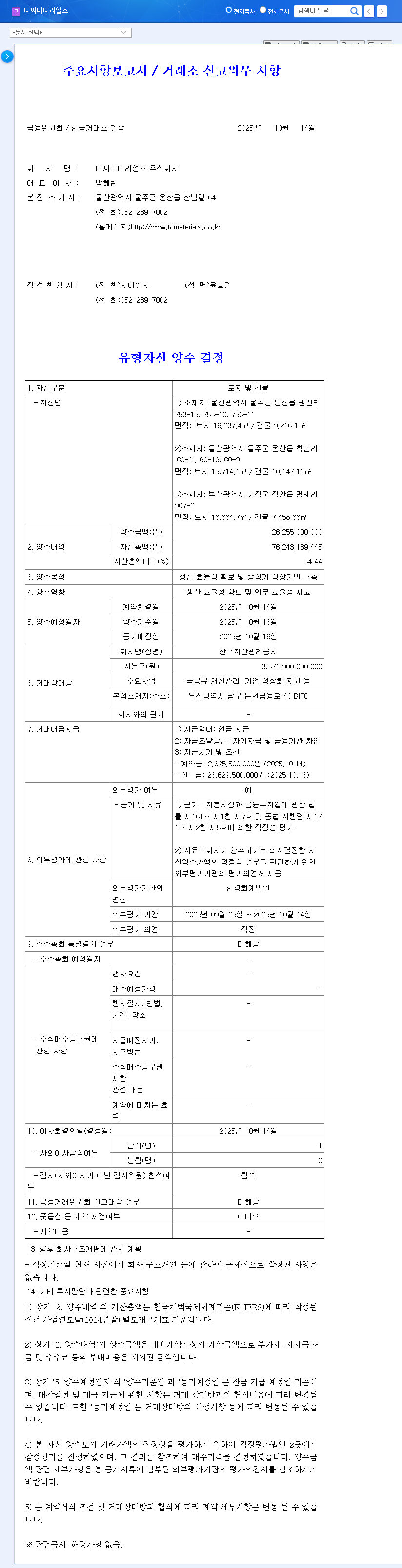
    In a significant move capturing market attention, TC Materials Co., Ltd. (티씨머티리얼즈) has announced a landmark decision to acquire tangible assets valued at ₩26.3 billion. This strategic investment, representing a substantial 34.44% of the company’s equity, is far more than a simple transaction. It signals a pivotal moment for the company’s future, raising a critical question for investors: Is this the catalyst for long-term growth or a short-term financial burden? This comprehensive analysis of the TC Materials asset acquisition will dissect the corporate fundamentals, market dynamics, and macroeconomic indicators to provide you with the clarity needed for sound investment decisions.

    We will explore the profound implications of this acquisition, weigh the opportunities against the risks, and outline a clear investment strategy to help you navigate potential stock price fluctuations. Join us as we delve into the future of TC Materials.

    Breaking Down the TC Materials Asset Acquisition

    On October 14, 2025, TC Materials officially disclosed its decision to acquire significant tangible assets, a move seen as a cornerstone for its future operational capacity and strategic positioning. The specifics of this pivotal investment are crucial for understanding its potential impact.

    Key Details of the Transaction

    • Event: Decision to acquire tangible assets (land and buildings) from the Korea Asset Management Corporation.
    • Value: ₩26.3 billion, equivalent to 34.44% of the company’s total equity.
    • Assets: Land and buildings located in Ulsan and Busan, totaling approximately 95,000㎡.
    • Purpose: Officially stated as a strategic investment to enhance production efficiency and establish a mid-to-long-term growth foundation.
    • Funding: A combination of the company’s own capital and loans from financial institutions. The final cash payment of ₩23.629 billion is due on October 16, 2025.
    • Official Disclosure: The complete details can be reviewed in the Official Disclosure (DART report).

    Current State: Corporate Health & Market Environment

    To grasp the full weight of this investment, we must first analyze TC Materials’ current financial standing and the broader economic landscape it operates within.

    Company Financial Snapshot (H1 2025)

    TC Materials operates primarily in Power Infrastructure (56.76%), Automotive Materials (20.74%), and Home Appliances (18.06%). However, its recent performance shows signs of strain:

    • Revenue: ₩144.865 billion (a slight year-over-year decrease).
    • Operating Profit: ₩3.807 billion (a significant decline).
    • Net Income: -₩1.391 billion (shifted to a deficit).
    • Key Concern: A substantial financial burden from existing borrowings and outstanding convertible bonds continues to weigh on net income. For more on this, you can read our guide on how convertible bonds impact investors.

    Macroeconomic Headwinds

    The external environment presents additional challenges. Rising government bond yields, as reported by authoritative sources like Bloomberg, suggest that borrowing costs for the new loans could be higher than anticipated. Furthermore, climbing crude oil prices and shipping indexes point to increased costs for raw materials like copper, potentially squeezing profit margins further.

    Impact Analysis: Opportunities vs. Risks

    This tangible asset investment is a double-edged sword, presenting both a clear path to growth and significant financial risks.

    This large-scale investment can be seen as a proactive commitment from management to drive future growth, but it arrives at a time of underlying financial weakness, creating a classic risk/reward scenario for investors.

    The Bull Case (Positive Implications)

    • Enhanced Production Efficiency: New facilities can streamline manufacturing, automate processes, and expand capacity, leading to long-term cost reductions.
    • Foundation for Growth: The investment strengthens TC Materials’ ability to meet rising demand in high-growth sectors like electric vehicle components and power grid modernization.
    • Increased Asset Base: Expanding tangible assets can improve the company’s long-term financial structure and borrowing capacity if it translates to higher revenue.

    The Bear Case (Negative Risks)

    • Short-Term Liquidity Strain: The ₩26.3 billion outlay is a massive expenditure that could strain cash flow, especially when combined with existing debt.
    • Increased Debt Burden: Taking on new loans on top of existing convertible bonds elevates financial risk and interest expenses, which could further suppress net income.
    • Delayed ROI: The positive effects on profitability are not immediate. Unexpected costs and a slow ramp-up period could delay the return on investment.
    • Weak Underlying Performance: Making a large investment while revenue is declining and the company is at a net loss is a bold, but risky, strategy that could amplify negative sentiment if performance doesn’t improve quickly.

    Investment Strategy & Stock Outlook

    Given these conflicting factors, a nuanced investment strategy is essential. The TC Materials stock outlook hinges on management’s ability to execute its vision without succumbing to financial pressures.

    Short-Term Outlook (3-6 Months)

    The stock price is likely to face downward pressure. The significant cash payment due in October, combined with current performance weakness and broader market concerns about interest rates, could create volatility and negative sentiment. Investors should anticipate potential price adjustments.

    Mid-to-Long-Term Outlook (1-3 Years)

    The long-term success of this acquisition depends entirely on execution. If TC Materials can leverage the new assets to improve margins, capture new contracts, and show a clear path to profitability, the investment will be a significant long-term positive for corporate value and the stock price.

    Recommendations for Investors

    • Cautious Buy: For new investors, the long-term potential is appealing. However, it is prudent to wait for the short-term volatility to subside. Monitor the company’s Q4 2025 and Q1 2026 earnings reports for signs of improving operational efficiency before committing capital.
    • Hold: For existing shareholders, this event validates a long-term growth thesis. It may be wise to hold through the short-term turbulence and focus on management’s execution of their strategic plan.
    • Monitor Closely: All investors should watch for specific details on loan terms, the new facility’s operational roadmap, and any changes in the competitive landscape.

    In conclusion, the TC Materials asset acquisition is a transformative bet on the company’s future. While it bolsters long-term growth prospects, the immediate financial risks are undeniable. Prudent investors will weigh these factors carefully, stay informed, and make strategic decisions based on execution rather than speculation.
    (125020) TC Materials Asset Acquisition: 2025 Stock Outlook & Investment Strategy 관련 이미지
  • (211050) INCAR FINANCIAL SERVICE Stock: CEO Increases Stake – A Deep-Dive Analysis for Investors

    (211050) INCAR FINANCIAL SERVICE Stock: CEO Increases Stake – A Deep-Dive Analysis for Investors

    When a company’s top executive personally invests more of their own money into the business, it’s a signal that savvy investors pay close attention to. This is precisely what just happened at INCAR FINANCIAL SERVICE Co.,Ltd., where CEO Shim Doo-sup has demonstrably increased his ownership stake. This move has sparked significant interest, leaving many to wonder if this is the ultimate vote of confidence in the company’s future.

    This comprehensive analysis will unpack the details of this development, dive deep into the robust fundamentals of INCAR FINANCIAL SERVICE, and explore the strategic implications for both the company and potential investors. We’ll provide the clarity you need to make an informed decision about this compelling opportunity.

    A CEO’s Vote of Confidence: The Stake Increase Explained

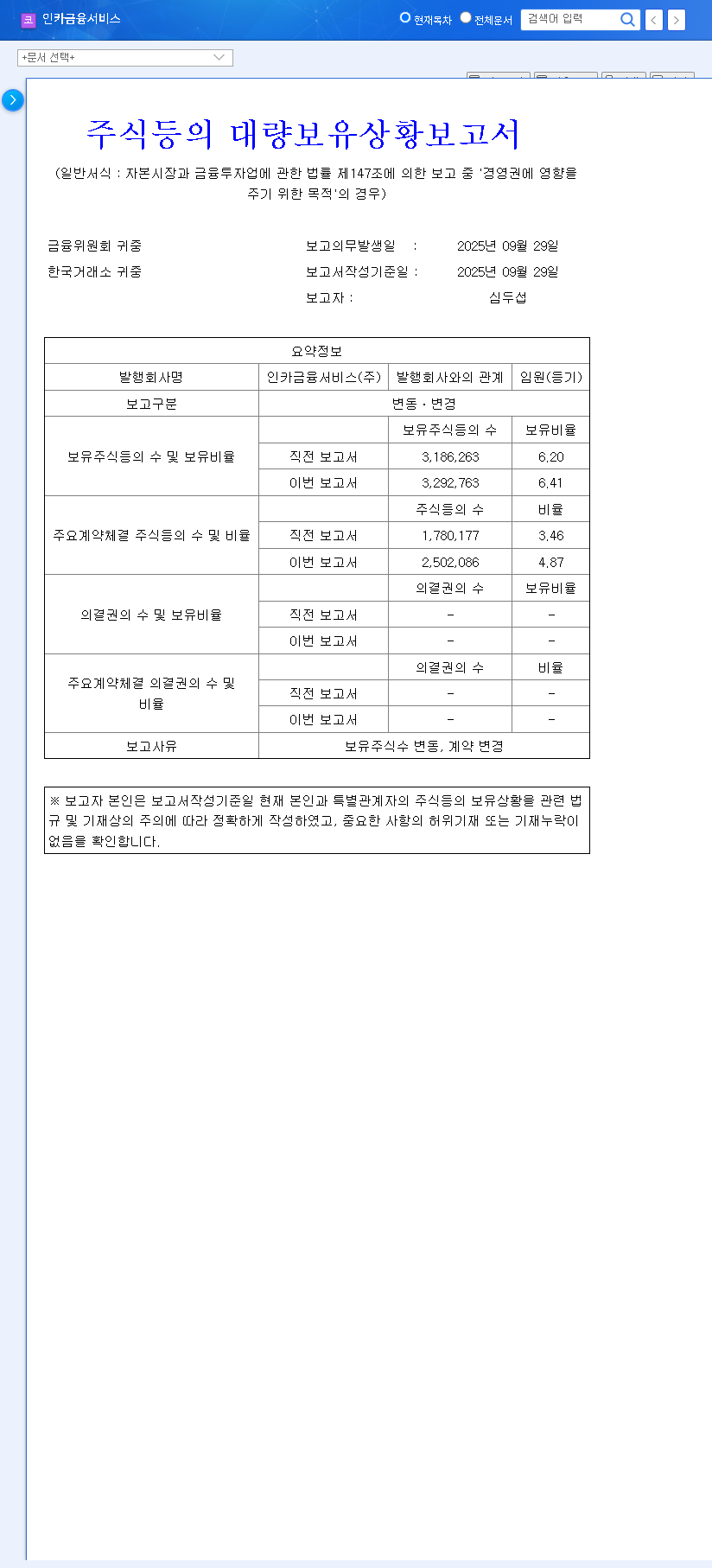
    On October 13, 2025, a public filing revealed a noteworthy change in the ownership structure of INCAR FINANCIAL SERVICE. CEO Shim Doo-sup, through on-market purchases conducted by Glory Consulting Co., Ltd. between September 23 and September 29, 2025, boosted his personal stake in the company. The numbers, detailed in the Official Disclosure (Source), show a clear commitment:

    CEO Shim Doo-sup’s Stake Change: An increase from 6.20% to 6.41%. While the 0.21 percentage point increase may seem modest, the act of purchasing shares on the open market is a powerful bullish indicator, suggesting the leadership believes the stock is currently undervalued and poised for future growth.

    This isn’t just a minor portfolio adjustment; it’s a strategic move to strengthen management influence and signal unwavering confidence in the company’s trajectory. So, what underpins this confidence?

    Analyzing the Financial Bedrock of INCAR FINANCIAL SERVICE

    CEO Shim’s investment is backed by a company demonstrating impressive financial health and strategic growth, particularly evident in its H1 2025 performance.

    Exceptional Revenue and Profitability Growth

    The first half of 2025 painted a vibrant picture of the company’s financial performance:

    • Surging Revenue: Consolidated revenue climbed to KRW 468.9 billion, a substantial 18.3% increase year-on-year, primarily fueled by strong performance in the long-term non-life and life insurance sectors.
    • Impressive Net Profit: The company posted a net profit of KRW 33 billion, showcasing a clear and positive trend in its bottom-line profitability.
    • Stronger Equity Base: Total equity grew by 19.1% to KRW 175.3 billion, demonstrating a commitment to fortifying its financial foundation.

    Navigating Financial Soundness and Strategic Advantages

    While the numbers are strong, a complete INCAR FINANCIAL SERVICE analysis requires looking at the full picture. The debt-to-equity ratio, standing at 356%, is a metric that warrants attention. Though relatively high, it’s not uncommon in the capital-intensive insurance industry. The company’s consistent equity growth suggests proactive management of this figure. Furthermore, its diversified structure, with subsidiaries like Mortgage Leaders Co., Ltd. in the loan brokerage business, provides multiple revenue streams and potential growth engines that de-risk the core operations.

    Forging Ahead in a Competitive GA Market

    The General Agency (GA) market is notoriously competitive. INCAR FINANCIAL SERVICE is not standing still; it’s actively investing in technology and talent to secure its competitive edge.

    • Digital Transformation: The company is embracing the future with initiatives like building robust financial platforms, collaborating with AI-powered planners to enhance efficiency, and launching the consumer-facing CarRing app.
    • Investing in People: Alongside tech, the company is expanding its human planner organization and investing in IT systems to support them, creating a powerful hybrid model.
    • Shareholder & Employee Alignment: Plans to grant Restricted Stock Awards (RSA) to employees helps to align staff motivation with long-term shareholder value, fostering a culture of ownership.

    Investor Takeaway: How to Interpret These Signals

    So, what does this all mean for your investment strategy regarding INCAR FINANCIAL SERVICE stock? Insider buying is one of the most classic positive signals in the market. It suggests that those with the most intimate knowledge of the company see a bright future ahead. For a deeper understanding of such signals, you can review expert analysis from sources like Investopedia on insider trading.

    Here is a summary of the investment outlook:

    • Short-Term Bullish Sentiment: The CEO’s purchase is likely to boost investor confidence and could provide positive momentum for the stock price in the near term.
    • Long-Term Growth Potential: The company’s solid financial growth, digital innovation, and diversified business model make a compelling case for its long-term investment appeal.
    • Key Risks to Monitor: Investors should continue to monitor the high debt-to-equity ratio and the intense competition in the GA market. Our guide to analyzing financial statements can help you track these metrics.

    In conclusion, the combination of strong fundamentals and a significant vote of confidence from its own CEO makes INCAR FINANCIAL SERVICE a company worthy of a closer look. While diligent monitoring is always required, the current signals point towards a positive and promising future.

    Disclaimer: This article is for informational purposes only and does not constitute investment advice. All investment decisions should be made based on your own research and judgment.

    (211050) INCAR FINANCIAL SERVICE Stock: CEO Increases Stake – A Deep-Dive Analysis for Investors 관련 이미지
  • (000670) Youngpoong Seokpo Smelter: ₩1.5T Revenue Crisis After Suspension – Investor Analysis

    (000670) Youngpoong Seokpo Smelter: ₩1.5T Revenue Crisis After Suspension – Investor Analysis

    The Youngpoong Seokpo Smelter, the cornerstone of Youngpoong Co., Ltd.’s business, has been hit with a critical 10-day business suspension order due to repeated environmental law violations. This isn’t just a minor setback; it’s a seismic event projected to erase approximately ₩1.5 trillion from the company’s revenue stream, representing nearly 40% of its annual total. For investors and market watchers, this development raises urgent questions about the company’s operational integrity, financial stability, and long-term viability. This comprehensive analysis will explore the deep-seated issues behind the suspension and what it means for the future of Youngpoong.

    The Suspension Order: A Critical Blow

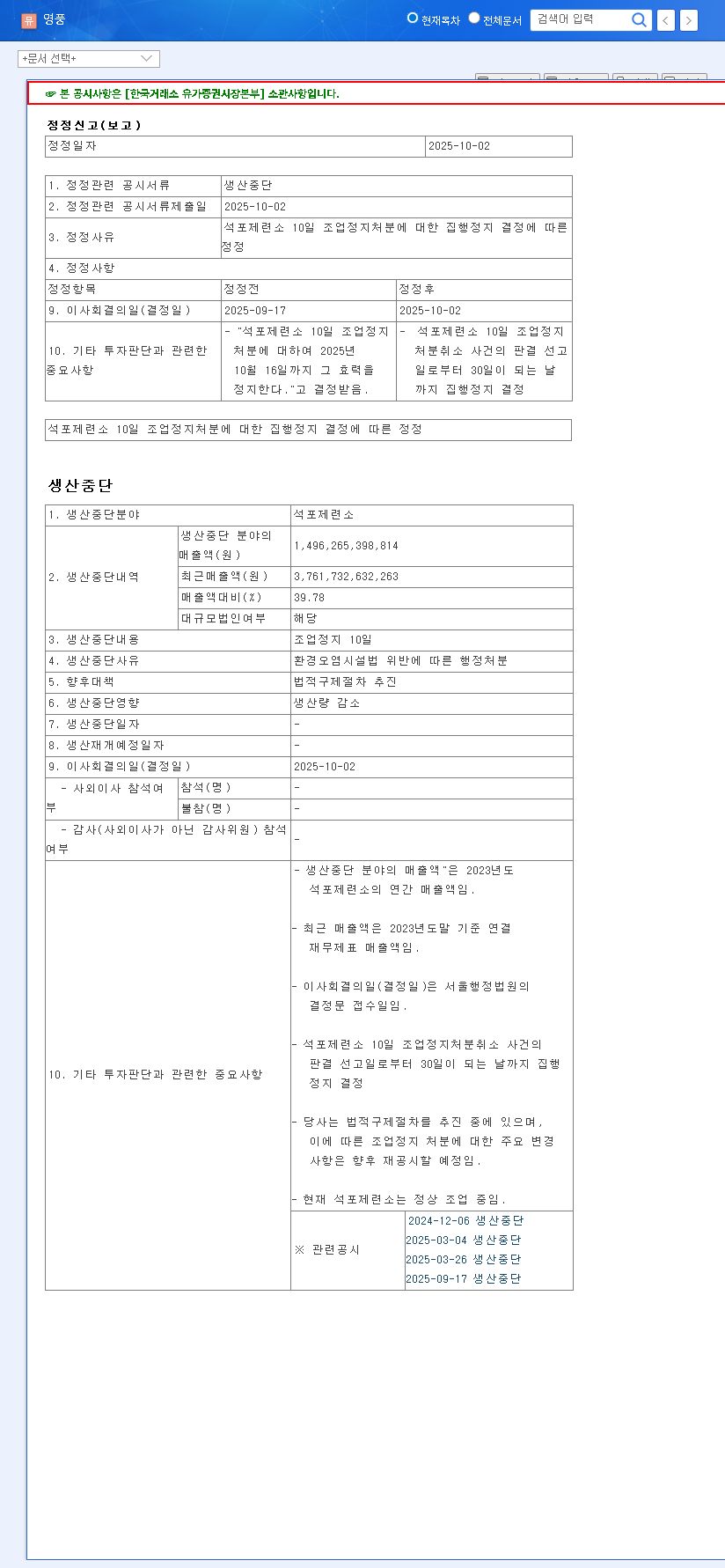
    On October 2, 2025, Youngpoong Co., Ltd. formally announced the suspension order for its key facility. The reasons cited were numerous violations of critical environmental regulations, including the Water Environment Conservation Act and the Soil Environment Conservation Act. According to the Official Disclosure filed with the Financial Supervisory Service, this is the second such order in 2025, highlighting a deeply concerning pattern of non-compliance.

    The financial ramifications are staggering. A revenue suspension of ₩1,496.3 billion is not just a line item; it’s a direct threat to the company’s profitability, liquidity, and market standing for the entire fiscal year.

    Analyzing the Widespread Financial Fallout

    The impact of the Youngpoong business suspension extends far beyond the immediate 10-day period. It triggers a cascade of negative financial events that could cripple the company’s fundamentals.

    1. Severe Damage to Core Operations

    The smelting division is Youngpoong’s primary revenue engine. Halting production, even for a short period, has long-term consequences:

    • Profitability Collapse: The massive revenue loss combined with ongoing fixed costs (labor, maintenance) will likely push the company back into a deficit, erasing the profits made in the first half of 2025.
    • Supply Chain Disruption: A halt at a major smelter can disrupt the global supply chain for zinc and other metals, potentially leading to loss of contracts and market share to more reliable competitors.
    • Increased Financial Burdens: Beyond the lost revenue, the company faces escalating costs for environmental remediation, potential government fines, and litigation expenses.

    2. Weakening Financial Health and Investor Trust

    The suspension sends a powerful negative signal to the market. A sharp decline in operating cash flow will strain liquidity and could impact debt repayment capabilities. This operational instability, driven by Youngpoong environmental violations, could lead to a credit rating downgrade, which would increase future borrowing costs and further erode investor confidence. The damage to the company’s reputation and its ESG (Environmental, Social, and Governance) profile could deter institutional investors who prioritize sustainable and responsible business practices.

    A Pattern of Risk: Beyond a One-Time Incident

    This incident at the Youngpoong Seokpo Smelter is not an isolated event. The recurrence of suspension orders points to a systemic, structural problem within the company’s operational and compliance frameworks. Instead of being viewed as a temporary issue, the market is likely to perceive this as a fundamental flaw in management’s ability to mitigate known environmental risks. For a heavy industry like smelting, a strong environmental compliance record is not optional; it is a license to operate. Further analysis from sources like the Environmental Protection Agency (EPA) shows that regulatory scrutiny on smelters globally is only increasing.

    Investor Outlook and Strategic Considerations

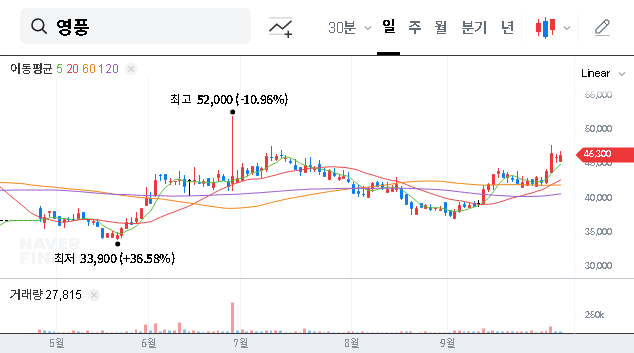
    For current and potential investors, this situation demands a cautious and critical approach. The short-term impact on Youngpoong’s stock price is expected to be severely negative. The planned treasury stock buyback will likely be insufficient to counteract the immense downward pressure from this news. A comprehensive Youngpoong stock analysis must now heavily weigh these recurring operational and legal risks.

    Investors should closely monitor the following:

    • Management’s Response: Look for a transparent and decisive action plan from Youngpoong’s leadership that goes beyond superficial promises and addresses the root causes of the environmental failures.
    • Capital Investment in Compliance: Will the company allocate significant capital to upgrade the Youngpoong Seokpo Smelter facilities and implement robust, verifiable environmental control systems?
    • Portfolio Diversification: Assess the performance and growth potential of Youngpoong’s other divisions, such as electronic components, to see if they can offset the volatility of the smelting business. You can learn more by reading our guide on evaluating corporate risk portfolios.

    Disclaimer: This analysis is based on publicly available information and is for informational purposes only. It does not constitute financial or investment advice. All investment decisions should be made with the consultation of a qualified financial professional.

    (000670) Youngpoong Seokpo Smelter: ₩1.5T Revenue Crisis After Suspension – Investor Analysis 관련 이미지
  • (086520) Ecopro Large Shareholding Report (086520): A Deep Dive Analysis for Investors

    (086520) Ecopro Large Shareholding Report (086520): A Deep Dive Analysis for Investors

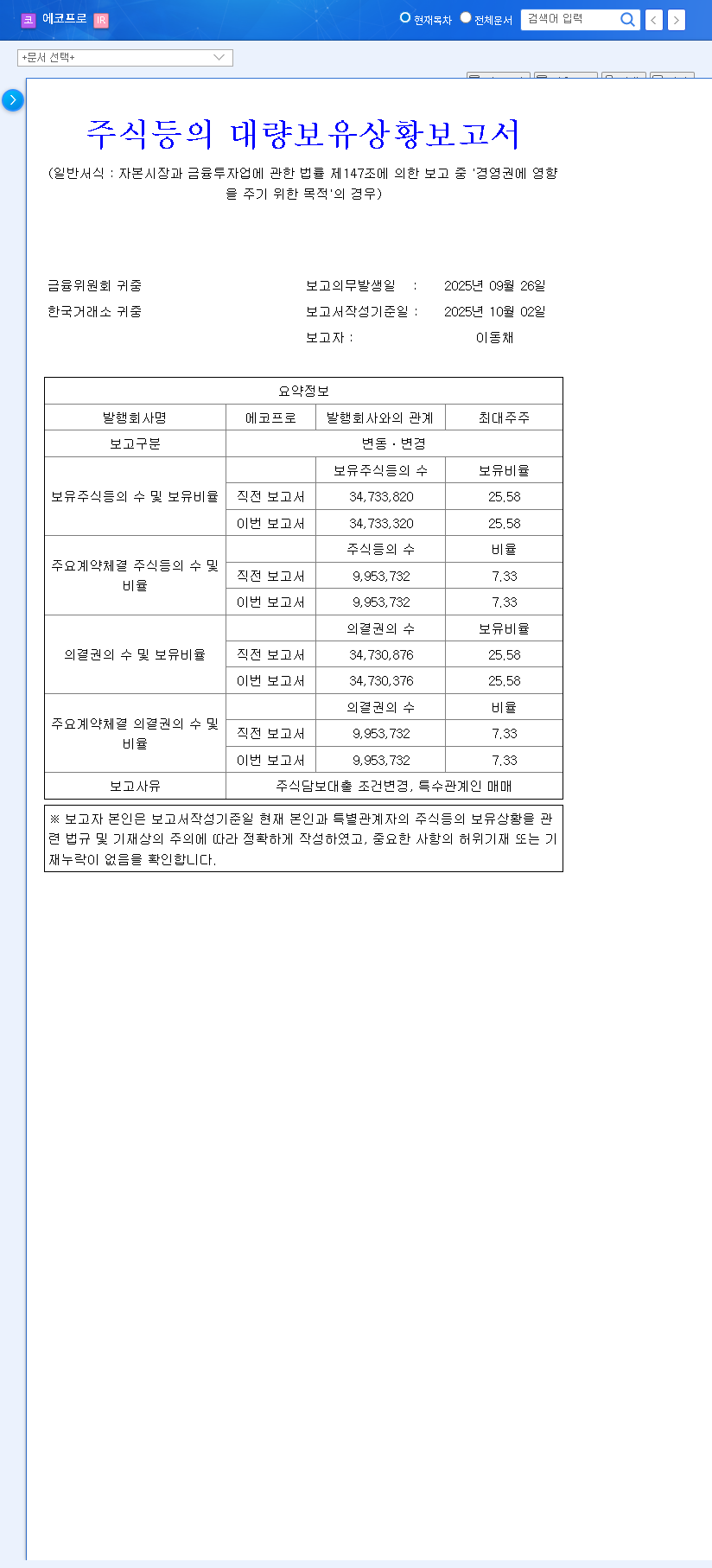
    The latest Ecopro Large Shareholding Report for ticker 086520, filed on October 2, 2025, has sent ripples through the investment community. These filings are critical disclosures that provide a transparent look into the actions of a company’s most significant shareholders. This particular report merits a close look, as it details changes to the stock collateral loan conditions for Ecopro’s Chairman and largest shareholder, Lee Dong-Chae. For investors, understanding the nuances of this report is key to formulating a successful Ecopro investment strategy.

    In this comprehensive Ecopro stock analysis, we will meticulously dissect the report’s contents, evaluate the company’s fundamental health, analyze the broader macroeconomic pressures, and ultimately provide a clear, actionable investment outlook.

    What the Ecopro Large Shareholding Report Reveals

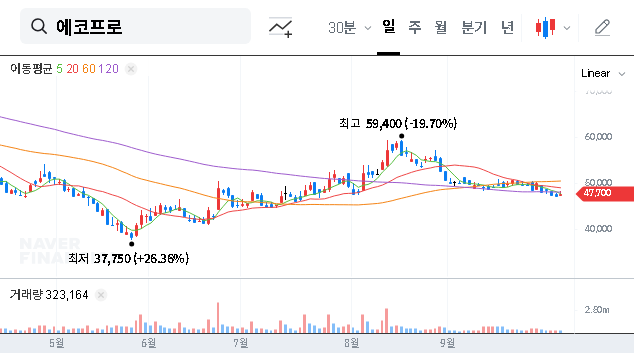
    At its core, the report centers on two main events. The first, and most significant, is the change in stock collateral loan conditions for Chairman Lee Dong-Chae. The second is a minor sale of 500 shares by a related party, Kang Ye-Ri. Crucially, Chairman Lee’s total ownership stake remained unchanged at a substantial 25.58%. The full filing is available for public review in the Official Disclosure on DART.

    While the sale by a related party is negligible in volume, the primary focus for investors should be on the loan conditions. A change in these terms can sometimes signal an individual’s need for liquidity or a renegotiation based on asset value. However, the fact that Ecopro Chairman Lee Dong-Chae did not reduce his stake is a powerful statement. It suggests a continued commitment to management and a firm belief in the company’s long-term trajectory, which generally bolsters investor confidence in management stability.

    Comprehensive Ecopro Stock Analysis: Fundamentals & Outlook

    Beyond the report, any sound investment decision must be grounded in a thorough analysis of the company’s underlying business. As a holding company, Ecopro’s success is intrinsically tied to its subsidiaries in the high-growth secondary battery materials sector.

    Positive Factors & Growth Drivers

    • Secondary Battery Market Boom: The global transition to electric vehicles (EVs) and energy storage systems (ESS) provides a massive, long-term tailwind for Ecopro’s core subsidiaries. This market is expected to see continued robust growth, as reported by industry analysts at leading market research firms.
    • Vertical Integration: The company’s ‘Closed Loop Eco-System,’ which covers everything from raw material recycling to final product manufacturing, creates significant cost advantages and supply chain stability—a crucial competitive edge.
    • Diversification Strategy: Ecopro is proactively expanding into new areas like environmental services and electronic materials, reducing its reliance on a single sector and opening new revenue streams.
    • Strengthening Financials: An improved consolidated debt-to-equity ratio of 26.18% points to enhanced financial stability and prudent capital management.

    Negative Factors & Risks to Monitor

    • Commodity Price Volatility: The prices of key raw materials like nickel, lithium, and cobalt are notoriously volatile and can directly squeeze profit margins.
    • High Capital Expenditure: Aggressive expansion plans in North America and Europe require substantial investment, posing funding challenges and increasing financial leverage.
    • Intense Competition: The battery materials market is becoming increasingly crowded, demanding continuous innovation and R&D investment to stay ahead.
    • Macroeconomic Headwinds: Global interest rate hikes, currency fluctuations, and geopolitical tensions can disrupt business strategy and dampen investor sentiment.

    While the long-term outlook for the secondary battery market is strong, investors must balance this optimism with a realistic assessment of the short-term economic and competitive pressures facing Ecopro and its peers.

    A Smart Ecopro Investment Strategy

    Considering all factors, the latest Ecopro Large Shareholding Report is best interpreted as a neutral to slightly positive event. It confirms management stability without altering the company’s fundamental investment thesis. Therefore, a prudent investment strategy should be based on a long-term view.

    Investment Opinion & Key Monitoring Points

    Given that this report does not fundamentally change the company’s operations, a neutral, hold-oriented perspective is warranted in the short term. Significant price action based solely on this news is unlikely. Long-term investors should instead focus on these critical monitoring points:

    • Subsidiary Performance: Track the quarterly earnings and profitability of key units like Ecopro BM. Our deep dive into Ecopro’s subsidiaries offers more detail here.
    • Capital & Funding Progress: Watch for announcements related to the funding of overseas expansion projects and their impact on the balance sheet.
    • Macro-Indicator Shifts: Stay informed about changes in raw material prices, key interest rates, and currency exchange rates (KRW/USD).
    • Future Shareholder Movements: Continue to monitor any future filings from Ecopro Chairman Lee Dong-Chae or other major shareholders for signs of shifting sentiment.

    In conclusion, Ecopro’s long-term growth story remains intact, underpinned by the powerful secular trend of vehicle electrification. This report reinforces the stability of its leadership. However, investors must remain vigilant, weighing the company’s bright future against the very real risks present in today’s volatile global market.

    (086520) Ecopro Large Shareholding Report (086520): A Deep Dive Analysis for Investors 관련 이미지
  • (003650) Michang Oil Industrial Management Succession: Analyzing the Shareholder Stake Transfer

    (003650) Michang Oil Industrial Management Succession: Analyzing the Shareholder Stake Transfer

    This comprehensive analysis explores the recent shareholder movements within Michang Oil Industrial, focusing on what appears to be the initial stages of a long-term Michang Oil Industrial management succession plan. A recent disclosure has revealed a complex internal share transfer within the founding family, which, despite having no immediate impact on the total ownership percentage, sends a powerful signal to investors about the company’s future leadership and strategic direction.

    Is this a routine asset shuffle, or a meticulously planned first step towards a generational shift in control? We will dissect the disclosure, evaluate the company’s robust fundamentals, and provide a clear guide for investors navigating this pivotal moment in the company’s history.

    Decoding the Shareholder Stake Transfer

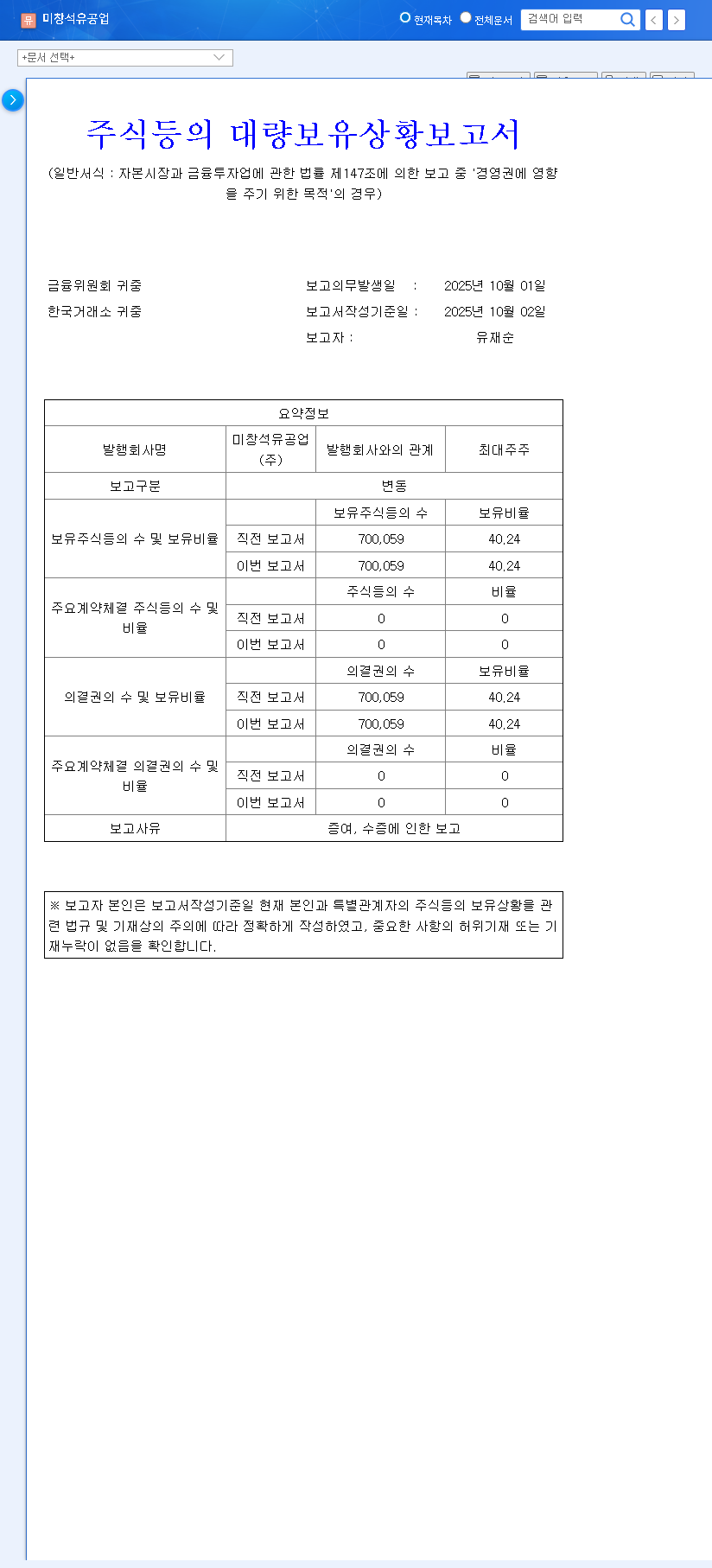
    On October 2, 2025, a seemingly routine report on large shareholdings was filed, but the details tell a more nuanced story. The transaction, as detailed in the Official Disclosure (DART), involved the company’s major shareholder, Ms. Yoo Jae-soon. The key movements were:

    • Gift (Outflow): Ms. Yoo Jae-soon gifted 200,000 shares to Mr. Yoo Seung-soo.
    • Receipt (Inflow): Ms. Yoo Jae-soon simultaneously received 100,000 shares from Mr. Yoo Seung-soo and 100,000 shares from Ms. Yoo Ji-yoo.

    The net result is that the total shareholding of the major shareholder group remains unchanged at a solid 40.24%. However, the stated purpose of ‘influence on management’ elevates this from a simple family transaction to a strategic maneuver with significant long-term implications for the Michang Oil Industrial management succession.

    While the balance sheet shows a zero-sum game, the subtext of this transfer is clear: a strategic repositioning of family assets, likely paving the way for a new era of leadership at Michang Oil Industrial.

    Financial Health & Market Position

    A Foundation of Stability

    Michang Oil Industrial’s fundamentals provide a stable backdrop for this potential transition. As of the first half of 2025, the company demonstrated impressive financial resilience. Despite a minor dip in revenue to KRW 205.2 billion, its core lubricant sector performed strongly. More importantly, the company’s financial structure has been significantly fortified. A sharp reduction in short-term borrowings from KRW 50 billion to KRW 28 billion has enhanced its soundness, while an increase in current assets bolsters short-term liquidity. With total assets of KRW 527.6 billion against total liabilities of just KRW 76.7 billion, the company boasts an exceptionally healthy and stable financial position, ready to support future growth initiatives.

    Navigating Macroeconomic Headwinds

    The company’s performance is inevitably tied to the broader economic climate. Factors such as volatile currency exchange rates and fluctuating global oil prices directly impact raw material costs and profit margins. According to market analysis from sources like Bloomberg, sustained high interest rates could also pose challenges. However, Michang Oil Industrial’s low-leverage financial structure provides a substantial buffer, making it less vulnerable to financing cost pressures than many of its competitors. This resilience is a key asset during periods of economic uncertainty.

    Impact Analysis: What This Means for the Future

    Short-Term: A Muted Response

    In the immediate term, the direct impact on Michang Oil Industrial’s stock price is expected to be limited. Since there’s no change in the controlling stake, the market is unlikely to react strongly. This is a signal, not a definitive event. However, astute investors will now be watching the company with increased interest, anticipating further announcements that could clarify the succession roadmap.

    Mid-to-Long-Term: Laying the Groundwork for Growth

    The long-term implications are far more significant. A smooth and well-planned management succession is critical for sustained corporate value. This internal Michang Oil Industrial stake transfer consolidates the family’s control and signals a commitment to long-term stability. A new generation of leadership could inject fresh strategic vision, potentially leading to investments in new growth sectors, enhancing the efficiency of existing operations, and ultimately driving shareholder value. A transparent and successful transition will be viewed very positively by the market.

    Investor’s Guide: Key Factors to Monitor

    Rather than focusing on short-term price movements, investors should adopt a long-term perspective. Here are the crucial areas to watch:

    • Succession Roadmap: Look for any official announcements regarding changes in executive roles or the strategic vision presented by potential new leaders.
    • Strategic Investments: Monitor how the company allocates capital. Are they doubling down on their core lubricant business or diversifying into new growth engines?
    • Financial Discipline: Ensure the company maintains its robust financial structure as it navigates both the management transition and the external economic environment. Learn more by reading about how to analyze corporate governance changes.

    In conclusion, this share transfer is a significant, albeit subtle, event. For the patient investor, it signals a potential long-term value creation opportunity as Michang Oil Industrial prepares for its next chapter.

    (003650) Michang Oil Industrial Management Succession: Analyzing the Shareholder Stake Transfer 관련 이미지
  • (450080) EcoPro Materials Stock Analysis (2025): A Deep Dive for Investors

    (450080) EcoPro Materials Stock Analysis (2025): A Deep Dive for Investors

    A recent disclosure revealed that EcoPro, the largest shareholder of EcoPro Materials, has slightly increased its stake. While the change is a mere 0.01%, it has sparked conversations among investors about its underlying significance and potential impact on the EcoPro Materials stock price. Is this a signal of confidence or simply a minor adjustment?

    This comprehensive analysis moves beyond the headline to explore the complex fundamental issues facing the company. We aim to provide investors with deep insights and a practical roadmap for making informed decisions. By examining the company’s current financial health, growth drivers, and significant challenges, we will help you formulate a wise investment strategy for EcoPro Materials.

    Understanding the Stake Increase: What Happened?

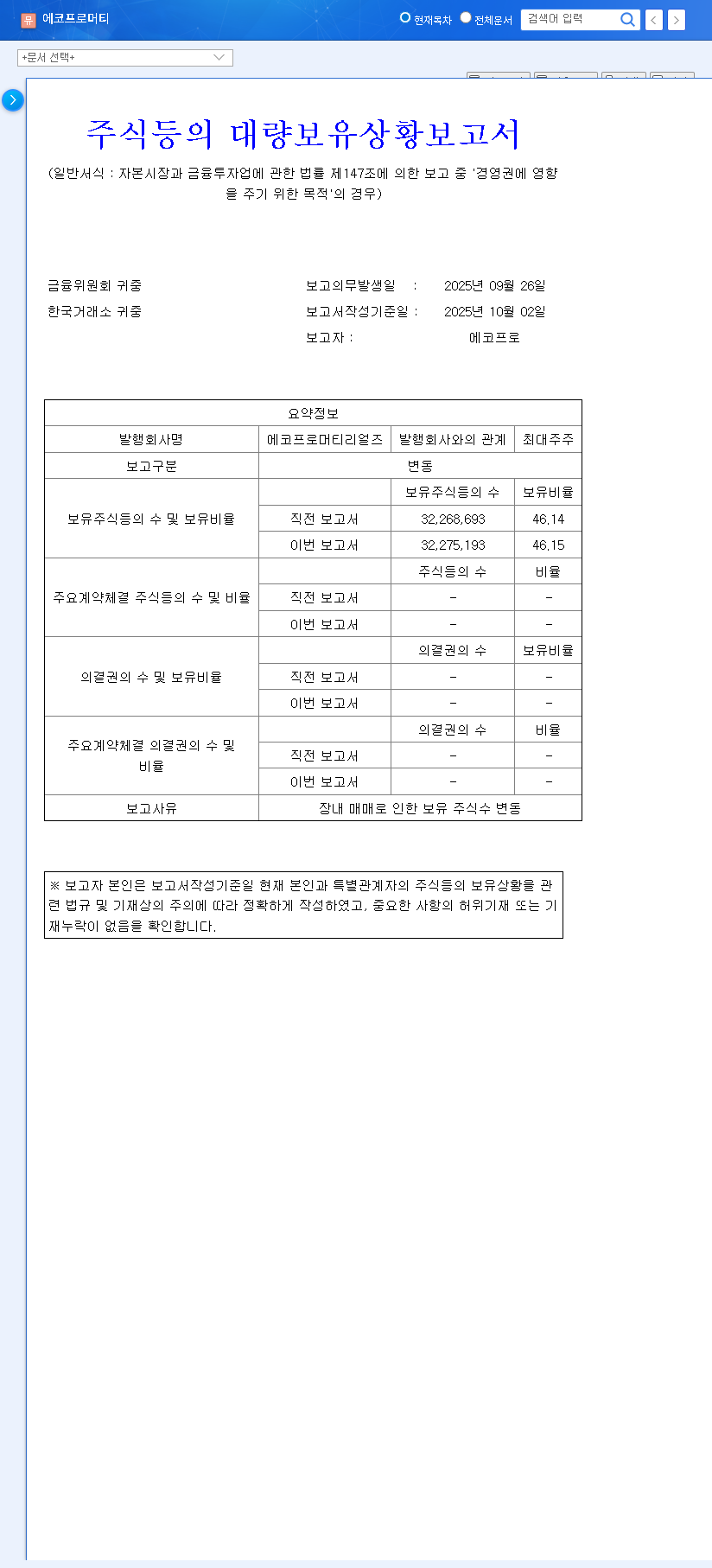
    On October 2, 2025, a mandatory disclosure was filed detailing a change in shareholding status. EcoPro, the parent company, reported an increase in its stake from 46.14% to 46.15%. This change resulted from an open market purchase of 6,500 shares by an insider. The stated purpose of holding these shares remains to exert ‘Influence over Management’.

    While an insider purchase can be a positive signal, the minuscule scale of this 0.01% increase means it’s unlikely to be a catalyst for a short-term stock price rally. The real story lies within the company’s financial health. You can view the Official Disclosure (Source) on DART.

    For investors, this action is best interpreted as a reaffirmation of EcoPro’s long-term commitment rather than a significant strategic shift. Therefore, our focus must turn to the far more critical aspect: the fundamental business performance of EcoPro Materials.

    In-Depth Fundamental Analysis of EcoPro Materials

    The true potential of investing in EcoPro Materials hinges on its underlying strengths and weaknesses. An analysis of the H1 2025 report reveals a company at a crossroads, balancing impressive growth with severe profitability concerns.

    Positive Factors: The Growth Engine

    • Impressive Revenue Growth: H1 2025 revenue surged by 46.8% year-over-year, reaching KRW 214.1 billion. This demonstrates successful client diversification and resilience in a fluctuating market.
    • Strategic Upstream Internalization: By internalizing the Raw Material Precipitate (RMP) process, the company secures a more stable raw material supply and enhances its price competitiveness—a crucial advantage.
    • Market & Technology Leadership: With specialized technology in high-nickel precursor production and the largest domestic capacity, EcoPro Materials is well-positioned to capitalize on the growing EV market, which experts at sources like BloombergNEF project will continue to expand.
    • Strong Capital Foundation: Funds raised from its 2023 IPO are earmarked for critical facility investments and upstream expansion, which should strengthen its long-term financial health and production capabilities.

    Negative Factors: Significant Headwinds

    • Severe Profitability Issues: The company recorded significant operating and net losses in H1 2025. A cost of goods sold ratio exceeding 90% makes it highly vulnerable to raw material price swings and indicates an urgent need for structural improvements.
    • High Financial Burden: With borrowings of KRW 519.9 billion and net debt of KRW 386.5 billion, the company’s balance sheet is under pressure. This debt could limit future flexibility and increase financial risk.
    • Raw Material Volatility: The prices of nickel and cobalt, key inputs, are highly volatile. Geopolitical risks and supply chain disruptions, which are explored in our deep dive into the EV battery supply chain, can directly and severely impact profitability.
    • Aggressive CAPEX Plans: A planned capital expenditure of KRW 148.4 billion, while necessary for growth, will place further strain on the company’s finances in the short to medium term.

    Investor Action Plan: Navigating Your Strategy

    Given the conflicting signals of strong growth and poor profitability, what is the right move? The EcoPro stake increase is a minor event; investment decisions must be based on the fundamentals.

    For Potential New Investors

    A prudent, cautious approach is required. Initiating a new position based solely on recent news is not advisable due to the high fundamental risks. It is more reasonable to wait for clear evidence that the company’s profitability improvement strategies are delivering tangible results. Watch for improvements in operating margins and a reduction in the cost of goods sold.

    For Existing Shareholders

    Existing holders should continue to monitor key performance indicators beyond short-term events. Focus on the company’s progress in managing costs, trends in raw material prices, and the broader outlook for the global battery and EV industries. The ability of EcoPro Materials to navigate its financial challenges while scaling production will be key.

    Key Checklist for Ongoing Analysis

    • Profitability Turnaround: Look for specific plans for cost reduction and their execution. Are they expanding high-value product lines?
    • Debt Management: Monitor quarterly reports for any reduction in the company’s debt load and improvement in its debt-to-equity ratio.
    • Market Dynamics: Keep an eye on the global EV market demand and competitor activities, which will influence precursor demand and pricing.

    In conclusion, this EcoPro Materials analysis shows that the company’s future stock performance is tied not to minor shareholding shifts, but to its ability to translate strong revenue growth into sustainable profit. Until fundamental financial health is restored, the stock’s upward momentum may be limited.

    (450080) EcoPro Materials Stock Analysis (2025): A Deep Dive for Investors 관련 이미지
  • (006840) AK Holdings Transaction: In-Depth Analysis of the ₩130 Billion Subsidiary Deal

    (006840) AK Holdings Transaction: In-Depth Analysis of the ₩130 Billion Subsidiary Deal

    A significant ₩130 billion financial maneuver is unfolding within the AK Holdings (006840) conglomerate, capturing the attention of the investment community. This major AK Holdings transaction involves an asset transfer between two key subsidiaries. But what does this mean for the company’s financial health, its strategic direction, and for you, the investor? Is it a simple internal shuffle or a precursor to a larger strategic shift? This analysis will dissect the deal, explore its underlying motives, and provide a clear investment outlook.

    Anatomy of the ₩130 Billion Fund Transaction

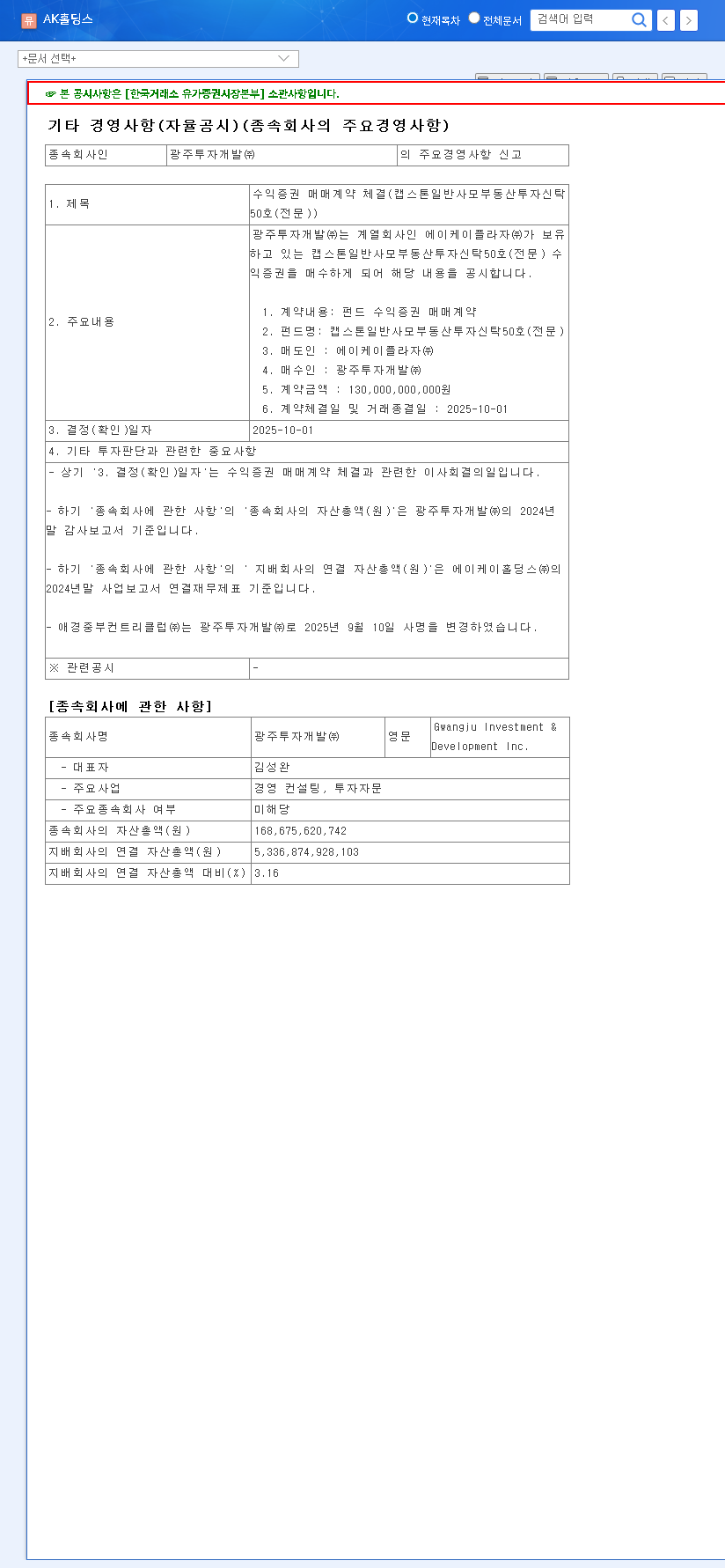
    On October 2, 2025, a definitive agreement was signed within the AK Holdings group. The core of the deal is the purchase of beneficiary certificates for the Capstone General Private Equity Real Estate Investment Trust No. 50 (Professional). Here are the key players:

    • The Buyer: Gwangju Investment Development Co., Ltd., a subsidiary of AK Holdings.
    • The Seller: AK Plaza Co., Ltd., an affiliate company also under the AK Holdings umbrella.
    • The Value: A substantial ₩130 billion.

    This move effectively transfers a significant real estate-related investment asset from one part of the group to another. The details of this intra-group sale were disclosed publicly, as per regulatory requirements. You can view the Official Disclosure (DART) for precise filing information.

    The Strategic Rationale: Why Now?

    At first glance, an internal transfer might seem like moving money from one pocket to another. However, such transactions are often driven by precise strategic goals. The primary motivation for this AK Holdings investment appears to be the optimization of the group’s overall asset portfolio and the enhancement of capital efficiency.

    This transaction is likely a calculated move to liquefy certain assets within AK Plaza, providing it with immediate capital, while consolidating real estate investment oversight under Gwangju Investment Development, potentially a more suitable vehicle for managing such assets long-term.

    By restructuring ownership, AK Holdings may be aiming to unlock value, improve the financial flexibility of AK Plaza, and streamline its investment management processes, which aligns with modern corporate finance practices for large conglomerates.

    Financial Impact on AK Holdings and Affiliates

    Positive Implications

    For AK Plaza Co., Ltd., the immediate benefit is clear: a ₩130 billion cash infusion. This enhances its financial liquidity, providing capital that can be used for debt repayment, new strategic investments, or strengthening its core retail operations. For the group, it represents a step towards more efficient asset allocation.

    Potential Risks and Downsides

    The burden shifts to Gwangju Investment Development Co., Ltd. The ₩130 billion outlay could strain its short-term cash flow and increase its leverage. Based on its 2024 financials, this could significantly impact its debt-to-equity ratio. Furthermore, the success of this deal hinges on the performance of the acquired real estate trust. If the investment underperforms, it could negatively affect the net income of both the subsidiary and, ultimately, AK Holdings.

    The Bigger Picture for AK Holdings

    On a consolidated basis, the direct impact of this AK Holdings transaction on operating profit is expected to be minimal. It’s an internal affair. However, it’s crucial to view this move within the context of AK Holdings’ current financial environment. The company is grappling with significant challenges, including the underperformance of its airline, Jeju Air, a high consolidated debt-to-equity ratio of 653%, and lingering legal risks. This transaction does not directly solve these fundamental issues.

    Comprehensive Analysis & Investment Strategy

    Our investment opinion remains “Neutral.” This transaction is best viewed as an internal strategic realignment rather than a fundamental game-changer. While it demonstrates proactive asset management, it does not alter the core risks facing the company. Investors should adopt a cautious and observant stance. Here is a suggested action plan:

    • Monitor Subsidiary Health: Keep a close watch on Gwangju Investment Development’s financial reports. Track its funding methods for this purchase and the reported returns from the real estate trust.
    • Focus on Core Fundamentals: Pay more attention to news concerning Jeju Air’s profitability and AK Holdings’ broader efforts to manage its high debt. For more on this, you might read about how to analyze corporate debt ratios.
    • Assess Macroeconomic Factors: Rising currency volatility and interest rate policies can significantly impact a highly leveraged company like AK Holdings. Monitor these external pressures.

    In conclusion, while the ₩130 billion subsidiary deal is a notable event, it should be seen as a single piece in the much larger and more complex puzzle of AK Holdings’ corporate strategy. Long-term value will be driven by the resolution of its core business challenges, not by internal asset shuffles alone.

    (006840) AK Holdings Transaction: In-Depth Analysis of the ₩130 Billion Subsidiary Deal 관련 이미지
  • (015360) INVENI’s New Treasury Stock Policy: A Deep Dive for Investors

    (015360) INVENI’s New Treasury Stock Policy: A Deep Dive for Investors

    INVENI (formerly Yesco Holdings) is making significant waves in the market, signaling a fundamental restructuring aimed at maximizing shareholder value. The cornerstone of this transformation is the new INVENI treasury stock policy, a move that promises a more dynamic and responsive approach to capital management. Coupled with its accelerated transition into an investment holding company and a vote of confidence from its largest shareholder, INVENI is charting a new course. This in-depth analysis will dissect these changes, evaluate their potential impact on the INVENI stock price, and provide a clear outlook for current and prospective investors.

    INVENI’s Three-Pronged Strategy for Growth

    The company’s recent announcements outline a clear, three-part strategy. Each component is designed to work in concert to strengthen the company’s financial foundation, unlock new growth opportunities, and directly benefit its shareholders.

    1. The Proactive Shift in Treasury Stock Policy

    Perhaps the most significant development is the revised INVENI treasury stock policy. This marks a departure from a passive stance to a highly proactive strategy focused on shareholder returns. Treasury stock, or shares the company buys back from the open market, is a powerful tool. INVENI’s new framework outlines a clear intent to use this tool effectively.

    • Acquisition Strategy: INVENI now explicitly states it will acquire treasury stock when its shares are deemed undervalued, aiming to stabilize the stock price and restore fair market value.
    • Disposal Flexibility: The company will actively review disposing of treasury stock to secure investment capital, potentially increase dividends for shareholders, or boost market trading activity.
    • Potential for Cancellation: While previously not planned, INVENI will now carefully consider canceling treasury shares, a move that reduces the total share count and can increase earnings per share (EPS).

    2. Accelerating the Transition to an Investment Holding Company

    Solidifying its new identity with the name change to ‘INVENI Co., Ltd.’, the company is fast-tracking its evolution into a true investment holding company. This strategy diversifies its interests beyond the traditional city gas business, creating a more resilient and growth-oriented portfolio. The goal is to generate stable profits, capital gains, and robust dividend income from its various equity investments, thereby boosting overall shareholder value.

    3. A Vote of Confidence: Major Shareholder Stake Increases

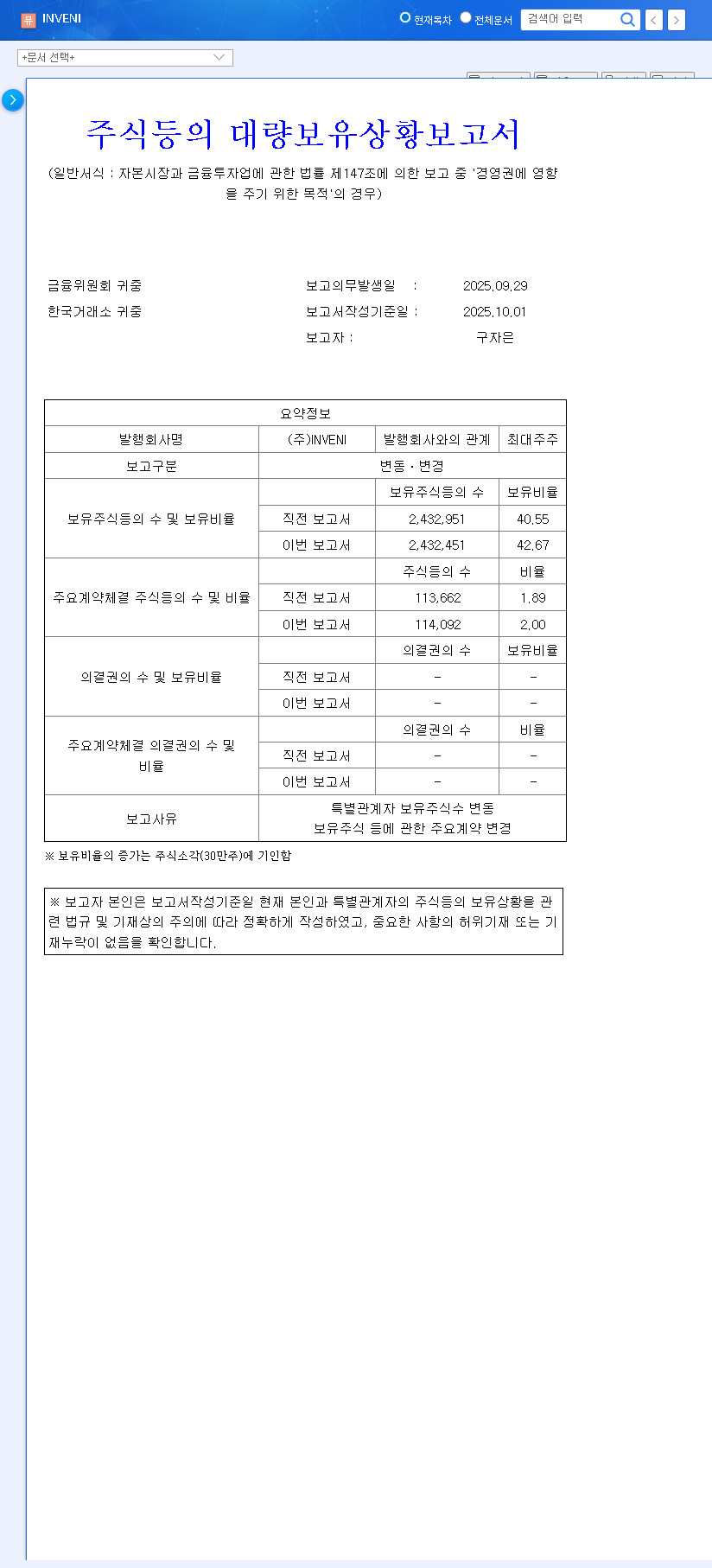
    Actions speak louder than words. On October 1, 2025, CEO Koo Ja-eun and special relation Koo Eun-jung demonstrably increased their combined shareholding from 40.55% to 42.67%. This move, reported as being for the purpose of ‘influence over management,’ serves as a powerful signal of leadership’s confidence in the company’s future trajectory. You can view the filing directly via the Official Disclosure. This strengthens management stability and aligns leadership’s interests directly with those of common shareholders.

    Decoding the Impact on INVENI’s Financials and Stock

    These strategic pillars are not just theoretical; they have tangible implications for INVENI’s financial health and market perception.

    INVENI’s strategic pivot is a clear commitment to enhancing shareholder value. However, the ultimate success will hinge on disciplined execution and navigating a complex global economic landscape.

    The proactive changes to the INVENI treasury stock policy send a powerful, positive signal to the market. It demonstrates that management is focused on returns and is willing to act to support the stock. Furthermore, the growth in investment assets, which surged from KRW 267.9 billion to KRW 402.8 billion by the end of 2024, shows the investment holding company strategy is already taking shape. This is supported by a very low debt-to-equity ratio, indicating a robust and stable financial structure capable of weathering market volatility.

    The market has reacted positively so far, with the INVENI stock price appreciating relative to its ‘Investment Net Asset Value (NAV)’. This suggests investors are optimistic about future growth. However, this has also pushed up the Price-to-Book Ratio (PBR), a key valuation metric. Investors should monitor this closely to gauge whether the stock is becoming overvalued.

    Navigating Global Economic Headwinds

    As an investment-focused entity, INVENI’s performance is intrinsically linked to the macroeconomic environment. Key factors to watch include:

    • Interest Rates: Persistently high benchmark rates in the US, Europe, and Korea directly impact corporate funding costs and investment return hurdles.
    • Exchange Rates: High volatility in currency markets can affect the value of overseas investments and transactions.
    • Commodity Prices: While lower oil prices can be a net positive, rising gold prices reflect a ‘flight to safety’ sentiment, indicating broader market uncertainty that could impact equity investments.

    Your Investor Playbook: Future Outlook for INVENI Stock

    From a mid-to-long-term perspective, INVENI’s strategic changes present a compelling narrative for growth and enhanced shareholder value. The key will be execution. Investors should adopt a prudent and watchful approach.

    Key Actionable Advice

    • Monitor Corporate Actions: Pay close attention to future board resolutions and announcements regarding specific treasury stock buybacks, disposals, or cancellations.
    • Track Investment Performance: Follow disclosures related to the investment holding company‘s portfolio performance, as this will become a primary driver of corporate value.
    • Analyze Macro Trends: Stay informed about the macroeconomic factors mentioned above and consider how they might impact INVENI’s business.

    Disclaimer: This analysis is based on publicly available information and is for informational purposes only. It does not constitute an investment recommendation. All investment decisions are the sole responsibility of the individual investor.

    (015360) INVENI's New Treasury Stock Policy: A Deep Dive for Investors 관련 이미지
  • (008870) Kwangdong Pharmaceutical Acquires Geumbi Stake: A Deep Dive into Synergy & Stock Potential

    (008870) Kwangdong Pharmaceutical Acquires Geumbi Stake: A Deep Dive into Synergy & Stock Potential

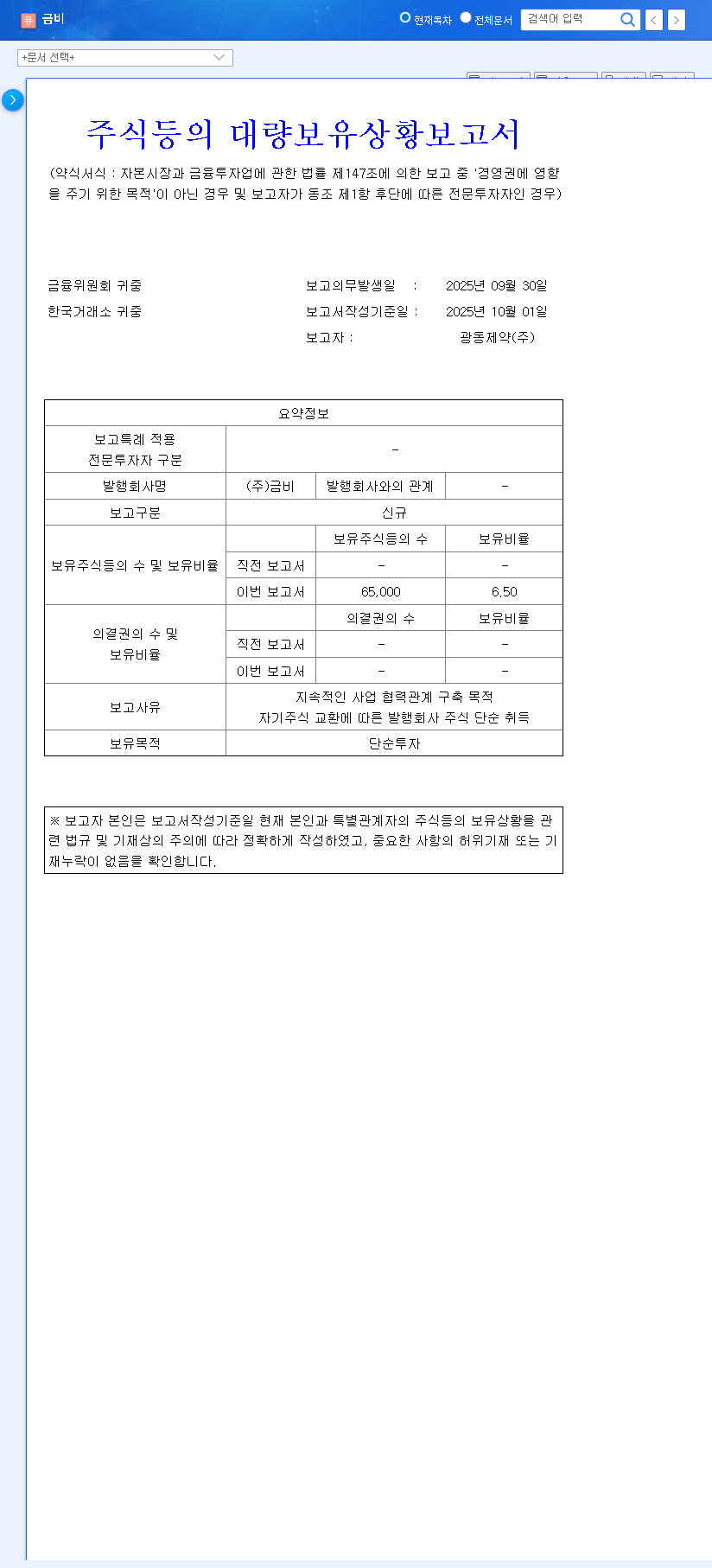
    The strategic investment between Kwangdong Pharmaceutical and Geumbi has sent ripples through the market. Kwangdong Pharmaceutical, a titan in beverages and pharmaceuticals, has acquired a significant 6.5% stake in Geumbi Co., Ltd., a specialized packaging firm. While officially labeled a ‘simple investment,’ the underlying goal of fostering ‘continuous business cooperation’ points to a much deeper, strategic alliance. This move isn’t just a financial transaction; it’s a calculated play for powerful packaging synergy and future growth.

    This in-depth analysis will explore the implications of this acquisition, dissect the potential synergies, evaluate the impact on Geumbi stock, and provide actionable insights for investors considering this evolving partnership.

    The Anatomy of the Deal: A Strategic Acquisition

    On September 30, 2025, Kwangdong Pharmaceutical formally announced the acquisition of 65,000 common shares of Geumbi, constituting a 6.5% stake. The transaction was executed via after-hours trading, a common method for large block trades to minimize market disruption. The official filing provided a fascinating dual narrative: the purpose was listed as ‘simple investment,’ yet a supplementary note clarified it was an ‘acquisition… for continuous business cooperation.’ This language strongly suggests that Kwangdong Pharmaceutical’s interest in Geumbi goes far beyond passive financial returns and is geared towards integrating Geumbi into its operational value chain. (Source: Official DART Disclosure)

    This strategic investment is a classic example of vertical integration, where a company secures a stake in its supplier to enhance supply chain stability, foster innovation, and unlock cost efficiencies. For investors, the key is to determine how deep this collaboration will go.

    Unpacking the Players: Geumbi and Kwangdong Pharmaceutical

    Geumbi Co., Ltd.: The Packaging Powerhouse

    To understand the potential, we must first appreciate Geumbi’s robust business model. It’s a diversified packaging specialist with solid fundamentals.

    • Glass Bottle & Cap Division: This is Geumbi’s traditional backbone, providing stable revenue through strong export performance and a reliable domestic client base.
    • Plastic Container Division: A significant growth engine, this division is capitalizing on the global success of the K-Beauty industry, supplying containers for a wide range of cosmetic products. You can learn more about this market by reading our guide to analyzing K-Beauty industry trends.
    • Future-Focused R&D: Geumbi’s commitment to R&D for developing next-generation materials and packaging solutions is a positive sign for long-term competitiveness.

    Kwangdong Pharmaceutical: The End-User Giant

    Kwangdong Pharmaceutical is a household name in South Korea, famous for iconic products like Vita 500 and Kwangdong Corn Silk Tea. Its business is heavily reliant on high-quality, reliable packaging—from the glass bottles for its drinks to the specialized containers for its pharmaceutical products. This makes a stable and innovative packaging partner not just beneficial, but essential.

    The Synergy Potential: Analyzing the Kwangdong Pharmaceutical Geumbi Partnership

    The true value of this deal lies in the potential for packaging synergy. By moving beyond a simple client-supplier dynamic, both companies stand to gain significantly. For an in-depth explanation of corporate synergy, see this guide from a leading financial education site.

    • Supply Chain Optimization: Kwangdong secures a stable supply of critical packaging, hedging against market volatility and potential shortages. This can lead to significant cost reductions and improved production efficiency.
    • Joint Product Development: The two companies can collaborate on creating innovative packaging, such as eco-friendly bottles, functional containers that preserve product integrity, or unique designs that enhance brand appeal on crowded store shelves.
    • Enhanced R&D Efforts: Kwangdong’s insight into consumer and pharmaceutical needs can directly inform Geumbi’s R&D, leading to the development of highly specialized, market-leading packaging solutions.

    Investor Outlook and Geumbi Stock Analysis

    The announcement of this strategic investment is a major catalyst for Geumbi stock. However, investors must weigh the short-term excitement against long-term fundamentals.

    Short-Term Considerations

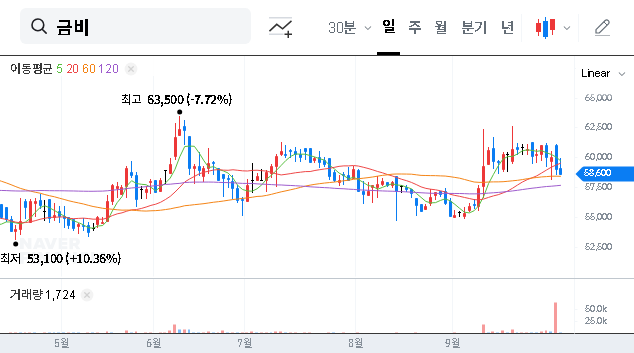
    The news has already generated significant market interest, which can lead to increased stock volatility. Short-term traders may find opportunities in these price swings. However, the initial euphoria can fade if concrete plans for cooperation are not announced promptly. The primary risk is that it may take considerable time for the tangible benefits of this partnership to appear on the balance sheet.

    Mid-to-Long-Term Investment Strategy

    Long-term investors should focus on the execution. The success of the Kwangdong Pharmaceutical Geumbi partnership hinges on tangible outcomes.

    • Monitor Official Announcements: Keep a close eye on disclosures from both companies regarding specific joint projects, supply contracts, or R&D initiatives.
    • Analyze Financial Reports: Look for evidence of synergy in Geumbi’s future earnings reports, such as increased revenue from Kwangdong, improved profit margins from efficiencies, or growth in new product categories.
    • Consider Macro-Economic Factors: Remember that Geumbi’s performance is also tied to broader factors like raw material costs, global economic health, and trends in the cosmetics industry.

    In conclusion, Kwangdong Pharmaceutical’s acquisition of a stake in Geumbi is more than a line item on a ledger; it’s a strategic move with the potential to reshape both companies’ futures. While short-term market reactions can be volatile, the long-term value will be built on the successful execution of their shared vision for business cooperation. For diligent investors, this partnership presents a compelling story to follow.

    (008870) Kwangdong Pharmaceutical Acquires Geumbi Stake: A Deep Dive into Synergy & Stock Potential 관련 이미지
  • (218410) RFHIC Treasury Stock & Exchangeable Bonds: A 2025 Investor’s Guide

    (218410) RFHIC Treasury Stock & Exchangeable Bonds: A 2025 Investor’s Guide

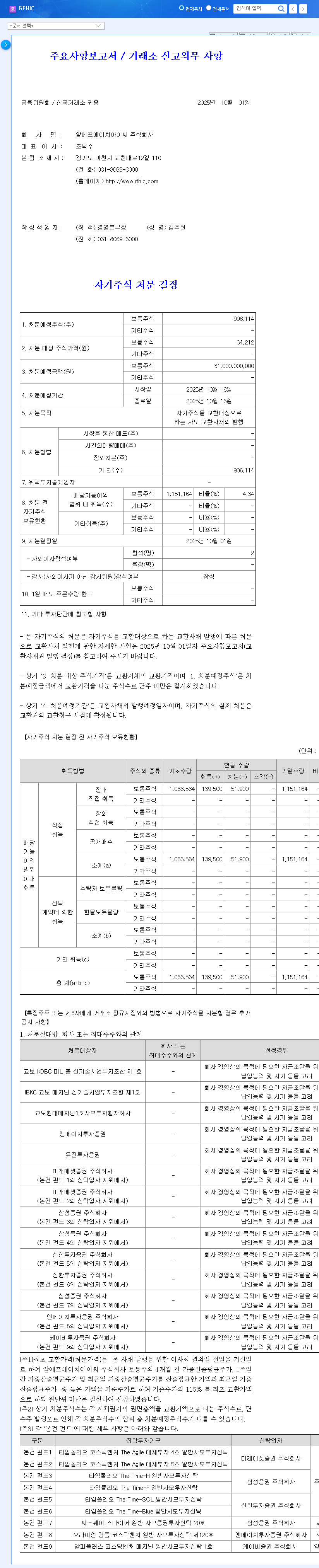
    RFHIC has captured the market’s attention with its recent announcement to dispose of 31 billion KRW in RFHIC treasury stock and issue private exchangeable bonds (EB). This strategic financial maneuver is a double-edged sword: it promises vital capital for fueling future growth but simultaneously introduces risks like share value dilution. For investors, this creates a critical question: is this a prime buying opportunity or a signal to be cautious?

    This comprehensive guide provides an in-depth analysis of the deal, its potential impact on RFHIC’s stock price, and a balanced investment strategy. We’ll explore the company’s core strengths in GaN technology, the significant threat of stock dilution, and what you need to monitor moving forward.

    Breaking Down the Deal: Treasury Stock and Exchangeable Bonds

    On October 1, 2025, RFHIC formally announced its decision to dispose of 906,114 shares of its common treasury stock, valued at approximately 31 billion KRW. These shares are not being sold on the open market directly; instead, they serve as the underlying asset for a private placement of RFHIC exchangeable bonds (EBs). The company’s plan was detailed in an Official Disclosure filed with the Financial Supervisory Service (Source).

    What Are Exchangeable Bonds?

    Exchangeable bonds are a hybrid financial instrument. They begin as corporate debt, paying interest to the bondholder. However, they contain an embedded option that allows the holder to exchange the bond for a predetermined number of shares—in this case, RFHIC’s own treasury stock. For a deeper technical explanation, you can learn more about corporate bonds from high-authority sources. This method allows RFHIC to raise cash immediately while potentially converting that debt into equity later, cleaning up its balance sheet if the stock performs well.

    The Bull Case: Fueling a GaN Technology Leader

    The primary motivation for this capital raise is to double down on RFHIC’s core strengths and secure its future. The potential upsides are significant and center around its technological prowess.

    The funds from the RFHIC exchangeable bonds are intended to accelerate innovation and solidify the company’s market position, a move that could lead to substantial long-term value creation.

    Key Strengths and Opportunities:

    • Dominance in GaN Technology: RFHIC is a global leader in Gallium Nitride (GaN) semiconductors. This advanced material is critical for high-power, high-frequency applications, making it essential for future growth markets like 5G/6G infrastructure, advanced defense radar, satellite communications, and RF energy systems. You can read our deep dive into other GaN technology stocks here.
    • Strong Order Backlog: With a 148.2 billion KRW backlog for GaN power amplifiers for radar systems, the company has a stable and predictable revenue base, which provides a cushion against market volatility.
    • Financial Stability: A low debt-to-equity ratio (31.6%) provides RFHIC with the flexibility to take on this new debt without immediate financial strain. The capital infusion will further strengthen its financial position for R&D and expansion.

    The Bear Case: Stock Dilution and Market Headwinds

    Despite the strategic rationale, investors are rightly concerned about the potential downsides, primarily the risk of stock dilution and prevailing economic uncertainties.

    Primary Risks and Concerns:

    • Equity Dilution: This is the most significant risk. When the exchangeable bonds are converted into stock, the total number of outstanding shares increases. This means each existing share represents a smaller percentage of the company, potentially diluting its value and earnings per share (EPS).
    • Recent Performance Trends: H1 2025 sales showed a potential decline, and a noted reduction in the R&D expense ratio raised concerns about long-term innovation. If this trend continues, the new capital may not be enough to reverse the momentum.
    • Macroeconomic Pressure: Rising interest rates, volatile currency exchange rates, and fluctuating raw material costs create a challenging environment. These external factors could dampen investor sentiment and offset the positive news from the capital raise.

    A Smart Investment Strategy for RFHIC Stock

    A prudent investment strategy requires balancing the long-term growth potential against the short-term risks. The disposal of RFHIC treasury stock is a pivotal event, and its success hinges entirely on execution.

    The key determinant of the stock’s future trajectory will be how effectively management deploys the new capital. If the funds lead to tangible results—new contracts, technological breakthroughs, and a return to sales growth—the initial concerns about dilution will likely fade, and the stock could be re-rated by the market. Conversely, if results are lackluster, the dilution risk will weigh heavily on the share price.

    Investor Action Plan: What to Watch

    • Follow-up Disclosures: Pay close attention to future announcements detailing the exact exchange price and terms of the EBs. A favorable exchange price for the company could mitigate dilution concerns.
    • Monitor Capital Allocation: Track quarterly reports and investor calls for updates on how the 31 billion KRW is being spent. Look for specific investments in R&D, capacity expansion, or strategic partnerships.
    • Analyze Sector Trends: Keep an eye on the health of the 5G, defense, and satellite communication markets. Strong sector-wide growth will provide a tailwind for RFHIC.

    (218410) RFHIC Treasury Stock & Exchangeable Bonds: A 2025 Investor's Guide 관련 이미지