Tag: Conversion Rights

  • (032790) MGEN SOLUTIONS Convertible Bond: A Deep-Dive Stock Analysis (032790)

    (032790) MGEN SOLUTIONS Convertible Bond: A Deep-Dive Stock Analysis (032790)

    Investors are closely watching as MGEN SOLUTIONS CO., LTD. (032790) navigates a critical financial event: the conversion of its 21st series convertible bonds. This development raises pivotal questions about the future of MGEN SOLUTIONS stock and its underlying value. This comprehensive analysis will unpack the implications of the MGEN SOLUTIONS convertible bond conversion, offering a clear-eyed view of the risks and opportunities to help you formulate a well-informed investment strategy.

    We will go beyond the surface-level announcement to provide a deep fundamental analysis, examining both the promising growth drivers and the significant financial headwinds facing the company. Let’s explore what this means for your portfolio.

    The Announcement: Unpacking the Bond Conversion Details

    On November 7, 2025, MGEN SOLUTIONS formally announced the exercise of conversion rights for its 21st convertible bonds (CBs). According to the Official Disclosure, this event entails the following key details:

    • Number of Shares: 1,060,445 new shares will be issued.
    • Dilution Impact: This represents approximately 2.23% of the total outstanding shares.
    • Conversion Price: The conversion price is set at 943 KRW per share.
    • Listing Date: The new shares are scheduled to be listed and available for trading on November 21, 2025.

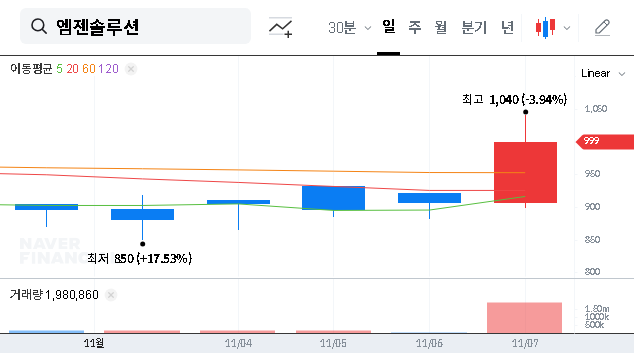
    With the stock currently trading around 999 KRW, the conversion price is attractive to bondholders, signaling a high probability of profit-taking once the new shares are listed.

    In-Depth Fundamental Analysis of MGEN SOLUTIONS

    To truly understand the convertible bond conversion impact, we must look at the company’s complete financial picture—the good, the bad, and the uncertain.

    Positive Factors: Engines of Future Growth

    • Dominant ICT Business: MGEN SOLUTIONS holds the #1 market share in domestic local government self-networks. Its AI-based video analysis solutions are perfectly positioned to capitalize on the global expansion of smart cities and AI integration.
    • Efficient Electrical & Electronics Arm: By utilizing production bases in Vietnam and proprietary automation, the company maintains a competitive edge in the global TV market, reflected in its significant revenue growth.
    • High-Potential New Ventures: Emerging businesses, including EV charging station fire detection systems and AI-powered fire solutions, are tapping into modern, high-demand markets.
    • Long-Term Bio-Business Upside: Though a longer-term play, its development of musculoskeletal disorder treatments could become a significant growth driver if clinical milestones are met.

    Negative Factors: Significant Financial Risks

    • Persistent Operating Losses: The company reported a widening operating loss of 3,556 million KRW and a net loss of 6,921 million KRW in the first half of 2025, indicating ongoing profitability challenges.
    • Large Accumulated Deficit: A substantial accumulated deficit of 14,195 million KRW severely impacts financial soundness and investor confidence.
    • Lingering Convertible Bond Overhang: With 11 billion KRW in unredeemed CBs remaining, the threat of future stock dilution and financial burden persists. For more on this, you can read our guide to financial statement analysis.
    • Worsening Cash Flow: Operating cash flow was negative (-3,748 million KRW) in H1 2025, a critical red flag indicating the company is spending more cash than it generates from its core operations.

    Stock Price Impact: The Push and Pull of Conversion

    The exercise of a MGEN SOLUTIONS convertible bond creates two opposing forces that will battle for control of the stock’s direction.

    The core conflict for MGEN SOLUTIONS stock is short-term selling pressure from new shares versus the long-term benefit of a cleaner balance sheet.

    The Bear Case: Short-Term Selling Pressure

    The most immediate effect will likely be negative. With the stock price (999 KRW) above the conversion price (943 KRW), bondholders have a built-in incentive to convert their bonds to stock and immediately sell for a risk-free profit. This arbitrage activity increases the supply of shares on the market, creating downward pressure. This dilution also reduces the earnings per share (EPS) for existing shareholders, potentially lowering the stock’s perceived value.

    The Bull Case: Long-Term Financial Improvement

    On the other hand, converting debt to equity has a significant long-term benefit. By eliminating a portion of its bond debt, MGEN SOLUTIONS reduces its interest expense and lowers its debt-to-equity ratio. This deleveraging can improve the company’s financial profile, making it more attractive to institutional investors and potentially leading to a credit rating upgrade. This signal of financial housekeeping can foster positive sentiment about management’s ability to normalize operations.

    Investment Strategy: A Neutral Stance with a Watchful Eye

    Given the conflicting signals, a Neutral investment opinion is warranted for MGEN SOLUTIONS at this time. The company has clear growth potential but is weighed down by serious financial weaknesses. The key is to wait for confirmation that its growth initiatives are translating into tangible profits.

    Key Indicators to Monitor:

    • Quarterly Earnings Reports: Watch for a definitive turnaround to operating profit over the next two to three quarters.
    • Revenue Growth in Key Segments: Monitor sales figures from the ICT, Electrical, and Fire & Electrical businesses. Are they meeting or exceeding projections?
    • Cash Flow Statements: A shift from negative to positive operating cash flow would be a powerful buy signal.
    • Macroeconomic Factors: Keep an eye on factors like exchange rates and interest rates, which can impact profitability. Authoritative sources like Reuters’ economic data can provide valuable context.

    Disclaimer: This 032790 stock analysis is for informational purposes only and is based on publicly available information. Market conditions can change rapidly. All investment decisions should be made based on your own research and risk tolerance.

    (032790) MGEN SOLUTIONS Convertible Bond: A Deep-Dive Stock Analysis (032790) 관련 이미지
  • (011080) HYUNGJI I&C Stock Analysis: Profitability, Conversion Rights & 2025 Outlook

    This comprehensive HYUNGJI I&C stock analysis delves into the company’s recent pivotal announcements and financial shifts. With news of a significant ‘exercise of conversion rights’ and a commendable return to profitability, investors are closely watching. What do these developments mean for the HYUNGJI I&C stock outlook, and how should you position your portfolio? We will break down the event, analyze the company’s core financials, and evaluate the potential risks and rewards to provide a clear, data-driven perspective.

    Understanding the HYUNGJI I&C Conversion Rights Exercise

    On October 28, 2025, HYUNGJI I&C announced a key financial event: the exercise of conversion rights. In simple terms, this means holders of the company’s convertible bonds are choosing to convert their debt holdings into company stock. This is a critical event for any HYUNGJI I&C stock analysis.

    Key Details of the Conversion

    • Shares Claimed: 428,571 new shares, representing about 1.0% of the market capitalization.
    • Conversion Price: 798 KRW per share, which is notably lower than the current stock price of 1,015 KRW.
    • Expected Listing Date: November 11, 2025.
    • Source: Official Disclosure (DART)

    The primary consequence of this event is an increase in the total number of outstanding shares. This can lead to what is known as share value dilution, a crucial factor that we will explore further in its impact on the stock price.

    The lower conversion price (798 KRW) suggests bondholders see an opportunity for immediate profit, signaling their confidence in the company’s current valuation being above this threshold.

    Financial Turnaround: A Deep Dive into HYUNGJI I&C’s Profitability

    Perhaps the most compelling part of the HYUNGJI I&C financials is its recent return to profitability. Despite a 12.7% drop in sales in its 2025 half-year report, the company successfully posted both an operating profit and a net profit surplus. This pivot to HYUNGJI I&C profitability is a testament to aggressive cost-cutting measures and strategic capital injections from rights offerings and bond conversions.

    Challenges on the Horizon

    However, the road ahead is not without obstacles. The apparel industry is notoriously competitive, and weak consumer sentiment continues to suppress top-line growth. The persistent sales decline remains a significant concern. For sustainable long-term growth, HYUNGJI I&C must focus on reviving its core brands and innovating its marketing strategy. For more on this, see our guide to analyzing apparel industry stocks.

    Stock Price Impact: Dilution vs. Improved Financial Health

    The central question for investors is how the HYUNGJI I&C conversion rights exercise will affect the stock price. The introduction of 428,571 new shares will likely exert short-term downward pressure due to dilution concerns, as each existing share now represents a smaller piece of the company.

    Conversely, the event is a double-edged sword. By converting debt to equity, the company strengthens its balance sheet, reduces its debt-to-equity ratio, and lowers interest payment burdens. This enhanced financial stability is a powerful positive signal to long-term investors. The market’s reaction will depend on whether it prioritizes the short-term dilution or the long-term financial fortification.

    Overall Opinion and Investor Action Plan

    The HYUNGJI I&C stock outlook is a blend of promising fundamentals and tangible short-term risks. The successful turnaround to profitability and strengthened financial structure are significant bullish indicators. However, the share dilution and ongoing sales weakness cannot be ignored.

    Key Observation Points for Investors:

    • Share Absorption: Monitor how effectively the market absorbs the newly listed shares post-November 11, 2025.
    • Sales Rebound: Watch for a reversal in the sales decline in upcoming quarterly reports. This is the most critical catalyst for long-term growth.
    • Brand Strategy: Look for announcements regarding new marketing initiatives, online channel expansion, or O2O integration.
    • Macroeconomic Management: Assess the company’s ability to manage costs amidst exchange rate and interest rate volatility.

    Ultimately, the future trajectory of HYUNGJI I&C’s stock will hinge on its ability to translate improved financial health into sustainable top-line growth.

    Disclaimer: This report is based on publicly available information and serves for informational purposes only. Investment decisions should be made based on individual research and discretion.

  • (049630) JAEYOUNG SOLUTEC (049630) Conversion Rights: Dilution Risk vs. Future Growth | Investment Strategy

    (049630) JAEYOUNG SOLUTEC (049630) Conversion Rights: Dilution Risk vs. Future Growth | Investment Strategy

    JAEYOUNG SOLUTEC (KOSDAQ: 049630) finds itself at a critical inflection point. The company’s recent announcement regarding a large-scale exercise of JAEYOUNG SOLUTEC conversion rights has sent ripples through the market, forcing investors to weigh the immediate threat of share dilution against the long-term promise of an improved financial structure. With over 7.5 million new shares poised to enter the market, understanding the implications is paramount for any current or prospective shareholder. This comprehensive analysis will break down the situation, evaluate the company’s underlying health, and provide a clear 049630 investment strategy.

    Decoding the Conversion Rights Announcement

    At its core, the event involves the conversion of corporate bonds into common stock. According to the Official Disclosure filed with DART, JAEYOUNG SOLUTEC will issue 7,552,870 new shares, scheduled for listing on November 07, 2025. This represents approximately 7.41% of the company’s current market capitalization—a significant influx.

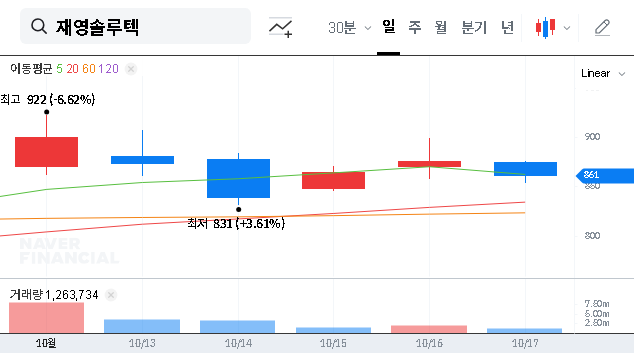
    The conversion price is set at 662 KRW per share. Compared to the recent trading price of around 1,145 KRW, this offers a substantial immediate profit for bondholders, making the conversion highly likely. This large volume of new, cheaper shares creates what is known as a “stock overhang,” where the market anticipates a future increase in supply, often putting downward pressure on the stock price even before the shares are officially listed.

    This isn’t just a financial transaction; it’s a test of market confidence. Will investors focus on the short-term pain of share dilution or the long-term gain of a healthier balance sheet?

    The Two Sides of the Coin: Dilution vs. Deleveraging

    The Immediate Pain: Share Dilution and Price Pressure

    For existing shareholders, the most immediate concern is share dilution. When millions of new shares are issued, each existing share represents a smaller percentage of ownership in the company. This dilutes the value per share and, critically, the earnings per share (EPS). With more shares to divide the profits among, the EPS figure naturally decreases, which can make the stock appear less attractive from a valuation perspective. The sudden increase in supply can easily overwhelm demand, leading to a near-term price decline.

    The Long-Term Gain: A Cleaner Balance Sheet

    On the other hand, this move offers a significant long-term benefit. By converting debt (the bonds) into equity (the shares), JAEYOUNG SOLUTEC effectively pays off a liability without using cash. This process, known as deleveraging, has two positive effects: it reduces the company’s total debt and lowers its interest expense, freeing up cash flow for operations or investment. A lower debt-to-equity ratio signals greater financial stability to lenders and long-term investors. You can learn more about how to analyze a company’s balance sheet here.

    Financial Headwinds: A Look at the Company’s Health

    The context for these JAEYOUNG SOLUTEC conversion rights is a period of severe financial distress. The Q1 2025 semi-annual report painted a bleak picture. While consolidated revenue grew to 71.7 billion KRW, operating profit collapsed by a staggering 96.5% to just 270 million KRW. The company swung to a net loss of 2.95 billion KRW. This poor performance is compounded by a high consolidated debt-to-equity ratio of 168.53%, signaling significant financial risk. The conversion, therefore, is not just a strategic choice but a necessary one to shore up a precarious financial position.

    A Strategic Pivot: Is the Nano-Optics Business the Answer?

    Amid the gloom, there’s a glimmer of strategic clarity. JAEYOUNG SOLUTEC has decided to discontinue its underperforming metal mold business and focus its resources on the promising nano-optics business. This division, which has shown revenue growth, represents the company’s future. Nano-optics components are crucial for high-tech applications like advanced smartphone cameras, AR/VR devices, and automotive sensors—all high-growth markets. For a deeper understanding of this sector, resources like Optics & Photonics News provide excellent industry insights. The success of this strategic shift will be the ultimate determinant of the JAEYOUNG SOLUTEC stock‘s long-term value.

    Investment Strategy: Navigating the Volatility for 049630

    Given the conflicting signals, a nuanced 049630 investment strategy is required.

    • Short-Term Approach: Extreme Caution. The impending share dilution will almost certainly create downward pressure on the stock price. Short-term traders should be wary of catching a falling knife. It is prudent to monitor trading volume around the listing date and wait for the price to find a new level of support before considering an entry.
    • Long-Term Approach: A Patient ‘Wait-and-See’. The long-term bull case rests entirely on the successful turnaround driven by the nano-optics business. Investors should not commit capital until there is clear, tangible evidence of this turnaround.

    Key Milestones for Long-Term Investors to Watch:

    • Improved Profit Margins: Look for at least two consecutive quarters of improving operating margins from the nano-optics division.
    • Financial Stability: Confirmation in subsequent financial reports that the debt-to-equity ratio has improved and stabilized post-conversion.
    • New Contracts/Partnerships: Announcements of major new clients or partnerships within the nano-optics sector.

    In conclusion, while the conversion of rights is a positive step towards fixing JAEYOUNG SOLUTEC’s balance sheet, it cannot magically solve the company’s core profitability issues. The market’s reaction will likely be negative in the short term. A prudent approach is to remain on the sidelines until the company’s strategic pivot begins to bear fruit.

    (049630) JAEYOUNG SOLUTEC (049630) Conversion Rights: Dilution Risk vs. Future Growth | Investment Strategy 관련 이미지
  • (332290) NOUSBO Conversion Right Exercise: A Deep Dive for Investors on Stock Price Impact & Share Dilution

    (332290) NOUSBO Conversion Right Exercise: A Deep Dive for Investors on Stock Price Impact & Share Dilution

    In today’s dynamic investment landscape, significant corporate actions can create both opportunities and risks. For investors in NOUSBO CO., LTD, the upcoming NOUSBO conversion right exercise is a pivotal event that demands close attention. This action, scheduled for November 5, 2025, will introduce over a million new shares into the market, raising critical questions about share dilution, short-term selling pressure, and the long-term health of the stock. This comprehensive analysis will break down the mechanics of this event, evaluate the potential stock price impact, and provide a strategic action plan for investors.

    Deconstructing the NOUSBO Conversion Right Exercise

    At its core, a conversion right exercise is a process where holders of a company’s convertible bonds (CBs) exchange their debt instruments for a predetermined number of new company shares. This is a common method for companies to raise capital without immediately diluting equity. However, when the rights are exercised, the debt is converted into equity, directly impacting the stock’s structure.

    A conversion right exercise transforms debt into equity. While beneficial for corporate fundraising, it can introduce short-term volatility and share value dilution for existing stockholders.

    The specifics for NOUSBO are as follows, based on their official disclosure:

    • Number of New Shares: 1,078,431
    • Conversion Price: 1,020 KRW per share
    • Current Stock Price (as of Oct 23, 2025): 1,256 KRW
    • Listing Date for New Shares: November 5, 2025

    These new shares represent approximately 2.78% of NOUSBO’s total outstanding shares, a significant enough volume to influence market dynamics.

    Short-Term Stock Price Impact: Navigating the Headwinds

    The immediate aftermath of a conversion right exercise is often characterized by downward pressure on the stock price. Here are the primary factors investors should anticipate.

    1. Inevitable Share Dilution

    The issuance of nearly 1.08 million new shares increases the total number of shares outstanding. This means the company’s net profit is now divided among a larger pool of shares, reducing the Earnings Per Share (EPS). A lower EPS can make a stock appear less attractive to new investors and dilute the ownership stake of existing shareholders, often leading to a price correction.

    2. Arbitrage and Profit-Taking Pressure

    A significant gap exists between the conversion price (1,020 KRW) and the recent market price (1,256 KRW). Investors exercising their rights can acquire shares at a discount and immediately sell them on the open market for a quick profit. This arbitrage opportunity creates a strong incentive for immediate selling, which can generate substantial downward pressure on the stock price around the listing date.

    3. Short-Term Supply and Demand Imbalance

    The sudden influx of over one million shares can temporarily overwhelm market demand. Unless there is exceptionally strong buying interest to absorb this new supply, the imbalance will likely push the stock price lower until a new equilibrium is found. This is a classic supply-side shock that can cap any upward momentum in the short term.

    The Long-Term Outlook: A Foundation for Growth?

    While the short-term view appears challenging, a long-term investor analysis requires looking beyond the immediate volatility. The capital raised through the initial issuance of these convertible bonds was likely earmarked for strategic initiatives. If these funds are used effectively for research and development, market expansion, or strengthening the balance sheet, the long-term benefits could far outweigh the short-term pain of share dilution. The key is to assess whether this capital infusion will generate future value and earnings growth for NOUSBO.

    Investor Action Plan for the NOUSBO Conversion Event

    1. Conduct In-Depth Fundamental Analysis

    Now is the time to go beyond the headlines. Scrutinize NOUSBO’s financial health, competitive position, and growth strategy. Ask critical questions: How will the company use its stronger financial position? What is the outlook for its industry? A thorough review of fundamentals, which you can learn more about in our guide to fundamental analysis, will provide the context needed to make an informed decision.

    2. Monitor Market Data and Official Disclosures

    Leading up to and following November 5, 2025, closely monitor trading volume and price action. A massive spike in volume could signal that the new shares are being offloaded. Stay updated by reviewing the primary source documents, such as the company’s Official Disclosure (Source: DART). Authoritative sources provide the most accurate information for your investor analysis.

    3. Prepare a Strategic Response

    Based on your analysis and risk tolerance, decide on a course of action. This could mean holding your position with a long-term view, trimming your position to manage risk, or even seeing a price dip as a buying opportunity if your fundamental analysis is bullish. Having a pre-defined strategy prevents emotional decision-making during periods of volatility.

    Conclusion: Prudence in the Short Term, Vision for the Long Term

    The NOUSBO conversion right exercise is a textbook example of an event that creates short-term headwinds due to share dilution and supply pressure. Investors should be prepared for potential price declines and volatility around the listing date. However, the long-term stock price impact will ultimately be determined by the company’s ability to translate its improved capital structure into tangible growth and profitability. A prudent, well-researched approach is paramount to successfully navigating this critical event.

    (332290) NOUSBO Conversion Right Exercise: A Deep Dive for Investors on Stock Price Impact & Share Dilution 관련 이미지
  • (125020) TC Materials Co Ltd Conversion Rights: A Deep Dive on Stock Dilution & Investor Impact

    (125020) TC Materials Co Ltd Conversion Rights: A Deep Dive on Stock Dilution & Investor Impact

    The recent announcement from TC Materials Co., Ltd. regarding its conversion rights exercise for its 1st tranche convertible bonds has sent ripples through the investment community. For current and prospective shareholders, this event raises critical questions about potential stock dilution, future price stability, and overall corporate value. Understanding the mechanics and implications of this financial maneuver is essential for making informed decisions.

    This comprehensive analysis will break down the TC Materials Co Ltd conversion rights announcement, explore the direct and indirect impacts on the stock, and provide a strategic roadmap for investors navigating this period of change.

    First, What Are Convertible Bonds?

    Before diving into the specifics of the TC Materials event, it’s crucial to understand the instrument at its heart: the convertible bond (CB). A CB is a type of hybrid security that functions like a regular bond, providing interest payments to the holder. However, it also contains an option to be converted into a predetermined number of the issuing company’s common stock. This gives investors the safety of a bond with the potential upside of a stock. For a deeper explanation, you can refer to authoritative sources like Investopedia’s guide on convertible bonds.

    The TC Materials Conversion Rights Exercise: By the Numbers

    According to the official filing on October 21, 2025, TC Materials is proceeding with a significant conversion. Here are the key details that every investor needs to know:

    • Event: Exercise of Conversion Rights (1st Tranche Convertible Bonds)
    • Shares to be Converted: 810,735 new shares
    • Expected Conversion Date: November 5, 2025
    • Conversion Price: 1,807 KRW per share
    • Stock Price (as of 2025.10.21): 1,971 KRW per share

    Analyzing the Impact on TC Materials Stock

    1. The Inevitable Stock Dilution

    The most immediate consequence is stock dilution. When 810,735 new shares are created, the total number of outstanding shares increases. This means that each existing share now represents a smaller percentage of ownership in the company. This can negatively affect key financial metrics like Earnings Per Share (EPS), as the company’s net income is now divided by a larger number of shares, potentially putting downward pressure on the stock’s valuation in the short term.

    2. The Profit Motive: Conversion Price vs. Market Price

    The disparity between the conversion price (1,807 KRW) and the current market price (1,971 KRW) is a critical factor. Bondholders can convert their bonds into stock at a discount and immediately sell those shares on the open market for a profit. This creates a strong incentive to convert and sell, leading to what is known as an ‘overhang’—a cloud of potential selling pressure that can suppress the stock price as the conversion date approaches and passes.

    The overhang from a convertible bond conversion can significantly dampen investor sentiment. The market anticipates the new supply of shares, which often leads to preemptive selling or a lack of buying interest until the new shares are fully absorbed.

    Investor Action Plan: Navigating the Uncertainty

    Given the limited public information on TC Materials’ fundamentals, a cautious and well-researched approach is paramount. Here’s a strategic plan to consider.

    Short-Term Strategy (Pre- and Post-Conversion)

    • Monitor Price & Volume: Pay close attention to trading volume and price action around the November 5, 2025 conversion date. A spike in volume could indicate that the newly converted shares are entering the market.
    • Watch Market Reaction: Look for any news, analyst reports, or institutional commentary that follows the event. The initial market reaction can provide clues about the prevailing investor sentiment.

    Mid-to-Long-Term Strategy (Deeper Research)

    Long-term success depends on looking beyond this single event. A crucial step is to perform your own due diligence.

    • Analyze Corporate Fundamentals: Dig into TC Materials’ financial health, business model, and growth prospects. Is the company generating profit? Does it have a competitive advantage? This is where you can learn more about fundamental analysis.
    • Understand the ‘Why’: Why were the convertible bonds issued in the first place? Was the capital used for expansion, R&D, or paying off debt? Productive use of capital can be a strong positive signal for future growth.
    • Review the Official Source: Always verify information from the primary source. The company’s filing provides the definitive details of this event. Source: Official Disclosure (DART Report).
    • Check for Remaining Bonds: Is this the full conversion, or are there more convertible bonds outstanding? The potential for future dilution is a key risk factor to manage.

    Frequently Asked Questions (FAQ)

    Q1: What does ‘conversion rights exercise’ mean for TC Materials?

    It means investors who hold the company’s convertible bonds are choosing to swap that debt for company stock at the agreed-upon conversion price. This action increases the total number of shares available on the market.

    Q2: Why is the TC Materials stock price likely to face downward pressure?

    Two reasons: first, the increase in shares dilutes the value of existing shares (stock dilution). Second, since the conversion price is lower than the market price, bondholders are likely to sell their newly acquired shares for a quick profit, increasing the selling supply in the market.

    Q3: Is this event always a bad sign for a company?

    Not necessarily. While it causes short-term disruption, a conversion also reduces a company’s debt obligations. If the capital raised from the initial bond sale was invested wisely into growth projects, the long-term benefits could outweigh the short-term dilution.

    Ultimately, the TC Materials Co Ltd conversion rights exercise is a complex event with significant short-term implications. By staying informed and conducting thorough research, investors can better position themselves to navigate the potential volatility and make sound decisions for their portfolios.

    (125020) TC Materials Co Ltd Conversion Rights: A Deep Dive on Stock Dilution & Investor Impact 관련 이미지
  • (052900) KX HITECH Conversion Rights Exercise: A 2024 Investor’s Guide to Stock Impact

    (052900) KX HITECH Conversion Rights Exercise: A 2024 Investor’s Guide to Stock Impact

    Investors are closely watching after a significant announcement regarding the KX HITECH conversion rights exercise. With a large number of new shares poised to enter the market, understanding the potential stock impact is critical for every shareholder. This guide provides a comprehensive analysis of the event, its implications for share value, and strategic considerations tailored for the unique dynamics of the KONEX market.

    This isn’t just a routine corporate action; it’s a pivotal moment that could introduce short-term volatility and requires a well-informed investor response. We will break down what this means for you and your investment in KX HITECH CO.,LTD (052900).

    The Event: Deconstructing the KX HITECH Conversion Rights Exercise

    First, let’s clarify what a ‘conversion rights exercise’ entails. Companies often raise capital by issuing convertible bonds (CBs), which are a type of loan that can be converted into a predetermined number of the company’s common stock. When bondholders choose to convert their bonds into shares, it’s called a conversion rights exercise. This is precisely what has happened with KX HITECH.

    According to the official disclosure filed on May 16, 2024, KX HITECH announced the following details:

    • New Shares Issued: A total of 2,316,919 new shares.
    • Market Impact Size: This volume represents a significant 4.20% of the company’s total outstanding shares.
    • Conversion Price: The price at which the bonds are converted is 974 KRW per share.
    • Listing Date: These new shares are scheduled to be listed and begin trading on November 5, 2025.
    • Official Source: Details can be verified via the Official Disclosure on DART.

    Analyzing the Stock Impact: Dilution, Pressure, and Volatility

    With no other major corporate news accompanying this announcement, our analysis must focus on the direct financial mechanics of the event. The primary stock impact can be broken down into two main forces: share dilution and selling pressure.

    1. The Inevitable Share Dilution

    When a company issues new shares, the ownership stake of existing shareholders is reduced. In this case, the issuance of 2.3 million new shares will dilute the value of existing shares by approximately 4.20%. This means that each share now represents a slightly smaller piece of the company. Consequently, key financial metrics like Earnings Per Share (EPS) can decrease, which often leads to a negative short-term perception by the market.

    2. The Risk of Selling Pressure (Overhang)

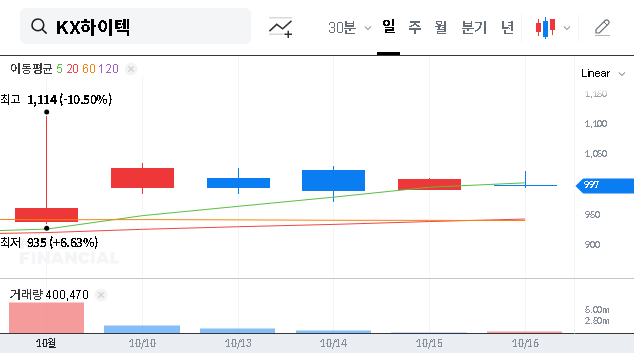
    The conversion price is 974 KRW, while the current market price hovers around 997 KRW. This presents an immediate, albeit small, profit opportunity for the converting bondholders. Many institutional investors who hold these bonds may seek to lock in this profit by selling the newly acquired shares as soon as they are listed. This potential flood of sell orders is known as ‘overhang’ and can exert significant downward pressure on the stock price.

    The combination of a 4.20% equity dilution and the potential for immediate selling creates a challenging short-term environment for KX HITECH’s stock price.

    3. The KONEX Market Multiplier Effect

    The KONEX market has unique characteristics that can amplify these effects. Unlike more mature markets like KOSPI or KOSDAQ, KONEX is known for its lower trading volumes and limited liquidity. When a large block of shares (4.20% of the market cap) becomes available, the market may struggle to absorb it without a significant price drop. This illiquidity means that even a moderate amount of selling pressure can lead to heightened stock price volatility. For more information on market dynamics, you can consult resources from major financial analysts like Bloomberg.

    An Investor Guide: Navigating the Aftermath

    Given the factors above, a cautious approach is warranted. This investor guide is designed to help you think through your next steps.

    • Acknowledge Short-Term Risk: The most probable immediate outcome is downward pressure on the stock price. Be prepared for volatility, especially around the listing date of the new shares.
    • Monitor Investor Sentiment: A conversion rights exercise can dampen investor confidence. Keep an eye on trading volumes and market commentary in the weeks leading up to the listing.
    • Conduct Deeper Due Diligence: This event should prompt further research. Ask critical questions: Why were these convertible bonds issued initially? Was the capital used for growth-oriented projects that could enhance long-term value? Answering these can help you look past the short-term noise. For more on this, check out our guide on evaluating corporate actions.
    • Evaluate Your Position: Based on your risk tolerance and investment horizon, decide if the long-term fundamentals of KX HITECH outweigh the short-term pressures from this event.

    Disclaimer: This analysis is based on publicly available information and focuses on the short-term impact of the conversion rights exercise. It is not financial advice and should not be the sole basis for any investment decision. All investors should conduct their own thorough research.

    (052900) KX HITECH Conversion Rights Exercise: A 2024 Investor's Guide to Stock Impact 관련 이미지
  • (052900) KX HITECH Convertible Bond Conversion: A Deep Dive for Investors (052900)

    (052900) KX HITECH Convertible Bond Conversion: A Deep Dive for Investors (052900)

    The recent announcement regarding the KX HITECH convertible bond conversion has sent ripples through the investment community. For stakeholders in KX HITECH CO.,LTD (052900), understanding the implications of this event is crucial. An exercise of conversion rights, set to introduce 7,950,020 new common shares, represents a significant 14.42% of the company’s market capitalization. This analysis will break down what this means for the KX HITECH stock, explore the potential for share dilution, and provide a clear investment strategy to navigate the coming weeks.

    This report offers an expert perspective on how this ‘surprise event’, which lacked prior market expectation, could influence stock price volatility and what fundamental factors will ultimately determine KX HITECH’s long-term trajectory.

    Event Overview: The KX HITECH Convertible Bond Conversion

    On October 15, 2025, KX HITECH announced the exercise of convertible bond conversion rights. In simple terms, this means debt is being converted into equity. For those unfamiliar, a convertible bond is a type of debt security that the holder can convert into a specified number of a company’s common shares. It’s a hybrid security with features of both debt and equity.

    Here are the critical details of this event, based on the Official Disclosure (Source: DART):

    • Event Type: Exercise of Convertible Bond Conversion Rights
    • Date of Occurrence: October 15, 2025
    • Shares to be Listed: 7,950,020 common shares
    • Ratio to Market Cap: 14.42%
    • Conversion Price: 974 KRW per share
    • Scheduled Listing Date: November 05, 2025

    Short-Term Stock Impact: The Double-Edged Sword

    The immediate market reaction to a large-scale convertible bond conversion is often negative due to two primary factors: dilution and selling pressure.

    Understanding Share Dilution

    When the total number of outstanding shares increases, the ownership stake of existing shareholders is reduced, or ‘diluted’. This share dilution can negatively affect key financial metrics like Earnings Per Share (EPS), as the company’s net income is now divided among a larger number of shares. A lower EPS can make a stock appear less attractive to investors, potentially leading to a price decline.

    Anticipating Selling Pressure

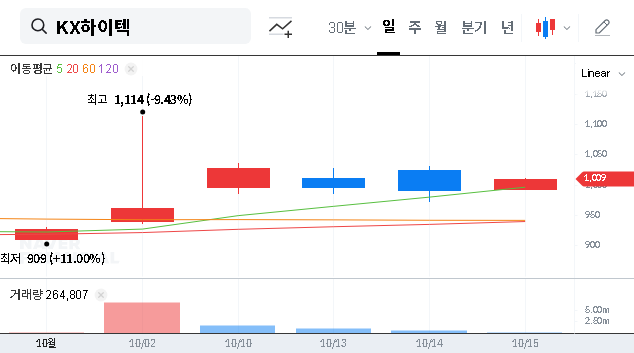
    Bondholders who convert their bonds into stock often do so to realize a profit. With a conversion price of 974 KRW and a recent stock price around 1,009 KRW, there’s a modest 3.5% profit margin. While not substantial, this could still incentivize selling, especially if the stock price rises. The introduction of nearly 8 million new shares into the market creates a supply overhang that can absorb buying demand and suppress the stock price.

    The most critical unknown is the purpose of the original bond issuance. The long-term success of the KX HITECH stock hinges entirely on whether the capital raised was used for value-creating growth or simply to cover operational shortfalls.

    Long-Term Outlook: It All Depends on Growth

    While the short-term view may be cloudy, the long-term impact of the KX HITECH convertible bond event is not predetermined. The future of the stock price will be dictated by how effectively the company utilized the capital raised from the initial bond sale.

    • Positive Scenario: If the funds were invested in R&D, new technology, market expansion, or strategic acquisitions that generate significant revenue and profit, the resulting corporate growth could easily outweigh the initial share dilution. In this case, long-term investors may be rewarded.
    • Negative Scenario: If the funds were used for general working capital, to repay other debts, or on initiatives that failed to produce a return, the dilution effect will become permanent baggage for the stock, likely leading to sustained downward pressure.

    Actionable Strategy for Investors

    Given the circumstances, a cautious and research-driven approach is paramount. Here are our recommendations:

    • Monitor Trading Volume: Keep a close eye on trading volume around the November 05 listing date. A spike in volume accompanied by falling prices could indicate heavy selling by former bondholders.
    • Dig into Company Filings: The most important task is to find disclosures explaining the use of proceeds from the original bond sale. This information will provide the best clue to the long-term convertible bond conversion impact.
    • Analyze Core Fundamentals: Look beyond this single event. Review KX HITECH’s recent earnings reports, competitive landscape, and industry trends. You can review our Deep Dive into KX HITECH’s Q3 Earnings for more context.
    • Consider a Defensive Stance: For risk-averse investors, it may be prudent to wait until the market absorbs the new shares and a clear price trend emerges post-listing.

    Disclaimer: This analysis is for informational purposes only and does not constitute investment advice. All investment decisions are the sole responsibility of the investor.

    (052900) KX HITECH Convertible Bond Conversion: A Deep Dive for Investors (052900) 관련 이미지
  • (029480) Kwangmu Stock Forecast: A Deep Dive into the Conversion Rights Exercise

    (029480) Kwangmu Stock Forecast: A Deep Dive into the Conversion Rights Exercise

    This comprehensive Kwangmu stock forecast delves into the company’s recent announcement regarding a significant exercise of conversion rights, an event that has captured the full attention of the investment community. As Kwangmu navigates a pivotal transition towards its secondary battery business, we analyze whether this financial maneuver signals a long-term growth opportunity or introduces short-term market threats. Join us as we explore the fundamentals, market dynamics, and strategic implications for investors.

    Understanding the Kwangmu Conversion Rights Exercise

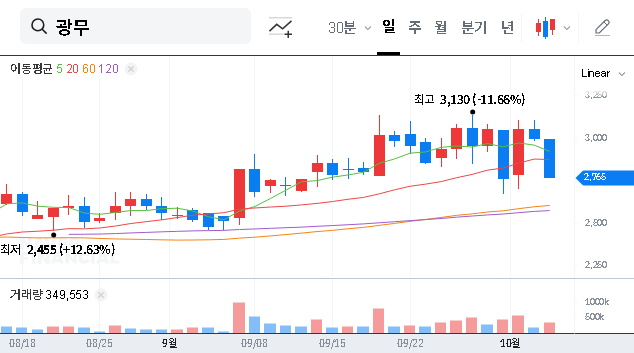
    Kwangmu Co., Ltd. has officially disclosed the exercise of conversion rights linked to its 41st and 42nd series convertible bonds. According to the Official Disclosure on DART, this will result in the issuance of 733,493 new shares. This figure represents approximately 1.24% of the company’s current market capitalization, a notable injection of equity into the market. The shares are set to be listed in two tranches: 586,795 shares on October 24, 2025, and the remaining 146,698 on October 30, 2025. A critical detail for any Kwangmu stock forecast is the conversion price of KRW 2,045, which sits roughly 35% below the recent stock price of KRW 2,765.

    The core tension for investors lies in balancing the short-term dilution from new shares against the long-term potential of a strengthened balance sheet and a funded pivot to high-growth sectors.

    Company Background: A Pivot to Future Technologies

    Kwangmu’s strategic direction is one of ambitious transformation. While its traditional ITO/NI/SI business segments have faced headwinds, the company is aggressively channeling capital into the high-growth secondary battery material business. This pivot, however, is still in its nascent stages, with significant revenue yet to materialize. The company’s financials reflect this transition; a decrease in liabilities from convertible bond redemptions is a positive sign, yet overall profitability remains a challenge. Recent corporate actions, including a change in the largest shareholder to Hyupjin Co., Ltd., and increased investment in Joongang Advanced Materials, underscore this strategic shift. The Kwangmu conversion rights exercise should be viewed as a key component of this broader capital strategy to fund future growth.

    Analyzing the Impact on Kwangmu’s Stock Price

    The exercise of conversion rights introduces several factors that could influence the Kwangmu stock price. Investors must consider both the immediate and long-term consequences.

    The Bear Case: Short-Term Headwinds

    • Share Dilution: The most direct impact is the increase in the number of outstanding shares. This dilution can put downward pressure on earnings per share (EPS) and the stock price.
    • Selling Pressure: With a conversion price significantly lower than the market price, bondholders have a built-in incentive to convert and sell their shares to realize a profit, potentially creating selling pressure around the listing dates.
    • Macroeconomic Risks: A strong USD and high global interest rates, as seen in the US and Europe, increase funding costs and can dampen investor sentiment for growth-oriented, pre-profitability companies like Kwangmu.

    The Bull Case: Long-Term Tailwinds

    • Improved Financial Health: Converting debt to equity cleans up the balance sheet. Lower liabilities and higher capital reduce financial risk and can make the company more attractive to long-term investors.
    • Growth Fuel: This event is a consequence of prior funding efforts for the new secondary battery business. A stronger financial position enables continued investment in this promising sector, which is expected to grow exponentially, according to a report from BloombergNEF.
    • Vote of Confidence: The willingness of bondholders to convert to equity can be interpreted as a positive signal, suggesting they believe in the future upside of Kwangmu’s stock.

    Investor Strategy & Key Factors to Watch

    A prudent investment decision requires a balanced view. While the improvement in Kwangmu’s financial structure is a clear positive, the immediate market dynamics cannot be ignored. The success of this transition hinges entirely on the execution of its new business strategy. Investors should closely monitor the following key points.

    The ultimate driver of the long-term Kwangmu stock forecast will be the performance of the secondary battery division. Investors should look for tangible progress, such as signed contracts, production milestones, and a clear path to profitability. For more background, you can review our guide on evaluating emerging technology stocks. The strategy of the new major shareholder, Hyupjin Co., Ltd., will be paramount in steering the company through this critical phase.

    Frequently Asked Questions (FAQ)

    What is the primary short-term risk for Kwangmu’s stock?

    The primary short-term risk is increased stock price volatility and potential downward pressure caused by the 733,493 new shares entering the market, which could lead to a share dilution effect.

    What is the main long-term opportunity for Kwangmu?

    The main long-term opportunity lies in the successful execution of its pivot to the secondary battery material business. If this division generates significant revenue and profit, it could dramatically increase the company’s valuation.

    How does the new major shareholder affect the investment thesis?

    The change to Hyupjin Co., Ltd. as the largest shareholder is a major factor. Their management strategy, capital allocation decisions, and vision for the secondary battery business will be crucial in determining Kwangmu’s future success.

    (029480) Kwangmu Stock Forecast: A Deep Dive into the Conversion Rights Exercise 관련 이미지
  • NUBO (332290) Convertible Bond Exercise: Stock Price Drop? Key Investor Checkpoints!

    NUBO (332290) Convertible Bond Exercise: Stock Price Drop? Key Investor Checkpoints! 대표 차트 이미지

    1. What Happened?: Over 4 Million New Shares Listed Due to Convertible Bond Exercise

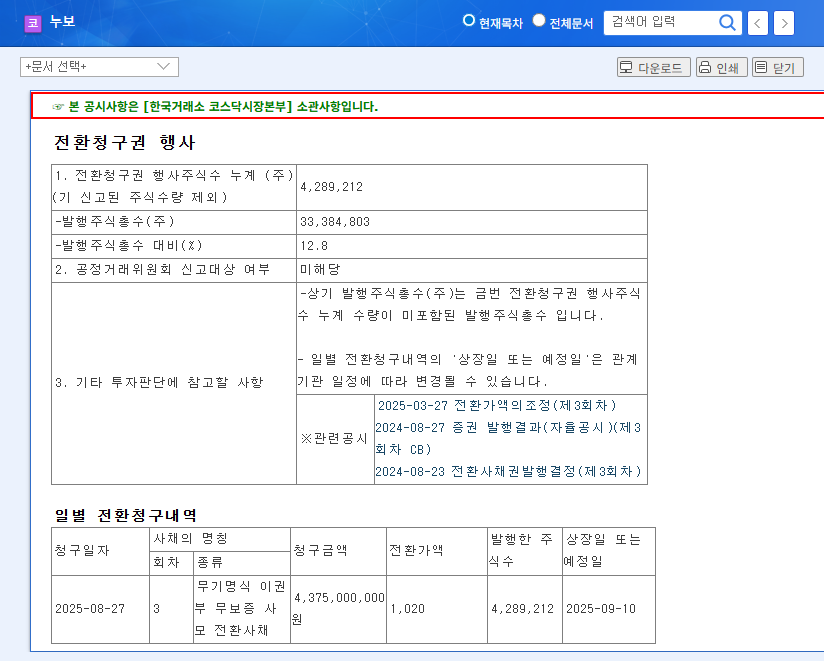
    On August 27, 2025, NUBO announced the exercise of conversion rights for 4,289,212 convertible bonds. This represents 12.8% of the market capitalization and is scheduled to be listed on September 10.

    2. Why is it Important?: Potential for Stock Price Decline and Changes in Corporate Value

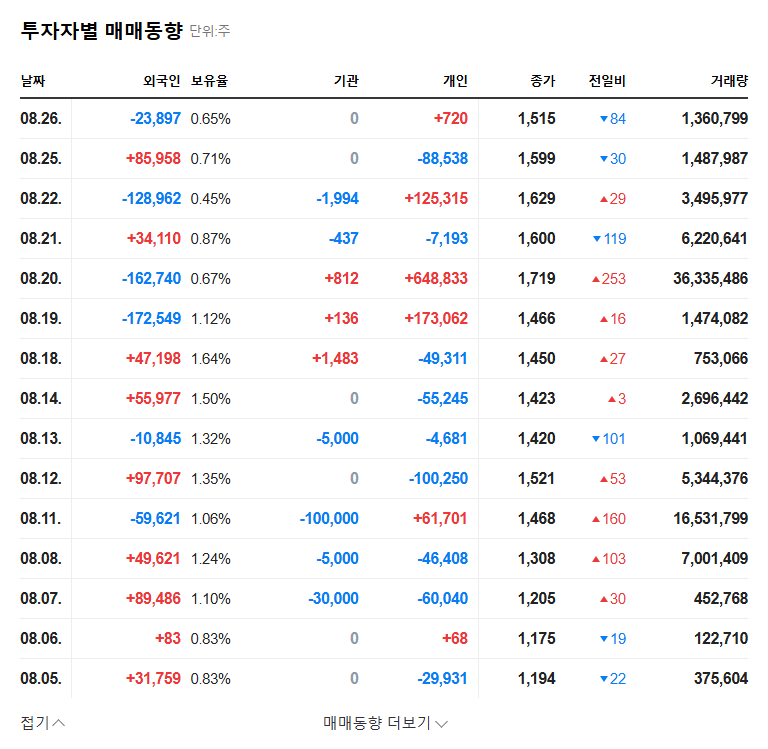
    The listing of a large number of new shares can lead to downward pressure on the stock price due to increased supply. The fact that the current stock price is higher than the conversion price also increases the likelihood of profit-taking sales.

    3. So What’s Next?: Potential Short-term Decline, Long-term Fundamental Improvement Needed

    • Short-term Impact: Downward pressure on stock price, possibility of profit-taking. Financial structure may improve partially with reduced debt and increased capital, but the effect will be limited if profitability issues persist.
    • Long-term Impact: Potential for investor sentiment deterioration. However, liquidity supply effects are also expected. Ultimately, the improvement of the company’s fundamentals will determine the stock price direction.

    4. Investor Action Plan: Cautious Approach, Fundamental Monitoring Essential

    Investors should be aware of short-term stock price volatility. In the mid- to long-term, it is crucial to closely monitor NUBO’s efforts to improve profitability and strengthen financial soundness, as well as the performance of new businesses.

    Frequently Asked Questions

    What are convertible bonds?

    Convertible bonds are a type of bond that gives the holder the right to convert them into shares of the issuing company’s stock under certain conditions.

    Why does the exercise of convertible bonds negatively affect the stock price?

    The exercise of convertible bonds results in the issuance of new shares, which increases the supply of stock and can put downward pressure on the price.

    What is the outlook for NUBO?

    Improving profitability and strengthening financial soundness are key tasks. The stock price direction will be determined by the performance of new businesses and whether fundamentals improve.

    NUBO (332290) Convertible Bond Exercise: Stock Price Drop? Key Investor Checkpoints! 관련 이미지
    NUBO (332290) Convertible Bond Exercise: Stock Price Drop? Key Investor Checkpoints! 관련 이미지
  • JaeYoung SoluTech’s Convertible Bond Exercise: Opportunity or Risk?

    What Happened? JaeYoung SoluTech’s Convertible Bond Exercise Announced

    JaeYoung SoluTech announced that 2,490,660 shares of convertible bonds will be exercised, with new shares listed on August 27, 2025. The conversion price is set at 803 KRW, approximately 12.5% lower than the current stock price of 917 KRW as of August 20, 2025.

    Why Does This Matter?

    Convertible bonds serve as a financing tool for companies, but the exercise of conversion rights can dilute the value of existing shares due to the issuance of new shares. This can have a significant impact on the stock price, especially for companies like JaeYoung SoluTech that are currently underperforming financially. As of the first half of 2025, JaeYoung SoluTech is facing financial difficulties, including declining sales, operating and net income losses, and a high debt-to-equity ratio.

    So, What’s the Impact on the Stock Price?

    Short-Term Impact

    • Downward Pressure on Stock Price: The dilution effect from new share issuance and the potential selling pressure from convertible bond holders may put downward pressure on the stock price.
    • Weakened Investor Sentiment: Poor performance and increased supply of shares can dampen investor sentiment.

    Long-Term Impact

    • Potential for Improved Financial Structure: Reduced burden of convertible bond repayment and capital increase are expected, but the effects may be limited.
    • Core Business Performance is Key: The long-term stock price trend will depend on the improvement of JaeYoung SoluTech’s core business performance and the strengthening of its technological competitiveness in the AF actuator market.

    What Should Investors Do?

    In the short term, it is advisable to sell or wait and see, considering the possibility of a stock price decline. In the long term, investors should closely monitor improvements in fundamentals, such as recovery of core business competitiveness and securing new orders. Long-term investment can be considered if the company achieves financial soundness and enhances its technological development capabilities.

    Frequently Asked Questions

    What are convertible bonds?

    Convertible bonds are a type of bond that gives the holder the right to convert them into shares of the issuing company under certain conditions.

    Why does the exercise of convertible bonds negatively affect the stock price?

    The exercise of convertible bonds leads to the issuance of new shares, which can dilute the value of existing shares.

    What are the key investment points for JaeYoung SoluTech?

    Potential benefits from the trend of high-performance smartphone cameras and its capability to produce the entire range of OIS, ENCODER, and VCM products. However, current poor performance and high debt-to-equity ratio are risk factors.