Tag: CompanyAnalysis

  • Samhyun Announces KRW 3 Billion Share Buyback: Impact on Stock Price and Investment Strategy

    Samhyun Announces KRW 3 Billion Share Buyback: Impact on Stock Price and Investment Strategy 대표 차트 이미지

    1. Samhyun’s Share Buyback: What Happened?

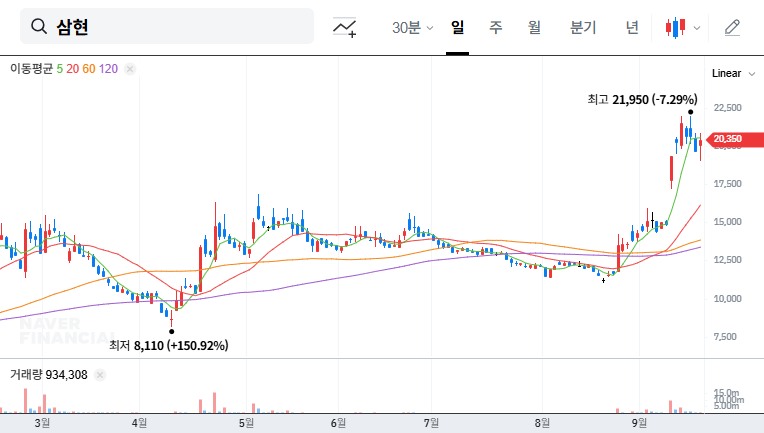
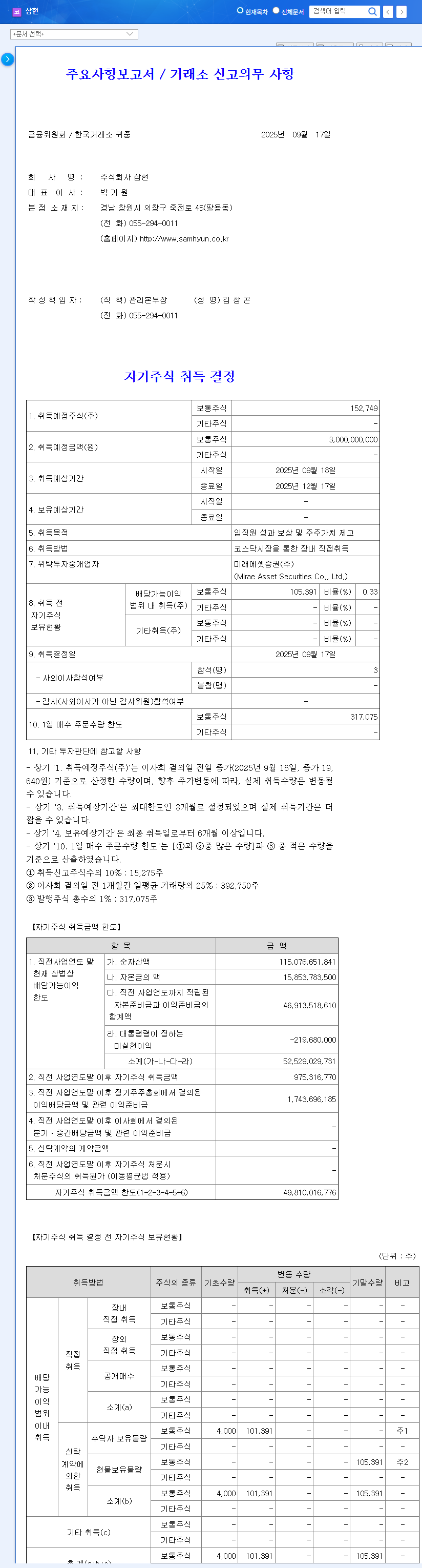
    On September 17, 2025, Samhyun announced its decision to repurchase 152,749 common shares (0.48% of total market capitalization) for approximately KRW 3 billion through open market purchases. The stated purpose is employee performance compensation and shareholder value enhancement.

    2. Why the Buyback?: Rationale and Implications

    Share buybacks can increase earnings per share by reducing the number of outstanding shares and may have a positive impact on stock price. It can also signal management’s confidence in the company’s future, potentially improving investor sentiment. Given Samhyun’s recent stock price volatility, this move could provide stability to the market.

    3. Samhyun’s Fundamentals: Unveiling Hidden Opportunities

    • Core Business: Providing ‘3-in-1 Solutions’ (integrated motor, controller, and reducer) applicable to various industries including automotive, defense, and robotics.
    • Growth Drivers: Expansion into future mobility sectors such as robotics, electric ships, and AAM.
    • Technological Prowess: First domestic producer of DCT motors, first global mass production of CVVD products, and A-SPICE CL2 certification.
    • Financial Status: Decline in revenue in the first half of 2025 and increasing debt. However, the growing proportion of defense/research institute sales is a positive sign.

    4. Market Reaction: Expert Analysis

    Concrete market expectations from analyst reports are yet to be seen. However, share buybacks generally act as a short-term positive catalyst for stock prices.

    5. Investor Action Plan: Should You Invest in Samhyun Now?

    While the share buyback is a positive signal, investment decisions require careful consideration. Existing holders may maintain a ‘hold’ position, while new investors should adopt a ‘wait-and-see’ approach, closely monitoring the company’s future performance and business strategies.

    What is the size of Samhyun’s share buyback?

    Approximately KRW 3 billion, representing 152,749 common shares (0.48% of the total market capitalization).

    What is the purpose of the share buyback?

    Employee performance compensation and enhancement of shareholder value.

    What is Samhyun’s main business?

    Samhyun provides ‘3-in-1 Solutions,’ integrating motors, controllers, and reducers for the automotive, defense, and robotics industries.

    Samhyun Announces KRW 3 Billion Share Buyback: Impact on Stock Price and Investment Strategy 관련 이미지
    Samhyun Announces KRW 3 Billion Share Buyback: Impact on Stock Price and Investment Strategy 관련 이미지
  • QSI(066310) Treasury Stock Disposal: A Turning Point Through Collaboration?

    QSI(066310) Treasury Stock Disposal: A Turning Point Through Collaboration? 대표 차트 이미지

    1. What Happened?: Treasury Stock Disposal Announced

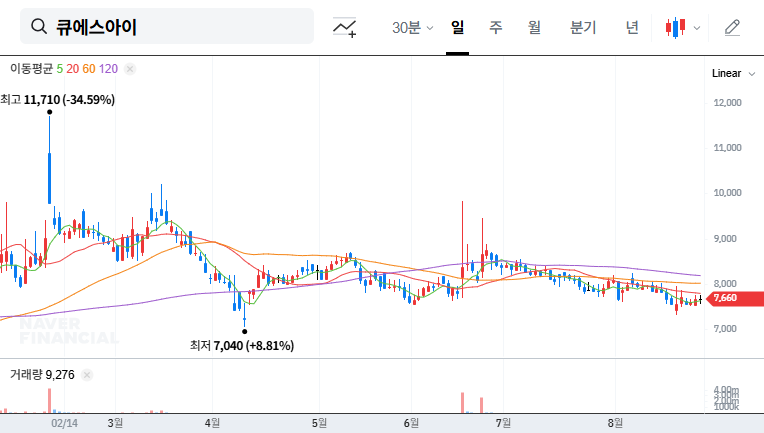
    QSI announced the disposal of treasury stock worth 3 billion KRW on August 27, 2025. The stated purpose is ‘pursuing collaborations according to mid- to long-term management strategies.’

    2. Why?: Strengthening Collaborations and Improving Financial Structure

    QSI aims to strengthen collaborations with potential partners and secure new business opportunities through this treasury stock disposal. The proceeds will also be used to improve the financial structure and secure liquidity.

    3. What’s Next?: Opportunities and Risks Coexist

    • Positive Aspects: Increased growth potential through collaboration, improved financial structure.
    • Negative Aspects: Short-term stock price volatility, uncertainty in achieving disposal objectives, continued poor performance.

    4. Investor Action Plan: 4 Key Checkpoints

    Investors should consider the following factors:

    • Specific terms of the treasury stock disposal (target, price, schedule, etc.)
    • Performance improvement from the second half of 2025 onwards
    • Tangible results from R&D investments
    • Changes in the macroeconomic environment (interest rates, exchange rates, etc.)

    While the treasury stock disposal is a positive signal, a true rebound requires accompanying performance improvements.

    What is the purpose of QSI’s treasury stock disposal?

    The purpose is ‘pursuing collaborations according to mid- to long-term management strategies.’

    What is the size of the treasury stock disposal?

    Approximately 3 billion KRW.

    Will the treasury stock disposal positively impact the stock price?

    While there is potential for growth through strengthened collaborations, short-term stock price volatility and the possibility of continued poor performance should also be considered.

    What should investors be cautious of?

    Investors should comprehensively analyze the terms of the treasury stock disposal, performance improvement, R&D results, and changes in the macroeconomic environment.

    QSI(066310) Treasury Stock Disposal: A Turning Point Through Collaboration? 관련 이미지
    QSI(066310) Treasury Stock Disposal: A Turning Point Through Collaboration? 관련 이미지
  • Gemvax (082270) Rights Offering Analysis: Capital Infusion vs. Dilution, What Should Investors Watch?

    Gemvax (082270) Rights Offering: What’s at Stake?

    On July 16, 2025, Gemvax (082270) announced the exercise of 878,325 stock acquisition rights. The exercise price is set at KRW 11,886, with shares scheduled for listing on August 1, 2025. This represents 2.12% of Gemvax’s current market capitalization (KRW 2.4057 trillion, based on a stock price of KRW 758).

    Gemvax’s Current Situation: Opportunities and Threats

    Analyzing Gemvax’s current standing based on its Q1 2025 report reveals distinct aspects of its two business segments:

    • Biotech Business: The Hope and Reality of GV1001
      • Positive Signals: The FDA Orphan Drug and Fast Track designations for its progressive supranuclear palsy treatment are undoubtedly encouraging developments. The license-out agreement with Samsung Pharm also contributed to short-term fundraising.
      • Uncertainty: However, the success of GV1001 in clinical trials remains uncertain, and long-term revenue generation is entirely dependent on these clinical outcomes.
    • Environmental Control Business: Stability Amidst Risks
      • While maintaining a stable revenue base, potential impacts from Gartner’s semiconductor sales decline forecast and uncertainties in overseas market expansion warrant careful observation.
    • New Venture: Plastic Waste Pyrolysis Oil Refining
      • This venture is still in its early stages and faces significant hurdles in recouping investments and ensuring profitability due to intensifying market competition, changes in government policy, and technological development uncertainties.
    • Financial Health: High Debt-to-Equity Ratio Remains a Challenge
      • A high debt-to-equity ratio of 240.99% is a critical challenge that Gemvax must continuously manage.

    Rights Offering: Positive Effects and Potential Risks

    The impact of this rights offering on Gemvax and its investors can be summarized as follows:

    • Capital Infusion Effect: As the exercise price is significantly higher than the current stock price, this offering is expected to positively impact the company’s cash flow and potentially reduce its debt-to-equity ratio, paving the way for business expansion.
    • Increased Share Count and Dilution Concerns: Although the number of shares to be issued is relatively small compared to the total outstanding shares (2.12%), there is a possibility of a dilution effect on the stock price, depending on market conditions and investor sentiment.
    • Investor Sentiment: While the expectation of improved financial stability through capital infusion is positive, uncertainties surrounding business success and the potential for stock dilution could dampen investor sentiment.

    Macroeconomic Environment Analysis: How Will It Affect Gemvax?

    We have analyzed external factors that could impact Gemvax’s performance and stock price:

    • Exchange Rate Volatility: While the KRW/USD exchange rate shows relative stability, fluctuations in the KRW/EUR exchange rate could affect Gemvax’s profitability.
    • Interest Rates and Bond Market: The maintenance of US benchmark interest rates at 4.5%, the rising yield on 10-year US Treasury bonds, and the declining trend in South Korean benchmark interest rates (2.5%) can influence funding costs and investor sentiment.
    • Commodity Prices and Logistics: The rising trend in international crude oil prices and the declining trends in the Baltic Dirty Tanker Index and China Containerized Freight Index could have mixed impacts on raw material costs and the profitability of the environmental control business.

    Conclusion and Investor Action Plan

    Gemvax’s rights offering offers a short-term positive impact on its financial structure. However, it is crucial not to overlook the uncertainties in the clinical success of its biotech ventures, the growth potential of its new businesses, and the structural issue of its high debt ratio.

    • Maintain a Comprehensive Perspective: Instead of focusing solely on the rights offering, investors should closely monitor the release of GV1001 clinical trial results, the concrete performance of the plastic waste business, and changes in macroeconomic indicators (exchange rates, interest rates, commodity prices).
    • Conduct Sensitivity Analysis: It is highly recommended to analyze the impact of fluctuations in exchange rates, interest rates, and commodity prices on Gemvax’s financial status and incorporate this into your investment strategy.
    • Make Prudent Investment Decisions: Carefully consider all information before making any investment decisions.
    What is the impact of Gemvax’s rights offering on its stock price?

    The rights offering can lead to capital infusion for the company and improve its financial health. However, it may also result in a dilution effect due to an increase in the number of outstanding shares. This impact can vary depending on the difference between the exercise price and the current stock price, the scale of the offering, and overall market investor sentiment.

    What is the outlook for Gemvax’s biotech business?

    Gemvax’s biotech segment shows positive momentum with the FDA Orphan Drug and Fast Track designations for its progressive supranuclear palsy treatment (GV1001). However, the ultimate success of the business hinges on the outcomes of its clinical trials, so it is essential to closely follow future clinical result announcements.

    What is the most critical aspect to watch regarding Gemvax’s financial status?

    Gemvax currently has a high debt-to-equity ratio of 240.99%. This can be a burden on the company’s financial soundness, and it is important to continuously monitor how effectively the capital infusion from the rights offering will improve this ratio.

    What are the risks associated with Gemvax’s new plastic waste business?

    The plastic waste pyrolysis oil refining business is still in its early stages and faces several risk factors, including intensified market competition, changes in government policy, and uncertainties in technological development. These factors increase uncertainty regarding investment recovery and long-term profitability.

    What external factors should investors consider when investing in Gemvax?

    Macroeconomic indicators such as exchange rate fluctuations (especially KRW/EUR), interest rate changes (US and Korean benchmark rates, 10-year US Treasury yields), and commodity prices and logistics costs (international crude oil prices, tanker indices, container freight indices) can directly affect Gemvax’s profitability and investor sentiment. Therefore, analyzing the trends of these external factors is crucial.

  • HD Hyundai Infrastructure’s Q2 Earnings IR: Investment Strategy & Market Outlook Analysis

    HD Hyundai Infrastructure’s Q2 Earnings Announcement IR: What Investors Need to Know

    HD Hyundai Infrastructure is set to hold an Investor Relations (IR) event on July 23, 2025, to announce its Q2 2025 business performance. This IR presents a crucial opportunity to understand the company’s current standing and assess its future growth potential.

    1. What’s at Stake for HD Hyundai Infrastructure’s Q2 Earnings Announcement?

    Company: HD Hyundai Infrastructure (Market Cap: KRW 2.2186 trillion)
    Key Event: Q2 2025 Earnings Announcement and IR Session
    Date & Time: July 23, 2025, 14:30
    Expected Content: Detailed explanation of Q2 financial results and Q&A session with investors

    2. Q1 Performance & Fundamental Analysis: A Mix of Hope and Concern

    HD Hyundai Infrastructure reported a somewhat disappointing performance in Q1 2025, with a 12% year-on-year decrease in revenue. This decline is attributed to external factors such as a slowdown in domestic and international construction markets and fluctuations in raw material prices, which have impacted the utilization rates in the construction machinery division.

    However, there are also positive aspects. The engine division maintained a steady growth trend, and securing supply contracts for tank engines in Poland and Turkey is noteworthy for establishing a long-term revenue base.

    The company’s financial health remains robust. A high interest coverage ratio of 5.55 supports its financial stability, and future strategies focused on expanding into emerging markets and enhancing technological competitiveness are expected to be key drivers for profitability improvement. Furthermore, active hedging strategies against exchange rate fluctuations add stability amidst an uncertain external environment.

    3. External Environment Analysis: Preparing for Volatility

    Exchange Rates: While USD/KRW and EUR/KRW exchange rates showed volatility compared to Q1 2025, they remained stable without a strong trend by mid-July. HD Hyundai Infrastructure’s hedging strategy can mitigate exchange rate risks, but continuous monitoring is crucial.

    Raw Material Prices: International crude oil prices have shown a downward trend compared to Q1, indicating some easing. However, the high volatility and long-term trend uncertainty of gold prices warrant caution. A sharp increase in raw material prices could negatively impact HD Hyundai Infrastructure’s profitability, necessitating close observation.

    Interest Rates: US and European benchmark interest rates are stable, while the Korean benchmark interest rate is showing a gradual downtrend. These interest rate changes can influence the company’s investment and financial strategies.

    Global Economy: The possibility of a global economic downturn persists, which, along with construction market uncertainty, remains a significant risk factor affecting HD Hyundai Infrastructure’s performance. The decline in the Baltic Dry Index and China Containerized Freight Index signals a weakening global demand.

    4. Impact of the IR Event on Stock Price

    This Q2 earnings announcement IR is expected to significantly influence HD Hyundai Infrastructure’s stock price. Considering the Q1 performance, if the Q2 results fail to meet market expectations or worsen, downward pressure on the stock price could intensify.

    Conversely, if the Q2 earnings show improvement or exceed market expectations, it could provide momentum for a stock price rally. Specifically, concrete details on future growth strategies presented at the IR, such as plans for market penetration in emerging economies or R&D investment direction, are likely to boost investor confidence and directly impact the stock price.

    5. Investment Strategy: Prudent Approach and Long-Term Perspective

    Investors should carefully analyze the Q2 earnings results and future outlook to be disclosed at the IR event. It is particularly important to pay attention to HD Hyundai Infrastructure’s strategies for responding to raw material price volatility and the potential for a global economic recession.

    Rather than reacting to short-term stock price fluctuations, it is crucial to evaluate the company’s fundamentals and sustainable growth potential from a long-term perspective when making investment decisions. Referencing various brokerage reports and expert opinions can also enhance the accuracy of investment decisions.

    6. Conclusion and Disclaimer

    This report is based on limited publicly available information and has the limitation of not accurately reflecting precise market expectations due to the absence of brokerage reports. Therefore, this analysis should be used solely as a reference for investment decisions, and all investment decisions must be made prudently under the responsibility of individual investors.

    It is necessary to update the analysis based on additional information released after the IR event.
    When is HD Hyundai Infrastructure’s Q2 Earnings Announcement IR?

    HD Hyundai Infrastructure will hold its Investor Relations (IR) session for the Q2 2025 business performance announcement on July 23, 2025, at 2:30 PM.

    What were the main reasons for the revenue decrease in Q1?

    The Q1 revenue decrease is analyzed as a result of external factors such as a slowdown in domestic and international construction markets and raw material price fluctuations impacting the utilization rates in the construction machinery division.

    How is HD Hyundai Infrastructure’s fundamental condition assessed?

    The engine division showed steady growth, and with a strong interest coverage ratio of 5.55, the company generally maintains a sound fundamental condition. Expansion into emerging markets and enhancement of technological competitiveness are expected to be key to future profitability improvements.

    What should investors focus on during the IR event?

    Investors should focus not only on the Q2 earnings results themselves but also on future growth strategies, risk management plans, and particularly, plans for market penetration in emerging economies and R&D investments. It is also important to closely examine the company’s strategies for responding to raw material price volatility and the potential for a global economic recession.

    What precautions should be taken when making investment decisions?

    This report is a reference based on limited information and may not accurately reflect market expectations. Therefore, investment decisions should be made prudently at the individual investor’s discretion. It is also recommended to update the analysis based on additional information released after the IR event.