Tag: CompanyAnalysis

  • (352820) HYBE Shareholding Change (Oct 2025): A Deep Dive for Investors

    (352820) HYBE Shareholding Change (Oct 2025): A Deep Dive for Investors

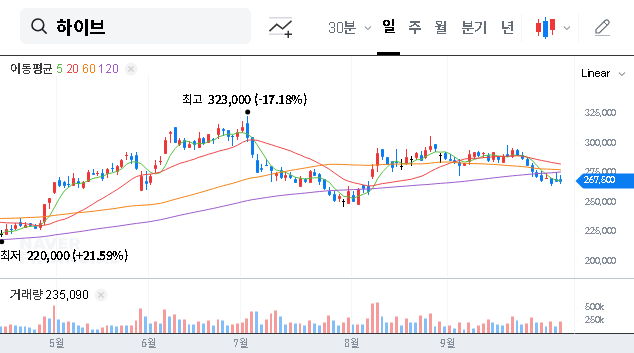
    A recent HYBE shareholding change disclosure has caught the attention of the market, raising questions among investors about the future of the K-POP entertainment powerhouse. On October 2, 2025, a report detailed a minor adjustment in Chairman Bang Si-hyuk’s stake in HYBE (352820). While the shift was minuscule, any change in a founder’s holdings warrants a closer look. Is this a routine corporate maneuver, or does it signal a deeper strategic shift? This in-depth analysis will dissect the official disclosure, evaluate HYBE’s robust fundamentals, and provide a clear outlook on what this event means for the HYBE stock price and long-term investors.

    Decoding the HYBE Shareholding Change: What Actually Happened?

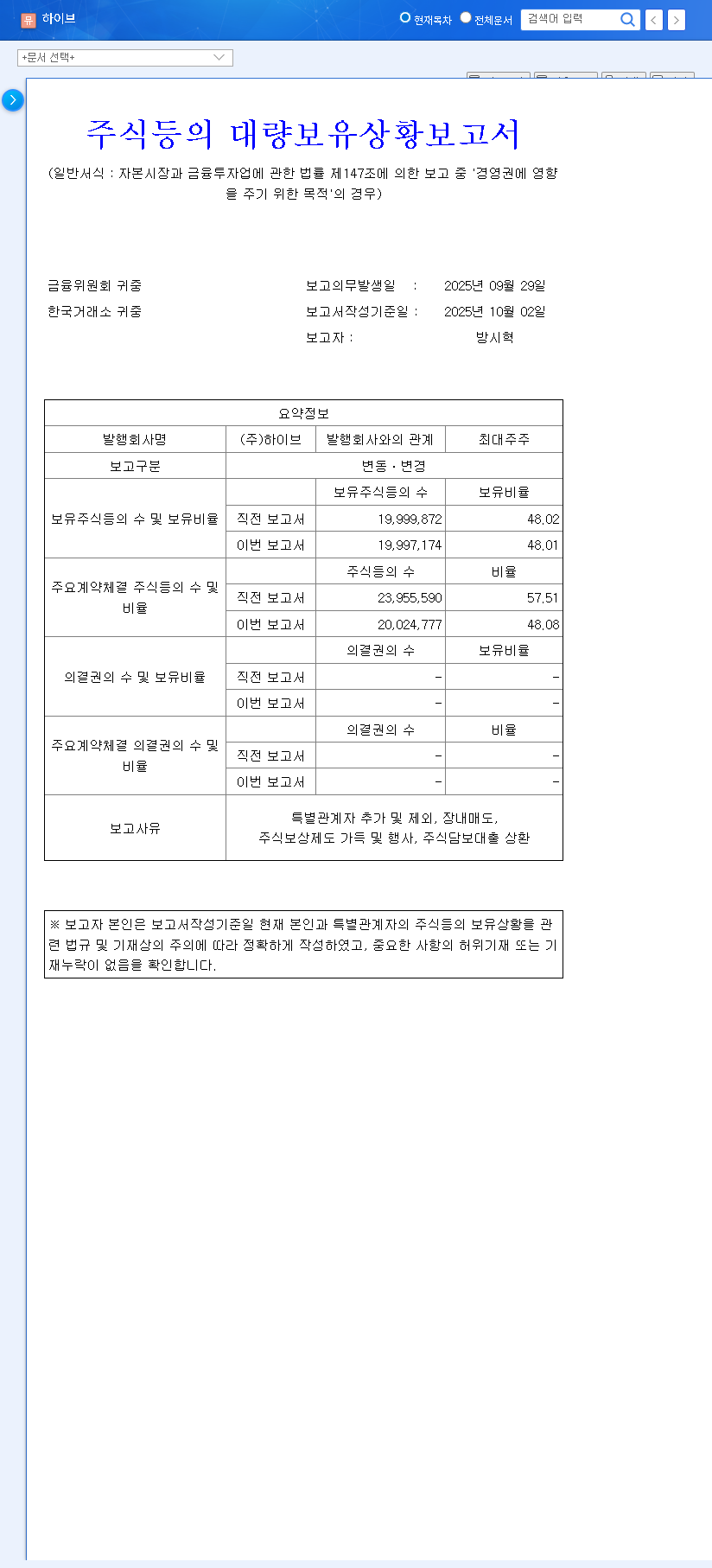
    The catalyst for this discussion is the ‘Report on Status of Large Shareholder’s Holding (General)’ filed on October 2, 2025. You can view the Official Disclosure on DART. At first glance, the numbers seem almost negligible, but the reasons behind them tell a story of internal strategy and financial prudence.

    The Key Figures at a Glance

    • Main Reporting Party: Chairman Bang Si-hyuk
    • Ownership Before Change: 48.02%
    • Ownership After Change: 48.01%
    • Net Change: A slight decrease of 0.01%

    The primary drivers behind this adjustment were multifaceted, involving standard corporate operations rather than a single large transaction. These include the vesting of employee stock options, minor on-market sales by executives for personal financial management, and, notably, the repayment of stock-backed loans. This indicates a focus on rewarding talent and strengthening the company’s financial footing.

    “Minor adjustments in a founder’s stake are common. The key for investors is to analyze the ‘why’ behind the change. In HYBE’s case, the reasons—employee compensation and debt reduction—point towards healthy, long-term corporate governance, not a lack of confidence.”

    Beyond the Numbers: HYBE’s Unshakable Fundamentals

    To truly understand the minimal impact of this shareholding change, one must look at the powerhouse fundamentals HYBE has built. The H1 2025 financial report paints a picture of a company that is not just surviving but thriving through strategic diversification and innovation.

    Core Strengths Fueling Growth

    • Profitability on the Rise: Despite market fluctuations, operating profit surged by over 34%. This wasn’t driven by revenue alone but by masterful cost control and focusing on high-margin sectors like world tours and merchandise.
    • Diversified Revenue Streams: HYBE has successfully reduced its dependency on physical album sales. The explosive growth in concerts (featuring artists like SEVENTEEN and LE SSERAFIM) and high-demand MD/licensing has created a more resilient and balanced business model.
    • Weverse Platform Dominance: The fan community platform Weverse is a critical growth engine. It deepens fan engagement and serves as a powerful e-commerce hub, creating a direct-to-consumer flywheel. For more on this, read our deep dive into HYBE’s Weverse platform strategy.
    • Investing in the Future: HYBE is not just a music label; it’s a tech company. Significant investments in game development and proprietary AI solutions signal a commitment to owning the future of entertainment technology.

    Investor Outlook: Long-Term Value Over Short-Term Noise

    Given the context, the 0.01% HYBE shareholding change is unlikely to have any meaningful negative impact on the stock price. In fact, the underlying reasons can be interpreted as net positives. Motivating key employees with stock compensation ensures talent retention, while repaying loans enhances financial stability—both are hallmarks of a well-run company. As reported by leading financial outlets like Bloomberg, market sentiment often rewards companies with strong governance and a clear vision for the future.

    Key Factors to Monitor Moving Forward:

    Instead of over-analyzing this minor stock ownership shift, a prudent HYBE investor analysis should focus on the strategic drivers that will truly shape its value:

    • Global Artist Pipeline: The success of upcoming group debuts and the continued global expansion of established acts will be paramount.
    • Weverse Monetization: Keep an eye on user growth, new feature rollouts, and the expansion of its e-commerce and subscription services.
    • New Venture Performance: The tangible results from investments in gaming and technology will be crucial for long-term diversification.

    In conclusion, the recent news about the HYBE shareholding change should be seen as business as usual. It’s a small technical adjustment within a much larger, compelling growth story. For investors, the focus should remain on the company’s strong execution, its multi-layered business strategy, and its dominant position in the expanding global market for K-POP entertainment stocks. The intrinsic value of HYBE lies in its innovation and vision, not in the third decimal place of its founder’s ownership percentage.
    (352820) HYBE Shareholding Change (Oct 2025): A Deep Dive for Investors 관련 이미지
  • (126340) Vinatech Stock Analysis: Decoding Mirae Asset’s Share Sale & What It Means for Investors

    (126340) Vinatech Stock Analysis: Decoding Mirae Asset’s Share Sale & What It Means for Investors

    The recent disclosure regarding Vinatech stock has sent ripples through the investment community. On October 1, 2025, a major institutional player, Mirae Asset Management, announced a reduction in its stake in Vinatech Co., Ltd. This isn’t just a routine transaction; it’s a critical piece of information that can significantly influence market sentiment and the future of Vinatech’s stock price.

    Is this move a bearish signal for Vinatech, or a simple portfolio rebalancing by a major fund? This comprehensive Vinatech investment analysis will dissect the event, explore the company’s underlying fundamentals, and evaluate the broader market environment to provide investors with the insights needed to make informed decisions.

    The Details: Mirae Asset’s Vinatech Share Sale

    According to the ‘Report on Major Shareholdings’ filed on October 1, 2025, Mirae Asset Management’s position in Vinatech has changed. This is a crucial development for anyone monitoring Vinatech stock.

    The report revealed that Mirae Asset Management’s stake decreased from 5.21% to 4.93%, a reduction of 0.28 percentage points. The stated reasons for the change included a mix of ‘on-market sales’ and ‘ETF redemptions’. You can view the Official Disclosure for complete details.

    What Does This Mean?

    The combination of direct market sales and ETF redemptions suggests a multi-faceted reason for the divestment. While the stated purpose was ‘simple investment,’ it signals that the fund is reducing its exposure. This could be interpreted in several ways: as standard profit-taking, a strategic reallocation of assets, or a response to perceived risks in the Vinatech outlook.

    Vinatech’s Fundamentals: A Tale of Two Halves

    To understand the context behind the Vinatech share sale, we must analyze the company’s core financial health and business prospects, based on its H1 2025 report.

    The Bull Case: Strengths and Opportunities

    • Dual Growth Engines: Vinatech is strongly positioned in two high-growth sectors: supercapacitors and hydrogen fuel cells. The global push for green energy provides a powerful tailwind for both segments.
    • Technological Moat: With over 70 patents and proprietary production technology for MEA, catalysts, and support materials, the company has a distinct competitive advantage.
    • Global Expansion: Strategic establishment of overseas branches in key markets like China, Germany, and the US is paving the way for increased global market share.

    The Bear Case: Risks and Headwinds

    • Deteriorating Profitability: The H1 2025 report showed a decrease in consolidated sales and a widening net loss, raising short-term profitability concerns.
    • Financial Strain: High debt reliance and increasing interest expenses from hybrid bonds are creating significant financial burdens, a major red flag in a rising-rate environment.
    • Operational Inefficiencies: Low utilization rates in key production segments (e.g., fuel cell MEA at 35.42%) may indicate challenges in scaling production or weaker-than-expected demand.
    • Macroeconomic Vulnerability: With nearly 85% of its business tied to exports, the company is highly susceptible to exchange rate volatility and global economic shifts. For more on this, see global market trend reports from authoritative sources.

    Strategic Considerations for Vinatech Stock Investors

    The Vinatech share sale by Mirae Asset Management is a short-term headwind that could weaken investor sentiment. However, a sound investment strategy requires looking beyond immediate market reactions.

    For the Short-Term Trader

    Expect increased volatility. The news may put downward pressure on the Vinatech stock price. Monitor trading volumes and watch for any follow-up moves by other institutional investors. A cautious approach is warranted until the market digests this information.

    For the Long-Term Growth Investor

    The long-term thesis for Vinatech hinges on its ability to capitalize on the supercapacitor and hydrogen fuel cell markets. The core question is whether the company can overcome its current financial and operational challenges. For a deeper understanding of evaluating such companies, consider reading our guide on How to Analyze Growth-Stage Tech Stocks.

    Key metrics to monitor in upcoming quarterly reports include:

    • Improvements in profit margins and a reduction in net loss.
    • Increases in factory utilization rates, signaling stronger demand.
    • Progress on debt reduction and management of financial costs.

    Conclusion: A Cautious but Watchful Outlook

    In conclusion, Mirae Asset Management’s decision to trim its holdings in Vinatech stock is a significant event that highlights the company’s current financial vulnerabilities. While the long-term growth story in green technology remains compelling, the immediate risks—profitability, debt, and operational efficiency—cannot be ignored. This is a moment for investors to exercise due diligence, weigh the substantial growth potential against the clear fundamental challenges, and make decisions based on a comprehensive Vinatech investment analysis rather than short-term market noise.

    (126340) Vinatech Stock Analysis: Decoding Mirae Asset's Share Sale & What It Means for Investors 관련 이미지
  • (046070) Kodaco Delisting Halted: A Complete 2025 Investor’s Guide to the Financial Crisis

    (046070) Kodaco Delisting Halted: A Complete 2025 Investor’s Guide to the Financial Crisis

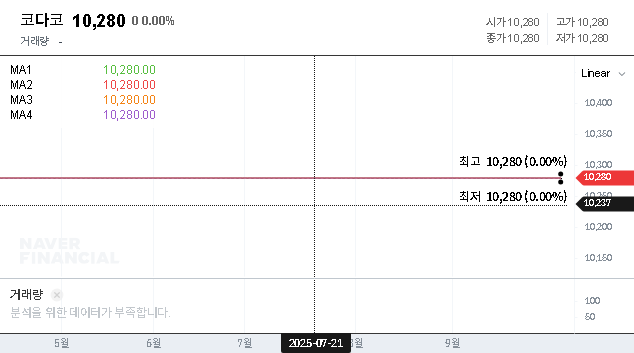
    The sudden suspension of the Kodaco delisting procedure has sent shockwaves through the market, leaving Kodaco investors grappling with a mix of fragile hope and profound uncertainty. While the halt of liquidation trading offers a temporary reprieve, it fails to address the deep-seated financial crisis plaguing Kodaco Co., Ltd. Is this a genuine turning point, or merely a delay of the inevitable? This comprehensive analysis will dissect the situation, explore the severe underlying risks, and provide a clear strategy for investors navigating this volatile landscape.

    The Official Announcement: Kodaco Delisting Procedure Halted

    On October 1, 2025, Kodaco Co., Ltd. confirmed the suspension of its scheduled delisting and liquidation trading. This decision was triggered by a ‘request for an injunction to suspend the effect of the delisting decision’ filed with the courts. As detailed in the company’s Official Disclosure to the Financial Supervisory Service, all procedures are on hold pending a final court ruling. This legal maneuver has bought the company time, but it simultaneously magnifies the uncertainty for all stakeholders.

    Unpacking the Severe Kodaco Financial Crisis

    Despite the legal pause, the fundamental financial health of Kodaco remains in critical condition. A close examination of its 2025 half-year report reveals a company on the brink.

    Going Concern Uncertainty: The Core Risk

    The most glaring red flag is the auditor’s warning of ‘events that raise significant doubt about the company’s ability to continue as a going concern.’ This is not a standard business challenge; it’s an existential threat. The primary driver for this is the delayed payment of rehabilitation claims from 2024. While the company is scrambling to raise funds by selling assets, any failure in this revised plan could trigger a complete collapse.

    A Mountain of Debt and Anemic Profits

    Kodaco’s financial structure is exceptionally fragile. Key indicators of this weakness include:

    • Astronomical Debt Ratio: The consolidated debt-to-equity ratio sits at a staggering 1,643.46%. This makes the company hyper-sensitive to any changes in interest rates or currency exchange rates.
    • Weak Profitability: While operating profit edged into the positive at 1.4 billion KRW, the net profit remains firmly in the red. This indicates that even with operations running, the company cannot cover its massive financial burdens.
    • Disclaimer of Audit Opinion: This is a critical blow to investor trust. When an auditor issues a disclaimer, it means they were unable to obtain sufficient evidence to form an opinion on the financial statements. This effectively renders the company’s financial reporting unreliable.

    The combination of a disclaimer of audit opinion and extreme debt creates a high-risk environment where the fundamental value of the Kodaco stock is nearly impossible to ascertain, making any investment highly speculative.

    Impact on Kodaco Investors: Navigating the Uncertainty

    The suspension of the Kodaco delisting process has distinct short-term and long-term consequences for investors. The immediate relief from delisting is overshadowed by prolonged ambiguity.

    Short-Term: Heightened Volatility

    In the short term, investors should brace for extreme price swings. The legal limbo creates a vacuum of information, where rumors can drive erratic trading. While the immediate threat of total loss is paused, the unresolved fundamentals mean that investor sentiment will remain overwhelmingly negative. This is not a stable environment for investment; it is a speculator’s arena where understanding risk management is paramount.

    Mid-to-Long-Term: Eroding Trust and Fundraising Hurdles

    Looking ahead, the path for Kodaco is fraught with challenges. The injunction prolongs the rehabilitation process, making it harder for the company to execute its turnaround plan. Securing new funding will be nearly impossible with the threat of delisting still looming, which in turn jeopardizes the very business operations needed for recovery. This cycle of uncertainty further erodes the trust of both investors and financial markets.

    Macroeconomic Headwinds Adding to the Pressure

    Kodaco’s internal problems are amplified by external economic pressures. As a company with a high debt load, it is extremely vulnerable to macroeconomic shifts. Global interest rate policies, such as those analyzed by sources like Bloomberg’s economic forecasts, could significantly increase Kodaco’s debt servicing costs. Furthermore, a slowdown in the global automotive parts industry, fluctuating raw material costs, and volatile exchange rates all add layers of risk that the company is ill-equipped to handle in its current state.

    Investment Strategy: The Final Verdict on Kodaco Stock

    Given the overwhelming evidence, the investment opinion on Kodaco Co., Ltd. remains ‘Highly Negative’ and ‘Unsuitable for Investment.’ The temporary halt in the delisting process does not change the fact that fundamental questions about the company’s survival are unresolved. The risk of a sudden resumption of the delisting procedure, which could lead to a total loss of investment, is exceptionally high.

    Investors must vigilantly monitor the following key variables, as they will determine the company’s fate:

    • Court’s Injunction Decision: This is the most critical near-term catalyst. A rejection will likely mean an immediate resumption of delisting.
    • Rehabilitation Plan Progress: Watch for concrete news on asset sales and fundraising. Failure to meet targets is a major red flag.
    • Future Audit Opinions: A clean audit opinion is a non-negotiable prerequisite for restoring any semblance of trust.
    • Macroeconomic Changes: Keep an eye on interest rates and industry trends that directly impact Kodaco’s thin margins.

    In conclusion, the Kodaco delisting saga is far from over. This suspension is a legal pause, not a financial rescue. For investors, the message is clear: the level of risk is extreme, and extreme caution is advised.

    (046070) Kodaco Delisting Halted: A Complete 2025 Investor's Guide to the Financial Crisis 관련 이미지
  • (317830) SP Systems Stock: Analysis of ₩8.9B Robot Contract & Future Outlook

    (317830) SP Systems Stock: Analysis of ₩8.9B Robot Contract & Future Outlook

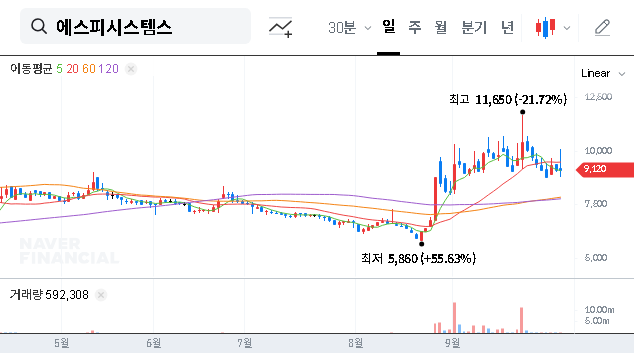
    Investors watching SP Systems stock (KRX: 317830) have received a significant piece of news amid a period of sluggish performance. The company has announced a major ₩8.9 billion contract, raising critical questions: Is this the catalyst needed for a stock price rebound, or do underlying financial weaknesses warrant continued caution? This comprehensive investor analysis will dissect the contract’s details, evaluate the company’s current financial health, and provide a clear outlook on what this means for the future of SP Systems.

    The Landmark ₩8.9 Billion Robot System Contract

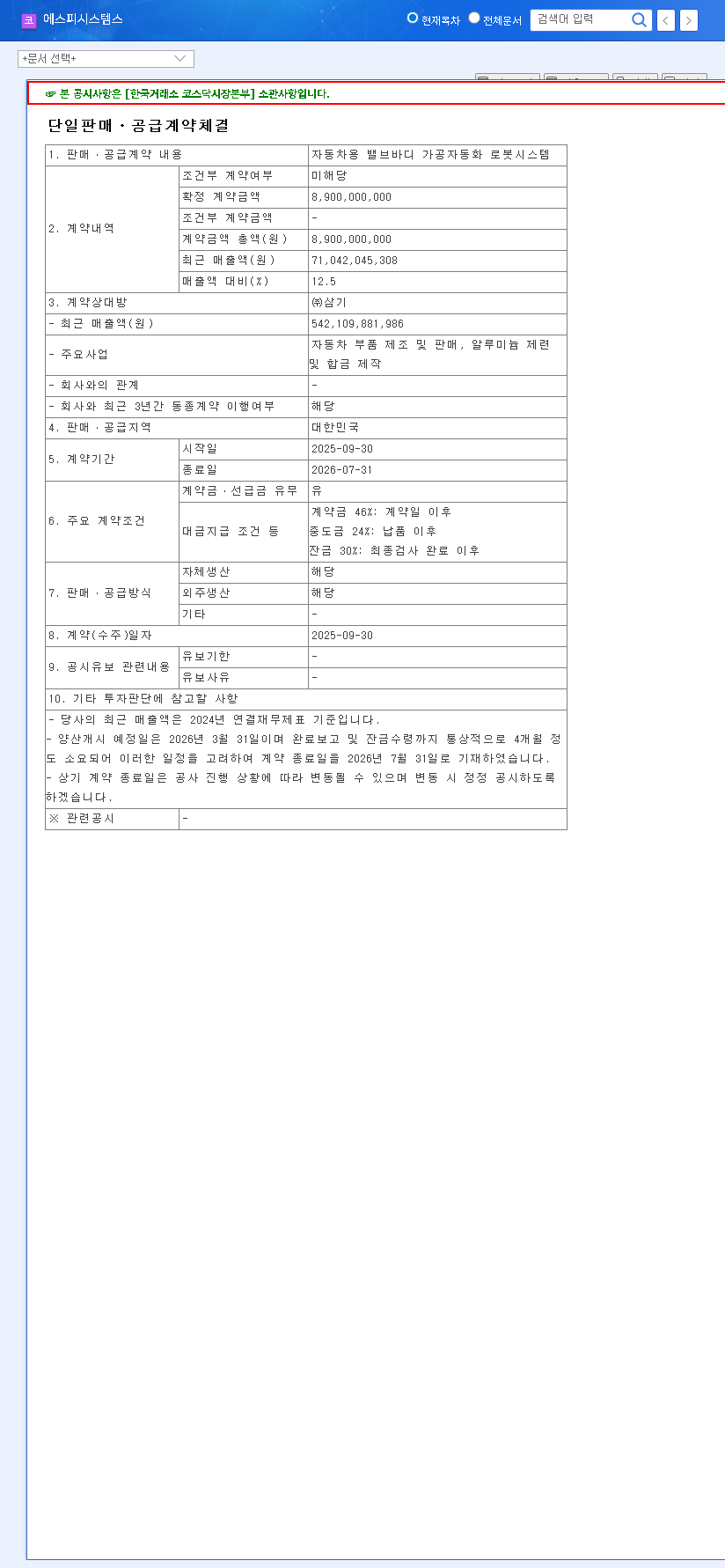
    On September 30, 2025, SP Systems officially disclosed a landmark agreement with Joo Sam Gi to supply a sophisticated automotive valve body processing automation robot system. This type of system is crucial for high-precision manufacturing in the automotive sector, handling complex tasks that demand both speed and accuracy. The deal represents a significant vote of confidence in SP Systems’ core technological capabilities. The official filing provides complete transparency on the agreement (Source: Official DART Disclosure).

    Key details of the contract are as follows:

    • Contract Value: ₩8.9 billion KRW
    • Significance: Represents a substantial 12.5% of the company’s H1 2025 revenue.
    • Contract Period: September 30, 2025, to July 31, 2026 (approximately 10 months).

    Current Financial Health: A Cautious Diagnosis (H1 2025)

    To understand the full impact of this contract, we must first assess the financial landscape SP Systems is currently navigating. The first half of 2025 painted a challenging picture, highlighting areas that require significant improvement before investors can feel confident in a long-term turnaround for the SP Systems stock.

    Despite the promising new contract, the company’s recent performance shows a 9.2% year-on-year revenue decline and a widening operating loss of ₩2.13 billion, underscoring the urgency for this new revenue stream.

    Profitability and Cash Flow Concerns

    The financial statements reveal that all primary business units—Robotics, ICT, and Battery Parts—experienced both revenue declines and operating losses in H1 2025. This broad-based weakness is a key concern. Furthermore, a persistent negative operating cash flow indicates that the company’s core operations are consuming more cash than they generate, putting pressure on liquidity and financial stability.

    Analyzing the Impact on SP Systems Stock

    The ₩8.9 billion SP Systems contract acts as a powerful counter-narrative to the recent financial struggles. However, its true effect on the company’s value will depend on a careful balance of positive catalysts and underlying risks.

    Positive Catalysts for Growth

    • Immediate Revenue Injection: This contract will directly and significantly boost revenue figures over the next year, providing a much-needed lifeline to the top line.
    • Core Business Validation: Securing a major deal for its flagship robot automation system reinforces its technical leadership and market reputation, which can attract future clients.
    • Long-Term Potential: The company’s focus areas—industrial robotics, smart factory ICT solutions, and EV battery components—are aligned with major global growth trends. Read our deep dive into the smart factory industry for more context on this expanding market.

    Potential Risks and Considerations

    • Profitability is Not Guaranteed: Securing revenue is one thing; delivering it profitably is another. Close attention must be paid to the project’s margins. If execution costs are high, the net benefit to the bottom line could be minimal.
    • One-Time vs. Sustained Growth: Is this a one-off success or the start of a trend? The market will be looking for a consistent pipeline of new orders to confirm a genuine business turnaround.
    • Macroeconomic Headwinds: The global economic climate, particularly investment sentiment in the automotive and manufacturing sectors, remains a significant external risk. A slowdown could impact future orders, as noted in recent industry reports from major financial news outlets.

    Investor Action Plan & Final Verdict

    For those evaluating SP Systems stock, a dual-track approach is prudent. The contract undeniably provides short-term positive momentum and could lift the share price from its current slump. However, a long-term investment decision should be withheld until there is clear evidence of two things: sustained profitability from this contract and a tangible pipeline of future orders. The key to unlocking long-term value lies in management’s ability to translate this single victory into a broader operational and financial recovery across all business segments.

    Frequently Asked Questions

    What is the scale of the new SP Systems contract?

    The contract with Joo Sam Gi is valued at ₩8.9 billion KRW, a significant sum that represents 12.5% of SP Systems’ entire revenue from the first half of 2025.

    What are the main business divisions of SP Systems?

    SP Systems operates across three core areas: industrial robot automation systems, ICT solutions (including AI and smart factory software), and manufacturing components for secondary batteries and automobiles.

    What should investors monitor regarding this contract?

    Investors should closely watch the project’s profitability upon completion, the company’s ability to secure follow-on orders of a similar scale, and overall improvements in the company’s operating cash flow and profitability across all divisions.

    (317830) SP Systems Stock: Analysis of ₩8.9B Robot Contract & Future Outlook 관련 이미지
  • (003570) SNT Dynamics Investment Analysis: Decoding the NPS 8.2% Stake & Future Outlook

    (003570) SNT Dynamics Investment Analysis: Decoding the NPS 8.2% Stake & Future Outlook

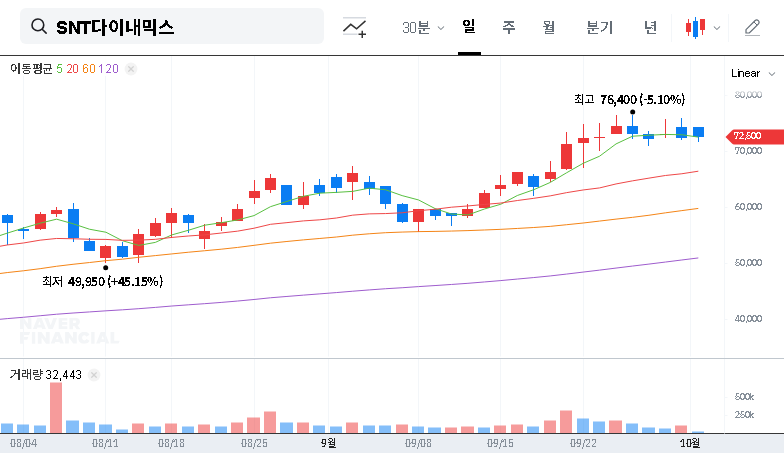
    An SNT Dynamics investment has come under the spotlight after a major market-moving announcement. The National Pension Service (NPS) of Korea, the country’s largest institutional investor, has publicly disclosed an 8.20% stake in the company. While the involvement of such a significant entity often signals confidence, a deeper analysis is essential for any prudent investor. This report moves beyond the headlines to provide a comprehensive SNT Dynamics stock analysis, examining the company’s fundamentals, the implications of the NPS stake, and a strategic path forward.

    We will dissect the H1 2025 financial report to understand the opportunities and risks, providing you with the clarity needed to make an informed decision about your SNT Dynamics investment portfolio.

    The Catalyst: NPS Announces Major Stake in SNT Dynamics

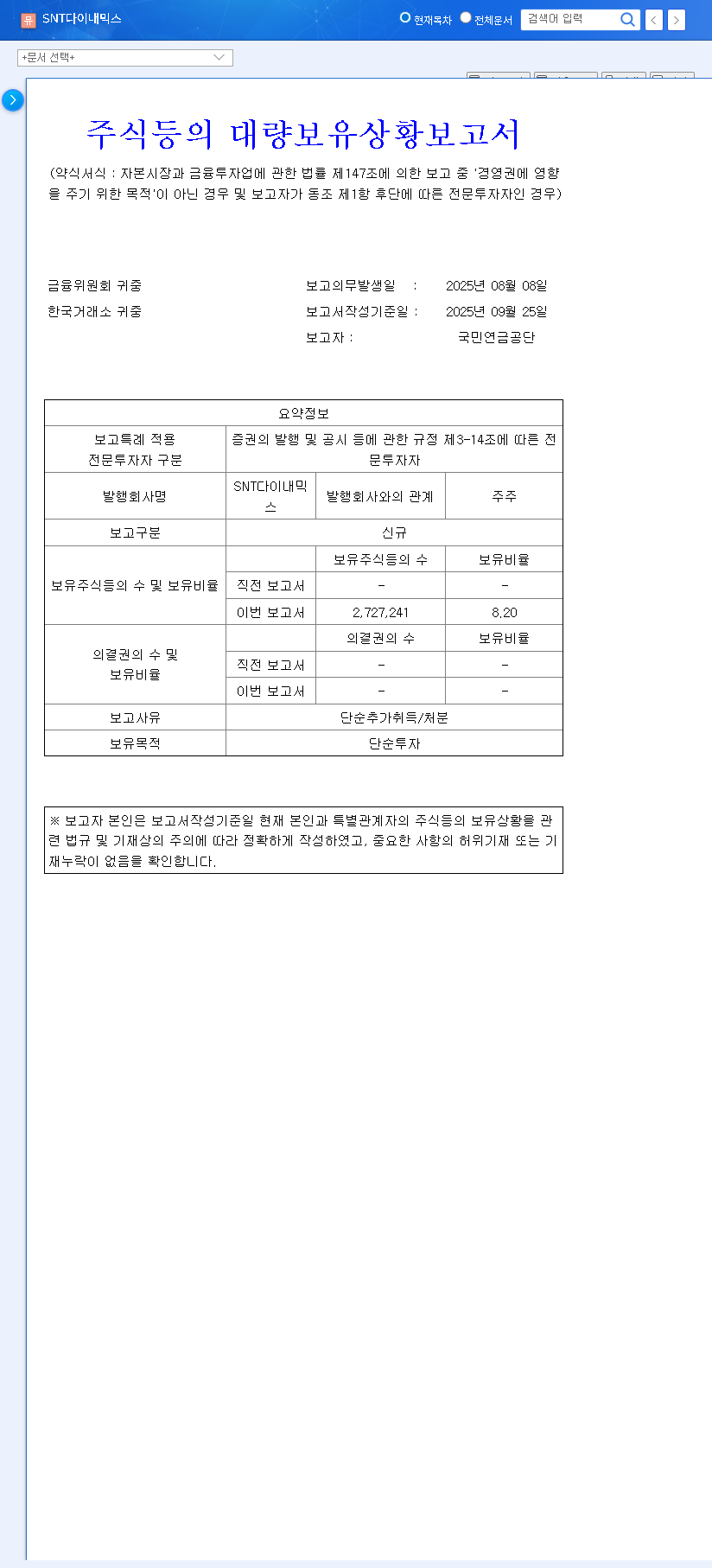
    On October 1, 2025, a mandatory disclosure revealed that the National Pension Service is now a significant shareholder in SNT Dynamics. According to the official report, the stake was acquired for ‘simple investment’ purposes through ‘simple additional acquisition/disposition.’ You can view the filing directly from the Official Disclosure (Source). This classification suggests that the NPS sees long-term value in the company but does not intend to actively participate in its management. For investors, this is a powerful signal, but it’s only the beginning of the story.

    Deep Dive: A Fundamental Analysis of SNT Dynamics

    To understand the rationale behind the NPS’s SNT Dynamics investment, we must look at the company’s core financial and operational health as detailed in its H1 2025 report.

    Revenue Growth vs. Profitability Squeeze

    SNT Dynamics reported impressive top-line growth, with revenue reaching 336.7 billion KRW in the first half of 2025, a remarkable 29.9% increase year-over-year. This growth was overwhelmingly driven by a 62.7% surge in exports, highlighting the company’s strong position in the global defense and transportation markets. However, this growth did not translate to the bottom line. Operating profit actually decreased to 47.3 billion KRW. This profitability squeeze was attributed to:

    • Increased cost of sales from raw materials and production.
    • Higher selling, general, and administrative (SG&A) expenses.
    • A larger corporate tax burden.

    Financial Health Under Scrutiny

    The company’s balance sheet presents a mixed picture. While total equity grew, total liabilities grew faster, pushing the debt-to-equity ratio up to 38.13%. More concerning is the significant drop in cash flow from operating activities. This signals an urgent need to improve operational efficiency and cash management. To bolster its finances, SNT Dynamics issued exchangeable bonds in July 2025, aiming to improve its capital structure and fund future investments.

    While the NPS endorsement provides a significant confidence boost, a disciplined SNT Dynamics investment strategy must be grounded in a clear-eyed view of the company’s current profitability challenges and financial health metrics.

    External Factors & Market Headwinds

    No company operates in a vacuum. The performance of SNT Dynamics is also influenced by macroeconomic trends. Investors should monitor:

    • Exchange Rate Volatility: A strong US Dollar and Euro benefits export revenues but can inflate the cost of imported raw materials.
    • Interest Rate Environment: With global central banks maintaining higher rates, borrowing costs for capital-intensive projects could rise, impacting future profitability. For more on this, see global interest rate analysis from Reuters.
    • Geopolitical & Commodity Markets: As a key player in the defense sector, global stability and raw material prices are critical variables that can affect both demand and costs.

    Action Plan for Savvy Investors

    The news of the NPS stake is a clear positive for investor sentiment, potentially stabilizing the stock price. However, the underlying fundamentals call for a cautious and strategic approach rather than aggressive buying.

    Short-Term vs. Long-Term Perspective

    In the short term, the stock may see a positive lift, but volatility is likely until the company addresses its profitability and cash flow issues. For a long-term SNT Dynamics investment, the focus should be on key performance indicators. Investors should watch for sustained improvements in operating margins, effective cost controls, and a strengthening of the balance sheet. The growth of the global defense sector remains a significant tailwind, but execution is paramount. To learn more, read our Guide to Analyzing Defense Sector Stocks.

    Comprehensive Opinion

    The NPS’s vote of confidence is a significant endorsement of SNT Dynamics’ long-term potential. However, the current financial data suggests near-term challenges. A prudent strategy would be to monitor the company’s progress over the next few quarters. Positive momentum will be confirmed when revenue growth is accompanied by margin expansion and improved cash generation. Only then will the intrinsic value of the company truly align with the institutional confidence shown by the NPS.

    Disclaimer: This analysis is for informational purposes only and is based on publicly available data. The final responsibility for any investment decisions rests solely with the investor.

    (003570) SNT Dynamics Investment Analysis: Decoding the NPS 8.2% Stake & Future Outlook 관련 이미지
  • (025860) Namhae Chemical Nakpo Wharf Investment (2025-2030): A Deep-Dive Analysis for Investors

    (025860) Namhae Chemical Nakpo Wharf Investment (2025-2030): A Deep-Dive Analysis for Investors

    The recent announcement of the Namhae Chemical Nakpo Wharf investment marks a pivotal moment for Korea’s largest fertilizer producer. This ambitious, multi-year project to overhaul its core logistics hub is being presented as a masterstroke for long-term stability and efficiency. However, with a substantial 4.5-year timeline and undisclosed capital expenditure, it also introduces significant financial questions. For investors, this move represents a critical juncture, balancing future growth against present-day risk.

    This comprehensive analysis will dissect the investment’s fundamentals, evaluate the surrounding macroeconomic landscape, and provide a clear framework for assessing the potential impacts on Namhae Chemical’s stock and future performance. Is this a foundation for sustainable growth or a high-stakes gamble in uncertain times?

    Unpacking the Namhae Chemical Nakpo Wharf Investment

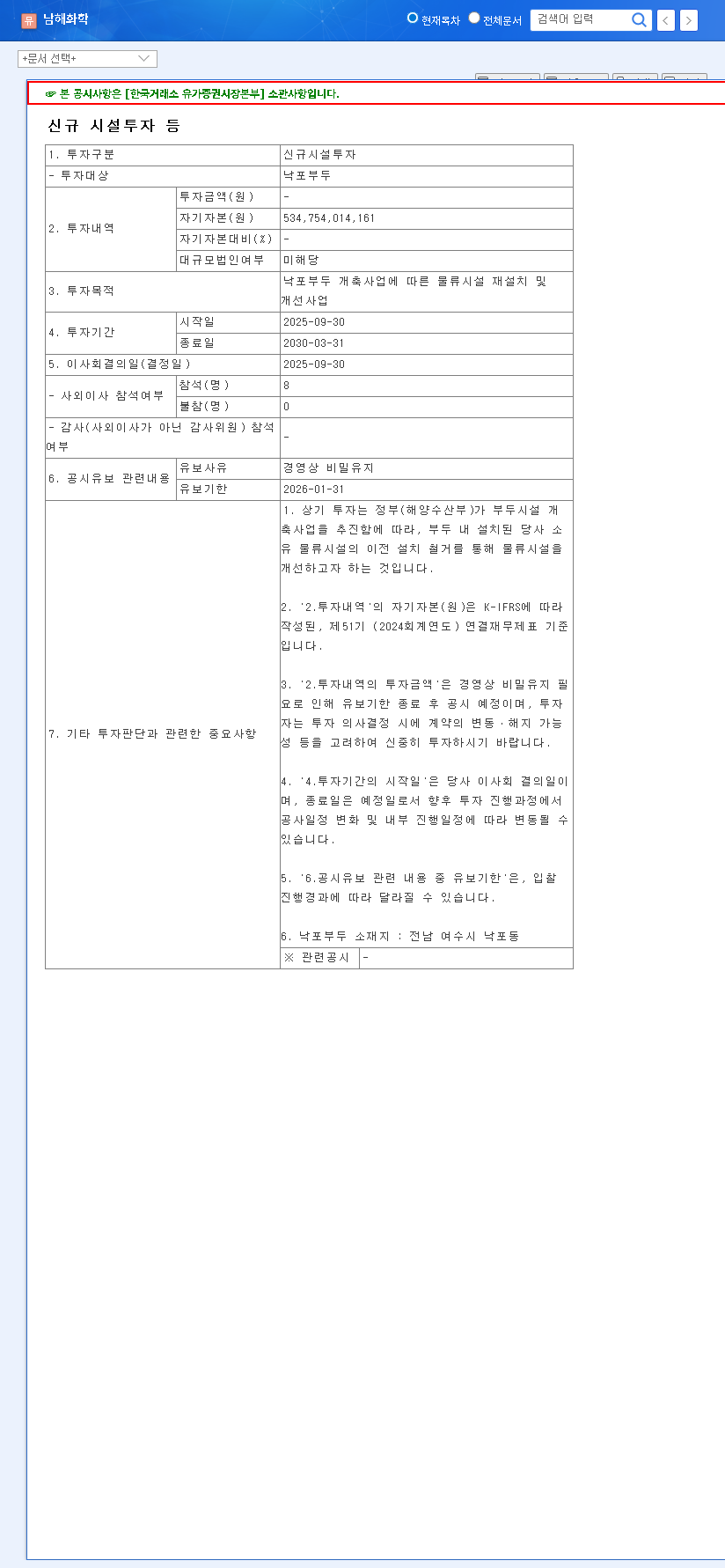
    On September 30, 2025, Namhae Chemical officially detailed its plan to re-establish and improve the logistics facilities at its crucial Nakpo Wharf. According to the company’s public filing (Source: Official Disclosure), this is a significant, long-term undertaking.

    Key Project Details

    • Project Timeline: The project is scheduled to span 4.5 years, commencing on September 30, 2025, and concluding on March 31, 2030.
    • Primary Goal: To modernize aging infrastructure, maximizing the efficiency of handling, storing, and transporting raw materials and finished products.
    • Strategic Imperative: To proactively prepare for growing maritime cargo volumes and ensure compliance with evolving safety and environmental regulations.
    • Investment Capital: The total investment amount remains undisclosed, a key point of uncertainty for financial analysts and investors.

    Company Fundamentals: A Financial Snapshot

    As of H1 2025, Namhae Chemical’s operations are divided into three core segments. Understanding each is vital to grasping the context of the Namhae Chemical Nakpo Wharf investment.

    Core Business Segments

    • Fertilizer & Chemicals: The company’s bedrock, with stable sales guaranteed by a supply contract with Nonghyup Economic Holdings. Profitability faces pressure from volatile raw material costs (urea, sulfur).
    • Petroleum Products: A consistent cash flow generator, serving industrial and agricultural sectors that provide steady demand despite the rise of EVs.
    • Semiconductor-Grade Sulfuric Acid: The new growth engine. Currently operating at a loss due to initial costs, its success is tied to the expanding semiconductor industry.

    The company’s financial health presents a mixed picture. A dramatic increase in short-term borrowings in H1 2025 (from KRW 83B to KRW 278.6B) signals aggressive capital mobilization. While this funded investments, it also raises leverage concerns, especially with low ROE and ROA metrics highlighting a need for improved overall profitability. This pre-existing debt load makes the funding strategy for the Nakpo Wharf project even more critical.

    The core dilemma for Namhae Chemical is funding a strategically essential, long-term logistics upgrade while navigating short-term financial pressures and a volatile macroeconomic environment. Success hinges on flawless execution and prudent financial management.

    Macroeconomic Risks and Opportunities

    No investment occurs in a vacuum. The success of the Nakpo Wharf modernization will be heavily influenced by global economic trends, as reported by leading financial news outlets like Bloomberg. Key factors include:

    • Elevated Interest Rates: Persistently high benchmark rates in major economies will increase the interest burden on Namhae Chemical’s substantial borrowings, directly impacting the project’s financing costs.
    • Exchange Rate Volatility: A fluctuating KRW/USD exchange rate directly affects the cost of imported raw materials and the price competitiveness of exports, adding a layer of uncertainty to profitability forecasts.
    • Raw Material & Energy Prices: The price of oil, sulfur, and other key inputs is notoriously volatile. Spikes could erode the very cost savings the new logistics facility aims to create.

    The Bull vs. Bear Case: Weighing the Outcomes

    The Bull Case (Positive Long-Term Impacts)

    • Enhanced Logistics Competitiveness: Modern facilities can drastically cut costs through faster vessel turnaround, reduced demurrage fees, and optimized inventory management. This directly boosts the bottom line.
    • Future-Proofing Operations: The investment secures a stable foundation for decades, allowing the company to handle larger cargo volumes and expand its business without logistical bottlenecks.
    • Strengthened ESG Profile: Upgrading facilities to meet modern environmental and safety standards improves corporate sustainability, which is increasingly important to institutional investors.

    The Bear Case (Potential Risks & Headwinds)

    • Significant Financial Burden: The undisclosed cost, coupled with existing debt, could strain the balance sheet for years, limiting other growth opportunities or dividend potential.
    • Execution Risk: Large-scale construction projects are prone to delays and cost overruns, which could disrupt operations and negatively impact short-term earnings.
    • Negative Market Reaction: The market may react poorly to the increased debt and short-term uncertainty, putting downward pressure on the stock price until tangible results are demonstrated.

    Investor Checklist: Key Questions to Ask

    Before making any decisions, a thorough Namhae Chemical stock analysis should consider the following. This investment is a long-term play, and success will depend on the company’s ability to provide clarity on these points.

    • What is the projected Return on Investment (ROI) and payback period for the Nakpo Wharf upgrade?
    • How will the company manage its debt load and interest expenses during the 4.5-year construction phase?
    • What is the growth trajectory for the new semiconductor business, and can it offset the investment cash burn?
    • What contingency plans are in place to mitigate construction delays or macroeconomic shocks?

    For a broader look at the sector, see our complete analysis of the global fertilizer market.

    Frequently Asked Questions (FAQ)

    Q1: What is the main goal of the Namhae Chemical Nakpo Wharf investment?

    The primary goal is to completely modernize Namhae Chemical’s core logistics hub to boost efficiency, lower operational costs, ensure long-term stability, and comply with modern environmental and safety standards.

    Q2: How will this investment benefit Namhae Chemical in the long run?

    In the long run, it should lead to significant cost savings, provide a stable foundation for future growth, and enhance the company’s competitiveness and sustainability profile.

    Q3: What are the biggest risks associated with this project?

    The biggest risks are the financial burden from the large, undisclosed investment cost, the potential for operational disruptions during the 4.5-year construction, and the impact of volatile macroeconomic conditions.

    Disclaimer: This analysis is based on publicly available information. Investment decisions carry inherent risks, and the final responsibility rests solely with the investor. This article does not constitute financial advice.

    (025860) Namhae Chemical Nakpo Wharf Investment (2025-2030): A Deep-Dive Analysis for Investors 관련 이미지
    (025860) Namhae Chemical Nakpo Wharf Investment (2025-2030): A Deep-Dive Analysis for Investors 관련 이미지
  • (029530) Sindoh Seongsu-dong Property Acquisition: An In-Depth Financial Analysis

    (029530) Sindoh Seongsu-dong Property Acquisition: An In-Depth Financial Analysis

    Sindoh, a stalwart in the business solutions industry for over 65 years, has made a decisive move that has captured the market’s full attention. The recent Sindoh Seongsu-dong property acquisition, a massive KRW 220.2 billion investment, raises a critical question for investors: Is this a visionary step towards future growth or a high-stakes gamble amid declining core business profitability? This significant capital allocation into Seoul’s trendiest district demands a thorough examination.

    In this comprehensive analysis, we will dissect the Sindoh real estate investment from every angle. We’ll explore the strategic rationale, analyze the company’s underlying financial health, evaluate the potential impacts on its operations and stock price, and provide actionable insights for current and prospective investors. Understanding the nuances of this deal is key to predicting Sindoh’s future trajectory.

    The Landmark Deal: Sindoh’s KRW 220.2 Billion Acquisition

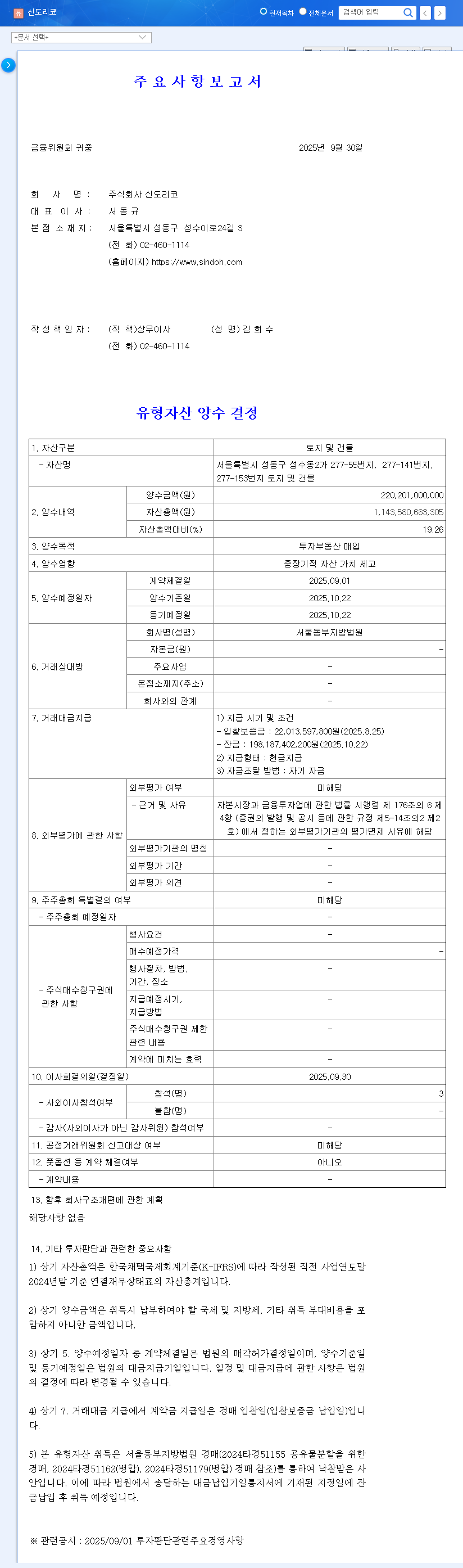
    On September 30, 2025, Sindoh formally announced its acquisition of prime land and buildings in Seongsu-dong, Seoul. The total transaction value of KRW 220.2 billion represents a staggering 19.26% of the company’s total assets, underscoring the magnitude of this strategic pivot. The deal was financed entirely through the company’s internal cash reserves, a testament to its conservative financial management over the years. The company officially detailed this transaction in its public filing (Source: Official Disclosure).

    Key Transaction Details:

    • Asset: Land and buildings in Seongsu-dong 2-ga, Seongdong-gu, Seoul.
    • Acquisition Amount: KRW 220.2 billion.
    • Financing: 100% internal cash funds.
    • Stated Purpose: Enhancement of long-term asset value via investment properties.

    Strategic Rationale: Why Seongsu-dong? Why Now?

    While the Sindoh Seongsu-dong property acquisition may seem disconnected from its core copier and printer business, it aligns with a broader strategy of portfolio diversification. The company’s traditional market is mature and facing headwinds from digitalization. This move into real estate is a clear attempt to hedge against these challenges and build new, stable revenue streams.

    Sindoh’s official purpose for the acquisition is to ‘enhance long-term asset value.’ This signals a shift from purely operational revenue generation to a blended strategy that includes significant asset appreciation.

    Seongsu-dong is not just any location; it’s the epicenter of Seoul’s modern cultural and business boom. Once an industrial zone, it has transformed into a vibrant hub for tech startups, luxury brands, art galleries, and trendy cafes. This makes it a prime location in Seoul’s booming real estate market, offering immense potential for both capital gains and high rental yields. By securing a foothold here, Sindoh is positioning itself to benefit from the area’s continued growth.

    Sindoh Financial Analysis: A Company at a Crossroads

    To understand the context of this investment, a deep dive into Sindoh’s fundamentals is crucial. The company presents a mixed financial picture.

    Strengths (The Foundation)

    • Rock-Solid Balance Sheet: A low debt-to-equity ratio showcases excellent financial stability.
    • Strong Cash Position: Growing cash reserves provided the firepower for this acquisition without taking on debt. For a deeper dive into our analysis of corporate financial health, see our guide on evaluating balance sheets.
    • Shareholder-Friendly: A history of stable dividends indicates a commitment to returning value to investors.

    Weaknesses (The Headwinds)

    • Eroding Profitability: The core business has seen declining sales and a significant net loss, pressured by market saturation and intense competition.
    • Negative Cash Flow: Weakening operating cash flow raises concerns about the core business’s ability to generate cash internally.
    • Operational Inefficiency: A low production utilization rate of around 37% points to inefficiencies in its manufacturing operations.

    Impact on Sindoh’s Stock and Future

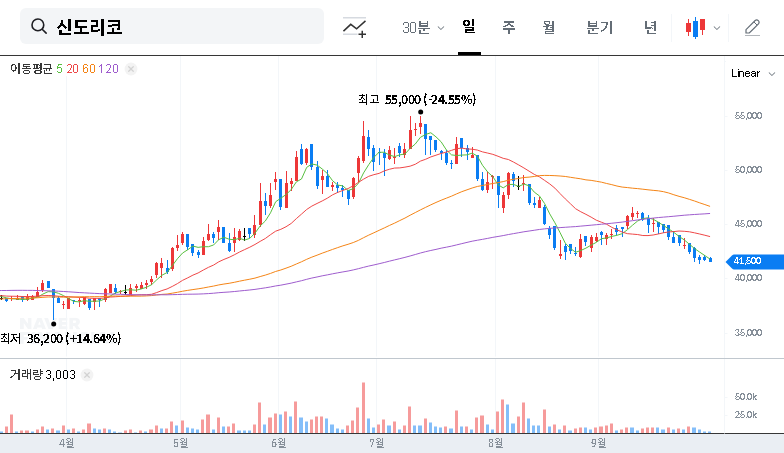
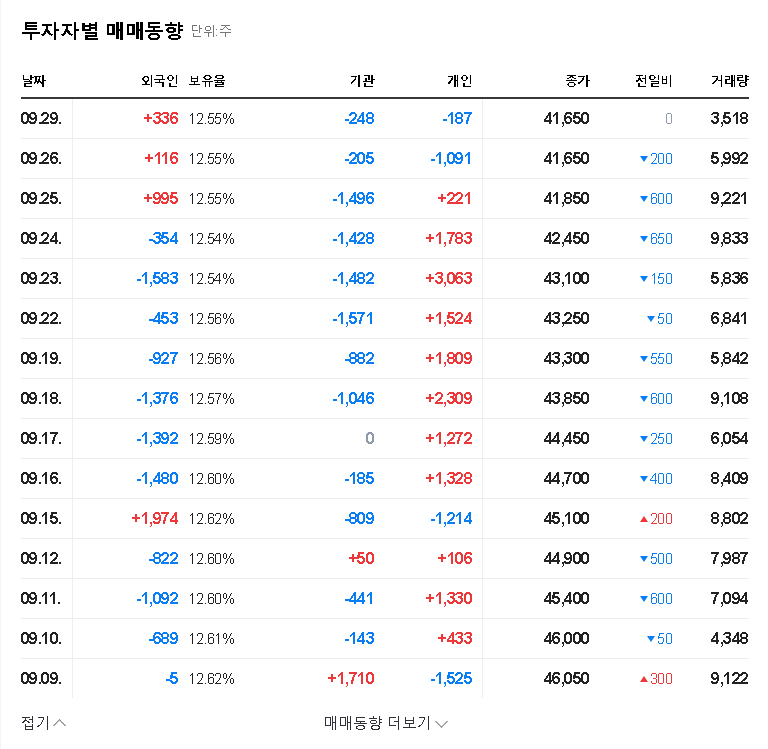
    The Sindoh stock price has been volatile, and this acquisition introduces new variables. In the short term, the market may react cautiously. A KRW 220.2 billion cash outflow, when the core business is struggling, could be viewed as a risky use of capital. However, the long-term perspective could be far more positive. If the Seongsu-dong property generates significant rental income or appreciates in value, it could transform Sindoh’s financial profile and provide a powerful new catalyst for its stock price.

    Investor Takeaways & Action Plan

    For investors, the Sindoh Seongsu-dong property acquisition is a pivotal event. The key is to monitor how the company balances this new venture with the need to revitalize its core operations.

    • Monitor for a Clear Strategy: Watch for clear communication from management about their development plans for the property and their strategy to improve core business profitability.
    • Track Financial Health: Keep a close eye on quarterly reports to see how the cash reduction impacts liquidity and whether operating cash flow begins to recover.
    • Assess Real Estate Performance: Look for news regarding tenants, development progress, or valuation updates for the Seongsu-dong asset.

    Ultimately, this investment could be the masterstroke that redefines Sindoh for the next decade. However, its success hinges on shrewd execution and a concurrent turnaround in its primary business. Cautious optimism and diligent monitoring are the recommended approaches for investors.

    (029530) Sindoh Seongsu-dong Property Acquisition: An In-Depth Financial Analysis 관련 이미지
    (029530) Sindoh Seongsu-dong Property Acquisition: An In-Depth Financial Analysis 관련 이미지
  • (402490) Greenresource Palm Mixture Contract: A Deep-Dive Investment Analysis for 2025

    (402490) Greenresource Palm Mixture Contract: A Deep-Dive Investment Analysis for 2025

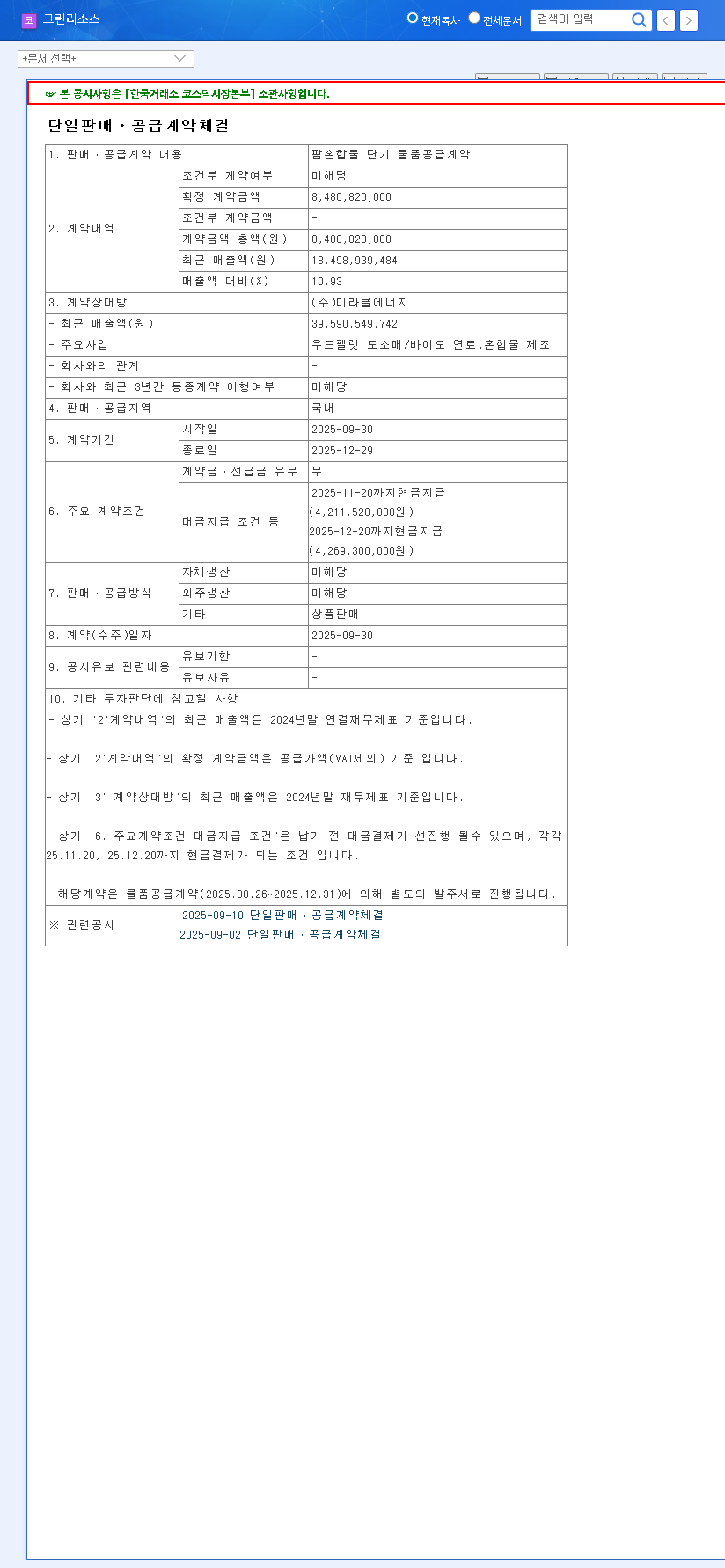
    The recent announcement of the Greenresource palm mixture contract has sent ripples through the investment community. Valued at a substantial ₩8.5 billion, this deal with Miracle Energy Co., Ltd. represents a significant portion of Greenresource’s projected revenue. For investors, this news raises a critical question: is this a temporary lifeline for a company facing performance challenges, or the first step in a bold new strategic direction? This comprehensive Greenresource investment analysis will dissect the contract’s implications, evaluate the company’s underlying fundamentals, and provide an actionable strategy for navigating the opportunities and risks tied to Greenresource stock.

    Deconstructing the Greenresource Palm Mixture Contract

    On the surface, the deal is a clear positive. It injects significant, guaranteed revenue into the company over a short period. However, the nature of the product—’palm mixture’—is what creates uncertainty, as it seemingly lies outside Greenresource’s established expertise in high-tech coatings and equipment. The full details of the agreement can be reviewed in the Official Disclosure filed with DART.

    Key Contract Details at a Glance

    • Counterparty: Miracle Energy Co., Ltd.
    • Contract Value: ₩8.5 Billion (approx. 10.93% of estimated 2024 revenue)
    • Product: Short-term supply of ‘palm mixture’
    • Contract Period: September 30, 2025 – December 29, 2025

    This contract provides a much-needed short-term revenue boost. The critical task for investors now is to determine if ‘palm mixture’ is a profitable, sustainable diversification or a high-risk, low-synergy distraction from the core business.

    Short-Term Gains vs. Long-Term Uncertainty

    Immediate Financial Impact

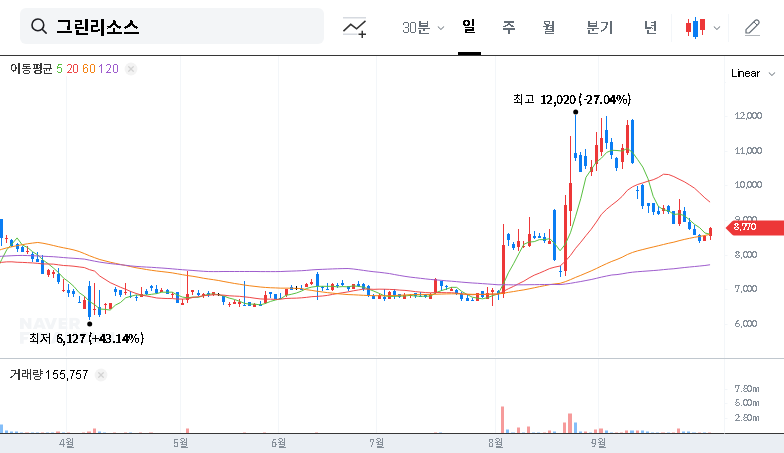
    The ₩8.5 billion deal, concentrated within a single quarter, will lead to rapid revenue recognition. This influx of cash is expected to significantly improve Greenresource’s short-term liquidity and cash flow, providing operational stability and potentially boosting investor sentiment. It serves as a welcome counter-narrative to the company’s recent performance slump and could positively influence the Greenresource stock price in the near term.

    The ‘Palm Mixture’ Enigma: A New Growth Engine?

    The core of the uncertainty lies with the product itself. ‘Palm mixture’ is not related to Greenresource’s primary operations in semiconductor/display coating technology or superconducting wire equipment. This suggests a strategic pivot towards business diversification. While diversification can reduce dependency on a single market, it also introduces execution risk. Investors must question the company’s expertise in this new commodity market, the stability of its supply chain, and the ultimate profitability of the venture. This is a pivotal point in any Greenresource investment analysis.

    Fundamental Health Check: Opportunities and Threats

    Current Strengths and Future Drivers

    • Improved Financial Structure: A recent ₩20 billion fundraising via convertible bonds has fortified the company’s balance sheet for new investments.
    • Expanded Production Capacity: The new headquarters, completed in March 2024, is set to increase future production capabilities for core products.
    • Long-Term Growth Potential: The company remains positioned to benefit from wider EUV process adoption in semiconductors and the growth of the superconducting wire market.

    Significant Risk Factors to Monitor

    • Performance and Profitability: 2024 has seen revenues fall below forecasts and operating margins shrink due to rising costs and expenses.
    • Customer Concentration: A heavy reliance on a single major client (‘Company A’) creates significant revenue risk if that relationship falters.
    • Supply Chain Dependency: The company’s reliance on China for key raw materials like yttrium oxide powder exposes it to geopolitical and price volatility risks.

    Action Plan for Investors

    Given the mix of positive momentum from the Greenresource palm mixture contract and underlying fundamental risks, a prudent approach is required. Macroeconomic trends, such as exchange rate volatility, could either benefit exports or increase the cost of imported raw materials for the new venture, a factor that leading financial outlets like Reuters continually monitor.

    Investors should consider the following steps:

    • Demand More Clarity: Seek additional information from company IR disclosures and news reports about the specifics of the palm mixture business, including sourcing, margins, and long-term strategy.
    • Analyze Profitability: Go beyond the headline revenue number. A thorough analysis must estimate the costs associated with this new supply chain to determine its actual contribution to net profit.
    • Monitor Core Business Health: The long-term value of Greenresource stock still hinges on its primary tech segments. For more on this, see our guide to semiconductor industry investments.

    In conclusion, the ₩8.5 billion contract offers a compelling, positive catalyst. However, it also introduces significant uncertainty. The medium-to-long-term trajectory of Greenresource will be defined by its ability to execute on this new venture profitably while simultaneously reviving its core technology business. Cautious optimism, backed by rigorous due diligence, is the most sensible path forward.

    (402490) Greenresource Palm Mixture Contract: A Deep-Dive Investment Analysis for 2025 관련 이미지
    (402490) Greenresource Palm Mixture Contract: A Deep-Dive Investment Analysis for 2025 관련 이미지
  • (008870) Geumbi Treasury Stock Disposal: A 2025 Deep Dive for Investors

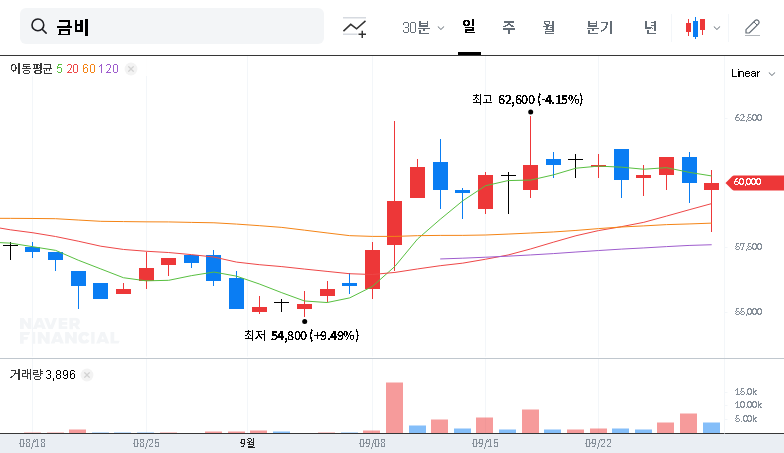
    (008870) Geumbi Treasury Stock Disposal: A 2025 Deep Dive for Investors 대표 차트 이미지

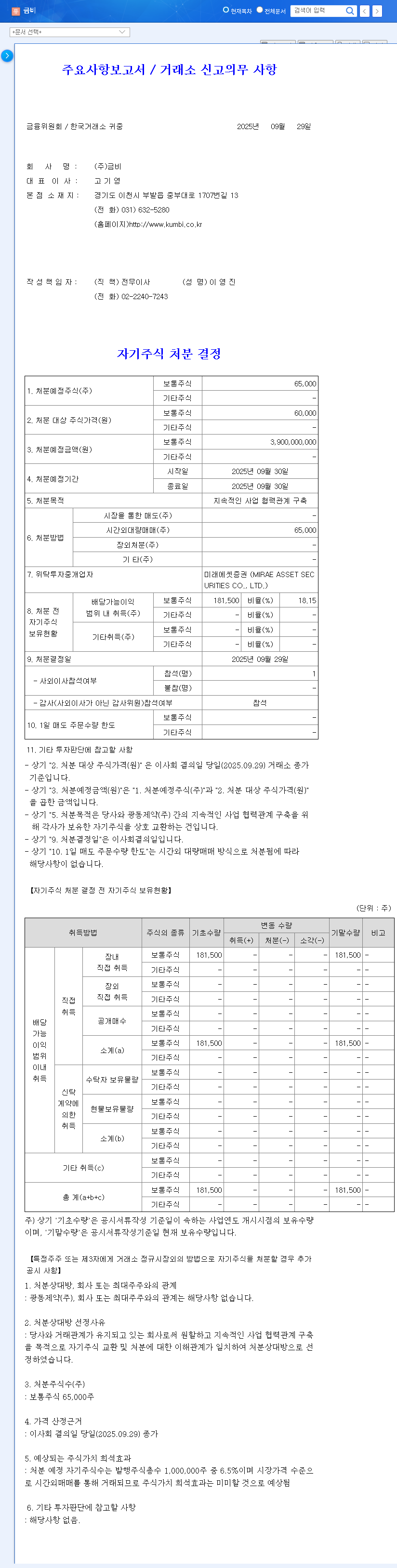
    The recent announcement of the Geumbi treasury stock disposal has sent ripples through the investment community. On September 29, 2025, Geumbi Co., Ltd. detailed its plan to sell 65,000 treasury shares. While on the surface this appears to be a financial maneuver, the company’s stated purpose—to establish ‘continuous business cooperation’—points towards a much deeper strategic realignment. This move could be a pivotal moment for the company’s future growth and shareholder value. In this comprehensive analysis, we will dissect the transaction, evaluate Geumbi’s current financial health, and provide a clear action plan for current and prospective investors.

    Is Geumbi’s disposal of treasury stock a simple fundraising effort or the foundation for a transformative strategic partnership? Understanding the nuances is critical for making an informed investment decision.

    Deconstructing the Geumbi Treasury Stock Disposal

    The core of the announcement involves the disposal of 65,000 common shares, representing 6.5% of the total outstanding shares, for a sum of 3.9 billion KRW. The transaction, managed by Mirae Asset Securities, sets an estimated price of 60,000 KRW per share. The full details can be reviewed in the company’s official filing. Source: Official DART Disclosure.

    Typically, treasury stock sales are used to fund operations, pay down debt, or for capital expenditures. However, Geumbi’s explicit mention of fostering business cooperation elevates this event from a standard financial transaction to a strategic one. This suggests Geumbi is likely preparing to form an alliance with a key partner, using the shares as a tool to cement the relationship and align interests for long-term synergy.

    A Deep Dive into Geumbi’s Financial Health

    To understand the impact of this move, a thorough fundamental analysis of Geumbi’s current state is essential. The company operates across several distinct segments:

    • Glass Business: A foundational segment supplying bottles for beverages. It faces headwinds from raw material costs and currency fluctuations, posting a recent operating loss of -378 million KRW.
    • Cap Business: The company’s cash cow. This division, operating via Samhwa Wangwan, is highly profitable with an operating profit of 2.736 billion KRW, providing a stable revenue base.
    • Plastic Container Business: A growth driver, this segment is capitalizing on the booming K-Beauty industry and posted a healthy operating profit of 1.86 billion KRW.
    • Cosmetics Business: Currently a minor segment running at an operating loss, its impact on the company’s bottom line is limited for now.

    Consolidated operating profit has seen a significant year-on-year drop, primarily due to struggles in the glass segment. Furthermore, a debt-to-equity ratio of 126.67% is a point of concern that highlights the need for prudent financial management and strategic initiatives to improve the balance sheet.

    Potential Impacts: Opportunities and Risks

    The Bull Case: Strategic Growth

    The most significant upside is the potential for a powerful strategic partnership. This could unlock new markets, provide access to new technology, or create cost-saving synergies that fundamentally enhance Geumbi’s competitive position. The 3.9 billion KRW in proceeds will also provide a welcome injection of liquidity, bolstering the balance sheet.

    The Bear Case: Dilution and Uncertainty

    The immediate risk is share dilution. Releasing 6.5% of treasury stock into the market increases the total number of shares, which can put downward pressure on the stock price in the short term. For more on this concept, see this excellent resource from a high-authority financial education site. Moreover, the success of the business cooperation is not guaranteed. If the partnership fails to deliver the expected results, investor sentiment could turn negative.

    Investor Action Plan & FAQ

    Given the dual nature of this event, a measured and long-term approach is advised. Focus on the following:

    • Monitor Disclosures: Pay close attention to future announcements revealing the identity of the partner(s) and the specific terms of the cooperation.
    • Track Segment Performance: Keep an eye on the profitability of the core Cap business and any signs of a turnaround in the Glass segment.
    • Assess Financial Health: Look for improvements in the debt-to-equity ratio and overall financial stability in subsequent quarterly reports.

    What is the core purpose of the Geumbi treasury stock disposal?

    The officially stated purpose is to “establish continuous business cooperation.” This suggests Geumbi is using its shares to form a strategic alliance with a partner to drive future growth, rather than just raising capital.

    How might this affect Geumbi’s stock price?

    In the short-term, the increase in outstanding shares could cause some price weakness due to dilution. However, if the business partnership is successful and enhances Geumbi’s long-term value, the stock price could see significant positive momentum.

    Which of Geumbi’s business segments are most important?

    Currently, the Cap business is the primary profit engine, providing financial stability. The Plastic Container segment is the key growth driver, benefiting from the K-Beauty trend. The performance of these two segments is crucial for the company’s overall success.

    In conclusion, the Geumbi treasury stock disposal is far more than a line item on a balance sheet; it is a strategic signal. While short-term volatility is possible, the long-term outlook will be defined by the quality of the ensuing partnership and management’s ability to execute on its vision. Cautious optimism and diligent monitoring are the best strategies for investors moving forward.

    (008870) Geumbi Treasury Stock Disposal: A 2025 Deep Dive for Investors 관련 이미지
    (008870) Geumbi Treasury Stock Disposal: A 2025 Deep Dive for Investors 관련 이미지
  • (210120) CanvasN Major Shareholder Change: An Expert Investment Analysis (210120)

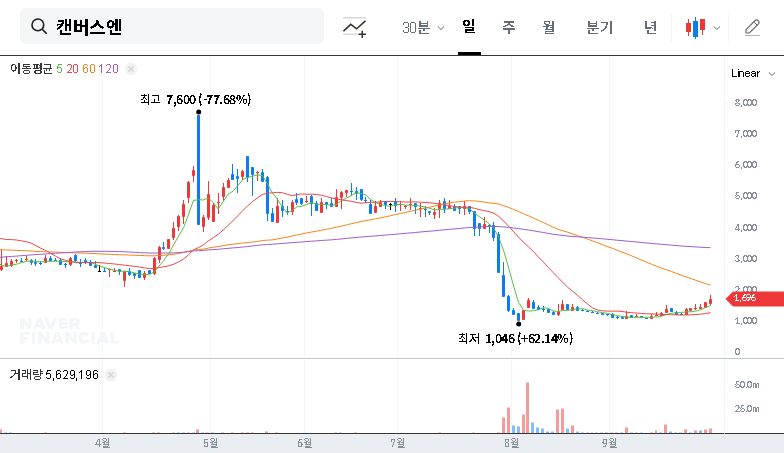
    (210120) CanvasN Major Shareholder Change: An Expert Investment Analysis (210120) 대표 차트 이미지

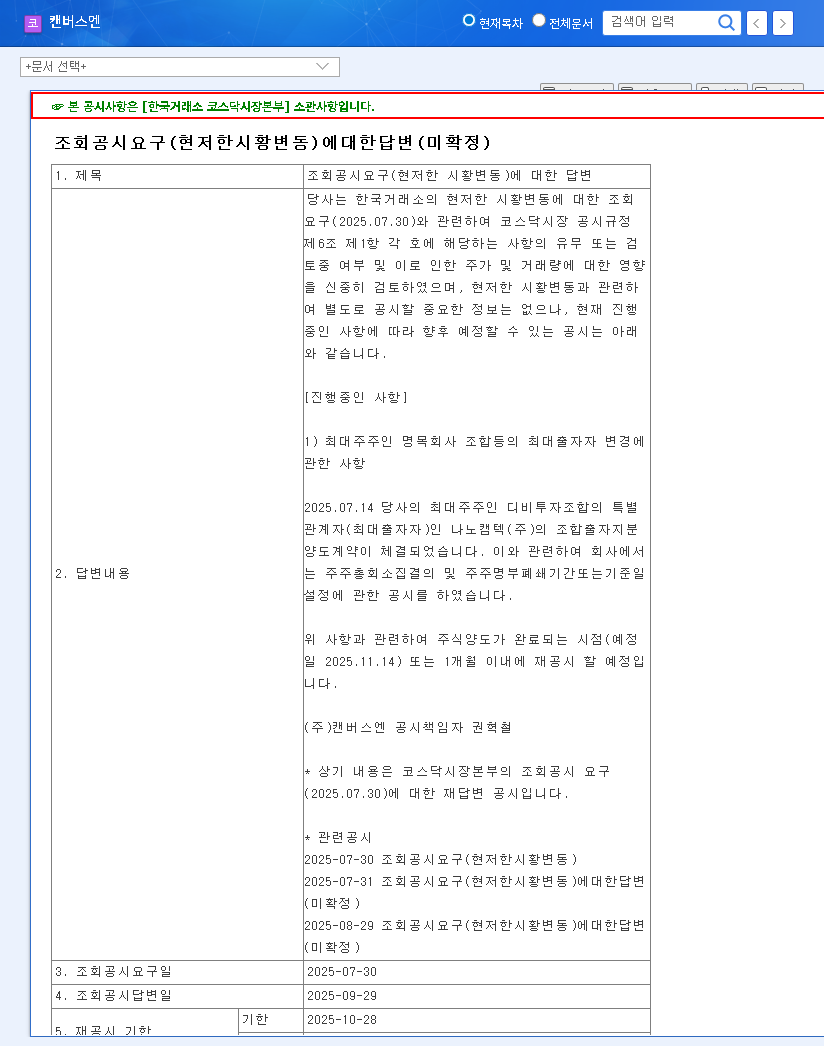
    On September 29, 2025, CanvasN (210120) confirmed that a significant CanvasN major shareholder change is underway, sending ripples of uncertainty through the market. This development, disclosed in response to a Korea Exchange inquiry, introduces a critical variable into the company’s future. For investors, this moment is pivotal: will new leadership steer the company out of its current financial distress, or will it compound existing risks? This comprehensive analysis provides a deep dive into CanvasN’s fundamentals, the potential repercussions of this transition, and a clear action plan to help you navigate your investment decisions with confidence.

    With the company facing declining revenues and mounting debt, the impending change in ownership represents both a potential lifeline and a significant gamble. Understanding the nuances is paramount for any current or prospective shareholder.

    The Official Announcement: What We Know So Far

    CanvasN’s announcement confirmed that the process of a major shareholder change is in progress, with an expected completion date around November 14, 2025. This move signals a fundamental shift in control and strategic direction for the company. The disclosure was made public following a regulatory inquiry into significant market fluctuations, suggesting that the event has already captured the attention of market authorities. For full transparency, investors can review the Official Disclosure (DART report). A re-disclosure with more detailed information is anticipated upon completion.

    A Deep Dive into CanvasN’s Financial Health

    Before assessing the impact of new ownership, it’s crucial to understand the challenges they will inherit. An analysis of CanvasN’s 2025 semi-annual report reveals a company in a precarious position. A successful CanvasN investment analysis must begin here.

    Collapsing Core Business Revenue

    Revenue has fallen by approximately 4.3% year-over-year. More alarmingly, income from drama production—historically a core business segment—was recorded as zero. This indicates a severe operational breakdown in a key profit center, a major red flag for any potential investor.

    Skyrocketing Operational Costs

    Selling, General, and Administrative (SG&A) expenses surged by an astounding 126.4% compared to the previous year. While the company attributes this to investments in new business ventures, such a dramatic increase has decimated profitability and flipped the company to an operating loss.

    Deteriorating Financial Stability

    CanvasN’s balance sheet shows signs of distress. Cash reserves have dwindled, while increased borrowings and convertible bond issuances have caused the debt-to-equity ratio to rise. This financial burden not only increases interest expenses but also limits the company’s flexibility to invest and navigate market downturns. Understanding this metric is key; you can learn more about it from authoritative sources like Investopedia.

    Impact Analysis: Short-Term Volatility vs. Long-Term Potential

    The CanvasN major shareholder change creates two distinct timelines for investors to consider.

    Short-Term Outlook: Heightened Uncertainty

    • Stock Price Volatility: Expect significant price swings as the market digests news and speculation about the new leadership’s intentions.
    • Negative Sentiment: Given the weak fundamentals, the immediate investor reaction could be negative until a clear, credible turnaround plan is presented.
    • Increased Trading Volume: The event will attract traders and speculators, leading to higher-than-average trading volumes.

    Mid-to-Long-Term Outlook: A Fork in the Road

    The company’s future hinges entirely on the new shareholder’s strategy and execution capabilities.

    Positive Scenario: The new leadership injects fresh capital, implements a strict cost-control regime, revitalizes the core drama business, and leverages its expertise to make the new ventures profitable. This could lead to a sustainable recovery and significant upside for the 210120 stock price.

    Negative Scenario: If the new management fails to address the fundamental issues, continues cash-burning investments without clear returns, or if their strategy is flawed, the company’s financial health could worsen, leading to further value erosion and potential delisting risks.

    Strategic Investor Action Plan

    Given the high degree of uncertainty, a disciplined and cautious approach is essential. This is not the time for impulsive decisions.

    • Adopt a ‘Wait and See’ Stance: Avoid making significant investments until the shareholder change is finalized and the new management publicly outlines its strategic plan.
    • Scrutinize the Re-disclosure: The follow-up disclosure around November 14 is the most important piece of information. Analyze it for details on the new shareholder’s identity, vision, and concrete plans for financial and operational improvements.
    • Assess the New Management’s Credibility: Research the track record of the new controlling party. Do they have experience in turning around distressed companies or in the content industry? Their past performance is a strong indicator of future success.
    • Prioritize Risk Management: If you currently hold a position, review its size in your portfolio. If you are considering a new position, be mindful of the high risk and size your investment accordingly. For more on portfolio management, consider our guide on Analyzing Corporate Financial Statements.

    In conclusion, the CanvasN major shareholder change is a defining moment for the company. While it offers a glimmer of hope for a turnaround, the path is fraught with risk due to the company’s severe underlying problems. Prudent investors will remain on the sidelines, gathering information and waiting for a clear, actionable strategy to emerge from the new leadership before committing capital.

    (210120) CanvasN Major Shareholder Change: An Expert Investment Analysis (210120) 관련 이미지
    (210120) CanvasN Major Shareholder Change: An Expert Investment Analysis (210120) 관련 이미지