Tag: CNT

  • (393970) DAEJIN ADVANCED MATERIALS Inc. Stock (393970): Deep Dive Analysis After Kolon’s 9.4% Sale

    (393970) DAEJIN ADVANCED MATERIALS Inc. Stock (393970): Deep Dive Analysis After Kolon’s 9.4% Sale

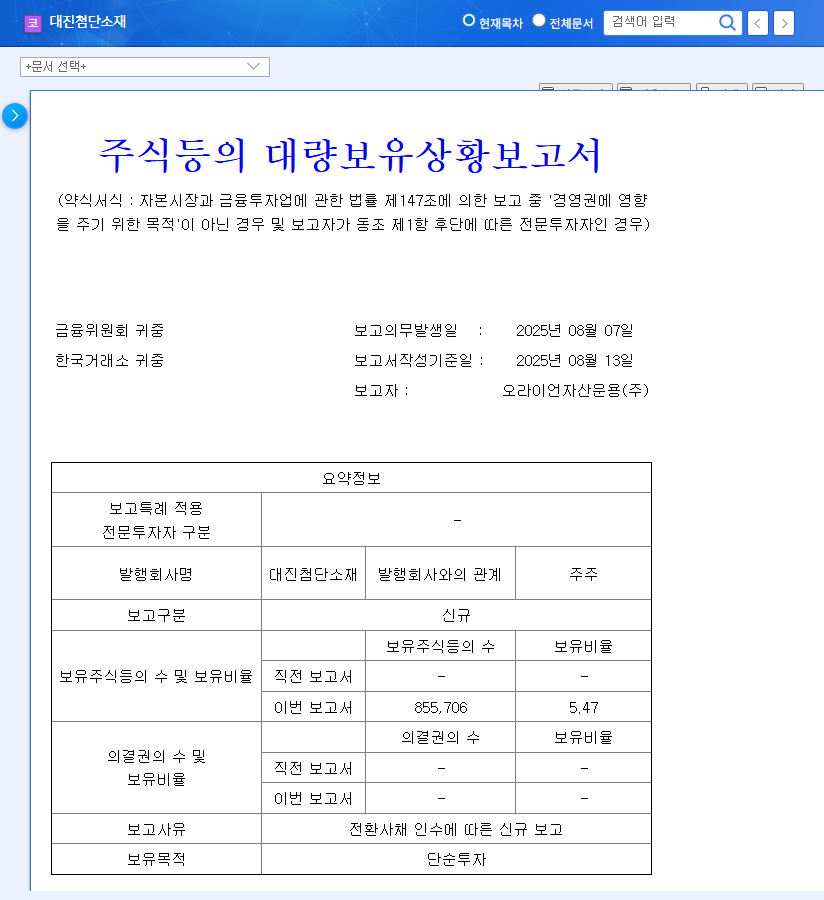
    An in-depth analysis of DAEJIN ADVANCED MATERIALS Inc. stock (393970) has become critical following a major market event. A significant institutional investor, Kolon Investment, has divested a substantial portion of its holdings, sending ripples through the investment community. This move raises urgent questions: Is this a sign of underlying trouble, or simply a strategic portfolio adjustment? For current and potential investors, understanding the context behind this sale is paramount.

    This comprehensive article breaks down the event, performs a deep dive into the company’s current financial health and business fundamentals, and provides a clear, actionable investment thesis to help you navigate the uncertainty surrounding DAEJIN ADVANCED MATERIALS Inc. stock.

    The Catalyst: Kolon Investment’s Major Block Sale

    On November 13, 2025, a mandatory disclosure confirmed that Kolon Investment executed a large-scale sale of its shares in DAEJIN ADVANCED MATERIALS Inc. The official filing, known as a ‘Report on the Status of Large Shareholdings,’ detailed a significant reduction in their position. The official disclosure can be reviewed directly on DART (Source).

    This wasn’t a minor trim. Kolon Investment offloaded 917,050 shares, slashing their stake from 13.96% down to just 4.53%—a decrease of approximately 9.43 percentage points.

    While the stated reason for the sale was a ‘simple investment purpose’—often used to signify profit-taking or portfolio rebalancing—the sheer size of the sale by a major institutional holder is a material event that warrants close scrutiny.

    Deep Dive: Analyzing DAEJIN ADVANCED MATERIALS Inc. (393970) Fundamentals

    To understand the potential long-term trajectory of the DAEJIN ADVANCED MATERIALS Inc. stock, we must look beyond this single event and assess the health of the underlying business.

    Core Business Under Pressure

    The company’s primary revenue comes from materials used in secondary battery processes and automotive parts. Unfortunately, this segment has faced severe headwinds. In the first half of 2025, revenue from this division plummeted by a staggering 63.7% year-over-year. This is largely attributed to a market phenomenon known as the ‘chasm’ in the electric vehicle (EV) industry, where growth temporarily slows as the market transitions from early adopters to the more pragmatic mainstream consumer, compounded by a challenging macroeconomic environment.

    The Future Bet: Carbon Nanotube (CNT) Technology

    DAEJIN is pinning its future growth on its Carbon Nanotube (CNT) business. CNTs are advanced materials with exceptional strength and conductivity, making them highly valuable for next-generation batteries and other high-tech applications. While the company is actively pursuing technology acquisition and global expansion in this area, it’s crucial to note that tangible sales results from the CNT division are still minimal. It remains a promising but currently unproven growth engine.

    Financial Red Flags: A Look at the Numbers

    The 2025 semi-annual report paints a concerning financial picture:

    • Worsening Profitability: The company posted an operating loss of 3.4 billion KRW and a net loss of 10.5 billion KRW, a sharp reversal into deficit.
    • Rising Debt: Total debt increased by 27.5%, with a notable rise in short-term borrowings and convertible bonds, increasing financial risk.
    • Negative Cash Flow: Operating cash flow was a deeply negative -22.6 billion KRW, indicating the core business is burning through cash rather than generating it.

    Investment Outlook and Strategic Plan

    Given the block sale and the weak fundamentals, how should investors approach the 393970 stock analysis?

    Short-Term Impact: Expect Volatility

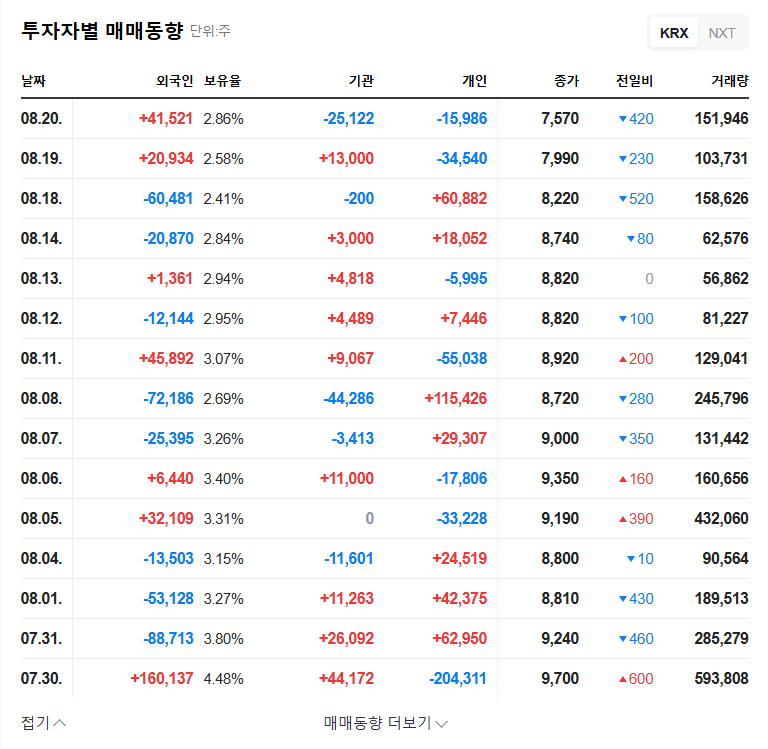
    The immediate consequence of Kolon’s sale will likely be significant downward pressure on the stock price. The large influx of shares can create an oversupply, and the negative signal sent by a major investor exiting can erode market confidence. Short-term traders should exercise extreme caution, as volatility is expected to be high.

    Mid-to-Long-Term Outlook: All Eyes on Recovery

    Over the long run, this single sale will become a footnote. The future of DAEJIN ADVANCED MATERIALS Inc. stock will be determined by its ability to execute a turnaround. Key catalysts to watch for are:

    • A recovery in the secondary battery and automotive markets.
    • Meaningful revenue generation from the CNT business.
    • Tangible steps to improve the company’s financial structure and reduce debt.

    For context on market cycles, it’s helpful for investors to understand the risks and rewards of evaluating technology growth stocks during downturns.

    Conclusion: A ‘Conservative’ Investment Opinion

    Taking all factors into account—the major block sale by Kolon Investment, the severe downturn in core business revenue, and the precarious financial situation—our overall investment opinion on DAEJIN ADVANCED MATERIALS Inc. stock is ‘Conservative.’ The combination of external selling pressure and internal fundamental weakness creates a high-risk environment. Investors should wait for clear, sustained signs of a fundamental business recovery before considering a significant position. Monitoring macroeconomic factors is also crucial; for a broader view, resources like Reuters’ global market analysis can provide valuable context.
    (393970) DAEJIN ADVANCED MATERIALS Inc. Stock (393970): Deep Dive Analysis After Kolon's 9.4% Sale 관련 이미지
    (393970) DAEJIN ADVANCED MATERIALS Inc. Stock (393970): Deep Dive Analysis After Kolon's 9.4% Sale 관련 이미지
  • (011780) KUMHO PETRO CHEMICAL Q3 2025 Earnings: Deep Dive Analysis & Stock Outlook

    (011780) KUMHO PETRO CHEMICAL Q3 2025 Earnings: Deep Dive Analysis & Stock Outlook

    The latest KUMHO PETRO CHEMICAL Q3 2025 earnings report has presented investors with a complex and nuanced picture. Amidst persistent global economic uncertainties and a challenging petrochemical market, the company posted a notable revenue miss but managed to surprise analysts with a robust net profit beat. This divergence demands a closer look: what does it signal for the company’s fundamentals, and what is the optimal investment strategy for KUMHO PETRO CHEMICAL stock moving forward?

    This comprehensive KUMHO PETRO CHEMICAL analysis will delve deep into the Q3 2025 results, explore the macroeconomic headwinds, evaluate the performance of key business segments, and provide a clear, actionable outlook for current and prospective investors.

    Deconstructing the Q3 2025 Performance

    A Tale of Two Metrics: Revenue vs. Profitability

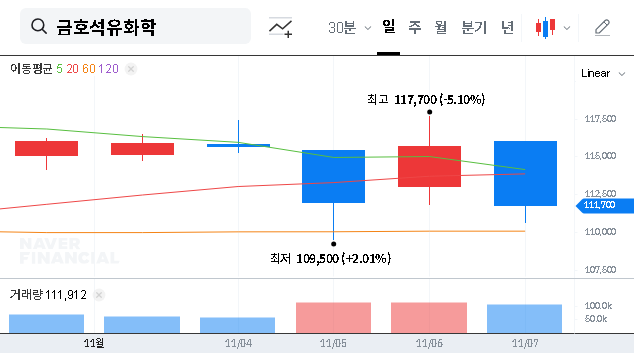
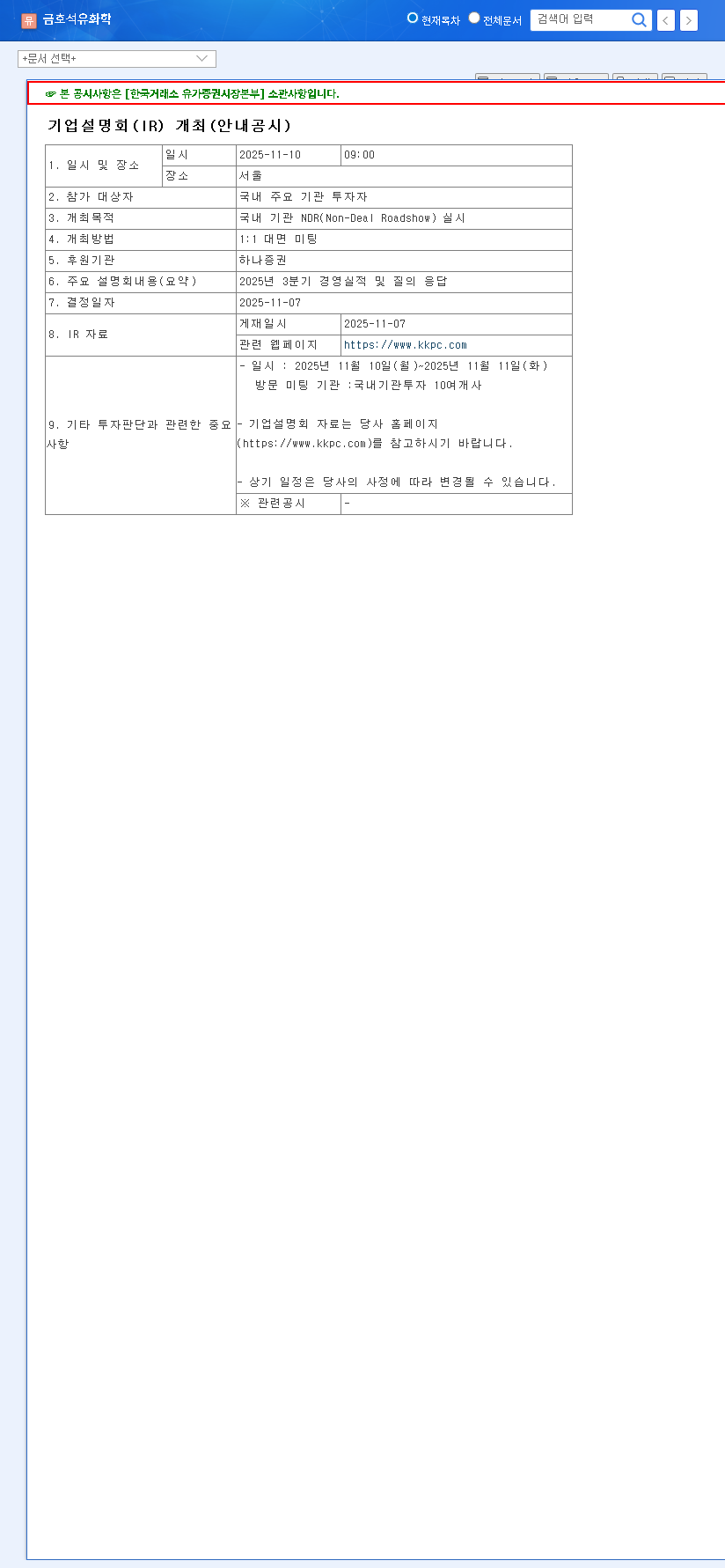
    KUMHO PETRO CHEMICAL reported Q3 2025 revenue of KRW 1.6438 trillion, a figure that fell 7% short of market consensus. This shortfall points directly to weakened demand from front-line industries and the broader impact of a global economic slowdown. However, the story shifts dramatically when looking at profitability. The company’s operating profit landed at KRW 84.4 billion, nearly aligning with expectations (-0.4%), while net profit surged to KRW 106.9 billion, outperforming forecasts by a remarkable 13%. Investors can review the complete financial data in the company’s Official Disclosure.

    While the revenue decline reflects broader industry challenges, the resilience in profitability demonstrates strong cost control and strategic financial management, offering a silver lining for long-term investors.

    The strong net profit was likely driven by a combination of factors, including favorable foreign exchange gains, reduced corporate tax burdens, or other non-operating income streams. This ability to protect the bottom line amidst top-line pressure is a testament to the company’s operational efficiency.

    Segment Performance and Market Headwinds

    A Mixed Bag Across Business Units

    The overall results were a composite of varied performance across KUMHO’s core business segments:

    • Synthetic Rubber: This core segment likely maintained stable profitability, acting as a cash cow. However, future performance is tied to the automotive industry, which faces its own demand uncertainties.
    • Synthetic Resin: Profitability was likely defended through strategic price adjustments, but sluggishness in construction and consumer goods capped growth potential.
    • Carbon Nanotubes (CNT): This high-growth segment continued to show weakness, primarily due to the downturn in the EV battery and construction sectors, raising concerns about its role as a future growth engine.

    Navigating a Stormy Macroeconomic Environment

    The petrochemical industry outlook remains challenging due to several external pressures. Key factors impacting the KUMHO PETRO CHEMICAL Q3 2025 earnings included China’s aggressive capacity expansion leading to regional oversupply, volatile raw material costs tied to oil prices, and significant currency fluctuations. For deeper insights into global economic trends, investors often consult resources like Bloomberg’s economic analysis. These external variables create a difficult operating environment that demands nimble management.

    Investment Strategy: A Prudent Path Forward

    Strengths and Opportunities

    Despite the challenges, KUMHO PETRO CHEMICAL holds several key strengths that form the basis of a long-term investment thesis. The company’s proactive shareholder return policy, including share buybacks, provides strong support for the stock price. Furthermore, its sound financial structure, characterized by an improving debt-to-equity ratio, offers resilience. Long-term growth drivers, such as the new EPDM 5Line and diversification into high-value products, present significant upside potential once the global economy recovers. For those interested in corporate finance, understanding a company’s financial health is critical. You can learn more by reading our internal guide on analyzing corporate balance sheets.

    Risks and Investment Recommendation

    Given the ongoing uncertainties, a ‘Neutral’ stance on KUMHO PETRO CHEMICAL stock is warranted. The primary risks include a prolonged global economic slowdown, persistent weakness in the high-growth CNT segment, and continued volatility in raw material prices and exchange rates.

    Our recommended investment strategy is twofold:

    • Short-Term Caution: Adopt a conservative approach. Wait for clearer signs of a cyclical upturn in the petrochemical industry and stabilization in end-market demand before committing new capital.
    • Long-Term Focus: For investors with a longer time horizon, monitor the progress of the company’s strategic initiatives, such as new business development (ECH) and R&D investments. A successful execution here could unlock significant value when the market turns.

    Frequently Asked Questions (FAQ)

    How did KUMHO PETRO CHEMICAL’s Q3 2025 earnings compare to expectations?

    The company’s revenue was 7% below market expectations. However, operating profit was in line with forecasts, and net profit significantly beat expectations by 13%, presenting a mixed but resilient financial performance.

    What is the current investment outlook for KUMHO PETRO CHEMICAL stock?

    The current recommendation is ‘Neutral’. While the company shows fundamental strength and a commitment to shareholder returns, macroeconomic uncertainties and industry-wide pressures call for a cautious, wait-and-see approach in the short term.

    What are the key risks for investors to monitor?

    Investors should closely monitor the global economic recovery, fluctuations in crude oil prices and currency exchange rates, the performance of the CNT business, and any signs of improving demand in the broader petrochemical market.

    (011780) KUMHO PETRO CHEMICAL Q3 2025 Earnings: Deep Dive Analysis & Stock Outlook 관련 이미지
  • (011780) Kumho Petrochemical Stock Analysis (2025): Navigating Mixed Results & NPS Sell-Off

    (011780) Kumho Petrochemical Stock Analysis (2025): Navigating Mixed Results & NPS Sell-Off

    Investors are closely watching Kumho Petrochemical Co., Ltd. as it navigates a complex H1 2025, marked by conflicting financial signals and a significant move by a major institutional investor. While the company posted robust revenue growth, a simultaneous decline in operating profit has raised questions. Compounding this uncertainty, the news that South Korea’s National Pension Service (NPS) has reduced its substantial stake has sent ripples through the market, leaving many to wonder about the company’s underlying strength.

    This comprehensive Kumho Petrochemical analysis will dissect the company’s recent performance, financial health, and the broader market environment. By examining the facts from the latest reports and understanding the implications of the NPS sell-off, we aim to provide practical insights to help you make informed investment decisions in this volatile period.

    H1 2025 Performance: A Story of Growth and Squeezed Margins

    In the first half of 2025, Kumho Petrochemical demonstrated external growth, with consolidated revenue climbing by 4.6% year-on-year to KRW 3.6816 trillion. This top-line growth suggests resilient demand in key areas. However, the narrative shifts when looking at profitability. The company’s operating profit fell by 6.0% to KRW 185.8 billion, indicating that rising costs or pricing pressures are eroding margins. This divergence between revenue and profit is a central concern for the current Kumho Petrochemical stock valuation. The full details can be reviewed in the company’s official filing (Source: Official Disclosure).

    The Elephant in the Room: Understanding the NPS Sell-Off

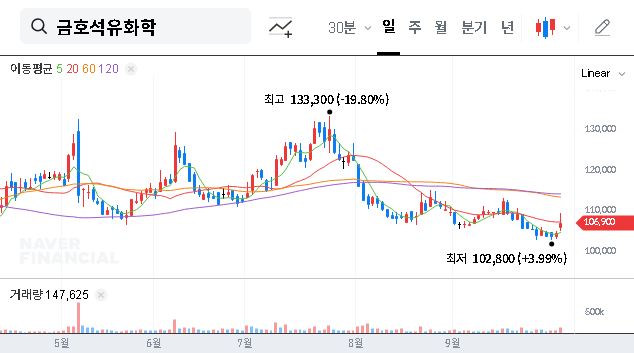
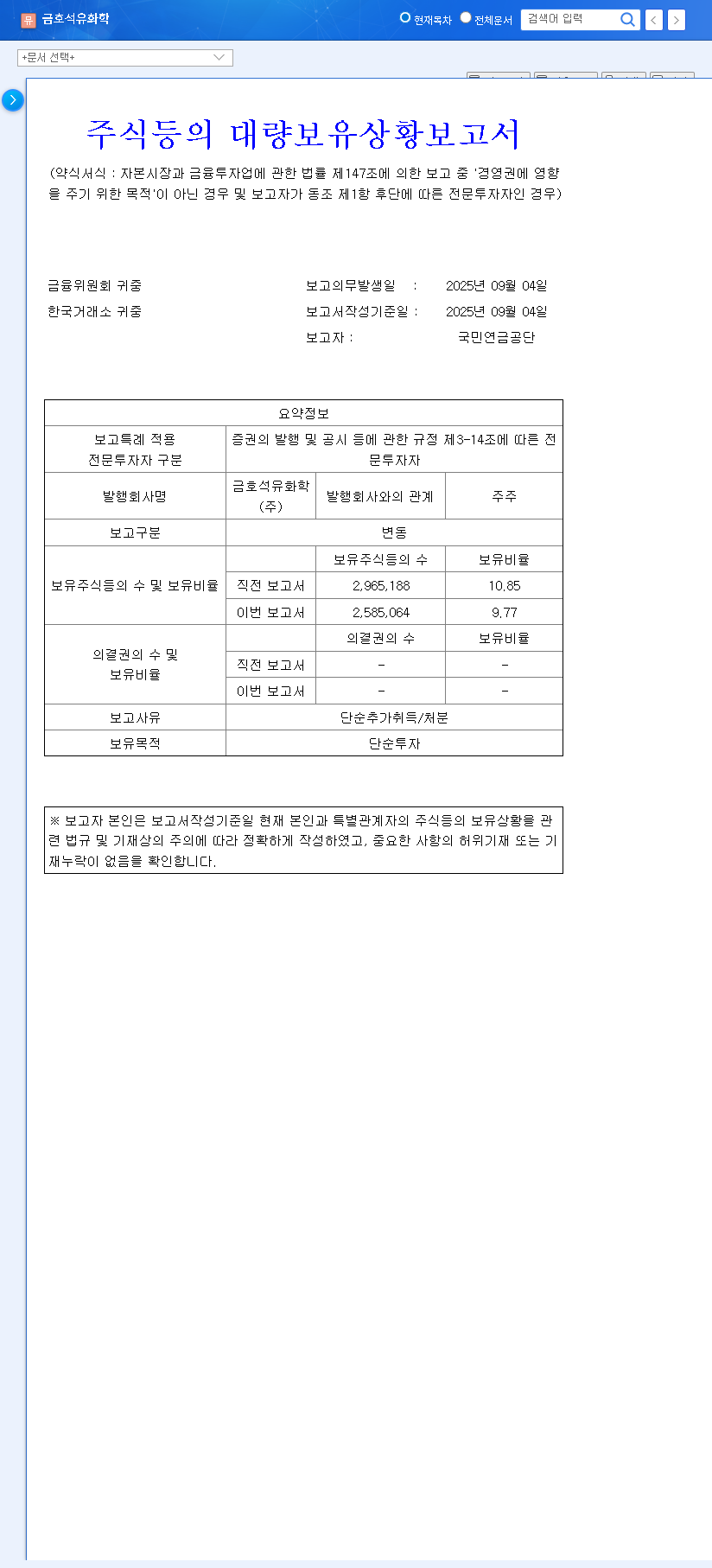
    Perhaps the most impactful news was the NPS sell-off. The National Pension Service, one of the world’s largest pension funds, reduced its stake in Kumho Petrochemical from 10.85% to 9.77%. While a roughly 1% reduction may seem small, any move by an investor of this magnitude is scrutinized heavily. The market often interprets such a sale as a signal of waning confidence from a well-informed institutional player, potentially triggering a wider sentiment shift and placing short-term downward pressure on the stock price. Investors must now question whether this is a strategic portfolio rebalancing or a reaction to a perceived weakness in the company’s future outlook.

    Deep Dive: Business Segment Performance

    The company’s mixed results are a reflection of varying performance across its diverse business segments.

    • Synthetic Rubber: A bright spot. This segment capitalized on lower raw material prices and successful unit price increases to boost both sales and operating profit. Recovering demand in the latex market provided an additional tailwind.
    • Synthetic Resin: Faced significant headwinds from an oversupply of low-cost Chinese products and weak domestic demand, leading to lower sales volumes. However, aggressive pricing strategies helped mitigate the impact on revenue and profitability.
    • Specialty Chemicals: Showed impressive year-on-year growth in both revenue and sales, driven by increased raw material self-sufficiency and an expanded sales strategy.
    • Carbon Nanotubes (CNT): This growth-oriented segment struggled due to the slowdown in EV sales and a downturn in the construction sector. The company is now pivoting to promote CNTs for other conductive applications.

    Despite the positive top-line growth, the decline in operating profit and struggles in key segments like Synthetic Resin and CNT are critical red flags that investors must not overlook in their Kumho Petrochemical analysis.

    Financial Health & Macroeconomic Headwinds

    A Stable Financial Foundation

    On a positive note, Kumho Petrochemical’s financial stability has improved. The debt-to-equity ratio was reduced to a very healthy 35.4%, and operating cash flow remained strong at KRW 332.7 billion. This solid balance sheet provides the company with resilience and flexibility. However, key shareholder metrics like Earnings Per Share (EPS) and Return on Equity (ROE) both declined year-on-year, reinforcing the profitability challenge.

    Persistent External Risks

    The petrochemical industry outlook remains clouded by macroeconomic uncertainty. Volatility in currency exchange rates (EUR/KRW, USD/KRW), geopolitical risks affecting oil prices, and shifting global interest rate policies all pose significant challenges. While stabilizing freight costs are a positive, supply chain integrity remains a concern. For a deeper understanding of these global factors, resources like the World Bank’s economic outlook can provide valuable context.

    Action Plan for Investors

    Navigating an investment in Kumho Petrochemical stock requires a balanced and watchful approach. Here are key factors to monitor:

    • Profitability Turnaround: Watch for clear strategies and results related to improving operating margins and managing costs effectively.
    • Growth Engine Recovery: Keep a close eye on the CNT segment. Any signs of a rebound or successful diversification could be a powerful catalyst.
    • Institutional Investor Flow: Continue to track the holdings of the NPS and other major institutions. Further selling could signal deeper concerns.
    • Shareholder Value Initiatives: Monitor progress on the company’s planned treasury stock cancellation and ESG efforts, which could enhance long-term value. For more on this, see our guide to analyzing industrial stocks.

    Frequently Asked Questions (FAQ)

    Q1: What were Kumho Petrochemical’s H1 2025 earnings like?

    A1: In H1 2025, revenue increased by 4.6% year-on-year, but operating profit decreased by 6.0%, indicating a decline in profitability despite sales growth.

    Q2: Why did the National Pension Service (NPS) sell its stake in Kumho Petrochemical?

    A2: The NPS reduced its stake from 10.85% to 9.77%. While the stated reason is often portfolio adjustment, the market frequently interprets such a move by a major institution as a short-term bearish signal.

    Q3: How is the financial health of Kumho Petrochemical?

    A3: The company’s financial health is strong. As of H1 2025, the debt-to-equity ratio improved to a low 35.4%, and it maintains stable operating cash flow, indicating solid financial stability.

    Q4: What should investors watch for when considering Kumho Petrochemical stock?

    A4: Investors should focus on the company’s ability to improve operating profit, the performance of its growth segments like CNT, macroeconomic factors, and any further moves by institutional investors like the NPS.

    Disclaimer: This content is based on publicly available information and is for informational purposes only. It is not intended as investment advice or a recommendation. All investment decisions should be made based on the investor’s own judgment and responsibility.

    (011780) Kumho Petrochemical Stock Analysis (2025): Navigating Mixed Results & NPS Sell-Off 관련 이미지
  • JO IR: Analyzing Turnaround Potential Amidst Secondary Battery Market Rebound Expectations


    JO IR: Analyzing Turnaround Potential Amidst Secondary Battery Market Rebound Expectations 대표 차트 이미지


    What was discussed at the JO IR?

    JO presented its current business status and future strategies during the IR session on September 10, 2025. Key highlights include:

    • Analysis of 2024’s poor performance and improvement plans: JO explained the factors contributing to its decline, including the impact of the secondary battery market downturn and losses from the fair value evaluation of convertible bonds, and presented plans for future profitability improvement.
    • CNT business growth strategy: JO emphasized the growth potential of its CNT business by announcing plans to expand production capacity through the expansion of its Ansan Plant 2 and secure single-walled CNT production plants.
    • Progress of new business initiatives: JO shared the current status and future growth potential of its new businesses, including carbon nanotube fibers, sheets, and all-solid-state batteries.
    • Mid- to long-term competitiveness reinforcement strategy: JO presented strategies for strengthening its competitiveness through increased R&D investment and strategic partnerships.

    How did the market react to the IR announcements?

    Market reactions to the IR announcements can be divided into positive and negative perspectives. Investors will closely analyze the specifics of the announcements, their feasibility, and whether they meet existing market expectations. The clarity of the explanation regarding the poor performance in 2024 and the feasibility of future growth strategies are expected to be key factors influencing market evaluation.

    What should investors do now?

    Investors should thoroughly analyze the contents of the IR presentation and continuously monitor future financial performance improvements, new business development progress, and changes in the external environment. Pay particular attention to the following:

    • Objectively analyze the company’s strategies and financial situation through IR materials and disclosures.
    • Continuously monitor external factors, such as secondary battery market trends and changes in the competitive landscape.
    • Develop investment strategies from a long-term perspective without being swayed by short-term stock price fluctuations.


    Frequently Asked Questions

    What is JO’s main business?

    JO manufactures carbon nanotube (CNT) conductive additives for secondary batteries and engages in plant engineering.

    How was JO’s performance in 2024?

    In 2024, JO experienced a decline in sales and a shift to operating and net losses due to the downturn in the secondary battery market.

    What is JO’s future growth strategy?

    JO plans to secure future growth engines by expanding production capacity in its CNT business, producing single-walled CNTs, and pursuing new businesses such as carbon nanotube fibers and sheets, and all-solid-state batteries.


    JO IR: Analyzing Turnaround Potential Amidst Secondary Battery Market Rebound Expectations 관련 이미지
    JO IR: Analyzing Turnaround Potential Amidst Secondary Battery Market Rebound Expectations 관련 이미지


  • Daejin Advanced Materials Q2 2025 Earnings Disappoint: What Investors Need to Know

    1. What Happened? Q2 2025 Earnings Breakdown

    Daejin Advanced Materials reported Q2 2025 revenue of ₩12.3B, an operating loss of ₩4.8B, and a net loss of ₩10.2B, significantly missing market expectations. Compared to Q1 2025, revenue decreased by 39.1%, and both operating and net income swung to losses.

    2. Why Did This Happen? Analyzing the Decline

    The primary driver of the decline was a sharp drop in sales of materials for secondary battery processes and automotive components. The company has been directly impacted by the slowdown in the global electric vehicle market and the overall economic downturn, referred to as a ‘chasm’ in key industries.

    3. What’s Next? Short-Term and Long-Term Outlook

    • Short-term: Negative impacts are expected, including downward pressure on the stock price, increased financial risks, and weakened investor sentiment.
    • Long-term: The success of the company’s CNT business will be crucial. Efforts to improve financial structure and adaptability to changing market conditions will also be key factors.

    4. What Should Investors Do? Key Investment Considerations

    • Investors should carefully consider the timing of an earnings turnaround, the visibility of CNT business performance, financial health management, macroeconomic and industry environment changes, and market share and competitive landscape.
    • A cautious approach, observation, or a dollar-cost averaging strategy is recommended at this time.

    Frequently Asked Questions

    What are the main businesses of Daejin Advanced Materials?

    Daejin Advanced Materials operates in the secondary battery materials, automotive component materials, and CNT (Carbon Nanotube) sectors, with CNT being a key driver of future growth.

    Why were the Q2 2025 earnings disappointing?

    The decline is attributed to a downturn, or ‘chasm,’ in the secondary battery and automotive markets, which are key downstream industries for the company.

    What is the outlook for Daejin Advanced Materials’ stock price?

    The short-term outlook is negative, but there is potential for long-term growth depending on the success of their CNT business. A cautious approach to investment is advised.

  • Jayeo’s Mixed H1 2025 Results: Battery Materials Growth vs. Plant Engineering Decline

    1. Jayeo’s H1 2025 Performance: A Tale of Two Segments

    Jayeo reported revenue of KRW 29.945 billion in H1 2025, a 63.9% decrease year-over-year. While the battery materials segment achieved KRW 10.244 billion in revenue, driven by growth in overseas sales, the plant engineering segment plummeted by 72.8% year-over-year to KRW 19.645 billion, dragging down overall performance. Operating income was KRW 222 million (0.74% margin), and net income swung to a loss of KRW 3.718 billion.

    2. Analyzing the Decline: Plant Engineering Struggles

    The decline in plant engineering stems from a decrease in new orders and reduced profitability in ongoing projects. Conversely, the battery materials segment continues to grow, leveraging its technological strength in CNT and diverse product portfolio in overseas markets.

    3. Investment Strategy: Short-Term vs. Long-Term

    In the short term, caution is advised due to declining profitability and the return to losses. While Jayeo’s long-term potential is tied to the growth of the battery materials market, recovery in the plant engineering segment and tangible results from new businesses are crucial. A wait-and-see approach is recommended for now.

    4. Key Takeaways for Investors

    • • Recovery of new orders and profitability in the plant engineering division.
    • • Customer diversification and market share expansion in the battery materials segment.
    • • Tangible results from R&D and new business ventures.
    • • Impact of fluctuations in exchange rates and interest rates.

    Frequently Asked Questions

    What are Jayeo’s main businesses?

    Jayeo operates in two main segments: battery materials (including CNT conductive additives) and plant engineering.

    What is the main reason for the decline in H1 2025 performance?

    The decline is primarily attributed to a decrease in new orders and reduced profitability within the plant engineering segment.

    Should I invest in Jayeo?

    A cautious approach is recommended in the short term. Long-term investment should be considered after evaluating the recovery of the plant engineering division and the success of new business initiatives.