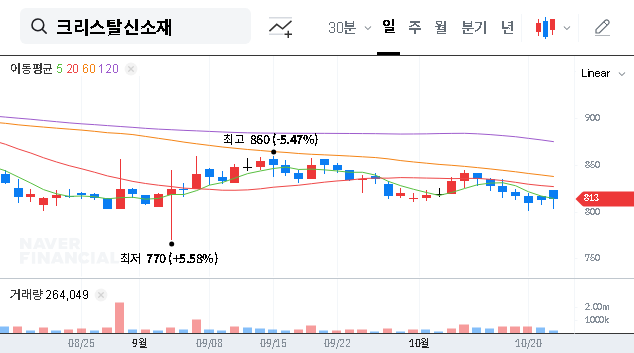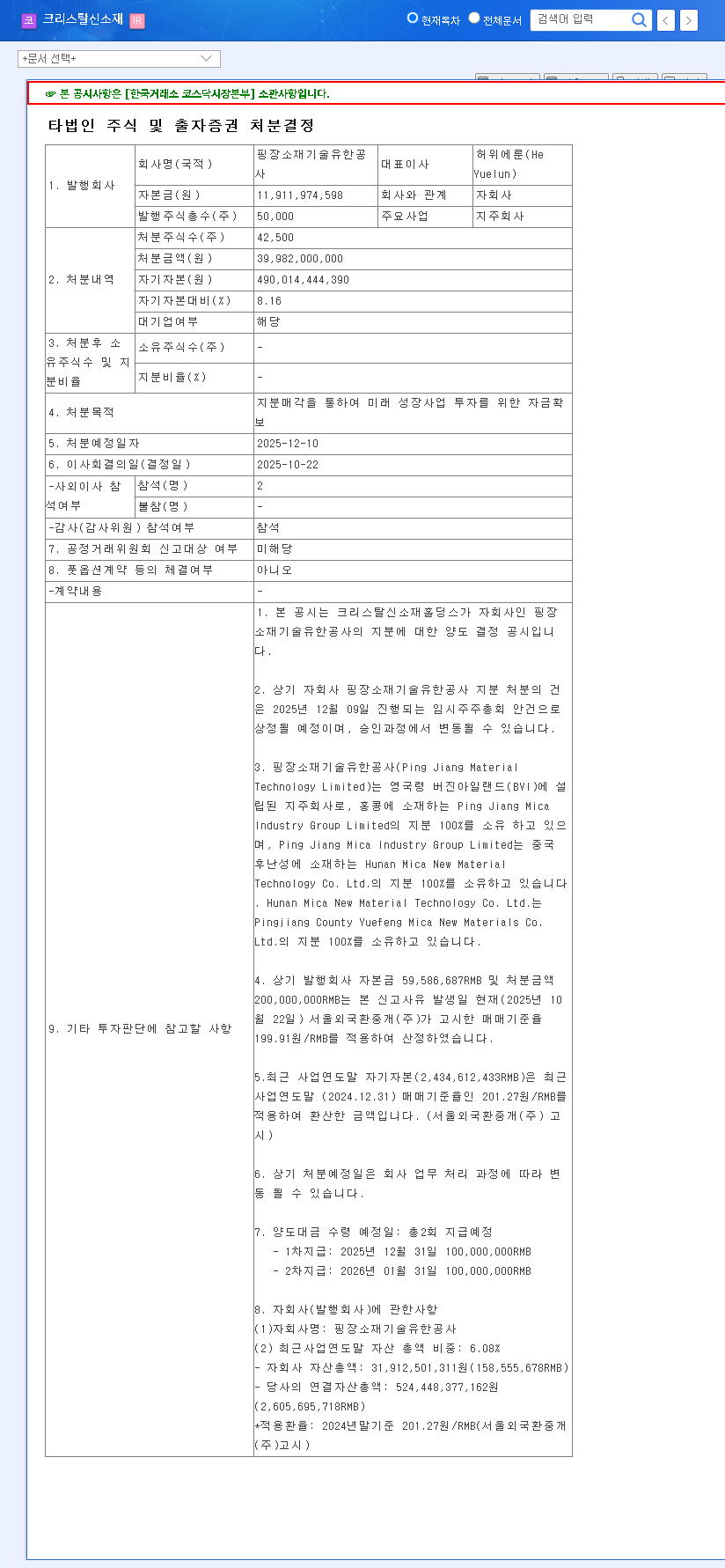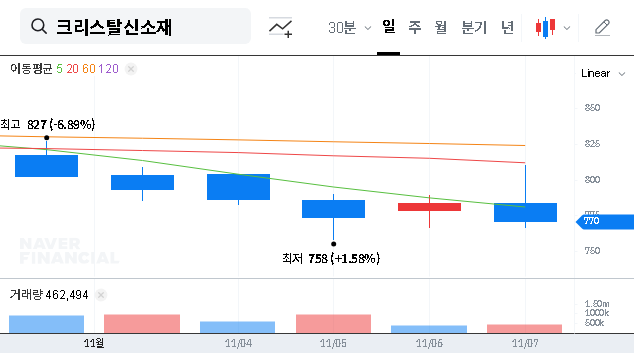
The recent China Crystal New Material rights offering has sent ripples through the investment community, raising critical questions about the company’s future. With 10.727 billion KRW at stake, investors are closely watching to see how this capital infusion will reshape the company’s financial standing, fuel its growth engines like the promising graphene business, and ultimately affect shareholder value. This comprehensive analysis will dissect the offering, evaluate the company’s fundamentals, and provide a strategic playbook for investors navigating this pivotal moment.
The Rights Offering: A Breakdown of the Details
On November 7, 2025, China Crystal New Material Holdings Co., Ltd. formally announced its decision to raise capital through a significant rights offering. The move, detailed in an official filing, involves issuing a substantial number of new common shares to raise funds. Here are the core details from the announcement:
- •Total Capital Raised: 10.727 billion KRW.
- •Shares Issued: 12,620,000 common shares.
- •Issue Price: 850 KRW per share.
- •Proportion to Market Cap: Represents approximately 10.6% of the company’s current market capitalization of 100.6 billion KRW.
- •Key Participants: GAO YU, NEW ARK INVESTMENT CO., LTD., and LEADING EDGE INVESTMENT HODINGS LTD.
- •Important Dates: Payment is due November 27, 2025, with a tentative listing date of December 15, 2025.
- •Source: View the Official Disclosure on DART for complete information.
Fundamental Diagnosis: Why Raise Capital Now?
This capital raise is not happening in a vacuum. A look at the company’s Q2 2025 report reveals underlying pressures that likely motivated this decision. This investment analysis shows a company at a crossroads, balancing legacy business challenges with new growth opportunities.
1. Declining Revenue and Profitability
The company’s core business, centered on synthetic mica products, has faced headwinds. Year-on-year sales have decreased across key product lines, signaling a downward revenue trend. This has been compounded by a rising cost of goods sold and reduced efficiency in administrative expenses, leading to a notable decline in operating profit and overall profitability.
2. Financial Health Concerns
The balance sheet shows signs of strain. A rising debt-to-equity ratio, coupled with an increase in short-term borrowings, highlights a growing need for liquidity management. While the rights offering will inject much-needed capital, it underscores the necessity for a broader strategy to fortify the company’s financial foundation.
3. The Graphene Business: A Beacon of Growth
In stark contrast to the challenges in the mica sector, the company’s graphene business segment is a significant bright spot. Graphene, a revolutionary nanomaterial, has vast applications in electronics, energy, and composites. You can learn more about its potential from authoritative sources like ScienceDirect. This segment’s positive growth trajectory positions it as the company’s primary future growth engine, and a likely target for the newly raised capital.
Impact of the China Crystal New Material Rights Offering
The offering will have immediate short-term effects and lasting long-term implications. Understanding both is crucial for making informed decisions about China Crystal New Material stock.
Crucially, the current lack of a specified purpose for the funds introduces a significant layer of uncertainty. The market’s reaction will hinge on the company’s ability to communicate a clear, compelling vision for this new capital.
Short-Term Impact: Volatility and Dilution
In the short term, investors should brace for increased stock price volatility. The introduction of 12.6 million new shares at a price below the recent market average creates a supply overhang. This concern over share dilution often puts downward pressure on the stock price. However, the positive is the immediate liquidity injection, which can soothe market fears about the company’s financial stability.
Long-Term Impact: Growth vs. Stagnation
The long-term outcome depends entirely on how the 10.727 billion KRW is deployed. If used strategically to scale the graphene business, invest in R&D, and pay down high-interest debt, it could unlock significant long-term value and enhance competitive positioning. Conversely, if the funds are used inefficiently without generating a return, the permanent shareholder value dilution will become a net negative for investors.
Investor Playbook: A Strategic Response
Navigating the aftermath of a rights offering requires vigilance and a clear strategy. Investors should focus on the following key areas to assess the situation and make sound decisions. For a general overview, consider reading our guide on how to analyze a rights offering.
- •Demand Transparency: The most critical variable is the fund utilization plan. The company must provide a clear, detailed roadmap. Vague statements are a red flag.
- •Monitor Core Business Health: Look for concrete plans to stabilize and improve profitability in the legacy mica business. A turnaround here would complement growth in the graphene segment.
- •Evaluate Management Communication: Assess how proactively and clearly management communicates with the market. Building investor trust is paramount during this period.
- •Track Shareholder Value Initiatives: Beyond the offering, watch for other actions that enhance shareholder value, such as improved operational performance or new strategic partnerships.
Frequently Asked Questions (FAQ)
Why is China Crystal New Material conducting a rights offering?
While the exact purpose is not yet specified, the company’s financial reports suggest the funds are needed to improve its financial structure, secure operating capital, and potentially accelerate investment in its high-growth graphene business. A clear announcement on the use of funds is expected.
What is the immediate impact of a rights offering on the stock price?
Typically, a rights offering creates short-term downward pressure on a stock’s price due to concerns about share dilution. The increased supply of shares, especially at a discount, can cause temporary selling. However, it can also be seen positively as it reduces financial risk.
How important is the graphene business to the company’s future?
The graphene business is paramount. It represents the company’s most promising new growth engine, showing positive momentum while the traditional mica business is struggling. Strategic investment of the rights offering funds into this segment could be the key to unlocking significant long-term corporate value.
What should investors monitor most closely now?
The single most important factor is the company’s official, detailed plan for using the 10.727 billion KRW. Investors should scrutinize this plan for its potential to generate returns that outweigh the share dilution. Transparent communication and a clear vision will be essential for rebuilding investor confidence.