Tag: CB Sale

  • (096350) Daechang Solution Stake Sale (096350): In-Depth Analysis for Investors

    (096350) Daechang Solution Stake Sale (096350): In-Depth Analysis for Investors

    When a major investor reduces their position, the market takes notice. This is precisely the situation facing Daechang Solution (096350), where a recent stake sale has sent ripples through the investment community. This significant divestment by a key investment association serves as a critical signal, prompting questions about the company’s future trajectory and financial stability. For current and potential shareholders, understanding the nuances of this event is not just important—it’s essential for making informed portfolio decisions.

    This comprehensive analysis will unpack the details of the Daechang Solution stake sale, explore the underlying reasons for the move, and evaluate the potential short-term and long-term impacts on the stock price. We will delve into the company’s current financial health and provide a clear, actionable investment strategy to help you navigate the path ahead.

    The Event: Unpacking the Daechang Solution Stake Sale

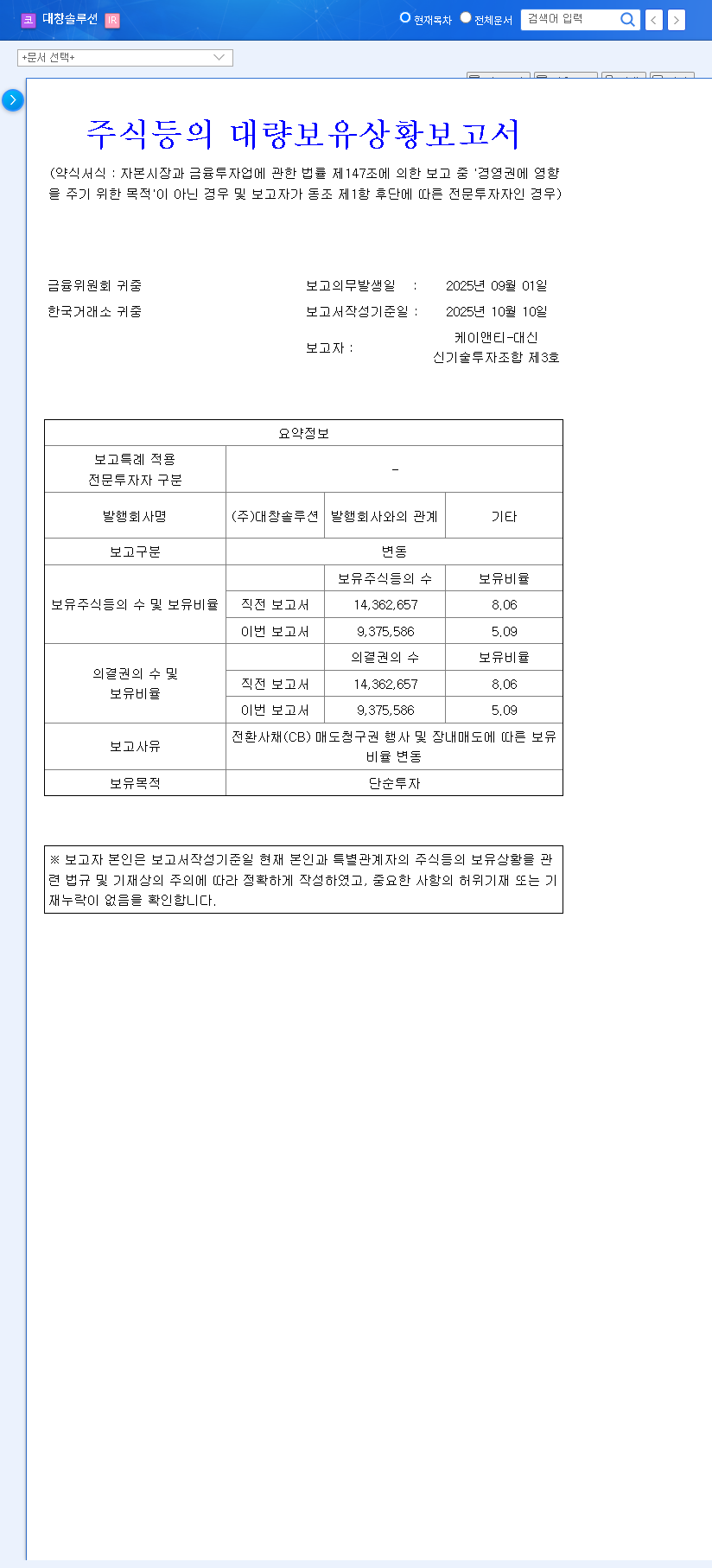
    The catalyst for recent market discussion was a formal disclosure indicating a significant change in shareholding. K&T-Daeshin Shinsegye Investment Association No. 3, a major investor, significantly reduced its stake in Daechang Solution. According to the official report, the association’s holding decreased from 8.06% to 5.09%.

    This reduction was executed through a multi-step process involving the exercise of a call option on Convertible Bonds (CBs), followed by subsequent sales on the open market. This wasn’t a single transaction but a series of sales totaling 799,903 shares between September 11 and September 18, 2025. You can view the complete filing here: Official Disclosure (DART).

    A large-scale divestment by an investment fund, especially one conducted via open market sales after a CB conversion, often signals an intent to realize profits or de-risk a portfolio, creating immediate selling pressure on the stock.

    Why Now? Analyzing Financial Health and Investor Motivation

    A Look at Daechang Solution’s Financials

    To understand the context of this sale, a look at Daechang Solution’s recent financial performance is crucial. While the company operates in the promising eco-friendly shipbuilding sector, its financial statements from H1 2025 paint a challenging picture. For a deeper understanding of financial statements, you can reference this helpful guide on how to analyze a company’s balance sheet.

    • Revenue & Profitability: Revenue saw a significant 39.5% year-over-year decline to 24.95 billion KRW. The company also swung to an operating loss of -1.48 billion KRW and a deepened net loss of -7.66 billion KRW.
    • Debt Concerns: The consolidated debt ratio stands at a high 295.38%. A large portion of this is tied to Convertible Bonds and other borrowings, creating substantial financial pressure. Learn more about Convertible Bonds and their impact from authoritative sources like Bloomberg.
    • Cash Flow Issues: Operating cash flow worsened, falling to -4.77 billion KRW, indicating that the company’s core operations are currently consuming cash rather than generating it.

    The Investor’s Perspective

    Given the financial backdrop, the investment association’s decision to sell appears strategic. As their stated purpose was ‘simple investment,’ the divestment can be interpreted as either profit realization or a proactive move to rebalance their portfolio and reduce exposure to a company with mounting financial challenges. The method—converting bonds to equity and then selling—is a common way for institutional investors to exit a position, but it inevitably increases the number of shares available on the market, which can dilute existing shareholder value.

    Market Impact and Investor Action Plan

    Short-Term Stock Price Outlook

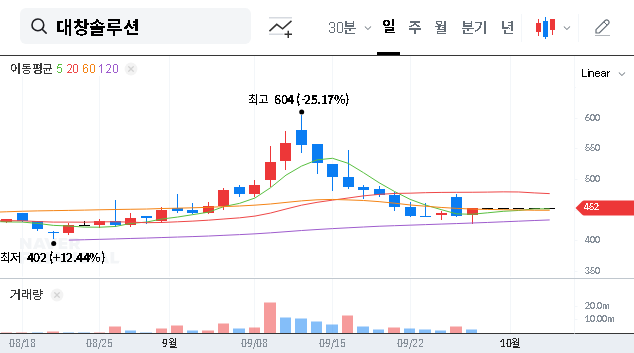
    In the short term, a significant Daechang Solution stake sale is expected to exert downward pressure on the stock price. This is due to two primary factors: first, the direct increase in share supply on the market, and second, the negative signal it sends to other investors. Weakened investor sentiment can lead to further selling, creating a cycle of downward momentum until the market fully absorbs the new volume of shares.

    Recommended Strategy for Investors

    Navigating this period requires a cautious and observant approach. While the sale increases liquidity, it doesn’t solve the company’s core financial issues. Here are our recommended action guidelines:

    • Short-Term Caution: Acknowledge the high probability of stock price volatility and downside risk. A ‘wait and see’ approach is prudent until the selling pressure from this divestment subsides.
    • Monitor Key Metrics: For a potential long-term recovery, closely watch for improvements in H2 2025 earnings, tangible results from new business ventures, and any strategic moves to improve the company’s financial structure.
    • Look for Positive Catalysts: The next major inflection point will likely come from future corporate disclosures. Keep an eye out for announcements of new large-scale orders, successful debt restructuring, or a surprisingly strong earnings report that could shift the narrative.

    Frequently Asked Questions (FAQ)

    What was the core reason for the Daechang Solution stake sale?

    K&T-Daeshin Shinsegye Investment Association No. 3 sold nearly 800,000 shares after converting bonds to equity, reducing its stake from 8.06% to 5.09%. This is likely a strategic move to realize profits or reduce risk given the company’s financial challenges.

    How will this share reduction affect Daechang Solution’s stock price?

    In the short term, this large sale is expected to weaken investor confidence and increase selling pressure, likely acting as a downward catalyst for the stock price.

    What is the current investment recommendation for Daechang Solution (096350)?

    The current recommendation is ‘Neutral’ with a strong emphasis on short-term downside risk. Investors should adopt a cautious stance, closely monitoring for fundamental improvements in profitability and financial health before considering a new position.
    (096350) Daechang Solution Stake Sale (096350): In-Depth Analysis for Investors 관련 이미지
  • (170920) LTC Stock Forecast: Institutional Sell-Off & In-Depth Investment Analysis

    (170920) LTC Stock Forecast: Institutional Sell-Off & In-Depth Investment Analysis

    The latest news surrounding LTC stock (170920) has sent ripples through the investment community. Soosung Asset Management, a significant institutional player, has officially reduced its holdings, a move that demands careful consideration from every current and prospective investor. This action can influence short-term market sentiment and raises critical questions about the company’s long-term trajectory. Is this a red flag signaling underlying issues, or a fleeting market event that creates a prime buying opportunity?

    This comprehensive LTC investment analysis will dissect the situation, exploring the immediate impacts, the company’s core fundamentals, and what this means for your investment strategy. We’ll provide the clarity you need to navigate the uncertainty and make an informed decision about the future of your LTC stock position.

    Understanding the News: Soosung’s Stake Reduction

    The Official Disclosure: What Changed?

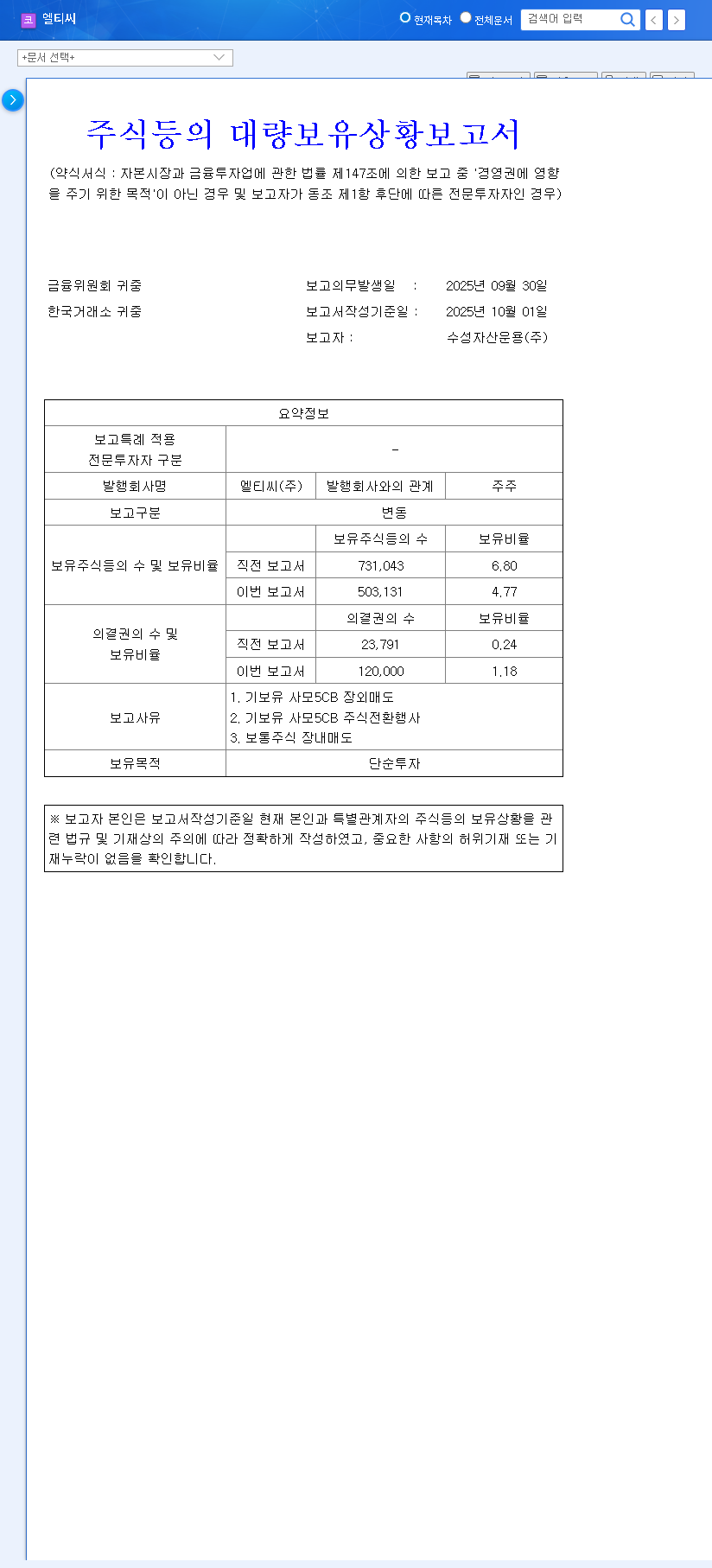
    On October 2, 2025, a significant disclosure was made. Soosung Asset Management announced a decrease in its holdings of LTC shares from 6.80% down to 4.77%. This 2.03 percentage point reduction is not a trivial adjustment and represents a substantial transaction that the market is bound to notice. You can view the Official Disclosure (DART Source) for complete transparency.

    Potential Reasons for the Sale

    An institutional sell-off is rarely driven by a single factor. The analysis points to a combination of strategic financial maneuvers:

    • Convertible Bond (CB) Strategy: Soosung executed a multi-part strategy involving its privately placed Convertible Bonds. A portion was sold off-market, while another was converted into shares, directly impacting the overall holding percentage as part of a standard CB investment cycle.
    • Profit Realization & Rebalancing: Over 200,000 common shares were sold directly on the open market. This could be a classic case of realizing profits after a period of growth or a strategic rebalancing of their portfolio to manage risk and allocate capital to other opportunities.

    It’s crucial to distinguish between a strategic portfolio adjustment by an institution and a flight from a company with failing fundamentals. Often, the former creates opportunity for retail investors.

    Analyzing the Impact on the LTC Share Price

    Immediate Market Reaction: The Supply Pressure Effect

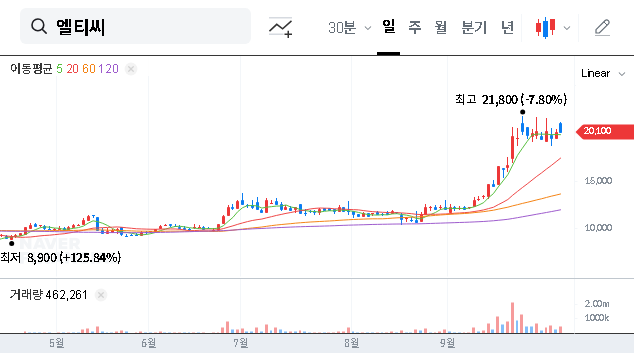
    In the short term, news of a major investor reducing their stake can weaken investor sentiment. The on-market sale of over 200,000 shares introduces significant selling pressure. This sudden increase in supply, without an equivalent increase in demand, could lead to a temporary dip in the LTC share price. Traders should be prepared for heightened volatility.

    The Bigger Picture: Is This a Fundamental Shift for LTC Stock?

    While the short-term noise is important, long-term investors must look deeper. The 2% stake reduction is significant but may not signal a complete loss of faith in LTC’s core business. The crucial factor is whether the company’s fundamentals remain intact. While the converted CBs create a potential for future share supply (an ‘overhang’), this is a technical market factor, not necessarily a reflection of poor business performance. The real determinants of long-term value will be LTC’s operational results and broader market trends, such as those covered by financial authorities like Bloomberg’s market analysis.

    A Deep Dive into LTC’s Core Fundamentals (H1 2025)

    To truly gauge the LTC stock forecast, we must look past this single event and examine the company’s health. The H1 2025 report provides a solid foundation:

    • Resilient Revenue: Consolidated revenue reached 137.2 billion KRW, maintaining year-on-year growth. While the pace has slowed, indicating potential headwinds in the semiconductor and display sectors, the top line remains robust.
    • Improved Profitability: Operating profit showed positive improvement. This suggests strong cost management and a successful focus on higher-margin products, a sign of operational efficiency.
    • Future-Focused Investment: LTC maintains a stable capital structure while actively investing in R&D and new business ventures to secure future growth engines.

    These fundamentals suggest that the company’s intrinsic value proposition has not been fundamentally altered by Soosung’s recent sale. For more on evaluating company health, you can read our guide to fundamental analysis.

    Strategic LTC Investment Analysis: Your Action Plan

    So, how should you position yourself? Your approach to this LTC stock news depends heavily on your investment horizon.

    For the Short-Term Trader

    Caution is the word of the day. The selling pressure from Soosung could lead to price drops and volatility. Consider a wait-and-see approach or be prepared to implement strict stop-loss orders to manage downside risk if you decide to enter a position.

    For the Mid-to-Long-Term Investor

    This is where the opportunity may lie. If you believe in LTC’s solid fundamentals and its long-term strategy, a temporary price dip caused by this market event could be an attractive entry point. A patient investor who is not swayed by short-term noise may find this an ideal moment to initiate or add to a position, focusing on the recovery of the semiconductor industry and the performance of LTC’s new business ventures.

    (170920) LTC Stock Forecast: Institutional Sell-Off & In-Depth Investment Analysis 관련 이미지