Tag: Buldak Bokkeum Myun

  • Samyang Foods IR Analysis: Will the Buldak Boom Continue? Investment Strategies and Risks


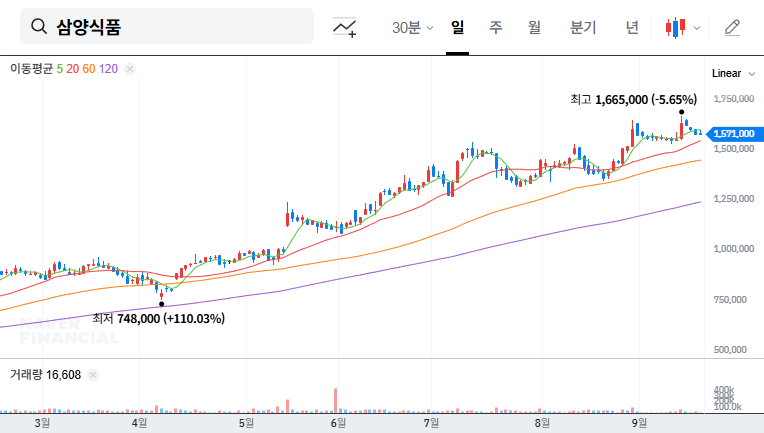
    Samyang Foods IR Analysis: Will the Buldak Boom Continue? Investment Strategies and Risks 대표 차트 이미지


    1. Samyang Foods IR Event: What Happened?

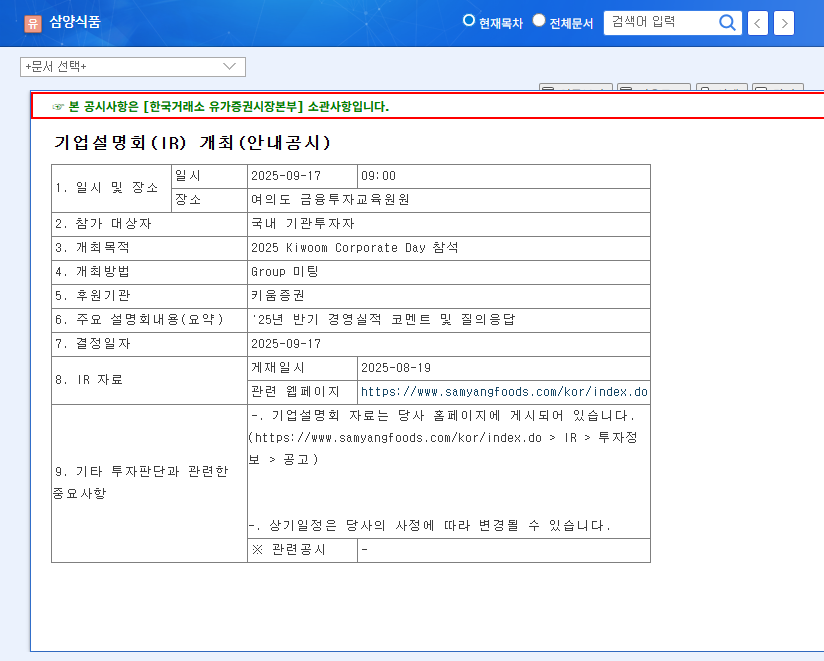
    On September 17, 2025, Samyang Foods held an Investor Relations (IR) meeting to participate in the 2025 Kiwoom Corporate Day. The core of this IR was the announcement of the first half of 2025 business performance and a Q&A session with investors.

    2. Why It Matters: The Sustainability of the Buldak Boom

    Samyang Foods’ growth is heavily reliant on the global popularity of the ‘Buldak’ brand. To establish a future investment strategy, it is essential to consider various factors such as the sustainability of the K-food trend, intensifying competition, fluctuations in raw material prices, as well as internal risks like inventory management and increasing debt.

    3. IR Analysis Results: Opportunities and Threats

    • Positive Factors: Robust sales growth, stability of the core business (noodles), strengthened production capacity, business diversification, excellent credit rating.
    • Potential Risk Factors: Increased inventory, increased short-term borrowings, uncertainties surrounding mergers and investment plans.

    4. Action Plan for Investors

    Investors should make investment decisions by comprehensively analyzing the information presented in the IR and the market situation. In particular, they should carefully examine the sustainability of the ‘Buldak’ brand’s growth, risk management capabilities, changes in the competitive landscape, and macroeconomic variables.


    Frequently Asked Questions (FAQ)

    What are Samyang Foods’ main businesses?

    Samyang Foods primarily focuses on the noodle business, with its flagship products ‘Samyang Ramen’ and ‘Buldak Bokkeum Myun’, but also produces and sells various food products such as snacks, oils, and sauces.

    Can the popularity of Buldak Bokkeum Myun be sustained?

    It may vary depending on various factors such as the continuation of the K-food trend, intensifying competition, and changes in consumer trends, but it is currently maintaining steady popularity in the global market.

    What are the precautions for investing in Samyang Foods?

    Investors should carefully consider potential risk factors such as inventory management, increasing short-term borrowings, exchange rate and interest rate volatility, and intensifying competition.



    Samyang Foods IR Analysis: Will the Buldak Boom Continue? Investment Strategies and Risks 관련 이미지
    Samyang Foods IR Analysis: Will the Buldak Boom Continue? Investment Strategies and Risks 관련 이미지


  • National Pension Service Increases Stake in Samyang Foods: What Does it Mean for Investors?

    National Pension Service Increases Stake in Samyang Foods: What Does it Mean for Investors? 대표 차트 이미지

    1. NPS Acquires 9.58% Stake in Samyang Foods: What Happened?

    The NPS increased its stake in Samyang Foods from 9.46% to 9.58% and changed its investment objective from ‘simple investment’ to ‘general investment.’ This shift suggests a more active role in shareholder activities.

    2. Why the Increased Stake?: Decoding the Rationale

    The NPS’s decision likely reflects a positive outlook on Samyang Foods’ growth potential. The strong global brand power of Buldak Bokkeum Myun, increasing overseas sales, and ongoing diversification efforts likely contributed to the investment appeal. The change in investment objective signals a potential shift towards a more involved approach to shareholder engagement and value creation.

    3. Impact on Stock Price: Short-Term vs. Long-Term Outlook

    • Short-term Impact: The NPS’s increased stake could boost investor sentiment and provide upward momentum for the stock price.
    • Long-term Impact: Increased management transparency and accountability are expected, which could attract other institutional investors. The NPS’s involvement could also lead to changes in the company’s fundamentals.

    4. Investor Action Plan: Navigating the Investment Landscape

    Investors considering Samyang Foods should carefully evaluate the implications of the NPS’s actions alongside the company’s 2025 first-half performance, which showed declining operating profits and increasing cost pressures. Closely monitoring the NPS’s future shareholder activities and level of management engagement is crucial for developing a sound investment strategy. A prudent approach that considers both the potential upsides and risks is recommended.

    What does ‘general investment’ by the NPS entail?

    ‘General investment’ signifies a more active approach than simple financial investment, implying potential involvement in shareholder activities like exercising voting rights and engaging with management to enhance corporate value.

    How did Samyang Foods perform in the first half of 2025?

    While the global ‘Buldak’ brand showed positive growth, challenges emerged with declining operating and net profits, as well as increasing cost pressures.

    What are the key considerations for investing in Samyang Foods?

    Investors should consider the NPS’s future shareholder activities, the company’s performance challenges in the first half of 2025, increasing competition, and foreign exchange volatility.

    National Pension Service Increases Stake in Samyang Foods: What Does it Mean for Investors? 관련 이미지
    National Pension Service Increases Stake in Samyang Foods: What Does it Mean for Investors? 관련 이미지
  • Samyang Foods Announces Interim Dividend of KRW 2,200: Will Buldak Boost Stock Price?

    1. What Happened? Samyang Foods Announces Interim Dividend

    Samyang Foods announced an interim dividend of KRW 2,200 per share on August 12, 2025. The record date for the dividend is August 27.

    2. Why Does It Matter? Strong Performance and Enhanced Shareholder Return

    This interim dividend signals Samyang Foods’ robust fundamentals. The company achieved remarkable growth in Q1 2025, recording sales of KRW 529 billion, operating profit of KRW 134 billion, and net income of KRW 99 billion. The popularity of the ‘Buldak’ series overseas and the growth of its US subsidiary are particularly noteworthy. This dividend demonstrates the company’s commitment to returning profits to shareholders.

    3. What’s Next? Potential Stock Price Momentum and Long-Term Value Creation

    The interim dividend is likely to act as a short-term catalyst for stock price appreciation. Consistent dividends can also enhance investor confidence, contributing to long-term corporate value growth. Of course, external factors like raw material prices and exchange rate fluctuations should be continuously monitored.

    4. What Should Investors Do? Buy Rating and Considerations

    Analysts have issued a ‘Buy’ rating for Samyang Foods. However, before making any investment decisions, it’s crucial to carefully consider the sustainability of overseas market growth, fluctuations in raw material prices and exchange rates, and future dividend policies. Monitoring the progress and performance of new business ventures is also essential.

    Frequently Asked Questions

    What is the interim dividend amount for Samyang Foods?

    KRW 2,200 per share.

    When is the record date for the dividend?

    August 27, 2025.

    How did Samyang Foods perform recently?

    In Q1 2025, the company recorded sales of KRW 529 billion, operating profit of KRW 134 billion, and net income of KRW 99 billion.

    What are some things to consider when investing in Samyang Foods?

    Investors should consider the sustainability of overseas market growth, raw material price and exchange rate fluctuations, and future dividend policy.