Tag: Bond with Warrants

  • (402030) KONAN TECHNOLOGY INCORPORATION Stock: Decoding the Recent Shareholding Change

    (402030) KONAN TECHNOLOGY INCORPORATION Stock: Decoding the Recent Shareholding Change

    Recent market disclosures regarding a KONAN TECHNOLOGY INCORPORATION shareholding change have prompted questions among investors. When a major shareholder’s stake appears to decrease, it can signal uncertainty. However, a surface-level reading often misses the critical context. This comprehensive analysis will dissect the official filing, explain the technical reasons behind the shift—which are not related to a direct stock sale—and evaluate the company’s underlying fundamentals to provide a clear, actionable investment thesis.

    We’ll explore why this change is tied to Bond with Warrants (BW) and what that means for the company’s management and future outlook, helping you make an informed decision about KONAN TECHNOLOGY stock.

    Decoding the Official Filing: A 0.67% Shift in Shareholding

    On October 31, 2025, a ‘Report on Large Shareholding Status’ was filed concerning KONAN TECHNOLOGY INCORPORATION. According to the Official Disclosure, the total ownership stake held by key reporting person Kim Young-seom and related parties decreased from 37.90% to 37.23%. While this 0.67 percentage point reduction might seem concerning at first glance, the devil is in the details.

    The Real Reason: It’s Not a Sell-Off, It’s About Warrants

    Understanding Bond with Warrants (BW)

    The primary driver of this shareholding change is not a direct sale of stock on the open market. Instead, it stems from technical adjustments related to Bond with Warrants (BW). A BW is a type of corporate debt that gives the holder the right (or warrant) to purchase a company’s stock at a specific price within a certain timeframe. The filing indicates the change is due to the exercise, expiration, or other contractual shifts involving these warrants. This is fundamentally an accounting and structural adjustment, not a reflection of lost confidence from management.

    Management Influence Remains Strong

    Crucially, the stated purpose for holding the shares remains ‘management influence.’ This reinforces the interpretation that the core leadership’s control and strategic direction are unaffected. The change should be viewed as financial housekeeping rather than a bearish signal from insiders.

    KONAN TECHNOLOGY INCORPORATION presents a classic case for investors: balancing immense long-term growth potential in AI against significant short-term financial pressures.

    A Deep Dive into KONAN TECHNOLOGY’s Fundamentals

    The Bull Case: Catalysts for Growth

    Despite market noise, the company’s core technological strengths are compelling, particularly in the booming AI sector. An AI stock analysis reveals several positive drivers:

    • Leadership in Text AI: The launch of advanced LLM-based solutions like Konan RAG-X positions the company at the forefront of generative AI applications.
    • Stable Defense AI Revenue: A dedicated Defense AI division secures long-term, stable revenue through government project orders, providing a financial cushion.
    • New Business Expansion: Ventures into on-device AI for PCs and appliances open up massive new consumer and enterprise markets.
    • Growing Order Backlog: A backlog of KRW 24.6 billion indicates strong future revenue potential.

    The Bear Case: Navigating Financial Headwinds

    The optimism is tempered by clear short-term challenges highlighted in the H1 2025 report:

    • Revenue and Profitability: The company reported a significant revenue decrease to KRW 7.5 billion and a substantial operating loss of KRW 8.4 billion.
    • Increased Leverage: The debt-to-equity ratio has risen to 176.4%, indicating increased financial risk that needs to be managed carefully.

    Investor Action Plan: Observe and Monitor

    Given the context, this shareholding change should be considered market noise. The more significant drivers for KONAN TECHNOLOGY stock will be its ability to convert its technological edge and order backlog into profitable growth. Macroeconomic factors, such as interest rate trends and currency fluctuations as reported by sources like Bloomberg, will also play a role in investor sentiment.

    Our investment opinion is Observe. Investors should look past this filing and focus on the company’s forthcoming performance. The H2 2025 earnings report will be a critical indicator of whether the company is successfully navigating its financial challenges. For more information on evaluating similar companies, see our guide on how to analyze emerging tech stocks.

    Frequently Asked Questions (FAQ)

    Why did KONAN TECHNOLOGY’s shareholding percentage decrease?

    The stake held by major shareholders decreased slightly due to technical reasons involving the exercise or expiration of Bond with Warrants (BW) and the addition of related parties, not because of a large-scale stock sale.

    Does this change weaken management’s control over the company?

    No. Since the change is an accounting-related fluctuation and the stated purpose of holding shares remains ‘management influence,’ it’s understood that effective management control is not compromised.

    What is the current financial health of KONAN TECHNOLOGY INCORPORATION?

    The company has strong long-term growth potential in AI but is facing short-term financial hurdles, including revenue decline, operating losses, and a higher debt-to-equity ratio as of H1 2025.

    What is the investment recommendation for KONAN TECHNOLOGY stock?

    An ‘Observe’ stance is recommended. Investors should focus on fundamental business performance, such as upcoming earnings reports and new project execution, rather than this minor shareholding adjustment. The H2 2025 performance will be a key factor to watch.

    (402030) KONAN TECHNOLOGY INCORPORATION Stock: Decoding the Recent Shareholding Change 관련 이미지
  • (289930) Wavice Inc. BW Issuance: A Deep Dive into the ₩33.5B Capital Raise & Stock Impact

    (289930) Wavice Inc. BW Issuance: A Deep Dive into the ₩33.5B Capital Raise & Stock Impact

    Wavice’s Bold Move: Deconstructing the ₩33.5B Capital Raise

    The recent Wavice Inc. BW issuance has sent ripples through the investment community. With a staggering ₩33.5 billion raised via a Bond with Warrants (BW), representing 23.54% of its market cap, investors are facing a critical question: Is this a masterstroke for explosive growth or a prelude to significant shareholder dilution? This comprehensive analysis will dissect the issuance, evaluate the potential impact on the Wavice stock price, and provide a clear, strategic roadmap for investors navigating this pivotal moment.

    Unpacking the Wavice Inc. BW Issuance Details

    On October 16, 2025, Wavice Inc. formalized its plan for a significant capital injection. Understanding the terms of this private placement is the first step in assessing its implications. A Bond with Warrants is a hybrid security that gives investors the right, but not the obligation, to purchase a company’s stock at a specific price within a certain timeframe. Here are the core specifics of the deal:

    • Total Issuance Size: ₩33.5 billion
    • Issuance Method: Private Placement to specific investors.
    • Exercise Price: ₩8,690 per share
    • Interest Rates: 0% for both surface and maturity rates.
    • Exercise Period: A long window from October 24, 2026, to September 24, 2030.
    • Key Investors: Notably includes the KOSDAQ Venture Private Equity Fund.

    The 0% interest rate is particularly significant, as it allows Wavice to access this large sum without the immediate financial drain of interest payments. For full transparency, all details are available in the Official Disclosure (DART Report).

    This capital raise is a high-stakes bet on future innovation. By securing long-term funding without immediate interest costs, Wavice is positioning itself to make significant strategic investments aimed at capturing future market leadership.

    The Investor’s Dilemma: Growth vs. Dilution

    The central tension of this Wavice bond with warrants deal is the classic trade-off between securing capital for growth and the risk of diluting the value for existing shareholders. Let’s examine both sides.

    The Bull Case: Fueling the Growth Engine

    Optimists will point to several powerful indicators. The infusion of ₩33.5 billion provides Wavice with a substantial war chest to accelerate growth. This could manifest in several ways:

    • Aggressive R&D: Funds can be funneled into developing next-generation technologies, solidifying Wavice’s competitive moat.
    • Strategic M&A: The capital could be used for acquisitions that provide access to new markets, technologies, or talent.
    • Venture Capital Confidence: The participation of a KOSDAQ Venture Fund is a strong vote of confidence, suggesting that sophisticated investors see significant upside potential in Wavice’s long-term strategy, which we covered in our previous analysis of their business model.

    The Bear Case: The Threat of Shareholder Dilution

    Conversely, the primary risk is Wavice shareholder dilution. When the warrants are exercised, new shares are created, which can reduce the ownership percentage of existing shareholders and potentially decrease the earnings per share. The high exercise price of ₩8,690 presents a double-edged sword. While it suggests confidence, it also means that if the stock price surges past this level, a large influx of new shares could hit the market, creating downward pressure.

    • Overhang Risk: The existence of these potential new shares can create an ‘overhang’ on the stock, where investors are hesitant to bid up the price, knowing a supply of new shares could be unlocked.
    • Execution Risk: The positive case relies entirely on management’s ability to generate a return on this new capital that outpaces the dilutive effect. Poor execution could lead to the worst of both worlds.
    • Market Uncertainty: Such a large Wavice capital raise can introduce short-term volatility as the market digests the news and awaits clarity on fund allocation.

    A Strategic Action Plan for Wavice Investors

    Given the limited information, a prudent, watchful approach is warranted. Investors should not panic but instead focus on monitoring key developments that will signal the ultimate success or failure of this strategy. Your action plan should include:

    • Demand Clarity on Fund Use: Watch for official company announcements (IR releases, shareholder meetings) that detail exactly how the ₩33.5 billion will be spent. Specific, high-growth projects are a positive sign.
    • Analyze Future Earnings Reports: The stock must rise above ₩8,690 for the warrants to be valuable. Scrutinize upcoming quarterly reports for revenue growth and margin expansion that could justify a higher valuation.
    • Monitor Institutional Movement: Keep an eye on whether other institutional investors increase or decrease their positions following this news, as this can indicate broader market sentiment.

    In conclusion, the Wavice Inc. BW issuance is a defining moment for the company. While it introduces the undeniable risk of share dilution, it also provides the capital necessary to potentially transform the business and deliver substantial long-term value. Cautious, informed monitoring is the best strategy for investors in the coming months.

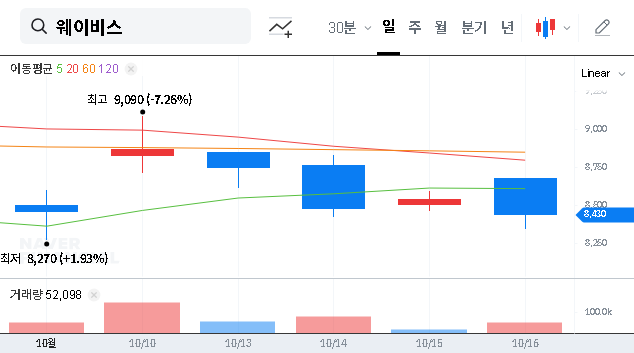
    (289930) Wavice Inc. BW Issuance: A Deep Dive into the ₩33.5B Capital Raise & Stock Impact 관련 이미지
  • (112290) YC Chem BW Issuance: A Deep-Dive Stock Analysis for Investors

    (112290) YC Chem BW Issuance: A Deep-Dive Stock Analysis for Investors 대표 차트 이미지

    The recent news of the YC Chem BW issuance has sent ripples through the investment community. Young Chemical Co., Ltd.’s decision to raise 22 billion KRW through a private placement of Bonds with Warrants (BW) presents a complex scenario. Is this a strategic capital injection to fuel future growth, or is it a warning sign of underlying financial strain that could lead to significant stock dilution? This comprehensive financial analysis will dissect the issuance, evaluate YC Chem’s fundamentals, and provide a clear action plan for current and potential investors.

    All information is based on the company’s official public filing. (Source: DART Official Disclosure).

    Deconstructing the YC Chem BW Issuance

    On September 29, 2025, YC Chem finalized its decision to issue 22 billion KRW in Bonds with Warrants. A Bond with Warrants is a hybrid security that gives the holder the right to purchase a company’s stock at a specific price within a certain timeframe. Here are the critical details of this particular offering:

    • Issuance Amount: KRW 22 billion (representing 9.35% of the company’s total assets).
    • Issuance Method: Private Placement, meaning it’s offered to a select group of investors rather than the public.
    • Warrant Exercise Price: KRW 21,093 per share.
    • Coupon & Maturity Yield: 0.0%, indicating the bond itself pays no interest. The value is entirely in the warrant’s potential.
    • Exercise Period: From October 14, 2026, to September 14, 2030.

    The most glaring detail is the massive chasm between the current stock price (KRW 824) and the warrant exercise price (KRW 21,093). This disparity is the central factor driving investor concern about potential future stock dilution.

    Company Health: A Financial Analysis of YC Chem

    To understand the ‘why’ behind this fundraising, we must examine YC Chem’s operational and financial standing. The picture is one of technological promise shadowed by financial fragility.

    Competitive Strengths in Advanced Materials

    YC Chem operates at the cutting edge of the semiconductor industry, producing vital process materials for ArF, EUV, and other advanced manufacturing nodes. The company’s focus on next-generation technologies like EUV photoresists and materials for HBM (High Bandwidth Memory) is a significant positive. Its established supply chain to major domestic semiconductor giants validates its technical capabilities. However, fierce global competition remains a constant threat.

    Financial Vitals: Green Shoots Amid High Debt

    While H1 2025 revenue saw a 14.6% decline, the company achieved a crucial turnaround to profitability, posting an operating profit of KRW 2.358 billion. This suggests successful cost optimization. The primary concern is the high debt ratio, which increased to 188.9%. This level of leverage, driven by aggressive capital investments, poses a risk, especially in a high-interest-rate environment. The YC Chem BW issuance is likely a move to secure working capital without taking on more interest-bearing debt.

    Impact on Stock Price and Investor Strategy

    The decision to issue these warrants will have both immediate and long-term consequences for YC Chem’s stock price and shareholder value.

    The Specter of Stock Dilution

    Stock dilution is the primary risk here. If, in the future, YC Chem’s stock price soars past KRW 21,093, the warrant holders will exercise their right to buy shares at this much lower price. This influx of new shares would dilute the ownership stake of existing shareholders, potentially capping the stock’s upside. While immediate exercise is impossible, this long-term overhang will likely place downward pressure on the stock in the short term as the market prices in this future risk. For a detailed guide on market trends, review our comprehensive semiconductor industry report.

    Long-Term Growth vs. Short-Term Pain

    The bull case is that this KRW 22 billion is the fuel YC Chem needs. If deployed effectively into R&D and capacity expansion, it could solidify the company’s competitive position and lead to substantial revenue growth. Success would eventually drive the stock price up organically, making the dilution a manageable consequence of growth. However, the execution risk is high, and investors must be cautious.

    Investor Action Plan

    A prudent approach is required. Investors should focus on monitoring these key areas:

    • Capital Deployment: Track company announcements and financial reports to see precisely how the funds from the BW issuance are being used. Is it for value-accretive projects?
    • Industry Catalysts: Monitor the recovery of the semiconductor market. A rising tide could lift all boats, but YC Chem needs to secure new orders for its advanced materials to truly benefit.
    • Performance vs. Projections: Scrutinize the company’s track record of meeting its own business goals. This will help gauge the reliability of future promises.

    In conclusion, the YC Chem BW issuance is a double-edged sword. While it provides necessary capital, the terms introduce significant long-term dilution risk. A cautious, research-driven investment strategy is paramount.

    (112290) YC Chem BW Issuance: A Deep-Dive Stock Analysis for Investors 관련 이미지
    (112290) YC Chem BW Issuance: A Deep-Dive Stock Analysis for Investors 관련 이미지
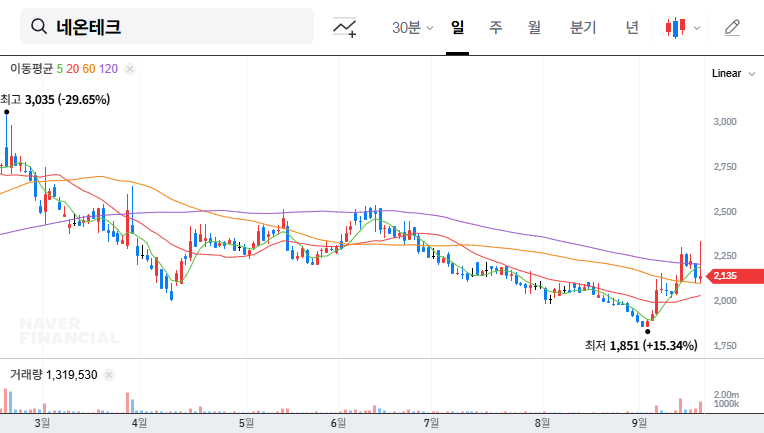
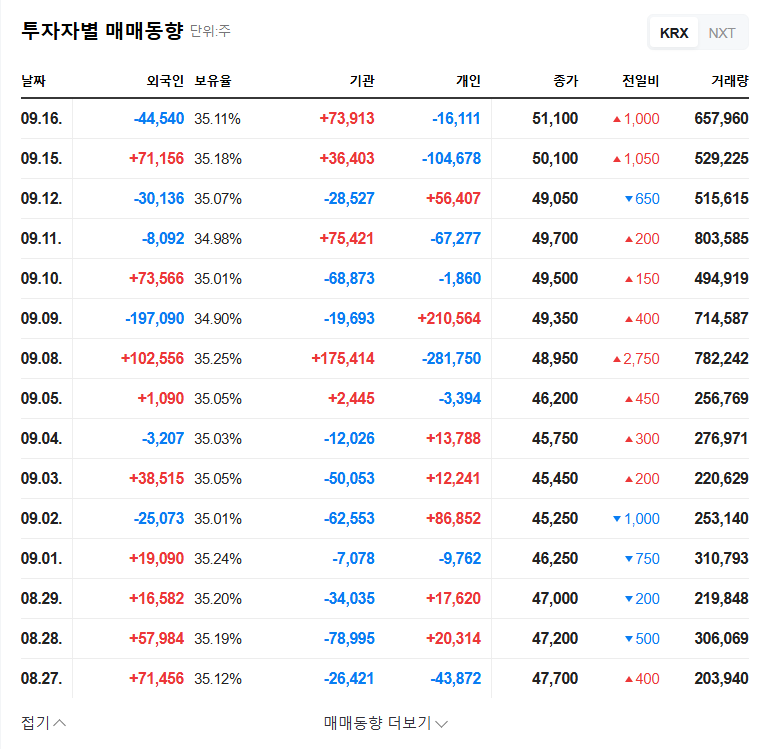
  • Neontech (306620) Issues ₩15B in BW: Impact on Stock Price & Investment Strategy


    Neontech (306620) Issues ₩15B in BW: Impact on Stock Price & Investment Strategy 대표 차트 이미지


    1. What Happened? Neontech Announces ₩15 Billion BW Issuance

    Neontech announced on September 17, 2025, the issuance of ₩15 billion in Bonds with Warrants (BW), representing 13.41% of its market capitalization. The issuance will be conducted privately, with an exercise price of ₩2,151 and a maturity interest rate of 1.0%. The exercise period is from September 25, 2026, to August 25, 2030.

    2. Why the BW Issuance? Securing Funds and Improving Financial Structure

    Neontech aims to secure operating funds and new business investment funds through this BW issuance. With urgent need for investment in future growth engines such as robotics, autonomous driving, and smart farms, the BW issuance is expected to help secure short-term liquidity. The funds can also be used to repay short-term debt and improve the company’s financial structure.

    3. Impact on Stock Price: Opportunities and Risks Coexist

    • Positive Impacts: Increased investment in new businesses through funding, potential improvement in financial structure, and capital increase effect through BW exercise if the stock price rises.
    • Negative Impacts: Potential stock dilution upon BW exercise, interest payment burden at maturity, and possibility of market confidence decline coupled with sluggish performance.

    4. Investor Action Plan: Cautious Approach and Observation Needed

    Currently, Neontech faces challenges such as sluggish performance and a high debt-to-equity ratio. While the BW issuance presents an opportunity to secure funds, it also carries the risk of stock dilution. Therefore, investors should approach cautiously, paying attention to short-term stock price volatility. From a mid- to long-term perspective, it is advisable to make investment decisions by closely monitoring new business performance and improvements in the financial structure. In particular, if the stock price exceeds the BW exercise price of ₩2,151, the possibility of BW exercise should be considered.


    FAQ

    What is the purpose of Neontech’s BW issuance?

    To secure operating funds and new business investment funds, and to improve the financial structure.

    How will the BW issuance affect Neontech’s stock price?

    Securing funds is positive, but there are also negative impacts such as the possibility of stock dilution. The impact on corporate value will vary depending on future stock price trends and whether the BW is exercised.

    What should investors be aware of when investing in Neontech?

    Consider factors like sluggish performance, high debt-to-equity ratio, uncertainty of new businesses, and the possibility of stock dilution due to the BW issuance.

    What are Neontech’s future growth drivers?

    Entry into new business areas such as robotics, autonomous driving, and smart farms, as well as increased R&D investment.


    Neontech (306620) Issues ₩15B in BW: Impact on Stock Price & Investment Strategy 관련 이미지
    Neontech (306620) Issues ₩15B in BW: Impact on Stock Price & Investment Strategy 관련 이미지


  • Airain Issues ₩10B in BW: Growth Catalyst or Share Dilution Risk?

    1. Airain Announces ₩10B BW Issuance: What’s Happening?

    Airain will issue ₩10 billion worth of BW through a private placement. This represents 7.05% of the company’s total funding. The exercise price is set at ₩19,393, with the exercise period running from August 22, 2026, to July 22, 2030.

    2. Why Issue BW? Fueling Future Growth!

    Airain has recently demonstrated remarkable growth due to increased exports of carbon capture systems and nitrogen generation modules. The funds raised through this BW issuance will be used to secure future growth engines, including R&D investments and facility expansion. Given the expected benefits from the growth of the hydrogen economy, carbon neutrality, and CCUS industries, this investment is anticipated to further accelerate Airain’s growth.

    3. BW Issuance: Pros and Cons

    • Pros: Securing growth momentum, enhancing market confidence, potential increase in shareholder value upon exercise
    • Cons: Potential share dilution, financing costs, efficient use of funds, limitations of private placement

    The large gap between the current stock price (₩120) and the exercise price (₩19,393) raises concerns about share dilution. However, the plan for treasury stock cancellation is a positive signal.

    4. Investor Action Plan: Key Checkpoints

    In the short term, investors should be wary of stock price volatility stemming from the BW issuance. In the long term, it’s crucial to closely monitor Airain’s core technological competitiveness, market dominance in the growth industry, and the utilization plan and performance of the raised funds.

    How will the Airain BW issuance affect the stock price?

    In the short term, stock price volatility may increase due to concerns about share dilution. However, in the long run, growth driven by the use of the funds could positively impact the stock price.

    Why is the exercise price so high?

    While the difference from the current stock price is significant, it allows for potential increases in corporate value upon future stock price appreciation. Additionally, the treasury stock cancellation plan demonstrates a commitment to managing the stock price.

    What is the outlook for Airain’s future growth?

    As a beneficiary of the hydrogen economy, carbon neutrality, and CCUS industry growth, Airain has high growth potential. Continuous monitoring of technological competitiveness and efficient use of funds will be essential.