Tag: BNK Financial Group Inc.

  • (138930) BNK Financial Group Inc. 2025 Investor Outlook: A Deep Dive Analysis

    (138930) BNK Financial Group Inc. 2025 Investor Outlook: A Deep Dive Analysis

    BNK Financial Group Inc. is poised for a pivotal moment as it prepares to host its 2025 Shareholder Roundtable on November 21, 2025. In an era of significant financial market volatility and macroeconomic uncertainty, this event represents a crucial opportunity for investors to gain direct insight into the company’s strategic direction. This comprehensive analysis will delve into the group’s recent performance, the external challenges it faces, and what stakeholders should watch for during this important investor relations event. We will explore the core investment value and future outlook for BNK Financial Group Inc. to provide a clear roadmap for current and prospective shareholders.

    The upcoming Shareholder Roundtable is more than a standard meeting; it’s a critical juncture for BNK Financial Group Inc. to rebuild investor confidence and articulate a clear, compelling vision for sustainable growth in a rapidly evolving digital finance landscape.

    Event Overview: The 2025 Shareholder Roundtable

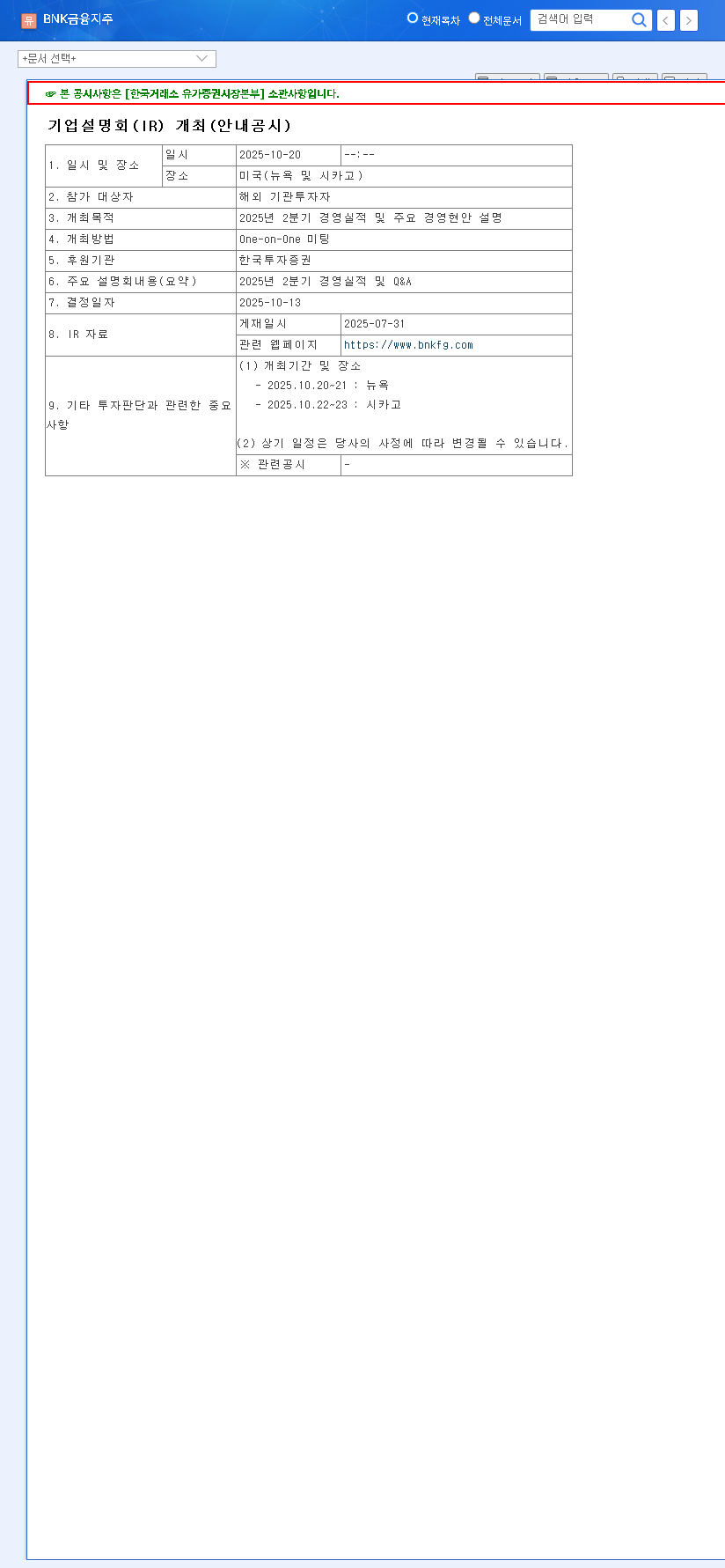
    Scheduled for 10:00 AM on November 21, 2025, the roundtable is designed to foster direct and transparent communication. The primary goal is to address key management issues, present forward-looking strategies, and engage in a live Q&A session with investors. This direct dialogue is essential for clarifying the company’s position on profitability, risk management, and digital innovation, ultimately helping to shape market perception of BNK Financial Group Inc.’s investment value.

    Financial Health Check: H1 2025 Fundamentals Analysis

    A thorough examination of BNK Financial Group Inc.’s first-half 2025 performance reveals a mixed but stable picture. While the group demonstrates robust risk management and capital adequacy, profitability remains a key area requiring strategic attention.

    Key Performance Indicators

    • Asset Growth: Total assets grew by 2.7% to KRW 181.56 trillion, signaling consistent external expansion.
    • Profitability Concerns: Net profit saw a 3.4% year-over-year decrease to KRW 475.8 billion. While Busan Bank showed positive results, declines at Gyeongnam Bank and BNK Capital impacted overall earnings. Improving ROA (0.63%) and ROE (8.97%) is a top priority.
    • Asset Soundness: Risk management appears strong, with a non-performing loan ratio of 1.62% and a delinquency ratio of 1.39%, indicating a healthy loan portfolio.
    • Capital Adequacy: The group maintains a stable capital structure, with a CET1 ratio of 12.56%, comfortably above regulatory requirements. This solid foundation is crucial for navigating economic uncertainty. For further details, investors can review the Official Disclosure (DART).

    Navigating Market Headwinds and Competition

    BNK Financial Group Inc. operates within a complex environment characterized by global economic shifts and domestic competitive pressures. The ongoing US-China trade tensions and geopolitical instability, as discussed by sources like the World Bank, could dampen global growth and affect the group’s overseas ventures. Domestically, while there are hopes for a consumption recovery, interest rate volatility remains a significant factor that directly influences the Net Interest Margin (NIM).

    Furthermore, the rise of FinTech disruptors and the convergence of financial services are intensifying competition. To thrive, BNK must accelerate its digital transformation, innovate its service models, and secure a competitive edge in both its home region and expanding metropolitan markets. To learn more about this sector, you can read our guide on how to analyze modern banking stocks.

    Investor Outlook: Potential Scenarios Post-Roundtable

    The market’s reaction will hinge on the substance and clarity of the strategies presented. The event could be a major catalyst or a source of increased uncertainty.

    Potential Upside: Building Trust and Vision

    A positive outcome would involve a transparent presentation of concrete plans to tackle profitability challenges, especially at Gyeongnam Bank and BNK Capital. If management effectively communicates a clear roadmap for digital transformation, ESG integration, and new growth engines, it could significantly boost investor confidence and lead to a positive re-rating of the stock.

    Potential Risks: Heightened Uncertainty

    Conversely, if the plans presented are vague or fail to address core concerns, investor disappointment could lead to negative pressure on the stock price. An overemphasis on external macroeconomic challenges without presenting robust mitigation strategies could also dampen sentiment and highlight perceived vulnerabilities.

    Action Plan: What Investors Should Watch For

    For investors evaluating BNK Financial Group Inc., the roundtable is a key data point. Pay close attention to the specifics of their future strategy.

    • Profitability Roadmap: Look for detailed strategies to expand non-interest income and improve the performance of underperforming subsidiaries.
    • Digital Competitiveness: Assess the commitment to and investment in technology to compete with FinTechs and deliver innovative customer experiences.
    • Risk Management Philosophy: Understand their approach to managing risks associated with the regional economy and global macroeconomic shifts.
    • Shareholder Value Commitment: Note any announcements regarding share buybacks, dividend policies, or other initiatives aimed at enhancing shareholder returns.

    Ultimately, this Shareholder Roundtable will be a defining moment. It provides a platform for management to demonstrate its capability to navigate challenges and unlock the long-term investment value of BNK Financial Group Inc. Investors should listen closely to re-evaluate their positions based on the strength and credibility of the vision presented.
    (138930) BNK Financial Group Inc. 2025 Investor Outlook: A Deep Dive Analysis 관련 이미지
  • (138930) BNK Financial Group Q3 2025 Earnings: In-Depth Analysis of a 28% Profit Beat

    (138930) BNK Financial Group Q3 2025 Earnings: In-Depth Analysis of a 28% Profit Beat

    In a landscape marked by economic uncertainty, BNK Financial Group Inc. has delivered a powerful statement with its preliminary BNK Financial Group Q3 2025 earnings report. The results not only surpassed market expectations by a significant margin but also highlighted the group’s fundamental strength and strategic resilience. This comprehensive BNK Financial Group analysis unpacks the key figures, explores the drivers behind this impressive performance, and provides a forward-looking investor outlook.

    The 28% operating profit beat is not just a number; it’s a clear signal of operational excellence and strategic foresight in a turbulent market, making the outlook for BNK stock a key point of interest.

    Unpacking the Q3 2025 Preliminary Results

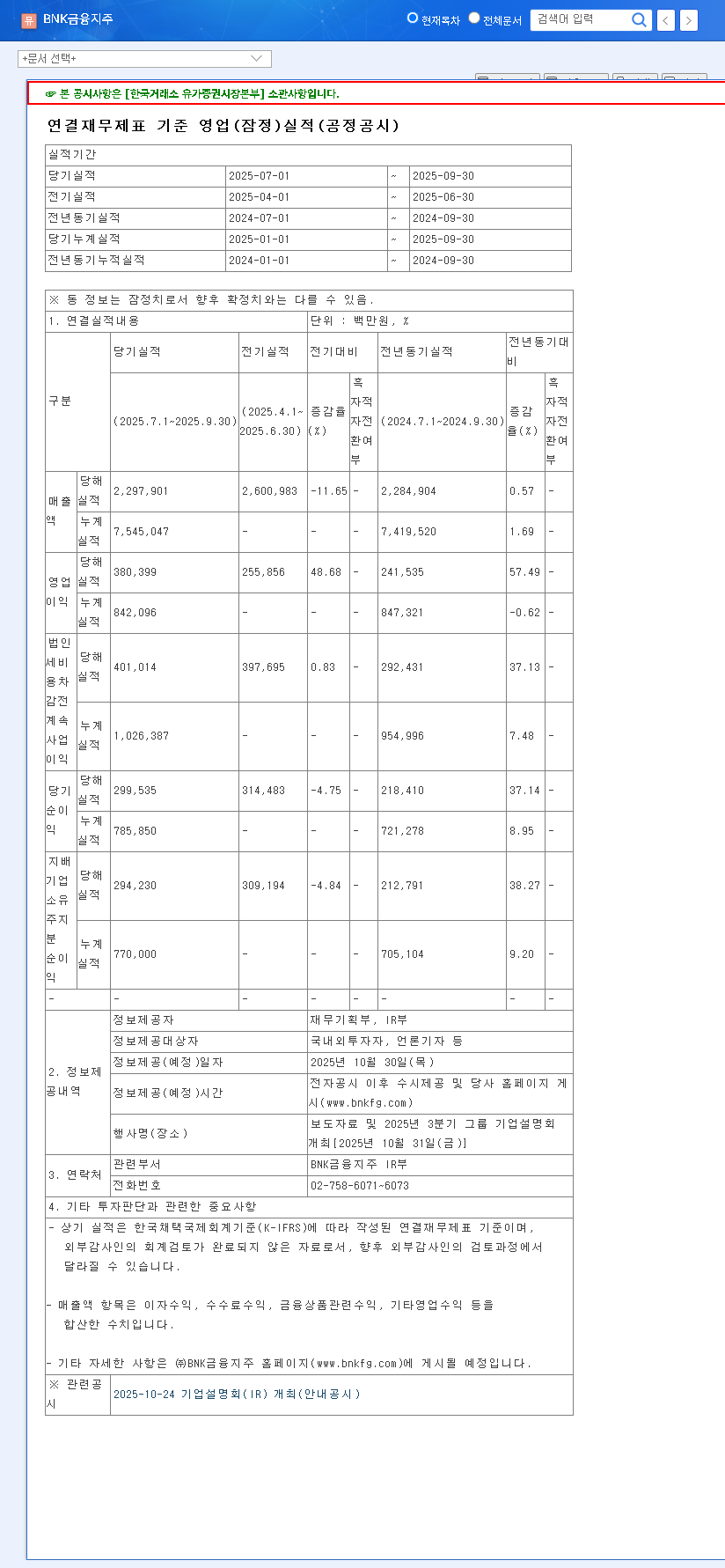
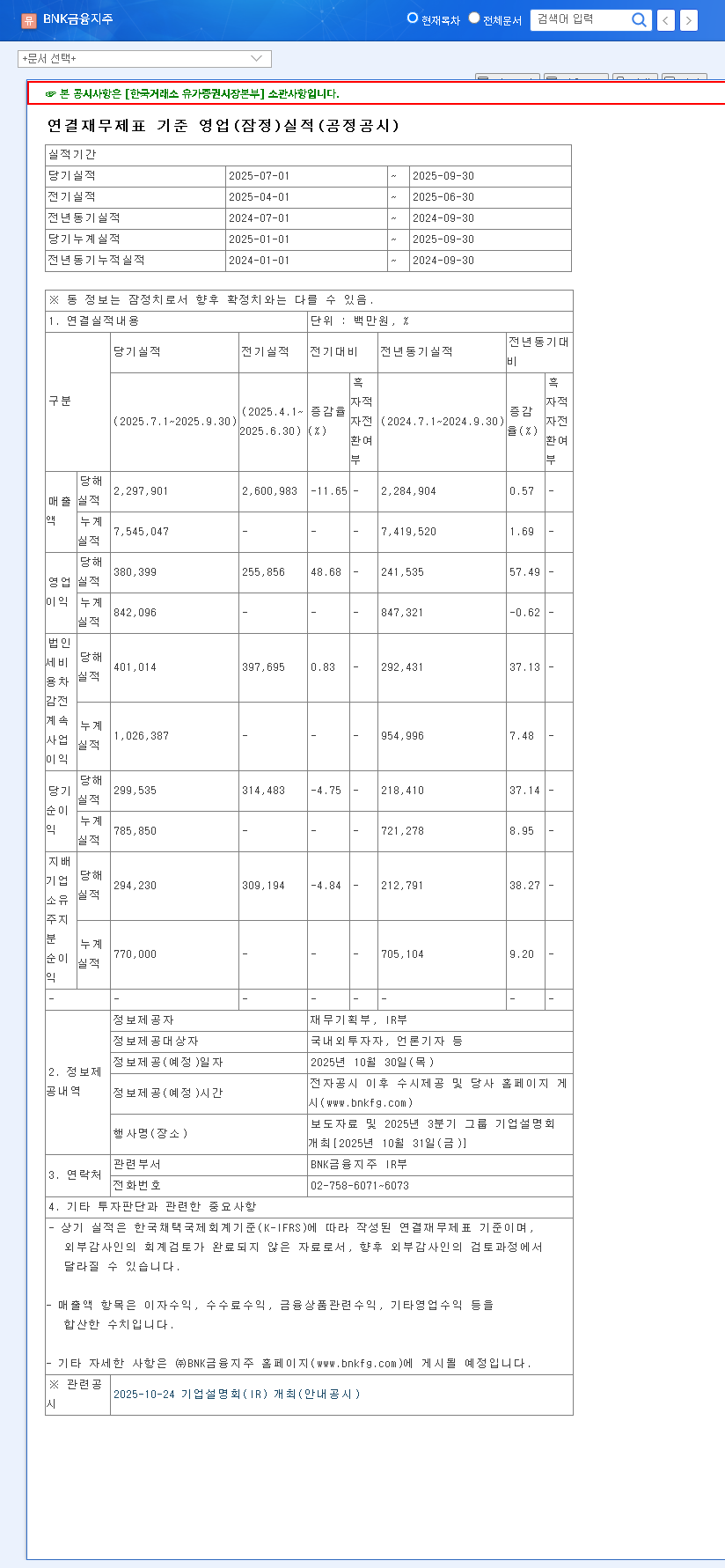
    On October 30, 2025, BNK Financial Group released its preliminary consolidated financial statements, revealing a financial performance that captured the market’s attention. The numbers paint a clear picture of robust profitability and effective management. These figures were sourced from their public filing. (Source: Official DART Disclosure)

    • Operating Profit: KRW 380.4 billion, a staggering 28% above the market consensus of KRW 297.2 billion.
    • Net Income: KRW 294.2 billion, representing a 21% beat over the estimated KRW 242.8 billion.
    • Revenue: Reported at KRW 2.2979 trillion, providing a strong top-line foundation.

    Core Strengths: What’s Driving the Success?

    This exceptional performance wasn’t a matter of luck. It stems from a combination of solid fundamentals and adept navigation of market conditions. A deeper look into the BNK Financial Group Q3 2025 earnings report reveals several key drivers.

    Robust Profitability and Asset Growth

    The significant jump in operating profit and net income from the previous quarter indicates superior management and favorable market dynamics. Furthermore, the asset growth trajectory of 2.7% noted in the H1 report likely continued, signaling sustained and healthy expansion for the group.

    Sound Capital Adequacy

    A cornerstone of any financial institution’s stability is its capital structure. With a BIS total capital ratio of 13.96% and a common equity tier 1 (CET1) ratio of 12.56% reported earlier in the year, BNK Financial Group maintains a strong buffer. This financial cushion is critical for absorbing external shocks and inspires confidence among investors and regulators alike. For more on this topic, check out our guide to analyzing bank stocks.

    Favorable Market Conditions and ESG Focus

    The latter half of the year saw improved conditions in the bond market and a steady stock market rise. These trends likely bolstered the group’s investment-related income streams. Concurrently, BNK’s dedicated efforts to enhance its ESG (Environmental, Social, and Governance) management are paying dividends by improving its corporate image and attracting long-term, socially conscious investors.

    Navigating Potential Risks and Headwinds

    Despite the stellar report, a prudent investor outlook must also consider potential challenges on the horizon. Acknowledging these risks is key to a balanced investment thesis.

    • Subsidiary Performance Variance: While the group’s overall picture is bright, declining net income at Gyeongnam Bank and BNK Capital, along with rising non-performing loan ratios at certain savings banks, require careful monitoring.
    • Macroeconomic Instability: Persistent household debt, a stagnant real estate market, and volatile currency exchange rates are significant external pressures. These factors can elevate credit risk and impact asset quality, influenced by global economic indicators.
    • Intensifying Competition: The financial sector is more competitive than ever. The rise of agile internet-only banks and innovative FinTech companies presents an ongoing challenge to traditional profitability models.

    Investment Thesis: What’s Next for BNK Stock?

    The Q3 2025 preliminary earnings have undeniably provided positive short-term momentum for BNK stock. For long-term success, investors should focus on several key areas as the full, detailed reports become available.

    Look Beyond the Headline Numbers

    While the group’s performance is impressive, it’s crucial to scrutinize the upcoming detailed reports. Verify the fundamental health and performance trends of individual subsidiaries, as they are the building blocks of the group’s overall success.

    Evaluate Sustainable Growth Strategies

    Assess how effectively BNK Financial Group is executing its future growth plans. Key areas to watch include its digital transformation initiatives, efforts to expand non-interest income sources, and strategies to mitigate the competitive pressures from FinTech disruptors.

    In conclusion, the BNK Financial Group Q3 2025 earnings report is a testament to the company’s robust operational capabilities. It sets a positive tone, and the group’s investment appeal will only become clearer as more detailed data emerges. Investors should use this preliminary analysis as a foundation for their own due diligence, balancing the impressive results with a clear-eyed view of the potential risks.

    (138930) BNK Financial Group Q3 2025 Earnings: In-Depth Analysis of a 28% Profit Beat 관련 이미지
  • (138930) BNK Financial Group Inc. Stock: H1 2025 Earnings & Dividend Analysis

    (138930) BNK Financial Group Inc. Stock: H1 2025 Earnings & Dividend Analysis

    The latest H1 2025 earnings report for BNK Financial Group Inc. presents a complex narrative for investors. As a cornerstone of South Korea’s regional financial market, the group showcases impressive capital strength. However, this stability is contrasted by emerging challenges, including declining profitability amid shifting interest rate policies and fierce market competition. This comprehensive analysis will dissect the group’s performance, evaluate the strategic implications of its recent dividend announcement, and outline a prudent investment strategy for navigating the path ahead.

    H1 2025 Performance: A Tale of Two Realities

    In the first half of 2025, the financial results for BNK Financial Group Inc. painted a mixed picture. While the group’s capital foundation remains rock-solid, its core profitability metrics have faced headwinds. Let’s break down the key indicators that define this period.

    Key Financial Metrics

    • Capital Soundness: The consolidated BIS Capital Ratio stood at a robust 13.96%, significantly surpassing regulatory minimums and signaling excellent capital management and risk absorption capacity.
    • Interest Income Pressure: Net Interest Income (NII) saw a 2.3% year-on-year decline to KRW 1,443.9 billion. This was primarily driven by lower interest income from core deposit and loan activities, a direct reflection of a lower interest rate environment.
    • Profitability Metrics: Net profit attributable to controlling shareholders fell by 3.4% to KRW 475.8 billion. Consequently, Return on Assets (ROA) was 0.63%, and Return on Equity (ROE) was 8.97%.
    • Asset Quality: The group maintained stable asset quality, with a Non-Performing Loan (NPL) ratio of 1.62% and a delinquency ratio of 1.39%, indicating diligent risk management.

    Segment Performance Breakdown

    The performance varied significantly across the group’s subsidiaries. The banking segment, led by Busan Bank and Gyeongnam Bank, remains the profit engine, contributing 84.0% of the total. While Busan Bank delivered a solid KRW 251.7 billion in net profit, Gyeongnam Bank’s performance faltered, declining by KRW 45.8 billion to KRW 158.5 billion. The non-banking arms, including BNK Capital and BNK Savings Bank, also faced profitability slowdowns, though BNK Investment & Securities showed improvement.

    Drivers Behind the Slowdown & The Dividend Signal

    The performance of BNK Financial Group Inc. is not occurring in a vacuum. It is shaped by broad macroeconomic trends and specific company strategies. The downward pressure on profits is largely attributable to the external environment, including projected interest rate cuts in Korea, as discussed by financial analysts at reputable global news outlets. This trend directly squeezes the Net Interest Margin (NIM), the lifeblood of traditional banking.

    Despite these headwinds, the company’s commitment to shareholder returns remains unwavering, signaling confidence in its long-term financial stability and cash flow generation.

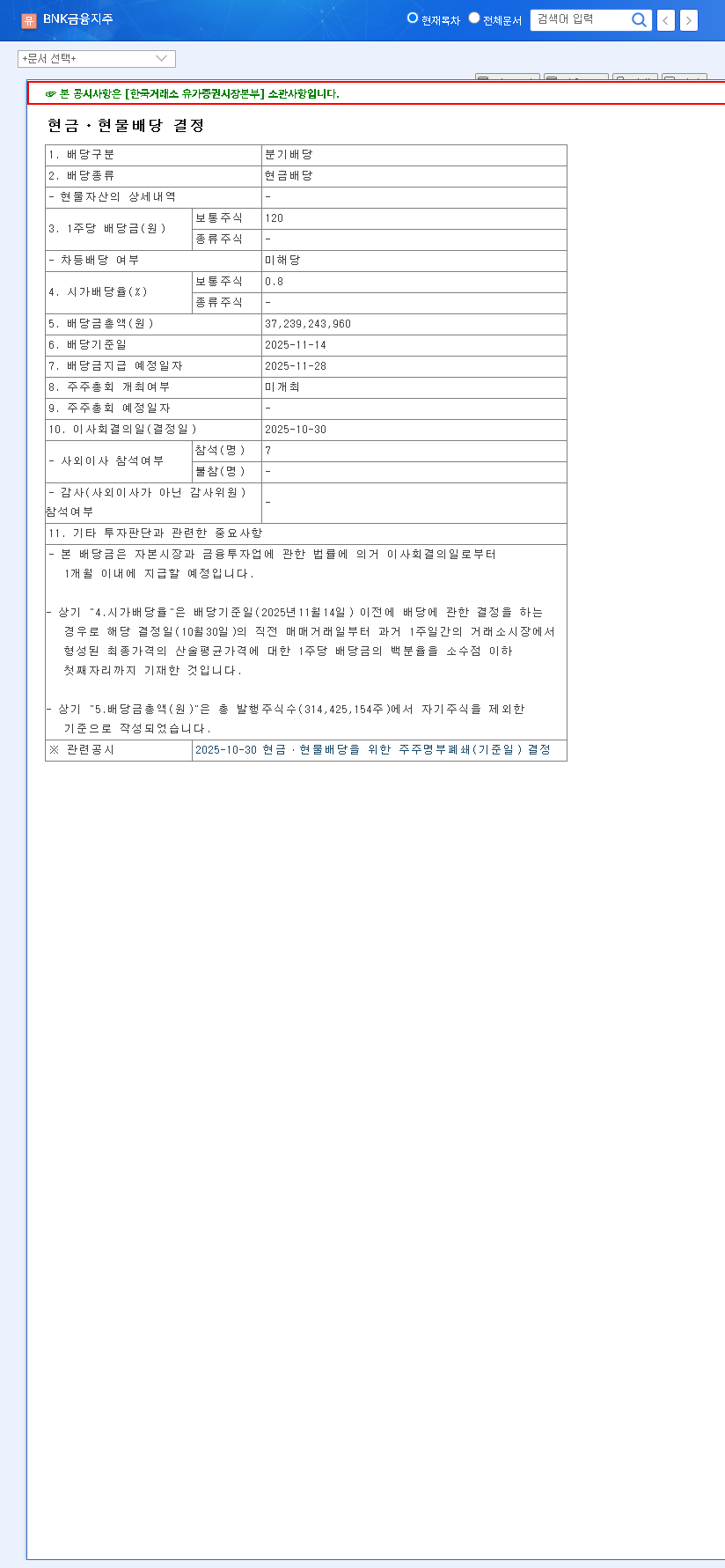
    On October 30, 2025, the board announced a Q3 cash dividend of KRW 120 per common share. This decision is a crucial piece of the group’s plan to achieve a shareholder return ratio exceeding 50% by 2027. This move is a clear, positive signal to the market about management’s focus on shareholder value. The official filing can be reviewed here: Official Disclosure (DART).

    Future Outlook: Strengths, Weaknesses, and Growth Drivers

    Looking ahead, investors should weigh the group’s inherent strengths against its pressing challenges. The future success of any BNK Financial Group Inc. investment strategy depends on the company’s ability to leverage its advantages while mitigating its risks.

    Positive Catalysts

    • Strong Capital Base: The high BIS ratio provides a formidable defense against economic shocks.
    • Digital Transformation: Ongoing investments in digital innovation and fintech partnerships are key to enhancing operational efficiency and long-term competitiveness.
    • Shareholder-Friendly Policies: The commitment to dividends and shareholder returns can attract and retain long-term investors.

    Concerns and Challenges

    • Profitability Squeeze: Continued pressure on NII requires a strategic pivot towards growing non-interest income streams.
    • Non-Banking Diversification: Improving the performance and diversifying the portfolios of non-banking subsidiaries like BNK Capital is critical for balanced growth.
    • Risk Management: Past disciplinary actions necessitate a continued focus on strengthening internal controls to ensure long-term stability and investor trust.

    Investment Thesis: A Neutral Stance with Key Monitors

    Given the balance of strong capital and profitability pressures, the current investment opinion for BNK Financial Group Inc. is ‘Neutral’. A cautious, observant approach is recommended. Investors should closely monitor several key performance indicators before adjusting their position. For a deeper dive into financial metrics, consider reading our guide on how to analyze banking stocks.

    Key Monitoring Points for Investors:

    • Quarterly changes in Net Interest Margin (NIM) and growth in non-interest income.
    • Profitability recovery in key subsidiaries, especially Gyeongnam Bank and BNK Capital.
    • Trends in asset quality metrics (NPL and delinquency rates).
    • Execution and sustainability of the announced shareholder return policy.

    In conclusion, while the quarterly dividend is an encouraging sign of management’s confidence, fundamental improvements in earnings power must follow. Investment decisions should be based on tangible progress in addressing the group’s strategic challenges.

    (138930) BNK Financial Group Inc. Stock: H1 2025 Earnings & Dividend Analysis 관련 이미지
  • (138930) BNK Financial Group Inc. Q3 2025 Earnings: A Deep Dive for Investors

    (138930) BNK Financial Group Inc. Q3 2025 Earnings: A Deep Dive for Investors

    The upcoming announcement of the BNK Financial Group Inc. earnings for Q3 2025 is a pivotal moment for investors. Scheduled for October 31, 2025, at 10:00 AM, this investor relations (IR) event carries significant weight, especially following a challenging first half of the year. In a fluctuating market, stakeholders are keenly watching to see if the financial giant can navigate economic headwinds, address underperforming subsidiaries, and present a compelling strategy for future growth. This analysis provides a comprehensive framework for understanding the potential outcomes and crafting a shrewd BNK Financial investment strategy.

    Recap: A Mixed H1 2025 Performance

    To understand the stakes of the Q3 report, we must first look at the performance in the first half of 2025. According to its H1 report, BNK Financial Group showcased resilience with stable asset growth, reaching total assets of KRW 181.56 trillion—a 2.7% increase from year-end 2024. However, this growth was overshadowed by a 3.4% year-on-year decline in net income to KRW 475.8 billion. This dip in profitability signals underlying challenges that need to be addressed.

    The core issue was a disparity in performance across its subsidiaries. While the flagship Busan Bank remained strong, profitability was dragged down by decreased loan interest income and rising bad debt expenses at Gyeongnam Bank and BNK Capital.

    Key financial indicators from the first half provide a clearer picture of the group’s health:

    • Profitability Metrics: Return on Assets (ROA) stood at 0.63% and Return on Equity (ROE) at 8.97%, both showing a slight decrease, reflecting margin pressures.
    • Asset Quality: The Non-Performing Loan (NPL) ratio was a relatively stable 1.62%, though the delinquency ratio saw a slight uptick. The BIS Total Capital Ratio of 13.96% indicates a solid capital base.
    • Subsidiary Performance: Busan Bank was the star performer with a net income of KRW 251.7 billion. In contrast, Gyeongnam Bank (KRW 158.5 billion) and BNK Capital (KRW 69.6 billion) underperformed, creating a drag on the group’s overall BNK Financial Group Inc. earnings.

    The Q3 IR: Potential Market Impact and Key Themes

    This Q3 IR event is more than just a presentation of numbers; it’s a critical communication that could significantly sway investor sentiment and the BNK Financial Group stock price. Investors should be prepared for both positive and negative scenarios.

    The Bull Case: A Path to Renewed Confidence

    A positive report could be a major catalyst. If management can demonstrate a clear turnaround strategy for its lagging subsidiaries and highlight new growth engines in its non-banking sectors (like BNK Investment & Securities), investor confidence could surge. A clear, transparent message that acknowledges challenges while presenting a credible plan for overcoming them will be key to unlocking value.

    The Bear Case: Navigating Headwinds

    Conversely, if the Q3 results continue the negative trend from H1 or fall short of market consensus, the stock could face downward pressure. A failure to show progress at Gyeongnam Bank and BNK Capital would be a major red flag. Furthermore, any ambiguity regarding the group’s strategy for navigating macroeconomic uncertainties, such as interest rate volatility and a potential global slowdown, could amplify investor concerns.

    Crafting a Shrewd BNK Financial Investment Strategy

    The Q3 earnings call will likely introduce short-term volatility, but it provides essential data for long-term strategic positioning. For a deeper context on the sector, you can read our deep-dive analysis of the South Korean banking industry. Investors should use the information from the call to build a robust action plan. You can view the company’s full report directly via the Official Disclosure on DART.

    Post-IR Investor Checklist:

    • Scrutinize Q3 Details: Look beyond the headline numbers. Analyze trends in net interest margin (NIM), fee income growth, and loan loss provisions.
    • Monitor Subsidiary Performance: Is there evidence of a turnaround at Gyeongnam Bank and BNK Capital? Are the high-growth non-banking subsidiaries maintaining momentum?
    • Assess Future Strategy: Pay close attention to management’s commentary on their 2030 vision, digital transformation efforts, and plans for new revenue streams.
    • Consider the Macro Environment: Evaluate how the company’s outlook aligns with broader economic forecasts from authoritative sources like Bloomberg Economics.

    In conclusion, while BNK Financial Group Inc. is built on a stable asset foundation, its path forward depends on its ability to harmonize subsidiary performance and execute its strategic vision amidst a complex economic landscape. A cautious, data-driven investment approach is recommended, with the upcoming BNK Q3 2025 analysis serving as a critical checkpoint.

    Frequently Asked Questions

    When is the BNK Financial Group Inc. Q3 2025 earnings call?

    The Investor Relations (IR) event for the Q3 2025 management performance announcement is scheduled for October 31, 2025, at 10:00 AM KST.

    What were the key takeaways from BNK’s H1 2025 performance?

    In the first half of 2025, BNK Financial Group saw solid asset growth but experienced a 3.4% year-on-year decline in net income. This was largely due to profitability challenges at key subsidiaries like Gyeongnam Bank and BNK Capital.

    What are the main risks for investors considering BNK Financial Group stock?

    Key risks include continued underperformance from specific subsidiaries, margin compression from interest rate volatility, potential deterioration in asset quality amid a global economic slowdown, and intensifying competition in the digital finance space.

    (138930) BNK Financial Group Inc. Q3 2025 Earnings: A Deep Dive for Investors 관련 이미지
  • (138930) BNK Financial Group Inc. IR (Q3 2025): A Deep Dive Analysis for Investors

    (138930) BNK Financial Group Inc. IR (Q3 2025): A Deep Dive Analysis for Investors

    The upcoming BNK Financial Group Inc. IR on November 4, 2025, is a pivotal event for investors. As the financial giant prepares to unveil its Q3 2025 performance, the market is watching closely for signs of renewed growth and strategic clarity amidst a challenging economic climate. This event is more than a routine earnings call; it represents a critical opportunity for BNK to restore market confidence, address lingering concerns, and chart a clear path forward.

    This comprehensive BNK Financial Group analysis offers a deep dive into the company’s fundamentals, the macroeconomic pressures it faces, and the potential outcomes of the investor relations conference. We will dissect the opportunities and risks, providing investors with the key insights needed to make informed decisions. Will this IR be the catalyst for a positive shift in sentiment? Let’s explore the critical factors at play.

    BNK Financial Group Fundamentals: A Closer Look at H1 2025

    To understand the significance of the upcoming BNK Q3 2025 performance report, we must first examine its foundation. The first half of 2025 painted a mixed picture of stability and underlying concerns. While the group demonstrated resilience in its capital base, profitability metrics revealed areas requiring strategic attention. The official data for this period can be reviewed in the group’s Official Disclosure.

    Core Financial Health (H1 2025)

    • Total Assets: KRW 181.55 trillion (a 2.7% increase YoY), indicating steady balance sheet growth.
    • Net Profit (Controlling Shareholders): KRW 475.8 billion (a 3.4% decrease YoY), a key point of concern for investors.
    • Capital Adequacy: A robust BIS Total Capital Ratio of 13.96%, comfortably above regulatory minimums.
    • Asset Quality: NPL Ratio stood at 1.62%, with a Delinquency Ratio of 1.39%, metrics that will be scrutinized during the IR.

    Performance Across Subsidiaries

    The group’s overall profitability was weighed down by key subsidiaries. While Busan Bank held steady, Gyeongnam Bank and BNK Capital experienced significant profit declines. In contrast, the investment and asset management arms showed promising growth, highlighting a potential area for strategic focus. This divergence in performance will likely be a central theme of the investor relations analysis.

    The Macroeconomic Gauntlet: External Headwinds

    No financial group investment decision can be made in a vacuum. BNK Financial Group operates within a complex web of global and domestic economic forces. Persisting geopolitical tensions, highlighted by US-China trade disputes, and volatile market indicators create a challenging environment. Investors should monitor how management addresses these external pressures, as discussed in global economic trend reports from leading financial news sources.

    • Interest Rate Volatility: Fluctuations in the US policy rate and Treasury yields directly impact lending margins and borrowing costs.
    • Currency Fluctuations: An unstable KRW/USD exchange rate can affect the value of foreign currency assets and liabilities.
    • Commodity Prices: Rising oil and gold prices signal inflation and risk aversion, influencing both the broader economy and investor behavior.

    Potential Impact of the BNK Financial Group Inc. IR

    The upcoming IR is a double-edged sword. A transparent and forward-looking presentation can significantly boost investor confidence, while a fumbled response could deepen market concerns. Here’s what investors should watch for.

    Pathways to a Positive Outcome

    • Transparency and Clarity: A clear explanation of Q3 results, addressing the profit decline head-on, will be well-received.
    • Strategic Vision: A compelling narrative around digital transformation, strengthening core business, and enhancing shareholder value.
    • Addressing Past Issues: Proactively discussing improvements in internal controls can help rebuild trust.

    Potential Risks and Red Flags

    • Earnings Miss: If Q3 results fall significantly short of market consensus, a negative stock reaction is likely.
    • Vague Macro Strategy: A lack of a clear plan to navigate economic headwinds could signal a lack of preparedness.
    • Unaddressed Asset Quality: Failure to provide concrete strategies for managing the NPL and delinquency ratios could spook investors.

    Investment Outlook and Key Questions

    Our current investment opinion remains neutral. The group’s stable capital base provides a safety net, but the challenges in profitability and asset quality, coupled with macroeconomic uncertainty, prevent a clear buy or sell signal. The outcome of the BNK Financial Group Inc. IR will be the key determinant of near-term market sentiment. For more context, you can review our previous H1 analysis of the group’s performance.

    Investment Opinion: Neutral. Prudence is advised. The IR will provide crucial data points. Investors should wait for the company’s Q3 results and strategic commentary before adjusting their positions. The market’s reaction in the days following the event will also be telling.

    Frequently Asked Questions (FAQ)

    Q1: When is the BNK Financial Group Inc. IR conference?
    A1: The investor relations conference is scheduled for November 4, 2025. It will cover the company’s Q3 2025 management performance and other key business matters.

    Q2: What are the main concerns heading into the IR?
    A2: The primary concerns are the year-on-year decrease in net profit seen in H1, the underperformance of key subsidiaries like Gyeongnam Bank, and the company’s strategy for navigating macroeconomic volatility.

    Q3: What could drive a positive stock reaction?
    A3: A positive reaction could be driven by Q3 earnings that beat expectations, a clear and credible strategy for improving profitability, and transparent communication that builds trust with investors.

    Disclaimer: This analysis is for informational purposes only and is based on publicly available data. All investment decisions are the sole responsibility of the investor. It is recommended to conduct your own due diligence.

    (138930) BNK Financial Group Inc. IR (Q3 2025): A Deep Dive Analysis for Investors 관련 이미지
  • (138930) BNK Financial Group Stock: Why Capital Research’s Major Investment is a Game-Changer (2025 Analysis)

    (138930) BNK Financial Group Stock: Why Capital Research’s Major Investment is a Game-Changer (2025 Analysis)

    The financial markets are buzzing with a significant development surrounding BNK Financial Group Inc., a major player in South Korea’s banking sector. The news that a colossal U.S. asset manager, Capital Research and Management Company, has acquired a substantial new stake has ignited widespread interest among investors. This move is often seen as a powerful endorsement of a company’s fundamentals and future trajectory.

    This comprehensive analysis will delve into the core reasons behind this high-profile investment. We will break down the financial health of BNK Financial Group Inc. based on its latest performance data, explore the strategic implications of Capital Research’s involvement, and provide a detailed stock outlook for potential investors.

    The Landmark Investment: Capital Research’s Strategic Stake

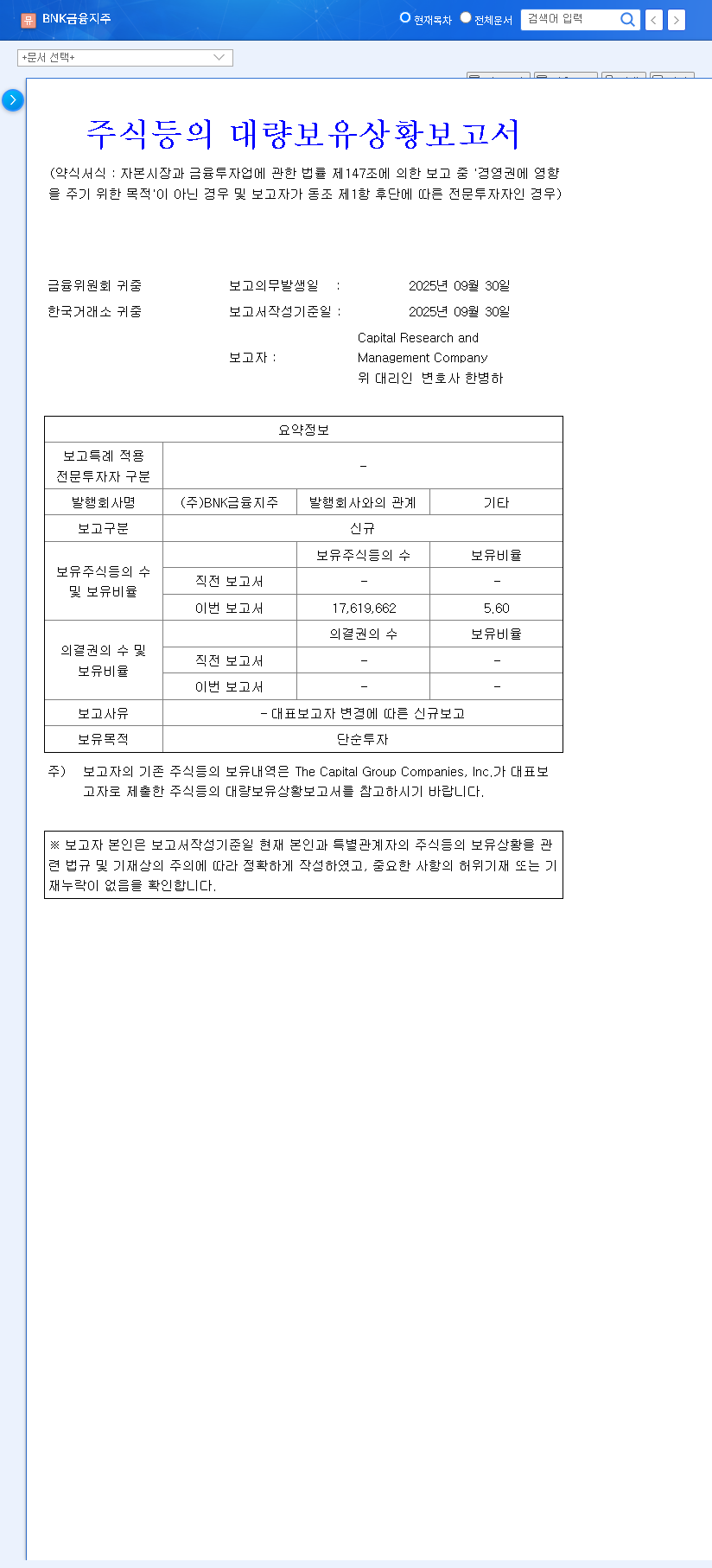
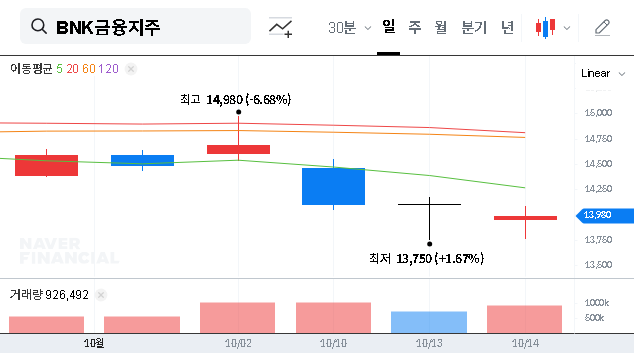
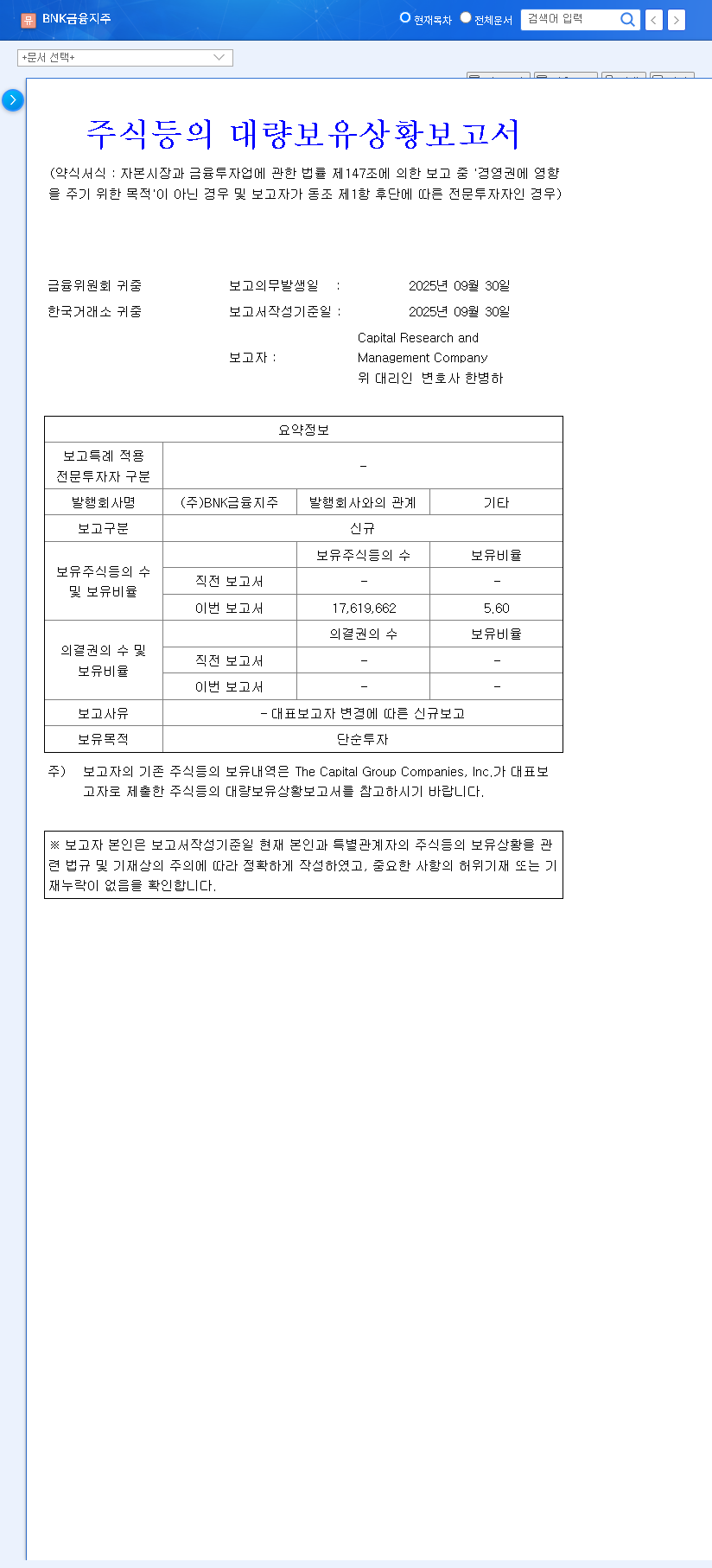
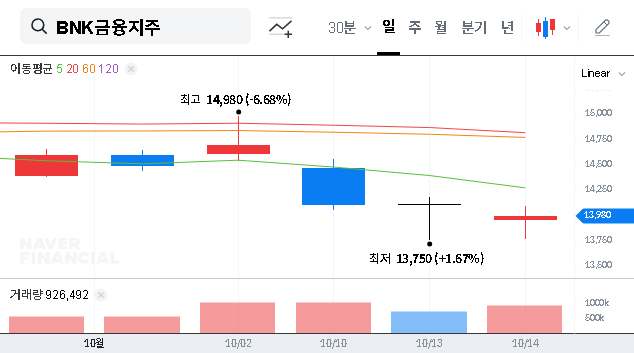
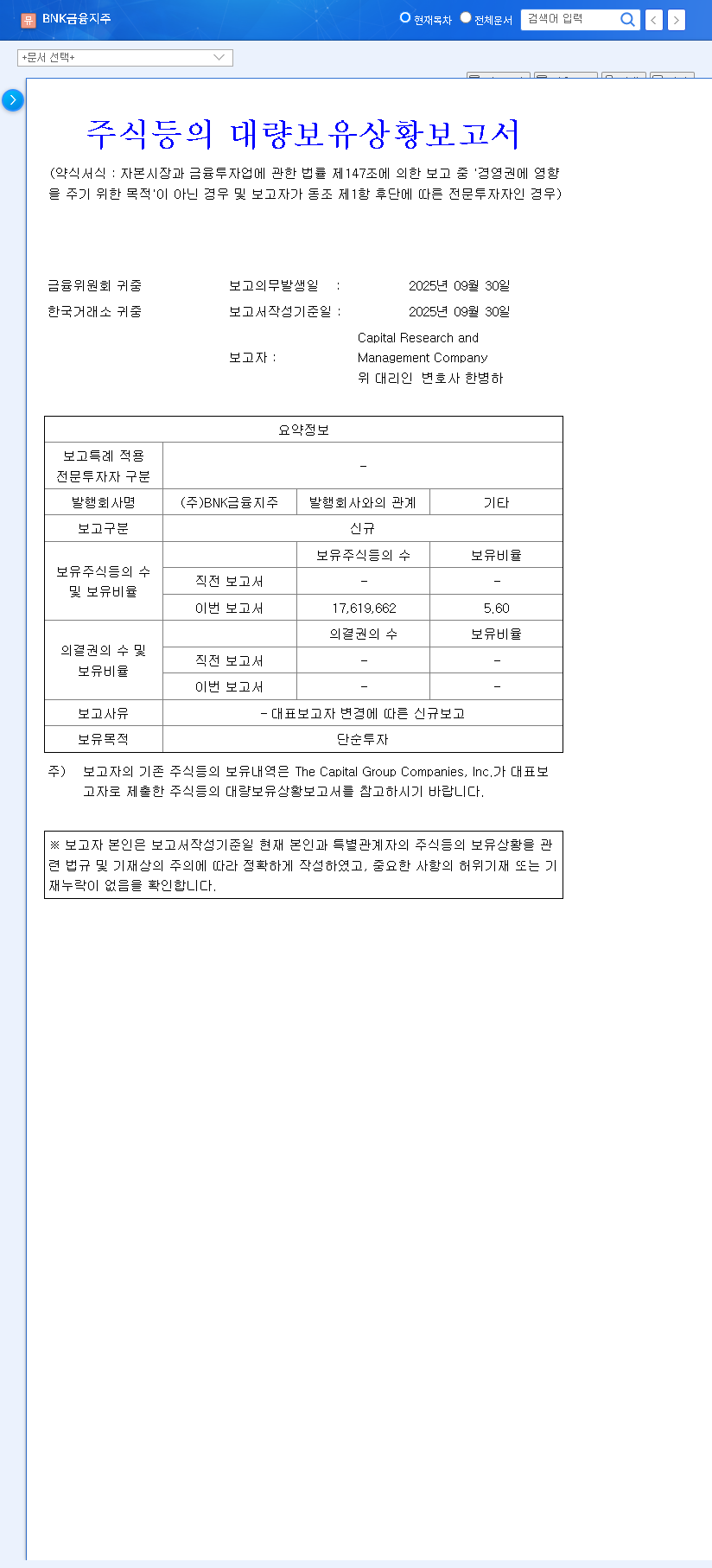
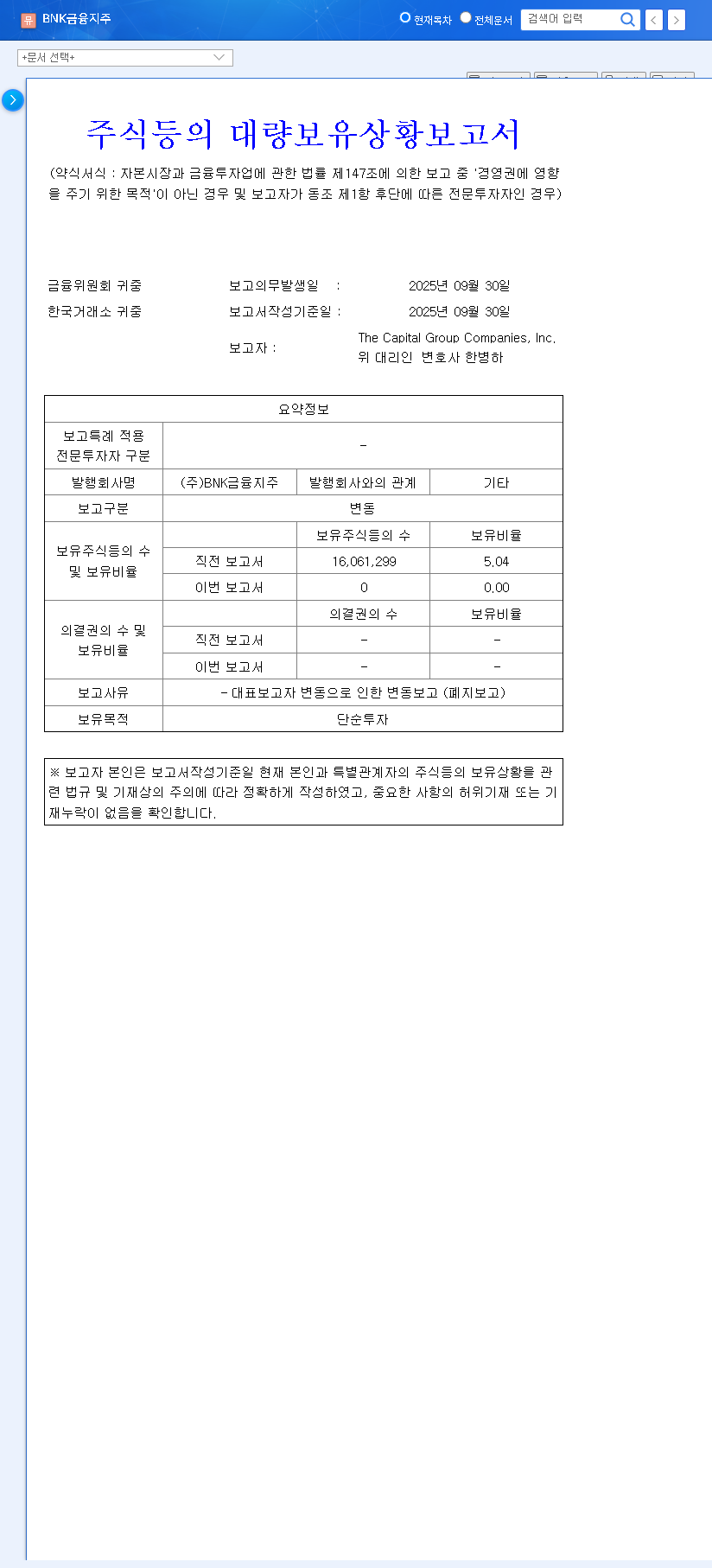
    On October 14, 2025, the market took note of a pivotal announcement. According to an Official Disclosure filed with Korea’s Financial Supervisory Service (DART), the global asset management firm Capital Research and Management Company newly acquired a 5.60% stake in BNK Financial Group Inc. This wasn’t just a minor portfolio adjustment; it represents a significant vote of confidence from one of the world’s most respected institutional investors.

    “The entry of a globally respected investor like Capital Research is more than a transaction; it’s a powerful signal of confidence in BNK Financial Group’s underlying value and long-term strategic direction.”

    Deep Dive: BNK Financial Group’s Fundamentals (Q2 2025)

    An investment of this magnitude is never made lightly. It’s rooted in a thorough financial analysis of the company’s health and potential. Based on the Q2 2025 semi-annual report, BNK Financial Group Inc. presents a picture of stability and strategic growth.

    Financial Performance & Profitability

    While the group shows consistent external growth, the net income tells a more nuanced story. Understanding these details is crucial for assessing the BNK Financial Group stock outlook.

    • Total Assets: Expanded to KRW 181.5583 trillion, a healthy 2.7% increase from year-end.
    • Net Income: Posted KRW 475.8 billion, a slight 3.4% decrease year-over-year, primarily due to headwinds at subsidiaries like Gyeongnam Bank and BNK Capital.
    • Profitability Ratios: Maintained stable levels with a Return on Assets (ROA) of 0.63% and Return on Equity (ROE) of 8.97%, which are solid figures for a major financial holding company. For context, you can compare these with industry benchmarks explained in Investopedia’s guide to financial ratios.

    Asset Quality and Capital Adequacy

    This is where BNK Financial Group truly shines, showcasing a robust foundation that is highly attractive to cautious, long-term investors like Capital Research.

    • Sound Asset Quality: The Substandard and Below Loan Ratio stood at a manageable 1.62%, indicating strong risk management protocols.
    • Strong Capital Foundation: All capital adequacy ratios significantly exceeded regulatory requirements, with a BIS Total Capital Ratio of 13.96% and a CET1 Ratio of 12.56%.

    Strategic Growth in Non-Banking Segments

    While traditional banking faced regional economic pressures, the diversification into non-banking sectors has become a key growth engine. This strategic pivot is likely a major factor in the Capital Research investment. BNK Securities, BNK Savings Bank, and BNK Asset Management all reported increased net income, showcasing enhanced competitiveness and a diversified revenue stream that mitigates risks in the core banking business.

    Investor Outlook & Action Plan for BNK Financial Group Stock

    The acquisition by Capital Research injects a new dynamic into the BNK Financial Group stock narrative. Here’s how investors might interpret this event and what to watch for moving forward.

    Short-Term & Long-Term Catalysts

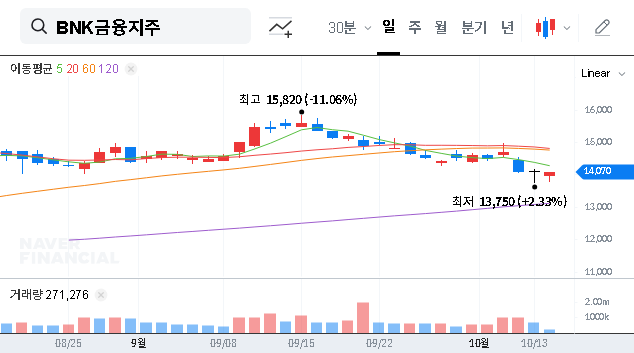
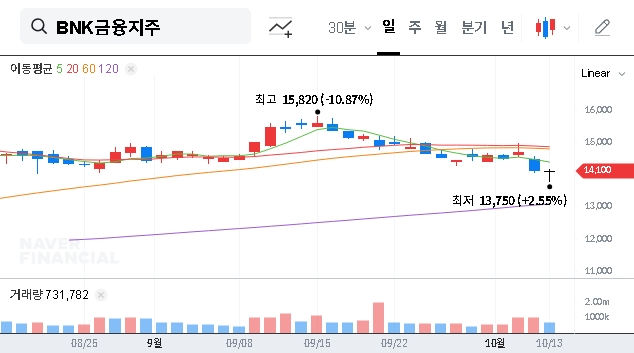
    In the short term, the news is expected to generate positive momentum. The validation from a top-tier institutional investor could attract further buying interest, increasing trading volume and potentially lifting the stock price. In the long term, sustainable appreciation will depend on the execution of the group’s strategy. Key areas to monitor include:

    • Performance Recovery: A turnaround in the profitability of key subsidiaries like Gyeongnam Bank and BNK Capital.
    • Non-Banking Growth: Continued expansion and contribution from the securities, savings, and asset management divisions.
    • Shareholder Returns: Adherence to their proactive policy aiming for a shareholder return rate over 50% by 2027 through dividends and buybacks.

    Overall, BNK Financial Group Inc. presents a compelling case for long-term investment, underpinned by solid fundamentals and a new catalyst from a major institutional backer. Investors should conduct their own due diligence, perhaps by reviewing our guide to analyzing bank stocks, and weigh the robust capital base and growth potential against macroeconomic risks and competitive pressures from fintech innovators.

    (138930) BNK Financial Group Stock: Why Capital Research's Major Investment is a Game-Changer (2025 Analysis) 관련 이미지
  • (138930) BNK Financial Group H1 2025 Earnings: A Deep Dive for Investors

    (138930) BNK Financial Group H1 2025 Earnings: A Deep Dive for Investors

    The latest BNK Financial Group H1 2025 earnings report offers a critical snapshot for investors navigating the dynamic financial markets. As a pillar of its regional economy, the group’s performance provides valuable insights into both its internal health and the broader economic climate. While the report reveals commendable asset growth, it also highlights significant challenges in profitability and the need for strategic adaptation.

    This comprehensive BNK Financial Group analysis will dissect the key figures, explore the underlying causes of the mixed results, and outline a forward-looking investment strategy. We will delve into how factors like interest rate fluctuations and intense market competition are shaping the company’s trajectory and what it means for potential and current shareholders.

    H1 2025 Financial Snapshot: Key Performance Indicators

    The H1 2025 report for BNK Financial Group paints a picture of a company in transition, balancing external growth with internal profitability pressures. Let’s break down the headline numbers.

    Stable Asset Growth vs. Net Profit Decline

    On the surface, the group continues to expand its footprint, a positive sign of market presence and customer trust.

    • Total Assets Expanded: The group’s total assets grew by 2.7% from the end of the previous year, reaching an impressive KRW 181.5 trillion. This growth was well-balanced across deposits, loans, and securities.
    • Net Profit Contracted: Despite asset growth, consolidated net profit fell by 3.4% year-over-year to KRW 475.8 billion. The primary drivers were a 2.3% drop in net interest income and a significant 25.7% decrease in net fee and commission income.

    While asset growth provides a stable foundation, the decline in net profit underscores an urgent need for strategic recalibration in key subsidiaries and income streams.

    A Divergent Story Across Subsidiaries

    The group’s overall performance masks a varied landscape at the subsidiary level. The banking segment showed mixed results, while non-banking units offered a silver lining.

    • Busan Bank: Remained a pillar of stability, with net profit inching up to KRW 251.7 billion.
    • Gyeongnam Bank & BNK Capital: Faced significant headwinds. Gyeongnam Bank’s profit dropped by KRW 45.8 billion, and BNK Capital’s fell by KRW 7.3 billion, highlighting them as key areas for strategic intervention.
    • Non-Banking Bright Spots: BNK Securities and BNK Asset Management demonstrated strong growth, with net profits increasing by KRW 15.3 billion and KRW 6.1 billion, respectively. This signals successful diversification efforts.

    Decoding the Numbers: Factors Influencing Performance

    Understanding the ‘why’ behind the numbers is crucial. A combination of macroeconomic pressures and internal strategic imperatives shaped the BNK Financial Group H1 2025 earnings.

    Macroeconomic Headwinds and Competitive Pressure

    The global interest rate environment and declining domestic bond yields directly squeezed the banking sector’s Net Interest Margin (NIM), a core profitability metric. This pressure was the primary cause of the drop in net interest income. These trends align with broader market forecasts from high-authority sources like leading financial news agencies, which predict a challenging year for regional banks. Furthermore, fierce competition in the lending and capital markets put additional strain on subsidiaries like Gyeongnam Bank and BNK Capital.

    Financial Health and Risk Management

    Despite profitability concerns, the group’s foundational stability remains robust. The BIS total capital ratio of 13.96% is well above regulatory requirements, indicating a healthy capital buffer. However, a slight uptick in the non-performing loan (NPL) ratio to 1.62% and the delinquency ratio to 1.39% serves as a reminder of the importance of proactive risk management in a slowing economy. For those new to financial stock analysis, our guide on how to evaluate bank financial health provides essential background.

    Investor’s Playbook: A Strategic Approach to BNK

    For savvy investors, the current situation presents both risks and opportunities. A successful BNK investment strategy requires a multi-faceted approach that looks beyond the headline numbers.

    1. Focus on Value and Fundamentals

    Analyze whether the current stock price is undervalued relative to the company’s intrinsic worth. Key metrics like the Price-to-Book Ratio (PBR) and Return on Equity (ROE) are essential tools. The strong asset base and robust capital ratio provide a solid foundation for a long-term value play, provided the profitability challenges are addressed.

    2. Monitor Strategic Execution

    Keep a close watch on management’s execution of key initiatives. This includes turnaround efforts at Gyeongnam Bank, competitive repositioning of BNK Capital, and the acceleration of the group’s digital transformation to fend off fintech rivals. The continued growth of the non-banking arms is another critical area to monitor for successful income diversification.

    3. Evaluate Shareholder Returns

    The group’s commitment to shareholder value is a significant positive. The recent decision to cancel treasury shares is a strong signal of management’s confidence and directly benefits existing shareholders by increasing their equity stake. Ongoing evaluation of dividend policies and capital management will be key. For a complete breakdown, investors can review the Official Disclosure filed with DART (Source).

    Frequently Asked Questions (FAQ)

    How did BNK Financial Group’s net profit change in H1 2025?

    BNK Financial Group’s net profit for H1 2025 was KRW 475.8 billion, a decrease of 3.4% compared to the same period last year, primarily due to lower interest and fee income.

    Which BNK subsidiaries are facing challenges?

    Gyeongnam Bank and BNK Capital were the primary underperformers, with both seeing a notable decrease in net profit. They are key focus areas for profitability improvement.

    What is BNK Financial Group’s financial soundness?

    The group maintains strong financial health, with a BIS total capital ratio of 13.96%, which comfortably exceeds regulatory standards and indicates a stable capital structure.

    (138930) BNK Financial Group H1 2025 Earnings: A Deep Dive for Investors 관련 이미지
  • (138930) BNK Financial Group Q2 2025 IR: In-Depth Analysis for Investors on Performance, Risk & Strategy

    (138930) BNK Financial Group Q2 2025 IR: In-Depth Analysis for Investors on Performance, Risk & Strategy

    The upcoming BNK Financial Group Q2 2025 IR (Investor Relations) event, scheduled for October 20, 2025, is a critical moment for investors. In a financial landscape marked by interest rate volatility and macroeconomic uncertainty, this session offers more than just a performance review; it provides a crucial look into the company’s future trajectory, resilience, and strategic vision. This analysis will break down the essential factors, from fundamental strengths to pressing challenges, giving you the insights needed for informed investment decisions.

    This event serves as a vital platform for the company to communicate its management performance and strategic direction. For a detailed and official record of the disclosures, investors can consult the official filing. Official Disclosure (DART).

    Market Context: Navigating Economic Headwinds

    Financial holding companies are currently operating in a challenging environment. Global central banks are grappling with inflation, leading to unpredictable interest rate policies. As noted by leading financial analysts at sources like Bloomberg, this volatility directly impacts Net Interest Margins (NIM), a core profitability driver for banks. Investors will be keenly focused on how BNK Financial Group’s leadership is navigating these external pressures, particularly regarding financial risk management and asset quality.

    In times of uncertainty, a company’s ability to demonstrate robust risk management and a clear path to profitability becomes the primary determinant of investor confidence. The Q2 2025 IR is BNK’s opportunity to set the narrative.

    Fundamental Analysis: A Tale of Strengths and Challenges

    A thorough BNK Financial Group stock analysis requires a balanced view of its current standing. The company exhibits a solid foundation but is not immune to prevailing market pressures.

    Positive Factors: A Stable Foundation

    • Steady Asset Growth: With total group assets climbing to KRW 181.5 trillion, BNK shows a stable expansion of its core business operations.
    • Strong Subsidiary Performance: Key units like Busan Bank and BNK Securities have posted increased net income, bolstering the group’s overall earnings power.
    • Solid Capital Adequacy: A BIS ratio of 13.96% and a stable NPL ratio of 1.62% demonstrate sound asset quality and a capital structure that comfortably exceeds regulatory minimums.
    • ESG Commitment: The establishment of an ESG committee signals a commitment to long-term value creation, which is increasingly important for institutional investors.

    Challenges and Risk Factors

    • Profitability Squeeze: A 3.4% year-on-year decrease in group net income highlights the need for robust strategies to enhance non-interest income and diversify revenue streams.
    • Real Estate PF Risk: The uncertainty surrounding real estate project financing (PF) remains a significant potential threat to asset quality across the entire Korean financial sector.
    • Intensifying Competition: The rise of FinTech and digital-first banks continues to pressure traditional financial institutions, demanding faster innovation and digital transformation.

    Strategic Implications: What This IR Means for Stock Value

    The outcomes of the BNK Financial Group Q2 2025 IR will likely have both short-term and long-term effects on its stock price. While the stock has seen some positive momentum from broader market initiatives like the ‘Value-up Program,’ company-specific strategy will be the ultimate driver. Learn more about how these programs affect the market in our analysis of the Korean financial sector.

    In the short term, the stock could react positively to better-than-expected earnings or a highly convincing plan for managing real estate PF risks. Conversely, a lack of clarity could lead to downward pressure. From a long-term perspective, investors will be assessing the credibility of BNK’s plans for sustainable growth engines, digital transformation, and expansion of non-interest income.

    Investor’s Checklist: Key Watch Points

    As you tune into the investor relations call, focus on these critical areas to gauge the future BNK Financial Group performance:

    • Profitability Enhancement Strategy: Look for concrete, data-backed plans to grow non-interest income. Are they investing in wealth management, digital platforms, or non-banking subsidiaries?
    • Real Estate PF Risk Management: Demand specifics. What is their current exposure? What are their provisioning levels? What proactive steps are they taking to mitigate potential losses?
    • Digital Transformation Roadmap: How is BNK competing with nimble FinTech rivals? Ask for updates on their mobile banking platforms, AI integration, and data analytics capabilities.
    • Capital Return Policy: What are their plans for dividends and share buybacks? A clear and shareholder-friendly policy can be a strong catalyst for stock performance.
    • Forward-Looking Guidance: Pay close attention to management’s outlook for the remainder of the year and into 2026. Their guidance on NIM, loan growth, and costs will set market expectations.

    In conclusion, the BNK Financial Group Q2 2025 IR is a pivotal event. While the company rests on a stable foundation, its ability to articulate a clear and convincing strategy for navigating profitability pressures and macroeconomic risks will determine its investment appeal for the foreseeable future. Diligent analysis of the information presented will be key to making sound financial decisions.

    (138930) BNK Financial Group Q2 2025 IR: In-Depth Analysis for Investors on Performance, Risk & Strategy 관련 이미지