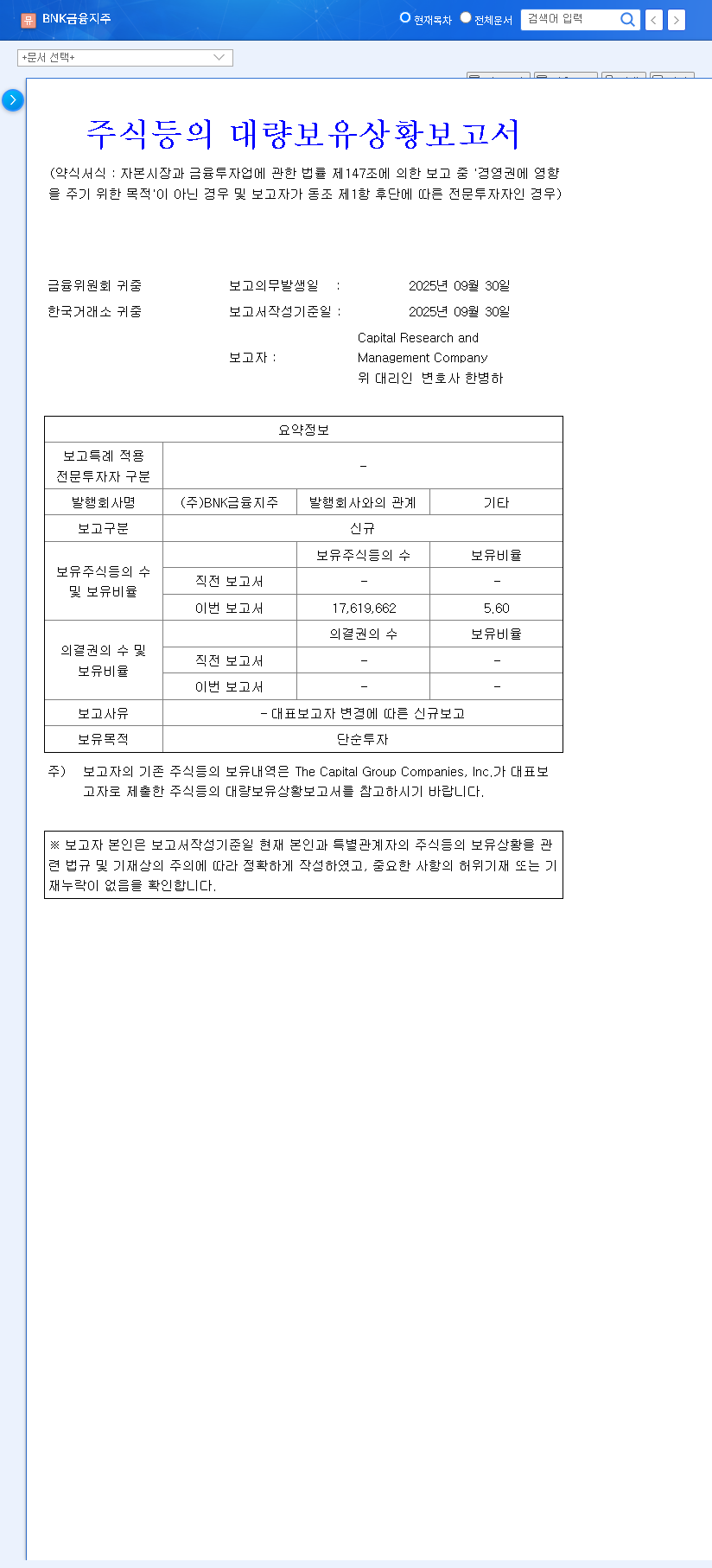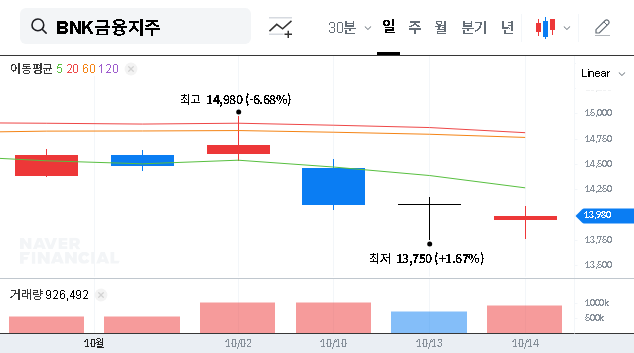
The upcoming announcement of the BNK Financial Group Inc. earnings for Q3 2025 is a pivotal moment for investors. Scheduled for October 31, 2025, at 10:00 AM, this investor relations (IR) event carries significant weight, especially following a challenging first half of the year. In a fluctuating market, stakeholders are keenly watching to see if the financial giant can navigate economic headwinds, address underperforming subsidiaries, and present a compelling strategy for future growth. This analysis provides a comprehensive framework for understanding the potential outcomes and crafting a shrewd BNK Financial investment strategy.
Recap: A Mixed H1 2025 Performance
To understand the stakes of the Q3 report, we must first look at the performance in the first half of 2025. According to its H1 report, BNK Financial Group showcased resilience with stable asset growth, reaching total assets of KRW 181.56 trillion—a 2.7% increase from year-end 2024. However, this growth was overshadowed by a 3.4% year-on-year decline in net income to KRW 475.8 billion. This dip in profitability signals underlying challenges that need to be addressed.
The core issue was a disparity in performance across its subsidiaries. While the flagship Busan Bank remained strong, profitability was dragged down by decreased loan interest income and rising bad debt expenses at Gyeongnam Bank and BNK Capital.
Key financial indicators from the first half provide a clearer picture of the group’s health:
- •Profitability Metrics: Return on Assets (ROA) stood at 0.63% and Return on Equity (ROE) at 8.97%, both showing a slight decrease, reflecting margin pressures.
- •Asset Quality: The Non-Performing Loan (NPL) ratio was a relatively stable 1.62%, though the delinquency ratio saw a slight uptick. The BIS Total Capital Ratio of 13.96% indicates a solid capital base.
- •Subsidiary Performance: Busan Bank was the star performer with a net income of KRW 251.7 billion. In contrast, Gyeongnam Bank (KRW 158.5 billion) and BNK Capital (KRW 69.6 billion) underperformed, creating a drag on the group’s overall BNK Financial Group Inc. earnings.
The Q3 IR: Potential Market Impact and Key Themes
This Q3 IR event is more than just a presentation of numbers; it’s a critical communication that could significantly sway investor sentiment and the BNK Financial Group stock price. Investors should be prepared for both positive and negative scenarios.
The Bull Case: A Path to Renewed Confidence
A positive report could be a major catalyst. If management can demonstrate a clear turnaround strategy for its lagging subsidiaries and highlight new growth engines in its non-banking sectors (like BNK Investment & Securities), investor confidence could surge. A clear, transparent message that acknowledges challenges while presenting a credible plan for overcoming them will be key to unlocking value.
The Bear Case: Navigating Headwinds
Conversely, if the Q3 results continue the negative trend from H1 or fall short of market consensus, the stock could face downward pressure. A failure to show progress at Gyeongnam Bank and BNK Capital would be a major red flag. Furthermore, any ambiguity regarding the group’s strategy for navigating macroeconomic uncertainties, such as interest rate volatility and a potential global slowdown, could amplify investor concerns.
Crafting a Shrewd BNK Financial Investment Strategy
The Q3 earnings call will likely introduce short-term volatility, but it provides essential data for long-term strategic positioning. For a deeper context on the sector, you can read our deep-dive analysis of the South Korean banking industry. Investors should use the information from the call to build a robust action plan. You can view the company’s full report directly via the Official Disclosure on DART.
Post-IR Investor Checklist:
- •Scrutinize Q3 Details: Look beyond the headline numbers. Analyze trends in net interest margin (NIM), fee income growth, and loan loss provisions.
- •Monitor Subsidiary Performance: Is there evidence of a turnaround at Gyeongnam Bank and BNK Capital? Are the high-growth non-banking subsidiaries maintaining momentum?
- •Assess Future Strategy: Pay close attention to management’s commentary on their 2030 vision, digital transformation efforts, and plans for new revenue streams.
- •Consider the Macro Environment: Evaluate how the company’s outlook aligns with broader economic forecasts from authoritative sources like Bloomberg Economics.
In conclusion, while BNK Financial Group Inc. is built on a stable asset foundation, its path forward depends on its ability to harmonize subsidiary performance and execute its strategic vision amidst a complex economic landscape. A cautious, data-driven investment approach is recommended, with the upcoming BNK Q3 2025 analysis serving as a critical checkpoint.
Frequently Asked Questions
When is the BNK Financial Group Inc. Q3 2025 earnings call?
The Investor Relations (IR) event for the Q3 2025 management performance announcement is scheduled for October 31, 2025, at 10:00 AM KST.
What were the key takeaways from BNK’s H1 2025 performance?
In the first half of 2025, BNK Financial Group saw solid asset growth but experienced a 3.4% year-on-year decline in net income. This was largely due to profitability challenges at key subsidiaries like Gyeongnam Bank and BNK Capital.
What are the main risks for investors considering BNK Financial Group stock?
Key risks include continued underperformance from specific subsidiaries, margin compression from interest rate volatility, potential deterioration in asset quality amid a global economic slowdown, and intensifying competition in the digital finance space.