Tag: Big Data

  • (307870) B2EN (307870) ₩3.3B Data Project: A Deep-Dive Stock Analysis for Investors

    (307870) B2EN (307870) ₩3.3B Data Project: A Deep-Dive Stock Analysis for Investors

    South Korean data solutions provider B2EN (307870) has captured investor attention by securing a significant government contract. The recently announced B2EN data project, valued at ₩3.3 billion, with the Korea Institute of S&T Evaluation and Planning (KISTEP) raises a critical question: is this the catalyst needed to reverse the stock’s long-term decline? This comprehensive B2EN stock analysis will dissect the contract’s implications, weigh the opportunities against the risks, and provide a clear, actionable investment outlook.

    We’ll explore the immediate financial impact, the validation of B2EN’s technology, and the persistent profitability concerns that prudent investors must consider before making a decision.

    Unpacking the ₩3.3 Billion KISTEP Contract

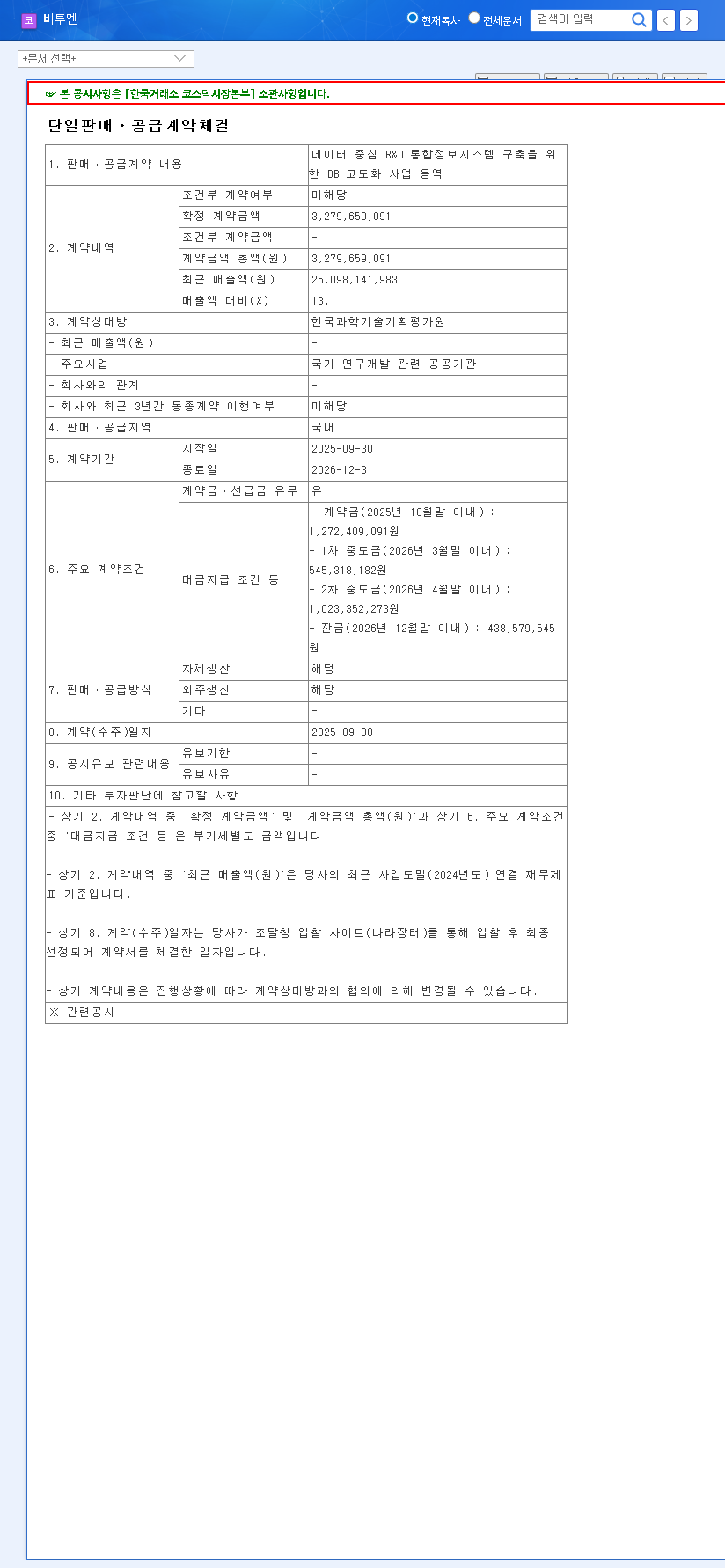
    On October 1, 2025, B2EN formally announced a major supply contract. The project involves a ‘DB Advancement Project for Building a Data-centric R&D Integrated Information System’ for KISTEP, a key public institution. This isn’t just another IT contract; it’s a strategic win in the company’s core domain.

    • Contract Value: ₩3.3 billion, which represents a substantial 13.1% of B2EN’s recent annual revenue.
    • Client: Korea Institute of S&T Evaluation and Planning (KISTEP), a reputable public sector entity.
    • Contract Period: A 15-month timeline from September 30, 2025, to December 31, 2026.

    This KISTEP contract is a significant development that warrants a closer look at both the bullish and bearish arguments for the company’s future.

    The Bull Case: Why This Contract Matters

    Immediate Revenue Injection and Financial Stability

    The most direct impact is on the top line. An injection of ₩3.3 billion provides a predictable revenue stream over the next year. Public sector projects are known for their stability and low counterparty risk, bolstering B2EN’s order book. As of late 2024, the company maintained a healthy financial posture with a low debt-to-equity ratio (19.77%) and a strong current ratio (265.81%). This new revenue stream should further solidify its financial base, which is a crucial factor for investors seeking stability. For a deeper dive, you can learn more about understanding financial ratios for tech stocks.

    Validation of Core Technology and Market Leadership

    This is more than just revenue; it’s a powerful endorsement. The project’s focus on a ‘Data-centric R&D Integrated Information System’ aligns perfectly with B2EN’s specialization. It highlights the market’s confidence in the company’s advanced capabilities, particularly its proprietary ‘SDQ for AI’—an AI Learning Data Quality Management Solution. Successfully delivering on this high-profile B2EN data project can serve as a powerful case study, enhancing its reputation and paving the way for future contracts in the lucrative public and private sectors.

    This contract win validates B2EN’s technological edge in a competitive market. It’s a signal that their specialized solutions, like ‘SDQ for AI,’ are gaining critical traction with high-value clients.

    The Bear Case: Potential Risks and Headwinds

    The Critical Issue of Declining Profitability

    While revenue is set to increase, profitability remains a major concern. The IT services industry can be notorious for tight margins. B2EN’s own history is a cautionary tale: its operating profit margin has seen a dramatic decline from 11.85% in 2022 to a razor-thin 0.66% in 2024. The success of this contract will not be measured by revenue alone but by its ability to contribute meaningfully to the bottom line. Efficient project management will be paramount to prevent this large contract from becoming a low-profit endeavor.

    Stock Performance and Market Sentiment

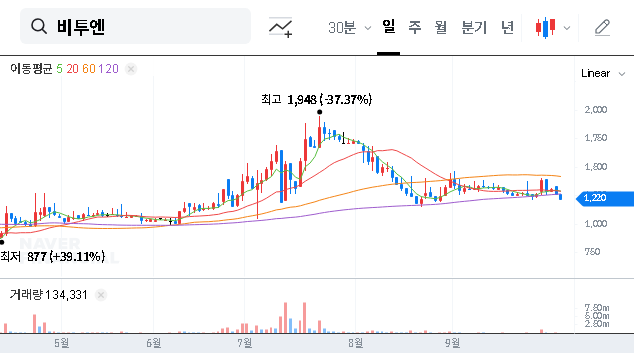
    A look at B2EN’s stock chart reveals a challenging history. After peaking at ₩4,410 in May 2021, the stock entered a prolonged downtrend, settling in the ₩1,000s-₩2,000s range where it has languished. This decline reflects the market’s reaction to deteriorating financials and a broader slowdown. While the macro trend towards big data and AI is a powerful tailwind, as noted in reports by firms like Gartner on the data industry, B2EN must prove it can translate industry growth into company profit. This single contract, while positive, may not be enough to single-handedly shift market sentiment and reverse years of downward momentum.

    Official Disclosure and Verification

    For complete transparency and verification of the contract details discussed in this analysis, investors are encouraged to review the company’s official filing. The information is publicly available through Korea’s Financial Supervisory Service.

    Source: Click to view the Official DART Disclosure.

    Conclusion: A Neutral Stance with a Clear Action Plan

    The ₩3.3 billion KISTEP contract is an undeniable short-term positive for B2EN. It provides revenue stability and validates its technical expertise. However, this must be viewed in the context of the company’s significant profitability challenges and negative stock performance history. Therefore, our investment opinion is ‘Neutral.’ This contract is a promising step, but it is not a silver bullet.

    Action Plan for Prudent Investors

    • Monitor Profitability: Scrutinize the upcoming quarterly reports to see if this contract is improving operating margins, not just revenue.
    • Track New Orders: Look for evidence that this win is a springboard to more contracts. Consistent order flow is key to a sustainable turnaround.
    • Adopt a Long-Term View: Avoid chasing a short-term pop. A true recovery will be a multi-quarter process based on fundamental improvements.
    • Holistic Analysis: Continue to weigh the positive contract news against the company’s overall financial health and the broader market environment.
    (307870) B2EN (307870) ₩3.3B Data Project: A Deep-Dive Stock Analysis for Investors 관련 이미지
  • PADU Stock Forecast: Post-Market Block Trade Analysis and Investment Strategy


    1. What Happened? Analyzing PADU’s After-Hours Block Trade

    On September 18, 2025, PADU experienced a substantial after-hours block trade with a total volume of 296,682 shares, amounting to 6.3 billion KRW. Foreign investors were actively involved on both the buy and sell sides.

    2. Why Does It Matter? Fundamental Analysis and Market Context

    2.1 Improved Fundamentals: PADU enhanced its information transparency through amendments to its 2024 business report. Following an estimated return to profitability in 2024 (2.3 billion KRW), positive fundamental trends are anticipated, with projected revenue of 132.1 billion KRW and operating profit of 13.8 billion KRW in 2025.

    2.2 Market Growth: PADU’s core business, data center SSD controllers, is expected to see consistent demand growth alongside the expansion of the AI and big data markets.

    2.3 Macroeconomic Factors: Macroeconomic indicators such as exchange rate fluctuations, interest rates, and oil prices can impact PADU’s performance, given its significant export focus. Close monitoring is essential.

    3. What Should Investors Do? Investment Strategy

    While the after-hours block trade may introduce short-term price volatility, a long-term investment perspective should focus on PADU’s improving fundamentals and positive market outlook. We maintain a positive investment outlook, but emphasize the importance of monitoring macroeconomic variables and confirming the continuation of growth through future earnings releases.

    4. Action Plan for Investors

    • Short-Term: Observe changes in supply and demand and investor sentiment following the block trade.
    • Mid- to Long-Term: Verify the sustained improvement of fundamentals and PADU’s ability to secure market competitiveness.
    • Risk Management: Monitor macroeconomic variables such as exchange rates and interest rates, and maintain a diversified portfolio.


    FAQ

    What is PADU’s main business?

    PADU develops and sells SSD controllers for data centers. The company is expected to benefit from the growth of the AI and big data markets.

    What does the after-hours block trade signify?

    It refers to a large volume of shares traded outside of regular trading hours, which can impact stock prices. PADU’s block trade is interpreted as reflecting foreign investor interest.

    What are the key considerations for investing in PADU?

    Investors should be aware of the company’s history of price volatility and its susceptibility to macroeconomic factors like exchange rate fluctuations. Thorough analysis is crucial before investing.


  • KB Investment Reduces Stake in Newen AI: Threat or Opportunity?


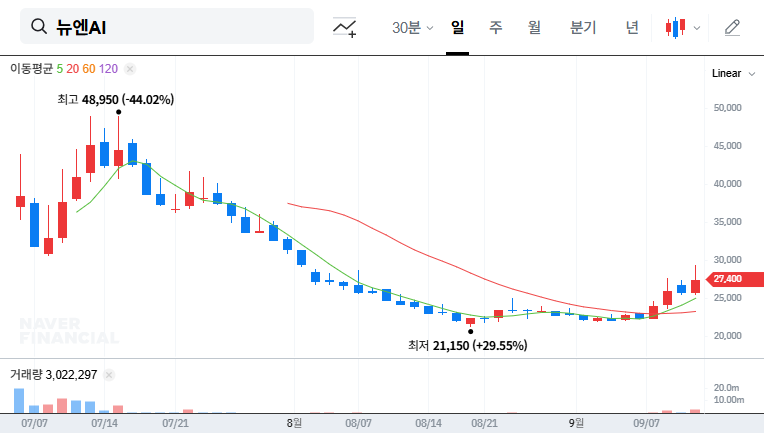
    KB Investment Reduces Stake in Newen AI: Threat or Opportunity? 대표 차트 이미지


    KB Investment Reduces Newen AI Stake to 4.45%: What Happened?

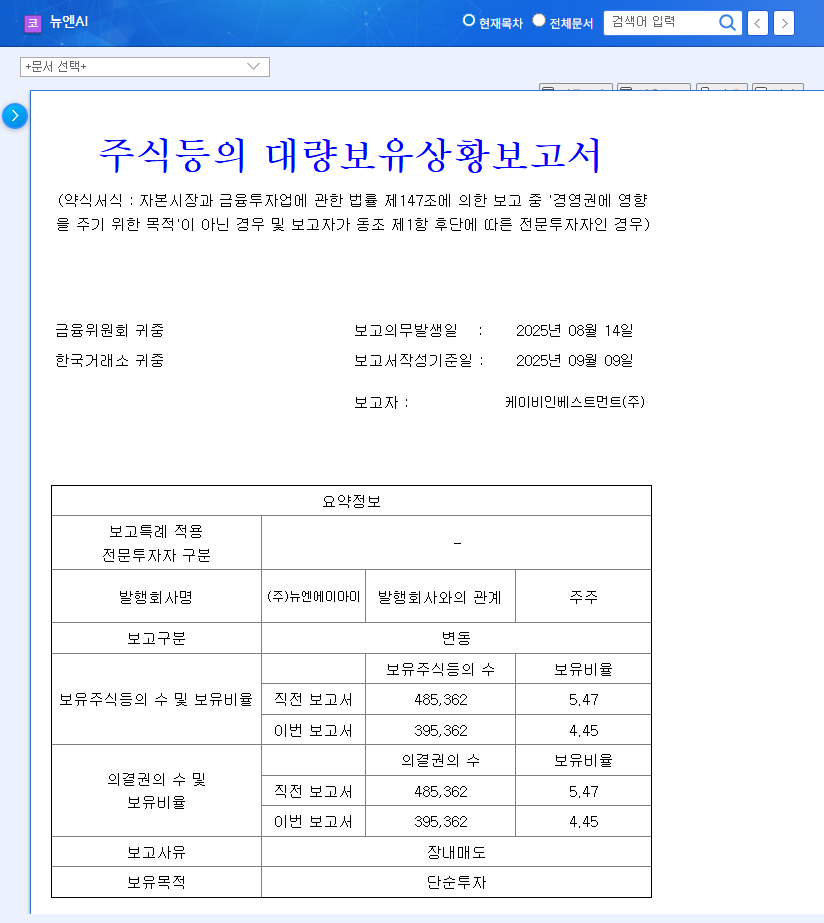
    KB Investment sold a total of 40,000 Newen AI shares through ‘KB Secondary Plus Fund’ and ‘KB Smart Scale-up Fund’ from August 11th to 14th, 2025. This reduced KB Investment’s stake in Newen AI from 5.47% to 4.45%.

    Why Did KB Investment Sell? What’s the Future of Newen AI?

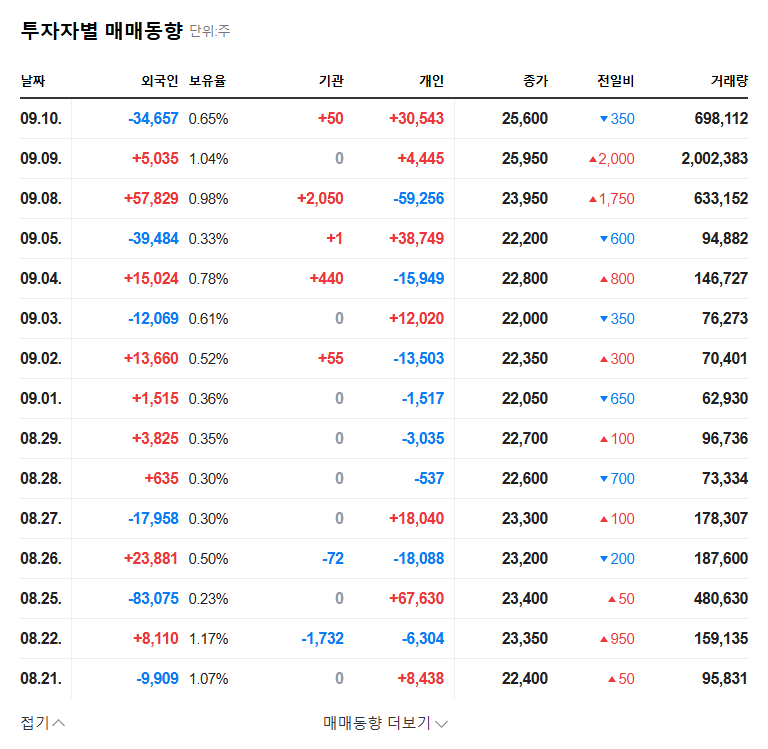
    This sale is interpreted as part of the fund’s exit strategy. It’s more likely due to fund maturity or portfolio adjustments rather than a deterioration of Newen AI’s fundamentals. Considering the sale coincided with a decline in Newen AI’s stock price in mid-August, profit-taking is also a possibility.

    Investing in Newen AI: What Should Investors Do Now?

    While there may be downward pressure on the stock price in the short term, the long-term growth potential of Newen AI remains valid. There are many positive factors, including the growth of the AI market, Newen AI’s technological competitiveness, and securing funds through KOSDAQ listing. Investors should focus on the company’s fundamentals and growth strategies rather than short-term stock price fluctuations.

    • Beware of Short-Term Volatility: Monitor market conditions closely and carefully consider investment timing.
    • Maintain a Mid-to-Long-Term Investment Strategy: Considering the growth of the AI market and the potential of Newen AI, the investment value is still high from a long-term perspective.
    • Check for Profitability Improvements: Temporary losses due to R&D investment are inevitable, but it is important to continuously monitor future profitability improvement trends.
    • Focus on the Company’s Growth Strategy: Pay attention to the company’s growth strategy, such as new service launches and business diversification, and check its performance.


    Frequently Asked Questions (FAQ)

    Is KB Investment’s stake reduction a negative signal for Newen AI’s future?

    Not necessarily. This sale is likely part of the fund’s exit strategy and doesn’t signify a deterioration of Newen AI’s fundamentals.

    When is a good time to invest in Newen AI?

    Investment timing should be carefully considered given the potential for short-term stock price volatility. It is recommended to invest in Newen AI with a long-term perspective.

    What is the expected future stock price of Newen AI?

    While there may be downward pressure in the short term, a positive outlook can be expected in the long term, considering the growth of the AI market and Newen AI’s technology.


    KB Investment Reduces Stake in Newen AI: Threat or Opportunity? 관련 이미지
    KB Investment Reduces Stake in Newen AI: Threat or Opportunity? 관련 이미지


  • Wise I Tech’s Q2 2025 Earnings: A Surprise Turnaround and Potential Investment Opportunity?

    1. Wise I Tech’s Q2 Performance: What Happened?

    Wise I Tech reported revenue of 7.6 billion KRW, operating profit of 400 million KRW, and net income of 1 billion KRW for Q2 2025. This represents a 5.56% year-over-year increase in revenue and a return to profitability for both operating and net income. Notably, the company significantly exceeded market expectations, achieving an earnings surprise.

    2. Reasons for the Strong Performance: Why These Results?

    The primary drivers of this improved performance are a stable macroeconomic environment and continued growth in the AI and Big Data market. Wise I Tech leveraged its technological capabilities to effectively meet market demand, leading to revenue growth and improved profitability. The return to profitability after a challenging 2024 is a particularly positive sign, suggesting a potential turnaround.

    3. Future Outlook and Investment Strategies: What’s Next?

    This earnings announcement validates Wise I Tech’s growth potential. However, considering its historical performance volatility, it’s crucial to monitor whether the company can maintain this positive momentum. Investors should carefully consider future quarterly results, changes in the competitive landscape, and the company’s efforts to strengthen its financial position when developing investment strategies.

    4. Action Plan for Investors

    • Short-Term Investors: The current momentum could present short-term investment opportunities, but be mindful of potential volatility.
    • Long-Term Investors: Wise I Tech’s growth potential makes it an attractive long-term investment consideration. However, continuous monitoring of future earnings and the competitive landscape is essential.
    Q: What was Wise I Tech’s revenue for Q2 2025?

    A: 7.6 billion KRW.

    Q: Did Wise I Tech return to profitability?

    A: Yes, Wise I Tech reported an operating profit of 400 million KRW and a net income of 1 billion KRW for Q2 2025.

    Q: What is Wise I Tech’s main business?

    A: Wise I Tech develops and provides AI and Big Data software and services.

  • Exem (205100) H1 2025 Earnings Analysis: Shocking Loss, What Should Investors Do?

    1. What Happened? Exem’s Disappointing H1 Earnings

    Exem reported disappointing H1 2025 earnings, with revenue of ₩12.5 billion, operating profit of ₩0, and net profit of ₩0, significantly below market expectations. The operating loss is particularly concerning.

    2. Why These Results? Analyzing the Earnings Miss

    Weak sales of major product lines, especially MaxGauge, significantly impacted the results. Despite high R&D investment, tangible results are lacking, and Exem appears to be struggling to capitalize on growth opportunities in the cloud, big data, and AI markets.

    3. What’s Next? Future Outlook and Investment Strategies

    Significant downward pressure on the stock price is expected in the short term, and market consensus is likely to be revised downwards. Exem’s future stock price will depend on the market adoption of new solutions, the recovery of its core products’ competitiveness, improved R&D investment efficiency, and its ability to respond effectively to changes in the macroeconomic environment.

    4. What Should Investors Do? Action Plan

    A cautious approach to investing in Exem is recommended at this time. Closely monitor future earnings releases and the company’s management improvement plans. A wait-and-see approach is advisable until clear signs of performance improvement emerge. Even for long-term investment considerations, thorough analysis and risk management are essential.

    What were Exem’s H1 2025 earnings?

    Exem reported revenue of ₩12.5 billion, operating profit of ₩0, and net profit of ₩0 for H1 2025. This was significantly below market expectations.

    What are the reasons for Exem’s poor performance?

    Weak sales of major product lines, especially MaxGauge, significantly impacted the results. Despite high R&D investments, tangible results have not materialized.

    What is the outlook for Exem?

    Significant downward pressure on the stock price is expected in the short term. The future stock price will depend on market adoption of new solutions and the recovery of core products’ competitiveness.

    What should investors do?

    A cautious approach to investing in Exem is recommended at this time. Closely monitor future earnings and management’s improvement plans.

  • Newen AI: KOSDAQ Listing Overshadowed by Profitability Concerns

    1. What’s Happening with Newen AI?

    Newen AI experienced declining revenue and significant operating losses in the first half of 2025. Despite securing funding through its KOSDAQ listing, increased R&D expenses have impacted profitability.

    2. Why the Decline in Profitability?

    A combination of factors contributed to the decline, including decreased revenue, increased sales and administrative expenses, higher R&D costs, and rising financial expenses. The company appears to be struggling to differentiate its services in a competitive AI market.

    3. What’s Next for Newen AI?

    The growth of the AI and big data market, combined with the company’s technological competitiveness and stable financial structure, are positive signs. However, improving profitability is paramount. The second half of 2025 will be crucial, with performance and the success of new business ventures being key factors.

    4. What Should Investors Do?

    Investors should take a cautious approach in the short term, closely monitoring the company’s ability to improve profitability. Long-term investment decisions should be based on a comprehensive evaluation of market growth potential, technological competitiveness, and the success of new business initiatives. Key areas to watch include revenue growth, cost optimization, and management stability.

    How did Newen AI perform in the first half of 2025?

    The company experienced declining revenues and significant operating losses.

    What is Newen AI’s main business?

    Newen AI provides big data and AI-powered data analysis platforms and services.

    What are the key considerations for investing in Newen AI?

    Investors should monitor profitability in the short-term and evaluate market competitiveness and new business success in the long term.

  • Suresofttech 2025 Half-Year Report Analysis: Growth Potential vs. Net Loss

    1. Suresofttech’s 2025 First Half Performance: What Happened?

    Suresofttech recorded revenue of 21.4 billion KRW in the first half of 2025, a slight decrease compared to the same period last year. While operating profit turned positive, it remained marginal at 100 million KRW, and the company recorded a net loss of 500 million KRW. Although the automotive sector grew by 20.14% due to the SDV transition, there were significant declines in other sectors, such as defense/aerospace and nuclear/energy. The decline in sales in the Big Data/AI segment had a particularly negative impact on overall performance.

    2. Analysis of Performance Fluctuations: Why These Results?

    The main reason for the net loss is analyzed to be the poor performance of the Big Data/AI segment and the decline in sales in specific industrial sectors. This is likely due to increased competition in the Big Data/AI market, the potential lack of differentiated solutions, and the overall downturn in the defense/aerospace and nuclear/energy industries.

    3. Future Outlook and Investment Strategy: What’s Next?

    Suresofttech has growth potential based on its technological competitiveness in SDV-related SW verification. However, a turnaround in the Big Data/AI segment and diversification of the business portfolio are crucial tasks. The future direction of the stock price will depend on whether performance improves and on strategic responses. Investors should make investment decisions by comprehensively considering the company’s long-term growth potential and risks rather than focusing on short-term stock price volatility.

    4. Action Plan for Investors

    • Develop an investment strategy from a long-term perspective, not being swayed by short-term stock price volatility.
    • Monitor performance improvement in the Big Data/AI segment and new business entry strategies.
    • Analyze competitors and understand market trends.
    • Track changes in financial indicators and evaluate the company’s risk management capabilities.

    Frequently Asked Questions

    What is Suresofttech’s main business?

    Suresofttech provides software verification solutions. They develop solutions that verify the safety and reliability of software in various industries, including automotive, defense, aerospace, and nuclear power.

    What caused the decline in performance in the first half of 2025?

    The main causes are analyzed to be the decline in sales in the Big Data/AI segment and the poor performance in specific industrial sectors such as defense/aerospace and nuclear/energy.

    What is the future outlook for Suresofttech?

    Suresofttech maintains growth potential based on the growth of the automotive industry and its technological capabilities in the SW verification field. However, improvement in the Big Data/AI segment and business diversification will be crucial variables.

  • Lotte Innovate Stock Forecast: Q2 2025 Earnings Call Analysis and Investment Strategy

    1. Lotte Innovate Q2 Earnings Call: What Happened?

    Lotte Innovate held its Q2 2025 earnings call on July 31, 2025, announcing its financial results and discussing its business strategy and risk management plans. Key areas of focus included the company’s performance compared to Q1 and progress in new business areas.

    2. Key Analysis: Why Does it Matter?

    This earnings call provides critical insights into Lotte Innovate’s future growth potential. Investors should pay close attention to Q2 results, new business strategies, and post-acquisition management of EveeSys.

    • Earnings: Continued strong performance from Q1 and improvement in affiliate dependency.
    • New Businesses: Progress and future strategies in metaverse, AI, big data, and autonomous driving.
    • Risk Management: Strategies for managing risks related to exchange rates, interest rates, and virtual asset holdings.
    • EveeSys: Reasons for post-acquisition underperformance and plans for improvement.

    3. Investment Strategy: What Should Investors Do?

    Investors should carefully analyze the earnings call and monitor market reactions. A long-term perspective focusing on the growth potential of new businesses and reduction in affiliate dependency is crucial. Pay close attention to risk management strategies, especially those related to exchange rate and interest rate fluctuations.

    4. Investor Action Plan

    Thoroughly review the IR materials and consider analyst reports before making investment decisions. Analyze the company’s long-term growth potential and invest cautiously, considering your investment goals and risk tolerance.

    Frequently Asked Questions

    What are Lotte Innovate’s main businesses?

    Lotte Innovate’s core business is System Integration (SI). They are also expanding into new areas like metaverse, AI, big data, and autonomous driving. Electric vehicle charging is another significant part of their business.

    Why was the EveeSys acquisition important?

    The EveeSys acquisition was a strategic move to expand Lotte Innovate’s electric vehicle charging business. However, post-acquisition performance has been disappointing, making their improvement plans a key concern.

    What are the key risks to consider when investing in Lotte Innovate?

    Investors should consider risks related to affiliate dependency, uncertainty in new businesses, exchange rate and interest rate fluctuations, and virtual asset holdings. The company’s ability to improve EveeSys’s performance is also a critical factor.

  • Bitween Stock Forecast: Opportunity or Risk with Ribbon Material Holdings’ Acquisition?

    What Happened?

    On July 24, 2025, Ribbon Material Holdings acquired 6,525,553 shares (12.84%) of Bitween, becoming the largest shareholder. This acquisition, aimed at participating in management, foreshadows significant changes for Bitween’s future.

    Why is it Important?

    Bitween is struggling with a sharp decline in sales and continued losses in the first quarter of 2025. Factors such as sluggish big data platform business, intensified competition, and reduced government R&D budget are cited as causes. The high debt ratio also raises concerns about financial soundness. In this situation, the emergence of new management is a crucial variable that will determine the fate of the company.

    So What Happens Next?

    • Positive Scenario: Bitween’s corporate value may increase through Ribbon Material Holdings’ management improvement, financial structure improvement, and new business investments.
    • Negative Scenario: Corporate value may decline due to management disputes, difficulties in the post-acquisition integration process, and conflicts among shareholders.

    What Should Investors Do?

    Increased short-term stock price volatility is expected, requiring careful investment decisions. It is advisable to closely monitor Ribbon Material Holdings’ future management plans, financial structure improvement measures, changes in shareholder relations, and make investment decisions after obtaining additional information.

    Frequently Asked Questions

    What kind of company is Ribbon Material Holdings?

    At the time of writing this report, detailed information on Ribbon Material Holdings is limited. Further research is needed to ascertain the company’s financial status, business details, and the purpose of the Bitween acquisition.

    What will Bitween’s Q2 earnings look like?

    Bitween’s earnings improvement can be confirmed through future disclosures of Q2 and subsequent reports. Continuous monitoring is necessary as earnings trends can significantly impact stock prices.

    Should I invest in Bitween?

    Investment decisions are at the individual’s discretion and responsibility. This analysis is not an investment recommendation, and sufficient information gathering and risk management are essential before investing.