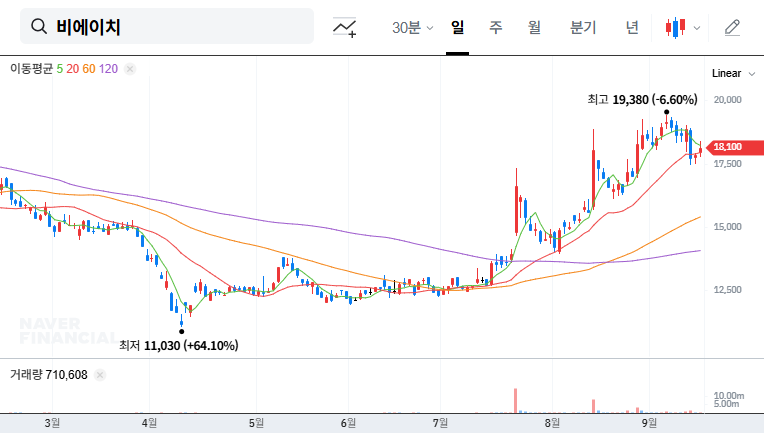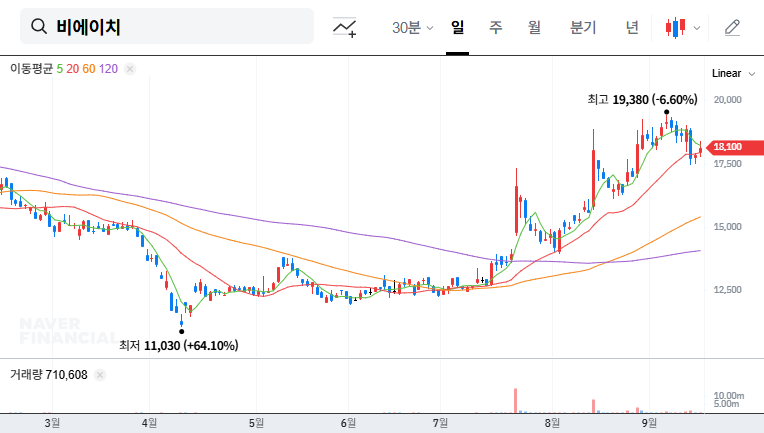
Tag: BH

  • (090460) BHCo.,Ltd. (BH) Q3 2025 Earnings Analysis: Deep Dive into Profit Miss & Future Outlook

    (090460) BHCo.,Ltd. (BH) Q3 2025 Earnings Analysis: Deep Dive into Profit Miss & Future Outlook

    The latest BHCo.,Ltd. Q3 2025 earnings report has sent a complex and concerning message to the market. While the top-line revenue figure surpassed analyst expectations, a sharp decline in operating profit and a surprising net deficit have raised red flags about the company’s underlying health. This comprehensive BH stock analysis will dissect the preliminary results, explore the core reasons behind the profitability issues, and provide a strategic outlook for current and potential investors.

    BHCo.,Ltd. Q3 2025 Earnings: The Official Numbers

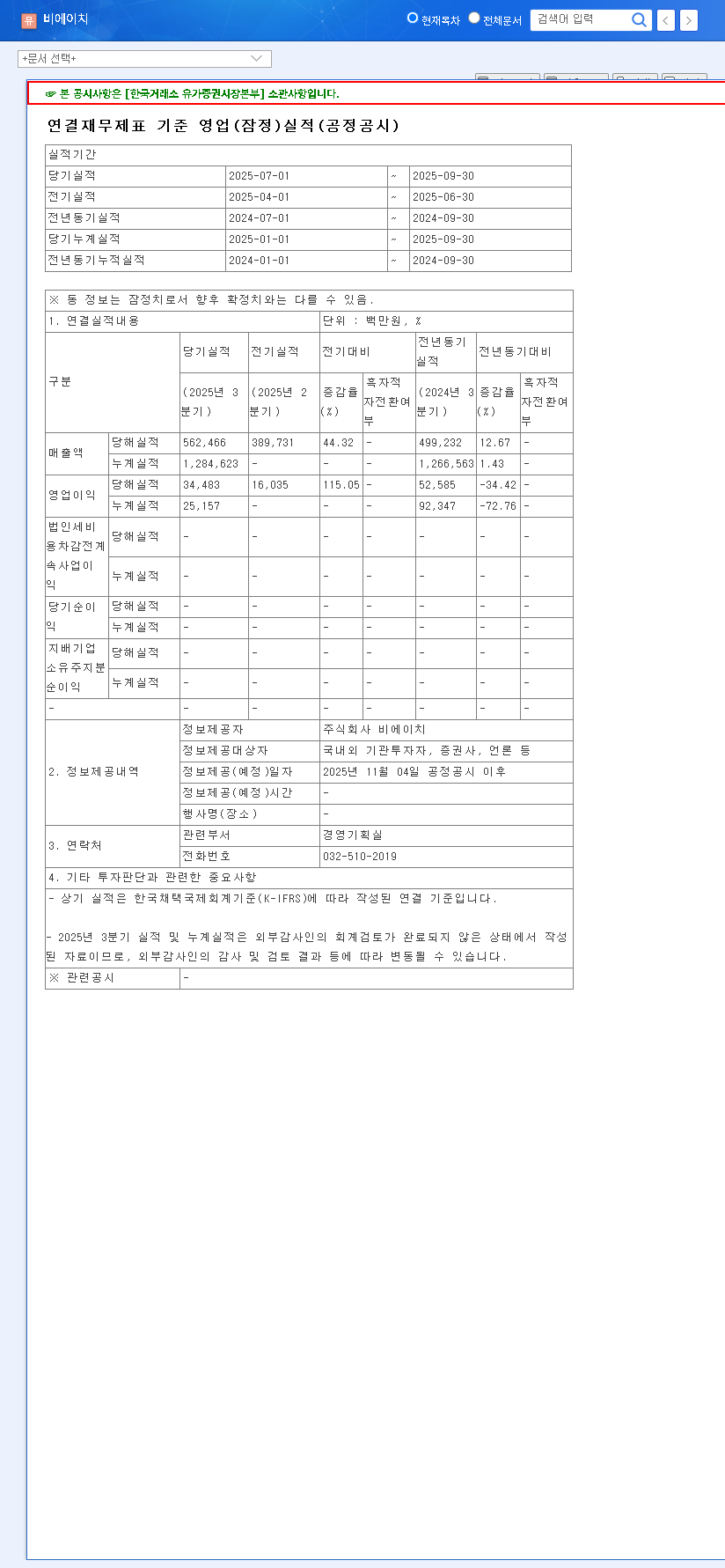
    On November 4, 2025, BHCo.,Ltd. (BH, 090460) released its preliminary consolidated financial results, revealing a significant divergence between sales and profitability. Here’s a breakdown of the key performance indicators:

    • Revenue: KRW 562.5 billion, which is a 3% beat over the consensus estimate of KRW 547.3 billion.
    • Operating Profit: KRW 34.5 billion, a significant 32% miss compared to the estimated KRW 51.1 billion.
    • Net Profit: Shockingly turned to an estimated deficit, a stark contrast to the market’s expectation of a KRW 40.8 billion surplus.

    While the revenue growth signals sustained demand, the collapse in profitability metrics points to severe underlying issues with cost management, operational efficiency, or market pressures. This disconnect is the primary concern for investors trying to gauge the true BH financial performance.

    The core issue for BHCo.,Ltd. is clear: sales are not translating into profits. The market is now rightly focused on the ‘why’ behind this alarming trend and what management plans to do to reverse it.

    Root Cause Analysis: Fundamental and Macroeconomic Factors

    The Ailing FPCB Business and Financial Strain

    The primary culprit behind the poor Q3 results is the significant underperformance of BH’s core FPCB (Flexible Printed Circuit Board) business. A sharp drop in sales for RF (Radio Frequency) and BU (Build-Up) components, crucial for modern smartphones, directly led to the operating profit deficit. This exposes the company’s vulnerability to fierce competition and fluctuating demand from major smartphone manufacturers. The profitability decline is not a new trend, as seen in key financial health metrics:

    • Worsening Profitability: Return on Equity (ROE) plummeted to a mere 1.23% in the first half of 2025, signaling inefficiency in generating profit from shareholder equity. The operating profit margin also contracted further, highlighting cost pressures.
    • High Leverage: The consolidated debt-to-equity ratio stands at a high 230.13%, a figure that raises concerns about financial risk and the company’s ability to handle economic downturns. This is much higher than the industry average, which you can read about in our detailed guide to balance sheet analysis.
    • Cash Flow Concerns: A turn to a deficit in cash flow from operating activities is a critical warning sign, potentially increasing the company’s reliance on debt financing.

    Complex Macroeconomic Environment

    External economic factors have also created a challenging backdrop. The appreciation of the USD/KRW exchange rate through much of 2025 increased the cost of imported raw materials and led to foreign exchange losses. While recent stabilization in the exchange rate and global freight costs may provide some relief, the impact on Q3 was tangible. Broader macroeconomic trends, such as shifting consumer sentiment for high-end electronics, continue to pose a risk, as noted by high-authority financial news outlets.

    Outlook and Investor Action Plan

    Short-Term Stock Price Impact

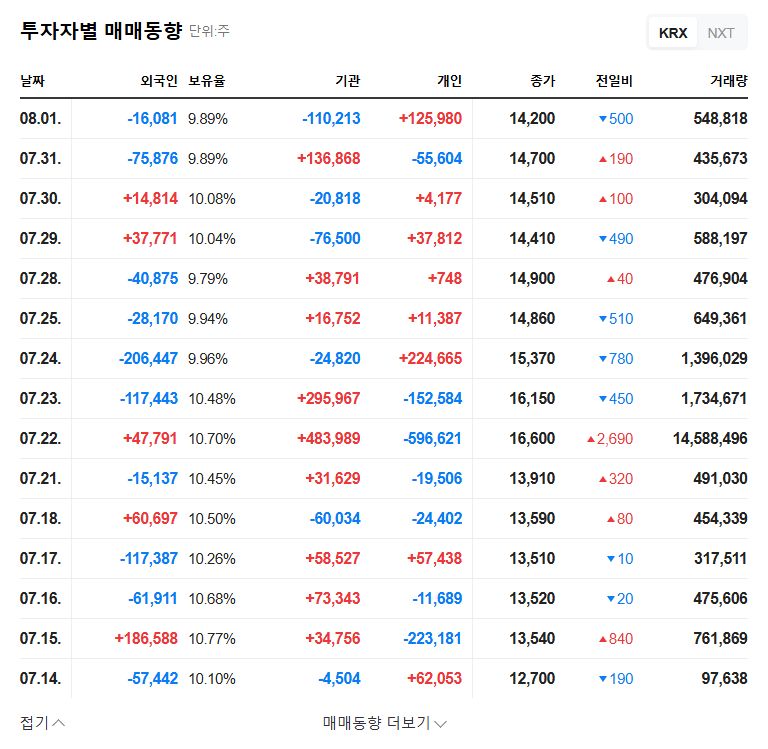
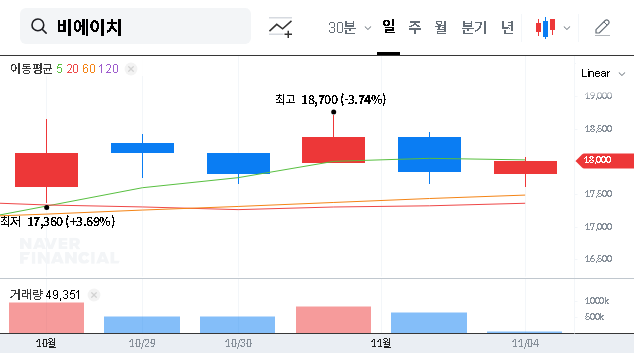
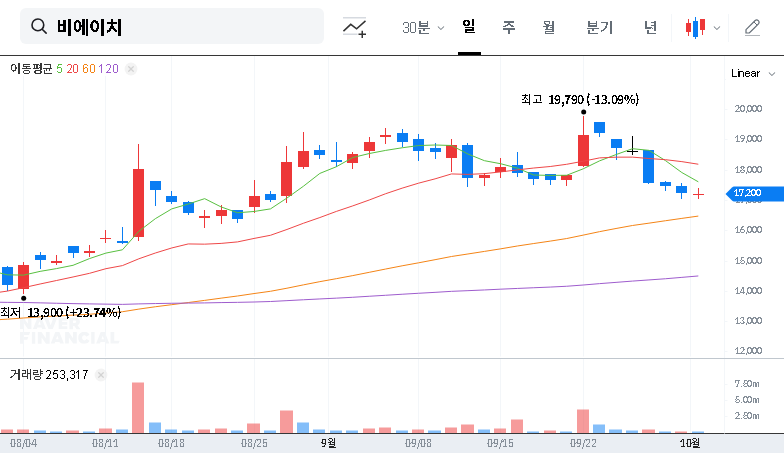
    The substantial miss on profit estimates is expected to create significant downward pressure on BH’s stock price in the short term. The positive revenue figure is unlikely to offset the deep-seated concerns about profitability, and investor sentiment will likely remain negative until a clear turnaround strategy is presented.

    A Cautious Path Forward for Investors

    Given the current volatility and fundamental weaknesses, a prudent and cautious investment approach is warranted. Investors should prioritize monitoring and information gathering:

    • Monitor Key Developments: Closely watch for the company’s official Q4 guidance and any strategic announcements. Focus on plans to improve the FPCB business, concrete growth targets for the automotive components division, and measures to de-leverage the balance sheet.
    • Reassess Valuation: The market will likely re-rate the stock based on these lower profitability numbers. It is crucial to reassess BH’s fair value to avoid investing in a falling asset.
    • Verify Official Data: For complete transparency and to conduct your own due diligence, investors should review the Official Disclosure on DART for the complete financial statements.

    In conclusion, the BHCo.,Ltd. Q3 2025 earnings report serves as a critical wake-up call. The future trajectory of the company’s stock will depend heavily on management’s ability to articulate and execute a credible plan to fix the profitability issues in its core FPCB business while successfully scaling its promising automotive segment.
    (090460) BHCo.,Ltd. (BH) Q3 2025 Earnings Analysis: Deep Dive into Profit Miss & Future Outlook 관련 이미지
  • (090460) NPS Investment in BH (090460): A Deep Dive Analysis for Investors

    (090460) NPS Investment in BH (090460): A Deep Dive Analysis for Investors

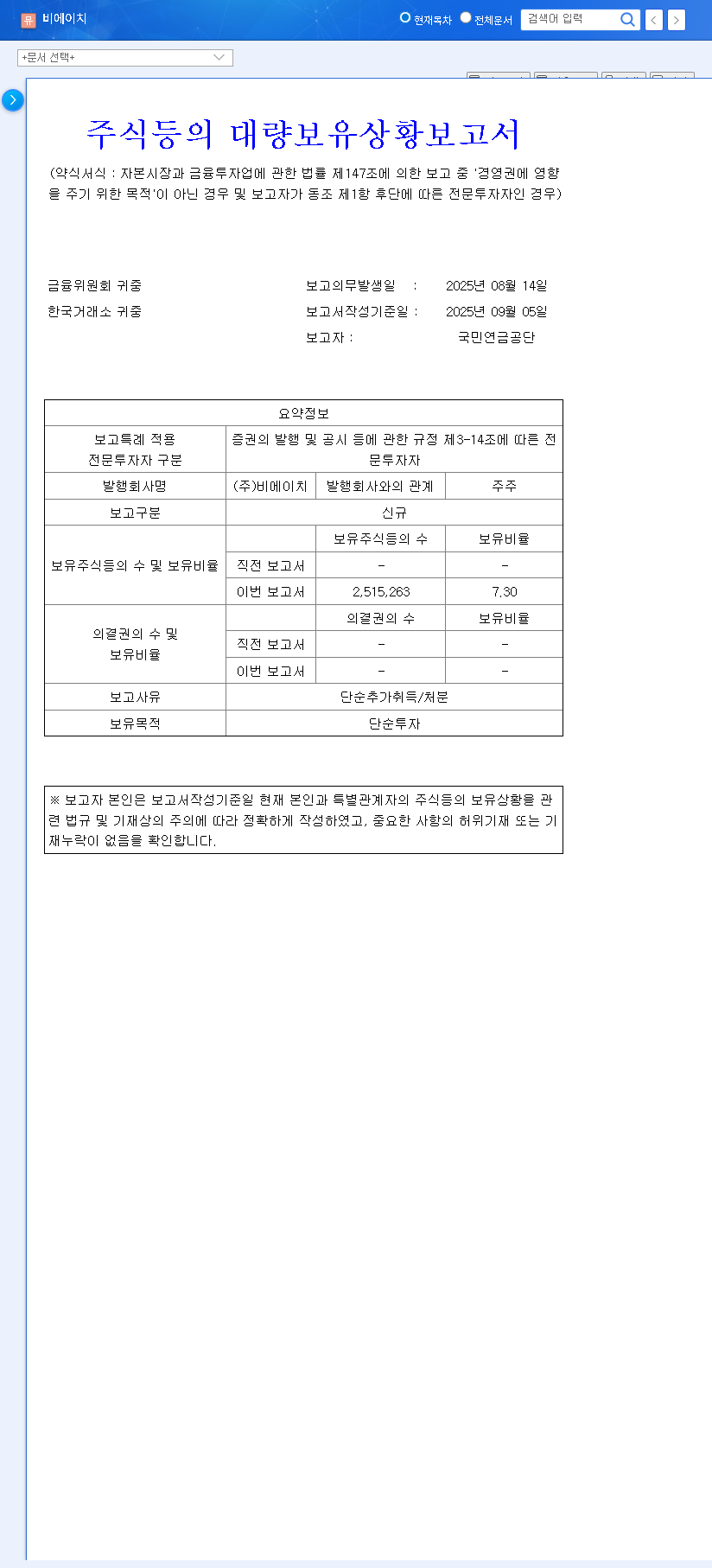
    Investors in BH (090460) are facing a classic market puzzle. On one hand, the National Pension Service (NPS), one of South Korea’s most influential institutional investors, has disclosed a significant 7.30% stake in the company. On the other, BH’s recent financial performance reveals troubling signs, including declining revenue and a shift to operating losses. This development creates a critical question: Is the NPS investment in BH a vote of long-term confidence or merely a passive portfolio adjustment that overlooks fundamental weaknesses? This comprehensive BH stock analysis will dissect these conflicting signals, explore the company’s core business challenges, and provide a strategic action plan for potential and current investors.

    The NPS Stake: Understanding the Institutional Signal

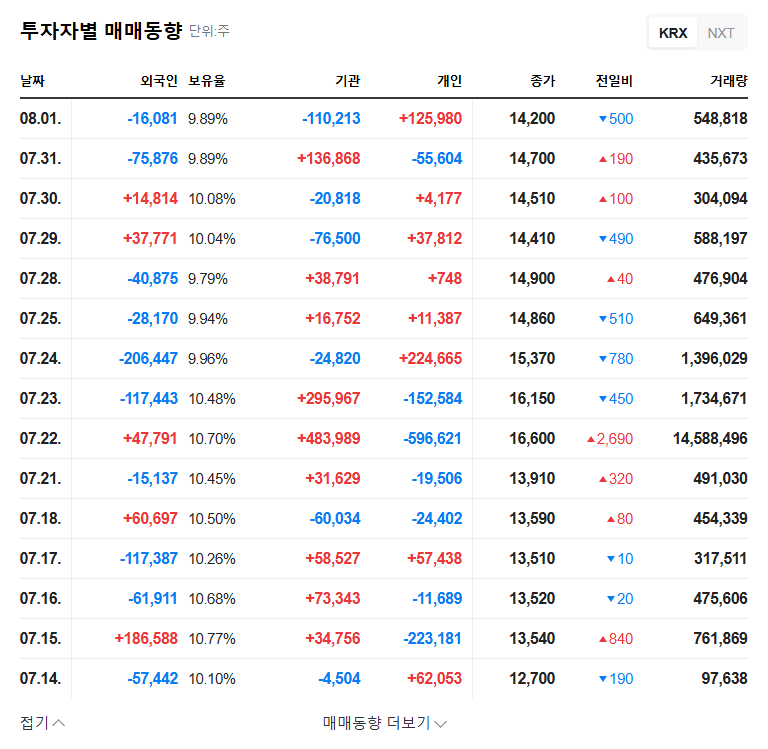
    On October 1, 2025, the investment community took note as the National Pension Service reported its acquisition of a 7.30% ownership stake in BH Co., Ltd. According to the Official Disclosure filed with the DART system, the stated purpose of the holding is ‘simple investment.’ This classification is key; it indicates that NPS does not intend to actively participate in management but is holding the shares as part of its broader investment strategy. While not an activist move, a significant investment from a stable, long-term player like the NPS is often interpreted as a positive endorsement of a company’s underlying value and future growth prospects. It can enhance credibility and improve stock liquidity by signaling to the market that a thorough due diligence process has likely been conducted.

    An NPS investment often serves as a powerful, albeit passive, endorsement. It suggests a belief in long-term fundamental value that may transcend short-term market noise or poor quarterly results.

    The Reality Check: BH’s Financial & Operational Hurdles

    Despite the positive institutional signal, the recent performance of BH (090460) paints a starkly different picture. The company’s first-half results for 2025 were deeply concerning, casting a shadow over the optimism generated by the NPS news. A closer look at the two primary business segments reveals significant challenges.

    FPCB Division Under Pressure

    The Flexible Printed Circuit Board (FPCB) business, a core revenue driver, has been struggling. This is largely due to a global slowdown in the smartphone market and softening demand for high-end FPCBs used in premium devices. To regain momentum, BH must pivot towards higher-value products like RF FPCB (for 5G) and build-up FPCB, which offer better margins and are critical for next-generation electronics. The success of this transition is paramount for a financial turnaround.

    Automotive Electronics Division Stalls

    While the market for automotive wireless chargers is growing with the EV boom, BH’s division has faced setbacks. The company has experienced delays in securing new automotive clients and expanding its portfolio of high-power charging products. This has led to deteriorating profitability, contributing to the company’s overall operating loss of 9.327 billion KRW in the first half of 2025. Compounding these issues were foreign currency translation losses, highlighting the company’s vulnerability to macroeconomic volatility.

    Investor Action Plan: A Prudent Strategy for BH Stock

    Given the mixed signals, a hasty investment decision would be unwise. A prudent approach requires careful monitoring of specific fundamental improvements. For a deeper understanding of these market signals, you can review our guide on how to analyze institutional investor filings.

    Short-Term: A Cautious ‘Wait-and-See’ Approach

    In the immediate term, it is best to observe the market’s reaction and wait for concrete news. The conflicting data points—poor earnings vs. institutional buying—are likely to create short-term volatility. Resist the urge to trade based on the NPS news alone and instead watch for official company announcements regarding new orders or cost-saving initiatives.

    Mid- to Long-Term: Focus on Key Performance Indicators (KPIs)

    The ultimate success of an investment in BH (090460) depends on the company’s ability to execute a turnaround. Monitor the following KPIs in upcoming quarterly reports and investor calls:

    • FPCB Business Turnaround: Look for evidence of increased production of high-value products and, most importantly, an improvement in the division’s operating margin.
    • Automotive Client Wins: Any announcements of new contracts with major automotive manufacturers would be a significant positive catalyst.
    • Cost & Efficiency Improvements: Watch for management’s discussion of specific measures taken to reverse the operating loss and improve productivity.
    • Macroeconomic Factors: Pay attention to exchange rate trends and global IT demand forecasts from authoritative sources like Reuters or Bloomberg.

    Conclusion: A Bet on Recovery

    In conclusion, the NPS investment in BH should be viewed as a signal of potential long-term value, not a trigger for immediate investment. The pension fund’s long investment horizon allows it to look past current difficulties. For individual investors, however, the red flags from BH’s recent performance cannot be ignored. The investment attractiveness of BH (090460) is entirely contingent on its ability to navigate current headwinds and demonstrate a tangible turnaround in its core operations. Diligent monitoring of the key fundamentals will be the deciding factor for any successful investment strategy.

    (090460) NPS Investment in BH (090460): A Deep Dive Analysis for Investors 관련 이미지
  • BH’s After-Hours Block Trade: Opportunity or Risk? Investment Strategies Unveiled


    What Happened? – Analysis of BH’s After-Hours Block Trade

    On September 16, 2025, BH recorded a significant after-hours block trade of 1,646,054 shares, totaling ₩29.4 billion. Financial investors bought, while other corporations sold. What impact will this transaction have on the market?

    Why Did This Happen? – Background and Fundamental Analysis

    BH’s first-half 2025 results were disappointing, with declining sales and a shift to an operating loss. The main cause was a general decline in sales in the FPCB business segment, and foreign exchange fluctuations and foreign exchange losses also had a significant impact. High debt-to-equity ratio remains an ongoing concern. However, the growth potential of RF/Build-up FPCB and the automotive electronics division are positive aspects.

    So What Happens Next? – Market Impact and Investment Strategies

    This block trade presents both a positive aspect, the inflow of buying by financial investors, and a negative aspect, the poor performance. In the short term, there is a possibility of a stock price increase due to the buying by financial investors, but the process of absorbing the sold volume and future earnings improvement will be critical. In the medium to long term, attention should be paid to the growth potential of FPCB and automotive electronics businesses, while closely monitoring debt-to-equity ratio management and foreign exchange risk.

    Investor Action Plan

    • Short-term investment: Be aware of increased stock price volatility, observe the process of absorbing the sold volume, and pay attention to the next quarter’s earnings announcement.
    • Mid- to long-term investment: Monitor the growth potential of the FPCB and automotive electronics business, debt-to-equity ratio management, and foreign exchange risk hedging strategies.


    FAQ

    Why is BH’s after-hours block trade important?

    Because a transaction of ₩29.4 billion, far exceeding the usual trading volume, can have a significant impact on stock price volatility. While the purchase by financial investors is a positive signal, it should be considered in conjunction with the company’s fundamentals.

    What is the outlook for BH’s future stock price?

    In the short term, there is a possibility of a rise due to the buying by financial investors, but in the medium to long term, whether or not fundamentals improve is important. In particular, the next quarter’s earnings and management of foreign exchange volatility are key variables.

    What should investors be aware of when investing in BH?

    Investors should carefully monitor high debt-to-equity ratios, foreign exchange volatility, and earnings improvements. It is also necessary to continuously analyze the competitive environment of the FPCB market and the growth potential of the automotive electronics division.


  • BH’s KRW 14.4B Stock Buyback: A Turning Point for Share Price?


    BH's KRW 14.4B Stock Buyback: A Turning Point for Share Price? 대표 차트 이미지


    1. What Happened? BH Announces Stock Buyback!

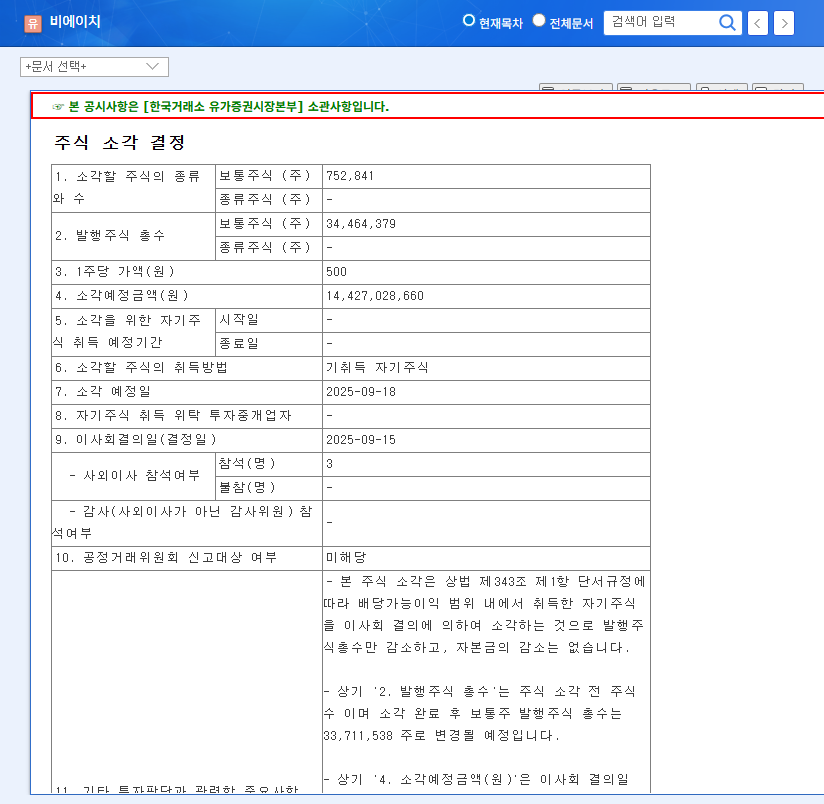
    BH announced on September 18, 2025, that it will buy back 752,841 common shares (2.35% of market capitalization), totaling KRW 14.4 billion. This repurchase utilizes previously acquired treasury stock.

    2. Why? Background and Implications

    This buyback is interpreted as a response to the company’s weak performance in the first half of 2025. Sales decreased by 58.8% year-on-year, and operating income recorded a loss of KRW 9.3 billion. In this context, the stock buyback demonstrates BH’s commitment to enhancing shareholder value and improving investor sentiment.

    3. What’s Next? Analyzing Short-Term/Long-Term Impacts

    Short-term, there is potential for upward momentum in the stock price due to positive market reaction to the shareholder return policy. However, the long-term share price hinges on the recovery of the FPCB business and the growth of the automotive electronics business. While the automotive segment shows growth potential, it’s not yet substantial enough to offset the FPCB slump. Macroeconomic conditions (exchange rates, interest rates, raw material prices) and uncertainties in the IT market will also influence the stock price.

    4. Investor Action Plan

    • Short-term investors: Focus on stock price movements immediately after the buyback announcement and consider short-term profit-taking strategies.
    • Long-term investors: Closely monitor FPCB business recovery, automotive business growth, macroeconomic indicators, etc.

    Disclaimer: This content is not investment advice, and all investment decisions are the responsibility of the investor.


    FAQ

    What is a stock buyback?

    A stock buyback, or share repurchase, is when a company buys its own shares back from the marketplace, reducing the number of outstanding shares and increasing the value per share.

    Do stock buybacks always have a positive impact on the stock price?

    While it can be interpreted as a positive signal in the short term, the long-term stock price depends on the company’s performance and fundamentals.

    What is the outlook for BH?

    The key variables are the recovery of the FPCB business and the growth of the automotive electronics division. Macroeconomic conditions and IT market trends also need close monitoring.


    BH's KRW 14.4B Stock Buyback: A Turning Point for Share Price? 관련 이미지
    BH's KRW 14.4B Stock Buyback: A Turning Point for Share Price? 관련 이미지


  • BH Corp’s ₩29.8B Treasury Stock Disposal: Opportunity or Risk?


    BH Corp's ₩29.8B Treasury Stock Disposal: Opportunity or Risk? 대표 차트 이미지


    1. What Happened? Treasury Stock Disposal Announced

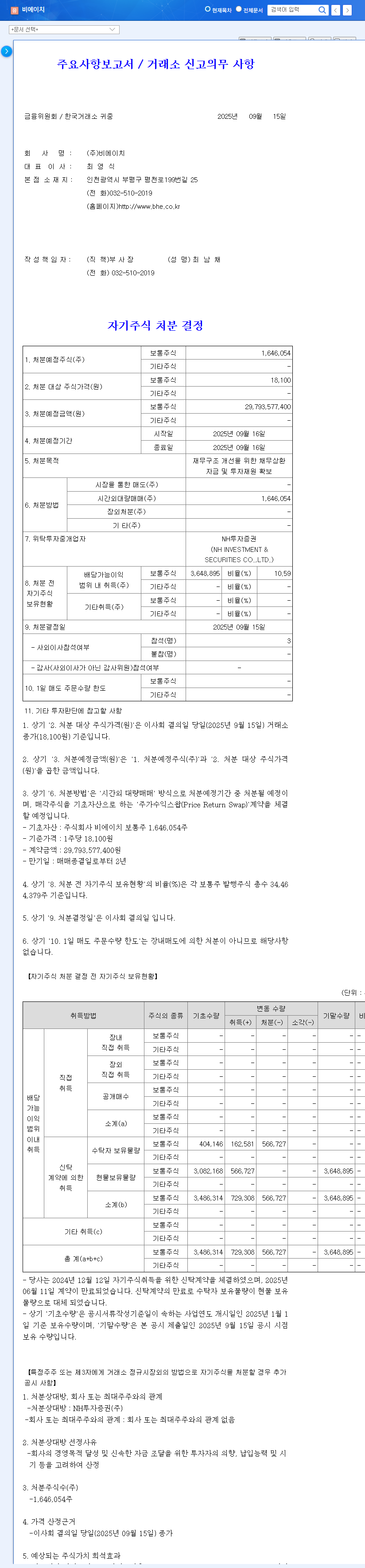
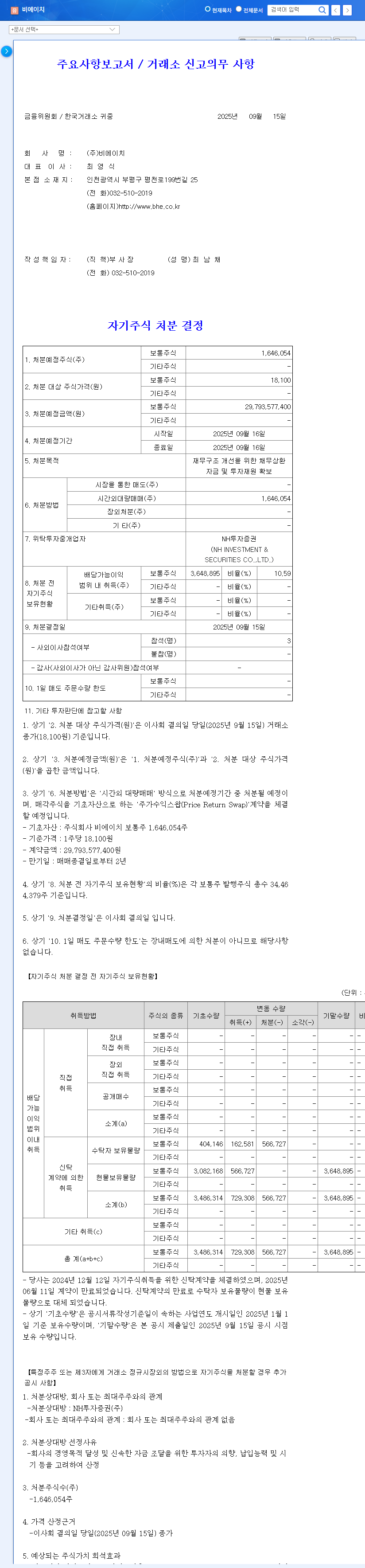
    On September 15, 2025, BH Corp announced the disposal of 1,646,054 shares of treasury stock, amounting to ₩29.8 billion. The stated purpose is to improve the financial structure through debt repayment and secure investment funds for future growth drivers.

    2. Why the Disposal? Background and Objectives

    For the first half of 2025, BH Corp reported revenue of ₩722.1 billion (down 58.8% YoY), an operating loss of ₩9.3 billion (a shift from profit to loss), and a net loss of ₩21.7 billion (also a shift to loss). Both the FPCB and automotive electronics divisions experienced declining sales, rising cost ratios, and increased fixed cost burdens, impacting profitability. The treasury stock disposal aims to strengthen the financial position and secure funds for future investments, notably a planned ₩20 billion investment in FPCB business expansion.

    3. What’s the Impact? Analyzing the Positives and Negatives

    • Positive Impact: The ₩29.8 billion raised can repay debt and improve the financial structure. It also strengthens the financial foundation for future growth drivers, such as the FPCB business expansion.
    • Potential Negative Impact: The disposal can lead to stock dilution due to the increased number of outstanding shares. Combined with recent poor performance, it could be perceived negatively by the market, potentially putting downward pressure on the stock price.

    4. What Should Investors Do? Investment Strategy Recommendations

    • Short-Term Strategy: Be mindful of potential short-term stock price volatility following the announcement. Monitor market reactions and any further disclosures before making investment decisions.
    • Mid- to Long-Term Strategy: Continuously monitor BH Corp’s fundamentals, including a potential turnaround in the FPCB and automotive electronics businesses, new order wins, and technological advancements.


    FAQ

    What is treasury stock disposal?

    It’s the sale of a company’s own stock that it holds in its treasury.

    How does treasury stock disposal affect stock price?

    It can lead to a decrease in stock price due to dilution as the number of outstanding shares increases. However, depending on the purpose and the use of funds, it can have a positive impact.

    What is the purpose of BH Corp’s treasury stock disposal?

    To improve the financial structure by repaying debt and secure investment funds for future growth.


    BH Corp's ₩29.8B Treasury Stock Disposal: Opportunity or Risk? 관련 이미지
    BH Corp's ₩29.8B Treasury Stock Disposal: Opportunity or Risk? 관련 이미지


  • BH (090460) Announces Treasury Stock Disposal: What Does it Mean for Investors?


    BH (090460) Announces Treasury Stock Disposal: What Does it Mean for Investors? 대표 차트 이미지


    1. What Happened? BH Announces KRW 27 Billion Treasury Stock Disposal

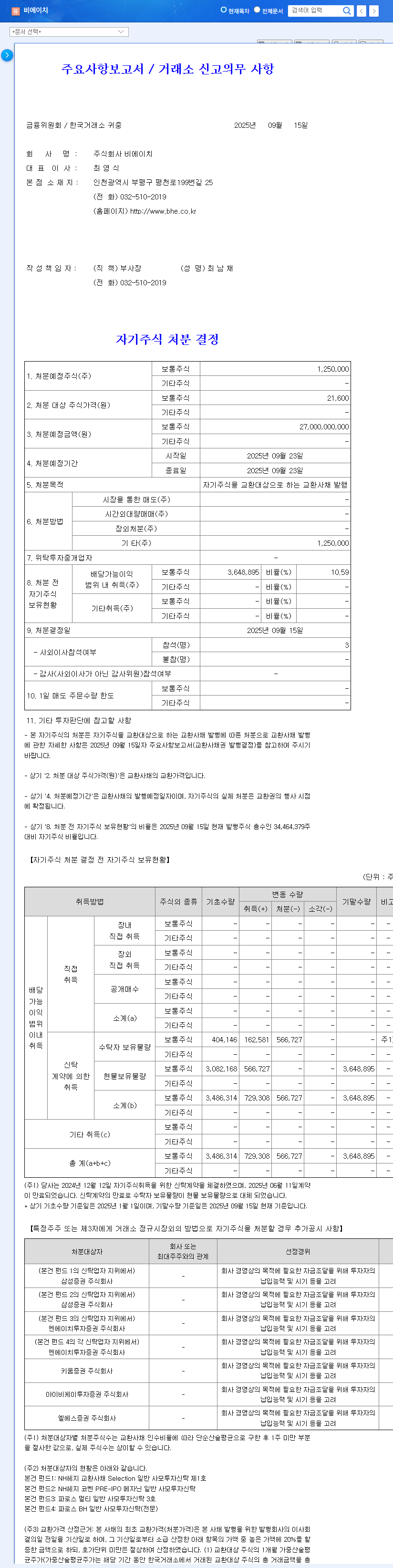
    On September 15, 2025, BH announced its decision to dispose of 1,250,000 treasury shares, equivalent to approximately KRW 27 billion. The purpose is to issue exchangeable bonds with the treasury stock as the underlying asset, a strategy for capital procurement.

    2. Why? The Need for Funding Amidst Underperformance

    BH’s performance in the first half of 2025 was disappointing. Operating profit turned negative due to declining sales in the FPCB division, rising raw material prices, and increased manufacturing costs. High debt ratios and increasing inventory levels are also a burden. This treasury stock disposal is likely a strategic move to improve the company’s financial structure and secure funds for future investments.

    3. What’s Next? Analyzing the Potential Impact

    • Positive Aspects: Alleviation of short-term financial burden, potential for securing future growth drivers.
    • Negative Aspects: Possibility of shareholder value dilution, increased market uncertainty, uncertain performance improvement.

    The extent of share dilution will depend on the conversion terms and timing of the exchangeable bonds. The effectiveness of the capital raised in improving performance will be crucial.

    4. What Should Investors Do? Action Plan

    • Focus on Performance Improvement: Monitor the recovery of demand in the FPCB division and growth in the automotive electronics division.
    • Check Exchangeable Bond Terms: Understand the conversion terms and the potential risk of share dilution.
    • Monitor the Macroeconomic Environment: Keep an eye on changes in interest rates, exchange rates, and market conditions.
    • Re-evaluate Company Value: Reassess BH’s value considering its underperformance and the treasury stock disposal.


    FAQ

    Why does treasury stock disposal negatively impact stock prices?

    Treasury stock disposal can lead to an increase in the number of outstanding shares, which can dilute the value per share. It can also be interpreted as a sign that the company is struggling to raise capital.

    Are there any positive aspects to BH’s treasury stock disposal?

    Yes, raising capital can improve the company’s financial structure and secure funding for future growth investments. However, the efficient utilization of the raised capital is critical.

    What should investors watch out for when investing in BH?

    It’s important to closely monitor performance improvements, the terms of the exchangeable bonds, and changes in the macroeconomic environment. Reassessing the company’s value is also crucial for making informed investment decisions.


    BH (090460) Announces Treasury Stock Disposal: What Does it Mean for Investors? 관련 이미지
    BH (090460) Announces Treasury Stock Disposal: What Does it Mean for Investors? 관련 이미지


  • BH issues ₩27B convertible bonds: Impact on stock price & investment strategy


    BH issues ₩27B convertible bonds: Impact on stock price & investment strategy 대표 차트 이미지


    What Happened? – BH Announces ₩27 Billion Convertible Bond Issuance

    BH announced on September 15, 2025, the issuance of ₩27 billion in private convertible bonds. The conversion price is set at ₩21,600, with the conversion period starting on October 23, 2025. Major investors include LS Securities, Kiwoom Securities, and IBK Investment & Securities.

    Why Issue Convertible Bonds? – Securing Funds for Growth Momentum

    BH, a specialist in FPCB (Flexible Printed Circuit Board), is seeking growth in the automotive electronics sector. The funds raised through this convertible bond issuance are planned for R&D investment expansion, new facility investment (₩20 billion for machinery), and operating funds. The investment is expected to enhance BH’s competitiveness in the RF-PCB field, which is essential for OLED displays and addresses the trend of miniaturization in the FPCB market.

    Impact on Stock Price? – Coexistence of Opportunities and Risks

    • Positive aspects:
    • Expectation of improved financial structure and secured long-term growth momentum through fund procurement
    • Positive signal for future growth potential through investment expansion, creating expectations for stock price increase
    • Negative/Cautionary aspects:
    • Difficulty in realizing the value of convertible bonds without a stock price increase due to the gap between the conversion price (₩21,600) and the current price (₩16,811)
    • Concerns about potential stock dilution due to the increase in the number of issued shares upon conversion (estimated at approximately 4.3%)
    • Increased burden on profitability improvement due to recent operating loss and external factors such as raw material price and exchange rate volatility

    What Should Investors Do? – Thorough Analysis and Long-Term Perspective

    • Thorough analysis of fundamentals and potential for stock price increase
    • Accurate understanding of convertible bond conditions and conversion mechanisms to identify potential risks
    • Continuous monitoring of exchange rate and raw material price fluctuations
    • Focus on the company’s long-term growth potential rather than short-term volatility


    Frequently Asked Questions (FAQ)

    What are convertible bonds?

    Convertible bonds are a type of bond that gives the holder the option to convert them into shares of the issuing company’s stock. Investors can hold the bonds until maturity and receive interest payments, or they can convert them into stock within a specified timeframe to potentially profit from price appreciation.

    What is the outlook for BH’s stock price?

    While the convertible bond issuance has a positive aspect of securing investment funds for growth, the stock price outlook remains uncertain given recent poor performance and external environment volatility. Careful analysis of fundamentals and market conditions is crucial.

    What are the key investment considerations?

    It is important to make investment decisions considering factors such as the gap between the conversion price and current stock price, potential stock dilution, the company’s profitability improvement, and changes in the external environment.


    BH issues ₩27B convertible bonds: Impact on stock price & investment strategy 관련 이미지
    BH issues ₩27B convertible bonds: Impact on stock price & investment strategy 관련 이미지


  • DKT Q2 2025 Earnings Analysis: A Sign of Rebound?

    1. DKT Q2 2025 Earnings: Key Highlights

    DKT reported revenue of KRW 118.8 billion and operating profit of KRW 8.2 billion in Q2 2025. This represents a 37.4% and 228% increase, respectively, compared to Q1.

    2. What Drove the Improved Performance?

    • Easing impact of the smartphone market’s off-season and resolution of Samsung Display’s flagship model launch delay
    • Continued growth in the automotive segment
    • Stabilization of raw material prices and efficient cost management

    3. Market Conditions and DKT’s Performance

    While high interest rates persisted in the US and Europe, South Korea slightly lowered its base rate. Raw material prices and exchange rates stabilized compared to Q1. These factors collectively influenced DKT’s performance.

    4. Key Takeaways for Investors

    • Positive Factors: Increased revenue and operating profit, stabilized raw material prices
    • Negative Factors: Continued market uncertainty, undisclosed net profit

    The future recovery of the smartphone market and continued growth in the automotive segment will be key factors determining DKT’s growth. Further analysis is needed after the disclosure of net profit. Risk analysis related to transactions with BH, the largest shareholder, is also crucial.

    Frequently Asked Questions

    • Q: What were DKT’s Q2 revenue and operating profit?
      A: Revenue was KRW 118.8 billion and operating profit was KRW 8.2 billion.
    • Q: What were the main drivers of the improved performance?
      A: Key factors include the easing impact of the smartphone market’s off-season, growth in the automotive segment, and stabilization of raw material prices.
    • Q: What should investors be aware of?
      A: Prudent investment decisions are necessary considering continued market uncertainties and the undisclosed net profit.
  • BH (090460) Q3 2025 Earnings Analysis: Net Loss and Investment Strategy

    1. What Happened? Q3 Earnings Summary

    BH reported Q3 2025 revenue of KRW 389.7 billion (vs. estimated KRW 405.1 billion, -4%), operating profit of KRW 16 billion (vs. estimated KRW 13.1 billion, +22%), and a net loss (vs. estimated KRW 10.3 billion profit). While operating profit exceeded expectations, the net loss is a negative signal for the market.

    2. Why These Results? Analyzing the Underperformance

    The primary driver of the net loss is the underperformance of the FPCB division. Rising raw material costs and low production capacity utilization negatively impacted profitability. High dependence on Samsung Display also poses a risk. The automotive electronics division performed relatively better, but sales still declined year-on-year.

    • External Factors: Rising raw material prices, unfavorable exchange rates, interest rate hikes, and the global economic slowdown also contributed to the negative performance.

    3. What Now? Investment Strategy Recommendations

    The outlook for BH remains uncertain. Key factors to monitor include the FPCB division’s ability to improve competitiveness and diversify its customer base, the growth trajectory of the automotive electronics division, and the evolving macroeconomic environment. We recommend the following investment strategy:

    • Risk Management: Construct a portfolio that accounts for the elevated financial risks.
    • Monitoring: Continuously monitor raw material prices, exchange rates, interest rates, and global economic conditions.
    • Information Gathering: Review the detailed Q3 report and assess future management plans.

    Currently, a ‘wait-and-see’ approach or a strategy focused on ‘risk management’ is more appropriate than outright ‘buy’.

    Q: What’s the key takeaway from BH’s Q3 earnings?

    A: While operating profit beat estimates, the shift to a net loss is the key concern, primarily driven by the struggles of the FPCB division.

    Q: Is it a good time to invest in BH?

    A: A cautious approach focusing on ‘wait-and-see’ or ‘risk management’ is recommended given the uncertain outlook.

    Q: What’s the outlook for BH?

    A: The outlook is uncertain and depends on various factors like the FPCB division’s competitiveness, customer diversification, the growth of the automotive electronics division, and macroeconomic conditions.