Tag: Automotive Industry

  • (003620) KG Mobility Corp. Stock: Unpacking the Algeria Plant News & 2025 Financials for Investors

    (003620) KG Mobility Corp. Stock: Unpacking the Algeria Plant News & 2025 Financials for Investors

    Recent headlines surrounding KG Mobility Corp. (KRX: 003620) and a potential overseas plant in Algeria sent ripples through the investment community. When the company issued a swift clarification, it left many wondering about the true story and the future direction of KG Mobility stock. This analysis cuts through the noise, providing a detailed breakdown of the disclosure, its real impact on the company’s fundamentals, and a strategic outlook for current and potential investors.

    We’ll examine the facts, dissect the latest financial data, and explore the critical factors that will shape the trajectory of KG Mobility Corp. in the competitive automotive landscape.

    The Report vs. Reality: Deconstructing the ‘Algeria Plant’ News

    On November 10, 2025, a report from the Seoul Economic Daily claimed that KG Mobility Corp. was planning to construct a new manufacturing plant in Algeria. This news naturally generated excitement, suggesting aggressive global expansion and a significant capital investment. However, the company was quick to address the rumors on the very same day.

    The Official Clarification

    In an official disclosure, KG Mobility Corp. clarified the situation with precision. The key takeaway is that reports of the company directly building plants in Algeria, Saudi Arabia, or Vietnam were untrue. You can view the Official Disclosure (DART) for complete details.

    The truth is that an overseas buyer of KG Mobility is constructing a semi-knocked-down (CKD) assembly plant. This project is entirely separate from and unrelated to any direct facility investment by KG Mobility Corp. itself.

    A CKD operation involves exporting vehicle parts to be assembled in a foreign country, which is a common and capital-efficient way to enter new markets. This is fundamentally different from a company building its own multi-billion dollar factory from the ground up.

    Analyzing KG Mobility Corp.’s Financial Health (2025 H1 Report)

    The clarification provides crucial context when viewed alongside the company’s recent financial performance. According to its 2025 half-year report, KG Mobility Corp. is on a fragile but promising path to recovery. Avoiding a massive capital expenditure on a foreign plant aligns with this cautious strategy.

    Key Financial Highlights

    • Profitability Milestone: Despite a 4.3% year-on-year revenue decrease to KRW 1.903 trillion, the company achieved a significant turnaround, posting an operating profit of KRW 13.7 billion. This shift from loss to profit is a major positive indicator driven by cost-saving initiatives.
    • Improved Liquidity: Total assets and current assets both saw an increase, suggesting better short-term financial stability.
    • Persistent Challenges: Despite these gains, the company still carries a significant accumulated deficit. Improving net profitability and resolving this historical burden remains a critical, long-term challenge.
    • Market Dynamics: While domestic market share has seen a slight decline, the growth in overseas exports via strategies like CKD partnerships is a vital component of its growth story. For broader context on industry trends, see the latest analysis from leading automotive industry reports.

    Investment Strategy: What This Means for KG Mobility Stock

    So, how should an investor interpret these events? The clarification is ultimately a net positive, as it removes uncertainty and demonstrates prudent financial management. The market often punishes ambiguity more than it does conservative growth.

    Positive and Negative Implications

    • Positive: By not engaging in direct facility investment, KG Mobility Corp. avoids straining its balance sheet. This allows the company to focus capital on R&D for its EV lineup and strengthening its core operations—a financially sound decision.
    • Negative: The initial excitement from the erroneous report may lead to a short-term stock price correction as speculative investors adjust their expectations. However, this volatility is separate from the company’s long-term fundamental value.

    Investment Opinion: Hold

    Our assessment leads to a ‘Hold’ recommendation. The clarification is a positive sign of stability, but the company must still prove it can translate its operational turnaround into sustained profitability and market share growth. Investors should monitor the following:

    • Upcoming Earnings Reports: Look for continued profitability and growth in overseas sales figures.
    • New Vehicle Performance: The market success of upcoming models, especially in the eco-friendly segment, will be a key catalyst. You can learn more about this in our deep dive into the KG Mobility product pipeline.
    • Macroeconomic Factors: Keep an eye on exchange rate fluctuations (KRW/USD, KRW/EUR) and global automotive demand.

    In conclusion, while the ‘Algeria plant’ story was a flash in the pan, the reality it revealed is one of a company making careful, deliberate moves. For investors, the focus should not be on speculative headlines but on the steady, fundamental improvements that will define the long-term success of KG Mobility Corp.
    (003620) KG Mobility Corp. Stock: Unpacking the Algeria Plant News & 2025 Financials for Investors 관련 이미지
  • (005380) Hyundai Motor Co Overseas IR 2025: A Deep-Dive Analysis for Investors

    (005380) Hyundai Motor Co Overseas IR 2025: A Deep-Dive Analysis for Investors

    Global automotive powerhouse HYUNDAI MOTOR CO is gearing up for a pivotal moment. The upcoming HYUNDAI MOTOR CO overseas IR (Investor Relations) event, scheduled for November 2025, is far more than a routine earnings call. It’s a strategic initiative designed to communicate the company’s future vision, reinforce investor confidence, and potentially trigger a significant re-evaluation of its corporate value on the global stage. For savvy investors, this event is a critical one to watch.

    This comprehensive guide provides a deep-dive analysis into the background of this event, explores Hyundai’s robust fundamentals, assesses the market impact, and offers a strategic action plan. We’ll unpack what this means for Hyundai investor relations and what you need to monitor to make informed decisions.

    The Event: Hyundai’s Q3 2025 Non-Deal Roadshow

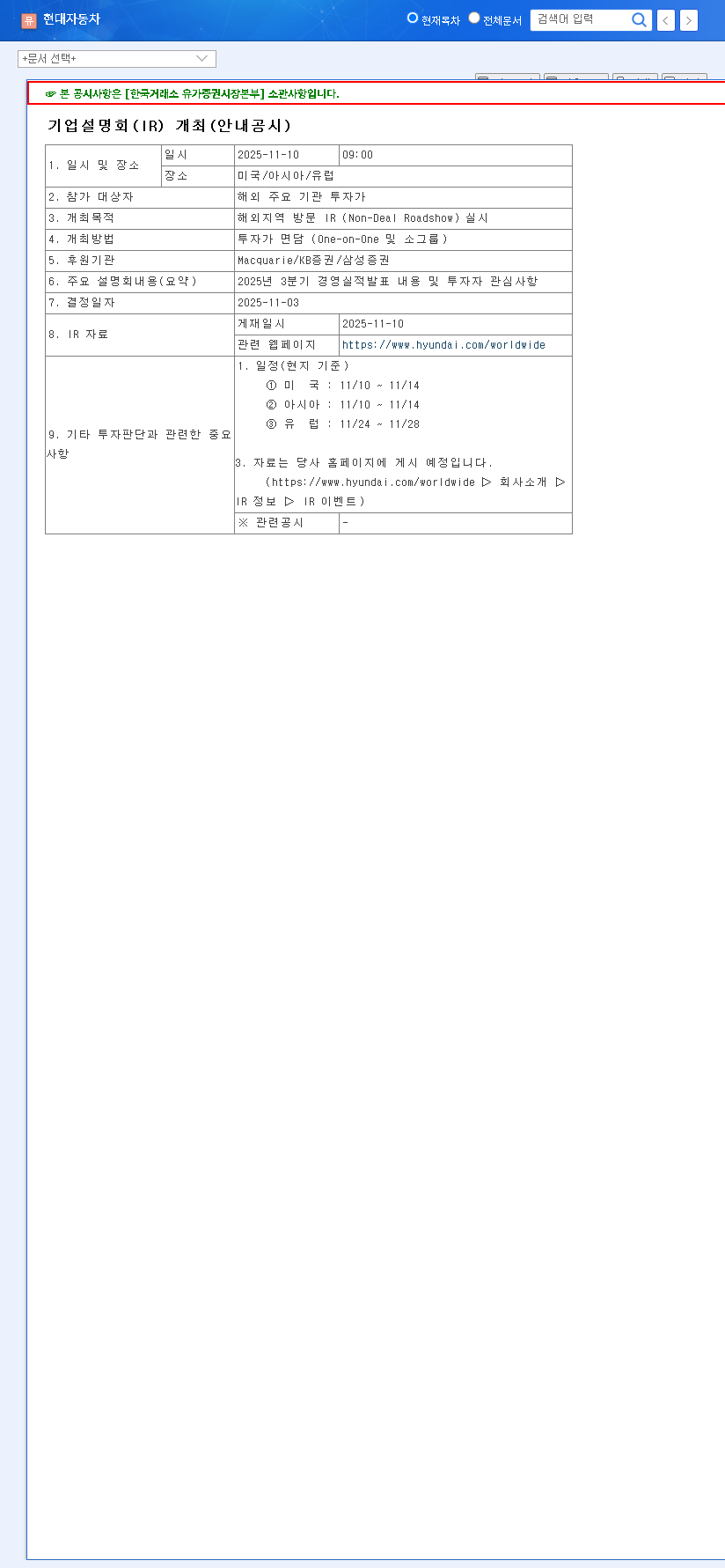
    Hyundai Motor Co has officially announced its plan to conduct an overseas Investor Relations event. This will take the form of a Non-Deal Roadshow (NDR) and is scheduled for November 10, 2025, at 9:00 AM. The primary objective is to present the Q3 2025 management performance results and engage directly with overseas investors. Unlike a deal-focused roadshow, an NDR is about building relationships and transparently communicating strategy without the immediate pressure of raising capital. For the official filing on this event, please see the Official Disclosure on DART.

    Why This IR Matters: Analyzing Hyundai’s Strengths

    The timing of this HYUNDAI MOTOR CO overseas IR is significant. It comes at a point where the company is demonstrating fundamental strengths and navigating a complex global market. Understanding these factors is key to appreciating the potential impact of the event.

    Robust Company Fundamentals

    Hyundai is not just a car manufacturer anymore; it’s transforming into a future mobility solutions provider. This shift is reflected in its core fundamentals:

    • Strategic Diversification: The company is expanding beyond traditional auto sales. The official inclusion of ‘Hydrogen business and other related businesses’ in its articles of incorporation and a growing portfolio of consolidated subsidiaries (from 166 to 170) signal a serious commitment to future energy and mobility.
    • Commitment to Shareholder Value: Management is actively pursuing shareholder-friendly policies. This includes strategic treasury stock buybacks and cancellations, consistent dividends, and a stated goal of achieving over 35% Total Shareholder Return (TSR).
    • Aggressive R&D Investment: Dedicating approximately 2.4% of sales to Research & Development, Hyundai is accelerating its development of next-generation technologies, including autonomous driving, robotics, and advanced eco-friendly vehicle platforms. Check out our deep dive into Hyundai’s EV strategy for more.
    • Strengthened Global Competitiveness: With record-breaking performance in key markets like the U.S. and prestigious accolades such as multiple World Car Awards, Hyundai’s product lineup and brand image have never been stronger.

    This overseas IR is a platform for Hyundai to articulate how its strategic investments in hydrogen, EVs, and shareholder returns are converging to create a compelling long-term growth story, aiming to elevate its Hyundai corporate value beyond that of a traditional automaker.

    Navigating Global Market Dynamics

    The global landscape presents a mix of tailwinds and headwinds. A favorable USD/KRW exchange rate is a boon for exports, while stable interest rates in major economies help manage costs. However, regional market performance varies, a key topic for discussion during the IR.

    Potential Impact on Hyundai’s Corporate Value & Stock

    The Bull Case: Positive Outcomes

    A successful IR event could lead to several positive outcomes. By directly addressing investor concerns and clearly outlining a robust growth strategy for the coming years, Hyundai can significantly improve market sentiment. This can attract new institutional investment, providing a stable long-term shareholder base. Ultimately, a clear and convincing narrative backed by strong Hyundai Q3 2025 earnings could lead the market to re-evaluate the company’s stock, closing the valuation gap with its global peers.

    The Bear Case: Potential Risks

    Conversely, there are risks to consider. If the Hyundai Q3 2025 earnings fall short of analyst expectations, or if the forward-looking guidance is perceived as weak, it could trigger a negative reaction. Furthermore, an inability to provide persuasive answers on competitive pressures in the EV market or the impact of geopolitical risks could undermine confidence. External factors, such as a sudden global economic downturn, could also mute any positive impact from the IR. For more on market trends, high-authority sources like Reuters Business provide excellent macroeconomic analysis.

    Investor Action Plan: What to Watch

    This HYUNDAI MOTOR CO overseas IR represents a significant data point for any Hyundai stock analysis. Investors should monitor the following closely:

    • Management’s Narrative: Pay close attention to the tone and details in the presentation and the subsequent Q&A session. Are they confident? Do they provide clear metrics?
    • Guidance on Future Growth: Look for specific targets related to EV sales, market share in key regions, and progress in the hydrogen and UAM (Urban Air Mobility) sectors.
    • Macroeconomic Context: Continue to track key indicators like exchange rates, commodity prices, and consumer confidence in Hyundai’s primary markets (North America, Europe, India).
    • Analyst Reactions: Monitor post-event reports and ratings changes from major investment banks and financial analysts.

    Frequently Asked Questions (FAQ)

    Q1: When is the HYUNDAI MOTOR CO overseas IR being held?

    The event is scheduled for November 10, 2025, at 9:00 AM. It will be conducted as a Non-Deal Roadshow for overseas investors.

    Q2: What is the primary purpose of this investor relations event?

    The main goal is to share the Q3 2025 financial and operational results, communicate the company’s long-term strategic vision, and strengthen relationships with the global investment community.

    Q3: What are the key positive fundamentals for Hyundai?

    Key strengths include strategic business diversification into areas like hydrogen, a strong commitment to shareholder returns, significant and ongoing R&D investment, growing global brand power, and a stable financial structure.

    Q4: What should investors monitor after the IR concludes?

    Investors should analyze the full presentation, track key macroeconomic variables (exchange rates, interest rates), and monitor progress on Hyundai’s stated future growth drivers, such as its EV, hydrogen, and advanced mobility initiatives.

    (005380) Hyundai Motor Co Overseas IR 2025: A Deep-Dive Analysis for Investors 관련 이미지
  • (000270) KIA CORPORATION Stock Analysis (2025): H1 Report & Treasury Share Insights

    (000270) KIA CORPORATION Stock Analysis (2025): H1 Report & Treasury Share Insights

    An in-depth analysis of KIA CORPORATION stock reveals a company at a pivotal moment, underscored by two major announcements: the release of its H1 2025 Semi-Annual Report and a strategic decision on the disposal of treasury shares. For investors evaluating Kia’s future, these events offer a crucial roadmap. This article provides a comprehensive breakdown of Kia’s financial health, its aggressive electrification strategy, and the implications of its latest corporate actions, presenting a clear investment thesis for both short-term and long-term horizons.

    Kia’s strong fundamentals, combined with strategic initiatives like employee stock compensation and a focus on high-value electric vehicles, create a compelling, long-term growth narrative despite macroeconomic headwinds.

    H1 2025 Report: A Foundation of Solid Growth

    The H1 2025 Semi-Annual Report paints a picture of a company executing its strategy effectively. The financial and operational highlights confirm a positive outlook, reinforcing the underlying strength of the KIA CORPORATION stock thesis. Key performance indicators point towards sustained momentum and robust health.

    Key Strengths from the Report

    • Impressive Profitability: Kia reported a revenue growth of 6.7% year-over-year, driven by strong sales of higher-margin HEV/EV models in key markets. Critically, it maintained a strong operating profit margin of 10.1%, a testament to its brand power and increasing Average Selling Price (ASP).
    • Electrification Leadership: The strategic launches of new models like the EV3 and EV4 are not just expanding the portfolio; they are winning accolades and capturing market share. The EV3’s ‘Car of the Year’ awards signal strong consumer acceptance and technological leadership in a competitive space. For more on this trend, see our deep dive into the global EV market.
    • Rock-Solid Financials: With a low debt-to-equity ratio of 64.58% and significant cash reserves, Kia’s balance sheet is exceptionally healthy. This financial stability provides a crucial buffer against market volatility and funds continued R&D in future technologies like autonomous driving.

    Treasury Stock Disposal: A Smart Move for Long-Term Value

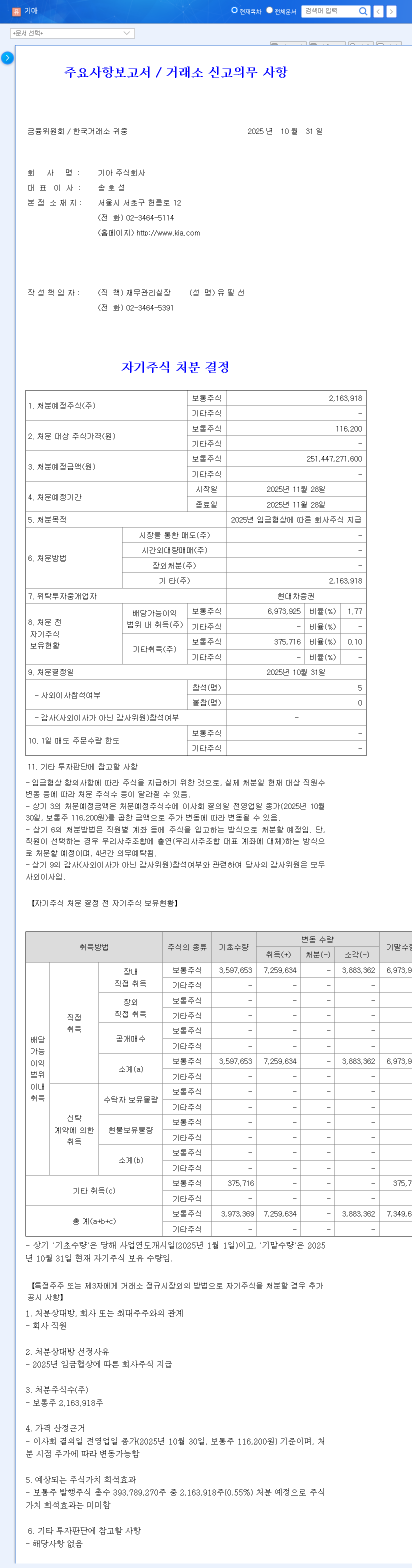
    On October 31, 2025, Kia announced its decision to dispose of 2,163,918 shares of treasury stock, valued at approximately KRW 251.4 billion. While the term “disposal” can sound alarming, the context is overwhelmingly positive. This move is not a dilutive sale on the open market but a strategic allocation designed to bolster the company from within.

    The primary purpose is to grant shares to employees as part of the 2025 wage agreement. This aligns employee interests directly with shareholder value, fostering a culture of ownership and incentivizing performance. As detailed in the Official Disclosure (DART), the volume represents a tiny fraction of total outstanding shares, meaning any direct impact on the KIA CORPORATION stock price will be negligible. The long-term benefit of a highly motivated workforce, however, is significant.

    Investment Outlook & Key Risk Factors

    Synthesizing the data, we maintain a ‘Buy’ recommendation for KIA CORPORATION stock, particularly for investors with a long-term perspective. The company’s proactive strategy and robust fundamentals position it well to navigate the evolving automotive landscape.

    Investment Thesis Summary

    • Short-Term (6-12 Months): Expect potential volatility due to macroeconomic factors like interest rates and geopolitical tensions. However, the momentum from new model launches (EV3, Tasman) could provide positive catalysts and support the current stock valuation.
    • Long-Term (2-5 Years): The growth potential is exceptionally high. Kia’s leadership in electrification, strong brand equity, and stable financial footing are powerful drivers for future appreciation in the KIA CORPORATION stock price.

    Potential Risks to Monitor

    No investment is without risk. Investors should monitor the following external factors:

    • Global Economic Conditions: A significant global recession could dampen consumer demand for new vehicles. For broader context, refer to analyses from authoritative sources like Bloomberg’s economic outlook.
    • Intensifying EV Competition: The EV market is becoming crowded. Kia must continue to innovate to fend off price pressure from both legacy automakers and new entrants.
    • Protectionist Trade Policies: The implementation of high tariffs in key markets, particularly North America, could impact sales and profitability.

    Disclaimer: This analysis is based on publicly available information. Investment decisions carry risk, and investors are responsible for their own choices. It is advisable to consult with a financial professional before making any investment.

    (000270) KIA CORPORATION Stock Analysis (2025): H1 Report & Treasury Share Insights 관련 이미지
  • (000270) KIA Q3 2025 Earnings Report: Deep Dive into Revenue Growth vs. Profit Decline | Investor Analysis

    (000270) KIA Q3 2025 Earnings Report: Deep Dive into Revenue Growth vs. Profit Decline | Investor Analysis

    The latest KIA Q3 2025 earnings report paints a complex picture for investors. On one hand, the company showcased impressive top-line growth, with revenues surging past market expectations. However, this positive news was overshadowed by a significant and concerning drop in profitability, with both operating and net profits falling far short of forecasts. This deep-dive analysis dissects the numbers, explores the underlying causes, and provides a strategic outlook for those holding or considering Kia stock.

    A Tale of Two Metrics: Revenue Soars, Profits Stumble

    The third quarter of 2025 was a story of divergence for Kia Corporation. While sales momentum remained strong, the ability to convert that revenue into profit faced severe headwinds, raising questions about the company’s near-term Kia profitability.

    The Bright Spot: Record-Breaking Revenue

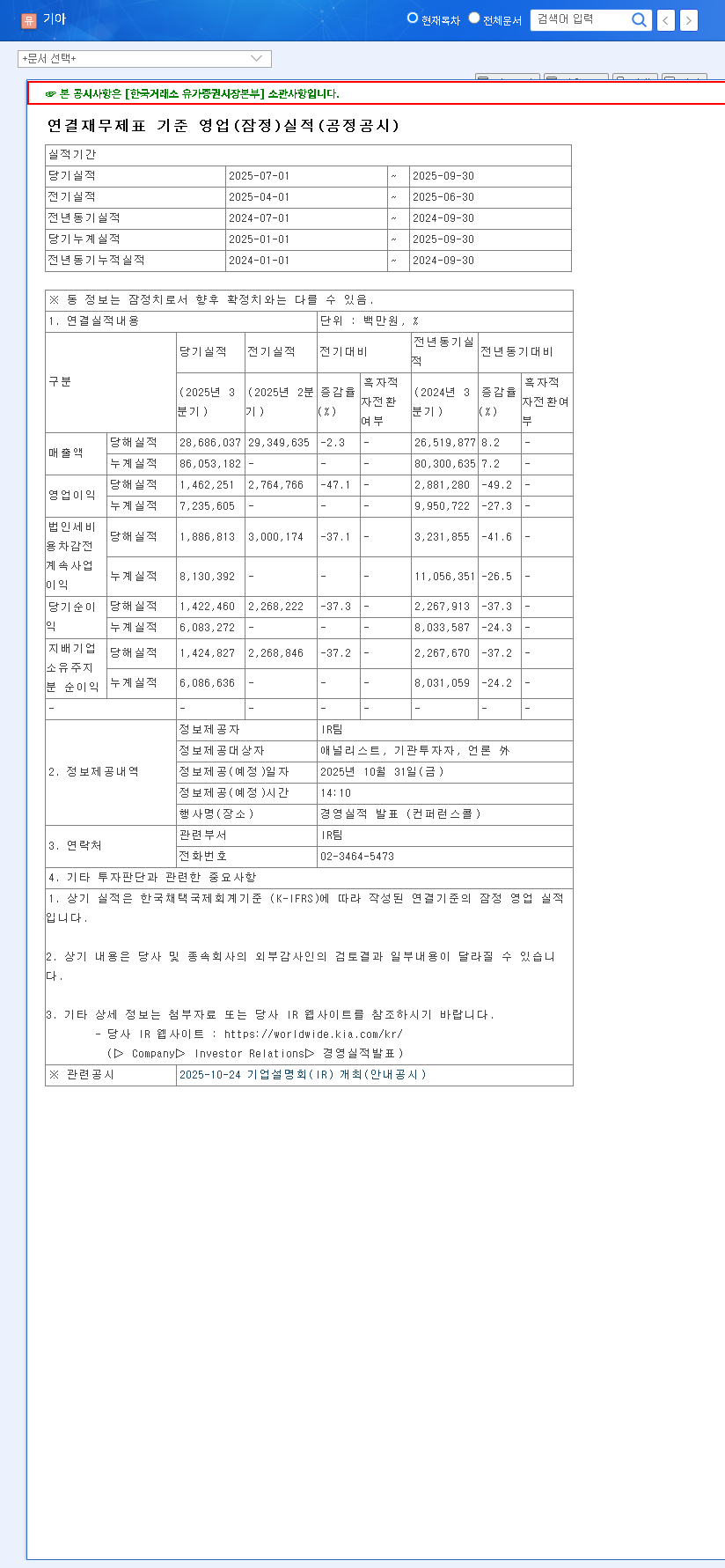
    Kia reported robust revenue of KRW 28,686 billion, beating the consensus estimate of KRW 28,094 billion by 2.1%. This success was fueled by several key factors, including a strategic expansion of Hybrid (HEV) and Electric Vehicle (EV) sales in developed markets and a sustained increase in the Average Selling Price (ASP). The North American market, in particular, was a significant contributor to this strong sales performance. For a detailed breakdown of the consolidated financial results, see the Official Disclosure.

    The Red Flag: A Sharp Decline in Profitability

    Despite the revenue beat, the profit figures were alarming. Operating profit landed at KRW 1,462 billion, a staggering 30.2% miss compared to the expected KRW 2,095 billion. Similarly, net profit came in at KRW 1,424 billion, missing forecasts by 24.0%. This stark underperformance signals significant cost pressures and operational challenges that investors cannot ignore.

    While top-line growth is encouraging, the dramatic erosion of profit margins in the Kia earnings report is the central story. It highlights a difficult operating environment that is testing the resilience of global automakers.

    Unpacking the Profitability Problem: A Perfect Storm of Headwinds

    The decline in Kia’s profitability wasn’t caused by a single issue, but rather a confluence of external market forces and internal cost pressures. Understanding these factors is crucial for any Kia stock analysis.

    • U.S. Market Tariffs: Increased tariffs and related costs in the crucial U.S. market, a risk highlighted in previous reports, appear to have fully materialized, directly impacting the bottom line.
    • Intensifying Competition: The global automotive landscape is more competitive than ever. Price pressures from legacy automakers and new EV players are squeezing margins across the board.
    • Raw Material Volatility: Fluctuations in the prices of key commodities, from crude oil to precious metals used in manufacturing, have introduced significant cost uncertainty.
    • Unfavorable Exchange Rates: A strong USD against the KRW (exceeding 1,400 KRW/USD) and a weak Euro created adverse conditions, negatively impacting the value of international earnings when converted back to Korean Won.

    Beyond the Numbers: Kia’s Long-Term Vision and Growth Strategy

    Despite the short-term profitability challenges revealed in the KIA Q3 2025 earnings, the company’s long-term fundamentals and strategic direction remain promising. Kia is not standing still; it is actively investing in its future to navigate the evolving automotive market.

    The company’s accelerated transition to electrification is at the heart of its strategy. With significant investments in R&D and a pipeline of new EV models, Kia is positioning itself to capture a larger share of the growing electric vehicle market. This proactive approach is a direct response to global trends and consumer demand, a topic explored in depth in our guide to investing in the EV sector.

    Investor Action Plan: Navigating the Road Ahead for Kia Stock

    The Q3 earnings miss will likely cause short-term volatility and downward pressure on Kia’s stock price. However, savvy investors will look beyond the immediate reaction to assess the mid-to-long-term potential.

    Key Metrics to Watch

    Moving forward, investors should closely monitor the following areas to gauge Kia’s ability to navigate its challenges and execute its growth strategy. For broader industry context, refer to automotive trend reports from Reuters.

    • Cost Management: Look for evidence of effective cost-control measures to counter inflationary and tariff-related pressures.
    • EV Sales Velocity: Track the sales performance of new EV models. Strong adoption is key to the long-term narrative.
    • Margin Improvement: Monitor operating and net profit margins in subsequent quarters. A stabilization or recovery would be a strong bullish signal.
    • Geopolitical & Macro Factors: Keep an eye on exchange rate trends and any changes in international trade policy.

    In conclusion, while the Q3 report presented a significant profitability challenge, Kia’s strong revenue stream and clear focus on electrification provide a solid foundation for future growth. The key question is whether management can successfully navigate the current storm to unlock that long-term value.

    Disclaimer: This report is based on publicly available information. Investors bear sole responsibility for their investment decisions. The content of this report is not intended as an investment recommendation.

    (000270) KIA Q3 2025 Earnings Report: Deep Dive into Revenue Growth vs. Profit Decline | Investor Analysis 관련 이미지
  • (352910) Obigo Inc. Stock (352910): Analysis of Shareholder Stake Increase & Investment Outlook

    (352910) Obigo Inc. Stock (352910): Analysis of Shareholder Stake Increase & Investment Outlook

    An important development for Obigo Inc. stock (KOSDAQ: 352910) has caught the attention of the market. A recent disclosure revealed a major shareholder has increased their stake, signaling a clear intent to influence management. This move, while seemingly small, provides a crucial signal for anyone conducting an Obigo investment analysis. For investors, it’s essential to look beyond the headline and understand the deeper implications for this innovative smart car software company.

    This comprehensive analysis will explore the significance of this major shareholder stake increase, evaluate Obigo’s current financial health and market position, and provide a strategic outlook for potential and current investors. We will break down the fundamental strengths and challenges facing Obigo to help you make an informed decision.

    The Shareholder Event: A Signal of Confidence

    On October 28, 2025, Jang Young-joon, a major shareholder of Obigo Inc., announced a purchase of additional shares, increasing his ownership from 31.62% to 31.63%. The stated purpose, according to the Official Disclosure (DART), was to influence management. While the 0.01% increase may seem negligible, its public declaration is a strategic move. In the world of corporate governance, this is a powerful signal. It demonstrates the shareholder’s unwavering belief in the company’s long-term vision and serves to bolster management stability against external pressures.

    This action is less about the percentage and more about the message: a key stakeholder is doubling down on Obigo’s future, which can significantly boost market sentiment and perceived stability.

    Understanding Obigo Inc. and its Market Position

    Pioneering the Smart Car Software Ecosystem

    Obigo Inc. is not just another tech company; it’s a critical player at the heart of the automotive revolution. The company specializes in developing foundational smart car software platforms. Think of it as the operating system for your car’s infotainment, navigation, and connectivity services. Their focus on expanding services based on Android Automotive OS (AAOS) places them at the forefront of a major industry shift. As cars become more like smartphones on wheels, the demand for robust, secure, and feature-rich software platforms like Obigo’s is set to explode. They are also innovating in high-growth areas like AI-driven mobility and subscription-based services, positioning themselves for future revenue streams.

    A Look at the Financials and Projections

    A thorough Obigo investment analysis must consider its financial trajectory. The company successfully achieved a turnaround in 2023, a significant milestone. However, forecasts suggest a temporary dip in 2024, with potential revenue stagnation and a shift to an operating loss. This is often typical for growth-focused tech companies investing heavily in R&D and market expansion. The key takeaway for investors is the strong projection for a rebound in 2025, with expectations of both revenue and profit improvements. The stability of its sales pipeline and resolution of past financial uncertainties are positive indicators that support this long-term growth narrative.

    • 2023 Performance: Successfully achieved a financial turnaround, demonstrating core business viability.
    • 2024 Outlook: Expected investment phase, potentially leading to a temporary slowdown in reported profits.
    • 2025 Projections: Anticipated return to growth in both revenue and profitability.

    Investment Thesis: What This Means for You

    Short-Term vs. Long-Term Impact on Obigo Inc. Stock

    In the short term, the news of the major shareholder stake increase is likely to improve investor sentiment and could provide positive momentum for the 352910 stock price. However, seasoned investors know that long-term value is built on fundamentals, not headlines. The real story will be told by Obigo’s ability to execute its business plan. The stabilized management, reinforced by shareholder confidence, creates a more favorable environment for achieving long-term goals, such as securing new automotive partnerships and successfully launching new AI and subscription services. This move could also enhance the company’s credibility in future fundraising or M&A activities, which is an often-overlooked benefit.

    Strategic Action Plan for Investors

    While this event is a net positive, a prudent investment strategy requires ongoing diligence. We recommend focusing on the following key performance indicators:

    • Quarterly Financial Reports: Monitor revenue growth and profit margins closely to see if the 2025 recovery is on track. Read our hypothetical guide on How to Analyze Tech Company Earnings Reports for more tips.
    • New Contract Wins: Watch for announcements of new partnerships with major automakers, as this is a primary driver of future revenue.
    • Competitive Landscape: Keep an eye on competitors in the smart car software space. According to sources like Gartner’s latest mobility report, this is a rapidly evolving market.
    • Shareholder Activity: Continue to track filings for any further significant changes in the major shareholder’s position.

    In conclusion, the major shareholder’s increased stake in Obigo Inc. is a strong vote of confidence. For investors, this should be seen as a positive signal that complements a broader investment thesis based on the company’s intrinsic value and its pivotal role in the future of the automotive industry. A long-term perspective focused on fundamental business performance will be key to navigating your investment in Obigo Inc. stock.

    (352910) Obigo Inc. Stock (352910): Analysis of Shareholder Stake Increase & Investment Outlook 관련 이미지
  • (003620) KG Mobility Corp. Q3 2025 IR Briefing: A Deep Dive for Investors

    (003620) KG Mobility Corp. Q3 2025 IR Briefing: A Deep Dive for Investors

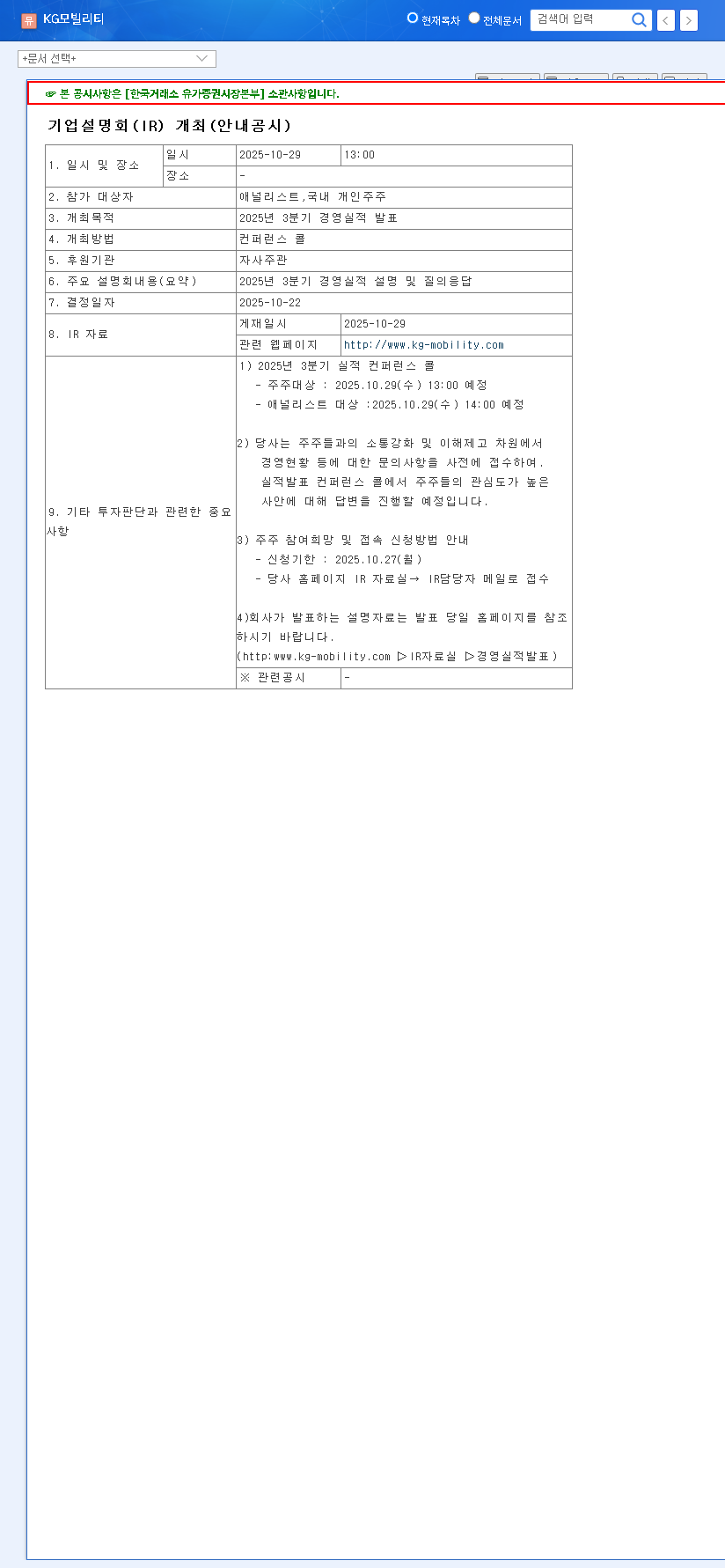
    On October 29, 2025, at 1:00 PM, all eyes in the automotive investment community will turn to the KG Mobility Corp. Q3 2025 IR briefing. This event is far more than a routine financial disclosure; it’s a critical inflection point for the company and its stakeholders. For investors, this briefing will provide the first clear, official data on the company’s performance, strategic direction, and outlook in a market rife with uncertainty. This analysis will equip you with the essential insights needed to navigate the potential outcomes and make informed decisions about investing in KG Mobility Corp.

    Why This IR Briefing is a Must-Watch

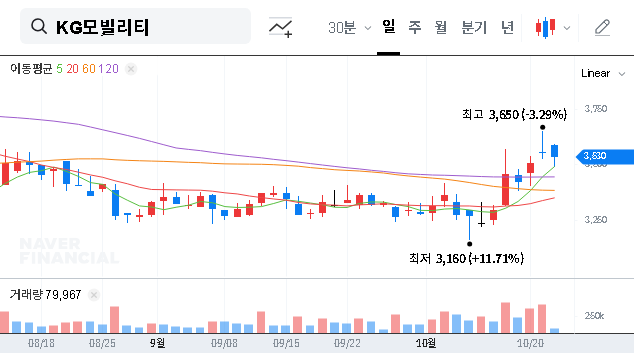
    The automotive industry is navigating a complex landscape of electric vehicle transitions, supply chain volatility, and shifting consumer preferences. For a company like KG Mobility Corp. (Market Cap: KRW 714.4 billion), each quarterly report is a vital health check. The upcoming KG Mobility investor relations event is particularly significant due to a current scarcity of market consensus and detailed brokerage reports. This information vacuum elevates the importance of direct communication from the company’s management.

    Investors are seeking clarity on key performance indicators, such as sales figures for new models, progress in international markets, and advancements in profitability. The answers provided during the Q&A session could dramatically influence the KG Mobility stock valuation for months to come. While comprehensive data is limited, crucial information can be found in the company’s official filings. Official Disclosure: Click to view DART report.

    This isn’t just about the numbers from the last three months. It’s about the narrative for the next twelve. Management’s tone, transparency, and strategic vision during the Q&A will be as critical as the earnings per share.

    Potential Stock Impact: Scenarios to Consider

    The release of the KG Mobility financial results will likely trigger significant stock price volatility. Here’s a breakdown of potential scenarios:

    • The Bullish Scenario: If KG Mobility reports stronger-than-expected earnings—driven by robust new car sales, improved profit margins, or successful cost-cutting initiatives—it could serve as a powerful catalyst for the stock. Positive forward guidance, such as announcing new market entries or accelerated EV development, would further amplify investor confidence.
    • The Bearish Scenario: Conversely, a performance that falls short of the limited expectations could lead to a sharp decline. Sluggish sales, rising operational costs, or increased investment expenses without immediate returns might spook investors. A cautious or uncertain tone from management during the Q&A could exacerbate a sell-off.
    • The Mid- to Long-Term View: Beyond the immediate reaction, the content of this IR will be a foundational reference for long-term investment decisions. The results and outlook presented will prompt a reassessment of KG Mobility Corp.’s fundamental value, influencing institutional and retail investment flows over subsequent quarters.

    Key Risk Factors for Prudent Investors

    Before and after the KG Mobility Corp. Q3 2025 IR, it’s vital to consider the broader context and potential headwinds:

    • Macroeconomic Environment: The auto industry is highly sensitive to economic cycles. Factors like global interest rates, inflation, and consumer spending power can significantly impact sales. For an overview of current trends, investors often consult sources like Bloomberg’s economic forecasts.
    • Intensified Competition: KG Mobility operates in a fiercely competitive market, facing pressure from both established legacy automakers and agile EV startups. Its market share and profitability are under constant threat.
    • Information Asymmetry: The current lack of detailed analyst coverage means that retail investors may be at a disadvantage. The IR event is a chance to level the playing field, but any unexpected negative news could disproportionately affect the stock.

    A prudent approach involves cross-referencing the company’s statements with independent analysis. For a deeper look at their historical performance, you can review our full analysis of KG Mobility’s previous quarter.

    Frequently Asked Questions (FAQ)

    When will KG Mobility Corp.’s Q3 2025 IR be held?

    KG Mobility Corp. is scheduled to host its Investor Relations (IR) briefing for the Q3 2025 financial results on October 29, 2025, at 1:00 PM.

    What are the main objectives of this IR?

    The primary objectives are to announce the Q3 2025 financial and operational performance and to provide clarity on the company’s current status and future strategic plans through a Q&A session with investors.

    How might the IR earnings announcement affect KG Mobility Corp.’s stock price?

    If the announced results exceed market expectations, it could lead to positive stock price movements. If they fall short, it could have a negative impact. Management’s forward-looking statements during the Q&A will also significantly influence investor sentiment.

    What key risk factors should investors consider?

    Key risks include uncertainty due to limited public information, negative shifts in the macroeconomic environment, intense competition in the global automotive market, and the possibility of unexpected negative disclosures on the day of the IR.

    (003620) KG Mobility Corp. Q3 2025 IR Briefing: A Deep Dive for Investors 관련 이미지
  • Samwon Kangjae’s Q2 2025 Earnings: Revenue Growth vs. Profitability Decline – Investment Strategy Analysis

    1. Q2 2025 Earnings: A Mixed Bag

    On August 14th, Samwon Kangjae reported its Q2 2025 earnings, with revenue at ₩95.8 billion, operating profit at ₩2.4 billion, and net income at ₩2.4 billion. While revenue grew compared to the same period last year, both operating and net income declined. The rise in the debt-to-equity ratio is a particular concern for financial health.

    2. Analyzing the Drivers: External Factors and Internal Challenges

    This mixed performance is a result of external factors such as uncertainty in the automotive industry and rising raw material prices, coupled with internal challenges in managing profitability. The global economic slowdown and unfavorable trade environment are impacting auto production, putting pressure on Samwon Kangjae’s sales. Furthermore, rising oil prices and tanker rates are adding to cost burdens.

    3. Investment Strategy: Proceed with Caution and Monitor Key Metrics

    The current investment recommendation for Samwon Kangjae is ‘Hold’. While revenue growth is positive, the declining profitability and financial health warrant a cautious approach. Investors should closely monitor key metrics like raw material prices, operating margin, debt-to-equity ratio, automotive industry trends, and new business development for informed investment decisions. Pay close attention to the company’s strategies for improving profitability, strengthening financial health, and adapting to the evolving industry landscape.

    Q: What was Samwon Kangjae’s revenue for Q2 2025?

    A: ₩95.8 billion, showing growth compared to the same period last year.

    Q: Why did operating profit decline?

    A: A combination of external factors like rising raw material prices and internal challenges in profitability management contributed to the decline.

    Q: Should I invest in Samwon Kangjae?

    A: The current recommendation is ‘Hold’, and investors should carefully monitor key profitability and financial health metrics.

  • SG Global (001380) Posts Surprise Earnings: A Turnaround Signal?

    1. What Happened with SG Global?

    On August 14, 2025, SG Global announced its preliminary earnings for the first half of 2025. With revenue of KRW 27.4 billion, operating profit of KRW 2.6 billion, and net income of KRW 1.5 billion, the company significantly surpassed market expectations of zero.

    2. What Drove the Surprise Earnings?

    SG Global’s surprising results are attributed to robust profitability in non-core businesses, such as gains from investment properties. However, core businesses, including seat parts and seats, experienced a significant decline in sales compared to the same period last year. The display business continues to record operating losses, remaining a source of concern.

    3. What’s Next for SG Global?

    SG Global’s future stock price will likely be influenced by various factors, including the recovery of the automotive industry, the visibility of new business performance, and the global economic landscape. Positive factors include the surprise earnings announcement and expectations of interest rate cuts. However, negative factors like the continuing downturn in the automotive industry and exchange rate volatility also exist.

    4. What Should Investors Do?

    In the short term, investors might anticipate upward momentum in the stock price due to the positive earnings announcement. However, in the medium to long term, it’s crucial to carefully monitor the company’s strategies for adapting to structural changes in the automotive industry and the actual performance of its new businesses. Prudent investment decisions should be made while keeping a close eye on changes in macroeconomic indicators such as interest rates, exchange rates, and international oil prices.

    What were SG Global’s earnings for the first half of 2025?

    SG Global announced surprising earnings for H1 2025, with revenue of KRW 27.4B, operating profit of KRW 2.6B, and net income of KRW 1.5B, significantly exceeding market expectations.

    What are SG Global’s core businesses?

    SG Global’s core businesses are seat parts and seats. However, they are currently facing difficulties due to the downturn in the automotive industry.

    What should investors consider when investing in SG Global?

    Investors should carefully monitor the recovery of the automotive industry, new business performance, and changes in macroeconomic indicators when considering investing in SG Global.

  • Hyundai Motor’s Q2 2025 Earnings Release: What Investors Need to Know

    What’s Happening?

    Hyundai Motor will release its Q2 2025 financial results and hold an investor relations (IR) meeting on August 18th. This Non-Deal Roadshow, targeted at overseas investors, will focus on the company’s performance and future growth strategies.

    Key Analysis Points

    The key question is whether the positive factors that drove Hyundai’s strong Q1 performance—increased vehicle sales, robust financial services, and a stable order backlog—will continue in Q2. Investors should pay close attention to updates on the company’s ‘2030 Strategy,’ including progress on SDV transition, expansion of eco-friendly energy businesses, and strengthening competitiveness in electric vehicles.

    Investment Strategies

    • Short-Term Strategy: Monitor the Q2 earnings announcement and the reaction of overseas investors. Positive results and market responses could create upward momentum for the stock.
    • Mid-to-Long-Term Strategy: Keep track of the specific implementation plans and results of the ‘2030 Strategy.’ Focus on achievements in technology development, new car launches, and production capacity expansion to inform investment decisions.

    Critical Factors to Consider

    Investors should also consider the evolving macroeconomic environment. Fluctuations in exchange rates, oil prices, and interest rates can significantly impact Hyundai’s performance and stock price. Furthermore, the intensifying competition in the global automotive market is a crucial factor to watch, as Hyundai needs to maintain its competitive edge.

    When will Hyundai announce its Q2 2025 earnings?

    The announcement is scheduled for August 18, 2025, at 9:00 AM KST.

    What are the key topics of this IR meeting?

    The meeting will cover Q2 2025 earnings and address investor concerns, particularly focusing on future growth strategies for overseas investors.

    What are the key investment considerations?

    Investors should consider the volatility of macroeconomic factors and the intensifying competition in the global automotive market. Careful analysis of the ‘2030 Strategy’ implementation and results is crucial.

  • Hyundai Motor’s Treasury Stock Disposal: Impact on Stock Price and the 2030 Strategy

    Treasury Stock Disposal: What Happened?

    Hyundai Motor will dispose of 3,333 treasury shares, worth approximately 700 million KRW, to fund executive incentives. The disposal size is insignificant compared to the total number of outstanding shares.

    Why the Disposal?

    This disposal aims to reward executives for their performance and enhance motivation. It is expected to have a positive impact on long-term corporate value growth. However, excessive incentive payments could harm shareholder value and require continuous monitoring.

    What’s the Impact?

    The short-term impact on the stock price is expected to be limited. However, factors such as the progress of the ‘2030 Strategy,’ the macroeconomic environment (raw material prices, exchange rates, interest rates, international logistics), and intensifying market competition can increase stock price volatility. The success of the ‘2030 Strategy’ is a key factor determining the stock price direction.

    • 2030 Strategy: Successful execution is crucial for long-term fundamentals.
    • Macroeconomic Environment: Changes in raw material prices, exchange rates, and interest rates require close monitoring for their impact on profitability.
    • Market Competition: Strategies to address intensifying competition are essential.

    Action Plan for Investors

    Investors should focus on the progress of the ‘2030 Strategy’ and macroeconomic variables rather than short-term stock price fluctuations. Assessing Hyundai’s long-term growth potential and establishing an appropriate investment strategy is crucial. Continuously monitoring and analyzing relevant information is essential for making informed investment decisions.

    Does treasury stock disposal negatively affect the stock price?

    The size of this disposal is very small compared to the total number of shares, so the short-term impact on the stock price is expected to be minimal.

    What is the ‘2030 Strategy’?

    It’s Hyundai Motor’s mid-to-long-term strategy to secure future growth engines. For more details, refer to Hyundai Motor’s official website.

    What should investors be aware of?

    Investors should continuously monitor the progress of the ‘2030 Strategy’, changes in the macroeconomic environment, and competitors’ activities.