Tag: Audit Opinion

  • (001080) MANHO ROPE & WIRE LTD Stock Analysis: MH Group’s Acquisition & Future Outlook

    (001080) MANHO ROPE & WIRE LTD Stock Analysis: MH Group’s Acquisition & Future Outlook

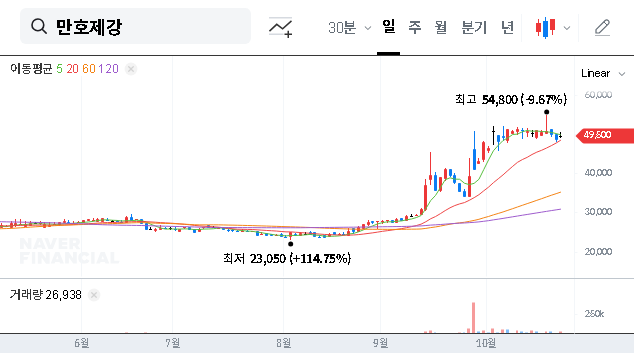
    The future of MANHO ROPE & WIRE LTD (만호제강) has been cast into a new light following a significant corporate maneuver that has captured the attention of the investment community. MH Group Holdings (‘MH Group’) recently acquired over one million shares, securing a formidable 24.82% stake. This move signals a potential change in management control and a pivotal turning point for a company that has grappled with financial credibility issues and challenging macroeconomic headwinds. This analysis will explore the profound implications of the MH Group acquisition on Manho Rope & Wire’s fundamentals, market sentiment, and long-term stock value.

    For investors seeking to re-evaluate their position on MANHO ROPE & WIRE LTD amidst market uncertainty, understanding the nuances of this development is crucial. We will dissect the potential upsides and inherent risks to provide a comprehensive outlook.

    The Landmark Acquisition: A New Chapter for MANHO ROPE & WIRE LTD

    On November 12, 2025, a landmark share purchase agreement was announced, confirming MH Group Holdings’ acquisition of 1,029,992 shares of MANHO ROPE & WIRE LTD. This transaction, detailed in the Official Disclosure, unequivocally signals MH Group’s strategic intent to either seize management control or exert substantial influence over the company’s direction. For a company that once faced the severe repercussion of an auditor’s disclaimer of opinion, the arrival of a new, powerful shareholder is a transformative event that could rewrite its corporate destiny.

    A Look Back: Manho’s Pre-Acquisition Financial Health

    Prior to this major shake-up, the Manho Rope & Wire stock was burdened by several fundamental weaknesses that undermined investor confidence. Understanding this context is vital to appreciating the scale of the challenge and opportunity ahead.

    1. Severe Financial Reporting Issues

    The company’s financial credibility was severely tarnished. Widespread errors were identified and corrected in its financial statements, spanning critical areas like revenue recognition, inventory valuation, and tax expenses. The most damaging event was receiving an ‘auditor’s disclaimer of opinion’ for its 71st fiscal year. This is one of the worst possible outcomes of an audit, indicating the auditor could not obtain sufficient evidence to form an opinion on the financial statements, raising major red flags about their reliability.

    2. Deteriorating Financial Indicators

    The accounting issues translated into stark numbers. Total capital plummeted by approximately 34.5 billion KRW, retained earnings fell by 35.5 billion KRW, and net profit decreased by 4.14 billion KRW at the end of the 71st fiscal year. In the subsequent 72nd fiscal year, revenue dropped by nearly 18% year-over-year, and the operating loss widened significantly, painting a grim picture of the company’s operational performance.

    The combination of unreliable financial reporting and worsening performance created a perfect storm of uncertainty, making the entry of a new major shareholder both a risk and a potential lifeline.

    The Double-Edged Sword: Future Under MH Group’s Influence

    The MH Group acquisition presents both a beacon of hope and a cloud of uncertainty for MANHO ROPE & WIRE LTD. The outcome will depend entirely on the new management’s strategy and execution.

    Potential Positive Impacts

    • Improved Governance: A new controlling shareholder has the power and incentive to overhaul management, enforce transparency, and resolve the lingering financial reporting issues to restore trust.
    • Strategic Restructuring: MH Group could inject fresh capital, divest underperforming assets, and pivot the business towards new growth engines, revitalizing a company that has struggled to adapt.
    • Financial Stabilization: Active financial support from a major shareholder can lead to improved liquidity and a healthier balance sheet, providing the stability needed for a long-term turnaround.

    Inherent Risks and Uncertainties

    However, the path to recovery is not guaranteed. The management transition process itself can create short-term volatility and operational disruptions. It remains to be seen if the new leadership can effectively navigate the deep-seated legacy issues and persistent macroeconomic pressures from global conflicts and rising costs. For more on this, you can learn about risks in corporate takeovers from authoritative financial sources like Bloomberg.

    Investor’s Playbook: Strategy for Manho Rope & Wire Stock

    For current and prospective investors, this event demands a cautious yet watchful approach. The Manho Rope & Wire stock price will likely experience heightened volatility in the short term as the market digests the news and awaits clarity on MH Group’s plans. Investors should not make rash decisions based on speculation. Instead, a strategic, long-term perspective is essential. For those interested in similar situations, we have an internal guide on how to analyze M&A deals.

    Key Actionable Steps for Investors

    • Monitor MH Group’s Actions: Pay close attention to official announcements regarding their management improvement strategies, financial support plans, and board appointments.
    • Watch for Key Turnaround Indicators: The most critical signal of recovery will be the attainment of an ‘unqualified audit opinion’ in future reports. This, combined with a verifiable turnaround in operating profit, will be the true test of the new management.
    • Prepare for Volatility: Acknowledge that the stock price may be unpredictable in the near term. A cautious, long-term investment horizon is paramount until a clear, positive trajectory is established.

    In conclusion, the acquisition of a major stake in MANHO ROPE & WIRE LTD by MH Group is a neutral turning point, laden with both immense potential and significant risk. The coming months will be critical in revealing whether this is the beginning of a successful corporate turnaround or another chapter of uncertainty.

  • Winia Aid Escapes Delisting Threat? Resuscitation Possibility Analysis and Investment Strategy

    1. What Happened to Winia Aid?

    Winia Aid faced delisting due to an ‘adverse’ audit opinion stemming from uncertainty about its ability to continue as a going concern. However, through restructuring and M&A (acquisition by the UAMCO-Hyundai Rental Care consortium), they improved their financial structure and finally received an ‘unqualified’ audit opinion, resolving the delisting issue. Now, only the Corporate Review Committee’s final decision remains.

    2. Why is it Important?

    The Corporate Review Committee’s decision is a key variable that will determine Winia Aid’s fate. If the listing is maintained, trading can resume, and stock prices may rise. However, if the decision is to delist, investors could face significant losses. Therefore, investors need thorough analysis of the Corporate Review Committee’s decision and careful investment judgment.

    3. So, What Will Happen?

    In the short term, stock price volatility is expected to increase depending on the Corporate Review Committee’s decision. In the medium to long term, if the listing is maintained, positive effects such as securing financial soundness, normalizing management, restoring business competitiveness, and regaining market trust can be expected. However, there are still challenges to overcome, such as declining sales and negative operating cash flow.

    4. What Should Investors Do?

    • Keep an eye on the Corporate Review Committee’s decision and the new management’s business plan.
    • Continuously monitor sales and profitability improvement, cash flow improvement, and financial soundness strengthening measures.
    • Carefully consider both potential risks and opportunities when making investment decisions.
    Q: Will Winia Aid be delisted?

    A: The reason for delisting has been resolved, but the final decision rests with the Corporate Review Committee. A decision is expected by September 12, 2025 (within 20 business days) or within 20 days of submitting the business improvement plan.

    Q: Is it okay to invest in Winia Aid?

    A: Investment decisions should be made carefully, considering the Corporate Review Committee’s decision, financial indicator improvement trends, and management’s business plan.

    Q: What are the future prospects for Winia Aid?

    A: If the listing is maintained, positive prospects such as secured financial soundness, normalized management, and restored business competitiveness can be expected. However, challenges remain, such as declining sales and negative operating cash flow.

  • NKMax Avoids Delisting…For Now: What Investors Need to Know

    1. What Happened with NKMax?

    On August 12, 2025, NKMax received a ‘qualified’ audit opinion, resolving the formal reason for delisting. However, due to capital impairment and other issues, a substantive review will proceed, and trading remains suspended.

    2. Weighing the Positives and Negatives

    Positive Factors:

    • Qualified Audit Opinion: Restores confidence in financial reporting
    • Positive Progress in Rehabilitation Proceedings: Increases the likelihood of survival
    • Resolution of Formal Delisting Reason: Offers hope for trading resumption

    Negative Factors:

    • Additional Reasons for Substantive Review and Continued Trading Suspension: Delisting uncertainty remains
    • Continued Capital Impairment: Concerns about financial soundness
    • Operating Losses and Decline in Sales: Urgent need for profitability improvement
    • Weaknesses in Internal Accounting Controls: Questions about management transparency

    3. What Should Investors Do?

    Investing in NKMax currently carries very high risk. Investors should closely monitor the results of the substantive review and the company’s efforts to improve its financial structure. ‘Sell’ or ‘Hold’ is recommended. Hasty investments could lead to significant losses.

    4. Key Points to Watch

    Investors should continuously monitor the following:

    • Results of the substantive review
    • Improvements in financial structure and profitability
    • Tangible results from new businesses
    • Strengthening of internal control systems

    Frequently Asked Questions

    Will NKMax be delisted?

    The formal reason for delisting has been resolved, but a substantive review is pending. The outcome of the review will determine whether NKMax is delisted.

    Should I buy NKMax stock now?

    The investment risk is currently very high, so ‘Sell’ or ‘Hold’ is recommended. It’s advisable to make investment decisions after confirming the results of the substantive review and improvements in fundamentals.

    Does NKMax have a chance of recovery?

    Rehabilitation proceedings are progressing positively, but financial difficulties such as capital impairment persist, making recovery uncertain.

  • NKMAX: ‘Unqualified’ Audit Opinion But 74.3% Capital Impairment – A Recovery or a Red Flag?

    1. What Happened?

    NKMAX submitted materials addressing its capital impairment status, reporting a 74.3% capital impairment ratio as of June 30, 2025, and receiving an ‘unqualified’ audit opinion.

    2. Why Does It Matter?

    While the ‘unqualified’ opinion is positive, the high capital impairment ratio indicates significant financial risk. The company’s past ‘disclaimer of opinion’ and history of non-compliant disclosures further erode investor confidence. Planned capital increases through rights offerings must be accompanied by genuine financial restructuring and tangible progress in core business operations.

    3. What Should Investors Do?

    Investors should carefully examine the details of the submitted resolution materials, the feasibility of the capital impairment resolution plan, and the clinical trial results of NKMAX’s core immunotherapy treatments. Given the company’s history of non-compliant disclosures, ongoing monitoring of management transparency is crucial. Avoid being swayed by short-term stock fluctuations and focus on a long-term assessment of the company’s fundamentals and financial stability.

    4. Investor Action Plan

    • Verify the feasibility of the capital impairment resolution plan.
    • Monitor clinical trial results and progress of core immunotherapy projects.
    • Continuously track financial restructuring progress.
    • Observe management transparency.
    • Prioritize long-term evaluation over short-term stock movements.

    Frequently Asked Questions

    What is NKMAX’s capital impairment ratio?

    As of June 30, 2025, it is 74.3%.

    What was the audit opinion?

    NKMAX received an ‘unqualified’ opinion.

    What is NKMAX’s main business?

    NKMAX is involved in developing immunocell therapeutics, immune diagnostic kits, health functional foods, and bio research reagents.

    What are the investment cautions?

    Investors should proceed with caution considering the high capital impairment ratio, past non-compliant disclosures, and uncertainties surrounding the core business.

  • Daedong Electronics Delisting: What Investors Need to Know

    1. Daedong Electronics Delisting: What Happened?

    Daedong Electronics received a ‘qualified’ audit opinion in both 2023 and 2024. The core issue was impairment of investment in an affiliate, ZEGNA-DAIDONG LIMITED. Despite submitting an improvement plan, the company failed to meet the exchange’s listing requirements, leading to the delisting on July 31st.

    2. Why the Delisting?

    A ‘qualified’ audit opinion raises serious questions about a company’s financial health. It hinders transparent information disclosure to investors, leading to a loss of market trust, which can ultimately result in delisting. In Daedong’s case, the unresolved uncertainty surrounding the affiliate’s investment impairment was the decisive factor.

    3. Delisting Impact: What Does it Mean for Investors?

    Delisting can lead to significant losses for investors. Trading becomes restricted to over-the-counter markets, where decreased trading volume and liquidity make selling difficult. Share price decline is inevitable, and in the worst case, investors could lose their entire investment.

    • Risk of investment loss
    • Trading restrictions and decreased liquidity
    • Increased uncertainty due to lack of information

    4. Investor Action Plan: What to Do Now

    Investors need to assess the situation calmly and react swiftly. Check the possibility of trading in the over-the-counter market and expected prices. Consult with financial professionals to develop strategies to minimize losses. Continuously gather information about the company’s future plans and financial status.

    Where are Daedong Electronics shares traded now?

    After delisting, shares are only traded on the over-the-counter (OTC) market.

    How do I trade on the OTC market?

    Contact your brokerage firm for guidance on OTC trading. However, be aware that liquidity is low and trading may be difficult.

    What will happen to the share price after delisting?

    Share prices typically plummet after delisting. While precise predictions are impossible, investors should prepare for potential further losses.